Enhancing Maintenance Practices at a
Casting Foundry: Case Study
Ignatio Madanhire and Charles Mbohwa
Abstract— This research study sought to determine the strengths and weaknesses of the current maintenance practices at a sand casting manufacturing company which is principally a ferrous foundry producing grey and white iron. The work suggested good practices which could be taken on board and others which could be improved on. The generated recommendations can be used by other foundries to enhance their operations for maintenance efficiency to save on resources and improve operational bottom line.
Index Terms— sand casting, foundry, maintenance, efficiency, preventive
I. INTRODUCTION
S global manufacturing and trading industry continues to evolve, most businesses are now faced with an ever increasing need to rapidly adapt to these changes. The changes include area like market demand, product designs, product life cycles, changes in production and manufacturing technologies [1]. As markets gradually shift from mass markets into niche markets, it is becoming imperative that manufacturing entities respond with proactive strategies to ensure not only their continued survival but also facilitate for growth in the prevailing competitive environment [2]. Any organization needs to focus on quality of products, the cost of products, timely delivery of products and the flexibility of their internal business process to adapt to rapid changes [3]. The aspect of flexibility becomes very critical especially when an organization is trying to capture an immediate intermittent demand of a product.
II. JUSTIFICATION
Zimbabwe as a country faces a declining manufacturing production capacity due to a number of constraints. Manufacturing companies are grappling with obsolete equipment, skills flight and depressed market activity. Most raw materials procurement involves importing. Major challenges remain the ability to supply products at the right time, in the right quantities, at the right level of quality and at a competitive price in the region and globally./Casting foundries are facing stiff competition on the market from Asian suppliers.
Upgrading of manufacturing system to quickly respond to
Manuscript received March 10, 2015
Ignatio Madanhire is with the University of Johannesburg
,
School of Engineering Management, Faculty of Engineering and The Built Environment, Auckland Park 2006, South Africa ORUniversity of Zimbabwe, Department of Mechanical Engineering, P O Box MP167, Mount Pleasant, Harare, Zimbabwe (phone: +263 712 453 451; e-mail: imadanhire@ eng.uz.ac.zw).
Charles Mbohwa is with theUniversity of Johannesburg, School of Engineering Management, Faculty of Engineering and The Built
Environment, Auckland Park 2006, South Africa (email: [email protected])
rapid market demand changes and other issues such as the scarcity of financial resources and material resources is required. High breakdown frequency, non- reliability in terms of products with consistent quality and reduced productivity militate against the supposed system efficiency [4]. Hence total productive maintenance (TPM) philosophy advocates for a holistic approach to manufacturing [5] whereby each activity in the production system is analyzed and improvements made that will ensure that efficiency is achieved in these foundries.
III. CASTING FOUNDRY OPERATIONS OVERVIEW
A. Casting process
The sand casting process is the main production activity. Most of the molding is done by machinery. Pipe production is done using a centrifugal casting method and the equipment is referred to as “The Pipe Spinning Plant”. Melting is done at the cupola furnaces [6]. This study is based on the main foundry. Production plans are derived from sales orders and no production is done for products without orders. Planning is done by balancing the product requirements and machine and cupola capacity.
B. Melting operations
The metal charges are melted in the cupola furnace. Coke is the fuel used in this cold blast process. The rate of metal tapping is 3.2 tons per hour. Production targets are:
18 tons/day for grey iron; and
20 tons/day for white iron.
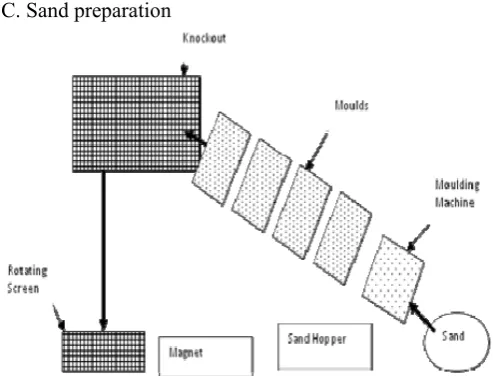
[image:1.595.311.558.535.723.2]C. Sand preparation
Fig 1 Sand preparation and handling system
The sand from the sand mill is compacted on a metal pattern on the molding machines through the action of the machine or through the action of a hand held sand rammer. The molds are inspected and closed and placed on a gravity roller conveyor or on the powered mold conveyor line of the foundry. After casting the molds are placed on the knockout machine where the product is separated from the mold. The hot sand is taken by the conveyor through a rotating screen, where lumps, metal particles, slag and non-metallic particles are removed. The sand then passes through a magnet which removes magnetic particles from the sand. The sand is then deposited in hoppers where it is allowed to cool as shown by Fig 1 above. The sand then goes through where it mixed, crushed and aerated. In the sand mill new sand, coral bentonite, coal dust and water are added to the sand after the sand batches are tested. The sand is then ready for molding and the cycle repeats [7].
D. Molding, casting and product knockout
Two types of molding machines used are the
straight draw molding and the turnover machines. The turnover machines are used in association with the straight draw molding machines. The turnover machine has the advantage over the straight draw in its ability to automatically turn over the drag after compaction. Production rates of up to 30 full molds per hour are obtainable from these machine pairs. The cores and mold halves are inspected after molding and any irregularities are corrected before closing the mold halves. For larger molds, e.g., for the size 20 to 30 pots and bath tubs, the mold is dried using a commercial mold cote spray mixed with ethanol which is used to bake the mold and cores by burning it.
Casting of the mold is then done using hand held shanks. Two men carry the shank ladle whilst the third man skims off the dross and impurities on the melt. Pouring is then done with the molding box on a gravity roller conveyor or on a pallet conveyor.
On solidification, the molding box is either lifted onto the knockout machine with overhead cranes or pushed onto the
shakeout machine by a box pusher (air actuated cylinder). The product is separated from the runners and gates. The molding sand drops into the on a conveyor beneath the knockout machines for recycling. The product is then inspected for defects whilst the runners and gates are re-melted at the cupola furnace. Some defective products are also taken for recycling whilst others with correctable defects are passed on to fettling with the good products [8].
E. Fettling and product finishing
The product from the knockout is carted to the shot blast machine for cleaning. The castings are then taken through a series of grinding operations depending on the type of product. In the case of enamelware products two further shot blast operations are done before the product is ready for enameling. Products that have a paint finish will then be drilled and assembled before spray painting. Pipes, pipe fittings and man-hole covers and frames are dipped into bitumen paint. Inspections done in the fettling shop results in some products being scrapped whilst others may be repaired by welding or filling with adhesives.
The enamelware products are initially ground coated and then baked in the enameling furnaces at 900o C for 3 minutes before being sprayed with enameling powder. The product is then taken into the furnace to melt the enamel powder. If the quality is less satisfactory a decision is made to scrap or to send the product back for re-blasting.
It may be necessary to anneal the products in the enameling furnaces before grinding and drilling if the castings are too hard.
IV. CASE STUDY FINDINGS
A. Organizational structure
The study was done at Casting Co Ltd and the organizational chart is shown by Fig 2 below.
The maintenance function falls under the jurisdiction of the Factory Manager. Its function is to maintain existing equipment and buildings, install new equipment, ensure safe operation of the equipment and attain plant availability in excess of 80% within budgetary confines.
B. Maintenance system assessment
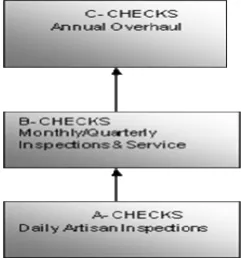
[image:3.595.107.228.221.351.2]A Fixed Time Maintenance (FTM) system was in place and documented as part of the ISO 9001 procedures, and it involved only daily inspections carried out by the tradesman. Fig 3 depicts the FTM system as given below.
Fig 3 Hierarchy of the FTM system
The A- Checks are the walk around inspections that are done by the artisans daily to determine oil levels
and top it up if necessary, discern any abnormal sounds, vibrations, smells, oil leaks, loose bolts and excessive heat. The A-checks are done when the equipment is operational. Depending on the Annual Plans B-Checks are more rigorous than the first level checks involving oil changes minor corrective work. Maintenance windows are required to perform B- Checks. The C-Checks are complete overhauls done annual during the shutdown period. Spares requirements have to be met before embarking on either the B or C- Checks. B and C checks are derived from an annual plan, which is broken into weeks. The weekly/Daily plan cascaded from this plan. The preparation of these plans was the responsibility of the Maintenance manager in consultation with the Production Manager. Fig 4 illustrates this maintenance planning structure.
Fig 4Maintenance planning structure
The plans are communicated to the artisans through the Job Request Card and if the job is done the plant record and history cards are updated. In situations where the job is not done agreement with the Production Manager is sought. Information from breakdowns and checklists is communicated to maintenance supervision and assessments done to find out and procure the resource requirements. The information from work generated from breakdowns and inspections is similarly processed.
C. Maintenance Management Practice
The plant history and plant record cards were not being updated. The annual plans were not in place and the overhauls were not being adequately done, for example the pallet conveyor and the sand mill was not serviced during the previous shutdown and as a result by February 2014 had failed. The ring gear of the sand mill which failed was to be replaced at a cost of USD 52 000.
The plant availability was not known and as a result the overall equipment efficiency (OEE) was also not known. As a result it was found that:
67.5 hours were lost due to breakdowns;
37.4 hours due molten metal shortage; and
4.5 hours were lost as a result of sand shortage, bringing the total downtime to 109.4 hours in February 2014. This means that the plant availability was 65.5%.
Lubricants being used on the industrial gearboxes were of an automotive type, SAE 80 w 90 oil. Production personnel were responsible for lubricating molding machines and gear boxes, whilst a maintenance operative lubricated knockout machines, cupola fan and sand mills. Sometimes production personnel kept topping up the oil without realizing that there were leaks. Maintenance personnel sometimes did not keep to the lubrication schedule. No oil analysis was done and the oil changes were not done on time.
The interface between production and maintenance personnel was limited to reporting and resolution of breakdowns
D.Quality practices
Quality Assurance existed in form of laboratory personnel to man the metallurgical laboratory where spectrographic analysis and hardness testing is done. As well as the sand testing lab for molding sand.
[image:3.595.49.285.564.729.2]the samples is done on an hourly basis. Any deviation from specification is corrected by a change in the metal charge or amount of ferroalloy addition. Hardness tests are also done. Sand testing is done on hourly intervals, and if there are any deviations from specifications corrections are promptly done. Castings are visually inspected before they proceed to the next process. Pipes are leak tested with water. In the case of pots water is left to settle in the pots to detect any leaks. Go and no-go gauges are used to check on the internal diameter of the tubes.
33.08 tons of grey iron products and 24.7 tons of mill balls were defective in February 2014. This represents scrap rates of 17.1% for grey iron and 4.8% of white iron products.
E. Environmental management
Effluents from the foundry include waste water, solid waste and gaseous emissions. Combustion waste products from the cupola are gases, particle emissions, slag and heat losses. The gases and particle emissions are emitted to the environment, although there are grit arrestors on the cupolas, there are no air cleaners. There is also no waste heat recovery equipment on the cupolas. Slag is deposed of at municipal landfills. Cooling water, used when purging slag and when cooling the furnace for re-patching, is discharged into the municipal drainage system.
There are no dust extraction equipment in the main foundry at knockouts save for the underground dust extraction fan. The dust extraction units at the shot blast are not very effective. There is only one fume extractor at the painting booth for pots. There are no other extractors for the pipe and pot painting areas. Some dust extraction fans in the enameling shop are not operational and there is no air cleaning equipment before the air is discharged into the atmosphere.
Energy consumption per month averages 211 000 kWh, with an off peak usage of 7550 kWh and on peak usage of 135 000kWh. The power factor ranges from 0.96 to 0.99 and the load factor is around 0.34.
E. Findings summary
Observed concerns that need to be addressed in order to improve the efficiency of the plant are mostly to do with equipment upkeep:
The quality rate was 90.5% The performance rate was 75.4% The plant availability was 65.5% The OEE was therefore 44.7%
V.RESULTS AND DISCUSSION
A. World class maintenance (WCM) model
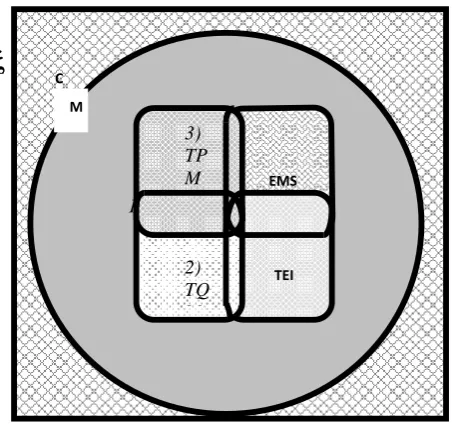
[image:4.595.304.531.92.304.2]WCM involves waste minimization technologies. Central to these strategies will be the need to have safe and reliable equipment and teamwork. Realization of WCM and the competitiveness thereof hinges on total preventive maintenance (TPM). Fig 5 depicts the proposed idealization of WCM model.
Fig 5.The proposed WCM model
Key
= Universal set M= set of all manufacturers
C= set of customers
TPM= set of organizations using TPM
TEI= set of organizations using the TEI principle TQM= set of organizations using TQM
EMS= Set of organizations using EMS
The model is a universal set of all manufactures and their customers.
={M; C}
The set of manufactures consists of those organizations that do not have continuous improvement (Kaizen) techniques and are viewed as traditional organizations TM.
TM =(TEI EMS TPM TQM)'
Some organizations have different levels of adoption and integration of TPM, TQM, TEI and EMS. Those organizations that have harmoniously integrated these four Kaizen techniques are the World-Class Manufacturers.
WCM =TPM TQM TEI EMS;
However both the World-Class Manufactures and the Traditional Manufacturers are both subsets of the set of manufacturers.
Common Elements = TPM TQM EMS TEI
Where TPM, TQM, EMS and TEI, refer to implementation requirements and techniques; it is worth noting that the proposed model advocates for simultaneous implementation of all four WCM facets.
TPM, EMS and TQM are all continuous improvement principles that involve employee participation thus TEI is naturally enshrined in their implementation;
C
1) TM
EMS
TEI
2) TQ M 3) TP M
The full realization of TPM, TQM, TEI and EMS will impart the organization with WCM competitiveness.
Shop level participation by top level management can be enhanced by directed small group activities, which form part of the formal structure.
B. Total employee involvement
There is need to form quality circles and open formal employee suggestion structures. As well as formalizing job specifications and job descriptions to enable measurement of deviation of performance and thereby correct the causes of such deviations. A concerted effort must be made through cross fertilization of skills within the maintenance department to attain a high level of multi-skilled personnel. There is need for basic equipment maintenance skills training for production personnel and maintenance personnel have to be trained in specialist maintenance skills in electronics, pneumatics and hydraulics.
C. Molding, casting and product knockout
Efforts must be made to increase the machine productivity through institution of these measures:
Increasing the local content of the spares, as is the case for leather seals and oil seals.
Operator training must be done on basic machine maintenance. Multi-skilling of the entire maintenance team must be done to avoid reliance on a core of workers; and
Regular and scheduled maintenance with correct lubricants;
Both operator and maintenance personnel training on the inspection and service of the machines; and
Crane failures can be avoided through:
Training operators correct lifting and operation techniques;
Regular maintenance and statutory inspections and services;
D. Fettling and product finishing
A thorough study of shot blast wheel bearing failure frequencies and running times will help determine the overhaul ties. Adequate seals must also be used to eliminate the likelihood of contamination of the bearings for both or all shot blasts. There is need to enhance the fettling plant capacity through use of pedestal grinders and extra pneumatic hand grinders need to be purchased. Improvements in the process before casting will result in elimination of product defects.
E. Maintenance at the foundry
A radical shift has to be made from the crisis maintenance strategy to TPM. With maintenance taking more control of the reliability of the plant as they concentrate on predictive rather than crisis maintenance, less rigorous duties such as daily walk-around (A) checks will then be delegated to production personnel with the concomitant effect of empowering the operators.
F. Maintenance management practice
Maintenance supervision must know and be able to calculate the quality rates, performance rate, availability and
OEE. They must also be in a position to explain the meaning of these to their charge and production personnel.
Lubricating oils such as 'Shell Tellus 320' or 'Mobil Gear Oil 632' should be used for industrial gearboxes. Training on lubrication needs to be done and lubrication schedules must be adhered to and control measurers put in place to verify the adherence to the schedule. Arrangements with lubricant suppliers for oil analysis must be done e.g. Mobil offers free oil analysis to her customers otherwise for a fee.
G. TPM implementation
With the impetus more on preventive measures, 50% of the plant maintenance budget can be dedicated to TPM implementation.
H. Energy costs
Proper insulation of enameling furnaces should reduce heat losses to the environment.
Eliminating the need for remedial work, such as annealing, re-melting, re-blasting and welding of castings
Use of high-energy efficient equipment and this requires avoidance of the need to rewind electric motors (as re-wounded motors are less efficient) and proper equipment upkeep
Although the power factor is close to unit, the load factor of 0.34 is lower than the general value for industrial operations. Operating 24 hours a day, i.e. three shifts, which are as long as the present shifts, can attain higher load factors. Around the clock operation is only possible if the equipment reliability is high.
VI.CONCLUSION
Systematic inspection of all plant machinery and equipment at regular intervals ensures that the plant availability is guaranteed. After completion of service, quality of work is inspected by the Engineer before machine is handed over to user department. The need to have improved plant availability has seen reliability systems put in place as well as intelligent condition monitoring to assist the operations of the foundry. Systems and procedures have been revisited with the view to expose the components which require urgent attention in terms of replacement and repairs with minimum interruption of the required production targets. In the foundry industry over the years plant availability is critical as export orders have to be timely processed on time for delivery to the customer to survive the competitive market in the region.
VII. F
URTHER RESEARCHREFERENCES
[1] Copeland T, Koler T, Murrin J(2000) Valuation measuring and managing the value of companies, 3rd Edition, John Wiley and sons, inc.
[2] Bertolini M (2006) Reliability engineering and system safety, s.l.: Science direct.
[3] Bloom N( 2006) Reliability Centered Maintenance. New York: McGraw Hill.
[4] Dhilon B(2002) Engineering Maintenance A Modern Approach. 1st ed. Boca Raton: CRC Press.
[5] Sun Y( 2007) Effects Of Preventive Maintenance on the Reliability of Production Lines
Available at: http://eprints.qut.edu.au/
[6] Mobley K R (2002) An Introduction To Predictive Maintenance. 2nd ed. Amserdam: Butter-worth Heinemann.
[7] Nordstrom, J.(2007). RCM- based Maintenance plans for different operational conditions, s.l.: s.n.
[8] Adam, E (2004) Productivity and quality: Measurement
as a basis for improvement.
http://hiattengineeringltd.com/home