Original citation:
Robertson, Wendy, Fleming, J, Kamal, Atiya, Hamborg , T, Khan, K. A., Griffiths, Frances, Stewart-Brown, Sarah L., Stallard, Nigel, Petrou, Stavros, Simkiss, Douglas E., Harrison, Elizabeth, Kim, S. W. and Thorogood, Margaret (2017) Randomised controlled trial evaluating the effectiveness and cost-effectiveness of 'Families for Health', a family-based childhood obesity treatment intervention delivered in a community setting for ages 6 to 11 years. Health Technology Assessment, 21 (1). doi:10.3310/hta21010
Permanent WRAP URL:
http://wrap.warwick.ac.uk/78685
Copyright and reuse:
The Warwick Research Archive Portal (WRAP) makes this work by researchers of the University of Warwick available open access under the following conditions. Copyright © and all moral rights to the version of the paper presented here belong to the individual author(s) and/or other copyright owners. To the extent reasonable and practicable the material made available in WRAP has been checked for eligibility before being made available.
Copies of full items can be used for personal research or study, educational, or not-for-profit purposes without prior permission or charge. Provided that the authors, title and full
bibliographic details are credited, a hyperlink and/or URL is given for the original metadata page and the content is not changed in any way.
Publisher’s statement:
© Queen’s Printer and Controller of HMSO 2017. This work was produced by Robertson et al. under the terms of a commissioning contract issued by the Secretary of State for Health. This issue may be freely reproduced for the purposes of private research and study and extracts (or indeed, the full report) may be included in professional journals provided that suitable acknowledgement is made and the reproduction is not associated with any form of advertising. Applications for commercial reproduction should be addressed to: NIHR Journals Library, National Institute for Health Research, Evaluation, Trials and Studies Coordinating Centre, Alpha House, University of Southampton Science Park, Southampton SO16 7NS, UK.
A note on versions:
The version presented here may differ from the published version or, version of record, if you wish to cite this item you are advised to consult the publisher’s version. Please see the ‘permanent WRAP URL’ above for details on accessing the published version and note that access may require a subscription.
VOLUME 21 ISSUE 1 JANUARY 2017 ISSN 1366-5278
Randomised controlled trial evaluating
the effectiveness and cost-effectiveness of
‘Families for Health’, a family-based childhood
obesity treatment intervention delivered in a
community setting for ages 6 to 11 years
Wendy Robertson, Joanna Fleming, Atiya Kamal, Thomas Hamborg,
Kamran A Khan, Frances Griffiths, Sarah Stewart-Brown,
the effectiveness and cost-effectiveness
of
‘
Families for Health
’
, a family-based
childhood obesity treatment intervention
delivered in a community setting for
ages 6 to 11 years
Wendy Robertson,* Joanna Fleming, Atiya Kamal,
Thomas Hamborg, Kamran A Khan, Frances Griffiths,
Sarah Stewart-Brown, Nigel Stallard, Stavros Petrou,
Douglas Simkiss, Elizabeth Harrison, Sung Wook Kim
and Margaret Thorogood
Division of Health Sciences, Warwick Medical School, University of Warwick,
Coventry, UK
*Corresponding author
Declared competing interests of authors:none
Published January 2017
DOI: 10.3310/hta21010This report should be referenced as follows:
Robertson W, Fleming J, Kamal A, Hamborg T, Khan KA, Griffiths F,et al. Randomised controlled trial evaluating the effectiveness and cost-effectiveness of‘Families for Health’, a family-based childhood obesity treatment intervention delivered in a community setting for ages 6 to 11 years.
Health Technol Assess2017;21(1).
Health Technology Assessmentis indexed and abstracted inIndex Medicus/MEDLINE,Excerpta Medica/EMBASE,Science Citation Index Expanded(SciSearch®) andCurrent Contents®/
ISSN 1366-5278 (Print)
ISSN 2046-4924 (Online)
Impact factor: 4.058
Health Technology Assessmentis indexed in MEDLINE, CINAHL, EMBASE, The Cochrane Library and the ISI Science Citation Index.
This journal is a member of and subscribes to the principles of the Committee on Publication Ethics (COPE) (www.publicationethics.org/).
Editorial contact: [email protected]
The full HTA archive is freely available to view online at www.journalslibrary.nihr.ac.uk/hta. Print-on-demand copies can be purchased from the report pages of the NIHR Journals Library website: www.journalslibrary.nihr.ac.uk
Criteria for inclusion in theHealth Technology Assessmentjournal
Reports are published inHealth Technology Assessment(HTA) if (1) they have resulted from work for the HTA programme, and (2) they
are of a sufficiently high scientific quality as assessed by the reviewers and editors.
Reviews inHealth Technology Assessmentare termed‘systematic’when the account of the search appraisal and synthesis methods (to
minimise biases and random errors) would, in theory, permit the replication of the review by others.
HTA programme
The HTA programme, part of the National Institute for Health Research (NIHR), was set up in 1993. It produces high-quality research information on the effectiveness, costs and broader impact of health technologies for those who use, manage and provide care in the NHS.
‘Health technologies’are broadly defined as all interventions used to promote health, prevent and treat disease, and improve rehabilitation
and long-term care.
The journal is indexed in NHS Evidence via its abstracts included in MEDLINE and its Technology Assessment Reports inform National Institute for Health and Care Excellence (NICE) guidance. HTA research is also an important source of evidence for National Screening Committee (NSC) policy decisions.
For more information about the HTA programme please visit the website: http://www.nets.nihr.ac.uk/programmes/hta
This report
The research reported in this issue of the journal was funded by the HTA programme as project number 09/127/41. The contractual start date was in December 2011. The draft report began editorial review in September 2015 and was accepted for publication in February 2016. The authors have been wholly responsible for all data collection, analysis and interpretation, and for writing up their work. The HTA editors and
publisher have tried to ensure the accuracy of the authors’report and would like to thank the reviewers for their constructive comments on
the draft document. However, they do not accept liability for damages or losses arising from material published in this report.
This report presents independent research funded by the National Institute for Health Research (NIHR). The views and opinions expressed by authors in this publication are those of the authors and do not necessarily reflect those of the NHS, the NIHR, NETSCC, the HTA programme or the Department of Health. If there are verbatim quotations included in this publication the views and opinions expressed by the
interviewees are those of the interviewees and do not necessarily reflect those of the authors, those of the NHS, the NIHR, NETSCC, the HTA programme or the Department of Health.
© Queen’s Printer and Controller of HMSO 2017. This work was produced by Robertsonet al.under the terms of a commissioning contract issued by the Secretary of State for Health. This issue may be freely reproduced for the purposes of private research and study and extracts (or indeed, the full report) may be included in professional journals provided that suitable acknowledgement is made and the reproduction is not associated with any form of advertising. Applications for commercial reproduction should be addressed to: NIHR Journals Library, National Institute for Health Research, Evaluation, Trials and Studies Coordinating Centre, Alpha House, University of Southampton Science Park, Southampton SO16 7NS, UK.
Editor-in-Chief
NIHR Journals Library
Professor Tom Walley Director, NIHR Evaluation, Trials and Studies and Director of the EME Programme, UK
NIHR Journals Library Editors
Professor Ken Stein Chair of HTA Editorial Board and Professor of Public Health, University of Exeter Medical School, UK
Professor Andree Le May Chair of NIHR Journals Library Editorial Group (EME, HS&DR, PGfAR, PHR journals)
Dr Martin Ashton-Key Consultant in Public Health Medicine/Consultant Advisor, NETSCC, UK
Professor Matthias Beck Chair in Public Sector Management and Subject Leader (Management Group), Queen’s University Management School, Queen’s University Belfast, UK
Professor Aileen Clarke Professor of Public Health and Health Services Research, Warwick Medical School, University of Warwick, UK
Dr Tessa Crilly Director, Crystal Blue Consulting Ltd, UK
Ms Tara Lamont Scientific Advisor, NETSCC, UK
Professor William McGuire Professor of Child Health, Hull York Medical School, University of York, UK
Professor John Norrie Chair in Medical Statistics, University of Edinburgh, UK
Professor John Powell Consultant Clinical Adviser, National Institute for Health and Care Excellence (NICE), UK
Professor James Raftery Professor of Health Technology Assessment, Wessex Institute, Faculty of Medicine, University of Southampton, UK
Dr Rob Riemsma Reviews Manager, Kleijnen Systematic Reviews Ltd, UK
Professor Helen Roberts Professor of Child Health Research, UCL Institute of Child Health, UK
Professor Helen Snooks Professor of Health Services Research, Institute of Life Science, College of Medicine, Swansea University, UK
Professor Jim Thornton Professor of Obstetrics and Gynaecology, Faculty of Medicine and Health Sciences, University of Nottingham, UK
Please visit the website for a list of members of the NIHR Journals Library Board: www.journalslibrary.nihr.ac.uk/about/editors
Editorial contact: [email protected]
Professor Geoffrey Meads Professor of Health Sciences Research, Health and Wellbeing Research Group, University of Winchester, UK
Centre of Evidence-Based Dermatology, University of Nottingham, UK
Professor Jonathan Ross Professor of Sexual Health and HIV, University Hospital Birmingham, UK
Dr Eugenia Cronin Senior Scientific Advisor, Wessex Institute, UK
Abstract
Randomised controlled trial evaluating the effectiveness and
cost-effectiveness of
‘
Families for Health
’
, a family-based
childhood obesity treatment intervention delivered in a
community setting for ages 6 to 11 years
Wendy Robertson,* Joanna Fleming, Atiya Kamal, Thomas Hamborg,
Kamran A Khan, Frances Griffiths, Sarah Stewart-Brown,
Nigel Stallard, Stavros Petrou, Douglas Simkiss, Elizabeth Harrison,
Sung Wook Kim and Margaret Thorogood
Division of Health Sciences, Warwick Medical School, University of Warwick, Coventry, UK
*Corresponding author [email protected]
Background:Effective programmes to help children manage their weight are required.‘Families for Health’focuses on a parenting approach, designed to help parents develop their parenting skills to support lifestyle change within the family. Families for Health version 1 showed sustained reductions in mean body mass index (BMI) z-score after 2 years in a pilot project.
Objective:The aim was to evaluate its effectiveness and cost-effectiveness in a randomised controlled trial (RCT).
Design:The trial was a multicentre, investigator-blind RCT, with a parallel economic and process
evaluation, with follow-up at 3 and 12 months. Randomisation was by family unit, using a 1 : 1 allocation by telephone registration, stratified by three sites, with a target of 120 families.
Setting:Three sites in the West Midlands, England, UK.
Participants:Children aged 6–11 years who were overweight (≥91st centile BMI) or obese (≥98th centile BMI), and their parents/carers. Recruitment was via referral or self-referral.
Interventions:Families for Health version 2 is a 10-week, family-based community programme with parallel groups for parents and children, addressing parenting, lifestyle, social and emotional development. Usual care was the treatment for childhood obesity provided within each locality.
Main outcome measures:Joint primary outcome measures were change in children’s BMI z-score and incremental cost per quality-adjusted life-year (QALY) gained at 12 months’follow-up (QALYs were calculated using the European Quality of Life-5 Dimensions Youth version). Secondary outcome measures included changes in children’s waist circumference, percentage body fat, physical activity, fruit/vegetable consumption and quality of life. Parents’BMI and mental well-being, family eating/activity, parent–child relationships and parenting style were also assessed. The process evaluation documented recruitment, reach, dose delivered, dose received and fidelity, using mixed methods.
significantly different in the Families for Health arm and the usual-care arm [0.114, 95% confidence interval (CI)–0.001 to 0.229;p=0.053]. However, within-group analysis showed that the BMI z-score was significantly reduced in the usual-care arm (–0.118, 95% CI–0.203 to–0.034;p=0.007), but not in the Families for Health arm (–0.005, 95% CI–0.085 to 0.078;p=0.907). There was only one significant difference between groups for secondary outcomes. The economic evaluation, taking a NHS and Personal Social Services perspective, showed that mean costs 12 months post randomisation were significantly higher for Families for Health than for usual care (£998 vs. £548;p<0.001). The mean incremental cost-effectiveness of Families for Health was estimated at £552,175 per QALY gained. The probability that the Families for Health programme is cost-effective did not exceed 40% across a range of thresholds. The process evaluation demonstrated that the programme was implemented, as planned, to the intended population and any adjustments did not deviate widely from the handbook. Many families waited more than 3 months to receive the intervention. Facilitators’, parents’and children’s experiences of Families for Health were largely positive and there were no adverse events. Further analysis could explore why some children show a clinically significant benefit while others have a worse outcome.
Conclusions:Families for Health was neither effective nor cost-effective for the management of obesity in children aged 6–11 years, in comparison with usual care. Further exploration of the wide range of
responses in BMI z-score in children following the Families for Health and usual-care interventions is warranted, focusing on children who had a clinically significant benefit and those who showed a worse outcome with treatment. Further research could focus on the role of parents in the prevention of obesity, rather than treatment.
Trial registration:Current Controlled Trials ISRCTN45032201.
Contents
List of tables xi
List of figures xvii
Glossary xxi
List of abbreviations xxiii
Plain English summary xxv
Scientific summary xxvii
Chapter 1Introduction 1
Scientific background 1
Care pathway for weight management of children and young people 1
Evidence for effectiveness of level 2 child obesity interventions 1
Evidence for cost-effectiveness of child obesity interventions 2
From randomised controlled trial to practice 2
Parenting programmes 3
Development of the Families for Health intervention 3
Rationale for research 4
Aims and objectives 4
Chapter 2Trial design and methods 5
Study design 5
Study settings 5
Ethical approval and research governance 5
Informed consent 6
User involvement 6
Parents 6
Children 6
Changes to project protocol 6
Treatment groups 7
The intervention: Families for Health 7
Training and selection of facilitators: Families for Health 9
Usual-care control group 9
Participants 10
Inclusion criteria 10
Exclusion criteria 10
Recruitment 11
Randomisation, allocation concealment and blinding 11 Data collection and management 12 Baseline assessment 12
Outcomes 13
Anthropometric 13
Physical activity and diet 16
Physical and mental health 17
Family relationships 18
Economic outcomes 18
Services received by child 19
Socioeconomic classification 19
Sample size 20
Original sample size justification 20
Updated sample size calculation 20
Chapter 3Statistical analysis methods 21
Analysis of accelerometer data 21 Statistical methods 21
General statistical considerations 21
Primary outcome analysis 22
Sensitivity analyses for the primary outcome 23
Subgroup analyses 23
Repeated measures modelling 23
Analysis of baseline demographic data 23
Secondary outcome analyses 24
Chapter 4Trial results 25
Participant flow 25
Baseline data 26
Outcomes and estimation 30
Primary outcome analysis 30
Main primary outcome analysis (adjusted) 32
Imputation analysis for primary outcome 34
Per-protocol analysis 35
Repeated measures analysis 37
Secondary outcomes analysis 38
Ancillary analysis 54
Subgroup analysis 54
Harms 54
Discussion 55
Chapter 5Economic evaluation 57
Introduction 57
Methods 57
Measurement of resource use and costs 57
Costing of Families for Health and usual-care programmes 57
Collection of broader resource-use data 57
Valuation of resource use 58
Calculation of utilities and quality-adjusted life-years 58
Missing data 58
Analyses of resource use, costs and outcome data 60
Cost-effectiveness analyses 60
Sensitivity and subgroup analyses 61
Results 61
Study population 61
Resource use 61
Costing of Families for Health and comparator usual-care programmes 65
Economic costs 65
Analyses of incremental costs and incremental health outcomes 67
Cost-effectiveness 69
Sensitivity analyses 72
Subgroup analyses 75
Discussion 78
Chapter 6Process evaluation 83
Introduction 83
Methods 83
Design 83
Data collection methods 84
Data management and analysis 86
Results 88
Recruitment 88
Reach 91
Dose delivered 91
Fidelity 98
Dose received: parents 101
Dose received: children 108
Discussion 111
Chapter 7Discussion and conclusions 113
Summary of findings 113 Economic evaluation 114 Process evaluation 114 Why not effective? 115 Strengths and weaknesses of the study 116 Recommendations for future research 117 Implications for public health/treatment services 118
Conclusion 118
Acknowledgements 119
References 121
Appendix 1Evaluation from the training of the facilitators for Families for Health 129
Appendix 2Essentially full completer analysis on effectiveness 131
Appendix 3Subgroup analyses on effectiveness 133
Appendix 4Resource utilisation 139
Appendix 5Usual-care attendance 141
Appendix 7Costs of care 145
Appendix 8Subgroup analyses: economic evaluation 147
Appendix 9Interview schedules for parents at 3-month follow-up 163
Appendix 10Interview schedules for parents at 12-month follow-up 167
List of tables
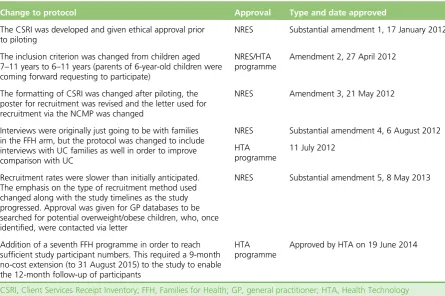
TABLE 1 Summary of changes to original FFH protocol approved by the NRES West Midlands: Coventry and Warwickshire Research Ethics Committee and/or
HTA programme 7
TABLE 2 Content of parents’and children’s parallel groups for Families for
Health (version 2) 8
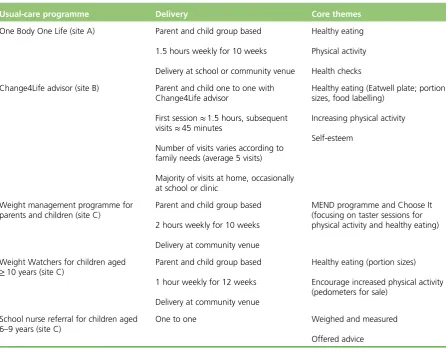
TABLE 3 Usual-care programme details 10
TABLE 4 Prevalence of obesity (≥95th centile) in year 6 (aged 10–11 years) for
the proposed study recruitment sites 11
TABLE 5 Summary of measures and data collection in children and parents 14
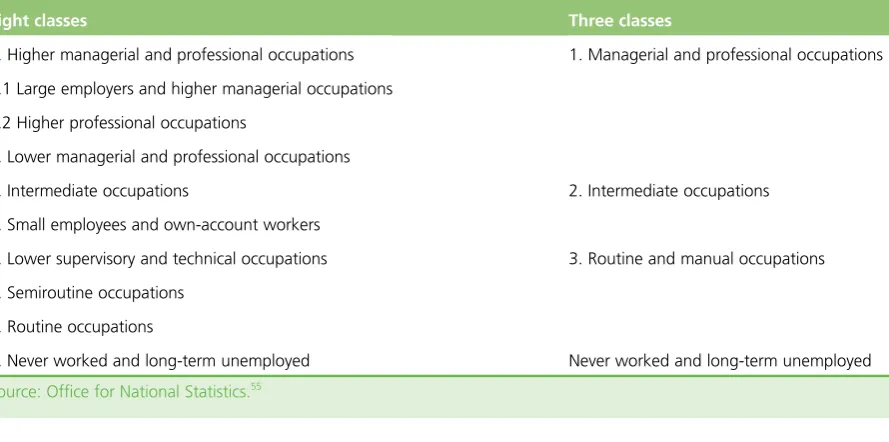
TABLE 6 Eight- and three-group versions ofThe National Statistics
Socio-Economic Classification 19
TABLE 7 Evenson’s ActiGraph accelerometer cut points for sedentary, light,
moderate and vigorous physical activity for children 21
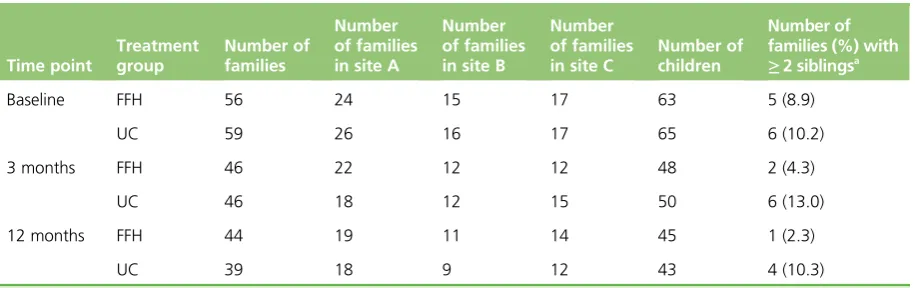
TABLE 8 Participant flow by site 26
TABLE 9 Baseline characteristics of participating families and children 27
TABLE 10 Baseline characteristics of families from which at least one child
completed 12-month follow-up 28
TABLE 11 Socioeconomic status classification of parents at baseline 30
TABLE 12 Primary outcome: BMI z-score–sample sizes and unadjusted estimates 30
TABLE 13 Primary end point: BMI z-score, waist z-score and percentage fat
in children 31
TABLE 14 Child anthropometric measures 32
TABLE 15 Random-effects estimation 33
TABLE 16 Baseline covariate estimates for the primary outcome, BMI z-score 33
TABLE 17 Primary outcome analysis: change in BMI z-score from baseline to
12 months 34
TABLE 18 Treatment effect estimates of the primary outcome 34
TABLE 19 Multiple imputation analysis for longitudinal changes in child BMI
TABLE 20 Longitudinal changes in child BMI and waist z-scores: per-protocol
analysis (Families for Health) 36
TABLE 21 Differences in baseline characteristics between completers and
non-completers (Families for Health) 37
TABLE 22 Least squares means estimates for repeated measures model 38
TABLE 23 Covariate effects for the repeated measures mixed models 39
TABLE 24 Sample sizes and longitudinal changes in children’s total fruit and
vegetable consumption 39
TABLE 25 Time point averages and longitudinal changes in children’s total fruit
and vegetable consumption 40
TABLE 26 Sample sizes and time point averages in child-reported PedsQL score 40
TABLE 27 Longitudinal changes in child-reported PedsQL 40
TABLE 28 Sample sizes and time point averages in parent-reported PedsQL 41
TABLE 29 Longitudinal changes in parent-reported PedsQL 41
TABLE 30 Health economics measurements: self-reported EQ-5D-Y 42
TABLE 31 Health economics measurements: parent-reported EQ-5D-Y 44
TABLE 32 Longitudinal changes in EQ-5D-Y quality of life 46
TABLE 33 Sample sizes and time point means in accelerometer variables
(children) 46
TABLE 34 Change from baseline to 12 months’follow-up in accelerometer
variables with pairedt-tests (children) 47
TABLE 35 Time point averages and longitudinal changes in parents’WEMWBS 47
TABLE 36 Sample sizes and longitudinal changes in parents’WEMWBS 48
TABLE 37 Sample sizes and longitudinal changes in parents’WEMWBS, adjusted
for age and sex 48
TABLE 38 Sample sizes and time point averages in parenting style (PSDQ) 48
TABLE 39 Longitudinal changes in parenting style (PSDQ) 49
TABLE 40 Sample sizes and time point averages in child–parent relationship
(CPRS) 50
TABLE 42 Sample sizes and time point averages in FEAHQ subscales for children 51
TABLE 43 Sample sizes (number of parent reporting) and time point averages in
FEAHQ subscales for parents 52
TABLE 44 Longitudinal changes in FEAHQ subscales for children 52
TABLE 45 Longitudinal changes in FEAHQ subscales for parents 52
TABLE 46 Time point averages in parents’BMI 53
TABLE 47 Sample sizes and longitudinal changes in parent BMI (kg/m2) 53
TABLE 48 Time point averages in parents’percentage fat 53
TABLE 49 Sample sizes and longitudinal changes in parent percentage fat 54
TABLE 50 Type III test of fixed effects for interaction of subgroups with
treatment in primary outcome model, adding interaction effect 54
TABLE 51 Sources of unit costs for resource values 59
TABLE 52 Resource utilisation for the period 3 months pre randomisation 62
TABLE 53 Resource utilisation for the period 3 months post randomisation 63
TABLE 54 Families for Health programme and usual-care attendance (3 months
post randomisation) 64
TABLE 55 Costs associated with the Families for Health programme 65
TABLE 56 Cost per attending child per programme session by programme 65
TABLE 57 Costs of care by cost category and trial allocation for the period
3 months post randomisation 66
TABLE 58 Economic costs over the 12-month trial horizon: mean (SE) by trial arm
and cost category for complete cases only 68
TABLE 59 Bivariate regression of incremental total costs and incremental health
outcomes associated with the Families for Health programme 69
TABLE 60 Cost-effectiveness results for the primary and secondary outcomes:
complete cases 70
TABLE 61 Cost-effectiveness results for the primary outcomes: per-protocol
analyses from an NHS and Personal Social Services perspective–complete cases 73
TABLE 62 Cost-effectiveness results for the primary and secondary outcomes:
imputed data 76
TABLE 63 Sensitivity analyses of cost-effectiveness results using alternative
TABLE 64 Definition of components covered by the process evaluation and
related research questions 83
TABLE 65 Data collection plan for the process evaluation 84
TABLE 66 Codes used for facilitator, parent and child qualitative data 87
TABLE 67 Quantitative and qualitative data collected from parents, children
and facilitators 89
TABLE 68 Participant recruitment to Families for Health study 90
TABLE 69 Details and success rate of recruitment methods used 92
TABLE 70 Baseline characteristics of families 93
TABLE 71 Attendance data for Families for Health and usual care 94
TABLE 72 Fidelity check of each Families for Health programme to assess
whether or not the programme was delivered as prescribed in the handbook 99
TABLE 73 Programme and family details to assess if each programme was
delivered as intended 102
TABLE 74 Weekly evaluation of parents after each Families for Health session 104
TABLE 75 Parents’perception of the main weekly topics after each Families for
Health session 104
TABLE 76 Facilitator review of their confidence as a Families for Health
facilitator during the training workshop (% of facilitators) 129
TABLE 77 Facilitator review of training topics (% of facilitators) 129
TABLE 78 Longitudinal changes in child BMI and waist circumference z-scores:
essentially full completer analysis (the Families for Health programme) 131
TABLE 79 Data set split into young (6–8 years) and old (9–11 years) children
according to baseline age 133
TABLE 80 Longitudinal changes of BMI z-score by age subgroup 134
TABLE 81 Data set split by sex (boys/girls) 134
TABLE 82 Longitudinal changes of BMI z-score by sex subgroups 134
TABLE 83 Data set split by parent BMI classification 135
TABLE 84 Longitudinal changes of BMI z-score by parent BMI 135
TABLE 85 Data set split by recruitment site (locality) 136
TABLE 87 Data set split by families’baseline SES (four-class version) 137
TABLE 88 Longitudinal changes in child BMI and waist circumference z-score by
SES (four classes) 138
TABLE 89 Resource utilisation for the period 3 months post randomisation to
12 months post randomisation 139
TABLE 90 Usual-care attendance over the period 3 months post randomisation
to 12 months post randomisation 141
TABLE 91 Economic costs by cost category and trial arm for the period 3 months
pre-randomisation 143
TABLE 92 Costs of care by cost category and trial arm for the period 3 months
post randomisation to 12 months post randomisation 145
TABLE 93 Cost-effectiveness results for the primary and secondary outcomes by
subgroups from a NHS and Personal Social Services perspective: complete cases 148
TABLE 94 Cost-effectiveness results for the primary and secondary outcomes by
List of figures
FIGURE 1 The CONSORT flow diagram for the Families for Health RCT 25
FIGURE 2 Change over time for primary outcome BMI z-score (unadjusted means
and CIs) 31
FIGURE 3 Attendance rate (bar height) and time points at which outcome data
were provided (colour/pattern) for families attending Families for Health 35
FIGURE 4 Child BMI z-scores and time points (Families for Health) 37
FIGURE 5 Child BMI z-scores and time points (usual care) 38
FIGURE 6 Scatterplot showing the correlation of BMI z-score change from baseline to 12 months with an authoritative parenting style at (a) baseline;
and (b) 12 months 50
FIGURE 7 (a) Cost-effectiveness plane; and (b) CEAC for QALY outcome:
complete cases from a NHS and Personal Social Services perspective 71
FIGURE 8 (a) Cost-effectiveness plane; and (b) CEAC for QALY outcome:
complete cases from a societal perspective 71
FIGURE 9 (a) Cost-effectiveness plane; and (b) CEAC for BMI z-score outcome:
complete cases from a NHS and Personal Social Services perspective 72
FIGURE 10 (a) Cost-effectiveness plane; and (b) CEAC for BMI z-score outcome:
complete cases from a societal perspective 72
FIGURE 11 (a) Cost-effectiveness plane; and (b) CEAC for QALY outcome and
per-protocol analyses: completers 74
FIGURE 12 (a) Cost-effectiveness plane; and (b) CEAC for QALY outcome and
per-protocol analyses: non-completers 74
FIGURE 13 (a) Cost-effectiveness plane; and (b) CEAC for BMI z-score outcome
and per-protocol analyses: completers 74
FIGURE 14 (a) Cost-effectiveness plane; and (b) CEAC for BMI z-score outcome
and per-protocol analyses: non-completers 75
FIGURE 15 (a) Cost-effectiveness plane; and (b) CEAC for QALY outcome:
imputed analyses from a NHS and Personal Social Services perspective 77
FIGURE 16 (a) Cost-effectiveness plane; and (b) CEAC for QALY outcome:
imputed analyses from a societal perspective 77
FIGURE 17 (a) Cost-effectiveness plane; and (b) CEAC for BMI z-score outcome:
FIGURE 18 (a) Cost-effectiveness plane; and (b) CEAC for BMI z-score outcome:
imputed analyses from a societal perspective 78
FIGURE 19 (a) Cost-effectiveness plane; and (b) CEAC for QALY outcome:
proxy-reported EQ-5D-Y values, NHS and Personal Social Services perspective 80
FIGURE 20 (a) Cost-effectiveness plane; and (b) CEAC for QALY outcome:
proxy-reported EQ-5D-Y values, societal perspective 80
FIGURE 21 (a) Cost-effectiveness plane; and (b) CEAC for QALY outcome:
incorporation of EQ-5D values for parent’s health, NHS and Personal Social
Services perspective 80
FIGURE 22 (a) Cost-effectiveness plane; and (b) CEAC for QALY outcome:
incorporation of EQ-5D values for parent’s health, societal perspective 81
FIGURE 23 Flow chart of participant recruitment to the FFH study 90
FIGURE 24 Logic model for the FFH intervention 113
FIGURE 25 Baseline distribution of children’s age 133
FIGURE 26 (a) Cost-effectiveness plane; and (b) CEAC for QALY outcome,
subgroup analyses: age group (6–8 years) from a NHS and Personal Social
Services perspective 152
FIGURE 27 (a) Cost-effectiveness plane; and (b) CEAC for QALY outcome,
subgroup analyses: age group (9–11 years) from a NHS and Personal Social
Services perspective 152
FIGURE 28 (a) Cost-effectiveness plane; and (b) CEAC for QALY outcome,
subgroup analyses: sex (male) from a NHS and Personal Social Services perspective 152
FIGURE 29 (a) Cost-effectiveness plane; and (b) CEAC for QALY outcome,
subgroup analyses: sex (female) from a NHS and Personal Social Services perspective 153
FIGURE 30 (a) Cost-effectiveness plane; and (b) CEAC for QALY outcome,
subgroup analyses: site A from a NHS and Personal Social Services perspective 153
FIGURE 31 (a) Cost-effectiveness plane; and (b) CEAC for QALY outcome,
subgroup analyses: site B from a NHS and Personal Social Services perspective 153
FIGURE 32 (a) Cost-effectiveness plane; and (b) CEAC for QALY outcome,
subgroup analyses: site C from a NHS and Personal Social Services perspective 154
FIGURE 33 (a) Cost-effectiveness plane; and (b) for BMI z-score outcome, subgroup
analyses: age group (6–8 years) from a NHS and Personal Social Services perspective 154
FIGURE 34 (a) Cost-effectiveness plane; and (b) for BMI z-score outcome, subgroup
analyses: age group (9–11 years) from a NHS and Personal Social Services perspective 154
FIGURE 35 (a) Cost-effectiveness plane; and (b) for BMI z-score outcome,
FIGURE 36 (a) Cost-effectiveness plane; and (b) for BMI z-score outcome,
subgroup analyses: sex (female) from a NHS and Personal Social Services perspective 155
FIGURE 37 (a) Cost-effectiveness plane; and (b) for BMI z-score outcome,
subgroup analyses: site A from a NHS and Personal Social Services perspective 155
FIGURE 38 (a) Cost-effectiveness plane; and (b) for BMI z-score outcome,
subgroup analyses: site B from a NHS and Personal Social Services perspective 156
FIGURE 39 (a) Cost-effectiveness plane; and (b) for BMI z-score outcome,
subgroup analyses: site C from a NHS and Personal Social Services perspective 156
FIGURE 40 (a) Cost-effectiveness plane; and (b) CEAC for QALY outcome,
subgroup analyses: age group (6–8 years) from a societal perspective 156
FIGURE 41 (a) Cost-effectiveness plane; and (b) CEAC for QALY outcome,
subgroup analyses: age group (9–11 years) from a societal perspective 157
FIGURE 42 (a) Cost-effectiveness plane; and (b) CEAC for QALY outcome,
subgroup analyses: sex (male) from a societal perspective 157
FIGURE 43 (a) Cost-effectiveness plane; and (b) CEAC for QALY outcome,
subgroup analyses: sex (female) from a societal perspective 157
FIGURE 44 (a) Cost-effectiveness plane; and (b) CEAC for QALY outcome,
subgroup analyses: site A from a societal perspective 158
FIGURE 45 (a) Cost-effectiveness plane; and (b) CEAC for QALY outcome,
subgroup analyses: site B from a societal perspective 158
FIGURE 46 (a) Cost-effectiveness plane; and (b) CEAC for QALY outcome,
subgroup analyses: site C from a societal perspective 158
FIGURE 47 (a) Cost-effectiveness plane; and (b) CEAC for BMI z-score outcome,
subgroup analyses: age group (6–8 years) from a societal perspective 159
FIGURE 48 (a) Cost-effectiveness plane; and (b) CEAC for BMI z-score outcome,
subgroup analyses: age group (9–11 years) from a societal perspective 159
FIGURE 49 (a) Cost-effectiveness plane; and (b) CEAC for BMI z-score outcome,
subgroup analyses: sex (male) from a societal perspective 159
FIGURE 50 (a) Cost-effectiveness plane; and (b) CEAC for BMI z-score outcome,
subgroup analyses: sex (female) from a societal perspective 160
FIGURE 51 (a) Cost-effectiveness plane; and (b) CEAC for BMI z-score outcome,
subgroup analyses: site A from a societal perspective 160
FIGURE 52 (a) Cost-effectiveness plane; and (b) CEAC for BMI z-score outcome,
subgroup analyses: site B from a societal perspective 160
FIGURE 53 (a) Cost-effectiveness plane; and (b) CEAC for BMI z-score outcome,
Glossary
Data Monitoring and Ethics Committee An independent committee, the roles of which are to monitor the data from the trial; to safeguard the safety, rights and well-being of trial participants; to assess ethical and safety issues; and, on the basis of their assessment, to make recommendations to the Trial Steering Committee on whether or not the trial should continue.
Logic model A diagrammatic representation of an intervention, describing anticipated delivery mechanisms, intervention components, the mechanisms through which an intervention is proposed to work and intended outcomes.
Process evaluation An assessment conducted during the implementation of an intervention including components of whether or not it is reaching the intended participants; if the intervention is being provided and delivered as intended; and how the intervention is being received by the participants.
List of abbreviations
BMI body mass index
CEAC cost-effectiveness acceptability
curve
CI confidence interval
CPRS Child–Parent Relationship Scale
CSRI Client Services Receipt Inventory
DMEC Data Monitoring and Ethics
Committee
EQ-5D European Quality of Life-5
Dimensions
EQ-5D-Y European Quality of Life-5
Dimensions Youth version
FEAHQ Family Eating and Activity Habits
Questionnaire
FFH1 first running of the Families for
Health programme
FFH2 second running of the Families for
Health programme
FFH3 third running of the Families for
Health programme
GP general practitioner
ICER incremental cost-effectiveness ratio
MEND Mind, Exercise, Nutrition . . . Do it!
MRC Medical Research Council
NCMP National Child Measurement
Programme
NICE National Institute for Health and
Clinical Excellence
NIHR National Institute for Health
Research
NRES National Research Ethics Service
PedsQLTM Pediatric Quality of Life InventoryTM
PSDQ Parenting Styles and Dimensions
Questionnaire
QALY quality-adjusted life-year
RCT randomised controlled trial
SD standard deviation
SE standard error
SES socioeconomic status
TSC Trial Steering Committee
WEMWBS Warwick–Edinburgh Mental
Well-Being Scale
WISH Wolverhampton Inspiring and
Plain English summary
O
ne-third of children aged 10–11 years in England are overweight. The NHS needs programmes that work and offer good value for money for helping children who are overweight.In this study we wanted to find out whether or not a programme called‘Families for Health’could help families with children, aged 6–11 years, who are overweight. This is a group-based programme, 10 weeks long, involving children and their parents. The programme was delivered across three areas in the West Midlands and aimed to help parents develop their parenting skills to enable them to bring about lifestyle change within the family. Four facilitators, two for the children’s group and two for the parents’group, ran each programme. The facilitators included people with experience in nursing, teaching, youth work, physical activity and nutrition, who had attended a 4-day training course to run the programme.
Approximately half of our 115 families with at least one child who was overweight were invited to attend the Families for Health programme and the other half were invited to attend the usual care that was already available locally for the treatment of children who were overweight. The Families for Health programme was implemented almost as desired, with most families’experiences of the programme being positive, although some families had to wait to receive the intervention. After 12 months there were no differences in the average change in weight (as measured by the body mass index of the children), in physical activity, in fruit and vegetable consumption or in health-related quality of life (as measured by the European Quality of Life-5 Dimensions Youth version) between the Families for Health group and the usual-care group. The Families for Health intervention was also more expensive than the care available locally.
Scientific summary
Background
Childhood obesity, both in the UK and internationally, is a major public health burden. One-third of children in year 6 (aged 10–11 years) in England were classified as either overweight or obese in 2013/14. Obesity in childhood increases the risk of poor physical and mental health in childhood, and there
is evidence that childhood obesity also affects adult health.
The prevention and management of childhood obesity is now a public health priority. Effective interventions are needed to treat children who are obese, in order to reduce ill health in children and to reduce the proportion whose obesity continues into adulthood. A Cochrane systematic review of interventions to treat obesity identified 64 randomised controlled trials (RCTs) and, of these, only two were from the UK. They concluded that it is difficult to recommend any particular intervention, but indicated that family-based lifestyle interventions combining dietary, physical activity and behavioural components can produce‘a significant and clinically meaningful reduction in overweight’(Oude Luttikhuis H, Baur L, Jansen H, Shrewsbury VA, O’Malley C, Stolk RP, Summerbell CD. Interventions for treating obesity in children.Cochrane Database Syst Rev2009;1:CD001872). Parental involvement was identified as useful with children aged<12 years. Although family-based interventions for the treatment of childhood obesity have become more common, the focus on parenting skills within a programme is less so. A review of the limited research on interventions focusing on parenting to treat childhood obesity shows a small to moderate effect on weight-related outcomes, meriting further investigation.
‘Families for Health’is a family-based group intervention for the treatment of children aged 6–11 years who are overweight or obese. The programme puts greater emphasis on parenting skills, relationship skills and emotional and social development than other similar interventions, and combines this with information about lifestyle. A pre–post pilot of Families for Health in 27 children showed that mean reductions in children’s body mass index (BMI) z-scores from baseline were sustained at 9 months [–0.21, 95%
confidence interval (CI)–0.35 to–0.07;p=0.007] and 2 years (–0.23, 95% CI–0.42 to–0.03;p=0.027). There were also other health-related improvements. As Families for Health was a promising new childhood obesity intervention, definitive evaluation of its clinical effectiveness by RCT was now required.
Aim and objectives
Our aim was to assess the effectiveness and cost-effectiveness at 12 months of the Families for Health programme using a RCT methodology.
Our objectives were to:
l assess the effectiveness of the Families for Health programme in reducing BMI z-scores in children aged 6–11 years who are overweight or obese
l evaluate the cost-effectiveness of the Families for Health programme [expressed in terms of incremental cost per quality-adjusted life-year (QALY) gained]
l investigate parents’and children’s views of the programme and their observations on approaches to maximising impact
Methods
A multicentre, investigator-blind RCT, randomised at family level, in which Families for Health version 2 was compared with usual care, was carried out. Families for Health version 2 is a 10-week, family-based programme run in a community venue, with parallel groups for parents and children, addressing
parenting, lifestyle change and social and emotional development.‘Usual care’was the usual support for the treatment of childhood obesity that was currently provided within each NHS locality. Alongside the evaluation of effectiveness, a parallel economic evaluation and process evaluation were carried out.
Recruitment of families
Participants were recruited from three sites (NHS primary care trusts) within the West Midlands, England, UK, using both active and passive recruitment methods. Active recruitment methods are those where eligible participants were identified and targeted, such as with a letter following measurement in the National Child Measurement Programme or by referral from a health-care professional. Passive methods are those where the community was informed using flyers, posters, public events and media, and then participants identified themselves as potential participants.
The inclusion criteria were families with at least one child aged 6–11 years who was overweight
(≥91st centile BMI) or obese (≥98th centile BMI), with at least one parent or guardian and the overweight child willing to take part. Exclusion criteria were if the parent or child had insufficient command of English and would find it difficult to participate in the group; the child had a metabolic or other recognised medical cause of obesity; or the child had severe learning difficulties and/or behavioural problems, and would find it difficult to participate in a group-based programme.
Sample size
Power calculations assumed a residual standard deviation in the BMI z-score of 0.22, a standard deviation of the random family effects of 0.14 (corresponding to a within-family intracluster correlation of 0.27), an intracluster correlation of 0.1 in the intervention groups, a two-sided significance of 5% and that 60% of participating families have one overweight/obese child and 40% have two. Allowing for clustering effects by family and for group effects in the intervention arm, a sample size of six groups of 10 families (60 families) in the intervention arm and 60 families in the control arm gives a power of 94% to detect an intervention effect of 0.2 in BMI z-scores. If 30% of families drop out, the study retains a power of 88%.
Randomisation
Randomisation was carried out after all baseline measurements had been obtained. Randomisation was by family unit using a 1 : 1 allocation, with a target of 120 families, and carried out by a central telephone registration and randomisation service at the Warwick Clinical Trials Unit. Randomisation was stratified by the three sites using a biased-coin (p=2/3) minimisation method within each site to ensure approximately equal numbers of families were randomised to the Families for Health programme and control.
Interventions
Families for Health version 2 was run in a community venue, with parallel groups for parents and children, addressing parenting, lifestyle change, and social and emotional development. Usual care was the usual support for the treatment of childhood obesity that was currently provided within each NHS locality. Usual care varied by site, being group based in site A, one-to-one support in site B, and either group-based or one-to-one support in site C. Usual care had evolved from virtually nothing to reasonably high-level provision in the time between the pilot and the implementation of the trial.
Outcome measures
accelerometer; fruit and vegetable consumption; and health-related quality of life as measured using the European Quality of Life-5 Dimensions Youth version (EQ-5D-Y). Parents’BMI and mental well-being, family eating and activity, parent–child relationships and parenting style were also assessed. The primary statistical analysis was carried out on an intention-to-treat basis.
Economic evaluation
A trial-based economic evaluation was conducted from a NHS and Personal Social Services perspective (and separately, for the purposes of a sensitivity analysis, from a societal perspective). Economic components encompassed measurement and valuation of service utilisation, including the costs of running Families for Health and usual care, and broader resource utilisation provided via researcher-administered interviews at each follow-up point, as well as EQ-5D-Y health outcomes that measured QALYs. Cost-effectiveness was expressed in terms of incremental cost per QALY gained (baseline outcome for the cost-effectiveness analysis) and incremental cost per change in BMI z-score at 12 months’follow-up. A range of sensitivity and subgroup analyses were performed. The primary analysis was carried out on an intention-to-treat basis.
Process evaluation
Process evaluation documented recruitment, reach, dose delivered, dose received and fidelity, using mixed methods. Interviews were carried out with parents and children from both trial arms and focus groups were carried out with the facilitators of each of the Families for Health groups. Interviews and focus groups were digitally recorded, transcribed verbatim and coded using NVivo 10 (QSR International, Melbourne, VIC, Australia). Coding was thematic based on the interview schedules with the addition of emergent themes.
Results
Recruitment
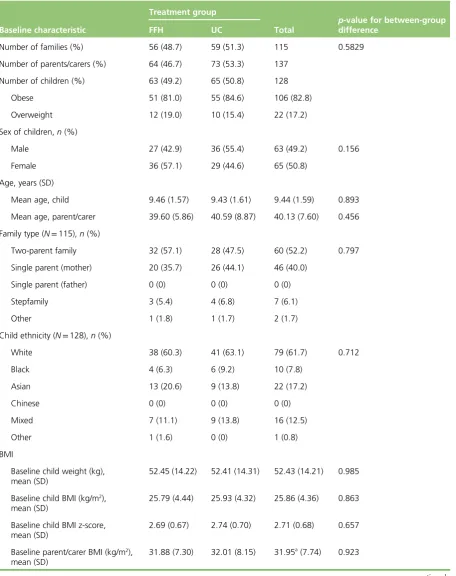
The study recruited 115 families, including 128 children (63 boys and 65 girls), between March 2012 and February 2014. A total of 56 families were randomised to Families for Health version 2 intervention arm and 59 families to the usual-care control arm. Passive recruitment methods resulted in a higher proportion of the total number of families recruited [passive (72/115) vs. active (43/115);p<0.007].
Baseline characteristics were similar across the two arms, with the exception of socioeconomic status, with the Families for Health arm having a higher proportion of families from managerial and professional occupations than the control arm.
Follow-up
There was 80% retention of families in the study at 3 months and 72% retention at 12 months. Follow-up was lower for usual care at 12 months [Families for Health (78.6%) vs. usual care (66.1%)].
Clinical outcomes
Economic evaluation
The economic evaluation showed that mean costs for the 12-month post-randomisation period were significantly higher in the Families for Health arm than in the usual-care arm (£998 vs. £548), with a cost difference of £450 (95% CI £249 to £650;p<0.001). This was mainly driven by the higher cost of the Families for Health programme, which was more expensive than all the various usual-care provision. There was no significant difference in mean QALYs over the 12-month post-randomisation period between the Families for Health arm and the usual-care arm (0.83 vs. 0.83; mean difference 0.0009). The mean incremental cost-effectiveness of Families for Health was estimated at £552,175 per QALY gained, and the probability that Families for Health is cost-effective is approximately 28% at a £20,000 cost-effectiveness threshold. When health outcomes were measured in terms of longitudinal change in BMI z-score, the mean incremental cost-effectiveness of Families for Health was dominated by usual care in health economic terms, and the probability that Families for Health is cost-effective did not exceed 2% across a range of cost-effectiveness thresholds.
Process evaluation
Seven Families for Health groups were run across the three trial sites. The proportion of families that attended at least one session was higher in the Families for Health arm (42/56, 75%) than in the usual care arm (24/59, 40.7%) (p=0.001). There were 62.5% of families who completed at least five sessions of Families for Health, and were defined as completers. Families for Health was delivered broadly, as planned, but challenges included families waiting more than 3 months to receive the intervention, delivering the programme with an insufficient number of families and tailoring a manualised programme to meet individual family needs. Key aspects received well by families were better understanding of food labelling, informing food choices, positive influence on parenting skills, support from others and raising their child’s awareness of health. Based on the quantity and quality of what was delivered, the process evaluation indicates that the intervention was implemented reasonably well, probably as well as could be expected when scaled up over three sites.
Conclusions
Families for Health was neither clinically effective nor cost-effective for the management of obesity in children aged 6–11 years, in comparison with usual care.
Implications for public health
Usual care for obesity management evolved from nothing to a reasonably high level of provision in the time between the pilot evaluation of Families for Health and the implementation of the trial. Usual care differed in different sites and may have evolved to suit local needs, making the best of local practitioner skills and local resources, which may explain why it is more effective than Families for Health. However, at least 47.5% of families did not receive the usual-care intervention, and so informing parents of their child’s weight may actually be the effective component.
Childhood obesity is hard to treat. Even treatment interventions that are shown to be effective may only have a modest impact.
Further research implications
Rather than a focus on the treatment of obesity, shifting attention to the role of parents in the prevention of obesity, alongside school-based prevention initiatives, may be worthy of future research. The
‘whole-systems approach’to tackle obesity advocated by Public Health England is also a very important new research programme.
Trial registration
This study is registered as ISRCTN45032201.
Funding
Chapter 1
Introduction
Scientific background
Childhood obesity, both in the UK and internationally, is known to be a major public health burden. The most recent Health Survey for England found that between 1995 and 2005 obesity in children aged 2–10 years in England rose from 10% to 17% in boys and from 11% to 17% in girls.1However, the trend
may now be reversing, with 13% of boys and 12% of girls found to be obese in 2013.1Analysis of
general practice data found a similar trend, with the prevalence of childhood overweight and obesity stabilising from 2004 to 2013 in children aged 2–10 years.2This prevalence is still too high, with over
one-third (33.5%) of children in year 6 (aged 10–11 years) in England classified as either overweight or obese in the 2013/14 school year.3This translates to over 172,000 children in year 6 alone who are
overweight or obese.
Childhood overweight and obesity have been linked to a number of long-term and immediate physiological and psychological health risks,4,5with associations between childhood body mass index
(BMI) and type 2 diabetes, hypertension and coronary heart disease in adulthood.6This means that the
prevention and management of childhood obesity is a public health priority. Effective interventions to treat children who are obese, to reduce ill health in children and to reduce the proportion of children whose obesity continues into adulthood are needed.
In 2008, there were an estimated 314–375 weight management programmes for children in operation in England at any one time.7These lifestyle interventions focused on diet, physical activity, behaviour change
or any combination of these factors, and included programmes, courses or clubs, and online services. They could include programmes that were designed for overweight or obese children and young people, or for their parents, carers or families; designed primarily for adults but that accept, or may be used by, children and young people; or provided by the public, private or voluntary sector, in the community or in (or via) primary care organisations. Aickenet al.7noted that some were small local schemes, whereas
others were available on a regional or national basis.
Care pathway for weight management of children and young people
Government guidelines describe a three-tier pyramid model for weight management, with three levels of service, from universal services, offered to everybody, through to specialist services, provided to those with particular needs.8Level 1 represents the core preventative services that all children, young people and
their families should have access to, while level 2 represents targeted weight management services. The Families for Health intervention fits into level 2. This level of intervention is often aimed at children and young people with a BMI between the 91st and 98th centile, and services typically take the form of multicomponent family-based interventions, often taking place in community settings. They may also be called‘early intervention services’. Level 3 is specialist support, offered to children with a BMI≥99.6th centile, with a medical cause of obesity, significant comorbidity or complex needs. The Department of Health has recommended that overweight or obese children should be referred to appropriate weight management services.9
Evidence for effectiveness of level 2 child obesity interventions
A Cochrane systematic review of interventions to treat obesity identified 64 randomised controlled trials (RCTs).10Thirty-seven studies were lifestyle interventions for children aged<12 years (four dietary, nine
Recent UK-based trials of interventions targeting children who are obese have covered a variety of approaches. A RCT of the 9-week family-based community programme MEND (Mind, Exercise, Nutrition . . . Do it!; Mytime Active, Bromley, UK) with 116 children (aged 8–12 years) showed a between-group difference in the BMI z-score at the 6-month follow-up of–0.24 [95% confidence interval (CI)–0.34 to –0.13;p<0.0001;n=82] in favour of MEND over the waiting list control.11A further RCT compared
paediatric dietitians using a one-to-one behavioural approach (5 hours) with standard dietetic care (1.5 hours) in 134 children (aged 5–11 years).12No significant differences in BMI z-scores were found at
6 or 12 months. A feasibility RCT that compared the community-based Watch It programme (delivered by health trainers) with a waiting list control, in 70 children and adolescents, found no significant change in BMI z-score and treatment.13A RCT of Epstein’s family-based behavioural treatment in a UK hospital, with
72 participants, found that there was no significant difference between the intervention and waiting list groups in BMI z-score, although both treatment and control groups showed significant reductions.14
A National Institute for Health and Care Excellence (NICE) guideline on managing overweight and obesity among children and young people suggested that targeting both parents and children, or whole families, is effective in reducing BMI z-scores.15By the end of a programme, evidence on interventions involving
families showed no negative effect on well-being and, in some cases, showed positive effects. Similarly, a review of the limited research on interventions focusing on parenting to treat childhood obesity shows a small positive effect on weight-related outcomes.16
Family-based interventions rooted in behaviour theory have been shown to achieve better treatment effectiveness than those rooted in family systems theory.17A recent review of published studies18
investigating family-based childhood obesity interventions in the UK included 10 studies. The majority of programmes reviewed lasted 12 weeks, with only three studies providing follow-up data at 12 months or longer. Change in adiposity was a short-term benefit of participation, but there was insufficient robust evidence to suggest that this benefit was long-lasting and many studies were methodologically weak with limited internal validity. The authors concluded that there was insufficient evidence on how the inclusion of parents and the wider family may impact on the effectiveness of UK community-based weight management programmes for children and young people.18
Evidence for cost-effectiveness of child obesity interventions
Oude Luttikhuiset al.10point to a paucity of cost-effectiveness studies in this area. A recent US study of
families in which both children and parents were overweight or obese found that the cost per unit weight lost by parents and children was lower for family-based group treatment than for an intervention that treated the parent and child separately.19Evidence from seven short-term health economic analyses
suggests that, in the short term, lifestyle weight management programmes will result in an increased cost to the NHS in terms of BMI z-score gains when compared with routine care. However, overall small (and in some cases non-significant) improvements in BMI z-scores can be achieved.15Interventions that lead to
even small reductions in BMI can be cost-effective in the long term at conventional cost-effectiveness thresholds, provided that the short-term effects on BMI can be sustained into adulthood. The NICE
guidance suggested that evidence from these studies is directly applicable, but there were some potentially serious limitations to the studies.15
From randomised controlled trial to practice
Two recent studies have investigated the roll-out of an intervention tested in a RCT into the
community.20,21Both were based on the multicomponent family-based weight management intervention,
could be improved for particular groups.21They felt that the intervention should be implemented in such a
way as to achieve sustained impact for all groups by modifying content, training and implementation.20
Parenting programmes
It has been argued that parenting programmes have potential to improve the mental health and well-being of children, as well as improve family relationships and benefit the community as whole.22
A public health approach to parenting is needed to ensure that more parents benefit and that a societal-level impact is achieved.22The effectiveness of parenting interventions in the treatment and
prevention of childhood obesity has shown a small positive effect on weight-related outcomes,16but this
approach has not been investigated in a RCT in the UK.
Development of the Families for Health intervention
‘Families for Health’is a manualised group-based family intervention for the treatment of children aged 6–11 years who are overweight or obese, which could be an option in the care pathway as a targeted ‘early-intervention’service. The programme was developed at Warwick University and supported by a Department of Health career development award to the principal investigator. The programme differs from other interventions for childhood obesity being used or tested in the UK by offering a greater emphasis on parenting skills, relationship skills and emotional and social development, combined with information about lifestyle. Parents and children attend separate groups, meeting mid-way for a healthy snack and activity. The groups are led by two trained facilitators.
The development and evaluation of the Families for Health programme has followed the Medical Research Council (MRC)’s framework for complex interventions.23A pre–post pilot study in Coventry of 27 children
showed that a mean reduction in children’s BMI z-scores from baseline was sustained at 9 months (–0.21, 95% CI–0.35 to–0.07;p=0.007) and 2 years (–0.23, 95% CI–0.42 to 0.03;p=0.027).24,25There were
also other health-related improvements. Interview data showed that parents found the parenting approach helpful, providing the tools for them to become‘agents of change’in the family. The NHS costs to deliver the programme were £517 per family or £402 per child.25The process evaluation of the pilot study
showed the need for minor modifications to the programme including more physical activity, removal of some unnecessary material, a reduction in the number of sessions and addition of follow-up sessions. These changes to the intervention might increase effectiveness.
The materials for version 1 of this programme were developed by Candida Hunt and the University of Warwick team, including investigators in this trial (WR and SS-B).26Following development and evaluation
of the original programme Families for Health version 1,24,25changes were made including shortening the
delivery from 12 to 10 sessions, adding two follow-up sessions and enhancing the information given to families on healthy eating and pedometers. The programme combines information on parenting skills, social and emotional development, as well as lifestyle change. The parenting aspects are based on the Nurturing Programme from Family Links (Family Links, Oxford, UK),27and the circle time elements in the
children’s programme have parallels with the Family Links Nurturing Programme for schools.28
The main principles underpinning the Families for Health intervention are that the parents are identified as the agents of change responsible for implementing lifestyle change in the family.29The parenting aspects
aim to support and increase parental capacity to implement and maintain the lifestyle changes that they would like to try each week. The focus is on healthy eating (not dieting) and activity for the whole family (that is, not just for the child who is overweight), with an emphasis on children growing into their weight rather than weight loss. The programme aims to promote a sustainable, healthy approach to family-wide lifestyle change. The programme puts greater emphasis on parenting skills, relationship skills, and emotional and social development than other similar interventions, and combines this with information about lifestyle. These form a core theme throughout and are integrated alongside topics in each weekly session.
Rationale for research
Although family-based interventions for the treatment of childhood obesity have become more common, the inclusion of parenting skills within a programme is less so. Such a programme may be effective in the treatment and prevention of childhood obesity,16,24,25and so it is important to investigate the impact on
families with overweight and obese children.
This RCT provides evidence of the effectiveness and cost-effectiveness of the Families for Health
programme, which emphasises parenting alongside a healthy lifestyle as an alternative approach for the treatment of obesity in 6- to 11-year-olds.
Aims and objectives
The aim of the trial was to assess the effectiveness and cost-effectiveness of the Families for Health programme delivered within the NHS.
The objectives were to:
l assess the effectiveness of the Families for Health programme in reducing the BMI z-score in children aged 6–11 years who are overweight or obese
l evaluate the cost-effectiveness of the Families for Health programme [expressed in terms of incremental cost per quality-adjusted life-year (QALY) gained]
l investigate parents’and children’s views of the programme and their observations on approaches to maximising impact
Chapter 2
Trial design and methods
Study design
The‘Families for Health’trial evaluated the effectiveness of the Families for Health programme in comparison with usual care in children aged 6–11 years who were overweight or obese. The trial was a multicentre RCT with parallel economic and process evaluations. Families were randomised (1 : 1) to one of two arms: Families for Health (target 60 families) or usual care (target 60 families). Further details of the interventions are described inTreatment groups.
The primary outcome measure was the change in children’s BMI z-score at 12 months. All primary and secondary outcomes were assessed at baseline, the end of the programme (3 months) and 12 months post randomisation, to evaluate both the short- and long-term effects.
Study settings
The Families for Health study agreed collaborations with three West Midlands primary care trusts. These primary care trusts offered Families for Health as part of their care pathway for the treatment of childhood obesity, alongside their usual care. The three sites are referred to as site A, site B and site C in this report.
In sites A and C, the Families for Health intervention was run in a leisure centre (local authority) and in site B it was run in a community centre with a sports hall.
Ethical approval and research governance
Ethical approval for the study was obtained from the National Research Ethics Service (NRES) West
Midlands–Coventry and Warwickshire (reference number 11/WM/0290) on 3 October 2011.
The trial was sponsored by the University of Warwick. NHS Research and Development approvals were obtained with the participating NHS trusts. The trial was conducted in accordance with the standard operating procedures of the Warwick Clinical Trials Unit.30
A Trial Steering Committee (TSC) was convened every 6 months, comprising four independent members [chairperson, topic expert, statistician and parent (service user)] who advised on changes to the protocol, the analyses plans and oversaw the management of the trial. A Data Monitoring and Ethics Committee (DMEC) was convened annually, comprising three independent members (chairperson/topic expert, statistician and health economist). The DMEC considered any ethical issues and adverse events, and reviewed the interim analyses including BMI z-score, European Quality of Life-5 Dimensions Youth version (EQ-5D-Y) and European Quality of Life-5 Dimensions (EQ-5D) (presented blind) data.
All data were stored securely and anonymised in accordance with the Data Protection Act,31and the trial
was conducted in compliance with the principles of MRC’s Good Clinical Practice guidelines,32the
Declaration of Helsinki33and other requirements as appropriate. All research staff were trained in good