Generation Planning using WASP Software
Seyedehnasim Seyedpour Esmaeilzad
1, Soheila Parandeh
21
Center of Solar Energy Research and Applications, Middle East Technical University, Ankara 06800, Turkey
2
Department of Electrical Engineering and Computer Science, Graduate University of Advanced Technology,
Kerman, Iran
---***---Abstract –In this paper the optimal plan for developing a power system over the next 15 years is determine. The system's load over the past 36 years, along with the characteristics of the power plants is given. First, according to the methods presented in the literature, by using the courier information of the past 36 years, the network load in the next 15 years should be estimated. Then, by using the WASP software and entering the characteristics of each power plant, all possible modes of supply can be determined using these generating units and the combination that produces the best efficiency and the lowest objective cost function. It is necessary to determine the best objective function by changing the composition and arrangement of the units added each year.
Key Words: Power system, power system operation and planning, Distribution system
1. INTRODUCTION
Power systems are one of the largest and most complex systems known to provide electricity to consumers [1, 2]. Electricity is one of the most important and widely used forms of energy used by various consumers, such as home and industrial consumers, so it is important to know how to supply and cost electricity[3]. One of the most important challenges of the power system is the technical and technical issues of the components of these systems and the provision of low electricity cost to consumers, as the price of electricity is strongly influenced by other costs[4]. In order to analyze the transient behavior of any uncertainties in the system, state-space model of the system need to be obtained[5, 6].
In this study, we examine how the development plan of an electric power system is determined by integer linear programming [24, 25]. Multi-purpose multi-period production development planning issues to determine the options for power generation technology to be added, and where on the grid to be created to simultaneously minimize multiple objectives such as cost and air pollution. Unmet demand is also considered as a cost in the objective function[26]. The proposed method considers the reliability of the system[27].
The method used here explicitly considers the existence of system components and operational planning. Stochastic simulation is used to generate component existence scenarios, and then the problem of linear integer optimization mixed with integers to find optimal expansion or development solutions is solved by considering these scenarios[28]. The method used in the GAMS software environment will be implemented on the sample power system and the results will be analyzed and evaluated. This paper presents a new nonlinear model for multi-year planning of coordinated development of production and transmission, considering the high level of influence of wind farms on the power system[29]. In the proposed approach, uncertainties related to load demand and wind power are modeled using two-level stochastic programming and then the optimal power system development plan between the generating units and the candidate transmission lines is based on minimum analysis maximum regret is selected. Finally, the proposed model is implemented on the 24-bus sample bus reliability model and the effect of the number of scenarios on the computational load of the scheduling problem and the final optimal response is evaluated [30, 31].
2. Load Information
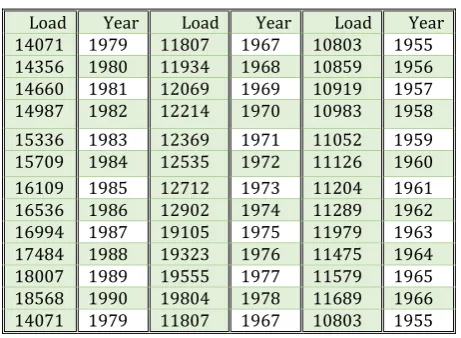
[image:2.595.183.414.479.648.2]In the power industry, efficient and effective design and operation have always been the focus of attention, so reducing annual network costs is essential[32]. Therefore, parallel capacitors with varying tap ratio are used to control the voltage of the buses in the minimum and maximum permissible range[33, 34]. Despite extensive studies of capacitance shifts in power grids, there is a lack of in-depth investigation into two fundamental issues. First, the simultaneous investigation of other variables at the disposal of the operator, such as regulating the pulse rate and capacitance in power systems, and the relevance of these activities to other parameters at the disposal of the system operator, is more important. Second, economic scrutiny and its analysis as a link between technical and economic decision-making require more attention. In addition, considering uncertainties in the parameters affecting curbside is also a factor that represents a wider and more complete range of choices for network decision makers[35]. For this purpose, the main question of this research is how to plan reactive power considering other variables and parameters of decision maker network. In this regard, considering the effect of load uncertainty with respect to reactive power generator constraints, bus voltage range, tap change range and shunt capacitance size changes have been analyzed. The demand is given in Table 1.
Table -1: Sample Table format
Load Year Load Year Load Year
14071 1979 11807 1967 10803 1955
14356 1980 11934 1968 10859 1956
14660 1981 12069 1969 10919 1957
14987 1982 12214 1970 10983 1958
15336 1983 12369 1971 11052 1959
15709 1984 12535 1972 11126 1960
16109 1985 12712 1973 11204 1961
16536 1986 12902 1974 11289 1962
16994 1987 19105 1975 11979 1963
17484 1988 19323 1976 11475 1964
18007 1989 19555 1977 11579 1965
18568 1990 19804 1978 11689 1966
14071 1979 11807 1967 10803 1955
2.1. Assumptions
3. Development Units
These units are similar to existing units. The following limitations apply to these units. Only one new hydroelectric unit can be added to the system each year. Only 3 new 325 MW heaters per year can be added to the system. Only 4 new 160 MW gas units per year can be added to the system. Only five new 120 MW gas units per year can be added to the system. Ignores environmental costs. Internal and external interest rates are 15% and 7% respectively. Every kilowatt-hour is 860 kcal.
3.1. Load Forecasting
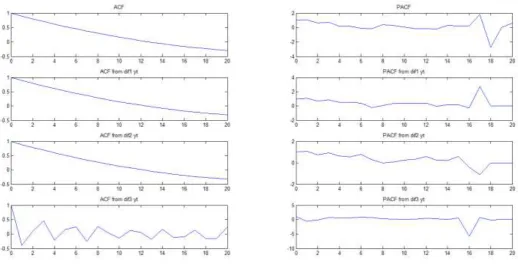
In the first part, given the burden of the past 36 years, we predict the burden for the next 15 years. The Box-Jenkins method is used for this purpose. ACF and PACF charts were used to determine the time series static. These two diagrams are for Figure 1 for the past 36 years. For the time series to be static and therefore to be used in the auto regression model, it is necessary to quickly break the autocorrelation function (ACF) curve. According to Figure 1, this occurs after three time derivatives. Therefore, the third derivative of the time series in question is used for the ARIMA model[38,39]. The ARIMA model is obtained using the third derivative as follows:
-1 0.05825q +
1 =
A(q) (1)
By writing the third derivative in terms of ARIMA model delay and expansion values:
e + 4) -y(t 0.05825 +
3) -0.82528y(t
+ 2) -y(t 2.82525
-1) -y(t 2.94175 =
y(t)
(2)
3.3. Determine the optimal design
[image:3.595.237.359.416.496.2]WASP software is used to determine the optimal production plan. The different parts of doing this project are as follows: The first sub module of this software is about shared data. The following is completed using the problem data.
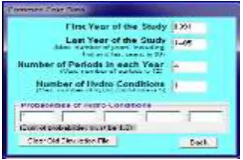
Figure 1. Wasp panel
After entering the information on loads and existing units and the units added to the development plan, we proceed to the first 3 modules, to the second 3 modules, which relate to the decision on fixed layout of the plants. The wasp panel is shown in Fig1. The CONGEN module must first specify a fixed combination of power plants to provide the least load. This module produces all the combinations available for system development, subject to the constraints of the problem, providing only one layout per year and no optimization. These arrangements are then given as input to the MERSIM module. This module calculates the reliability indices for each arrangement, depending on the combination of power plants entering each year. Finally, the DYNPRO module extracts the optimal development plan with the information obtained from the previous modules. These steps are performed in WASP software and the corresponding file is available in the report folder. A variable expansion study mode should be used at this stage. In fact, for each year, several different arrangements are considered (depending on the amount of tunneling restrictions). After this module, the configurations as before are transferred to the MERSIM module, where parameters such as production rate, fuel cost and reliability indicators are calculated. After the implementation of MERSIM there is a batch of make-up with almost cost and parameters of LOLP and ENS.
U + U U
U0 0 (3)
4. Simulation and Results
[image:4.595.40.559.218.486.2]Considering the uncertainties in the parameters affecting network decision-making activities, the reactive power scheduling scheme is randomly selected and requires risk-based economic and scenario-based surveys. It should be noted here that in order to have a proper analysis, the planning structure needs a proper problem solving solution. Therefore, reducing the size of the problem and at the same time having accurate answers using common techniques in the literature on the issue of dimensionality reduction such as scenario reduction techniques have been considered in the design of this research. In the literature, the use of smart optimization methods for solving such dimensions is suggested. For this purpose, the particle swarm algorithm is used in this research to solve the problem and provide optimal response to network decision-making activities.
Figure 2. Load and generation prediction
As shown in Fig2. most industrial applications have a considerable number of small consumers of different sizes and it is very difficult for any consumer to use the correct capacitance for each consumer and in addition they are not always connected all at once and as a result installing the capacitor on any motor will be useless. Sometimes installing a central capacitor may be preferable to installing a small number of small capacitors.
5. CONCLUSION
How to use electrical networks is one of the most important issues of electrical engineers and it is always the effort of the designers and users of the network to design and operate the network to provide better service and provide customer satisfaction. Subscribers' low power factor is one of the concerns of distribution network operators as it increases network losses and reduces the limited capacity of line and transformers operation and also reduces the quality of delivery power. Local reactive power generation can also reduce power losses and free up grid capacity, which can increase power quality if the reactive power compensation level is not met.
REFERENCES
[1] M. Khatibi, H. Zargarzadeh, and M. Barzegaran, "Power system dynamic model reduction by means of an iterative SVD-Krylov model reduction method," in 2016 IEEE Power & Energy Society Innovative Smart Grid Technologies Conference (ISGT), 2016, pp. 1-6.
[3] M. Khatibi and S. Ahmed, "Impact of Distributed Energy Resources on Frequency Regulation of the Bulk Power System," arXiv preprint arXiv:1906.09295, 2019.
[4] M. Khatibi and S. Ahmed, "Optimal resilient defense strategy against false data injection attacks on power system state estimation," in 2018 IEEE Power & Energy Society Innovative Smart Grid Technologies Conference (ISGT), 2018, pp. 1-5.
[5] N. Ghanbari and S. Bhattacharya, "Battery State of Charge Management by Voltage Feedback Modification," in 2019 IEEE Transportation Electrification Conference and Expo (ITEC), 2019, pp. 1-5.
[6] N. Ghanbari, P. M. Shabestari, A. Mehrizi-Sani, and S. Bhattacharya, "State-space modeling and reachability analysis for a dc microgrid," in 2019 IEEE Applied Power Electronics Conference and Exposition (APEC), 2019, pp. 2882-2886.
[7] E. Jun, W. Kim, and S. H. Chang, "The analysis of security cost for different energy sources," Applied Energy, vol. 86, pp. 1894-1901, 2009.
[8] A. Pantoja and N. Quijano, "A population dynamics approach for the dispatch of distributed generators," IEEE Transactions on Industrial Electronics, vol. 58, pp. 4559-4567, 2011.
[9] Z. Bo, O. Shaojie, Z. Jianhua, S. Hui, W. Geng, and Z. Ming, "An analysis of previous blackouts in the world: Lessons for China׳ s power industry," Renewable and Sustainable Energy Reviews, vol. 42, pp. 1151-1163, 2015.
[10] I. Aminzahed, Y. Zhang, and M. Jabbari, "Energy harvesting from a five-story building and investigation of frequency effect on output power," International Journal on Interactive Design and Manufacturing (IJIDeM), vol. 10, pp. 301-308, 2016.
[11] B. Morvaj, R. Evins, and J. Carmeliet, "Optimization framework for distributed energy systems with integrated electrical grid constraints," Applied energy, vol. 171, pp. 296-313, 2016.
[12] H. Pourgharibshahi, M. T. Andani, Z. Ramezani, K. Yousefpour, T. Pourseif, and L. Ghorbanzadeh, "Controller Design of Voltage Source Converter Using Nyquist Array," in 2018 Clemson University Power Systems Conference (PSC), 2018, pp. 1-6.
[13] N. Ebrahimi, S. Nugroho, A. F. Taha, N. Gatsis, W. Gao, and A. Jafari, "Dynamic Actuator Selection and Robust State-Feedback Control of Networked Soft Actuators," in 2018 IEEE International Conference on Robotics and Automation (ICRA), 2018, pp. 2857-2864.
[14] N. Ebrahimi, "Simulation of a Three link-Six Musculo Skeletal Arm Activated by Hill Muscle Model," 2019.
[15] N. Ebrahimi, "Modeling, Simulation and Control of a Robotic Arm."
[16] H. Mehrabi and I. Aminzahed, "Design and testing of a microgripper with SMA actuator for manipulation of micro components," Microsystem Technologies, June 19 2019.
[17] H. Mehrabi, M. Hamedi, and I. Aminzahed, "A novel design and fabrication of a micro-gripper for manipulation of micro-scale parts actuated by a bending piezoelectric," Microsystem Technologies, pp. 1-9, 2019.
[18] O. Ciftci, M. Mehrtash, F. Safdarian, and A. Kargarian, "Chance-Constrained Microgrid Energy Management with Flexibility Constraints Provided by Battery Storage," in 2019 IEEE Texas Power and Energy Conference (TPEC), 2019, pp. 1-6.
[19] F. Safdarian and A. Kargarian, "Time decomposition strategy for security-constrained economic dispatch," IET Generation, Transmission & Distribution, 2019.
[20] A. Esmaili Torshabi and L. Ghorbanzadeh, "A Study on Stereoscopic X-ray Imaging Data Set on the Accuracy of Real-Time Tumor Tracking in External Beam Radiotherapy," Technology in cancer research & treatment, vol. 16, pp. 167-177, 2017.
[22] H. Kanchev, D. Lu, F. Colas, V. Lazarov, and B. Francois, "Energy management and operational planning of a microgrid with a PV-based active generator for smart grid applications," IEEE transactions on industrial electronics, vol. 58, pp. 4583-4592, 2011.
[23] K. P. Detroja, "Optimal autonomous microgrid operation: A holistic view," Applied energy, vol. 173, pp. 320-330, 2016.
[24] O. Salari, M. Nouri, K. H. Zaad, A. Bakhshai, and P. Jain, "A Multi-Source Inverter for Electric Drive Vehicles," in 2018 IEEE Energy Conversion Congress and Exposition (ECCE), 2018, pp. 3872-3879.
[25] O. Salari, K. H. Zaad, A. Bakhshai, and P. Jain, "Hybrid Energy Storage Systems for Electric Vehicles: Multi-Source Inverter Topologies," in 2018 14th International Conference on Power Electronics (CIEP), 2018, pp. 111-116.
[26] A. Khalkhali, M. Afroosheh, and M. Seyedi, "Modeling and Prediction of FRP Composite Cylinder tubes Crashworthiness Characteristics," 2014.
[27] A. R. Sadat, S. Ahmadian, and N. Vosoughi, "A novel torque ripple reduction of switched reluctance motor based on DTC-SVM method," in 2018 IEEE Texas Power and Energy Conference (TPEC), 2018, pp. 1-6.
[28] N. Lidula and A. Rajapakse, "Microgrids research: A review of experimental microgrids and test systems," Renewable and Sustainable Energy Reviews, vol. 15, pp. 186-202, 2011.
[29] F. Safdarian, A. Mohammadi, and A. Kargarian, "Temporal Decomposition for Security-Constrained Unit Commitment," IEEE Transactions on Power Systems, 2019.
[30] G. Xu, V. Vittal, A. Meklin, and J. E. Thalman, "Controlled islanding demonstrations on the WECC system," IEEE Transactions on Power Systems, vol. 26, pp. 334-343, 2010.
[31] P. Trodden, W. Bukhsh, A. Grothey, and K. McKinnon, "MILP formulation for controlled islanding of power networks," International Journal of Electrical Power & Energy Systems, vol. 45, pp. 501-508, 2013.
[32] K. Sun, D.-Z. Zheng, and Q. Lu, "Splitting strategies for islanding operation of large-scale power systems using OBDD-based methods," IEEE transactions on Power Systems, vol. 18, pp. 912-923, 2003.
[33] K. Sun, D.-Z. Zheng, and Q. Lu, "A simulation study of OBDD-based proper splitting strategies for power systems under consideration of transient stability," IEEE Transactions on Power Systems, vol. 20, pp. 389-399, 2005.
[34] N. Senroy, G. T. Heydt, and V. Vittal, "Decision tree assisted controlled islanding," IEEE Transactions on Power Systems, vol. 21, pp. 1790-1797, 2006.
[35] I. Genc, R. Diao, V. Vittal, S. Kolluri, and S. Mandal, "Decision tree-based preventive and corrective control applications for dynamic security enhancement in power systems," IEEE Transactions on Power Systems, vol. 25, pp. 1611-1619, 2010.
[36] M. Manfren, P. Caputo, and G. Costa, "Paradigm shift in urban energy systems through distributed generation: Methods and models," Applied energy, vol. 88, pp. 1032-1048, 2011.
[37] G. Kyriakarakos, D. D. Piromalis, A. I. Dounis, K. G. Arvanitis, and G. Papadakis, "Intelligent demand side energy management system for autonomous polygeneration microgrids," Applied Energy, vol. 103, pp. 39-51, 2013.
[38] C.-S. Karavas, G. Kyriakarakos, K. G. Arvanitis, and G. Papadakis, "A multi-agent decentralized energy management system based on distributed intelligence for the design and control of autonomous polygeneration microgrids," Energy Conversion and Management, vol. 103, pp. 166-179, 2015.