Participatory Practices in Open Source Educational Software:
The Case of the Moodle Bug Tracker Community
A thesis submitted for the award of Doctor of Education
October 2013
Eamon Costello
School of Education
Table of Contents
Declaration
I, Eamon Costellodeclare that this thesis has not been submitted as an exercise for a degree at this or any other
university; is entirely my own work, where appropriate the unpublished and/or published
work of others is duly acknowledged in the text; and agree that the Library may lend or copy
the thesis upon request. This permission covers only single copies made for study purposes,
subject to normal conditions of acknowledgement.
Signed Date
_________________________ _________________
Acknowledgements and Dedication
I would like to thank my supervisors Mr. Keith Johnson and Professor Vincent Wade for their
dedication and patience, their willingness to share their expertise and experience and most of
all for encouraging and motivating me by their example. The support of my wife Deirdre
must be acknowledged as she could explain to the children on many occasions that even
though Dad was not in College he was nonetheless working. I would also like to thank and
acknowledge the support of my colleagues in Dublin City University, in particular Lorraine
Delaney, Seamus Fox, Mark Glynn, Richard O Kennedy and Jean Hughes without whom I
would not have been afforded this opportunity. This study would not of course have been
possible without the time and generosity of spirit of the participants themselves and I hope
that I have been fair and just in my appraisals.
In a time of deep economic turmoil in Ireland and across the world I would like to dedicate
this thesis to all those looking for work, in particular those educating and up-skilling
themselves in the hopes of a better future, and to the educators entrusted in helping them.
Abstract
The Moodle bug tracker is a boundary object that faces software developers who write and
maintain Moodle’s code whilst simultaneously exposing an interface to a much wider public
world of ordinary Moodle users. Bugs can be fixed and new features requested by recording
them in this boundary object which then tracks their progress. Such tracking has proven a
powerful lure for researchers and despite much study of the phenomenon of open source bug
fixing and software building, much remains to be answered. Specifically this research sought
to analyse the implications of this massively distributed collaborative development process
for education and educational technology (which to give it due importance, is referred to here
as educational infrastructure). It examined the ways educators - who are defined inclusively
as all those involved in supporting the educational enterprise - interface and contribute to the
development of the Virtual Learning Environment (VLE) Moodle at this granular level of
bug fixing.
Two things happen in a successful bug resolution: it is reported and then it is fixed. Only one
population is skilled and empowered to engage in the latter but, in theory, anyone can be a
reporter. Here data was collected and analysed about these two types of participant. Firstly
archival and statistical analysis of thousands of issues contained in the tracker database itself
was undertaken. These canonical accounts of bug-fixing contributed to the design and
conduct of interviews of both core participants of this community and more casual or
peripheral members. A broad spectrum of community participants were interviewed from
fringe and casual members to some of the key actors including Tim Hunt of the Open
University, Moodle HQ members Helen Foster and Michael du Raadt and Moodle founder
Martin Dougiamas. Ethnographically inspired methods were utilised in the interview analysis
to uncover rich stories of actual practice that were absent from the accounts of the database
itself. This lead to several contributions to research being made by this thesis: a depiction of
the dynamics and characteristics of an open source software community of practice dedicated
to the enterprise of education; an enumeration of three complexes of factors leading to bug
tracker issue resolution elicited from participants themselves; an account of particular
unknown or under-reported non-canonical issue resolution factors; a model of the role of bug
tracker issue mediators including the novel brokerage act of proxy issue submission and
improvement; and a theory of how bug trackers are resistant to predictive models of issue
resolution. These findings have implications for educational institutions reliant on VLEs and
for developers of open source educational software.
Table of Contents
1 Introduction ... 1
1.1 Background ... 1
1.2 An Overview of the Research ... 4
1.2.1 Research Approach ... 4
1.2.2 Research Questions ... 5
1.2.3 Research Design and Methods ... 6
1.2.4 The Research Process ... 7
1.3 Outline of the Thesis ... 7
1.3.1 Chapter Two: Review of the Literature ... 7
1.3.2 Chapter Three: Methodology ... 8
1.3.3 Chapter Four: Findings... 8
1.3.4 Chapter Five: Discussion ... 9
1.3.5 Chapter Six: Conclusion... 9
2 Review of the Literature ... 11
2.1 Introduction ... 11
2.2 Communities of Practice ... 12
2.2.1 Introduction to Communities of Practice ... 12
2.2.2 Apprenticeship ... 12
2.2.3 Story and Practice Canons... 14
2.2.4 Wenger’s Communities of Practice Model ... 15
2.2.5 Four Dualities ... 18
2.2.6 Problems with the Communities of Practice Model... 22
2.3 Communities of Open Source Software ... 26
2.3.1 Introduction ... 26
2.3.2 What is Open Source? ... 26
2.3.3 Open Source Software Research ... 28
2.3.4 Research Attractiveness of Open Source ... 29
2.3.5 Form and Governance ... 30
2.3.6 Evolution and Project Size ... 33
2.3.7 Motivation and Identity ... 34
2.3.8 Social and Individual Identity ... 35
2.3.9 Joining and Legitimate Peripheral Participation ... 38
2.3.10 Open Source Boundary Objects ... 40
2.3.11 Open Source Communities Summary ... 42
2.4 Chapter Conclusion ... 42
3 Methodology ... 47
3.1 Introduction ... 47
3.2 The Research Problem ... 47
3.3 Perspective of the Researcher ... 49
3.4 Philosophical Underpinnings: Pragmatism and Social Constructivism... 50
3.5 The Case Study Research Approach ... 52
3.5.1 Case Study and other Approaches ... 53
3.5.2 Case Study and Context or Boundary ... 54
3.6 Data Sources and Collection Techniques ... 55
3.6.1 Tracker Participant Profile Data ... 55
3.6.2 Tracker Issue Data Collection and Analysis ... 56
3.6.3 Interviewing ... 58
3.7 Interview Analysis ... 64
3.7.1 Nvivo Qualitative Data Analysis Software ... 64
3.7.2 Coding ... 65
3.7.3 First Cycle (Open) Coding ... 65
3.7.4 Second Level Coding ... 67
3.8 Reliability, Credibility and Ethical Considerations ... 71
3.8.1 Ethical Considerations... 71
3.8.2 Reliability and Credibility ... 72
3.9 Conclusion ... 75
4 Findings ... 76
4.1 Introduction ... 76
4.2 What are the Characteristics of Participants in the Moodle Bug Tracker and the Issues they Engage in? ... 77
4.2.1 Introduction to the Tracker ... 77
4.2.2 Tracker Participant Profile Sample ... 78
4.2.3 Moodle Tracker Issue Anatomy: Three Examples ... 87
4.2.4 Tracker Issues in the Aggregate ... 94
4.2.5 Summary ... 103
4.3 What Factors and Related Processes are Important in the Resolution of Issues in Moodle? ... 104
4.3.1 What Factors are Important to Issue Resolution in the Submitter’s Primary
Domain? 106
4.3.2 What is the Process of Issue Resolution in the Primary Submitter Domain?
113
4.3.3 What Factors are Important to Issue Resolution in the Assignee Domain? . 116
4.3.4 What is the Process of Issue Resolution in the Assignee Domain? ... 120
4.3.5 What Factors are Important when the Submitter has their own Code? ... 122
4.3.6 How Does Having Your Own Code Affect the Process of Issue Resolution? 124 4.3.7 Issue Resolution Factors and Processes Summary ... 128
4.4 What are the Key Identities and Roles of the Participants? ... 129
4.4.1 Introduction ... 129
4.4.2 Identities ... 129
4.4.3 Developer Identities ... 129
4.4.4 Teacher Identities ... 131
4.4.5 Brokers ... 132
4.4.6 Inside Moodle Community and Identity ... 133
4.4.7 Outside Moodle Community and Identity ... 134
4.5 How do Educators Come to Participate in the Inner Community of Moodle Development? ... 135
4.5.1 Introduction ... 135
4.5.2 Trajectories ... 135
4.5.3 Non-Identities ... 139
4.5.4 Inertias ... 141
4.5.5 Identity, Roles and Participation Summary ... 143
4.6 Chapter Summary ... 144
5 Discussion... 145
5.1 Introduction ... 145
5.2 Revisiting the Research Problem ... 145
5.3 Characteristics of Tracker Participants and the Issues they Engage in ... 146
5.3.1 Communities Defined by their Members’ Backgrounds... 147
5.3.2 Communities Defined by their Members’ Practices ... 150
5.4 Importance of Non-Canonical Factors in Issue Resolution ... 152
5.5 Identities and Roles ... 159
5.5.1 Developers ... 159
5.5.2 Teachers and Brokers ... 160
5.6 Participating in the Inner Community of Moodle Development ... 162
5.6.1 Trajectories Based on Gift-Giving of Code ... 162
5.6.2 Trajectories Based on Brokerage ... 164
5.6.3 Group Identity and Community Entry ... 168
5.6.4 Momentums and Inertias ... 169
5.6.5 Discussion Conclusion ... 171
6 Conclusion ... 175
6.1 Summary of Findings ... 175
6.2 Potential Implications and Future Research ... 177
Bibliography ... 181
List of Appendices
Appendix A Interview Schedule ... 195
Appendix B Interview Solicitation Email Template ... 198
Appendix C Examples of Development of Coding Scheme ... 200
Appendix D Factors Believed Important to Issues Resolution ... 202
Appendix E Sample Excerpts from Interview Transcripts ... 204
List of Figures
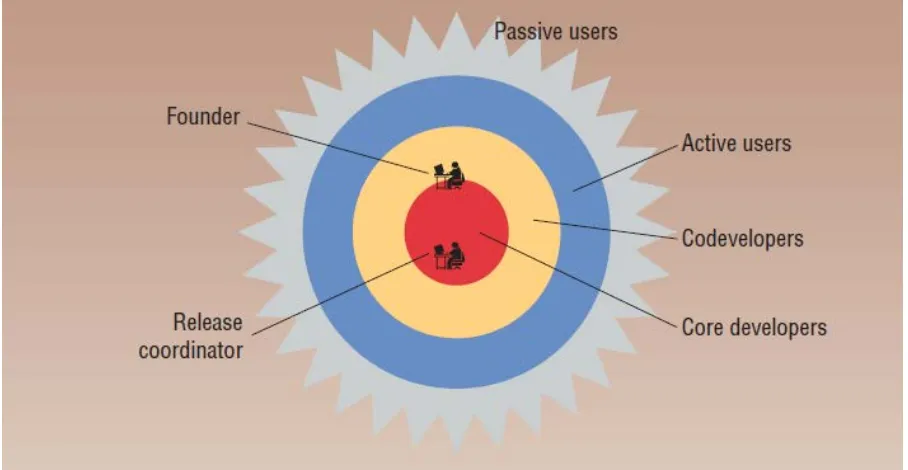
Figure 1 Onion Model of Open Source Projects (Crowston & Howison, 2006) ... 33
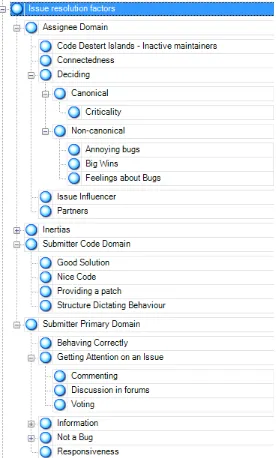
Figure 2 Snapshot from Nvivo of Issue Resolution Success Factors Coding... 68
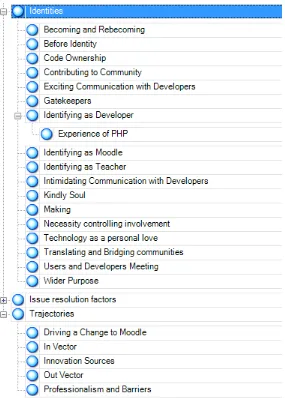
Figure 3 Identities and Trajectories ... 70
Figure 4 Map of Country of Residence of 101 Tracker Participants ... 79
Figure 5 Countries of Residence Ranked of 101 Tracker Members ... 80
Figure 6 Known Place of Work of Tracker Member Sample ... 81
Figure 7 Occupations of Tracker Member Sample ... 82
Figure 8 Known Educational Attainment Level of Tracker Member Sample ... 84
Figure 9 Educational Background Type of Tracker Member Sample ... 85
Figure 10 Forum Profile of a Tracker Member ... 87
Figure 11 Annotated Screenshot of Tracker Issue MDL-7932 ... 89
Figure 12 Discussion of Calendar Import Issue ... 93
Figure 13 Issues Reported per Person ... 95
Figure 14 Votes per Issue ... 98
Figure 15 Participants per Issue ... 100
Figure 16 Invalid Issues Grouped by Submitter Type ... 102
Figure 17 Bugs versus New/Improved Feature Resolutions... 102
Figure 18 Eventual Resolutions of Issue Submission by Assignees versus Non-Assignees . 103 Figure 19 Resolution Factor Participant Domains ... 105
Figure 20 Paths through Submitter Primary Domain ... 114
Figure 21 Assignee Domain Issue Resolution Process: Paths to a Fix ... 121
Figure 22 Submitter Code Domain ... 125
Figure 23 Badges in Discussion Forums ... 140
Figure 24 Countries using Moodle in 2011 ... 148
List of Tables
Table 1 Key Theoretical Concepts ... 43
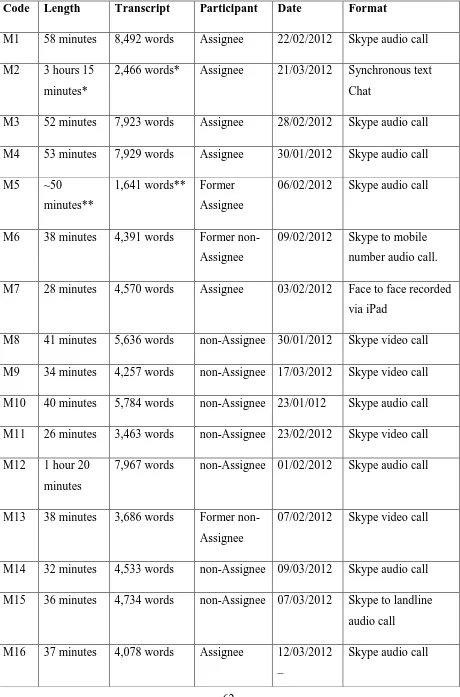
Table 2 Interview Data Collection Summary ... 62
Table 3 Highest Educational Attainment Level of Tracker Member Sample ... 83
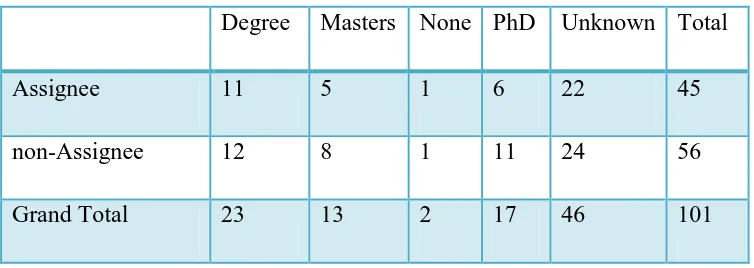
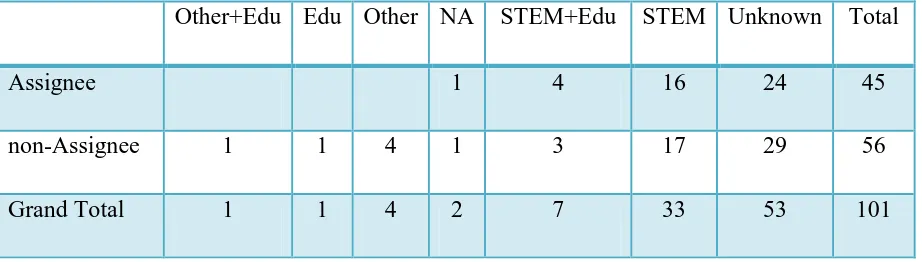
Table 4 Educational Background Type of Tracker Member Sample ... 84
Table 5 Summary of Issues Reported ... 96
Table 6 Top 20 Issue Submitters ... 97
Table 7 Summary of Votes per Issue ... 99
Table 8 Participants per Issue ... 99
List of Abbreviations
CIC – Collaborative Innovation with Customers
CVS – Content Versioning System
DCU – Dublin City University
Edu – Education
GPL – General Public License
ICT – Information Communications Technology
IT – Information Technology
KM – Knowledge Management
Moodle – Modular Object OrientateD Learning Environment
Moodle HQ – Moodle Head Quarters (Moodle Pty Ltd)
MS Word – Microsoft Word
NA – Not Applicable
NFQ – National Framework for Qualifications
OER – Open Educational Resources
OS – Operating System
OSI – Open Software Initiative
VLE – Virtual Learning Environment
OU – Open University (United Kingdom)
PHP – PHP Hypertext Pre-processor
SAT – Scholastic Aptitude Test
SCORM – Shareable Content Object Reference Model
STEM – Science, Technology, Engineering or Mathematics
YUI – Yahoo! User Interface (Library)
1
Introduction
1.1
Background
In January 2009 a lecturing colleague in Dublin City University (DCU) contacted me and
explained a problem she was experiencing with Moodle. For some reason the tests she had set
her accounting students, which they were to take using Moodle’s Quiz feature, were not
working. Incorrect student answers to the multiple choice questions were not being
negatively marked as she wanted but instead were being rounded up to zero. This, I
discovered, was due to no fault on her part in setting up the test but rather a problem with the
Moodle Quiz itself. This part of Moodle was broken. We had discovered a bug in the
software.
Others had also encountered this problem and were discussing the bug online. They did so in
the Moode.org community discussion forums, the first or outermost online layer of the vast
online Moodle community. In these forums educators who were experiencing this bug voiced
their frustration but also shared tips on how to overcome the problem. One workaround
involved applying a small piece of code, or patch to Moodle. As its name implies, a patch does not solve the problem in the fullest sense. Moodle remained broken but using this code
one could mend or patch up one’s own local copy of the software. Negative marking in the
Quiz could be made to function as it should. Applying this patch to DCU’s own copy of
Moodle was not an option for us however, as the University operated a strict policy of not
allowing modifications, or local customisations, to its Moodle installation. Tinkering with a
critical piece of the institutional infrastructure, even to fix a problem, was not an option.
What was required was for the original copy of Moodle, upon which all local copies are
based, to be fixed. Beneath the Moodle discussion forums there existed a place where such a
request could be made. This inner layer is known as the Moodle bug tracker, a database
where users can report bugs or issues they have encountered with Moodle. Here, more so
than in the discussion forums, a Moodle user affected by a bug, can interface directly with the
builders of Moodle, with those who are tasked or assigned with the software’s development
and maintenance. In this way I could cast my vote in favour of the fixing of the issue of the
negative marking in the Moodle Quiz.
Others concerned with this bug had also found their way to the tracker. There they too had
fix it. An important person who contributed to this discussion in the tracker was Tim Hunt of
the UK’s Open University (OU). He was the maintainer of the Quiz component in Moodle,
the developer, guardian and gatekeeper of the particular part of Moodle that allows teachers
to create, among other things, online tests consisting of multiple choice questions. Casting a
critical eye over the patch Tim was quick to point out that the proposed solution would not
work in all cases and that a better way would need to be found. So, for the time being,
Moodle remained broken.
I was intrigued to see how Moodle laid aspects of its development open through the tracker
and also by the complexity that it seemed was hindering the fixing of what appeared a fairly
serious flaw in this part of the software. The possibility of modifying the code of Moodle, of
being party to its development was clearly there, at least in theory. Indeed, it was a prospect
that had been a factor in DCU becoming one of the earliest adopters of Moodle in 2003 when
an evaluation committee cited its open source nature as something they hoped would allow
the University “unrestricted technical access to [develop the software], whether within our
own local resources, via collaboration with other users, or by contracting out to commercial
support companies” (McMullin & Munro, 2004, p. 1). There may have been good reasons
why, by 2009, DCU was operating a policy of not modifying its local version of Moodle but,
notwithstanding these, it was clearly against the spirit of what the University had initially
hoped for. Moreover, even if an institution could not adapt and customise software to its own
ends, the issue of the broken Quiz appeared to diminish the prospect that a wider global
community of distributed users could affect change. Despite the community reporting the
issue to the Moodle developers, giving multiple votes for its resolution and the proposal of a
fix, the issue had nonetheless languished for years unfixed.
Of course this was just one issue and from my narrow personal perspective, as it has been
outlined so far. Broader questions pressed to be answered such as: whether this issue was
characteristic of issues as a whole or what factors might determine whether issues in general might be fixed. Clearly there was a social process at work as much as an engineering one in
how issues were resolved. The Moodle bug tracker appeared a frontier between two worlds of
teacher and software developer. Discovering the workings of this realm, through the prism of
fixing or resolving issues, became the research imperative that motivated the study at hand.
Although, it was inspired by personal circumstances as described, the research problem is
also an important one with wider significance. The work of the developers of Moodle has a
global impact. A development in Moodle, even a small one, such as the bug in the Moodle
Quiz, can potentially affect over 70 million users worldwide (Moodle.org, 2013c). The
imperative became to uncover some of the workings of a social entity, the Moodle bug
tracker, lying in open view yet relatively unknown to educational research, at a frontier
between educational and technological worlds. What these communities are, how they
interact at this boundary, and how they work over time to attempt to build shared knowledge
is the focus of this study.
Moodle is an important artefact that has emerged as both a product and a driver of the move
to online education and the development and deployment of ICTs to this end. Divergent
perspectives have been taken on the rise of educational technology in third level education.
For some, such as Noble (1989), this move has represented a commodification of education,
the implementation of an industrial model at the expense of the individual teacher. In the
context of the VLE this debate was aptly captured by Dron (2006) in the title of his paper on
the topic –Any color you like as long as its blackboard – which posited cottage industry versus industrial models of education arguing that the VLE can, if left unchecked, allow the
technological form to dictate pedagogical patterns in subtle ways in a type of “educational
Fordism”. Noble’s (1989) alarm stems in part from a perception that the quality of education
was being diminished as it moved online. Christensen et al (2008) however, precisely warned
that incumbents in a market, treating higher education as such, would disparage new entrants
and more efficient forms (such as online learning) but that these forms would evolve and
adapt before becoming eventual dominant new forces in the overall market. In this way they
framed online education as a radically disruptive innovation.
That these new educational ICTs could disrupt education for the better (ultimately by
lowering or removing cost barriers) was taken up in several quarters, one prominent example
being the Open Educational Resources (OER) movement. Drawing philosophically on the
open education movement, and the traditions of distance and open education, the OER
movement advocated for the reuse and repurposing of digital educational resources with the
ultimate aim of broadening access to educational opportunities (D’Antoni, S., 2009).
Repurposing and reusing content also had analogues with the open source software
movement which we will later examine.
Moodle began in Curtain University in Australia as an offshoot of an (as yet unfinished) PhD
thesis by Martin Dougiamas (Dougiamas & Taylor, 2002, 2003; Dougiamas, 2007).
Dougiamas experienced frustration with the inability to adapt WebCT (because of the
restrictive nature of the software license) to his own ends of exploring interactive and socially
constructivist forms of online learning. Instead, he started writing his own alternative learning
environment that would come to be known as Moodle and instead of retaining strict
ownership of the code he decided to make it freely available. Moodle represented for many a
welcome confluence of the ideals of open education and open source. For example Moodle
claimed to be based on a “social constructivist” pedagogy which it is argued elsewhere
positively affected Moodle’s adoption (Costello, 2014) and was directly cited by some
adopters (McMullin & Munro, 2004). There are several other factors that proved important as
Moodle rose from relatively obscurity in 2001 (Dougiamas & Taylor, 2003) to holding a
dominant share of the open source VLE market by 2013 (Costello, E., 2014). Moodle
adopters also cited cost (due to its open source licensing model), fear of vendor lock-in to
proprietary licensed competitors such as Blackboard and the promise of adapting the software
to their own needs. A detailed analysis of 28 higher educational institutions self-professed
rationale for their adoption of Moodle is made by the author in an article dedicated to the
topic (Costello, 2014). Interesting network effects proved to be at play as the effective market
and choice of VLEs began to shrink between 2003 and 2011 (Bennett, 2011; Browne et al.,
2006; Hawkins & Rudy, 2008). The Open University of the UK’s adoption of Moodle and its
commitment to its development proved a massive boon to its credibility and paved the way
for more institutions to follow suit (Sclater, 2008).
Moodle is currently the dominant open source VLE in higher education. Moreover the VLE
itself has become increasingly important to the actual identity of a university - such that, it
has been argued, having a VLE may be as important as having a library (Costello, 2014,
Williams van Rooij, 2011). This study it is hoped will provide some more understanding of
something that has become critically important to the enterprise of higher education.
1.2
An Overview of the Research
1.2.1 Research Approach
This study is qualitative in nature. Although it draws on numerical data and proceeds in an
analytical fashion, it nonetheless does not claim to build objective truths about independent
phenomena. Rather, a social constructionist position is taken where knowledge comes from
the collective because “humans create and change the world around them through action and
interaction” (Corbin & Strauss, 2008, p. 6). Both the construction of Moodle and the conduct
of this research are conceived of as intrinsically social activities, their outputs the product of
confluences of social influence. As such a researcher is interpreting events; they become a
co-constructionist as they deconstruct and then reassemble the phenomena of study to come
to some final thesis. Such interpretations “cannot be separated from their own background,
history context and understanding” (Creswell, 2012, p. 39). Hence the background section
above which outlined (in the first person) the path of the researcher up to the outset of the
study and in so doing introduced some of the influences that colour its perspective.
Communities of practice provided an important theoretical touchstone to the design of this
study. The theory, as espoused by various proponents, perhaps most notably Wenger (1999),
holds powerful conceptions for analysing social groups, in particular for groups not
traditionally defined as organisations in legal or monetary senses as is the case with the
Moodle community. Rather, actors within these communities are defined by the practices they engage in (such as bug tracker issue resolution) and have identities and roles within the group that come to define and shape those practices.
1.2.2 Research Questions
Following from the constructivist/interpretative research perspective, and from the nature of
the phenomenon of study which was deemed unique and underexplored, a study of an
exploratory and elucidative nature was designed (Yin, 2009). The study is defined by the
following question:
What are the key practices of participation in open source educational software development, taking as a case study the Moodle bug tracker community?
Four sub-questions were designed to address the main research problem:
1. What are the characteristics of participants in the Moodle bug tracker and the issues they engage in?
2. What factors and related processes are important in the resolution of issues in Moodle?
3. What are the key identities and roles of the participants?
4. How do educators come to participate in the inner community of Moodle development?
Question one sought to examine the overall or aggregate appearance of tracker issues and
their participants. The second question sought to analyse, from the perspective of
participants, the community practice of issue resolution; to analyse what participants believed
to be important success factors as they engaged in this activity of attempting to resolve issues.
Question three addressed the issue of identity and its interplay with defined roles within the
community. Question four sought to build on the previous three questions and tie them back
together to address the overarching research aim: that of how educators (in a broad sense of
the term that extends beyond simply those in the classroom) come to participate and how this
affects Moodle development. That is, this question was concerned with momentums – of how
people enter the community or change role within in it in the pursuit of changing Moodle
itself.
1.2.3 Research Design and Methods
A case study may distinguish itself from a more purely ethnographic study by its
situatedness, by its bounding of the object to be studied as a specific event or activity rather
than a whole culture (Stake, 1978). Here the activity of mutual engagement in Moodle bug
tracker issues, in the joint enterprise of developing Moodle and the resultant shared repertoire
of communal resources that emerged, is the specific social practice under study (Wenger,
1998). A temporal bound to the case is defined by confining it to Moodle bug tracker issues
that were started between January 2007 (Moodle version 1.7.1) and February 2011 (Moodle
2.0.2). Community members were included in the study if they participated at least once in
the tracker during that time. The single-case study method of bounding an object of study
helped demarcate the research phenomenon. The case study was also suitable as this study
sought: to focus on contemporary events over which the researcher had limited control; and
was an area under explored and reported to date, leading to the requirement of an elucidative
and exploratory approach to the phenomenon (Yin, 2009).
A case study is also characterised by its use of multiple data types or sources (Yin, 2009).
The Moodle bug tracker is itself a vast data store and hence was the inevitable starting point
for collecting evidence for this study. Descriptive statistics were generated using software by
analysing reports from the Moodle bug tracker. The researcher also spent time reading
individual issues and three issues were selected and presented to demonstrate the unique
stories that exist within the multitude. A picture was also built of the participants of the
tracker community: of those who had the ability, as a result of long-standing membership, to
be assigned to fix issues; and those members by contrast who reported issues and lobbied for
their resolution.
A lack of participant voice was identified in the review of bug tracker literature and hence
interviews – which for Yin (2009) are often the most important data source in a case study –
were planned where “key respondents would be asked about the facts of a matter as well as
about their opinion of events” (Yin, 2009, p. 90). The bug tracker participant analysis
informed the selection of interviewees. Interviews were subsequently conducted according to
a semi-structured interview schedule.
1.2.4 The Research Process
A case study research approach was undertaken with data comprising the bug tracker itself
and interviews with participants. The research process proceeded iteratively as activities of
literature review, data sampling and research design were conducted to various degrees in
parallel, subscribing to the maxim that “analysis begins with the collection of the very first
pieces of data” (Corbin & Strauss, 2008, p. 47) or, in Merriam’s (1985, p. 207) conception of
the tight connection between data collection and analysis in case study research, that
“checking, verifying, testing, probing, and confirming collected data as you go” is key. In
April 2010 four prospective (and eventual) interviewees were identified following informal
conversations with them at a Moodle conference in London and a tentative outline of the
interview schedule was formed. In February 2011 systematic collection of data from the bug
tracker started, and was compiled and analysed using spreadsheets and the statistical package
R. The interview design was informed by this data analysis from the tracker in addition to the
pilot stage of discussions with participants at the 2010 Moodle UK conference. Between
January and April 2012 nineteen of the interviews were conducted with the final twentieth
interview concluded in early February 2013. Transcription and analysis of the interviews and
tracker data was deemed largely completed by this stage (though some level of analysis
continued during all stages of the thesis write-up).
1.3
Outline of the Thesis
1.3.1 Chapter Two: Review of the Literature
This chapter is divided into two sections. The first section explores the communities of
practice theory as a social model of human interaction and organisation. Key themes are
drawn out such as how communities interact with each other; how participants enter or are
apprenticed to a group; how a group negotiates meaning and potentially produces new
knowledge. Two important aspects – identities of community members, as defined by their on-going practice, and boundary objects which interface between communities – become relevant to the second section of the chapter which deals with situated studies of communities
of open source software such as Moodle. This second section of the literature review looks at
the boundary object of the software bug tracker. It examines how researchers have
conceptualised it and attempted to answer research questions such as why bugs or issues in
trackers may or may not be resolved, the joining trajectories of people into such communities
and how participants seek to affect change within the community.
1.3.2 Chapter Three: Methodology
The adoption of a single-case study was a consequence of the formulation of the research
problem: one that looks at a particular group (the bug tracker community) engaged in a
particular avowed practice (bug fixing). The case study is an appropriate form when the
researcher is examining contemporary events over which he/she has little control. The types
of questions used to tackle the research problem were informed by the perspective of the
researcher and have philosophical underpinnings in constructivism. They sought to elicit the
view of the participants. The questions focused on bug tracker communities, bug tracker issue
resolution, participant identities and processes of joining these communities. These question
topics were formulated based on relevant, related studies from the literature review. This
development of the research questions and the adoption of the case study approach is outlined
in Chapter Three.
The data from this study comprised the bug tracker database itself and participant interviews.
Most of the interviews were conducted via Skype, directly recorded and then transcribed.
They were then coded using established tools and methods from qualitative research. The
issues that contributed to the adoption and design of the particular chosen methods of
interviewing and coding are also discussed here as research design decisions are made clear
to the reader. Similarly, an examination is given of ethical issues that pertained to the study,
and how these were addressed. Finally, as a fitting conclusion to the chapter, the research’s
overall reliability is probed and then argued for.
1.3.3 Chapter Four: Findings
The research problem is decomposed into four sub-questions and the findings of this study
are presented under the headings of these questions. The first of these questions examines the
characteristics of the Moodle community in general terms i.e. in the aggregate using
descriptive statistics. The first sub-section of the Findings chapter, which addresses this first
research question, also maps to the first data source – the bug tracker database – and hence
largely matches the chronology of the research process (notwithstanding inherent degrees of
iterative parallelism). The subsequent three sections are based on the next three research
questions that were primarily addressed through the interview analysis. Research question
two examined the factors and processes of issue resolution. Its findings are presented
according to three themes that emerged in the analysis; these focus on the perspectives of the
bug tracker issue submitter, the bug tracker assignee (potential fixer) and the submitter who has written a fix to an issue. The next section addresses the roles and identities of the participants; how teachers, software developers and brokers who mediate between the two,
are motivated to act within the community. Lastly the concepts uncovered during the
previous sections are gathered and tied back to the main thesis statement, examining how
participants come to be involved in the community and whether such involvement can affect
change to Moodle’s code.
1.3.4 Chapter Five: Discussion
Chapter Five follows the same outline as the Findings chapter and is divided into sections
that broadly map to each of the four questions. These are not necessarily of equal weighting
as some findings were found to be more significant than others. Their significance was
determined by casting them in the light of the wider research literature and by drawing upon
the concepts from the literature review. Firstly the aspects of the Moodle tracker that give it
and its inhabitants a unique character and culture are argued for. It is also found to have many
characteristics of comparable communities such as the relative influence of assignees and the
importance of certain tasks such as commenting on an issue to get it fixed. The interesting
factors that contribute to bug tracker issue resolution are discussed including ones that are not
widely reported or represented in the literature. The approach taken uses theoretical
constructs from the first section of the literature review, such as the interplay of canonical and
non-canonical accounts of how work is carried out, to uncover aspects of the community
practice. Unique identities (such as those of teaching) and roles (such as mediators) that are
characteristic of this community are posited and examination is made of their relationship to
roles and identities (such as those of software developers) that are by contrast well
established in the literature.
1.3.5 Chapter Six: Conclusion
The final chapter provides a summary of the main findings and discusses possible further
implications. There are two main types of implication that flow from what is presented here.
The first relates to future research. This study, it is argued, has helped answer questions about
the nature of the boundary object that is the Moodle bug tracker, sitting as it does between the
worlds of educators and software developers. However, it has also raised interesting
possibilities for future research. Part of the aim of this research was to help tell the story of
this particular community, explore and describe its character through a case study in the hope
of informing a research agenda for open educational software development. There is
necessarily more work now to be done, to test whether, for example, the role of brokers found
here is characteristic of similar communities and whether it is related to a community’s
maturity or is instead unique to particular ones. Brokerage as a concept is commended to
open source tracker communities. They may recognise it instinctively as has been shown here
but the potential role of mediators may be undervalued in other comparable communities.
Lastly suggestions are made here for educational institutions. It is argued that they should
engage in helping develop entities such as Moodle for the sake of education generally as it
heads into an uncertain technological future.
2
Review of the Literature
2.1
Introduction
This literature review is structured in two main parts. The first deals with communities of
practice from a theoretical perceptive. This leads to a second part that deals with specific
studies that are closely related to the domain of the study at hand i.e. open source software
communities. In this way the scope of discussion is progressively narrowed so that the
context for the research question of this study, as discussed in the succeeding methodology
chapter, becomes clear.
The first section, on communities of practice, starts by looking at theoretical underpinnings.
This mirrors the research process itself (at least as construed in a post-facto form) where an
existing theory becomes the basis or foundation for a new enquiry. In this study a core group
of people involved with developing Moodle will be considered theoretically as a community
of practice. In doing this we will ask who these people are, what is it that they do and how
they engage in their work. To do this we must first explore the communities of practice field
and then drill down into particular researchers and particular concepts in this area that will be
of use to us. Although aspects of their methodological toolsets will be explored, our review of
communities of practice in the first section of this literature review will be from a broadly
theoretical perspective, as it contributes strongly to the theoretical basis of this study.
To bring the research back down to situated studies, a review of open source communities
will follow. This second part introduces the concept of open source and its place in research.
It then analyses specific research efforts that have been undertaken on open source
communities, considering their concerns, their methodological outlook, relevant findings but
also any lacunae, any angles which have not been fully explored or areas that are lying in
wait of the researcher (such as the intersection of education and open source).
2.2
Communities of Practice
2.2.1 Introduction to Communities of Practice
The aim of this study is to examine the community that builds Moodle and particular work
practices that its members engage in during their efforts. Specifically, we will look at how
they engage in solving problems that arise in Moodle’s software. This is a collective activity
and to explore more theoretically how this is underpinned we must take a look fundamentally
at communities themselves. The question we will now ask is how researchers have
conceptualised community activity in education and knowledge work literatures and what
ultimately this might tell us about what to expect of the Moodle community. In doing so we
will draw out key themes of the Wengerian community of practice model such as how
communities interact with each other; how participants enter or are apprenticed to a group;
and, once a group is formed, how members negotiate meaning and potentially spur
innovation.
2.2.2 Apprenticeship
Communities of practice are based on notions of disequilibrium within groups. Essentially
power relations are at play and some members must weigh less than others. Resnick (1987) in
her American Educational Research Association Presidential address, invoked the concept of
apprenticeship. She called for “bridging apprenticeships” that would greater connect theoretical learning and actual practice. At around this time, anthropologists returning from
the field were finding that failures in education could be attributed to the misapplication of
didactic modes of teaching in situations where learning in the apprenticeship mode was more
appropriate or more culturally customary (Jordan, 1989). Thus the notion of apprenticeship,
as something applicable to almost all forms of learning, began to take hold in educational
research, particularly after Lave and Wenger (1991). For many this was a chance to reframe
learning situations and argue against a more didactic model. As such, it has a heritage in the
educational tradition of such thinkers as Dewey, Vygotsky and Freire. Similar to Rogers’
rechristening of teachers as facilitators (Rogers et al., 1965), a language of apprenticeship and practice was instituted to revive and renew constructivist principles. Before long commentators could claim that Lave and Wenger had become “a very influential corrective to
previous educational practice” (Cox, 2005, p. 3).
Lave and Wenger’s (1991) original communities of practice model was based on their
critique of five individual studies of the apprenticeships of midwives, tailors, quartermasters,
butchers and recovering alcoholics. In their meta-analysis of these apprenticeship studies, the
importance of social interaction, social identity and negotiated admission to a cultural
heritage emerged as strong themes. Failure to integrate could occur if interactions were not
rich enough or systemic structures caused sharing to be obstructed. For instance in the case of
the butchers, apprentices were physically segregated from masters for crucial tasks, which led
to a greater likelihood of their failure to fully apprentice. On the other hand, in optimal
scenarios, relatively complex mental abilities, such as mathematics, could be acquired under
apprenticeship that were found to be on a par with those obtained through formal learning, as
in the case of the tailors. It was this later study where Lave (1977, p. 177) found evidence that
“apprenticeship training does teach general problem solving skills”. The tailor and midwife
studies occurred in the developing world. The butcher and quartermaster studies by contrast
were of groups that were embedded within larger organisations in modern developed
economies. The recovering alcoholics were not partaking in an apprenticeship in the truest
sense, however the study was admitted for demonstrating many of the same characteristics as
the other studies and Lave (1988) went on to study a diversity of groupings (such as dieters).
Another influential ethnographic study that was to contribute to the community of practice
literature, but not cited by Wenger and Lave (1991) at this point, was that of Orr’s PhD work
which examined a community of photocopier repair technicians, and was later published as a
book (Orr, 1996). Finally, Wenger himself did most of his most important early fieldwork on
a group of claims processers in an insurance company. Considering these latter studies, it is
clear that the notion of apprenticeship is a loose one as it relates to communities of practice.
As Cox (2005) has it, only a naive reading of the early communities of practice literature
would see it as a call to the return of apprenticeship styles of learning in the modern world.
However, it still serves as an important pointer in this literature to a valuable theme; that of
more incarnate representations of social activity.
One of the key concepts of Lave and Wenger, appropriated from apprenticeship, is that of
Legitimate Peripheral Participation. This was their demonstration that people could be successfully inducted to a group by simply hanging around at its fringes. Just sitting and
observing the norms and language of the group was a necessary first step to participation, as
something of the culture of the group must be recognised and learned before a newcomer can
input and begin to become a member. In acquiring the norms, viewpoints and behaviours of
the group, they become enculturated (Brown et al., 1989). Practices could not be disentangled
or abstracted from the cultures in which they were enacted. Assimilation and adherence to
cultural norms was a necessary prerequisite to learning (or being allowed to learn) the more
explicit and formal practices of the group. There is also an element of making prospective
members “wait their turn”. As one member of an open source software group puts it, “If you
aren’t willing to do a little research, observe how the project functions, and figure out how to
make your mark on it, do you really belong on the team?” (Krishnamurthy, 2005, p. 30).
Wenger has given perhaps the most complete subsequent theoretical model of the community
of practice. His focus diverged somewhat from Lave and he concentrated more on
applications relevant to industrial workplaces than to formal educational settings and in the
main this is the strand of research most relevant to us here. But before looking at his theory it
is worth also considering the contribution of Brown, Collins and Duguid (1991) because of
its relevance and impact on educational research in general and also of its strong focus on the
Orr study of photocopier technicians which is, because it focused on technicians involved in
fixing things, pertinent to the research at hand.
2.2.3 Story and Practice Canons
Brown and Collins (1991) refined the community of practice model by building on the idea
of situated cognition, that called attention back to the site of learning and of activity (Brown et al., 1989). This was arrived at by observing the common disconnect between classroom
activities and their applied corollaries in the real world. They argued that school often
acculturates students more to itself than to its teaching disciplines such that “what students do
tends to be ersatz activity” (Brown et al., 1989, p. 38). They found an over-reliance on the
explication of instruction and of activity in the classroom to the detriment of actual learning.
Later, they widened their focus from formal education to organisational theory in general to
also look at (ostensibly) non-educational workplaces. The disconnect between the de jure and the de facto activities is key, and led them to the claim that:
…reliance on espoused practice (which we refer to as canonical practice) can blind an organization's core to the actual, and usually valuable practices of its members (including noncanonical practices, such as “work arounds”). It is the actual practices, however, that determine the success or failure of organizations (Brown & Duguid, 1991, p. 41).
Because of the problem caused by official work specifications, used for training and formal
learning, being out of kilter with actual effective practices, a learning-in-working conception was proposed by Brown and Collins (1991) in an attempt to tangle doing and knowing and
keep the idea up front that learning should always be situated and embodied rather than
abstracted. From this standpoint learning could be seen as “the bridge between working and
innovating” (Brown & Duguid, 1991).
“Actual practice inevitably involves tricky interpolations between abstract accounts and
situated demands” (Brown & Duguid, 1991, p. 42) and the limited abstract accounts can be
seen, to use terminology from Geertz (1973), as thinly described. So for example thinly described actions are given in Orr’s (1990) corporate training manuals, training courses and
job descriptions of the photocopy repair technicians. However, they also had unsanctioned
modus operandi based on their communal experience and in-the-moment action. We can
conceive thin and thick in a qualitative rather than quantitative sense: the thin formal
descriptions may come in a very thick manual indeed, and likewise an effective real-world
stratagem may be a simple one.
The exchange of work related anecdotes is also highlighted as an important component of
problem solving in a community of practice. Orr had described in detail how the technicians
exchanged “war stories” when solving a particularly intractable problem (Orr, 1990).
Storytelling can never be captured in canonical accounts, though it is a vital sensemaking
activity (Weick, 1995). Its role in problem identification and resolution to the photocopier
repair technicians is attested by Orr: “The use of story-telling both to preserve knowledge and
to consider it in subsequent diagnoses coincides with the narrative character of diagnosis”
(Orr, 1990, p. 188).
There is some reflexivity going on here, as many if not most of these primary studies were
carried out by researchers who privileged narrativity in their own methodology (especially
Orr and Wenger for example). There is a primacy of narrative both in the subject of study and
its explication: “The intent of Talking about Machines is descriptive: to present the work of
the technicians and to use it to suggest what may be learned from studies of work practice in
contrast to more abstracted ways of writing about work” (Orr, 2006, p. 1816).
For Brown et al. (Brown et al., 1989), the coalface, where the customers, technicians and
technical experts of Orr’s study interacted to solve problems, could be an exciting place
characterised by innovation. They concluded that “through their constant adapting to changing membership and changing circumstances, evolving communities-of-practice are
significant sites of innovating” (Brown et al., 1989, p. 41). Here they added not only learning,
but also knowledge creation, termed innovation, to the functions of communities of practice.
Innovation is a key strand in the community of practice research literature, as we will
examine later.
2.2.4 Wenger’s Communities of Practice Model
For Wenger communities of practice abound and we are inevitably members of several
whether through work, school, home or hobbies. However, he is clear in distinguishing that
communities of practice are not simply based upon geographical location, nor even on shared
interest. Rather the group must be actively engaged in a work practice and must further exhibit a social manifestation that is defined by three particular characteristics:
What it is about—its joint enterprise as understood and continually renegotiated by its
members
• How it functions—the relationships of mutual engagement that bind members together
into a social entity
• What capability it has produced—the shared repertoire of communal resources
(routines, sensibilities, artefacts, vocabulary, styles, etc.) that members have developed over time (Wenger, 1998, p. 2).
Communities of practice are groupings within wider organisations and a constellation of such
communities may exist according to the exclusive and overlapping activities in which people
may be engaged. Wenger attempts to distinguish a community of practice from formal teams,
project groups or networks, because of its emphasis on doing, its definition by knowledge and
its identity through practice respectively. It also has a life that does not map conveniently to
officially sanctioned organisational structures. Its life cycle moves from genesis and
coalescence through a phase of activity and then dispersion before finally staying alive in
individual and collective memories. The “informal fabric” of communities within an
organisation add value, do real work and even allow an organisation to function (Wenger,
1999). Nonetheless, they may not have formal organisational approval and as such may exist
upon a continuum of such communities from the completely unrecognised, which
consequently have limited impact, to official and heralded entities with transformative power.
The status of a community of practice, and the degree of its legitimacy within its parent
organisation, led Wenger to look at how they might be fostered and developed. To this end,
organisations should be open to recognising more aspects of organisational life and in so
doing legitimise participation in effective communities of practice. They should also work to calibrate their strategy with practices and above all be “attuned to real practices” (Wenger,
1998, p. 2). This became the dominant theme of subsequent work by Wenger. Speaking to an
audience of managers based in mostly large corporate organisations, he further elaborated
how communities of practice might be recognised and grown in the service of the wider
organisation (Wenger et al., 2002). Although this was raising interesting research ideas for
others (Kimble et al., 2001; Hildreth & Kimble, 2002; Von Krogh et al., 2003; West &
Lakhani, 2008) there were also concerns that, in the worst possible scenario, it might hide
other forms of normative and networked control by organisations (Cox, 2005). Detractors
might be consoled that although the promise of implementing communities of practice within
organisations is great, their realisation could well be trickier and we are warned by Wenger
(1998) that this may represent something of an art form as opposed to a science:
Communities of practice do not usually require heavy institutional infrastructures, but their members do need time and space to collaborate. They do not require much management, but they can use leadership. They self-organize, but they flourish when their learning fits with their organizational environment. The art is to help such communities find resources and connections without overwhelming them with organizational meddling. This need for balance reflects the following paradox: No community can fully design the learning of another; but conversely no community can fully design its own learning (Wenger, 1998, p. 2).
As also illustrated in the above example Wenger makes extensive use of dualities, paradoxes
and contradictions in his writing. Sometimes, to the frustration even of his proponents:
…this book can be frustrating to read and understand. It is at times an excruciatingly difficult read, because of the different way that Wenger looks at and defines his underlying concepts. However, the book is worth every penny (Gillespie, 2000, p. 96).
Although this style may give rise to the criticism of making his theory less applicable,
rigorous, or consistent, it is also one of its key strengths as it is arguable that it has allowed
the communities of practice paradigm to be amenable to reframing. A frame is a term used to represent a social phenomenon and, for Benford and Snow (2000), the elasticity of a frame may be a factor in its success or usefulness; communities of practice has proved to have this
property i.e. it has been reused and remixed in a diversity of contexts by subsequent
researchers.
A second important point should be made about ostensible contradictions in Wenger’s
communities of practice model. This is that the Eastern idea of duality, which allows conflicting ideas to coexist without resolution, can allow new conceptions to be admitted
(Hildreth & Kimble, 2002). Or, where there is resolution it “does not mean consensus [but]
rather, representations, or inscriptions, contain at every stage the traces of multiple
viewpoints, translations and incomplete battles” (Star & Griesemer, 1989, p. 413). It is often
in the areas of tension that creativity comes about and novelty may arise. Wenger is given to
looking in these areas and identifies four important dualities at the core of the communities of
practice concept (Wenger, 1999) and two of these dualities are particularly important to this
thesis.
2.2.5 Four Dualities
2.2.5.1Designed/Emergent
One duality, as we have seen, involves community construction: are they designed or emergent? These are two important sources of organisational structure. Design may be a stricture upon emergence, but much that is useful only emerges during interaction that has
been pre-planned i.e. designed. This idea has been pursued by researchers interested in the
design of online learning environments (Barab et al., 2004).
2.2.5.2Identification/Negotiability
Design is a proposal of identity and this creation of identity or identification, for Wenger (1999), is an expression of power because it attempts to nail down meaning which is counter
to negotiation. Identification is totemic. Members may feel they most strongly belong to
communities where their sense of identity is highest, where they have negotiated the most
meaning. Over-identification can be destructive, leaving participants unable to negotiate
either amongst themselves (civil war) or with external communities (cult-like behaviour). For
learning to happen some identity must be given up as a novelty is negotiated. The dual
processes of negotiability and identification thus form a basis for looking at learning, identity,
and power in social terms.
2.2.5.3Local/Global
A third dialectic is that a community member’s identity always involves interplay between
local and global events. People “come together, not only to engage in pursuing some enterprise, but also to figure out how [their] engagement fits in the broader scheme of things”
(Wenger, 1999, p. 162). In the knowledge management literature this has some analogues in
the relation of buzz (face to face and co-located activities) to pipelines, which are more formal external connections that are spatially distributed, such as alliances with outside
groups including possibly rivals (Bathelt et al., 2004).
Interaction amongst different communities is a very important issue, as these occurrences are
rarely straightforward and they have been the subject of much theorising. One of the ways in
which two communities interact is via boundary objects. Boundary objects act as abstractions that exist in two worlds, can be adaptable to viewpoints of each, but are robust enough to
maintain identity across both:
In conducting collective work, people coming together from different social worlds frequently have the experience of addressing an object that has a different meaning for each of them. Each social world has partial jurisdiction over the resources represented by that object, and mismatches caused by the overlap become problems for negotiation (Star & Griesemer, 1989, p. 412).
For Wenger a person who operates in the intersecting boundaries of communities is a special
class of actor known as a broker. Brokers hold a special role as they must straddle two worlds and mitigate between them:
The job of brokering is complex. It involves processes of translation, co-ordination and alignment between perspectives. It requires enough legitimacy to influence the development of a practice, mobilise attention and address conflicting interests. It also requires the ability to link practices by facilitating transactions between them, and to cause learning by introducing into a practice elements of another (Wenger, 1998, p. 109).
Boundary objects can be artefacts, discourses or processes. What they have in common is that
they are both formed by, and the subject of, interactions where two communities abut. For some organisations the activities that happen at their boundaries are so important that they
have defined boundary practices and take steps to actively manage their peripheries. Perhaps
most intriguingly of all, Wenger postulates the organisation itself as a boundary object:
An organisational structure, for instance, is often considered as an overarching umbrella that incorporates multiple parts by specifying their relationships. But, in fact, it is more usefully designed as a boundary object intended to enable multiple practices to negotiate their relationships and connect their perspectives (Wenger, 2000, p. 235).
As we will see in Chapter Three, this idea helped to conceptualise the phenomenon of this
study as set of interfaces, and hypothesise in general terms that one of the core Moodle
community’s defining aspects would be its local/global duality and its interaction with
external enabling worlds (such as that of Higher Education).
2.2.5.4Participation/Reification
Another important duality Wenger identifies, that is part of a long research tradition and
relevant to this study, is that of participation/reification. Fundamentally, this duality relates to knowledge. With Legitimate Peripheral Participation (Lave & Wenger, 1991), knowledge for individuals involves competence and experience, while learning occurs during their
interplay. Competence arises and exists in a specific social space; experience can happen
either in or outside of that space; and it is the intrusion and extrusion of experience into and
ability to participate meaningfully” whilst learning is the “process of becoming a member of
the working community of practice” (Jordan, 1996, p. 18).
As Wenger began to move away from legitimate peripheral participation his research focused
more on knowledge as a commodity, as something that organisations could seek to maximise.
However, to illustrate that this commoditisation is not trivial he posed knowledge as a
duality. It contained a tension between its abstract (reified) and is living (participatory) forms
(Wenger, 1999). This idea has a large place in the literature. Polanyi introduced the term tacit knowledge as “a knowledge which we cannot tell” (Polanyi, 1967, p. 5). Hunches, guess work, unconscious habit and social idioms may all be forms of tacit knowledge that it is not
possible to observe and measure but which may nonetheless be a vital contributory factor to
overall knowledge. Brown and Duguid call this know-how and know-what:
The organizational knowledge that constitutes 'core-competency' is more than 'know-what' explicit knowledge which may be shared by several. A core competency requires the more elusive 'know-how' – the particular ability to put know-what into practice (Brown & Duguid, 1998, p .91).
Wenger describes reification ashow we a use a term as a projection of what we mean:
It is an abstraction. It does not do the work by itself. But after a while, as I use it to think with, it starts talking to me as though it were alive. Whereas in participation we recognise ourselves in each other, in reification we project ourselves onto the world, and not having to recognise ourselves in those projections, we attribute to our meanings an independent existence. This contrast between mutuality and projection is an important difference between participation and reification (Wenger, 1999, p. 58).
Wenger sees participation and reification as complementary processes. If reification has
hardened something into an inappropriate form, participation can make it malleable again e.g.
a judge may interpret laws. Likewise, reification may compensate for the limitations of
participation, due to its informal, subjective and irreproducible nature e.g. notes are made of a
meeting. This leads to the idea of a trade-off inherent in a knowledge artefact between its
reified and participatory aspects. For Hildreth and Kimble (2002) this is the degree of
hardness or softness that knowledge has. If knowledge is mostly soft it has a high proportion of participation in its make-up. If it is predominantly hard it is made up of mostly reified
knowledge.
2.2.5.5Knowledge and Innovation
The participation/reification duality is examined in the Knowledge Management (KM)
literature by Wenger and others and tacit knowledge becomes something of a unicorn, always
elusive but vigorously hunted. However, the capture and codification of this knowledge –
which is futile (Hildreth & Kimble, 2002) – is not the real goal. What is most sought after
from students in classrooms or workers in multinational companies, in the literature, is
innovation. Innovation is used as shorthand for the creation of new knowledge. In educational
research, this may represent the pinnacle for students. In knowledge management literature,
this may represent a product or process that gives competitive advantage to an organisation.
Innovation has an extra significance in communities of practice where open source is used
because the openness creates a huge increase in the amount of potential available information
to participants: “At its root, open innovation is based on a landscape of abundant knowledge,
which must be used readily if it is to provide value for the company that created it”
(Chesbrough, 2003, p. 37).
For Von Krogh (1998) innovation will involve some process whereby an individual's tacit
knowledge is made explicit to the group that he/she is part of. Personal knowledge, for
example, because it has yet to be expressed may require new language and hence
“recognition of new business opportunities might require an innovative vocabulary such as
‘neutraceuticals’ ‘infotainment’ ‘edutainment’ or ‘cybershopping’” (Von Krogh, 1998, p.
135). This may be relevant to a development community such as Moodle because they are
well educated and skilled but more importantly because they are in a wider peer community
where new technologies, methodologies and beliefs can appear as rapidly as old ones may
fall into obsolescence. These could be new pedagogies as much as new programming
languages.
Although innovation is a useful concept it can be something of an unquestioned ideal in the
literature, and we need to be careful of its exposition as an almost completely benign
phenomenon. Perhaps it is that no more than one villain can be cast in a particular story.
Thus, in situated cognition, it is abstract and institutionalised forms of teaching that are to blame. In knowledge management it is the ignorance of available or potential information
that is the problem. However there remains the basic issue of unwanted or invalid innovation:
creative plagiarist strategies in the classroom, bugs and viruses in computer software,