GOLDSMITHS Research Online
Thesis
(PhD)
Hadziselimovic, Adnan
FLOSSTV Free, Libre, Open Source Software (FLOSS)
within participatory 'TV hacking' Media and Arts Practices
You may cite this version as: Hadziselimovic, Adnan. 2012. FLOSSTV Free,
Libre, Open Source Software (FLOSS) within participatory 'TV hacking' Media
and Arts Practices. Doctoral thesis, Goldsmiths, University of London.
[Thesis]: Goldsmiths Research Online.
Available at: http://eprints.gold.ac.uk/6922/
COPYRIGHT
This is a thesis accepted for a Higher Degree of the University of London. It is an unpublished document and the copyright is held by the author. All persons consulting this thesis must read and abide by the Copyright Declaration below.
COPYRIGHT DECLARATION
I recognise that the copyright and other relevant Intellectual Property Rights (IPR) of the above-described thesis rests with the author and/or other IPR holders and that no quotation from it or information derived from it may be published without the prior written consent of the author.
ACCESS
A non-exclusive, non-transferable licence is hereby granted to those using or reproducing, in whole or in part, the material for valid purposes, providing the copyright owners are acknowledged using the normal conventions. Where specific permission to use material is required, this is identified and such permission must be sought from the copyright holder or agency cited.
REPRODUCTION
All material supplied via Goldsmiths Library and Goldsmiths Research Online (GRO) is protected by copyright and other intellectual property rights, and duplication or sale of all or part of any of the Data Collections is not permitted, except that material may be duplicated by you for your research use or for educational purposes in electronic or print form. You must obtain permission for any other use. Electronic or print copies may not be offered, whether for sale or otherwise to anyone. This copy has been supplied on the understanding that it is copyright material and that no quotation from the thesis may be published without proper acknowledgement.
FLOSSTV
Free, Libre, Open Source Software (FLOSS)
within participatory 'TV hacking' Media and Arts Practices
Adnan Hadziselimovic
Goldsmiths, University of London
I hereby confirm that the work presented is my own:
Abstract
This research operates in the context of a European political discourse, where the main concern is counter-cultural approaches to non-mandatory collaboration and contractual agreements. FLOSSTV (Free, Libre, Open Source Software TV) covers a broad range of practices, from television via documentary up to media arts productions. This thesis documents the endeavour to formulate a policy for FLOSS culture. FLOSSTV studies the impact of new intellectual property legislation on media production, as well as conceptions and applications of collective authorship and alternative licensing schemes.
FLOSSTV sets out to explore methods that can facilitate media and arts practitioners wishing to engage in collaborative media productions. The thesis sets out to investigate the theories and histories of collaborative media and arts productions in order to set the ground for an exploration of the tools, technologies and aesthetics of such collaborations. The FLOSSTV thesis proposes a set of contracts and policies that allow for such collaborations to develop. It is through practice that this research explores FLOSS culture, including its methods, licensing schemes and technologies. In order to focus the research within the field of FLOSSTV I initiated the practice-based Deptford.TV pilot project as the central research experiment for the FLOSSTV thesis. DVD ONE contains a series of films produced collaboratively for Deptford.TV that express the characteristics and contractual arrangements of FLOSS culture.
Deptford.TV is an online audiovisual database primarily collecting media assets around the Deptford area, in South-East London, UK. Deptford.TV functions as an open, collaborative platform that allows artists, film-makers, researchers and participants of the local workshops in and around Deptford, and also beyond Deptford, to store, share, re-edit and redistribute their footage and projects. The open and collaborative nature of the Deptford.TV project demonstrates a form of shared media practice in two ways: audiences become producers by submitting their own footage, and the database enables the contributors to interact with each other. Through my practice-lead research project Deptford.TV I argue that, by supporting collaborative methods and practices, FLOSS (Free, Libre, Open Source Software) can empower media and arts practitioners to collaborate in production and distribution processes of media and arts practices.
FLOSSTV Table of Contents
Abstract... 3
FLOSSTV Table of Figures... 6
CHAPTER ONE... 9
1. Introduction... 10
1.1. Collaborative Media and Arts Practices... 10
1.2. Free, Libre, Open Source Software (FLOSS)... 12
1.3. TV Hacking as Media and Arts Practice... 13
1.4. Deptford.TV and Database Film-Making... 16
CHAPTER TWO... 20
2. Contextual Review... 21
2.1. Emerging Technologies: from Past to Present... 21
2.2. Data Spheres... 37 2.3. FLOSS Culture... 41 CHAPTER THREE... 47 3. Contracts... 48 3.1. Social Contracts... 49 3.2. Open Contracts... 52 CHAPTER FOUR... 62 4. FLOSSTV Methods... 63 4.1. Action Research... 63
4.2. Participatory Action Research... 65
4.3. Against Methods... 66
4.4. AVPhD: Practice Based Research ... 71
4.4.1. Metadata and Taxonomy... 73
4.4.2. TV Hacking... 77
4.4.3. Deptford.TV as Living Archive... 85
4.4.4. Deptford.TV method... 90
4.4.4.1. FLOSSTV AVPhD and Action Research... 90
4.4.4.2. Critical Video Editing... 92
4.4.4.3. Participatory Media... 94
CHAPTER FIVE... 97
5.1. A Symphony of Deptford... 98
5.2. Deptford.TV and the Politics of Sharing... 106
5.3. Dérive: A Trail of Images of Deptford... 115
5.4. Psychogeophysics: Following the Crisis... 125
CHAPTER SIX... 129
6. Conclusion... 130
Bibliography / References... 141
Appendix I: Glossary... 179
Appendix II: DVD ONE... 186
III.1: Documentary Practice... 186
III.1.1. Voice of the Voiceless... 186
III.1.2. Lewisham 77... 187
III.1.3. Strategies of Sharing... 187
III.2: Performance Practice... 188
III.2.1. What will New Cross be?... 188
III.2.2. Symphony of Deptford I & II... 189
III.3: Media-Arts Practice... 189
III.3.1. Images of Ebb... 190
III.3.2. Following the Crisis... 191
III.3.3. Austrian Surveillance Techno... 191
Appendix III: DVD TWO... 194
Appendix IV: Deptford.TV Work-flow... 196
IV.1. Deptford.TV Concept... 196
IV.2. Pre-Production and Production Work-flow... 212
IV.3. Post-Prodcution Work-flow... 215
Appendix V: Free/Open Licenses... 223
VI.1. GNU General Public License – Version 3, 29 June 2007... 223
VI.2. Free Art License 1.3... 231
VI.3. Creative Commons License SA-BY 3.0... 234
BACK COVER
DVD ONE DVD TWO
http://www.Deptford.TV
FLOSSTV Table of Figures
Fig. 1-1 Illustration by Critical Art Ensemble, to be found in the book Digital Resistance (Critical Art Ensemble 2000, p.28). Anti-copyright.
p.13
Fig. 2-1 The first photograph of a TV picture by John Logie Baird (McLean 2000, p.41). Courtesy of the National Museum of Photography, Film and Television (NMPFT). Public Domain.
p.23
Fig. 2-2 B.B.C. Television Studio. Photo by B.B.C. Public Domain. p.24 Fig. 2-3 Alexandra Palace Studio, London. Photo by B.B.C. Public Domain. p.25 Fig. 2-4 Alexandra Palace Transmitting Aerials, London. Photo by B.B.C. Public Domain. p.26 Fig. 2-5 Illustration by Keith Aoki, from Bound by Law (Aoki et al. 2006). Creative-Commons
BY-NC-SA 2.5, see: http://creativecommons.org/licenses/by-nc-sa/2.5/
p.36
Fig. 3-1 VoDo Illustration by Jamie King (2010). Creative Commons SA-BY 3.0 p.55 Fig. 4-1 Removal of the 'UBS lies' billboard. Photo by Leela Axon. Free Art License 1.3 p.71 Fig. 4-2 Screenshot of Active Archives by Adnan Hadzi. Free Art License 1.3 p.76 Fig. 4-3 Internet Blackholes, Reporters without Borders (2010). Graphic by Arnfjörd Bjarmason.
Creative Commons SA-BY 3.0
p.79
Fig. 4-4 TV transmitter. Photo by Doma Smoljo. Free Art License 1.3 p.79 Fig. 4-5 TV antenna. Photo by Doma Smoljo. Free Art License 1.3 p.80 Fig. 4-6 OWN welcome screen by James Stevens. Creative Commons SA-BY 3.0 p.81 Fig. 4-7 DIY TV studio. Filmed by Adnan Hadzi. Free Art License 1.3 p.82 Fig. 4-8 DIY TV studio in Jamaica. Photo by Natascha Sturny. Creative Commons SA-BY 3.0 p.83 Fig. 4-9 Deptford.TV servers. Photo by Simon Rowe. Creative Commons SA-BY 3.0 p.84 Fig. 5-1 First TV hacking workshop. Photo by James Stevens. Free Art License 1.3 p.98 Fig. 5-2 Video still of Symphony of Deptford. Filmed by Lennaart van Oldenborgh. Creative
Commons SA-BY 3.0
p.99
Fig. 5-3 Video still from Symphony of Deptford II by Rob Canning & Barbara Kukovec. Free Art License 1.3
p.101
Fig. 5-4 Walking on the Rim. Photo by Paolo Cardullo (2009a). Creative Commons BY 3.0 p.101 Fig. 5-5 Video still from What will New Cross be? Filmed by The People Speak. Free Art License
1.3
p.104
Fig. 5-6 Video still from Voice for the Voiceless. Filmed by Flavia Guerra. Creative Commons SA-BY 3.0
p.105
Fig. 5-7 Video still from Strategies of Sharing. Filmed by Iracema Sodre. Creative Commons SA-BY 3.0
p.106
Fig. 5-8 Video still of Janine Lãi in Strategies of Sharing. Filmed by Adnan Hadzi. Free Art License 1.3.
p.107
Fig. 5-9 Video still of Gordon Cooper in Strategies of Sharing. Filmed by Adnan Hadzi. Free Art License 1.3.
p.108
Fig. 5-10 Video still of Elvira Zaera in Strategies of Sharing. Filmed by Adnan Hadzi. Free Art License 1.3.
p.108
Fig. 5-11 Video still of Stephen Oldfield in Strategies of Sharing. Filmed by Adnan Hadzi. Free Art License 1.3.
p.109
Fig. 5-12 Video still of two members of !Mediengruppe Bitnik in Strategies of Sharing. Filmed by Adnan Hadzi.
p.109
Fig. 5-13 Video Still of Camden McDonald in Strategies of Sharing. Filmed by Adnan Hadzi. Free Art License 1.3.
Fig. 5-14 Video still of Nikki Hilton in Strategies of Sharing. Filmed by Adnan Hadzi. Free Art License 1.3.
p.110
Fig. 5-15 Video still of James Stevens in Strategies of Sharing. Filmed by Adnan Hadzi. Free Art License 1.3.
p.111
Fig. 5-16 Video still of two members of the Raw Nerve collective in Strategies of Sharing. Filmed by Adnan Hadzi. Free Art License 1.3.
p.111
Fig. 5-17 Video still of Amanda Egbe in Strategies of Sharing. Filmed by Adnan Hadzi. Free Art License 1.3.
p.112
Fig. 5-18 Video still from Images of Ebb. Captured by Steve Allen. Free Art License 1.3. p.115 Fig. 5-19 CCTV sniffers. Photo by Natascha Sturny. Creative Commons SA-BY 3.0 p.117 Fig. 5-20 Video still from Images of Ebb. Captured by Paolo Cardullo. Free Art License 1.3 p.120 Fig. 5-21 Video still from Austrian Surveillance Techno. Captured by Sebastian Pichelhofer. Free
Art License 1.3
p.124
Fig. 5-22 Deptford.TV at LiWoLi. Photo by Adnan Hadzi. Free Art License 1.3 p.124 Fig. 5-23 Video still Following the Crisis. Filmed by Larissa Blasic. Free Art License 1.3 p.125 Fig. 5-24 Following the Crisis performance. Photo by Natascha Sturny. Free Art License 1.3 p.126 Fig. 5-25 Following the Crisis editing workshop. Photo by Natascha Sturny. Free Art License 1.3 p.127 Fig. 6-1 Cover of the Negativland single U2. N©! p.132 Fig. 6-2 Spring Alpha illustration by Chad McCail (1999). GNU Free Documentation License
Version 1.3, see: http://www.gnu.org/copyleft/fdl.html
p.136
Fig. IV-1 Welcome screen of the Deptford.TV website by Adnan Hadzi, Free Art License 1.3 p.196 Fig. IV-2 First sketch of the Deptford.TV work-flow by Adnan Hadzi. Free Art License 1.3 p.197 Fig. IV-3 Deptford.TV work-flow by Adnan Hadzi. Free Art License 1.3 p.197 Fig. IV-4 Deptford.TV's WordPress plugin management. Screenshot by Adnan Hadzi. GNU GPL
Version 3.0
p.199
Fig. IV-5 iTunes interface for tagging. Screenshot by Adnan Hadzi, Creative Commons SA-BY 3.0 p.200 Fig. IV-6 Screenshot of watch.deptford.tv 'editing interface' by Adnan Hadzi. Creative Commons
SA-BY 3.0
p.201
Fig. IV-7 Deptford.TV participant's 'home screen' on watch.deptford.tv. Screenshot by Adnan Hadzi. Creative Commons SA-BY 3.0
p.201
Fig. IV-8 Watch.Deptford.TV front end. Screenshot by Adnan Hadzi. Creative Commons SA-BY 3.0
p.201
Fig. IV-9 The Echochamber project work-flow by Kent Bye. Creative Commons BY 2.0, see: http://creativecommons.org/licenses/by/2.0/
p.203
Fig. IV-10 The Pure:Dyne USB memory stick. Photo by Rob Canning. GNU General Public License Version 3.0
p.205
Fig. IV-11 Screen shot of the Cinelerra editing software by Keykero. Public Domain (Software: GNU GPL Version 3.0)
p.206
Fig. IV-12 Deptford.TV work-flow by Carmen Weisskopf. Free Art License 1.3 p.207 Fig. IV-13 Deptford.TV Drupal CMS work-flow by Adnan Hadzi & Lisa Haskel. GNU General
Public License Version 3.0
p.208
Fig. IV-14 Screen shot of Kdenlive by Nuno Pinheiro. GNU General Public License Version 3.0 p.210 Fig. IV-15 Current state of free software video editors. Graphic by Jean-Francois Fortin (2011).
GNU General Public License Version 3.0
p.211
Fig. IV-16 Deptford.TV 'Clips Database', screenshot by Adnan Hadzi. Free Art License 1.3 p.212 Fig. IV-17 Screenshot of EasyTag by Adnan Hadzi. GNU General Public License Version 3.0 p.214 Fig. IV-18 Deptford.TV 'post production' work-flow by Adnan Hadzi. Free Art License 1.3 p.215
Fig. IV-19 Screenshot of edit.deptford.tv 'front end' by Adnan Hadzi. Free Art License 1.3 p.216 Fig. IV-20 Screenshot of edit.deptord.tv 'Create content' page by Adnan Hadzi. Free Art License 1.3 p.217 Fig. IV-21 Screenshot of edit.deptford.tv 'meta-data editing' interface by Adnan Hadzi. Free Art
License 1.3
p.217
Fig. IV-22 Screenshot of edit.deptford.tv 'meta-data editing' interface by Adnan Hadzi, Free Art License 1.3
p.218
Fig. IV-23 Screenshot of edit.deptford.tv 'assets listing' by Adnan Hadzi. Free Art License 1.3 p.219 Fig. IV-24 Screenshot of edit.deptford.tv 'detail view' by Adnan Hadzi. Free Art License 1.3 p.220 Fig. IV-25 Screenshot of edit.deptford.tv 'detail view' by Adnan Hadzi. Free Art License 1.3 p.221
CHAPTER ONE
Introduction
1. Introduction
1.1. Collaborative Media and Arts Practices
Currently the term 'social media' refers to commercial enterprises, such as Facebook, MySpace, Youtube, etc., hosting and serving User Created Content (UCC). One might argue that 'social media' in regard to the notion of User Created Content is a misleading label as it uses the word 'social' which I propose should be about being 'social', benefiting society, within media practices rather than being 'for profit'.
What is common to most of the definitions of 'social media', according to research by the Centre for Social Media (American University 2001), is that in situations of social interaction technologies are used in order to collaborate on the creation of value. 'Value' is a critical notion the meaning of which varies greatly: value for the commercial service provider, as in 'for profit', or value to the community as a 'service provider', as in benefit. This research will contribute to the latter tradition. In this respect Tim Berners-Lee warns that:
The Web as we know it... is being threatened in different ways. Some of its most successful inhabitants have begun to chip away at its principles. Large social-networking sites are walling off information posted by their users from the rest of the Web ... Your social-networking site becomes a central platform —a closed silo of content, and one that does not give you full control over your information in it. The more this kind of architecture gains widespread use, the more the Web becomes fragmented, and the less we enjoy a single, universal information space. (2010)
Even so, as Berner-Lee stated in his keynote speech (2010) during the Open Government Data Conference, there remains a window of opportunity for digital networks, mainly the internet, to allow for the sharing of knowledge and culture through linked data. Currently computers “cannot read or manipulate the actual data within those documents. As this problem is solved, the Web will become much more useful, because ... within all these data is knowledge about how to cure diseases, foster business value and govern our world more effectively” (2010). Lev Manovich (2010) points at the Tubemogul report which suggests that these services do not in fact fulfil their claim of User Generated Content (UGC), as only 17% of the content distributed/broadcast is in fact generated by users.
Unfortunately this sharing of knowledge, data and culture might soon be restricted to these centralised commercial services (A. Hyde et al. 2011), offering User Generated Content. My research suggests ways of putting the 'social' back into the term 'social media' by asking:
what methods can facilitate media and arts practitioners wishing to engage in collaborative and participatory media productions?
Therefore the thesis starts with a Contextual Review which investigates the theories and histories of such collaborations in the light of emerging production and distribution technologies, by asking how one can re-think the history of emancipatory media in comparison to contemporary participatory cultures.
In the chapter Contracts I ask how such participatory cultures would apply alternative licensing schemes, open legislations and open contracts? I discuss possible policies and contracts for a FLOSS culture allowing for such collaboration to develop. But I also discuss how intellectual property legislation hinders creativity by focusing copyright laws on media consumption (economy) rather than on production (education, social and cultural capital). I explore alternatives in the form of different open (free) content models. I examine how open content licenses are being applied to media productions and media art projects, and discuss the possible effects this application is likely to have on the distribution of such content.
This leads on to the question: what would such a form of media and art practice look like? To address this question I discuss in the chapters FLOSSTV Methods and FLOSSTV
Practice the tools, technologies and aesthetics of such collaborations. The central focus here
lies on practice as research, demonstrated through the Deptford.TV project, where code has been re-designed in order to facilitate such a practice.
Finally I pose the question: what are the issues with such participatory practices? And more specifically, what are the technical and legal issues connected with such collaborations? Drawing on the conclusions reached concerning those issues I ask how the facilitation of such practices, as experimented with throughout the FLOSSTV research, could be improved when applied within future collaborative arts and media practices.
1.2. Free, Libre, Open Source Software (FLOSS)
Free/Libre/Open Source Software (FLOSS) can be used, copied, shared, modified, and redistributed with little or no restriction, always allowing free access to its source code. (Mansoux & de Valk 2008)
FLOSS refers to Free Software (Stallman 1983) and Open Source Software (Raymond 2000). The term FLOSS is often used to bridge the ideological divide between the Free
Software and the Open Source Software movements. It is a useful term for those who do not
want to align themselves with any one group's ideology, thus alienating the other (Hillesley 2011). The Free Software Foundation (1996) defines four freedoms important to Free
Software: the freedom to use the software for any purpose, freedom to study and modify its
source code, freedom to share and redistribute the software, and the freedom to improve the software and release your version of it to the public. In the film Revolution OS (Moore 2001) Richard Stallman explains that:
Free software refers not to price but to freedom, so think of free speech, not free beer. The freedoms that I’m talking about are the freedoms to make changes if you want to, or hire somebody else to make changes for you, if you’re using a software for your business, to redistribute copies, to share with other people and to make improvements and publish them, so other people can get the benefit of them too. And those are the freedoms that distinguish free software from non-free software. These are the freedoms that enable people to form a community. If you don’t have all these freedoms, you’re being divided and dominated by somebody.
The Open Source movement, on the other hand, defines itself not through the freedoms a user gains but through emphasising the advantages of peer-to-peer-developed code. The FLOSSTV research applies both aspects of FLOSS methodologies to practice-based arts and media production. As FLOSS systems do not depend on ownership of intellectual property rights (i.e. ownership of the source code), they do not require the granting of any permission for their use. Because the Deptford.TV project is experimenting with the use of alternative licensing schemes, such as the Free Art License (d'Alverny 2000), the Creative Commons'
Attribution-Share Alike License (2008) and the Free Software Foundation's General Public License (2007) everybody who can access Deptford.TV is guaranteed the possibility of
re-using the methods and the tools developed within its context. This demonstrates the key principles of the Free Software Foundation (2009).
1.3. TV Hacking as Media and Arts Practice
Fig. 1-1. Illustration by Critical Art Ensemble, to be found in the book
Digital Resistance (Critical Art Ensemble 2000, p.28). Anti-copyright.
We have to imagine and cultivate heretofore untested forms of meaningful participation (and the conditions that might make the actual) against the background of the versions of participation on offer. We need to mine the contradictions embedded in a commercial information culture that exploits the promise of democracy as a means of furthering strategies of consumer and citizen management. Rather than dismissing the potential of interactivity out of hand, we need to turn this promise back against the forms of interactivity it has helped promote … In the interactive era, it is also no longer a question of submitting to prefabricated forms of participation, but of restoring the democratic possibilities of participation. (Andrejevic 2007, p.268)
In addition to the intervention into the field of emerging alternative public spheres, a further methodological paradigm that has been key in the development of the FLOSSTV research project is that of 'hacking' (Lin 2007). Eric Raymond and Guy Steele define hackers, as people who enjoy “the intellectual challenge of creatively overcoming or circumventing limitations” (2003b), in order to solve problems and build things, who believe in freedom and voluntary mutual help. The hacker mindset is not confined to the software-hacker culture (Bernhard 2009). There are people who apply the hacker attitude to other things, like electronics, music, or even science and art. In the Jargon File, a hacker dictionary, Raymond states that “software hackers recognize these kindred spirits elsewhere and may call them ‘hackers’ too — and some claim that the hacker nature is really independent of the particular medium the hacker works in” (2001). But as Amy Alexander noted on the mailing list nettime, in her article Hackers: the political heroes of cyberspace, “not all hackers will agree with what the Jargon File has to say ... , but ... it presents a decent insight into hacker psychology, and the stereotypes are at least a little less closed than the 'boring computer nerd' variety” (2001).
To me, the spirit of hacking is about exploring, problem-solving, and embarking on adventures. I see hacking as a possibility for users to discover new, 'unexplored' worlds. For the Deptford.TV project participants become hackers: in the same way that hackers and coders of the open source/free software movement are sharing the source codes of their programs under a 'copyleft' license (Liang 2004), the participants of the Deptford.TV project share their video source codes. By the term 'video source code' or 'TV code' I refer to the raw film material plus the metadata created by logging and editing this raw material. The various Deptford.TV projects, together with their raw materials and metadata, become the source code of Deptford.TV, which undergoes an editing process, or a digital bricolage, at the hands of its participants. Janet Harbord discusses the bricolage within the post-production process in her book The Evolution of Film – Rethinking Film Studies by starting with a quote from Miriam Hansen: “Digital technologies such as computer enhancement, imaging, and editing have shifted the balance increasingly toward the postproduction phase, thus further diminishing the traces of photographic, indexical contingency in the final product” (1997, p.vii).
The work of editing, unlike enhancement, does not concern the distinction between what has been recorded and what has been simulated, but it does transform the concept of film from another direction. For, if the balance of production as a site of meaning shifts towards postproduction, the idea that the meaning of an image lies within its own frame becomes disputable, or put into crisis. In the process of editing, sequences of images are put into relation with each other, and it is the relation, as a type of hinge between one shot and
the next, that fires signification. The emergence of what, in the sphere of art criticism, Nicoloas Bourriaud (1998) has termed 'relational art' (Harbord 2007, p.88)
The Deptford.TV project experiments with collaborative post-production methods, such as applying TV hacking to media and arts practices, through the use of free and open source software. This collective approach to production merges the processes of script-writing, filming, editing and distribution, as the users are shooting, editing and viewing the productions simultaneously. Some projects never finish with the traditional final cut fixed version but remain open-ended. Harbord reflects on this notion of editing (which I argue can be found such types of projects as the Deptford.TV project) and refers to it as 'temporal art': “Editing as assemblage, a bringing together of parts into unforeseen relations, requires us to think about film's spatial manipulations, as a fabric that threads itself across space linking atomized images and producing new lines of connection” (2007, p.80). TV hacking is an act of producing television 'together', to “establish a temporary hybrid media lab” (Combiotto & Smoljo 2004). TV hacking raises the question of how interaction itself might be managed and produced, through the implicit and habitual ways of producing television. If power generates new opportunities rather than simply repressing them, then, following Michel Foucault (1980), more interaction and participation can extend and not simply challenge power relations. So far television has been the most regulated medium and holds enormous power over the field of cultural production and even artistic practices. Maybe the web will be more rigorously regulated, through a heavy commercial re-territorialisation. A good example is Apple which, with its iPhone and iPad products, applies strict control (Holwerda 2011) over who is allowed to publish on its iTunes platform, let alone produce applications for those platforms. Bourdieu argues in favour of “collective attempts” (1998) from within academia in order to resist the power of television. I would go further than Bourdieu's call by arguing that the current window of access to the internet as an 'unregulated' medium offers academia a way to establish a media practice which could very well be informed by the FLOSSTV methods outlined in this thesis.
The internet is being subjected to various attempts at control by large-scale commercial corporations. The MP3 music file-sharing platform Napster (Carlsson & Gustavsson 2001) is an early example of a service that began as a peer-to-peer network but became centralised. The 'information commons' (Besser 2001) could in these instances be seen as disappearing due to the assertion of strong intellectual property
rights. In this respect, the industry is lobbying for changes in copyright law, in order to benefit from stronger regulation of otherwise unregulated practices. Under this regime it is likely that the use of creative material will become more and more a privilege of those who can afford to pay for its rights – thus automatically restricting the access to living archives. The media industry depicts a prospective future of decreasing profits due to digitisation, in order to force through draconian laws which generally benefit the copyright holders and weaken the public sphere (Besser 2001).
1.4. Deptford.TV and Database Film-Making
A 'conception' of the 'beauty' of a database is not located in the viewer's interpretation of a static form but in the dynamics of how a user inflects the database through interaction with its field or frame. A database incorporates contradiction; it is simultaneously recombinant and indexical, precise and scalable, immersive and emergent, homogeneous and heterogeneous. It is a field of coherence and contradiction. The aesthetic dimensions of the database arise when the user traverses this field of unresolved contradictions. (Daniel 1999)
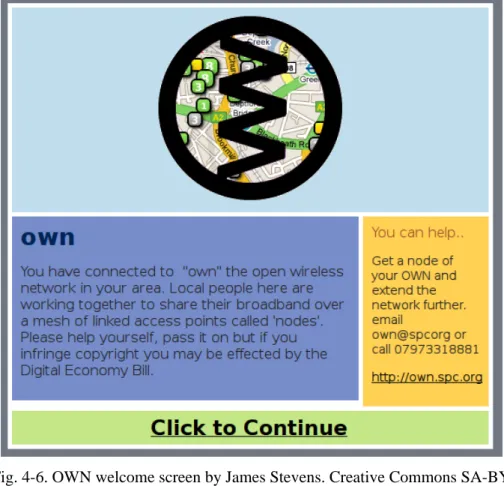
Through the Deptford.TV project I put the FLOSSTV theories and ideas into practice, discuss its concept, objectives and technicalities. I established Deptford.TV in 2005, in collaboration with James Stevens' initiatives Deckspace media lab (2001) and the Open
Wireless Network, OWN (2009), as well as with the media art collective !Mediengruppe Bitnik
(2002), and Jonas Andersson's Liquid Culture initiative (2005).
Deptford.TV exists as an intervention into the public sphere and the public domain. I work together with artists, film-makers, students and people living and working in Deptford. All of these people can join the project not only as audiences but also as co-producers, in order to collectively document the process of change in the Deptford area, and/or to produce media art beyond the historical borders of Deptford. Since 2005 I have worked, and continue to work, with more than 120 participants.
For the FLOSSTV research I borrow the term 'living archives' from Saul Albert who defines it as “archives of public interest, providing material or documenting events and processes that are otherwise invisible to official sources of historical and archival authority. They are also subjective, specific to the practices of each group, individual and project which produces and catalogues the material in the archive” (2006). Public
broadcasters have recently made attempts to initiate living archive projects such as the BBC's
Creative archive (2005) or Channel 4's 4docs project (2009), but have faced enormous
problems with the intellectual property licensing situation (Free Culture UK 2007). That is a result of the fact that the public broadcasters are implicated in the “ownership society” (Besser 2001), and, as such, are almost only able to produce proprietary media content rather than public domain or copylefted content (Forrester 2004).
The Deptford.TV practice produces 'copylefted' content (Liang 2004) - i.e. content allowing for participants to use each other's assets and share their project files. A selection of the Deptford.TV material can be found on DVD ONE and will be discussed in the chapter
Practice. The sharing of the project files (found footage) becomes a remixing of
production processes. Harbord introduces us to the idea of a philosophy of remix in post-production in relation to the philosopher Deleuze and the film-maker Eisenstein:
The culture of film remix is not necessarily conducted with the intellectual determination for an ideological affect as Eisenstein's work, yet the practice does in a sense tear apart the clichés of classical narrative and remake perception in a manner derivative of both Eisenstein and Deleuze. How images are linked, grouped and interconnected in a process of continual transformation is a Deleuzian obsession, rewritten in the era of remix with the zeal of Eisenstein. In the realm of post production, there lie strange bedfellows indeed. (2007, p.92)
Harbord uses DJ Spooky to illustrate such a remix. Spooky did a critical remix of The
Birth of a Nation (Grifith 1915), labelled Rebirth of a Nation (P. Miller 2007), where “parallel
actions occurring simultaneously and parallel action occurring in separate temporal frames,” provide “a model from which music was to evolve in sampling and cutting” (Harbord 2007, p.91). Spooky's remix criticises the racist tone of The Birth of a Nation and its history as the first film to have been screened at the White House, which established the film's long-standing impact on American political life as a “basis for normalisation of racism” (P. Miller 2007) within US society. Other famous films such as Manhatta (Strand 1921), Man with a Movie
Camera (Vertov 1929), Etudes sur Paris (Sauvage 1928), Regen (Franken & Ivens 1929) and
many more are today in the public domain and available for remix.
In his email to the Nettime mailing list entitled Remix and Remixability, Manovich (2005) reminds us that the concept of remixing in music became mainstream in the 1980s, when it was used in electronic music through sampling and scratching methods. Manovich continues by identifying the relevance of the term when looking at
history, for example the culture of Ancient Rome which, in a sense, remixed Ancient Greek culture, and the Renaissance, which remixed Antiquity. But Manovich argues that the remixes are not transparent in many fields and disciplines because of a lack of access to the libraries, the raw materials. The fields where the remixing culture is open and transparent are mainly in music (through sampling) and in computer programming (where programmers rely on software libraries in order to write new code). The recent emergence of video archives allows for such a transparency within the field of film remixing. Remixing films enables artists to approach films as living archives through their engagement with both historical materials and with contemporary raw materials. Remixes, especially when combined with database structures (2002) involve breaking down the classical linear narrative of a film and offer the possibility of viewing society and its history from many perspectives: because the different narratives are “stored digitally, rather than in some permanent material, [those] media elements maintain their separate identity and can be assembled into numerous sequences under program control” (2006). This leads to an audience producing and “watching databases” (Lovink & Niederer 2008), such as YouTube, instead of films or TV. But there are also examples of mainstream television producing database films: a good example is the Channel 4 Dispatches documentary Iraq's Secret War
Files (Sigsworth 2010) for which Channel 4 fed a database with documents leaked over Wikileaks of “nearly 400,000 secret military significant activities reports (SIGACTS)
logged by the US military in Iraq between 2004 and 2009” (McGreal 2010). I would argue that this was an unprecedented early confrontation of the public with data coming out of a war which according to US officials had already been declared finished (MacAskill 2010). The data contain 38 million words written by US soldiers in Iraq between 2004 and 2009. Channel 4 states that “the scope of the files is so vast, The Bureau of Investigative Journalism and Channel 4 created a purpose-built database in order to search and correlate the military codes, operational terms and abbreviations” (2010). From the perspective of the FLOSSTV research, it is interesting that these codes start functioning as meta-data offering narratives when queried through a database.
FLOSSTV focuses on social software interfaces through which participants can share their audio-visual projects over a database. For the Deptford.TV project I chose to use software systems which themselves are FLOSS. Deptford.TV uses the content management system
Drupal (Spreisz 2007) in order to experiment with collaborative/collective production methods
to as the Edit Decision List (EDL), all licensed under the General Public License (Free Software Foundation 2007). The EDL, together with the raw material and meta-data becomes the source code of Deptford.TV. In the same way, any raw material and meta-data of media and television production can become the code of a FLOSSTV project.
With the help of the FLOSS video-editing software Cinelerra (Corbet 2008), and since the beginning of 2011 also Kdenlive (Wood 2002), every contributor to Deptford.TV can view and modify each EDL and thus create “endless and complex possible connections and relations between them” (Persson 2001, p.52). The Deptford.TV work-flow in conjunction with the use of Cinelerra and Kdenlive is explained in Appendix IV. Following the Critical Art Ensemble (1996) I would argue that by joining nodes within the Deptford.TV database of 'recombinant' videos one invites audiences to claim a role as both participants and contributors.
The FLOSSTV research aims to provide a model for a system that can enable a collaborative form of free and open media production. I argue that the FLOSSTV research is only possible through the recent emergence of new network technologies, a 'copyleft' attitude and culture, and a broader acceptance of FLOSS. Today, a significant, and increasing, number of artists and collectives use FLOSS practices, such as the Linux operating system, for their work. In the chapter Contracts I elaborate further on the use and function of different 'open content' licensing schemes (Liang 2004), and discuss the different 'ideologies' (Berry & Moss 2008) that support them, such as the term 'open content' (OKF 2008), which can be perceived as being analogous to the term open source (DiBona et al. 1999). In this thesis I ask if FLOSS, open and free content licenses are likely to develop further in the future, providing a platform of alternative media practices and licenses.
CHAPTER TWO
FLOSSTV: Contextual Review
2. Contextual Review
Art will not disappear into nothingness; it will disappear into everything. (Espinosa 1979)
The Contextual Review is an overview of the history of emerging new technologies, participatory media (Carpentier 2011) and arts practices throughout the 20th century relevant to FLOSSTV in general and to my practice Deptford.TV in particular. The purpose of this chapter is to put FLOSSTV into a historical and contemporary context. The historical examples I have chosen to focus on are naturally those of particular relevance to the FLOSSTV research, that is the historical development of collaborative media practices (e.g. many-to-many, non-hierarchical, alternative media productions), media arts practices and author's rights legislation (e.g. copyright, copyleft and intellectual property) throughout the 20th century. I discuss in the first part Emerging Technologies: from Past to Present, the most relevant technological inventions in a chronological order, starting from radio, television, going to video, satellite, digital networks and the internet. Then moving on, in the second part, I will discuss the idea of 'data spheres', where I look into copyright and copyleft, and the viability of FLOSS distribution in relation to collaborative media and arts practices.
2.1. Emerging Technologies: from Past to Present
In this sub-chapter I focus on the history of the development of forms of media production and distribution relevant to the FLOSSTV research. So far history has repeated itself in that every new medium has become centralised, although often after having had the potential for non-centralised, many-to-many distribution and production methods. I argue that by giving preference to centralized production and distribution methods in our legislation, the result is an imposition of single-authored media and art practices on cultural distribution, making it hard for collaborative, participatory media and arts practices to reach bigger audiences, and thus to become sustainable. Later I argue that one of the main legislative methods used to uphold centralized media production and distribution processes is the implementation of intellectual property (IP) rights, concerning which I will mainly focus on the sub-section of copyright.
In 1865 Maxwell predicted the existence of radio waves in his publication on “electromagnetic theories” (1865). One year later the German physicist Hertz built an
apparatus (1887) capable of producing and receiving electromagnetic waves and thus was the first to experimentally prove their existence. In 1872 Loomis, who experimented with radio waves, filed the U.S. Patent for “wireless telegraphy” (1872), and the idea of wireless content transmission and distribution was born. In 1897 the first patent for a 'radio apparatus' was given to the Italian inventor Marconi (1897). Marconi based his radio invention on Hertz's apparatus and Tesla's Coil (1891) which still today is often used in many radio and television sets. As a result Tesla is today often referred to as the 'inventor' of radio (Lichty & Topping 1975), as well as of AC electricity generators and transmission systems (Metzger 1996).
Though the first radio stations were set up at the beginning of the last century, the First World War meant that it took over two decades for radio broadcasters to establish themselves. Berthold Brecht (1967b) proposed that a collective approach to production could be applied to both radio and film. Brecht was also convinced of the importance of involving the audience as 'participants' (Brewster 1975), and wrote about the sociological experiment of the film Die
Dreigroschen Oper (Pabst 1931), which he had collaborated on: “Indeed, a collective can only
create works which are able to make 'collectives' out of the audience” (1967a, p.205). This made Brecht (1929) one of the first practitioners and scholars to articulate a notion of liberated media practices in relation to radio technology. Brecht envisaged the liberating potential radio could have as a many-to-many, interactive medium, by allowing audiences to operate both as receivers and transmitters, so that the "audience can no longer have the illusion of being the unseen spectator at an event which is really taking place" (1964, p.91).
Brecht saw the potential of radio as a medium that could support a two-way political discussion program format. In his letter to the Director of the German Radio Broadcasting Association in 1927 Brecht wrote “you should try to make radio broadcasting into a really democratic thing ... Since this would be a great step forward, there will certainly be a series of laws that try to prevent that. You must turn to the public in order to eliminate these laws” (1967, p.121). One of Brecht's works most relevant to the FLOSSTV research was the radio play Lindberg's Flight (1929), an interactive many-to-many radio event, which opened at the Festival for German Chamber Music in Baden-Baden on 27 July 1929. The play's subject was the first flight over the Atlantic Ocean by pilot Charles Lindberg, in May 1927. Lindberg's
Flight pictured the flight as a struggle of technology against nature, and as an achievement of a
collective rather than an individual. Brecht envisaged that the radio audience was to participate in the transmission (Herrmann 1999, p.179) of the interactive many-to-many radio event.
Brecht wanted to show “how the medium itself can transform social communication through its technological advantage: the ear is to become a voice” (Silberman 2001, p.41).
Brecht's Radio Theories never materialised. Instead, radio became, through legislation, a one-to-many medium, distributing content controlled by centralised radio stations to the masses of audiences. Community radio is an exception, and, as Kate Coyer describes in
Models of Community Broadcasting in Britain and the United States, “Community radio offers
forms of alternative communication not only based on content but by the level of participation implicit in the project's aims” (2006, p.192). Radio, historically, was the first electronic distribution medium to go through the process of centralisation and is thus relevant to the current FLOSSTV research. Decades later digital networks are witnessing a similar centralisation process, or an attempt at centralisation, through commercial, political and government interests.
Fig. 2-1. The first photograph of a TV picture by John Logie Baird (McLean 2000, p.41). Courtesy of the National Museum of Photography, Film and Television (NMPFT). Public Domain.
Television was then the next medium to suffer the same fate. Figure 2-1 shows the first known photograph (D. E. Fisher & M. Fisher 1996) of a moving image produced by Baird's 'televisor', circa 1926. I consider Baird as the first 'TV hacker', because he invented the 'televisor' in a DIY fashion (Moseley & McKay 1936), as described in his auto-biography, edited by his son, Television and Me (2004). On the 2nd of October 1925, in his laboratory in
London, Baird built the world's first “Televisor” (Kamm & M. Baird 2002; G. Shiers 1975) and successfully televised the first person: William Edward Taynton, “[who] became the first face seen on television” (McLean 2000).
The first public television transmission (G. Shiers & M. Shiers 1997) was undertaken in Germany in 1929. The first broadly watched televised event (Burns 1998, p.527) was the Olympic Games of 1936 in Berlin, a political PR success for Hitler, the games and the Führer being 'magically' present in the living room. In the same year the Germans also established the first two-way television system, which in a way was the first video conference call facility, as a commercial facility, between Berlin and Leipzig at a price of a quarter of the average weekly income for a 3 minute call (Burns 1998, p.528), which translates into around £200 at the time of writing. But, like radio, the idea of a two-way television medium soon gave way to the centrally controlled transmission method of the one-to-many broadcasting system.
Fig. 2-2. B.B.C. Television Studio. Photo by B.B.C. Public Domain.
Figure 2-2 shows a Television Studio at No. 16 Portland Place, London, used by the B.B.C. prior to 1935. “Left foreground: Caption machine behind the sound rack. Immediately to the right of the sound rack is the radio-picture receiver; on its right again a smaller-line picture receiver. On the extreme right is the projector. The three chairs seen in the centre foreground are used respectively from left to right by: (1) Sound-control Engineer, (2)
Programme Director, (3) Vision-control Engineer” (Moseley & McKay 1936, p.93).
The most important development, and a difficult one to foresee, was the extraordinary extension of the power of television over the whole of cultural production, including scientific and artistic production. Today, television has carried to the extreme, to the very limit, a contradiction that haunts every sphere of cultural production. (Bourdieu 1998, p.36)
Fig. 2-3. Alexandra Palace Studio, London. Photo by B.B.C. Public Domain.
Figure 2-3 shows a live transmission from a studio at Alexandra Palace, London, mid '30s, with “two Emitron Instantaneous Television Cameras in use – one transmitting the programme, the other ready to be 'faded in' for a different shot” (Moseley & McKay 1936, p.128). The '30s were crucial years for the development of today's television. In Germany television was first perceived as similar to radio, the telephone and, due to the Second World War, even as a means “for guiding rockets, torpedoes, etc.” (Pearson & Simpson 2001, p.208). Abandoning these other potential uses, television adopted the radio-like transmission of content, information and entertainment: “Early television defined in crucial ways dominant assumptions about the medium’s representational capacities, its medial homologues, its place in the public sphere and its technological and economic infrastructure” (Pearson & Simpson 2001, p.208).
Fig. 2-4. Alexandra Palace Transmitting Aerials, London. Photo by B.B.C. Public Domain.
Figure 2-4 shows the “mast and transmitting aerials” (Moseley & McKay 1936, p.101) at Alexandra Palace, London, mid '30s. The Second World War brought the development of television to a halt (Abramson 2009) with services resuming in 1946. In the UK the most famous big televised event after WWII was the Coronation of Queen Elizabeth II in 1953. Watched by an estimated 20 million people, it was a “media event [that] gripped the nation and played a major role in establishing the medium by potently demonstrating its capabilities” (Pearson & Simpson 2001, p.75). In 1953 Theodor Adorno wrote A Prologue for Television, discussing television's archaic images of modernity:
While the images of film and television strive to conjure up those that are buried in the viewer and indeed resemble them, they also, in the manner of their flashing up and gliding past, approach the effect of writing: they are grasped but not contemplated. The eye is pulled along by the shot as it is by the printed line and in the gentle jolt of the cut a page is turned. As image, this pictographic language is the medium of regression in which producer and consumer collude; as writing, it displays the archaic images of modernity. (1963, p.77)
The BBC went on to apply its philosophy of public service broadcasting, based on principles of a religious and serious nature, from radio transmission to television transmission (Seymour-Ure 1996, p.88). And in 1954, in the UK, the Television Act allowed for commercial broadcasting. The Independent Television Network (ITV) was established. “Television was to form a whole cultural industry through its growing reach in a period of relative affluence, so the need to satisfy audience tastes was now a compelling consideration” (Pearson & Simpson 2001, p.75). For the Independent Television Network advertising became a lucrative business. However, some believed that this approach of gaining revenue through advertising would lead to “lowest common denominator programming” (Hood & Tabary-Peterssen 1997, p.31).
Ten years later McLuhan (1964), who built on Innis' idea that the effects of technological form mattered more than content (1952; 1964), and Williams were engaged in a debate on the subject of 'technological determinism' (Freedman 2002). Williams argued that “the work of McLuhan was a particular culmination of an aesthetic theory which became, negatively, a social theory: a development and elaboration of formalism ... isolating theory of the media" (1974, p.126). In William's opinion, although McLuhan's project was to foreground the different qualities of different media such as speech, print, radio, television and so on, he attempted to do that from a position that did not encourage reflection on media as specific practices.
It is an apparently sophisticated technological determinism which has the significant effect of indicating a social and cultural determinism: a determinism, that is to say, which ratifies the society and culture we now have, and especially its most powerful internal directions. For if the medium - whether print or television - is the cause, other causes, all that men ordinarily see as history, are at once reduced to effects. Similarly, what are elsewhere seen as effects, and as such subject to social, cultural, psychological and moral questioning, are excluded as irrelevant by comparison with the direct physiological and therefore "psychic" effects of the media as such. The initial formulation - "the medium is the message" - was a simple formalism. The subsequent formulation - "the medium is the massage" - is a direct and functioning ideology. (1974, p.127)
Williams was sceptical towards any positions of technological determinism, as he stated that the same technology that could liberate media production, could also be used to control and align it with commercial and/or state interests: “a few para-national corporations, with their attendant states and agencies, could reach further into our lives, at every level from news to psycho-drama, until individual and collective response to many different kinds of experience and problems became almost limited to choice between their programmed possibilities” (1974, p.151). At the same time the video artist Nam June Paik criticised McLuhan for not engaging with the media he was writing about. In his art work McLuhan
Caged (1967) Paik manipulated TV pictures of McLuhan giving a talk, by using magnets
across the cathode ray tube and cutting up the video spools by hand.
McLuhan is surely great, but his biggest inconsistency is that he still writes books. He became well-known mainly through books, he doesn’t care about the situation, and is excluded from the media for which he evangelizes. Very very very high-frequency oscillation of laser will enable us to afford thousands of large and small TV stations. This will free us from the monopoly of a few commercial TV channels. (Paik 1966, p.26)
Already in the '60s Paik foresaw the emergence of the 'information super highway' and its impact on global culture (Kellein 2007; Herzogenrath & Kreul 2007) . Three decades later his prediction materialised in the form of the World Wide Web. In retrospect Paik is often referred to as the the Cybernetic Pioneer of Video Art (Kane 2009). In March 1963 Paik presented television pictures distorted through magnets in the
Gallerie Parnas (Hanhardt et al. 2000). Paik moved from Germany to New York in order to
gain access to the latest electronic technologies. Though he continued his work on modifying TV sets, at the beginning of the 1960s he was eager to obtain the Sony Portapak video camera (Abramson 2003; A. Smith & Paterson 1998). At that time it was not possible to edit the reels produced by the Portapak. What Paik did was to manipulate, cut and paste the spools by hand (Tappsteiner 2010). With this manual manipulation he produced a constant repetition of a few seconds of TV footage of New York's leading politician – Mayor Lindsay (1963) – into a 5-minute video piece. Paik was thus playing with technology or, in some sense, hacking it, using it in a different way than it was designed for. In 1963 Paik demonstrated participatory TV practices with the project Participation TV (1963). Participation TV was basically a TV set with an integrated microphone. A later version of the work showed, in the middle of the screen, visualisations of the sounds people could input through the microphone, so that “[d]epending on the sound’s inherent quality or volume, the signals are intensified by a sound-frequency
amplifier to produce an endless variety of line formations which never seem to repeat themselves or be in any way predictable” (Decker-Phillips 1998, p.64). In retrospect one can describe this practice as early video art or TV hacking. In the artwork McLuhan Caged (1967), an installation for Electronic Art II, Paik (1973; 1993; 2004) further developed his TV hacking methods by distorting a videotape playback documenting McLuhan, author of Understanding
Media: The Extension of Man (McLuhan 1964).
The video synthesizer, which Paik developed together with Shuya Abe, was recently exhibited in the Tate Liverpool (Searle 2010). It is Paik's most relevant work to the FLOSSTV research. The video synthesizer allowed for mixing and manipulation of moving images. For Paik the video synthesizer “will enable us to shape the TV screen canvas as precisely as Leonardo, as freely as Picasso, as colourfully as Renoir, as profoundly as Mondrian, as violently as Pollock and as lyrically as Jasper Johns” (1970, p.55). The video synthesizer was used for the 'video commune' (Daniels 2004) transmitting on the television channel WGHB in 1970. Other artists worked at the same idea of a video synthesizer independently, including Steve Rutt (Fox 2011) and Eric Siegel (Furlong 1983).
By the end of the '60s resistance emerged against the dominant one-to-many model of the broadcasting industry. Student movements, artists' collectives and political activists forced ruptures with the conservative media structures of the radio and television institutions. By the early '70s television provided a major service for a whole generation; but the '68 generation' wished to use this technology for themselves, they wanted to 'participate' in the production of media. In Constituents of a Theory of the Media Hans Magnus Enzensberger (1970) outlines characteristics that constitute participatory media, which he defines as being signified by decentralized programs, where each receiver is a potential transmitter, within a collective, interactive self-organized production process.
For the cultural underground of the '70s experimenting and practising with new media became a common means of opposing the passivity imposed by television as a one-to-many mass medium. For Williams this use of new media, aiming to create a many-to-many distribution, was a critical answer to “the notion of a determined technology as well as the more ordinary notion of a technological determinism” (1974, p.137). It was Sony's introduction of the Portapak, in the '60s, which many artists and activists hoped would lead to a breakthrough into a many-to-many media production environment. The Portapak was the first, affordable, portable video camera on the market. Artists picked up on the Portapak and video
collectives were formed all over the United States of America, such as People's Video Theater, Videofreex, Raindance, Global Village, Video Freaks, Radical Software, The Ant Farm, Guerilla TV, Broadside TV and TVTV (Top Value Television). Many media collectives wanted to purchase one of these black-and-white Sony Portapak cameras (C. Schneider & Wallis 1989).
These collectives used the Portapak as a means to achieve a democratic pluralism. In Guerilla Television Michael Shamberg (1971) predicted that media power would pass to the people, borrowing the term 'guerilla television' from the article Cybernetic Guerilla Warfare (P. Ryan 1971). However in Subject to Change, Guerilla Television Revisited Deidre Boyle (1997) argues that it was a naïve idea that through cheap recording equipment citizens could change the television industry so as to democratize the media.
Issues of rights ownership (copyright) and distribution (transmission over the airwaves) were often neglected. Boyle argues that it was this ignorance with respect to legislation and rights issues which caused this 'revolution' to be co-opted by the big business they were opposing. Boyle explains how the utopias expressed by these collectives materialised and finally collapsed in the take-over of mainstream media. Boyle further argues that this failure can serve as a warning for future media practitioners working in television. Referring to Hans Magnus Enzensberger, Boyle highlights that “television systematically prevents true perception of social reality. But by decentralizing the system structure, organizing collective production and transforming receivers into transmitters, the repressive use of mass media could be thwarted” (1997, p.30).
In Requiem for the Media Baudrillard (1981) argues against Enzensberger's
Constituents of a Theory of the Media. For Baudrillard, television is not a medium of
communication but a medium of non-communication because, as a one-to-many channel, it does not allow for exchange or interaction. Even if an interaction were possible, as envisaged by Enzensberger, this would strengthen, rather than challenge, the producer/consumer dichotomy. A good example is the emergence of audience interaction within reality TV, such as Big Brother, and dial-in games which strengthens Baudrillard's argument. Foucault's text
The Subject and Power (1982), written around the same time, offers a valuable insight into
power relationships relevant also within television production. It is the product of research that was undertaken by Foucault over a period of over twenty years. Foucault uses the metaphor of a chemical catalyst for a resistance which can bring to light power relationships, and thus allow
an analysis of the methods this power uses: “[r]ather than analysing power from the point of view of its internal rationality, it consists of analysing power relations through the antagonism of strategies” (1982, p.780).
The beginning of the '80s saw some approaches to many-to-many communications within television production in the U.K. with the participation of audiences in television programming. Seen historically this was the U.K.'s peak within television production where audiences were allowed to participate in the production process of television. This is of particular interest to my FLOSSTV research, where I look into methods allowing for such participation to happen. Patricia Holland describes in The Television Handbook (2000) how the BBC initiated an attempt for such bilateral communication to happen with the Community
Program Unit, and Channel 4 followed with the Independent Film and Video Department.
Under the direction of Alan Fountain, Channel 4 provided minority groups with infrastructure, in exchange for having priority in airing their productions. According to Holland this was when minorities had their biggest opportunity to speak up in U.K. television history. In
Channels of Resistance: Global Television and Local Empowerment (Dowmunt 1993), Dovey
refers to this period as a time when people had a trusting relationship with the TV channels and wanted to tell their stories in an unmediated manner – and quotes Free for All series editor John Samson: “I actually want to say it myself, the way that I want to say it, because I don't want a story about me by somebody else, I want a story by me. I want my story told” (1993, p.171).
The '80s was a period of post modernism, deconstruction and identity politics, looking into issues of representation; it also saw a deployment of these theories towards AIDS activism. The post modernist movement informed by AIDS activism and looking into the idea of 'appropriation' within artistic practices was represented, mainly in New York, by the
October journal and writers such as Hal Foster or Rosalind Krauss (1976; 1997). According to
the latter: “[l]ong working experience with major art journals [had] convinced us of the need to restore to the criticism of painting and sculpture, as to that of other arts, an intellectual autonomy seriously undermined by emphasis on extensive reviewing and lavish illustration” (Krauss & Michelson 1976, p.15). Activist groups like Act Up, “a diverse, non-partisan group of individuals united in anger and committed to direct action to end the AIDS crisis” (Shepard & Hayduk 2002) and their spin-off Gran Fury (Crimp & Rolston 1990) came together with the media arts scene as a result of the AIDS crisis. David Garcia argued that media arts should have a place within activist communities, as media artists and AIDS (and other political)
activists shared a common attitude towards DIY methods:
The reason for my position is not theoretical but the result of my first experience of seeing tactical media at close hand, in action, ACT UP [was] a mobilisation against the AIDS policy of the Reagan administration of the time, which in choosing to ignore AIDS was a policy of silence. Artists played a critical role in both organising and giving shape and a kind of charismatic momentum to ACT UP. I believe it was the artist collective Gran Fury in their exhibition "Let the Record Show" who created the slogan (or equation) that became the symbol of the AIDS activist movement worldwide: SILENCE = DEATH. (2001)
In the context of 'appropriation' in art, also referred to as 'detournment', after Debord, and practised by artists associated with the October journal (Wallis 1984; Krauss 1981; Krauss et al. 1997), like Louse Lawler, Richard Prince, Barbara Kruger, Martha Rosler, etc., critical voices that questioned copyright legislation emerged in the mid '80s. The 'scratch movement' (Dunford 2002), who perceived copyright as a form of censorship, emerged in the UK through the satirical and comic use of video that scratched sound and picture together to produce new narratives, such as the work of the artists George Barber (2009), the duvet brothers (1984), and others.
One of the scratch projects was Jon Dovey's Death Valley Days (1984; 1986), in collaboration with Gavin Hodge and Tim Morrison. Death Valley Days is a satirical episode that mixes TV-news footage to the sound of '50s and '60s pop music, controversially narrating a secret love-story between Ronald Reagan and Margaret Thatcher. Scratching was used as video-satire. Death Valley Days was originally an experiment that made use of found footage without being concerned with issues of copyright. Nevertheless, when Channel 4 expressed an interest in using the project as a part of their “Eleventh Hour” series in September 1985, the rights had to be cleared. Soon it became obvious that, to buy copyrights, one needed not just money but also an 'acceptable identity', a media status. Dovey argued that, through copyrights, the media networks exercise control over what we see and, even more importantly, over much more that we do not see (1986).
The end of the '80s also saw the emergence of an example, relevant to the FLOSSTV research, of audience participation in television programming through Deep Dish TV's project
Gulf Crisis TV (1990). This project grew out of the Paper Tiger TV collective (1981) who
produced public access cable programs in New York. Paper Tiger TV (1985), or PTTV, launched an alternative satellite distribution system, thereby linking alternative TV groups in the USA nationwide. Their Gulf Crisis TV Project became famous because it used this satellite