Prof. D.V.R. Mohan1, B. Chandra Babu2
1,2
ECE Department, S R K R Engineering College, Bhimavaram, A.P, India
Abstract: The art of sending secret information from sender to receiver plays a prominent role in information security. In recent
times, internet plays a major role in transferring digital multimedia data. But the main drawback by using the internet is, information security is less due to the increasing usage of internet. For information security many data hiding methods exists. One such method or technique is LSB technique. In this paper information can be hidden in LSBs of the cover image. In this method a modification to the LSB technique is proposed which is based on the 2nd and 3rd LSBs of cover image. It means there will be an inversion in the LSB bit of cover image based on the pattern of 2nd and 3rd LSBs of cover image i.e. (00, 01, 10 and 11). So this will be an advancement to the LSB technique. In this paper it is proposed for grayscale image. Encryption is also applied for the message image for providing extra security to the secret message. The encryption done here is by using binary bit plane scrambling and XOR. So that there will be dual layer protection to the secret message or information.
Keywords: Encryption, Decryption, Least Significant Bit (LSB), PSNR, MSE, Histogram.
I. INTRODUCTION
Information security plays a major role in today’s world. Since the rise of using the internet, the amount of information security is decreasing rapidly due to the availability of internet to every person. So by using the internet, data security becoming very less. This can be overcome by using data hiding or encryption techniques. Data hiding or information hiding can be done for security reasons [1]. The secret information can be sent from sender to receiver by using cover objects. These cover objects may be text, image, audio, video. For hiding in images, the cover object is an image. Hiding data in images produces the stego image as output. For hiding data in images there are various techniques exists. Data hiding refers to hiding some valid information in cover object whereas the encryption itself scrambles the original data. This means by using data hiding the secret message cannot be visible to anyone or unauthorised user must not suspect the secret message whereas in encryption the secret message is scrambled so the message is visible i.e. unauthorized user knows that the encryption is applied and he tries to decrypt it. By applying both steganography and cryptography there will be dual layer protection to the secret message. Encryption means converting the message into a different form to make the secret message from unauthorised attacks [2]. Image encryption is of two types, position permutation and value transformation. In the position permutation, without changing the pixel value of original image permute image position. In value transformation technique without changing the position the pixel values are replaced by another pixel values.
The sections to follow are section II describes the image encryption and section III will give the implementation of proposed method Section IV illustrates the results and the conclusion is given in section V.
II. ENCRYPTIONUSINGBINARYBITPLANESCRAMBLINGANDXOR
Fig. 1 At the sender side
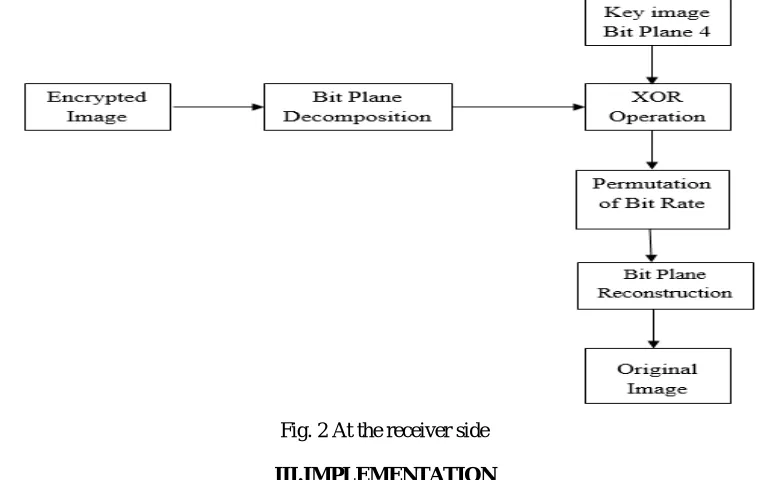
At the receiver side the encrypted image is decomposed into bit planes first and then XOR with key image bit plane 4 which is used at the sender. These bit planes are then permutated. The original image is obtained by combining these bit planes.
Fig. 2 At the receiver side
III.IMPLEMENTATION
A. Simple LSB Technique
The 8th bit or in other words LSB of all the pixels inside an image with 8 bit depth is changed to a bit of the secret information. Let us consider an example, in this only four pixels are used and the four message bits are 1 0 1 0 as follows
11111010 01101011 11100011 10110101
These are the cover image pixels. The message bits are directly embedded into these pixels. 11111011 01101010 11100011 10110100
It is a spatial domain technique which means the pixel values are directly modified [5].
B. Inverted LSB Technique
[image:2.612.114.494.342.582.2]particular pattern is greater than unchanged LSB count then invert all LSBs of particular pattern to get the pixel benefit [6] [7]. For the receiver to correctly extract the message these counter values may be sent to the receiver using XOR encryption before sending the stego image.
IV.RESULTS
A. Correlation of Adjacent Pixels
The correlation of adjacent pixels in an encrypted image can be evaluated by using the equation
)
var(
)
var(
)
,
(
n
m
n
m
Covm
r
mn
Here m and n are adjacent pixel grey levels.
B. Differential Analysis
The main aim of all encryption methods is that the encrypted image and secret image or original image difference should be high. Two metrics used to calculate these requirements are NPCR and UACI.
NPCR (number of pixel change rate) gives the number of pixels which are different in grey levels in two images. Let C (m,n) and C’(m,n) be the mth row and nth column of pixel of two images.
Here N is the number of pixels in the image. D (m,n) is defined as
UACI (Unified average changing rate) which gives the average difference in intensity of encrypted and original images
C. Image Quality Metrics
Two other image quality metrics used when hiding data in images are PSNR and MSE.
MSE
h
X
PSNR
2 10log
10
))
(
))(
(
(
)
,
(
m
n
E
m
E
m
k
E
k
Cov
100
255
)
,
(
'
)
,
(
1
,X
n
m
C
n
m
C
N
UACI
n m
21 1
)
,
(
)
,
(
1
M m N n encorg
m
n
C
m
n
C
XY
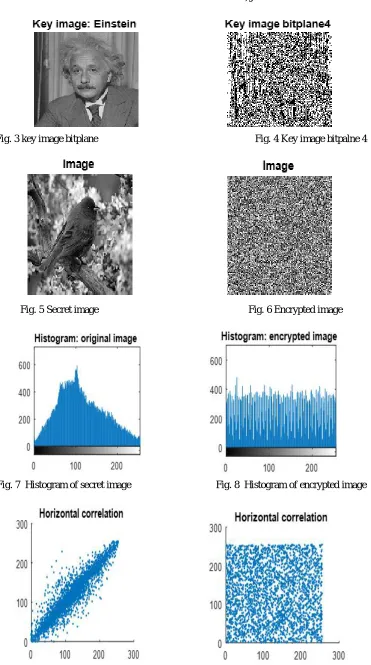
Fig. 3 key image bitplane Fig. 4 Key image bitpalne 4
[image:4.612.175.286.217.359.2]
Fig. 5 Secret image Fig. 6 Encrypted image
Fig. 7 Histogram of secret image Fig. 8 Histogram of encrypted image
Fig. 11 Vertical correlation of encrypted image Fig. 12 Vertical correlation of encrypted image
[image:5.612.371.496.213.366.2] [image:5.612.170.284.215.363.2]
Fig. 13 Diagnonal correlation of secret image Fig. 14 Diagnonal correlation of encrypted image
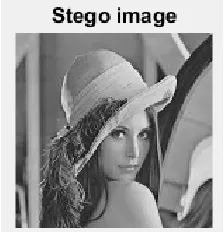
Fig. 15 Cover image fig. 16 Stego image (Inverted LSB)
[image:5.612.382.494.396.512.2][image:5.612.374.501.548.710.2]
Fig.19 Stego image (Simple LSB) Fig. 20 Histogram of stego (Simple LSB)
bits of cover image. Here 7 bits are there leaving the LSB. We can choose any 2 bits out of 7 in 7c2 ways. So 21 combinations have to check and if the attacker wants to extract the message. It is quite difficult to know which LSB is inverted. Encryption using bit plane scrambling combined with XOR is simple and efficient.
REFERENCES
[1] Sukhjinder Singh, Kulbhushan Singla, Dr. Rahul Malhotra, “A Robust Image Steganography Technique Using Quantized Range Table And Local Area Pixel Value Differencing,” International Journal of Advanced Research in Electronics and Communication Engineering (IJARECE) Volume 5, Issue 2, February 2016.
[2] Dr. P. V. Ramaraju, G. Naga Raju, P. Rama krishna, “Image Encryption After Hiding (IEAH) Technique For Color Images,” International conference on Signal Processing, Communication, Power and Embedded System (SCOPES)-2016.
[3] R.Aarthi, Mrs. S.Kavitha, “image encryption using binary bit plane and rotation method for an image security,” International Journal of Engineering Development and Research© 2017 IJEDR | Volume 5, Issue 2 | ISSN: 2321-9939.
[4] R. Vijayaraghavan, S. Sathya and N. R. Raajan, “Security for an Image using Bit-slice Rotation Method–image Encryption,” Indian Journal of Science and Technology, Vol 7(4S), 1–7, April 2014.
[5] Varsha and Rajender Singh Chhillar, Ph.D “ Data Hiding using Advanced LSB with RSA Algorithm” International Journal of Computer Applications (0975 – 8887) Volume 122 – No.4, July 2015
[6] Nadeem Akhtar, Shahbaaz Khan, Pragati Johri, “An Improved Inverted LSB Image Steganography,” 978-1-4799-2900-9/14/$31.00 ©2014 IEEE. [7] Rupali Bhardwaj, Vaishali Sharma, “Image Steganography Based on Complemented Message and Inverted bit LSB Substitution,” 6th International