ISSN Online: 2161-7414 ISSN Print: 2161-7406
DOI: 10.4236/ojic.2018.81004 Jan. 31, 2018 43 Open Journal of Inorganic Chemistry
Theoretical and Comparative Study of the
Complex [RuCl
3
(H
2
O)
2
(Gly)] by Density
Functional Theory
Kátia Meirelles D. de Sousa
1*, Marcio Adriano S. Chagas
2, Jesyca Mayra F. D. dos Santos
1,
Anderson D. Galvão
1, Fabrício Tarso de Moraes
1, Andressa Teixeira Barros Nunes Ribeiro
1,
Dário Batista Fortaleza
1, Kelly Aparecida da Encarnação Amorim
1,
Wagner B. dos Santos
11Materials Research Lab, Federal University of Mato Grosso—Campus II, Barra do Garças, Brazil 2Institute of Chemistry, Brasília University, UNB, Brasília, Brazil
Abstract
In this work, the use of computational methods was essential to distinguish the three possible isomeric structures of the [RuCl3(H2O)2(Gly)] molecule. The characterization of these molecules was performed using IR, NMR and UV-VIS simulations. Some calculations related to the optimization of struc-tures and properties such as chemical hardness and dipole moment were also conducted. The fac-cis isomer presented promising data when compared to the experimental data, indicating that this is the likely experimentally synthe-sized isomer. This study demonstrates the technical utility of the computa-tional calculations by virtue of situations that prevent the realization of X-ray diffraction.
Keywords
Computational Methods, Isomeric Structures, Simulations
1. Introduction
Computational calculations are widely used in research to confirm geometric structures and to determine the properties of coordination compounds [1] [2] [3][4], especially in cases where obtaining a single crystal for X-ray diffraction is not possible [5][6] or inconclusive [3][7].
Chagas [8] began to develop the study of the complex [RuCl3(H2O)2(Gly)] in 2012. In biological tests performed by Salama [9], Chagas [8] observed the
po-How to cite this paper: de Sousa, K.M.D., Chagas, M.A.S., dos Santos, J.M.F.D., Galvão, A.D., de Moraes, F.T., Ribeiro, A.T.B.N., Fortaleza, D.B., da Encarnação Amorim, K.A. and dos Santos, W.B. (2018) Theoretical and Comparative Study of the Complex [RuCl3(H2O)2(Gly)] by Density
Functional Theory. Open Journal of Inor-ganic Chemistry, 8, 43-53.
https://doi.org/10.4236/ojic.2018.81004
Received: December 28, 2017 Accepted: January 28, 2018 Published: January 31, 2018
Copyright © 2018 by authors and Scientific Research Publishing Inc. This work is licensed under the Creative Commons Attribution International License (CC BY 4.0).
DOI: 10.4236/ojic.2018.81004 44 Open Journal of Inorganic Chemistry tential Leishmanicidal activity of its complex. Martínez et al.[10], Iniguez et al.
[11] and Barbosa et al. [12] demonstrated that some of their ruthenium com-pounds exhibited improved antileishmanial activity compared with the reference compound and their free ligand.
Structural variations depending on the size of the molecule, the position of the ligands and their spatial characteristics such as flatness and three-dimensionality help to understand the action of these molecules in the biological environment, as the interaction of a molecule with a biological receptor depends on this type of structural information [13][14]. Previous research has shown the utility and exploitation of structural knowledge in areas such as catalytic activity and the use of computational calculations in these studies [15][16]. Gianferrara, Bratsos and Alessio [17] give a good account of the conditions mentioned in the para-graph beginning, based on some examples such as cisplatin and ruthenium compounds (NAMI-A and KP1019), which are anticancer drugs currently in use and under development, respectively.
This study used computational methods to determine the possible geometric isomers of the compound [RuCl3(H2O)2(Gly)], in comparison with experimental data, illustrating the usefulness of computational methods to elucidate the possi-ble geometrical structures of a compound in situations in which a single crystal for X-ray diffraction cannot be obtained.
2. Methodology
All calculations were performed using the Gaussian program package 09 [18]. The geometries were optimized by the DFT method (Density Functional Theory) and the functional hybrid meta-GGA M06-2x [19], and confirmed by vibrational analysis. The basis set used was 6-311++G(d,p) [20] for all atoms ex-cept for Ruthenium, which was treated with the basis sets SDD (Stutt-gart/double-ζ Dresden) and ECP (effective core potential) for the innermost electrons of the ruthenium atom [21]. The harmonic vibrational frequencies were calculated with the analytical second derivative, without the presence of imaginary frequencies. For the calculations of 35 excited states, the time depen-dent method (TDDFT) with an open layer was used with a polarized solid model to determine the effect of the solvent water molecule through IEF (integral equa-tion formalism). For the comparison of nuclear magnetic resonance, the calcula-tion was performed by the GIAO method (Atomic Orbital Measure Indepen-dent) [22] for 13C and 1H in the presence of the solvent water. All DFT calcula-tions employed the keyword int (grid = ultrafine). All calculacalcula-tions were per-formed at the Federal University of Mato Grosso, Laboratório de Estudos de Materiais. All experimental data were obtained for comparison of the findings [8].
3. Results and Discussion
DOI: 10.4236/ojic.2018.81004 45 Open Journal of Inorganic Chemistry possible geometric isomers: fac-cis-diaquotrischloroglycinatoruthenium III,
mer-cis-diaquotrischloroglycinatoruthenium III and
mer-trans-diaquotrischloroglycinatoruthenium III. As shown in Figure 1. To determine which isomer was synthesized by Chagas [8], computational methods were used to investigate the characteristics of each isomer compared to the experimental data.
3.1. Energy of the Geometrical Isomers
Table 1 shows the data obtained from the energy optimization of each isomer.
The data show that the mer-trans isomer showed the largest relative difference when compared to the fac-cis molecule with the lowest energy. The fac-cis mo-lecule, with lower energy compared to the other two isomers, had greater stabil-ity. However, the energies of the three structures were very close and the lowest energy does not guarantee formation of the compound experimentally. Thus, IR, UV-vis and NMR simulations were performed to elucidate the structure [5][6] [23].
3.2. Infrared Simulation
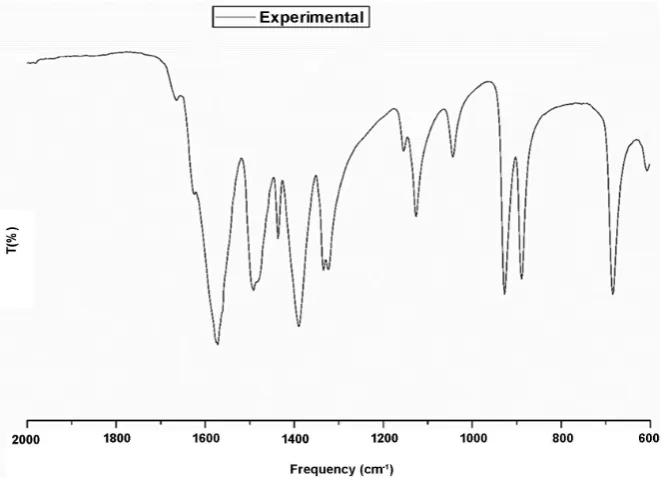
The infrared frequencies of the three isomers showed similar values to each oth-er. It was also observed that, when compared to the experimental data, the
fac-cis and mer-trans isomers demonstrated a closer approximation as show in Table 2.
[image:3.595.211.524.461.702.2]The fac isomer showed lower frequencies than the mer isomers for the same bandwidth allocations in regions below 1000 cm−1. However, a difference was
DOI: 10.4236/ojic.2018.81004 46 Open Journal of Inorganic Chemistry Table 1. Relative energies of isomers of the molecule [RuCl3(H2O)2gly].
Molecules Optmization energy (Hartree) Relative energies (kCal∙mol−1)
fac-cis −1912.7912080 0
mer-cis −1912.7794975 7,35
mer-trans −1912.7661652 15,71
Table 2. Calculated frequency by DFT of isomers [RuCl3(H2O)2(Gly)], and FTIRmed (4000
- 600 cm−1) with approximate assignment bands.
(fac-cis) (mer-cis) (mer-trans) Experimental Assigned bands
1791 1848 1730 1664 νa (COO−)
1395 1290 1454 1388 νs (COO−)
1665 - 1595 1667 - 1613 1654 - 1589 1571 δ (NH3
+)
1510 1516 1513 1490 δs(NH3
+)
1479 1472 1491 1441 δ(CH2)
1344 1373 1348 1334 - 1322 ρw(CH2)
1118 1112 1125 1155 - 1110 ρr(NH3
+)
1015 1027 1003 1043 ν (C-N) + ν (C-C)
905 910 924 927 ρr(CH2)
871 894 897 889 ν (CCN)
676 --- --- 684 ρw(COO−)
617 635 647 607 δ(COO−)
Not observed. νa: Asymmetrical stretch; νs: Symmetrical stretch; δa: Asymmetrical bending; δs: symmetric-al bending; ρw: Wagging deformation; ρr: Rocking deformation.
not observed between mer-trans and mer-cis, which did not conform to any general pattern.
(
exp)
21 1
n cal
i i
i
RMS v v
n
= −
−
∑
The root mean square error (RMSE) between the experimental and the calcu-lated frequency of the molecules were 42.44 cm−1 (fac-cis), 75.67 cm−1 (mer-cis) and 37.36 cm−1 (mer-trans), with the lowest RMSE found for the mer-trans mo-lecule, according to the above equation [24]. The overestimated values of the calculated frequency were due to neglecting anharmonicity. The calculation was performed on a single molecule, disregarding intermolecular interactions [25].
[image:4.595.210.538.211.432.2]DOI: 10.4236/ojic.2018.81004 47 Open Journal of Inorganic Chemistry Figure 2. Theoretical spectrum.
Figure 3. Experimental spectrum.
experimental spectrum showed a variation between asymmetric and symmetric peaks of 276 cm−1. The peak at 676 cm−1 was assigned to a “wagging” group (COO−) in the fac-cis isomer and was not observed in the mer isomers.
[image:5.595.210.543.77.592.2]3.3. Ultraviolet-Visible Simulation
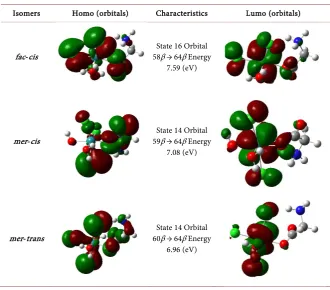
Table 3 shows the data on electron density-related oscillator strength. Ligand
[image:5.595.208.540.344.583.2]DOI: 10.4236/ojic.2018.81004 48 Open Journal of Inorganic Chemistry Table 3. Electronic density of the molecular frontier orbitals.
Isomers Homo (orbitals) Characteristics Lumo (orbitals)
fac-cis 58β → 64β Energy State 16 Orbital 7.59 (eV)
mer-cis 59β → 64β Energy State 14 Orbital 7.08 (eV)
mer-trans 60β → 64β Energy State 14 Orbital 6.96 (eV)
LUMO, referring to the excited states shown in Table 4. The excited state closest to the experimental value was presented by the fac-cis molecule.
The values related to states 19 and 26 (fac-cis), 19 and 22 (mer-cis) and 22 and 27 (mer-trans) show π-π* type transitions relating to the glycine binder. The greatest contribution of the chlorides to the metal center occurred in states 19, 16 and 19 of the fac-cis structures, mer-cis and mer-trans, respectively.
3.4. Molecular Properties
The HOMO is the occupied orbital with the highest energy that has the ability to donate electrons, while the LUMO is the unoccupied orbital with the least ener-gy that has the ability to accept electrons; the difference between them can ex-plain charge transfer within a molecule [27][28]. The HOMO and LUMO data energies as well as their differences are shown in Table 5.
The range of energy between HOMO and LUMO as well as the hardness and chemical dipole moment may provide additional information. The fac-cis mo-lecule had the largest energy difference and greater chemical hardness, making it more stable kinetically and less favorable to adding electrons to LUMO or ex-tracting electrons from HOMO, i.e. this molecule had low chemical reactivity [29][30].
DOI: 10.4236/ojic.2018.81004 49 Open Journal of Inorganic Chemistry Table 4. Excitation energies (eV), Oscillator strength (f) and wave length (nm) calculated and experimental.
Molecules States λ (nm) eV f exp
fac-cis
13 314.98 3.9363 0.0162
290 (LMCT)
16 287.49 4.3127 0.0260
19 257.63 4.8124 0.0087
26 238.53 5.1979 0.0093
mer-cis
14 319.96 3.8750 0.0101
16 304.82 4.0675 0.0161
230 (π-π*)
19 263.97 4.6969 0.0292
22 251.81 4.9236 0.0079
mer-trans
14 321.58 3.8555 0.0119
19 283.60 4.3718 0.0170
22 257.28 4.8190 0.0223
[image:7.595.207.539.345.414.2]27 244.79 5.0648 0.0337
Table 5. Calculated data of some molecular properties.
Molecules Homo eV Lumo eV Homo-lumo gap ∆(eV) hardness (η) Chemical Dipole moment µ (Debye)
fac-cis −8.2584 −2.2746 5.9838 2.9919 7.6920
mer-cis −8.2682 −2.5070 5.7612 2.8806 6.3862
mer-trans −7.7153 −2.2888 5.4265 2.7133 12.5112
According to the Koopman theorem, the chemical hardness η can be de-scribed by the following equation,
2 Lumo Homo
E E
η= − [32].
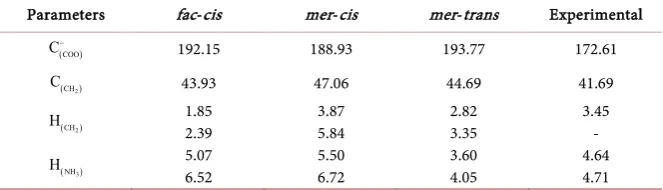
3.5. Nuclear Magnetic Resonance Simulation (nmr)
Table 6 is presented the magnetic resonance of 13C and 1H in comparison with
experimental data.
The NMR theoretical data indicate overestimated values. These overestimated values can be explained by the method and the basis set, resulting in poor results [33]. Another explanation for such high values is that the simulation was per-formed on a single molecule, meaning that various types of chemical interac-tions were not considered theoretically [25].
The NMR data for the mer-cis isomer provided a close approximation to the experimental data of the group (COO−), but the other NMR results were poorly related to the other two structures. Therefore, a correction of the basis sets and/or the method may provide better results in general.
4. Conclusions
DOI: 10.4236/ojic.2018.81004 50 Open Journal of Inorganic Chemistry Table 6. Magnetic resonance 13C and 1H.
Parameters fac-cis mer-cis mer-trans Experimental
(COO) C−
192.15 188.93 193.77 172.61
(CH2)
C 43.93 47.06 44.69 41.69
(CH2)
H 1.85
2.39 3.87 5.84 2.82 3.35 3.45 -
(NH3)
H 5.07
6.52 5.50 6.72 3.60 4.05 4.64 4.71
The fac-cis-diaquotrischloroglycinatoruthenium III and mer-trans-diaquo
-trischloroglycinatoruthenium III isomer presented data indicating greater stabil-ity compared to the other two isomers and was confirmed by optimizing data from the UV-vis simulation, the energy of the frontier orbitals and the chemical hardness, which supported its greater stability.
The fac-cis-diaquotrischloroglycinatoruthenium III and mer-trans-diaquo
-trischloroglycinatoruthenium III isomer presented the lowest RMSE in
compar-ison with the other structures. The difference between the RMSE of the
mer-trans and fac-cis isomers was relatively small compared to the mer-cis iso-mer, which had the highest value. Thus, observing only the frequency values cannot differentiate between two isomers, but allowed us to discard the mer-cis
isomer, which showed the worst results.
The observation of the theoretical spectrum suggests the mer-trans structure. The mer-trans structure showed higher reactivity compared to the other struc-tures, which implies that this molecule can be modified easily as a function of applied energy compared to the other two structures.
Analyzing the results in general, the fac-cis-diaquotrischloroglycinatoruthe- nium III isomer presented results suggesting that this was the molecule synthe-sized by Chagas [8].
The data relating to the properties of these three molecules may assist in fu-ture studies addressing structural modifications and interactions with the bio-logical environment, since the molecule [RuCl3(H2O)2(Gly)] has been shown to possess antileishmanial activity.
Acknowledgements
This work was supported by CAPES.
Supporting Information
The orientation of the three structures is presented.
References
DOI: 10.4236/ojic.2018.81004 51 Open Journal of Inorganic Chemistry
(2016) Potentiometric, Thermodynamics and Theoretical Calculations of Some Rhodanine Derivatives. Journal of Molecular Liquids, 216, 821-829.
https://doi.org/10.1016/j.molliq.2016.01.084
[3] Sheng, H.W., Luo, W.K., Alamgir, F.M., Bai, J.M. and Ma, E. (2006) Atomic Pack-ing and Short-To-Medium-Range Order in Metallic Glasses. Nature, 439, 419-425. [4] Bertoli, A.C., Garcia, J.S., Trevisan, M.G., Ramalho, T.C. and Freitas, M.P. (2016)
Interactions Fulvate-Metal (Zn2+, Cu2+ and Fe2+): Theoretical Investigation of Thermodynamic, Structural and Spectroscopic Properties. BioMetals, 29, 275-285.
https://doi.org/10.1007/s10534-016-9914-8
[5] Das, P., Sarmah, P.P., Borah, M. and Phukan, A.K. (2009) Low-Spin, Mononuclear, Fe(III) Complexes With P,N Donor Hemilabile Ligands: A Combined Experimental and Theoretical Study. Inorganica Chimica Acta, 362, 5001-5011.
https://doi.org/10.1016/j.ica.2009.08.006
[6] de Oliveira, R.S., Boffo, E.F., Reis, F.C.C., Nikolaou, S., Andriani, K.F., Caramori, G.F. and Doro, F.G. (2016) A Ruthenium Polypyridyl Complex with the Antihyper-tensive Drug Valsartan: Synthesis, Theoretical Calculations and Interaction Studies with Human Serum Albumin. Polyhedron, 114, 232-241.
https://doi.org/10.1016/j.poly.2015.12.029
[7] Bhattacharjee, J., Das, S., Reddy, T.D.N., Nayek, H.P., Mallik, B.S. and Panda, T.K. (2016) Alkali Metal and Alkaline Earth Metal Complexes with the Bis(borane-diphenylphosphanyl)amido Ligand—Synthesis, Structures, and Cataly-sis for Ring-Opening Polymerization of є-Caprolactone. Zeitschrift für anorga-nische und allgemeine Chemie, 642, 118-127.
https://doi.org/10.1002/zaac.201500593
[8] Chagas, M.A.S., Galvão, A.D., de Moraes, F.T., Ribeiro, A.T.B.N., de Siqueira, A.B., de Assis Salama, I.C.C., Arrais-Silva, W.W., de Sousa, K.M.D., de Sousa Pereira, C.C. and dos Santos, W.B. (2017) Synthesis, Characterization and Analysis of Leishmanicide Ability of the Compound [Ru(Cl)3(H2O)2(gly)]. Open Journal of Inorganic Chemistry, 7, 89-101. https://doi.org/10.4236/ojic.2017.74006
[9] Salama, I.C.C.D.A. (2013) Análise Biológica Dos Compostos Rutênio, Lupeol E Boldina No Modelo Experimental Das Leishmanioses. Dissertação de Mestrado, Universidade Federal do Mato Grosso-Campus Universitário do Araguaia.
[10] Martínez, A., Carreon, T., Iniguez, E., Anzellotti, A., Sánchez, A., Tyan, M., Sattler, A., Herrera, L., Maldonado, R.A. and Sánchez-Delgado, R.A. (2012) Searching for New Chemotherapies for Tropical Diseases: Ruthenium-Clotrimazole Complexes Display High in Vitro Activity against Leishmania Major and Trypanosoma Cruzi and Low Toxicity toward Normal Mammalian Cells. Journal of Medicinal Chemi-stry, 55, 3867-3877. https://doi.org/10.1021/jm300070h
[11] Iniguez, E., Sánchez, A., Vasquez, M.A., Martínez, A., Olivas, J., Sattler, A., Sán-chez-Delgado, R.A. and Maldonado, R.A. (2013) Metal-Drug Synergy: New Ruthe-nium(II) Complexes of Ketoconazole Are Highly Active against Leishmania Major and Trypanosoma Cruzi and Nontoxic to Human or Murine Normal Cells. Journal of Biological Inorganic Chemistry, 18, 779-790.
https://doi.org/10.1007/s00775-013-1024-2
[12] Barbosa, M.I.F., Corrêa, R.S., de Oliveira, K.M., Rodrigues, C., Ellena, J., Nascimento, O.R., Rocha, V.P.C., Nonato, F.R., Macedo, T.S., Barbosa-Filho, J.M., Soares, M.B.P. and Batista, A.A. (2014) Antiparasitic Activities of Novel Ruthenium/Lapachol Complexes. Journal of Inorganic Biochemistry, 136, 33-39.
DOI: 10.4236/ojic.2018.81004 52 Open Journal of Inorganic Chemistry
[13] Koenig, P.M., Roth, R. and Dietrich, S. (2008) Lock and Key Model System. EPL, 84, 68006/68001-68006/68005.https://doi.org/10.1209/0295-5075/84/68006
[14] Adhireksan, Z., Davey, G.E., Campomanes, P., Groessl, M., Clavel, C.M., Yu, H., Nazarov, A.A., Yeo, C.H.F., Ang, W.H., Dröge, P., Rothlisberger, U., Dyson, P.J. and Davey, C.A. (2014) Ligand Substitutions between Ruthenium-Cymene Com-pounds Can Control Protein versus DNA Targeting and Anticancer Activity. Na-tureCommunications, 5, Article No. 3462.https://doi.org/10.1038/ncomms4462
[15] Credendino, R., Poater, A., Ragone, F. and Cavallo, L. (2011) A Computational Perspective of Olefins Metathesis Catalyzed by N-Heterocyclic Carbene Ruthenium (Pre)Catalysts. Catalysis Science & Technology, 1, 1287-1297.
https://doi.org/10.1039/c1cy00052g
[16] Wu, M., Gill, A.M., Yunpeng, L., Falivene, L., Yongxin, L., Ganguly, R., Cavallo, L. and Garcia, F. (2015) Synthesis, Structural Studies and Ligand Influence on the Sta-bility of Aryl-NHC Stabilised Trimethylaluminium Complexes. Dalton Transac-tions, 44, 15166-15174.https://doi.org/10.1039/C5DT00079C
[17] Gianferrara, T., Bratsos, I. and Alessio, E. (2009) A Categorization of Metal Anti-cancer Compounds Based on Their Mode of Action. Dalton Transactions, No. 37, 7588-7598.https://doi.org/10.1039/b905798f
[18] Frisch, M.J., Trucks, G.W., Schlegel, H.B., Scuseria, G.E., Robb, M.A., Cheeseman, J.R., Scalmani, G., Barone, V., Mennucci, B., Petersson, G.A., Nakatsuji, H., Carica-to, M., Li, X., Hratchian, H.P., Izmaylov, A.F., Bloino, J., Zheng, G., Sonnenberg, J.L., Hada, M., Ehara, M., Toyota, K., Fukuda, R., Hasegawa, J., Ishida, M., Nakaji-ma, T., Honda, Y., Kitao, O., Nakai, H., Vreven, T., Montgomery Jr., J.A., Peralta, J.E., Ogliaro, F., Bearpark, M.J., Heyd, J., Brothers, E.N., Kudin, K.N., Staroverov, V.N., Kobayashi, R., Normand, J., Raghavachari, K., Rendell, A.P., Burant, J.C., Iyengar, S.S., Tomasi, J., Cossi, M., Rega, N., Millam, N.J., Klene, M., Knox, J.E., Cross, J.B., Bakken, V., Adamo, C., Jaramillo, J., Gomperts, R., Stratmann, R.E., Yazyev, O., Austin, A.J., Cammi, R., Pomelli, C., Ochterski, J.W., Martin, R.L., Mo-rokuma, K., Zakrzewski, V.G., Voth, G.A., Salvador, P., Dannenberg, J.J., Dapprich, S., Daniels, A.D., Farkas, Ö., Foresman, J.B., Ortiz, J.V., Cioslowski, J. and Fox, D.J. (2009) Gaussian 09. Gaussian, Inc. Print., Wallingford.
[19] Zhao, Y. and Truhlar, D.G. (2008) The M06 Suite of Density Functionals for Main Group Thermochemistry, Thermochemical Kinetics, Noncovalent Interactions, Ex-cited States, and Transition Elements: Two New Functionals and Systematic Testing of Four M06-Class Functionals and 12 Other Functionals. Theoretical Chemistry Accounts, 120, 215-241.https://doi.org/10.1007/s00214-007-0310-x
[20] Frisch, M.J., Pople, J.A. and Binkley, J.S. (1984) Self-Consistent Molecular Orbital Methods 25. Supplementary Functions for Gaussian Basis Sets. The Journal of Chemical Physics, 80, 3265-3269.https://doi.org/10.1063/1.447079
[21] Andrae, D., Häußermann, U., Dolg, M., Stoll, H. and Preuß, H. (1990) Ener-gy-Adjustedab Initio Pseudopotentials for the Second and Third Row Transition Elements. Theoretica Chimica Acta, 77, 123-141.
https://doi.org/10.1007/BF01114537
[22] Wolinski, K., Hinton, J.F. and Pulay, P. (1990) Efficient Implementation of the Gauge-Independent Atomic Orbital Method for NMR Chemical Shift Calculations.
Journal of the American Chemical Society, 112, 8251-8260.
https://doi.org/10.1021/ja00179a005
DOI: 10.4236/ojic.2018.81004 53 Open Journal of Inorganic Chemistry
Theoretical Study. Inorganic Chemistry, 53, 8624-8637.
[24] Prabavathi, N., Nilufer, A., Krishnakumar, V. and Akilandeswari, L. (2012) Spec-troscopic, Electronic Structure and Natural Bond Analysis of 2-aminopyrimidine and 4-aminopyrazolo[3,4-d]pyrimidine: A Comparative Study. Spectrochimica Acta Part A: Molecular and Biomolecular Spectroscopy, 96, 226-241.
https://doi.org/10.1016/j.saa.2012.05.015
[25] Kowalczyk, I. (2014) Synthesis and Characterization of Alkylammonium Zwitterio-nic Amino Acids Derivatives by FTIR, NMR Spectroscopy and DFT Calculations.
Acta Chimica Slovenica, 61, 39-50.
[26] Alam, M.M., Islam, S.M.S., Rahman, S.M.M. and Rahman, M.M. (2010) Simulta-neous Preparation of Facial and Meridional Isomer of Cobalt-Amino Acid Com-plexes and Their Characterization. Journal of Scientific Research, 2, 91-98.
[27] Sert, Y., Ucun, F., El-Hiti, G.A., Smith, K. and Hegazy, A.S. (2016) Spectroscopic Investigations and DFT Calculations on 3-(Diacetylamino)-2-ethyl-3H quinazo-lin-4-one. Journal of Spectroscopy, 2016, Article ID: 5396439.
https://doi.org/10.1155/2016/5396439
[28] Chaitanya, K. (2012) Molecular Structure, Vibrational Spectroscopic (FT-IR, FT-Raman), UV-Vis Spectra, First Order Hyperpolarizability, NBO Analysis, HOMO and LUMO Analysis, Thermodynamic Properties of Benzophenone 2,4-Dicarboxylic Acid by Ab Initio HF and Density Functional Method. Spectro-chimica Acta Part A: Molecular and Biomolecular Spectroscopy, 86, 159-173.
https://doi.org/10.1016/j.saa.2011.09.069
[29] Pearson, R.G. (2005) Chemical Hardness and Density Functional Theory. Journal of Chemical Sciences, 117, 369-377.https://doi.org/10.1007/BF02708340
[30] Pramanik, H.A.R., Das, D., Paul, P.C., Mondal, P. and Bhattacharjee, C.R. (2014) Newer Mixed Ligand Schiff Base Complexes from Aquo-N-(2’-Hydroxy Acetophe-none) Glycinatocopper(II) as Synthon: DFT, Antimicrobial Activity and Molecular Docking Study. Journal of Molecular Structure, 1059, 309-319.
https://doi.org/10.1016/j.molstruc.2013.12.009
[31] Das, D., Dutta, A. and Mondal, P. (2015) Interaction of Aquated form of Ruthe-nium(III) Anticancer Complexes with Normal and Mismatch Base Pairs: A Density Functional Theoretical Study. Computational and Theoretical Chemistry, 1072, 28-36.https://doi.org/10.1016/j.comptc.2015.08.020
[32] Shankar, R., Senthilkumar, K. and Kolandaivel, P. (2009) Calculation of Ionization Potential and Chemical Hardness: A Comparative Study of Different Methods. In-ternational Journal of Quantum Chemistry, 109, 764-771.
https://doi.org/10.1002/qua.21883
[33] Gontrani, L., Mennucci, B. and Tomasi, J. (2000) Glycine and Alanine: A Theoretical Study of Solvent Effects upon Energetics and Molecular Response Properties. Journal of Molecular Structure: Theochem, 500, 113-127.
![Figure 1. Structure of the molecule isomers [RuCl3(H2O)2gly].](https://thumb-us.123doks.com/thumbv2/123dok_us/9995611.499679/3.595.211.524.461.702/figure-structure-molecule-isomers-rucl-h-o-gly.webp)
![Table 1. Relative energies of isomers of the molecule [RuCl3(H2O)2gly].](https://thumb-us.123doks.com/thumbv2/123dok_us/9995611.499679/4.595.210.538.211.432/table-relative-energies-isomers-molecule-rucl-h-gly.webp)