© 2016, IRJET | Impact Factor value: 4.45 | ISO 9001:2008 Certified Journal | Page 1646
A PILOT STUDY ON DISTRICT HEALTH INFORMATION SOFTWARE 2:
CHALLENGES AND LESSONS LEARNED IN A DEVELOPING COUNTRY: AN
EXPERIENCE FROM ETHIOPIA
Pandikumar Thangasamy
1, Melaku Gebremichael
2, Mentesnot Kebede
2, Michael Sileshi
2, Noah
Elias
2, Brook Tesfaye
21
Associate Professor, Department of Computer Science and Information Technology, College of Engineering,
Defense University, Federal Ministry of National Defense, Debre Zeyit, Ethiopia
2
Policy and Planning Directorate, Federal Ministry of Health, Addis Ababa, Ethiopia
---***---Abstract -
A properly functioning health information system is central to achieving better health outcomes. Henceforward, strong health management information system is a backbone of strong health system. A properly functioning health management information system gets the right information into the right hands at the right time, enabling health data consumers to make effective information use. District health information software 2 is open source software for collection, validation, analysis, and presentation of data tailored to manage integrated health information. This study examines lessons and challenges of DHIS-2 to advance electronic health information management system in Ethiopia. A cross-sectional pilot study on twenty six health facilities found in four purposefully selected regions of the country was conducted from February to November 2015. Data were collected using interview and Likert scale questionnaire. A central server was configured. The software was customized in view of the national health management information system. Training of trainees was given to users. The software was piloted on those twenty six health facilities for three months following the training. It was found that District Health Information software contributes in advancement of existing health information system primarily in terms of data utilization and information use. However, since Ethiopia has a unique calendar, customizing reporting period to local calendar was a major challenge.Key Words: District health Information Software, DHIS-2, Pilot Study, Health Management Information System, Challenge, Lessons Learned, Developing country, Ethiopia, Experience
1. INTRODUCTION
Utilization of precise, valid, timely and credible data and information are the bases of decision making, policy and planning development [1, 2]. Strong health systems are central to achieving better health outcomes. Henceforward, strong Health Information System (HIS) is a backbone of strong health system. A properly functioning HIS gets the
right information into the right hands at the right time, enabling health data consumers to make effective information use [3].
Ethiopia adopted a “one plan, one budget, and one report” policy. In this regard, since 2004 Ethiopia implemented two types of electronic Health Management Information System (e-HMIS) as integral part of HIS providing fundamental information for health system monitoring. Recent assessment conducted by Ethiopian Federal Ministry of Health (FMOH) showed that despite intensive efforts to improve the efficiency of e-HMIS, data quality and information use had been challenges for the past few years. In this circumstance, existing e-HMIS could be incompetent to come across with high demand information in order to make impressive gains and phenomenon advancements on major health outcomes in the newly approaching Health Sector Transformation Plan (HSTP).
District Health Information Software (DHIS-2) is open source software for collection, validation, analysis, and presentation of data tailored to manage integrated health information. DHIS-2 has been adopted for national and program specific health information system in around 47 countries globally. It is a preferred health information system especially as developing countries try to transform health care system by effective information use as a critical process [4].
DHIS-2 in itself is a mirror that shows the picture of DHIS-2 to managers and policy makers, in district and national level. Whatever information transparency with assistance of proper and efficient information technology, and integrity in its components, shows a better picture of the organization, organizational units and services delivery methods [2]. Consequently, this pilot study aimed to oversee likely opportunities and challenges of DHIS-2 to advance existing e-HMIS in Ethiopia.
© 2016, IRJET | Impact Factor value: 4.45 | ISO 9001:2008 Certified Journal | Page 1647
2.1 Pilot team composition
A national DHIS-2 core team comprising different skills
and backgrounds (Public health, Health Information
specialists,
Epidemiologists,
Information
and
Communication Technology specialists, data managers
and a project manager) was formed at the initial stages
of the project. One member of the team was appointed
as the team leader. The purpose of the team was to
coordinate the implementation of the DHIS-2 project
by driving the database design process and
customization. Technical assistants from Health
Information Systems Program, Oslo University were
borrowed to support the implementation.
2.2 Pilot Study Area, Design and Period
Ethiopia, officially known as the Federal Democratic
Republic of Ethiopia, is a landlocked country located in
the Horn of Africa with over 91 million inhabitants
occupying a total area of 1,100,000 km2 [5]. A
cross-sectional study design was conducted from February to
November 2015.
2.3 Pilot Site Selection Procedures
Type of previously deployed e-HMIS, socio-economic
status, geography, human resource, information
technology infrastructure, available historical data, and
administrative structure were used as pilot site
selection inclusion and exclusion criterion.
Accordingly, FMOH in consultation with Regional
health bureaus and Zonal health departments selected
districts from the entire pool of available districts to
clearly extract lessons and challenges of DHIS-2 pilot
implementation under aforementioned criterion.
2.4 Sample Size and Sampling Techniques
The pilot study was based on regions which were
designed to provide important lessons for large scale
implementation of DHIS-2 at national level. In general,
based on inclusion criterion eleven regional states
(nine regional and two city administration health
bureaus) found in Ethiopia were stratified and a
purposeful sampling method was deployed in order to
select four regions. Accordingly, South Nations,
Nationalities and Peoples’ Region (SNNPR), Oromia,
Addis Ababa, and Gambella regions were selected.
Henceforth, following pilot site selection procedures
Zonal health departments found in each of four
selected regions carefully nominated their respective
districts for DHIS-2 pilot implementation.
All the 37 professionals who were working in the
selected districts (7 at Oromia, 12 at Addis Ababa, 8 at
Gambella and 10 at SNNPR) were included in the pilot
study. Accordingly, seven day training of trainers was
given on the objective of the pilot study and on basic
data entry, analytics and reporting procedures of the
software for higher precision and accuracy.
2.5 Data Collection Procedures, Processing and
Analysis
A five point Likert scale questionnaire was developed
in order to assess attitudes, opinions, and perceptions
of users towards customized DHIS-2. Users choose
from a range of possible responses to a specific
question; typically include “Excellent”, “Good”,
“Satisfactory”, “Poor”, and “Very poor”. Data were also
collected using interview of users. Variables primarily
focus on six Non-functional requirements of software
engineering. Data was numerically coded, transformed,
and entered in to SPSS version 20.0.
Descriptive statistics was done to describe the
characteristics of users. Sequential mixed method
analysis (quantitative data analysis supplemented by
qualitative data analysis) was conducted; as a result,
findings were triangulated in order to fully explain and
make accountable conclusions and recommendations
from the pilot study.
3. RESULTS
3.1 Setting Up of a Central Server and
Customization of the DHIS-2
© 2016, IRJET | Impact Factor value: 4.45 | ISO 9001:2008 Certified Journal | Page 1648
process went smoothly demonstrating the importance
of knowledge transfer and capacity building. Service
delivery, outpatient and inpatient disease report types
were designed. All report types collect and report data
on monthly, quarterly and yearly basis.
A total of 122 indicators were included in the software.
Age, sex, region, and other disaggregation performance
metrics were used for indicators based on type of
program they monitor. Public Health Emergency
Management (PHEM) module was also added to
amplify the use of information in protecting the nation
from health and health related hazards. PHEM module
collects and reports data on thirty three immediately
reportable diseases and seven weekly reportable
diseases as part of public health emergency
preparedness and management. DHIS-2 was
customized to enable data entry, exchange and
reporting to the next higher level using internet. During
weak or no internet connectivity, data exchange is
supported by exporting/ importing techniques using
simple secondary data storage devices such as flash
disk and memory sticks. Data flow was based on the
health system hierarchy starting from health facilities
to FMOH. Customized DHIS-2 was installed on existing
e-HMIS computers found in 26 health institutions
found in four regional health bureaus selected for the
pilot study. Every HMIS officer at each health facility
and administrative structure has its own privilege to
access and consume data.
3.2 Users’ Satisfaction on Customized DHIS-2
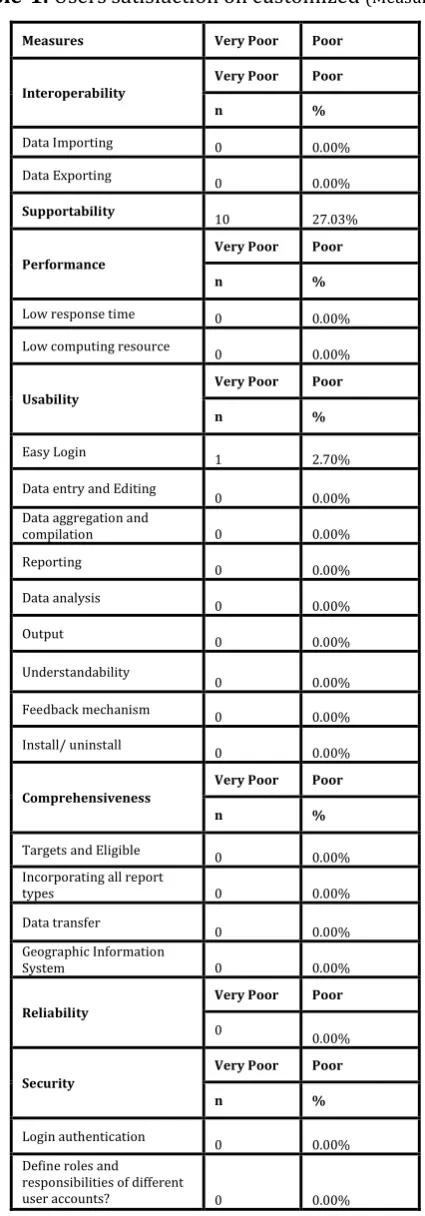
Table 1, Table 2 and Table 3 shows the overall mean
for users’ satisfaction among various key nonfunctional
requirements of software engineering. Regarding
interoperability, 23(62.17%) and 28(75.68) of the
users’ were agreed that DHIS-2 imports and exports
data in suitable formats. Although 21(56.76%) of the
users’ reported that DHIS-2 doesn’t function together
with locally implemented m-Health.
20(54.05) of the users’ were agreed that DHIS-2 used
low computing resources in terms of performance
while 17(45.95%) of them responded that they are
only satisfied. Majority (70.27%) of users’ were
satisfied that DHIS-2 was easy to understand and learn.
25(67.57%) and 16(43.24%) of users’ were agreed that
DHIS-2 has easy data entry and analysis respectively.
18(48.65%) of users’ were satisfied that DHIS-2 had a
feature to enter annual targets and eligible for their
specific district. 24(64.87%) of users’ found that
customized DHIS-2 included all types of reports.
Regarding security, 24(64.87%) of users’ revealed that
[image:3.595.326.539.140.749.2]customized DHIS-2 incorporated strong authentication
procedure in order to access data.
Table-1:
Users satisfaction on customized
(Measure1)Measures Very Poor Poor
Interoperability
Very Poor Poor
n %
Data Importing 0 0.00%
Data Exporting 0 0.00%
Supportability 10 27.03%
Performance
Very Poor Poor
n %
Low response time 0 0.00%
Low computing resource 0 0.00%
Usability
Very Poor Poor
n %
Easy Login 1 2.70%
Data entry and Editing
0 0.00%
Data aggregation and
compilation 0 0.00%
Reporting 0 0.00%
Data analysis 0 0.00%
Output 0 0.00%
Understandability
0 0.00%
Feedback mechanism 0 0.00%
Install/ uninstall 0 0.00%
Comprehensiveness
Very Poor Poor
n %
Targets and Eligible 0 0.00%
Incorporating all report
types 0 0.00%
Data transfer
0 0.00%
Geographic Information
System 0 0.00%
Reliability
Very Poor Poor
0
0.00%
Security
Very Poor Poor
n %
Login authentication
0 0.00%
Define roles and responsibilities of different
user accounts? 0 0.00%
[image:3.595.327.539.147.770.2]© 2016, IRJET | Impact Factor value: 4.45 | ISO 9001:2008 Certified Journal | Page 1649 Measures Satisfactory Good
Interoperability Satisfactory Good
n %
Data Importing 8 21.62%
Data Exporting 9 24.32%
Supportability 16 43.24%
Performance Satisfactory Good
n %
Low response time 19 51.35%
Low computing resource 17 45.95%
Usability Satisfactory Good
n %
Easy Login 18 48.65%
Data entry and Editing 8 21.62% Data aggregation and
compilation 13 35.14%
Reporting 11 29.73%
Data analysis 21 56.76%
Output 20 54.05%
Understandability 26 70.27%
Feedback mechanism 23 62.16%
Install/ uninstall 22 59.46%
Comprehensiveness Satisfactory Good
n %
Targets and Eligible 18 48.65% Incorporating all report
types 13 35.14%
Data transfer 18 48.65%
Geographic Information
System 15 40.54%
Reliability Satisfactory Good
6 16.22%
Security Satisfactory Good
n %
Login authentication 13 35.14% Define roles and
responsibilities of
different user accounts? 11 29.73%
Table-3:
Users satisfaction on customized
(Measure3)Measures Excellent Mean SD
Interoperability Excellent Mean SD
n %
Data Importing 6 16.22% 3.62
Data Exporting 7 18.92% 3.95
Supportability 0 0.00% 2.16
Performance Excellent Mean SD
n %
Low response time 2 5.41% 3.38
Low computing resource 4 10.81% 3.65
Usability Excellent Mean SD
n %
Easy Login 4 10.81% 3.27
Data entry and Editing 6 16.22% 3.76 Data aggregation and
compilation 5 13.51% 3.41
Reporting 7 18.92% 3.62
Data analysis 4 10.81% 3.54
Output 3 8.11% 3.54
Understandability 3 8.11% 3.22
Feedback mechanism 2 5.41% 3.43
Install/ uninstall 0 0.00% 3.14
Comprehensiveness Excellent Mean SD
n %
Targets and Eligible 4 10.81% 3.19 Incorporating all report
types 3 8.11% 3.73
Data transfer 5 13.51% 3.65
Geographic Information
System 2 5.41% 3.16
Reliability Excellent Mean SD
11 29.73% 4.14
Security Excellent Mean SD
n %
Login authentication 7 18.92% 3.84 Define roles and
responsibilities of
different user accounts? 5 13.51% 3.84
© 2016, IRJET | Impact Factor value: 4.45 | ISO 9001:2008 Certified Journal | Page 1650 Health information system effective management is one of
advanced and valuable outcomes of health system management. Therefore, one of the greatest challenges for health system managers is commitment and deep belief of implementation and utilization of modern management in health information management area [7, 8].
The result of the pilot study revealed important challenges and lessons of DHIS-2 in Ethiopian context. According to findings, interoperability, performance, usability, comprehensiveness, reliability, and security criteria were met with needs of users participated in the pilot study. Authors believe that HMIS officers at health facilities and administrative levels should participate in proper training courses of information use in decision making.
In this context, similar study conducted in Ethiopia, Tanzania, Malawi, Botswana and Mongolia showed these challenges:
- Customization of Ethiopian calendar
- Health Information experts did some other tasks; such as: service delivery to clients [9]
- High human resource turn over [10]
- Not enough computers for health data management [10]
- Inadequate access to DHIS skilled personnel [10] - Low health information knowledge [11]
- Instances of DHIS-2 being not compatible with computers having windows service pack 2 Operating System
- Challenges on Antiretroviral Treatment data management
- Personnel resignation during DHIS activities, leads to improper DHIS implementation [11]
- Not enough attention paid to district information technology protection and infrastructure to ensure DHIS software maintenance [12]
- No appropriate policy for hardware, software, and system development [12]
The findings of our study also showed important lessons that infrastructure significance for proper implementation of DHIS, there is not enough attention paid to this subject in many other countries. For example, there is not primary infrastructure for team working, participation in information interpretation and decision making. Furthermore, DHIS training infrastructures is undesirable, first level data production and gathering is inefficient, there is no computerized report in urban and rural health facilities, and namely, there is not enough information for decision making in this level.
The statistics tell us that the system is being used. Generally, due to the good attributes of the software, data managers
and data entry staff readily welcomed it. They are describing it as being “user friendly” and very easy to use. The standard reports and the data visualizer are very popular tools for making graphs and reports. Users in districts and health facilities also stated that they had easier access to their own data, as well as data from the rest of the country from DHIS than before. The argument is that they can now access their data regardless of power-cuts (when they used their laptop), viruses or computer problems, because the data was “up there”, always available, “in the Internet”. Furthermore, they really appreciated the dynamic updates of data from around the country and the messaging system in the DHIS, used for communication between users and the system support team to report bugs and to get help when having problems. “Just like Facebook” as one HMIS officer said.
The pilot study revealed that user’s participation in all stages of DHIS designing is very important to comply with all users’ information needs [2, 13]. This study showed that there is user participation in DHIS designing stage. In 2005, one study about DHIS in Kenya showed that information systems cannot perform effectively unless users have enough knowledge of information system design, implementation and application and to be empowered about information culture, values and its impact on effective health services delivery [14].
The present pilot study also identified that DHIS-2 provided simple analysis encouraging data use for decision-making. With inbuilt validation process, data managers are able to pick errors thus helping in improving data quality. A study conducted in Kenya also indicated that DHIS has further [15]:
- Improved the dissemination of public health information and facilitated public discourse and dialogue around major public health threats - Strengthened ability to monitor the incidence of
public health threats and timely response
- Improved the efficiency of administrative systems in health care facilities.
The present pilot study also revealed that users were able to get instant access to their own data, from “anywhere” and at “any time”. This greatly improved the sense of “ownership” to the data and the system and thereby enabled important learning-by-doing processes, significantly complementing the formal training and support.
The study clearly showed that integrating PHEM benefited the health system to capture public health emergencies before causing social disruption and economic loss in addition to high degree of morbidity and mortality. One user also added that “Role of incorporating PHEM in to DHIS-2 is very essential and priority of the health system that plays a key role in minimizing public health emergency threats in Ethiopia”.
© 2016, IRJET | Impact Factor value: 4.45 | ISO 9001:2008 Certified Journal | Page 1651
5. CONCLUSIONS
The norm when implementing country health information system in Africa has been to capture the data in standalone databases and transmit to the next level through e-mail attachments, electronically or physically on a memory sticks. Significant human capacity on databases, data management and system support is needed in order to manage a national health information system based on numerous standalone database applications with fragile flows of data between them. Problems of data reporting, completeness and the maintenance of numerous standalone applications across the country make it very complicated.
Ethiopia made a bold move to adopt a web based system for data management. The ability to implement DHIS-2 online on one central server made it significantly “easier” to roll out the system countrywide, as compared with the alternative of having to support and maintain separate installations in all districts, hospitals and health facilities around the country. Pilot of DHIS-2 indicates that there are many areas being improved. According to our findings the majority of DHIS criteria compliance with HMIS officers is desirable. In general, the pilot study contributes in advancement of the existing HMIS, especially in terms of data utilization and information use. It is however important that capacity building, relevant infrastructure and staffing levels be evaluated for the system before rolling out at national level. Also, we suggest that FMOH and regional health bureaus must work together before system implementation to increase its adoption.
ACKNOWLEDGMENT
We would like to acknowledge Health Information System Program at University of Oslo, Norway for their unreserved technical guidance. We are also grateful to all peoples who have participated in the pilot study.
REFERENCES
[1] Heywood A, Rohde J. Using information for action: a manual for health workers at facility level. South Africa: EQUITY Project. 2002.
[2] Lippeveld T, Sauerborn R, Bodart C. Design and implementation of health information systems: World Health Organization; 2000.
[3]Organization WH. Everybody's business--strengthening health systems to improve health outcomes: WHO's framework for action. 2007.
[4] Available from: www.dhis2.org.
[5] Zewde B. A history of modern Ethiopia, 1855-1991: James Currey Publishers; 2001.
[6] Gilvary A. New concepts in information sciences. Chapar Press; 2008.
[7] Sarafi Zadeh A, Ali Panahi A. Management information systems. Mir publication in Persian Tehran. 2002.
[8] Twaakyondo H, editor. DHIS Customization Tanzanian experience, 2003. Available on web site: http://www hispkerala org/conference/presentations/country% 20presentatiion.
[9] Muyepa A, editor. HIMS in Malawi: Achievements, Challenges and the Way Forward. Proceeding of the First International DHIS Workshop; 2006.
[10] Seid H. HISP Ethiopia: Current Status and Future Directions.
[11] Chandna O, Shongwe J. Evaluation of DHIS pilot project in Botswana. Gaborone, Botswana: Ministry of Health. 2006. [12] Barron P, Hanmer L, Mahomed H, Braa J. District Health Information System Guidelines. Europian Union, Department of Health. 1998; 18.
[13] Odhiambo-Otieno GW. Evaluation criteria for district health management information systems: lessons from the Ministry of Health, Kenya. International journal of medical informatics. 2005;74(1):31-8.
[14] Manya A, Braa J, Øverland LH, Titlestad OH, Mumo J, Nzioka C, editors. National roll out of District Health Information Software (DHIS 2) in Kenya, 2011–Central server and Cloud based infrastructure. IST-Africa 2012 Conference Proceedings; 2012.
BIOGRAPHIES
Description “ “