© 2016, IRJET ISO 9001:2008 Certified Journal Page 944
INCREMENTAL MAPREDUCE IN BIG DATA ENVIRONMENT
Kabila
PG Scholar, Department of Computer Science and Engineering, Institute of Road and Transport Technology, Erode – 638316.
---***---Abstract -
New data and updates are growing biggerand the results of data mining applications turn out to be stable. In this paper we use Incremental MapReduce and it is the extension of the map reduces. Map reduce have been used widely in mining. Incremental MapReduce process key-value pair level incremental processing. It process only key-value pair level incremental processing somewhat than task level re-computation and it also support sophisticated iterative techniques. In addition to this map reduce we have introduced the K-Nearest Neighbor This model allows us to bring the output again a large dataset. To map gases will determine the K-n Neighbors in different splits of the data. Incremental Map performs the operation once it get the data from the K-N.
Keywords- Incremental MapReduce, key-value pair, k-Nearest Neighbour, re-computation.
1.INTRODUCTION
( Size 11 , cambria font)Today huge amount of digital data is being accumulated in many important areas, including e-commerce, social network, finance, health care, education, and environment. It has become increasingly popular to mine such big data in order to gain insights to help business decisions or to provide better personalized, higher quality services. In recent years, a large number of computing frameworks have been developed for big data analysis. Among these
frameworks, MapReduce (with its open-source
implementations, such as Hadoop) is the most widely used in production because of its simplicity, generality, and maturity. We focus on improving Map Reduce in this paper. Big data is constantly evolving. As new data and updates are being collected, the input data of a big data mining algorithm will gradually change, and the computed results will become stale and obsolete over time. In many situations, it is desirable to periodically refresh the mining computation in order to keep the mining result sup-to-date.
2. Problem identification
Today huge amount of digital data is being accumulated in many important areas, including e-commerce, social network, finance, health care, education, and environment. It has become increasingly popular to mine such big data in order to gain insights to help business decisions or to provide better personalized, higher quality services. In recent years, a large number of computing frameworks have been developed for big data analysis. Among these
frameworks, MapReduce (with its open-source
implementations, such as Hadoop) is the most widely used in production because of its simplicity, generality, and maturity. We focus on improving Map Reduce in this paper. Big data is constantly evolving. As new data and updates are being collected, the input data of a big data mining algorithm will gradually change, and the computed results will become stale and obsolete over time. In many situations, it is desirable to periodically refresh the mining computation in order to keep the mining result sup-to-date.
2. Existing system
© 2016, IRJET ISO 9001:2008 Certified Journal Page 945
MapReduce job. However, a small number of input data changes may gradually propagate to affect a large portion of intermediate states after a number of iterations, resulting in expensive global re-computation after wards.The Bulk Synchronous Processing (BSP) model. The computation is broken down into a sequence of super steps. In each super step, a Compute function is invoked on each vertex. It communicates with other vertices by sending and receiving messages and performs computation for the current vertex. This model can efficiently support a large number of iterative graph algorithms. It provides a group wise processing operator Translate that takes state as an explicit input to support incremental analysis. But it adopts a new programming model that is very different from Map Reduce. In addition, several research studies support incremental processing by task-level re-computation, but they require users to manipulate the states on their own. In contrast, Incremental MapReduce exploits a fine-grain kv-pair level re-computation that are more advantageous. Incremental processing for iterative application, Proposes a timely dataflow paradigm that allows stateful computation and arbitrary nested iterations. To support incremental iterative computation, programmers have to completely rewrite their MapReduce programs. In comparison, extend the widely used MapReduce model for incremental iterative computation. Existing MapReduce programs can be slightly changed to run on incremental MapReduce for incremental processing.
4. Proposed System.
Propose Incremental MapReduce, an extension to MapReduce that supports fine-grain incremental processing for both one step and iterative computation. Compared to previous solutions, Incremental MapReduce incorporates the following three novel features
4.1 Fine-grain incremental processing using
MRBG-store
Incremental Map Reduce supports kv-pair level fine-grain incremental processing in order to minimize the amount of re-computation as much as possible. Model the kv-pair level data flow and data dependence in a Map Reduce computation as a bipartite graph, called MRB Graph. A MRBG-Store is designed to preserve the fine-grain states in the MRB Graph and support efficient queries to retrieve fine-grain states for incremental processing.
4.2 General-Purpose Iterative Computation
With modest extension to MapReduce API, previous work proposed Incremental MapReduce to efficiently support iterative computation on the MapReduce platform. However, it targets types of iterative computation where there is a one-to-one/all-to-one correspondence from Reduce output to Map input. In comparison, our current proposal provides general-purpose support, including not
only one-to-one, but also one-to-many, many-to-one, and many-to-many correspondence. Enhance the Map API to allow users to easily express loop-invariant structure data, and propose a Project API function to express the correspondence from Reduce to Map. While users need to slightly modify their algorithms in order to take full advantage of Incremental MapReduce, such modification is modest compared to the effort to re-implement algorithms on a completely different programming paradigm.
4.3 Icremental Processing For Computation.
Incremental iterative processing is substantially more
challenging than incremental one-step processing because even a small number of updates may propagate to affect a large portion of intermediate states after a number of iterations. To address this problem, propose to reuse the converged state from the previous computation and employ a change propagation control (CPC) mechanism. We also enhance the MRBG-Store to better support the access patterns in incremental iterative processing. To our knowledge, IncrementalMapReduce is the first MapReduce-based solution that efficiently supports incremental iterative computation.
5 System Architecture Diagram.
Fig -1: System Architecture Diagram.
6. Module Description
6.1 Collect data blocks Module
© 2016, IRJET ISO 9001:2008 Certified Journal Page 946
services. In recent years, a large number of computing frameworks have been developed for big data analysis. As new data and updates are being collected, the input data of a big data mining algorithm will gradually change, and the computed results will become stale and obsolete over time. Given the size of the input big data, it is often very expensive to rerun the entire computation from scratch. Divides a file into equal-sized blocks and stores the blocks across a cluster of machines. The MapReduce system runs a Job Tracker process on a master node to monitor the job progress, and a set of Task Tracker processes on worker nodes to perform the actual Map and Reduce tasks.
6.2 Iterative computation Module
Incremental iterative processing is substantially more challenging than incremental one-step processing because even a small number of updates may propagate to affect a large portion of intermediate states after a number of iterations.
To reuse the converged state from the previous computation and employ a change propagation control (CPC) mechanism. Also enhance the MRBG-Store to better support the access patterns in incremental iterative processing. Incremental MapReduce is the first MapReduce-based solution that efficiently supports incremental iterative computation .Including not only one-to-one, but also one-to-many, many-to-one, and many-to-many correspondence. Enhance the Map API to allow users to easily express loop-invariant structure data, and API function to express the correspondence from Reduce to Map. While users need to slightly modify their algorithms in order to take full advantage of Incremental MapReduce, such modification is modest compared to the effort to re-implement algorithms on a completely different programming paradigm.
6.2 Fine-Grain Incremental Processing Module
Incremental MapReduce supports kv-pair level fine-grain incremental processing in order to minimize the amount of re-computation as much as possible. The kv-pair level data flow and data dependence in a MapReduce computation as a bipartite graph A MRBG-Store is designed to preserve the fine-grain states in the MRBGraph and support efficient queries to retrieve fine-grain states for incremental processing. The Map function takes a kv-pair (K1; V 1) as input and computes zero or more intermediate kv-pairs (K2; V 2). Then all (K2; V 2) is grouped by K2. The Reduce function takes a K2 and a list of V 2 as input and computes the final output kv-pairs (K3; 3). The fine-grain incremental processing engine with an example application, which computes the sum of in-edge weights for each vertex in a graph. The Map input is the adjacency matrix of the graph. Every record corresponds to a vertex in the graph. K1
is vertex id i, and V 1 contains “j1:wi;j1 ; j2:wi;j2 ; ...” where j is a destination vertex and wi;j is the weight of the out-edge. Given such a record, the Map function outputs intermediate kv pair hj;wi;ji for every j. The shuffling phase groups the edge weights by the destination vertex. Then the Reduce function computes for a vertex j the sum of all its in-edge weights as Pi wi;j.
6.3 Incremental Map reduce Re-computation
Module
Incremental MapReduce expects delta input data that contains the newly inserted, deleted, or modified kv-pairs as the input to incremental processing. The engine merges the delta MRBGraph and the preserved MRBGraph to obtain the updated MRBGraph using the algorithm. Each datasets the engine deletes the corresponding saved edge state. For each Vertex, the engine first checks duplicates, and inserts the new edge if no duplicate exists, or else updates the old edge if duplicate exists uniquely identifies an MRBGraph edge. Since an update in the Map input is represented as a deletion and an insertion, any modification to the intermediate edge state consists of a deletion followed by an insertion. For each affected K2, the merged list of V 2 will be used as input to invoke the Reduce function to generate the updated final results. Incremental MapReduce re-computes the Reduce instance associated with each changed MRBGraph edge. For a changed edge, it queries the MRGB-Store to retrieve the preserved states of the in-edges of the associated K2, and merge the preserved states with the newly computed edge changes.
7 Implementation
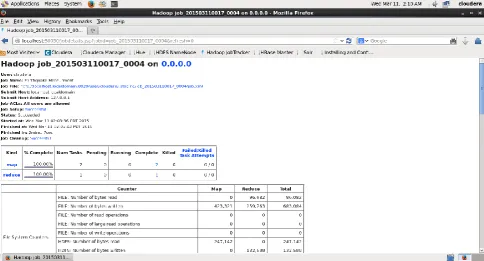
© 2016, IRJET ISO 9001:2008 Certified Journal Page 947 Fig 2:Performance of MapReduce
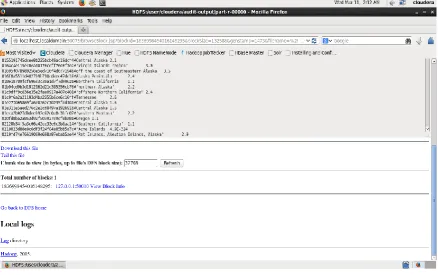
[image:4.595.56.541.393.654.2]© 2016, IRJET ISO 9001:2008 Certified Journal Page 948 Fig 4:Analytic Report for MapReduce
[image:5.595.81.515.50.367.2] [image:5.595.80.519.419.694.2]© 2016, IRJET ISO 9001:2008 Certified Journal Page 949
8. CONCLUSIONS
In this work ,we focus on the problem of stale of data when data are frequently arriving data .To avoid this we are using incremental MapReduce along with k-nearest neighbour.i2MapReduce combines a fine-grain incremental
engine, a general-purpose iterative model, and a set of effective techniques for incremental iterative computation. Real-machine experiments show that i2MapReduce can
significantly reduce the run time for refreshing big data mining results compared to re-computation on both plain and iterative MapReduce.
REFERENCES
[1] P. Bhatotia, A. Wieder, R. Rodrigues, U. A. Acar, and R. Pasquin, “Incoop: Mapreduce for incremental computations,” in Proc. 2nd ACM Symp. Cloud Comput., 2011, pp. 7:1–7:14.
[2] S. Brin, and L. Page, “The anatomy of a large-scale hypertextual web search engine,” Comput. Netw. ISDN Syst., vol. 30, no. 1–7, pp. 107–117, Apr. 1998.
[3] Y. Bu, V. Borkar, J. Jia, M. J. Carey, and T. Condie, “Pregelix: Big(ger) graph analytics on a dataflow engine,” in Proc. VLDB Endowmen,2015, vol. 8, no. 2, pp. 161–172.nage., 2011, pp. 7–14.
[4] Y. Bu, B. Howe, M. Balazinska, and M. D. Ernst, “Haloop: Efficient iterative data processing on large clusters,” in Proc. VLDB Endowment,2010, vol. 3, no. 1–2, pp. 285–296.
[5] J. Cho and H. Garcia-Molina, “The evolution of the web and implications for an incremental crawler,” in Proc. 26th Int. Conf. Very Large Data Bases, 2000, pp. 200–209.
[6] J. Dean and S. Ghemawat, “Mapreduce: Simplified data processing on large clusters,” in Proc. 6th Conf. Symp. Opear. Syst. Des. Implementation, 2004, p. 10.
[7] S. Ewen, K. Tzoumas, M. Kaufmann, and V. Markl, “Spinning fast iterative data flows,” in Proc. VLDB Endowment, 2012, vol. 5, no. 11, pp. 1268–1279.
[8] J. Ekanayake, H. Li, B. Zhang, T. Gunarathne, S.-H. Bae, J. Qiu, and G. Fox, “Twister: A runtime for iterative mapreduce,” in Proc. 19th ACM Symp. High Performance Distributed Comput., 2010, pp. 810–818.
[9] T. J€org, R. Parvizi, H. Yong, and S. Dessloch, “Incremental recomputations
in mapreduce,” in Proc. 3rd Int. Workshop Cloud Data
[10] U. Kang, C. Tsourakakis, and C. Faloutsos, “Pegasus: A peta-scale graph mining system implementation and
observations,” in Proc. IEEE Int. Conf. Data Mining, 2009, pp. 229–238.
[11] Y. Low, D. Bickson, J. Gonzalez, C. Guestrin, A. Kyrola, and J. M. Hellerstein, “Distributed graphlab: A framework for machine learning and data mining in the cloud,” in Proc. VLDB Endowment, 2012, vol. 5, no. 8, pp. 716–727.
[12] D. Logothetis, C. Olston, B. Reed, K. C. Webb, and K. Yocum, “Stateful bulk processing for incremental analytics,” in Proc. 1st ACM Symp. Cloud Comput., 2010, pp. 51–62.
[13] S. Lloyd, “Least squares quantization in PCM,” IEEE Trans. Inform. Theory., vol. 28, no. 2, pp. 129–137, Mar. 1982.
[14] G. Malewicz, M. H. Austern, A. J. Bik, J. C. Dehnert, I. Horn, N. Leiser, and G. Czajkowski, “Pregel: A system for large-scale graph processing,” in Proc. ACM SIGMOD Int. Conf. Manage. Data, 2010, pp. 135–146.
[15] S. R. Mihaylov, Z. G. Ives, and S. Guha, “Rex: Recursive, deltabased data-centric computation,” in Proc. VLDB Endowment, 2012, vol. 5, no. 11, pp. 1280–1291.
[16] D. G. Murray, F. McSherry, R. Isaacs, M. Isard, P. Barham, and M. Abadi, “Naiad: A timely dataflow system,” in Proc. 24th ACM Symp. Oper. Syst. Principles, 2013, pp. 439–455.
[17] C. Olston and M. Najork, “Web crawling,” Found. Trends Inform. Retrieval, vol. 4, no. 3, pp. 175–246, 2010.
[18] D. Peng and F. Dabek, “Large-scale incremental processing using distributed transactions and notifications,” in Proc. 9th USENIX Conf. Oper. Syst. Des. Implementation, 2010, pp. 1–15.
[19] R. Power and J. Li, “Piccolo: Building fast, distributed programs with partitioned tables,” in Proc. 9th USENIX Conf. Oper. Syst. Des. Implementation, 2010, pp. 1–14.
[20] M. Zaharia, M. Chowdhury, T. Das, A. Dave, J. Ma, M. McCauley, M. J. Franklin, S. Shenker, and I. Stoica, “Resilient distributed datasets: A fault-tolerant abstraction for, in-memory cluster computing,” in Proc. 9th USENIX Conf. Netw. Syst. Des. Implementation, 2012, p. 2.
[21] Y. Zhang, S. Chen, Q. Wang, and G. Yu, “i2mapreduce: Incremental mapreduce for mining evolving big data,” CoRR, vol. abs/ 1501.04854, 2015.
[22] Y. Zhang, Q. Gao, L. Gao, and C. Wang, “imapreduce: A
distributed computing framework for iterative