2019 International Conference on Computation and Information Sciences (ICCIS 2019) ISBN: 978-1-60595-644-2
Research and Practice of Personalized
Learning Recommendation Based on
Dynamic Community Discovery
Zhengqiao Xu and Dewei Zhao
ABSTRACT
In view of the problems existing in the current online learning recommendation system, community discovery algorithms in complex networks are introduced to study the structure and evolution of learning communities, and learners' habits, learning behaviors, learning environments, learning tools and other factors are considered to discover and dynamically update the community; at the same times, it can provide community recommendations, community recommendation, knowledge resource recommendation, dynamic quality information sharing, to provide more intelligent services for learners, so as to promote the common development of users and communities.
1. INTRODUCTION
With the rapid development of network technology and large data technology, the research of recommendation technology has become a hot spot in many cross domains. It has become an essential part of our life. The value and significance of its theory and application are very important.
Recommendation system refers to providing personalized recommendation services to users according to user’s preferences, users' historical behavior, user’s needs and other information. Because of the complexity and dynamics of the network information, the recommendation system is an effective way to solve the problem of information overload, and the fruitful community discovery in many fields is also applied to the recommendation system to inject new impetus into the personalized recommendation.
With the research and attention of the academic community on the structure and evolution of the network community, the application of community discovery to the recommendation system has gradually become a hot spot in the research of recommendation technology. Researchers use
Zhengqiao Xu, Center of Information Technology in Education, China West Normal University, Nanchong, 637000, China
network analysis and link prediction to analyze the attributes of individual users in the network, record their personalized preferences, and make the most appropriate, most valuable and most interesting recommendations for them. Although these technologies have already been paid much attention to and achieved some results, these studies are only aimed at static networks, and the community learning users are dynamic, not only the changes in the learner's community ownership, but also the learners' own attributes and interests are constantly changing. We recommend recommendation-based research based on community evolution to provide better services and more appropriate recommendations.
2. TRADITIONAL LEARNING RECOMMENDATION SYSTEM
Learning recommendation system can have a positive impact on learners' interest and learning efficiency to a certain extent, and help to promote online learning. The problems faced by the traditional learning recommendation system [1]:
(1) Large data scale: most of the existing feasible recommendation algorithms are unable to deal with massive data.
(2) Fast update speed: Internet applications emerge in endlessly, which not only leads to the increase of data scale, but also leads to the rapid update of data. The recommendation system should analyze and model the content uploaded by users in time, and give consideration to presenting the results to users.
(3) It is difficult to predict. Because of the sparsity of user behavior and the unobservable influence factors, it is difficult to use user's historical records to predict in essence.
Because of the diversity of recommendation methods and the diversity of internal integration, the target of recommendation is also from single to group, resulting in community recommendation. With the in-depth study of community discovery, the recommendation system based on community discovery has been paid more and more attention by scholars.
3. DYNAMIC COMMUNITY DISCOVERY
In recent years, scholars in different fields have studied and discussed community structure from different angles, and put forward many classical community detection algorithms, such as modularization based algorithm[2,3], random walk algorithm[4,5], clustering algorithm[6] and matrix based decomposition algorithm [7-8], community detection algorithms are similar to clustering analysis in many aspects. Many clustering algorithms (K-means, DBSCAN) can easily be changed into community detection algorithms.
process of the actual system, which makes it possible to study the formation, evolution and disintegration of the community structure in the network.
4. RECOMMENDATION SYSTEM BASED ON COMMUNITY DISCOVERY
4.1 Dynamic Recommendation
In this study, a multi-dimensional data collection mechanism is constructed, and the user collaborative learning algorithm is used to dynamically analyze the user personalized learning model through data mining technology. In this paper, the community network is regarded as a time fragment [9]. By analyzing the state of each time segment and the learning situation of the individual participating in the online platform, the dynamic change process of the network is analyzed, the individual diversity and personalized model are excavated, the diversity learning process is monitored, and the personalized recommendation is carried out effectively and with high quality. At the same time, this paper uses community discovery algorithm to divide the community of learners. Considering the different degree of interest to different communities, the community will divide the community in accordance with the degree of user interest, so that the community users like to take part in the community and do not like to participate in the community, to improve the accuracy of community recommendation.
4.2 Study Recommendation Research
Because of the different learning needs, different personality styles, the learning interest and the browsing habits of the learners participating in the study, on the one hand, the similarity of learners' learning behaviors, learning trajectories and browsing contents are studied and excavated, and the similarities between the interests of the learners are compared to the nearest neighbors with the same characteristics. The learning resources that are interested in "cluster" are also recommended to other learners in the community, the degree of interest to a resource by the learners, the evaluation value of the resources, and the accuracy and control of the [10] by the evaluation values of these learners; on the other hand, the community structure is also followed by the continuous evolution of the network structure. Changes have taken place, with the change of age, job nature and personal interest, the community structure and user interest model are also a process of dynamic change over time. Therefore, the learning group, the establishment of interest model and the effective and dynamic personality recommendation are analyzed from the dynamic point of view.
First, we need to use the community detection algorithm based on dynamic distance to study the community structure, and then use the compound filtering algorithm to carry out the recommendation of the learning products. The algorithm of the specific system is as follows:
(1) Given an undirected graph G= (V, E, W) is calculated, the Jaccard distance of two nodes M and N at the initial time as formula 1.
By considering the three interaction patterns together, the dynamics of the distance d(u, v)
between nodes u and v over time is govern by:
d(m, n, t + 1) = d(m, n, t) + DI(t) + CI(t) + EI(t) (2)
Where d(u,v,t+1) is the renewed distance at time step t + 1. DI(t), CI(t) and EI(t)
characterize the changes of distance from the direct linked nodes, common neighbors and exclusive neighbors, respectively [11].
(2) After a number of calculations, the edges of points between 1 distances are detected, and communities with similar learning characteristics are detected.
(3) First, using the user's interest and behavior model in the dynamically formed community; Then, according to the division of time series, learning individual U in the dynamic process of each time segment to participate in a community C can be expressed as follows:
(u, c) = {𝑠𝑡1, 𝑠𝑡2, … , 𝑠𝑡𝑛}, 𝑠𝑡𝑖 ∈ {0,1} (3)
ti is a time fragment in time series, and the system divides the whole dynamic process into n time segments, and 1 indicates that the individual participates in Community C in time fragment
ti, and vice versa 0.
(4) Combining the existing filtering recommendation algorithm with community recommendation: network learning individuals generally belong to several communities at the same time. Therefore, multiple behavior vectors corresponding to the same dimension constitute a matrix, which records the learning community participation of the learner, in order to build a learning interest matrix.
5. ANALYSIS AND PROSPECT OF PERSONALIZED LEARNING RECOMMENDATION SYSTEM
In order to test the performance of the recommendation system, the system is verified by artificial network and real network data set, and the accuracy, recall and user satisfaction are used to analyze and evaluate the quality of the recommended system.
Precision. It is defined as the ratio of the number of objects that the user likes and the number of objects in the recommendation list (formula 4). Where TP is the number of true positives and FP the number of false positives. The precision is intuitively the ability of the classifier not to label as positive a sample that is negative.
P =𝑇𝑃+𝐹𝑃𝑇𝑃 (4)
P = 𝑇𝑃
𝑇𝑃 + 𝐹𝑁 (5)
F-Measure(F-Score).The precision and recall rate depend on the classification of
products that users like and dislike, and precision and recall rate indicators sometimes conflict. In order to make full use of the respective advantages of precision P and recall rate R, F-Measure combines the two organic definitions:
F1 =2 ∗ 𝑃 ∗ 𝑅
𝑃 + 𝑅 (6)
The F-beta score can be interpreted as a weighted harmonic mean of the precision and recall, where an F-beta score reaches its best value at 1 and worst score at 0.
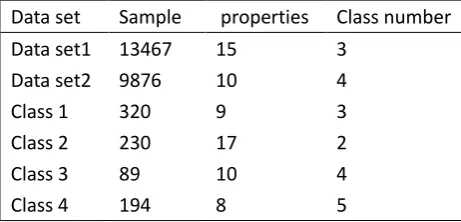
[image:5.595.182.413.392.503.2]The experiments are performed On-line and off-line tests on these data sets (shown in Table I). The experimental environment is multiple installations, CPU: Intel core i5 8500; memory: 32G DDR4; hard disk: 500G; operate system: Windows 10.
TABLE I. THE DATA SETS.
Data set Sample properties Class number Data set1 13467 15 3
Data set2 9876 10 4 Class 1 320 9 3 Class 2 230 17 2 Class 3 89 10 4 Class 4 194 8 5
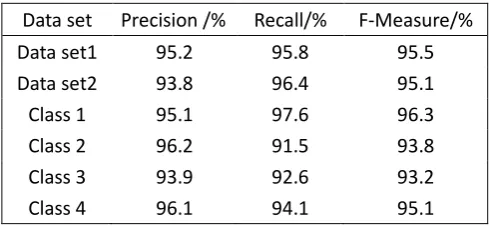
TABLE II. CLUSTERING RESULTS OF DATA SET.
Data set Precision /% Recall/% F-Measure/% Data set1 95.2 95.8 95.5 Data set2 93.8 96.4 95.1 Class 1 95.1 97.6 96.3 Class 2 96.2 91.5 93.8 Class 3 93.9 92.6 93.2 Class 4 96.1 94.1 95.1
From the table II, we can see that this recommendation system can provide high quality personalized recommendation for the learners, meet the personalized needs of the actual users, and provide the intelligent content recommendation service in all directions of the users, maximize the value of the online system, and improve the stickiness of the users. However, the recommended accuracy and stability need to be further improved. We should strengthen the research of community evolution model, better divide the community and minimize the ambiguity area. The next step will be designed to support APP, web pages, H5, Internet of things terminal, and so on, to provide a more diversified way of learning, to effectively grasp the quality of learning, to monitor the learning, and to improve the accuracy of the recommendation.
6. CONCLUDING REMARKS
In this study, we build a multidimensional data set, analyze the learners and build a knowledge base. In the community, we divide the learners into different communities, and through the study of their different period of time, we use different standards and community discovery methods to dynamically update the community division; and combining with effective recommendation methods, we study and analyze the personalized recommendation system. The experimental verification and analysis of the recommendation system, whether it is friends recommendation, recommendation of resources and learning methods, or community recommendation of the learners have achieved good results. Compared with the traditional recommendation system, it is more adaptable to the development demand of modern evolutionary network, and can provide personalized and high-quality learning services for the evolutionary community, and promote the progress and development of community learning users and the whole society.
ACKNOWLEDGEMENTS
REFERENCES
1. Wu Zheng-yang, Tang Yong, Huang Changqin, et al. 2016. “Learning Recommendation Research and Practice
under Social Networking,”China Audiovisual Education, 2016 (3): 75-81.
2. A. Clauset, M.E.J. Newman, 2004. “Finding community structure in very large networks,” Phys. Rev. E, Stat.
Nonlin. Soft Matter. Phys. 70 (6) (2004) 066111.
3. A. Medus, G. Acuna, C.O. Dorso, 2004. “Detection of community structures in networks via global
optimization,” Physica A 358 (2) (2005) 593–604.
4. M. Rosvall, C.T. Bergstrom, 2008. “Maps of random walks on complex networks reveal community structure,”
Proc. Natl. Acad. Sci. USA 105 (4) (2008)1118–1123.
5. W. Wang, D. Liu, X. Liu, et al., 2013. “Fuzzy overlapping community detection based on local random walk and
multidimensional scaling,” Physica A 392 (24) (2013) 6578–6586.
6. H. Jin, W. Shu-liang, L. Chen-yang, 2013. “Community detection in complex networks by density-based
clustering,” Physica A 392 (19) (2013) 4606–4618.
7. Z.Y. Zhang, 2013. “Community structure detection in social networks based on dictionary learning,” Sci. China
Inform. Sci. 56 (7) (2013) 1–12.
8. Z.Y. Zhang, Y. Wang, Y.Y. Ahn, 2013. “Overlapping community detection in complex networks using
symmetric binary matrix factorization,” Phys. Rev. E, Stat. Nonlin. Soft Matter. Phys. 87 (6) (2013) 062803.
9. Xiaoqiang Ye, 2013. “Research on community recommendation algorithm based on individual interest model,”
South China University of Technology, 2013.5.21
10. Jingjie Li, 2016. “Research on Personalized Learning Recommendation Based on Semantic Ontology,” Software
Guide (Educational Technology), 2016, Volume 15 (9): 77-78.
11. Shao J, Han Z, Yang Q, et al. 2015. “Community Detection based on Distance Dynamics,” ACM SIGKDD