ScholarWorks @ Georgia State University
ScholarWorks @ Georgia State University
Middle-Secondary Education and Instructional Technology Dissertations
Department of Middle-Secondary Education and Instructional Technology (no new uploads as of Jan. 2015) Fall 1-10-2014
How School Library Media Specialists Support Reading and
How School Library Media Specialists Support Reading and
Information Literacy Skills Instruction for English Language
Information Literacy Skills Instruction for English Language
Learners
Learners
Melinda Morin
Follow this and additional works at: https://scholarworks.gsu.edu/msit_diss
Recommended Citation Recommended Citation
Morin, Melinda, "How School Library Media Specialists Support Reading and Information Literacy Skills Instruction for English Language Learners." Dissertation, Georgia State University, 2014.
https://scholarworks.gsu.edu/msit_diss/120
This Dissertation is brought to you for free and open access by the Department of Middle-Secondary Education and Instructional Technology (no new uploads as of Jan. 2015) at ScholarWorks @ Georgia State University. It has been accepted for inclusion in Middle-Secondary Education and Instructional Technology Dissertations by an authorized administrator of ScholarWorks @ Georgia State University. For more information, please contact
ACCEPTANCE
This dissertation, HOW SCHOOL LIBRARY MEDIA SPECIALISTS SUPPORT READING AND INFORMATION LITERACY SKILLS INSTRUCTION FOR
ENGLISH LANGUAGE LEARNERS, by MELINDA MORIN, was prepared under the direction of the candidate’s Dissertation Advisory Committee. It is accepted by the committee members in partial fulfillment of the requirements for the degree, Doctor of Philosophy, in the College of Education, Georgia State University.
The Dissertation Advisory Committee and the student’s Department Chairperson, as representatives of the faculty, certify that this dissertation has met all standards of excellence and scholarship as determined by the faculty. The Dean of the College of Education concurs.
_______________________________ ________________________________ Steve Harmon, Ph.D. Laurie Dias, Ph.D.
Chair Committee Member
_______________________________ ________________________________ Gertrude Tinker Sachs, Ph.D. Brendan Calandra, Ph.D.
Committee Member Committee Member
_______________________________ Date
_______________________________ Steve Harmon, Ph.D.
Chair
Learning Technologies Division
_______________________________ Paul A. Alberto, Ph.D.
Interim Dean
AUTHOR’S STATEMENT
By presenting this dissertation as a partial fulfillment of the requirements for the
advanced degree from Georgia State University, I agree that the library of Georgia State University shall make it available for inspection and circulation in accordance with its regulations governing materials of this type. I agree that permission to quote, to copy from, or to publish this dissertation may be granted by the professor under whose direction it was written, by the College of Education’s Director of Graduate Studies, or by me. Such quoting, copying, or publishing must be solely for scholarly purposes and will not involve potential financial gain. It is understood that any copying from or
publication of this dissertation which involves potential financial gain will not be allowed without my written permission.
NOTICE TO BORROWERS
All dissertations deposited in the Georgia State University library must be used in
accordance with the stipulations prescribed by the author in the preceding statement. The author of this dissertation is
Melinda Morin 2688 Waverly Hills Dr. Lawrenceville, GA 30044-7134
The director of this dissertation is
Dr. Steve Harmon
Learning Technologies Division College of Education Georgia State University
CURRICULUM VITAE
Melinda Morin
ADDRESS: 2688 Waverly Hills Dr. Lawrenceville, GA 30044-7134
EDUCATION:
Ph.D. 2013 Georgia State University Instructional Technology Ed.S. 1992 Georgia State University
Educational Library Media and Technology M.L.M. 1980 Georgia State University
Educational Library Media and Technology M.S. 1978 University of Southern California
Education
B.A. 1972 Morningside College Education
PROFESSIONAL EXPERIENCE:
2000-present School Library Media Specialist
Oakcliff Traditional Theme School, DeKalb County School District, GA
1990-2000 School Library Media Specialist
Snapfinger Elementary Magnet School of Science, Mathematics, and Technology, DeKalb County School System, GA
1988-1990 School Library Media Specialist
Snapfinger Elementary School, DeKalb County School System, GA
PRESENTATIONS AND PUBLICATIONS
Morin, M. (2008, April). Moving towards collaboration one step at a time. School Library Media Activities Monthly 24(8), 18-19.
Morin, M. (1992). Teaching Library Skills: A Source or Process Approach? A Research Study. (ERIC Document Reproduction Service No. ED345738)
Morin, M. (1978). The Attitude of a Group of Modern Foreign Language Instructors Toward the Use of Instructional Technology. Unpublished master’s thesis,
University of SouthernCalifornia, Los Angeles.
PROFESSIONAL SOCIETIES AND ORGANIZATIONS
1981-present Georgia Library Media Association 2000-present Organization of DeKalb Educators 2000-present Georgia Association of Educators 2000-present National Educational Association
ABSTRACT
HOW SCHOOL LIBRARY MEDIA SPECIALISTS SUPPORT READING AND INFORMATION
LITERACY SKILLS INSTRUCTION FOR ENGLISH LANGUAGE LEARNERS
by Melinda Morin
This study explored the school library media programs in four schools. The
percentage of English language learners (ELLs) enrolled in each of these schools was
among the highest on their respective levels in their school districts. Moreover, the
percentage of ELLs in these schools who met and exceeded the standard for reading and
English/language arts on the Georgia Criterion-Referenced Competency Test (CRCT) in
the spring of 2010 was more than the Annual Measureable Objective (AMO) of 73.3% or
slightly less. The participants were the school library media specialists who administered
the school library media programs in these schools. This was a qualitative study. During
an inductive thematic analysis, the data coalesced into four themes that corresponded
with the research questions: instruction, collaboration, media/technology, and
interpersonal communication. These findings were derived from the data.
1. The participants used both conventional and technology-based instructional
strategies to support reading and information literacy skills instruction for all of
their students, including the ELLs.
2. The school library media collections included first language, bilingual, and
multicultural literatures, picture books, nonfiction books written on a lower
reading level, graphic materials, Hi-Lo reading materials and other digital
3. The school library media specialists collaborated informally with the other
members of the instructional team.
4. The school library media specialists undertook other practices that support
reading and information literacy skills instruction for ELLs on a discretionary
HOW SCHOOL LIBRARY MEDIA SPECIALISTS SUPPORT READING AND INFORMATION
LITERACY SKILLS INSTRUCTION FOR ENGLISH LANGUAGE LEARNERS
by Melinda Morin
A Dissertation
Presented in Partial Fulfillment for the Degree of
Doctor of Philosophy in
Instructional Technology in
The Learning Technologies Division in
the College of Education Georgia State University
Copyright by Melinda Morin
ii
TABLE OF CONTENTS
Page
List of Tables ... iv
Abbreviations ...v
Chapter 1 THE PROBLEM ...1
Statement of the Problem ...6
Purpose ...9
Guiding Questions ...10
Theoretical Framework ...11
Significance...15
2 REVIEW OF THE LITERATURE ...19
The Legal Basis for Providing Language Services to ELLs ...19
Instructional Strategies and Frameworks for Teaching ELLs in the Classroom ...23
How School Library Media Programs Impact Student Performance ...37
Professional Literature That Informs School Library Media Specialists about Meeting the Needs of ELLs ...41
The Importance of Collaboration ...61
3 METHODOLOGY ...63
Site Selection ...65
Procedures ...71
Data Collection ...72
Data Analysis ...77
Study Limitations ...79
4 RESULTS ...81
The Schools ...81
The Themes ...100
iii
The Research Questions ...130
Findings...131
Implications for Practice ...139
Suggestions for Further Research ...142
References ...146
iv
LIST OF TABLES
Table Page
1 Difference in the Percentage of ELLs and Their English-speaking Peers who Achieved Scores Below Basic in Mathematics and Reading on the NAEP in
2005 and 2009 ...7
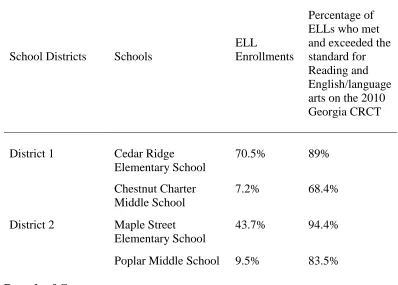
2 Schools Selected as Study Sites ...67
3 Plan and Focus for Data Collection ...72
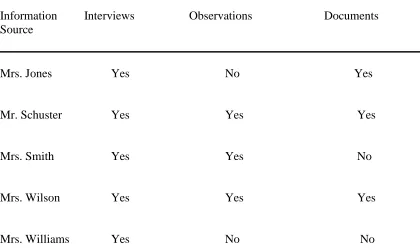
4 Data Collection Matrix: Type of Information by Source ...75
5 Guiding Questions and Data Collection Strategies ...76
v
ABBREVIATIONS
AASL American Association of School Librarians
AECT Association for Educational Communications and Technology
AMO Annual Measureable Objective
AYP Adequate Yearly Progress
CREDE Center for Research on Education, Diversity, and Excellence
ELL English Language Learner
ELP English Language Proficiency
ESOL English to Speakers of Other Languages
GADOE Georgia Department of Education
GPS Georgia Performance Standards
LEA Local Education Agency
LEP Limited English Proficient
LSL Improving Literacy Through School Libraries
NAEP National Assessment of Educational Progress
NCLB No Child Left Behind
NLP National Literacy Panel
OCR Office of Civil Rights
OPAC Online Public Access Catalog
SIOP Sheltered Instruction Observation Protocol
SRE Scaffolded Reading Experiences
USDHEW United States Department of Health, Education, and Welfare
USDOE United States Department of Education
WIDA World Class Instructional Design and Assessment
CHAPTER 1
THE PROBLEM
The populations of the United States and Georgia grew more ethnically and
linguistically diverse during the last decade. In 2000, the Hispanic population accounted
for 12.5% of the population of the United States and 5.3% of the population of Georgia
(U.S. Census Bureau, 2000a & b). By 2008, the Hispanic population had grown to
15.4% of the population of the United States and 8% of the population of Georgia (Pew
Hispanic Center, 2011). Moreover, Fry and Gonzales (2008) named Georgia a “new”
Hispanic state in One-in Five and Growing Fast: A Profile of Hispanic Public School
Students.
Language minority students and their families are not new to Georgia. The
percentage of children in Georgia between the ages of five and seventeen who spoke a
language other than English at home and spoke English with difficulty increased from
12% in 2007, to 13.3% in 2008 (U. S. Department of Education, 2009f, 2010a). Eighty
percent of these children spoke Spanish, 9.5 % spoke languages from Asia or the Pacific
Islands, 7.6% spoke Indo-European languages, and 3% spoke other languages (U.S.
Department of Education, 2010a). During the 2008-09 school year, 4.9% of the students
enrolled in Georgia schools were classified as limited English proficient (LEP) (USDOE,
2010b).
Following the passage of the No Child Left Behind Act of 2001, the states were
required to implement statewide accountability systems for all public schools, including
state-mandated annual assessments aligned with rigorous state standards in mathematics
objectives (U.S. Department of Education, 2004). The state-mandated assessment
administered annually to students in Georgia in the third through the eighth grade is the
Georgia Criterion-Referenced Competency Test (CRCT). Adequate yearly progress
(AYP) is measured annually based on student participation, student achievement on the
state-mandated assessments, and other indicators. Annual measureable objectives
(AMOs) are the minimum levels of improvement calculated by each state, based on
student performance on the state-mandated assessments, that must be achieved within
legally specified time frames by schools and school districts in order to ensure that the
goal of 100% proficiency is met by the 2013-2014 school year (Georgia Department of
Education, 2009a). Under the terms of the NCLB Act of 2001, English language learners
(ELLs) are one of the student groups whose scores are disaggregated in order to hold
schools accountable for reducing existing achievement gaps between them and other
students. In order to achieve AYP, each school as a whole and each grouping of students
that meets the minimum requirement for a group must meet or exceed the State’s AMO,
the percentage of students required to achieve a score that meets or exceeds the standard
in reading and English/language arts and mathematics (GADOE, 2009).
Every two years, the National Assessment of Educational Progress (NAEP) is
administered to students in the fourth and the eighth grades to assess their achievement in
mathematics, reading, science, U.S. history, and writing (U.S. Department of Education,
2009c). Fry (2007) described the NAEP as “…the most authoritative source of
standardized testing data for public school students across the country” (p. i). Prior to the
2007 reauthorization of the NCLB Act of 2001, Fry undertook an analysis of the data
would be required for all student groups to achieve grade level proficiency in
mathematics and reading by 2014.
An achievement level of basic indicates “partial mastery of prerequisite
knowledge and skills that are fundamental for proficient work at each grade [level]
assessed” (U.S. Department of Education, 2009e). The results from the 2005
administration of the NAEP revealed that 46% of the fourth grade ELLs scored below
basic in mathematics compared with 17% of their English-speaking peers, and 71% of the
eighth grade ELLs scored below basic in mathematics compared with 29% of their
English-speaking peers (USDOE, 2009a) Likewise, 73% of the fourth grade ELLs
scored below basic in reading compared with 33% of their English-speaking peers, and
71% of the eighth grade ELLs scored below basic in reading compared with 25% of their
English-speaking peers (U.S. Department of Education, 2009b). Based on the data from
the 2005 administration of the NAEP, Fry (2007) noted that the scores of ELLs were
consistently lower than those of their English-speaking peers and the achievement gaps
widened between the fourth and the eighth grade. According to Fry, “The ELL-to-white
performance gaps based on state assessments largely mirror the gaps based on state
NAEP” (p. 14).
Fry (2007) suggested that the widening achievement gaps that occur between the
fourth and the eighth grade may be partly due to changes occurring in the ELL
population. Higher achieving ELLs are removed from the ELL population when they
become proficient in English, and newly arrived immigrants enter the ELL population
Background of the Problem
Demographic shifts have had an impact on education and library services. As a
member of the instructional team, the school library media specialist shares responsibility
with the other team members for ensuring that all students achieve their academic goals.
Information Power: Building Partnerships for Learning, a joint publication of the
American Association of School Librarians (AASL) and the Association for Educational
Communications and Technology (AECT), articulates the mission and the goals for the
school library media program. The mission of the school library media program, “to
ensure that students and staff are effective users of ideas and information,” is
accomplished by achieving the following goals:
1. Providing physical and intellectual access to materials in all formats
2. Providing instruction to foster competence and stimulate interest in reading,
viewing, and using information and ideas
3. Working with other educators to design learning strategies to meet the needs of
individual students (AASL & AECT, 1998, p. 6).
Information Power: Building Partnerships for Learning (AASL & AECT, 1998) also
provides detailed descriptions of each of the school library media specialist’s four
specific responsibilities as a teacher, instructional partner, information specialist, and
program administrator. As teachers, school library media specialists are responsible for
meeting the learning and information needs of the school learning community. As
instructional partners, school library media specialists are responsible for collaborating
with other members of the instructional team to examine curriculum content, learning
variety of formats. As information specialists, school library media specialists are
responsible for applying their expertise to the evaluation and acquisition of information
resources, raising the awareness of other members of the learning community concerning
issues that involve information, and modeling the strategies involved in locating,
accessing, and evaluating information inside and outside of the school library media
center. As program administrators, school library media specialists are responsible for
collaborating with other members of the learning community to formulate policies that
will guide the school library media program and activities (AASL & AECT, 1998).
Moreover, InformationPower: Building Partnerships for Learning (AASL & AECT,
1998)provides school library media specialists with concise standards and principles
they can use to develop effective student-centered programs that promote information
literacy, independent learning, and social responsibility.
Lance (1994) described research he conducted with Wellborn and
Hamilton-Pennell in “The Impact of School Library Media Centers on Academic Achievement,” an
article published in the spring 1994 issue of School Library Media Quarterly. The
research used existing data about school library media centers, their schools, and the
communities in which they were located to “develop and test a model describing the
relationship of library media centers and their programs to student achievement” (para.
3). According to Lance, the study revealed that students were more likely to achieve
higher average scores on reading tests in schools with better-funded school library media
centers, large collections of materials in a variety of formats, and adequate staffing,
including state-endorsed school library media specialists who assumed an active
students’ reading scores corresponded with increases in the size of the school library
media program, when the size of the program was measured in terms of the total hours
the staff worked; the size of the collection; online access to library media center
resources, licensed databases, and the Internet via networked computers; and
collaboration between school library media specialists and classroom teachers.
Furthermore, Lance et al. (2000) related the increases in the students’ reading scores to
the principles of leadership, collaboration, and technology that are integral to the school
library media specialist’s role, and maintained that other conditions in the school or
community could not moderate the relationship.
Since 2000, Lance and other groups of researchers have conducted 18 additional
studies. These studies confirmed that student achievement increased in schools with
school library media programs that were adequately staffed, including a state certified,
full-time school library media specialist who collaborated with classroom teachers to
locate resources and provide information literacy instruction; had large and varied
collections of materials in print and electronic formats; and flexible scheduling
(Scholastic, 2008).
The Statement of the Problem
When the NAEP was administered in 2009, the national composite scores
achieved by ELLs remained consistently lower than those achieved by their
English-speaking peers. In the fourth grade, 43% of the ELLs scored below basic in mathematics
compared with 16% of their English-speaking peers, and 71% of the ELLs scored below
basic in reading compared with 30% of their English-speaking peers (USDOE, 2009a &
mathematics increased from 46%, when they were fourth grade students in 2005, to 72%;
and the percentage of eighth grade ELLs who scored below basic in reading increased
from 73% to 74% during the same period (USDOE, 2009a & b). In contrast, the
percentage of their eighth grade English-speaking peers who scored below basic in
mathematics increased from 17%, when they were fourth grade students in 2005, to 25%;
and the percentage of their eighth grade English-speaking peers who scored below basic
in reading decreased from 33% to 22% (USDOE, 2009a & b) (See Table 1).
The scores achieved by the fourth grade ELLs in Georgia in 2009 were similar to
the national composite scores reported for the fourth grade ELLs. In the fourth grade,
41% of the Georgia ELLs scored below basic in mathematics compared with 21% of their
English-speaking peers, and 78% of the Georgia ELLs scored below basic in reading
[image:20.612.110.540.473.695.2]compared with 36% of their English-speaking peers (USDOE, 2009a & b).
Table 1. Difference in the Percentage of ELLs and their English-speaking peers who Achieved Scores Below Basic in Mathematics and Reading on the NAEP in 2005 and 2009.
ELLs English-speaking peers
Gap
2005 Fourth Grade Mathematics
46% 17% 29%
2009 Eighth Grade Mathematics
72% 25% 47%
2005 Fourth Grade Reading
73% 33% 40%
2009 Eighth Grade Reading
There are no scores available for the eighth grade ELLs in Georgia in either mathematics
or reading for 2009, because the data did not meet reporting standards (USDOE, 2009a
&b). The national, composite scores that were reported for the eighth grade ELLs
indicated that 72% of them scored below basic in mathematics and 74% of them scored
below basic in reading. If these scores are any indication of how the eighth grade ELLs
in Georgia might have performed on the NAEP in 2009, too many of them would still
have lacked the fundamental knowledge and skills required to achieve a score of basic in
mathematics and reading. All Georgia educators, including administrators, classroom
teachers, school library media specialists, and special area teachers, will have to work
together if these students are to achieve grade level proficiency in both mathematics and
reading by 2014.
A search of the ProQuest Dissertations and Theses database through the Georgia
State University Library revealed fifteen dissertations related to the provision of library
services to language minority populations. The search was conducted using the
following search terms: English to speakers of other languages, English language
learners, language minority students, and limited English proficient students, libraries,
library science, library services, media centers, media specialist, school library media
centers, and school library media programs. The dissertations focused on students in
preschool through graduate school who were engaged in a variety of activities: literacy
programs, conducting searches for information, using library resources in multiple
formats, and improving their English language proficiency. Additional topics included
the impact of a majority limited English proficient Latino enrollment on the role of the
effect of Hispanic population proportion on public library services to the
Spanish-speaking. However, there was no evidence of any dissertations that focused on how
school library media specialists in elementary and middle schools support reading and
information literacy skills instruction for ELLs in the fourth through the eighth grade.
Purpose
The purpose of this study was to explore how school library media specialists
support reading and information literacy skills instruction for ELLs in the fourth through
the eighth grade. In order to accomplish this purpose, one elementary school and one
middle school in each of two school districts were selected to participate in the proposed
study. These schools were among the those in their school districts with the highest
concentrations of ELLs on their respective levels; moreover, the percentages of ELLs in
these schools who met and exceeded the standard for the reading and English/language
arts sections of the Georgia CRCT when it was administered in 2010 were either more
than the AMO of 73.3% or slightly less, indicating that these students achieved some
degree of success in these subjects which are also the ones most likely to be affected by
the quality of the school library media program. I observed how the school library media
specialists carried out their responsibilities as teachers, instructional partners, information
specialists, and program administrators. Following observations during which the school
library media specialist taught a class, I collected copies of instructional materials (e.g.,
lesson plans, handouts, and worksheets). The school library media specialists were also
interviewed as a means of obtaining their perspectives on their school library media
online public access catalog in order to determine the kinds of resources accessible to
ELLs.
Guiding Questions
The research questions that guided this study focused on how school library
media specialists support reading and information literacy skills instruction for ELLs in
the fourth through the eighth grade.
1. What types of instructional strategies, including technology-based strategies,
do the school library media specialists use to support reading and information
literacy skills instruction for ELLs?
2. What types of assistive resources are included in the school library media
collections that support reading and information literacy skills instruction for
ELLs (e.g., first language, bilingual, and multicultural literatures, picture
books, nonfiction books written on a lower reading level, graphic novels,
Hi-Lo reading materials, eBooks and other digital resources)?
3. How do the school library media specialists collaborate with the other
members of the instructional team (e.g., individually, grade level planning,
vertical planning, leadership team)?
4. What, if any, other practices have been implemented by the school library
media specialists that support reading and information literacy skills instruction
Theoretical Framework
Information Power: Building Partnerships for Learning (AASL & AECT, 1998)
is a resource that school library media specialists can use to build an effective
student-centered school library media program designed to help students become “independent,
information-literate, lifelong learners” (p. ix). Part One of Information Power: Building
Partnerships for Learning presents the philosophy behind the school library media
program, the mission and the goals of the school library media program, the school
library media specialist’s specific responsibilities, and information literacy standards that
describe what an information literate student should know and be able to do.
Information Power: Building Partnerships for Learning (AASL & AECT, 1998)
references both contemporary learning and information theories. Language used in the
chapters titled “The Vision,” and “Learning and Teaching” indicates that the
contemporary learning theory includes elements of constructivism, a learning theory
pioneered by Vygotsky among others. Learning is defined as “the active building of
knowledge through dynamic interaction with information and experience” (p. 2); and the
description of the information search process features language that portrays learners as
actively engaged in the construction of meaning through interaction with information
sources in order to create products that effectively communicate that meaning. The
information search process is further identified as authentic learning, which is
student-centered and facilitated by the school library media specialist. In order to promote this
kind of learning, school library media specialists are urged to adopt “a new conception of
the context of education” (p. 2) that includes the formation of all-inclusive learning
responsibility of the school library media specialist to foster individual and collaborative
inquiry-based learning by providing students with intellectual and physical access to
resources.
Lu and Jeng (2006/2007) identified the social theory of constructivism as one of
the main constructivist theories. Social constructivism is based on the work of Vygotsky
who emphasized the role of the socio-cultural environment in the construction of
knowledge by the subject in collaboration with others (Lu & Jeng).
In Mind in Society, Vygotsky (1978) explored the relationship between learning
and development. He was particularly interested in the changes that occur in this
relationship when children reach school age. According to Vygotsky, learning and
development are interrelated beginning on the first day of life. However, the child is
introduced to the concept of the zone of proximal development (ZPD) upon entering
school. In order to ascertain the child’s developmental level, it is necessary to determine
both “the actual developmental level as determined by independent problem solving and
the level of potential development as determined through problem solving under adult
guidance or in collaboration with more capable peers” (p.86). What a child can
accomplish without assistance represents those functions that have fully matured in the
child; but what a child accomplishes with some assistance is indicative of functions that
are in the process of maturation. The interval between the two developmental levels is
the ZPD, which serves as an indicator and facilitator of the child’s potential for mental
Vygotsky (1978) used language acquisition as a paradigm for the relationship
between learning and development. Initially, language functions as a means of
communication between the child and other people, but once it is converted to internal
speech, it organizes the child’s thought and becomes an internal function. Learning
stimulates “internal developmental processes that are able to operate only when the child
is interacting with people in his environment and in cooperation with his peers” (p. 90).
Learning is not synonymous with development; however, it activates developmental
processes that “would be impossible apart from learning” (p. 90). The developmental
process lags behind the learning process, according to Vygotsky, which results in zones
of proximal development. Vygotsky regarded the emergence of “higher mental functions
that reflect the social origin of the child’s interaction with his environment” (p. 89) as an
indication of cultural development.
According to Levykh (2008), Vygotsky’s notion of the ZPD best represents the
relationship between the social origins of children’s cultural development and educational
practice. The ZPD is a reflection of Vygotsky’s belief that “learning can lead
development under certain conditions that are created by educators” (p. 90). The
conditions to which Levykh alluded include providing students with an environment
conducive to learning and learning activities that are specifically designed to provide a
framework to guide their construction (as cited in Kozulin, 1998). Levykh also described
the ZPD as “a cultural process of assistance through cooperation and
collaboration…[that] uses cultural tools, signs, and symbols to mediate the process of
processes, and “once these processes are internalized, they become part of the child’s
independent developmental achievement” (Vygotsky, 1978, p.90).
One of the ways in which school library media specialists fulfill their mission “to
ensure that students and staff are effective users of ideas and information” (AASL &
AECT, 1998), is to facilitate the information search process. As teachers and
instructional partners, they provide intellectual access to information through information
literacy skills instruction and learning activities; and as information specialists and
program administrators, they provide physical access to information as well as an
environment conducive to learning. When they foster individual and collaborative
inquiry-based learning, they are cooperating and collaborating with students and staff in a
“cultural process of assistance…[that] uses cultural tools, signs, and symbols to mediate
the process of learning” (Levykh, 2008, p. 90).
Au (1998) stated that “a social constructivist perspective on the literacy
achievement of students of diverse backgrounds can be strengthened by moving from a
mainstream orientation to an orientation toward diversity, giving greater consideration to
issues of ethnicity, primary language, and social class” (p. 298). Social constructivism,
according to Au, views interaction within the social group as the basis for constructing
knowledge. The emergence of higher mental functions (e.g., literacy practices) indicates
cultural development that occurs as a result of a process of assistance that uses cultural
tools (e.g., language and writing systems) to mediate learning. However, Au asserted that
a mainstream constructivist orientation does not adequately consider the effects of
differences in ethnicity, primary language, and social class on school literacy learning by
propositions. These propositions reflect the diverse constructivist orientation and specify
strategies for improving the literacy learning of students of diverse backgrounds: 1)
provide learning activities that encourage students to take ownership of literacy; 2)
acknowledge the value and importance of the students’ home language(s) and promote
biliteracy; 3) use instructional materials that portray diverse cultures authentically and
multicultural literature by authors of diverse backgrounds; 4) implement culturally
responsive instructional practices; and 5) establish connections with the community and
the students’ families in order to make use of their funds of knowledge (Au, 1998).
As a resource for school library media specialists, Information Power: Building
Partnerships for Learning (AASL & AECT, 1998) has informed their practice for more
than a decade. In the text, there are multiple references to a contemporary educational
theory that incorporates elements of social constructivism derived from the work of
Vygotsky. Due to the apparent influence of social constructivism on the practice of
school library media specialists, social constructivism will provide the theoretical
framework that will guide the proposed study. Likewise, the propositions set forth by Au
(1998) will be given due consideration.
The Significance of the Study
The impact studies conducted by Lance et al. (1993, 2000) and other groups of
researchers identified specific characteristics of school library media programs that had a
positive impact on student achievement. This study produced information that may
increase understanding of how school library media specialists support reading and
may enable other school library media specialists who serve ELLs to improve their
practice.
Definition of Terms
Adequate yearly progress (AYP) is “an annual measure of student participation
and achievement on the statewide assessments and other academic indicators” (GADOE,
2006).
An authentic learning activity is an activity that requires ELLs to apply the skills
they are learning to solve a realistic problem, such as locating information they can use to
complete a written assignment.
Best-practices are effective, research-based, instructional practices.
English language learner (ELL) denotes a student who has indicated a first or
home language other than English on the Home Language Survey and achieves a score
indicating a proficiency level of less than 5.0 on the WIDA-ACCESS Proficiency Test
(W-APT), the official screening instrument used in Georgia (GADOE, 2005-2008).
ESOL is an acronym that represents English to Speakers of Other Languages.
Information literacy is defined in Information Power as “the ability to find and
use information” (AASL & AECT, 1998, p. 1).
LEA is an acronym that represents local education agency. Local education
agencies include school districts and schools.
Learning community is described in Information Power as extending beyond the
limitations of the school population to encompass “local, regional, state, national, and
community in this study refers to the school population, including students, classroom
teachers, and administrators, unless otherwise indicated.
Limited-English proficient (LEP) denotes national origin-minority group children
whose inability to speak or understand English excludes them from effective participation
in the educational program (USDOE, 2000).
PebbleGo is an online subscription service available from Capstone Digital that
comprises four databases: “Biographies”, “PebbleGo Animals”, “PebbleGo Earth and
Space”, and “Social Studies.”
The Sheltered Instruction Observation Protocol (SIOP) is an instructional model
developed by Echevarria, Vogt, and Short (2000) that provides a framework for planning
and delivering instruction designed to enhance ELLs’ comprehension of the regular
curriculum content and support their acquisition of academic English.
Title I School is a school that receives federal funding for the purpose of
educating students who are identified as disadvantaged (NCLB, 2001).
Chapter Summary
The first chapter provided the background of the problem, the statement of the
problem, the theoretical framework that guided this study, the purpose of this study and
defined the terminology. In the second chapter, the literature review addresses the
following areas of research: 1) legislation and judicial decisions that furnish the legal
basis for providing language services to ELLs; 2) instructional strategies and frameworks
for teaching ELLs in the classroom; 3) research studies that associate school library
media programs with students’ academic performance; 4) professional literature that
library media programs; and 5) the importance of collaboration between school library
CHAPTER 2
REVIEW OF THE LITERATURE
The school library media program is required to support learning for all the
members of the learning community regardless of their differences or exceptionalities.
This study focused on how school library media specialists support reading and
information literacy skills instruction for ELLs in the fourth through the eighth grade.
In this chapter, the literature review addresses the following areas of research: 1)
legislation and judicial decisions that furnish the legal basis for providing language
services to ELLs; 2) instructional strategies and frameworks for teaching ELLs in the
classroom; 3) research studies that associate school library media programs with
students’ academic performance; 4) professional literature that informs school library
media specialists about meeting the needs of ELLs through school library media
programs; and 5) the importance of collaboration between school library media
specialists and classroom teachers.
The Legal Basis for Providing Language Services to ELLs
During the previous century, legislation designed to ensure that national
origin-minority students have an equal opportunity to receive an education was enacted into law.
Title VI of the Civil Rights Act was enacted in 1964 to prohibit programs receiving
federal financial assistance from engaging in discriminatory practices based on color,
race, or national origin. Furthermore, the regulatory requirements of Title VI were
limited English proficiency (U.S. Department of Education, Office of Civil Rights, 2000,
“Title VI Requirements,” para. 3).
In 1970, school districts with more than 5% national origin-minority group
children were charged with the responsibility to “rectify the language deficiency” (U.S.
Department of Health, Education, and Welfare, 1970, p. 1) and make their educational
programs accessible to national origin-minority group children whose inability to
communicate in the English language excluded them from effective participation.
Furthermore, the Supreme Court decision in Lau v. Nichols, a class action lawsuit
brought against the San Francisco Unified School District by the families of non-English
speaking Chinese students, stated, “That there is no equality of treatment merely by
providing students with the same facilities, textbooks, teachers, and curriculum; for
students who do not understand English are effectively foreclosed from any meaningful
education” (USDOE, OCR, 2000, “OCR Title VI Policy on Language Minority
Students,” para. 5).
The purpose of the No Child Left Behind Act of 2001 was “to ensure that all
children have a fair, equal, and significant opportunity to obtain a high-quality education
and reach, at a minimum, proficiency on challenging state academic achievement
standards and state academic assessments” (No Child Left Behind Act of 2001). One of
the measures for accomplishing this purpose involved meeting the needs of specific
groups of children, including limited English proficient (LEP) children. Title III, Part A
of the No Child Left Behind Act of 2001 (The English Language Acquisition, Language
Enhancement, and Academic Achievement Act) describes the federal financial assistance
and schools are held accountable for improvements in their LEP students’ English
language proficiency and their core academic content knowledge. Educational programs
developed to provide language instruction under the provisions of this Act were expected
to assist LEP and immigrant students to become proficient in English and enable them to
master the same academic content and student achievement standards as their
English-speaking peers (No Child Left Behind Act of 2001).
The educational language instruction program implemented in Georgia to assist
ELLs is English to Speakers of Other Languages (ESOL). The state of Georgia funds the
ESOL program for eligible ELLs in grades K-12 whose first language is other than
English or whose limited proficiency in English effectively limits their participation in
the educational program. Under ESOL and Title III, students are held accountable for
progress towards proficiency in English and providing sufficient evidence of their
proficiency to exit the ESOL program (Georgia Department of Education, 2005-2008).
Georgia is one of 19 states that are currently members of the World Class
Instructional Design and Assessment (WIDA) Consortium. With funding from a United
States Department of Education enhanced assessment grant, WIDA consortium members
developed the English language proficiency (ELP) standards, which were first published
in 2004. ACCESS for ELLs ™ is an English language proficiency test that assesses
student performance in relation to the ELP standards. The ELP standards have been
integrated with the Georgia Performance Standards in language arts, mathematics,
science, and social studies, providing the ESOL program with a standards-based
academic content areas, as well as social communication in English in the school setting
(GADOE, 2005-2008).
ELLs are required to participate in annual state assessments (Program for
limited-English-proficient students of 1981). ELLs who have been enrolled in U.S. public
schools for less than one year may receive a one-time deferment from a content area
assessment other than mathematics or science if their proficiency in English indicates that
participation in the assessment would not be in their best educational interest. However,
any ESOL student receiving a one-time deferment must participate in the state adopted
language proficiency assessment, and participation in the ACCESS test may be used to
satisfy the participation component of adequate yearly progress (AYP) for these ESOL
students (C. Domaleski, personal communication, April 9, 2008).
Summary. During the last century, a succession of legislation and judicial
decisions prohibited discrimination in education on the basis of color, race, national
origin, or limited English proficiency. The stated purpose of the No Child Left Behind
Act of 2001 was to provide all children with an equal opportunity to receive a quality
education based on challenging state academic achievement standards and state
assessments. Title III, Part A of the No Child Left Behind Act of 2001 detailed the
provisions that allowed states and local education agencies to obtain funding for the
development of educational language instruction programs for LEP students as well as
the means by which they would be held accountable. The educational language
instruction program in Georgia is the ESOL program. Georgia’s membership in the
WIDA consortium has led to the integration of the ELP standards with the Georgia
ESOL program that focuses on communicating information, ideas, and concepts in the
academic content areas as well as social communication in English in the school setting
Instructional Strategies and Frameworks for Teaching ELLs in the Classroom
Instructional Strategies. Elley and Mangubhai (1983) conducted an experiment
with Fijian primary school children to test their hypothesis that repeated exposure to
high-interest picture books in the target language supports second language acquisition.
In all South Pacific countries, the language spoken at home is different from the language
spoken at school (Elley & Mangubhai, 1983). Students from rural primary schools in
Classes 4 and 5 were randomly assigned to one of three treatments: the shared book
experience, sustained silent reading, and the Tate oral English syllabus, a traditional,
audio-lingual method of English instruction. Over a period of four to five weeks, each of
the classes implementing either the shared book experience or sustained silent reading
received 250 books. The interactive role assumed by the teacher during the shared book
experience differentiated this treatment from either sustained silent reading or the control
group. During the shared book experience, the teacher previewed the book with the
students, invited them to make predictions about the story, and discussed new words with
them before reading the book. Each book was read three times to the students over a
period of a few days, after which the students participated in follow-up activities. The
students were invited to read along, make and confirm predictions, and discuss the story
during the second or third reading. Neither the sustained silent reading teachers, who
also read the books aloud to the students, nor the control group, which maintained its use
Reading comprehension tests were administered to all the students in Classes 4
and 5 at the participating schools both at the beginning of the experiment and after an
interval of 8.5 months (Elley & Mangubhai, 1983). During the 8.5 months, both the
shared book experience and the sustained silent reading groups gained 15 months of
growth in reading comprehension compared with the control group, which gained only
6.5 months. One year later, the authors conducted a follow-up study to measure the
persistence of the effects. The shared book experience and the sustained silent reading
groups again demonstrated more growth in the English language than the control group.
Elley and Mangubhai credited the books’ appeal as the source of motivation for the
students to read in English and attributed the differences in the performances of the three
groups to classroom activities that took place during the 2-year experiment.
Elley (1989) conducted two further experiments in New Zealand to measure
schoolchildren’s acquisition of new vocabulary from listening to stories read aloud. The
first experiment replicated a previous experiment Elley and Mangubhai had conducted on
the island of Fiji, but with a larger sample. In this experiment, a story was read aloud
three times to 168 seven-year-old schoolchildren in seven classrooms by seven
participating teachers, their classroom teachers, and once more by the participating
teachers at 3-day intervals over a period of 7 days. None of the teachers explained the
meanings of new words to the students, but during the third reading, the students were
encouraged to make predictions and discuss the story. One week prior to the first
reading, a multiple choice vocabulary test was administered to the students to measure
their comprehension of the approximately 20 new words contained in the story. Half of
students could select the one that best matched the meaning of the word, and the other
half of the words were tested using synonym test items (Elley, 1989). When the test was
administered again, the schoolchildren achieved “a mean increase of 15.4% overall”
(Elley, 1989, p. 178).
One of the purposes Elley (1989) gave for the second experiment was, “to
confirm the phenomenon of incidental vocabulary learning found in Experiment 1 with
two different storybooks” (p. 180). This study involved two experimental groups and one
control group. The two experimental groups were composed of six classes of 8-year-olds
taught by six veteran teachers in six schools. The control group included 51 students
from two schools. Two contrasting stories were selected to be read aloud to the students,
and two treatments were devised that would allow for a comparison between reading the
stories aloud either with or without explaining the unfamiliar words. Treatment 1
entailed reading the story aloud and explaining the target words by using a phrase with a
similar meaning, dramatizing the word, or using a picture to convey the meaning.
Treatment 2 consisted of reading the story without elaboration. Both stories received
different treatments and the experimental groups heard both stories, while the control
group did not hear either story.
One week after the stories were read, a multiple choice vocabulary test was
administered to all three groups; and 3 months later, delayed posttests were administered
to them (Elley, 1989). The results for the control group that did not hear either story
indicated a vocabulary gain of less than 2%, while the results for the group that heard the
first story without an explanation of the target words indicated a mean vocabulary gain of
explanation of the target words was 39.9% (Elley, 1989). The results for the second story
indicated an overall vocabulary gain for the group that heard the story without an
explanation of the target words of 4.4%, and a vocabulary gain of 17.1% for the group
that heard the same story with an explanation of the target words (Elley, 1989). Based on
the findings from both experiments, Elley concluded that schoolchildren can acquire new
vocabulary incidentally from having picture books read aloud to them, and when teachers
explain new vocabulary words as they are encountered in the text, their vocabulary gains
can more than double. Moreover, children with less vocabulary knowledge at the
beginning can gain “at least as much from the readings as the other students and…the
learning is relatively permanent” (Elley, 1989, p. 184).
Hickman, Pollard-Durodola, and Vaughn (2004) described a similar strategy for
reading aloud to first-grade ELLs with reading difficulties that improved both their
vocabulary and reading comprehension. Both fiction and nonfiction books can be used;
however, the authors recommended selecting books on a reading level one or two grade
levels above the students’ grade level. They also emphasized the advantages of selecting
books that are interesting to the students and grouping the books thematically. When
books with a common theme/topic are read together, the students have more
opportunities to encounter the vocabulary in related contexts and increase their content
knowledge (Hickman et al., 2004).
The books are divided into passages of 200-250 words according to the natural
flow of the story (Hickman et al., 2004). Limiting the length of the passages allows the
teacher to concentrate on the meanings of fewer new vocabulary words during each
well as the vocabulary of the story during the time required to complete it. An entire
book can be read and discussed in a few days. The day after the last passage has been
read and discussed, the entire book is reread and difficult or key vocabulary words are
reviewed (Hickman et al., 2004).
In 2006, Diane August and Timothy Shanahan served as the Principal Investigator
and the Panel Chair respectively for the National Literacy Panel on Language Minority
Children and Youth which published Developing Literacy in Second Language Learners:
Report of the National Literacy Panel on Language Minority Children and Youth. This
report reviewed quantitative and qualitative research studies on the education of
language-minority children and their literacy development.
August and Shanahan (2006) reported that language-minority children benefit
from instruction in the key components of reading identified by the National Institute of
Child Health and Human Development: phonemic awareness, phonics, fluency,
vocabulary, and text comprehension, as well as oral English language development.
Specific skills associated with oral English proficiency (e.g., vocabulary knowledge,
listening comprehension, and syntactic skills) are related to reading comprehension and
writing skills. The most successful literacy programs, according to August and
Shanahan, align literacy instruction with instructional support for oral language
development in English.
Although learning patterns in the reviewed studies suggest a similarity between
the sequencing of instruction for language minority students and native English speakers,
Shanahan (2006) recommended that classroom teachers provide language-minority
students with intensive instruction in background knowledge and vocabulary throughout.
Gersten, Baker, Shanahan, Linan-Thompson, Collins, and Scarcella (U.S.
Department of Education, 2007) authored a practice guide for the Institute of Educational
Sciences with the goal of furnishing educators with evidence-based recommendations
that address the challenge of providing elementary English learners with effective literacy
instruction. Based on research analyzed and reviewed by the What Works
Clearinghouse, five recommendations for improving literacy instruction for ELLs were
formulated. Two of the recommendations were for “intensive small group reading” and
“extensive and varied vocabulary instruction” (p. 7). Gersten et al. recommended that the
small-group reading intervention be implemented using an intervention program that
provides explicit instruction on the key components of reading for 30 minutes each day
with small groups of students who have been grouped homogeneously based on their
reading ability. Furthermore, Gersten et al. recommended that explicit daily vocabulary
instruction be integrated with reading and English language development as well as
emphasized across the curriculum. Gersten et al. further recommended the development
of district wide lists of vocabulary words drawn from the core reading program and
content area textbooks for use in classroom instruction. Moreover, English learners were
to receive explicit instruction on the meanings of words commonly used in conversation,
because textbook publishers do not often include them among target vocabulary words.
Bauer and Manyak (2008) described language rich instruction in terms of
practical strategies that support the development of ELLs’ literacy skills. One strategy
background knowledge. Another strategy engaged the students in a relevant hands-on
experience prior to listening to a story read aloud. The creation of a word wall featuring
English/Spanish cognates was yet another strategy that served a dual purpose, as a helpful
resource for the students and as a demonstration of the importance of both languages in
the classroom. Furthermore, Bauer and Manyak suggested instructing ELLs to record
their ideas in language logs in preparation for their participation in classroom discussions
with either the teacher or other students as a means of improving their oral English
proficiency.
Goldenberg (2008) summarized the major findings of two reviews of research
completed in 2006 by the National Literacy Panel (NLP) and researchers affiliated with
the Center for Research on Education, Diversity, and Excellence (CREDE) in three
points:
1. Teaching students to read in their first language promotes higher levels of
reading achievement in English.
2. What we know about good instruction and curriculum in general holds true for
English learners as well.
3. However, when instructing English learners in English, teachers must modify
instruction to take into account students’ language limitations (Goldenberg,
2008, p. 14).
Based on a meta-analysis of 17 studies that compared bilingual instruction with
second language immersion, the NLP concluded that bilingual instruction in reading,
given either sequentially or concurrently, increased the reading achievement of ELLs in
second language (Goldenberg, 2008). Goldenberg suggested that transfer, a process
whereby knowledge and skills learned in one language transfer across languages, is a
likely explanation for the positive effects of bilingual instruction. Furthermore,
Goldenberg indicated that classroom teachers who are aware of ELLs’ academic
experience could help them apply prior knowledge learned in their first language to
learning in English.
Findings from the NLP review indicated that both ELLs and native English
speakers benefit from explicit instruction in the key components of reading and writing
(Goldenberg, 2008). When it is part of a comprehensive approach to early literacy
instruction, direct instruction in phonological and decoding skills benefits ELLs who are
at risk for developing reading problems. Likewise, ELLs learn more words when words
are taught directly, encountered in meaningful contexts, and opportunities for repetition
and practice are provided. The CREDE report recommended integrating both direct and
interactive instructional strategies.
Goldenberg (2008) also supplemented the reviews of research by the NLP and
CREDE, with sidebars that included responses to questions and descriptions of
instructional modifications. One of the questions Goldenberg addressed concerned
teaching English language development. Goldenberg described effective second
language instruction as a combination of explicit instruction in “syntax, grammar,
vocabulary, pronunciation, and norms of social usage,” as well as opportunities for ELLs
to interact verbally in “meaningful and motivational situations” (p. 13). However, as the
content, language, and vocabulary demands increase, Goldenberg indicated that
become necessary. The following instructional modifications were among several
recommended by Goldenberg as helpful for ELLs:
1. Make familiar reading material accessible to students.
2. Before reading material, expose students to the content contained in the text.
3. Clearly explain the meaning of unfamiliar words.
4. Support verbal explanations of word meanings with visuals.
5. Teach words explicitly and provide opportunities for students to encounter the
words in multiple contexts across texts.
6. Use the first language strategically with attention to cognates between the
students’ first language and English.
7. Adjust instruction for students’ level of oral English proficiency.
8. Include both content and language objectives as part of every lesson.
Teale (2009) synthesized reviews of research by the NLP, CREDE, Goldenberg,
and others to summarize current research on “effective classroom strategies that help
English learners succeed in school” (p. 699). He included a summary of Goldenberg’s
findings (2004, 2006, 2008, Sanders & Goldenberg, 1999) which he categorized as: “(1)
things we are basically sure about (you can bank on it), (2) what may be (highly likely),
and (3) what we really don’t know very much about and on which we need substantially
more research (need more information)” (p. 700). In the first category, Teale (2009)
placed well designed, student-centered instruction that emphasizes “comprehension,
vocabulary, phonological awareness, phonics and word recognition, reading fluency, and
writing” (p. 700). He also recommended the following instructional accommodations
1. Provide extended explanations with redundant information such as gestures,
pictures, and other visual cues.
2. Provide extra attention to identifying and clarifying key and difficult
vocabulary.
3. Use texts that have a degree of content familiarity.
4. Focus on consolidating text knowledge by having the teacher, other students,
and English learners paraphrase and summarize.
5. Provide additional time and practice with reading and writing activities.
6. Provide extended linguistic interactions with peers and teacher.
7. Strategically use knowledge of students’ primary language, if teacher is able
(pp. 700-701).
Included in the second category were parents and others living in the home who
coordinate with the school to read aloud to their children in pre-school and kindergarten,
listen to their primary-grade students read, and discuss with their children the books their
children are reading (Teale, 2009). The third category included (a) the relationship
between culturally compatible literacy instruction and “students’ enhanced literacy
achievement” (Teale, 2009, p. 702), (b) whether instructional accommodations based on
either grade or reading level benefit students the most, and (c) the kinds of home support
that would most benefit students.
Instructional Frameworks. Echevarria, Vogt, and Short (2000) developed the
Sheltered Instruction Observation Protocol (SIOP) as part of a research project sponsored
by the Center for Research on Education, Diversity, and Excellence (CREDE).
and delivering instruction designed to enhance ELLs’ comprehension of the regular
curriculum content and support their acquisition of academic English. The SIOP
comprises 30 instructional strategies organized into eight components: (a) preparation,
(b) building background, (c) comprehensible input, (d) strategies, (e) interaction, (f)
practice/application, (g) lesson delivery, and (h) review/assessment. Included in the
framework are the following features designed to foster ELLs’ academic success,
“language objectives in every content lesson, the development of students’ background
knowledge, and emphasis on academic literacy practice” (Short & Echevarria, 2004, p.
11). Based on their experience with this model, Short and Echevarria suggested the
following classroom strategies for teachers to use with ELLs as a means of developing
their academic literacy across the curriculum:
1. Identify the language demands of the content course.
2. Plan language objectives for all lessons and make them explicit to students.
3. Emphasize academic vocabulary development.
4. Activate and strengthen background knowledge.
5. Promote oral interaction and extended academic talk.
6. Review vocabulary and content concepts.
7. Give students feedback on language use in class. (pp. 11-13)
In 2001, Guarino, Echevarria, Short, Schick, Forbes, and Rueda (2001) conducted
a study to measure the “validity and reliability of the SIOP instrument” (Echevarria,
Powers, & Short, 2006, p. 201). The participants in the research were located in one
West Coast and two East Coast school districts. In the West Coast district, the ethnic
Caucasian, and 11% Asian/Pacific Islander” (p. 202). In the two East Coast districts, the
ethnic composition of the student population was “41% Caucasian, 32% Hispanic, 17%
African American, and 10% Asian/Pacific Islander” in one district and “61% Caucasian,
11% Hispanic, 11% African American, and 14% Asian/Pacific Islander” (p. 202) in the
other district. All the student participants were designated as ELL based on their
performance on the language proficiency assessment administered by their local school
districts, and they were all enrolled in sheltered content classes. In the West Coast
district, there were ten intervention teachers located in two middle schools and three
comparison teachers located at a third middle school. In the two East Coast districts, nine
intervention teachers were located in four middle schools, and one comparison teacher
was located in another middle school. Previously, Short and Echevarria (1999) had
trained the intervention teachers to implement the SIOP over a period of one to two years.
None of the comparison teachers had received SIOP training, although all but one of
them were certified to teach ELLs.
The students’ academic literacy was measured using an expository writing
assessment. A writing prompt similar to a typical writing task in a social studies class
was used for both the pretest and the posttest. Although the test was not timed, a
majority of the students completed the task within a 40-50 minute class period. An
independent rater evaluated all of the pretest and posttest writing samples from the
intervention and the comparison classes and scored them using the IMAGE writing
rubric. When the scores from the intervention and comparison groups were compared,
the findings indicated “that the participants whose teachers were trained in the SIOP