ScholarWorks @ Georgia State University
ScholarWorks @ Georgia State University
Public Health Theses School of Public Health
Summer 8-7-2012
Examining the Impact of the SafeCare Parent-Infant Interaction
Examining the Impact of the SafeCare Parent-Infant Interaction
Module on the Quantity and Content of Maternal-Infant Directed
Module on the Quantity and Content of Maternal-Infant Directed
Utterances
Utterances
Sanjana S. Mammen
Georgia State University
Follow this and additional works at: https://scholarworks.gsu.edu/iph_theses
Recommended Citation Recommended Citation
Mammen, Sanjana S., "Examining the Impact of the SafeCare Parent-Infant Interaction Module on the Quantity and Content of Maternal-Infant Directed Utterances." Thesis, Georgia State University, 2012. https://scholarworks.gsu.edu/iph_theses/233
Examining the Impact of the SafeCare Parent-Infant Interaction Module on the Quantity
and Content of Maternal-Infant Directed Utterances
Sanjana S. Mammen
B.S., Georgia Institute of Technology
A Thesis Submitted to the Graduate Faculty
Of Georgia State University in Partial Fulfillment
Of the
Requirements for the Degree
MASTER OF PUBLIC HEALTH
Examining the SafeCare Parent-Infant Interaction Module’s Impact on the Quantity and
Content of Maternal-Infant Directed Utterances
Sanjana S. Mammen
Approved:
Shannon Self-Brown, PhD
Committee Chair
Jennelle Shanley, PhD
Committee Member
July 17, 2012
Abstract
Sanjana S. Mammen
Examining the SafeCare Parent-Infant Interaction Module’s Impact on the Quantity and
Content of Maternal-Infant Directed Utterances
(Under the direction of Shannon Self Brown, PhD)
Positive parenting skills reduce risk for child maltreatment. The Parent-Infant Interaction
(PII) module of SafeCare was designed to promote positive parent-child relationships;
however, little research has examined its impact on parent-infant utterances. Past research
has indicated that a rich parent-child language environment predicts literacy skills and
academic achievement, so the present research studies how PII impacts positive maternal
infant-directed utterances. Three dyads with various risk levels with infants aged younger
than 9-months were offered PII training and a short video modeling positive parent-infant
communication. Multiple-probe, single-case experimental design yielded data with
several positive trends for maternal-infant utterances, but findings were inconsistent
during all conditions. Conversely, following the video, improved utterances were
demonstrated consistently across all activities and dyads. These pilot data render several
future studies relevant to further our understanding of PII’s impact on maternal-infant
communication broadly, including more rigorous research designs and measures to
further study this important outcome.
Author’s Statement
In presenting this thesis as a partial fulfillment of the requirements for an
advanced degree from Georgia State University, I agree that the Library of the University
shall make it available for inspection and circulation in accordance with its regulations
governing materials of this type. I agree that permission to quote from, to copy from, or
to publish this thesis may be granted by the author or, in his/her absence, by the professor
under whose direction it was written, or in his/her absence, by the Dean of the School of
Public Health. Such quoting, copying, or publishing must be solely for scholarly purposes
and will not involve potential financial gain. It is understood that any copying from or
publication of this dissertation which involves potential financial gain will not be allowed
without written permission of the author.
Sanjana S. Mammen
Notice to Borrowers
All theses deposited in the Georgia State University Library must be used in accordance
with the stipulations prescribed by the author in the preceding statement.
The author of this thesis is:
SANJANA S. MAMMEN , 222 12th Street, Atlanta, GA, 30309
The Chair of the committee for this thesis is:
Shannon Self-Brown, PhD, Center for Healthy Development,
Public Health, Georgia State University
P.O. Box 3995, Atlanta, Georgia 30302-3995
Users of this thesis who not regularly enrolled as students at Georgia State University are
required to attest acceptance of the preceding stipulation by signing below. Libraries
borrowing this thesis for the use of their patrons are required to see that each user records
here the information requested.
NAME OF USER ADDRESS DATE TYPE OF USE
TABLE OF CONTENTS
INTRODUCTION………..………..………...7
METHOD……….…...11
Participants……….…...11
Activities and Location………...12
Observation System………...12
Observer Training………...………...14
Reliability………...15
Materials………....16
Experimental Procedure………16
RESULTS………..………...20
Family A……….…...20
Family B………....21
Family C………....23
DISCUSSION………...24
FIGURES AND APPENDICES………..….……29
Figure 1. Results Dyad A………..………29
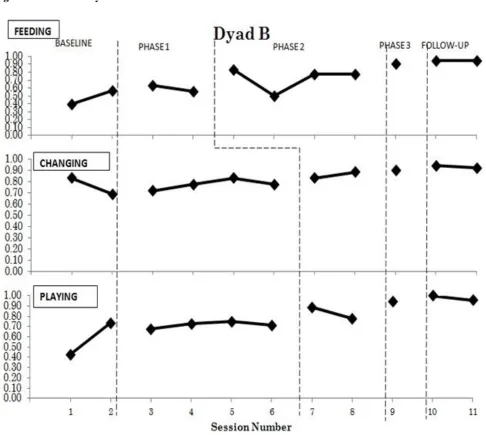
Figure 2. Results Dyad B………..………30
Figure 3. Results Dyad C.………..………31
APPENDIX 1: Daily Activities Checklist-infant (i-DAC)………32
APPENDIX 2: Infant Planned Activities Training+ Verbalizations Form (iPAT+V)………...33
APPENDIX 3: ……….……..34
APPENDIX 4: ……….…...35
Examining the SafeCare Parent-Infant Interaction Module’s Impact on the Quantity and Content of Maternal-Infant Directed Utterances
SafeCare is a behavioral parent-training program that teaches parenting skills
pertaining to health, home safety, and parent-child/parent-infant interaction. SafeCare is
most often used within child welfare programs to develop positive parenting skills linked
to risk factors for neglect and physical abuse. It is also one of the only interventions
shown to improve parenting skills correlated with neglect perpetration (Gershater-Molko,
Lutzker, &Wesch, 2002, 2003; Chaffin, Hecht, Bard, Silovsky, & Beasley 2012).
Chaffin and colleagues (2012) and Gershater-Molko and colleagues (2002) as well as
other studies have indicated the effectiveness of SafeCare in increasing positive behavior
among parents, as well as reducing child neglect in families at risk.
Research has indicated significant improvements in targeted parent behaviors
through the model. In particular, Gershater-Molko and colleagues (2003) found an 84%
increase in positive parenting skills taught through SafeCare, including skills related to
home safety, child health, and positive parenting skills. While SafeCare has largely been
implemented with parents involved with child welfare, the prevention services may
benefit at-risk families not involved in CPS, and continue to positively impact additional
parental outcomes than those that are considered the proximal target intervention
behaviors.
Beyond improving positive parent behavior, the number of cases that return to
CPS after receiving SafeCare is reduced. In terms of neglect reduction, findings from a
statewide comparative effectiveness trial of SafeCare in Oklahoma, which enrolled over
followed on average for six years, indicate that SafeCare reduced child maltreatment
reports by about 26% (HR = .74) relative to services as usual. The authors concluded that
SafeCare prevented between 64 and 104 reports per 1000 cases when assuming a
recidivism rate of 45% (Chaffin et al., 2012). In a similar study in California, SafeCare
also demonstrated effectiveness in reducing recidivism with parents involved with CPS.
Specifically, SafeCare was found to have a recidivism rate almost three times lower than
services as usual (15% compared to 44%) (Gershater-Molko et al., 2012).
Parent-Infant Interaction (PII) module of SafeCare
There are four total modules that comprise the SafeCare program, including
Health, Home Safety, Parent-Child Interaction (PCI), and Parent-Infant Interaction (PII).
This study focuses exclusively on the Parent-Infant Interaction module or PII, although
PCI was originally designed to teach parents to provide engaging activities to stimulate
their infants and increase positive interactions. The target parental behaviors were
validated by childhood specialists, teachers, and subject area professionals. Teaching the
core PII behaviors includes training and encouraging the parent to increase the use of
looking, talking, touching, and smiling during interactions with their infant across all
activities. The core PII behaviors and skills together with imitation, holding, and rocking
comprise what is known as the iPAT skills.
One study to date focused one of these four core behaviors, talking (Lutzker, Lutzker,
Braunling-McMorrow, & Eddleman, 1987), to understand the impact of the intervention
on parent-infant communication. In particular, Lutzker and colleagues (1987) added an
additional prompting piece to the PII module to examine the impact of this intervention
single mother participants were prompted with visible cues written on cards during
activities with their infants. Target skills that were prompted included mothers’ verbal
responses to their infants and use of affectionate language with their infants. Findings
indicated that PII with added prompting resulted in an increase of maternal affectionate
words and positive verbalizations over the course of the intervention. Although these
results were promising, no additional studies have been conducted to examine the impact
of the PII module of SafeCare on percent occurrence of parents’ verbalizations and
further research is warranted.
Understanding the impact of the PII module on parent-infant communication is
necessary because, a rich verbal environment can enhance a child’s development.
Research has indicated that increased rates of parent-infant communication are directly
correlated to child academic successes up to six years later (Hart & Risley, 1995), and
that lower percent occurrence of positive maternal-infant utterances is linked to lower
educational outcomes and as well as diminished bonding capability (Kazutaka, Miho, &
Kikusui, 2011). As was evidenced by the seminal Hart and Risley study (1995), which
analyzed 42 families over 3 years, the variation in children’s intellects and ease with
language later in life was strongly correlated with the amount of language to which the
parents exposed children to in early development, ultimately resulting in very different
trajectories of academic achievement and literacy skills in children. These findings were
illustrative that though risk for child maltreatment is associated with a nexus of certain
factors including young age, low income, low education, and single parent status, a rich
language environment is one of the strongest predictors of later achievement. Thus, it is
SafeCare impacts parent-infant communication, to determine whether this is an outcome
that is worth tracking and report on in research and intervention implementation.
Purpose of Current Study and Outcomes
The current study strived to advance the original research of Lutzker and
colleagues (1987) by focusing on increasing percent occurrence of parent-infant
verbalizations. For this study, mothers were recruited to participate in standard PII to
gauge the impact of this intervention on parent-infant communication without the
prompting utilized in the original study. The mother participants came from both at-risk
and low-risk groups, which allows for broader generalization of how the SafeCare PII
module impacts parents of varying risk levels. Maternal infant-directed utterances, which
are words spoken from a mother to her infant, were recorded across a variety of
experimental conditions: baseline (prior to intervention), Intervention Phase one:
Psycho-education on Developmental Milestones (session 1 of PII, which serves as a secondary
baseline), Intervention Phase two: PII training across daily routines, and Intervention
Phase three: a video enhancement condition. Utterances were also examined at two
follow-up time points (three-week post intervention and six-week post intervention) for
each parent-infant dyad. The primary research hypothesis was that the overall utterance
percent occurrence would increase from the baseline and Intervention Phase One,
throughout the implementation of Intervention Phases Two and Three.
Method
Participants
Participants included three mother-infant dyads of two risk categories: at-risk and
characteristics: young age, low income, low education, and single parent status, and of
‘low-risk’ if less than three of these factors were present. The researcher recruited dyads
though contact with leaders from an early childhood program and a home for single
mothers in metro Atlanta. One at-risk mother-infant dyad (Dyad A) was referred from the
House Manager of the Families First Second Chance Home, a metro Atlanta home for
single mothers under the age of 21 who are facing homelessness. Dyad A included the
19- year-old African American, single, first-time mother and her one-month old female
infant who qualified for welfare. Two dyads (Dyad B and C) met the low-risk criteria and
were referred through the Director of an early childhood program in metro Atlanta,
Lanette L. Suttles Child Development Center. Dyad B is a Caucasian, 35-year-old
second-time mother, who is married and professionally-employed and her 6-month-old
son. The mother of Dyad C is an unemployed, Caucasian, 32-year-old married mother
with a 7-month-old son, who is the second child.
All three dyads met the following selection criteria and agreed to the study: have
at least one infant younger than 9 months of age; consent to being video-recorded; state
an interest in learning about bonding with their infant. The dyads received monetary
incentives for participation; specifically, $10 following each session and $30 at the end of
the second follow-up session, for a total of $100 to $120 per dyad upon the completion of
the research.
Session Activities and Locations. The researcher (hereafter referred to as the Home
Visitor or HV) conducted the baseline, intervention, and follow-up sessions in the
participants’ residence located in the metro Atlanta area. Sessions were conducted in the
chance home, and the home consists of one bedroom, with an adult bed and an infant
crib. All sessions and activities took place with the dyad in the bedroom. Dyad B lived
in a new single-family home. The play activity took place on the playroom floor. The
feeding activity took place in the kitchen. The changing activity took place on a changing
table in the infant’s room. Dyad C also resided in a single-family home and the feeding
and play activity took place in the living room while the dressing activity took place in
the infant’s room on a changing table. The Daily Activity Checklist (DAC) (Appendix 1),
which was a survey implemented in the first session helped isolate which activities
needed the most change for a mother and her infant in order to minimize challenging
behavior.
Observation System. Intervention data were collected using a partial interval recording
method by completing one Planned Activities Training plus Verbalizations (iPAT+V)
Checklist-Infant: Home Visitor Version (Appendix 2) for each of three selected activities. The two routine
activities were selected by the mother participant, which included the following: feeding,
diapering, and dressing. The mothers also engaged in a developmentally-appropriate play activity
with their infant. The iPAT+V score sheet allowed the HV to record maternal infant-directed
utterances during an activity while simultaneously scoring the iPAT skills, namely, looking,
talking, touching, smiling, imitating, holding, and rocking. The HV observed and recorded
percent occurrence of positive and negative utterances (defined below) for the duration of each
activity in 10-second intervals with an occurrence/non-occurrence coding system per interval. A
two- to five-minute time frame was chosen to capture the information necessary in accordance
with the PII module. A score of all four core behaviors or 100% signified mastery in the PII
For the purposes of this research, a positive utterance was defined as explicit
mother praise and approval, verbally expressing love, addressing with endearments,
behavior descriptions, reflections, labeled and unlabeled praises, direct commands, infant
repetitions, confirmations, comforting words, calling attention to something, and
commentary. For example, a mother verbally encouraging an infant to crawl would be a
positive utterance. Further, negative utterances were defined as expressing disapproval
including any criticisms, scolding, disagreement, disparagements and hostile speech
(Shanley & Niec, 2011; Hart & Risley, 1995). For example, a negative utterance would
include a statement of the mother negatively commenting on her baby’s appearance. If a
mother made a positive or negative utterance within an interval, the HV placed a plus (+)
on the IPAT+V Checklist under the corresponding column. If nothing was uttered within
the interval, the HV placed a minus (-) in the table under the corresponding column. Hart
& Risley (1995) considered word usage in their computations of a richer language
environment, but for the purposes of this research, resources were too limited to be able
to transcribe the data to perform that level of data analysis. Positive, negative, and neutral
tone were also considered as dependent variables, but reliable measures were
challenging; thus due to time constraints and lack of valid measurement tools available,
positive and negative utterances were selected as the primary dependent variables.
The HV summarized each observation with an utterance interval percent
occurrence of zero to one. By way of illustration, within a five-minute activity (30
ten-second intervals) if a mother produced positive utterances during 15 of the intervals and
measurement and a zero percent negative utterance measurement. The positive ratio was
determined using the equation:
Similarly, a negative ratio was computed for each session, but ultimately was not
utilized or reported for the purposes of this research due to the low base rate of negative
utterances, resulting in an inability to track trends in the data.
Observer training. Observers were Georgia State University graduate students. Prior to
beginning the study, the HV was trained in the Parent Infant Interaction (PII) module,
including a six-hour workshop taught by a certified Training Specialist. The HV trainee
learned to score a parent-infant interaction using previously recorded PII session videos.
The trainer examined the trainee’s scoring for reliability; discrepancies were discussed
until her score met mastery criterion according to SafeCare (85% or higher). Finally, the
trainer scored the trainee’s role-play and administered a written quiz which demonstrated
the HV trainee’s mastery of PII, allowing for PII module delivery with families.
Reliability
Reliability ensures that the measures have been accurately recorded without bias
from the HV, who is aware of the study. The HV and reliability observer watched
SafeCare PII training videos. Each then independently scored the same video with the
iPAT+V checklist until their scores met agreement of 85% (criterion reliability score) or
The HV recorded all sessions with a video recorder for an observer to calculate
reliability. Reliability was conducted on 5/9 of the sessions for Dyad A, 5/9 of the
sessions for Dyad B, and 4/7 of the sessions for Dyad C (excluding follow-up sessions).
Each observer’s observations were compared to determine binary reliability outcome
(yes-no agreement) within the intervals for the duration of an activity. Mean baseline
reliability scores across Dyads A-C were 92.3%, 93.8%, and 97% respectively.
Treatment-phase reliability observation means for each Dyad after the PII sessions were:
93.5%, 94.4%, and 97.2%. The final treatment phase, the video enhancement yielded
reliability agreement of 93.4%, 98.4%, and 97.2% for Dyads A-C. No sessions fell
below criterion. As intervention reliability was high, no reliability was conducted on the
follow-up sessions.
Materials
HV implementation materials. PII session outlines were used as a guide for the HV
(Appendix 3). During each session, the HV utilized the iPAT+V, which was developed to
administer the PII home visitor assessment while simultaneously recording utterance
intervals. Dyads received standard PII training materials including the Daily Activity
Checklist (DAC), iCards which depict the PII parent skills, and iDevelop cards, which
detail age-appropriate developmental milestones (Appendix 4). A video recorder (Flip
Cam) was used to record maternal utterances during each of the activities.
Enhancement. A video enhancement was developed as an additional intervention
prompt to pilot and test the acceptability and effectiveness of this technology in further
intervention. This prompt was administered for all three dyads as the result of decision
points indicating maximal progress (stabilization) from the PII intervention. The
three-minute video exhibited a play activity in the home of the recorded mother of Hispanic
descent and her 6-month-old infant. The mother-infant dyad was on a blanket with toys
and exhibiting positive verbalizations.
Experimental Procedure
Orientation and baseline. During the first PII session, baseline assessment, the HV
reviewed the study consent documents, written at a 7th grade reading level, and the DAC
with the mother participant. The mothers’ responses to the DAC informed the HV and
assisted the mother in selecting which of the two routine activities the mother perceived
as most challenging for the HV to observe along with the play activity in the baseline
assessments during sessions one and two. The HV observed the activities, which (except
for Dyad C who discontinued the feeding activity after Session 2) were consistent
throughout the intervention. For the activity portion, the mother was instructed to interact
normally with her infant during the three activities while the HV observed each
interaction without feedback. Before leaving, the HV summarized the session, solicited
possible questions, and planned the next session date and time.
For PII Session Two, the dyad was observed in the three predetermined activities
consistent with the prior session. Data from each of the three activities were analyzed to
find the activity with the most stability. Following the observations, the HV and mother
discussed infant developmental milestones or typically developing behaviors for infants,
and physiological states following standard PII protocol. Of note, this developmental
thus, is not expected to promote behavioral change among parents. Data from this session
was treated as a second baseline condition.
Phase 1: Psycho-education on developmental milestones. During PII Session Three,
the HV reviewed the previously covered Developmental milestones materials. Then the
HV conducted observations in each of the activities, without feedback. The intervention
activity was then identified based on the data collected and emerging trends from the
second and third sessions. Typically the activity exhibiting the lowest score in
utterances, or the greatest reduction in utterances was targeted for intervention. The
intervention typically began during Session Four. However, for Dyad B, due to lack of
decision points prior to session four, an additional developmental milestones baseline was
collected during session four and the intervention phase began with session five.
Phase Two: Standard PII intervention. In the intervention session (Session four for
dyad A and Sessions four and five for Dyad C, and sessions five and six for dyad B),
following the PII SafeCare outline, the HV provided explanation and demonstration of
PII target skills for the dyad, which were to be practiced during the chosen activity (this
was the only intervention activity for Dyad C). The HV scored utterances and core skills
using the iPAT+V Checklist and after the activity was completed, the HV provided the
dyad positive and constructive feedback regarding her use of the target skills. Next the
dyad was asked to engage in the remaining two activities that had not been targeted for
intervention for additional data points for these activities. After HV had finished
observing and then scoring the three activities, the HV chose a second intervention
At the conclusion of this session, the bonding behaviors of holding, imitating, and
rocking were discussed, modeled and practiced. The HV then summarized the session,
gave the dyad iActivity Cards, and encouraged her to practice the bonding behaviors in
activities with her infant and to review the materials and information learned as
homework prior to the next session.
For the next PII Session (Session seven for Dyads A and B), the mother-infant
dyad engaged in the first intervention activity, while the HV scored maternal utterances.
Then Dyad A engaged in the previously chosen second intervention activity and Dyad B
engaged in both remaining activities as the observational data had stabilized in both. The
HV responded after each of the intervention activities with positive and corrective
feedback which was focused on parental use of bonding skills especially communication.
Then the HV scored the remaining non-intervention activity, if there was one. At the end
of the session, the HV reviewed key concepts prior to setting the date and time of the next
session.
For the next PII Session (Session Eight for Dyads A and B and session Six for
Dyad C), the dyad interacted in the intervention activities while practicing all of the
bonding skills as the HV scored the assessments and provided positive and constructive
feedback regarding bonding behaviors following each activity. For Dyads A and C (as
Dyad B had intervention in all activities), the non-intervention activity was then
performed without feedback from the HV. The instructional part of this session focused
on training the parent in cPAT steps (which are appropriate for infants as they move into
Cards. Finally, the HV summarized what was reviewed, set up the next session date and
time, and requested the parent practice all of the skills as homework.
Phase Three: Video enhancement. By the next session ( Session Nine for Dyads A and
B and Session Seven for Dyad C), the third phase of intervention, the Video
Enhancement, was introduced following stable data with each of the Dyads. The video
was introduced followed by a brief discussion of its content as well as the dyads’
perceptions and views on it. At the session conclusion, the participants performed all of
their activities while the HV recorded with the iPAT+V Checklist. Lastly, a demographic
survey was administered.
Follow-up. A follow-up session was performed 3 weeks after the final training session,
and again 3 week after the initial follow-up session. The HV collected data at both
follow-up time points for all activities to determine generalization of skills.
Experimental Design
The proposed research utilized a single-case, multiple baseline design across
activities replicated across dyads in order to differentiate whether the treatment improved
maternal utterances (Kazdin, 2007). Sessions were from forty-five to ninety minutes in
duration, and were conducted consecutively (immediately following another session in
order to best meet the time constraints of participants) or no more than two weeks apart.
While the best implementation of a multiple baseline design suggests that an intervention
occur once a stable level of performance is reached prior to beginning treatment (with
only moderate variability) (Kazdin, 1978), the HV introduced interventions where
appropriate. The stability of utterances for the dyads was to be characterized by the
HV chose to intervene where there was a slight positive slope due to the slightness of the
variability in data. When data were stable in one activity, the HV conducted an
intervention in the activity while data continued to be collected in other activities.
Subsequently, the intervention was introduced in a staggered fashion for the second
activity after its baseline. The observational data thus dictated the number of sessions
each dyad received.
Results
The effects of the PII intervention on positive utterances are shown in Figures 1,
2, and 3. Overall, positive maternal utterances increased from baseline over the course
of training, and were maintained through two follow-up visits at three and six weeks
post-intervention. The data for each dyad is delineated below.
Mother-Infant Dyad A
Baseline. Figure 1 shows a relatively stable trend in scores in the three activities. The
Diapering activity increased slightly from 60% to 63%. The Dressing activity slightly
descended from 77% to 63% while the Play activity increased from 67% to 87%.
Phase One: Psycho-education on developmental milestones. Figure 1 summarizes the
data collected during PII sessions. Upon data collection for Phase One (Session three
following introduction of developmental milestones), the scores were inconsistent. The
Diapering activity dropped to 35% utterances, the Dressing activity remained low at 69%,
and the Play activity improved slightly to 88%. The developmental milestones phase of
the PII intervention gave the dyad helpful information about her infant’s development.
Phase One (Session three) indicated a decrease in maternal-infant utterances in the
Phase Two: Standard PII intervention. Due to the decrease in the diapering activity
from 63% to 35%, the decision was made to introduce the second phase of the PII
intervention for diapering at the start of session 4, which then yielded an 8% increase at
43% percent occurrence of maternal utterances. The data then indicated a steady rise and
stabilization after two observations while the Dressing activity decreased in utterance
percent occurrence from 94% to 72% in session 6. Thus, a decision to intervene at the
start of session seven in the Dressing activity was made. The data yielded an increase in
positive utterances by over 22% in this activity, back to its previous score of 94%. The
Play activity remained stable, thus the decision was made to not intervene in it.
Phase Three: Video enhancement. Each of the three activities stabilized at scores of
83% maternal-infant utterances, which indicated appropriate timing for the third phase of
intervention, the Video Enhancement. After receiving the video prompt phase of the
intervention, the dyad’s positive utterance percent occurrence increased in all activities;
to 94% in the Diapering and Dressing activity and 89% in the Play activity, respectively.
Follow-up. As seen in Figure one, at the three-week post intervention observation,
continued improvement occurred, with frequencies of 94%, 100%, and 100% during
Diapering, Dressing, and Play, respectively. It is important to note that there was no
specific PII intervention in the play activity, thus the perfect score for the play activity
indicated that knowledge was generalized during the two routine activities to the play
activity. At the six-week follow-up data collection, improvement over the baseline
maternal-infant utterances was maintained and data indicated sustained use of the learned
skills with 100% for the Play Activity, 100% and 95% for the Dressing activity, and 94%
Mother-Infant Dyad B
Baseline. Figure two shows an increasing trend in the Feeding activity from 40% to 57%
and in the Play activity from 43% to 73%, although a decreasing trend from 83% to 69%
occurred in the Changing activity.
Phase One: Psycho-education on developmental milestones. Figure two also
demonstrates the data collected during PII sessions. For phase one (sessions three and
four), developmental milestones were reviewed and data were collected, which led to
inconsistent results. Therefore another data point was collected in each of the three
activities. These data indicated a decrease of positive utterances in the feeding activity,
and increases in the Changing and Play activities.
Phase Two: Standard PII intervention. Given the decreasing trend of 63% to 56% in
the feeding activity, it was chosen as the intervention activity for the second treatment
phase. Session five data measuring the immediate effect show a 27% increase to 83%
occurrence of positive utterances in the targeted activity, Feeding, and slight increases for
the remaining two activities, Changing and Play. Data collection in session six revealed a
decrease in positive utterances in all three activities; therefore PII was introduced for the
Changing and Play activities promptly within the same session in order to generalize
communication skills, which yielded improved scores of 83% and 89% for Changing and
Play, respectively. The unexpected decreased score of 50% in the feeding activity during
this session was due to the mother speaking to her other child during the observed
activity. Utterances not spoken to her infant were not recorded as maternal infant-directed
Phase Three: Video enhancement. When two of the three activities, Feeding and Play,
stabilized at 78%, and the third activity, Changing, had minimal variation of a slight
upward slope, the third phase was introduced at session nine resulting in increases across
all activities. Specifically, a positive maternal-infant utterance percent occurrence of 90%
in the Feeding and Changing activities and a 94% in the Play activity was observed.
Follow-up. As seen in Figure 2, upon the three-week follow-up session observations,
communication skills were continuing to improve and yielded the best utterance
frequencies that Dyad B ever attained at 94%, 94%, and 100% during Feeding, Changing,
and Play. This continued improvement indicated a level of comfort Dyad B had acquired
with communication skills after some time and practice with them. Upon the second
follow-up visit, high achievement of positive maternal utterances continued with 94%,
93%, and 96% in the aforementioned activities. The frequencies were maintained at a
much higher rate than baseline which illustrates that the intervention effectively sustained
quantity of utterances beyond the intervention.
Mother-Infant Dyad C
Baseline.Figure 3 indicates that across the two baseline sessions, there was an increasing
trend in positive utterances for the Play activity from 43% to 78% and in the Changing
activity from 54% to 68%, while the Feeding activity data remained stable at 10%.
Phase One: Psycho-education on developmental milestones. The first-phase of the PII
intervention began at session three due to the low percent occurrence of utterances
sustained across the baseline in the feeding activity, after which the utterance percent
Phase Two: Standard PII intervention. The decision was made to initiate the PII
module in the play activity, because of its decrease from 78% to 73%, although there
were increases in the changing and feeding activities from 68% to 86% and from 10% to
28%, respectively. At this point, Dyad C also expressed concern and an unwillingness to
alter her interactions with her infant during the feeding activity which led to the
discontinuation its data collection. Utterances increased for both remaining activities
following intervention in the play activity. The play activity increased from 73% to 89%
activity and the changing activity increased slightly from 86% to 89% without ever
having a second-phase intervention.
Phase Three: Video enhancement. Following stabilization of observations within two
percentage points of the previously observed utterance frequencies, the enhancement was
introduced. Scores increased from 88% to 96% in the play activity and from 91% to
100% in the changing activity.
Follow-up. Dyad C maintained high percent occurrence upon the three-week follow-up
with 100% in both activities, which indicated the maintenance of the communication
skills that Dyad C acquired and practiced. The utterance percent occurrence was 94% and
96% in play and changing, respectively, upon subsequent follow-up.
Discussion
This study examined the effects of the standard SafeCare PII module on
maternal-infant utterances. This study also observed additional changes in utterances as the result
of a video intervention of a mother-infant interaction, as a follow-up to standard PII. The
primary hypothesis for this study was partially supported. Specifically, some positive
overall this finding was not consistent across participants and activities. There was a
consistent trend for the video intervention to increase this percent occurrence across
participants and activities. Further, there was some support that positive improvements in
maternal utterances generalize across activities and were maintained at follow up. These
pilot data support the need for future research to more fully understand whether the
increase in maternal-infant utterances leads to long-term improvements in parent-child
communication and child language development under more rigorous conditions.
When comparing the findings across dyads, baseline data showed that each of the
three dyads scored moderately well during baseline with scores, which indicated that
these mothers already had some skills for effectively communicating with their infants.
However, the data did indicate that there was room for improvement in every activity.
During the first intervention phase (developmental milestones), the dyads’ scores were
not affected in a consistent way, which was to be expected as the purpose of this
intervention is not skills training, but educational in terms of child development. The
baseline frequencies of utterances from the observations informed the HV of which
activity necessitated intervention. Phase two (PII parent training sessions), yielded
improved quantities of positive maternal utterances across all dyads in some, but not all,
of the targeted activities. Finally, once data stabilized following the PII interventions, the
Video Enhancement (phase three) began. This resulted in improved frequencies for all
dyads. The two follow-up time points show continued improved scores, although there
did seem to be a trend for slight decreases across activities for all parents at the final
follow-up session. The maternal utterances at both follow-up points were higher than
Perhaps the most unique and innovative aspect of this study, were the findings
related to video enhancement. The three-minute video enhancement, as a convenient
addition to the PII module, was supplemental and appeared beneficial across all activities
for all dyads. The findings suggest that the video enhancement to the PII module could
also be used as an intervention itself, because this form of instruction was helpful in this
case. Considering whether to incorporate this video enhancement into standard PII
delivery, as well as other potential opportunities for broadly disseminating the video will
be an important next step in this line of research.
Limitations
There were several limitations in this study. First, the decision points used to
determine when intervention in a particular routine or activity was neccessary was not
always consistent. At time, decisions that were inconsistent with multiple baseline
designs, (e.g. intervening on a descending or stable baseline) were made in order to
expedite both data collection. Also, if a decision point during a baseline assessment and
intervention delivery was not prepared, an additional data point was collected. This
mostly affected Dyad B for whom two data points were collected after developmental
milestones intervention. Another limitation is the timing of intervention sessions, which
were inconsistent among participants. That is, some sessions were consecutive, while
others were up to two weeks apart. Sessions were planned at the convenience of the
dyad, and to complete research within time constraints. Future research designs would
benefit from standardized time between delivery sessions. A final limitation is that
generalizibiity is limited due to having three participants and a larger sample size would
Future Directions
The results from this project are informative pilot data that show potential positive
impact for PII on maternal-infant utterances, parent-child communication and child
language development. To understand more about the direct associations between PII
and child language outcomes, a next important step would be to conduct a randomized,
longitudinal trial comparing PII to a control group and examining long-term child
language outcomes including parent-child communication outcomes. Language
measurement should be expanded in future studies, both to incorporate language quantity
measures, as was used in this study, as well as what Rowe, Pan, and Ayoub (2005) refer
to as a quality language environment (i.e. tone, enrichment of language).
Another beneficial future direction would be to further explore how technology
can be used to promote language development in children. As indicated in this study,
video technology can be used to easily illustrate and model desired outcomes for parents.
Understanding more about how such technologies can independently impact parent and
child outcomes is warranted. Due to how easily disseminable it is, such technology could
have a wide-reaching public health impact. Lastly, future work may benefit from
continuing to include the evaluation of negative utterances, though the base rate of this
outcome was low in this study. An initial assessment of this outcome with a child
welfare population, where SafeCare is typically implemented, would prove beneficial.
Conclusions
This research represents the first effort to systematically record the impact of PII on
maternal utterance quantity. The data show that prior to intervention, the dyads lacked
rich and positive language environment is linked to positive child outcomes (Hart &
Risley, 1995), further examining how this outcome is impacted by widely disseminated
Figures and Appendices
Appendix 2: Infant Plannned Activities Training plus Verbalizations Form
References
Chaffin, M., Hecht, D., Bard, D., Silovsky, J.F., & Beasley, W.H. (2012). A
statewide trial of the SafeCare home-based services model with parents in Child
Protective Services. Pediatrics, 129 (3), 509-515
Gershater-Molko, R. M., Lutzker, J. R., & Wesch, D. (2003). Project SafeCare:
Improving health, safety, and parenting skills in families reported for, and at-risk for
child maltreatment. Journal of Family Violence, 18 (6), 377-386
Gershater-Molko, R. M., Lutzker, J. R., & Wesch, D. (2002). Using recidivism to
evaluate project SafeCare: Teaching bonding, safety, and health care skills to parents.
Child Maltreatment, 7 (3), 277-285.
Hart, B., & Risley T. R. (1995). Meaningful Differences in the everyday
experience of young American children. Baltimore, MD: Brookes.
Kazutaka, M., Miho, N., & Kikusui, T. (2011). Developmental consequences and
biological significance of mother-infant bonding. Progress in
Neuro-Psychopharmacology and Biological Psychiatry, 35 (5), 1232-41
Lutzker, S. Z., Lutzker, J. R., Braunling-McMorrow, D., Eddleman, J. (1987).
Prompting to increase mother-baby stimulation with single mothers. Journal of Child and
Adolescent Psychotherapy, 4(1), 3-12.
Rowe, M. L., Pan, B. A., & Ayoub, C. (2005). Predictors of variation in maternal
talk to children: A longitudinal study of low-income families. Parenting: Science and