© 2017, IRJET | Impact Factor value: 5.181 | ISO 9001:2008 Certified Journal
| Page 2941
CONCEPT AND METHOD FOR ENERGY EFFICIENT BUILDING: AN
OVERVIEW
Sanghsheel Ghodeshwar
1, Mukesh Pandey
2, Rakesh Gupta
31
M.Tech Student, Dept. of Civil Engineering, ITM University, Gwalior, Madhya Pradesh, India
2
Professor & Head, Dept. of Department of Civil Engineering, ITM University, Gwalior, Madhya Pradesh, India
3
Assistance Professor, Department of Civil Engineering, ITM University, Gwalior, Madhya Pradesh, India
---***---Abstract–
Study for step towards to achieve sustainability.This Paper is dealing with the energy and comfort issue in residential and real estate sector without affecting the nature. Challenge is the planet facing various problems like global climate change, environmental contamination, foul air and depletion of resources, due to increasing amount of carbon element in nature which helps in reducing the resources and affects human health. Building itself contain more than 40% of energy, 30% of natural resources, 20% of water, also 40% of CO2 emission and produce 30% of solid waste[1]. This paper is concerning about energy and atmosphere, sustainable sites, indoor environment quality, water efficiency, material and resources, with adopting techniques like proper designing, orientation, using energy efficient materials, proper insulation with maximize the use of renewable resources and achieves various measures to save energy, resources as well environment health.
Key Words: Energy Efficient, Buildings, Sustainability,
Environment, Depletion.
1. INTRODUCTION
As in increasing demands in development and advancement energy is the necessity for regulating the life style in planet. Because rapid growth in urbanization and population, a huge demanded comes in the real-estate. Building is both, the higher consumption of resources and well the greater cause for environment depletion. A requirement of Energy is everywhere and the dependency is belongs to non-renewable resource like fossil fuel. Fossil fuels are most responsible for the environmental depletion as they are major factors for emission of greenhouse gasses in environment. Emission of green gas will increase by 52% in the duration from 2005 to 2050. On other hand emission of carbon dioxide (CO2) are excepted to climb by 78% [2]. In present situation there is 95% of total world energy is made by resources like fossil fuels, coal, oil, and natural gas. For energy generation, - process of combustion take place by several techniques and energy is release major by products are carbon dioxide and residual like fly ash. Environment contamination, specially air, global climate change and resource depletion are the greatest drawback of those heavy fossil fuels. High sulfur coal found with sulfur leaves sulfur dioxide causes acid rain and large amount of
particulates form of fly or bottom ash which must be disposed of or recycled.
Nuclear is another option for generating energy as it does not release carbon dioxide, and often considered the desirable alternative for coal, but generates various by products during all phase of energy production and last product are radioactive waste they emits high energy radiations such as gamma rays. Causes long term damage.
© 2017, IRJET | Impact Factor value: 5.181 | ISO 9001:2008 Certified Journal
| Page 2942
Installing various energy saving applications like solarsystem may help to gain more sustainability.
2. LITERATURE REVIEW
2.1 Issue
Energy production and use promote some of the most long lasting and significant effect on environment. Dependence of fossil fuels for energy generation is shows the hazardous impact on nature. As some relative study says that around 76% of energy related carbon dioxide is emitted by urban or cities through mode of transportation, industry, structure and construction related action. While some more studies have shown that construction buildings and construction activities occupy 40% energy, 30% mineral resources and 20% water of the world‘s resources. It also accounts for 40% CO2 emissions, 30% solid wastes and 20% water pollution in the world [1].
2.2
Problem
(
Environment degradation
)
Energy is the major key factor for development of any nation, industrial, transportation, and residential convenience are linked. Most energy consuming zone is residential sector, Buildings are observed to be both, one of the biggest consumer of energy and producer of greenhouse gases. It has become a global issue. According to the National Institute of Building Sciences (USA), buildings generate 35 % of the carbon dioxide 49 %of the sulfur oxide, and 25 % of the nitrogen oxide found in the air, shows major contribution towards environment depletion. Climate change resulting from atmosphere resulting in increasing CO2, even seemly slight temperature changes can cause change in weather patterns, climate, melting of polar ice caps and sea level rise, photochemical smog, high levels of atmospheric ozone, destruction of ecosystem. Since buildings are accountable for this scenario.
So the approach is to create energy in more sustainable way that it full fills the necessity as well doesn’t compromise with comfort, providing a better way for generating energy to regulate the structures without affecting the nature, hence influence to creating energy efficient buildings. Energy efficiency is the utilization of less energy to provide the same service. In contrast to conventional buildings, energy efficient buildings seek to use land and energy efficiently, conserve water and other resources, and improve indoor and outdoor air quality. Creates energy itself for regulating the structure .maximize the use of recycled renewable materials and renewable resources like sun, water, land and wind, and contributes toward healthy environment.
Fig. 1 Objectives of energy efficient building
2.3 Benefits of energy efficient buildings
2.3.1.
Environment and health:
Energy efficiency is a terrific resource, fastest and cheapest way to significantly reduce energy requirement and provides for numerous additional benefits. In addition to reducing emissions, efficient buildings enhance energy security and reduce dependence on oil and coal imports. Greenhouse gas emissions undersized by energy saving thus effectively addressing climate change and giving the country greater reliability as a global environmental leader. Well-planned efficient buildings result in expanded medical advantages and higher profitability for occupants because of better indoor natural quality. Lower energy utilize can likewise bring about lower control power plant contamination, improving local air and water quality, serves green environment.
2.3.2. Value for money:
Energy efficient structures order higher premiums from both purchasers and occupants and appreciate higher inhabitance rates. Green structures, including energy effective structures, are increasingly attracting building tenants, owners, and users. Energy Efficiency force in lower utility bills ad straight return on investment, making it an excellent financial thought. Annual cost saving often enlarges annual depreciation charges incurred.
2.3.3. Water conservation:
© 2017, IRJET | Impact Factor value: 5.181 | ISO 9001:2008 Certified Journal
| Page 2943
fixtures, dual plumbing systems and rain-waterharvesting, green building not only reduce their demand for water use but also look at on-site supply options to cater to its internal and external (landscape) water demands.
2.3.4. Energy conservation:
Energy efficiency brings about lower energy use for the same or, then again better quality outcome. It shields against the expanding energy request from quick urbanization and from top request deficiencies that outcome in routine power cuts. India's business energy utilization is anticipated to twofold by 2035. The nation presently imports roughly 77 percent of its oil, 26 percent of its flammable gas, and 15 percent of its coal. Energy productivity will decrease dependence on energy imports and limit the volatility seen in energy prices.
2.3.5. Waste reduction
:Green buildings generated lesser waste by employing waste management strategies on site. For example Construction waste consists primarily of lumber and manufactured wood products (35 %), drywall (15 %), masonry materials (12 %), and cardboard (10 %). Although much of this material is recyclable, most of it is deposited into landfills. Demolition generates large amounts of materials that can be reused or recycled— principally wood, concrete and other types of masonry, and drywall. Rather than demolishing an entire building, all or part of a building can be deconstructed. []
Fig. 3 Benefits of energy efficient building
Thus objective is to design such homes with maximum comfort and cost prospective. Building which satisfy LEED benchmark.
2.4 LEED:
Leadership in energy and environment design is such platform which shows transparency to sustainability. Sustainable development has been defined as ‘development which meets the needs of the present without compromising the ability of future generations to meet their own needs’ 1.
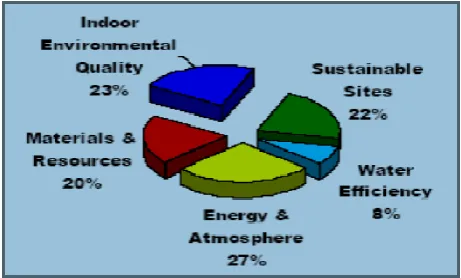
[image:3.595.318.549.439.578.2]The Leadership in Energy and Environmental Design (LEED) Green Building Rating System is an India-specific and internationally accepted benchmark for the design, construction and operation of high-performance green buildings. In India, the Indian Green Building Council (IGBC) provides LEED ratings to structures and aims to make the country one of the leaders in green buildings by the year 2015. The Green Rating for Integrated Habitat Assessment (GRIHA) is the National Rating System of India. It has been conceived by TERI (The Energy and Resources Institute) and developed jointly with the Ministry of New and Renewable Energy, Government of India. It is a design evaluation system for green building and is intended for all kinds of buildings across every climatic zone in India.[3]
Fig. 2 LEED credit criteria
2.5 Various concepts for getting energy efficient
in building:
2.5.1. Site selection:
© 2017, IRJET | Impact Factor value: 5.181 | ISO 9001:2008 Certified Journal
| Page 2944
not exists planting trees or shrubs are the option withtime. Measures influence the selection of a site. Availability of the natural advantages Availability of the electric power Available means of communication. Climatic condition
Contours of the area
Development of the surrounding area Drainage of the area
Facility available for the sewage disposal Fertility of the soils
Frequency of the floods Growth of the trees Nature of the soil
Position of the streams and lakes Water resources
2.5.2. Orientation and passive solar:
Proper orientation is important to serve with natural lighting, heat gains and proper wind blow. Have to design home to use of solar passive design, movement of sun relation to block selection and home design. Maximize the sun to living areas by putting them on north-side it is best to face utility. In summer sun-it is high on the sky, by design home correctly it can shaded home in summer, with shading device keeping them cool. In winter the sun is large in the sky that means the sun can penetrate through the windows to interior creating heat gain and reducing the need of artificial heating. Shading is important for winter and sun to heat gain and protect from sun rays. Remember to install in correct angles. Covered open space commonly should be placed on south side of house these receive the winter sun. A covered area on north-side means sunlight cannot penetrate into house reducing warmth and natural lights.
2.5.3. Walls and roof:
It is essential to build with proper insulation and technique. The envelop of a building determines the amount of energy needed to heat and cool it. The challenge in designing foundation, roof and wall to conductivity heat and loss gain. The expanded polystyrene doped with graphite shell be adopted for better thermal insulation, thermal conductivity 20% lower than ordinary polystyrene with the polystyrene insulation thickness of some exterior wall up to 20 cm and the roof up to 29 cm. Thermal insulation effect is extremely good, the industrial manner is used for the reformation of exterior wall.
2.5.4.
.Waste reduction:
Energy efficient architecture also seeks to reduce waste of energy, water and materials during construction. One goal should be to reduce the amount of material going to landfills. Well-designed buildings also help reduce the amount of waste generated by occupants as well, by
providing on-site solution such as compost bins to reduce matter going to the landfills
2.5.5. Water savings:
There are numerous approaches to spare water i.e. through preservation, active rainwater catchment and through ground water recharging system. These strategies effectively deal with the utilization of water utilizes. Use of water meter conforming to ISO standards should be installed at the inlet point of water uptake and at the discharge point to monitor the daily water consumption. The measures keeping in mind such as Install flow restrictors between the supply line and the kitchen and bathroom faucets to limit water waste, Shower heads and faucets use less water than current federal standards, High-efficiency toilet or dual –flush toilets, uses much less water than 1.6 gallons of average flush on current model, Reusing water on toilets providing separate supply lines for reclaimed water, auto control valves, drip irrigation or Sprinkler irrigation, rain water harvesting, shows great result towards resource and water savings.
2.5.6. Window and ventilation technology:
A variety of blinds, shutters and windows are used for shading, heat preservation and heat insulation. Three layer of hollow glass window are used of low emissivity and filled with inert gasses, thermal insulated materials are used outside the window to insulate the heat. Ventilation should be provided fresh air, remove moisture, odors and pollutants. Stale air is usually extracted from rooms such as kitchens and bathrooms, and warmed fresh air supplied to living rooms and bedrooms. While minimizing the uncontrolled flow of air into the building.
© 2017, IRJET | Impact Factor value: 5.181 | ISO 9001:2008 Certified Journal
| Page 2945
temperature requiring less heating. During the day, airinside the house warms up it is absorb by slab which is cooler because of contact with cooler Earth keeps interior temperature cooler, at night the air inside cools, the heat from slab move back into the room, its important the breeze-wise can be used to cool the house by opening windows and doors.by the use of air lock techniques on entry of home these creates buffer from the internal and external environment helps to reduce the energy required for heating and cooling.
2.5.8. Material used
- easily recycle and reusedmaterials which are selected looking in to their local availability, benefits, cost and durability. Making the approach towards waste utilization and environment friendly.
2.5.8.1. Lime:
Lime replaces the cement in construction; it is cheap, easily available. Provides good air quality by absorbing carbon dioxide and emitting oxygen to atmosphere, reducing the room temperature by 4 to 5 0C as compare to
cement. Durability is good and gets strengthen by time to time.
2.5.8.2. Sand lime bricks:
Sand Lime Bricks replaces the traditional bricks in the market of development industry. The principle constituents of sand lime blocks are sand, lime, fly ash, water. Utilizing sand we can accomplish the adhesiveness to hold the particles together. Its brittleness causes to reused it and reuse in different works. Sand brick is more durable than conventional brick.
2.5.8.3. An Eco friendly tile:
An Eco-friendly tile replaces the ordinary ground surface and uses less energy in their creation. Tile enhances execution of indoor condition quality. They are accessible according to the customer prerequisite in different patterns and furthermore simple to put. They are cheap with compare to conventional tiles. Made from locally available materials that produced on the construction site so that it transportation charges are diminished. And lay directly on floor as similar to plastering work.
2.5.8.4. Colored lime plasters:
Though low VOC (Volatile Organic Compounds) paints are available but by using colored lime plaster as paint it reduces the painting for whole structural life. It is maintenance free, washable, and water resistant. Its sparkle and shininess increase as time passes.it provide better aesthetics look as compare to conventional paint work. It is very cheap and long lasting including three coats of plaster.
2.5.9.
Energy efficient appliances:
Use of energy efficient and eco-friendly appliance reduces utility cost. While purchasing new electrical appliances always look for BEE star rating. More stars indicate more efficiency. The small additional initial installation cost will be compensated many times over by the savings and the occupants comfort.
2.6. SOLAR ENERGY CONCEPT-ROOF TOP SOLAR
PHOTOVOLTAIC SYSTEM:
Solar energy is the form of electromagnetic radiation streams in through the atmosphere on the surface of Earth providing energy at the rate of about 1KW per square meter at the place of peak intensity.
On average, one square meter on the side of the Earth falling the sun receives 1400 W (joule per second). In a 24-hour period the total amount of energy reaching the upper atmosphere is 14.4million calories. On third of it is reflected back into space by cloud cover, and the rest travelling through atmosphere, power the wind and water cycle and derives the Earth’s climate. The total sunshine entering the atmosphere every year is equivalent to 500, 000 billion barrels of oil or 800, 000 billion metric tons of coal on a bright sunny day in the northern latitudes when the sun is at highest point about 1000 watt per square meter reaches the ground on cloudy days, it can be as low as 200 W per square meter. If the conversion efficiency is 15%, 6.5 square feet of photovoltaic material is needed to power a 100-watt light bulb.
One of the best features of housetop sun based PV system is that they can be allowed and introduced quicker than different types of renewable power plants. Sunlight is directly converted into electricity by photovoltaic or solar cell. They are clean, spotless, calm and visually attentive. Housetop PV system might be introduce top of most large building, with bigger terrace. The solar power generated in excess of the owner’s electricity consumption is fed into the grid through a net-meter, which is a bi-directional energy meter. PV installation in home ownership projects are usually 1.5-5KW, which can offset 40-90% of electricity use, depending upon the home size and occupant’s energy use. Anticipated increase in energy costs can make these systems a cost-effective investment for owners with a ten-year or longer time horizon.
The following advantages can be achieved by using roof top photovoltaic system:
© 2017, IRJET | Impact Factor value: 5.181 | ISO 9001:2008 Certified Journal
| Page 2946
2. The space necessity for a solar park can bediminished, despite the fact that they keep up a similar yield.
[image:6.595.37.286.174.367.2]3. The payback time of the investment is detracting.
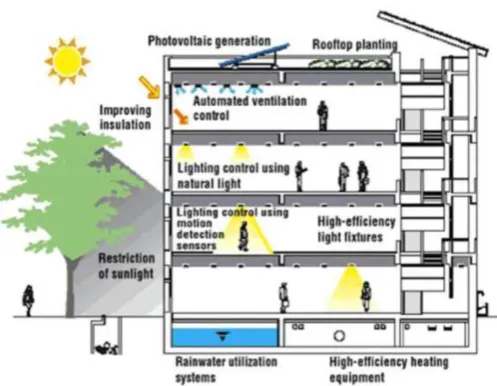
fig. 4 conceptual of energy efficient building 3. COST EFFECTIVE:
Energy efficient building could cost slighter higher than conventional buildings may be its laying between 3-8% more and it often not worth the extra cost. But there is need to be seeing in a different way like Energy efficient building provides financial benefit like it has more benefit and long lasting life than conventional building. As the expectations of recovery of extra investment will be fulfilled within 2 to 3 years including all service and maintenance cost as well. The weight and area covered by energy efficient building is lesser than conventional building so the construction cost of conventional building is lower than energy efficient building but, due to efficient envelops, systems and lighting which are recommended by ECBE made it more costly than conventional building, once ECBC becomes compulsory, there will no extra cost.
4. CONCLUSIONS
Through the studies, it is necessary to adopt the energy
efficient concept for saving the environment depilation. Energy efficient buildings reduce consumption of energy over its lifetime by numerous ways.. by the use of energy efficient method are introduce to deal with the problem of environment and energy loss that will able to creating and maintaining the structures without undergoing any loss and give benefit of making building energy efficient. It is clear with above studies that by working with several smart technologies like site selection, heating and cooling system, waste reduction, water savings and material used while working with renewable energy, natural resourcesand using concept like solar water may lead to tremendous advancement in environment and health, value for money, water and energy conservation and waste management issue, shows It is cost effective as shows quick access money repayment and resource saving application. Helps to reduce the carbon elements and hygienic residual in nature, thus contribute towards healthy environment.
REFERENCES
[1] Shamik Chattraj, Snehashsis Das, Anjana Sengupta, and
Kaustav Mallick, Green Buildings Overview and Analysis of Energy Efficient Building, International Journal of Recent Research in Electrical and Electronics Engineering (IJRREEE), 3(1), 2016, 41-49.[2] OECD. (2008). Climate change: Meeting the challengeto 2050. Retrieved April 15, 2013, from OECD:http://www.oecd.org. M. Young, The Technical Writer’s Handbook. Mill Valley, CA: University Science, 1989.
[3] Ronglan Zhang, A Review of Building Energy Efficiency Technology, Open Journal of Civil Engineering, 2015, 353-358.
[4] Jignesh C sailor, Himanshu A naik, and Viralkumar I. makwana, Green building, ledearship in energy & environment Design for building sector, 1-4.
[5] Akshay B. Mokal, Allaudin I. Shaikh Shamashree S. Raundal, Sushma J. Prajapati, and Uday J. Phatak International Journal of Application or Innovation in Engineering & Management (IJAIEM), 4(4), 2015, 244-249 [6] Vinutha Bai N, DR.R.Ravindra, ENERGY EFFICIENT AND GREEN TECHNOLOGY CONCEPT, IJRET: International Journal of Research in Engineering and Technology, 253-258
[7] Dr. Siba A. Awawdeh, Buildings’ Energy Efficiency and Buildings’ Energy Codes: a Literature Review, International Journal of Applied Science and Technology 4(2); March 2014,
37-46.
[8] SUSTAINABLE BUILT ENVIRONMENT – Energy-Efficient Building Design: Towards Climate-Responsive Architecture –