Journal of Chemical and Pharmaceutical Research, 2015, 7(3):278-285
Review Article
CODEN(USA) : JCPRC5
ISSN : 0975-7384
Methods of synthesis of nano particles and its applications
S. Kandasamy and *R. Sorna Prema
Department of Food Technology, Kongu Engineering College, Perundurai, Tamil Nadu, India
_____________________________________________________________________________________________ABSTRACT
The aim of this review paper is to give an overview of the development and implications of nano particles synthesis which is an emerging field that covers a wide range of applications. It play a major role in the development of innovative methods to produce new products to suitable existing production equipment and to reformulate new material and chemicals with improved performance resulting in less consumption of energy and material and reduce harm to the environment as well as environmental remediation. Nano catalyst is an expected to be fruitful areas which are synthesized recently by different methods. Current applications and research into the use of Nano catalyst in waste water management, textile, agriculture, and medicine has also been reviewed.
Key words: Nano particles, synthesis, emerging field, application.
_____________________________________________________________________________________________
INTRODUCTION
Nano technology is a study of manipulation of any matter in the range of Nano scaled size usually of 1to 100nm. Nano technology shall be a great thing in 21st century because advancement in science and technology numerous studies have been under taken to synthesis and characterization of Nano particles. Evolution of Nano field leads to tremendous growth in various areas such as food and agriculture, pharmaceutical, material science, bio technology, medicine, energy and environment.
The surface to volume ratio of Nano particles is increased compare than bulk materials with the same composition which leads to developing a material with enhanced properties and attributes such as catalytic activity, electrical conductivity, hardness, mechanical strength, optical properties, and melting point and antimicrobial effects. The reactivity of the surface initiates from quantum phenomena which can make NP unpredictable. Therefore another hand, Nano particle had large functional surface area which is able to bind, adsorb and carry the other compounds. This surface is more chemically active than fine analogue [1].
Nano particle characterization is necessary to understand and control the size of the Nano particle synthesis and application. Characterization could be done by the common methods, electron microscopy (TEM, SEM), atomic force microscopy (AFM), dynamic light scattering (DLS), x-ray photoelectron spectroscopy (XPS), X-ray diffraction (XRD), Fourier transform infrared spectroscopy (FTIR), UV-Vis spectroscopy, interferometer and nuclear magnetic resonance (NMR).
Commercialization of Nano technology is still an infancy stage though the commercialization of a Nano technology is a greater liability because the innovations are attracted but the reality about their goal could be identified via marketing. Much attention received by the academic circles where new programs are planned to accelerate the rate of innovation.
II.SYNTHESIS OF NANO PARTICLES
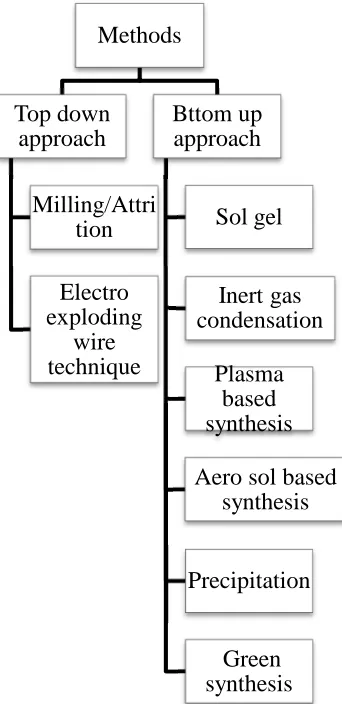
Fig 1. Flow sheet for methods of nano particles synthesis
Top down approach
It involves breaking down of large size bulk material into Nano size particles, could be done by milling, attrition process and electro explosion wire technique. It is a quick manufacturing process but requires more energy, so it is not suitable for large scale production. Another drawback of top down approach is imperfections of surface structure such defects have a significant impact on the physical and other properties of Nano particles [2].
Cu Nano particles synthesized by the top down approach of electro exploding wire (EEW) technique [3]. In this technique copper plate is kept inside suitable medium such as water, current approximately 1010 A/m2 is applied to the medium through the copper wire which leads to melting and evaporation of copper metal plate taken place. Evaporation of metal creates the plasma which readily dispersed in the media followed centrifugation to separate the particles. Similarly [4] synthesized the silver Nano particles and analysis the structural properties such as XRD, SEM, UV-Vis spectroscopy.
2-4 nm size of iron particle produced with agglomerate structure using high energy ball mill under room temperature followed by particle separation using sieve shaker and the structure morphology was confirmed by high resolution electron micro scope (HREM) [5]. They also postulated that high degree of deformation of material occur in mechanical milling process due to repeated impact between the ball and particles.
In Conventional milling process the heat generation will be more as well as the particle agglomeration also happened, in order to avoid this wet milling method had been developed by [6]. It is a popular method because of its applicability and suitability can be applied for all kind of materials. Optimize the parameters such as milling time, rotational velocity of agitator shaft, filling ratio of grinding media, flow velocity of circulation system for preparation of ZnO Nano particles using Taguchi method, Response Surface method and genetic algorithm approach [7].
Methods
Top down
approach
Milling/Attri
tion
Electro
exploding
wire
technique
Bttom up
approach
Sol gel
Inert gas
condensation
Plasma
based
synthesis
Aero sol based
synthesis
Precipitation
Bottom up approach
Bottom approach refers to building of material from molecule by molecule, atom by atom and cluster by cluster. During the assembling process physical forces acting on the Nano structure used to combine the particles in to a larger one. For synthesis of complex Nano structures, Nano technologist mostly prefer bottom up approach because the advantage of this approach is to precise control of particle size resulting good optical, electronic and other properties [8]. The common methods involved in bottom up approach as follows,
Sol gel method
The sol gel technique is well established technique for synthesis of colloidal Nano particles from liquid phase. The main advantages of sol gel technique are versality, low temperature process and flexible rheology allowing easy shaping. Sol gel process is well suitable for synthesis of oxide Nano particles and composite Nano powder. The most commonly used precursors are alkyl oxides due to their commercial availability and high accountability of M-OR bond allowing eloquent tailoring in situ during processing. The procedure involving sol gel technique as follows [9],
• Preparation of homogeneous solution by dissociation of metal organic precursor in the organic solvent or in organic salt solution.
• Transformation of precursor oxide in to a highly cross linked solid.
• Hydrolysis leads to sol, dispersion of colloidal particle in liquid done by suitable reagents (generally water).
• Further condensation leads to gel, a rigid inter connected organic network.
TiO2 based Nano particles synthesis is one of the hot topic for the Nano technologist because of its wide range of applications in photo catalysis, shape memory alloy and solar cells. [10] elucidated the Ag3 (2+ ) Al Ti4− O11+ Nano particle produced by the sol gel technique had globular shape morphology. XRD demonstrated that the molecules or atoms are arranged in the tetragonal lattice.
Zinc oxide Nano particles produced using zinc chloride, zinc nitrate, sodium hydroxide as a precursors [11].NaOH was dissolved in distilled water and heated to 500C and 900C. Zinc Nitrate and Zinc Chloride were added to a 1M concentrated NaOH solution for 26 minutes and 52 minutes. 23 full factorial designs were used to analyze the optimum size of crystal formation. Particle was characterized by XRD, HRTEM and UV-Vis spectroscopy. The results were concluded that small size crystals are obtained by high temperature synthesis using zinc chloride precursors. The spectroscopy study indicated that the strong absorbance was found at 300nm, showing that the sample was photosensitive in UV region.
Co Precipitation
Co precipitation is a typical wet chemical process, also called as solvent displacement method. It was widely used method, due to simplicity, economic and reproducibility. Main constituents are need to prepare the Nano particles are polymer phase can be synthetic or natural, polymer solvent usually ethanol, acetone, hexane and non solvent polymer. Nano particles are created by a rapid diffusion of polymer solvent into a non solvent polymer phase by mixing the polymer solution finally. Interfacial tension between two phases creates a maximum surface area could leads to spontaneous precipitation of Nano particles. Flow sheet for co precipitation technique are summarized below,
Anti microbial activity of CuO nano particles synthesized by precipitation technique using copper acetate and sodium hydroxide as a precursors and reducing agent respectively. Characterization of particles carried out by XRD, TEM and EDS analysis. XRD reveals that Nano particles are monoclinic crystal similarly EDS confirmed that absence of impurities in the prepared copper oxide Nano particles [12].
Nano fluids are new variety of fluids in which Nano size material such as Nanoparticles, Nano tube, Nano fibers, Nano wire, and Nano rods in a base [13] The same author produced two types of zinc oxide (ZnO) nanoparticles, presence and absence of capping agents for analyzing its behavior in Nano fluids. The experiment was conducted by utilizing zinc nitrate, sodium hydroxide, starch and poly vinyl-2pyrroledone which act as precursors, reducing agents, stabilizers and capping agents respectively. The following conclusion was made by researchers, the capped ZnO nanoparticles were unagglomerate and had regular define structure than uncapped nanoparticles.
Inert Gas Condensation
The inert gas condensation (IGC) technique, in which Nano particles are formed via the evaporation of a metallic source in an inert gas, had been extensively used to produce fine Nano particles. Perhaps this method is well suited for manufacturing metal Nano particles, since metals are vaporized at reasonable rate at attainable temperature. Process for making of copper metal nanoparticles are summarized below,
• Metal is vaporized inside the chamber, into which an inert gas typically argon or helium or neon is periodically admitted.
• Once the atom is boil off immediately loss its energy, by colliding of vaporized atom with inert gas.
• The vapor cooled by liquid nitrogen, to form nanoparticles in the range of 2-100nm.
Bimetallic Au/Pd Nano particles synthesized by highly size controlled inert gas condensation technique [15]. The resultant Nano particles were analyzed by TEM, mass spectroscopy, electron microscopy, atomic force microscopy, and XRD to verify the geometry and distribution of metals. [16] done a research on formation of Cu and Si Nano clusters by a sputtering or inert gas (Ar) aggregation type cluster source. The size of cluster was controlled by the operating parameters such as sputtering pressure and gas-flow rate. The actual mean cluster size was compared with theoretical mean cluster size. The end result illustrated that the peak cluster size was decreased with increased Ar gas flow rate, due to the time spent by the cluster within the agglomeration region decreases resulting in lower size.
Green synthesis
[image:4.595.136.481.452.537.2]Nano particles are produced by the physical and chemical method need a longer time for synthesis to overcome this kind of problem, recent development of Nano technology is Green synthesis which use of biological system like plants and micro organism [17]. More over green synthesis of Nano particle is an environmentally friendly method without any harmful and expensive chemicals [18]. Synthesis of metal Nano particles using plant extracts are considered as a cost effective and hence used as an economically viable method for large scale production [19]. The mechanism behind the formation of Nano particles explained by several researchers, they postulated that bio reduction of Nano particles owing to numerous bio molecules (vitamins, amino acids, proteins, phenolic acids, alkaloids, etc) in the plant and micro organisms [17]. Phenolic acids are considered as a powerful anti oxidants, possess hydroxyl and carboxyl groups that are able to bind metals. The active hydrogen may responsible for reduction of metal ions into formation of metal Nano particles [20]. The overview of green synthesis is easily understand by the Fig 2, when precursor is added to the leaf extract it changes the color which indicate the formation of Nano catalyst.
Fig 2. Green synthesis of Nano catalyst
Averrhoa bilimbi Fruit Extract broth synthesized gold and silver Nano particles using the salt chloroauric acid and silver nitrate respectively. Color change to yellow and violet indicated that formation of silver and gold Nano particles. The rate of formation of Nano particles were slow at lower concentration of salt thus lowers the absorbance in UV spectrometer. They also suggested that alcohols, amines and phenols in the averrhoa bilimbi fruit might cause reduction and capping of Nano particles [21].
Another investigation demonstrated for ZnO Nano particles from Calotropis Gigantea leaf extract by [22]. The synthesized particles were characterized by SEM determined the spherical shape of Nano particles with a size of 10-15 nm and XRD study also revealed the size of the Nano particle. It was offered that rate of synthesis related to reaction temperature, high temperature allow faster growth rate. More over increasing temperature leads to small size of Nano particles.
Plasma based synthesis
Plasma based synthesis was a well-established process for producing of thin films of Nano particles. This technique involves the instigation of an arc by contacting a cathode made of a target material. An igniter was attached to an anode in order to generate a low-voltage, high-current self-sustaining arc. The arc ejected ions and material droplets from a small area on the cathode. Further, the ions were accelerated towards a substrate while any large droplets were filtered out before deposition. This method successfully employed to synthesis of nano size powders like carbides, borides and oxides.
Thermal plasma technique had the following advantages [25], High temperature and high enthalpy vaporize any material virtually High quench rate resulting homogeneous nucleation
High throughput.
Synthesis of TiO2 Nano particles by thermal plasma technique using the precursors titanium metal power and titanium hydride powder was reported [25] They considered typical operating parameters arc voltage, arc current, feed rate for metal/hydride powders, torch input power and various gaseous flow rate. The experimental results indicated that lower input power to torch lowers the plasma temperature therefore incomplete conversion thus indicated that dissociation of rapidly only at high temperature. Thermo dynamic analysis for titanium carbide (TiC) nanoparticles with an average size of 100 nm produced by thermal plasma technique [26]. They also investigated effects of feed rate and molar ratio on TiC powders. Characterization of powder was made by means of SEM, EDX, XRD and surface area analyzer.
Aerosol-Based synthesis
Aero sol based processes are widespread method for large scale industrial production of Nano particles. Aero sol defined as solid /liquid particle in gas phase, the particle size up to 100 nm. It is a powerful route for manufacturing of Nano material of well defined morphology and chemical composition. Two types of aero sol based technique such as spray pyrolysis and laser pyrolysis. In spray pyrolysis method solution of precursors and reducing agents in the organic solvent is sprayed in to the reactor where aero sol solute condenses and solvent evaporated [27]. Laser pyrolysis technique in which laser beam heats the precursors thus produce small, narrow and non aggregated Nano particles. [28] reviewed briefly about the generation of nano particles by aero sol based technique and its existing and emerging applications. Aero-sol-gel technique for synthesis of Nano porous iron oxide particles using batch aero sol reactors investigated by [29]. They employed sol-gel reaction in aero sol phase, porosity of the particles was characterized by TEM analysis and the size was 100-250 nm evidenced by SEM and differential mobility analysis (DMA).
III.APPLICATION OF NANO PARTICLES
An enormous amount of researches are still going on various universities, colleges and laboratories around the world due to its numerous applications. Some of the applications are detailed below,
Waste water Effluent treatment
Food packaging
Nano technology in food packaging sectors was accepted now days due to its tangible benefits. Currently, widely used food packaging material made of plastic likes poly ethylene, poly propylene, poly vinyl alcohol, etc which are harmful and non bio degradable. Several studies going on to develop the bio polymer because it possesses eco friendly properties but barrier properties are low compare than plastic. It could be done by adding filler matrix, made of Nano particles provides better interactions [35]. Other development in Nano technology in food packaging is carbon Nano tubes which are cylinder structure with Nano scale diameter. It improve the mechanical properties [36]. Nano sensors are sensor being added to the packaging material to detect the gases rise off from the food when its spoiled as well as it prevent the permeation and transpiration of gases. For example the packaging materials with silica Nano particles prevent oxygen penetration inside the package at the same time stop the moisture loss from the product [37]. Another important application is tracking of food by Nano technology is unexploited. In tracking system, Nano sensors are embedded in food as a tiny size chips which produces electrical signal based on this fresh food is tracked from paddock to factory to retail stores. Food wrapped with smart safety packaging also detects the microbial spoilage.
Food processing
Potential impact of Nano technology in food processing is an emerging topic in the area of smart delivering of nutrients, bio separation of proteins and Nano encapsulation of nutraceuticals. As the fundamental components of food materials are vitamins, antimicrobial agents, antioxidant and food additives such as colorants, flavorants, preservatives, etc. These components are compatible with food attributes like color, taste, texture and shelf life. Protection of these could be done by Nano encapsulation, Nano emulsion, etc. [38] done a research on encapsulation of fish oil by spray drying technique using maltodextrin combined with modified starch Hi-Cap and whey protein concentrate (WPC) as a encapsulation agents. Emulsion was prepared by three methods silver sons, micro fluidizer and ultrasound; they analyzed various parameters such as emulsion size, powder size, powder moisture and encapsulation efficiency for each emulsion method. Results demonstrated that microfludization method produced very small size than other emulsification methods as well as another result was found that Hi-cap sample have higher the emulsion size compared with WPC due to WPC possessed the both hydrophobic and hydrophilic sites which lead to strong emulsion capabilities. Another study demonstrated that Nano encapsulated designer probiotics bacterial cells in yoghurt improve the sustained release and immune enhancing effects in the gastro-intestinal system. Some food processing operation utilizes the enzyme to alter the characteristics of any components, Immobilization of these enzymes on the Nano catalyst is an aid to disperse throughout the food medium and enhance its activity. Triacylglycerol lipase enzyme was covalently bonded on the Nano silicon dioxide particles which interesterified the olive oil with good stability, adaptability, consistency and reusability [39].
Medicine
Nano science and technology are currently have been developed in the field of medicine for detecting the disease such as cancer, atherosclerosis at early stages and targeted drug delivery for a cell or tissue of choice. Two important aspects of Nano technology in drug delivery system are time of drug release and specific targeting of diseased cell which improve the drug availability. Atherosclerosis associated with two targeted components fibrin and tissue factor, can be detected by MRI using paramagnetic Nano particles targeted to the components, alternate lipid bi layers with an aqueous fluid and produce an ultrasound signal based on the signal ,stage of the disease was found [40]. Nano robotics employed in the field of Nano dentistry for treating Dentin hyper sensitivity [41].Dentin hyper sensitivity is a common condition of transient tooth pain due to tooth bleaching, tooth pathology and loss of cementum on root surfaces. It could be prevented by Nano robots which could precisely occlude the specific sites on the teeth quickly and permanent within minutes. An occurrence of musculoskeletal disorders owing to aging population and other injuries, current treatment involves use of orthopedic implants for fixing the internal fractured bones. Nano sized organic and mineral phases can be an effective and new bone material for implantation because it has greater bone adhesion, durability and flexibility. Large surface to volume ratio which increases the bone cell interactions thus improves the orthopedic implant efficacy and minimize the patient compliance [42].
Antimicrobial activity
S. aureus and S. typhi which shown that silver Nano particles were a powerful potent antibacterial agents against both gram positive and gram negative bacteria.
Agriculture
Agriculture is a backbone of some of the countries like India and China, the majority of national income from agricultural sector. But now a days this sector faced lots of challenges due to climatic change, environmental issue like pesticide and fertilizer accumulation and urbanization. Nano technology revolutionizes the agriculture field in the part of absorbing nutrient, disease detection, disease control and smart delivery system [44]. In future nano catalyst will available in the pesticide and fertilizer to increase its efficiency at lower dosage level which protects the environment from high dose pesticides. [45] Studied the applications of silver nano particle (Ag NP), zinc oxide nano particle (ZnO NP) and titanium oxide nano particle (TiO NP) for the control of grasserie disease in silk worm caused by the virus B.mori nuclear poly hedrosis virus and rice weevil in rice. For this study solid bio assay was prepared and kept in a box containing rice, after 7 days 95% of morality achieved by use of silver nano particle than other two. Similarly reduction efficiency was obtained in silk worm.
Textile
The use of nano technology in textile industry is attracting due to its distinctive and significance properties [46]. Some of the properties are water repellence, wrinkle resistance, anti bacterial, anti static and UV protection. Water repellence is imparted to the cotton material simply by coating of a nano plasma over on it [47]. Conventionally wrinkle resistance done by resins but it leads to decrease in dye ability, tensile strength of fibre and abrasion resistance, could be prevented by titanium nano catalyst and silica nano catalyst for cotton and silk respectively [48].
CONCLUSION
Nano catalyst provides an extremely attractive platform in the Nano technology. In this review we express the Nano catalyst synthesis by various method and its applications in the food processing, packaging, medicine, antibacterial activity and waste water effluent treatment, however these applications are at in an elementary stage only. Research in Nanotechnology is estimated to have a huge impact on the development of new catalysts. The detailed understanding of Nanostructures and the ability to control size of materials will ensure a rational and cost efficient development of new and more capable catalyst.
REFERENCES
[1]. Abhilash M. Int. J. Pharma Bio. Sci. 2010,1 (1), 1–10.
[2]. Thakkar K N; Mhatre S ; Parikh R. Y, Nanomedicine: Nanotechnology, Biology and Medicine, 2010, 6(2), 257-262.
[3]. Siwach O P; Sen P, Journal of Nanoparticle Research, 2008, 10(1), 107-114. [4]. Alqudami A; Annapoorni S, Plasmonics, 2007, 2(1), 5-13.
[5]. Muñoz J E; Cervantes J; Esparza R; Rosas G, Journal of Nanoparticle Research, 2007, 9(5), 945-950. [6]. Koch C, Nanostructured Materials, 1997,9 (1),13-22.
[7]. Hou T H ; Su C H ;Liu W L, Powder Technology, 2007,173(3), 153-162.
[8]. Doyle M E; Glass K A, Comprehensive Reviews in Food Science and Food Safety, 2010, 9(1), 44-56. [9]. Mehrotra R. C, Journal of Non-Crystalline Solids, 1988, 121(1), 1-6.
[10]. Savi, B M; Rodrigues L; Bernardin A M, Synthesis of ZnO nanoparticles by sol-gel processing. [11]. Ramesh S, Journal of nano science, 2013, 12(2),1-9.
[12]. Ahamed M; Siddiqui M A; Akhtar M J; Ahmad I; Pant A B; Alhadlaq H A, Biochemical and biophysical
research communications, 2010, 396(2), 578-583.
[13]. Malviya R K; Verma M; Yadav V, Science Technology & Management,2013, 1(2), 21-29. [14]. Liong S; Moore R. L, Technology, 2005
[15]. Pérez-Tijerina E; Pinilla M G; Mejía-Rosales S; Ortiz-Méndez U; Torres A;José-Yacamán M, Faraday
discussions, 2008 , 138: 353-362.
[16]. Banerjee A N; Krishna R; Das B, Applied Physics , 2008, 90(2),299-303. [17]. Iravani S, Green Chemistry, 2011,13(10), 2638-2650.
[18]. Cao. G. Synthesis, Properties and Applications. London, Imperial College Press, 2004.
[19]. Pandey S; Oza G; Mewada A; Sharon M, Archives of Applied Science Research, 2012,4(2),1135-1141. [20]. Manjula P; Boppella R; Manorama S V, ACS applied materials & interfaces, 2012, 4(11), 6252-6260. [21]. Isaac R. S; Sakthivel G; Murthy C, Journal of Nanotechnology, 2013.
[22]. Vidya C; Hiremath S; Chandraprabha M N; Antonyraj M L; Gopal I V; Jain A; Bansal K, International
Journal of Current Engineering and Technology, 2013, Special Issue1:118-120.
[24]. Shikha Behera P L ; Nayak , World Journal of Nano Science & Technology, 2013, 2(1), 62-65.
[25]. Padmanabhan P V A; Sreekumar K P; Thiyagarajan T K; Satpute R U; Bhanumurthy K; Sengupta P; Warrier K G K, Vacuum, 2006,80 (11), 1252-1255.
[26]. Lirong Tong ; Reddy R G, Scripta Materialia,2005, 52(12):1253-1258.
[27]. SophieLaurent ; Forge D; Port M; Roch A; Robic C; Vander Elst L; Muller R N, Chemical reviews, 2008,
108(6), 2064-2110.
[28]. Geroge Biskos; Vons V; Yurteri C U; Schmidt-Ott, A. KONA Powder and Particle Journal, 2008, 26 :13-35. [29]. Prakash A; McCormick A V; Zachariah M R, Chemistry of materials, 2004,16(8), 1466-1471.
[30]. Abbassi R; Yadav A K; Kumar N; Huang S; Jaffe P R, Ecological Engineering, 2001, 61, 366-370.
[31]. Yadollah Abdollahi Y; Abdullah A H; Zainal Z; Yusof N A, Int. J. Appl. Sci. Technol, 2011,13(1), 302-315 . [32]. Beydoun D; Ama R.; Low G; McEvoy S, Journal of Nanoparticle Research, 1999, 1(4),439-458.
[33]. Priya Banerjee; Sau S; Das P; Mukhopadhyay A, Nanosci Technol, 2014,1(2):1-6.
[34]. Santhanalakshmi J; Komalavalli R, Research Journal of Chemical Sciences, 2012, 2(4), 64-67. [35]. Henriette M C; Azeredo, Food Research International 2009, 42 (9), 1240–1253.
[36]. Bhupinder S Sekhon, Nanotechnol Sci Appl, 2010, 3, 1–15. [37]. Sozer N; Kokini J L, Trends in biotechnology, 2009,27(2), 82-89.
[38]. Jafari S M; Assadpoor E; Bhandari B; He Y, Food Research International, 2008, 41(2),172-183. [39]. Bai Y X; Li Y F; Yang Y; Yi L X, Process Biochemistry, 2006, 41(4), 770-777.
[40]. Wickline S A; Neubauer A M; Winter P; Caruthers S; Lanza G, Arteriosclerosis, thrombosis, and vascular
biology, 2006, 26(3), 435-441.
[41]. Freitas Jr R A, Nanomedicine: Nanotechnology, Biology and Medicine, 2005, 1(1), 2-9.
[42]. Sahoo S K; Parveen S; Panda J , Nanomedicine: Nanotechnology, Biology and Medicine, 2007,3(1), 20-31. [43]. Ruparelia J P; Chatterjee A K; Duttagupta S P; Mukherji S, Acta Biomaterialia, 2008, 4(3), 707-716. [44]. Rai M; Ingle A, Applied microbiology and biotechnology, 2012, 94(2), 287-293.
[45]. Goswami A; Roy I; Sengupta S; Debnath N, Thin Solid Films ,2010, 519, 1252-1257.
[46]. Wong Y W H; Yuen C W M; Leung M Y S; Ku S K A; Lam H L I, AUTEX Research Journal, 2006, 6(1), 1-8. [47]. Zhang J; France P; Radomyselskiy A; Datta S; Zhao J; Ooij W V, Journal of Applied Polymer Science, 2003, 88 (15), 1473-1481.