Journal of Chemical and Pharmaceutical Research, 2014, 6(5):1957-1963
Research Article
CODEN(USA) : JCPRC5
ISSN : 0975-7384
A proportional fair scheduling algorithm based on QoS utility
function in wireless networks
Huang Zhao Ming
Guang Xi Medical University 1st affiliated Hospital, Nanning, Guangxi, China
________________________________________________________________________________________________________________________________________________
ABSTRACT
The traffic of multimedia service in wireless network increases by exponential as the number of applications increase. Since the weakness of proportional fair algorithm in meeting the Quality of Service (QoS) such as delay and packets loss, it is not so widely used in modern wireless communication. This paper proposes a scheduling algorithm that based on QoS utility function in which a parameter is introduced to improve priority mechanism for overcoming such weakness. Simulation results show that our scheduling algorithm can meet the QoS requirements of real-time traffic; and the whole system transmission performance has been markedly improved.
Key words: Quality of service, Scheduling algorithm, Utility function, Proportional fair
_____________________________________________________________________________________________
INTRODUCTION
With the rapid development of wireless network, the contradiction between wireless network resources and data service demand increases sharp [1-5]. With the reason of wireless network resources not being increased, wireless resource scheduling algorithm has become a progressive direction [4-6].
Currently, the classic scheduling algorithms are mainly Round scheduling (Round Robin, RR) algorithm [7], the maximum Carrier to Interference scheduling (Max Carrier to Interference, Max C/I) algorithm [8], Proportional Fair scheduling (Proportional Fair, PF) algorithm [10]. RR algorithm takes turns to scheduling various business on time slice, which have the same scheduling priority system in all business, to guarantee equal opportunity for all business distribution system in the same amount of resources, such as time or bandwidth. Then the users are in turn to scheduling according to some sort of agreement, until after all the business is scheduled to the next scheduling cycle. Max C/I algorithm is a kind of scheduling emphasis on system throughput. It sorts descending all users in the system according to the channel SNR, system priority scheduling SNR of big business, until the end of the scheduling.
[ ]
arg max(
i)
i
r
P i
R
=
(1)i
r
as the instantaneous channel signal-to-noise ratio of the channeli
,R
i as the average throughput of the business [9]Update formula of
R
i[10]:(2)
t c
as the balance of time parameters.Although the PF algorithm is better than that of the RR algorithm and Max C/I, in recent years, a series of improved algorithm appeared that was shown in table 1.
Table 1 the improved PF algorithm
algorithm name improve direction Scheduling priority Parameter meaning
scheduling algorithm of Data rate control index (DRC) [11]
The fairness of the PF
algorithm [ ] a r g m a x ( )
n i i r P i R
=
n
for the index parameterscheduling algorithm of Adaptive proportional fair (APF) [12]
The throughput of the
PF algorithm [ ] a r g m a x ( )
c i i i r P i R
=
ci
for the index of controlparameters Based on the QoS of
proportional fair algorithm [13]
PF algorithm adapted to
the business rate [ ] a r g m a x ( )
i b i
r
P i w
R
= × wb for the minimum guarantee rate
for the corresponding business
M-LWDF algorithm[14]
PF algorithm
adaptability to business
time delay m a x
[ ] a r g m a x ( i ) i i
r T
P i
R T
= × Ti for the existing delay,
m ax
T for the maximum time delay
M-PF-1 algorithm[15]
PF algorithm
adaptability to business packet loss rate
for the predicted values for packet loss rate,
a
as the index of control factorsAlthough PF and improved algorithm have good compromise on system throughput and fairness, it is widely used in the actual system. But, in recent years, as a result of multimedia services as exponential growth in wireless networks, PF improved algorithm can not meet the various aspects of Quality of Service (QoS, Quality of Service) demand on business. When there is a business of QoS value close to the maximum QoS threshold scheduling, priority change trend is not obvious, so that the business can not be timely scheduling causing delay timeout affect the Quality of business communication. So, in this paper, some parameters based on the utility function of QoS factors, such as delay, packet loss rate and delay jitter business QoS requirements collection, are introduced in the scheduling priority of PF algorithm. When the multimedia service QoS factor is closed to the QoS threshold, the parameter can be rapidly increased business opportunities for scheduling, to ensure the quality of the communication of multimedia business.
2 A Proportional Fair Scheduling Algorithm Based on service quality utility Function
PF algorithm can't guarantee well multimedia QoS requirements, mainly does not take into account QoS factors affect business operation. In order to improve this problem, this paper introduced QoS in PF scheduling priority factor parameters to ensure the QoS of multimedia business communication requirements, established on the QoS factor parameters of the utility function model.
( ) ( )
( )
1
t c
t c
e
U t
e
α α
− × − − × −
=
+
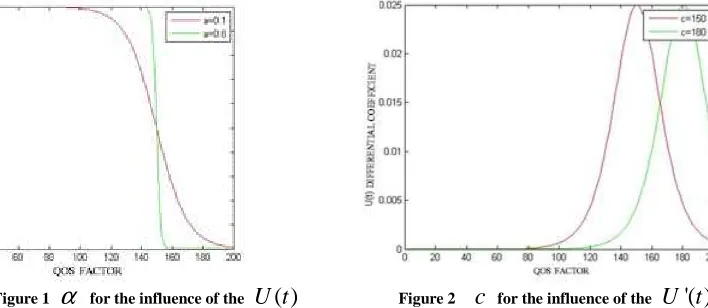
(3) Among them,α
shows the tilt of function, and its value represents the sensitive degree of utility function on QoS requirements;c
shows a turning point of function, and its value can tolerate maximum QoS on behalf of the business. [image:3.595.149.503.150.304.2]
Figure 1
α
for the influence of theU t
( )
Figure 2c
for the influence of theU t
'( )
From figure 1, it shows that the larger is in the value of
α
, and the faster is in change when utility function in the QoS factors is close to the biggest business of QoS threshold, which can make the business scheduling priority increased dramatically, to ensure the business QoS demand;From figure 2, it shows that the larger is the right of extreme value point of the value curve, the larger is in the maximum tolerable by QoS, which is easier to guarantee the QoS of the business needs.
In this paper, based on the above reasons (PF - A) algorithm, PF - A algorithm of scheduling priority is defined as:
[ ]
arg max (
,
)
arg max ( (
'( ),
'( ),...,
'( )),
),
1, 2,...,
i i
i
i i i
i
p i
f QoS CSI
r
f
U
t U
d
U
c
i
N
R
=
=
Π
=
(4)i
r
as the instantaneous channel signal-to-noise ratio of the channeli
,R
i as the average throughput of thebusiness.
U
i'( )
x
as the derivative ofU x
i( )
,i
QoS
for the QoS requirements of the corresponding businesi
,(
U
i'( ),
t U
i'( ),...,
d
U
i'( ))
c
Π
the product of the QoS factors account for the businessi
。In this paper, PF - A algorithm considering the business delay and packet loss rate and other QoS factors influence on task scheduling, task scheduling priority values related to service quality utility function, the channel state. Finally update expressions of formula (4) was as a priority. At the time delay and packet loss rate is close to the maximum QoS value, the corresponding task scheduling priority has increased dramatically, so as to ensure the QoS requirements of the business. To sum up, this paper proposes the PF - A job scheduling algorithm steps are as follows:
(1) Business will sent generate data to the respective buffer, and change the scheduling priority of the business
1
[ ]
P i
N
=
;(2) according to the real-time channel SNR, formula (2)、formula (3)respectively update business
r
i、R
i、U t
'( )
(3) According to the formula (4) calculating scheduling priority of the business, according to the formula (5) calculating the largest scheduling priority, and according to the descending order;(4) Scheduling priority of the largest business in turn until after the allocation of resources; (5) repeat steps (2) to (4), until the schedule is complete.
3 Simulation and analysis
business is composed of sudden periods and the quiet period in wireless network, which QoS factors is less than 300 ms for time delay and packet loss rate is less than 3%. So, this article proposed in the utility function
U t
'( )
=300
i
c
,i
=
1, 2,...,
N
,in the packet loss rate of the utility functionU d
'( )
=0.03
i
c
,i
=
1, 2,...,
N
。 and breaking period can produce 9.3 KBPS voice data at the same time, but silence does not produce data [8]. Based on the literature [8], sudden period and quiet period are expressed with two state markov process, which they are independent and the conversion process obey the exponential distribution at the same time, rate parameters of [image:4.595.149.471.179.280.2]a
=2.841, respectively,b
=1.538.Figure 3 VoIP business model
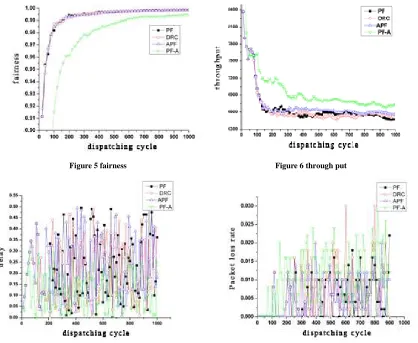
[image:4.595.126.487.370.494.2]The instability of the wireless channel will bring transmission delay and delay jitter. To make it easier to measure the time delay, the wireless channel model is with FSMC channel. FSMC channel state is only allowed in the adjacent state transitions.
S
0
for no channel noise,S
1
for channel noise stronger state,S
2
strongest state to channel noise. Based on literature [8] = 0.09, = 0.3.Figure 4 wireless channel model
In order to verify the advantages of PF - A algorithm in real-time business service (VoIP service) in this paper, the PF algorithm and PF - A algorithm based on service quality utility function are comparison the performance in 5 aspects of the overall performance from fairness, system throughput, delay, packet loss rate, and the scheduling algorithm
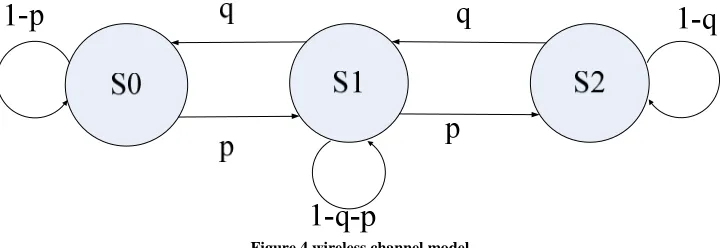
Figure 5, figure 6 and figure 7 and figure 8 statistics of several scheduling algorithm of fairness, throughput, delay and packet loss rate.
Figure 5 shows when the scheduling period is more than 100, FA values are greater than 0.9, which shows that fairness is of PF - A algorithm is acceptable, although slightly smaller than other PF algorithm.
Figure 6 shows that PF - A throughput is higher than PF algorithm, PF - A system throughput increase 3.7% of the algorithm.
Figure 7 shows that PF, DRC, APF three algorithms can not meet the requirement of the VoIP minimum delay (300 ms), and the maximum delay of PF - A algorithm is less than 300 ms, meeting the demand of VoIP business the minimum delay. It proves that PF - A algorithm suitable for VoIP business with delay limit.
Figure 5 fairness Figure 6 through put
Figure 7 time delay Figure 8 packet loss probability
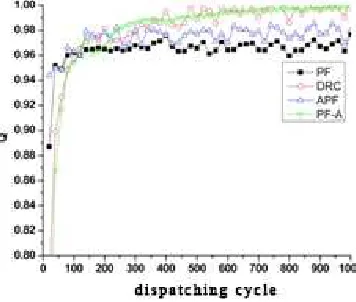
Although through the above experiments demonstrated that PF -a algorithm is suitable for the specific QoS requirements of VoIP business, the algorithm is at the expense of the system's fairness and packet loss rate. The same as the improved algorithm, the QoS optimization goal is better than the original algorithm, but in other ways worse than the original algorithm. So, this paper introduce parameter Q to represent the overall performance of the scheduling algorithm, and through the analytic hierarchy process (AHP) to find the reasonable optimum value, direct description so as to achieve the purpose of scheduling algorithm performance.
In order to better describe the overall performance of the scheduling algorithm, this paper defines:
( *
delay*
i*
i)
Q
=
∑
a T
+
b C
+
c FA
(8)Q
as the overall performance of the scheduling algorithm,delay
T
as the business time delay,i
C
as the systemthroughput,
i
FA
as system tables fairness,a
、b
、c
as weight coefficient。In this paper, the AHP is applied to the optimal solution, the steps are as follows:
(1) according to the demand of the actual system, the most important is the influence of time delay of the system, so the time delay of importance to 1; Secondly, attaches great importance to the throughput, the throughput of importance for 3; Finally, it is fairness, fairness of importance for 5.
(2)To construct judgment matrix, 1 3 5
1 5
1
3 3
1 3
1
5 5
A
=
(3)To calculate weight business:
a
=0.6522,,b
= 0.2174,c
= 0.1304。(4)Consistency check i.To calculate
CI
:CI
=0 ⅱ. To findRI
:RI
=0.58ⅲ. To calculate
CR
:CR
==CI
RI
=0,
CR
< 0.10,So the consistency of judgment matrix is reasonable, the weight coefficients of the business is acceptable. [image:6.595.216.394.250.401.2](5) Computing algorithm the overall performance Q
Figure 9 shows the algorithm overall performance curve, from which, the overall performance of the proposed PF - A algorithm parameters Q than PF and APF algorithm and fairly with the DCR method, but stability than DCR algorithm.
Figure 9 Algorithm performance
CONCLUSION
This paper proposes a PF - A algorithm based on service quality of the utility function, and the simulation results show that the algorithm can meet the VoIP business through the utility function to solve time delay and packet loss rate, the specific QoS requirements such as algorithm. Of course, the algorithm is also at the expense of the other properties such as part of the equity. The examples show that the PF - A algorithm through custom optimal solutions, can look for QoS satisfaction with the best compromise between system losses.
Acknowledgements
This study is subsidized by (Guangxi10124001A-48) Scientific and Technological Development Guidance Plan,
And It is also subsidized by Guangxi Medical University Teach Reform Plan(2012XJGW07)
REFERENCES
[1]Dongfeng Yuan; Haixia Zhang; Yanbo Ma. Wireless communication cross-layer design: from theory to application, People's posts and telecommunications publishing house, BeiJing,2010:95-97.
[2]Yuhui Zeng; Guangxi Zhu; Weimin Wu. Journal of Chinese Computer Systems, 2012,33(5):1018-1022. [3] Chen Lei and Lu Jun. Research on QoS service—based PF scheduling algorithm for LTE systems. STU DY ON OPTICAL COM M UNICATIONS, 2012,173(5):64-67.
[4] Xian Yong-ju , Tian Feng-chun ,and Xu Chang-biao , et al. The Journal of China Universities of Posts and
Telecommunications,2011,18(4):82-88.
[5] Driouch, E. IEEE Transactions on ,2012,61(2):521-532.
[6]Feng Hui-fang ,Zhao Liang ,and Chen Yuan-yuan . Application Research of Computers, 2012,2013(1):60-65. [7] Hu Ying ,Huang Yong-ming ,and Yu Fei .Energy-efficient Optimization Based User Schedule and Resource Allocation Algorithm, Journal of Electronics & Information Technology, 2012,34(8):1950-1955.
[8] Marques, A. G.;Lopez-Ramos, and L. M.;Giannakis, G. B.. IEEE Transactions on Vehicular Technology,