Full Length Research Article
STUDIES ON DNA CLEAVAGE, ANTIMICROBIAL SCREENING AND ANTICANCER ACTIVITY
OF Zr(IV) AND Th(IV) METAL COMPLEXES OF DFMPM AND GLYCINE
1
Gnana Glory Kanmoni V.,
*2Isac Sobana Raj C. and
3Blessy, C.
1
Department of Chemistry and Research, Womens Christian College, Nagercoil-629003, India
2
Department of Chemistry and Research, N.M. Christian College, Marthandam-629165, India
2
Research Scholar Department of Chemistry and Research, N.M. Christian college, Marthandam-629165,
ARTICLE INFO ABSTRACT
The Zr(IV) and Th(IV) Schiff base complexs with di- -formylmethoxybis(3-pentadecenylphenyl)methane (DFMPM) and glycine were synthesized and characterized by elemental analysis, conductivity measurements, electronic, IR, 1HNMR spectral measurements, Powder XRD and SEM. The conductance measurements indicate that all the complexes are non electrolytes. Infrared spectra indicate the coordination of imino nitrogen and carboxylato oxygen. The electronic 1HNMR spectral results indicate that both Zr(IV) and Th(IV) ions are octacoordinated and ligand is tetradentate. The Zr(IV) and Th(IV) complexes have better antimicrobial activity, DNA cleavage ability and anticancer activity.
Copyright© 2017, Gnana Glory Kanmoni et al. This is an open access article distributed under the Creative Commons Attribution License, which permits unrestricted use, distribution, and reproduction in any medium, provided the original work is properly cited.
INTRODUCTION
Schiff bases are useful chelators because of their ease of preparation, structural varieties, varied denticities and subtle steric and electronic control on their framework (Qin W et al., 2013, Kumar S et al., 2013, Katwal R et al., 2013, Pattanaik S et al., 2011, Malik S et al., 2011). Recently a great deal of interest have developed in the synthesis and characterization of transition metal complexes containing Schiff bases as ligands due to their applications as catalysts for many reactions and relation to synthetic and natural oxygen carriers. The biocidal effect of Schiff bases as well as its metal complexes is of interest due to their pharmacological activities (Bakir M et al., 2009, Emam SM et al., 2009, Sumathi S et al., 2011, Tharmaraj P et al., 2009). Keeping the above facts in mind and in continuation of our recent work (Issa M et al., 2009, Sheela CD et al., 2010, Agwara MO et al., 2010, Pandey VK
et al., 2010, Sharma AK et al.,2011, Subramanian P et al., 2013) on Schiff bases and their metal complexes, in our present endeavour, we have chosen to synthesis of a Schiff base and its Zr(IV) and Th(IV) metal complexes.
*Corresponding author:Isac Sobana Raj C.,
Department of Chemistry and Research, N.M. Christian College, Marthandam-629165, India.
The ligand and its metal complexes were also screened for in vitro antimicrobial activity, DNA cleavage and anticancer activity.
MATERIALS AND PHYSICAL MEASUREMENTS
Cardanol was obtained from M/S Satya Cashew, Chennai, India. Formaldehyde (37% solution) hydrochloric acid, epichlorohydrin, glycine, sodium hydroxide and other chemicals used were of AR grade quality obtained from Merk Chemicals. All the solvent used was purified by standard methods. The micro analytical data (C, H, N) were collected using Perkin Elmer 2400 instrument. The metal ion intake were estimated by standard methods. IR spectra were obtained using PE IR spectrum instrument model: system 2000. 1HNMR spectra were obtained using AMX–300 MHz, FT NMR Spectrometer. Conductance measurements were obtained using systronics–305 conductivity meter. Electronic spectra of the ligands and its complexes was obtained using Perkins Elmer Lamda–25 UV-visible spectrometer in the range of 200-1100 nm. Surface morphological studies was obtained using JSM–5610 scanning electron microscope.
ISSN: 2230-9926
International Journal of Development Research
Vol. 07, Issue, 06, pp.13073-13079, June,2017
DEVELOPMENT RESEARCH
Article History:
Received 24th March, 2017 Received in revised form 19th April, 2017 Accepted 07th May, 2017 Published online 16th June, 2017
Key Words:
DFMPM, Glycine,
Synthesis
Synthesis of bis(3-pentadecenyl) phenylmethane (BPPM), diglycidylether of bis (3-pentadecenylphenyl) methane (DEBPPM), di-formylmethoxybis (3-pentadecenyl) methane(DFMPM) were prepared as per the earlier methods (Isac Sobana Raj C et al (2016 ) a). Synthesis of Schiff base ligands with DFMPM and glycine. The synthesis of Schiff base ligand was carried out by reported methods (Isac Sobana Raj C et al (2016) b). Ethanolic solution of DFMPM and glycine in ethanol containing KOH were taken in RB flask in 1:2 molar ratios and refluxed for an hour. The reaction mixture was poured in ice, an yellow compound of Schiff base ligands was obtained (Scheme 1). The precipitated yellow compound was filtered, washed with water and dried over anhydrous calcium chloride. The crude sample was recrystalised from 50% absolute alcohol. Yield = 61% Melting point = 229oC.
Synthesis of Schiff base metal complexes
The metal complexes were prepared by adding aqueous solution of Zr(IV) nitrate and Th(IV) nitrate to the ligand in ethanol in 1:1 molar ratio and refluxed for about twelve hours at 80oC. (Isac Sobana Raj C et al (2016) c) The precipitated solids were filtered, washed with ethanol, diethyl ether and hot water and finally dried under vacuum at 90oC. Yield = 61 – 67%.
RESULTS AND DISCUSSION
All the metal complexes are coloured solids, stable towards air and have high melting points (above 250oC). The complexes are insoluble in water and common organic solvents, but are soluble in DMF, CDCl3 and DMSO.
Elemental Analysis
The analytical data suggest that all the complexes are mono nuclear with the ligands coordinated to the central metal atom. The metal to ligand ratio in all complexes was 1 : 1 and their formulae have been computed and given in Table 1.
Molar conductivities of solution of the complexes in DMF are shown in Table 1. All the complexes are non – electrolytes because their conductivity values were low. However, the conductivity value is higher than expected for non- electrolytes probably due to partial solvolysis of complexes in DMF medium.
IR Spectra
Selected IR Spectral bands for the ligand and its complexes are given in Table 2.
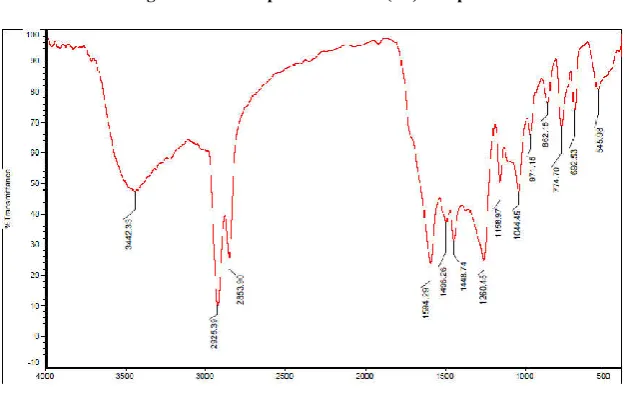
The IR spectrum of the free ligand is characterized mainly by the strong bands at 3009 cm-1, 2926 cm-1, 1596 cm -1, 1452 cm-1 and 1700 cm-1 which are attributed to the stretching frequencies of C - H, O - C, assym COO-, sym coo- and HC = N (azomethine) respectively. The IR Spectrum of the free ligands was compared with the spectra of metal complexes. The characterized absorption bands 3479 cm-1 and 3442 cm-1 range were attributed to -OH group of the lattice water or the coordinated water. The absorption bands in the range 2925 cm-1 and 2925 cm-1 were assigned to stretching frequencies of C-H. The absorption bands in the range 2854 cm-1and 2853 cm-1 were assigned to stretching frequencies of O-C group. The absorption bands in the range. 1595cm-1, 1594cm-1 and 1420 cm-1, 1496cm-1, were assigned to asym coo- sym coo- stretching frequencies. The absorption bands in the range 1690 cm-1, and 1690 cm-1 were assigned to HC = N stretching frequencies. The imine peak in the metal complexes showed change in shifts compared to the ligand indicating coordination of the imine nitrogen atom to the metal ion due to coordination. Another absorption bands at 774 cm-1 and 774 cm-1 is assigned to M-N bond and 417 cm-1& 545 cm-1 is assigned M - O bonds.
1H NMR Spectra
On examining the 1HNMR spectrum of ligand ( Fig 4) it exhibited a multiplet signal at = 7.16 ppm - 7.18 ppm for aromatic protons. The presence of HC = N group is indicated by the singlet at = 7.2 ppm. Signals at = 6. 73 ppm - 6.78 ppm, = 4. 10 ppm - 4.17 ppm, 3.32 ppm - 3.39 ppm and 1.2 ppm - 2 ppm indicate the presence of olefinic, - CH2-COO, O - CH2 and -CH2- protons. The 1HNMR spectrum of Th(IV) complex( Fig 5) gave the signals for aromatic protons ( = 7. 2 ppm - 7.5 ppm, olefinic protons ( = 4. 12 ppm - 4. 16 ppm ), - O CH2 - proton ( = 3.4 ppm ) - CH2 - protons ( = 1.2 ppm - 2 ppm ) and CH = N protons ( = 7. 7 ppm ). There is a down field shift of imine proton after complex formation than in the ligand. Thus 1H NMR study also confirmed the structural information of both ligand and its complexes.
V - Visible Spectra
The UV - visible spectra are often very helpful in the evaluation of results furnished by other methods of structural investigation. The ligands showed a broad band at 239 nm which is assigned to * transition of the C = N chromophore (Rajasekar K etal., 2013 ,Mohanambal D et al., 2014). On complexation this band was shifted to the lower wavelength suggesting the coordination of imine nitrogen with central metal ion.
Table 1. Physical characteristics and analytical data of the complexes
Compound Yield % Colour Mol. formula Mol.wt MPoC Elemental Analysis Molar conductance
ohm-1cm2 mol-1
C H N
C51H76N2O6 61 Yellow C51H76N2O6 812 228 75.1 (75.3) 9.2 (9.3) 3.3 (3.4) -
ZrL(NO3)2 (H2O)2 67 brown ZrC51H80N4 O14 1063.2 > 259 57.5 (57.6) 7.1 (7.5) 5.1 (5.2) 11
ThL(NO3)2 (H2O) 2 65 brown Th C51H80N4 O14 1204 > 250 50.5 (50.8) 6.5 (6.6) 4.5 (4.5) 12
Table 2. Selected UV and FTIR frequencies (cm–1) of the ligand and complexes
Ligand/ Complex O -H C – H O – C C = N assym COO_
symCOO- M – N M – O max (nm)
C51H76N2O6 3413 3009 2926 1700 1596 1452 - - 239 278 801
The UV absorption spectra of the Zr (IV) and Th (IV) exhibit only one extra highly intensive band in the region on 272 nm & 279 nm which may be due to charge transfer band besides ligand bands. However UV- visible spectra could not provide structural details of these complexes. Zr (IV) has the coordination number of 4, 6, 7 and 8.
Earlier researchers are indicated the coordination number of Th (IV) is also 6, 8 or 10. The Zr (IV) and Th (IV) formed 1 : 1 complexes. Hence the complexes of Zr (IV) and Th (IV) are believed to have the coordination number of 8. The – NO3
[image:3.595.134.467.66.265.2]group is present in the coordination sphere because conductance data showed that the complexes are non–
[image:3.595.137.463.296.488.2]Figure 1. FTIR Spectrum of Schiff base ligand
Figure 2. FTIR Spectrum of Zr (IV) complex
[image:3.595.144.459.509.708.2]electrolytes and NO3 groups were coordinated with the central
Zr (IV) or Th (IV) ion (Lakshmi SS et al., 2011). On the basis of forgoing observation the probable structure of ligand and Zr (IV) and Th (IV) complexes may be presented as follows.Earlier researcher also reported the octa coordination of Zr (IV) and Th (IV) Schiff base complexes (Abdul Wajid etal., 2013, Manjula B et al., 2013, Anand Prakash Mishra etal., 2012),
Scheme 1. Structure of Schiff base ligand
Scheme 2. Structure of Schiff base complexes of Zr (IV) or Th (IV) ions
SEM Analysis
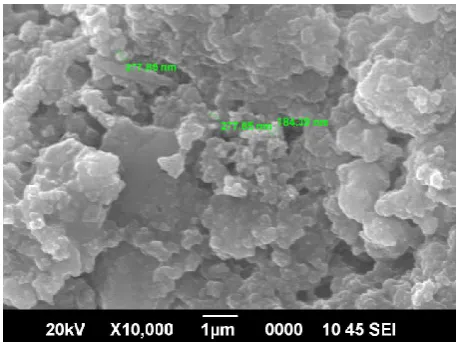
[image:4.595.172.422.58.240.2]Surface morphology of the Zr (V) and Th (IV) complexes in this study are shown in Fig. 6,7. From the fig 6, 7 pitted and rough surface is observed in the complex. The particle sizes of the Zr (IV) and Th (IV) complexes were in the diameter range of few microns. Careful examination of the single crystal, clearly indicated the nano scale size of the single crystal of the complexes (Shakir M,et al., 2011).
[image:4.595.163.432.276.468.2]Figure 6. SEM image of Schiff base complex of Zr (IV) Figure 4. 1HNMR Spectrum of Ligand
[image:4.595.319.548.598.769.2]Figure 7. SEM image of Schiff base complex of Th(IV)
Powder XRD
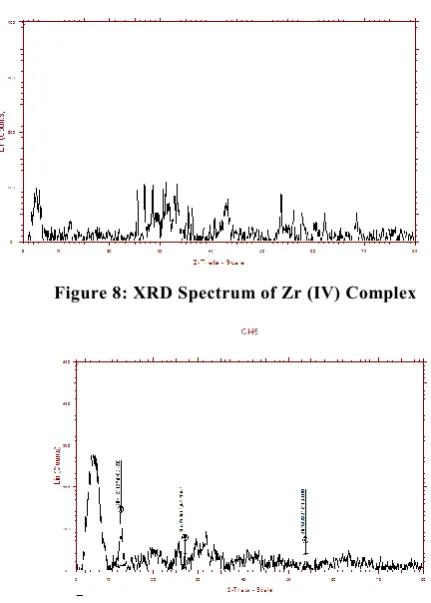
[image:5.595.44.260.370.672.2]Powder XRD patterns of Zr (IV) and Th (IV) complexes recorded in the range (2= 0 – 180o) were shown in Fig 8 and 9. XRD patterns of the metal complexes show the sharp crystalline peaks indicating their crystallite phase. The average crystalline size (dXRD) of the complexes was calculated using Scherrer's formula (Jayaseelan P et al., 2013). The Zr (IV) and Th (IV) complexes have an average crystallite size of 2.85 nm & 1.39 nm.
Figure 8: XRD Spectrum of Zr (IV) Complex
Figure 9. XRD Spectrum of Th (IV) Complex
Antimicrobial Activity
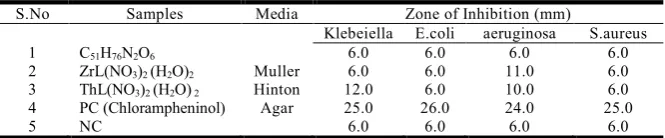
In the present investigation, biological activity of the ligands and their complexes` with Zr (IV) and Th (IV), have been screened for antimicrobial activity against bacteria (Klebsiella sps, E.coli, P.aeruginosa and S. aureus) and fungi (Candida sps and Aspergillus sps) by disc diffusion method.
The concentration for these samples was maintained as 1mg/mL in DMSO. The results thus obtained were explained on the basis of Overtone's concept and Chelation theory (Ramachandran E et al., 2012), Raman N et al., 2011 a.). The mode of action of the compounds may involve formation of a hydrogen bond through the azomethine group with the active centers of cell constituents, resulting in a interference with the normal cell process (Singh S et al., 2013). The variation in the activity of different complexes against different organisms depends either on impermeability of the cells of the microbes or difference in ribosome of microbial cell. A composition of the biological activity of the synthesized compounds with some known antibiotics (Chloramphenicol and Nystatin is presented in Table.3 & 4. It is observed that the Schiff base metal complexes exhibit better activity than the corresponding ligand.
DNA Cleavage Studies
The DNA cleavage activities of Schiff base ligand and its metal complexes at a 1 M concentration were studied using pUC18 DNA (2g) in H2O2 (10 L) in 30 mM Tris Buffer
(pH-7.4) and upon irradiation with uv light. The reaction is modulated by metallo complexes bound hydroxyl radical or a peroxo species generated from the co-reactant H2O2. It is
evident from Fig.9, that the Zr (IV) and Th (IV) complex cleave DNA more efficiently in the presence of an oxidant than the ligand. This may be hydroxyl free radicals, which can be produced by metal ions reacting with H2O2 to produce the diffusible hydroxyl radical or molecular oxygen, which may damage DNA through Fenton type Chemistry. This hydroxyl radical participates in the oxidation of the deoxyribose moiety, followed by hydrolytic cleavage of sugar - phosphate back bone(Raman N et al.,2011 a, Raman N et al.,2011 b, Ramachandran E et al., 2012). . Further, the presence of a smear in the gel diagram indicated the presence of radical cleavage.
Figure 9. Gel electrophoresis diagram of the Schiff base metal complexes
Lane 1: Control DNA Lane 2: Marker
Lane 3: DNA + L + H2O2
Lane 4: DNA + [ZrL(NO3)2 (H2O)2] + H2O2
Lane 5: DNA + [ThL(NO3)2 (H2O)2] + H2O2
Anticancer Activity
The result of anticancer activities are presented in Table 5 & 6. The colon carcinoma (HT-20) cells, were sensitive to the Th(IV) complex with an IC50 value of 80.06 M. The
[image:5.595.343.526.486.609.2]a)Th (IV) Complex at 25 M
b) Th (IV) Complex at 50 M
c)Th (IV) Complex at 100 M
Figure 10. Microscopic observation of anticancer activity
It seems that changing the anion, coordination sites, and the nature of the metal ion has a pronounced effect on the biological behavior by altering the binding ability of DNA. Gaetke and Chow had reported that metal has been suggested to facilitate oxidative tissue injury through a free radical mediated pathway analogous to the Fenton reaction. (Fig. 10 a, b and c). Schiff base complexes of Zr(IV) and Th(IV) were synthesized from DFMPM using glycine were clearly described and characterized on the basis of analytical and spectral data. The SEM & XRD analysis indicate that the crystals of Schiff base metal complexes are nano crystalline in nature. Anti microbial study showed that the complexes have higher anti microbial activity than the ligand. The DNA cleavage studies show that the Zr(IV) and Th(IV) complexes cleave DNA more efficiently. The in-vitro anti cancer studies reveal that the Th(IV) complex had better anticancer activity against HT-29(colon carcinoma) cell with IC50 value of 80.06
µM.
Acknowledgement
The authors are thankful to the department of Chemistry and Research Nesamony Memorial Christian college, Marthandam, K.K. dist for the facilities provided, STIC, Cochin -22 for recording the various spectra and Inbiotics, Nagercoil for analyzing biological activities.
REFERENCES
Abdul Wajid , Mohod RB 2013. Synthesis of aminoacid based Schiff base and it complexes as microbial growth inhibitors. Rasayan J. Chem.6(4) 84-287.
Agwara MO, Ndifon PT, Ndosiri NB, Paboundam AG, Yufanyi DM, Mohamadou A 2010. Synthesis, characterisation and antimicrobial activities of cobalt(II), copper(II) and zinc(II) mixed – ligand complexes containing 1, 10 – phenanthroline and 2, 2'- bipyridine.
Bulletin of the Chemical Society of Ethiopia. 24(3) pp. 383-389.
[image:6.595.135.468.61.130.2]Anand Prakash Mishra, Herhita purwar Rajendra kumar Jain 2012. Microwave synthesis, spectral, thermal and
Table 3. Antimicrobial activity for Bacteria
S.No Samples Media Zone of Inhibition (mm)
Klebeiella E.coli aeruginosa S.aureus
1 C51H76N2O6 6.0 6.0 6.0 6.0
2 ZrL(NO3)2 (H2O)2 Muller 6.0 6.0 11.0 6.0
3 ThL(NO3)2 (H2O) 2 Hinton 12.0 6.0 10.0 6.0 4 PC (Chlorampheninol) Agar 25.0 26.0 24.0 25.0
5 NC 6.0 6.0 6.0 6.0
Table 4. Antimicrobial Activity for fungi
S.No Samples Media Zone of Inhibition (mm) Candida sps Aspergillus sps
1 C51H76N2O6 6.0 6.0
2 ZrL(NO3)2 (H2O)2 Muller 10.0 6.0
3 Th L (NO3)2 (H2O) 2 Hinton 6.0 10.0
4 PC (Nystatin) Agar 25.0 26.0
5 NC 6.0 6.0
Table 5. % viability of Th(IV) complex
Sample Concentration (µg/ml) Average OD at 570nm Percentage Viability
Control 0.617
6.25 0.607 98.37
12.5 0.591 95.78
25 0.542 87.84
50 0.403 65.31
100 0.230 37.27
antimicrobial activities of Co(II), Ni(II) and Cu(II) metal complexes with Schiff base ligand. Bio interface research. 2: 291-299.
Arjmand F, Parveena S, M. Afzal, L. Toupet and T.B. Hadda 2012. Molecular drug design, synthesis and crystal structure determination of Cull- SnIV heterobimetallic core: DNA binding and cleavage studies. European Journal of Medicinal Chemistry.49: 141-150.
Bakir M, Gyles C 2009.Synthesis characterization and structure of the first rhenium compound of di-2-pyridyl ketone thiophene-2-carboxylic acid hydrazo ne (dpktah), fac-[Re(CO)3(N,N-k2-dpktah)Cl]. Journal of Molecular Structure. 918 (1-3 ) pp. 138-145.
Emam SM, El-Saied FA, Abou El- Enein SA, El-Shater HA 2009. Cobalt(II), nickel(II), copper(II), Zinc(II) and hafnium(IV) complexes of N'- (furan-3-ylmethylene)-2-(4-methoxyphenylamino) acetohydrazide.Spectrochemica Acta Part A. 72(2): pp. 291-297,.
Isac Sobana Raj C a, Blessy C, Allen Gnana Raj G, (2016), Synthesis and Characterization of Bioactive Schiff Base Complexes from Cardanol Int. J. Res. Chem. Environ,6(2),69-77.
Isac Sobana Raj C b, Blessy C, and Allen Gnana Raj. G, 2016. Synthesis, Characterization and Biological evaluation of bidentate ligand with metal ions of Zr(IV) & Th(IV), Journal of Chemical and Pharmaceutical Research, 8(6),372-379.
Isac Sobana Raj C c, Blessy C, Allen Gnana Raj G. 2016. Synthesis characterisation and Biological Activities of Co(II), Ni(II) & Cu(II) Complexes with DFMPM and glycine Der.Pharma.Chemica. 8(18) 364-373.
Issa M, Azim A, Khedr M, Draz F 2009. Synthesis, characterization, thermal, and antimicrobial studies of binuclear metal complexes of sulfa-guanidine Schiff bases.Journal of Coordination Chemistry. 62: 1859-1870. Jayaseelan P, Akila E, Usharani M, Rajavel R. 2013.
Synthesis,spectral characterization, electrochemical, anti- microbial, DNA binding and cleavage studies of new binuclear metal complexes derived from o- hyroxyacetophenone. J Saudi Chem Soc.
Katwal R, Kaura H, and Kapur BK 2013. Applications of copper-Schiff's base complexes: a review. Scientific Reviews & Chemical Communications. 3(1) pp. 1-15. Kumar S, Dhar D.N and Saxena PN 2013. Applications of
metal complexes of Schiff bases – a review.Journal of Scientific and Industrial Research. 68(3) pp. 181-187. Lakshmi SS, Tajudeen S, Geetha K 2011. Studies on
antimicrobial activities of Schiff base complex derived from dapsone. J. Pharm. Res. 4(5): 1531-1532
Malik S, Ghosh S Mithu L 2011. Complexes of some 3d- metals with a Schiff base derived from 5- acetamido- 1, 3, 4-thiadiazole-2- Sulphonamide and their biological activity. Journal of the Serbian Chemical Society. 76(10) pp. 1387-1394.
Manjula B, Arul Antony S, Arul Antony S 2013. Studies on DNA Cleavage and Antimicrobial screening of Transition Metal complexes of 4- aminoantiphrine Schiffbase.
Research Journal of Chemical Sciences.3 (12) pp. 22-28. Mohanambal D, and Arulantony S 2014. Synthesis, Spectral
Characterisation And Antimicrobial Activities of Cu(II), Co(II), Cr(III), Complexes Derived from 4- Aminoantipyrine And Dihydropyrimidinone of Benzaldehyde. Int J Pharm Bio Sci.5(3) pp. 600-611 Pandey VK, Tulsi S, Misra R, Shukla R 2010. A che mical
strategy for the construction of quinoline isoquinoline
core units.Indian Journal of Chemistry B, 49(1) pp.107-111.
Pattanaik S, Rout SS, Panda J, Sahu PK, Banerjee M 2011. Synthesis, characterisation and biological evaluation of bedentate ligands (Reduced Schiff's Base) with metals of copper, nickel and zinc complexes, Rasayan Journal of Chemistry, 4(1) pp. 136-141.
Qin W, Long S, Panunzio M, and Stefano B (2013). Schiff bases: a short survey on an evergreen chemistry tool,
Molecules, 18(10) pp. 12264-12289,
Rajasekar K, and Ramachandramoorthy T 2013 Synthesis, Spectral Characterization and Biological Activities of Cr (III), Co (II), Ni (II) and Cd (II) Complexes with 4- aminoantipyrine and Thiocyanate Ion As Ligands, Int J Pharm Bio Sci, 4(2): 271-276
Ramachandran E, Kalaivani P. Prabhakaran R, Zeller M, Bartlett JH, Adero PO, Wagner R, Natarajan K 2012. Synthesis, characterization, crystal structure and DNA binding studies of Pd(II) complexes containing thiosemicarbazone and triphenylphosphine/ triphenylarsine InorganicaChemical Acta, 385 pp. 94-99. Raman N, Pothiraj K, Baskaran T, 2011 DNA binding, oxidative DNA cleavage, and coordination mode of later 3d transition metal complexes of a Schiff base derived from isatin as antimicrobial agents, J. Coor. Chem., 64 pp. 3900-3917.
Raman N, Selvan A, Sudharsan S 2011. Metallation of ethylenediamine based Schiff base with biologically active Cu(II), Ni(II) and Zn(II) ions: Synthesis, spectroscopic characterization, electrochemical behaviour, DNA binding, photonuclease activity and in vitro antimicrobial efficacy. Spectrochim. Acta. 70: 873-883 Shakir M, Azam M, Ullah MF, Hadi SM 2011. Synthesis,
spectroscopic and electrochemical studies of N, N-bis[(E)-2- thienylmethylidene]-1,8- naphthalenediamine and its Cu(II) complex:DNA cleavage and generation of superoxide anio n. J. Photochem. Photobiol. 104:449-456. Sharma AK, Chandra S 2011. Complexation of nitrogen and
sulphur donor Schiff's base ligand to Cr(III) and NI(II) metal ions: synthesis, spectroscopic and antipathogenic studies, Spectrochimica Acta A, 78 (1) pp. 337-342. Sheela CD, Anitha C, Tharmaraj P, Kodimunthri D 2010.
Synthesis, spectral characterization, and antimicrobial studies of metal complexes of the Schiff base derived from [4-amino-N-guanylbenzene sulfonamide] and salicylaldehyde, Journal of Coordination Chemistry,63( 5), pp. 884-893.
Singh S, Yadav HS, Yadava AK, Rao DP 2013. Synthesis of Oxovanadium (IV) Complexes with Tetraaza Coordinating Ligands, pp. 1-5
Subramanian P, and Sakunthala M 2013. Antibacterial activities of new Schiff base metal complexes synthesised from 2-hydroxyl-1-Naphthaldehyde and 5-amino-1-naphthol, World journal of pharmacy and pharmaceutical sciences, 2(5): 2753-2764.
Sumathi S, Tharmaraj P, Sheela CD, Ebenezer R 2011. Synthesis, spectral, bioactivity, and NLO properties of chalcone metal complexes, Journal of Coordination Chemistry, 64(10) pp. 1707-1717.
Tharmaraj P, Kodimunthiri D, Sheela CD, Shanmuga Priya CS 2009. Synthesis, spectral Characterization, and antimicrobial activity of copper (II), Cobalt(II), and nickel(II) complexes of 3-formylchromonimi nopropylsilatrane, journal of Coordination Chemistry, 62 ( 13) pp. 2220 – 2228.