Comprehending Indigenous Knowledge:
An Ethnographic Study of Knowledge Processes within
Natural Resource Management
Amare Desta
Information Systems and Innovation Group
Department of Management
London School of Economics
Submitted for the degree of Doctor of Philosophy
UMI Number: U61529B
All rights reserved
INFORMATION TO ALL USERS
The quality of this reproduction is dependent upon the quality of the copy submitted.
In the unlikely event that the author did not send a complete manuscript and there are missing pages, these will be noted. Also, if material had to be removed,
a note will indicate the deletion.
Dissertation Publishing
UMI U615293
Published by ProQuest LLC 2014. Copyright in the Dissertation held by the Author. Microform Edition © ProQuest LLC.
All rights reserved. This work is protected against unauthorized copying under Title 17, United States Code.
ProQuest LLC
789 East Eisenhower Parkway P.O. Box 1346
ABSTRACT
This study explores the phenomenon o f indigenous knowledge within Ethiopia against a
background o f increasing concern for the sustainability o f natural resources. A review of
the indigenous knowledge, information systems and innovation studies literature finds
little in the way o f relevant theories and hence the study applies concepts from
knowledge management. In particular, it takes the notions o f tacit knowledge and
knowledge processes and applies them in the context o f indigenous knowledge
concerning natural resource management. It combines existing knowledge process
frameworks with stakeholder analysis to produce a robust conceptual tool to explore
systems o f indigenous knowledge.
The research uses an ethnographic approach to studying an indigenous community in
Debre Berhan, Ethiopia. The four-month fieldwork produced extensive data concerning
indigenous knowledge within the community and the interface with scientific
knowledge. It also shows the ingenuity and extent o f local innovation by the villagers in
an effort to solve local problems with local solutions.
Using the conceptual framework, developed in the first part o f the study, the data is
analysed with reference to knowledge processes and the four main stakeholder groups:
the indigenous farmers, the government, research institutions and local non
governmental organisations. This analysis clarifies the existing roles o f the stakeholders
and leads to a new conceptualisation o f indigenous knowledge, and the knowledge
transfers between the indigenous and scientific communities, in terms o f systems of
knowledge processes. The implications o f this model are considered within the light of
Acknowledgements
Before I begin, I would like to reflect upon the past few years working with this doctoral
dissertation and thank those who have helped me along the way. Without them, this
small victory in my life would more likely have been a small nervous breakdown. At the
very top o f my list is my supervisor, Dr Steve Smithson. Steve must have spent the past
several months in a constant state o f reading and editing.
His comments and insights have been invaluable, and I can’t thank him enough for his
patience, commitment, and ability to always be positive. In some small way, however, I
hope that this thesis will be able to say thank you Steve for everything. I would also like
to thank Prof. Ray Paul for his guidance and his kind assistance; Dr Shirin Madon and
Dr Edgar Whitely for their advice and inspiring comments.
I must also thank my dearest wife, Tsehay, for her patient acceptance o f less than my
50% contribution to our partnership in the last few years. This would have been a
grueling experience without her support & understanding. In so many ways, this thesis
exists because my family exists. This thesis also exists because o f my beautiful children,
Million & Helena whose love & laughter grounded me throughout my doctoral study
My families back in Ethiopia (Abebu, Tegu, Assegu, Assefuye, Mebru and Lily) have
been a source o f pride and encouragement. My late parents raised me with integrity and
a strong self which helped me to conceptualize life as a process where reinvention is
possible, and resilience a requirement. I therefore spent most o f my adult life thanking
them, but words really can’t express my admirations.
This ethnographic research exacts a toll and I am extremely grateful to so many people
that participated in this study by sharing their experiences, insights and providing free
information. Obviously their unreserved cooperation made this dissertation possible.
The success in completing this doctoral research should be attributed to the memory of my loving parents who have passed away before their time
Table of contents
Page No
Abstract... 2
Acknowledgments... 3
Table o f Contents... 4
List o f Tables... 8
List o f Figures... 9
List o f A cronym s... 10
Glossary... 12
C h ap ter 1 - In tro d u ctio n ... 13
1.1 Introduction and research aim... 13
1.2 Intentions o f research... 15
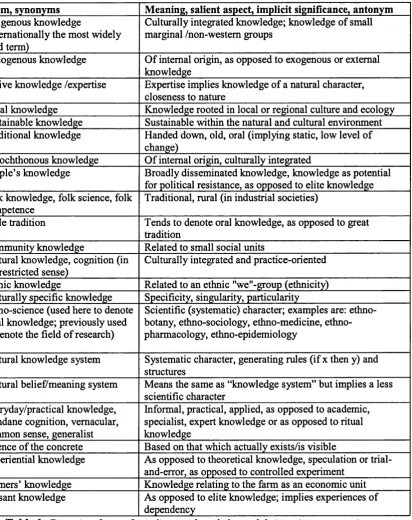
1.3 Explaining and defining indigenous knowledge... 15
1.4 The Country: Ethiopia - brief introduction... 16
1.5 Debre Berhan, Ethiopia - locating the research site... 20
1.6 Problematizing the natural resource base in Ethiopia... 30
C h ap ter 2 - L iteratu re Review... 37
2.1 Natural Resource Management (N R M )... 37
2.1.1 Sustainable natural resources... 39
2.1.2 Emergence o f NRM issues... 41
2.2 Indigenous knowledge... 42
2.2.1 Introduction... 42
2.2.2 IK for sustainable NR m anagem ent... 49
2.2.3 The dangers o f disregarding IK systems... 54
2.2.4 Preservation o f IK... 55
2.2.5 Challenges and Limitations o f IK ...58
2.2.6 Importance o f researching IK ... 60
2.2.7 Indigenous knowledge and information systems... 62
2.2.8 IK in the context o f knowledge management... 64
Summary 12
C h ap ter 3 - Conceptual F ram ew o rk ... 74
3.1 Introduction...74
3.2 Selecting a theoretical approach...74
3.3 Indigenous knowledge and knowledge processes... 76
3.3.1 Tacit and explicit knowledge...76
3.3.2 Selecting a framework...78
3.3.3 Knowledge Creation...81
3.3.4 Knowledge Capture... 84
3.3.5 Knowledge storage and retrieval... 85
3.3.6 Knowledge transfer... 86
3.3.7 Knowledge application...89
3.4 Stakeholder analysis... 91
3.4.1 Operationalisation o f stakeholder analysis... 95
3.4.2 Indigenous farm ers...96
3.4.3 The government and its development agencies... 98
3.4.4 Agricultural & environmental education institutions... 99
3.4.5 Donors and local/international NGOs... 100
Sum m ary... 101
C hapter 4 - R esearch Methodology and D esign... 103
4.1 Personal context: personal background... 103
4.2 Ethnography... 104
4.2.1 Justifying the ethnographic method for this research... 110
4.3 Research D esig n... I l l 4.3.1 B iases... I l l 4.3.2 Staging the research... 112
4.3.3 Summarizing the sequence... 114
4.3.4 Detailing the data collection and analysis procedures... 117
4.3.6 Observing informants interviewing informants... 122
4.3.7 Interpreting, reducing and analysing data... 126
4.3.8 Ethical issues... 128
4.3.9 Limitations o f the study...129
4.3.10 Appraising ethnography and the research design... 129
Sum m ary... 132
C h ap ter 5 - Findings {Part one)... 133
5.1 Introduction... 134
5.2 Local views o f indigenous knowledge... 134
5.3 Examples o f indigenous knowledge... 136
5.3.1 Kebera technique... 136
5.3.2 Doldal technique... 137
5.3.3 Indigenous women & their local innovations... 138
5.3.4 The Endod plant... 140
5.3.5 Groundnut shell manure... 141
5.3.6 Indigenous innovation... 143
5.4 Relevance o f indigenous knowledge... 145
5.5 Indigenous Knowledge and Natural Resource Management...148
5.6 Indigenous knowledge and scientific knowledge... 151
Sum m ary...155
C h ap ter 6 - Findings {Part two) ... 156
6.1 Sharing IK ... 156
6.2 Achieving indigenous involvement and IK... 157
6.3 Linking indigenous knowledge and IT ... 158
6.4 Communicating IK among the main stakeholders... 163
6.5 Documenting IK using audio video technology... 166
6.6 Promoting the integration and dissemination o f IK... 171
6.7 Capturing IK ... 176
6.9 Nurturing natural resources... 178
6.10 Communicating research results to indigenous communities... 181
6.11 Indigenous people as partners in knowledge development...184
6.12 Limitations/constraints on IK ... 185
C h ap ter 7 - Analysis and Discussion... 189
7.1 Introduction... 189
7.2 Knowledge creation... 189
7.3 Knowledge capture... 192
7.4 Knowledge storage and retrieval...194
7.5 Knowledge transfer... 196
7.6 Knowledge application... 200
7.7 The Stakeholders... 202
7.8 Reflections on the Theory and the Literature... 205
7.9 External Threats... 213
7.10 Indigenous Knowledge as a Knowledge System... 215
7.11 Implications... 217
C h ap ter 8 - C onclusion... 219
8.1 Introduction and summary of the thesis... 219
8.2 Addressing the Research Questions...221
8.3 Contributions... 226
8.3.1 Theoretical contributions... 226
8.3.2 Methodological contribution...228
8.3.3 Practical contribution...229
8.4 Limitations... 231
8.5 Directions for future research...232
List of Tables
Table 1: Diversity o f terms for indigenous knowledge and their various connotations...43
Table 2: Advantages and disadvantages o f Participatory GIS...64
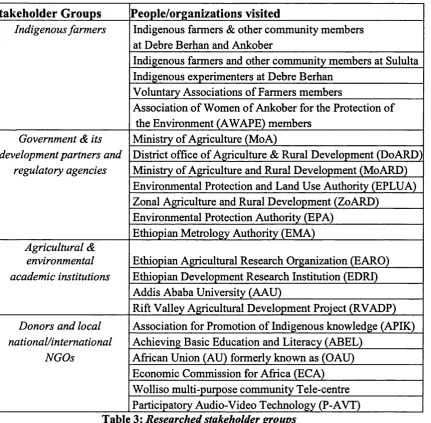
Table 3: Researched stakeholder groups... 118
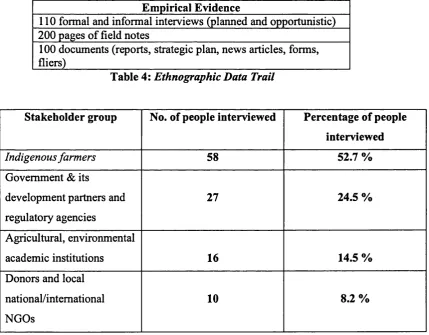
Table 4: Ethnographic Data Trail... 121
Table 5: Breakdown o f the interviews...121
Table 6: Guidelines for Evaluating the Study...130
Table 7: Ethnographic Portrayals...131
List of Figures
Figure I: Map o f Debre Berhan, Ethiopia... 21
Figure 2: Debre Berhan Market - buying/selling pottery & other household items.. 23
Figure 3: Debre Berhan Market - transporting grain & firewood... 26
Figure 4: Debre Berhan - some livestock... 26
Figure 5: Knowledge creation modes... 82
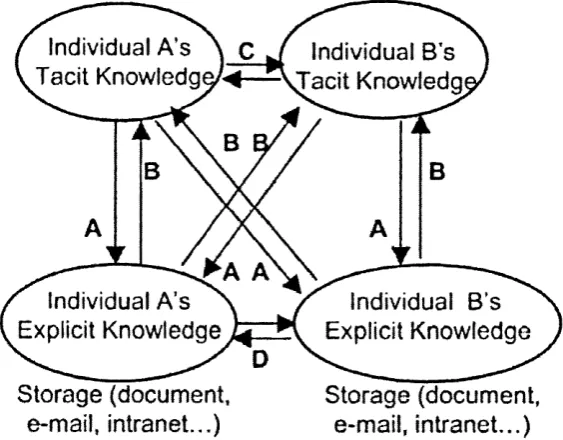
Figure 6: Knowledge transfer among individuals in a g ro u p ... 87
Figure 7: Indigenous knowledge as a system o f processes... 216
[image:12.595.22.426.171.333.2]List of Acronyms
ABEL Achieving Basic Education and Literacy
AEZ Agro Ecology Zone
AHRDA Association for Human Resources Development in Africa
APIK Association for Promotion of Indigenous knowledge (Ethiopian NGO)
ASEPA Association of Sustainable, Ecological and People-Centre Agriculture
AU/OAU African Union (formerly known as (OAU) Organisation of African Unity
AW APE Association of Women of Ankober for the Protection of the Environment
CBWPD Community Based Participatory Watershed Development
CDD Community Driven Development
CEP Community Empowerment Program
CGIAR Consultative Group for International Agricultural Research
DoARD District Office of Agriculture and Rural Development (Ethiopian)
EARO Ethiopian Agricultural Research Organisation
ECA Economic Commission for Africa
EDRI Ethiopian Development Research Institution
EEC European Economic Community
EPLUA Environmental Protection and Land Use Authority
EPA Environmental Protection Authority (Ethiopian)
EPE Environmental Policy of Ethiopia
FAO Food and Agricultural Organisation of the UN
FFW Food For Work (Ethiopian)
GDP Gross Domestic Product
GTZ German Technical Assistance
HLI Higher Learning Institutions
I.Es Indigenous Experimenters (Ethiopian)
ILEIA Information Centre for Low-Extemal-Input Agriculture (The Netherlands)
IFAP International Federation of Agricultural Producers
IK Indigenous Knowledge
ILRI / ILCA International Livestock Research Institute (ILRI) formerly known as (ILCA International Livestock Centre for Africa,
ISWC Indigenous Soil and Water Conservation
LLPPA Local Level Participatory Planning Approach
MDG Millennium Development Goal
MERET Managing Environmental Resources to Enable Transition (Ethiopian)
MoA Ministry of Agriculture (Ethiopian)
MoARD Ministry of Agriculture and Rural Development (Ethiopian)
MoH Ministry of Health (Ethiopian)
NCP Natural Crop Protection (Ethiopian)
NGO/INGO Non-Governmental Organisation /International NGO
NMSA National Metrological Services Agency (Ethiopian)
NPP Natural Plant Protection (Ethiopian)
NRM Natural Resources Management
S-NRM Sustainable Natural Resources Management
OSCA Organization for Security and Cooperation in Africa
P-AVT Participatory Audio-Video Technology
PADETS Participatory Demonstration Extension Training System
PLUP Participatory Natural resources Use Planning
PRA Participatory Rural Assessment
PTD Participatory technology development
RARI Regional Agricultural Research Institutions
RVADP Rift Valley Agricultural Development Project
SCRP Soil Conservation Research Project
SIDA Swedish International Development Agency
SK Scientific Knowledge
S-NRM Sustainable Natural Resources Management
SSA Sub-Saharan Africa
SST Sea Surface Temperatures
SWC Soil and Water Conservation
T&V Training and Visit
UNDP United Nations Development Programme
USAID United States Agency for International Development
VAF Voluntary Associations of Farmers
WG/NFE Working Group on Non-formal Education
Glossary
Amharic the Ethiopian official language
Areke home made alcoholic drink
Ato Mr
Belg short rains (usually fall between January and April)
Debo formal work arrangement between individuals
Dega highland
Derg the former Ethiopian Marxist military government (1974-1991)
Kiremt the main Ethiopian rainy season
Kolia lowland
Lem fertile
Medeb raised fields
Meher long rains (usually lasting from June to the beginning o f September)
Megazo indigenous share cropping arrangement
Teff the staple Ethiopian cereal
Wonfel indigenous work arrangement between neighbours
Woreda district
Chapter 1 - Introduction
1.1 Introduction and research aim
The aim o f this PhD thesis is to investigate the phenomenon o f indigenous knowledge
(IK) within natural resource management (NRM) from an information systems
perspective. This includes the role and status o f IK as it is practised on an everyday
basis. The approach taken is an in-depth ethnographic study o f a community in Debre
Berhan, Ethiopia.
It is believed that the indigenous community there faces a serious natural resource
related dilemma, partly as a result o f the breakdown o f indigenous farming systems,
which is threatening environmental deterioration and widespread poverty in this rural
community. As such, this is a case study representative o f many indigenous
communities in Africa and beyond.
This first chapter provides a brief introduction to the study and to the context, in terms of
the research site at Debre Berhan. It also examines the problem situation, leading to a
formulation o f the research questions that the study attempts to address. The intellectual
starting point is reviewed through the literature on IK in Chapter 2. Most o f the specific
IK literature is descriptive and normative and provides little in the way o f a theoretical
basis.
IK is very rarely touched on within information systems and it is within the literature of
knowledge management where relevant theories and frameworks are found, including
the work o f Polanyi (1967), Nonaka (1994), Blackler (1995) and Alavi & Leidner
(2001). Even here, their work seems to be bounded by the constraints o f a single
organization or industry, with little mention o f community knowledge. Nevertheless, the
work o f the above authors does seem to be sufficiently portable to be transferred to the
field of indigenous knowledge. The literature o f innovation studies is also reviewed but,
again, indigenous innovation within communities is largely ignored, and the macro focus
I decided to focus on the notion o f knowledge processes as these seemed relevant to both
the knowledge management literature and my informal understanding o f indigenous
knowledge within the community o f Debre Berhan. Accordingly, I took the
organizational process framework o f Alavi & Leidner (2001) as my initial conceptual
tool. However, in order to capture the rather different processes apparent within
indigenous knowledge, I combined this with a framework from the World Bank (1998).
In addition, I overlaid this with a stakeholder analysis, in order to capture the roles o f the
various stakeholders operating within the IK system in Debre Berhan. This led to a
modified framework, described in Chapter 3. As indigenous knowledge is largely tacit
(Polanyi, 1967), I adopted B ladder’s (1995) conception o f knowledge as an inter-
subjective process, which also fitted the process framework.
The research design (described in Chapter 4) is based on the ethnographic methodology
and describes how the data was collected during a four-month field research. I have not
attempted to comprehensively review all IK practices related to natural resource
management due to time and resource constraints. However, from my field research, I
was pleasantly surprised to discover that not only does IK exist and is widely practised
but indigenous people actively innovate and create knowledge in order to find local
solutions to local problems.
As shown in the findings (Chapters 5 and 6), I collected a wealth o f information
concerning indigenous knowledge and the way the various stakeholders use it and relate
to it. These chapters describe various examples o f often innovative IK practices. This
chapter is analysed using the knowledge process and stakeholder framework in Chapter
7, which provides an original perspective on indigenous knowledge practices. This leads
on, in the same chapter, to a reconceptualisation o f IK as a system of knowledge
processes. This new model is outlined and its implications are discussed in the light o f
the external threats to the IK system within Debre Berhan. In Chapter 8, I draw some
general conclusions and make recommendations for further research, mostly using the
1.2
Intentions of research
I intend to do three things with my thesis:
i) To meet the academic requirements and also to make a contribution to those who
were the focus o f this research.
ii) To offer my results to all concerned stakeholders, especially: to the Ministry o f
Agriculture (MoA), the Association for the Promotion o f Indigenous knowledge
(APIK), other agricultural and environmental research and education institutions
and their development partners.
iii) To contribute to knowledge about the relevance o f information systems
approaches, like knowledge management, to issues of economic development.
1.3
Explaining and defining indigenous knowledge
As shown in the literature review o f Chapter 2, and argued by writers such as Warren
(1991), indigenous knowledge is broadly speaking the knowledge used by local people
to make a living in a particular environment. Various terms used in the field o f
sustainable development to designate this concept include indigenous technical
knowledge, traditional environmental knowledge, rural knowledge, local knowledge and
farmer's or pastoralist's knowledge.
As Johnson (1992) suggests, IK therefore can be defined as: “A body of knowledge built
up by a group of people through generations o f living in close contact with nature”.
Generally speaking, such knowledge evolves in the local environment, so that it is
specifically adapted to the requirements o f local people and conditions. It is also creative
and experimental, constantly incorporating external influences and internal innovations
to meet new conditions. It is a mistake to think o f IK as ‘old-fashioned’, ‘backward’,
‘static’ or ‘unchanging’.
As Johannes (2002) states, like any other knowledge system, IK ’s information base is
constantly renewed and revised. Unfortunately, the dynamics o f globalisation,
trend is exacerbated by the fact that, like oral history, this knowledge is tacit and not
documented.
The importance o f IK in NRM (World Bank, 1999) is the potential that it offers for self-
sufficiency and self-determination, for at least two reasons:
i) people in the developing nations are familiar with indigenous practices and
technologies. They can understand, handle, and maintain them better than
Western practices and technologies.
ii) IK draws on local resources and the majority o f people are less dependent on
outside supplies, which can be costly, scarce and available only irregularly.
Furthermore, one cannot overlook indigenous knowledge’s ability to provide effective
alternatives to Western know-how. Moreover, IK offers local people and their
development workers further options in designing new projects or addressing specific
problems and wider disasters. Instead o f relying on imported Western technologies,
people in the developing nations can choose from readily available indigenous
knowledge or, where appropriate, combine indigenous and Western technology.
1.4 The Country: Ethiopia -
brief introduction
Ethiopia, located in northeast Africa has, according to the Ethiopian Ministry o f Foreign
Affairs, a population o f 72 million people and a total area o f 437,600 square miles. A
major part o f the Horn o f Africa, Ethiopia is bounded by Sudan in the north and
southwest; Eritrea in the north; Kenya in the south; Somalia in the east; and Djibouti in
the northeast.
The climate is temperate on the plateau and hot in the lowlands. At Addis Ababa, which
ranges from 2,200 to 2,600 meters (7,000 ft.-8,500 ft.), maximum temperature is 26° C
(80° F) and minimum 4° C (40° F). The weather is usually sunny and dry with the short
(belg) rains occurring February-April and the big (meher) rains beginning in mid-June
The people and their history
Ethiopia's population is highly diverse. Most o f its people speak a Semitic or Cushitic
language. The Oromo, Amhara, and Tigreans make up more than three-fourths o f the
population, but there are more than 77 different ethnic groups with their own distinct
languages within Ethiopia. Some o f these have as few as 10,000 members. In general,
most o f the Christians live in the highlands, while Muslims and adherents of traditional
African religions tend to inhabit lowland regions. English is the most widely spoken
foreign language and is taught in all secondary schools. Amharic is the official language
and was the language o f primary school instruction but in recent years it has been
replaced in many areas by local languages such as Oromigna and Tigrigna.
Ethiopia is credited with being the origin o f mankind. Bones discovered in eastern
Ethiopia date back 3.2 million years. Ethiopia is the oldest independent country in Africa
and one o f the oldest in the world (Munro-Hay, 1991; Pankhurst, 2001).
Since 1855, under the Emperors Theodoros II, Johannes IV and Menelik II, the kingdom
was consolidated and began to emerge from its medieval isolation. When Menelik II
died, Ras Tafari Makonnen (commonly known as Haile Selassie), was crowned emperor
in 1930. Haile Selassie’s reign was interrupted in February 1974, and a provisional
administrative council o f soldiers, known as the Derg (‘committee’), seized power and
installed a government, which was socialist in name and military in style (Economist,
2007). Lt. Col. Mengistu Haile Mariam assumed power as head of state and Derg
chairman and communism was officially adopted with the promulgation o f a Soviet-
style constitution (Henze, 2000).
In 1991 the Derg’s collapse was hastened by droughts and famine, as well as by
insurrections, particularly in the northern regions o f Tigray and Eritrea (Henze, 2000). In
1991 the Tigrayan People’s Liberation Front (TPLF) merged with the Oromo Liberation
Front (OLF) and other ethnically based opposition movements to form the Ethiopian
Ababa (Young, 1993). Mengistu fled the country for asylum in Zimbabwe, where he still
lives.
Also in 1991, the Eritrean People's Liberation Front (EPLF), assumed control o f Eritrea
and established a provisional government and two years later in 1993, Eritrea declared
independence. Politically, Ethiopia is now a firm ally o f the United States in its ‘war on
terror’, as can be seen by its intervention in Somalia and allegations o f its participation
in the CIA’s ‘extraordinary rendition’ programme (Economist, 2007).
Ethiopia is the only country in Africa that successfully resisted European colonization
(Economist, 2007), despite the attempt by the Italian forces o f Mussolini. As a result,
Ethiopia has managed to keep her own culture and unique identity. Furthermore,
Ethiopia is the only country where Christianity is defined through the Ark o f the
Covenant. Ethiopia was the first country to provide sanctuary to the followers o f the
Prophet Mohammed. Ethiopia is also the source o f the Blue Nile, the foundation o f life
and civilization to the people o f the Sudan and Egypt for over 5,000 years. Like many
developing countries, Ethiopia is facing the problems o f urbanisation (Economist,
2008b) where the government is trying to slow the pace o f change.
Ethiopia is often seen as the land o f faith with more than 20,000 churches and
monasteries throughout the country. In addition, there are several mosques and Moslem
holy grounds. Ethiopia has nurtured a tradition of rich civilization over a period o f three
thousand years.
Ethiopia’s ancient scriptures, as well as the teachings o f innumerable sayings, proverbs
and sages constitute a profound literature o f ideas, concepts and practices which are
designed to address the process o f building harmonious relationships among man,
animal and nature. This literature is mostly based on IK experiences that have gathered
momentum over generations and are being developed and standardised through
knowledge to the people and managed to produce an effective communication for
activating the process o f refinement in continuum.
The economy
The current government has embarked on economic reform, including privatization of
state enterprises and rationalization o f government regulation. While the process is still
ongoing, the government remains heavily involved in the economy.
The Ethiopian economy is based on agriculture, which contributes 46% to GNP and
more than 80% o f exports, and employs 85% o f the population. The major agricultural
export crop is coffee, providing approximately 35% o f Ethiopia's foreign exchange
earnings, down from 65% a decade ago because o f the slump in coffee prices since the
mid-1990s. Other traditional major agricultural exports are hides and skins, pulses,
oilseeds, and sugar and gold production has also become important in recent years
(Economist, 2006).
Ethiopia's agriculture is plagued by periodic drought and soil degradation caused by
deforestation, high population density, undeveloped water resources, and poor transport
infrastructure. Yet agriculture is the country’s most promising resource. Potential exists
for self-sufficiency in grains and for export development in livestock, flowers, grains,
oilseeds, sugar, vegetables, and fruits (Economist, 2007).
Gold, marble, limestone, and small amounts o f tantalum are mined in Ethiopia. Other
resources with potential for commercial development include large potash deposits,
natural gas, iron ore, and possibly oil and geothermal energy. Although Ethiopia has
good hydroelectric resources, which power most o f its manufacturing sector, it is totally
dependent on imports for its oil.
Dependent on a few vulnerable crops for its foreign exchange earnings and reliant on
government has taken measures to solve this problem, including stringent import
controls and sharply reduced subsidies on retail gasoline prices.
Ethiopia has vast areas o f fertile land, a diverse climate, generally adequate rainfall, and
a large labour pool. Despite this potential, however, Ethiopian agriculture has remained
underdeveloped. Because o f drought, which has persistently affected the country since
the early 1970s, a poor economic base (low productivity, weak infrastructure, and low
level o f technology), and despite different governments’ commitments, the agricultural
sector has performed poorly (Djurfeldt et al, 2005; Economist, 2006). According to the
World Bank, agricultural production dropped at an annual rate o f 2.1 percent between
1980 and 1987 while the population grew at 2.4 percent per annum. Consequently, the
country faced a tragic famine that resulted in the death o f nearly 1 million people
between 1984 and 1986. While infant mortality has dropped from 141 per 1000 live
births in 2000 to 123 per 1000 in 2005, poverty remains a problem where 80% o f
Ethiopians live on less than $2 per day (Economist, 2007)
The Economist (2009) highlights the rain-fed nature o f Ethiopian farming and shows
how rainfall apparently correlates with GDP growth. In an earlier article, The Economist
(2008a) shows the constraints in the Ethiopian infrastructure where, despite the crucial
nature o f rainfall, the country has only 38 cubic metres o f rainwater storage capacity per
inhabitant, compared with Australia, which has 5,000 cubic metres. Similarly, the
country’s poor roads further constrain economic activity (Economist, 2006)
1.5 Debre Berhan -
locating the research site
Geography and Population- (based on information from the local municipality office)
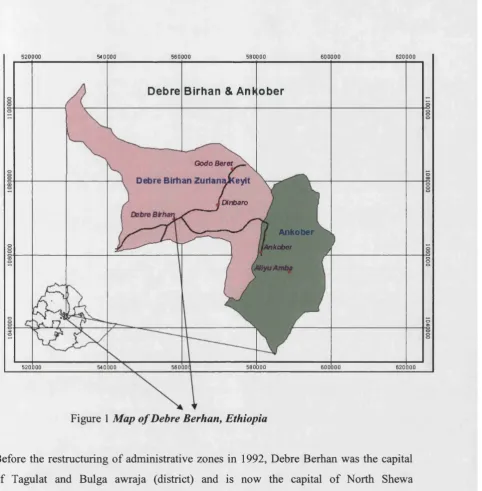
Debre Berhan is located 130km north east o f Addis Ababa. Being situated at the centre
o f the highland plateau o f Shewa province, the town serves as an economic and political
520000 54 0 0 0 0 560 0 0 0 5 80000 600 0 0 0 6 2 0 0 0 0
Debre Birhan & Anl< ober
G odo Beret
Debre Birtian Z u ria n a k e y it
Dinbaro
Ankober
'Ankober
54 0 0 0 0 5 80000
520000 560001 60 0 0 0 0 6200 0 0
Figure 1 M ap o f Debre Berhan, Ethiopia
Before the restructuring of administrative zones in 1992, Debre Berhan was the capital
of Tagulat and Bulga awraja (district) and is now the capital of North Shewa
administrative zone. In addition to being the central political seat for the region as a
whole, the proximity of the town to the indigenous and other farming communities in
highland Shewa has made Debre Berhan into a kind of ‘double capital’ for the
inhabitants of the smaller administrative units that encircle it. For farmers in Basso and
Worana and Debre Berhan Zuria woreda, Debre Berhan also hosts the head offices of
the woreda administrative council and many other state departments of the woreda.
Four different geographical areas have been described by Mesfin (1991) in northern
Shewa: the plateau woreda; the valley woreda, the escarpment woreda and the lowland
[image:24.595.28.511.28.520.2]woreda. The indigenous villages in the highland plateau are generally characterized by
rugged topography. However, one can observe significant variations in the landscape in
the region. The landscape on both sides o f the main road from Addis Ababa to Dessie is
generally flat with an average elevation o f about 2,714m (Mesfin, 1991).
The temperature is cold, the localities are dega (highland), and the people are referred to
as highlanders. Deeper in the countryside there is rugged terrain, with mountain peaks
and deep valleys, intersected by a few gentle slopes with plenty o f small streams. There
are perennial rivers and chains o f mountain peaks among the valleys; although the
temperature is fairly cold and varies from village to village. Communities within this
zone are referred to as lowland or kolla. Inhabitants are referred to as lowlanders.
Highlanders live in large and compact villages usually located amid wide tracts o f
agricultural land and grazing areas. The density o f communities living within a given
area seems to be high. The lowlanders, on the other hand live in numerous isolated
villages located in dots on gentle slopes or at the foot o f high rising mountain tops.
The population in the kola areas appears to be sparse. The settlements of lowlanders
have two categories o f uncultivable land, the steep mountain tops and the deep valleys.
They account for more than half the total land resources o f the communities. Only a
small portion o f the arah land is used for grazing, since cattle are not well adapted to
browsing on steep slopes and deep gorges.
Debre Berhan Zuria Woreda has 51 farmers associations under its administration. Two
of these are covered in this study: Ankober and Debre Berhan Selassie. Some o f the
evidence presented does not refer exclusively to these two sites but comes from the
wider Debre Berhan and surrounding areas.
Clim ate
The region has two rainy seasons, namely meher which refers to the long rains, usually
short rains which usually fall between January and April. Belg production is very
important in the high altitude zones of northern Shewa where frost is common during the
meher season. However, the belg season is highly unreliable being characterized by
variability, and delay or absence of rain. In some years, it falls only for few weeks and
the belg crop cannot be harvested; in other years, the rains fall regularly for a reasonable
period of time.
Agricultural production
In the highland communities of northern Shewa, mixed farming, i.e. crop production
with animal husbandry, is the common practice. The main crops include barley, various
types of wheat, horse beans, peas, lentils, teff and linseed.
The main livestock are cattle, sheep and goats, and draught animals such as donkeys,
horses and mules. The area is self supporting in crops and the soil is lem (fertile) and
lemtaf (semi-fertile). This year's meher harvest (2007) was not enough to feed the
farmers’ families and farmers had to purchase grain from the market by selling
[image:26.595.26.508.26.818.2]livestock. Some of them even sold their oxen, which will move them towards poverty.
The main reason for the decline o f their harvest was that the crops were badly damaged
by frost during the growing season. There were sufficient rains, particularly at the
beginning o f kiremt, and at the time o f the harvest as well. During the previous belg
there was not enough rain and many farmers did not plant crops. But during this belg the
farmers planted various kinds o f crops including barley, wheat and cowpeas, and the
fields have already become green.
Social structure
Amharic is the main language but many people speak Oromigna. The religion in the area
is predominantly Christian Orthodox. There are some Moslems and Protestants but there
has never been religious tension in the site.
Recent history
In 1936 the Italians invaded Ethiopia as that was the case in the whole country, the local
people also raised arms and fought the invaders. They only returned to their villages to
resume normal life in 1943 after the Italians were rejected from Ethiopia.
In 1974 the socialist military government (known as the Derg) came to power and
nationalized land throughout Ethiopia. With the aim o f improving the ailing economy,
especially agriculture, the new government imported significant amounts o f agricultural
products including new fertilizers. Due to the application o f imported fertilizer, initially
there was a slight yield increase for most crops. Two years later Farmers Associations
(FAs) were formed and a service cooperative was established in 1978.
Some o f the indigenous farmers I spoke to could not see the benefit o f being a member
o f the service cooperative but they had no choice but to register under the orders o f the
military government. A producers’ cooperative was also established in the area but it
was dismantled when the mixed economy was announced by the government in 1989.
In 1984 and 1991 there was drought around this area and people suffered as a result.
started implementing its forced villagization programme and many people were forced
to leave their homes. Most o f them returned with the change o f government in 1991.
The local economy -
Agriculture
The main crops include barley, various types o f wheat, beans, peas, lentils and linseed.
The most important are barley and beans. Most production is for consumption; very little
is sold. However, according to a local extension worker, farmers do not openly disclose
information concerning their income from the sale o f crops. Farmers traditionally
classify their land holdings into plots for meher and for belg, depending on the soil
texture.
In the region, belg production is risky because o f variability, delay or absence o f rain.
Rain is highly unreliable. In some years, it falls only for a few weeks and the belg crop
cannot be harvested; in other years, the rains start in a hot and dry month and continue to
fall regularly throughout the period. Good yields can be harvested in such years.
According to the information from the local municipal office, most farmers employ risk-
aversion mechanisms in the following ways. If the belg fails to come in February and
March, then planting will be postponed to the next meher. A delay in the onset o f belg
rain beyond February means that the farmers cannot cultivate belg crops. A further delay
o f belg rain beyond March and April means that the land prepared for belg crops will be
used for planting meher crops in July.
Similarly, land prepared for meher planting will be used for the next belg if there is a
failure o f the meher rains. In general, most informants tended to idealise the past in the
sense that they appreciated the good harvests and living conditions. However, for
various reasons, the agricultural yield has been decreasing over time and also the
livestock herds have also been declining, vis a vis the fast-growing human population.
The farming system in the area is labour intensive and the number o f hours spent on
L ivesto ck
The main livestock include oxen, cows, sheep, goats, donkeys, mules and horses.
Livestock is a very important component of the economy of the farming households
around Debre Berhan. Oxen are needed for ploughing and cows for milk and milk
products and for replenishing the oxen. Dung is used for fuel. A household largely
depends on a small stock for generating cash to spend on clothing, taxes and other basic
expenses. Donkeys and horses are mainly used for transporting grain and products such
as firewood and pottery. People have a side income from the sale of livestock and
[image:29.595.29.509.35.811.2]animal products including milk, butter and dungcakes.
Figure 3: Debre Berhan Market - transporting grain & firewood
Figure 4: Debre Berhan - some livestock
The size of herds varies considerably between the highland and lowland communities.
According to the elderly indigenous farmers, the overall size o f individual livestock
holdings has been decreasing over the last two decades due to the decrease in grazing.
Some farmers asserted that raising livestock would be the most lucrative trade in this
area if there were sufficient grazing land as the price o f livestock has been increasing
steadily for the past 15 years.
L a n d
Before the revolution o f 1974, large tracts o f farmland were occupied by a few rich
landlords. Many indigenous farmers were tenants or landless and even those farmers
with land had to pay a land fee to the landowners in cash and kind. When the land
reform was implemented by the socialist government, land was nationalized and
distributed by the farmers associations. As the population density increased, the size o f
the holdings grew smaller and, as a result, the majority o f indigenous farmers occupy
less than 2 hectares.
Now the government takes land from those who are very old and cannot use it and
cannot pay tax and gives it to the newly married and those who do not have land. But it
is becoming impossible to give land to all farmers who are establishing new families.
They are forced to share their parents’ land or have to participate in share cropping
(megazo). This is a critical problem for the people in the area. Many landless people
survive by sharecropping for women, whose husbands have died or migrated, and old
men who have no one to help them work their fields. The landless include young newly
married couples, returning soldiers and those who cannot afford to pay the land tax.
Before the 1974 revolution, children inherited land from their parents. If their parents
did not own land, they used to contract land through sharecropping on the basis o f a 3:1
tenant:owner ratio. Others used to gain access to land by renting from those with a
surplus. After the land reform, land became the property o f the state and there was no
renting. Even old people who cannot cultivate their piece were not allowed to rent it out.
The elders enter into sharecropping arrangements or give the land to strong farmers to
under the cover o f sharecropping. Sometimes the cultivator uses the land and gives a
certain amount o f grain per year to the landowner, whether he produces or not.
Labour
The tough task o f ploughing, and digging steep slopes with the hoe are culturally defined
as male tasks. Female labour is largely restricted to indoor activities such as food
preparation, storage, looking after children, entertaining guests and the like. Women are
responsible for fetching water from the nearest spring, river or other source. In addition,
women take part in agricultural activities such as weeding, fencing, gay (the common
practice o f burning the soil to enhance its fertility) and sometimes harvesting and
transporting the harvest to the threshing ground. While ploughing and preparing the land
is solely men’s work, fetching water and collecting dung cakes are exclusively women’s
work. Selling grain and dung cakes in the market, livestock herding, and taking grain to
the mill are done by both sexes.
Indigenous farmers in the area accomplish different types of agricultural activities by
organizing labour parties, that are clearly differentiated in terms of organizational
complexity, cost entailed, and the nature o f labour reciprocity:
1. Debo: This is a big work party involving many individuals and much cost. Debo has
specific rules and regulations. A person calls friends and relatives for a debo if he is
unable to accomplish the seasonal agricultural tasks o f his household for reasons known
to the community. The request is made some weeks in advance. The household prepares
food and drink for the work team. The type and amount o f the feast varies, according to
the season and the nature o f the work for which the work party is mobilized.
2. Wonfel: This is a labour organization which involves a few individuals often living in
the same village. It is immediately returnable in the sense that the work team labours on
the plots o f all the members in rotation. Some wonfel parties require the host household
In most cases, however, the wonfel team retires for lunch in the middle o f the day.
Unless the host household has reasons to invite them, all members o f the team will go to
their respective houses for lunch. The party will then start working again after a few
hours. Taking a rest at midday is a customary practice especially when the seasonal task
is preparing the land with hoes, a tough job in farms in rugged terrain.
There are days when farmers do not work. On the 1st, 5th, 12th, 19th, 21st, 23rd and
27th days o f the month farmers spend their time in church. Usually they spend half the
day in church and the other half is free time. If they find people working on these
religious holidays, selected elders will first advise them not to do so. If the person takes
no notice he will be cast out o f the community, and so no one breaks the rules.
Technology
Farmers use oxen, hoes, ploughs and sickles for harvesting and threshing. They use
donkeys, mules and horses to transport almost everything, including harvest, firewood,
and straw, both from field to home and to the market.
Cross-bred cattle were introduced in the area in 1978 by ILCA (International Livestock
Centre for Africa). In Fagy and surrounding areas it is not uncommon to see cross-bred
cattle. People are aware o f the advantages and disadvantages o f cross-bred cattle both
for milk production and traction purposes. A cross-bred cow produces more milk than a
local one and a cross-bred ox is stronger. However, according to some indigenous
farmers, these cattle require more fodder and are more vulnerable to diseases.
O ff-F a rm A ctivities: Within the C om m unity
Other economic activities that earn farmers income in the communities include sewing
clothes, selling local alcoholic brews {areke and tella), weaving, tanning, pottery,
trading in agricultural products, ecclesiastical services in churches, selling woodwork
(mainly timber stools, chairs and other artefacts) and trees, in the form of charcoal,
1.6 Problematizing the natural resource base in Ethiopia
In terms o f natural resources, Ethiopia is one o f the most well endowed countries in sub-
Saharan Africa. Its location in the tropics, combined with varied altitudinal variations
within short ranges, allows the country to enjoy both temperate and tropical climates and
this gives a wealth o f biophysical resources including rich biodiversity, relatively fertile
soils, and huge fresh water resources. For millennia, this rich natural resource base has
served as the foundation for agricultural development and for meeting the basic needs of
millions o f rural people.
Although the country is endowed with enormous biophysical potential, it has been
affected by the interlinked and reinforcing problems o f natural resource degradation and
extreme poverty. This is further aggravated by high population pressure, top-down
planning systems, climatic variability, lack o f appropriate and/or poor implementation of
polices and strategies, limited use of sustainable natural resource management practices,
limited capacity o f planners, researchers and land users as well as frequent
organizational restructuring.
According to Zeleke and Kassie (2006) 1.9 billion tons o f top soil are washed from the
landscape (mainly from the highlands) every year, and a major part o f this is believed to
leave the country. The on-site effects o f natural resource degradation, mainly in reducing
agricultural production, is high, with estimated costs ranging from 2 to 6.75% o f AGDP
per annum (Mahmud, et al. 2005, citing estimates by FAO (1993), Humi (1998),
Sutcliffe (2003), and Sonneveld (2002)). The Environmental Protection Authority (EPA)
(2007) also estimated that approximately 17% of the potential annual agricultural GDP
o f the country was permanently lost because of physical and biological soil degradation.
Despite differences in the above estimates, they all show the seriousness o f the problem
o f natural resource degradation caused by soil erosion and loss o f soil nutrients.
Moreover, the country also suffers from the side effects o f natural resource degradation
(Mahmud et al, 2005) including siltation o f dams, reservoirs, wetlands (Lake Alemaya,
Lakes), and productive farmlands at foot slope areas (such as the Ambasel plain areas of
Wollo).
As Zeleke (2006) argues, the causes o f natural resource degradation are complex and
have diverse natural and human dimensions. Although it is influenced by natural and
socio-economic factors, in Ethiopia, the heavy reliance of the growing population on an
exploitative kind o f subsistence agriculture which tends to follow the top down approach
has greatly contributed to natural resource degradation.
This is partly because agriculture in the country is characterized by a subsistence rain-
fed production system with traditional methods o f production which have prevailed for
thousands o f years. In addition, the farming system, particularly in the highlands, is
dominated by cereal crop production, which accounts for about 73% o f the total
cultivable area (Ezra, 2006).
Most o f these cereals, particularly teff and wheat, need fine seedbed preparation and
provide little groundcover during the most erosive storms o f June, July and early
August. This situation, combined with the push o f cultivation towards the
commercialisation o f increasingly marginal areas, contributes to the current level o f
natural resource degradation and to significant decreases in agricultural production.
Moreover, the exploitative nature o f commercial farming has also contributed to the high
rate o f deforestation and left the landscape devoid o f vegetative biomass, exposing it to
high soil erosion.
According to the NRM literature, deforestation results principally from:
i) commercialisation and industrialization, along with processes o f urbanization,
exploitation o f natural resource, and increased competition for employment
ii) the conversion o f forests and woodland to cropland
iii) the harvesting o f forests for fuel to meet the energy needs o f a rapidly growing
As a result, the high forest cover is said to have been reduced to about 2.4% o f the total
area, compared to an initial 40% coverage (Tedla & Lemma, 2002). Even then, the
remaining forest is being depleted at an alarming rate. This is partly because nearly 95%
o f the total energy consumption originates from biomass fuels such as wood, cow dung
and crop residue. Burning cow dung as a source o f fuel instead o f using it as a soil
conditioner, due to the shortage o f wood and alternative energy sources, is also
considered to cause a reduction in grain production o f some 550 thousand tonnes
annually (EPA, 2007).
Similarly, livestock pressure and their poor management, which mainly depends on free
grazing, is a major cause o f natural resource degradation. Ethiopia has a high livestock
population, including 35.3 million cattle (Ethiopia is 1st in Africa in cattle population,
although the productivity is very low). Only 25% o f the livestock grazes in the
rangelands (lowland areas o f Afar, Somali and Borena), which cover about 57.7 million
sq km o f Ethiopia’s land area. Areas outside the rangelands are infected with tsetse fly
and malaria, and growing moisture deficiency that limit livestock health and survival.
The remaining 75% o f the cattle graze in the highlands (above 1,500 metres), creating
serious over-grazing problems in areas already under huge agrarian pressure (EPA,
2005).
In these areas, expansion o f grazing beyond the capacity o f the land takes place at the
expense o f natural vegetation and this leads to serious natural resource degradation.
Furthermore, the growing livestock grazing pressure and the lack o f protection of
communal grasslands from extended free grazing are increasingly accelerating the
natural resource degradation problem.
In many parts o f the highlands the use o f degraded land units for communal grazing has
become normal practice. The animals are forced to stay on these land units, especially
during the cropping season, although there is little for them to eat. As the population
grows, land gets scarce and farming becomes more exploitative with much o f the
are pushed towards marginal lands, which eventually results in even more severe natural
resource degradation.
Moreover, scarcity o f grazing land and shortage o f livestock feed has forced the
widespread use o f crop residues to feed the livestock. The removal o f crop residue and
the use o f cow dung for fuel results in subsequent loss o f humus and soil nutrients from
the soil that would otherwise have been returned. This makes the nutrient cycle almost
open and leads to a serious loss of soil quality, increased soil erosion and ultimately a
reduction in soil productivity.
In general, the process o f natural resource degradation, as a result of agricultural activity
combined with population pressure and over-exploitation o f the land, has led to the
current depletion o f natural vegetative cover, serious natural resource degradation
problems and intensified poverty. This has led to a renewed interest in sustainable
natural resource management.
Massive soil and water conservation and afforestation activities were initiated in the
1980s, aimed at sustainability, but were unpopular with many farmers. For instance, of
the conservation measures implemented between 1976 and 1990, only 30% o f soil
bunds, 25% o f stone bunds, 60% of hillside terraces, 22% o f the planted trees, and 7% of
the reserve areas survived (EPLUA, 2004). A recent survey in Shewa province
(including Debre Berhan) showed that only 30% o f the soil and water conservation
structures o f the past two and half decades has survived (EPLUA, 2004). The problems
seem to be rooted in a lack o f understanding o f the important interface between the local
indigenous community and natural resource conservation and agriculture.
However, despite the above negative trends, there are successes in different parts o f the
country. Some have a deep-rooted history o f indigenous experience, such as the one in
Debre Berhan. Furthermore, as shown in Chapter 5, there is evidence of extensive local
innovation which demonstrates that indigenous knowledge is continuously refined and
As in other parts o f sub-Saharan Africa, in Ethiopia the use o f indigenous knowledge is
constrained not only by lack o f appropriate systems to exchange local and home grown
knowledge but by the indirect effects o f modernization in three important ways:
• A decrease in labour resources, due to the urban migration o f young men in search
o f more profitable sources of income. The increasing emphasis on education also
reduces farm labour, as children are more likely to attend school than contribute to
farm production.
• A decrease in land available for smallholder farming. This particularly
complicated issue is exacerbated by population growth but has its roots in land
policies o f various governments that have worked to create land markets and the
capitalization o f land. The land use scheme that generates the greatest economic
returns tends to discriminate against smallholders, unless they are protected by
governments.
• Opening the country up to export markets. The shift to cash crop production has
profoundly reshaped the average smallholder farming model, because this mode of
intensive agriculture has typically come at the expense o f biodiversity and the
production o f more locally appropriate crops. This has implications for a wide range
of issues in the day-to-day traditional way of life, from diet and health, to soil fertility
and water sufficiency, to traditional gender roles and time management.
Most o f the knowledge governing traditional farming does not exist outside the
collective memory o f a community, which makes it vulnerable to the transformative
forces o f modernization. The historical non-necessity o f literacy among traditional
cultures, as well as the strong tradition o f learning through oral history, presents a threat
to indigenous knowledge that has never been documented.
This lack o f record-keeping poses a number o f problems today as NRM related activities
are seen as one way to strengthen indigenous farmers in the face o f modernization and
the economic pressures o f increasingly aggressive global markets. Furthermore, as
cultures and traditions merge due to changing cultural norms regarding migration and
There is a risk that changing social patterns, combined with the rapid spread o f imported
technology and free market ideologies, will substitute this unrecorded knowledge, which
maintained the indigenous way o f life for millennia, with new ideas, for better or worse.
The effect o f this substitution is likely to be a gradual decrease in the use and recall o f
IK, so that much o f it risks total deletion from the collective memory. Cultural
preservationists would consider this problematic in itself, but there is a tactical issue that
stems from the loss o f IK.
With declining agricultural productivity threatening rural communities, development
projects are increasingly aimed at increasing productivity for the millions o f poor
smallholders globally. As the harmful side-effects o f industrial farming are becoming
more apparent (for example, the effects o f chemicals on the environment and the loss o f
wildlife habitats), there is increasing interest in developing sustainable solutions through
a return to traditional farming methods.
After more than a century o f importing Western farming models into sub-Saharan
Africa, with its very different climate and culture, indigenous knowledge is increasingly
being looked to for locally appropriate, resource efficient, and equitable models o f
agriculture.
This problem situation hence generates the research questions that are addressed in this
study:
• How do different systems o f knowledge, such as indigenous knowledge, operate
around natural resource management?
and
• How do different categories o f social agents associated with different systems of
knowledge engage in the process o f deliberation o f NRM in Ethiopia?
However, as the research progressed, the questions were extended to include the
• What is the relationship between weakening systems o f indigenous knowledge
and degradation o f natural resources?
• Who are the main stakeholders and what role do these stakeholders play in order
to address the degradation o f natural resources?
• What role have government based initiatives played in sustaining or eroding
Chapter 2 - Literature Review
The chapter begins by outlining the relevant aspects o f the field o f natural resource
management (NRM) before turning to a review o f the literature on the characteristics of
indigenous knowledge (IK) and its relevance to NRM practices. The chapter reviews the
efforts currently being made to preserve IK as well as the problems faced by IK as a
body o f knowledge. It argues that further research is needed in the area but finds that
much o f the literature lacks an effective theoretical foundation. The literatures o f
information systems, knowledge management and innovation studies are reviewed in
terms o f their treatment o f IK but it is concluded that, although the latter two are
relevant, they provide very little coverage o f IK.
2.1 Natural Resource Management (NRM)
There is an extensive literature on NRM, for example Norfolk et al (2003) and Pritchard
& Sanderson (2002), but two particular issues are relevant to this study: firstly, the
importance o f participatory development and, secondly, the importance of knowledge
management. There is widespread recognition (Bessette, 2004; Servaes, 2003; White,
2003) that participatory development is critical for achieving sound resource
management but this means empowering local communities. Information describing the
natural resources forms the base upon which sustainable development is built (Tabor &
Hutchinson, 1994) and hence it is important to manage knowledge resources effectively.
However, the local knowledge resources in many communities in developing countries
are not codified in Western scientific terms but instead comprise what is known as
‘indigenous knowledge’.
According to a World Bank report (1997), natural resources refer to a broad spectrum o f
‘environmental assets’, including air, water, land, plants, animals and micro-organisms.
Integrated individual assets are not isolated; they are linked together to form natural
systems o f varying scale such as rivers; lakes and wetlands; forests; fields; geological
Natural resources management reflects these linkages within and between natural
systems. It integrates the management of social, economic and environmental values by
involving the community in planning and other activities. NRM is fundamentally about
people as its success is ultimately determined by the level o f community involvement
and the adoption o f ecologically sustainable practices across the community (Ashley,
2000).
NRM aims at improving livelihoods, agro-ecosystem resilience, agricultural productivity
and environmental services. In other words, it aims to augment social, physical, human,
natural and financial capital. It does this by helping solve complex real-world problems
affecting natural resources in agro-ecosystems (CGIAR, 2007).
According to Beagle (2001) NRM is concerned with the management of ecosystems for
human purposes. However, Merchant (2003) has identified three ethical frameworks for
explaining the relationship between people and their non-human surroundings -
egocentric, homocentric, and ecocentric. According to Merchant, a person exercising an
egocentric ethic seeks to maximize individual self-interest when making decisions
concerned with environmental matters, seeing him or her-self as separate from their
surroundings. On the other hand, a person using ecocentric ethics considers their duty to
the ecosystem, and considers herself or himself as an integral part o f that ecosystem.
Homocentric ethics emphasize the social component and focus on duty to other humans,
ensuring the greatest good for the greatest number o f people, while recognizing that
interactions with the non-human components of the ecosystems on which we depend for
survival are also critical to these human-centred concerns. The long term outcomes of
NRM are therefore decidedly homocentric, constituting a mix o f egocentric and
ecocentric perspectives (Merchant, 2003).
Information describing the natural resources o f any region forms the base upon which
sustainable development must be built, according to Tabor & Hutchinson (2004). To
knowledge resources effectively. Information is seen as data that has been given
meaning whereas knowledge is the appropriate collection o f information for decision
making (Tripathi & Bhattarya, 2004).
In the context o f NRM, knowledge management focuses on the processes and the people
involved in creating, sharing and leveraging knowledge among scientists, communities,
resource managers and policy makers. Information management, in contrast, is more
concerned with establishing processes and systems to gather, organize, summarize and
package information, including its timely delivery to the right decision makers for the
situation involved (Tripathi & Bhattarya, 2004).
There is widespread recognition that participatory development is critical for achieving
sound resource management. However, this kind o f development requires a more
flexible and evolving process o f planning for change, and poses new challenges for
decision makers and evaluators alike (Adamson & Bromiley, 2008).
In particular, this requires responsiveness at the local level to empower and enable
communities (Adamson & Bromiley, 2008). Because these programmes are designed to
be responsive to changing community needs, one o f the most pressing challenges is to
develop participatory and systems-based processes based on the communities