IJPSR (2018), Volume 9, Issue 5 (Research Article)
Received on 12 August, 2017; received in revised form, 24 April, 2018; accepted, 29 April, 2018; published 01 May, 2018
KNOWLEDGE, ATTITUDE AND PRACTICES REGARDING ANTIBIOTICS USE AMONG PARENTS FOR THEIR CHILDREN
Mahrunisa Atif, Saleha Sadeeqa *, Hafsa Afzal and Sumera Latif
Institute of Pharmacy, Lahore College for Women University, Lahore, Pakistan.
ABSTRACT:Introduction: Antibiotics are used to perish the growth of bacteria. Undesirable use of antibiotics is presently common all over the world. Parent’s knowledge and attitudes towards antibiotics play a vital role in the success of treatment process. Due to lack of knowledge, sometimes antibiotics are badly used for the treatment of infection. Study aims to evaluate the knowledge, attitude and practices regarding antibiotics use among parents for their children. Methodology:
A cross-sectional study design was adapted, using convenient sampling technique in different areas of Lahore, Pakistan during the period June -2017 to November- 2017 by using a self-administrated questionnaire, involving 400 participants. Those mothers or fathers were included which had children under 5 years of age. Results:
Results showed that 92(23%) of the respondents had poor knowledge, 252(63%) had moderate knowledge and 44(11%) had good knowledge. Significant associations were found between knowledge statements and age, number of children, education and spouse education. Significant associations were also found between attitude statements and age, gender, number of children, education and spouse education. Whereas significant associations were found between practice statements and gender, number of children, education and spouse education. Significant association was found between knowledge about antibiotics & education level (P <.001), and also between attitude about antibiotics & education level (P=0.005). Conclusion:
The survey revealed that there is a diversity of public awareness about antibiotics and microbiological resistance on the basis of socio-demographic factors. The misuse of antibiotics is an important issue in public health which affects the society and individual people.
INTRODUCTION: The agents which can destroy
or inhibit the growth of pathogenic microorganisms and are used in the treatment of external or internal infections are called antibiotics and the use of these chemical agents has tremendously increased in the World 1. The antibiotics can play a pivotal role in the eradication of bacterial infections because antibiotics help in lessening the death rate in children all over the World 2.
QUICK RESPONSE CODE
DOI:
10.13040/IJPSR.0975-8232.9(5).2140-48
Article can be accessed online on:
www.ijpsr.com
DOI link: http://dx.doi.org/10.13040/IJPSR.0975-8232.9(5)2140-48
Rogawski (2017) accepted that bacterial infection can be treated with antibiotics and this can prove to be a life saving treatment for children. According to him, antibiotics were most commonly medicine prescribed for the children. However, this fact still exists that the excessive use of antibiotics consequent upon the adverse effects like lethal drugs, harmful effects on the gut micro biota and the enteric immune system 3.
According to WHO report, entitled “antimicrobial resistance global report on surveillance” common infections and minor injuries can kill in post antibiotic era is far from being a prophetic fantasy. The antibiotics were very successfully used for many years. However, their efficiency was subsequently lost due to anti-microbial resistance.
Keywords:
Antibiotics, Knowledge, Attitude, Practices
Correspondence to Author: Dr. Saleha Sadeeqa
Institute of Pharmacy, Lahore College for Women University, Lahore, Pakistan.
This discovery about antibiotics was very important achievement of 20th century 4. Proper and judicial use of antibiotics reduces morbidity and mortality while inappropriate use promotes growth of resistant strains and reduces efficacy of drugs 5. Edwards et al., (2002) were of the firm opinion that the children were on the top of the list of maximum uses of antibiotics 6. Most common and important cause of antibiotics resistance in children was upper respiratory tract infections (URTIs) 7.
A number of problems were faced as a result of misuse or overuse of antibiotics, for example increase in antibacterial resistance, enhancement of burden of chronic disease, high cost of health services and increase of side effects like gastrointestinal effects 8. The factors associated with unethical overuse of antibiotics has been studied and found independent of any variable like geographic area, payment resources, physician specialty and patients demographic. One of the very important examples of antibiotic resistance due to misuse is penicillin resistant phenmoucocal infections. Studies has revealed that high rate of prescribing antimicrobial drug in children enhances risk of colonization and invasive diseases 9.
Kozyrskyj et al., (2004) revealed a very important fact associated with irrational use of antibiotics that is low education level among parents 10. In addition to drug resistance other problems like drug allergies and other current infections and gastrointestinal effects can be decreased by improving awareness in parents and patients 11. Elbur Al (2016) revealed the public knowledge and practices about the antibiotics used in URTIs. They emphasized for the parents that there was a lot of difference between viral and bacterial infections with reference to mechanism and treatment at every level of care. Parents had no concept about the adverse drug effects and the drug resistance regarding antibiotics. The result of this practice was harmful and serious that can cause the drug resistance and inhibit the symptoms of current diseases which cause the child death 12.
The old people and the persons who are less educated have more interest and tendency towards using antibiotics 13. Arnold et al., (2005) also discouraged the self use of antibiotics in viral URTIs by parents as it has been found a major
factor in development of bacterial resistance in community 14.
The position of Pakistan is just similar to other developing countries, people can purchase antibiotics from the open market without any prescription of a doctor. This is the reason that has increased the unreasonable use of antibiotics by public at large. A survey was carried out in Lahore Pakistan with regard to knowledge, attitude and practices (KAP) regarding antibiotic use among parents, to evaluate the different factors and reasons which are associated with the use of antibiotics among parents for their children. This survey will serve as baseline data and provide further insight planning and developing strategies for local health education purposes.
METHODOLOGY: A community based
observational study design was adapted, using convenience sampling in different areas of Lahore, Pakistan during the period from June - 2017 to November - 2017 by using a self-administrated questionnaire. Those mothers or fathers were included which have the children under 5years of age. Parents who were doctor or from any other medical profession were excluded from the study to prevent potential bias. The questionnaire was adapted from previous study 8 and slightly changed according to local population.
Face and content validity of questionnaire were determined by a panel of senior experts in the relevant field. Cronbach's alpha was used to access the reliability of the questionnaire. The reliability analysis for knowledge about antibiotics use was 0.78 while for attitude about antibiotics use was 0.71. Before actual survey was started, the pilot study was conducted and found that respondents had easily understood and could answer the questions provided in the questionnaire. All the data was entered in statistical package for the social sciences (SPSS) version 20. Normality of data was checked by applying Skewness and Kurtosis. Descriptive statistics were used to summarize the data while 2-way ANOVA was run to check associations of demographic variables with knowledge, attitude and practices of antibiotics use. P≤ 0.05 was taken as significant.
Ethics Considerations: Study was approved from Lahore College for Women University Lahore Pakistan. Written informed consent was taken from the participants. Confidentiality of the participant’s information was assured and maintained.
RESULTS: A total of 480 participants were approached out of which some participants refused to participate in the study while some returned incomplete forms which were not included in the analyses. So, total 400 participants filled the questionnaire and the responses rate was 83%. Demographics Characteristics of the Respondents: Demographic characteristics of the respondents are depicted in Table 1. The mean age of participants was 32 years in which the age of males was 34 years while mean age of females was 30 years old. There were 44% participants who belonged to nuclear families and 56% belonged to joint family system. 308% participants had 1 - 2 children while the 52% participants had 3 - 4 children and only 10% participants had 5 -7 children. Almost 46% were tertiary educated, 36% were secondary educated, 12% were primary educated and 6% were illiterate while for the education of spouses of the participants indicated that 7% were illiterate, 9% were primary educated, 40% were secondary educated and 44% were tertiary educated. 53% preferred private clinic to seek check up while 29% consulted government hospital and 18% preferred NGO clinic/dispensary for checkup.
TABLE 1: DEMOGRAPHIC CHARACTERISTICS OF THE RESPONDENTS
Variables Total
(N=400)
Males (n=150)
Females (n=250)
M(SD) M(SD) M(SD)
Age (in years) 32(6.59) 34(6.6) 30 (6.1)
20-30 years 201(50.3) 45(30) 156(62.4)
31-40 years 164(41) 85(56.7) 79(31.6)
41-50 years 35(7.8) 18(12) 17(5.2)
Number of Children
1-2 151(38)
3-4 205(52)
5-7 40(10)
Education
Illiterate 24(6) 7 (5) 17(7)
Primary 48(12) 22(15) 26(10)
Secondary 143(36) 41(27) 102(40)
Tertiary 185(46) 80(53) 105(43)
Education of Spouse
Illiterate 26(7) 8(5) 18(7)
Primary 37(9) 17(11) 20(8)
Secondary 161(40) 56(37) 105( 42)
Tertiary 176(44) 69(47) 107(43)
Preference to seek checkup
Private Clinic 213(53) 92(61) 121(48)
Government Hospital
115(29) 36(24) 79(32)
NGO Clinic/ Dispensary
72(18) 22(15) 50(20)
Note: M=mean, SD=standard deviation, f=frequency
Level of Respondent’s Knowledge about
Antibiotic Use: Level of respondent’s knowledge about antibiotic use is depicted in Table 2. Results showed that 92(23%) had poor knowledge about antibiotics while 252(63%) had moderate knowledge and only 44(11%) people had good knowledge.
TABLE 2: LEVEL OF RESPONDENT’S KNOWLEDGE ABOUT ANTIBIOTIC USE
Level of knowledge Total score f (%)
Poor 0-4 92(23)
Moderate 5-9 252(63)
Good 10-14 44(11)
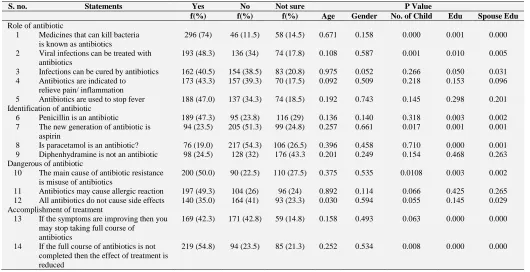
[image:3.612.316.563.78.390.2]with a significant association was found with the number of children (p=0.001), education (p=0.01) and spouse education (p=0.005). 162 (40.5%) were of the opinion that infections can be cured by antibiotics and a significant association was found with the education (p=0.05) and spouse education (p=0.031). A total of 173 (43.3%) respondents were of the opinion that antibiotics are indicated to relieve pain/ inflammation while 188 (47.0%) said that antibiotics are used to stop fever.
189 (47.3%) had knowledge that Penicillin is an antibiotic with a significant association with education (p=0.003) and spouse education (p=0.002). 94 (23.5%) knew that the new generation of antibiotic is aspirin showing significant association with the number of children (p=0.017), education (p=0.001) and spouse education (p=0.001). When respondents were asked Is paracetamol is an antibiotic? 76 (19%) replied yes while 217 (54.3%) said no showing significant
[image:4.612.43.573.362.634.2]association with the education (p=0.000) and spouse education (p=0.001). 200 (50%) knew that the main cause of antibiotic resistance was misuse of antibiotics showing significant association with the number of children (p=0.01), education (p=0.003) and spouse education (p=0.002). 197 (49.3%) said antibiotics may cause allergic reaction. Only 140 (35%) knew that all antibiotics do not cause side effects showing significant association with the spouse education (p=0.029). A total of 169 (42.3%) knew that if the symptoms are improving then you may stop taking full course of antibiotics showing significant association with the education (p=0.000) and spouse education (p=0.000). On the other hand, 219 (54.8%) knew that if the full course of antibiotics is not completed then the effect of treatment is reduced showing significant association with the number of children (p=0.008), education (p=0.000) and spouse education (p=0.000).
TABLE 3: ASSOCIATION OF DEMOGRAPHIC CHARACTERISTICS WITH KNOWLEDGE
Note: Percentages are based on observed values, missing values are excluded
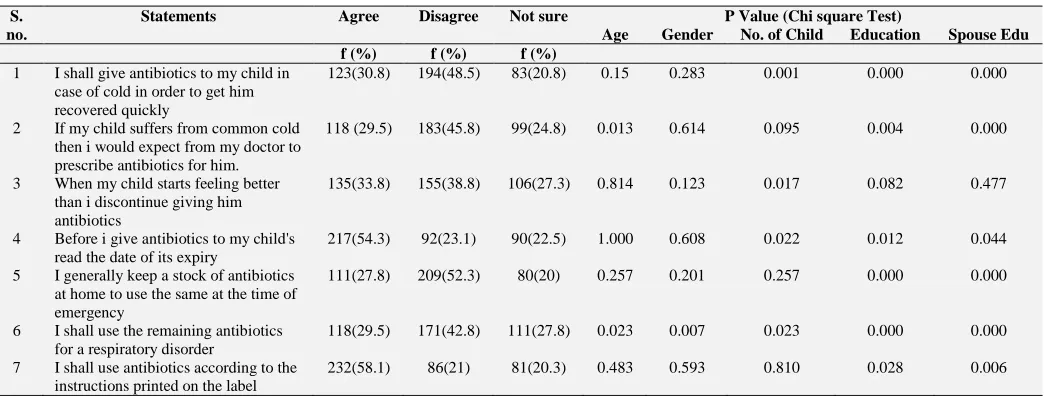
Association of Demographic Characteristics with Attitude: Association of demographic characteristics with the attitude is depicted in Table 4. Results showed that 123(30.8%) of the respondents agreed and 194(48.5%) disagreed that they will give antibiotics to their child in case of cold in order to get him recovered quickly, showing
a significant association with the number of children (p=0.001), education (p=0.000) and spouse education (p=0.000). On the other hand 118 (29.5%) agreed and 183(45.8%) disagreed that they would expect from their doctor to prescribe antibiotics for them showing a significant association with age (p= 0.013), education
S. no. Statements Yes No Not sure P Value
f(%) f(%) f(%) Age Gender No. of Child Edu Spouse Edu
Role of antibiotic
1 Medicines that can kill bacteria is known as antibiotics
296 (74) 46 (11.5) 58 (14.5) 0.671 0.158 0.000 0.001 0.000
2 Viral infections can be treated with antibiotics
193 (48.3) 136 (34) 74 (17.8) 0.108 0.587 0.001 0.010 0.005
3 Infections can be cured by antibiotics 162 (40.5) 154 (38.5) 83 (20.8) 0.975 0.052 0.266 0.050 0.031 4 Antibiotics are indicated to
relieve pain/ inflammation
173 (43.3) 157 (39.3) 70 (17.5) 0.092 0.509 0.218 0.153 0.096
5 Antibiotics are used to stop fever 188 (47.0) 137 (34.3) 74 (18.5) 0.192 0.743 0.145 0.298 0.201 Identification of antibiotic
6 Penicillin is an antibiotic 189 (47.3) 95 (23.8) 116 (29) 0.136 0.140 0.318 0.003 0.002 7 The new generation of antibiotic is
aspirin
94 (23.5) 205 (51.3) 99 (24.8) 0.257 0.661 0.017 0.001 0.001
8 Is paracetamol is an antibiotic? 76 (19.0) 217 (54.3) 106 (26.5) 0.396 0.458 0.710 0.000 0.001 9 Diphenhydramine is not an antibiotic 98 (24.5) 128 (32) 176 (43.3 0.201 0.249 0.154 0.468 0.263 Dangerous of antibiotic
10 The main cause of antibiotic resistance is misuse of antibiotics
200 (50.0) 90 (22.5) 110 (27.5) 0.375 0.535 0.0108 0.003 0.002
11 Antibiotics may cause allergic reaction 197 (49.3) 104 (26) 96 (24) 0.892 0.114 0.066 0.425 0.265 12 All antibiotics do not cause side effects 140 (35.0) 164 (41) 93 (23.3) 0.030 0.594 0.055 0.145 0.029 Accomplishment of treatment
13 If the symptoms are improving then you may stop taking full course of antibiotics
169 (42.3) 171 (42.8) 59 (14.8) 0.158 0.493 0.063 0.000 0.000
14 If the full course of antibiotics is not completed then the effect of treatment is reduced
(p=0.004) and spouse education (p=0.000). 135 (33.8%) agreed and 155(38.8%) disagreed that when their child starts feeling better than they discontinue giving him antibiotics showing a significant association with the number of children (p=0.017). 217(54.3%) of the respondents agreed and 92(23.1%) disagreed that they read the date of its expiry before giving antibiotics to child showing a significant association with the number of children (p=0.022), education (p=0.012) and spouse education (p=0.044).
111(27.8%) of the respondents agreed and 209(52.3%) disagreed that they generally keep a stock of antibiotics at home to use the same at the
[image:5.612.48.570.279.477.2]time of emergency, showing a significant association with the education (p=0.000) and spouse education (p=0.000). 118(29.5%) of the respondents agreed and 171(42.8%) disagreed that they will use the remaining antibiotics for a respiratory disorder showing a significant association with the number of children (p=0.023), education (p=0.000) and spouse education (p=0.000). 232(58.1%) of the respondents agreed and 86(21%) disagreed that they will use antibiotics according to the instructions printed on the label, showing a significant association with the education (p=0.028) and spouse education (p=0.006).
TABLE 4: ASSOCIATION OF DEMOGRAPHIC CHARACTERISTICS WITH ATTITUDE
Note: Percentages are based on observed values, missing values are excluded
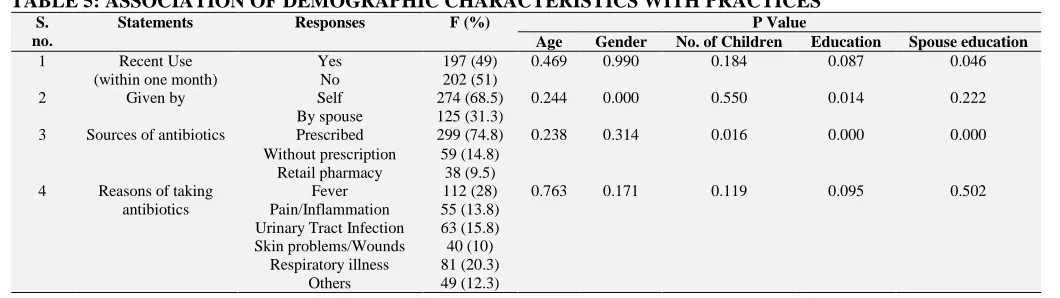
Association of Demographic Characteristics with Practices: Association of demographic characteristics with the practices is depicted in Table 5. Results showed that 197(49%) of the respondents recently used antibiotics (within one month) showing a significant association with the spouse education (p=0.046). On the other hand 274 (68.5%) gave antibiotic themselves while 125(31.3%) by their spouse showing a significant association with gender (p= 0.000) and education (p=0.014). 299(74.8%) of the respondents used prescribed antibiotics, 59(14.8%) used without prescription and 38 (9.5%) from retail pharmacy, showing a significant association with the number of children (p=0.016), education (p=0.000) and spouse education (p=0.000). Among reasons of taking antibiotics, 112 (28%) were due to fever, 55 (13.8%) due to pain/Inflammation, 63 (15.8%)
UTIs, 40 (10%) skin problems, 81 (20.3%) respiratory illness and 49 (12.3%) others.
Knowledge Regarding Antibiotics Use With-In
Gender and Educational Level: Knowledge
regarding antibiotic use with-in gender and educational level is depicted in Table 6. However; effect of education level was significant (p<.001). A series of post-hoc analyses were performed to examine individual mean difference comparisons across all four levels of education and dependent variable. The results revealed that post-hoc mean comparisons were statistically significant for knowledge about antibiotics (p < .001). That is, on average, illiterate (M=2.33, SD= .59) had poor knowledge about anti-biotic use than people with primary (M=5.22, SD= .39), secondary (M=6.48,
SD= 2.44) and tertiary education (M=7.1, SD= .20).
S. no.
Statements Agree Disagree Not sure P Value (Chi square Test)
Age Gender No. of Child Education Spouse Edu
f (%) f (%) f (%)
1 I shall give antibiotics to my child in case of cold in order to get him recovered quickly
123(30.8) 194(48.5) 83(20.8) 0.15 0.283 0.001 0.000 0.000
2 If my child suffers from common cold then i would expect from my doctor to prescribe antibiotics for him.
118 (29.5) 183(45.8) 99(24.8) 0.013 0.614 0.095 0.004 0.000
3 When my child starts feeling better than i discontinue giving him antibiotics
135(33.8) 155(38.8) 106(27.3) 0.814 0.123 0.017 0.082 0.477
4 Before i give antibiotics to my child's read the date of its expiry
217(54.3) 92(23.1) 90(22.5) 1.000 0.608 0.022 0.012 0.044
5 I generally keep a stock of antibiotics at home to use the same at the time of emergency
111(27.8) 209(52.3) 80(20) 0.257 0.201 0.257 0.000 0.000
6 I shall use the remaining antibiotics for a respiratory disorder
118(29.5) 171(42.8) 111(27.8) 0.023 0.007 0.023 0.000 0.000
7 I shall use antibiotics according to the instructions printed on the label
The difference in level of knowledge of antibiotics significantly varied across all education level. However; this difference was not significant
[image:6.612.43.573.113.262.2]between people having secondary and tertiary education.
TABLE 5: ASSOCIATION OF DEMOGRAPHIC CHARACTERISTICS WITH PRACTICES S.
no.
Statements Responses F (%) P Value
Age Gender No. of Children Education Spouse education
1 Recent Use (within one month)
Yes 197 (49) 0.469 0.990 0.184 0.087 0.046 No 202 (51)
2 Given by Self 274 (68.5) 0.244 0.000 0.550 0.014 0.222 By spouse 125 (31.3)
3 Sources of antibiotics Prescribed 299 (74.8) 0.238 0.314 0.016 0.000 0.000 Without prescription 59 (14.8)
Retail pharmacy 38 (9.5) 4 Reasons of taking
antibiotics
Fever 112 (28) 0.763 0.171 0.119 0.095 0.502 Pain/Inflammation 55 (13.8)
Urinary Tract Infection 63 (15.8) Skin problems/Wounds 40 (10)
Respiratory illness 81 (20.3) Others 49 (12.3)
TABLE 6: KNOWLEDGE REGARDING ANTIBIOTIC USE WITH-IN GENDER AND EDUCATIONAL LEVEL
Sources Mean(M) Standard deviation(SD) ANOVA(F) P
Gender .82 .36
Educational Level 23.99 <.001*
Illiterate 2.33 .59
Primary 5.22 .39
Secondary 6.48 .24
Tertiary 7.11 .20
Gender* Educational Level .32 .81
Knowledge Regarding Antibiotic use with-in
Gender and Educational Level: Knowledge
regarding antibiotic use with-in gender and educational level is depicted in Table 7 However; effect of education level was significant. Association between gender and education level was insignificant for attitude towards antibiotics. A series of post-hoc analyses were performed to examine individual mean difference comparisons across all four levels of education and attitude towards antibiotic’s usage. The results revealed that
[image:6.612.49.566.551.644.2]post-hoc mean comparisons were statistically significant for attitude towards antibiotics (p =0.005). That is, on average, the attitude between illiterate (M=13.42, SD= .59) and tertiary educated people (M=12.08, SD= .19) significantly differed while attitude style of illiterate and those having primary and secondary education did not differ significantly. Next, attitude towards antibiotics significantly differed between people having secondary (M = 13.00, SD = .24) and tertiary education. The latter group had positive attitude.
TABLE 7: ATTITUDE REGARDING ANTIBIOTIC USE WITH-IN GENDER AND EDUCATIONAL LEVEL
DISCUSSION: Parent’s knowledge and attitudes towards antibiotics play a vital role in the success of treatment process. The purpose of this study is to analyze the parent’s knowledge and attitudes towards antibiotic usage. A survey conducted from the general community on random basis keeping in view the age of children which was less than five
years. A total of 83% respondents were of the view that antibiotics show better result in viral diseases and this finding was in accordance with the studies carried out in Europe, Wisconsin and Minnesota (54 - 55%) 15, 16. However, in a survey conducted in Malaysia and New Jersey much lesser proportion than this was reported which was 67.2% and 70%17
Sources Mean(M) Stand Dev (SD) ANOVA (F) P
Gender .34 .56
Educational level 4.40 .005*
Illiterate 13.42 .59
Primary 13.03 .38
Secondary 13.00 .24
Tertiary 12.08 .19
respectively. The reason of this proportion in these countries was perhaps due to the inadequate knowledge of the parents who related to less developed countries. There were a large number of parents who were so much un-educated that they could not differentiate between germ and microbiological terms bacteria and viruses.
They assumed that germ and bacteria is the same thing. Similarly, they were also not conversant about the difference between “antibiotics” and the word “medicine”. Because of lesser information hardly less than a half respondents had given correct answer and also had no consciousness of completing the full course of antibiotics when the symptoms of infection were growing higher. On the other hand the respondents who had correct knowledge in the previous studies conducted in Hong Kong was 58% 18 and in Taiwan it was 50%
19
.As a result of this discussion it is easy to say that the use of antibiotics in parents who had sufficient knowledge thereof was more than those parents who were illiterate or had little knowledge about antibiotics. It means that the level of education of the parents is essential to have the information about the usage of antibiotics.
This finding was just in accordance with the survey study of Kotwani et al. According to his findings 67% parents were those who used antibiotics for their children and they belonged to the category of parents whose children were found infected from an infection. From this discussion it can be derived that some viral or bacterial infection was found spread in the atmosphere and for this reason the antibiotics were amply used for the treatment of children 20. Previous and present survey studies showed that the parents feel much satisfaction in the advice of the pediatricians. The pediatricians were of the view that the parents were inclined to use antibiotics for their children for the treatment of URTIs 21. The parents in thickly populated communities have little knowledge of medicines although they think that they have ample knowledge about drugs and medicines. Perhaps this is the reason that the parents frequently use antibiotics, and this fact was also confirmed by the present study 6. Majority of the respondents use antibiotics after consulting their doctors about the usage of the antibiotics and without any prescription in this respect.
In the present study the ratio of such parents was found more than 14.8% as compared to those parents who were in Europe and their ratio was 76% 22. Nevertheless, there is a need of further investigation in Lahore about the need and importance of over the counter (OTC) sales of antibiotics without the prescription of doctors. In the present study, 28% of the participants took antibiotics for a fever, which was the lowest percentage as in a British community who thought antibiotics could relieve cough and cold symptoms
23
whereas 20% parents had taken such antibiotics to cure the respiratory illness. It was also noticed in the present study as well as in previous studies that URTIs were the most common infectious diseases in children. These diseases commonly included cold, influenza, rhinorria and bronchitis. As per survey study generally a child suffers three to eight times per year from common cold and sometimes twelve episodes of common cold every year 24. The factors related to patients includes misuse of antibiotics, and the increase of antibiotics resistance also depends on the behavior of the patient such as intake of improper dosage of drugs, it also happens that sometimes the patients do not take proper dosage of drugs or they stop taking medicine before the time period prescribe to them
20
. Young parents were most likely to believe in effectiveness of antibiotics treatment against viruses than elder parents 4.
The result of present study was same as in previous studies; showed that the parents who belong to sound social and financial sector and also have higher education, can afford to go to the health care providers for consultation and proper treatment but they believe in the usage of antibiotics more than those who belong to poor and un-educated class. They do so despite the fact that they very well know and better understand the disadvantages of misuse of antibiotics which lead to harmful effects and casual bacterial resistance. There is a need that the health care providers and different health care NGOs should enhance the knowledge of the parents by using different techniques and prohibit them from the inappropriate use of antibiotics which they use because of their misunderstanding and wrong expectations of immediate relief by the antibiotics 25.
CONCLUSION: The survey revealed that there is a diversity of public awareness about antibiotics and microbiological resistance on the basis of socio-demographic factors. The misuse of antibiotics is an important issue in public health which affects the society and individual people. It was found that inappropriate use of antibiotics in Lahore Pakistan is still prevalent inspite of the fact that many campaigns were done to educate people and positive results had come out of such campaigns. It was found that the awareness of the public about the antibiotics and their microbiological resistance varied amongst the public on the basis of socio-demographic factors. The main issue is the misuse of antibiotics in Public health which badly affects the individuals and public at large. The use of antibiotics for the treatment of URTIs was immaterial.
ACKNOWLEDGEMENT: We thank all the
participating physicians and parents who assisted us for collecting data and making this project complete.
COMPETING INTERESTS: The authors declare
that they have no competing interests.
REFERENCES:
1. Waksman SA: What is an antibiotic or an antibiotic substance?. Mycologia.1947; 39(5): 565-569.
2. Teng CL, Leong KC, Aljunid SM and Cheah M:
Antibiotic prescription in upper respiratory tract infections. Asia Pac Fam Med. 2004; 3(1-2): 38-45.
3. Rogawski ET, Platts-Mills, JA, Seidman, JC, John S, Mahfuz M, Ulak M and Mduma E: Use of antibiotics in children younger than twoyears in eight countries: a prospective cohort study. Bulletin of the World Health Organization. 2017; 95(1): 49.
4. Mazińska B, Strużycka I, & Hryniewicz W: Surveys of public knowledge and attitudes with regard to antibiotics in Poland: Did the European Antibiotic Awareness Day campaigns change attitudes?.2017; 12(2): e0172146.
5. Sorkhou I, Al-Qallaf B, Hajiah A, Al-Sheibani H,
Bayoomi A and Mustafa AR: Perceptions of patients
attending primary care inkuwaitregarding upper
respiratory tract infections. Kuwait Medical Journal. 2002; 34(4): 272-275.
6. Edwards DJ, Richman PB, Bradley K, Eskin B and
Mandell M: Parental use and misuse of antibiotics: are there differences in urban vs. suburban settings?. Academic Emergency Medicine. 2002; 9(1): 22-26.
7. Rouusounides A, Papaevangelou V, Hadjipanayis A,
Panagakou S, Theodoridou M, Syrogiannopoulos G and Hadjichristodoulou C: Descriptive study on parents’ knowledge, attitudes and practices onantibiotic use and misuse in children with upper respiratory tract infections inCyprus. International Journal of Environmental Research and Public Health. 2011; 8(8): 3246-3262.
8. Oh AL, Hassali MA, Al-Haddad, MS, Sulaiman SAS,
Shafie AA and Awaisu A: Public knowledge and attitudes towards antibiotic usage: across-sectional study among the general public in the state of Penang, Malaysia. The Journal of Infection in Developing Countries. 2010; 5(5): 338-347.
9. Trepka MJ, Belongia EA, Chyou PH, Davis JP and
Schwartz B: The effect of a community intervention trial on parental knowledge andawareness of antibiotic resistance and appropriate antibiotic use in children. Pediatrics. 2001; 107(1): e6-e6.
10. Kozyrskyj AL, Dahl ME, Chateau DG, Mazowita GB,
Klassen TP and Law BJ: Evidence-based prescribing of antibiotics for children: role of socioeconomic status and physician characteristics. Canadian Medical Association Journal. 2004; 171(2): 139-145.
11. Goolsby MJ. Viral upper respiratory infections. Journal of the American Academy of Nurse Practitioners. 2001; 13(2): 50-54.
12. Elbur A, Albarraq A & Abdallah M: Saudi Parents' knowledge, Attitudes and Practices on Antibiotic Use for Upper Respiratory Tract Infections in Children: A population based Survey; Taif, Kingdom of Saudi Arabia. JMR. 2016; 2(4): 99-103.
13. Vallin M, Polyzoi M, Marrone G, Rosales-Klintz S, Wisell K T and Lundborg CS: Knowledge and Attitudes towards Antibiotic Use and Resistance-A Latent Class Analysis of a Swedish Population-Based Sample. 2016; 11(4): e0152160.
14. Arnold SR and Straus SE: Interventions to improve antibiotic prescribing practices in ambulatory care Cochrane Database Syst Rev. 2005; 19(4): CD003539.
15. Belongia EA, Naimi TS, Gale CM and Besser RE:
Antibioticuseand upper respiratory infections: a survey of knowledge, attitudes, andexperience in Wisconsin and Minnesota. Preventive Medicine. 2002; 34(3): 346-352.
16. Grigoryan L, Burgerhof JG, Haaijer-Ruskamp FM,
17. Filipetto FA, Modi DS, Weiss LB and Ciervo CA: Patientknowledge and perception of upper respiratory infections, antibioticindications and resistance. Patient Prefer Adherence. 2008; 2(2): 35-39.
18. You JH, Yau B, Choi K, Chau CT, Huang Q and Lee S: Publicknowledge, attitudes and behavior on antibiotic use: a telephone survey inHong Kong. Infection. 2008; 36(2): 153-157.
19. Chen C, Chen YM, Hwang KL, Lin SJ, Yang CC, Tsay RW and Young TG: Behavior, attitudes and knowledge about antibioticusage among residents of Changhua, Taiwan. JMicrobiol Immunol Infect. 2005; 38(1): 53-59.
20. Kotwani A, Wattal C, Katewa S, Joshi P and Holloway K:
Antibiotic use in the community: what factors influence primary care physicians To prescribe antibiotics in Delhi, India? Family Practice. 2010; 27(6): 684-90.
21. Rouusounides A, Papaevangelou V, Hadjipanayis A,
Panagakou S, Theodoridou M, Syrogiannopoulos G and Hadjichristodoulou C: Descriptive study on parents’ knowledge, ssattitudes and practices onantibiotic use and misuse in children with upper respiratory tract infections
inCyprus. International Journal of Environmental Research and Public Health. 2011; 8(8): 3246-3262.
22. Radošević N, Vlahović‐Palčevski V, Benko R, Peklar J, Miškulin I, Matuz M and Palčevska‐Koceska S: Attitudes towards antimicrobialdrugs among general populationin Croatia, Fyrom, Greece, Hungary, Serbiaand Slovenia. Pharmacoepidemiology and drug safety. 2009; 18(8): 691-696.
23. McNulty C A, Boyle P, Nichols T, Clappison P and Davey
P: Don't wear me out the public's knowledge of and attitudes to antibiotic use. Journal of Antimicrobial Chemotherapy. 2007; 59(4): 727-738.
24. Alumran A, Hurst C and Hou XY: Antibiotics overuse in children with upper respiratory tract infections in Saudi Arabia: risk factors and potential interventions. Clinical Medicine and Diagnostics. 2011; 1(1): 8-16.
25. Okeke IN, Lamikanra A and Edelman R: Socioeconomic and behavioral factors leading to acquired bacterial resistance to antibiotics in developing countries. Emerging Infectious Diseases.1999; 5(1): 18.
All © 2013 are reserved by International Journal of Pharmaceutical Sciences and Research. This Journal licensed under a Creative Commons Attribution-NonCommercial-ShareAlike 3.0 Unported License.
This article can be downloaded to ANDROID OS based mobile. Scan QR Code using Code/Bar Scanner from your mobile. (Scanners are available on Google Playstore)
How to cite this article: