M E E T I N G A B S T R A C T S
Open Access
ESICM LIVES 2019
Berlin, Germany. 28 September - 2 October 2019
AKI / ARF / SIS - Miscellanea of
mechanical ventilation, AKI and sepsis
001611
The outcome of Acute kidney injury in the intensive care unit of A sub Saharan Tertiary Hospital
M. Oladimeji1, G. Asiyanbi2, A. Fadeyi3, O. Belle4, S. Olanipekun3, O. Adekola5
1Anesthesia & intensive care unit, Lagos University Teaching
Hospital, LAGOS, Nigeria, Federal Republic of;2Anaesthesia & intensive care, Lagos University Teaching Hospital, LAGOS, Nigeria, Federal Republic of;3Intensive care unit, Onelife Hospital, LAGOS, Nigeria, Federal Republic of;4Surgery, Lagos University Teaching Hospital, Lagos, Nigeria, Nigeria, Federal Republic of;5Intensive care unit, Onelife Hospital, LAGOS, France
Correspondence:O. Adekola
Intensive Care Medicine Experimental2019,7(Suppl 3):001611
INTRODUCTION.Acute kidney injury is characterized by sustained rise in serum creatinine and reduction in urine output. It may also be ac-companied by retention of nitrogen products and electrolyte distur-bances. The incidence of AKI varies between 36 and 67% among critically ill patients with a mortality rate of 50 to 70%.
OBJECTIVES. We determined the incidence and outcome of acute kidney injury in critical care patients
METHODS.A total of 177 patients, 18 years and older were studied. Data were collected on admission and daily during hospitalization until discharge or death. AKI was defined as:1-2 1) absolute increase in serum creatinine≥0.3 mg/dL or≥1.5 times the baseline level, or 2) re-quirement for renal replacement therapy, or 3) oliguria defined as urine output <400 ml in 24 hours
RESULTS.AKI was observed in 34.3% of our ICU admission, among of whom 4.7% developed AKI during their ICU stay. The mean duration of onset of AKI was 1 (25th to 75th percentile 1-2) days. The overall ICU 30 days mortality was 42.4%, however the 30 days mortality in patients with AKI was 85.5%. Renal replacement therapy was only possible in 36.6% patients. Inotropic support was administered in 59.1% patients with AKI. Factors mitigating against dialysis included proctated hypotension in 63.6%, lack of fund in 18.1%, delayed screening for HIV and Hepatitis B in 18.3%.
CONCLUSION.Acute kidney injury is a common problem in the critic-ally ill patient and is associated with a high mortality rate at our institution.
REFERENCE(S)
1. Mehta RL, Kellum JA, Shah SV, Molitoris BA, Ronco C, Warnock DG, et al. Acute Kidney Injury Network: report of an initiative to improve outcomes in acute kidney injury. Crit Care 2007; 11: R31.
2. Uchino S, Doig GS, Bellomo R, Morimatsu H, Morgera S, Schetz M, et al. Diuretics and mortality in acute renal failure. Crit Care Med 2004; 32: 1669-1677.
000742
Acute kidney failure in the post operatory of peripheral vascular surgery, a prospective single- center experience
GL. Valente, BMN. Lucena, SRS. Fonseca, LMDS. Malbouilsson, MJC. Carmona
Department of anesthesiology, Faculty of Medicine, University of São Paulo, São Paulo, Brazil
Correspondence:G.L. Valente
Intensive Care Medicine Experimental2019,7(Suppl 3):000742
INTRODUCTION.Acute kidney failure (AKF) is identified in 30-40% of cases in post-operative patients. There is limited literature on the im-portance and the correlation between peripherical vascular surgeries and the development of AKF.
OBJECTIVES. Analysis of the connection between factors related to AKF or acute-on-chronic-kidney failure (AOCKF) in the ICU during the first 7 days after peripherical vascular surgeries, for example: arterial bypasses, amputations, angioplasties and embolectomies.
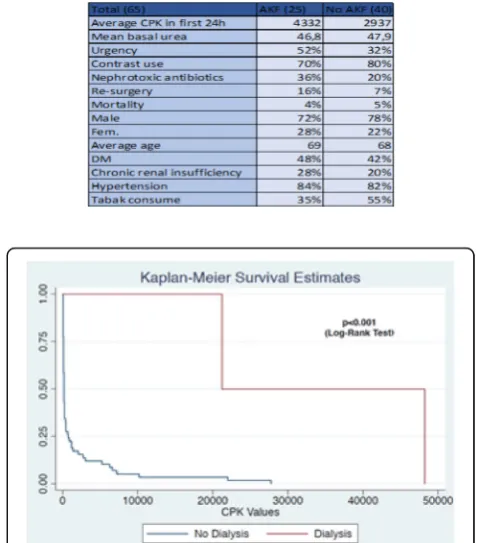
METHODS.The definition of AKF is defined by the AKIN: abrupt in-crease in serum creatinine≥0.3 mg/dL or 50% from the baseline. This study is prospective, observational and non-randomized. Patients on previous dialysis were excluded. Continuous variables were summa-rized as medians and ranges, and categorical variables as percentages. RESULTS.A database of 65 patients was evaluated. The data was ac-quired between April 2018 and March 2019. The median age was 70 (range 22-88 y); 73% were male. 25 patients (38%) had AKF. The average age in both groups is similar, as well the prevalence of comorbidities (hypertension and DM), distribution of sexes and mor-tality. 46% of the patients with chronic-kidney disease developed an AOCKF (28% of the AKF group). The frequencies of the following values are bigger in AKF group: Re-surgery, emergency surgery, use of vancomycin, gentamicin or amikacin.
CPK values were different in the two groups (4332 AKF; 2937 no AKF), but our sample was inconclusive to demonstrate a real correl-ation with AKF. When CPK in the first 24h was divided in three cat-egories (<10.000; 10000-20000 and >20000), it was observed in a Kaplan Meier analyses a correlation between these categories and post-operative hemodialysis.
CONCLUSION. Despite our small sample, CPK when analyzed as a categorical variable, showed a statistical significance in patients sub-mitted to hemodialysis. Despite differences in both groups, as CPK average as well as further factors related to a more serious condition; like patient urgency surgery, re-surgery and the use of antibiotics; our analysis was inconclusive to stablish those factors as predictive
© The Author(s). 2019Open AccessThis article is distributed under the terms of the Creative Commons Attribution 4.0 International License (http://creativecommons.org/licenses/by/4.0/), which permits unrestricted use, distribution, and reproduction in any medium, provided you give appropriate credit to the original author(s) and the source, provide a link to the Creative Commons license, and indicate if changes were made.
to AKF. The study has several limitations: the number of patients is insufficient for stronger evidences, and it is a single center study. We suggest that a multi-center study can resolve these problems.
001365
Utility of classic Weaning Predictors in decision-making in patients submitted to mechanical ventilation > 48 hours
LE. López, JF. Martínez Carmona, MFA. Hijano, FMÁ. Barbancho, AMJ. Delgado
Intensive care unit, Hospital Carlos Haya, Málaga, Spain Correspondence:J.F. Martínez Carmona
Intensive Care Medicine Experimental2019,7(Suppl 3):001365
INTRODUCTION.The withdrawal of respiratory support is key in the evolution of the patient, the identification of the optimal mo-ment to advance in the weaning is fundamo-mental, avoiding the problems associated with both an early and delayed withdrawal with increased morbidity and mortality.
The decision based solely on the clinic has proved unreliable. Wean-ing predictors offer support for decision makWean-ing. Among the classic predictors is the combination of two of them, MIP / P0.1, which as-sesses the capacity of the respiratory musculature and the intensity of the stimulus of the respiratory center.
OBJECTIVES.To assess the predictive capacity of MIP / P0.1 with re-spect to the classic predictors in patients undergoing prolonged mechanical ventilation.
METHODS.Prospective study including 17 patients submitted to MV due to different causes (TBI, CCV, urgent surgery, respiratory failure). Once criteria for advancing weaning are met, an SBT is made in PSV 5 - 8 cmsH2O over 5 cmsH2O of PEEP, and the following determina-tions are made: MIP, P0.1, MIP / P0,1, RSBI, FR, Vt. Epidemiological
variables are collected, cause of IOT, VM time, weaning failure, mortality.
RESULTS.The average age was 56.12 years +/- 13.95. 70.9% were male. Reason for admission: TBI (29.4%), CCV (29.4%), Urgent Surgery (23.5%). The average duration of MV was 12.76 days +/- 8.82. 64.7% presented weaning failure.
We observe a significant relationship between MIP / P0.1 and wean-ing failure (Test Chi2 p 0.011). ANOVA was performed, we found a re-lationship between the variables (F 8.08, p 0.012). We performed a COR curve presenting AUC 0.92 (p 0.005, 95% CI 0.78-1). We found the best cut-off at 0.095 (S 90%, E 83%). If we analyze subgroups (Group 1: MV <10 days, Group 2: MV> 10 days) we did not observe a significant relationship between MIP / P0.1 and failure of weaning CONCLUSION. - In our sample, MIP / P0.1 is a good predictor of weaning failure in patients undergoing short-term mechanical venti-lation, if we compare it with the rest of the classic parameters. - However, in patients undergoing prolonged mechanical ventilation, their prognostic capacity is limited
REFERENCE(S)
1. Nemer SN, Barbas CS. Predictive parameters for weaning from mechanical ventilation. J Bras Pneumol 2011; Sep-Oct 37(5): 669-79. 2. Sassons CS, Mahutte CK. Airway occlusion pressure and breathing
pattern as predictors of weaning outcome. Am Rev Respir Dis 1993; Oct;148 (4 Pt 1): 860-6.
3. Fernandez et al. Extubation failure: diagnostic value of occlusion pressure (P0.1) and P0.1-derived parameters. Intensive Care Med 2004; Feb 30 (2); 234-240.
000007
Early Predictors of the duration of mechanical ventilation in the critical patient: Oxigenation and age idex
C. Pacheco; D. Petrucci; MG. Sanchez
Medicina critica, University Hospital Of Caracas, Caracas, Venezuela Correspondence:C. Pacheco
Intensive Care Medicine Experimental2019,7(Suppl 3):000007
INTRODUCTION.EARLY PREDICTORS OF THE DURATION OF MECHAN-ICAL VENTILATION IN THE CRITMECHAN-ICAL PATIENT:OXYGENATION AND AGE INDEX
OBJECTIVES. To determine the early predictors of MV duration, with emphasis on age and the inspired oxygen/inspired fraction of oxygen (PaO2/FiO2), in critically ill patients.
METHODS.Descriptive, retrospective study. Sample consisting of 143 patients, ventilated for more than 24 hours. Demographic, clinical and risk factors were studied in relation to time in MV and mortality. RESULTS.The mean number of days in VM (8,5 +/- 7). (53,4%)remained for less than 5 days in MV and the duration of ventilatory support was shorter in young patients (18-50 years). Patients older than 70 years, with APACHE II>15pts, were associated with higher mortality. There was a linear relationship between age and oxygenation index. PaO2/ FiO2 between 101-200, was associated with longer duration in MV and with values of PaO2/FiO2<100, mortality increased. The positive water balance(BH+) was linked to PaO2/FiO2<100. Shock, FiO2>60%, Peep>10cmH20,bronchoaspiration, pneumonia, renal failure, BH+ and use of benzodiazepines were associated with mortality; while the dur-ation of MV was associated with FiO2>60%, shock,bronchoaspirdur-ation and hypoalbuminemia. Tracheostomies were performed in (6,9%)pa-tients and general mortality (39,1%)
CONCLUSION.PaO2/FiO2 and age can be considered as determining factors in the duration of MV and mortality in critically ill patients.
REFERENCE(S)
1. Macintyre NR, Epstein SK, Carson S, Scheinhorn D, Christopher K, Muldoon S; National Association for Medical Direction of Respiratory Care. Management of patients requiring prolonged mechanical ventilation: report of a NAMDRC consensus conference. Chest 2005; 128(6): 3937-54.
2. Clark PA, Lettieri CJ. Clinical model for predicting prolonged mechanical ventilation. J CritCare. 2013; 28(5): 880.
3. Sellares J, Ferrer M, Cano E, Loureiro H, Valencia M, Torres A. Predictors of prolonged weaning and survival during ventilator weaning in a respiratory ICU. Intensive Care Med 2011; 37: 775–784.
4. Pesau B, Falger S, Berger E, Weimann J, Schuster E, Leithner C, Frass M. Influence of age on outcome of mechanically ventilated patients in an intensive care unit. Crit Care Med. 1992; 20(4): 489-92.
5. Meinders AJ, Hoeren JG, Meinders AE. The outcome of prolonged mechanical ventilation in elderly patients. Age Ageing 1996; 25: 353-356. 6. Funk GC, Anders S, Breyer MK, Burghuber OC, Edelmann G, Heindl W,
Hinterholzer G, Kohansal R, Schuster R, Schwarzmaier-D'Assie A, Valentin A, Hartl S. Incidence and outcome of weaning from mechanical ventila-tion according to new categories. Eur Respir J. 2010; 35(1): 88-94 7. Ely EW, Evans GW, Haponik EF. Mechanical ventilation in a cohort of
elderly patients admitted to an intensive care unit. Ann Intern Med. 1999; 131(2): 96-104.
8. Gajic O, Afessa B, Thompson BT, Frutos-Vivar F, Malinchoc M, Rubenfeld GD, et al. for the Second International Study of Mechanical Ventilation and ARDS-net Investigator: Prediction of death and prolonged mechan-ical ventilation in acute lung injury. Crit Care. 2007;11:R53.
9. Velmahos GC, Belzberg H, Chan L, Avari S, Cornwell EE, Berne TV. Factors predicting prolonged mechanical ventilation in critically injured patients: introducing a simplified quantitative risk score. Am Surg. 1997;63:811-7. 10. Troché G, Moine P. Is the duration of mechanical ventilation predictable?
Chest. 1997;112:745-51.
11. Special thanks to the university hospital of Caracas.
000182
PREVENT OR RESCUE? A Review of the Application of Airway Pressure Release Ventilation (APRV) for Patients with Acute Respiratory Distress Syndrome (ARDS) in one District General Hospital (DGH) Intensive Care Unit (ICU)
T. Sanderson1, T. Samuels2, R. Kumar2, A. Falek2, R. Phelan2, J. Burns2, M. Alice2
1Critical care, East Surrey Hospital, London, United Kingdom;2Critical
care, East Surrey Hospital, Redhill , United Kingdom Correspondence:T. Sanderson
Intensive Care Medicine Experimental2019,7(Suppl 3):000182
INTRODUCTION. Trial evidence suggests that early application of APRV is associated with better oxygenation and shorter length of stay in ICU (1). Animal studies suggest early APRV may improve oxy-genation, minimise histological lung damage and even prevent ARDS development entirely (2, 3). However, the use of APRV is inconsistent and not widespread (4).
OBJECTIVES.To review the use of APRV within our ICU and describe the course of ARDS and clinical outcomes in those patients. METHODS. A protocol for intital settings, weaning and trouble-shooting APRV is in place in our 16 bed mixed medical and sur-gical ICU. Data were collected between 09/2018-03/2019 on patients receiving APRV for management of ARDS (using the Berlin definition) (5). Nursing charts were reviewed to retrieve PaO2 & FiO2 values. PaO2:FiO2 ratios (PF) were calculated for ad-mission, initiation of APRV, and 6 & 24 hours post initiation. Elec-tronic patient records were reviewed to find mortality rates at 28 and 90 days.
RESULTS. 9 patients were initiated on APRV for management of ARDS. On admission to ICU, 5 were classified severe, 2 moderate. Mean time between the point where the patient first met the ARDS criteria on ICU (T0) and initiation of APRV was 12 hours (range: 0-47 hours). PF deteriorated in 5 patients from T0 to APRV initiation by 12-50%; by which point 7 patients were severe, and 2 moderate ARDS. 3 of the 4 patients who died were noted to have the most sig-nificant drop in PF (31%, 38% and 50%). In 2 cases APRV was used within 2 hours of T0 and PF was not observed to deteriorate. In the remaining 2 cases, PF improved between T0 and APRV initiation by 13% & 28%. 4 patients were discussed with ECMO, and 2 transferred. 1 was lost to follow up as they were transferred within 4 hours of APRV initiation. PF improved on APRV by 16-342% at 6 hours (with one patient’s PF ratio dropping by 41%), 4-364% at 24 hours, and 49-321% at point of APRV termination. 7 of the remaining 8 patients still
met the criteria for ARDS on APRV cessation (4 = Moderate, 3 = Mild). Mortality was 44% at 28 days (unchanged at 90 days).
CONCLUSION. In this small study, most patients were admitted to ICU with already well-established ARDS, suggesting that it may not have been possible for them to achieve the benefits of early APRV. In addition, further delay before initiation of APRV was associated with deterioration in PF in 5 out of 9 patients. The most significant deteri-oration in PF was seen in 3 of the 4 patients who died. There was variation in the apparent indication to start APRV (with no obvious PF threshold) implying inconsistency with the practice of APRV. In addition many patients with ARDS will have undergone prone posi-tioning instead of APRV, as there is little evidence to guide which pa-tients will respond optimally to each technique. Further work is needed to clarify optimal timing of APRV use and the role of earlier ICU admission, in order to reduce ARDS progression, and to guide where APRV may be more appropriately used than prone positioning.
REFERENCE(S)
1) Zhou, Y. et al (2017). Early application of airway pressure release ventilation may reduce the duration of mechanical ventilation in acute respiratory distress syndrome. Intensive Care Medicine, 43(11), pp.1648-1659.
2) Roy, S. et al (2013). Preemptive Application of Airway Pressure Release Ventilation Prevents Development of Acute Respiratory Distress Syndrome in a Rat Traumatic Hemorrhagic Shock Model. Shock, 40(3), pp.210-216.
3) Roy, S. et al (2012). Early stabilizing alveolar ventilation prevents acute respiratory distress syndrome. Journal of Trauma and Acute Care Surgery, 73(2), pp.391-400.
4) Lakhani, R. et al (2019). Use of prone positioning and airway pressure release ventilation (APRV) for patients with acute respiratory distress syndrome (ARDS) in intensive care units in London and South-East Eng-land. Intensive Care Medicine Experimental, 6(2).
5) ARDS Definition Task Force, et al (2012). Acute Respiratory Distress Syndrome: the Berlin Definition. JAMA, 307(23).
000230
Use of inverse ratio ventilation in prehospital emergency medicine G. Jansen; N. Kappelhoff, R. Borgstedt; S. Rehberg
Anaesthesiology, Prostestant Hosiptal of the Bethel Foundation, Bielefeld, Germany
Correspondence:G. Jansen
Intensive Care Medicine Experimental2019,7(Suppl 3):000230
INTRODUCTION. The increasing availability of modern emergency respirators, allows for differentiated ventilation strategies, such as In-verse ratio ventilation (IRV) also in the pre-hospital emergency care setting. While there are detailed guidelines for preclinical airway management , recommendations for preclinical ventilation are just based on guidelines for in-hospital intensive care. The present survey was designed to determine the use of IRV in the prehospital setting by German emergency physicians (GEP).
METHODS.An anonymous web-based questionnaire encompassing 7 questions was sent to GEP from September to December of 2018. They were asked to specify their medical specialty; their education level, their experience in intensive and prehospital emergency care, their average number of assignments per month, their used ventila-tor model and ventilation mode.
RESULTS.60 % of the questionnaires were completed (157/261). 95 % of participants had preclinical access to respirators with the ability to perform IRV. 9.9% of respondents (male 11, female 4) stated that they were already performing preclinical IRV (I:E 1.5=1; I:E 2:1 = 1). The proportion of consultants in the IRV group was higher than in the non-IRV group. The proportion of experience in intensive care medicine and the number of assignments per month differed signifi-cantly between both groups. The corresponding group characteristics are shown in tables 1 and 2.
IRV, IRV using GEP had a longer experience in intensive care and a higher rate of monthly missions. These results suggest, that , training in differentiated ventilation strategies such as IRV should be inte-grated into the training of GEP.
REFERENCE
1. Kotani T, Katayama S, Fukuda S, Miyazaki Y, Sato Y. Pressure-controlled in-verse ratio ventilation as a rescue therapy for severe acute respiratory dis-tress syndrome. Springerplus. 2016;5(1):716. Published 2016 Jun 14. doi:10.1186/s40064-016-2440-x
001348
Vitamins use in septic shock in a polivalent ICU of a third level hospital
D. Robaglia, A. Vidal, L. Polanco, JJ. Paez Vargas, VA. Hortigüela Martín, JM. Milicua, A. Tejero, CC. Perez
ICU, Hospital Universitario Fundación Jiménez Díaz, Madrid, Spain Correspondence:D. Robaglia
Intensive Care Medicine Experimental2019,7(Suppl 3):001348
INTRODUCTION.Septic shock is a severe pathology in ICUs, with high cost for the society. There is a recent interest about vitamins therapy in septic shock patients in our unity as much as in the critical medical literature. OBJECTIVES.Describes epidemiological, clinical data and treatments dispended (vitamins and hemodynamic) of all patients admitted with septic shock in our ICU of a third level hospital.
METHODS. Retrospectively, all patients diagnosed with septic shock ac-cording to SOFA criteria between January 2018 and November 2018 were analyzed. Epidemiological characteristics, gravity scores, admission causes, treatment dispended (vitamins and steroids), complications (acute renal ure, acute liver failure, acute myocardial failure, ARDS and multiorgan fail-ure) and outcome like ICU stay and mortality were collected. We also analyzed hemodynamic data (type of monitoring, need of noradrenalin, use of second vasopressor and use of ionotropic support).
RESULTS.A total of 39 patients were analyzed (63.2% ± 2.59% males), the average age was 63.23±2.59 years, the SAPPS II gravity score at admission was 47 ± 2.81, SOFA was 9 ± 1.58 and PCR was 34 ± 14.3. Lactate peak of the first 72 hours was 52.53 ±6.14.
The ICU admission most frequent causes were septic shock (65.8%), post operatory (15.8%) and low conscience level (5.6%).
55.3% of the patients receive surgical treatment, 44.75% emergently. 65.8% had acute renal failure (ARF), 39.5% receive extra renal depura-tion therapy (ERDT), 15.8% develop an acute liver failure (ALF), 13.2% an ARDS, 26.7% an acute myocardial failure (AMF) and 36.8 % a mul-tiorgan failure (MOF). Use of noradrenalin in 94.7% and in 44.7% of theses case in higher concentration than 0.5 5μg/kg/min, use of a second vasopressor in 7.9%, dobubutamin was receive in 39.5% and second ionotropic agent in 5.3%.
55.3% of the patients receive thiamine (Vitamin B1), the same per-centage steroids and 21.1% vitamin C. The use of vitamin B1 is statis-tically related with use of steroids (p=0.001) and vitamin C (p=0.018), develop ARDS (p=0.003) and need to ERDT (p=0.037). The use of min C is statistically related with use of steroids (p=0.039) and vita-min B1 (p=0.032), develop ALF (p=0.012), need a second vasopressor (p=0.006) and need to ERDT (p=0.039).
Mortality at hospital discharge was 36.1% in which 46.13% was for multiorgan failure and the same percentage for limitation of effort. CONCLUSION. Vitamin B1 is use more frequently than vitamin C, more than half of the patients with septic shock receive it. Both of them are use in a refractory septic shock with the same indication that we use steroids. Vitamin C is dispended in a few desperate cases with data of high severity like acute liver failure or use of second vasopressor. It is, in our unit a compassionate treatment.
001136
Usefulness of blood gas analysis as predictor of hospital mortality in patients with septic shock: Cohort study
OE. Palacios Calderon, P. Palacios Moguel, JE. Monter Vigueras, CA. Rojas Gomez, R. Carbajal Serrano, J. Franco Granillo, G. Camarena Alejo, J. Aguirre Sánchez, A. Aisa Alvarez
Intensive care unit, The American British Cowdray Medical Center, Mexico City, Mexico
Correspondence:O.E. Palacios Calderon
Intensive Care Medicine Experimental2019,7(Suppl 3):001136
INTRODUCTION.Blood gas analysis is probably the most common diagnostic tool used in intensive care. A proper understanding and use of arterial and pulmonary/central venous blood gas analysis makes it possible to correctly interpret most of the respiratory, circu-latory and metabolic derangements which may occur in septic shock patients1.
OBJECTIVES. To assess the effectiveness of arterial and venous blood analysis in predicting mortality of patients with septic shock.
METHODS.Prolective cohort study conducted in two general in-tensive care units, between June 2018–April 2019. Adults >18yo with septic shock diagnosis based on SEPSIS-3 criteria were in-cluded. Time 0 when diagnosis was made. All patients monitored from admission to hospital discharge. Simultaneously, blood gas analysis were carried out to obtain: PaO2/FiO2, ScvO2, Qs/Qt, P(v-a)CO2, C(a-v)O2, P(v-a)CO2/C(a-v)O2, O2ER. Primary outcome was usefulness of arterial and pulmonary/central venous blood ana-lysis as mortality predictor. Standard deviation and medians with interquartile ranges for quantitative variables. Frequencies and percentages for qualitative variables. Student´s t-distribution or Mann-Whitney U-test for groups comparison depending on distri-bution. Binary logistic regression to control for confoundings. Pearson test for correlation analysis between two quantitative variables. Multiple linear regression analysis to generate an equa-tion with the significant variables of the model.
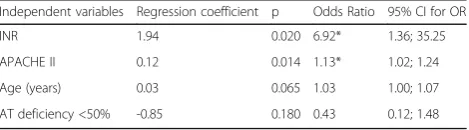
RESULTS.66 patients with mean age of 66.5 ± 17 years, 35 (53%) men, 16 (24%) diabetics and 27 (40%) with hypertension. SAPS II 41.5 (12– 97) and SOFA 8.4 ± 3.2. 13 (19.7%) patients died. Pa-tients who died had CKD (30 vs 8;p= 0.05), higher BMI (29.14 ± 10.53 vs 24.92 ± 5.6; p = 0.05) and lower PaO2/FiO2 (139.51 ± 48.48 vs 218.48 ± 98.07; p = 0.04). Logistic regression analysis showed that PaO2/FiO2 in time 0 was associated with mortality Table 1 (abstract 000230).Specialist discipline of the surveyed
emergency physicians
Anaesthesiology Internal Medicine
Surgery General medicine
Paediatrics Other
IRV [n(%)]
11 (73,3 %) 2 (13,3 %) 1 (6,7 %)
0 (0 %) 1 (6,7%)
- Non-IRV[n(%)]
102 (70,8%) 19 (13,2%) 10 (6,9 %)
6 (4,2 %) 2 (1,4 %) 5 (3,5 %)
Table 2 (abstract 000230).User characteristics IRV vs. Non-IRV
IRV Non-IRV
Consultants 14/15
(93,3%)
105/144 (72,9%)
Experience in intensive care (y) 3,03 # 1,96
Experience in prehospital emergency medicine (y)
3,53 3,26
Number of monthly missions (n/mon) 37,6 # 26,5
[OR 0.95 (IC95% 0.90 to 0.99); p = 0.04]. There is correlation of PaO2FiO2 with SvcO2 (r 0.3; p = 0.013) and Qs/Qt (r 0.6; p < 0.001), by these results we generate the following equation with a multiple linear regression analysis:PaO2/FiO2 = 84,748 + 3.136 (SvcO2) - 4.411 (Qs/Qt) [r2 0.45;p< 0.001].
CONCLUSION.We found association of PaO2/FiO2 with mortality in patients with septic shock. There is correlation of PaO2/FiO2 with SvcO2 and Qs/Qt, so we believe that this should be adjusted to these variables. To increase statistical power, a larger sample size is required.
REFERENCE
1. Gattinoni L, Pesenti A, Matthay M. Understanding blood gas analysis. Intensive Care Med. 2018 Jan;44(1):91-93.
AKI - Critical care nephrology 1
000210
Influence of contrast media on renal function and outcomes in critically ill patients
Y. Goto1, T. Fujii2, S. Uchino3, K. Doi4, S. Katayama1 1
Department of anesthesiology and intensive care, Jichi Medical University, Tochigi, Japan;2Department of epidemiology and preventive medicine, Kyoto University Graduate School of Medicine, Kyoto, Japan; 3Intensive care unit, department of anaesthesiology, Jikei University
School of Medicine, Tokyo, Japan;4Department of emergency and critical care medicine, The University of Tokyo, Tokyo, Japan Correspondence:Y. Goto
Intensive Care Medicine Experimental2019,7(Suppl 3):000210
INTRODUCTION.In recent years, several papers reported that renal dysfunction caused by contrast media is less frequent than previ-ously reported in critically ill patients(1). However, it remains unclear whether the administration of contrast media for critically ill is harm-ful, as previous studies focused on specific subpopulations in the ICU(2) or were conducted in a single center(3-5).
OBJECTIVES.To assess the risk of contrast media administration by examining the renal function and prognosis of patients with or without receiving contrast media in critically ill patients. METHODS. This was a post-hoc analysis of the Japan AKI Data-base study, which was a prospective cohort study on acute kid-ney injury (AKI) conducted in the 13 mixed ICUs in Japan from July through December in 2016(6). Adult patients who stayed for >24 hours in the ICU were consecutively registered. Patients were divided into Group C, who received contrast media within 48 hours before the ICU admission and Group NC, who did not re-ceive contrast media. The primary outcome was deterioration of renal function (DRF) defined as elevation of serum creatinine level (>0.3mg/dL or 1.5-fold from baseline) or decreased urine output (<0.5ml/kg/hr for 6 hours). ICU mortality and hospital mor-tality were also assessed as the secondary outcomes. The effects of contrast media on the outcomes were analyzed using propen-sity score matched analysis.
RESULTS. A total of 2246 patients were eligible to the study. Of which, 606 patients were given contrast media within 48 hours be-fore the ICU admission. After propensity score matching, the propor-tions of DRF were similar between group C and group NC (35.9 vs 33.8%,P= 0.706). As for secondary outcomes, ICU and hospital mor-tality (4.0 vs 2.8%,P=0.623 and 13.8 vs 9.3%,P=0.159, respectively) were similar between two groups.
CONCLUSION.The effect of contrast media on the deterioration of renal function was not evident in critically ill patients.
REFERENCE(S)
1. Aycock RD, Westafer LM, Boxen JL, Majlesi N, Schoenfeld EM, Bannuru RR. Acute Kidney Injury After Computed Tomography: A Meta-analysis. Ann Emerg Med. 2018;71(1):44-53 e4.
2. Ng CS, Shaw AD, Bell CS, Samuels JA. Effect of IV contrast medium on renal function in oncologic patients undergoing CT in ICU. AJR Am J Roentgenol. 2010;195(2):414-22.
3. McDonald JS, McDonald RJ, Williamson EE, Kallmes DF, Kashani K. Post-contrast acute kidney injury in intensive care unit patients: a propensity score-adjusted study. Intensive Care Med. 2017;43(6):774-84.
4. Cely CM, Schein RM, Quartin AA. Risk of contrast induced nephropathy in the critically ill: a prospective, case matched study. Critical care (London, England). 2012;16(2):R67.
5. Haveman JW, Gansevoort RT, Bongaerts AH, Nijsten MW. Low incidence of nephropathy in surgical ICU patients receiving intravenous contrast: a retrospective analysis. Intensive Care Med. 2006;32(8):1199-205. 6. Fujii T, Uchino S, Doi K, Sato T, Kawamura T, group Js. Diagnosis,
management, and prognosis of patients with acute kidney injury in Japanese intensive care units: The JAKID study. Journal of critical care. 2018;47:185-91.
000232
The effect of long-term duration renal replacement therapy on outcomes of critically ill patients with acute kidney injury: A retrospective cohort study
M. Yang1, K. Hongjun2
1Departmentof critical care medicine, Department of Critical Care
Medicine, Chinese PLA General Hospital, Beijing,China, Beijing, China; 2Departmentof critical care medicine, Chinese PLA General Hospital,
Beijing, China,
Correspondence:M. Yang
Intensive Care Medicine Experimental2019,7(Suppl 3):000232
INTRODUCTION.Renal replacement therapy (RRT), as a cornerstone of supportive treatment, has long been performed in critically ill pa-tients with acute kidney injury (AKI). However, the majority of studies may have neglected the effect of the duration of RRT on the out-come of AKI patients. To explore the effect of the long duration of RRT on the outcome of critically ill patients with AKI
METHODS.This retrospective study was conducted by using the Mul-tiparameter Intelligent Monitoring in Intensive Care II (MIMIC-II) data-base, which is a publicly available clinical database developed by the Massachusetts Institute of Technology (MIT), Phillips Healthcare, and Beth Israel Deaconess Medical Center (BIDMC). This database con-tains data from more than 32,000 critically ill patients who were treated in the ICUs at BIDMC from 2001 to 2008.The primary out-come measure of this study was the survival rate at 28 days, 60 days and 90 days in the long-duration RRT group and the non-long-duration RRT group. The secondary outcomes assessed the difference Table 1 (abstract 000210).See text for description
Contrast (n= 248)
No contrast (n= 248)
P value
Renal function deterioration, n(%) 89 (35.9) 84 (33.8) 0.706
- Creatinine >0.3mg/dL increase 41 (16.5) 45 (18.2) 0.722
- 1.5fold increase in creatinine 23 (9.3) 24 (9.7) 1.000
- Urine output < 0.5ml/kg/hr for >6hr
69 (27.8) 56 (22.6) 0.215
ICU death within 3 days 4 (1.6) 2 (0.8) 0.686
RRT during ICU stay, n(%) 24 (9.7) 20 (8.1) 0.636
ICU length of stay, days(IQR) 3.4 (1.9-6.7) 3.0 (1.9-6.0) 0.236
Hospital length of stay, days(IQR) 26 (16-52) 30 (17-53) 0.434
Chronic HD after discharge, n(%) 6 (2.4) 2 (0.8) 0.285
Serum creatinine at discharge 0.75 (0.59-1.09) 0.74 (0.58-1.02) 0.148
ICU mortality 10 (4.0) 7 (2.8) 0.623
in clinical outcome in these two groups. Lastly, the effect of the dur-ation of RRT on mortality in AKI patients was determined as the third outcome.
RESULTS.We selected 1,020 patients in total who received RRT treat-ment according to the MIMIC-IIdatabase. According to the inclusion and exclusion criteria, we finally selected 506 patients with AKI: 286 AKI patients in the non-long-duration RRT group and 220 in the long-duration RRT group. After 28 days, there was a significant differ-ence in all-cause mortality between the long-duration RRT group and the non-long-duration RRT group (p=0.001). However, the difference disappeared after 60 days and 90 days (p=0.803 and p=0.925, re-spectively). The length of ICU stay, length of hospital stay and dur-ation of mechanical ventildur-ation were significantly longer in the long-duration RRT group than those in the non-long-long-duration RRT group. Considering 28-day mortality, the longer duration of RRT was shown to be a protective factor (HR=0.995, 95% CI 0.993-0.997, p< 0.0001),while 60-day and 90-day mortality were not correlated with improved protection.
CONCLUSION.The long duration of RRT can improve the short-term prognosis of AKI patients, but it does not affect the long-term prog-nosis of these patients. Progprog-nosis is determined by the severity of the illness itself. This suggests that RRT can protect AKI patients through the most critical time, however, the final outcome cannot be altered.
REFERENCE(S)
1. Gaudry S, Hajage D, Schortgen F,et al (2016) Initiation Strategies for Renal-Replacement Therapy in the Intensive Care Unit.N Engl J Med 375:122-133.
2. Palevsky PM, Zhang JH, O'Connor TZ,et al (2008) Intensity of renal support in critically ill patients with acute kidney injury.N Engl J Med 359:7-20.
3. Wald R, Shariff SZ, Adhikari NK,et al (2014) The association between renal replacement therapy modality and long-term outcomes among critically ill adults with acute kidney injury: a retrospective cohort study*.Crit Care Med 42:868-877.
4. De Corte W, Dhondt A, Vanholder R,et al (2016) Long-term outcome in ICU patients with acute kidney injury treated with renal replacement therapy: a prospective cohort study.Crit Care 20:256.
5. Kawarazaki H, Uchino S (2016) Validity of low-efficacy continuous renal replacement therapy in critically ill patients.Anaesthesiol Intensive Ther 48:191-196.
6. Akhoundi A, Singh B, Vela M,et al (2015) Incidence of Adverse Events during Continuous Renal Replacement Therapy.Blood Purif 39:333-339. 7. Honore PM, De Waele E, Jacobs R,et al (2013) Nutritional and metabolic
alterations during continuous renal replacement therapy.Blood Purif 35:279-284.
8. Economou CJP, Wong G, McWhinney B,et al (2017) Impact of beta-lactam antibiotic therapeutic drug monitoring on dose adjustments in critically ill patients undergoing continuous renal replacement therapy.Int J Antimicrob Agents 49:589-594.
9. Ben-Hamouda N, Charriere M, Voirol P,et al (2017) Massive copper and selenium losses cause life-threatening deficiencies during prolonged con-tinuous renal replacement.Nutrition 34:71-75.
10. Baird JS, Wald EL (2010) Long-duration (>4 weeks) continuous renal re-placement therapy in critical illness.Int J Artif Organs 33:716-720. 11. Vats HS, Dart RA, Okon TR,et al (2011) Does early initiation of continuous
renal replacement therapy affect outcome: experience in a tertiary care center.Ren Fail 33:698-706.
12. Saeed M, Villarroel M, Reisner AT,et al (2011) Multiparameter Intelligent Monitoring in Intensive Care II: a public-access intensive care unit databa-se.Crit Care Med 39:952-960.
13. Villa G, Neri M, Bellomo R,et al (2016) Nomenclature for renal replacement therapy and blood purification techniques in critically ill patients: practical applications.Crit Care 20:283.
14. Neri M, Villa G, Garzotto F,et al (2016) Nomenclature for renal replacement therapy in acute kidney injury: basic principles.Crit Care 20:318.
15. Clark WR, Neri M, Garzotto F,et al (2017) The future of critical care: renal support in 2027.Crit Care 21:92.
16. Ji Q, Mei Y, Wang X,et al (2011) Timing of continuous veno-venous hemodialysis in the treatment of acute renal failure following cardiac sur-gery.Heart Vessels 26:183-189.
17. Lin YF, Ko WJ, Chu TS,et al (2009) The 90-day mortality and the subse-quent renal recovery in critically ill surgical patients requiring acute renal replacement therapy.Am J Surg 198:325-332.
18. Tatum JM, Barmparas G, Ko A,et al (2017) Analysis of Survival After Initiation of Continuous Renal Replacement Therapy in a Surgical Intensive Care Unit.JAMA Surg 152:938-943.
19. Zhang J, Tian J, Sun H,et al (2018) How Does Continuous Renal Replacement Therapy Affect Septic Acute Kidney Injury?Blood Purif 46:326-331.
20. Lee S, Huen S, Nishio H,et al (2011) Distinct macrophage phenotypes contribute to kidney injury and repair.J Am Soc Nephrol 22:317-326. 21. Castro BA, Flanigan P, Jahangiri A,et al (2017) Macrophage migration
inhibitory factor downregulation: a novel mechanism of resistance to anti-angiogenic therapy.Oncogene 36:3749-3759.
22. Wewer Albrechtsen NJ, Kuhre RE, Pedersen J,et al (2016) The biology of glucagon and the consequences of hyperglucagonemia.Biomark Med 10:1141-1151.
23. Ono S, Tsujimoto H, Hiraki S,et al (2018) Mechanisms of sepsis-induced immunosuppression and immunological modification therapies for sepsi-s.Ann Gastroenterol Surg 2:351-358.
24. Heering P, Morgera S, Schmitz FJ,et al (1997) Cytokine removal and cardiovascular hemodynamics in septic patients with continuous venovenous hemofiltration.Intensive Care Med 23:288-296.
25. Park S, Lee S, Kang MW,et al (2018) Postdischarge Major Adverse Cardiovascular Events of ICU Survivors Who Received Acute Renal Replacement Therapy.Crit Care Med 46:e1047-e1054. 26. Violo L, De Francesco M (2018) Timing of Continuous Renal Replacement Therapy.JAMA Surg 153:289-290.
27. Zarbock A, Kellum JA, Schmidt C,et al (2016) Effect of Early vs Delayed Initiation of Renal Replacement Therapy on Mortality in Critically Ill Patients With Acute Kidney Injury: The ELAIN Randomized Clinical Trial.JAMA 315:2190-2199.
28. Gaudry S, Hajage D, Schortgen F,et al (2018) Timing of Renal Support and Outcome of Septic Shock and Acute Respiratory Distress Syndrome. A Post Hoc Analysis of the AKIKI Randomized Clinical Trial.Am J Respir Crit Care Med 198:58-66.
29. The authors thank all research participants for their assistanc
000246
Rising GGT during ICU admission protects against acute kidney injury and is associated with lower hospital mortality
G. Jansma, P. Freire Jorge, M. Nijsten
Department of critical care, University Medical Center Groningen, Groningen, Netherlands
Correspondence:G. Jansma
Intensive Care Medicine Experimental2019,7(Suppl 3):000246
INTRODUCTION. It has been demonstrated in various ICU patient populations that an elevated gamma-glutamyl transpeptidase (GGT) between the 6th and 14th ICU day is associated with a better out-come [1-3]. Whether a relatively high GGT also confers a lowered risk for acute kidney injury (AKI) has not been investigated. In this study we examined the dynamics of GGT during the first ICU week and its relation with AKI and outcome.
METHODS.A cohort of patients previously studied for the glucose/ lactate interaction with liver and renal function was analyzed [4]. Daily creatinine levels were used for the assessment of the develop-ment of AKI during the first ICU week. GGT levels were determined frequently. We selected patients with initially normal GGT (i.e. <55 IU/L). GGT levels were compared between AKI and no AKI and hos-pital survivors and hoshos-pital non-survivors. We also analyzed the rela-tion of GGT with AKI in the group of survivors.
non-survivors (17 vs 51%, p<0.001). After selecting patients with a normal GGT at ICU day 1 (n = 5399), median [IQR] GGT levels were signifi-cantly higher in the group AKI vs no AKI on the first 2 days of ICU ad-mission (26 [17-37] vs 22 [15-32] p=0.02 resp 27 [17-37] vs 24 [16-34] p<0.001). On ICU day 6 GGT was significantly higher in the patients with no AKI vs AKI (80 [45-154] vs 70 [39-119] p<.01). On the first 2 days of ICU admission GGT was also significantly higher in the group non-survivors (29 [19-40] vs 22 [15-33] p<0.001 resp 28 [19-38] vs 24 [16-34] p<0.001) and on day 6 GGT was higher in the group survivors compared to non-survivors (79 [44-148] vs 66 [38-103] p<0.01). Also when only survivors were analyzed, higher GGT at ICU day day 6 was associated with lower risk of AKI (p=0.04).
CONCLUSION.In patients with a normal GGT level at day 1 of ICU admission, higher GGT on the first 2 days of ICU admission were as-sociated with a higher incidence of AKI and hospital mortality. How-ever, during ICU admission overall GGT levels progressively increased and higher GGT levels on day 6 of ICU admission were associated with a lower incidence of AKI and hospital mortality. This suggests a protective role of GGT itself or that elevated GGT may be a marker of regeneration and recovery of the liver or kidneys.
REFERENCE(S)
[1] Haveman JW, Zeebregts CJ, Verhoeven EL, van den Berg P, van den Dungen JJ, Zwaveling JH, Nijsten MW. Changes in laboratory values and their relationship with time after rupture of an abdominal aortic aneurysm. Surg Today. 2008;38(12):1091-101
[2] Alkozai EM, Lisman T, Porte RJ, Nijsten MW. Early elevated serum gamma glutamyl transpeptidase after liver transplantation is associated with better survival. F1000Res. 2014 Apr 3;3:85
[3] Alkozai EM, Mahmoodi BK, Decruyenaere J, Porte RJ, Oude Lansink-Hartgring A, Lisman T, Nijsten MW. Systemic comparison of routine la-boratory measurements with in-hospital mortality: ICU-Labome, a large cohort study of critically ill patients. Clin Chem Lab Med. 2018 Jun 27;56(7):1140-1151
[4] Jorge PF, Wieringa N, de Felice E, van der Horts ICC, Oude Lansink A, Nijsten MW. The association of early combined lactate and glucose levels with subsequent renal and liver dysfunction and hospital mortality in critical ill patients. Critical Care. 2017 21:218
000292
One-year prognostic value of kidney biomarkers at discharge from the intensive care unit
L. Matthieu,1, H. Alexa2, D. François1, H. Oliver,3, S. Joachim,3, F. Marie-Céline,1, A. Mebazaa1, G. Etienne,4
1
Department of anaesthesiology, surgical intensive care and burn unit, Saint-Louis Hospital, Paris, France;2Department of anesthesia, surgical intensive care, University Hospital of Basel, Basel, Switzerland; 3Sphingotec gmbh, Sphingotec GmbH, Hennigsdorf, Germany; 4
Department of anaesthesiology, surgical intensive care, Hospital Lariboisière, Paris, France
Correspondence:D. François
Intensive Care Medicine Experimental2019,7(Suppl 3):000292
INTRODUCTION. Serum creatinine (Screat) may overestimate renal function at discharge from the intensive care unit (ICU). The objective was to evaluate the association between biomarkers of kidney func-tion and injury at ICU discharge and one -year survival.
METHODS. Ancillary study of the FROG-ICU cohort, a prospective ob-servational cohort in 21 ICUs in France and Belgium, including ICU patients receiving mechanical ventilation and/or hemodynamic sup-port, with one-year follow-up. Kidney biomarkers were measured at ICU discharge among ICU survivors (plasma Cystatin C (pCystc); plasma and urinary Neutrophil gelatinase associated lipocalin (pNGAL and uNGAL); plasma proenkephalin (penKid®)). A Sub-group analyses
were performed in the sub-group of patients with discharge serum creatinine < 1.5-fold of baseline.
RESULTS. Among 1207 ICU survivors with complete biomarker as-sessment and follow-up, 231 died during the year following ICU dis-charge (19.4%). One-year non-survivors had higher disdis-charge biomarkers level (79 (56.5 to 113.5) vs. 63 (50 to 86) mmol/L for Screat, 91.9 (31.6 to 266.9) vs. 47.7 (23.1 to 141.2) ng/mL for uNGAL, 201 (106 to 350.8) vs. 115 (71 to 189.2) ng/mL for pNGAL, 1.6 (1.2 to 2.4) vs. 1.1 (0.9 to 1.6) 1 mg/L for pCystC and 80.7 (53.3 to 132.9) vs. 55 (40.7 to 82.9) ng/mL for penKid, all p<0.0001). Un-adjusted and adjusted (i.e. on prognostic factors previously identified in the FROG cohort: Age, Charlson comorbidity score, vascular disease, severe valvular disease, chronic kidney diseases, cancer, loss of autonomy, systolic blood pressure, body temperature, total protein and platelet counts, and white blood cell count at ICU discharge, red blood cell transfusion and prolonged ICU length) odds ratios showing associ-ation between kidney biomarkers and one-year mortality are pre-sented in Table 1.
CONCLUSION. Kidney biomarkers measured at ICU discharge are associated with one-year outcome, including patients with low serum creatinine at ICU discharge. These results suggest that pa-tients with sub-clinical acute kidney injury at discharge are identi-fied using these biomarkers.
000325
Elevated lactate levels were related with an increase in overall 90-day mortality among NCU patients. This association was
specifically attributed to neurologic disease-related 90-day mortality
I. Chami1, TK. Oh2, S. In-Ae3, C. Hyunhee3
1Surgery, Seoul National University Bundang Hospital, Seongnam, Republic of
Korea;2Anesthesiology, Seoul National University Bundang Hospital, Seongnam, Republic of Korea;3Anesthesiology and pain medicine, Seoul National University Bundang Hospital, Seongnam, Republic of Korea
Correspondence:T.K. Oh
Intensive Care Medicine Experimental2019,7(Suppl 3):000325
INTRODUCTION.It is unclear as to whether intensivist coverage has an effect on improving outcomes of patients postoperatively admit-ted to the surgical ICU.
OBJECTIVES. This study aimed to assess the effect of intensivist coverage on the incidence rate of postoperative acute kidney injury (AKI) and postoperative ventilator time among patients postopera-tively admitted to the ICU
METHODS. Adult patients postoperatively admitted to the ICU be-tween January 2012 and December 2017 were retrospectively enrolled. The incidence rate of AKI within 72 hours after surgery and the Table 1 (abstract 000292).Adjusted OR and 95% confidence interval for one-year mortality in all ICU survivors, as well as in the subgroup of patients with low serum creatinine at discharge (i.e. <1.5 fold baseline)
All patients Screat <1.5 baseline at discharge
sCreat 1.79 [1.17 - 2.73] 1.68 [1.04 - 2.69]
eGFR 2.06 [1.30 - 3.27] 1.94 [1.15 - 3.29]
uNGAL 2.08 [1.35 - 3.21] 1.99 [1.23 - 3.21]
pNGAL 2.61 [1.71 - 3.97] 2.63 [1.61 - 4.27]
pCystC 3.11 [1.88 - 5.16] 2.84 [1.67 - 4.83]
postoperative ventilator time were compared between the intensivist coverage group and the non-intensivist coverage group.
RESULTS.In total, 5,494 subjects were included in the final ana-lysis (2,747 subjects in each group). The incidence rate of AKI was significantly higher in the non-intensivist coverage group than that in the intensivist coverage group (22.8% vs 20.2%;
P=.017). Moreover, logistic regression analysis showed that the in-cidence rate of postoperative AKI in the non-intensivist coverage group has increased by 17% compared to that in the intensivist coverage group (odds ratio: 1.17, 95% confidence interval: 1.03-1.33; P=.017). Lastly, the median time of ventilator use in the non-intensivist coverage group was significantly longer than that in the intensivist coverage group [7.8 hours [interquartile range, IQR: 2.7-13.5] vs 5.5 hours [IQR: 2.1-8.5];P<.001).
CONCLUSION.High-intensity intensivist coverage is associated with lower risk of postoperative AKI and shorter postoperative ventilator time, indicating the need for full-time intensivist coverage at the sur-gical ICU.
000348
Reading Between the“Lines”: Improving Renal Replacement Therapy in a District General Hospital
N. French1, R. Sundaram2, L. Gemmell2, J. Hunter2
1N H S Greater Glasgow & Clyde, Glasgow, United Kingdom;2Intensive
care, N H S Greater Glasgow & Clyde, Glasgow, United Kingdom Correspondence:N. French
Intensive Care Medicine Experimental2019,7(Suppl 3):000348
INTRODUCTION. The Kidney Disease Improving Global Outcomes (KDIGO) guidelines recommend using regional citrate anticoagulation for continuous renal replacement therapy (RRT) in critically ill patients with acute kidney injury. We introduced citrate RRT in May 2017 in our intensive care unit.
OBJECTIVES.To assess the effect of citrate RRT on filter usage, RRT days, and filter downtime in critically ill patients in a district general hospital.
METHODS.We performed a retrospective observational study looking at patients admitted to our 7 bedded Level 3 critical care unit (370 pa-tients per annum) for one year after the introduction of citrate RRT. We included patients over 16 years of age who had received RRT in our unit. Data was collected from WardWatcher, a Scottish Intensive Care Society Audit Group (SICSAG) database, electronic patient records (EPR) and PACS (a radiology information system). 53 patients received RRT on the unit during the year. A total of 8 patients were excluded; five of these patients had no RRT prescription chart on the EPR and three of them had received heparin.
RESULTS.There were a total of 53 patients, median age 58 years with 60% males. Of the 45 patients whose data were available, the average time on citrate RRT was 3.1 days vs 4.6 in 2015 giving a p value of 0.157. Average number of set changes was unchanged with 1.8 set changes per patient after introduction of citrate vs 1.8 in 2015, giving a p value of 0.362. We achieved the prescribed blood pump speed 80% of the time with citrate RRT as opposed to only 50% of the time in 2015. In 40% of the patients who received citrate RRT, the filter ran 100% uninterrupted. Filter clotting was still the commonest reason for filter set changes. A subgroup analysis based on line site (i.e. right in-ternal jugular (RIJ), left inin-ternal jugular (LIJ), femoral veins (FV), or sub-clavian veins (SV)) was carried out due to the high proportion of LIJ lines in our unit. This revealed an average of 1.2 set changes for RIJ lines, 1.4 for LIJ, 0.67 for FV and 0 for the single SV line inserted. These included changes due to routine filter set changes at 72 hours. CONCLUSION.It was predicted that the introduction of citrate RRT would reduce number of filter set changes per patient and filter downtime, ultimately reducing cost. The reasons for not being able
to demonstrate reduction in filter set usage may include small num-bers, line position (LIJ), and not recommencing filter after short planned interruptions such as CT transfers. It has not been possible to do a composite cost analysis at this stage to demonstrate cost re-duction. We hope to feedback results of this study to the multidiscip-linary team, improve awareness regarding choice of site for dialysis lines, and re-examine our outcomes in a year's time.
REFERENCE
1. KDIGO Clinical Practice Guideline for Acute Kidney Injury. Kidney International Supplement 2012 2 ,March 2012. Available from http:// www. kdigo. org/ clinical_ practice_ guidelines/ pdf/ KDIGO% 20AKI% 20 Guideline. pdf
000441
Clinical prediction model for acute kidney injury recovery in the intensive care unit
CY. Huang, F. Guiza Grandas, M. Schetz, J. Gunst, M. Casaer, G. Van den Berghe, G. Meyfroidt
Laboratory of intensive care medicine, academic department of cellular and molecular medicine, KU Leuven, Leuven, Belgium
Correspondence:C.Y. Huang
Intensive Care Medicine Experimental2019,7(Suppl 3):000441
INTRODUCTION.Acute kidney injury (AKI) occurs in up to 50% of pa-tients admitted to the intensive care unit (ICU) [1]. Predicting recov-ery from AKI could be valuable, for patient and family counseling, prognostication, and post-ICU care planning. Patients with lower pre-dicted probability of AKI recovery could benefit more from a focused health care management. However, early prediction of AKI recovery remains a major challenge.
OBJECTIVES.The purpose of this study was to identify predictors for AKI recovery. For this purpose, we developed and validated an AKI recovery prediction model in adult ICU patients, to predict AKI recovery at ICU discharge.
METHODS.This study was a retrospective preplanned secondary analysis of the EPaNIC multicenter randomized controlled trial database. AKI recov-ery was defined as no longer having AKI stage 3 [2], not receiving renal replacement therapy (RRT), and not being deceased at ICU discharge. The development cohort (n= 227) consisted of patients with AKI stage 3 and/ or RRT during the ICU stay. Clinical data were retrieved from the EPaNIC research database and from the clinical patient data management system database. The model was developed by using a random forest (RF) machine-learning algorithm. Feature selection was performed with a RF-based selection approach. Performance was evaluated by discrimination, calibration, and decision curve, and internally validated (with 95% confi-dence intervals (CI)) by bootstrapping with 200 replications.
C.I. 0.05–0.16), and net benefit with respect to treat-all was 0.16 (95% C.I. -0.00–0.48).
CONCLUSION.Although the determinants of AKI recovery are diffi-cult to define, a prediction model based on routinely collected clin-ical data was able to fairly predict AKI recovery at ICU discharge.
REFERENCE(S)
[1] Chawla LS, Bellomo R, Bihorac A, et al (2017) Acute kidney disease and renal recovery: Consensus report of the Acute Disease Quality Initiative (ADQI) 16 Workgroup. Nat Rev Nephrol. https://doi.org/10.1038/ nrneph.2017.2
[2] Khwaja A (2012) KDIGO clinical practice guidelines for acute kidney injury. Nephron - Clin. Pract.
[3] Chao-Yuan Huang receives a Taiwan-KU Leuven scholarship.
000442
How does admission creatinine affect critical care outcome?: A retrospective cohort database study
A. O'Docherty1, M. Alice2, T. Samuels3, P. Morgan3 1
East Surrey Hospital, Redhill, United Kingdom;2Icu, East Surrey Hospital, Redhill, United Kingdom;3Critical care, East Surrey Hospital, Redhill , United Kingdom
Correspondence:A. O'Docherty
Intensive Care Medicine Experimental2019,7(Suppl 3):000442
INTRODUCTION.Many patients admitted to the intensive care unit (ICU) have some element of kidney injury, whether acute or on a background of chronic renal failure. Acute kidney injury (AKI) requir-ing renal replacement therapy (RRT) develops in around 5-10% of pa-tients admitted to ICU¹. It has previously been found that a low serum creatinine is associated with a poor outcome². It has also been shown that AKI is an independent risk factor for mortality¹. There are many parameters that can be used to identify and monitor AKI, such as urine output, serum potassium, fluid balance and serum creatin-ine. Raised serum creatinine is also a marker of chronic kidney dis-ease. However, there is little research into the relationship between serum creatinine and critical care outcome. Our primary aim was to investigate whether there is a correlation between serum creatinine and ICU outcome, and hospital outcome.
METHODS. We searched our local ICU database, Ward Watcher, which contains data from 13,927 patients from 1993-April 2019. Emergency and non-emergency admissions were included. Pa-tients with incomplete data regarding outcome were excluded. We assessed whether an association existed between the highest serum creatinine and critical care/hospital outcome.
RESULTS.
CONCLUSION.Our data suggest a relationship between raised serum creatinine, and poor critical care and hospital outcome. Creatinine is a readily available test and is usually measured daily in critical care, so could be considered to be a useful aid in considering a patient’s prognosis. While serum creatinine may not be the best marker of renal function (GFR)³, there does appear to be a relationship between creatinine and ICU outcome. In our study we did not isolate emer-gency admissions, nor did we account for baseline creatinine or any prior chronic kidney disease. Further work is needed to study the ef-fects of these parameters on unit outcome.
REFERENCE(S)
1. Delanaye P, Mariat C. Detection of decreased glomerular filtration rate in intensive care units: serum cystatin C versus serum creatinine. BMC Nephrology. 2014;15:9
2. Udy A, Bailey M. The Association Between Low Admission Peak Plasma Creatinine Concentration and In-Hospital Mortality in Patients Admitted to Intensive Care in Australia and New Zealand. Critical Care Medicine. 2016;44(1):73-82
3. Weisbord S, Palevsky P. Acute Renal Failure in the Intensive Care Unit. Seminars in Respiratory and Critical Care Medicine. 2006;27(3):262-73
000461
Propofol has a protective effect on renal function in patients undergoing thoracoscopic and laparoscopic esophageal surgery A. Ogawa, H. Koumura, Y. Hara, N. Kuriyama, T. Nakamura, C. Yamashita, J. Shibata, O. Nishida
Anesthesiology and Critical care medicine, Fujita Health University, Toyoake, Japan
Correspondence:A. Ogawa
Intensive Care Medicine Experimental2019,7(Suppl 3):000461
INTRODUCTION. Volatile anesthetic agents have been reported to exert a protective effect on the lungs and heart, whereas intravenous anesthetic agents exert a protective effect on the brain. Acute kidney injury (AKI) is a serious complication associated with morbidity and mortality. The effect of anesthetic agents on renal function remains unclear.
OBJECTIVES.We aimed to investigate the incidence and risk factors of AKI in relation to the use of different anesthetic agents in patients undergoing thoracoscopic and laparoscopic esophageal surgery. METHODS.We reviewed the electronic medical records and labora-tory results of all patients who underwent thoracoscopic and laparo-scopic esophageal surgery at Fujita Health University Hospital between November 2015 and February 2018. We excluded patients undergoing hemodialysis. We analyzed sex, age, weight, height, body mass index, anesthesia time, operative time, thoracoscopic and lap-aroscopic time, volume of fluid infused, urinary output, intake and output balance, blood urea nitrogen, creatinine(Cr), aspartate trans-aminase, alanine aminotransferase, white blood cell, C-reactive pro-teinand hemoglobin.We used Mann-Whitney U-test and chi-squared test for statistical analysis. We used EZR statistical software. Postoper-ative AKI was defined by the Kidney Disease Improving Global Out-comes guidelines. This study was approved by the FHU Ethics Review Committee(HM17-286).
RESULTS.A total of 83 patients [43 inhalation anesthesia (sevoflurane or desflurane), 40 propofol] were included in this review. There were 12 AKI cases in the inhalation anesthesia group (12/43: 28%) but none in the propofol group (0/40: 0%) (p=0.015).Urinary output vol-ume was significantly increased in the propofol group compared with that in the inhalation anesthesia group (p=0.000002) and was significantly decreased in the AKI group compared with that in the non-AKI group (p=0.000006).There were no significant differences be-tween the AKI and non-AKI groups except for height (p=0.036). CONCLUSION.There was a significant decrease in AKI with propofol. Propofol may have a protective effect on renal function in patients undergoing laparoscopic esophageal surgery. Our investigation was a retrospective single center study. Further studies are required.
REFERENCE(S)
1. Bang JY, et al. Anesth Analg. 2016 Aug;123(2):363-70 2. None.
000499
Aprotinin reduces renal edema, but does not preserve renal perfusion and function following cardiopulmonary bypass in rats N. Dekker1, A. Van Leeuwen1, A. Vonk2, C. Boer1, C. Van Den Brom1 1Anesthesiology, Amsterdam UMC, locatie VUmc, Amsterdam,
Netherlands;2Cardiothoracic surgery, Amsterdam UMC, locatie VUmc, Amsterdam, Netherlands
Correspondence:N. Dekker
Intensive Care Medicine Experimental2019,7(Suppl 3):000499
INTRODUCTION.Cardiopulmonary bypass (CPB) during cardiac sur-gery impairs microcirculatory perfusion, which is paralleled by micro-vascular leakage and associated with acute kidney injury. Thrombin is excessively released during CPB, which leads to endothelial and platelet activation and increased endothelial permeability. Aprotinin (Trasyslol), an anti-fibrinolytic, is also suggested to inhibit thrombin/ PAR1-induced endothelial hyperpermeability. Therefore, this study in-vestigated whether aprotinin reduces renal edema formation and whether this is paralleled by preserved renal and cremaster perfusion and reduced renal injury following CPB.
OBJECTIVES.To show that reduction of CPB-induced microvascular leakage by targeting the thrombin/PAR1 system using aprotinin pre-serves renal perfusion and reduces renal injury.
METHODS.Male rats were anesthetized and subjected to 75 minutes of CPB after treatment with aprotinin (n=15) or PBS (n=15) as control. Microcirculatory perfusion was measured in the cremaster muscle using intravital microscopy and in the renal cortex using contrast echography before CPB, and 10 and 60 minutes after weaning from CPB (post-CPB). Renal perfusion was calculated by multiplying micro-vascular filling velocity and micromicro-vascular blood volume. Wet/dry weight ratios were determined from harvested kidney tissue. Plasma creatinine, kidney injury molecule-1 (KIM-1) and neutrophil gelatinase-associated lipocalin (NGAL) were measured by ELISA as markers for kidney injury.
RESULTS.Onset of CPB decreased hematocrit levels (39±3 to 22±2 %,P<0.01) and blood pressure (88±15 to 73±9 mmHg,P=0.02). In addition, CPB resulted in a 2-fold reduction in the number of per-fused capillaries in the cremaster muscle (P<0.01), which did not re-store in the first hour post-CPB. One hour post-CPB, renal microvascular filling velocity (1.3±0.4 to 0.9±0.5 /sec, P<0.01) and renal perfusion (258±173 to 135±88,P=0.03) were reduced, paral-leled by increased plasma levels of creatinine (28±3 to 58±13 nmol/ ml,P<0.01) NGAL (123±37 to 2621±577 ng/ml,P=0.003) and KIM-1 (197±39 to 273±81 pg/ml,P<0.01).
Aprotinin preserved cremaster perfusion following CPB (P=0.002), whereas renal microvascular filling velocity (P=0.5) and perfusion (P>0.9) were not affected compared to untreated CPB animals. In parallel, no differences were observed in plasma levels of creatinine (P>0.9), NGAL (P=0.7) or KIM-1 (P=0.2). Aprotinin treated animals required less additional fluids (3.9±3.3 vs 7.5±3.0 ml,P=0.006) during CPB and reduced kidney wet/dry weight
ratios (4.6±0.2 vs 4.4±0.2,P=0.046) were found 1 hour post-CPB compared to untreated CPB animals.
CONCLUSION.Treatment with aprotinin preserved cremaster micro-circulatory perfusion following CPB, but did not prevent renal perfu-sion disturbances nor renal injury following CPB despite reducing renal edema formation. Future studies should focus on identifying therapeutic strategies to improve renal perfusion and function fol-lowing CPB.
000504
Mechanisms of renal-splenic axis involvement in septic AKI process mediated byα7nAChR-NF-κB signaling pathway
Y. Gao1, JB. Zheng1, K. Kang2, HL. Wang1, KJ. Yu2
1Department of critical care medicine, the Second Affiliated Hospital of
Harbin Medical University, Harbin, China;2Department of critical care medicine, the First Affiliated Hospital of Harbin Medical
University, Harbin, China Correspondence:K.J. Yu
Intensive Care Medicine Experimental2019,7(Suppl 3):000504
INTRODUCTION.Spleen plays an important role in the regulation of immune response during sepsis and acute kidney injury (AKI) [1]. α7 nicotinic acetylcholine receptor (α7nAChR) is a key factor involved in the cholinergic anti-inflammatory pathway. Dexmede-tomidine (Dex) can exert protective effects against sepsis through α7nAChR signaling, which is mediated by spleen [2].
OBJECTIVES. To investigate the role of splenectomy in Dex-activated cholinergic anti-inflammatory pathway in alleviating sep-tic AKI.
METHODS. C57BL/6 mice were randomly divided into Control group, LPS group (10mg/kg LPS intraperitoneal injection), Dex+LPS group (Dex 40μg/kg before LPS injection), Splenectomy group, Splenectomy+LPS group and Splenectomy+Dex+LPS group. The mice in splenectomy groups survived for 7days after splenectomy and re-entered the group. Mice were terminated 16 h after LPS challenge.
RESULTS. The septic AKI model was established successfully (Figs1-3). The apoptosis in LPS group increased significantly com-pared to control group. The Dex reduced the apoptosis of kidney cell, however, the apoptosis increased after splenectomy plus Dex (Fig4). Cr and Cys-C were significantly increased after LPS, which were reduced by Dex treatment. However, Cr and Cys-C increased again after splenectomy combined with Dex (Fig5). The levels of IL-6, NF-κB p65, p-STAT3, Caspase-3 and Bax were significantly in-creased and the levels of α7nAChR and Bcl-2 were significantly decreased in LPS group. Dex treatment resulted in an attenuation of IL-6, NF-κB p65, p-STAT3, Caspase-3 and Bax, and an increase of α7nAChR and Bcl-2. Splenectomy down-regulated the expres-sion of IL-6, NF-κB p65 and p-STAT3 (Fig6).
CONCLUSION. Dex effectively alleviated septic AKI, while splenec-tomy could inhibit anti-inflammatory, anti-apoptotic and renal tective effects of Dex. Splenectomy reduced the production of pro-inflammatory cytokines and had a protective effect on kidney. The Kidney-spleen axis mediated byα7nAChR signaling pathway was in-volved in the development of septic AKI.
REFERENCE(S)
1. van der Poll T, van de Veerdonk FL, Scicluna BP, et al. The immunopathology of sepsis and potential therapeutic targets. Nat Rev Immunol. 2017;17(7):407-420.
2. Liu Z, Wang Y, Ning Q, et al. The role of spleen in the treatment of experimental lipopolysaccharide-incuced sepsis with demedetomidine. Springerplus. 2015;4:800.
3. This project was funded by the National Natural Science Foundation of China (No. 81571871).
Table 1 (abstract 000461).See text for description
Propofol Volatile anesthesia
all(N=40) all(N=43) AKI(N=12)
Age, y 67.5(59-71.5) 68(63-72) 65(62.3-73)
Sex, male 33(82.5%) 36(83.7%) 11(91.7%)
Height, cm 165(159-169) 165(158-168) 168(165-173)
Weight, kg 57(48-64.4) 55(47.6-62.9) 62.2(51.1-71)
BMI, kg/m2 19(18.6-22.8) 21.3(18.6-22) 22.2(18-23.5)
preoperative Cr, mg/dL 0.9(0.72-1.05) 0.8(0.72-0.91) 0.89(0.8-1.07)
operation time, min 775(692-880) 715(645-809) 693(603-758)
Fig. 1 (abstract 000504).HE staining results
Fig. 2 (abstract 000504).Tunel results
Fig. 3 (abstract 000504).HE results of renal pathology in each group
000565
Dexmedetomidine Alleviates Kidney Fibrosis via Inhibiting Connexin32-mediated Senescent Bystander Effect after Renal Ischemia/Reperfusion
C. Chen1, W. Yao1, H. Fang1, L. Ye2, C. Luo1, Q. Zhang2, Z. Hei3 1
Department of anesthesiology; laboratory of anesthesiology, The Third Affiliated Hospital, Sun Yat-sen University, Guangzhou, China;
2
Guangdong provincial key laboratory of liver disease research, The Third Affiliated Hospital, Sun Yat-sen University, Guangzhou, China; 3
Department of anesthesiology, The Third Affiliated Hospital, Sun Yat-sen University, Guangzhou, China
Correspondence:Z. Hei
Intensive Care Medicine Experimental2019,7(Suppl 3):000565
INTRODUCTION.Renal ischemia/reperfusion (IR) can induce acute kidney injury (AKI), which often progresses to chronic kidney disease (CKD). Our pre-vious study demonstrated that Dexmedetomidine (Dex), a highly selective α2 adrenergic receptor (α2-AR) agonist, improves renal fibrosis to moderate the AKI-to-CKD transition. However, the precise underlying mechanisms were largely unknown.
OBJECTIVES.This study focuses on the underlying mechanisms related to gap junction (GJ) composed of connexin32 (Cx32)-induced senescent by-stander effect responsible for Dex renal protection.
METHODS. Cx32 knockdown mice (/-), kidney specific Cx32-overexpressing mice (Cx32-rAAV), and wild-type C57BL/6 mice (Cx32+/+) underwent surgical bilateral renal IR in the absence or presence of treat-ments with Dex(10μg/kg). Histopathological changes, renal dysfunction, cell
senescence and tubular fibrotic markers, reactive oxygen species, inflamma-tory factors and the expression of NF-κB were studied.
RESULTS.Cx32 deficiency alleviated, while Cx32 overexpression en-hanced renal IR-induced AKI, renal senescence and chronic tubuloin-terstitial fibrosis in later stages (Fig1). Cx32 GJ was found to transfer ROS and further activate NF-κB and the senescence-associated secretory phenotype (SASP) (Fig2). Similar to Cx32 knockdown, pre-treatment with Dex also decreased the number of senescent tubular cells and tubulointerstitial fibrosis, and weakened the protein expres-sion of senescence and fibrosis-associated markers including p21, p16,α-SMA and TGF-β1 (Fig3). Furthermore, the expression of SASP markers was also decreased in Dex-treated IR mice; and these pro-tective effects of Dex could be abolished by Cx32 overexpression (Fig4).
CONCLUSION. Cx32 plays a critical role in Renal IR-induced senes-cence and chronic tubulointerstitial fibrosis and that inhibition of Cx32 function may represent a new and major mechanism whereby Dex alleviated the senescent bystander effect by inhibiting the Cx32 GJ, which further inhibited ROS/NF-κB-mediated senescent bystander effect.
REFERENCE
1. This study is supported by the National Natural Science Foundation of China (Grant No.: 81571926; 81772127; 81670601; 81501938); Natural Science Foundation of Guangdong Province (Grant No.: 2017A030311034) and Guangzhou Science and Technology Plan (Grant No.: 2015 08030003).
Fig. 1 (abstract 000565).Cx32 deficiency Attenuated AKI and renal fibrosis after renal IR with Concomitant Reduction of Post-Renal IR cellular senescence
Fig. 5 (abstract 000504).The contents of Cr and Cys-C in different groups
000570
Effect of Different Urine Output for the Prognosis of Acute Kidney Injury in Critically Ill Patients
L. Zhang1, J. Cheng2, H. Huang1, X. Xi3 1
Department of critical care medicine, Beijing Tiantan Hospital, Capital Medical University, Beijing, China;2Department of critical care
medicine, Yantai Affiliated Hospital of Binzhou Medical University, Yantai, China;3Department of critical care medicine, Fu Xing Hospital, Capital Medical University, Beijing, China
Correspondence:L. Zhang
Intensive Care Medicine Experimental2019,7(Suppl 3):000570
INTRODUCTION.Acute kidney injury (AKI) is a critically ill syndrome with a high incidence and mortality. It was reported that severity of oliguria and anuria were associated with worse outcomes and a rapid decline in urine output might be the earliest indication of renal dysfunction ahead of other indicators. However, the utility of urine output as a specific indicator for renal dysfunction is somewhat controversial. Therefore, we performed this study to evaluate the prognostic value of different level of urine output for critically ill patients with AKI.
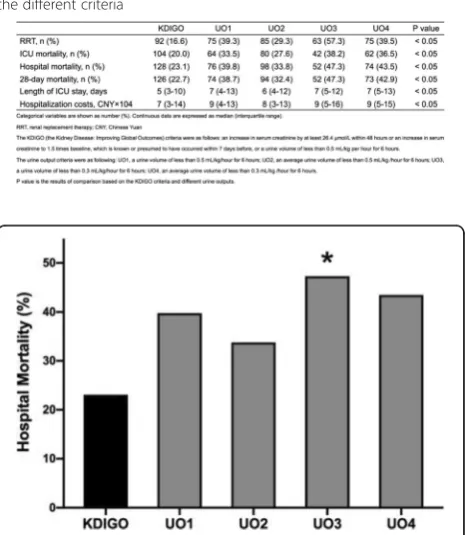
METHODS.We conducted a secondary data analysis of the Beijing Acute Kidney Injury Trial (BAKIT) database, which was a multicenter, prospective, observational study involving 9,049 adult patients admit-ted to 30 ICUs in 28 tertiary hospitals in Beijing [1]. Overall, there were 3,107 patients recruited consecutively into the database. Those who lacked body weight, daily creatinine and hourly urine volume were excluded from the study. All recruited patients were evaluated by the Kidney Disease: Improving Global Outcomes (KDIGO) criteria and four types of urine output [2]. The urine output criteria were as following: UO1, a urine volume of less than 0.5 mL/kg/hour for six hours; UO2, an average urine volume of less than 0.5 mL/kg/hour for six hours; UO3, a urine volume of less than 0.3 mL/kg/hour for six hours; and UO4, an average urine volume of less than 0.3 mL/kg/ hour for six hours. Demographic information, underlying disease, diagnostic information, lab and physiological data and patient
Fig. 4 (abstract 000565).Effects of Dexmedetomidine on ROS/
NF-κB axis-mediated senescent bystander effect Fig. 2 (abstract 000565).Cx32 GJ regulates ROS/ NF-κB
axis-mediated senescent bystander effect following renal IR
outcomes were collected. The prognostic indicators included the renal replacement therapy (RRT), ICU mortality, hospital mortality, 28-day mortality, length of ICU stay, and hospitalization costs. Differ-ences in mortality and other prognostic indicators among the KDIGO criteria and the four different urine volume criteria were compared. Logistic regression analysis was used to assess the association of dif-ferent criteria with prognostic indicators. P<0.05 was considered to be significant.
RESULTS.Of the 1,080 patients enrolled in the final analysis, 555 (51.4%) patients met the KDIGO criteria, and 191 (17.7%), 290 (26.9%), 110 (10.2%) and 170 (15.7%) met the UO1, UO2, UO3 and UO4 criterion, respectively. The hospital mortality based on the different criteria was 23.1% (KDIGO), 39.8% (UO1), 33.5% (UO2), 47.3% (UO3) and 43.5%(UO4), and UO3 was sig-nificantly higher than other groups (P<0.05) (Figure1). The other prognostic indicators including the RRT rate, ICU mortality, 28-day mortality, length of ICU stay, and hospitalization costs were incompletely equal, with the high-est in the UO3 (Table 1).
CONCLUSION.Alterations in urine output might be a sensitive prog-nostic indicator of AKI. A 6-hour average urine volume of less than 0.3 mL/kg/hour might be associated with worse clinical outcomes, such as higher mortality, more RRT, longer ICU stay and higher medical costs.
REFERENCE(S)
1. Luo X, Jiang L, Du B, Wen Y, Wang M, Xi X, et al. A comparison of different diagnostic criteria of acute kidney injury in critically ill patients. Crit Care. 2014;18:R144.
2. KDIGO AKI Work Group. KDIGO clinical practice guideline for acute kidney injury. Kidney Int Suppl. 2012;17:124–138.
000595
Chronic Kidney Disease Epidemiology Collaboration formula (CKD-EPI) for the assessment of renal function in the critically ill patient V. Philibert1, P. Marcos Neira1, Y. Rovira Vallès1, L. Bielsa Berrocal1, S. Triginer Roig1, A. Ca