Volume 2, Issue 4, 2015, pp. 12-27 Available online at www.jallr.ir ISSN: 2376-760X
Correspondence: Mina Baradaran Hezaveh, Email: [email protected] © 2015 Journal of Applied Linguistics and Language Research
Integrated Problem and Decision Reporting Retrospection into the
Translation Process
Mina Baradaran Hezaveh
Department of Foreign Language, Science and Research Branch, Islamic Azad University, Tehran, Iran Gholam-Reza Abbasian
Assistant Professor, Imam Ali University and Islamic Azad University, South Tehran Branch, Tehran, Iran
Abstract
Over the years, many scholars and researchers have been interested in finding out what happens in translator's mind during the translation process. Similarly, instructors and students in the field of translation are interested to know the sources of translation problems. The traditional methods would allow the instructors to examine the translation on the basis of product. However, nowadays the traditional approach is outdated by the advent of several methods which can capture the translation process, the student's decisions, problems, solutions and etc. One of these methods is Integrated Problem and Decision Reporting (IPDR) applied for examining translations (Gile, 1979). Resorting to IPDR, the present study aims at investigating the translation process, finding out the main problems occurred in the translation, and the techniques used by the subjects during the translation process. In this regard, tenM.A students studying at Islamic Azad University Science and Research Branch were selected through convenience sampling. They were asked to translate three pieces of informative texts distributed among them in three sessions. They were also asked to retrospectively report about their translation problems and techniques they used to solve them. The analyses revealed that the subjects had problems in all three categories i.e. lexical, structural and pragmatic. However, the main translation problems were lexical problems and the most frequent technique used for solving lexical problems was 'description'.
Keywords: translation process, Integrated Problem and Decision Reporting (PDR), retrospection, translation problems, translation techniques
INTRODUCTION
product-oriented. It means it focused merely on linguistic and textual descriptions of translated texts. Consequently, translations were evaluated in light of the result or the product of the act of translation. However, by the 1980s, the table turned. Translation studies emerged as an independent discipline and grew considerably. During the 1990s, increasing attention was given to process-oriented descriptive translation studies (Gandomkar & Karimnia, 2013). Alongside the theoretical developments, methodological trends developed parallel to study the translation process.
According to Dam-Jensen and Hein (2009),until the last part of the 20th century studying the translation process was sought by looking at the translation product with developing new methods of capturing the translation process, various aspects of translation process can be identified. According to Massey and Ehrensberger-Dow (2010), a number of scholars have discovered various methods to uncover the "black box" of the translator's mind. Hansen (2008) divided these methods into two categories namely qualitative and quantitative. He mentioned introspection methods like Think Aloud (TA), retrospection and questionnaires as the most popular qualitative methods. Gopferich and Jaaskelainen (2009) suggest that the earlier empirical studies of translation processes used mainly by verbalization or Think Aloud Protocols. However, today the domain of methods is expanded. Krings (2005) provided a model of basic methods applied in the translation process. In this model, he distinguished between offline and online methods in terms of the time of data collection; i.e. whether they co-occur with the translation process or whether they are produced after the translation process. Retrospection as offline methods "takes place after the task performance"(Jääskeläinen & Göpferich, 2009, p.71).Christensen and Schjoldager (2011) also believe that retrospective verbalizations consist of "specific or general comments about a given task"(p. 121).
One of the retrospective methods used for investigating the translation process is Integrated Problem and Decision Reporting (IPDR). This method was introduced by Daniel Gile (1979). As he (2004) argued, one of the challenges the instructors have is to know how to interpret the student's translations and to identify their problems and decisions. The other is how to monitor and evaluate the whole class or group of students. To meet this objective, he applied IPDR method in his classrooms where he was teaching scientific and technical translation from Japanese into French.
There are few studies on the translation problems and proper solutions at the same time. One of them is a study conducted by Maher (2010) who tried to explore the translation problems that students of Al Quds Open University faced during the translation process from English to Arabic. Another similar study was conducted by Benfoughal (2010).He carried out a study to find problems that third year students faced in translating from English into Arabic and the strategies they used to solve the problem. He used Ghazala's translation problems categorization as a framework.
One of the scholars who tried to apply Gile's method of IPDR was Gyde Hansen (2004). He conducted the Copenhagen Retrospection Project in CBS in 2004. His project consisted of comparing several methods of" introspection, the Integrated Problem and Decision Report (IPDR), Retrospection with Replay with Translog (R+Rp) and Retrospection with Replay combined with cognitive clarification via an Immediate Dialogue (ID) between the subject and the observer (R+Rp+ID)" (Hansen, 2006, p.2). His main goal was to compare these methods and discuss them in terms of their applicability. Furthermore, he compared methods based on their influence they have on the number of problems and decisions of the students.
THIS STUDY
The problem and purpose introduced above were realized in the form of research questions as follows:
What are the main problems of translators in the translation process?
What are the techniques used by translators to address the translation problems? METHOD
Participants
The participants of this study were selected from M.A students of Translation Studies from Islamic Azad University Science and Research Branch. All of them were in their last semester and had passed the required courses such as the Translation Models and Translation Workshop.
Instrumentations
Instruments used in this study include three translation tasks and three tables of lexical, structural and pragmatic problems. Each task was randomly selected from informative genre. Altogether, the students were supposed to translate each task and to comment retrospectively on the problems they encountered during the translation process. Procedure
sessions. They were asked to translate them from English to Persian. After they finished their tasks, they were asked to provide a written report on their problems and the way they tried to solve them on the related tables already available for them to fill in. All of the translations and tables were checked carefully to see what types of problems had happened in each sessions and what types of techniques were used by the students to solve the related problems.
Data analysis
After the collection of the data, frequencies of the learners’ problems in each problem categories and those of main used translation techniques were counted. They were classified and analyzed according to their percentages. In order to answer the questions of the present study both qualitative and quantitative analyses were done.
RESULTS
Investigation of the first research question
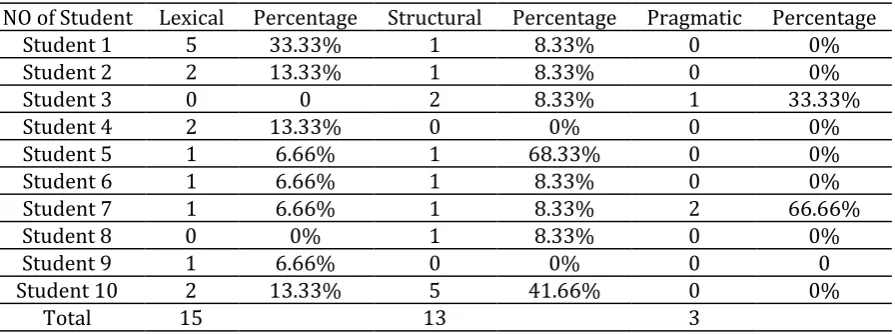
In order to answer the research question 1, the translations of students and the related tables were checked to find out the source of translation problems in one of the lexical, structural and pragmatic categories. For this research question the researchers put a step forward and tried to find out the specific translation problems in each of the problem categories. Tables 1, 2 and 3 were designed in order to display the frequency and percentage of the problems in separate sessions. The overall frequency and percentage of each problem type in all three sessions are displayed in table 4. Furthermore, the table 5, 6 and 7 were designed in order to display the specific problem types in each category.
Table 1.The Frequency and Percentage of the Problems in the First Session Percentage Pragmatic
Percentage Structural
Percentage Lexical
NO of Students
0 0
20% 4
24.44% 11
Student 1
0 0
5% 1
8.88% 4
Student 2
0 0
0 0
6.66% 3
Student 3
0 0
5% 1
4.44% 2
Student 4
0 0
10% 2
8.88% 4
Student 5
0 0
5% 1
1.11% 3
Student 6
0 0
5% 1
13.23% 5
Student 7
100 % 2
5% 1
2.22% 1
Student 8
0 0
0 0
8.88% 4
Student 9
0 0
45% 9
11.88% 5
Student 10
2 20
42 Total
Table 2. The Frequency and Percentage of the Problems in the Second Session
Percentage Pragmatic
Percentage Structural
Percentage Lexical
NO of Students
33.33% 2
20% 3
21.05% 8
0% 0 6.66% 1 10.52% 2 Student 2 16.66% 1 6.66% 1 0 0 Student 3 0% 0 0% 0 5.26% 2 Student 4 0% 0 6.66% 1 10.52% 3 Student 5 0% 0 0% 0 2.63% 1 Student 6 16.66% 1 13.33% 2 15.68% 6 Student 7 16.66% 1 0% 0 5.26% 2 Student 8 0 0 0% 0 2.63% 1 Student 9 16.66% 1 46.66% 7 36.31% 10 Student 10 6 15 35 Total
Table 3. The Frequency and Percentage of the Problems in the Third Session
Percentage Pragmatic Percentage Structural Percentage Lexical
NO of Student
0% 0 8.33% 1 33.33% 5 Student 1 0% 0 8.33% 1 13.33% 2 Student 2 33.33% 1 8.33% 2 0 0 Student 3 0% 0 0% 0 13.33% 2 Student 4 0% 0 68.33% 1 6.66% 1 Student 5 0% 0 8.33% 1 6.66% 1 Student 6 66.66% 2 8.33% 1 6.66% 1 Student 7 0% 0 8.33% 1 0% 0 Student 8 0 0 0% 0 6.66% 1 Student 9 0% 0 41.66% 5 13.33% 2 Student 10 3 13 15 Total
Table 4.The Overall frequency and percentage of the Translation Problems
Percentage Overall Frequencies of the Three Sessions
Problems 60.92% 92 Lexical 31.78% 48 Structural 7.28% 11 Pragmatic 151 Total
Quantitatively speaking, based on the results displayed in table 4, it can be concluded that participants had translation problems in all three categories, i.e. lexical, structural and pragmatics; However, the lexical problems stand on top with 60.92%; the structural problems stand in the second place with 31.78%, and the pragmatic problems stand the last place with 7.28%.
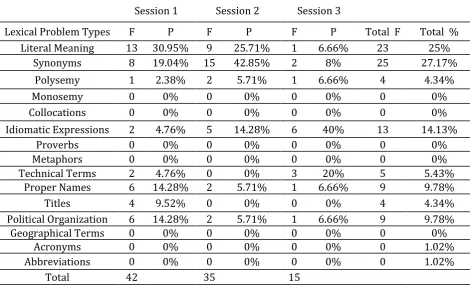
Table 5. The Frequency and Percentage of the Specific Lexical Problem Types Occurred in Each Session
Session 3 Session 2
Session 1
Total % Total F
P F P F P F
Lexical Problem Types
25% 23 6.66% 1 25.71% 9 30.95% 13 Literal Meaning 27.17% 25 8% 2 42.85% 15 19.04% 8 Synonyms 4.34% 4 6.66% 1 5.71% 2 2.38% 1 Polysemy 0% 0 0% 0 0% 0 0% 0 Monosemy 0% 0 0% 0 0% 0 0% 0 Collocations 14.13% 13 40% 6 14.28% 5 4.76% 2 Idiomatic Expressions 0% 0 0% 0 0% 0 0% 0 Proverbs 0% 0 0% 0 0% 0 0% 0 Metaphors 5.43% 5 20% 3 0% 0 4.76% 2 Technical Terms 9.78% 9 6.66% 1 5.71% 2 14.28% 6 Proper Names 4.34% 4 0% 0 0% 0 9.52% 4 Titles 9.78% 9 6.66% 1 5.71% 2 14.28% 6 Political Organization 0% 0 0% 0 0% 0 0% 0 Geographical Terms 1.02% 0 0% 0 0% 0 0% 0 Acronyms 1.02% 0 0% 0 0% 0 0% 0 Abbreviations 15 35 42 Total
Table 6.The Frequencies and Percentages of the Specific Structural Problem Types Occurred in Each Session
Session 3 Session 2 Session1 Total % Total F P F P F P F Structural Problem type
10.41% 5 15.38% 2 6.66% 1 10% 2 Word order 20.83% 10 15.38% 2 33.33% 5 15% 3
Part of speech
20.83% 10 7.69% 1 33.33% 5 20% 4
Breaking complex sentences
22.91% 11 30.76% 4 0% 0 35% 7
Changing active to passive voice
25% 12 30.76% 4 26.66% 4 20% 4
Using English structure instead of Persian
13 15
Table 7. The Frequencies and Percentages of the Specific Pragmatic Problem Types Occurred in Each Session
Session 3 Session 2
Session1
As the table 5 shows, the most lexical problem as reported by the participants was "synonymy" with 27.17%. However, The table , 6 shows that the most structural problem was "Using English structure instead of Persian" with 25%.Furthurmore, the table 7 shows that 72.72% of participants had pragmatic problem type with "the profile and intention of the text producer". Tables 8, 9 and 10 represent some examples of translation problems the students faced during the translation sessions.
Table 8. Samples of Lexical Translation Problems
Persian English
Lexical Problem
دنراد یرتمک یریگتخس
.
قلاط اب هزرابم نامزاس یسنج کرحم ریواصت رسمه تیوه یاقل تحت
1.More friendly 2. Anti-divorce 3.Pornogeraphy
3. A wife's identity was Subsumed under that of her husband..
داینب لصاح یب هیلع یمادقا
1. Platform
2.Counter-productive 3. Offence
Synonyms
یراکشوج هاگتسد گنا
1.Gun 2.Offence Polysemy
_ _
Monosemy
_ _
Collocations
رد زیمآ نیهوت یملق نتشاد باتک رشن دوش یم هراپ منهاریپ همزور ره راک دش هداد هولج شزرا مک
1.Having an obscene article 2. Go through a shirt 3.It just goes right through 4. losing ground
Idiomatic Expressions
_ _
Proverbs
_ _
Metaphors
راکشوج یفارگونرپ
1.Spot welder 2.Pornography Technical terms
Total % Total
F P
F P F
P F Pragmatic Problem types
72.72% 8
100% 3
50% 3
100% 2
The profile & intention of the text producer
18.18% 2
0% 0 33.33% 2
0% 0 The target reader
9.09% 1
0% 0 16.66% 1
0% 0 The medium of communication
0% 0
0% 0 0% 0
0% 0 Place of production
0% 0
0% 0 0% 0
0% 0 Time reception
3 6
هکلم نامز رد قلاط موهفم ایروتکیو
Victorian notion Proper names
ندنل رد ییانج یلصا هاگداد زوین یگ
1.Old Bailey 2.Gay News Titles
ناملراپ نانز تیکلام یاه هبوصم لهاتم
1.House of Parliament
2.Married Women's Property Acts Political
organization
_ _
Geographical terms
_ _
Acronyms
_ _
Abbreviations
Table 9. Samples of Structural Translation Problems
Persian English
Structural Problems
ی هچیهام مدرک یم دراو راشف متشاد یتقو مدیشک ار مندرگ
. 1.I pulled a muscle in my neck, straining
Word order
یگدنز یارب سفن هب دامتعا و ییاناوت نانز دندرک یم ادیپ ار جاودزا زا جراخ
هیحلاصا
رعش یبدا لئاضف دروم رد نیصصختم دیاقع تسین زیاج
2.Women becoming more confident in their ability to survive outside of marriage 3.Amending
4. The opinions of experts on the poem's literary merits were ruled Inadmissible.
Part of
speech
"
یلرتچ مناخ قوشعم
"
انیجر ی هیضق عوضوم
دوب نئوگنپ دودحم یاه باتک رد
.
سوت رثا نیا ط
لاس رد و هدش هتشون سنرول چا ید 0691
رد
.دوب هدش لقن یلیب دلوا
لاس رد یتساوخرد اب میمصت نیا
6891
ضوع
لاس رد و دش
6891
یار
"
نیا دلج هب یهانگ یب
یتاماقم ناتساد نیا هک دش ملاعا و دش هدز باتک ار دندوب باتک نیا نیرشتنم ی هدننک بیقعت هک اب هدش رشتنم یاهباتک درگیپ هک درک عناق و یفلات یعون مکحم لیلد ات یوعد نیرتمک فک و هزرابم تسا زیمآ ر
.
هک تسانعم نیدب نیا
ار تیحیسم یفنم دصاقم اب هدش رشتنم راثآ رس رب ار داوسیب دارفا ای دنک یم راد هشدخ دنک یم هارمگ سدقم یعوضوم
. 1. The Chatterley's Lover by D.H Lawrence
was the subject of the case Regina v. Penguin books limited, heard at the Old Bailey in 1960.
2. This decision was reversed on appeal in 1986, and in 1974 the "not guilty" verdict on a paperback called Inside Linda
Lovelace convinced prosecuting
authorities that the pursuit of written works with the slightest pretension to serious purpose would be counter-productive; blasphemous, i.e. written or published with the malicious intends of outraging Christian sentiment or of misleading the uneducated on a sacred subject.
Breaking the complex sentences
دنداد هزاجا نیعفادم هب هک یدارفا هب زیمآ نیهوت بلاطم نتشون اب
یمن هدرمش راکهانگ دنا هدرک تناها نید لوصا دنوش
1.Defendants were allowed
2.Fundamentals of religion may be attacked without a person being guilty of blasphemous libel
Changing
active to
passive voices
درک یم راک تخس هک یلاح رد ی هچیهام م
تفرگ مندرگ
.
تسا زیت هبل نیا مامت
تشاد دوجو داقتعا نیا
1.I pulled a muscle in my neck, straining 2.This whole edge here is sharp
3. It was held Using
Persian structure
instead of
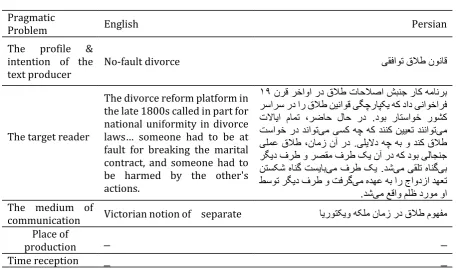
Table 10. Samples of Pragmatic Translation Problems
Persian English
Pragmatic Problem
یقفاوت قلاط نوناق
No-fault divorce The profile &
intention of the text producer
نرق رخاوا رد قلاط تاحلاصا شبنج راک همانرب
68
رسارس رد ار قلاط نیناوق یگچراپکی هک داد یناوخارف دوب راتساوخ روشک
.
تلاایا مامت ،رضاح لاح رد
یم یم یسک هچ هک دننک نییعت دنناوت تساوخ رد دناوت
یلیلاد هچ هب و دنک قلاط
.
یلمع قلاط ،نامز نآ رد
رگید فرط و رصقم فرط کی نآ رد هک دوب یلاجنج یب یم یقلت هانگ دش
.
یم فرط کی نتسکش هانگ تسیاب
یم هدهع هب ار جاودزا دهعت طسوت رگید فرط و تفرگ
یم عقاو ملظ دروم وا دش
. The divorce reform platform in
the late 1800s called in part for national uniformity in divorce laws… someone had to be at fault for breaking the marital contract, and someone had to be harmed by the other's actions.
The target reader
نامز رد قلاط موهفم ایروتکیو هکلم
Victorian notion of separate The medium of
communication
_ _
Place of production
_ _
Time reception
Qualitatively speaking, the table 8 represents some examples of Lexical translation problems which were randomly selected from subject's written reports. One example of the most frequently occurred problems, i.e. synonyms is "Counter- productive" which was translated as "لصاح یب". It could be said that the most students had problems as how to find a proper equivalent or synonymy of a lexicon; however, no lexical problem was found in areas such as, Monosemy, Collocation, Proverbs, Metaphors, Geographical terms, Acronyms and Abbreviations.
The table 9 displays some examples of structural translation problems which were randomly selected from subjects written reports. The most frequently occurred structural problem is the problem of "Using English structure instead of Persian". When this problem occurs, the subjects don’t know how to transfer the complicated structures or those which do not exist in Persian language. Thus, they tend to translate the English structures literally in Persian language. To avoid this kind of problem, subjects can use some translation techniques which will be discussed in the next section. One example reported by the subjects is: "I pulled a muscle in my neck, straining" which was translated as "تفرگ مندرگ ی هچیهام مدرک یم راک تخس هک یلاح رد".
Investigation of the second research question
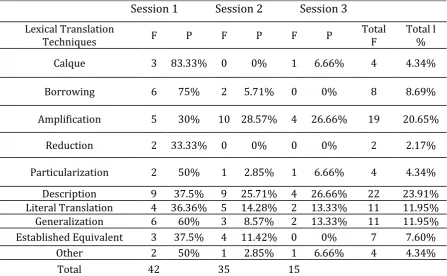
Table 11, 12 and 13 were designed in order to display the frequencies and percentages of the techniques used by students to solve the related translation problems. In order to answer this question, all three translation reports of 10 participants were checked to see the most frequently used technique.
Table 11. The Frequencies and Percentages of Techniques Used to Solve the Lexical Problems
Session 1 Session 2 Session 3
Table 12. The Frequencies and Percentages of Techniques Used to Solve the Structural Problems
Session 1 Session 2 Session 3
Total l % Total F P F P F P F Lexical Translation Techniques 4.34% 4 6.66% 1 0% 0 83.33% 3 Calque 8.69% 8 0% 0 5.71% 2 75% 6 Borrowing 20.65% 19 26.66% 4 28.57% 10 30% 5 Amplification 2.17% 2 0% 0 0% 0 33.33% 2 Reduction 4.34% 4 6.66% 1 2.85% 1 50% 2 Particularization 23.91% 22 26.66% 4 25.71% 9 37.5% 9 Description 11.95% 11 13.33% 2 14.28% 5 36.36% 4 Literal Translation 11.95% 11 13.33% 2 8.57% 3 60% 6 Generalization 7.60% 7 0% 0 11.42% 4 37.5% 3 Established Equivalent 4.34% 4 6.66% 1 2.85% 1 50% 2 Other 15 35 42 Total
Total % Total F
Table 13. The Frequencies and Percentages of Techniques Used to Solve the Pragmatic Problems
Total % Total F
P F
P F
P F Translation Techniques
18.18% 2
0% 0
33.33% 2
0% 0 Adaptation
9.09% 1
0% 0
16.66% 1
0% 0 Compression
9.09% 1
33.33% 1
0% 0
0% 0 Literal translation
0% 0
0% 0
0% 0
0% 0 Discursive creation
0% 0
0% 0
0% 0
0% 0 Variation
36.36% 4
33.33% 1
33.33% 2
50% 1
Amplification
27.27% 3
33.33% 1
16.66% 1
50% 1
Compensation
0% 0
0% 0
0% 0
0% 0 Other
3 6
2 Total
Based on the quantitative results displayed in table 4, it can be concluded that the most frequently used translation technique among all lexical problems was "Description" with 23.91% .This technique was used respectively 37.5% in the second session, 25.71%in the first session and 26.66%in the last session. However, table 5 revealed that most of participants used "Modulation" as a translation technique for solving their structural problems with 50%. This technique was used respectively 53.33% in the second session, 50% in the first session and 46.15% in the last session. Finally, table 10 displayed that "Amplification" is the most used translation technique among participants for solving the pragmatic problems with 36.36%. It's used respectively 50% in first session and 33.33% in both first and last sessions.
Table 14, 15 and 16 represents some examples of translation problems the students faced during the translation sessions and the related translation techniques they used in order to solve them.
Table 14. Samples of Lexical Translation Problems and the Related Techniques
Persian English
Techniques Problem type
یرتمک یریگتخس دنراد
.
قلاط اب هزرابم نامزاس یسنج کرحم ریواصت
رسمه تیوه یاقل تحت
1.More friendly 2. Anti-divorce 3.Pornogeraphy
3. A wife's identity was Subsumed under that of her husband.
Amplification Amplification Description
Established Equivalent Literal Meaning
داینب لصاح یب هیلع یمادقا
1. Platform
2.Counter-productive 3. Offence
Particularization Established equivalent Generalization Synonyms
یراکشوج هاگتسد گنا
1.Gun 2.Offence Particularization
Particularization Polysemy
_ _
_ Monosemy
_ _
_ Collocations
زیمآ نیهوت یملق نتشاد باتک رشن رد دوش یم هراپ منهاریپ همزور ره راک دش هداد هولج شزرا مک
1.Having an obscene article 2.Go through a shirt 3.It just goes right through 4.Losing ground
Description Description Generalization Description Idiomatic
Expressions
_ _
_ Proverbs
_ _
_ Metaphors
راکشوج یفارگونرپ
1.Spot welder 2.Pornography Generalization
Literal translation Technical terms
نامز رد قلاط موهفم ایروتکیو هکلم
Victorian notion Description
Proper name
رد ییانج یلصا هاگداد مان هب ندنل
Old Bailey
زوین یگ
1.Old Bailey 2.Gay News Description
Borrowing Titles
ناملراپ تیکلام یاه هبوصم لهاتم نانز
1.House of Parliament
2.Married Women's Property Acts
Reduction
Literal translation Political
organization
_ _
_ Geographical
terms
_ _
_ Acronyms
_ _
_ Abbreviations
Table 15.Samples of Structural Translation Problems and the Related Techniques
Persian English
Techniques Structural
Problem type
لغاشمو راک هب طوبرم ددعتم یاهشخب نایم زا
Among the various occupational categories Amplification
Word order
یگدنز یارب سفن هب دامتعا و ییاناوت نانز دندرک یم ادیپ ار جاودزا زا جراخ
هیحلاصا
دیاقع نیصصختم
...
تسین زیاج
Women becoming more confident in their ability to survive outside of marriage
Amending The opinions of experts …were ruled Inadmissible
Modulation
Modulation
Modulation Part of
speech
"
یلرتچ مناخ قوشعم
"
انیجر ی هیضق عوضوم
دوب نئوگنپ دودحم یاه باتک رد
.
رثا نیا
لاس رد و هدش هتشون سنرول چا ید طسوت 0691 .دوب هدش لقن یلیب دلوا رد
لاس رد یتساوخرد اب میمصت نیا
6891
لاس رد و دش ضوع
6891
یار
"
هب یهانگ یب
نیا هک دش ملاعا و دش هدز باتک نیا دلج نیرشتنم ی هدننک بیقعت هک یتاماقم ناتساد نیا
یاهباتک درگیپ هک درک عناق ار دندوب باتک مکحم لیلد ات یوعد نیرتمک اب هدش رشتنم تسا زیمآ رفک و هزرابم و یفلات یعون
.
نیا
یفنم دصاقم اب هدش رشتنم راثآ هک تسانعم نیدب
The Chatterley's Lover by D.H Lawrence was the subject of the case Regina v. Penguin books limited, heard at the Old Bailey in 1960.
This decision was reversed on appeal… on a sacred subject. Compensation
Amplification Breaking
داوسیب دارفا ای دنک یم راد هشدخ ار تیحیسم دنک یم هارمگ سدقم یعوضوم رس رب ار
.
هب دنداد هزاجا نیعفادم
هب زیمآ نیهوت بلاطم نتشون اب هک یدارفا یمن هدرمش راکهانگ دنا هدرک تناها نید لوصا دنوش
defendants were allowed
fundamentals of religion may be attacked without a person being guilty of blasphemous libel Modulation
Transposition Changing
active to passive voices
ی هچیهام مدرک یم دراو راشف متشاد یتقو مدیشک ار مندرگ
.
تسا زیت هبل نیا مامت تشاد دوجو داقتعا نیا
I pulled a muscle in my neck, straining this whole edge here is sharp
It was held Transposition
Transposition
Amplification Using
English structure instead of Persian
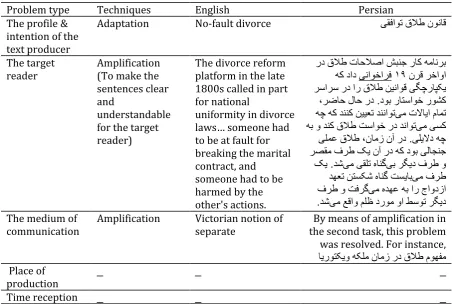
Table 16.Samples of Pragmatic Translation Problems and the Related Techniques
Persian English
Techniques Problem type
یقفاوت قلاط نوناق
No-fault divorce Adaptation
The profile & intention of the text producer
رد قلاط تاحلاصا شبنج راک همانرب نرق رخاوا
68
یناوخارف هک داد
رسارس رد ار قلاط نیناوق یگچراپکی دوب راتساوخ روشک
.
،رضاح لاح رد
یم تلاایا مامت هچ هک دننک نییعت دنناوت
یم یسک هب و دنک قلاط تساوخ رد دناوت
یلیلاد هچ
.
یلمع قلاط ،نامز نآ رد
نآ رد هک دوب یلاجنج رصقم فرط کی
یب رگید فرط و یم یقلت هانگ
دش
.
کی
یم فرط دهعت نتسکش هانگ تسیاب
یم هدهع هب ار جاودزا فرط و تفرگ
یم عقاو ملظ دروم وا طسوت رگید دش
. The divorce reform platform in the late 1800s called in part for national
uniformity in divorce laws… someone had to be at fault for breaking the marital contract, and
someone had to be harmed by the other's actions. Amplification
(To make the sentences clear and
understandable for the target reader) The target
reader
By means of amplification in the second task, this problem was resolved. For instance,
ایروتکیو هکلم نامز رد قلاط موهفم
Victorian notion of separate
Amplification The medium of
communication
_ _
_ Place of
production
_ _
_ Time reception
instance, "Amending" considered as a problem in Part of Speech and translated as "هیحلاصا" by this technique, the subject changed verb to noun.
The table 16 displays some examples of Techniques used for solving the Pragmatic translation problems which were randomly selected from subjects written reports. The most frequently used translation technique in this category was "Amplification". For example "Victorian notion of separate" considered by one of the subjects as a problem of Medium of communication. This subject claimed that, by means of "Amplification" he could build a bridge between the source and target text. The translation he offered was
ایروتکیو هکلم نامز رد قلاط موهفم"".
DISCUSSION AND CONCLUSION
Regarding the studies mentioned earlier, the results of Maher's (2010) study revealed that the student's problems are among cultural problems, semantic or conceptual problems, idiomatic problems and grammatical problems. Most of the students had problems with proverbs, block language and newspaper headlines. However, they didn’t face any difficulties regarding the translation of tenses. Maher suggested some techniques in order to solve and eliminate the translation problems and difficulties. They are namely:" Back Translation, Consultation and Collaboration with other people during the translation process and Pre-testing or Piloting (for example, interviews) whenever it is possible." (2010, p.16)
Benfoughal's (2010) study revealed that lexical and the grammatical problems were the most frequently problems occurred by the students respectively with 76% and 50%. In order to solve the translation problems, eight students (26%) reported that they prefer to use synonyms. No one tended to use hyponyms; however, twenty eight students (93%) said that they can find the meaning from the context. Four students (13%) mentioned that they prefer to leave it empty.
Hansen (2004) who investigated the IPDR method found out different kinds of problems occurred in the translation process from German into Danish and vice versa. The problems are namely, lexical, structural, idiomatic, pragmatic, semantic logical (semi.log), reception, style, production and spelling.
The findings of the present study revealed that students had translation problems in all categories. However, the most frequent problems were lexical (60.92%). The next common problems reported to be structural (31.78%), and the least problems found in pragmatic area (7.28).The results regarding the question one revealed that the most frequently occurred problems in mentioned areas were respectively "Synonymy" (27.17%), "Using English structure instead of Persian" (25%) and "The profile and intention of the text producer"( 72.72%).
of solving the translation problems were put into three separate tables according to their applicability of solving lexical, structural and pragmatic problems. The results of the tables showed that the participants used all translation techniques except "Discursive creation" and "Variation" in addressing the pragmatic problems. Therefore, regarding the second question, it can be said that "Description" (23.91%), "Modulation"(50%) and "Amplification" (36.36%) were respectively the most frequently used techniques for solving lexical, structural and pragmatics problems.
Regarding the first research question it can be concluded that the main problems occurred during the translation process were "lexical"; and "synonymy" was the most frequently occurred lexical problem. Therefore, based on the theoretical aspects and studies, it can be judged that the subject's lexical problems may occur for following reasons:
1) "When two words seem to be similar in principal meaning the accessory senses or associations are so diverse that they cannot be substituted." (Postgate, 1992, as cited in Miremadi ,2012, p.148).
2) "Different meaning of a single word can cause a lexical problem." (Douglass et.al , 2002)
3) "There are items in the source text which are not lexicalized in the target language." (Ghazala, 1995, as cited in Benfoughal, 2010, p.25)
As findings revealed, it can be concluded that the "Description" was the most common technique used for solving the lexical problem. For example, some subjects had challenge in translating the expression "The fault-based divorce". To resolve the problems they used "Description" technique. It shows that students tend to describe expressions which their proper synonymy or equivalents are absent in their target language.
The findings of this study may prove beneficial for those who are concerned with translations and its pedagogy. The first group who can enjoy the benefits is students majoring in Translation fields. Through IPDR method, they engage in a process of thinking and decision making. As a result, they do their task more seriously, and whenever they face a problem in translation, they will not take it for granted. For instance, they become aware of the translation process, the problematic areas in their translation as well as their shortcomings in a particular area (in this case, lexical, structural and pragmatic problem areas) and the strategies or techniques they can use to solve a particular problem. Thus, they will know how to face a particular problem in doing future tasks. They also become aware of their own translation levels or skills which encourages them to work on their knowledge and improve their translation skills in order to decrease the numbers of problems as much as possible.
certain translation strategies or techniques. Thus, they can produce positive psychological reinforcement in students. By knowing which problems are the most frequent ones in translation, teachers can look after these problems in translations of their own students and let them know how they can solve these types of the problems. REFERENCES
Bassnett, S. (2002).Translation Studies. Third edition. New York: Routledge.
Benfoghal, A. (2010).Students' difficulties and strategies in translation the case of third year students. Unpublished masteral thesis. University of Constantine, Republic of Algeria, Retrieved from http://bu.umc.edu.dz/theses/anglais/BEN1131.pdf
Christensen, T. P. & Schjoldager, A (2011). The impact of Translation-Memory (TM) technology on cognitive processes :Student-translators' retrospective comments in an online questionnaire. NLPSC. 119-130.
Dam-Jensen, H., & Heine, C.(2009). Process research methods and their application in the didactics of text production and translation. Trans-kom. 2, 1-25.
Douglass, Robinson (2003). Becoming a translator. 2nd ed. Abidgon oxen. Routledge. Gandomkar, M., &Karimnia, A. (2013). An investigation into Iranian student's translation
strategies based on Gerloff's model of Think-Aloud. MJLTM, 3, (4), 17-28.
Gile, D. (2004). Integrated problem and decision reporting as a translator training tool.
The Journal of Specialized Translation, 2, 2-20. Retrieved from
www.jostrans.org/issue02/art_gile.pdf
Göpferich, S., & Jääskeläinen, R. (2002). Process research into the development of translation competence: Where are we, and where do we need to go?. Across Languages and Cultures. 10, 169-191.
Hansen, G. (2006). Retrospection methods in translator training and translation research. Journal of Specialised Translation. 5, 2-4.
Hansen, G. (2008).The dialogue in translation process research. Translation and Cultural Diversity Selected Proceedings of the XVIII FIT World Congress2008. Shanghai: Foreign Languages Press.1-13.
Hashemi Minabad, H. (in press). English/Persian Translation Instruction, Iran University Press.
Maher.N, A. (2010).Difficulties and problems facing English students at QOU in thetranslation process from English to Arabic and their solutions. Unpublished
masteral thesis, Al-Quds Open University. Retrieved from
http://www.qou.edu/english/conferences/firstNationalConference/pdfFiles/ahm adMaher.pdf
Massey, G., & M, Ehrensberger-Dow. (2011). Commenting on translation: Implications for translator training. The Journal of Specialized Translation, 16, 26-41.
Miremadi, A. (2012). Theoretical Foundations and Principles of Translation. Tehran: SAMT.
Molina, L., & Albir, A.H. (2002). Translation techniques revisited: A dynamic and functionalist approach. Meta, XLVII, 4, 499-512.