Introduction
Constipation is a very common gastrointestinal disorder in many patients across the world.1,2 It is generally defined as fewer than three bowel movements per week and is characterised as failure to completely remove stool, decreased frequency and lack of satisfaction after defecation.1 Chronic constipation can present as either disorders of transit (normal or slow) or disorders of evacuation, or both. These are related, as disorders of transit can develop secondary to disorders of evacuation, while disorders of evacuation can follow from disorders of transit.2 While it is not a life-threatening condition and can be managed at primary healthcare level, it is associated with a negative impact on the quality of life for many patients and has considerable economic costs associated with it.2,3,4 Known complications of constipation are faecal incontinence, haemorrhoids, anal fissure, organ prolapse, faecal impaction and bowel obstruction, bowel perforation and stercoral peritonitis.5
The prevalence of constipation is estimated to be 20% in the general population; this is however dependent on the definition used and population being studied.6 Cases of constipation are deemed to generally increase with age and the prevalence of constipation is higher in non-whites as well as in women.3,7 According to literature, chronic constipation is estimated to have affected about 2% to 27% of the population in North America.4,8 In China, the prevalence of constipation (8%) is lower when compared to the United States of America, Canada and European countries and this can be highly attributed mostly to their diet.9 Paradoxically, Chinese people in the rural areas presented with more cases of constipation than that of urban areas, also those that were uneducated presented with more cases of constipation than the educated.9
Main causes and risk factors for constipation
Constipation can be primary (idiopathic) or secondary due to other causes.10Primary constipation is classified into three main types, namely normal-transit constipation, slow-transit constipation and anorectal (pelvic floor) dysfunction.10,11 Normal-transit constipation, also known as functional constipation is the most common type of constipation, with stool passing through the colon at a normal rate.11 Patients with normal-transit constipation feel constipated and complain of difficulty with evacuation, hard stools, bloating, abdominal pain or discomfort.10 It must be noted that there is an overlap between normal-transit constipation and irritable bowel syndrome (IBS) constipation.10 Slow-transit constipation, which is common amongst females, involves a lengthened delay in the passage of stool through the colon.10Anorectal (pelvic floor) dysfunction is characterised by poor coordination of the pelvic muscles and anal sphincter muscles, presenting as a defecation disorder.10 In many patients with normal or slow colonic transit, pelvic floor dysfunction may contribute to constipation, presenting as difficulty in expelling stools from the rectum.10 In the case of slow-transit constipation, patients have substantial impairment of propulsive colonic motor activity, and reduced colonic responses, particularly after a meal and on awakening in the morning.10
The causes of secondary constipation vary from organic endocrine to metabolic neurological causes, including diabetes mellitus, hypothyroidism, chronic renal insufficiency, colorectal cancer, spinal cord injury, Parkinson’s disease, paraplegia and multiple sclerosis.10 A low fibre diet, dehydration and an inactive lifestyle are also considered as secondary causes of constipation. Other secondary causes of constipation may include medication
Chronic constipation in adults
Sibanda M, BPharm, MPharm, MSc Pharmacology, MBA, Meyer JC, MSc(Med) Pharmacy, PhD (Pharmacy),
Maponya M, BPharm, Motha T, BPharm
School of Pharmacy, Sefako Makgatho Health Sciences University
Correspondence to: Hannelie Meyer, e-mail: [email protected]
Keywords: chronic constipation, adults, pharmacological treatment, dietary modification, behaviour modification, patient education
Abstract
Chronic constipation is a prevalent gastrointestinal motility disorder, which may be primary (idiopathic) or due to secondary causes. Although chronic constipation is not a life-threatening condition, it has a negative impact on patients’ daily activities and quality of life. This article examines chronic constipation in adult patients with emphasis on the main causes, diagnosis and treatment options, including the pharmacological and non-pharmacological management. Patient education and counselling to improve treatment outcomes are also discussed.
and anorectal problems such as anal fissure and inflammatory bowel disease.10
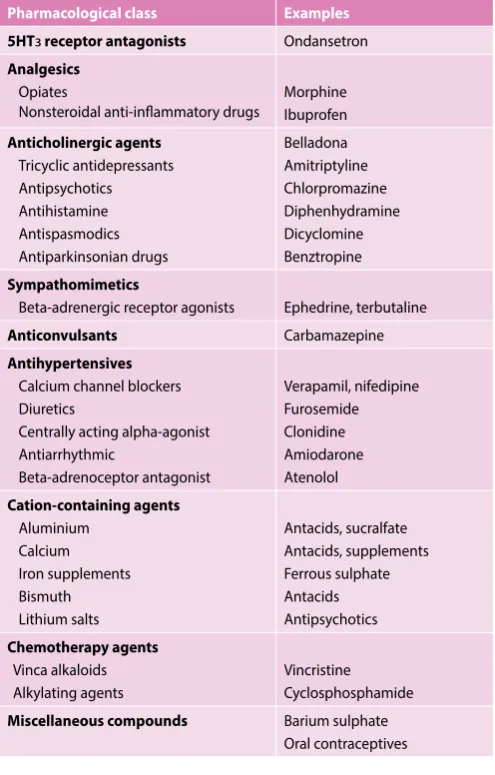
There are a number of factors reported to be associated with constipation, however these associations do not necessarily indicate causation.12 Risk factors for constipation vary from lack of physical activity, which is associated with a two-fold increased risk of constipation, to stressful life events and depression, physical abuse and sexual abuse, use of medication, lower socio-economic status and lower education.2,3,12 Advanced age, poor food intake with low dietary fibre and poor fluid intake are common predisposing factors to constipation. However, a lack of fluid intake may play a greater role in the development of faecal impaction, rather than constipation.7,11 Female sex is another risk factor as there is evidence of a higher incidence of self-reported constipation in women.2 Table I shows examples of medicines commonly known to be associated with secondary constipation.
Table I. Classes of drugs commonly associated with constipation3,6 Pharmacological class Examples
5HTз receptor antagonists Ondansetron
Analgesics
Opiates
Nonsteroidal anti-inflammatory drugs
Morphine Ibuprofen
Anticholinergic agents
Tricyclic antidepressants Antipsychotics Antihistamine Antispasmodics Antiparkinsonian drugs
Belladona Amitriptyline Chlorpromazine Diphenhydramine Dicyclomine Benztropine
Sympathomimetics
Beta-adrenergic receptor agonists Ephedrine, terbutaline
Anticonvulsants Carbamazepine
Antihypertensives
Calcium channel blockers Diuretics
Centrally acting alpha-agonist Antiarrhythmic
Beta-adrenoceptor antagonist
Verapamil, nifedipine Furosemide Clonidine Amiodarone Atenolol
Cation-containing agents
Aluminium Calcium Iron supplements Bismuth Lithium salts
Antacids, sucralfate Antacids, supplements Ferrous sulphate Antacids Antipsychotics
Chemotherapy agents
Vinca alkaloids Alkylating agents
Vincristine Cyclosphosphamide
Miscellaneous compounds Barium sulphate Oral contraceptives
Diagnosis of constipation
The Rome III criteria classification system (Box I) is a widely recognised tool, used for the diagnosis of chronic constipation, using standardised symptom based criteria.13 The tool relies on organs where the symptoms are presumably produced.10,13
Box I. Rome III criteria classification system for chronic constipation10,13 Criteria fulfilled for the last 3 months and symptoms onset at least 6 months prior to diagnosis
• Presence of ≥ 2 of the following symptoms: ◦ Lumpy or hard stools in ≥ 25% of defecations ◦ Straining during ≥ 25% of defecations
◦ Sensation of incomplete evacuation for ≥ 25% of defecations ◦ Sensation of anorectal obstruction/blockage for ≥ 25% of defecations ◦ Manual manoeuvres to facilitate ≥ 25% of defecations (digital
manipulation, pelvic floor support) ◦ < 3 evacuations per week
• Loose stools rarely present without the use of laxatives • Insufficient criteria for irritable bowel syndrome
In addition to the Rome III criteria, the Bristol Stool Form Scale (BSFS) is a useful visual aid designed to assist in the evaluation of patients with constipation (Box II).4,10 This tool is particularly useful in patients with self-reported constipation as it uses visual descriptors to illustrate common stool forms and regularity on a 7-point scale.10 Box II shows that constipation is indicated by Types 1 and 2 stool descriptions, Types 3 and 4 are considered normal, being easy to defecate with no excess liquid, while Types 5, 6 and 7 represent diarrhoea.4 The form of stool is dependent on the time the stool spends in the colon, making the BSFS a reliable transit time indicator.10 Type 1 stool indicates the longest time spent in the colon while the least time spent in the colon is represented by Type 7 stool.10
Box II. Use of the Bristol Stool Form Scale in the diagnosis of constipation4,10
Transit
time Type Description of stool Indication
Longest
1
Separate hard lumps like nuts (difficult to pass)Constipation
Time spen
t in the c
olon
2
Sausage shaped but lumpy3
Like a sausage but with cracks on its surfaceNormal
4
Like a sausage or snake, smooth and soft5
Soft bobs with clear-cut edges (passed easily)Diarrhoea
6
Fluffy pieces with ragged edges, a mushy stoolLeast
7
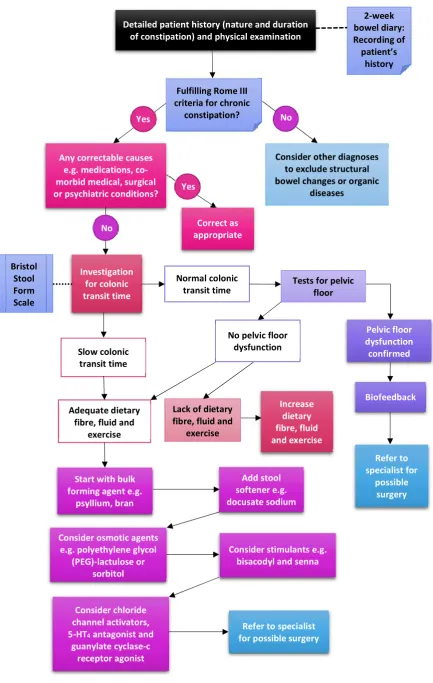
Watery, no solid pieces, entirely liquidFigure 1. Flow diagram for the diagnosis and management of chronic constipation5,10,17 Yes
Detailed patient history (nature and duration of constipation) and physical examination
Fulfilling Rome III criteria for chronic
constipation?
Any correctable causes e.g. medications, co-morbid medical, surgical or psychiatric conditions?
Consider other diagnoses to exclude structural bowel changes or organic
diseases
Yes No
Biofeedback
Slow colonic transit time
Adequate dietary fibre, fluid and
exercise
Lack of dietary fibre, fluid and
exercise
Increase dietary fibre, fluid and exercise
Refer to specialist for
possible surgery Investigation
for colonic transit time
Correct as appropriate
Normal colonic
transit time Tests for pelvic floor
No pelvic floor dysfunction
Pelvic floor dysfunction confirmed No
Start with bulk forming agent e.g.
psyllium, bran
Consider osmotic agents e.g. polyethylene glycol
(PEG)-lactulose or sorbitol
Add stool softener e.g. docusate sodium
Consider stimulants e.g. bisacodyl and senna
Consider chloride channel activators, 5-HT4 antagonist and
guanylate cyclase-c receptor agonist
Refer to specialist for possible surgery
2-week bowel diary: Recording of patient’s
history
not responding to treatment and patients who are 50 years old, or if younger, those patients with a family history of colorectal cancer.14 Routine extensive and physiological testing are however not recommended for the diagnosis of chronic constipation.10
A detailed patient history and physical examination are the first evaluations needed for a patient with chronic constipation.4 A comprehensive record of the patient’s history will require the nature and duration of the constipation, to distinguish chronic from transient constipation, as well as the temporal relationship between starting a new drug and the onset of constipation. A two-week bowel diary is efficient in the recording of the patient’s history, as it rules out misconceptions of constipation.4 Secondary constipation, which is a result of other factors, should be identified and managed accordingly.13 Older adults, who experience constipation not linked to a definable cause of constipation, will need an evaluation to exclude structural bowel changes or organic diseases.4
Management of constipation
The choice of treatment for chronic idiopathic constipation is determined by a number of factors including efficacy, safety, convenience, costs, and clinical response. Patient education is normally the first step in the management of constipation.15,16 Management of chronic constipation should ideally follow a therapeutic trial of traditional approaches (such as dietary fibre supplementation and bulk forming agents, osmotic laxatives, stimulant laxatives), which are effective, safe, and generally inexpensive, before newer agents (pharmabiotics, serotonin 5-HT4 receptor agonists, guanylate cyclase agonists, chloride channel activators, bile acid transporter inhibitors) are considered.3
It is important to understand the underlying causes of chronic constipation, in order to be able to identify the most appropriate treatment option.6,10 Hence, it is necessary to distinguish between normal-transit constipation, slow-transit constipation and pelvic floor dysfunction (PFD).10 Certain medicines may cause constipation as a side-effect.17 In such cases of drug-induced constipation, consider substituting the drug with a similar agent, less likely to cause constipation.17
Figure 1 shows a flow diagram for the diagnosis and management of chronic constipation.5,10,17
Non-pharmacological management
Non-pharmacological treatment modalities, especially dietary changes and behaviour modification, are usually considered the first step in the treatment of chronic constipation. Other non-pharmacological management approaches such as surgery are specialised and only appropriate for specific patients.
Dietary changes
Fibre is traditionally considered the first-line treatment for constipation. Fibre is however less effective in patients with slow-transit constipation or defecatory disorders, than in those with
normal-transit constipation.1 Fibre is available in natural foods such as cereal, citrus fruits, legumes and wheat bran. Dietary fibres are resistant to hydrolysis by enzymes in the small intestine, hence passing unabsorbed to the colon, where they retain water, add bulk to stools, and subsequently alleviate symptoms of constipation.16 The sugar components (sorbitol and fructose) in fruit such as apples, peaches, pears, cherries, raisins, grapes, and nuts may also be beneficial for constipation.16 Previous evidence has shown that prunes are effective in improving spontaneous bowel movement and stool consistency.16
Fibre is also available in a variety of supplements, which is a low-cost, safe and easy to use option, to improve constipation symptoms.16 Evidence suggests that soluble fibre e.g. psyllium or ispaghula, but not insoluble dietary fibre e.g. wheat bran supplements, improve bowel symptoms in chronic constipation.12 However, if the two are taken simultaneously, as a first step in treating patients with chronic constipation, especially at primary care level, the potential therapeutic benefits, low cost, safety profile, and other potential health benefits of dietary fibre justify their use.12
One of the side-effects of dietary fibre is that it produces gas, which can cause abdominal discomfort, distention and flatulence.12,16,17 Patients should therefore be warned of this, especially those with slow-transit constipation. These symptoms normally decrease after several days of therapy.12 Symptoms can also be reduced by starting with small amounts of fibre and slowly increasing intake.16 Fibre supplementation should be avoided in patients with colonic dilation.2
Although chronic constipation is associated with a low intake of dietary fibre and fluid,there are some myths around this topic.17,18 Hence, chronic constipation should not be assumed to be caused by a diet poor in fibre.18 While dietary changes such as a fibre-rich diet may improve the frequency of stools and decrease the need to take laxatives amongst some patients,2 symptoms of constipation may worsen amongst patients with more severe constipation.18 The positive effects of dietary fibre are enhanced by water intake of at least two litres per day.16 There is however no evidence that constipation can be treated by increasing fluid intake, unless there is evidence that the patient is dehydrated.19 Dietary changes in chronic constipation are recommended to include a high-fibre diet including 20–35 grams of fibre per day, and fluid supplementation of up to 1.5–2.0 L/day.2,16
In elderly patients, there is no evidence that dietary and lifestyle measures are effective for the treatment of constipation. In these patients, a combination of fibre supplements and simple osmotic laxatives is usually an adequate approach for constipation.2
Behaviour modification
Habit and bowel training
physical impairments.16 Bowel movement is most active following a meal, hence stools will pass more readily at this time.15 The body’s signal to have a bowel movement should not be ignored, as this will result in weaker future signals.15 Consuming a caffeine-containing beverage in the morning may also help with bowel movement.15
Physical activity
Moderate physical activity of 30–60 minutes per day, is beneficial for patients with chronic idiopathic constipation, as constipation is strongly associated with immobility.12,17 With physical activity, colorectal motility is stimulated, thereby reducing colonic transit time and improving stool consistency.17 Mild physical activity also helps to reduce bloating as it increases intestinal gas clearance.12
Biofeedback and pelvic floor retraining
Biofeedback is a behaviour modification technique, aimed at restoring a normal pattern of defecation, which might be beneficial for patients with chronic constipation.16,17,19 Computer equipment or a rectal balloon is used to show these patients how to coordinate and properly use the pelvic floor muscles and anal sphincter, which control bowel movements during defecation.19 Patients are trained to relax their pelvic floor muscles during straining and to correlate relaxation and pushing to achieve defecation.12 Evidence about the effectiveness and benefits of biofeedback and relaxation training is still limited, though it has been quite successful. Biofeedback is an alternative option for patients to the use of laxatives and it also does not have the risk of side-effects, as with laxatives.12,19 Biofeedback however does not appear to benefit patients with slow-transit constipation without dyssynergic defecation.16
Other approaches
Surgery
Surgical repair of rectoceles and rectal intussusceptions may not relieve symptoms of difficult defecation.16 Surgery should only be considered as an option in rare cases when patients have severe, intractable, slow-transit constipation, once all other non-surgical measures have failed and the symptoms of constipation compromise quality of life and normal daily activities. Such patients should be referred to a specialist for evaluation.3,16
Acupuncture
Data on the use of acupuncture as a treatment modality for chronic constipation is still very scarce, requiring additional research before it could be recommended.16
Pharmacological management
The goal of constipation therapy is to restore normal bowel function and relieve constipation related symptoms and subsequently an improvement in quality of life. Selection of treatment options for chronic constipation depends on the underlying physiological cause and needs to consider the safety,
efficacy and cost-effectiveness, particularly in long-term use.3 In addition, treatment may need to be personalised to a patient’s medical history including co-morbidities, concurrent medications, tolerance to various agents and overall clinical status.2,3,20 In vulnerable patients such as the elderly and those with physical or mental impairments, it is important to consider other factors that impact constipation such as dehydration and dementia among other factors, prior to initiating a specific therapy.19
Pharmacological therapy aims to relieve constipation by softening stool and/or artificially or indirectly stimulating colon motility through one or more mechanisms.20,21 The pharmacological treatments that are available for chronic constipation can be categorised into four main groups, discussed below.
Bulk-forming laxatives
These substances are considered as the first-line therapy for chronic constipation and act by expanding in the presence of water thus increasing the stool bulk, and stimulating defecation. Examples of bulk-forming laxatives include methylcellulose, sterculia, ispaghula husk, bran and psyllium seeds.21 Maintaining adequate fluid intake is important with bulk-forming laxatives to avoid excessive bulk, which may exacerbate chronic constipation. Common reported side-effects include bloating, gas, and distention, but these symptoms often decrease with time. Patients with slow-transit constipation will likely not benefit from bulk-forming laxatives.20,21
Osmotic laxatives and saline laxatives
This class of laxatives acts by generating an osmotic gradient, which encourages water retention in the gastrointestinal tract. Examples include inorganic salts (e.g. magnesium and phosphate-based compounds) as well as organic alcohols or sugars such as sorbitol, lactulose, polyethylene glycol (PEG) and glycerine. PEG is associated with negative side-effects such as diarrhoea, nausea, flatulence and electrolyte imbalance that should be taken into consideration, especially when prescribed to the elderly.21 Severe hypermagnesaemia can occur after use of magnesium compounds in patients with renal impairment. Sodium phosphate-based bowel cleansing preparations should be avoided in long-term use because they are associated with hyperphosphataemia, hypocalcaemia, and hypokalaemia.3
Stimulant laxatives
Table II. Phar mac olog ical tr ea tmen
t of chr
onic c
onstipa
tion in adults in S
outh A frica 23 Class Agen t
Formula/ Strength
Examples Adult dose Side -eff ec ts Con tr aindic
ations and sp
ecial pr ec autions Bulk-f orming laxativ es Ispaghula Gr anules seeds:
2.2 g/100 g
Ag iobulk® Fr eshen® F ibr e
2 medicine measur
es (1 hour bef
or e bedtime) sw allo w ed unchew ed with plen
ty of fluid
Abdominal dist ension, cr amps , fla tulenc e ma y oc cur initially • Contr aindic at ed: In in testinal obstruc tion, st enosis , ulc er ation or
adhesions of the gastr
oin testinal tr ac t. • O
ther medicines should be taken a
t least 3 hours bef
or
e or af
ter the
laxa
tiv
e as bulk
-for ming agen ts ma y in ter fer
e with the absor
ption of cer tain medicines . Gr anular po w der : 3.5 g/sachet Fybogel®
1 sachet mor
ning and ev
ening af
ter
meals
, stir
red in a glass of w
at er St er culia Gr anules:
6.2 g/10 g
Nor mac ol® Nor mac ol P lus®
5–10 ml with w
at
er onc
e or t
wic e daily af ter meals . P lac e dr
y on t
ongue
without crushing or chewing
Abdominal dist ension, cr amps , fla tulenc e ma y oc cur initially • O
ther medicines should be taken a
t least 3 hours bef
or
e or af
ter the
laxa
tiv
e as bulk
-for ming agen ts ma y in ter fer
e with the absor
ption of cer tain medicines . Osmotically ac ting laxativ es Lac tulose Or al , liquid:
3.3 g/5 ml
Aculax® Duphalac® Lax
ett e® Lacson® F reshen® Liquilax® Initially
: 15–30 ml daily in a single
dose or 2 divided doses
.
M
ain
tenanc
e: 10–15 ml daily
Fla
tulenc
e, abdominal dist
ension and
cr
amping a
t the outset of tr
ea
tmen
t
•
Per
iodic serum elec
tr
olyt
e det
er
mina
tions when using f
or pr olonged per iods . • Raised I nt er na tional Nor malised R
atio (INR) with c
oncur ren t w ar far in administr ation. • Contr aindic at ed: G alac tosaemia. Po w der : 10 g/sachet D
uphalac® Laxett
e®
Initially
: 1–2 sachets daily
.
M
ain
tenanc
e: 1 sachet daily
dissolv
ed in a glass of w
at er M ag nesium sulpha te Or al , liquid:
4 g/10 ml
Be
-lax®
10–20 ml daily in a glass of w
at
er
Abdominal pain, elec
tr olyt e distur banc es Adequa
te fluid in
take should be enc
our aged t o a void deh ydr ation. M ag nesium hy dr oxide Or al , liquid:
425 mg/5 ml
Phipps M
ilk of
M
ag
nesia®
30–60 ml f
ollo
w
ed b
y a full glass of
wat er Abdominal cr amping M ay in ter fer
e with the absor
ption of c
er
tain medicines
. O
ther
medica
tions should be taken a
t least 2 hours bef
or
e or af
ter M ilk of M ag nesia®. Poly eth ylene gly col (PEG) Or al , po w der :
13.125 g / 13.8108 g sachet
M
ovic
ol®
2–3 sachets daily in divided doses dilut
ed in 125 ml
Common side -effec ts: Abdominal pain, nausea, diar rhoea or loose st ools , v omiting Major adv erse effec ts: R ar
e but aller
gic r
eac
tions
ha
ve been r
epor ted • Not r ec ommended: pr esenc
e of abdominal pain, nausea or v
omiting . • Contr aindic at ed: In testinal per for
ation or obstruc
tion due t
o
struc
tur
al or func
tional disor
der of the gut w
all; ileus; gastr
ic
ret
en
tion; peptic ulc
er ation; sev er e inflamma tor y disor
ders of the
in
testinal tr
ac
t including C
rohn ’s disease , ulc er ativ e c
olitis and t
oxic
mega-colon.
Sodium phospha
te
Rec
tal
, enema:
6 g/100 ml
Lenolax enema®
135 ml or one enema r
ec tally onc e daily Elec tr olyt e distur banc es , abdominal cr amping Contr aindic at ed: Nausea, v
omiting or abdominal pain.
Gly cer ol Rec tal , supposit or ies:
1.698 ml/2.4 g
Lennon Gly cer in supposit or ies® One supposit or y t
o be inser
ted
rec
tally in a single daily dose
, when
nec
essar
y
Abdominal cr
amps or bo
w el ir rita tion Aller gy t o gly cer ine . Stimulan t laxativ es Bisac odyl Or al , tablets: 5 mg D ulc olax® Fr eshen Bisac odyl laxa tiv e®
5–20 mg daily as a single dose
, usually a t bedtime Abdominal cr amps , elec tr olyt e distur banc es Long-t er
m use ma
y r
esult in a loss of
nor mal bo w el func tion • Contr aindic at ed: In testinal obstruc
tion or undiag
nosed abdominal pain. • Restr ic t t o shor t-t er m use . • M ay r educ
e serum lev
els of digo
xin. Rec tal , supposit or ies: 10 mg D ulc olax® 1–2 supposit or ies r ec tally
Senna gly
cosides Or al Soflax® S enokot® D epur an®
13.5–30 mg daily
Abdominal cr
amps
Caution
: S
enna is e
xcr
et
ed in br
east milk and ma
y ha
ve an adv
erse
eff
ec
t on the nursing infan
Emollients and stool softeners
Stool softeners such as docusate sodium are anionic surfactants, with an emulsifying and wetting action.20 Their effect depends on the strength of their action on the surface of the stool with a generally modest effect. Mineral oil is known to have emollient effects on a stool. Stool softeners and emollients are well tolerated and are particularly used when bulk-forming agents are ineffective and/or their use is not suitable for a given patient.20,22 Mineral oil however, is seldom used due to the risk of aspiration and lipoid pneumonia, particularly in the elderly.22
Table II presents a summary of the pharmacological treatment options for chronic constipation in adults available in South Africa, with their main associated side-effects, contraindications and special precautions.
New treatment options
New agents for the management of constipation have been developed in the past few years necessitated by the limitations of existing therapies especially for the treatment of opioid induced constipation and other inflammatory bowel disorders or in the presence of severe pelvic floor dysfunction.3,6 Several of these medicines are registered in South Africa and already in use, mostly in the private sector.
Guanylate cyclase agonists
Plecanatide and linaclotide act by increasing intestinal transit and fluid through a build-up of cGMP and the resultant laxative action occurs by drawing water into the gastrointestinal tract thereby softening stool and encouraging its natural passage.6,24 The most common reported side-effect for plecanatide and linaclotide is diarrhoea.6,24 Clinical trials have demonstrated efficacy of this class of drugs in treating chronic constipation, however, care should be used with these medications in light of their side-effect profile, cost, and efficacy compared to simple, less expensive alternatives.6,24
Chloride channel activators
Lubiprostone is a bicyclic fatty acid, derived from prostaglandin E1 that acts by specifically activating chloride channel receptors in the intestinal enterocyte.25 Lubiprostone increases the chloride concentration of intestinal fluid, thereby stimulating intestinal fluid secretion and increasing stool transit. Lubiprostone does not cause a rebound effect following withdrawal of treatment and does not exhibit signs of tolerance, dependency, or altered serum electrolyte concentration when compared to most treatments for chronic constipation.25 Lubiprostone is approved to treat chronic idiopathic constipation in adults as well as opioid-induced constipation, in adults with chronic non-cancer pain.25 Lubiprostone is contraindicated in chronic diarrhoea, bowel obstruction, or diarrhoea-predominant irritable bowel syndrome and common side-effects include nausea, diarrhoea and flatulence.26
Bile acid transporter inhibitors
Bile acid transporter inhibitors such as elobixibat act by inducing a phenomenon known as ‘choleraic diarrhoea’.3 Ordinarily, ileal bile acid transporters absorb bile acids in the terminal ileum and in the presence of bile acid transporter inhibitors, bile acids accumulate and move to the colon where they are deconjugated and dehydroxylated by colonic microbiota to produce secondary bile acids such as deoxycholic acid, which induces colonic secretion of water and electrolytes.3,25 In addition, secondary bile acids are prokinetic in the colon, stimulating high amplitude, propagated contractions. Elobixibat is promising in accelerating colonic transit with minimal side-effects in patients with chronic constipation and is currently undergoing phase 3 clinical trials.25
Serotonin 5-HT4 receptor agonists
Selective agonists at the 5-hydroxytryptamine-4 (5-HT4) receptor induce fast excitatory postsynaptic potentials in intrinsic neurons, release neurotransmitters such as the excitatory acetylcholine, and induce mucosal secretion by activating submucosal neurons.27 This results in increased contractility and stimulation of the peristaltic reflex and a prokinetic activity throughout the gut.20 Serotonin 5-HT4 receptor agonists include medicines such as tegaserod, velusetrag and prucalopride. They act to increase colonic motility and transit time and are useful in chronic idiopathic constipation as well as reducing the symptoms of irritable bowel syndrome.3,22 Tegaserod is discontinued in some countries and now only used for emergency use due to concerns about possible adverse cardiovascular effects.22
Pharmabiotics
The normal gut flora is a complex microbiome, consisting of bacteroides, lactobacillus, porphyromonas and bifidobacterium, which are important factors in digestive health. There is some evidence which suggests that patients who are suffering from chronic constipation may have a lack or imbalance of these bacteria in their large intestine.20 Prebiotics, probiotics and synbiotics can be necessary to treat chronic constipation and other inflammatory conditions in certain patients. Unfortunately, there are very few recommendations available on how these products should be prescribed due to limited clinical trials on the use of pharmabiotics to treat chronic constipation.2,3,20
Patient education and counselling
A supportive relationship between the pharmacist and the patient can help improve treatment outcomes and minimise adverse effects in patients with chronic constipation. The principles of pharmaceutical care should be utilised in communicating to the patient the goals of treatment (restoration of normal bowel function) when using laxatives.28
not an anomaly and does not always warrant the use of laxatives. In communicating with the patient, it will be ideal to have visual illustrations of stool form such as the BSFS as well as to encourage the use of bowel diaries as these are often efficient and reliable methods to characterise bowel habits and are better predictors of colonic transit than self-reported methods.3
Most cases of chronic constipation can be remedied by increasing dietary fibre, fluid intake and physical activity.3 Patients who require pharmacological treatment should be warned against excessive use of laxatives which may cause excessive water loss, electrolyte imbalances and impaired colon motility (requiring further laxatives) particularly with stimulant laxatives.20
Bulk-forming agents while generally safe, may interfere with the absorption of concurrently administered medicines and it is recommended that other medicines be taken at least three hours before or after the laxative. In addition, adequate fluid intake should be maintained in patients using bulk-forming agents in order to prevent intestinal compaction.20,23
Diabetic patients should be warned about poor glycaemic control with sorbitol use. Furthermore, patients with kidney disease, or using concurrent medicines which affect renal function (such as ACE inhibitors, diuretics and possibly NSAIDs) as well as elderly patients, are susceptible to acute phosphate nephropathy when using phosphate-based laxatives and raised magnesium levels when using magnesium-based compounds.23 Patients on warfarin therapy are prone to raised INR and have a higher risk of bleeding during long term lactulose use (> 4 weeks) due to reduced intestinal vitamin K absorption.23
Lastly, the use of combination preparations generally offers no superior action over single-component agents and must be avoided.23 Table III shows important patient education and counselling points in the management of chronic constipation, including pointers on when a healthcare professional should be consulted when constipation symptoms are experienced.15,16,29
Conclusion
Chronic constipation is a very common problem amongst adults, presenting with normal or slow colonic transit, or defecatory dysfunction (pelvic floor dysfunction), or both. Constipation could be primary (idiopathic) or secondary to other causes such as prescribed medicines. Diagnosis using thorough history-taking and physical examination is essential, to facilitate an appropriate treatment approach. Initial management of chronic constipation includes patient education, dietary and fluid modification, behaviour change and the use of bulk-forming laxatives. The overall pharmacological management of chronic constipation requires a staged therapeutic approach starting with dietary fibre supplementation and bulk-forming laxatives, followed by osmotic laxatives, and then stimulant laxatives. Patients with pelvic floor dysfunction can benefit from behaviour modification, especially biofeedback. Referral to a specialist for surgery should only be considered in rare cases when all other treatment modalities have failed. Pharmacists can play an important role in the management of chronic constipation, considering the importance of patient education and counselling.
References
1. Basilisco G, Coletta M. Chronic constipation: A critical review. Digestive and Liver Disease. 2013;45(11),886-893. https://doi.org/10.1016/j.dld.2013.03.016.
2. Lindberg G, Hamid SS, Malfertheiner P, Thomsen OO, et al. World Gastroenterology Organi-sation global guideline: Constipation – a global perspective. Journal of Clinical Gastroen-terology. 2011 Jul;45(6):483-7. doi: 10.1097/MCG.0b013e31820fb914. Erratum in: Journal of Clinical Gastroenterology. 2011 Oct;45(9):838. Journal of Clinical Gastroenterology. 2012 Jan;46(1):90.
3. Bharucha AE, Pemberton JH, Locke GR. American Gastroenterological Association Tech-nical Review on Constipation. Gastroenterology. 2013 Jan; 144(1),218-238. http://doi. org/10.1053/j.gastro.2012.10.028
4. Wald A. Etiology and evaluation of chronic constipation in adults. In: UpToDate, Talley NJ (Ed), UpToDate, Waltham, MA, 2017. Available at: https://www.uptodate.com/contents/ etiology-and-evaluation-of-chronic-constipation-in-adults [Accessed 02 January 2018]. 5. Leung L, Riutta T, Kotecha J, Rosser W. Chronic constipation: an evidence-based review. The
Journal of the American Board of Family Medicine. 2011 Jul 1;24(4),436-451.
6. Roque MV, Bouras EP. Epidemiology and management of chronic constipation in elderly patients. Clinical interventions in aging. 2015;10,919.
7. Folden SL. Practice guidelines for the management of constipation in adults. Rehabilita-tion nursing. 2002 Sept 10;27(5),169-175.
8. Pinto Sanchez MI, Bercik P. Epidemiology and burden of chronic constipation. Canadian Journal of Gastroenterology and Hepatology. 2011;25(Suppl B),11B-15B.
9. Chu H, Zhong L, Li H, Zhang X, et al. Epidemiology characteristics of constipation for gen-Table III. General patient education and counselling points in terms of chronic constipation15,16,29
When to consult a healthcare professional Important points to observe Important precautionary measures • Symptoms of constipation, for more than 3
weeks.
• Severe symptoms of constipation.
• Constipation associated with any other concerns such as the presence of blood on the toilet paper, weight loss, fever, weakness. • New symptoms or sudden change in bowel
habits, lasting for 2 weeks or longer. • Constipation associated with colic-like
abdominal pain, abdominal distension and vomiting.
• Constipation caused by prescribed medicines. • Failure of over-the-counter treatment to correct
the constipation.
• Regular reliance on stimulant laxatives to achieve bowel movement.
• Daily bowel movements are not the norm or necessary for health. Normal bowel habits may vary from as many as three bowel movements per day to as few as one every three days. • Be physically active and exercise every day, as
inactivity is associated with constipation. • Follow a healthy diet, including fibre e.g.
wholemeal cereals and bread, bran, fresh fruit and vegetables. Insufficient dietary fibre is associated with constipation.
• Ensure adequate fluid intake, especially water. • Certain over-the-counter medicines may
cause constipation as a side-effect e.g. analgesics containing codeine, first-generation antihistamines, antacids, iron and calcium supplements.
• Pay attention to signals of the need to pass a stool, and do not ignore the ‘call to stool’. • Enhance normal bowel function and attempt to
defecate after meals, especially in the morning when colonic motor activity is highest. Normal postprandial colonic motility increases after meals, and should be used as an advantage. • Reduce dependency on, and overuse of,
laxatives. Ideally, taper the use of laxatives, while alternative measures to enhance bowel function are introduced.
• Do not use stimulant laxatives such as senna or bisacodyl for longer than a week.
eral population, pediatric population, and elderly population in China. Gastroenterology research and practice. 2014. Article ID 532734. doi:10.1155/2014/532734
10. Tack J, Müller‐Lissner S, Stanghellini V, Boeckxstaens G, et al. Diagnosis and treatment of chronic constipation – a European perspective. Neurogastroenterology and Motility. 2011; 23(8),697-710.
11. Hsieh C. Treatment of constipation in older adults. American Family Physician. 2005 Dec 1; 72(11),2277-2284.
12. Bharucha AE, Dorn SD, Lembo A, Pressman A. American Gastroenterological Association medical position statement on constipation. Gastroenterology. 2013 Jan;144(1),211-217. doi:10.1053/j.gastro.2012.10.029.
13. Drossman DA. The functional gastrointestinal disorders and the Rome III process. Gastro-enterology. 2006;130(5),1377-1390.
14. Serra J, Mascort-Roca J, Marzo-Castillejo M, Aros SD, et al. Clinical practice guidelines for the management of constipation in adults. Part 2: Diagnosis and treatment. Gastroenter-ología y HepatGastroenter-ología (English Edition). 2017.
15. Wald A. Patient education: Constipation in adults (Beyond the Basics). In: UpToDate, La-mont JT (Ed), UpToDate, Waltham, MA, 2017. https://www.uptodate.com/contents/consti-pation-in-adults-beyond-the-basics [Accessed 02 January 2018].
16. Wald A. Management of chronic constipation in adults. In: UpToDate, Talley NJ (Ed), UpTo-Date, Waltham, MA, 2017. https://www.uptodate.com/contents/management-of-chronic-constipation-in-adults?source=see_link [Accessed 02 January 2018].
17. Krogh K, Chiarioni G, Whitehead W. Management of chronic constipation in adults. United European Gastroenterology Journal. 2017 Jun;5(4),465-472. https://doi. org/10.1177/2050640616663439.
18. Muller-Lissner SA, Kamm MA, Scarpignato C, Wald A. Myths and misconceptions about chronic constipation. The American Journal of Gastroenterology. 2005;100,232-242.
19. Woodward S, Norton C, Chiarelli P. Biofeedback for treatment of chronic idiopathic con-stipation in adults. Cochrane Database of Systematic Reviews. 2014;Issue 3. Art. No.: CD008486. DOI: 10.1002/14651858.CD008486.pub2.
20. Emmanuel AV, Tack J, Quigley EM, Talley NJ. Pharmacological management of con-stipation. Neurogastroenterology and Motility. 2009;21,41-54. doi:10.1111/j.1365-2982.2009.01403.x.
21. Ford A, Suares N. Effect of laxatives and pharmacological therapies in chronic idiopathic constipation: systematic review and meta-analysis. Gut. 2011 Feb 1;60,209-218. 22. Salari R, Yousefi M, Salari M. Pharmacological treatment of chronic constipation: a literature
review. Reviews in Clinical Medicine. 2016;3(3),128-132.
23. Rossiter D (Ed). South African Medicines Formulary. 2016. Rondebosch, South Africa, Health and Medical Pub. Group of the South African Medical Association.
24. Al-Salama ZT, Syed YY. Plecanatide: First Global Approval. Drugs. 2017;77(5),593-598. 25. Acosta A, Camilleri M. Elobixibat and its potential role in chronic
idiopath-ic constipation. Therapeutidiopath-ic Advances in Gastroenterology. 2014;7(4),167-175. doi:10.1177/1756283X14528269.
26. Basson MD. Constipation. Medscape. Drugs and Diseases, Gastroenterology. Available at: http://emedicine.medscape.com/article/184704-overview#showall [Accessed 27 Decem-ber 2017].
27. Camilleri M. New treatment options for chronic constipation: Mechanisms, efficacy and safety. Canadian Journal of Gastroenterology and Hepatology. 2011;25(Suppl B):29B-35B. 28. Van Mil JWF, Fernandez-Llimos F. What is “pharmaceutical care” in 2013? Pharmacy Practice.
2013;11(1),1-2.