From Specific to General in Electoral Cycle Models
Do Específico ao Geral nos Modelos do Ciclo Eleitoral
António Bento Caleiro, University of Évora
Abstract—The article considers a way of generalizing the, so-called, stylized, which is also a specific model of electoral cycles. This generalization consists on assuming that the output level does indeed exhibit persistence, i.e. its current value (may be) being a function (also) of its past value. In an integrated way, the consequences of this generalization are analyzed.
Keywords—Electoral Cycles, Output Persistence.
Resumo—Neste trabalho considera-se uma forma de generalizar o modelo, dito estilizado, o qual é também específico, de ciclos eleitorais. Esta generalização consiste em admitir que o produto, de facto, exibe persistência, i.e. o valor corrente (poder) ser função (também) do seu valor passado. De uma forma integrada, analisam-se as consequências daquela generalização.
Palavras-Chave—Ciclos Eleitorais, Persistência de Output.
F
“As I would not be a slave, so I would not be a
master. This expresses my idea of democracy.”
Abraham Lincoln
1
Introduction
1M
ost
of the early theories about the
be-havior of Government assumed, more or
less explicitly, that this agent would determine,
and subsequently enforce, decisions that would be
• António Bento Caleiro,Professor at the Department of Economy, University of Évora, Portugal.
E-mail: [email protected]
ORCID: https://orcid.org/0000-0003-1205-4404 DOI:http://dx.doi.org/10.21814/perspectivas.137
1. This article consists (in a brief update) of the essential part of the seminar – option legally covered by section c, article 5, of the Decree-Law no. 239/2007 of June 19 – presented during our ‘provas de agregação’ in Economics. In order to clearly assume a multiple perspective on the question, which should have been evident, this justified the bibliographical references that were used, which we did not want to eliminate in this article, given our willingness to remain as close as possible to the original.
optimal according to a social welfare function.
2The delegation of decision power in this agent by
the society should, as a rule, be ensured through
(democratic) elections.
Thus, according to that view of the
Govern-ment, voters, through an electoral process, would
choose an agent who was supposed to take
de-cisions, namely economic policies, which would
be the best from the society viewpoint.
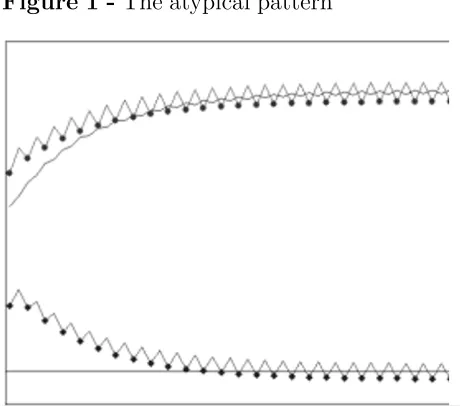
3In fact,
these decisions would be better for voters, in
particular, and for society, as a whole, than those
that would be taken by voters (or society) if voters
(or society) had decision-making power. This
tra-ditional view resulted from the consideration that
the Government would consider the consequences
2. In fact, this view of the Government as a “benevolent dictator” continues to be highly regarded, albeit for example under the name of “social planner”, either in macroeconomics (Sargent, 1987 and/or Ljungqvist and Sargent, 2004), or in microeconomics (Mankiw, 2008). For example, for Mankiw (2008: 147), “The benevolent social planner is an all-knowing, all-powerful, well-intentioned dictator. The planner wants to maximize the economic well-being of everyone in society.”.
of its decisions over a longer time horizon, more
correctly time-discounted, than that considered
by the electorate itself.
Authors associated with the public choice
school were the first to stand out in challenging
that view of the Government being a “benevolent
dictator”. According to these authors, the
Gov-ernment, like any other economic agent, should
be considered as a selfish agent in its decisions,
i.e. an agent pursuing its own interests, which
in some circumstances might not coincide with
the maximization of social welfare. Thus, the
Government could be seen as an agent made up
of politicians, whose desire to be re-elected, i.e.
their private interest, might not be compatible
with social welfare, i.e. with the general interest
of society.
4Indeed, the basis for this alternative view is
that the Government has two characteristics: it is
an economic agent because it is one of the main
actors in economic policy, and it is also a political
agent, since it exists as a result of an electoral
pro-cess in democracies. Thus, governmental action
influences the state of the economy, but, in turn,
the Government is also influenced by the economic
situation, since the electorate usually considers it
to be one of the main responsible for the state
of the economy and, for this reason, rewards or
penalizes its performance at the polls.
5Regardless of the validity of the
above-mentioned arguments, the fact is that the
exis-tence of democratic elections is often associated
4. Being true that the economic analysis of political phenom-ena renders Black (1948, 1958), Arrow (1951), Downs (1957), Buchanan and Tullock (1962), and/or Olson (1965) of undeni-able interest, their object of study does not correspond exactly to that considered in the models of electoral cycles (Caleiro, 1988).
5. This is the so-called responsibility or economic voting hy-pothesis (Lewis-Beck and Paldam, 2000). As, according to this hypothesis, it is admitted that voters consider the Government to be responsible for the economic evolution, the voting or pop-ularity functions, which explain the support to the Government as a function of its economic results, may easily become the objective functions for the economic policy of governments. Reflecting this approach, the first empirical studies on the subject began precisely with the formulation and (econometric) estimation of functions of this type. In fact, such empirical studies have been, and still are, so popular that hundreds of references can easily be counted. For example, Veiga and Veiga (2004) and Caleiro (2009d) are two examples of application to the Portuguese case. For a detailed survey on popularity or voting functions see Nannestad and Paldam (1994) and/or Lewis-Beck and Stegmaier (2013).
with the issue of an electoral cycle created by the
governments resulting from these same elections.
Reality shows that governments always claim that
its economic policy has no electoral purpose, while
the opposition parties generally have a different
view. Clearly, behind this exchange of accusations
is the assumption that electoral cycles are an
undesirable or unacceptable phenomenon.
6The social perception that an electoral cycle
is an undesirable phenomenon anticipates a
pos-sible way to combat it. In the purely theoretical
field, a naive approach would consider the
im-position of a mandate of infinite duration as the
only way to transform a selfish/opportunistic, i.e.
electorally motivated Government, in an
altruis-tic/benevolent Government, optimizing a social
welfare function. Notwithstanding all the rest, this
trivial solution can be called into question even in
strictly economic terms.
Even if non-economic aspects are ignored, that
is to say, if we disregard all the valid objectives
in-herent in the democratic process, namely freedom
and/or peace (Caleiro, 2017), the consideration of
an entirely economic objective function still does
not lead to an obvious answer to the question:
is
democracy bad for the economy?
On the one hand,
most electoral cycle theories share the conclusion
that elections, in fact, may involve costs of an
economic nature. In general terms, this is because
the instability created by electorally motivated
governments is accepted as being detrimental to
society in the long run.
7On the other hand,
non ignoring the obvious non-economic benefits
of democracy, there are at least four reasons why
6. As stated in Caleiro (2018), a positive response to the question: “Should electoral cycles disappear?”, is not (neces-sarily) desirable when politicians do not even care about the upcoming elections because a single – the current – mandate is sufficient to achieve their (ideological) intentions of (strictly) private/personal nature.
elections can also have economic benefits (Caleiro,
2007a).
As is well known, elections allow to:
(i)
take
into account the preferences and interests of
fu-ture generations;
(ii)
make a timely distinction
be-tween competent and incompetent governments;
(iii)
implement punitive or rewarding electoral
strategies, in accordance with the economic
per-formance of governments;
(iv)
determine the
be-havior to be assumed by the electorate so that the
more a Government acts according to the genuine
social interests, the more it is rewarded in the
elec-tions. By these means, elections have an economic
importance that generalizes to democracy itself.
8That said, it is our aim to present an insight
into the economic importance of elections by
ex-ploring (some of) possible developments on issues
not yet sufficiently addressed (in an integrated
way) in the literature on electoral cycles.
9Being
of an integrated nature, this vision will result in
a justified generalization of the particular/specific
case that is usually considered in the literature,
i.e. the so-called stylized model of electoral cycles
(Caleiro, 2000c).
10Thus, in section 2 we will present the model,
which theoretically is based on an aggregate
sup-ply curve without persistence in the level of real
economic activity [hypothesis
(a)], and on a fixed
8. In fact, there are various links between economic aspects and political aspects, whereby elections can play an economic role. For example, the relationships that exist between some economic aspects, namely growth, and some political aspects, namely the level of democracy, have been the subject of some theoretical and also empirical interest (Alesina and Perotti, 1994; Alesina and Rodrik, 1994; Alesina et al., 1996; Barro, 1996; Persson and Tabellini, 2006). In a sense related with those links, it is also possible to consider the electoral consequences of ageing (Caleiro, 2007b; 2009f) and/or of unemployment (Caleiro, 2016).
9. As is well known, the literature in this area is very exten-sive, and there are works that deal exclusively with the anal-ysis of the interaction between economic and political spheres. Among others, see Alesina et al. (1997) and/or Persson and Tabellini (1990, 2003, 2003). Some interesting surveys of the literature can be found in Gärtner (1994a, 2000) and/or Persson Tabellini (1999), and another in Caleiro (1995).
10. The designation ‘electoral cycles’ will be used for the general case, i.e. when the distinction between political and partisan cycles is not important. Following this terminology, a possible confusion between a particular case (i.e. the political casea laNordhaus) and the general case is avoided. Still, there are authors that (unacceptably) make this confusion.
duration of the mandate [hypothesis
(b)],
11while,
in terms of empirical verification, it has usually
been the target of estimation by traditional
econo-metric methods [practice
(a)].
12A possible generalization of hypothesis (a) is
to admit that the level of real economic activity
may exhibit some persistence.
13Considering this
fact, section 3 will analyze the consequences of
persistence on the pattern of electoral cycles.
These consequences are discussed in section
4, focusing on the use of the stylized model,
i.e. of an (possibly) incorrect model, in case of
output persistence. Section 5 presents the main
limitations of this work, as a motivation for future
research.
2 The stylized model of electoral
cy-cles
As is well known, the literature on electoral cycles
has developed into two distinct phases. The first,
which took place in the mid-1970s, considered the
existence of “naïve” voters, i.e. understood as
non-rational (Nordhaus, 1975; Hibbs, 1977). Following
the “revolution” of the rational expectations of
the 1980s, the second generation of models
con-sidered (totally) rational voters (Alesina, 1987;
11. In this regard, it is important to draw attention to the fact that most of the theoretical literature has indeed con-sidered models where the term of office is fixed, i.e. where the election date is exogenous. Some authors have considered, however, (theoretical) models in which the election date is of an endogenous nature, and it may be the government’s objective to determine the optimal duration of the mandate (Balke, 1990; Chappell and Peel 1979; Keppo et al., 2008; Lächler, 1982), possibly depending on the date of the elections in a neighboring country (Caleiro, 2010a). From another point of view, also the analysis of the consequences of the existence of early elections has been the subject of some studies (Balke, 1991; Cargill and Hutchison, 1991; Ellis, 1991; Ellis and Thoma, 1991; Heckelman, 2002; Ito, 1990; Kayser, 2005; Smith, 1996; or Caleiro, 2005d, 2009c).
12. This practice is paradoxical when using regional data, where spatial econometric methods are, obviously, the most convenient ones (Agnew, 1996; Beck et al., 2006; Franzese and Hays, 2007; Kramer, 1983; O’Loughlin, 2003; or Caleiro and Guerreiro, 2005; Caleiro, 2005b, 2008b; 2008c).
Persson and Tabellini, 1990; Rogoff and Siebert,
1988).
14Indeed, in a seminal paper in the mid-1970s,
Nordhaus took a decisive step in the development
of the theory of political (business) cycles.
15In
addition to assuming that the only objective of
an opportunist government would be to maximize
the number of votes in the subsequent election,
Nordhaus (1975) also considered myopic and
ret-rospective voters, i.e. an electorate that does not
take into account the economic evolution beyond
the (subsequent) elections.
As is well known, Nordhaus (1975) considered
an optimal control, continuous time, model, based
on a Phillips curve with adaptive expectations:
where
u
represents the unemployment rate,
and
π
represents the inflation rate, whose
ex-pected value is
ν
.
Thus, taking into account those restrictions,
the Government’s objective would be, during the
mandate, lasting between
t
= 0 and
t
=
T, with
voters having a memory rate,
µ
, to maximize
where the instantaneous popularity function,
g(u,
π
), assumes a quadratic-linear format:
being assumed that
π
≥
0.
1614. It is interesting to note that, in any of these generations of models, national space, even implicitly, constitutes the territory of interest. The analysis of the international or regional space can be found in Alesina and Tabellini (1987), Goyal and Staal (2004), Lohmann (1993), Sapir Sekkat (1999) and Caleiro (1997, 2000a, 2000b, 2003, 2004a, 2005a, 2007c, 2009e, 2011).
15. It is interesting to note that, according to Nordaus (1975: 181), although economists have so far made some casual obser-vations about the political origins of the economic cycle, the only ‘serious’ theory would have been the of Kalecki (1943).
16. Note how the linearity of the state variable, π, in the popularity function forced Nordhaus (1975) to consider this assumption.
Behavioral assumptions, with respect to
gov-ernment and voters, lead to a
typical
political
(business) cycle pattern, i.e. recessions at the
be-ginning of each government’s mandate and
(infla-tionary) expansions at the end of the mandate.
17In fact, the same pattern of political (business)
cycle can be obtained by using a stylized model, as
is usually considered in the most recent literature.
The model consists of an aggregate supply
curve:
where
y
trepresents the output level (in
mo-ment
t), which presents deviations from its
nat-ural level,
y
¯
, whenever inflation
π
t(in moment
t) does not coincide with its expected value,
π
e t(Lucas, 1973; Taylor, 1980).
If the electorate votes according to the
performance of the government, whose mandate
is hypothetically divided into a non-electoral
period, where
t
= 1
≡
N
and in an electoral
period, where
t
= 1
≡
ε
, taking into account the
evolution of the output level, given by (1), and
by inflation, according to the voting/popularity
function:
where
µ ε
]0,1] is related to the memory rate
of the electorate, and being the (quadratic-linear)
function of instantaneous voting given by:
it is straightforward to show that, in the case
of adaptive expectations (for example, of the type
π
te=
π
t−1), the optimal, from the electoral point
of view, inflation rates,
18are such that:
These, in turn, result in:
which confirms the typical political cycle
pat-tern.
It is clear that, for the existence of depressions
at the beginning of the mandate, followed by
expansions at the end of the mandate, it is
decisive that the economic performance of the
government is weighted according to (2), that is,
considering the future moments, i.e. those closest
to the end of the mandate, more important than
the present moments, i.e. those closest to the
beginning of the mandate. This also means that
an increase in the duration of the mandate, in
this case (2) being replaced, for example, by:
in which 0 <
µ
1≤
µ
2≤
1, in no way does
it change, in normal conditions, that pattern of
political cycle.
19A critique of the political cycles
a la
Nordhaus
was made by Hibbs (1977), who suggested the
partisan approach in the literature of electoral
cycles. The author considered a different form of
ruling party action, as well as different
behav-ior on the part of voters. In particular, Hibbs
(1977) considered parties to be representatives
of different social classes, with different political
preferences. In this context, it is admitted that the
electorate vote in the party that best defends its
political ideology, whereas electoral victories are
not an end in themselves, but rather the means
necessary to implement the best decisions for the
19. In this kind of model, it is evident that, whatever the duration of the mandate, the inflation rate of the last moment of the mandate is given byαβ, while the other values of inflation reflect the memory rates associated with those other moments. Thus, for a sufficiently abnormal evolution of memory rates, it is indeed possible for inflation rates to decrease, and hence for this type of expectation, output being above its natural level, during part of the mandate. Indeed, even in the original formalization of Nordhaus (1975), the initial conditions for the expected inflation rate may result in an ‘inverted’ political cycle (Caleiro, 2001). Also in the original version of Nordhaus (1975), the longer the term of office, the more pronounced the political cycle. This is not necessarily the case when considering a (fully) quadratic objective function (Caleiro, 2010b).
political class that the party represents.
20Thus, taking a partisan approach, it is
considered that political parties choose different
points in their curve of possibilities in order
to provide welfare gains to their fundamental
(ideological) support bases.
21From this point
of view, it is assumed that the right-wing
parties on the political spectrum are more
“averse” to inflation than the left-wing parties
(in that spectrum). This hypothesis translates,
in the stylized model, into the fact that the
instantaneous objective function (3) is replaced
by:
with
i = R
(rigth),
L
(left), where
β
R<
β
L.
22In this case, it is clear that during the term
of office, the electoral cycle pattern (as above
described) also occurs, regardless of the party in
power, being sure that the optimal inflation rates
will be the lower (resp. the higher) the more in the
right (resp. left) on the political spectrum is the
ruling party.
The empirical literature generated by the
ini-tial theoretical studies on the electoral cycles was
not conclusive about its coherence with reality
(Alesina, 1992; Alesina Roubini, 1992; Alesina
20. It is interesting to note that this position of the electorate is not the subject of a great challenge, but in relation to the position assumed by the parties, they are the ones who, after being elected, seem to deny their ideological choice, claiming to be representatives of the entire electorate or of the entire population.
21. Minford and Peel (1982) and Minford (1990) considered an interesting alternative, i.e. one that we could classify as intermediate between the political (Nordhaus) and partisan (Hibbs) approaches. It is assumed that the parties are supported by their (ideological) bases and by some “floating” voters, who determine the outcome of the elections. In this case, maximizing a certain objective function leads to the best trade-off between the possibilities of winning the elections and ensuring the loy-alty of their support bases.
et al., 1993; Gärtner, 1994b; Gärtner, 1999).
23Partly, as a reaction to these empirical studies,
and partly as a response to the “revolution” of
rational expectations, a new generation of models
of (rational) electoral cycles emerged in the late
1980s.
These “second generation” models diverge
from their predecessors in the behavior of the
private sector in general and, in particular, of the
electorate. The assumption of the rationality of
voters reduces the possibility of regular electoral
cycles, although it does not eliminate them
com-pletely, as will be shown below, using the stylized
model that we have been using.
Considering that the expected inflation
rate results from the application of rational
expectations, i.e.
π
et= E[
π
t|
ȷ
t−1], it is evident that
the maximization of (2) subject to (1) results in:
regardless of the moment of the mandate.
Thus, in this version of the political cycle with
rational expectations, the cycle does not exist at
all, the economy being at its natural level at any
time moment in the mandate, this result being
associated with an inflationary bias, (6). This
result is no longer fully verified if one considers the
partisan version of electoral cycles with rational
expectations.
Thus, if, as before, one considers the existence
of two political parties, distinguishing themselves
by their preferences in the instantaneous objective
function (5), it is clear that, at any time in the
mandate, with the exception of the first one,
π
t=
αβ
iand
y
=
y
¯
. However, at the first
moment of the mandate,
π
et
= E[
π
t|
ȷ
t−1] should
be computed as
23. In this regard, it should be noted that the perspective of electoral cycles, assuming that popularity (or voting level) depends on the evolution of economic variables, actually rep-resents a problem for the estimation of popularity or voting functions, by traditional econometric methods, taking into ac-count the endogeneity of the variables implicit in it, such as, for example, assuming that the trajectories of the relevant electoral variables depend on the evolution of popularity throughout the mandate.
where
p
represents the probability of electoral
victory of the left-wing party (and (1 -
p) the
probability of victory of the right-wing party).
Hence, as
24
the model shows that, at the beginning of a
right (resp. left) wing government, output will be
below (resp. above) its natural level.
25As soon as
expectations and prices adjust, i.e. the so-called
partisan effect disappears, output converges to its
natural level, meaning that the level of economic
activity, after adjustment, should be independent
of the ruling party.
26As for the inflation rate, its
level will always be higher during a leftist party’s
mandate, even after the level of economic activity
converges to its natural level.
3
The output persistence and the
pat-tern of electoral cycles
The aggregate supply curve (1) was – and, to some
extent, still is – highly regarded in the literature
as a representative model of how the economy
works.
27More recently, some authors have begun to
recognize that indeed some (real) variables
ex-24. Obviously, if there is a third party, intermediate in the political spectrum, there may be a coincidence (also in the initial moment of the mandate) between the actual value and the expected value of the inflation rate, (Caleiro, 1999).
25. This (temporary) effect is usually associated with the fact that the election results are news. In terms of the evolution of the exchange rate, Ploeg (1989) considered this characteristic of the electoral results (Caleiro, 2009b).
26. The empirical implications of models of party cycles with rational expectations may thus be summarized in that the real/state variable, y, assuming, as a result of the partisan effect, values temporarily above or below their natural value, during first part of the mandate, after which the values of y return to their natural value, i.e. regardless of the type of party in power. In Caleiro (2005c) it was considered an empirical test of the relationship between economic growth and partisan cycles in Portugal.
hibit some persistence, i.e. inertia, over time.
28For example, with regard to the unemployment
rate at European level, its persistence around
high values was been theoretically justified by:
(i)
on the supply side of the labor market, by
a (voluntary/involuntary) limited search for
em-ployment and
(ii)
on the demand side of the labor
market, by an extended period of anti-inflationary
restrictive policies.
Partly as a result of the dissatisfaction with
the explanatory power of model (1), with respect
to the results that are actually observed, some
authors, more recently, have defended the
exis-tence of an autoregressive term in the model of
real economic activity, in unemployment
(Jons-son, 1997; Lockwood, 1997), or in output (Gärtner
1996, 1997b).
29Thus, model (1) can / should be replaced by
30
where
φ
∈
[0,1] measures the degree of output
persistence.
31Clearly, a significant consequence of the
con-sideration of persistence is that the
optimiza-tion problem becomes intrinsically dynamic or
in-tertemporal since, as a rule, the results of a given
period become dependent on the one(s) verified in
earlier periods.
In fact, when
φ
̸
=
0 in (9), past errors of
expectations influence the current level of output
through the existence of (output) persistence.
Thus, the consideration of output persistence
should substantially alter the results of the
styl-ized model. One of the substantial changes has
to do with the pattern of the electoral cycle.
In this respect, Gärtner (1996, 1997b, 2000) has
shown that persistence can change the pattern of
28. As Gärtner (1999) acknowledged, only around the turn of the century, authors began to pay attention to the fact that some real variables show some persistence over time, as a simple observation of reality would confirm (Caleiro, 2012).
29. It is interesting to note from Lucas’s original foundations (1973: 328) that it is possible to arrive at an expression with persistence in the output (Caleiro, 2005c).
30. This way of introducing persistence, which results in the expression of type (9), is indeed the most common in the litera-ture (Jonsson, 1997; Lockwood, 1997; Svensson, 1997; Gärtner, 2000).
31. Plainly, model (1) is a particular/specific case of the (more) general model (9), i.e. whenφ= 0.
the political (business) cycle, i.e. that it can be
electorally more favorable for the incumbent that
the mandate begins with an expansion, ending
with a contraction.
This result of the inversion of the political
cycle is undoubtedly interesting, even for its
con-sequences in terms of empirical studies of the
detection of evidence of electoral cycles (Caleiro,
2002, 2008a).
32Notably, hat result depends on the
specifica-tion of electorate preferences as well as on the
specification for the expected inflation rate. Thus,
we will look at the circumstances in which
out-put persistence can reverse the pattern of the
electoral cycle, when expected inflation is either
adaptive or rational, and government preferences
are quadratic in relation to inflation and output.
In formal terms, let us continue considering
the voting function (2):
but now assuming that
where output level is given by (9), whereas the
expected rate of inflation is given by
π
et
=
γπ
t−1+ (1 -
γ
)
π
et−1, according to the
hypoth-esis of adaptive expectations, or by
π
et
= E[
π
t|
ȷ
t−1], according to the hypothesis of
rational expectations.
Considering
first
the
case
of
rational
expectations, i.e.
it is easy to verify that the maximization of
the voting level (10), subject to the supply curve
(9) – where, to simplify, the natural output level
is normalized to zero, i.e.
y
¯
= 0 –, leads to the
following inflation rates:
which, in turn, result in output levels
Consequently, the output levels will generally
be above or below the natural level, according to
the initial conditions.
If, in particular, there is no output persistence,
i.e.
φ
= 0, then output will be at its natural level.
The absence of a cycle in the output, will also be
verified in the economic policy, given that
π
1=
π
2=
αβ
y
˜
, which corresponds to the
above-mentioned inflation bias, (58).
The absence of cycle in the output will also
occur in case of full persistence, i.e.
φ
= 1, but in
this case,
such meaning that
which results from the fact that the
inflation-ary bias in the first period propagates its effects in
the second period, this being propitious from the
electoral point of view.
For intermediate values of persistence in the
output, i.e. 0 <
φ
< 1, both the typical political
cycle pattern, i.e.
π
2>
π
1, and the atypical
pattern, i.e.
π
2<
π
1, can be verified. In the case
of adaptive expectations, i.e.
the maximization of the voting level (10),
subject to the supply curve (9) – where, once
again, to simply, the natural level of output is
normalized to zero, i.e.
y
¯
= 0 –, leads to inflation
rates, and corresponding output levels, which
will evolve towards a steady-state cycle, i.e. a
situation in which y
2=
y
0,π
2=
π
0and
π
2e=
π
e0.
In this case, it is easy to show that
Following Caleiro (2009a), it is then possible
to show that the sign of (
π
2-
π
1) corresponds
to the sign of (y
-
φ
), that is, what dictates
the pattern observed in the political cycle is
simply the relationship between the degree of
persistence of expectations and the degree of
output persistence.
33The atypical (resp. typical)
pattern should be observed when
y
<
φ
– see
figure 1 – (resp.
y
>
φ
) – see figure 2.
Figure 1 -
The atypical pattern
Figure 2 -
The typical pattern
As far as the intuition behind this result is
concerned, an observation by Gärtner (2000) is
also valid for this case. In fact, while the
expec-tation parameter,
y, indicates how much more
a percentage point of expected current inflation
moves up the supply curve at the next moment,
the persistence parameter in output,
φ
, measures
the opposite effect, i.e. , indicates how much this
increase in current expected inflation moves down
the supply curve of the next moment. If the effect
of expectations dominates (resp. is dominated by)
the effect of persistence, the typical (resp.
atypi-cal) pattern of political cycle is to be observed.
4
Discussion
An observation of reality, perhaps in terms of
mere coincidence, seems to confirm that the
pat-tern of the typical electoral cycle seems to be
so ingrained that an electorally motivated
gov-ernment, ignorance, considers (a priori) that the
best economic policy, for electoral purposes, is to
implement contractions (more than socially
desir-able), at the beginning of the mandate, followed
by expansions (more than socially desirable), at
the end of the mandate.
In fact, as shown in section 3, such behavior is
not necessarily the one that provides the greatest
electoral gains. Thus, government behavior of this
kind seems to reveal that government can act
in conditions of ignorance (of persistence), or in
other words, use the stylized model, which is an
incorrect model, in determining its policy
mea-sures (Chow, 1977).
Following Caleiro (2014), it is possible to show
that, in the case of a benevolent government, the
maximization of
where
y
t=
α
(
π
t-
π
te) +
φ
y
t−1, (correct model) or,
by ignorance, considered to be y
t=
α
(
π
t-
π
te)
(incorrect model) and
leads to the following differences between the
use of the correct
(c)
and the incorrect
(i)
model,
which are, for the inflation rates:
whereas for output:
that, in the steady-state cycle, are:
In the case of an opportunistic government,
when the voting function is given by:
and, again,
y
t=
α
(
π
t-
π
te) +
φ y
t−1, (correct model) or,
by ignorance, considered to be y
t=
α
(
π
t-
π
te)
it can be shown (Caleiro, 2014) that the
differences, for the inflation rates, between the
use of the correct (c) model and the incorrect (i)
model are given by:
that is, a sub-utilization of the inflation rates,
whereas, in terms of the output levels,
that is, an under-utilization in the initial term
of the mandate, while in the final period of the
mandate, everything depends on the difference
between the degree of persistence of expectations,
γ
, and the degree of output persistence,
φ
.
Still for this case, in the steady-state cycle
situation:
In the long term, it can be said that the use
of the incorrect model will lead to over-depression
of the output at the beginning of the term and, at
the end of it, to over-expansions. See figure 1 in
Caleiro (2014).
5
Conclusion
The use of the wrong model by the government
may be open to criticism based on the assumption
that politicians will be aware of this. From this
point of view, one hypothesis for future work is
to admit that the existence of “shocks” – see, for
example, Minford (1995) and/or Caleiro (2004b)
– may lead to the perception that the incorrect
model corresponds to the process generating the
data, when this does not happen. Another
pos-sibility is to abandon the hypothesis of an
op-portunist government, in favor of a benevolent
government, but presenting some restriction to
its rationality (Sargent, 1993) – see, for
exam-ple, Caleiro (2013a, 2013b) – makes mistakes in
classification of the trajectory observed for the
economy, thus continuing to use the incorrect
model.
34References
[1] Agnew, John. 1996. “Mapping politics: how context counts in electoral geography”. Political Geography 15: 129-146. [2] Alesina, Alberto. 1987. “Macroeconomic Policy in a
Two-party System as a Repeated Game”. The Quarterly Journal of Economics 102: 651-678.
[3] Alesina, Alberto and Tabellini, Guido. 1987. “Rules and Discretion with Noncoordinated Monetary and Fiscal Poli-cies”. Economic Inquiry 25(4): 619-630.
[4] Alesina, Alberto. 1992. “Macroeconomic Policy and Elec-tions in OECD Democracies”. Economics and Politics 4: 1-30.
[5] Alesina, Alberto and Roubini, Nouriel. 1992. “Political Cy-cles in OECD Economies”. Review of Economic Studies 59: 663-688.
[6] Alesina, Alberto, Cohen, Gerald D. and Roubini, Nouriel. 1993. “Electoral Business Cycles in Industrial Democra-cies”. European Journal of Political Economy 9: 1-24. [7] Alesina, Alberto and Perotti, Roberto. 1994. “The Politics
of Growth: A Survey of the Recent Literature”. World Bank Economic Review 8: 351-372.
[8] Alesina, Alberto and Rodrik, Dani. 1994. “Distributive poli-tics and economic growth”. Quarterly Journal of Economics 109: 465-490.
[9] Alesina, Alberto, Ozler Sule, Roubini, Nouriel and Swagel, Phillip. 1996. “Political instability and economic growth”. Journal of Economic Growth 1(2): 189-211.
[10] Alesina, Alberto, Roubini, Nouriel and Cohen, Gerald. 1997. Political Cycles and the Macroeconomy. Cambridge (MA): The MIT Press.
[11] Arrow, Kenneth. 1951. Social Choice and Individual Val-ues. New Haven (CT): Yale University Press.
[12] Barro, Robert. 1996. “Democracy and Growth”. Journal of Economic Growth 1(1): 1-27.
[13] Balke, Nathan. 1990. “The Rational Timing of Parliamen-tary Elections”. Public Choice 65: 201-216.
[14] Balke, Nathan. 1991. “Partisanship Theory, Macroeco-nomic Outcomes, and Endogenous Elections”. Southern Economic Journal 57(4): 920-935.
[15] Beck, Nathaniel, S. Gleditsch, Kristian and Beardsley, Kyle. 2006. “Space is more than Geography: Using spatial econometrics in the study of political economy”. Interna-tional Studies Quarterly 50: 27-44.
[16] Black, Duncan. 1948. “On the Rationale of Group Decision-making”. Journal of Political Economy 56: 23-34. [17] Black, Duncan. 1958. The Theory of Committees and
Elections. Cambridge: Cambridge University Press.
[18] Buchanan, James M., and Tullock, Gordon. 1962. The Calculus of Consent: Logical Foundations of Constitutional Democracy. Ann Harbor: The University of Michigan Press. [19] Caleiro, António. 1988. A Moderna Economia Política – Uma Abordagem à Análise Económica dos Fenómenos Políticos. Departamento de Economia, Universidade de Évora, Évora.
[20] Caleiro, António. 1995. “Modelos e Ciclos Político-Económicos – Alguns Desenvolvimentos Recentes”. In En-saios de Homenagem a Francisco Pereira de Moura, edited by João Ferreira do Amaral, José Maria Brandão de Brito, José Luís Cardoso, Augusto Mateus, José António Pereir-inha, António Romão, Américo Ramos dos Santos, and José João Marques da Silva. Lisboa: Instituto Superior de Economia e Gestão:
[21] Caleiro, António. 1997. “Sincronização, ou não, de Eleições – Uma abordagem através da teoria dos jogos”. Economia e Sociologia 63: 17-30.
[22] Caleiro, António. 1999. “What if Third Parties Disappear? A rational partisan note”. Estudos de Economia XIX(3): 349-356.
[23] Caleiro, António. 2000a. “Para uma Cronologia das Eleições – O que está para além de uma análise de sobre-vivência?”. In Livro de Homenagem ao Professor Augusto da Silva. Évora: Departamento de Sociologia, Universidade de Évora: 31-43
[24] Caleiro, António. 2000b. “Dynamic Interactions of Time Horizons in a Two Country Model – An electoral business cycles approach”. In Livro de Actas da 3rd International Workshop on European Economy, Lisboa: CEDIN, Insti-tuto Superior de Economia e Gestão: 285-300
[25] Caleiro, António. 2000c. “The Political Economics of Elec-tion Dates – An overview with some stylized models of economic policy”. In Livro de Actas da 6.ª Conferência do CEMAPRE. Lisboa: Instituto Superior de Economia e Gestão: 557-575
[26] Caleiro, António. 2001. Essays on Election Dates, Eco-nomic Policies and Voters. Ph.D. Thesis, Departamento de Economia, Instituto Universitário Europeu, Florença, Itália.
[27] Caleiro, António. 2002. “Acerca das Dificuldades na Detecção Empírica de Ciclos Eleitorais: Uma explicação através de alguns desenvolvimentos teóricos recentes”. Economia e Sociologia 73: 5-22.
[28] Caleiro, António. 2003. “Efeitos Demográficos de um Ciclo Político Regional – Uma primeira abordagem teórica”. In Actas do X Encontro da Associação Portuguesa para o Desenvolvimento Regional. Coimbra: APDR.
[29] Caleiro, António. 2004a. “Demografia Regional e Ciclos Políticos: O caso assimétrico”. Economia e Sociologia 77: 5-14.
[30] Caleiro, António. 2004b. “Economic Policies and Elec-tions: A principal-agent point of view”. Notas Económicas 20: 89-101.
[31] Caleiro, António. 2005a. “E se a União Europeia fosse também uma União Eleitoral?”. Economia e Sociologia 79: 5-18.
[32] Caleiro, António. 2005b. “Estarão os Portugueses a ‘Votar com os Pés’? Uma apreciação sobre a questão”. Revista Portuguesa de Estudos Regionais 9(2.º Quadrimestre): 79-89.
[33] Caleiro, António. 2005c. “Crescimento Económico e Ciclos Partidários: Uma clarificação da relação existente”. In Actas da conferência Políticas Públicas para o Desenvolvimento. Lisboa: Instituto Superior de Ciências do Trabalho e da Empresa.
[34] Caleiro, António. 2005d. On Some Consequences of Being Possible to Call Early Elections. Documento de Trabalho n.º 2005/04, Departamento de Economia, Universidade de Évora.
[35] Caleiro, António. 2007a. “Uma Análise do Papel Económico das Eleições”. Economia e Sociologia 84: 35-51. [36] Caleiro, António. 2007b. “Acerca das consequências
políti-cas do envelhecimento populacional: Uma visão económica.” In Livro de Actas das VIII Jornadas do Departamento de Sociologia. Évora: Departamento de Sociologia e Centro de Investigação em Sociologia e Antropologia ‘Augusto da Silva’, Universidade de Évora: 75-85
[37] Caleiro, António. 2007c. “Sobre as Relações entre As-pectos Demográficos e Económicos em Portugal: Quais as regiões mais favorecidas?”. In Actas do XIII Congresso da Associação Portuguesa para o Desenvolvimento Regional. Coimbra: APDR.
[38] Caleiro, António. 2008a. “Acerca das principais conse-quências da persistência na actividade económica sobre a teoria e a política dos ciclos eleitorais”. In Livro de Actas de III Congresso da Associação Portuguesa de Ciência Política, Lisboa: APCP: 314-321.
[39] Caleiro, António. 2008b. “Uma perspectiva demográfico-espacial dos resultados eleitorais em Portugal”. In Livro de Actas do XIV Congresso da Associação Portuguesa para o Desenvolvimento Regional. Coimbra: APDR: 48-69. [40] Caleiro, António. 2008c. Para uma visão espacial dos
re-sultados eleitorais em Portugal. Documento de Trabalho n.º 2008/01, Junho, Departamento de Economia, Universidade de Évora.
[41] Caleiro, António. 2009a. “How upside down are political business cycles when there is output persistence”. Research in Economics 63(1): 22-26.
[42] Caleiro, António. 2009b. “The Political Economics Side of the J-Curve”. The ICFAI Journal of Applied Economics VIII(3 4): 23-37.
[43] Caleiro, António. 2009c. “Acerca das consequências económicas das eleições eventualmente antecipadas”. In Anales de Economia Aplicada, XXIII, Modelación Económica y Financiera: 1-11.
[44] Caleiro, António. 2009d. “Desemprego, inflação, e popu-laridade dos governos em Portugal: que relação existe?”. In Anales de Economia Aplicada, XXIII, Métodos Cuantita-tivos para la Economía y Empresa: 1-13.
[45] Caleiro, António. 2009e. “Um estudo de simulação sobre o processo de empobrecimento/enriquecimento humano e físico das regiões”. In Livro de Actas do XV Congresso da Associação Portuguesa para o Desenvolvimento Regional. Angra do Heroísmo: APDR: 977-994.
[46] Caleiro, António. 2009f. “De novo acerca das consequên-cias políticas do envelhecimento populacional: O caso das eleições em Portugal”. In Livro de Actas das X Jornadas do Departamento de Sociologia. Évora: Departamento de Soci-ologia e Centro de Investigação em SociSoci-ologia e Antropolo-gia ‘Augusto da Silva’, Universidade de Évora.
[47] Caleiro, António. 2010a. “On the Synchronisation of Elec-tion Dates: The small vis-à-vis large economies case”. Re-vista de Economía Mundial 24: 193-212.
[48] Caleiro, António. 2010b. “On the economic timing of elections: An optimal control case”. Portuguese Journal of Quantitative Methods I(1): 53-71.
[49] Caleiro, António. 2011. “On the Electoral Dimension of International Policy Coordination”. International Journal of Latest Trends in Finance and Economic Sciences 1(3): 103-110.
International Journal of Latest Trends in Finance and Eco-nomic Sciences 2(3): 206-210.
[51] Caleiro, António. 2013a. “A Self-Organizing Map of the Elections in Portugal”. The IIOAB Journal, Special Issue (Neuroscience in Economic Decision Making). 4(3): 9-14. [52] Caleiro, António. 2013b. “How to Classify a Government:
Can a perceptron do it?”. International Journal of Latest Trends in Finance and Economic Sciences 3(3): 523-529. [53] Caleiro, António. 2014. “What if Output Persistence is
Disregarded by an Opportunistic Incumbent?”. Interna-tional Journal of Latest Trends in Finance and Economic Sciences 4(4): 803-806.
[54] Caleiro, António, 2016. “On the Political Aspects of Un-employment: The Case of Election Results”. In Unemploy-ment: Economic, Political and Social Aspects, ed. Tabitha Fletcher. New York: Nova Science Publishers: 97-126. [55] Caleiro, António. 2017. “Paz e Democracia – De que forma
estão relacionadas?. Perspectivas”. Journal of Political Sci-ence. Special Issue 2017: 17-23.
[56] Caleiro, António. 2018. Should electoral cycles disap-pear?. Research Proposal. (http://doi.org/10.13140/RG.2. 2.27086.10561)
[57] Caleiro, António and Guerreiro, Gertrudes. 2005. “Un-derstanding the Election Results in Portugal: A spatial econometrics point of view”. Portuguese Economic Journal 4(3): 207-228.
[58] Cargill, Thomas F. and Hutchinson, Michael M. 1991. “Political Business Cycles with Endogenous Election Tim-ing: Evidence from Japan”. The Review of Economics and Statistics 83(4): 733-739.
[59] Chappell, David, and Peel, David A. 1979. “On the Po-litical Theory of the Business Cycle”. Economics Letters 2: 327-332.
[60] Chow, Gregory. 1977. “Usefulness of imperfect models for the formulation of stabilization policies”. Annals of Eco-nomic and Social Measurement 6(Spring): 175-188. [61] Downs, Anthony. 1957. An Economic Theory of
Democ-racy. New York: Harper.
[62] Ellis, Christopher. 1991. “Endogenous Voting in a Partisan Model with Rational Voters”. Journal of Macroeconomics 13(2): 267-278.
[63] Ellis, Christopher J. and Thoma, Mark A. 1991. “Parti-san Effects in Economies with Variable Electoral Terms”. Journal of Money, Credit, and Banking 23(4): 728-741. [64] Franzese, Robert J. and Hays, Jude C. 2007. “Spatial
Econometric Models of Cross-Sectional Interdependence in Political Science Panel and Time-Series-Cross-Section Data”. Political Analysis 15(2): 140-164.
[65] Gärtner, Manfred. 1994a. “Democracy, Elections, and Macroeconomic Policy: Two Decades of Progress”. Euro-pean Journal of Political Economy 10: 85-109.
[66] Gärtner, Manfred. 1994b. “The Quest for Political Cycles in OECD Economies”. European Journal of Political Econ-omy 10: 427-440.
[67] Gärtner, Manfred. 1996. “Political Business Cycles When Real Activity is Persistent”. Journal of Macroeconomics 18(4): 679-692.
[68] Gärtner, Manfred. 1997a. A Primer in European Macroe-conomics. Prentice Hall Europe.
[69] Gärtner, Manfred. 1997b. “Time-consistent monetary pol-icy under output persistence”. Public Choice 92: 429-437. [70] Gärtner, Manfred. 1999. “The Election Cycle in the
In-flation Bias: Evidence from the G-7 countries”. European Journal of Political Economy 15: 705-725.
[71] Gärtner, Manfred. 2000. “Political Macroeconomics: A
Survey of Recent Developments”. Journal of Economic Sur-veys 14(5): 527-561.
[72] Goyal, Sanjeev and Staal, Klaas. 2004. “The political economy of regionalism”. European Economic Review 48: 563-593.
[73] Heckelman, Jac. 2002. “Variable Rational Partisan Busi-ness Cycles: theory and some evidence”. Canadian Journal of Economics 35(3): 568-585.
[74] Hibbs, Douglas. 1977. “Political Parties and Macroeco-nomic Policy”. American Political Science Review 71: 1467-1487.
[75] Ito, Takatoshi. 1990. “The Timing of Elections and the Political Business Cycles in Japan”. Journal of Asian Eco-nomics 1(1): 135-146.
[76] Jonsson, Gunnar. 1997. “Monetary Politics and Unem-ployment Persistence”. Journal of Monetary Economics 39(2): 303-325.
[77] Kalecki, Michal. 1943. “Political Aspects of Full Employ-ment”. Political Quarterly 14(4): 322-331.
[78] Kayser, Mark Andreas. 2005. “Who surfs, who manipu-lates? The determinants of opportunistic election timing and electorally motivated economic intervention”. Ameri-can Political Science Review 99: 17-28.
[79] Keppo, Jussi, Smith, Lones and Davydov, Dmitry. 2008. “Optimal Electoral Timing: Exercise Wisely and You May Live Longer”. Review of Economic Studies 75(2): 597-628. [80] Kramer, Gerald. 1983. “The ecological fallacy revisited:
aggregate- versus individual-level findings on economics and elections, and sociotropic voting”. The American Political Science Review 77(1): 92-107.
[81] Lächler, Ulrich. 1982. “On political business cycles with endogenous election dates”. Journal of Public Economics 17: 111-117.
[82] Lewis-Beck, Michael, S. and Paldam, Martin. 2000. “Eco-nomic voting: an introduction”. Electoral Studies 19: 113-121.
[83] Lewis-Beck, Michael S. and Stegmaier, Mary. 2013. “The VP-function revisited: a survey of the literature on vote and popularity functions after over 40 years”. Public Choice 157(3 4): 367-385.
[84] Ljungqvist, Lars and Sargent, Thomas J. 2004. Recursive Macroeconomic Theory. Cambridge (MA): The MIT Press. [85] Lockwood, Ben. 1997. “State-Contingent Inflation Con-tracts and Unemployment Persistence”. Journal of Money, Credit, and Banking 29(3): 286-299.
[86] Lohmann, Susanne. 1993. “Electoral Cycles and Inter-national Policy Cooperation”. European Economic Review 37(7): 1373-1391.
[87] Lucas, Robert. 1973. “Some International Evidence on Output-Inflation Tradeoffs”. American Economic Review 63(3): 326-334.
[88] Mankiw, N. Gregory. 2008. Principles of Microeconomics. Mason (OH): South-Western Cengage Learning.
[89] Minford, Patrick, and Peel, David. 1982. “The Political Theory of the Business Cycle”. European Economic Review 17: 253-270.
[90] Minford, Patrick. 1990. “Ulysses and the Sirens: A Po-litical Model of Credibility in an Open Economy”. In Pri-vate Behaviour and Government Policy in Interdependent Economies, edited by Anthony S. Courakis and Mark P. Taylor. Oxford: Oxford University Press: 337-355
[91] Minford, Patrick. 1995. “Time-Inconsistency, Democracy, and Optimal Contingent Rules”. Oxford Economic Papers 47(2): 195-210.
VP-Function: A survey of the literature on vote and popularity function after 25 years”. Public Choice 79: 213-245. [93] Nordhaus, William. 1975. “The Political Business Cycle”.
The Review of Economic Studies 42(2): 169-190.
[94] O’Loughlin, John. 2003. “Spatial analysis in political ge-ography”. In A companion to political geography, edited by John A. Agnew, Katharyne Mitchell, and Gerard Toal, Oxford: Basil Blackwell: 30-46
[95] Olson, Mancur. 1965. The Logic of Collective Action. Harvard: Harvard University Press.
[96] Persson, Tortsten and Tabellini, Guido. 1990. Macroeco-nomic Policy, Credibility and Politics. London: Harwood Academic Publishers.
[97] Persson, Tortsten, and Tabellini, Guido. 1999. “Political Economics and Macroeconomic Policy”. In Handbook of Macroeconomics, edited by John B. Taylor, and Michael Woodford. Amsterdam: Elsevier Science: 1397-1482 [98] Persson, Tortsten, and Tabellini, Guido. 2000. Political
Economics: Explaining Economic Policy. Cambridge (MA): The MIT Press.
[99] Persson, Tortsten, and Tabellini, Guido. 2003. The Eco-nomic Effects of Constitutions. Cambridge (MA): The MIT Press.
[100] Persson, Tortsten, and Tabellini, Guido. 2006. “Democ-racy and Development: The Devil in the Details”. American Economic Review 96(2): 319-324.
[101] Ploeg, Frederick van der. 1989. “The Political Economy of Overvaluation”. The Economic Journal 99: 850-855. [102] Rogoff, Kenneth and Siebert, Anne. 1988. “Elections and
macroeconomic policy cycles”. Review of Economic Studies 55: 1-16.
[103] Sapir, Andre and Sekkat, Khalid. 1999. “Optimum Elec-toral Areas: Should Europe adopt a single election day?”. European Economic Review 43(8): 1595-1619.
[104] Sargent, Thomas. 1987. Macroeconomic Theory. San Diego: Academic Press.
[105] Sargent, Thomas. 1993. Bounded rationality in macroe-conomics: The Arne Ryde memorial lectures. Oxford: Clarendon Press.
[106] Smith, Alastair. 1996. “Endogenous election timing in majoritarian parliamentary systems”. Economics and Pol-itics 8: 85-110.
[107] Svensson, Lars. 1997. “Optimal Inflation Targets “Con-servative” Central Banks, and Linear Inflation Contracts”. American Economic Review 87(1): 98-114.
[108] Taylor, John. 1980. “Aggregate Dynamics and Staggered Contracts”. Journal of Political Economy 88(1): 1-23. [109] Veiga, Francisco José and Veiga, Linda Gonçalves. 2004.
“The Determinants of Vote Intentions in Portugal”. Public Choice, 118(3 4): 341-364.