Design of System Agenda Module for Prospective Employee
Selection
Nia Rahma Kurnianda
Faculty of Computer Science, Universitas Mercu Buana, Jakarta, Indonesia Email: [email protected]
---
************************
---Abstract:
PT Persada is a company engaged in labor outsourcing.Variables such as client, workforce, job, as well as the number of selection processes complicate problems received. There are several problems we found of the selection process agenda. So we try to design a system to manage the problems. The basic theories we used in this study are IS, UML, Human Resource and Selection, SMS Gateway and our previous study. The result of this study is presenting as a design of information system with integration of web based and SMS Gateway solutions.
Keywords —Selection Agenda, UML, Web Based SMS Gateway System, HRIS Module, Information System Module
---
************************
---I. INTRODUCTION
PT PERSADA is a company engaged in labor outsourcing. Who has managed more than hundreds of clients and their workforce every year. Variables such as client, workforce, job, as well as the number of selection processes complicate problems received whenever there is a need for new employees at the company's client. Therefore, in completing the multi variables, we strive to make the related processes become mutually integrated with the ease of information technology.
However, the problems we found such as human error, in each selection process there are roles that are interrelated. Where in each move of the process makes a gap for miss communication between one part to another. Like the issue of publishing a schedule, the candidate is not called and the most severed one is candidate is not fulfilled. The most important problem number two is difficulties of administration. Difficulties in administration are divided into administrative selection files, candidate searches, candidate calls, recapitulation of each running process, results tracking and making process reports.
The most important goal is to provide optimization of each related process and increase efficiency in the process so that it can increase the productivity of the company which will certainly increase revenue. So we think we do have the work to solved are 1. What kind of system module that can bridge the management of these needs? 2. How will the system work to optimize each related process?
International Journal of Computer Techniques -– Volume 5 Issue 5, Sep- Oct 2018
ISSN: 2394-2231 http://www.ijctjournal.org Page 55
II. FUNDAMENTALTHEORIES
A. Information System
An information system can be defined technically as a set of interrelated components that collect (or retrieve), process, store, and distribute information to support decision making and control in an organization. In addition to supporting decision making, coordination, and control, information systems may also help managers and workers analyse problems, visualize complex subjects, and create new products.[1]
B. Unified Modeling Language
According to Dennis, Unified Modelling Language (UML) is the standard language for visualization, specification, construction and documentation of the artefacts of a software, and can be used for all stages in the system development process from analysis, design to implementation, according to Denn [2].
UML provides some standard notation and diagrams that can be used as a communication tool for system developers in the process of system analysis and design. Diagrams in UML are defined as information in various forms that are used or produced in the software development process.
Based on the perspective in object-oriented analysis and design process with UML, there are several main diagrams in UML that can be used, namely: 1. Use Case Diagram. Describe the expected functionality of a system. 2. Activity Diagram. An analysis model used or describes an activity process 3. Sequence Diagram. ilustrates the objects in use cases and messages that run in a use case and 4. Class Diagram Describes the number of classes and relationships between classes in the system.
C. Human Resource, Recruitment and Selection
As for Siagian, Human Resources (HR) are central factors in an organization or company. Whatever the form and purpose, the organization or company is made based on the vision for human interest and in carrying out its mission is managed and managed by humans[3]
According to Marwansyah Recruitment is the process of attracting people or applicants who have the right interests and qualifications to fill certain positions or positions.[4] In the recruitment process, there are various sources of recruitment,
marwansyah also stated in general, the source of recruitment can be classified into two types, namely: a. Internal recruitment, That is recruitment that is done using internal sources or employees who are already in the company. There are several methods used in internal recruitment, including job posting, employee references and succession plans. b. That is recruitment that is done by looking for workers from outside the organization or company because often existing employees do not meet recruitment needs for specific interests or purposes. External recruitment is usually carried out especially if the organization or company needs to fill entry level positions, requiring skills or skills that are not owned or required, requiring workers with different backgrounds to get new ideas.
If a group of applicants has been obtained through recruitment, the selection process starts from receiving the application and ends with a decision on the application. The employee selection process is one of the most important parts of the entire HR management process. According to Prof. Dr. Sondang P. Siagian, MPA in the selection process there are several stages that are usually taken, including among others: a. Receipt of application letter, b. Organizing examinations, c. Selection interview, d. Checking the background of the applicant and the reference letters, e. Health evaluation, f. Interview by the manager who will be his immediate supervisor, g. Introduction to work, h. Decision on application
D. Gammu SMS Gateway Application
Gammu is an application to build an SMS Gateway.[5]
The application is currently managed by Michal Cihar and people who
E. Previous Study
In my previous study[6], we focused on getting the point h, of the selection which is decision of application, we’ve applied two kind of me
optimized decision making AHP and Profile Matching. But now we focused on administration and progress of each recruitment and selection procedure for easiness of tracking result and history of the selected employees.
III. METHODOLOGY
A. Research Method
This research is kind of qualitative type of research. We dig a possible solution for agenda process which found at our previous study
B. Collecting Data Method
The sample selection is using Purposive Sampling technique, which is one of the sampling technique that is often to used in research. Selection of samples are based on informants such as managers, operationals and many other with selection proccess[8]
C. Design Method
The design technique used in this research is using object-oriented design (OOD) approach. In the design process, the designing techniques are: Database design. Modeled with an entity relationship diagram, 2. Design of static structure of information system specification. Modeled with a class diagram, 3. Designing user interface. Includes the design of navigation, input form, and output form. Modeled using wireframing[9]
IV. RESULT AND DISCUSSIONS
A. SMS Gateway Design with GAMMU SMS Gateway
1. System Module Design
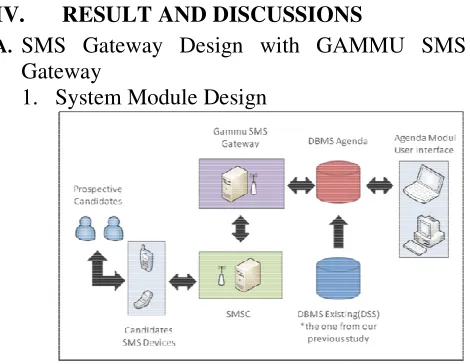
Fig. 1 System Modul Design
, we focused on getting the point h, of the selection which is decision of application, we’ve applied two kind of method for optimized decision making AHP and Profile Matching. But now we focused on administration and progress of each recruitment and selection procedure for easiness of tracking result and history
This research is kind of qualitative type of research. We dig a possible solution for agenda process which found at our previous study[7]
using Purposive Sampling technique, which is one of the sampling used in research. Selection based on informants such as staff, many other involved
The design technique used in this research is oriented design (OOD) approach. In the design process, the designing techniques are: 1. Database design. Modeled with an entity Design of static structure of system specification. Modeled with a Designing user interface. Includes the design of navigation, input form, and output
RESULT AND DISCUSSIONS
SMS Gateway Design with GAMMU SMS
Fig. 1 System Modul Design
In the Fig 1, we explain the agenda design work plan on the user interface module agenda, there is a feature to generate broadcast sms according to generate the entered agenda. Then, on the agenda of the user interface module there is also a feature to send broadcast sms that has been generated and given a list of recipients (whose data is taken from the DBMS Existing DSS) as well as raises the reply received from the candidate. SMS broadcast will be arranged by Gammu SMS G
to the SMSC. After going through the SMSC, recipients who are candidates will receive an SMS agenda for psychological tests, user interviews, MCU, socialization of work contracts or onboard.
2. Valid True SMS Broadcast Format and Reply SMS Format Design
sms gateway server, automatic reply based on Database Agenda
SMS format: PSI <space Reply format:
Tanggal Agenda Psikotes / User Interview / MCU/ socialization / Onboa
Anda:<<dd-mm-yyyy>>
Address Location>>, Waktu: <<hh:mm>> PIC: <<PIC Name>>, No Kontak
PIC:<<Handphone Number
3. Valid False SMS Broadcast Format and Reply SMS Format Design
sms gateway server, automatic reply based on Database Agenda
Reply format: “Anda tidak memiliki jadwal yang akan berlangsung”, reply is writen in indonesian language means you have no schedule that will take a place
4. Invalid False SMS Broadcast Format and Reply SMS Format Design
sms gateway server, automatic reply based on Database Agenda
Reply format: “Format sms yang anda masukan salah. Ketik PSI<spasi>NomorFLP
untuk cek agenda psikotes,
USI<Spasi>NomorFLP untuk cek agenda user interview, MCU<spasi>NomorFLP untuk cek agenda Tes
SKK<spasi>NomorFLP untuk cek agenda , we explain the agenda design work plan on the user interface module agenda, there is a feature to generate broadcast sms according to generate the entered agenda. Then, on the agenda of the ule there is also a feature to send broadcast sms that has been generated and given a list of recipients (whose data is taken from the DBMS Existing DSS) as well as raises the reply received from the candidate. SMS broadcast will be arranged by Gammu SMS Gateway to the SMSC. After going through the SMSC, recipients who are candidates will receive an SMS agenda for psychological tests, user interviews, MCU, socialization of work
Valid True SMS Broadcast Format and Reply SMS Format Design from candidate to sms gateway server, automatic reply based
space> FLPNumber
otes / User Interview socialization / Onboard
yyyy>>, Tempat: <<Test Waktu: <<hh:mm>>,
No Kontak Handphone Number>>
Valid False SMS Broadcast Format and Reply SMS Format Design from candidate to sms gateway server, automatic reply based
Anda tidak memiliki jadwal ”, reply is writen in indonesian language means you have no schedule that will take a place
Invalid False SMS Broadcast Format and Reply SMS Format Design from candidate to ateway server, automatic reply based
Format sms yang anda Ketik PSI<spasi>NomorFLP
untuk cek agenda psikotes,
International Journal of Computer Techniques -– Volume 5 Issue 5, Sep- Oct 2018
ISSN: 2394-2231 http://www.ijctjournal.org Page 57
sosialisasi kontrak kerja atau OB<spasi>NomorFLP untuk cek agenda B. Database Design
1. Entity Relationship Diagram
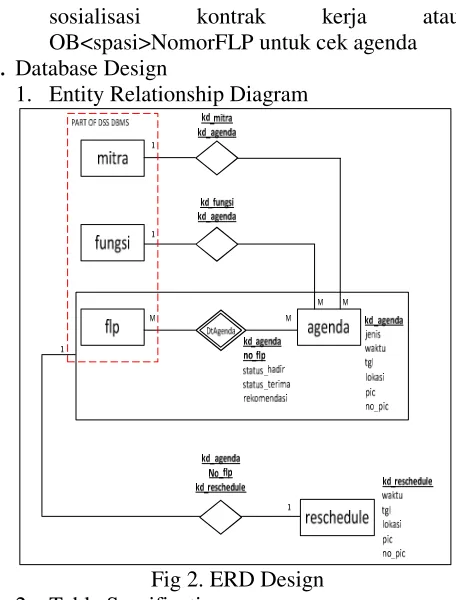
Fig 2. ERD Design 2. Table Spesification
As Fig 2 above about ERD Design, there are three tables contain from our previous DSS research that can be used in this study and work as masters for the module(mitra, fungsi and flp). Those three tables integrated with our new database for agenda module. These table bellow will describe the spesification of the new database:
TABLE I TABLE: AGENDA Field
Name
Type Size Description
Kd_agenda Char 6 Agenda code, Primary key
Kd_mitra Char 6 Client Code, Foreign key
Kd_fungsi Char 6 Job Function Code, Foreign key
Jenis Int 1 Type of Agenda 1 for psycho- logical test
2 for uer interview test 3 for medical check up test
4 for socialization of work contract
5 for on board
Waktu Time 5 Agenda time, format: hh:mm
Tgl Date 10 Agenda date, format: dd/mm/yyyy
Lokasi Varchar 50 Agenda location Pic Varchar 30 The name of person in
charge for the agenda no_pic Varchar 20 Phone number of the
person in charge for agenda
TOTAL 134 in kb/record
TABLE II TABLE: DTAGENDA
Field Name Type Size Description
Kd_agenda Char 6 Agenda Code, composite key No_flp Char 6 Proposal
Application form
number of
candidate, composite key Status_keh Int 1 Presence status in
agenda, 1 for attend 2 for not attend Status_terima Int 1 employee
acceptance status 1 for recommended 2 for considered 3 for rejected recommendati
on
Char 6 From function code (user recommend- ation for accepted candidates) TOTAL 20 in kb/record
TABLE III TABLE: RESCHEDULE
Field Name Type Size Description
Kd_reschedule Char 6 Reschedule Code, Primary Key
Kd_agenda Char 6 Agenda code, Foreign key
Waktu Time 5 Agenda time, format: hh:mm
Tgl Date 10 Agenda date, format: dd/mm/yyyy
Lokasi Varch
ar
50 Agenda location
Pic Varch
ar
30 The name of person in charge for the agenda
no_pic Varch
ar
20 Phone number of the person in charge for agenda
3. Database Storage Needs TABLE IV
DATABASE STORAGE ESTIMATION NEEDS
Table Size Record Total
Agenda 134 250 2.010.000 DtAgenda 20 42.000 840.000 Reschedule 127 31.500 4.000.500
TOTAL 6.850.500
C. Display Structure Design
Fig 3. Menu Structure D. User Interface Design
We include in this paper the example of user interface design that we made in these following fig. 4 and fig. 5
Fig.4. Entry Agenda Page Form
Fig.5 Entry Appointment Page Form E. Network Access Design
Fig.6 Network Access Design
V. CONCLUTIONS
A. System module that can bridge the management of these needs is a integration of web based and SMS gateway system. The system can be accessed 24 hours a day
International Journal of Computer Techniques -– Volume 5 Issue 5, Sep- Oct 2018
ISSN: 2394-2231 http://www.ijctjournal.org Page 59
support every connecting point and administration of those procedures
REFERENCES
[1] Yuwan Jumaryadi, Tazkiyah Herdi, Riad Sahara, Analysis and Design of KB/TK Bunga Bangsa Islamic School Information System, International Research Journal of Computer Science (IRJCS) Issue 04 Volume 5, 2018 [2] Alan Dennis, Barbara Haley Wixom, Roberta M. Roth, System Analysis
and Design: An Object-Oriented Approach with UML. 5 Edition, John Wiley & Sons, Inc., United States of America, 2015
[3] Siagian, Sondang, Manajemen Sumber Daya Manusia, Jakarta: Bumi Aksara, Indonesia, 2011
[4] Marwansyah. Manajemen Sumber Daya Manusia, Bandung: Alfabeta, Indonesia, 2010
[5] Gammu Project, www.gammu.org, accessed September 2018.
[6] Moedjiono, Nia Rahma Kurnianda, Aries Kusdaryono, Decision Support Model for User Submission Approval Energy Partners Candidate Using Profile Matching Method and Analytical Hierarchy Process. Scientific Journal of Informatics, Vol. 3 No. 2, Indonesia, 2016.
[7] Moedjiono, Pedoman Penelitian, Penyusunan dan Penilaian Tesis (V.5),
http://pascasarjana.budiluhur.ac.id/2012/10/pedoman-tesis-pps-ubl-v5-010112/, Jakarta: Universitas Budi Luhur, Indonesia, 2012
[8] Dahlan, M. Sopiyudin, Besar Sampel dan Cara Pengambilan Sampel Dalam Penelitian Kedokteran dan Kesehatan, Jakarta: Salemba Medik, Indonesia, 2013