Physical Detoxification
from Substances
clonazepam are recommended. Figures 4-5 and 4-6 (p. 78) give the equivalent doses of these medicines along with numerous other sedative-hypnotics and benzodiazepines.
Another alternative is phenobarbital substitu-tion. For patients who have used high doses of benzodiazepines for an extended period of time, hospitalization is always prudent. Outpatient detoxification should be reserved for patients whose doses of benzodiazepines were mainly in therapeutic ranges, who do not have polysubstance dependence, and who are reliable and have reliable significant others to aid in monitoring and supervising their
progress. In the outpatient setting, patients and families need to be informed that even with sound withdrawal treatment, seizures and delirium are possible. The individual should be instructed not to drive or operate dangerous machinery during treatment and perhaps for several weeks thereafter. Recurring assessment will be necessary, particularly around times of dosage reductions. Pregnant patients will need to be detoxified slowly and in consultation with an obstetrician.
A variety of cognitive and behavioral tech-niques have been proposed to assist in the pres-ence of a medication taper. These techniques alter negative cognitions regarding medication cessation, provide patient education, and pro-vide alternative cognitive and behavioral tech-niques for anxiety reduction and sleep
enhancement during detoxification (Spiegel 1999).
Anticonvulsants such as carbamazepine and valproate, as well as sedating antidepressants such as trazodone and imipramine, have been advocated for use in withdrawal (Dickinson et al. 2003). Rickels and colleagues (1999) assert that these drugs have some beneficial effect in the management of relatively low-dose benzo-diazepine discontinuation in their ability to reduce patients’ subjective complaints, but
that, in more severe withdrawal syndromes, they do not decrease symptoms. Imipramine can lower the seizure threshold and therefore is not recommended. The use of anticonvul-sants is probably best reserved as an adjunc-tive medicine to the long-acting benzodi-azepine or phenobarbital. The use of bus-pirone for benzodiazepine detoxification is ineffective and should not be considered. For patients with major autonomic symptoms dur-ing withdrawal that cannot be controlled by the primary treating agent, consideration of the use of a low dose of clonidine or propra-nolol may be helpful.
Preparing patients and starting detoxification during a period of low external stressors, with patient commitment to tapering, and a plan to manage underlying anxiety disorders, also are important in detoxification. A flexible detoxi-fication schedule is advised. During periods of increased withdrawal symptoms, dosage should be stabilized or even increased for a period of days. Frequent in-person or phone contact with the patient is vital. Patients being detoxified in the outpatient setting may need to be seen several times per week, espe-cially at times of dosage reductions.
Stimulants
with-drawal or after these symptoms have largely disappeared. While the processes that govern addiction to cocaine and amphetamines are believed to be similar, recent animal research suggests that there are also subtle differences in the ways in which these two types of drugs cre-ate sensitization (and perhaps addiction) in reg-ular users (Li et al. 2005).
Stimulant Withdrawal
Symptoms
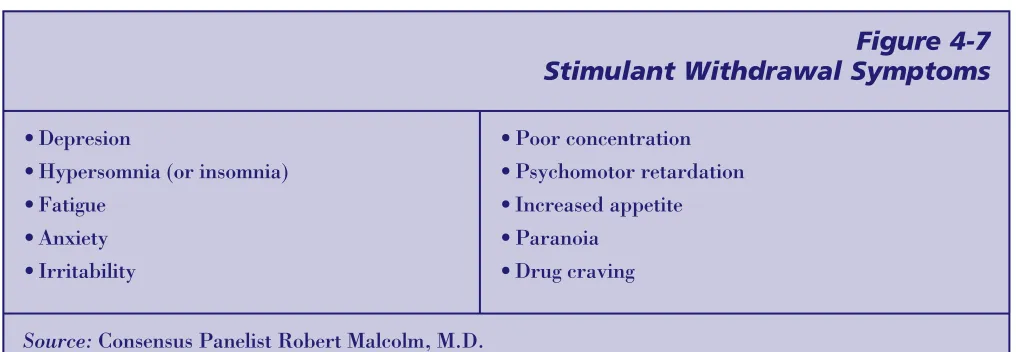
Stimulants are associated with withdrawal symptoms that differ markedly from those seen with opioid, alcohol, and sedative dependence (see Figure 4-7). While most clinicians believe that alcohol and heroin withdrawal should be treated aggressively with detoxification, there has been little emphasis on treating symptoms of stimulant withdrawal. Consequently, no medications have been developed for this pur-pose. This situation is understandable because stimulant withdrawal usually does not involve medical danger or intense patient discomfort. However, if stimulant withdrawal predicts poor outcome, it may be a reasonable target for clin-ical interventions.
An often overlooked but potentially lethal “medical danger” during stimulant withdrawal is the risk of a profound dysphoria (depres-sion, negative thoughts and feelings) that may include suicidal ideas or attempts. This may be, in part, a physiological response to cocaine
or amphetamine withdrawal and, in part, a reaction to individuals’ acute realization of the devastating psychosocial consequences after a binge ends. While both cocaine and
amphetamine users may experience depression during withdrawal, the period of depression experienced by amphetamine users is more prolonged and may be more intense.
Amphetamine users, in particular, should be monitored closely during detoxification for signs of suicidality and treated for depression if appropriate.
Although the literature on cocaine withdrawal is controversial, reasonable consensus supports the constellation of symptoms depicted in Figure 4-7 (Coffey et al. 2000; Cottler et al. 1993). These symptoms often disappear after several days of stimulant abstinence but can persist for 3 to 4 weeks (Coffey et al. 2000). In addition, since individuals addicted to stimu-lants often fail to achieve abstinence, withdraw-al symptoms can be a persistent component of active addiction. In addition, individuals addicted to stimulants may experience impair-ment in hedonic function (ability to experience pleasure) that has been ascribed to stimulant-induced disruptions of endogenous reward cen-ters (Dackis and O’Brien 2002). Research on animals has found that exposure to high doses of methamphetamine results in changes to both the dopaminergic and serotonergic systems of the brain (Nordahl et al. 2005) and dopamine abnormalities among animals and humans who had been ingesting cocaine (Schuckit 2000).
Figure 4-7
Stimulant Withdrawal Symptoms
•Depresion
•Hypersomnia (or insomnia) •Fatigue
•Anxiety •Irritability
•Poor concentration •Psychomotor retardation •Increased appetite •Paranoia
•Drug craving
Researchers have also observed abnormalities in regions of the brain that govern attention and memory in animals that were regularly administered methamphetamine (Nordahl et al. 2005).
Although cocaine withdrawal has traditionally been viewed as relatively mild (Satel et al. 1991; Weddington et al. 1990), evidence sug-gests that individuals dependent on cocaine with severe stimulant withdrawal are more like-ly to have a poor clinical outcome (Kampman et al. 2001a). The level of withdrawal symp-toms, therefore, may be clinically significant and should be monitored and recorded for future treatment (Kampman et al. 2001b). Kampman reported significantly higher dropout rates in individuals dependent on cocaine who scored high on the Cocaine Selective Severity Assessment (CSSA), a reli-able and valid structured interview designed to capture cocaine withdrawal symptoms
(Kampman et al. 1998). Patients with high scores on the CSSA were five times more likely to leave treatment and four times more likely to resume cocaine use than those with low scores (Mulvaney et al. 1999). The CSSA is an easily administered 18-item questionnaire. Each item is a 7-point rating scale, so that a person can score a number of points on any given ques-tion. Scores in excess of 22 indicate the pres-ence of significant cocaine withdrawal. See appendix C for more information on the CSSA. Given the poor prognosis associated with cocaine withdrawal, it is reasonable that more clinical attention be directed toward this phe-nomenon.
Medical Complications of
Stimulant Withdrawal
As previously noted, stimulant withdrawal is not usually associated with medical complica-tions. However, patients with recent cocaine use can experience persistent cardiac complica-tions, including prolonged QTc interval and vulnerability for arrhythmia and myocardial infarction (Chakko and Myerburg 1995). QT is an interval of time that can be measured on an
electrocardiogram (between the q wave and the t wave), while QTc is the relative (or “correct-ed”) QT interval. Some conditions and many drugs (LAAM, other opioids, and even antibi-otics) can cause the interval to lengthen and this can result in cardiac rhythm disturbances. Anterior chest pain or cardiac symptoms should therefore be fully evaluated in these individuals. Seizures also may be a complica-tion of stimulant abuse and can occur during detoxification. Persistent headaches could rep-resent a subdural, subarachnoid, or intracere-bral bleed (bleeding in or around the brain) and should be appropriately evaluated. It also should be emphasized that people who abuse stimulants usually become addicted to other substances, such as alcohol, sedatives, or opi-oids, and therefore can experience any of the complications ascribed to detoxification from these substances. Covert (secretive) use of other substances should be suspected and assessed with urine toxicology.
Management of Withdrawal
Without Medications
The most effective means of treating stimulant withdrawal involves establishing a period of abstinence from these agents. Access to brief hospitalization, a level of care previously avail-able for those who abuse stimulants, has been largely eliminated by managed care initiatives. In its place, intensive outpatient treatment can assist the patient to cease use long enough for withdrawal symptoms to abate entirely.
Management of Withdrawal
With Medications
There are no medications with proven efficacy to treat stimulant withdrawal. However, researchers have investigated some medications for cocaine detoxification. Amantadine may help reduce cocaine use in patients with more severe withdrawal symptoms (Kampman et al. 2000). Modafinil, an antinarcolepsy agent with stimulant-like action, is currently under inves-tigation by one research group as a cocaine detoxification agent (Dackis and O’Brien 2002). One small study in Thailand found the antidepressant mirtazapine (Remeron) was effective at reducing a number of the symptoms associated with amphetamine withdrawal (Kongsakon et al. 2005). None of these medica-tions, however, are approved for use in treating stimulant withdrawal and further research is needed. Gorelick and colleagues (2004) review the full range of clinical literature on pharma-cological intervention for cocaine addiction.
Patient Care and Comfort
Since stimulant withdrawal is not associated with severe physical symptoms, adjunctive medications are seldom required. These patients often are sleep deprived and might be unable to benefit from therapeutic activities during the first 24 to 36 hours of abstinence. They often are hungry and in need of large meal portions initially as their food intake may have been inadequate during active addiction. Stimulant users also may be irritable and care should be taken to avoid needless confrontation during the initial withdrawal phase. Headaches often are reported and can be treated symp-tomatically. Persistent headaches should be evaluated, as cocaine can produce cerebrovas-cular disease. Similarly, chest pain of possible cardiac origin should be evaluated medically with electrocardiography, cardiac enzymes, and appropriate medical attention. On occa-sion, patients undergoing withdrawal from cocaine or amphetamines report insomnia and may benefit from diphenhydramine (Benadryl) 50 to 100mg, trazodone (Desyrel) 75 to 200mg,
or hydroxyzine (Vistaril) 25 to 50mg at bed-time. Benzodiazepines should be avoided unless required for concomitant alcohol or sedative detoxification. As stimulant withdrawal symp-toms wane, patients are best treated with an active rehabilitative approach that combines entry into substance abuse treatment with sup-port, education, and changes in lifestyle.
Other Immediate Concerns
Central nervous system stimulants exert most of their toxic effects through vasoconstriction (constriction of the blood vessels).
Consequently, a number of medical conditions can arise from
ischemia (lack of proper blood supply) or infarction (death of tissue as the result of lack of blood sup-ply) as a result of stimulant use. Myocardial (heart muscle) infarction and stroke are widely recognized complica-tions of stimulant use. However, other prob-lems such as sponta-neous abortion, bowel necrosis (tissue death), and renal (kidney) infarction also have been reported from
cocaine-induced vaso-constriction. Cardiac
arrhythmias also are common. Other medical problems that are associated with stimulant dependence include dental disease, neuropsy-chiatric abnormalities, and movement distur-bances/disorders.
Antidepressants, such as selective serotonin reuptake inhibitors, can be prescribed for the depression that often accompanies metham-phetamine or other ammetham-phetamine withdrawal.
Intensive
outpatient
treatment can
assist the patient
to cease use long
enough for
withdrawal
symptoms to abate
Inhalants/Solvents
Withdrawal Symptoms
Associated With
Inhalants/Solvents
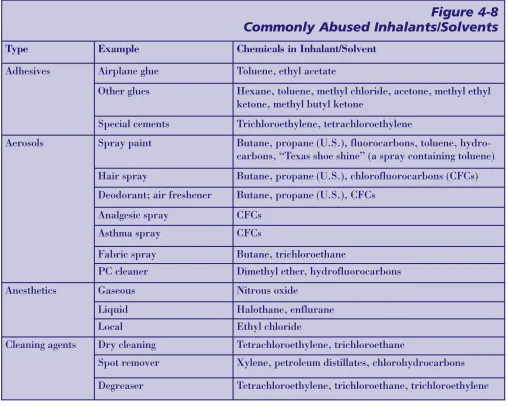
The term “inhalants” is used to describe a large and varied group of psychoactive sub-stances that all share the common characteris-tic of being inhaled for their effects. They are commonly found in household, industrial, and medical products. These drugs are used pri-marily by adolescents, although some, especial-ly the nitrates, are used by adults as well (NIDA 2000). Figure 4-8 presents some of the more commonly abused inhalants.
Dependence on inhalants and subsequent withdrawal symptoms are both relatively uncommon phenomena (Balster 2003). There is no specificor characteristic withdrawal syndrome that would include all drugs in the inhalant class. Intoxication with the solvents, aerosols, and gases often produces a syn-drome most like that of alcohol intoxication but lasting only 15 to 45 minutes (Miller and Gold 1990). Rarely, symptoms similar to sedative withdrawal have been described, including “fine tremors, irritability, anxiety, insomnia, tingling sensations, seizures and muscle cramps” (Miller and Gold 1990, p. 87). Toluene withdrawal has been reported to cause delirium tremens (Miller and Gold 1990). Longtime users also may exhibit weak-ness, weight loss, inattentive behavior, and depression (NIDA 2005). It has been reported that withdrawal symptoms can occur with as little as 3 months of regular usage (Ron 1986). When present, the withdrawal typically lasts 2 to 5 days (Evans and Raistrick 1987).
In addition to their short-term intoxicating affects, nitrates are used to enhance sexual pleasure by vasodilation (dilation of blood vessels) that produces a rush and sensation of warmth. There is no withdrawal syndrome that has been associated with nitrate abuse.
There are no specific assessment instruments available to measure inhalant withdrawal symptoms. A patient who presents with a his-tory of inhalant use and symptoms of seda-tive-like withdrawal should alert the clinician to the possibility of inhalant withdrawal. These patients require a complete history and physical exam. Additionally, a blood alcohol level and urine drug screen are helpful in the cases of suspected polydrug abuse.
Medical Complications of
Withdrawal From
Inhalants/Solvents
There are a large number of medical complica-tions associated with inhalant abuse and intoxi-cation. Many of these complications are not the result of withdrawal but may still be seen when the patient presents to the clinician. Most inhalants produce some neurotoxicity with cog-nitive, motor, and sensory involvement.
Additionally, damage to internal organs includ-ing the heart, lungs, kidneys, liver, pancreas, and bone marrow has been reported.
Management of Withdrawal
Without Medications
It is crucial to provide the patient with an envi-ronment of safety that removes him from access to inhalants. This can pose a challenge due to the almost universal availability of these drugs in society. Many of the medical consequences of inhalant usage will remit once the patient achieves abstinence (Balster 2003). The patient should be monitored for withdrawal symptoms and changes in mental status.
Most patients presenting for treatment of inhalant dependence will be adolescents. Ideally, they should be entered into an age-appropriate treatment program that meets their medical and psychosocial needs.
Management of Withdrawal
With Medications
Patients presenting with only inhalant with-drawal are unusual. Clinicians should prompt-ly ascertain if the patient has been abusing any other substances and proceed with appropriate detoxification as clinically indicated. When a patient presents with (1) a history of extensive inhalant usage, (2) a sedative-like withdrawal syndrome, and (3) no significant history or lab-oratory data that supports other substances, then the clinician can assume that the patient is in inhalant withdrawal.
As noted before, withdrawal from inhalants is similar to withdrawal from sedative-hyp-notics. No systematic detoxification protocol
has been established, although some clinicians have found phenobarbital useful (CSAT 1995d). The usefulness of benzodiazepines is unknown but would seem a reasonable alter-native given our current understanding of inhalant withdrawal (Brouette and Anton 2001). No other medications have been rou-tinely used for inhalant withdrawal.
Patient Care and Comfort
For patients who have only been abusing inhalants, treatment of insomnia during with-drawal is not usually necessary. Sedative sub-stitution during the period of detoxification may allow the patient to sleep. However, a period of postdetoxification insomnia should be expected and usually can be treated by the
Figure 4-8
Commonly Abused Inhalants/Solvents
Type Example Chemicals in Inhalant/Solvent
Adhesives Airplane glue Toluene, ethyl acetate
Other glues Hexane, toluene, methyl chloride, acetone, methyl ethyl ketone, methyl butyl ketone
Special cements Trichloroethylene, tetrachloroethylene
Aerosols Spray paint Butane, propane (U.S.), fluorocarbons, toluene, hydro-carbons, “Texas shoe shine” (a spray containing toluene) Hair spray Butane, propane (U.S.), chlorofluorocarbons (CFCs) Deodorant; air freshener Butane, propane (U.S.), CFCs
Analgesic spray CFCs
Asthma spray CFCs
Fabric spray Butane, trichloroethane
PC cleaner Dimethyl ether, hydrofluorocarbons
Anesthetics Gaseous Nitrous oxide
Liquid Halothane, enflurane
Local Ethyl chloride
Cleaning agents Dry cleaning Tetrachloroethylene, trichloroethane
Spot remover Xylene, petroleum distillates, chlorohydrocarbons
recommendation of good sleep hygiene prac-tices such as avoiding caffeine, daytime nap-ping, and overstimulation in the evening.
If the patient is able to refrain from inhalant (and other substance) use and has no serious psychiatric or medical consequences, then outpatient treatment should be the first option. Inpatient or residential treatment should be used for those patients who cannot achieve abstinence or have serious co-occur-ring medical or psychiatric disorders. Hospitalized patients will need a thorough history and physical exam. Therapy to address denial, addiction, and pertinent psy-chosocial issues should be initiated as soon as possible during the hospitalization.
Supportive care and abstinence will resolve most medical problems associated with chron-ic inhalant usage (Balster 2003).
Nicotine
In 2004, approximately 44.5 million adults were cigarette smokers (23.4 percent were men and 18.5 percent were women) (CDC 2005a). Nicotine addiction in the form of cigarette smoking accounts for more deaths each year than AIDS, alcohol, cocaine, hero-in, homicide, suicide, motor vehicle crashes, and fires combined (U.S. Department of Health and Human Services [U.S. DHHS] 2000b). Between 1995 and 1999, there were 490,000 smoking-related premature deaths annually, and smoking cost the country at least $157 billion yearly in health-related eco-nomic losses. This amounts to approximately $7.18 per pack of cigarettes (Fellows et al. 2002), a truly staggering figure.
Smokers are at increased risk for several medical problems, including myocardial infarction, coronary artery disease, hyperten-sion, stroke, peripheral vascular disease,
Figure 4-8 (continued)
Commonly Abused Inhalants/Solvents
Solvents and gases Nail polish remover Acetone, ethyl acetate
Paint remover Toluene, methylene chloride, methanol acetone, ethyl acetate
Paint thinner Petroleum distillates, esters, acetone
Correction fluid and thinner Trichloroethylene, trichloroethane
Fuel gas Butane, isopropane
Lighter Butane, isopropane
Fire extinguisher Bromochlorodifluoromethane
Food products Whipped cream Nitrous oxide
Whippets Nitrous oxide
“Room odorizers” Locker Room, Rush,
chronic obstructive lung disease, chronic bronchitis, and several types of cancer (lung, stomach, head and neck, and bladder). Other problems associated with nicotine addiction include gastro-esophageal reflux disease and gastric ulcerations, cataracts, and premature wrinkling of the skin. There also appears to be an antiestrogen effect (suppression of an important hormone) that may lead to early development of osteoporosis in women (Okuyemi et al. 2000).
In 1988, the U.S. Surgeon General’s Report concluded that nicotine is the principal addic-tive agent in tobacco. Nicotine binds to nico-tinic acetylcholine receptors in the brain and has the direct ability to stimulate the release of dopamine in the nucleus accumbens area. The nucleus accumbens has long been consid-ered the “reward center” in the brain. This increase in dopamine is similar to what occurs when patients use stimulants and is felt to be an essential element in the reward process of addiction (Glover and Glover 2001).
As many as 90 percent of patients entering treatment for substance abuse are current nicotine users (Perine and Schare 1999). There has long been controversy in the field of addiction medicine as to how best to handle the problem of nicotine dependence in
patients seeking treatment for other types of substance abuse. Traditionally, it has been argued that patients would find that trying to stop smoking while also contending with other (more pressing) addiction problems would be too difficult and distracting in early absti-nence. However, others argue that nicotine dependence is a lethal disease and that physi-cians have the responsibility to intervene in this addiction with the same aggressiveness they show toward other addictive substances. This pro-intervention position has received increasing attention from clinicians, inasmuch as it is now understood that alcohol consump-tion is associated with increased nicotine usage (Henningfield et al. 1984). Gulliver and colleagues (1995) have demonstrated that the urge to smoke is correlated with the urge to
drink, and others have shown that continued nicotine dependence may be a relapse trigger for resumption of drinking (Stuyt 1997). The concern that smoking cessation may precipi-tate relapse to other substances of abuse has not been supported in the literature (Hughes 1995).
Treatment programs that have attempted to treat nicotine dependence in conjunction with other drugs of addiction have met with limit-ed success (Bobo and Davis 1993; Burling et al. 1991; Hurt et al. 1994) and have generat-ed increasgenerat-ed interest in smoking cessation as a part of a patient’s overall substance abuse treatment (Sees and Clark 1993). One study reported that forcing unmotivated patients (or patients who did not consider smoking a problem) to quit was countertherapeutic (Trudeau et al. 1995).
Moreover, it has traditionally been accepted that nicotine detoxification concurrent with detoxification from other substances makes the undertaking more difficult. Several fac-tors are involved including the following: (1) patient ambivalence and/or lack of interest in smoking cessation; (2) physician ambivalence about the importance of smoking cessation early in treatment; (3) staff’s use of nicotine; (4) staff’s ambivalence about the importance of nicotine cessation early in treatment; (5) easy availability of cigarettes from peers, family, visitors, staff, and at 12-Step meet-ings; (6) lack of sufficient training and exper-tise on the part of physicians and staff in managing nicotine withdrawal; and (7) staff resistance to patient smoking cessation because withdrawal symptoms include irri-tability, anxiety, and depression, all of which can make patients more difficult to manage.
Withdrawal Symptoms
Associated With Nicotine
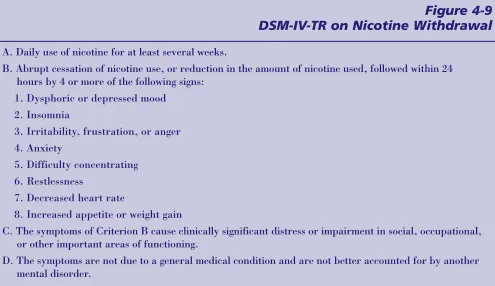
The Diagnostic and Statistical Manual of Mental Disorders, 4th edition, text revision
or more of the signs presented in Figure 4-9, though some clinicians believe that three or more is sufficient to make the diagnosis of nicotine withdrawal. Furthermore, it should be noted that symptoms vary in duration and intensity, with decreased heart rate and light-headedness resolving in 48 hours, while increased appetite may remain present for weeks to months (Glover and Glover 2001). Smokers who have severe craving during withdrawal are less likely to be successful in their attempt at quitting (Hughes and Hatsukami 1992). Depression during with-drawal also has been linked to relapse to smoking (Covey et al. 1993).
Assessing Severity
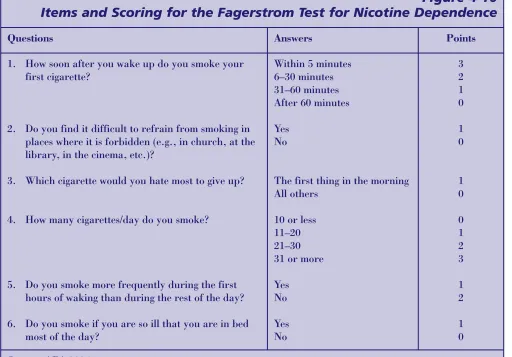
Since 1978, the standard instrument used to measure physical dependence on nicotine has been the eight-item Fagerstrom Tolerance Questionnaire (FTQ) (Fagerstrom 1978). A later revision known as the Fagerstrom Test for Nicotine Dependence (FTND) (see Figure
4-10) has been reduced to six questions (Giovino et al. 1995; Heatherton et al. 1991). Scores greater than seven are consistent with nicotine dependence.
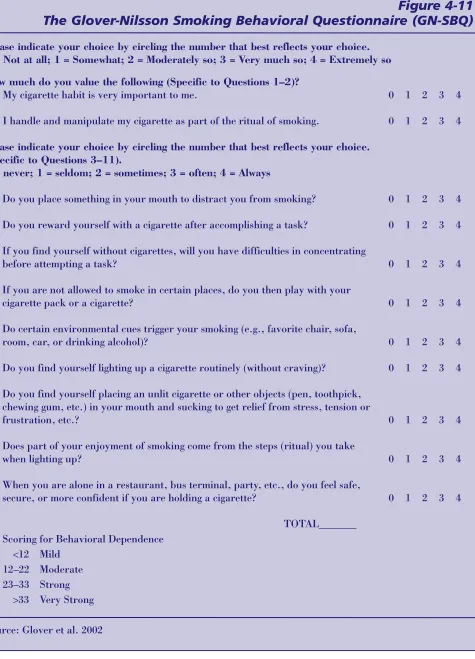
While both the FTQ and FTND are very use-ful for estimating a patient’s physical depen-dence on nicotine, there is still a need to assess more accurately the degree to which smoking behavior plays a role in maintaining addiction. The Glover-Nilsson Smoking Behavioral Questionnaire (GN-SBQ) is an 11-question, self-administered test that evaluates the impact of behaviors and rituals associated with smoking (see Figure 4-11, p. 88). It was designed to assist clinicians in identifying and quantifying behavioral aspects of smoking that play a role in maintaining nicotine dependence, which can then help the clinician develop a cessation strategy that takes into account both physical dependence and behav-ioral dependence (Glover et al. 2002).
Figure 4-9
DSM-IV-TR on Nicotine Withdrawal
A. Daily use of nicotine for at least several weeks.
B. Abrupt cessation of nicotine use, or reduction in the amount of nicotine used, followed within 24 hours by 4 or more of the following signs:
1. Dysphoric or depressed mood 2. Insomnia
3. Irritability, frustration, or anger 4. Anxiety
5. Difficulty concentrating 6. Restlessness
7. Decreased heart rate
8. Increased appetite or weight gain
C. The symptoms of Criterion B cause clinically significant distress or impairment in social, occupational, or other important areas of functioning.
D. The symptoms are not due to a general medical condition and are not better accounted for by another mental disorder.
To better understand a patient’s level of nico-tine dependence, providers can assess bio-chemical markers including nicotine, coti-nine, and carbon monoxide. Nicotine and its metabolite cotinine can be measured in urine, blood, or saliva. Cotinine continues to be pre-sent in bodily fluids for up to 7 days after ces-sation. Clinicians should use caution when interpreting the meaning of nicotine and coti-nine assays, as they are not specific to tobac-co-derived nicotine and may indicate the patient’s compliance with nicotine replace-ment therapy rather than smoking.
Carbon monoxide is easily measured in expired breath and can show whether the patient has been smoking within a few hours prior to the test. It can be used to monitor smoking cessation for patients receiving
nico-tine replacement therapy and patients often find it a helpful motivator in their attempt to maintain abstinence (Benowitz 1983).
Medical Complications of
Withdrawal From Nicotine
There are no major medical complications pre-cipitated by nicotine withdrawal itself.
However, patients frequently experience uncomfortable withdrawal symptoms starting within a few hours of cessation. In addition to the symptoms previously noted, patients may complain of increased coughing, a desire for sweets, and difficulty concentrating (Hughes and Hatsukami 1992). Clinicians should be aware that withdrawal symptoms can
masquer-Figure 4-10
Items and Scoring for the Fagerstrom Test for Nicotine Dependence
Questions Answers Points
1. How soon after you wake up do you smoke your first cigarette?
2. Do you find it difficult to refrain from smoking in places where it is forbidden (e.g., in church, at the library, in the cinema, etc.)?
3. Which cigarette would you hate most to give up?
4. How many cigarettes/day do you smoke?
5. Do you smoke more frequently during the first hours of waking than during the rest of the day?
6. Do you smoke if you are so ill that you are in bed most of the day?
Within 5 minutes 6–30 minutes 31–60 minutes After 60 minutes
Yes No
The first thing in the morning All others
10 or less 11–20 21–30 31 or more
Yes No
Yes No
3 2 1 0
1 0
1 0
0 1 2 3
1 2
1 0
Figure 4-11
The Glover-Nilsson Smoking Behavioral Questionnaire (GN-SBQ)
Please indicate your choice by circling the number that best reflects your choice. 0 = Not at all; 1 = Somewhat; 2 = Moderately so; 3 = Very much so; 4 = Extremely so
How much do you value the following (Specific to Questions 1–2)?
1. My cigarette habit is very important to me.
2. I handle and manipulate my cigarette as part of the ritual of smoking.
Please indicate your choice by circling the number that best reflects your choice. (Specific to Questions 3–11).
0 = never; 1 = seldom; 2 = sometimes; 3 = often; 4 = Always
3. Do you place something in your mouth to distract you from smoking?
4. Do you reward yourself with a cigarette after accomplishing a task?
5. If you find yourself without cigarettes, will you have difficulties in concentrating before attempting a task?
6. If you are not allowed to smoke in certain places, do you then play with your cigarette pack or a cigarette?
7. Do certain environmental cues trigger your smoking (e.g., favorite chair, sofa, room, car, or drinking alcohol)?
8. Do you find yourself lighting up a cigarette routinely (without craving)?
9. Do you find yourself placing an unlit cigarette or other objects (pen, toothpick, chewing gum, etc.) in your mouth and sucking to get relief from stress, tension or frustration, etc.?
10. Does part of your enjoyment of smoking come from the steps (ritual) you take when lighting up?
11. When you are alone in a restaurant, bus terminal, party, etc., do you feel safe, secure, or more confident if you are holding a cigarette?
TOTAL_______ Scoring for Behavioral Dependence
<12 Mild 12–22 Moderate 23–33 Strong
>33 Very Strong
Source: Glover et al. 2002
0 1 2 3 4
0 1 2 3 4
0 1 2 3 4
0 1 2 3 4
0 1 2 3 4
0 1 2 3 4
0 1 2 3 4
0 1 2 3 4
0 1 2 3 4
0 1 2 3 4
ade as other psychiatric conditions, especially anxiety and depression (see Figure 4-12).
Smoking cessation also may affect the metabolism of other drugs primarily through the Cytochrome P 450 (CYP450) system. This system is one of many hepatic liver enzyme sys-tems that is responsible for the metabolic breakdown of various drugs into inactive pound products. Different drugs and com-pounds have varying affinities for the CYP450 system. The higher the affinity, the faster the breakdown of the drug or compound in the body. Some compounds can slow the
metabolism or breakdown of other drugs with a lower affinity, leading to a buildup of that drug or compound in the body.
During detoxification from nicotine, some medications will have their metabolism altered, including theophylline, caffeine, tacrine, imipramine, haloperidol, penta-zocine, propranolol, flecainide, and estradiol; in general, these effects are short-lived and seldom drastic. Nicotine also reduces beta blockers’ ability to lower blood pressure and heart rate and decreases the amount of seda-tion from benzodiazepines as well as de-creases the amount of pain relief provided by some opioids, most likely because of its stimu-lant effects (Zevin and Benowitz 1999). A complete discussion of nicotine’s effects on medications is beyond the scope of this TIP and physicians are encouraged to consult the
Physicians’ Desk Reference(2004) or
equiva-lent pharmaceutical guide. Figure
4-13 (p. 90) shows the effects of abstinence from smoking on blood levels of a number of medications.
Management of Withdrawal
Without Medications
About one third of current smokers attempt to quit smoking each year and more than 90 percent of these try to do so without any for-mal nicotine cessation treatment. Most smok-ers will make several attempts on their own to quit and ultimately, only about 50 percent are successful over a lifetime (U.S. DHHS 2000b). While some smokers are able to quit on their own, others may require intervention in the form of behavioral treatment and/or pharma-cotherapy.
There are insufficient data available to deter-mine who will benefit most from a particular type of treatment. Some patients may prefer to stop smoking without the use of medica-tion. An elevated score on the GN-SBQ would indicate a strong behavioral component to smoking that might guide the clinician in rec-ommending behavioral treatment as a prima-ry intervention. Patients who also have ele-vated FTQ scores may benefit by a combina-tion of behavioral and pharmaceutical inter-vention.
Figure 4-12
Some Examples of Nicotine Withdrawal Symptoms That Can Be
Confused With Other Psychiatric Conditions
Anxiety Depression
Increased REM (rapid eye movement) sleep Insomnia
Irritability Restlessness Weight gain
The U.S. Public Health Service’s Treating Tobacco Use and Dependence: Clinical Practice Guidelineis a comprehensive review of the smoking cessation literature (Fiore et al. 2000a). It discusses a range of nonphar-macological interventions for the management of withdrawal from nicotine; these can be sep-arated into two basic categories: self-help interventions and behavioral interventions (Anderson and Wetter 1997).
Self-help interventions
Many tobacco users prefer to attempt to quit without any assistance from professionals. A number of self-help products are available that can assist them in their cessation
attempts. These include a wide array of pam-phlets, manuals, video- and audiotapes (e.g., from the American Lung Association and the National Cancer Institute), 12-Step self-help support groups, and telephone helplines. The U.S. Public Health Service’sGuideline, which analyzed all types of self-help interventions together, found that the self-help approach to cessation yielded results only slightly better than no intervention at all. To date, self-help
interventions alone have not been very suc-cessful at helping people achieve abstinence from tobacco. The Guidelinesuggests, howev-er, that self-help can be a useful adjunct to other forms of treatment (Fiore et al. 2000a). One type of self-help intervention that shows some promise is the use of computer-generat-ed personalizcomputer-generat-ed written fecomputer-generat-edback for patients. The computer makes recommendations based on an individual’s response to standardized questions about her smoking (Etter and Perneger 2001; Shiffman et al. 2000).
Behavioral interventions
The U.S. Public Health Service study noted that when physicians took as little as 3 min-utes to advise their patients to stop smoking, long-term quit rates were modestly improved from 7.9 percent to 10.2 percent (Fiore et al. 2000a). Westmaas and colleagues note that “simple, clear advice from a physician can be considered an easy, cost-effective intervention that not only moves smokers closer to the decision to quit, but also may motivate some smokers to make an actual attempt”
Figure 4-13
Effects of Abstinence From Smoking on Blood Levels of
Psychiatric Medications
Abstinence Increases Blood
Levels Abstinence Does Not IncreaseBlood Levels Effect of Abstinence on BloodLevels Is Unclear
Clomipramine Clozapine Desipramine
Desmethyldiazepam Doxepin
Fluphenazine Haloperidol Imipramine Oxazepam Nortriptyline Propranolol
Amitriptyline Chlordiazepoxide Ethanol
Lorazepam Midazolam Triazolam
Alprazolam Chlorpromazine Diazepam
(Westmaas et al. 2000, p. 58). The greater the amount of time in face-to-face interventions, the higher the success rate for patients, but interventions as short as 3 minutes have been found to be effective (Fiore et al. 2000a). A counseling session of longer than 10 minutes produced a cessation rate of 20.1 percent compared to a rate of 10.9 percent for no treatment. The guideline also indicated that if cessation information is given by multiple types of providers (e.g., physician, psycholo-gist, dentist, nurse, and pharmacist) it can have a dramatic effect on cessation rates, increasing the rate to 23 percent compared to 10.8 percent for patients who had no
provider contact.
A review of behavioral intervention studies concluded that both supportive care by a clinician and the ability of patients to develop problemsolving and coping skills improved success rates for smoking cessation (Anderson and Wetter 1997).Other components such as cigarette fading (gradually decreasing the number of cigarettes smoked over a period of time), establishing a quit date, enhanced envi-ronmental support, improved diet and
increased exercise, relaxation training, and contingency contracting were not associated with improved outcome. Aversive condition-ing, such as rapid smoking techniques, is
effective but not routinely recommended (Fiore et al. 2000a).
Management of Withdrawal
With Medications
A U.S. Public Health Service panel recom-mends that all primary care physicians pro-vide a five-step intervention, known as the “5 A’s,” to all tobacco users. The panel recom-mends that all smokers who want to quit should be offered active medication that has been approved for assisting in smoking cessa-tion unless there is a medical contraindicacessa-tion (Fiore et al. 2000a). Figure 4-14 provides a summary of the “5 A’s” for brief intervention.
Nicotine Replacement
Therapy (NRT)
Nicotine polacrilex gum was approved by the FDA in 1984. In the 1990s other NRTs received FDA approval, including the nicotine transder-mal patch, the nicotine nasal spray, and the nicotine inhaler. Nicotine gum and nicotine transdermal patch are now available over the counter. After the acute withdrawal period, patients are then weaned off the medication until they become nicotine free. All NRTs are
Figure 4-14
The “5 A’s” for Brief Intervention
Ask about tobacco use. Identify and document tobacco use status for every patient at every visit.
Advise to quit. In a clear, strong, and personalized manner urge every tobacco user to quit.
Assess willingness to make a quit attempt. Is the tobacco user willing to make a quit attempt at this time?
Assist in quit attempt. For the patient willing to make a quit attempt, use counseling and pharmacother-apy to help him or her quit.
Arrange followup. Schedule followup contact, preferably within the first week after the quit date.
effective, with 1-year quit rates between 11 and 34 percent (Okuyemi et al. 2000).
There has been some concern about the addictive potential of NRTs, and it has been reported that 5 to 20 percent of patients using nicotine polacrilex gum continue to use it for more than 1 year (Hughes 1989). There was also initial concern that the nicotine nasal spray, with its rapid onset of action and high plasma concentrations, might become a drug of abuse. This has not been reported in the
literature, and it could be speculated that this is because of the nasal spray’s relatively uncom-fortable side effects that cause many patients to dislike the product (Schuh et al. 1997). In gen-eral, withdrawal symptoms from NRTs are mild com-pared to those that occur in smoking cessation, and con-tinued use of these products may be the result of patients’ fear of returning to active smoking (APA 1996). For those patients who continue to use NRTs, providers should balance the patient’s continued depen-dence on nicotine with the considerable health benefit of decreasing active tobacco usage. It is clear that constituents of tobacco other than nicotine are responsible for caus-ing cancer. No ill effects have been attributed to long-term use of nicotine replacement ther-apy (Benowitz and Gourlay 1997).
Bupropion SR
Bupropion SR (Sustained Release) was initially manufactured under the name Wellbutrin as a treatment for major depressive disorder. In 1997, the FDA approved bupropion SR for smoking cessation, and it has been marketed under the name Zyban. Bupropion is a novel antidepressant that is involved primarily with dopamine but also affects adrenergic mecha-nisms in the central nervous system. Its exact mechanism of action is unknown, but it is not a nicotine substitute or replacement like the NRTs. The recommended dose is 150mg daily for 3 days and then 150mg twice daily for 7 to 12 weeks. Typically patients set their quit date 1 to 2 weeks from the time they start the medi-cation in order to get the drug to therapeutic levels. This is an ideal time for the patient to focus on making behavioral changes and enlist-ing social support to augment his quit attempt. Bupropion SR has proven useful in smoking cessation with a 12-month abstinence rate of 35.5 percent compared to a placebo at 15.6 percent and the nicotine patch at 16.4 percent (Westmaas et al. 2000). The most commonly reported side effects include dry mouth and insomnia. Bupropion SR should not be used in patients with a history of seizures, heavy alco-hol use, head trauma, or with anorexia or bulimia.
Other nonnicotine
pharmacotherapy
Covey and colleagues examined nonnicotine pharmaceutical products that have been evalu-ated in controlled trials of smoking cessation (Covey et al. 2000). These drugs include the following:
•The alpha-2 agonist antihypertensive, clonidine
•The tricyclic antidepressant, nortriptyline •The monoamine oxidase inhibitor (MAOI)
antidepressant, moclobemide
•The serotonin 5-HT1A agonist anxiolytic, buspirone
Patients should be
encouraged to use
combined NRT
treatments if they
are unable to quit
using a single type
of first line
•The antihypertensive CNS nicotinic receptor blocker, mecamylamine
•Oral dextrose tablets
Although none of these agents has been approved by the FDA for smoking cessation, clonidine, nortriptyline, and moclobemide have all been found to be effective treatments (Covey et al. 2000). Clonidine may be a helpful
adjunct to nicotine replacement during acute nicotine withdrawal. Doses of 0.05mg to 0.1mg three times a day can be tried as tolerated (sedation and low blood pressure are con-cerns), and the medication needs to be tapered when discontinued to avoid rebound hyperten-sion.
The Public Health Service’s Treating Tobacco Use and Dependence: Clinical Practice Guideline(Fiore et al. 2000a) has classified nortriptyline and clonidine as sec-ond-line treatments. Clonidine is an antihy-pertensive and may be appropriate for
patients addicted to certain types of drugs but not appropriate for others. The antidepres-sant selective serotonin reuptake inhibitor (SSRI) fluoxetine has been tested in a number of multisite trials (Cook et al. 2004; Hitsman et al. 1999; Niaura et al. 2002) and found to have a small benefit at best, although for patients who experience mild depressive states it may be a worthwhile adjunctive treatment. The usefulness of other SSRIs for smoking cessation is unknown, but studies have generally been unfavorable. More infor-mation on smoking cessation for people with co-occurring substance use and other mental disorders can be found in appendix D of TIP 42, Substance Abuse Treatment for Persons With Co-Occurring Disorders(CSAT 2005c).
Combination drug therapy
Combining NRT products
NRT products typically provide less than half the nicotine plasma levels that cigarette users achieve through smoking (Benowitz et al. 1997; Dale et al. 1995; Gupta et al. 1995; Lawson et al. 1998). To attempt to increase nicotine
lev-els, several clinical trials have evaluated the effectiveness of combining available products. The simultaneous use of nicotine gum and the nicotine patch has been evaluated in several studies. Short-term gains in cessation were seen with the combination compared to either medi-cation alone, but no long-term benefits in absti-nence were demonstrated (Anderson and Wetter 1997). Blondal and colleagues (1999) compared the combination of nicotine nasal spray and the nicotine patch to the patch alone and found that at 3 months 37 percent of the patients were smoke free (compared to 25 per-cent for the patch alone). An open-label study of the combined use of nicotine inhaler and the nicotine patch found a 12-week cessation rate of 30 percent and good tolerability for the com-bination (Westman et al. 2000).
NRT using high-dose nicotine
patch therapy
The highest dose of nicotine available by patch is 22mg. Several studies have evaluated whether higher doses of nicotine (up to 44mg) improve abstinence rates. The effect of this strategy has been small and the routine use of higher dose patches is not recommended (Hughes et al. 1999; Killen et al. 1999).
Combining nicotine patch
and bupropion SR
In a double-blind, placebo-controlled study, the combination of bupropion SR and the nico-tine transdermal patch showed higher absti-nence rates at 12 months (35.5 percent) com-pared to bupropion SR alone (30.3 percent), nicotine patch alone (16.4 percent), or placebo patch and pill group (15.6 percent) (Jorenby et al. 1999). This combination was well tolerated. Clinicians who use this combination should first start the patient on bupropion SR 150mg for 3 days and then increase the dosage to 150mg twice daily for 1 to 2 weeks prior to the day of smoking cessation. On the “quit day,” nicotine patch therapy should be initiated and the combination treatment continued for 3 to 6 months (Okuyemi et al. 2000).
Patient Care and Comfort
Most smokers attempt cessation on an outpa-tient basis and without any assistance from professionals. However, if a patient decides that she or he wants help with smoking cessa-tion, it is important for the clinician to present a supportive and nonjudgmental attitude and develop a therapeutic alliance with the patient. It must be emphasized that nicotine depen-dence is a chronic relapsing disorder and that patients often make several attempts at quitting before succeeding.
Most smokers who want treatment will seek help from their primary care physician. The physician has the responsibility of providing pharmaceutical treatment, education about common problems associated with cessation,
and emotional support to patients attempting to quit. Discussing nicotine withdrawal symp-toms can often help allay patient concerns.
Fear of weight gain is a barrier for many who want to quit smoking (French et al. 1995). This is an especially important issue for women and may deter their attempts to stop smoking (Gritz et al. 1989). Though the health gains of stopping smoking clearly out-weigh the health risks of out-weight gain, this argument does little to assuage patients’ fears. Dieting during smoking cessation is not recommended in general and has been shown to increase the likelihood of smoking relapse (Hall et al. 1992). Physicians should, howev-er, recommend both exercise and proper nutrition for patients attempting to stop smoking. Patients should be informed that alcohol use also is considered a risk factor for relapse to smoking by most clinicians
(Shiffman 1982), and patients who can abstain from drinking during the withdrawal period should do so.
Patients generally will find a smoke-free envi-ronment helpful during quit attempts. If the patient lives in a household where others smoke, household members and friends can help by not smoking in front of the patient and limiting the number of smoking cues in their residence.
should be familiar with the programs avail-able in their communities in order to make referrals.
Marijuana and Other
Drugs Containing THC
Marijuana and hashish are the two sub-stances containing THC (delta-9-tetrahydro-cannabinol) commonly used today. The field of addiction medicine has given considerable attention to the question of whether there is a specific withdrawal syndrome associated with cessation from prolonged THC use. In the past, many have stated that there is no acute abstinence syndrome that develops in people who abruptly discontinue THC (CSAT 1995d). More recently this has been called into question and most experts now believe that a THC-specific withdrawal syndrome does occur in some patients who are heavy users (Budney et al. 2001), though cannabis withdrawal is not yet included in the APA’s
Diagnostic and Statistical Manual of Mental Disorders.
The THC abstinence syndrome usually starts within 24 hours of cessation. The amount of THC that one needs to ingest in order to experience withdrawal is unknown. It can be assumed, however, that heavier consumption is more likely to be associated with withdraw-al symptoms. The most frequently seen symp-toms of THC withdrawal are anxiety, restless-ness and irritability, sleep disturbance, and change in appetite (usually anorexia). Other symptoms of withdrawal are less frequently seen and appear to include tremor, diaphore-sis (sweating), tachycardia (elevated heart rate), and GI disturbances, including nausea, vomiting, and diarrhea. Cognitive difficulties including depression also have been reported and may persist but usually improve with time. There are no medical complications of withdrawal from THC, and medication is gen-erally not required to manage withdrawal.
Clinicians may see a variety of the symptoms mentioned above, but these generally require
no immediate medication during the detoxifi-cation period and usually are self-limiting. However, the clinician should be aware of the potential for more persistent problems. Screening the patient for suicidal ideation or other mental health
problems is warrant-ed. Some reviews have advocated the use of buspirone as an alternative to benzodiazepines for the management of persistent general-ized anxiety (Gatch and Lal 1998). Other common problems encountered during withdrawal can be managed with nonad-dictive, supportive medications. For patients with more persistent difficulty sleeping, clinical experience suggests that Trazodone may be useful. Trazodone can lead to low blood pressure upon stand-ing, dizziness, and may increase falls, particularly in indi-viduals over age 60. Benzodiazepines and other addictive medi-cations should be avoided.
The patient should be encouraged to maintain abstinence from THC as well as other addic-tive substances. Some patients will require a substance-free, supportive environment to achieve and maintain abstinence. Clinicians should educate all patients about the effects of withdrawal, validate their complaints, and reassure them that their symptoms will likely improve with time. Symptomatic relief may be provided in order to increase the patient’s comfort.
Most experts now
believe that a
THC-specific
with-drawal syndrome
does occur in some
patients who are
heavy users,
though cannabis
withdrawal is not
yet included in the
APA’s
Diagnostic
and Statistical
There are no clinical assessment instruments available that measure THC withdrawal. Both animal and human studies indicate that a withdrawal syndrome starts within 24 hours of cessation and may last for up to a week.
Anabolic Steroids
Anabolic steroids, as differentiated from cor-ticosteroids and female gonadotropic hor-mones, are androgens (male hormones) and subject to abuse as a means of increasing
muscle mass. These agents also can pro-duce aggressive, manic-like behavior that may include delusions (Lukas 1998). Males involved in profes-sional sports, weight lifting, body building, or other pursuits that value muscular mass are more likely to use these substances than are women, although use in women has been reported. Adolescents use anabolic steroids to improve their appearance and may have increased access to these com-pounds (Yesalis et al. 1993). The large numbers of anabol-ic steroid prepara-tions that have medical and veteri-nary uses are pri-marily obtained illegally through diversion. High doses of anabolic steroids can be medi-cally dangerous but side effects, usually involving endocrine, liver, central nervous system, and cardiac function, tend to be reversible upon cessation of anabolic steroid
use. However, neither cessation nor disclo-sure of anabolic steroid use can be assumed when treating these individuals.
Withdrawal Symptoms
Associated With Steroids
Anabolic steroids can be associated with with-drawal symptoms emerging after their abrupt discontinuation. Withdrawal symptoms include (in descending order of prevalence) craving for more steroids, fatigue, depres-sion, restlessness, anorexia (loss of appetite), insomnia, reduced libido (sex drive),
headaches, and nausea (Lukas 1998). It is not known how commonly this syndrome occurs, but steroid withdrawal appears more likely in heavy users. The clinician’s index of suspi-cion should be raised when evaluating indi-viduals who are predisposed to steroid misuse and who exhibit these symptoms. Also indica-tive of possible steroid abuse are certain physiological signs of androgen exposure, including hair loss, acne, dysuria (difficult or painful urination), small testicles, edema of the extremities, and rapid weight gain. Females can develop decreased breast size, acne, virilism (clitoral enlargement, excessive and abnormal bodily hair growth, male pat-tern baldness) and amenorrhea (suppression of menstruation). Males who abuse steroids have been reported to possess a distorted body image and may inaccurately view them-selves as small and weak (Pope et al. 1993).
Medical Complications of
Steroid Withdrawal
Due to anabolic steroids’ long duration of action, side effects that might emerge cannot be quickly reversed by the discontinuation of these substances. Therefore, related side effects might require medical management beyond the simple recommendation that steroids immediately be discontinued. Persistent side effects include urinary tract infections, bladder irritability, skin blistering (at the injection site), erythema (abnormal skin redness) when given as a skin patch, and
Interventions
directed toward
cessation should
involve patient
education regarding
the dangers and
medical
complica-tions of anabolic
steroids, their
behavioral effects,
and a thorough
evaluation of the
patient’s rationale
priapism (prolonged erections lasting hours). The latter condition involves a painful penile erection and constitutes an emergency that requires specialized medical attention. Edema (swelling) of the hands or feet, commonly seen with anabolic steroids, can be treated with diuretics (medications that increase urine flow). Elevated liver function tests and jaun-dice usually resolve with cessation of anabolic steroid administration, although hepatic car-cinoma (cancer of the liver) has been report-ed. Other side effects such as headache, nau-sea, vomiting, acne, insomnia, and lethargy are time-limited and resolve after steroid ces-sation. Behavioral disturbances, such as psy-chosis or severe aggressiveness, should be treated symptomatically with appropriate psychopharmacological interventions. In extreme cases of psychotic or manic presenta-tions, emergency psychiatric hospitalization might be necessary to address dangerousness to self or others.
Management of Steroid
Withdrawal
There is no recommended detoxification pro-tocol for anabolic steroids. The key medical goal is that of persuading the patient to cease steroid misuse. This intervention should be followed by evaluating and treating any side effects (discussed above) that might be pre-sent. Interventions directed toward cessation should involve patient education regarding the dangers and medical complications of anabolic steroids, their behavioral effects, and a thorough evaluation of the patient’s rationale for misuse. A family meeting often is helpful if agreed upon by the patient.
Unfortunately, education alone often is insuf-ficient. Patients with distorted body images might be especially difficult to dissuade from steroid misuse, and referral to psychotherapy by a qualified clinician trained in the treat-ment of body image disorder should be con-sidered. Similarly, patients who derive signifi-cant muscle gain from anabolic steroids might be resistant to cessation and may conceal con-tinued steroid use.
Patient Care and Comfort
Patient comfort during steroid withdrawal can be achieved by addressing side effects, if pre-sent, that are discussed above. Counseling also is a useful intervention and specialized psychi-atric interventions may be necessary. If the individual also is using other substances of abuse, referral to drug or alcohol rehabilitative treatment should be made.
Club Drugs
Club drugs represent diverse classes of drugs that include sedative-hypnotic type agents as well as stimulant/hallucinogens. Club drugs are illicit drugs used in the setting of nightclubs, dance clubs, parties, and “raves.” Raves are overnight dance parties, usually with several hundred people in attendance.
Abuse of these drugs by adolescents and young adults has risen greatly in recent years. All healthcare professionals need familiarity with their short- and long-term effects. Although withdrawal syndromes have been reported with some of these drugs, this is not the most common clinical problem.
Intoxication and severe intoxication with overdose are more frequent problems. With some of these compounds, there appears to be the potential for neurotoxicity (destructive effects on the nervous system) and persistent psychiatric and neurologic syndromes. At the present time, much of the available informa-tion regarding club drugs comes from surveys and anecdotal case reports. Human laborato-ry studies and rigorously controlled clinical trials are not common.
referred to as “designer drugs” because of their production in a laboratory rather than being processed from plant products.
Hallucinogens
Hallucinogens are a broad group of sub-stances that can produce sensory abnormali-ties and hallucinations. Most hallucinogens have some adrenergic effects as well. Hallucinogens also are referred to as
psychedelics and psychomimetics. The more traditional hallucinogens such as lysergic acid diethylamide (LSD) are considered primarily serotonergic-acting agents. Some of the other compounds include phenylethylamines which have hallucinogenic properties but act like amphetamines as well. These drugs include mescaline and MDMA (3,4-methylenedioxy-N-methylamphetamine). Other drugs include MDA (3,4-methylenedioxyamphetamine) and DOM (dimethyloxymethylamphetamine). (See section on ecstasy below.) Other hallucinogens are acetylcholine antagonists. These include belladonna, drugs such as benzotrophine used to treat parkinsonian symptoms, and many common over-the-counter antihis-tamines.
Hallucinogen intoxication often begins with autonomic effects, sometimes nausea and vomiting, and mild increases of heart rate, body temperature, and slight elevations of systolic blood pressure. Dizziness and dilated pupils may occur. The prominent effects dur-ing intoxication are sensory distortions with illusions and hallucinations. Visual distor-tions are more common than auditory or tac-tile ones. So-called “bad trips” may involve anxiety including panic attacks, paranoid reactions, anger, violence, and impulsivity. Either due to delusions or misperceptions, individuals may feel they can fly or have spe-cial powers, and thus injure themselves in falls or other accidents. Suicide attempts also can occur during “bad trips” and possible suicidal ideation should be carefully evaluat-ed, even though it may be quite transient.
Withdrawal syndromes have not been report-ed with hallucinogens; however, considerable attention has been paid to residual effects such as delayed perceptual illusions with anx-iety, “flashbacks,” residual psychotic symp-toms, and long-term cognitive impairment. Controversies around these issues are not important in the clinical setting. The impor-tant thing is to determine whether residual symptoms are present and provide an appro-priate environment and approappro-priate care for the individual who has them. Generally, staff of emergency rooms, clinics that treat people who abuse substances, and social detoxifica-tion centers have individuals who are very familiar with “talking down” individuals with bad hallucinogenic trips.
Acute intoxication and bad trips usually can be managed with placement of the individual in a quiet, nonstimulating environment with immediate and direct supervision so that the patient does not cause harm to herself or to others. Occasionally, a low dose of a short- or intermediate-acting benzodiazepine may be useful to control anxiety and promote seda-tion. Individuals with chronic depressive-like reactions may require antidepressant thera-py. Individuals with residual psychotic symp-toms are likely to require antipsychotic medi-cations. On rare occasions, the use of a low dose, high-potency antipsychotic medication may be required orally or parenterally (any method other than the digestive tract, e.g., intravenously, subcutaneously, or intramus-cularly). Assessment of residual psychiatric and cognitive symptoms should be made prior to treatment referral.
Gamma-hydroxybutyrate
(GHB)
(medication-propor-tioned) doses, GHB serves as a sedative-hyp-notic medication. GHB intoxication may look like alcohol or sedative-hypnotic intoxication.
Although GHB is illegal, psychotropic com-pounds similar to GHB such as gamma-hydroxy lactone (GBL) and 1,4-butanediol (1,4-BD) are widely available chemical com-pounds and may be obtained through catalogs and the Internet. These compounds produce effects similar to those of GHB. At the pre-sent, overdose syndromes are more likely to be seen than withdrawal syndromes.
Overdose syndromes may require airway and respiratory management. GHB has been stud-ied in Europe (Addolorato et al. 1999a) in a randomized, single-blind study comparing it to diazepam as a treatment for alcohol with-drawal. GHB was as effective as diazepam in suppressing alcohol withdrawal symptoms and was said to be quicker in reducing anxi-ety and agitation with less sedation than diazepam. Because of its history of abuse in the United States, it is unlikely to be viewed as a therapeutic agent any time in the near future.
Miotto and Roth (2001) describe a GHB with-drawal syndrome, noting that it shares fea-tures of both alcohol and benzodiazepine withdrawal. They have found this syndrome most pronounced in patients who have taken GHB around-the-clock, at 2- to 4-hour inter-vals. The GHB withdrawal syndrome has the prolonged duration of symptoms found in benzodiazepine withdrawal and features delirium tremens that appear early (often within an hour) with peak manifestations occurring within 24 hours; the delirium may last up to 14 days. Confusion, psychosis, and delirium are the most prominent features of GHB withdrawal, and the autonomic effects (i.e., tremor, diaphoresis [sweating], hyper-tension, and temperature changes) are less severe than found in alcohol withdrawal. They note that brief periods of significant tachycardia (rapid heart rate) begin early in GHB withdrawal. Garvey and Fitzmaurice (2004) also report seizure activity in a case of GHB withdrawal in a male who had been
using the substance regularly over a 2-year period, and Rosenberg and colleagues (2003) note that in severe cases GHB withdrawal may be life-threatening.
Milder cases of GHB withdrawal syndrome may be managed with benzodiazepines such as lorazepam and supportive care. However, in more severe cases high doses of intra-venous
benzodi-azepines (e.g., lorazepam) or barbi-turates (e.g., pheno-barbital, pentobar-bital) may be required (Miotto and Roth 2001; Rosenberg et al. 2003). Patients experiencing GHB withdrawal are like-ly to have a high tol-erance for the seda-tive effects of benzo-diazepines and require large and frequent doses to manage the with-drawal (Miotto and Roth 2001); in cases where high doses of lorazepam prove ineffective, pento-barbital may be effective (Sivilotti et al. 2001). Clonidine may be used to treat episodes of tachy-cardia (rapid heart rate) (Miotto and Roth 2001).
Ecstasy
MDMA (3, 4-methylenedioxy-metham-phetamine) commonly known as ecstasy, was synthesized around the turn of the century and patented by Merck Pharmaceuticals in 1914 (Christophersen 2000; Parrot et al. 2000). These drugs are phenel-ethylene stimulants
Withdrawal
syndromes have not
been reported with
hallucinogens;
however,
consider-able attention has
been paid to
residual effects such
as delayed
perceptual illusions
with anxiety,
“flashbacks,”
residual psychotic
symptoms, and
long-term cognitive
with various substitution groups off the ben-zene ring that give the medications hallucino-genic properties. There are a number of relat-ed compounds that are designatrelat-ed by their ini-tials (MDMA, MDA, MDEA, DOM, 2-CB, and DOT). Clinicians are likely to have to manage the complications of intoxication and overdose but not withdrawal.
Patients using MDMA or related compounds frequently are hyperactive and hyperverbal, reporting heightened tactile and visual sensa-tions. They frequently will use camphor on the skin in facial masks, gloves, and other clothing to heighten their tactile sensations. Sometimes light sticks are used to heighten visual experiences at raves. Hyperthermia, dehydration, water intoxication with low sodi-um, rhabdomyolysis (severe muscular injury and breakdown of muscle fibers), renal fail-ure, cardiac arrhythmia, and coma have been reported.
MDMA has been proven to be toxic to sero-tonergic neurons in several animal studies. Heavy ecstasy users can have paranoid ing, psychotic symptoms, obsessional think-ing, and anxiety (Parrott et al. 2000). Impaired cognitive performance in heavy ecstasy users also has been identified (Gouzoulis-Mayfrank et al. 2000). Ecstasy users performed more poorly than control groups in complex attention, memory, and learning tasks. The duration or permanence of such effects has not yet been well studied.
Ketamine and PCP
(Phencyclidine)
Ketamine and PCP (phencyclidine) were both developed in the 1950s as anesthetic agents for humans. Phencyclidine was briefly marketed for human anesthetic use but taken off the market because of an unusual high incidence of psychotic symptoms. PCP remains in legitimate use for veterinarian anesthesia for large ani-mals as does ketamine for small aniani-mals. Although both drugs were originally developed for intravenous use, they are now
manufac-tured illicitly as oral drugs of abuse. PCP fre-quently is sold as LSD.
Some studies have found that ketamine and PCP act specifically at the MDMA/glutamate receptor as noncompetitive MDMA receptor antagonists. Research in animals indicates that both drugs are reinforcing, in that ani-mals will press a bar to obtain doses of either drug. Furthermore, in these same animal models, abstinence syndromes have been observed. Withdrawal symptoms in humans have included depression, drug craving, increased appetite, and hypersomnolence (excessive sleep).
In the clinical setting, syndromes of acute intoxication with hallucinations, delusions, agitation, and violence are the most pressing problems. A human laboratory study (Lahti et al. 2001) conducted a comparison of ketamine and placebo in normal volunteers never exposed to ketamine and to people with schizophrenia with a previous history of ketamine use. In both groups, ketamine pro-duced a dose-related, but brief, increase in psychotic symptoms. The magnitude of ketamine-induced positive psychotic symp-toms was similar for both groups, although the schizophrenia group had higher baseline scores.
Although originally MDMA receptor antago-nists were felt to have neuroprotective effects (preventing damage to brain cells) and have been explored as post-stroke medications, there is some evidence now that ketamine and PCP may in fact have some neurotoxic effects. Studies (e.g., Curran and Monaghan 2001) have found greater memory impairment among chronic ketamine users than infre-quent ketamine users. Acute human laborato-ry studies by this group indicate persistent memory impairment with ketamine exposure. This same study did not find persistent psy-chotic features beyond acute use.