Vol.7 (2017) No. 3
ISSN: 2088-5334
Combination of Modeling Techniques for Business Process Modeling
Mohsen Mohammadi
Computer department, Esfarayen University of Technology, Esafarayen, 9668195, Iran E-mail: [email protected]
Abstract— Several modeling techniques have been proposed over time while selecting an appropriate modeling technique is a
challenging task and requires to study on the evaluation and comparison of modeling languages. This paper concentrates on consolidating existing literature instead of modifying modeling techniques evaluation by utilizing the most commonly used evaluation methods (Curtis et al.’s framework). The focus of this study is based on seven modeling languages. Based on the selected modeling languages, a methodology is proposed for business process modeling, which is applied in a real case study. Finally, interviewing 15 experts by means of a questionnaire, which was prepared based on the Method Evaluation Model, validated the proposed methodology. The finding implies that the combination of three techniques -IDEF, UML, and BPMN- complement each other in modeling business process that would inspire rapid design and more flexibility in business process modelling.
Keywords— modeling language; business process modelling; method evaluation model; verification and validation
I. INTRODUCTION
With regard to Business Process Management (BPM), IT experts produce business process models as shared language among business managers and stakeholders, process analysts, and industrial engineers [1]. Therefore, business process should be structured in a flexible manner to allow full use of Enterprise Information Systems (EIS) [2]. Consequently, many reference models and modeling methodologies have been developed in the field of EIS to support the requirement for the modeling of business processes, the development, and implementation of information systems. However, they cannot support both the coordination and interaction of process models in more details, that is, the representation of detailed process models [3], [4]. To consider business process entails laying emphasis on process models as the core object for the attainment of the necessary agility and interoperability of information systems. Hence, on the problem of process modeling, tools and methodologies and the formal modeling languages are required to procure an interpretable, methodic, structural, and comprehensive explanation of information and varied characteristics of the processes [5]-[7]. Furthermore, no modeling construct fully covers different views and layers to represent the process models [8]. Therefore, to clearly represent a process model from different aspects and to make them more understandable both to the process analyst and Information
systems developers, it is required to choose more than one kind of modeling languages [9]-[12]. Therefore, the problem is to select the appropriate modelling languages to accommodate for both practical and theoretical aspects appears to be a deficiency of process modelling. Hence, to address this issue, efforts are made to select appropriate modeling languages; and to propose a process modeling methodology by the combination of the modelling techniques.
and as a means of process benchmarking and simulation [16]-[18].
A flexible execution of business processes requires process model in high quality of syntactical and semantic formats, particularly in the sequence of activities, events, information flow [19], [20]. Therefore, a proper modeling language must be selected to represent a conceptual model of business processes [21], [22]. Furthermore, it is worth mentioning that the properties of the real world and the interactions among its constructs and components have to be considered as the basis for modeling languages which are used in information system models [23]. Thus the significance of the process model should be based on underlying modeling techniques instead of focusing on the process representation [24].
The paper consists of four sections. It begins with an introduction followed by an overview of business process modeling with an emphasis on modeling techniques. Section II begins the evaluation of the business process modeling languages, and then a modeling methodology by the combination of the modeling languages is proposed. The proposed methodology applying in a case study is illustrated in Section III which includes the validation process. Finally, the last section terminates with concluding remarks on the scope of this study.
II. MATERIAL AND METHOD
In this section, first the evaluation process for the modelling languages is discussed, and then the proposed method is illustrated.
A. Evaluation of Modeling Languages
Process modeling techniques can be evaluated by the extent to which they appropriately represent different perspectives in a real process environment. In a deeper sense, to describe software process models, the integrated
information is concerned with who extracts information from a process model, what type of information is extracted, when and where it is performed, and how and why it is processed [36]. The aforementioned discussion sets the ground for a framework which represents software process models from various views; this framework, known as Curtis framework, includes the most common perspectives: Informational, Functional, Behavioral, and Organizational views. The informational view represents the information entities (data, artifacts, products, etc.) which are involved in processes; this view includes both the structure of information and the relationship between them[36]. The functional view represents what process elements (activity or atomic activity, and sub-process, etc.) are being performed, and what information entities are related to process elements. Behavioral (or dynamic) view represents when and how to process elements are performed. The organizational view represents when and by who process elements are being performed [36]. A critical comparison of the modeling techniques analysis based on Curtis framework is illustrated in Table 1. The applied framework compares BPMLs in terms of three scenarios: ‘notation is available’, ‘construct is possible to present’, and ‘definitely’. This approach is based on studies by [26], [27]. ‘Notation is available’ is used for those perspectives, which are not fully supported by modeling techniques, though there are a few modeling techniques constructs, which represent the views. The situation which is termed “construct is possible to present” means that the perspectives cannot be fully supported by the modeling technique and there is no coherent construct to illustrate the view, but it is possible to represent it by similar or related notations. ‘Definitely’ stands for the proper construct of a modeling technique which illustrates the perspective, and there is no ambiguity about its suitability for representing.
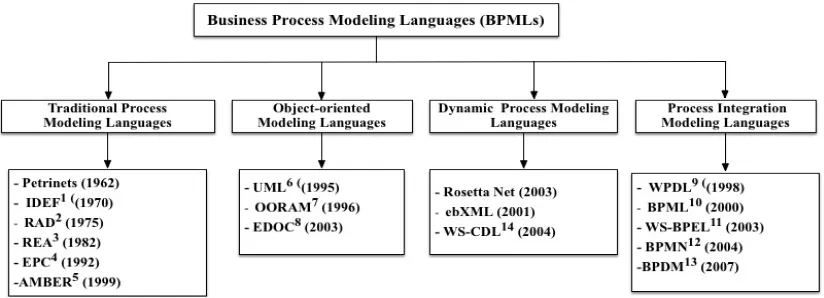
Fig. 1 Classification of business process modeling languages (BPMLs)1
TABLEI
EVALUATION OF THE BPMLS BASED ON CURTIS’S FRAMEWORK
Language Informational View Functional View
Behavioral View
Organizational View
Petri Nets Notation sub process
and atomic activity possible to present
Definitely by notation Control flow
IDEF Definitely by IDEF1 and IDEF1x
Definitely by IDEF 0
Definitely by IDEF3
UML2 Notation Event and Data repository are available, Data object and Data flow are possible to present
Notation (atomic) activity is available
Definitely Notation Process
participant is available, Units and Roles are possible to present
BPML Data definition by using XSD
Definitely It’s possible to present
BPMN Notation Event, Data object and Data flow are available
Notation sub process and atomic activity are available
Definitely Notation Process
participant is available, Units and Roles are possible to present
WS-BPEL It’s possible to addressed by executive language
Definitely
ebXML Definitely Definitely It’s possible to
identify the responding role
Table 1 shows that the behavioural (dynamic) view can be fully supported by all modeling techniques (100% completeness in this view), but the functional view and the organizational views are supported to a limited extent. The informational view is covered but not as well as the behavioural view. Also, all the modeling techniques can partly or fully support this view except Petri nets. Furthermore, none of the modeling techniques fully covers the organizational view. Therefore, from the organization’s point of view, there is a need for explicitly supporting the business process context by modeling techniques [26]. Interestingly, modeling techniques such as UML, and BPMN are similar with regard to their coverage of not only organizational perspectives but also other perspectives, including informational, functional, and behavioural perspectives. It would appear that in order to describe which (atomic) activity is to be performed by which organizational entity requires connecting the underlining organizational structure of a company to the activities or the sub-process of its business process [37]. Table 1 demonstrates convincingly that the IDEF families, consisting of IDEF0 for function modeling, IDEF1 for information modeling, and IDEF3 for process modeling, have high performance for supporting different perspectives in terms of informational, functional, and behavioral views. Table 1 suggests convincingly that modeling techniques such as IDEF, UML, and BPMN are richer than others in terms of supporting different aspects based on Curtis framework. Therefore, this implies that the combination of these three techniques would inspire rapid design and more flexibility in business process modeling.
B. Proposed Modeling Methodology
The basic requirement of the modeling methodology in the Business Process Architecture consists of three layers including process landscape model, abstract models, and
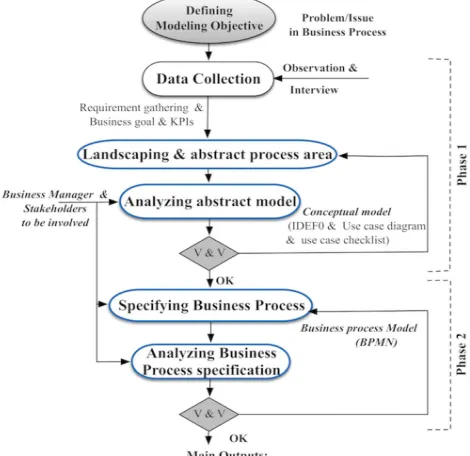
detailed process model [1], in which, these layers are supported by the combination of three modeling techniques, recognized as IDEF0, UML-Use case, and BPMN in the proposed modeling methodology. The methodology comprises of two phases, namely, Process Area Specification, Business Process specification. Each of these phases is shown in Fig. 2 and discussed in details.
Fig. 2 The proposed modeling methodology
sub-rubrics, which demonstrate the methods, and techniques, which are applied, for each main activity. On the right, under the rubric “Output,” the diverse outputs resulting from each main activity is listed.
In Phase 1, the data related to the business process are first collected. The applied techniques include observation and interview. In case there exist documents, these documents can also be used along with observations and interviews. At this stage, business goals are identified. Then, the data related to the business processes are transferred to the worksheets, which are employed to identify the scope and boundaries of the process. Next, the worksheets and the collected data are documented in the form of a conceptual model. This documentation is a task of activity named as ‘Landscape & Abstract Model Documentation’. The modeling techniques applied here are IDEF0 and UML-UC. The last activity in Phase 1 is concerned with ‘Analyzing Abstract Model’, which applies verification and validation (V&V ) Questionnaire, participating the domain experts. The feedbacks are collected, and necessary modifications are applied. In the first activity of Phase 2, data related to the abstract model are transferred to the business process worksheets. In this activity, all detailed activities within business processes and their flows are identified, and finally, they are documented by means of BPMN. The outputs of this activity are detailed process models, which must be analyzed. For the analysis of business process models, the modeling tool SIGNAVIA and ‘Business Process Analysis Questionnaire’ are utilized. In the following, each of two phases in the methodology will be elaborated in more details. After data collection, the second activity in Phase 1 is the documentation of potential requirement via worksheets and checklists and to transfer them in diagrammatic format by function modeling and use case. At this point of Phase 1 first draft landscape and abstract models are designed. The process landscape model poses a serious hindrance for process identification [1], for to hold communication with business specialists is commonly based upon plain text and rarely in the form of a diagram. To this end, worksheets and checklist are supplied as efficient means to sustain the extant domain knowledge [38]. During the same task, standard worksheets—adopted from [38], [39] with some modification—are provided for landscape models (Tables 2 and 3).
TABLEII BUSINESS AREA WORKSHEETS
Worksheet: Describing Business Area
Author(s): Date: Status: Draft, Review,
Final
Business Area Name Description
Scope
Boundary of the Business Area Constrains
Stakeholders Process Area
Source: Adopted from [38], [39]
TABLEIII PROCESS AREA WORKSHEET
Worksheet: Describing Process Area
Author(s): Date: Status: Draft, Review,
Final
Process Area Name Objective
Scope
Boundary of the Process Area Constrains
Stakeholders
Business processes
Source: Adopted from [38], [39]
After identifying the scope of the business area, the boundary of process area points out the function model which can be decomposed into a structural level by IDEF0. Next activity is the identification of organizational roles and actors, which can be represented by Use Case diagram. The interaction between use cases and actors can be transformed in Use Case diagram according to the decomposed level of function modeling. Moreover, description of the use case diagrams can be performed by checklist such that it more supports inspection and review of the abstract model [40]. In this regard, a checklist is adopted from [40], [41] with some modification which is shown in Table 4.
TABLEIV USE CASE CHECK LIST
Use Case Number: Title:
Author(s): Date: Status: Draft, Review, Final
Brief description: Actors: Trigger:
Pre-condition and Post-condition: Basic flows & Alternative flow(s): Extension point(s):
Business rules: Special condition:
Source: Adopted from [40], [41]
The function modeling-IDEF0 can be interpreted as a sequence of activities, but roles cannot be represented [42] while in Use Case diagram, there is no sequence between use cases, but the role of actors can be expressed. Moreover, a process abstract model is initially represented by the definition of context diagram using IDEF0 in which can be decomposed in several layers. The decomposed level of function model can be followed by Use Case diagram to represent more details and to show how actors involve in the system. Therefore, as stated by Kim et al. (2003) and Razali et al. (2010), the combination of IDEF0 and Use Case diagram complete each other, which leads to represent process abstract models more perspective. The last activity in Phase 1 is concerned with the analysis of the abstract model to determine whether the adopted requirements are complete, unambiguous, clear, and correct. In this phase, validation poses a challenge without any domain expertise and verification continues to be insufficiently developed.
models are developed according to standards [40] in which inspection techniques are required by means which an expert provides visual evidence to prove that a given fact or a proposed requirement is taken into account. To do this, a checklist is provided based on the important quality attributes including functional correctness, completeness and consistency, and redundancy and ambiguity as main important quality attributes for process abstract model [40], [43, [44]. In the abstract process model, IDEF0 diagram can be decomposed to several lower levels, but it does not contain specific constructs for detailed process model [9], [45]; and in Use Case diagram important processes are identified, but details can not be captured [46]. As a result, both IDEF0 and Use case diagram are not able to represent all aspect of the process. Thus, for modeling all activities involved in the processes, it is required to apply standard process modeling language such as BPMN. So doing, the first activities of phase 2 are the analysis of the abstract models and business process worksheets.
To control the quality of process model is essential for the appropriate representation of the business logic and better communication with domain experts [1]. Drawing on the conceptual model quality framework proposed by Moody et al. [47], syntactic quality is related to verification and semantic quality to validation of process models, with syntactic quality forming the basis of semantic quality which is related to the vocabulary of the modeling language. Semantic quality is the statement of the process model derived from the real world. In the stage related to the analysis of the process models an online modeling tool (http://www.signavio.com) is applied for the verification of a given model; and for validation a questionnaire is prepared based on the core components in BPMN including user roles and activates, sequence flows between activates, alternative path, and events (notification, messages, and triggers) as stated in [48].
III.RESULT AND DISCUSSION
In this section first, the proposed methodology is applied in the case study; and then the validation of the methodology is discussed.
A. Case Study
The case study is the procurement process of Sapura Brake Technology (SBT) that supply and sale of brake systems for the automotive industry in Malaysia. In the case study, in-depth semi-structured interviews were performed with three operation managers; and the data collected were used to identify the scope and boundary of the process in order to create a preliminary version for the landscape process model of SBT’s Procurement process. Drawing on the interview and data collection process discussed by Fettke (2007) and Dumas et al. (2013), in the second and third
stages for the collection of primary data, three main aspects were taken into consideration: Functions/Processes (i.e. Which activities are carried out in what order?), Organization (Who is responsible for these activities?), and Data (Which input data are needed? Which output data are produced?).
After the third stage, the initial landscape and abstract process model were provided in the form of the conceptual model. The quality of the business process models had to be checked by V&V technique in order to gain feedbacks and achieve improvement [49], [50]. Therefore, in the fourth stage, the landscape and abstract process models were analyzed to assess the quality of the process model. Finally, in the fifth stage, the third round of interview was performed for examining the quality of detailed process model. In these stages, feedbacks had to be collected and corrected. In the following, a detailed discussion of applying the methodology to the case study is presented, and each phase of the methodology is elaborated.
TABLEV
WORKSHEET BUSINESS AREA OF SBT’S PROCUREMENT
Worksheet: Describing Business Area
Author(s): Date: Status: Draft, Review, Final
Business Area Name Assembly and Brake component Manufacturing
Description The data file of the customer’ order and requisition is transferred to SBT’s Bill of Material (BOM) system, and SBT procures raw materials by the supplier(s).
Scope Customer, Production plan (Proton car manufacture), SBT’s BOM system, ERP, and supply and sale of brake system
Boundary of the Business Area
Manufacturing of brake system, Sales, Purchasing raw material, Delivery, Inventory management, system (finished goods and raw material stock), and Logistic
Constrains Ordering via product plan by customer company, Supporting MRP system, Automatically check inventory level in customer company, and Web hosting
Stakeholders Customer’s company, Operation management, order clerk, Stock staff, Assembling dep., Carrier and deliver staff, Supplier, Sub-contractor, Q.C staff, Purchasing department, Accounting department, Banking institution, Stock clerk, and Assembling department
Process Area Product development, Manufacturing flow management, Demand management, Order fulfilment, SRM and Procurement, and Return management
TABLEVI
WORKSHEET PROCESS AREA OF SBT’S PROCUREMENT
Worksheet: Describing Process Area
Author(s): Date: Status: Draft, Review, Final
Process Area Name Procurement
Objective To procure raw materials based on customer, company requirement
Scope Monthly forecast and daily customer order, Analysing customer’s orders and requirement, and Procure raw materials to fulfil orders
Boundary of the Process Area
Order management system, Inventory management, Suppliers, and Purchasing and accounting dep.
Constrains Automated customer production plan for requesting and ordering, Fully automated inventory system, BOM system
Stakeholders Customer company, Supplier, Operation staff, order clerk, Purchasing department, Stock clerk, Accounting department, Sourcing clerk, and Q.C staff.
Business 1-Order management 2- sourcing 3- Purchasing
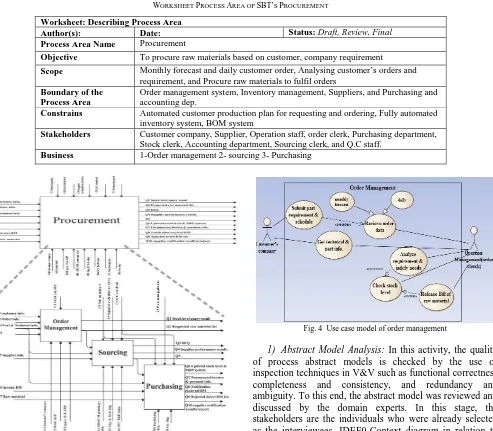
Fig. 3 Function modeling (IDEF0-context and decomposed diagrams)
Fig. 4 Use case model of order management
1) Abstract Model Analysis: In this activity, the quality
control for the main function, were reviewed. Next, the operation of each sub-function along with related use case diagram was scrutinized. After collecting the feedbacks from participating business specialists and stakeholders, the abstract process model was revised.
According to what have been presented in the phase of the abstract model, it could be observed that the combination of IDEF0 and Use Case diagrams including the worksheets and checklists complete each other to represent the abstract process model transparently. However, IDEF0 and Use Case diagrams cannot, in an abstract model, describe business requirements in details. To address this defect, the detailed process model can be represented in a separate diagram by BPMN. In doing so, the detailed process model (that is, BPMN diagram), supported by worksheets, can be linked to abstract process model systematically.
2) Specifying Business Process: The first activity in
this phase is the analysis of the abstract model. To this end, the information derived from the abstract models is transferred into the business process worksheets so as to identify the events and activities in the process lifecycle. All necessary information from the abstract models is transferred into the business process worksheet (Tables 8). As it mentioned earlier, due to the limitation of paper size, the details of the customer service process are only presented here.
According to SBT’ procurement process, Once the operation team (order clerk) receives monthly forecast or daily order files from customer companies, the orders will be
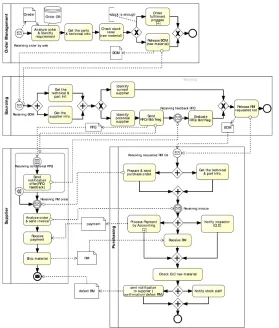
analyzed in order to identify the needs and requirements. The fulfillment of an order can be promised based on existing filled-order in stock, or, for already planned items available as the scheduled capacity whereupon the raw material must be procured from the suppliers. In this situation, when the order clerk receives the bill of material, the sourcing clerk has received technical/part information. The next task is the selection of a supplier. If current supplier(s) cannot provide the requested raw material, potential supplier(s) will be identified, and RFQ is sent to the supplier(s), and then the feedback will be collected and evaluated. In this situation, after the raw material list is requested, sourcing department sends the raw material list, notifying the purchasing department. After receiving the raw material list, purchasing department prepares the purchase list and returns it to the supplier. Candidate supplier receives a requested list of raw material and sends the invoice to purchasing department. The next task is processing the payment by the accounting department and then notifying Q.C staff to check the quality of the raw materials. Finally, a notification (regarding the confirmation or rejection of the raw materials) will be sent to the supplier, notifying that stock clerk has to store the confirmed raw materials (Fig. 5).
Analyzing Business Process Model: For verification, the
syntactic quality and the properties of the process model were checked by SIGNAVIO (BPMN online tool). Finally, the process model was corrected and modified by the respective business specialists and domain experts. Fig. 5 shows the BPMN diagram of the SBT’ Procurement system.
TABLEVII
USE CASE CHECK LIST OF ORDER MANAGEMENT
Use Case Number: 1 Title: Order Management
Brief description: The required parts are submitted from customer’ company through the website. Next, order
staff receives order data by operation management system, and after analysing requirements and orders, stock level will be checked
Actors: Customer’ company, Operation management (Order clerk) Trigger: order clerk receives the order information
Pre-condition: Technical and part
information have been created/updated.
Post-condition:1- Monthly forecast and daily order files are
submitted 2- Order has been analysed and processed.
Basic flows:1- customer log in 2- customer selects a product and submits the order. 3- customer credibility is
sent to authorize.4- Order notification is sent to relevant staff. 4.1- Invalid credit is notified. 4.2- accepted order is sent to analyse.
Alternative flow(s): 1- Monthly forecast and daily order files are submitted 2- After receiving order file, order
data are analysed . 3- Stock level is checked. 3-1 Order fulfilment process 3-2. Realizing Bill of raw material
Special condition: the monthly forecast order must be checked by production plan in customer’ company.
TABLEVIII
WORKSHEET ORDER MANAGEMENT PROCESS
Worksheet: Describing Business Process
Author(s): Date: Status: Draft, Review, Final
Business Process name: Order management
Participants/Stakeholders: Customer’ company, and Operation management (order clerk) Included Sub-process (collapsed sub-process): Sub-process Order fulfilment
Events (Trigger, notification, message flow):
1- Message flow ‘Order ‘ is generated by company’ website 2-Message flow ‘Release BOM’ is sent to sourcing dep.
Process lifecycle: Order clerk receives monthly forecast/daily order files. After analysing the order,
identifying requirements and ‘get part/technical information’, next task is ‘check the stock level’ for raw material. If stock level is enough, ‘order fulfilment’ is processed; otherwise, the bill of raw material (BOM) will be released.
B. MEM’s Construct
This sub-section provides the evaluation of the proposed modeling methodology that is based expert panel using the Method Evaluation Model (MEM), widely applied in validating information system design methods. Based on expert panel’s evaluation of the proposed methodology, the evaluation method in this study is carried out according to MEM constructs: Perceived Ease of Use (PEOU), Perceived Usefulness (PU), and Intention to Use (ITU). The following sections provide further elaboration on MEM, the process of expert evaluation and the results from expert panel in validating the proposed methodology. To explain and measure how the users accept the information system, a
broad range of models have been used the Method Evaluation Model (MEM) [51], [52]. The MEM is acclaimed as the most efficient and the most frequently utilized theoretical framework, for it has been extensively applied and examined in various researches to validate information system design methods. It consists of three main quantifiable constructs for evaluating a method in practice based on the Technology Acceptance Model [53], namely, Perceived Ease of Use (PEU), Perceived Usefulness (PU), and Intention to Use (ITU). In this study, the original and adopted definitions of MEM’s constructs are shown in Table 9. These definitions are adopted from [54] with some modifications in the scope of this research.
TABLEIX CONSTRUCTS DEFINITION
Construct Original definitions (Davis 1989) Adopted definitions
PEOU “The degree to which a person believes that
using a particular system would enhance his or her job performance”.
The degree to which an expert or practitioner believes that applying the proposed methodology would be effectual to attain the modeling objective.
PU
“The degree to which a person believes that using a particular system would be free of effort”
The degree to which an expert or practitioner believes that proposed methodology would be free of effort. ITU “The extent to which a person intends to use a
particular system”
C. Expert Evaluation Process
In order to validate the modeling methodology from the expert panel, the structure of the evaluation process was adopted from [55]. The existing researches were examined the aforementioned constructs in the fields of business process modeling in order to procure appropriate quantifiable items for each constructs PEO, PU, and ITU. The item creation stage ensures that content validity of the measurement items is achieved. Content validity is defined as the extent to which the utilized scale or scope reflects the concept based on which a generalization is made [56]. Table 10 lists the definition of all measurement items along with the MEM’s constructs, which are the basis for evaluating the proposed modeling methodology in our research. These items are adopted from recent studies, which are cited in the third column.
1) Selection of the Experts and Evaluation Procedure:
For the evaluation of the proposed methodology, a number of disciplines were required. First, the experts’ areas of study
were examined to consider the relevance of their expertise to the field of information systems. Second, twelve experts (from practitioners and academicians) were finally shortlisted. An abstract along with the purpose of the study and the proposed methodology were submitted to the experts. Then, appointments were made via e-mail with the experts. The validation of the proposed methodology was done an in-depth face-to-face interview with 15 experts comprising of process analysts, IS developers, and business/industry managers. The validation of the proposed methodology was done an in-depth face-to-face interview with 15 experts as illustrated in the previous section. The items quantified each MEM’s construct. To analyze and measure of the result from the expert panel for the proposed methodology, the Cronbach’s alpha and the mean for answers choice (between 1 to 5) were calculated. For all data, a high-level reliability analysis was obtained with the Cronbach’s alpha > 0.851. The results were classified according to three constructs (PEU, PU, and ITU) with related questions in which the total mean was calculated for all cases (See Table 11).
TABLEX
ADOPTED CONSTRUCT’ITEMS IN THIS RESEARCH
Construct Items Items definition Adopted research
(authors and year) PEOU 1 - I found the proposed methodology is clear and easy to understand. [57]; [58]; [59]; [56]; [60];
[61]; [62]; [63] PEOU 2 - I found the proposed methodology is simple and easy to follow.
PEOU PEOU 3 - I found creating process models is easy through the selected process modeling languages by this method.
PEOU 4 - Overall, I believe this process modeling is easy to use in the domain of BPM
PU 1 - I believe the business process models obtained with this methodology are organized, concise, non-ambiguous, and clear
[57]; [58]; [59]; [64]; [54]; [61]; [62]; [63]
PU 2 - I found the methodology would reduce the time required to design business process.
PU
PU 3 - I believe the methodology provides an effective mean of representing and documenting business process models
PU 4 - I believe the methodology would improve the performance in reviewing process models between stakeholders.
PU 5 -Overall, I found the methodology to be useful in process modeling.
ITU
ITU 1 - If I have to design a Business process model in the future (either as a user or an analyst), I intend to use this methodology
[57]; [61]; [65]; [63]
ITU 2 - It would be easy for me to become skillful in using this process modeling method.
ITU 3 - I would recommend the use of this process modeling method for Process modeling
TABLEXI THE EVALUATION RESULTS
Constructs PEOU PU ITU
Items Q1 Q2 Q3 Q4 Q5 Q6 Q7 Q8 Q9 Q10 Q11 Q12
Mean 4.357 4.67 4.53 4.6 4.33 4.267 4.65 4.55 4.38 4.12 4.17 4.21
The average of the means in Table 11 was also calculated for each construct PEU, PU, and ITU, which are 4.5, 4.367, and 4.278 respectively. These Fig.s indicate that the best construct for the proposed methodology from the experts’ feedback was PEO; however, there is no significant
IV.CONCLUSION
The survey of previous research on modeling methodology for business processes reveals that there is a need for more attention to the details of a process model. Appropriate tools, proper methodologies, and formal modeling languages are the basic requirements for handling the problems of process modeling in order to procure a comprehensive and transparent business process model. It must be reminded that no modeling construct can thoroughly cover different aspects of a process model. Hence, to represent a process model transparently and accurately necessitates the selection of a proper set of modeling languages. Furthermore, in business process architecture, ranging from the top level to the lowest level, the process model provides detailed information on the role of the participants, data input/output, and control/decision flow. Therefore, a proper modeling language should be selected to cover more details of the business process. The combination of IDEF0 and UML-Use Case diagram was applied for defining the upper level of process models. BPMN and UML-Sequence diagram were utilized for designing the detailed process model with regard to the two phases of the proposed methodology; it was found that the combination of these modeling languages could complete each other in modeling business process. Table 12 shows that how the above-mentioned modeling languages completed each other to cover full perspectives of the business process model. This combination of modeling languages, as well as worksheets, guaranteed the consistency and accuracy within modeling business process (Table 12).
TABLEXII
PERSPECTIVES OF THE MODELING TECHNIQUES
Modeling perspective
Modeling techniques IDEF0 UML-
UCD
BPMN
Structural view of a system √
Sequential view of a system √ √
Relationship between actor and system
√ √
User cantered view √
Detailed view and logical
representation
√
Service transaction view √
The proposed methodology has some limitations that have to be considered in future researches. Since this research did not consider business rules in the business process model; the business processes need to follow and then integrate with business rules. Therefore, in the field of business process modeling, future researchers should consider the integration of business logic with business rules, which improves the performance of the business process.
REFERENCES
[1] M. Dumas, M. La Rosa, J. Mendling, H.A. Reijers, Fundamentals of Business Process Management, Springer, 2013.
[2] P. Trkman, M.I. Štemberger, J. Jaklic, A. Groznik, Process approach to supply chain integration, Supply Chain Management: An International Journal, 12 (2007) 116-128.
[3] D.M. Lambert, S.J. García‐Dastugue, K.L. Croxton, AN EVALUATION OF PROCESS‐ORIENTED SUPPLY CHAIN
MANAGEMENT FRAMEWORKS, Journal of business Logistics, 26 (2005) 25-51.
[4] C. Verdouw, A. Beulens, J. Trienekens, J. Van der Vorst, A framework for modelling business processes in demand-driven supply chains, Production Planning and Control, 22 (2011) 365-388. [5] B. Kalpic, P. Bernus, Business process modelling in industry—the
powerful tool in enterprise management, Computers in industry, 47 (2002) 299-318.
[6] A.A. Hamid, Z. Mansor, Client’s Readiness Assessment Success Factors for Outsourcing Software Projects, International Journal on Advanced Science, Engineering and Information Technology, 6 (2016).
[7] R.H. Al-Ta’ani, R. Razali, A Framework for Requirements Prioritisation Process in an Agile Software Development Environment: Empirical Study, International Journal on Advanced Science, Engineering and Information Technology, 6 (2016). [8] D. Van Nuffel, M. De Backer, Multi-abstraction layered business
process modeling, Computers in Industry, 63 (2012) 131-147. [9] H. Shen, B. Wall, M. Zaremba, Y. Chen, J. Browne, Integration of
business modelling methods for enterprise information system analysis and user requirements gathering, Computers in Industry, 54 (2004) 307-323.
[10] M. Kassem, N. Dawood, D. Mitchell, A structured methodology for enterprise modeling: a case study for modeling the operation of a british organization, (2011).
[11] R. Razali, P. Najafi, S.H. Mirisaee, Combining Use Case Diagram and Integrated Definition's IDEFO—A preliminary study, in: Software Engineering and Data Mining (SEDM), 2010 2nd International Conference on, IEEE, 2010, pp. 231-236.
[12] C.-H. Kim, R.H. Weston, A. Hodgson, K.-H. Lee, The complementary use of IDEF and UML modelling approaches, Computers in Industry, 50 (2003) 35-56.
[13] H. Bae, Y. Seo, BPM-based integration of supply chain process modeling, executing and monitoring, International journal of production research, 45 (2007) 2545-2566.
[14] M. Weske, Business process management: concepts, languages, architectures, Springer, 2012.
[15] J. Mendling, Metrics for Business Process Models, in: Metrics for Process Models, Springer, 2009, pp. 103-133.
[16] J. Recker, Understanding Process Modelling Grammar Continuance, in, Queensland University of Technology, 2008.
[17] J. Recker, Evaluations of process modeling grammars: Ontological, qualitative and quantitative analyses using the example of BPMN, Springer, 2011.
[18] M. Mohammadi, M. Mukhtar, Business process modelling languages in designing integrated information system for supply chain management, International Journal on Advanced Science, Engineering and Information Technology, 2 (2012) 464-467 %@ 2460-6952.
[19] C. Verdouw, A. Beulens, J. Trienekens, J. Wolfert, Process modelling in demand-driven supply chains: A reference model for the fruit industry, Computers and electronics in agriculture, 73 (2010) 174-187.
[20] M. Kirchmer, Reference Models to Empower MPE, in: High Performance Through Process Excellence, Springer, 2011, pp. 87-101.
[21] A. Albani, J.L. Dietz, Current trends in modeling inter-organizational cooperation, Journal of Enterprise Information Management, 22 (2009) 275-297.
[22] J.C. Recker, M. Indulska, An ontology-based evaluation of process modeling with Petri nets, IBIS-International Journal of Interoperability in Business Information Systems, 2 (2007) 45-64. [23] J. Recker, M. Rosemann, J. Krogstie, Ontology-versus pattern-based
evaluation of process modeling languages: a comparison, Communications of the Association for Information Systems, 20 (2007) 774-799.
[24] A. Gemino, Y. Wand, A framework for empirical evaluation of conceptual modeling techniques, Requirements Engineering, 9 (2004) 248-260.
[25] W. Luo, Y.A. Tung, A framework for selecting business process modeling methods, Industrial Management & Data Systems, 99 (1999) 312-319.
[27] H. Mili, G.B. Jaoude, G. Tremblay, Business Process Modeling Languages: Sorting Through the Alphabet Soup, ACM Computing Surveys, 43 (2010) 54.
[28] M. Chinosi, A. Trombetta, BPMN: An introduction to the standard, Computer Standards & Interfaces, 34 (2012) 124-134.
[29] R.K. Ko, S.S. Lee, E.W. Lee, Business process management (BPM) standards: a survey, Business Process Management Journal, 15 (2009) 744-791.
[30] J. Ziemann, J. Mendling, EPC-based modelling of BPEL processes: a pragmatic transformation approach, in: Proceedings of MITIP 2005, Italy, 2005.
[31] M.A. tLópez-Campos, A. Crespo Márquez, J.F. Gómez Fernández, Modelling using UML and BPMN the integration of open reliability, maintenance and condition monitoring management systems: An application in an electric transformer system, Computers in Industry, (2013).
[32] N. Lohmann, E. Verbeek, R. Dijkman, Petri net transformations for business processes–a survey, in: Transactions on Petri Nets and Other Models of Concurrency II, Springer, 2009, pp. 46-63. [33] D. Markulin, K. Musa, M. Kunstic, Using UML 2 activity diagram
for visual business management modeling, in: MIPRO, 2011 Proceedings of the 34th International Convention, IEEE, 2011, pp. 356-361.
[34] K. Zhou, G. Rong, Study of supply chain monitoring system based on IDEF method, in: Logistics Systems and Intelligent Management, 2010 International Conference on, IEEE, 2010, pp. 278-281. [35] K. Siau, M. Rossi, Evaluation techniques for systems analysis and
design modelling methods–a review and comparative analysis, Information Systems Journal, 21 (2011) 249-268.
[36] B. Curtis, M.I. Kellner, J. Over, Process modeling, Communications of the ACM, 35 (1992) 75-90.
[37] G. Engels, A. Förster, R. Heckel, S. Thöne, Process modeling using UML, Process-Aware Information Systems, (2005) 85-117. [38] C. Huemer, P. Liegl, R. Schuster, M. Zapletal, B2B Services:
Worksheet-Driven Development of Modeling Artifacts and Code, The Computer Journal, 52 (2009) 1006-1026.
[39] C. Huemer, UN/CEFACT–UMM Foundation Module Version 2.0– Technial Specification, Techhniques and Methodoloogies Group(TMG), Vienna University of Technology, (2011) 7-106. [40] B. Anda, K. Hansen, G. Sand, An investigation of use case quality in
a large safety-critical software development project, Information and Software Technology, 51 (2009) 1699-1711.
[41] J.C. Lacal, IEEEp2407 standard for personalized health infromatics, (2007) 2-70.
[42] R.S. Aguilar-Saven, Business process modelling: Review and framework, International Journal of production economics, 90 (2004) 129-149.
[43] G. Kösters, H.-W. Six, M. Winter, Coupling use cases and class models as a means for validation and verification of requirements specifications, Requirements Engineering, 6 (2001) 3-17.
[44] M. Kacprzak, A. Kaczmarczyk, Verification of integrated IDEF models, Journal of Intelligent Manufacturing, 17 (2006) 585-596. [45] M. Bertoni, U. Cugini, D. Regazzoni, C. Rizzi, M. Ugolotti, A BPR
Methodology for Product Development Processes, in: Knowledge Enterprise: Intelligent Strategies in Product Design, Manufacturing, and Management, Springer, 2006, pp. 370-378.
[46] K. Siau, Y. Wang, Cognitive evaluation of information modeling methods, Information and Software Technology, 49 (2007) 455-474.
[47] D.L. Moody, G. Sindre, T. Brasethvik, A. Sølvberg, Evaluating the quality of information models: empirical testing of a conceptual model quality framework, in: Proceedings of the 25th International Conference on Software Engineering, IEEE Computer Society, 2003, pp. 295-305.
[48] R.M. Dijkman, M. Dumas, C. Ouyang, Semantics and analysis of business process models in BPMN, Information and Software Technology, 50 (2008) 1281-1294.
[49] M. Debbabi, Verification and validation in systems engineering, Springer, 2010.
[50] L.E. Mendoza, M.I. Capel, M.A. Pérez, Conceptual framework for business processes compositional verification, Information and Software Technology, 54 (2012) 149-161.
[51] D.L. Moody, Dealing with complexity: a practical method for representing large entity relationship models, in, University of Melbourne, Department of Information Systems, 2001.
[52] D.L. Moody, The method evaluation model: a theoretical model for validating information systems design methods, in: 11th European Conference on Information Systems, ECIS, 2003.
[53] F.D. Davis, Perceived usefulness, perceived ease of use, and user acceptance of information technology, MIS quarterly, (1989) 319-340.
[54] J. Recker, Explaining usage of process modeling grammars: Comparing three theoretical models in the study of two grammars, Information & management, 47 (2010) 316-324.
[55] C. Verdouw, Business process modelling in demand-driven agri-food supply chains: a reference framework, Wageningen University, Wageningen UR Library, 2010.
[56] J.C. Recker, M. Rosemann, A measurement instrument for process modeling research: development, test and procedural model, Scandinavian Journal of Information Systems, 22 (2010) 3-30. [57] D.L. Moody, G. Sindre, T. Brasethvik, A. Sølvberg, Evaluating the
quality of process models: Empirical testing of a quality framework, in: Conceptual Modeling—ER 2002, Springer, 2003, pp. 380-396. [58] G. Poels, A. Maes, F. Gailly, R. Paemeleire, Measuring the perceived
semantic quality of information models, in: Perspectives in Conceptual Modeling, Springer, 2005, pp. 376-385.
[59] A. Maes, G. Poels, Evaluating quality of conceptual modelling scripts based on user perceptions, Data & Knowledge Engineering, 63 (2007) 701-724.
[60] J. Recker, Continued use of process modeling grammars: the impact of individual difference factors, European Journal of Information Systems, 19 (2010) 76-92.
[61] S. Abrahão, E. Insfran, J.A. Carsí, M. Genero, Evaluating requirements modeling methods based on user perceptions: A family of experiments, Information Sciences, 181 (2011) 3356-3378. [62] E. Stav, S. Walderhaug, M. Mikalsen, S. Hanke, I. Benc,
Development and evaluation of SOA-based AAL services in real-life environments: A case study and lessons learned, International journal of medical informatics, (2011).
[63] A. Fernandez, S. AbrahãO, E. Insfran, Empirical validation of a usability inspection method for model-driven Web development, Journal of Systems and Software, (2013).
[64] J. Recker, M. Rosemann, Understanding the process of constructing scales inventories in the process modelling domain, (2007). [65] D. Jansen, Effectual Principles in Business Process Redesign: a