Performance Analysis of Data Compression using
Lossless Run Length Encoding
CHETAN R. DUDHAGARA
1and
HASAMUKH B. PATEL
21Computer Science Department N. V. Patel College of Pure and Applied Sciences Vallabh Vidyanagar, Anand, Gujarat, India.
2Computer Science Department N. V. Patel College of Pure and Applied Sciences Vallabh Vidyanagar, Anand, Gujarat, India.
Introduction
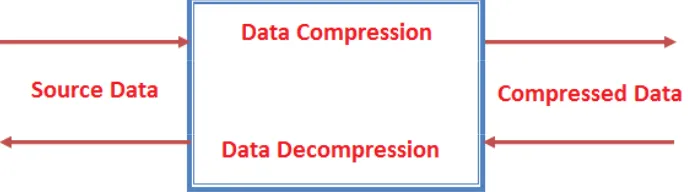
Data compression methods will compress the original file such as text, image, audio or video into different file which is called compressed file. It is a technique used for decreasing the requirements of storage space in different storage media. It also requires less bandwidth for data transmission over the network. It also reduces the time for displaying and loading data.
Oriental Journal of Computer Science and Technology
Journal Website: www.computerscijournal.org
Abstract
In a recent era of modern technology, there are many problems for storage, retrieval and transmission of data. Data compression is necessary due to rapid growth of digital media and the subsequent need for reduce storage size and transmit the data in an effective and efficient manner over the networks. It reduces the transmission traffic on internet also. Data compression try to reduce the number of bits required to store digitally. The various data and image compression algorithms are widely use to reduce the original data bits into lesser number of bits. Lossless data and image compression is a special class of data compression. This algorithm involves in reducing numbers of bits by identifying and eliminating statistical data redundancy in input data. It is very simple and effective method. It provides good lossless compression of input data. This is useful on data that contains many consecutive runs of the same values. This paper presents the implementation of Run Length Encoding for data compression.
Article History
Received: 17 July 2017 Accepted:09 August 2017
Keywords
Technology, Transmission, Compression, Redundancy, Run Length Encoding.
CONTACT DR. CHETAN R. DUDHAGARA [email protected] Computer Science Department N. V. Patel College of Pure and Applied Sciences Vallabh Vidyanagar, Anand, Gujarat, India.
© 2017 The Author(s). Published by Enviro Research Publishers
This is an Open Access article licensed under a Creative Commons Attribution-NonCommercial-ShareAlike 4.0 International License (https://creativecommons.org/licenses/by-nc-sa/4.0/ ), which permits unrestricted NonCommercial use, distribution, and reproduction in any medium, provided the original work is properly cited.
To link to this article: http://dx.doi.org/10.13005/ojcst/10.03.22
Types Of Data Compression
The data compression methods are mainly classified into two different categories based on reconstruction of original data from the compressed data. The categories are as follows:
• Lossless Data Compression • Lossy Data Compression
Fig. 1 : Data Compression and Decompression
Fig. 2 : Classification of Data Compression
Lossless Data Compression
In lossless data compression methods, the size of original data will reduce and store into compressed file. That compressed file may transfer over networks. We can regenerate the same original file from the compressed file by using data decompression methods.
Lossy Data Compression
Lossy data compression is technique in which regenerated data or file from the decompression process may be same or not exactly same. The quality of data or image may be reducing with
compare to original data. After applying the lossy techniques to the data, the data of file may not be reconstructed same as original file. This compression method is not good for critical data such as text data.
Run Length Encoding
RLE is s very simple compression techniques. It generally works on string of data. It is mostly used in repetitive patterns are available in data. This technique mainly works on reduction of repeating character from the inputted string. The repeat characters in the string are known as run. It occupies only two bytes in size. One byte requires for display occurrence of number of characters in run which is known as run count. The range of run will be 0 to 127 or 0 to 255 characters. The second byte requires for display the repeated character in the run. The range of this is 0 to 255 characters. It is known as run value.
Case – I
In the below string, the character P run of 8 P character would require 8 bytes to store.
PPPPPPPP
The same string requires only 2 bytes after RLE encoding.
8P
The code which is produce from the string of character is known as RLE packet. In our case the code 8P is known as RLE packet.
In this case, the first byte, 8 is known as run count, which represents the number of occurrence of specific character. The second byte, P is known
as run value, which represents the repeated character.
Case – II
The below string contains the 12 character by using three different character runs.
PPPPQQQQQRRR
By using RLE encoding this can be compressed into three 2-bytes packets.
4P5Q3R
Case – III
The below string contains the 8 character by using eight different character runs.
PQRstuvW
By using RLE encoding it require 16 bytes.
1P1Q1R1s1t1u1v1W
To implement RLE on long string, we require at least two characters. So that one single character occupies double bytes for storage.
It is a fast and very simple technique for compression of data. The compression ratio is calculated on bases of inputted data only.
Problem with RLE
When we get 1 as a run length, then after implementation of RLE it requires two bytes. So that RLE require more bytes in the case where 1 as run length of data.
Consider the case – III, it require double size of storage space. It is a disadvantage of use of RLE.
Conclusion
There are two categories for data compression: Lossless and Lossy. There are many lossless data compression algorithms are available. In this paper we have present the lossless run length encoding techniques for data compression. Three different cases are discussed in this paper. Case – I gives the high compression ratio, case – II gives comparatively low compression ratio but case – III gives negative compression ratio.
References
1 Hiroj Naik, “A Review on Image Compression using Different Techniques”, International
Journal of Advanced Research in Computer Science and Software Engineering, Volume
5, Issue 2, February 2015.
2 N. S. Sethi, H. Singh, Amarjit Kaur, “A Review on Data Compression Techniques”,
International Journal of Advanced Research in Computer Science and Software Engineering, Volume 5, Issue 1, February
2015.
3 S. Porwal, Y. Chaudhary, J. Joshi and M. Jain, “Data Compression Methodologies for Lossless Data and Comparison between Algorithms”, International Journal
of Engineering Science and Innovative Technology (IJESIT) Volume 2, Issue 2,
March 2013
4 S. Shanmugasundaram and R. Lourdusamy, “A Comparative Study of Text Compression Algorithms” International Journal of Wisdom
Based Computing, Vol. 1 (3), December
2011.
5 S. R. Kodituwakku and U. S. Amarasinghe, “Comparison of Lossless Data Compression
Algorithms for Text Data”, Indian Journal of
Computer Science and Engineering Vol. 1
No. 4 Page No. 416-425
6 R. Kaur and M. Goyal, “An Algorithm for Lossless Text Data Compression”
International Journal of Engineering Research & Technology (IJERT), Vol. 2
Issue 7, July - 2013
7 H. Altarawneh and M. Altarawneh, “Data Compression Techniques on Text Files: A Comparison Study”, International Journal
of Computer Applications, Volume 26 No.5,
July 2011.
8 K. Rastogi, K. Sengar, “Analysis and Performance Comparison of Lossless Compression Techniques for Text Data”,
International Journal of Engineering Technology and Computer Research (IJETCR) 2 (1) 2014, 16-19.
9 Amandeep Singh Sidhu, Er. Meenakshi Garg, “Research Paper on Text Data Compression Algorithm using Hybrid Approach”, International Journal of Computer
Science and Mobile Computing, Vol. 3, Issue.