Impact of constraint length on performance
of Convolutional CODEC in AWGN
channel for image application
S.V.VIRAKTAMATH*
Electronics and Communication Engineering Dept, S.D.M. College of Engineering and Technology,
Dharwad, India.
G.V.ATTIMARAD
Electronics and Communication Engineering Dept, Dayanand Sagar College of Engineering
Bangalore, Karnataka, India
Abstract
Convolutional codes are frequently used to correct errors in noisy channels. Viterbi algorithm is a well-known maximum-likelihood algorithm for decoding of convolutional codes. They have rather good correcting capability and perform well even on very noisy channels. In this paper we present our studies of impact of constrain length on the performance of convolutional CODEC in AWGN channel.
Keywords – Viterbi decoder, SOVA, Image, Performance, AWGN, Interleaving
I. Introduction
Encoding the information sequence prior to transmission implies adding extra redundancy to it, which is then used at the receiver end to reconstruct the original sequence, effectively reducing the probability of errors induced by a noisy channel. Different structures of codes have developed since, which are known as channel coding. The encoder adds redundant bits to the sender's bit stream to create a codeword. The decoder uses the redundant bits to detect and/or correct as many bit errors as the particular error control code will allow. Like any error correcting code, a convolutional code works by adding some structured redundant information to the user's data and then correcting errors using this information.
Convolutional codes [1] are a type of Error Correcting Codes (ECC) widely used in channel coding since the late 1960’s [2]. They are preferred for their powerful correcting capability with high speed at low cost compared with their competing block codes [3]. The convolutional encoding and Viterbi decoding scheme is used by many satellite communication or broadcast systems because the scheme shows powerful Forward Error Correction (FEC) performance and the great progress in VLSI process technologies makes it possible to realize one chip high speed encoder/decoders. Convolutional coding and block coding are the two major forms of channel coding. Convolutional codes operate on serial data, one or a few bits at a time. Block codes operate on relatively large (typically, up to a few hundred bytes) message blocks.
There have been a few convolutional decoding methods such as sequential and Viterbi decoding, of which the most commonly employed technique is the Viterbi Algorithm (VA) [4, 5]. Viterbi decoding was developed by Andrew, J, Viterbi, the founder of Qualcomm Corporation [6]. Since then, other researchers have expanded on Viterbi’s work by finding good convolutional codes, exploring the performance limits of the technique, and varying decoder design parameters to optimize the implementation of the technique in hardware and software.
Fig. 1 Simple convolution encoding and decoding
Fig. 1 shows the simple convolution encoding and decoding system. Input to the convolution encoder is output of source encoders or bit stream that may represent image or any other information and modulation is done before transmission. In this paper input to the encoder is a bit stream which represents the image. MATLAB code is written for the convolutional encoder, AWGN channel and convolutional SOVA decoder. This paper is organized as follows. Section II gives the related work. Section III explains the simulation models. The results are discussed in section IV and section V concludes the paper.
Convolutional Encoder
AWGN Channel
II. Related work
Until the late 1960’s there were two major decoding techniques developed and used in convolutional codes namely sequential and feedback decoding. Sequential decoding was the earliest decoding method, proposed and analyzed by Wozencraft in 1957 [7]. Where using the Fano [8] or stack algorithms [9] it achieved a coding performance that asymptotically approached optimum. In 1967 the so-called Viterbi algorithm was presented by Viterbi [6] and later in 1973 exposed and clarified by Forney [10]. Issues of designing low power VLSI implementation of the Code Division Multiple Access (CDMA) receiver are addressed in [11]. A high performance generic soft input hard output Viterbi decoder is presented in [12] and prototyped on a Field Programmable Gate Array FPGA board. The presented Viterbi decoder is intended to be used in a complete wireless LAN transceiver prototype. Bupesh Pandita and Subir K Roy have described the design and implementation of Viterbi decoder using FPGA for constraint length 9 [13].
The performance of the convolutional encoder and Viterbi decoder with hard decision for the different constraint lengths and for the different generator polynomials have been discussed in [14] and also two burst error techniques are also discussed to reduce the burst errors. A robust and efficient framework for human body pose estimation and its advantages are discussed in [15]. An incremental version of the Viterbi dynamic programming algorithm given in [16] which shows that memory usage is reduced compared with the standard Viterbi algorithm while having no measurable impact on the algorithms runtime. A field-programmable gate array implementation of Viterbi Decoder with a constraint length of 11 and a code rate of 1/3 is described in [17].
III. Simulation model
Fig 1 shows the simulation model used. MATLAB coding is done for the convolutional encoder, channel and convolutional SOVA decoder. Input to the convolutional encoder is the bit stream of an image function of block interleaver is written in this block. The out put of the encoder is fed to the AWGN channel block. MATLAB code of this block has the features of AWGN and also has option to introduce manual errors. Code for the convolutional SOVA decoder has the functions such as de-interleaver, code for branch metric calculation, path metric calculation and trace back.
In digital communication two types of errors may occur, burst error and distributed error. Viterbi decoder performance for the burst errors is less as compared to that of distributed errors. To convert burst errors in to distributed errors block interleaving technique is used at the transmitter side and de-interleaver is used at the receiver side. In block interleaver at the transmitter encoded bits are written in the matrix form from row wise left to right; then the bits are read from column wise top to bottom. Similarly at the receiver block de-interleaver does the reverse process of interleaver. Decoded output image is compared with the input image for different generator polynomials for the fixed constraint length, comparison of the input and output images are made for the different constraint lengths. Time required to recover the output image for the different constraint lengths as well as for different generator polynomials are computed.
A. Convolutional Encoder
In this paper we restricted simulation to the codes with rate ½. A (n, k, m) convolutional encoder accepts k-bit blocks of the input sequence and produces n-bit blocks of the encoded sequence. However, each encoded n-bit block depends not only on the corresponding k-bit input block in a time unit but also on the previous (m-1) k-bit input blocks. The integer ‘m’ is known as the constrained lengths of the convolutional code. A (n, k, m) convolutional code can be implemented with a k-input, n-output linear sequential circuit with input memory ‘m’. Typically, ‘n’ and ‘k’ are small integers with k<n, but the memory order ‘m’ must be made large to achieve low error probabilities. A convolutional encoder consists of one or more shift registers and multiple XOR gates. The stream of information bits flows into the shift register from one end and is shifted out at the other end. XOR gates are connected to some stages of the shift registers as well as to the current input to generate the output. This encoder generates two bits for each input bit. The next two input bits will also be encoded with bit information by producing 4 more bits and so on.
Fig. 2. Viterbi decoder data flow Branch
metric calculation
Path metric calculation
Trace back
Decoded Stream Encoded
1 Get the generator polynomials depending on which number of shift registers to be used in the encoder is decided.
2 Get the input data to be transmitted.
3 Find the length of the generator polynomial and length of the data. 4 Shift one bit of data into the shifter
5 Encode data using the generator polynomials given
6 When all input data has been encoded then stop the encoding process
B. Viterbi Decoder:
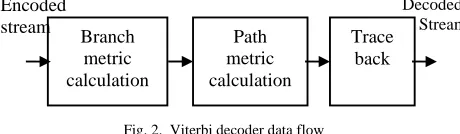
A Viterbi algorithm consists of the three major parts-Branch metric calculation, Path metric calculation and trace back as shown in Fig.2. Path metrics are calculated using a procedure called ACS (Add-Compare-Select). This procedure is repeated for every encoder state. The steps involved in soft decision Viterbi algorithm are as follows:
1 The convolutional encoder encodes the input information and transmits it through a channel. The signal that is received at the receiver has noise introduced in it. The noise can be Additive White Gaussian Noise and addition of manual errors. The first step is to quantize the received values since the received values will be in the form of floating values.
2 In each time clock, the decoder computes branch metric’s Euclidean distance, which is the main feature of the soft decision Viterbi algorithm.
3 For each state, Add-Compare-Select (ACS) block computes the possible Euclidean distances and selects the distance with a smaller value. At the same time, ACS block will record the survival state metric.
4 A trellis structure is built along the way, where each transition is noted with all relevant information like path metric and the decision bit.
5 When all the data bits have been received and the trellis has been completed, the last stage of the trellis is used as the starting point for tracing back.
6 The trace-back operation outputs the decoded data, as it traces back along the maximum likelihood path.
IV Results and Discussions
The performance parameter used in the simulation is percentage error recovery. It is defined as the ratio of the number of times the output is correctly decoded to the total number of received messages with error. Simulation of Viterbi decoder is done introducing AWGN and manual errors. It is observed that for most of the cases pure Viterbi decoder completely failed to recover from errors. But Viterbi decoder with block interleaving technique could recover from the burst errors. Results are discussed in two headings: Impact of constraint lengths on the performance of convolutional CODEC in AWGN channel for image applications and the impact of generator polynomials selection for the given constraint length.
A. Different constraint lengths
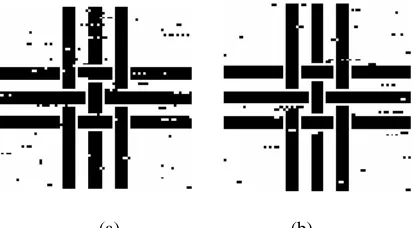
Fig. 3(a) shows the reconstructed image for the constraint length of 3. Fig. 3(b) shows the reconstructed image by SOVA for the constraint length of 4. For the constraint length of 5 and 6, reconstructed images are shown in figure 4(a) and 4(b) respectively. Table 1 gives the BER and other details for the different constraint length. From the Fig 3, Fig 4 and Table 1, it may be observed that as the constraint length increases the BER decreases but the time required to decode the image increases. Reconstructed images in Fig.4 are more quality than Fig.3.
(a) (b) Fig. 4. Reconstructed image for (a) m=5 and (b) m=6
Table 1: Impact of constraint length for different constraint lengths
Constraint
Length 3 4 5 6
BER 1.97 0.97 0.56 0.28
Time delay (Sec) 9.79 11.8 16.06 25.2
B. Different generator polynomial
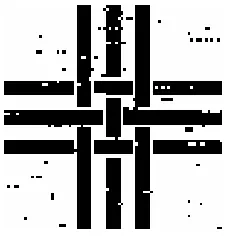
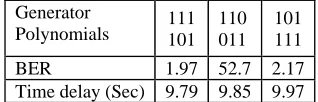
Fig. 5, Fig 6 and Fig 7 shows the impact of generator polynomials for the constraint length 3. From these Figures it may be observed that quality of the reconstructed image may not remain same for the different generator polynomials. Table 2 gives the BER and other details for the different generator polynomials.
Fig. 5. Reconstructed image for the g1=111 and g2=101.
. Reconstructed images
Table 2: Impact of generator polynomials for the constraint length of 3
Generator
Polynomials 111 101 110 011 101 111
BER 1.97 52.7 2.17
Time delay (Sec) 9.79 9.85 9.97
V Conclusion
Impact of constraint length and generator polynomials on the performance of convolutional CODEC in AWGN channel for the image applications is shown through MATLAB simulations. From the Figures 3 and 4, it may be observed that the performance on CODEC in AWGN channels improves as the constraint length increases. From the Figures 5, 6 and 7 it may be observed that the performance of the SOVA may not remain same for the different generator polynomials even though the constraint length remains same. The time required to decode and reconstruct the original signal increases as the constraint length increases.
Acknowledgement
The authors wish to thank the authorities of SDMCET Dharwad, for facility extended to carry out the research work.
Reference
1 A. J. Viterbi, “Convolutional codes and their performance in communication systems”, IEEE Transaction Communication Technology, Vol.19, pp. 751-772, Oct. 1971
2 J. H. Yuen, “Modulation and Coding for Satellite and Space Communications”, IEEE Procedings, Vol. 78, No. 7, pp. 1250-1266, July 1990.
3 B. Sklar, Digital Communications: “Fundamentals and Applications”, 2nd
edition, Prentice-Hall, Upper Saddle River, N J, 2001. 4 G. C. Clark Jr. and J. B. Cain, “Error-Correction Coding for Digital Communications”, Plenum Press, NY, 1981.
5 A. J. Viterbi and J. K. Omura, “Principles of Digital Communications and Coding”, McGraw-Hill, NY, 1979.
6 A. J. Viterbi, “Error Bounds for Convolutional Codes and an Asymptotically Optimum Decoding Algorithm”, IEEE. Transaction of Information Theory, vol. IT-13, pp. 260-269, Apr. 1967.
7 J. M. Wozencraft and B. Reiffen, Sequential decoding, MIT Press, Cambridge, MA, 1961.
8 R. M. Fano, “A Heuristic Discussion of Probabilistic Decoding”, IEEE Trans. Info. Theory, Vol. IT-9, pp. 64-74, Apr. 1963. 9 F. Jelinek, “A fast Sequential Decoding Algorithm Using a Stack”, IBM J. Res.Develop., Vol. 13, pp.675-685, Nov. 1969. 10 G. D. Forney, “The Viterbi Algorithm”, Proc. IEEE, Vol.61, pp. 268- 278, Mar. 1973.
11 Chi-Ying tsui, Roger s-k. Cheng and Curtis Ling “Low power rake receiver and Viterbi decoder design for CDMA applications” Wireless Personal Communication 14:49-64, 2000. Kluwer Academic Publishers.
12 Abdul Fattah Mohammad Obeid, Alberto Garc´ıa Ortiz, Ralf Ludewig and Manfred Glesner “Prototyping of a High Performance Generic Viterbi Decoder”, Proceedings of 13 th IEEE International Workshop on Rapid System Prototyping (RSP’02) 2002. 13 www.nist.gov/dads/HTML/viterbiAlgorithm.html
14 S.V.Viraktamath, G.V.Attimarad, Ravi.H and V.P.Gejji, “Error Control Mechanisms using CODEC”, IEEE Proceedings “International Conference on Communication Software and Networks 2009” (ICCSN 2009), February 27 - 28, 2009. Macau, China. Page No 549-553;
15 Qian Wu, Ming Tang, Hanqing Lu, “An Effective Framework for Human Body Pose Estimation using K-Best Viterbi Search Method” Proceedings of Fourth International Conference on Image and Graphics, 0-7695-2929-1/07 © 2007 IEEE
16 Jason Bobbin, “An Incremental Viterbi Algorithm” Sixth International Conference on Machine Learning and Applications, 0-7695-3069-9/07 © 2007 IEEE