Licensed under Creative Common Page 697
http://ijecm.co.uk/
ISSN 2348 0386
THE RELATIONSHIP BETWEEN E-PROCUREMENT SYSTEMS
AND PERFORMANCE OF PROCUREMENT FUNCTION
IN COMMERCIAL BANKS IN KENYA
Kennedy Ochieng Ombat
Jomo Kenyatta University of Agriculture and Technology (Jkuat), Kenya [email protected]
Abstract
The major focus of this study was to determine the relationship between e-procurement systems
and performance of procurement function in commercial banks in Kenya. Within this scope, the
study focused on e-tendering, e-sourcing and e-informing which were significant in determining
the relationship between e-procurement systems and performance of e-procurement function.
The target population constituted 486 members of staff of Kenya Commercial Bank who were of
different managerial levels currently working at the bank. From this target population, total 97
participants who were selected by simple random sampling. Total 81 questionnaires were duly
completed and returned, thus representing 84%. The instruments for data collection were
semi-structured questionnaire which were researcher-administered. Collected data were then
processed and analysed using descriptive statistics. The findings were presented through
percentages, means, standard deviations and frequencies. The information is displayed by use
of tables, bar charts, graphs, pie charts and in prose-form. It was further recommended that
procuring entities be aware of the risks posed by the e-systems and should practice lots of
internal controls for risk management and to limit quality related problems. Finally management
of these financial institutions needed to commit to staff training for both end users and
procurement staff in order to keep the dynamism of procurement.
Keywords: E-procurement, procurement, performance, commercial banks, tendering,
Licensed under Creative Common Page 698 INTRODUCTION
The goal of any procurement in principle is to obtain the right product or service, at the right place, at the right time, at the right price in the most efficient manner possible. When procurement is done right, done right, the benefits accruing from such best practices include; save time, money, and value addition to their product or service. An organization may however add 25% to 30% on its bottom line if procurement function is not handled correctly.
The consensus is that e-Procurement benefits organizations with respect to procurement cost and process efficiency associated with procurement activities (Choudhury & Hartzel, 2008). This is due to web-based e-Procurement solutions which can support four major B2B tasks in organizations: search, processing, monitoring and control, and coordination (Subramaniam and Shaw, 2012). The benefits of e-Procurement have been verified by many leading companies worldwide, and e- Procurement is a significant tactic in most companies’ e-Business strategies (Deloitte Consulting, 2011).
E-business has the potential to generate huge new wealth and to transform the way business is conducted in unprecedented ways (Amit & Zott, 2001). The use of new technology in procurement seems to promise substantial benefits (Neef, 2001).
The questions that arise are how to capture this possibility as wisely as possible, which e-procurement tools are necessary to have and which ones are not. There is a need for some kind of guidance for assessing the new e-procurement tools and under what circumstances to use them (Gattiker, 2000), since they are considered to be of extreme interest for the development of the procurement function during the coming decade (Carter, Kaufmann, Beall, Carter, Hendrick & Petersen, 2000). The procurement function cannot be viewed in isolation in a firm; it is important that the procurement function operates in conjunction with the corporation, and that the procurement strategies are consistent with corporate competitive strategy (Watts, 1995).
The assumption is that the procurement function can contribute to the success of the corporation: “By developing a procurement strategy that focuses on the character of its competitive strength, a firm can enhance its market position” (Rajagopal & Bernard, 1993). Narasimhan and Carter (1998) argue “that purchasing practices should fundamentally stem from and be linked to those firm priorities if purchasing is to become strategic”.
E-Procurement
Licensed under Creative Common Page 699 (Croom, 2005), whereas e-commerce focuses only on commercial transactions (Cullen & Webster, 2007). Electronic data interchange (EDI) has become a very integral part of any modern business unit.
Firms in diverse industries use electronic procurement (e-procurement) in an attempt to increase the efficiency of the purchasing/supply management function and to reduce costs. Presutti (2003) defined e-procurement as “a technology solution that facilitates corporate buying using the internet.” Min & Galle (2003) defined e-procurement as “business-to-business
purchasing practice that utilizes electronic commerce to identify potential sources of supply, to purchase goods and services, to transfer payment, and to interact with suppliers”.
E-procurement is part of a broader concept called information technology (IT), which the American Heritage Dictionary (2005) defines as “the development, installation, and implementation of computer systems and applications”.
While many firms adopt e-procurement in an attempt to achieve the proposed benefits of lower costs and improved efficiency, it should be noted that the use of e-procurement does guarantee positive outcomes for buyers or suppliers. Emiliani & Stec's (2005) study of reverse auction use in the wood pallet industry found that suppliers realized few, if any benefits from participation, suppliers engaged in retaliatory pricing when the opportunity presented itself, buyers encountered unanticipated costs, and less-than-optimal buyer-supplier relationships resulted. Some additional challenges associated with the effectiveness of e-procurement include information sharing within and across firms, overcoming the “silo mentality” within the
firm, sharing proprietary information with supply chain members, and intellectual property matters. Astute decision-makers recognize that successful implementation of e-procurement applications relies not only on the capabilities of the application itself, but also on non-technical factors such as realignment of the procurement function, integration of the e-procurement system with other relevant systems, redesign of the procurement process, realignment of the purchasing organization, and integrating suppliers at an early stage (Puschmann & Rainer, 2005).
A wide variety of Internet-based technologies are available to firms attempting to improve their business position (on-line catalogs, on-line auctions). Internet-based technologies vary in many respects, including the ability to facilitate process integration within and across firms. According to the American Heritage Dictionary (2005), to integrate is to “make into a whole by bringing all parts together; to unify or to make part of a larger unit”. Some firms adopt
e-Licensed under Creative Common Page 700 procurement applications that facilitate integration across organizations (electronic data interchange (EDI)).
Objectives of the Study
The general objective of the study was to determine the relationship between E-Procurement systems and performance of E-procurement function in Commercial banks in Kenya.
The study also looked into the following specific objectives:
i. To determine the relationship between e-tendering and performance of banking sector in Kenya
ii. To examine the relationship between e-sourcing and performance of banking sector in Kenya
iii. To determine the relationship between e-informing and performance of banking sector in Kenya
THEORETICAL FRAMEWORK
This subsection reviews the various theories which explain the concept of e-procurement and its systems. The specific theories presented include technology acceptance theory, logistics theory, innovation diffusion theory, and transaction cost theory.
Technology Acceptance Theory
Some studies used technology acceptance model or theory of planned behaviour in order to understand the adoption of new technology in public sector setting (Aboelmaged, 2010; Wahid, 2010; Davis, 1989). Although those models suggest perceived usefulness and perceived ease of use as critical antecedents to users' technology adoption process, those models are not specific on the implementation of a new technology such as e-procurement system. Our theoretical framework draws on Croom & Brandon-Jones (2007), which is found useful to understand key challenges of e-procurement implementation in government sector.
Logistics Theory
Logistics is defined as the planning, organization, and control of all activities in the material flow, from raw material until final consumption and reverse flows of the manufactured product, with the aim of satisfying the customer’s and other interest party’s needs and wishes i.e., to provide
Licensed under Creative Common Page 701 the right product or service in the right quantity, in the right quality, in the right place, at the right time, delivering to the right customer, and doing this at the right cost.
In most of the cases logistics is seen from the perspective of an operative way of transporting or moving materials from one point to another or producing service. The credibility of this operation is based on how good is the design of the system that leads to this kind of logistics. Logistics systems encompass operative responsibilities, which include administration, operation and purchase and constructive duties as well as detailed design, (Lumsden, 2003).
Logistics management is that part of procurement management that plans, implements, and controls the efficient, effective forward and reverses flow and storage of goods, services, and related information between the point of origin and the point of consumption in order to meet customer’s requirements. Logistics management activities typically include inbound and
outbound transportation management, fleet management, warehousing, materials handling, order fulfillment, logistics network design, inventory management, supply or demand planning, and management of third party logistics services providers. To varying degrees, the logistics function also includes sourcing and procurement, production planning and scheduling, packaging and assembly, and customer service. It is involved in all levels of planning and execution strategic, operational, and tactical. Logistics management is an integrating function which coordinates and optimizes all logistics activities, as well as integrates logistics activities with other functions, including marketing, sales, manufacturing, finance, and information technology, (Van Hoek et al., 2001)
Innovation Diffusion Theory
The Innovation diffusion theory is a model grounded in business study. Since 1940’s the social
Licensed under Creative Common Page 702 Transaction Cost Theory
Transaction cost theory could serve as a good starting point for the analysis, which explains why certain tasks are performed by firms and others by markets (Coase, 1937). Transaction costs can be divided into coordination costs and transaction risk (Clemons & Row, 1992). Coordination costs are the direct costs of integrating decisions between economic activities (such as search and bargaining costs). Transaction risk is associated with the exposure to being exploited in the relationship (Clemons &Row, 1992).
Uncertainty and asset specificity are two factors, which increase coordination costs and transaction risk, respectively (Williamson, 1985). The use of information technology has facilitated the reduction of coordination costs, which has been extensively documented in the literature (Bakos, 1991). For example, electronic market places, facilitated through IT, reduce the cost of searching for obtaining information about product offerings and prices (Bakos, 1991). Also, collaboration facilitated by information sharing can lower transaction costs (in particular coordination costs) as companies can thereby reduce supply chain uncertainty and thus the cost of contracting.
Uncertainty in the context of supply chains and more specifically in manufacturing is caused by supply uncertainty, demand uncertainty, new product development uncertainty, and technology uncertainty (Koh, 2006). (Sutcliffe & Zaheer, 1998), classified uncertainty as primary, competitive, and supplier uncertainty. Primary uncertainty is consistent with Koopmans' (1957) and Williamson's (1985) and refers to the “lack of knowledge of states of nature” (Sutcliffe and
Zaheer, 1998). Competitive uncertainty arises from the innocent or strategic actions of potential or actual competitors (Sutcliffe and Zaheer, 1998).
LITERATURE REVIEW
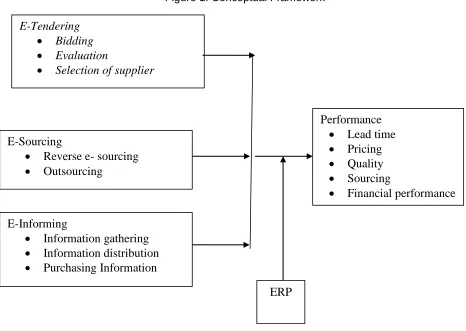
This section presents the review of literature related to the study problem. The specific themes reviewed include e-tendering, e-sourcing, e-informing, ERP and study’s conceptual framework.
E-Tendering
Licensed under Creative Common Page 703
E-Tendering
Bidding
Evaluation
Selection of supplier
E-Sourcing
Reverse e- sourcing
Outsourcing
E-Informing
Information gathering
Information distribution
Purchasing Information
Performance
Lead time
Pricing
Quality
Sourcing
Financial performance
ERP
appropriate to the circumstances and to obtain from him at the appropriate time, an acceptable tender or offer upon which a contract can be let.
Figure 1. Conceptual Framework
E-tendering originated from pre-contract communication between architects and builders (Adewoyin, 2010). By the end of the eighteenth century, the architect's role was consolidated into construction designer and “leader” of the project coalition, hence establishing traditional
procurement. These formative years played a leading role in the evolution of E-tendering practice, affecting both the architect and the builder in terms of preparation of pre-contract documents, evaluation of tenders and the manner of estimating cost, time allowed and method of tender submission, respectively. Early in the nineteenth century, the bill of quantities (BOQ) was introduced thereby becoming the means of providing a common basis upon which contractors could compile their bids (Chou, 2011). Holt et al. (2005) gave an account of pre-construction contracts, which were typically traditionally procured and assigned via the open E-tendering system.
Licensed under Creative Common Page 704 to standard, as it has been noted that open E-tendering often lead to unscrupulous builders being awarded contracts. It was also observed that the open system of E-tendering was conducive to the purchase of inferior materials and speeding up of the work, making good craftsmanship impossible. The Simon committee initiated the move away from the open E-tendering and encouraged the prequalification of contractors. The advent of the standing list therefore commenced and in the committee's view, formed a satisfactory basis for selecting contractors to tender.
The Latham's (2004) report recommended that clients should base her choice of contractor on value for money with proper weighting of selection criteria for skill, experience and previous performance rather than accepting the lowest tender (Holt et al., 2005). Holt et al. (2005) stated that 87 per cent of clients base their selection decisions on price. They also pointed out that bid selection is nearly always based on lowest tender but this may not always be the most economical solution in the long term. The tender process should obtain for the client the most competitive price for the construction at prevalent market condition (Williamson et al., 2004).
E-sourcing
Empirical research shows that many large companies in the US and Europe use reverse e- sourcing and that supply managers expect continued expansion in the future (Kaufmann and Carter, 2004). In reverse e- sourcing, suppliers compete dynamically, in real-time, for a buyer's business and typically bid down the price of an item to be purchased. Using the internet, suppliers submit multiple electronic bids during a fixed time period, often 30 minutes or less. E-sourcing can reduce purchase prices, save time, streamline the bidding process, and enable suppliers from anywhere in the world to compete for a buyer's business (Smart & Harrison, 2003). Risks of e-sourcing include damaging supplier relationships, switching to suppliers who are not capable, underestimating the total costs associated with using suppliers with lower purchase prices, and negatively impacting the supply market in the long run by driving out qualified suppliers (Smeltzer & Carr, 2003). To attain the greatest benefits, purchasing processes should be evaluated and improved before adopting e-procurement tools such as e- sourcing (Presutti, 2003).
Licensed under Creative Common Page 705 percent using e-auctions based on a 2002 survey of US companies (Chew et al., 2003). Supply managers are using e-sourcing for commodity-type items and one-time purchases (Handfield et al., 2002). E-sourcing has successfully been used to source indirect materials, production materials, and support services (Gabbard, 2003).
Empirical research on e-sourcing consists primarily of case studies (Carter et al., 2004), in-depth analysis involving surveys within a few firms (Jap, 2003), and quasi-experiments (Jap, 2003). The research is emerging in several areas. Case studies of e-sourcing participants have identified the benefits of and problems with e-auctions (Carter et al., 2004). Lower purchase prices, lower transactions costs, lower inventory levels, and inclusion of a wider pool of suppliers are the primary benefits for buying organizations from e-sourcing (Carter et al., 2004). Other studies have described the e-sourcing process and ways to increase the success of e-sourcing (Kaufmann & Carter, 2004). Clarity of specifications, lots that are attractive to suppliers and degree of competition have consistently been identified as e-auction success factors (Kaufmann and Carter, 2004).
E-informing
E-informing is the gathering and distributing purchasing information both from and to internal and external parties using Internet technology (McFarlan, 2004). Using Internet technology to buy goods and services from a number of known or unknown suppliers. Nelson et al. (2001), purchasing accounts for the majority of organisational spending. As such, the advent of web-based electronic procurement has been heralded as a ‘revolution’ because of its potential to
reduce the total cost of acquisition (Croom, 2010; Rai et al. 2006). The e-procurement revolution is expected to enhance the status and influence of the purchasing function within organizations (Osmonbekov et al, 2002).
Existing literature has emphasized the important contribution of e-procurement in reducing total purchasing costs. These benefits broadly arise through lower prices from suppliers and reduced costs in the ‘requisition to payment’ process (Kameshwaren et al. 2007;
Mishra et al. 2007). Whilst it is has been widely contended that e-procurement will have considerable implications for the design of the procurement process, Lancioni et al. (2000) note that the precise nature of these changes remains unclear. Yen & Ng (2003) carried out a case study investigation of textile and apparel e-commerce implementation in Hong Kong.
Kennedy & Deeter-Schmelz (2001) conclude that ‘organizational characteristics and organizational influences’ are significant motivators to the use of e-procurement. In other words,
Licensed under Creative Common Page 706 level of compliance has been noted by a number of authors (de Boer et al. 2002; Croom & Johnston, 2003; Interfaces, 2006).
Enterprise Resource Planning
Enterprise Resource Planning (ERP) is a cross-functional enterprise system driven by an integrated suite of software modules that supports the basic internal business processes of a company, (Al-Mashari et al, 2003). ERP gives a company an integrated real-time view of its core business processes, such as production, order processing and inventory management, tied together by ERP application software and a common database maintained by a database management system. ERP systems track business resources such as cash, raw materials, and production capacity and the status of commitments made by the business such as customer orders, purchase orders, and employee payroll, no matter which department (manufacturing, purchasing or sales) has entered into the system , (Dezdar, 2010).
Enterprise Resource Planning (ERP) system solutions are currently in high demand by both manufacturing and service organizations, because they provide a tightly integrated solution to an organization’s information system needs. ERP allows employees to manage their
company with one system that integrates the entire business process and creates an enterprise-wide view of significant corporate information. Today, organizations face a new challenge of increasing competition, expanding markets and enhancement in customer expectations and thus ERP systems have been developed to provide a total business system in order to improve business performance, (Al-Mashari et al, 2003).
Even though the use of ERP systems is growing and becoming more popular, these systems are still somewhat unfamiliar in the private sector industry, (Nah et al., 2003). Many firms know how beneficial ERP systems are, but they still hesitate to adopt these systems due to their high cost and risk. Without a doubt, a successful ERP implementation is essential for the benefits from such systems, so this issue is always considered top priority in the ERP related research area. It is obvious that several important factors must be considered for successful implementation, but most firms have no idea what factors should be considered most heavily (Zhang et al., 2005).
RESEARCH METHODOLOGY
Research Design
Licensed under Creative Common Page 707 is not possible since the variables have already manifested themselves. Cooper and Schindler (2006) stated that research design is the manner in which data is collected, measured and analyzed in order to achieve certain research objectives. Chandran (2004) stated that the research design is a way to accomplish the research objectives through empirical evidence that is obtained economically. The considerations that determine the research design to be used include: research purpose, categories of data required, data sources and the cost implications.
Target Population
According to Ngechu (2004) a study population is a well-defined or specified set of people, group of things, households, firms, services, elements or events which are being investigated. Target population should suit a certain specification, which the research is studying and the population should be homogenous. Keya (1989) states that individuals or things or elements that fit a research specification. The population can be divided into sets, population or strata and which are mutually exclusive.
Mugenda and Mugenda, (2003), explain that the target population should have some observable characteristics, to which the research intends to generalize the results of the study. For purpose of this study the target population was stratified through top management level, middle level managers and low level management. The target population was composed of 486 members of staff in different managerial levels currently working at the Kenya Commercial Bank. This population suited the research in view of determining the relationship between e-procurement systems and the performance of banking sector in Kenya. As a result, they are well conversed with the e-procurement systems and its functions on performance of banking sector in Kenya.
Table 1. Target Population
Level No in Position Percentage of Total Population
Top Management 35 7.2
Middle Level Management 169 34.8 Low Level Management 282 58.0
Total 486 100.0
Source: KCB HR, (2014)
Sampling Design
Licensed under Creative Common Page 708 will be used to select the sample. According to Deming (1990) stratified random sampling technique produce estimates of overall population parameters with greater precision and ensures a more representative sample is derived from a relatively homogeneous population. Stratification aims to reduce standard error by providing some control over variance. From each stratum the study used simple random sampling to select 97 respondents; this represents 20% of the entire population. According to Mugenda and Mugenda (1999), a representative sample is one that represents at least 10% of the population of interest. Random sampling frequently minimizes the sampling error in the population. This in turn increases the precision of any estimation methods used (Cooper and Schindler, 2003).
Table 2. Sampling Frame
Level Frequency Sample reference Sample size
Top Management 35 20 7
Middle Level Management 169 20 34
Low Level Management 282 20 56
Total 486 97
Data Collection
Primary data is information gathered directly from respondents. The research used questionnaires. The questionnaire was used to collect mainly quantitative data. However some qualitative data were also collected from the open ended questions. Secondary data obtained involved the collection and analysis of published material and information from other sources such as annual reports, published data. The researcher administered a questionnaire to each member of the target population. The questionnaire was designed and tested with a few members of the population for further improvements. This was done in order to enhance its validity and accuracy of data collected.
Licensed under Creative Common Page 709 Pilot Testing
The researcher carried out a pilot study to pre-test and validate the questionnaire and the interview guide. According to Cooper and Schindler (2003), the pilot group can range from 25 to 100 subjects depending on the method to be tested but it does not need to be statistically selected. This is in line with a qualitative research design methodology employed in this research. According to Somekh, and Cathy (2005) validity is the degree by which the sample of test items represents the content the test is designed to measure. Content validity which is employed by this research is a measure of the degree to which data collected using a particular instrument represents a specific domain or content of a particular concept. Mugenda and Mugenda (1999) contend that the usual procedure in assessing the content validity of a measure is to use a professional or expert in a particular field.
To establish the validity of the research instruments the research was seeking opinions of experts in the field of study especially the lecturers. This facilitated the necessary revision and modification of the research instrument thereby enhancing validity and reliability. Reliability refers to the consistency of measurement and is frequently assessed using the test–retest
reliability method (Walliman, 2001). Reliability is increased by including many similar items on a measure, by testing a diverse sample of individuals and by using uniform testing procedures.
The researcher selected a pilot group of 10 individuals from the target population to test the reliability of the research instrument. This was achieved by first stratifying the individuals according to their level of management. The research also put in consideration gender equity and geographical background of individuals. The pilot data was not included in the actual study. The pilot study only allow for pre-testing of the research instrument. The clarity of the instrument to the respondents was established so as to enhance the instrument’s validity and reliability.
The pilot study enabled the researcher to familiarize with the study area and its administration procedure as well as identifying items that require modification. The result from the pilot helped the research to correct inconsistencies that arose from the instruments to that they capture what is intended.
Data Processing and Analysis
Licensed under Creative Common Page 710 test data that is qualitative nature or aspect of the data collected from the open ended questions. According to Baulcomb, (2003), content analysis uses a set of categorization for making valid and replicable inferences from data to their context. A multivariate regression model was applied to determine the relative importance of each of the three variables with respect to the effects of e-procurement on performance. This will be in an effort to establish the extent to which each independent variable affect the dependent variable as shown by the size of the beta coefficients. The regression model is as follows:
Y = β0 + β1X1 + β2X2 + β3X3 +ɛ
Where Y is the dependent variable (performance), β0 is the regression constant, β1, β2, β3 and β4 are the coefficients of independent variables, X1 is E-Tendering, X2 is E-sourcing, and X3 is
E-informing.
In addition Correlation analysis to determine the strength of relationship between the variable, correlation analysis is the statistical tool that can be used to determine the level of association of two variables (Levin & Rubin, 1998). Correlation analysis help to detect any chance of multicollinearity among the study variable. Correlation value of 0 shows that there is no relationship between the dependent and the independent variables. On the other hand, a correlation of ±1.0 means there is a perfect positive or negative relationship (Hair et al., 2010). The values were interpreted between 0 (no relationship) and 1.0 (perfect relationship).
ANALYSIS AND FINDINGS
Response Rate
The study targeted 97 respondents out of which 81 respondents filled and returned their questionnaires this constituted 84%, which is acceptable as recorded by Kothari (2004) a response of above 60% is acceptable.
Gender Participation
Results depicted in figure 2 revealed that majority of the respondents were male comprising 70 percent while 30 percent were female.
Figure 2: Gender Participation at the Kibuye Market in Kisumu
Series1, Male, 69.6,
70% Series1,
Licensed under Creative Common Page 711 As shown in Figure 2, the larger segment (69.6%) emphasized dominance of men participation at the bank, thus beating the female (30.4%).
Table 3: Age bracket of respondents
Category Frequency Percent
Valid Below 25 years 6 7.4 25 -35 years 10 12.3
36-45 years 23 28.4
46-55 years 22 27.2
Above 55 years 20 24.7
Total 81 100.0
The study revealed that 28.4 percent of the respondents were between 36-45 years old, 27.2% were between 46-55 years old, 24.7% were Above 55 years old, 12.3 percent were between 25 -35 years old, while the remaining 7.4% were below 25 years and above (Table 3).
Level of education reached by the respondents
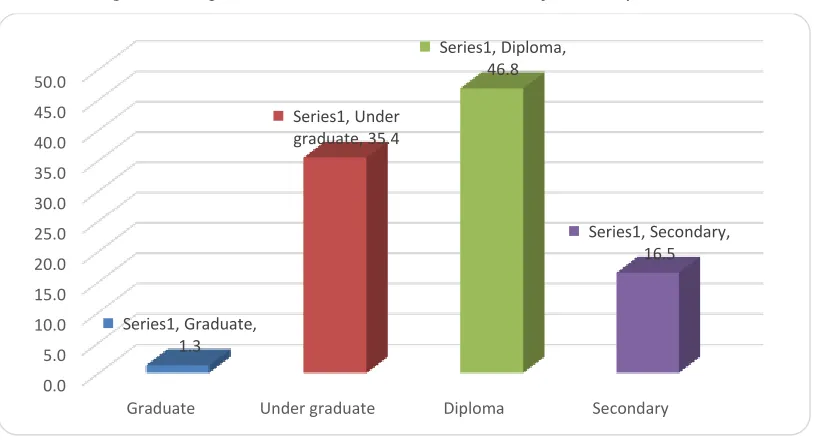
Figure 3: Highest level of education reached by the respondents
This section aimed at establishing the highest level of education reached by the respondents. Findings from the study revealed that most of the respondents had attained a diploma shown by 46.8 percent, 35.4% were undergraduates, 16.5% had reached secondary school, while the remaining (1.3%) were graduates (Figure 3).
0.0 5.0 10.0 15.0 20.0 25.0 30.0 35.0 40.0 45.0 50.0
Graduate Under graduate Diploma Secondary
Series1, Graduate, 1.3
Series1, Under graduate, 35.4
Series1, Diploma, 46.8
Licensed under Creative Common Page 712 Job Tenure at Bank
Table 4: Duration of time respondents have been employed in the bank
Category Frequency Percent
Valid Less than 1 year 20 25.3
2 to 5 years 11 12.7
5 to 10 years 32 40.5
More than 10 years 18 21.5
Total 81 100.0
The study further determined the duration of time respondents have been employed in the bank. Findings from the study revealed that majority of the respondents have been employed in the bank for between 5 and 10 years as was shown by 40.5 percent, 25.3 percent for less than 1 year, 21.5 percent for more than 10 years, while 12.7 percent had been employed in the bank for between 2 and 5 years.
E-procurement
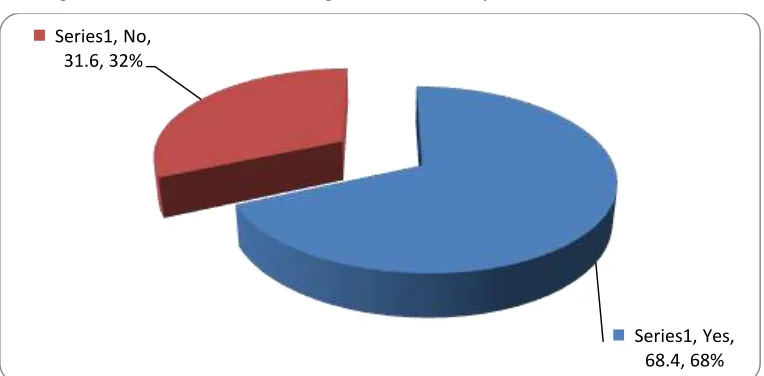
Whether E-tendering influences the performance of the bank
Figure 4: Whether E-tendering influences the performance of the bank
Series1, Yes, 68.4, 68% Series1, No,
Licensed under Creative Common Page 713
Extent that E-sourcing influences the performance of the bank
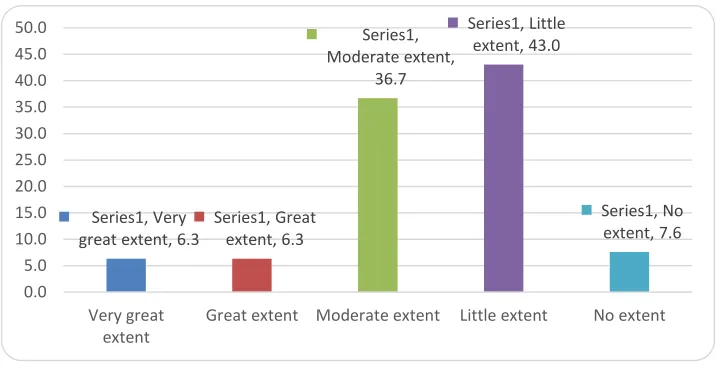
Figure 5: Extent that E-sourcing influences the performance of the bank
Forty three of the respondents indicated that E-sourcing influences the performance of the bank to a little extent, 36.7% to a moderate extent, 7.6% to no extent, 6.3% to a very great extent, and the remaining 6.3% indicated that E-sourcing influences the performance of the bank to a great extent.
Level of agreement with statements on E-tendering and performance
This question was framed with a Likert scale where respondents were given five choices which had values attached on them, i.e. Strongly Agree had a score of 5; Agree of 4; Agree nor Disagree had a score of 3; Disagree had a score of 2 while Strongly Disagree had a score of 1. Means for the percentages of observations for each item were calculated. Cooper and Schindler (2003) notes that the use of percentages is important for two reasons; first they simplify data by reducing all the numbers to range between 0 and 100. Second, they translate the data into standard form with a base of 100 for relative comparisons. The mean was the most convenient method to analyze Likert type of questions to find out where most of the observations fell and comment conclusively.
For instance in this section, the study aimed at establishing the extent to which respondents agreed with statements on E-tendering and performance. Results revealed that most respondents agreed that Open system of E-tendering leads to the purchase of inferior materials and speeding up of the work as shown by a mean of 3.99; that tenders should only be called from a limited number of firms carefully selected as being capable of doing the work to standard as shown by a mean of 3.96; this matches Eriksson and Westerberg literature that the
Series1, Very great extent, 6.3
Series1, Great extent, 6.3
Series1, Moderate extent,
36.7
Series1, Little extent, 43.0
Series1, No extent, 7.6
0.0 5.0 10.0 15.0 20.0 25.0 30.0 35.0 40.0 45.0 50.0
Very great extent
Licensed under Creative Common Page 714 whole essence of E-tendering procedure is to select a suitable contractor at a time appropriate to the circumstances and to obtain from him at the appropriate time, an acceptable tender or offer upon which a contract can be let (Eriksson and Westerberg, 2011); that the bank has a well-established E-tendering system as shown by a mean of 3.85; that Open E-tendering often lead to unscrupulous suppliers being awarded contracts as shown by a mean of 3.82; that E-tendering enables the selection of a suitable contractor at a time appropriate to the circumstances as shown by a mean of 3.56; and that bid selection is always based on lowest tender but this may not always be the most economical solution in the long term as shown by a mean of 3.29.
Table 5: Level of agreement with statements on E-tendering and performance
Mean St
d
ev
E-tendering enables the selection of a suitable contractor at a time appropriate to the circumstances
3.56 1.03
The bank has a well-established E-tendering system 3.85 1.06 Tenders should only be called from a limited number of firms
carefully selected as being capable of doing the work to standard
3.96 0.98
Open E-tendering often lead to unscrupulous suppliers being awarded contracts
3.82 0.89
Open system of E-tendering leads to the purchase of inferior materials and speeding up of the work
3.99 0.78
Bid selection is always based on lowest tender but this may not always be the most economical solution in the long term
3.29 1.30
E-Sourcing
Respondents’ opinion on whether E-sourcing influences the performance of the bank
Figure 6: Respondents’ opinion on whether E-sourcing influences the performance of the bank
Series1, Yes, 68.4, 68% Series1, No,
Licensed under Creative Common Page 715 More than half (68%) of the respondents indicated that E-sourcing influences the performance of the bank, while the rest (32%) indicated that it did not.
Extent to which E-sourcing influences the performance of the bank
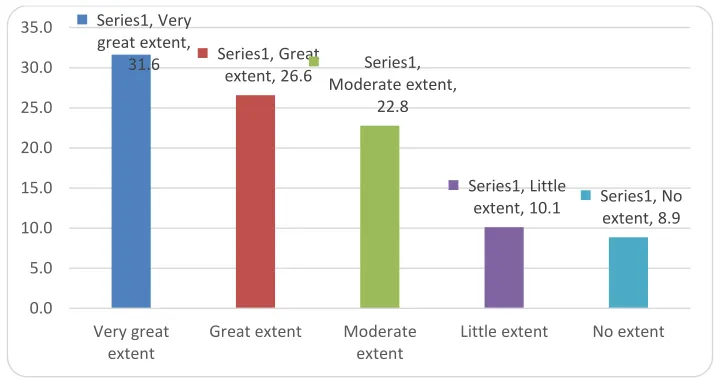
Figure 7: Extent to which E-sourcing influences the performance of the bank
Majority of the respondents (31.6%) of the respondents felt that E-sourcing influences the performance of the bank, 26.6% to a great extent, 22.8% to a moderate extent, 10.1% to a little extent while only 8.9% of them felt that it did not affect the performance of the bank at all.
Level of agreement with statements relating to e-sourcing and performance
This section aimed at establishing the respondents Level of agreement with statements relating to e-sourcing and its influence on performance. Results depicted in table 6 revealed that most respondents strongly agreed that E-sourcing reduces purchase prices; that in reverse e- sourcing, suppliers compete dynamically for a buyer's business and typically bid down the price of an item to be purchased; that E-sourcing streamline the bidding process; This matches Croom & Brandon-Jones literature that cites that some of the benefits of adopting e-procurement include savings in purchasing transaction cost resulted from less paperwork, less mistakes and more efficient purchasing process (Croom & Brandon-Jones, 2007) This matches Doloi literature that E-tendering is a system whereby interested parties or companies offer to build, sell goods or render services for a consideration, in response to an invitation to do so (Doloi, 2011); that E-sourcing enables suppliers from anywhere in the world to compete for a buyer's business; and that purchasing processes should be evaluated and improved before
Series1, Very great extent,
31.6 Series1, Great
extent, 26.6 Moderate extent, Series1,
22.8
Series1, Little
extent, 10.1 Series1, No
extent, 8.9
0.0 5.0 10.0 15.0 20.0 25.0 30.0 35.0
Very great extent
Great extent Moderate extent
Licensed under Creative Common Page 716 adopting e-procurement tools such as e- sourcing as shown by means of 4.13, 3.97, 3.74, 3.6, and 3.6 respectively.
Table 6: Level of agreement with statements relating to e-sourcing and performance
Mean St
d
ev
In reverse e- sourcing, suppliers compete dynamically for a buyer's business and typically bid down the price of an item to be purchased
3.97 1.17
E-sourcing reduces purchase prices 4.13 0.94 E-sourcing streamline the bidding process 3.74 0.97 E-sourcing enables suppliers from anywhere in the world to
compete for a buyer's business
3.6 0.33
purchasing processes should be evaluated and improved before adopting e-procurement tools such as e- sourcing
3.6 0.2
E-Informing
Whether E-informing influences the performance of the bank
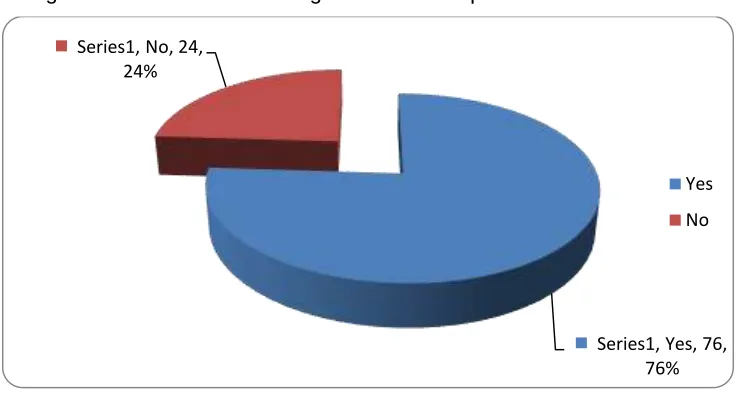
Figure 8: Whether E-informing influences the performance of the bank
The researcher also sought the respondents’ opinion on whether E-informing influences the performance of the bank. From the findings, 76% of the respondents felt that E-informing influences the performance of the bank while the remaining 24% felt that it did not.
Series1, Yes, 76, 76% Series1, No, 24,
24%
Yes
Licensed under Creative Common Page 717
Extent that E-informing influences the performance of the bank
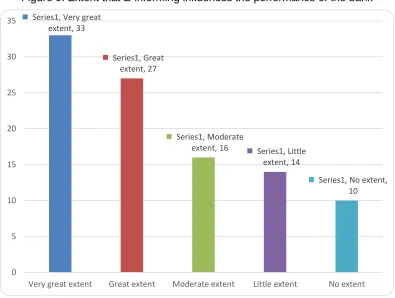
Figure 9: Extent that E-informing influences the performance of the bank
Majority (33%) of the respondents indicated that E-informing influences the performance of the bank to a very great extent, 27% of them felt it affected to a great extent, 16% to a moderate extent, 14% to a little extent and only 10% to no extent.
Level of agreement with statements relating to E-informing and performance
Findings from the study revealed that respondents agreed that E-informing facilitates effective communication within an organization as shown by a mean of 4.1; This matches Aberdeen Group literature that, e-procurement enables companies to decentralize operational procurement processes and centralize strategic procurement processes as a result of the higher supply chain transparency provided by e-procurement systems (Aberdeen Group, 2011); that E-informing enables companies to decentralize operational procurement processes and centralize strategic procurement processes as shown by a mean of 3.9; that E-informing enhances performance of an organization as shown by a mean of 3.7; and that E-informing enhances performance of an organization as shown by a mean of 3.5
Series1, Very great extent, 33
Series1, Great extent, 27
Series1, Moderate
extent, 16 Series1, Little
extent, 14
Series1, No extent, 10
0 5 10 15 20 25 30 35
Licensed under Creative Common Page 718 Table 7: Level of agreement with statements relating to E-informing and performance
Mean Std
ev
E-informing enhances performance of an organization 3.5 1.0781 E-informing facilitates effective communication within an
organization 4.1 0.8332
E-informing enables companies to decentralize operational procurement processes and centralize strategic procurement processes
3.9 1.0838
E-informing enhances performance of an organization 3.0 0.9781 E-informing facilitates effective communication within an
organization 3.7 1.0781
Table 8: Pearson’s Coefficient of Correlation
P
er
fo
rman
c
e
E
-p
ro
cur
ement
E
-S
o
u
rcing
E
-Inf
o
rmin
g
Performance Pearson Correlation (r) 1 Sig. (2-tailed)
E-procurement Pearson Correlation (r) 0.600 1 Sig. (2-tailed) 0.015
E-Sourcing Pearson Correlation 0.838 0.662 1 Sig. (2-tailed) 0.000 0.0071
Sig. (2-tailed) 0.006 0.0088 0.0083
E-Informing Pearson Correlation (r) 0.426 0.007 0.209 1 Sig. (2-tailed) 0.009 0.0019 0.0046
**. Correlation is significant at the 0.01 level (2-tailed).
As shown in table 8 above, all the independent variables were found to have a positive correlation with Performance. The Pearson’s’ correlation coefficient between E-sourcing and
Licensed under Creative Common Page 719 SUMMARY OF THE FINDINGS
E-procurement
Study aimed at establishing the extent to which respondents agreed with statements on E-tendering and performance. Results revealed that most respondents agreed that Open system of E-tendering leads to the purchase of inferior materials and speeding up of the work as shown by a mean of 3.99; that tenders should only be called from a limited number of firms carefully selected as being capable of doing the work to standard as shown by a mean of 3.96; that the bank has a well-established tendering system as shown by a mean of 3.85; that Open E-tendering often lead to unscrupulous suppliers being awarded contracts as shown by a mean of 3.82; that E-tendering enables selection of a suitable contractor appropriate to circumstances as shown by a mean of 3.56; and that bid selection is always based on lowest tender but this may not always be the most economical solution in long term as shown by a mean of 3.29.
E-Sourcing
This section aimed at establishing the respondents Level of agreement with statements relating to e-sourcing and performance. Results revealed that most respondents strongly agreed that E-sourcing reduces purchase prices; that in reverse e- E-sourcing, suppliers compete dynamically for a buyer's business and typically bid down the price of an item to be purchased; that E-sourcing streamline the bidding process; that E-E-sourcing enables suppliers from anywhere in the world to compete for a buyer's business; and that purchasing processes should be evaluated and improved before adopting e-procurement tools such as e- sourcing as shown by means of 4.13, 3.97, 3.74, 3.6, and 3.6 respectively.
E-Informing
Findings from the study revealed that respondents agreed that E-informing facilitates effective communication within an organization as shown by a mean of 4.1. Study also found out that that E-informing enables companies to decentralize operational procurement processes and centralize strategic procurement processes as shown by a mean of 3.9; that E-informing enhances performance of an organization as shown by a mean of 3.7; and that E-informing enhances performance of an organization as shown by a mean of 3.5.
CONCLUSIONS
Licensed under Creative Common Page 720 of firms carefully selected as being capable of doing the work to standard; that the bank has a well-established E-tendering system; that Open E-tendering often lead to unscrupulous suppliers being awarded contracts; that E-tendering enables the selection of a suitable contractor at a time appropriate to the circumstances; and that bid selection is always based on lowest tender but this may not always be the most economical solution in the long term.
The study concludes that E-sourcing reduces purchase prices; that in reverse e- sourcing, suppliers compete dynamically for a buyer's business and typically bid down the price of an item to be purchased; that E-sourcing streamline the bidding process; that E-sourcing enables suppliers from anywhere in the world to compete for a buyer's business; and that purchasing processes should be evaluated and improved before adopting e-procurement tools such as e- sourcing.
From the findings, the researcher concludes that ERP gives a company an integrated real-time view of its core business processes; that ERP systems track business resources such as cash, raw materials, and production capacity; that ERP systems provide a tightly integrated solution to an organization’s information system needs and that ERP allows employees to
manage their company with one system that integrates the entire business process and creates an enterprise-wide view of significant corporate information.
Finally, the study concludes that E-informing facilitates effective communication within an organization as shown by a mean of 4.1; that E-informing enables companies to decentralize operational procurement processes and centralize strategic procurement processes as shown by a mean of 3.9; that E-informing enhances performance of an organization as shown by a mean of 3.7; and that E-informing enhances performance of an organization as shown by a mean of 3.5
RECOMMENDATIONS
Licensed under Creative Common Page 721 amended the present laws governing Public Procurement. Recommendations to management of Commercial banks and the Kenya banking Sector to commit to staff training for both end-users and procurement staff by conducting in-house training and seminars in the procurement profession and keep up with the dynamism in procurement e.g. INCOTERMS 2010, language, contract interpretation etc.
LIMITATIONS OF THE STUDY
The study used questionnaire as the only instrument for collecting data. The research had no much control on the respondent in regard to the information they filled in the questionnaires. Some of the respondents also were not willing to give full information in fear that it could leak to their competitors. Data collection was also limited to two months which may have not been sufficient. A few of the respondents approached were reluctant in giving information fearing that the information sought would be used to intimidate them or print a negative image about them or the Bank.
REFERENCES
Aberdeen Group (2011), E-procurement: Don't Believe the Anti-Hype, Aberdeen Group, Boston, MA. Aboelmaged, M.G. (2010), "Predicting e-procurement adoption in a developing country: an empirical integration of technology acceptance model and theory of planned behaviour", Industrial Management & Data Systems, Vol. 110 No.3, pp.392-414.
Amit, R., Zott, C. (2011), "Value creation in e-business", Strategic Management Journal, Vol. 22 No.6/7, pp.493-520.
Archer, N., Yuan, Y. (2010), "Managing business-to-business relationships throughout the e-commerce procurement life cycle", Internet Research: Electronic Networking Applications and Policy, Vol. 10 No.5, pp.385-95.
Carr, A.S., Smeltzer, L.R. (2012), "The relationship between information technology use and buyer-supplier relationships: an exploratory analysis of the buying firm's perspective", IEEE Transactions on Engineering Management, Vol. 49 No.3, pp.293-304.
Carter, C., Kaufmann, L., Beall, S., Carter, P., Hendrick, T., Petersen, K. (2004), "Reverse auctions – grounded theory from the buyer and supplier perspective", Transportation Research Part E, Vol. 40 No.3, pp.229-54.
Chew, J., Temkin, D., Hudson, R. (2003), "ISM/Forrester report on e-business: Q4 2002", available at: www.forrester.com/ER/Research/Brief/0,1317,16310,FF.html (accessed January 31).
Croom, S., Brandon-Jones, A. (2005), "Key issues in e-procurement: procurement implementation and operation in the public sector", Journal of Public Procurement, Vol. 5 pp.367-87.
Croom, S. (2011), "Restructuring supply chains through information channel innovation", International Journal of Operations & Production Management, Vol. 21 No.4, pp.504-15.
Licensed under Creative Common Page 722 Eyholzer, K., Hunziker, D. (2010), "The use of the internet in procurement", in Hansen, H.R., Bichler, M., Mahrer, H. (Eds),Proceedings of the 8th European Conference of Information Systems, Vienna University of Economics and Business Administration, Vienna, pp.335-42.
Gabbard, E. (2003), "Electronic reverse auctions: the benefits and the risks", Inside Supply Management, Vol. 14 No.10, pp.32-6.
Gadde, L.E., Snehota, I. (2010), "Making the most of supplier relationships", Industrial Marketing Management, Vol. 29 No.4, pp.305-16.
Gefen, D., Karahanna, E., Straub, D.W. (2003), "Trust and TAM in online shopping", MIS Quarterly, Vol. 27 No.1, pp.51-83.
Handfield, R., Straight, S., Stirling, W. (2002), "Reverse auctions: how do supply managers really feel about them?", Inside Supply Management, November, pp.56-61.
Hannon, D. (2004), "Online buying gathers steam, one buyer at a time", Purchasing, Vol. 133 No.16, pp.40-3.
Hui, W.S., Othman, R., Omar, N.H., Rahman, R.A., Haron, N.H. (2011), "Procurement issues in Malaysia", International Journal of Public Sector Management, Vol. 24 No.6, pp.567-93.
Industrial Distribution (2011), "E-procurement still slow to take off", Industrial Distribution, Vol. 90 No.3, pp.32-4.
Jap, S. (2003), "An exploratory study of the introduction of online reverse auctions", Journal of Marketing, Vol. 67 No.3, pp.96-108.
Johnston, R. (2005), "The determinants of service quality: satisfiers and dissatisfiers", International Journal of Service Industry Management, Vol. 6 No.5, pp.53-71.
Kaufmann, L. (2009), "Purchasing and supply management – a conceptual framework", in Kaufmann, L., Hahn, D. (Eds),Handbuch Industrielles Beschaffungsmanagement: Internationale Konzepte – Innovative Instrumente – Aktuelle Praxisbeispiele, Gabler, Wiesbaden, pp.3-32.
Kaufmann, L., Carter, C. (2004), "Deciding on the mode of negotiation: to auction or not to auction electronically", Journal of Supply Chain Management, Vol. 40 No.2, pp.15-26.
Knudsen, D., Sweden, L. (2003), "Aligning corporate strategy, procurement strategy and e-procurement tools", International Journal of Physical Distribution & Logistics Management, Vol. 33 No.8, pp.720-34. Lamming, R. (2005), Strategic Procurement Management in the 1990s: Concepts and Cases, Earlsgate Press, Stamford, CT,
Min, H., Galle, W.P. (2003), "E-purchasing: profiles of adopters and nonadopters", Industrial Marketing Management, Vol. 32 No.3, pp.227-33.
Narasimhan, R., Kim, S. (2002), "Effect of supply chain integration on the relationship between diversification and performance: evidence from Japanese and Korean firms", Journal of Operations Management, Vol. 20 No.3, pp.303-23.
Neef, D. (2001), E-procurement. From Strategy to Implementation, Prentice Hall/Financial Times, London, .
Nolan, A. (2009), "Purchasing's new power", Director, Vol. 52 No.7, pp.46-9.
Patterson, K.A., Grimm, C., Corsi, T. (2003), "Adopting new technologies for supply chain management", Transportation Research, Vol. 39 No.2, pp.95-121.
Presutti, W. (2003), "Supply management and e-procurement: creating value added in the supply chain", Industrial Marketing Management, Vol. 32 No.3, pp.219-27.
Puschmann, T., Rainer, A. (2005), "Successful use of e-procurement in supply chains", Supply Chain Management, Vol. 10 No.2, pp.122-33.
Licensed under Creative Common Page 723 Rajagopal, S., Bernard, K.N. (1993), "Strategic procurement and competitive advantage", International Journal of Purchasing & Materials Management, No.Fall, .
Rajkumar, T.M. (2001), "E-procurement: business and technical issues", Information Systems Management, Vol. 18 No.4, pp.52-60.
Rotchanakitumnuai, S., Speece, M. (2009), "Modeling electronic service acceptance of an e-securities trading system", Industrial Management & Data Systems, Vol. 109 No.8, pp.1069-84.
Sanders, N. (2005), "IT alignment in supply chain relationships: a study of supplier benefits", Journal of Supply Chain Management, Vol. 41 No.2, pp.4-13.
Smart, A., Harrison, A. (2003), "Online reverse auctions and their role in buyer-supplier relationships", Journal of Purchasing & Supply Management, Vol. 9 No.5/6, pp.257-69.
Smeltzer, L., Carr, A. (2003), "Electronic reverse auctions: promises, risks, and conditions for success", Industrial Marketing Management, Vol. 32 No.6, pp.481-8.
Wahid, F. (2010), "Examining adoption of e-procurement in public sector using the perceived characteristics of innovating: Indonesian perspective", in Sideridis, A.B., Patrikakis, Ch.Z. (Eds),E-Democracy, Springer, Berlin, LNICST 26, pp.64-75.