Geschke Center
Doctoral Dissertations Theses, Dissertations, Capstones and Projects
Winter 2017
Exploring the Experiences of Black Men as
Respondents in University Student Conduct
Processes
Brian Arao
University of San Francisco, [email protected]
Follow this and additional works at:https://repository.usfca.edu/diss
Part of theEthnic Studies Commons, and theHigher Education Commons
This Dissertation is brought to you for free and open access by the Theses, Dissertations, Capstones and Projects at USF Scholarship: a digital repository @ Gleeson Library | Geschke Center. It has been accepted for inclusion in Doctoral Dissertations by an authorized administrator of USF Scholarship: a digital repository @ Gleeson Library | Geschke Center. For more information, please [email protected].
Recommended Citation
Arao, Brian, "Exploring the Experiences of Black Men as Respondents in University Student Conduct Processes" (2017).Doctoral Dissertations. 406.
University of San Francisco
EXPLORING THE EXPERIENCES OF BLACK MEN AS RESPONDENTS IN UNIVERSITY STUDENT CONDUCT PROCESSES
A Dissertation Presented to The Faculty of the School of Education
Department of International and Multicultural Education
In Partial Fulfillment
Of the Requirements for the Degree Doctor of Education
By
THE UNIVERSITY OF SAN FRANCISCO Dissertation Abstract
Exploring the Experiences of Black Men as Respondents in University Student Conduct Processes
Student conduct processes in higher education have been studied and theorized
extensively from a structural perspective, yielding a wealth of guidance for practitioners
on how they can best design and administer disciplinary interventions (e.g., Lancaster &
Waryold, 2008b). However, very little published research has focused on students’
perceptions of and experiences with student conduct processes, and to what extent these
are congruent with the espoused learning goals of student conduct practitioners (Dannells,
1997; Karp & Sacks, 2014; Stimpson & Stimpson, 2008). Among these scant studies, the
findings of King (2012) and Karp and Sacks (2014) suggest that Black men may find
their experiences as respondents in student conduct processes to be less fair and
educational than do White students.
The purpose of this phenomenological qualitative study was to develop a better
understanding of the experiences of Black male college students as respondents in the
student conduct process at universities within the United States. Data were collected via
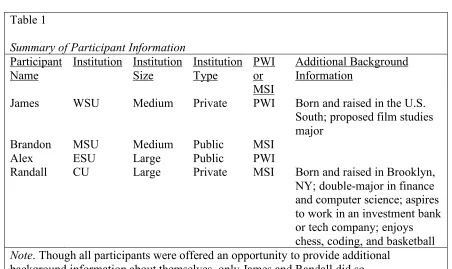
one-on-one interviews with four participants who met the selection criteria for the study.
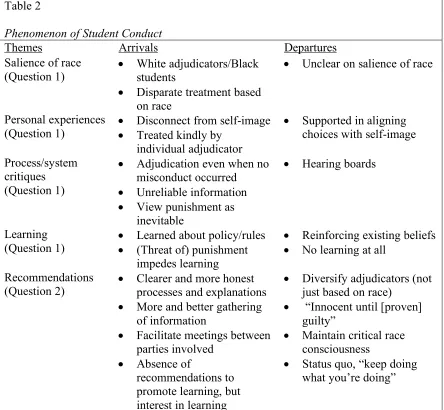
Five themes emerged from the data: the salience of race within student conduct processes,
personal experiences within the student conduct process, critiques of student conduct
processes and systems, learning (or absence thereof) as a result of student conduct
experiences, and recommendations for improving student conduct practice.
The findings of this study provide additional evidence that Black male collegians
iii
any learning that may have otherwise occurred as a result of their experiences. Further,
the findings point toward both specific strategies for transforming student conduct
practice to be more racially equitable and additional questions worthy of future research
iv
This dissertation, written under the direction of the candidate’s dissertation committee
and approved by the members of the committee, has been presented to and accepted by
the Faculty of the School of Education in partial fulfillment of the requirements for the
degree of Doctor of Education. The content and research methodologies presented in this
work represent the work of the candidate alone.
Brian Arao 12/13/2017
Candidate Date
Dissertation Committee
Susan R. Katz 12/13/2017
Chairperson
Alejandro Covarrubias 12/13/2017
v
DEDICATION
For Kaleah, my dear niece.
Never doubt in your ability to accomplish whatever lofty goals you may set for yourself,
ACKNOWLEDGMENTS
My deepest thanks are due to the many people who have supported me in the
completion of this research, and over the course of more than seven years of doctoral
work. First and foremost, I wish to thank my advisor, Dr. Susan Katz. I came to you as an
advisee at a critical point in my studies wherein I was truly questioning my capacity to
cross the finish line. Your steady hand, excellent coaching, regular cheerleading, and (of
course) famous structure and discipline were crucial to me in re-finding my footing. I
could not have crossed the finish line without you, and will be forever grateful.
To Dr. Alejandro Covarrubias, Dr. Lance McCready, and Dr. Darrick Smith: Let
it never be said that scholarly critique cannot be offered in a loving manner. At many
points in the dissertation process, you nudged my thinking and writing in vitally
important ways, and thus strengthened the final product. Each of you helped make my
proposal and final defenses joyful and exciting experiences, which I know is a gift that
many other doctoral candidates never receive!
To my dear friends on “that doctor hustle,” Belinda Arriaga, Dr. Melissa Canlas,
Dr. Alejandro Covarrubias (there you are again!), Victoria Duran, Linda Garrett, Dr. Oli
Muñoz, Dr. Garrett Naiman, Dr. Manuel Perez, and Dr. Rowena Tomaneng: Although
each of our paths to the doctorate has ended at different times, and some have yet to
conclude, I have treasured your company as fellow scholars of color on this journey. Our
friendship means the world to me, and I hope it endures well past commencement day.
To my family of origin, and especially my father, mother, sister, and stepmother:
You have believed in me even when I did not believe in myself. Even if you did not
vii
hard to imagine how I could have accomplished this goal without your love. Thank you.
(And now, finally, mom and dad, your belief since my babyhood that I would one day
become a doctor has come true!)
And finally, to my loving husband, J.M. Brown: there is no one who has been as
critical to my success in this lengthy effort than you. You endured countless boring
weekends when my nose couldn’t be extracted from a book, journal article, or laptop.
You were alongside me on the emotional rollercoaster with nary a complaint. You coaxed
me out of my head when I needed to reconnect with neglected aspects of my life. And
most importantly, you made me laugh at least once every day. I am so thankful to have
you as my partner, and look forward to embarking on new journeys with you now that
TABLE OF CONTENTS
ABSTRACT ... ii
SIGNATURE PAGE ... iv
DEDICATION ... v
ACKNOWLEDGEMENTS... vi
CHAPTER I: THE RESEARCH PROBLEM ... 1
Personal Story ... 1
Introduction ... 5
Background and Need for the Study ... 7
Purpose of the Study ... 9
Research Questions ... 9
Theoretical and Conceptual Framework ... 9
Critical race theory ... 10
Social justice analysis of conflict resolution ... 11
Significance ... 12
CHAPTER II: LITERATURE REVIEW ... 14
Disciplinary Context for Black Men ... 14
Discipline of Black males in primary and secondary education ... 15
Criminal justice and Black men ... 22
Black Male College Students ... 24
Factors impacting upon success of Black male collegians ... 26
Barriers to the success of Black male collegians ... 30
Black identity development ... 33
Male identity development ... 37
Black male masculinity in college ... 40
Student Conduct Practice... 41
Evolution of student conduct scholarship and practice ... 42
Contemporary approaches to student conduct practice ... 48
Learning goals within student conduct ... 56
Research on outcomes ... 60
Gender and student conduct ... 63
Summary ... 69
CHAPTER III: METHODOLOGY ... 71
Overview ... 71
Research Questions ... 73
Research Setting ... 73
Recruitment of Participants ... 76
Data Collection ... 79
Data Analysis ... 80
Ethical Considerations ... 80
Delimitations and Limitations of the Study ... 81
ix
Background of the Researcher ... 83
CHAPTER IV: FINDINGS OF THE STUDY ... 85
Overview ... 85
Reorganizing the research questions ... 85
Findings ... 88
Theme 3: Salience of race ... 88
Theme 2: Personal experiences ... 93
Theme 3: Critiques of processes and systems... 95
Theme 5: Recommendations... 105
Summary ... 111
CHAPTER V: SUMMARY, DISCUSSION, CONCLUSIONS, AND RECOMMENDATIONS ... 112
Summary ... 112
Discussion and Conclusions ... 112
Race and racism ... 113
Fairness ... 116
Learning ... 117
Recommendations for Practice ... 120
Intentionally cultivate critical race consciousness ... 121
Rethink and prioritize fairness in student conduct ... 122
Utilize a spectrum of resolution options ... 124
Take affirmative steps to diversify student conduct officers ... 126
Recommendations for Future Research ... 128
Develop quantitative data set on student conduct in higher education ... 129
Assess critical race consciousness among student conduct practitioners ... 130
Identify barriers to adopting the spectrum of resolution options model ... 130
Influence of institution type on salience of race in student conduct ... 131
Closing Reflection – On Accountability and Love ... 132
CHAPTER I: THE RESEARCH PROBLEM
Personal Story
Throughout my 15-year career as a student affairs practitioner in the functional
area of residential life, I have had responsibilities in the administration of student conduct
processes. As a student leader, I was charged with confronting possible policy violations
occurring in the residence halls, documenting my observations, and referring my report to
my supervisor for adjudication. Later, as a graduate student, I interned in my institution’s
student conduct office, where I advised a board of students who heard cases of alleged
misconduct by their peers using a script based on the one advanced by Stoner and
Lowery (2004); made findings of responsibility or non-responsibility for policy
violations; and determined what sanctions, if any, to assign. Further, it was here that I
made my first foray into serving as a solo hearing officer for what were considered
low-level policy violations (e.g., first violations of the alcohol policy, noise complaints, etc.),
making decisions using the same frameworks that guided the student review board I
advised. As my career has progressed, I have continued to serve as an individual hearing
officer with increasing levels of sanctioning authority including dismissal from
on-campus housing and university suspension, as well as an appellate officer for decisions
reached by other adjudicators.
The student conduct practices I learned as a graduate student and continue to
implement in my daily work have been studied and theorized extensively in the student
development literature (Lancaster & Waryold, 2008b). I value this body of work, which
has helped to inform my pedagogy in the student conduct setting by both enjoining me to
illuminating possible strategies for promoting such learning. Even so, I have often
struggled to reconcile my responsibilities as an adjudicator with my commitment to
fostering student learning and my identity as a social justice educator. Though the explicit
intentions of identified best practices in student conduct are often in alignment with my
values, I question to what degree they have the desired impact on student learning and
development, as well as their capacity to facilitate equitable outcomes for diverse groups
of students.
As a case in point, I was once asked to serve as an appeal officer for a student
conduct case in which the respondent, a Black male student named Casey1, was held
responsible for serious policy violations, including becoming so intoxicated on alcohol in
his residence hall that his fellow residents had to call for emergency medical assistance.
He was assigned heavy sanctions, including removal from University housing. My
institution’s published protocols for adjudicating such incidents were adapted directly
from Stoner and Lowery’s (2004) model code and hearing script. Of note, respondents
were required to write an appeal statement based on one or more of a prescribed set of
grounds as published in the student handbook. Casey based his appeal upon the ground
that the sanction of removal from housing was disproportionate to the violation for which
he had been found responsible. This ground was narrowly defined in the student
handbook, excluding subjective consideration about the severity of the sanction in favor
of evaluation of whether the sanction was consistent with those issued for similar
violations.
Reading Casey’s honest and vulnerable appeal was a gut-wrenching experience
for me. In his statement, he was forthcoming about his misconduct and accepted full
responsibility for the decisions he had made to violate policy. Casey also explained that
he was aware of the widespread ideology that frames Black men as criminals and
troublemakers. He said that his awareness of and extreme discomfort about this ideology
made it enormously difficult for him to represent himself well during the highly
formalized adjudication process. For example, he stated that his distress during his
hearing was so intense that he was too focused on defending himself to talk with the
adjudicator about what led him to engage in misconduct in the first place.
Casey shared his struggles to navigate a campus racial climate he found chilly and
hostile and explained that he had consumed alcohol to excess as part of a means of
coping with these stressors. He stated that, in hindsight, he saw these choices as
maladaptive, particularly because they caused great distress and disruption for his friends
who attended to him during the incident and reflected poorly on him among those for
whom he wished to be a positive role model. Casey acknowledged that he needed to be
held accountable for his actions, yet pled for an opportunity to remain in University
housing and make amends within his housing community.
As I read Casey’s story, I felt sad and angry, not with him but with myself and my
profession. Casey’s choices to violate campus rules were significantly driven by his
experiences of racism on campus; yet our conduct process was not designed to take such
information into account. Instead, adjudication focused primarily on holding Casey to
account for his drinking. Then, the appeal process allowed virtually no space for
choices on himself and others, and the sincerity of his desire to rebuild relationships.
Instead the process focused only on whether the sanction was consistent with those issued
for the same or similar violations. Certainly, the process was not designed to hold the
institution responsible for creating conditions so intolerable for Casey that he saw
self-medication with alcohol as a viable coping mechanism, nor promote institutional changes
that might prevent students of color from experiencing such hardships.
Moreover, I could not help but imagine how different the appeal would be had it
be written by a student with dominant group privileges denied to Casey. Would a White
student have entered the hearing with a fear that his whiteness would mark him as a
troublemaker? Would a student with the financial means to consult or secure the services
of an attorney have made any admission of wrongdoing, or submitted an appeal that did
not follow the “letter of the law” as articulated in the policy? Would either of these
students have viewed the conduct process, which Schrage and Thompson (2009)
described as highly formal and resonant with dominant groups, as unfamiliar and
frightening? Indeed, it seemed to me that however positive the intentions of this process,
its design could not help but produce inequitable outcomes based on race.
This experience continues to trouble me deeply given my subscription to the
belief that
... any worthwhile theory of schooling must be partisan. That is, it must be
fundamentally tied to a struggle for a qualitatively better life for all through the
construction of a society based on nonexploitative relations and social justice. The
critical educator doesn’t believe there are two sides to every question, with both
problem, and often these sides are linked to certain class, race, and gender
interests. (McLaren, 1989, p. 194)
As a scholar-practitioner with student conduct responsibilities and a commitment
to using critical pedagogy, I wonder what race and gender interests are served by
putatively fair and egalitarian student conduct practices. This curiosity, coupled with my
deep concern over the patterns of discrimination against Black men in other disciplinary
contexts such as K-12 education and the criminal justice system, drove my decision to
focus my dissertation research on the experiences of Black men in student conduct
processes.
Introduction
Learning in colleges and universities in the United States extends beyond the
boundaries of the classroom and into students’ cocurricular lives. Such learning does not
occur accidentally; student affairs educators must make an intentional effort to facilitate
meaningful and transformative learning experiences for and with their students (Day et
al., 2004). One such responsibility is to create strategies for helping students develop
sound ethical decision-making skills and a sense of personal integrity (Baldizan, 2008;
Council for the Advancement of Standards in Higher Education, 2015; Kuh, 2008). These
important efforts may thereby promote behaviors that maintain safety and security on the
campus. In addition to philosophical rationales for pursuing these kinds of outcomes,
colleges and universities are also motivated by advocacy and guidance from the courts
and governmental agencies such as the Office of Civil Rights and the United States
Department of Education. These bodies have supported institutions of higher education in
making recommendations and directives about how such responses should be constructed
in order to uphold relevant laws (Gregory & Bennett, 2014; Lowery, 2008).
In response to these needs, the functional area of student conduct administration
has evolved within the field of student affairs in higher education. Student conduct
administrators are charged with a complex task: the provision and implementation of
systems for responding to student violations of institutional policies and rules, which
must adhere to legal mandates (Stoner, 2008) while simultaneously promoting student
learning and development (Waryold & Lancaster, 2008). Student conduct processes
themselves have been studied and theorized extensively from a structural perspective,
yielding a wealth of guidance for practitioners on how they can best design and
administer disciplinary interventions (e.g., Lancaster & Waryold, 2008b). However, very
little published research focuses on students’ perceptions of and experiences within
student conduct processes, and to what extent these are congruent with the espoused
learning goals of student conduct practitioners (Dannells, 1997; Karp & Sacks, 2014;
Stimpson & Stimpson, 2008). Among these scant studies, the findings of King (2012) and
Karp and Sacks (2014) suggest that men of color may find their experiences as
respondents in student conduct processes to be less fair and educational than do White
students.
These recent findings echo a wealth of research examining the ways that primary
and secondary school disciplinary processes disproportionately punish children of color,
and particularly Black male children (e.g., Ferguson, 2000; McCarthy & Hoge, 1987;
Skiba et al., 2011; Wallace, Goodkind, Wallace, & Bachman, 2008). However, a review
student conduct policies and practices to determine how and in what ways they may be
producing inequitable outcomes for Black men. A recent study enumerating the ways that
Black male college students successfully navigate college also highlighted that educators
“often engaged in practices that had harmful effects on Black male students’ aspirations,
college choice processes, and educational outcomes” (Harper, 2010b, p. 20). This study
presents evidence that student conduct practices may have such harmful effects on Black
men. Thought leaders in higher education have enjoined student affairs practitioners to
study such problems in order to promote social justice and inclusion for all students
(ACPA & NASPA, 2015; Council for the Advancement of Standards in Higher
Education, 2015).
Background and Need for the Study
Activism challenging systemic racism perpetrated against people of color in the
United States has promoted renewed public attention to the unjust social construction of
Black men as criminals and wrongdoers. Young Black men are systematically and
unjustly targeted for arrest and incarceration for minor offenses, despite the fact that they
do not perpetrate these crimes at rates that differ from their white counterparts (Ehlers,
Schiraldi, & Lotke, 2004). This problem is compounded by mandatory minimum
sentencing laws, which require judges to mete out punishments much harsher than called
for by the offenses in question. Once released from overly lengthy periods of
incarceration, the label of “felon” forever limits the opportunities for these men to secure
employment, access education, participate in the democratic process through voting, and
pursue other life goals (Alexander, 2010).
pipeline, “the collection of education and public safety policies and practices that push
our nation's schoolchildren out of the classroom and into the streets, the juvenile justice
system, or the criminal justice system” (p. 868). K-12 school discipline processes have
been specifically identified and investigated as a component of the school-to-prison
pipeline that disproportionately impacts upon children of color. For instance, although
Black students do not appear to engage in misconduct at higher rates than white students
(McCarthy & Hoge, 1987), one study found that
… students from African American families are 2.19 (elementary) to 3.78
(middle) times as likely to be referred to the office for problem behavior as their
White peers … [and] students from African American … families are more likely
than their White peers to receive expulsion or out of school suspension as
consequences for the same or similar problem behavior. (Skiba et al., 2011, p. 85).
This differential pattern appears to be attributable not to frequency or severity of
misbehavior by Black students, but rather to subjective decisions to refer and more
harshly punish these students within school discipline systems (Skiba et al., 2011;
Wallace et al., 2008). For Black male students in particular, these outcomes may be
related to the widespread view of them among teachers and administrators as
troublemakers and, in some cases, destined for prison (Ferguson, 2000).
Though the school-to-prison pipeline has been rigorously and extensively
researched in the K-12 setting, little scholarship explores the degree to which higher
education practices may play a role in creating and sustaining the pipeline. Student
practices, yet have not been similarly investigated to determine if they produce
inequitable outcomes by race.
Purpose of the Study
The purpose of this phenomenological qualitative study was to develop a better
understanding of the experiences of Black male college students as respondents in the
student conduct process at universities within the United States. By seeking out these
students’ stories and perspectives on the student conduct process, I hoped to identify
promising professional practices that other practitioners may wish to adopt, as well as
those practices that may be marginalizing Black male college students within the
academy. Given the specific gaps identified in the existing literature on this subject, I
delved into the participants’ perceptions of the fairness and educational value of the
student conduct process.
Research Questions
The following research questions guided the inquiry of this study:
1. What are the experiences of Black male college students who have been
respondents in student conduct processes?
2. (a) How do these Black male college students describe their experiences of
fairness within student conduct processes? (b) What recommendations would
they make for promoting fairness within student conduct processes?
3. (a) How do these Black male college students describe their experiences of
learning within student conduct processes? (b) What recommendations would
they make for promoting learning within student conduct processes?
Critical race theory
Critical race theory (CRT) is “an evolving methodological, conceptual, and
theoretical construct that attempts to disrupt racism and dominant racial paradigms in
education” (Buenavista, Jayakumar, & Misa-Escalante, 2009, p. 71). CRT is comprised
of five grounding principles: the intersectionality of race, racism, and other forms of
systemic oppression; the need to challenge dominant race-neutral and post-racism
ideologies, such as what Bonilla-Silva (2006) called color-blind racism, that mask the
lived realities of race and racism in contemporary society; the commitment to creating a
more socially just and equitable world; the belief that the experiential knowledge of
people of color has value and should be brought from the margins to the center of
discourse; and the value of interdisciplinary perspectives and approaches in
understanding complex social problems (Buenavista et al., 2009; Ladson-Billings & Tate,
2009; Solórzano, Villalpando, & Oseguera, 2005). These principles can be used to
generate insightful critiques of scholarship in many fields, including college student
development (Patton, McEwen, Rendón, & Howard-Hamilton, 2007).
CRT is foundational to my interest in the subject of the present study, my research
questions, and my approach to inquiry. Through the lens of CRT, the question for me is
not if race and racism are embedded within student conduct scholarship and practice, for
instead I presume it is so. From this stance, my work as a scholar-practitioner is to
surface and examine the specific ways that student conduct ideology has been shaped by
racism and White supremacy; to discern how this ideology influences the experiences of
Black males as respondents in student conduct processes; to reveal otherwise-obscured
which students are held accountable, scripts for conducting hearings, templates for
written communication from adjudicators to respondents, and matrices for selecting
sanctions to assign) may produce inequitable outcomes for Black males; to prioritize the
wisdom contained in the stories of Black male collegians who have been respondents in
student conduct processes; and to apply my findings to generate recommendations for
assuring that student conduct practice more fully fulfills its promise of promoting justice
and learning for all students.
Social justice analysis of conflict resolution
In recent years, student conduct administrators have begun to embrace the
spectrum of conflict resolution options, or SRO, model, which reframes student
misconduct as a form of conflict and identifies adjudication as one of multiple methods
that colleges and universities can use to respond (Schrage & Thompson, 2009). The SRO
model was developed in part out of a belief that adjudication, while necessary in many
cases, is overused in higher education (Giacomini, 2009). Further, the authors of the
model note that on diverse campuses, many different forms of conflict culture are present,
so it is necessary to develop systems and strategies for responding that are responsive to
and resonant with a wider range of these cultures.
Schrage and Thompson (2009) provided what they called a “social justice
analysis of conflict resolution” (p. 74), as displayed in Figure 1, as a means of helping to
Informalç==================================================è
Formal
Emphasis on community/harmony Emphasis on individual/rights
“Disputants” “Accuser” v. “Accused”
High context cultures Low context cultures
Parties control outcome Outcome controlled by third parties
Party focused Results focused
Less punitive More punitive
Counter narrative Master narrative
Resonates with marginalized communities Resonates with dominant culture
Challenges status quo Maintains status quo
explain the importance of the SRO model. This analysis describes qualities of formal and
informal conflict resolution. Of note, informal processes (e.g., restorative justice) are
identified as being more resonant with marginalized and high-context cultures. By
contrast, formal processes (e.g., adjudication) are more resonant with dominant cultures.
In their book on intercultural competence, Lustig and Koester (2006) described
several characteristics of high-context cultures, including an emphasis on indirect and
nonverbal communication and a high commitment to engaging with others in ways that
preserve and strengthen interpersonal bonds. They also explicitly identified
African-American cultures as high-context. Further, many scholars (e.g., Lipsitz, 2006; West,
2001) have offered incisive analyses arguing that African-American communities are
systematically marginalized within the United States. As such, the Schrage and
Thompson (2009) model predicts that Black male students are more likely to prefer
informal conflict resolution processes to formal ones. I applied this conceptual
framework to the student conduct processes experienced by the participants in this study
to determine whether they were more formal or informal. Equipped with this information,
I was better positioned to understand the extent to which these processes resonated with
the Black male students who served as participants in this study.
Significance
As stated earlier, recent research studies have indicated that Black male
respondents in university student conduct processes describe their experiences as being
less fair and educational than those of their White peers (Karp & Sacks, 2014; R. H. King,
2012). However, there are no published studies that seek to explain these racialized
student affairs educators are poorly positioned to evaluate how student conduct policy
and procedures may produce divergent outcomes based on race, nor to advance changes
that would better support respondents’ learning and development. My research study
generated findings that can be used to transform student conduct policy and practice in
CHAPTER II: LITERATURE REVIEW
As stated in Part I of this proposal, there is a dearth of published research that
specifically explores the experiences of Black male collegians as respondents within
student conduct processes. Therefore, in conducting a literature review on this subject, it
is necessary to expand the scope of inquiry beyond the narrowly defined research
problem to understand the broader context in which the problem is situated. In addition to
the literature that directly addresses student conduct in higher education and its gendered
and racial dimensions, research scrutinizing the educational and disciplinary experiences
of Black men before and beyond college has also been included. Recent research is
emphasized throughout, though some acknowledged classics in the field have also been
included.
The literature review is organized into three sections, each of which includes an
introduction summarizing its contents. The first section explores the wealth of research
on what I have described as the “disciplinary context” for Black men in the United States.
This research includes both inquiries regarding the discipline of Black male children in
primary and secondary education, and scholarship pertaining to the treatment of Black
men within criminal justice systems. The second section includes studies examining the
experiences of Black male collegians, with an emphasis on identity development theories
and factors that contribute to this population’s postsecondary success. The third section
covers the literature specific to student conduct practice in higher education, including
history, philosophy, practical considerations for administration, and assessment of
outcomes for college students who are referred for discipline.
Though there are scant published studies that shed light on the specific
experiences of Black men in postsecondary student conduct processes, scholars have
examined myriad other sites in which Black males are disciplined. A review of this
research illustrates a broad disciplinary context in which we may more fully understand
the experiences of Black male respondents in student conduct processes. For example, an
ample number of studies have explored the over-referral of Black male children for
discipline in primary and secondary education, as well as the harsher punishments they
tend to receive when compared to White children (e.g., Skiba et al., 2011; Skiba, Michael,
Nardo, & Peterson, 2002; Wallace et al., 2008). Additional research has scrutinized the
criminal justice system, suggesting that young Black men are systematically and
disproportionately targeted for arrest and incarceration, creating obstacles to their full
participation in society that persist long after their release from prison (e.g., Alexander,
2010; Carson, 2015; Ehlers et al., 2004). These patterns may exert a powerful influence
on Black male students’ perspectives on various disciplinary processes, including
school-based ones. Taken together, the combined effects of K-12 disciplinary practices and
criminal justice processes that disproportionately impact upon Black men constitute what
many scholars have described as the school-to-prison pipeline (e.g., Archer, 2009; Dancy,
2014).
Discipline of Black males in primary and secondary education
As demonstrated by a wealth of research, Black male children have significantly
different experiences of school discipline than do White children within both primary and
secondary education in the United States. In their mixed methods study of school
disproportionately subjected to different forms of exclusionary discipline, including
suspension and expulsion. This dynamic was further examined by the U.S. Department of
Education Office of Civil Rights (OCR) (2014), which reported that Black students were
three times more likely than White students to be suspended or expelled from school.
Losen and Gillespie (2012) examined national school suspension data secured from OCR
and observed that nearly one in every six Black children is suspended at least once in an
academic year, as compared to just one in every twenty White children. In a different but
related perspective, Aud, Fox, and KewalRamani (2010) noted that Black children
represented 42.8% of all children who had been suspended or expelled from school,
whereas White children comprised just 15.6%. Further, when the authors disaggregated
these data by gender, they found that Black male children represented nearly 50% of all
male students who had been expelled or suspended, whereas White boys made up just
21.3% of this population.
Russell J. Skiba has conducted multiple studies of the trend of disciplinary
disproportionality, in partnership with other scholars. Skiba, Michael, Nardo, and
Peterson (2002) performed a quantitative analysis of middle school disciplinary data from
an urban school district. They found that students of color were suspended two to three
times more often than White students and disproportionately represented in other forms
of discipline such as corporal punishment and expulsion. Among students of color, males
and Black students were significantly overrepresented in referrals for disciplinary action,
out-of-school suspensions, and expulsions.
In a later study, Skiba, Horner, Chung, Rausch, May, and Tobin (2011) examined
schools across the United States. Their findings affirmed and extended upon those of
Skiba et al. (2002) in several ways. For example, Black male students were once again
found to be referred for disciplinary action with significantly more regularity than White
students and other students of color; further, these referrals were more likely to be based
upon subjectively determined grounds such as defiant behavior (Skiba et al., 2011). Once
referred for discipline, Black students were more likely than White students to receive
harsh punishments such as suspension or expulsion for minor infractions (Skiba et al.,
2011), contrasting earlier findings which suggested that disproportionate referral for
discipline may be more influential than race in contributing to the high rate of harsh
punishments for Black children (Skiba et al., 2002).
The disproportionate rate of Black male suspension has a particularly concerning
impact on the educational experiences of this population. In their analysis of data culled
from multiple national sources, the Schott Foundation for Public Education (2012)
reported that suspension detracts from students’ overall ability to learn, retain knowledge,
and persist in their studies in order to attain a high school diploma. Brown (2007) used a
combination of quantitative and qualitative measures to delve more deeply into the
academic, social, and emotional impacts of school suspension from the perspectives of
high school students who had been suspended, more than 75% of whom were Black. She
found that these students’ time out of school due to suspension contributed to their
missing out on in-class learning opportunities, falling behind in their assignments and
development of important academic skills, failing courses, and stalling in their
progression to the next grade level. She also learned that the students believed their
These experiences caused students to feel frustrated by and alienated from the school
environment, and in some cases contributed to their engagement in additional misconduct.
Brown’s (2007) findings regarding the impact of suspension and expulsion upon
student’s attitudes toward schooling were affirmed in related studies by McNeely,
Nonnemaker, and Blum (2002) and Sakayi (2001). McNeely, Nonnemaker, and Blum
(2002) examined the impact of students’ sense of connectedness to their school and
learned that schools in which exclusionary discipline techniques were used regularly
demonstrated lower levels of student-to-school connectedness than schools that used less
punitive approaches. Sakayi’s (2001) phenomenological study of resistance to schooling
among alternative high school students revealed that the participants’ prior experience
with exclusionary discipline caused them to feel mistrust of educators, whom they
viewed as unsupportive of their success.
In addition to their efforts to verify the existence and impact of racialized
differences in school discipline, scholars and researchers have also attempted to explain
why Black male children appear to be singled out for punitive and exclusionary treatment.
In her classic anthropological study of the approach to student discipline within a West
Coast elementary school, Ferguson (2000) argued that teachers and administrators
labeled their Black male students as troublemakers and treated them accordingly. She
described this as part of a “hidden curriculum to marginalize and isolate black male youth
in disciplinary spaces and brand them as criminally inclined” (p. 2). Ferguson also
asserted that such practices often have the opposite of their presumed intention to
promote positive school behaviors, in that they play into rather than disrupt problematic
his book on parenting and teaching Black male children, rule-breaking and disinterest in
academic success have been widely cast as desirable qualities in Black men toward which
Black male children may aspire. Indeed, as Fordham and Ogbu (1986) suggested in their
journal article about how Black children’s sense of shared racial identity influences their
engagement with schooling, studiousness may be viewed as a form of racial betrayal or
“acting White.”
In multiple works, Ferguson (2000, 2007) argued that many of Black male student
behaviors labeled as defiant or disruptive by educators are actually forms of resistance to
racist power structures within schooling. For example, by making unauthorized noise in
the classroom, Black male children may not seek to disrupt their or others’ learning, but
rather challenge authoritarian ideology that seeks not simply to empower the teacher, but
to disempower the students. When educators respond to such behavior not by engaging
with the students but by exercising their power to implement punishments, they may do
more to edify students’ negative views of schooling than facilitate changed behaviors.
Moreover, Ferguson (2000) suggested that punishment may unintentionally result in
feelings of pride. She shared the example of one Black male student who expressed awe
and a sense of accomplishment when he was shown his thick folder of disciplinary
documentation. This student interpreted the folder as evidence that he had made “an
important mark on the school” (p. 9).
While not discounting Fordham and Ogbu’s (1986) nor Ferguson’s (2000) ideas
about how Black male students’ use of an oppositional stance to education may factor
into school discipline problems, Lewis (2012) cautioned against relying too heavily upon
culture as the primary cause of any failures they experience in school despite evidence to
the contrary. For example, Lewis cited Harris’s (2010) estimate that only 5% of Black
students in the United States demonstrate the “acting White” perspective, significantly
diminishing its power to explain the persistence of a Black-White academic achievement
gap. This viewpoint was echoed by Bush and Bush (2013), who challenged narratives
identifying biological or cultural deficiencies within Black males as the chief sources of
their challenges in education. Instead, they suggested that scholars should investigate the
ways in which socially constructed systems create educational problems for Black males.
Ladson-Billings (2011) argued that educators contribute to the troubling synergy
between school punishment and the social construction of Black masculinity by treating
Black male children not as youths but rather grown men whose behavior must be
controlled. In his theoretical article exploring the possible causes and solutions to the
school-to-prison pipeline, Dancy (2014) expanded on this concept of adultifying Black
male children through the practice of school discipline:
… the assumption is that black male children embody a malevolent, destructive,
and irrational disregard for property rather than simple carelessness. What is read
as natural naughtiness in white children becomes inherent viciousness and
insubordination that must be controlled in black male children. Though our
culture sees children humanely and worthy of the perception of innocence
(although immature), systems of oppression deny Black males even that benefit of
the doubt. (Dancy, 2014, p. 485)
Ladson-Billings (2011) draws parallels between the many forms of behavioral
disciplinary actions – and those utilized within the prison system to regulate all aspects of
the lives of incarcerated people. Her views were affirmed by Wald and Losen (2003),
who stated “the racial disparities between the two systems are so similar – and so glaring
– that it becomes impossible not to connect them” (p. 11).These analyses resonate with
research that demonstrates the influence of exclusionary discipline beyond the realm of
education and into non-school-based justice systems. In their study of the impact of
school disciplinary practices across 53 counties in the state of Missouri, Nicholson-Crotty,
Birchmeire, and Valentine (2009) found that “racial disproportion in out-of-school
suspensions, which cannot be explained solely by differences in delinquent behavior, is
strongly associated with similar levels of disproportion in juvenile court referrals” (p.
1003). These findings were echoed in Fabelo, Thompson, Plotkin, Carmichael,
Marchbanks III, and Booth’s (2011) similar study in the state of Texas, in which they
concluded that students who were suspended were three times more likely to have contact
with the juvenile justice system in the year following. Moreover, according to the Schott
Foundation for Public Education (2012), students who have been suspended are three
times more likely to face incarceration at a later point in their lives.
Scholars such as Archer (2009), Dancy (2014), and Wald and Losen (2003) have
referred to the connection between exclusionary discipline and incarceration as the
school-to-prison pipeline. Archer (2009) defines the school-to-prison pipeline as “the
collection of education and public safety policies and practices that push our nation's
schoolchildren out of the classroom and into the streets, the juvenile justice system, or the
criminal justice system” (p. 868). Darensbourg, Perez, and Blake (2010) posit that the
“alienate[s] them from the learning process by steering them from the classroom and
academic attainment and toward the criminal justice system” (p. 197).
Criminal justice and Black men
Disproportional treatment of Black male children closely mirrors trends within the
criminal justice system. According to data from the United States Census Bureau (2012),
13.2% of all men in the United States are Black, including bi- and multiracial men who
identify as Black. Yet as outlined in a report issued by the U.S. Department of Justice
(Carson, 2015), Black men represent 37% of incarcerated men, roughly three times what
one might expect based on their share of the general United States population. In
comparison, White men comprise 31% of the general population and 32% of incarcerated
men, a nearly equal proportion.
Alexander (2010) offered a complex and multilayered explanation of this
phenomenon in her exhaustively researched book on racial disproportionality in mass
incarceration. She contended that, while explicitly racist law enforcement practices are
now largely considered both socially and legally unacceptable, Jim Crow-style attitudes
have taken new forms in order to maintain legitimacy in the modern era. Lipsitz (2006)
made similar arguments about how public policy evolved following landmark civil rights
legislation in order to continue discriminating against people of color in areas such as
education and housing, while maintaining the appearance of race-neutrality. Extending on
this analytical thread, Alexander (2010) stated that the War on Drugs was created and
implemented in a manner that disproportionately impacted upon Black men. Were it true
that the War on Drugs is as colorblind as it purports to be, we would expect Black and
as Black Americans report only a slightly higher rate of illegal drug use than do White
Americans (Substance Abuse and Mental Health Services Administration, 2014). Yet a
study by the American Civil Liberties Union (2013) revealed that “on average, a Black
person is 3.73 times more likely to be arrested for marijuana possession than a white
person” (p. 4). In their analysis of nationwide drug arrest data, Human Rights Watch
(2009) maintained that a similar pattern of racialized disproportionality exists for all
types of drug arrests. Taken together, these findings suggest that racial profiling by police
and civilians who report possible crimes plays a significant role in creating disparate
arrest rates by race.
Once arrested at these disproportionately high rates, Alexander (2010) observes
that Black men are then subjected to lengthy mandatory minimum prison sentences.
Legislators have mandated these sentences, often viewed as too harsh even by the judges
required by law to issue them, using a nominally race-neutral “tough on crime” stance to
justify their actions. However, King, Mauer, and Young (2005) posited that harsh
mandatory sentences have only a marginal impact on crime rates, with approximately
75% of reductions in crime attributable to factors other than sentencing. Further,
Alexander identifies such sentencing as the primary cause of the explosive growth of the
United States prison population, challenging the conventional wisdom that higher crime
rates are to blame.
Ehlers, Schiraldi, and Lotke (2004) affirmed Alexander’s (2010) arguments about
crime and sentencing, particularly her critiques of mandatory sentencing, in their
examination of California’s Three Strikes law. This state law specifies escalating
offense, concluding with a “third strike” that carries with it a minimum 25-year sentence
for serious or violent crimes. The authors found that Black Californians “are treated more
harshly at every stage of the [criminal justice] system – beginning at arrest and ending,
for some of them, with a sentence under Three Strikes” (p. 19). The authors presented
data indicating that Black Californians comprise 6.5% of the state’s population, but
account for 21.7% of felony arrests, whereas Whites comprise 47.1% of the population
yet account for only 35.7% of felony arrests. Moreover, “as cases move through the
[criminal justice] process into progressively harsher punishments, the proportion of
whites diminishes while the proportion of African Americans increases” (p. 3).
Alexander (2010) argues that the drug felon label, applied more often to Black
men due to racialized enforcement patterns and mandatory minimum sentencing, restricts
their life opportunities in perpetuity, leaving many with few options for survival beyond
returning to criminal activity:
… for drug felons, there is little hope of escape. Barred from public housing by
law, discriminated against by private landlords, ineligible for food stamps, forced
to “check the box” indicating a felony conviction on employment applications for
nearly every job, and denied licenses for a wide range of professions, people
whose only crime is drug addiction or possession of a small amount of drugs for
recreational use find themselves locked out of the mainstream society and
economy – permanently. (p. 92)
Black Male College Students
Despite the obstacles presented by the school-to-prison pipeline, many Black men
present study within the existing body of research, theory, and scholarship pertaining to
the experiences of Black men in higher education. Palmer, Wood, Strayhorn, and Dancy
(2014) observed that the extant literature on Black male collegians includes studies from
predominately white institutions (PWIs), historically Black colleges and universities
(HBCUs), and community colleges; they also note that the vast majority of scholarship
focuses on the first category of institution.
This section of the literature review examines two categories of scholarship that
may prove useful in understanding the stories shared by study participants. First in this
section is a discussion of research pertaining to both the challenges faced by Black male
college students, as well as factors that support their success. This research may help to
explain why particular forms of student conduct practice may either help or hinder Black
male collegians in their postsecondary education, and thus provided a valuable lens
through which I scrutinized the experiences of the participants in the present study.
Next is a consideration of identity development theories describing the processes
by which Black men develop racial and gender identities. Such theories are regularly
used in the college student development literature to analyze and interpret data in studies
of college students (Evans, Forney, Guido, Patton, & Renn, 2010; Pope, Mueller, &
Reynolds, 2009; Torres, Jones, & Renn, 2009), including those focusing on Black men
(Palmer et al., 2014). Patton, McEwen, Rendón, and Howard-Hamilton (2007) argued
that racial identity development theories should be deployed as part of a critical race
perspective on extant student affairs scholarship, which is often based on race-neutral
ideology even though it has been created by predominantly White scholars based upon
perspective, Patton et al. (2007) suggested using racial identity development theories to
illustrate the ways in which student affairs practice has failed to account for the
developmental needs of diverse populations of students. Similarly, Davis and Laker
(2004) and Ludeman (2004) asserted that student affairs practice has paid insufficient
attention to men’s gender identity development, leading to problematic outcomes for
college men, particularly in the realm of student conduct. Thus, Black and male identity
development theories proved to be useful analytical tools in the present study.
Factors impacting upon success of Black male collegians
As Harper (2010b) and Palmer et al. (2014) have noted, both researchers and
mass media have paid extensive attention to the challenges faced by Black men in college.
In 2002, Black men represented only 4.3% of all college enrollments, a figure Harper
(2006) and Strayhorn (2010) noted was the same as in 1976. Once enrolled, Black men
have the lowest college completion rates of any other gender, racial, or ethnic group
within the United States (Cuyjet, 2006; Harper, 2006, 2012; Strayhorn, 2010). The U.S.
Department of Education Statistics (2010) reported that in 2009, Black men lagged
significantly behind Black women in all levels of postsecondary degree attainment, from
Associate’s degrees through doctorates. Cuyjet (1997) documented other manifestations
of this gender gap among Black college students, noting that Black men spent less time
and energy on academically productive activities or in meaningful leadership activities
than did Black women.
Harper (2010b) and Palmer et al. (2014) argue that many explorations of Black
male college experiences reflect deficit thinking about this population. Valencia (1997)
color, are presumed to be the cause of their own struggles in education. From this
perspective, researchers attending to the challenges faced by Black male collegians may
unduly focus on identifying and correcting faults and failings within these students and
their communities of origin.
In response to the predominance of deficit thinking regarding Black male college
students, Harper (2010a, 2010b) advanced an anti-deficit framework for studying this
population. Rather than framing inquiry around the diagnosis of problems among Black
male college students, Harper asserted that instead we should engage with the many
Black men who not only survive, but thrive, in college. In both his national study of
high-achieving Black male collegians across all disciplines and institution types (2010b) as
well as his research on Black men majoring in science, technology, engineering, or
mathematics (2010a), Harper sought to identify what personal qualities and educational
practices helped them to succeed. In so doing, he identified several protective factors that
bolstered Black men through their postsecondary experiences. Further, through the
observations of his participants, he shed light on systemic forces and professional
educational practices that created barriers to the success of this population.
Familial (e.g., parental, guardian, elder, etc.) support is among the powerful
factors that enabled the men in Harper’s (2010b) study to excel in college. Within this
broad category, Harper focused on several specific forms of support that emerged as
strong themes in his research. First, Harper noted that his participants generally came
from families that consistently framed academic achievement and a college education in a
positive manner, from early childhood through adulthood. In their families, “the question
parenting choices may have a particularly positive impact for young Black men given
what hooks (2004b) described as the propensity in many African-American families to
shame and emasculate studious male children.
Further, students thrived more when families provided them with both
psychosocial support to persist in their studies and advisement about how to navigate the
college environment. Such provision comes more readily to family members who have
themselves attended college, as found in research by Pascarella, Pierson, Wolniak, and
Terenzini (2004). Given that more than two-thirds of Black male college students are also
the first in their families to attend college (Palmer et al., 2014), Harper (2010b) stressed
the importance of building programs and initiatives designed to equip the families of
these students with knowledge about how to enter, persist, and succeed in college.
Harper (2010b) also found that pre-college preparatory programs played a
significant role in bolstering Black male success as noted by the study participants. Those
interviewed for the study highlighted their participation in interventions such as high
school study academies, college application workshops, and summer bridge programs
designed to orient newly admitted underrepresented students to postsecondary life.
Harper also observed that particularly effective summer bridge programs teach students
how to access funding resources to offset the cost of college. Study participants who
secured such funding spent more time and energy focusing on academics and
co-curricular activities.
Co-curricular activities also facilitated the study participants’ success. Among
these activities are joining student clubs and organizations, including but not limited to
serving in leadership roles which include a robust leadership development curriculum and,
in some cases, financial compensation (e.g., resident assistant, orientation leader, etc.);
participating in service-learning and study abroad programs; and developing peer
mentoring relationships with other Black men on-campus. Harper’s (2010b) findings
affirm well-established wisdom within the student development literature that students
who engage in high-quality on-campus involvements are more likely to persist and be
satisfied with their postsecondary studies (Astin, 1984, 1993; Berger & Milem, 1999;
Tinto, 1987), as well as experience greater cognitive development (Carini, Kuh, & Klein,
2006; Pascarella & Terenzini, 2005); technical skill development (Chickering & Reisser,
1993); moral and ethical development (Jones & Watt, 1999); and, for Black male
students, racial identity development (Flowers, 2004; Harper & Quaye, 2007; Taylor &
Howard-Hamilton, 1995).
Other studies have linked Black male academic success in college with the
development of positive racial and gender identities. Hrabowski, Maton, and Greif (1998)
interviewed the parents of high-achieving Black college men to learn what parenting
practices may support academic success. Among their findings was that the parents took
care to nurture their sons’ healthy and positive self-image in terms of both race and
gender. Nasim, Roberts, Hamell, and Young (2005) conducted research with 250 Black
male collegians and discovered that participants with a more positive view of their racial
identity performed better academically. These findings were affirmed by Reid (2013),
whose research indicated that Black college men who demonstrate a positive integrated
racial identity as described in the Cross (1991, 1995) model also build stronger social
deeper relationships with faculty members than do their peers who hold more negative
and unresolved racial identities. Each of these benefits has been identified by Kuh,
Kinzhie, Schuh, Whitt, and Associates (2005) as enhancing academic achievement for
college students, regardless of identity group membership.
Barriers to the success of Black male collegians
Researchers and practitioners do not always scrutinize the roles played by
educational systems, structures, scholarship, administrative functions, and teaching
practices in perpetuating inequality along racial and gender lines. In his summary of key
concepts within critical pedagogy, McLaren (1989) suggested that such failure, whether
intentional or not, ultimately protects the interests of the powerful at the expense of
oppressed communities. Anthropologist Nader (1972) argued for the necessity of close
examination of powerful systems when investigating challenges faced by marginalized
cultural groups, a process she termed “studying up” (p. 284). Without such curiosity
about how educational systems may create or worsen inequitable outcomes for students
of color, Kumashiro (2002) asserts that even educators and scholars committed to social
justice may unconsciously approach their work from a deficit perspective; in so doing,
they will almost certainly reproduce rather than ameliorate problems. Scholars with an
interest in race and gender have heeded the call to turn a critical eye toward the institution
of higher education itself, in order to identify the ways in which its actions and inactions
may prevent Black men from persisting and excelling as college students.
Although the primary goal of his study was to identify factors that promoted high
achievement of Black men in college, Harper (2010b) also identified a number of ways in
the strongest theme in these findings was the racist behavior of not only White peers but
also faculty and staff members. Participants reported spending significant amounts of
time, thought, and emotional energy to dealing with a barrage of racial microaggressions,
which Sue (2010) defined as “the brief and commonplace daily verbal, behavioral, and
environmental indignities, whether intentional or unintentional, that communicate hostile,
derogatory, or negative racial … slights and insults to the target person or group” (p. 5).
This finding affirmed the research of Solórzano, Ceja, and Yosso (2000), which indicated
that racial microaggressions occur frequently in postsecondary education and create a
hostile learning environment for Black students. Examples of microaggressions shared by
the participants in Harper’s (2010b) study included their professors’ regular expressions
of surprise and at times suspicion when they did well on an assignment or exam.
Additionally, participants noted that faculty and staff often presumed they “grew up in
high-poverty urban ghettos and fatherless homes” (Harper, 2010b, p. 13).
Harper (2010b) noted that his participants’ involvement with Black and African
American student organizations (e.g., historically Black Greek-letter organizations, honor
societies, academic clubs, etc.) and peer mentoring relationships played a key role in
helping them to manage the stress caused by microaggressions. In these spaces of
gathering with Black peers, faculty, and staff, the participants processed their emotions
openly and honestly. This healthy expression of negative feelings helped to combat what
Harper, Davis, Jones, McGowan, Ingram, and Platt (2011) referred to in other research as
racial isolation. Further, student organizations were fertile ground for the participants to
generate productive strategies for responding to microaggressions, echoing similar
involvement, as well as Harper’s (2009) own work. Moreover, engagement in
Black-centered spaces such as organizations and mentorships reaffirmed for participants that
they were intellectually capable and belonged on their campuses, despite the messages
they received to the contrary from White peers, professors, and administrators.
Given the importance of positive campus involvement for Black male collegians,
Harper (2010b) enjoined higher education leaders to take greater leadership in promoting
such involvement. The participants in Harper’s study noted that the onus for finding
involvement opportunities fell primarily to them, with little direction or guidance from
faculty or staff. Harper suggested that college and university agents should develop
strategies for outreaching to Black men on their campuses and educating them about
clubs, organizations, leadership positions, and other high-quality involvement
opportunities. Further, he encouraged leaders to provide the resources (e.g., funding,
supplies, meeting space, and faculty and staff advisors) that Black and African-American
student organizations need to thrive in campus climates that are often chilly for students
of color.
While Harper (2010b) recognized the value of helping Black male collegians to
develop the skills and social networks that would facilitate their navigation through racist
experiences, he was also unequivocal in his assertion that the first task for postsecondary
leaders must be the prevention of racist behaviors and actions on their campuses. He
argued that this task “demands honest discussions about the realities of race on campus,
systematic climate assessment activities, widespread dissemination of assessment data,
collaborative planning and programming, and accountability at all levels of the
institutional agents who are specifically charged with leadership around diversity and
inclusion issues, such as chief diversity officers or staff members in multicultural affairs;
instead, it must be understood as the responsibility of each and every staff and faculty
member. Harper recognized that this effort necessitates remedial education for some staff
and faculty, who are experts in their fields but may never have been educated to lead and
teach in culturally competent and socially just manners.
Although competence in diversity, social justice, and inclusion have been clearly
established as core student affairs competencies by international professional
organizations (ACPA & NASPA, 2015) as well as Pope, Reynolds, and Mueller (2004),
fewer than three-quarters of student affairs graduate preparation programs require a
course focused on cultivating such knowledge (Flowers, 2003). Patton et al. (2007)
further argued that key theories taught in student affairs graduate programs appear
race-neutral on their face but in fact represent primarily White concerns. The authors
recommend that student affairs practitioners must therefore endeavor to develop and
apply a critical race perspective to their daily practice; recognize, unearth, and discuss the
ways that racism is embedded within student affairs scholarship, services, and programs;
and develop a clear sense of their own racial identity and how it influences their
interactions with students and colleagues.
Black identity development
Jean S. Phinney is one of many scholars who have investigated and theorized
about ethnic identity development amongst adolescents in general (Phinney, 1989) and
college students in particular (Phinney & Alipuria, 1990). Employing a mixed methods