Xiu-Qing Li1*, Tim Xing2, and Donglei Du3
1Fredericton Research and Development Centre,
Agriculture and Agri-Food Canada, 850 Lincoln Road, Fredericton, New Brunswick, E3B 4Z7 Canada.
2Department of Biology, Carleton University, Ottawa,
Ontario, K1S 5B6 Canada.
3Quantitative Research Group, Faculty of Business
Administration, University of New Brunswick, Fredericton, New Brunswick, E3B 5A3 Canada.
*Corresponding author: [email protected]; [email protected]
DOI: http://dx.doi.org/10.21775/cimb.020.013
Abstract
Somatic mutation of signal transduction genes or key nodes of the cellular protein network can cause severe diseases in humans but can sometimes genetically improve plants, likely because growth is determinate in animals but indeterminate in plants. This article reviews protein networks; human protein ranking; the mitogen-activated protein kinase (MAPK) and insulin (phospho-inositide 3kinase [PI3K]/phosphatase and tensin homolog [PTEN]/protein kinase B [AKT]) signaling pathways; human diseases caused by somatic mutations to the PI3K/PTEN/ AKT pathway; use of the MAPK pathway in plant molecular breeding; and protein domain evolution. Casitas B-lineage lymphoma (CBL), PTEN, MAPK1 and PIK3CA are among the top-ranked proteins in directional rankings. Eight proteins (ACVR1, CDC42, RAC1, RAF1, RHOA, TGFBR1, TRAF2, and TRAF6) are ranked in the top 50 key players in both signal emission and signal reception and in interaction with many other proteins. Top-ranked proteins likely have major impacts on the network function. Such proteins are targets for drug discovery, because their mutations are implicated in various cancers and overgrowth syndromes. Appropriately managing food intake may help reduce the growth of tumors or malformation of tissues. The role of the protein kinase C/ fatty acid synthase pathway in fat deposition in PTEN/PI3K patients should be investigated. Both the MAPK and insulin signaling pathways exist in plants, and MAPK pathway engineering can improve plant tolerance to biotic and abiotic stresses such as salinity.
Abbreviations
2DE two-dimensional gel electrophoresis 3′UTR three-prime untranslated region
αPKC alpha protein kinase C ACVR1 activin A receptor, type I
ADAM19 A disintegrin and metalloproteinase 19
AGGF1 angiogenic factor with G patch and FHA domains 1
AKT protein kinase B, serine/threonine kinase (Akt/PKB) CBL Casitas Blineage lymphoma, an E3 ubiquitin-protein ligase CDC42 cell division cycle guanosine-5′-triphosphate–binding
protein 42
CLOVES congenital lipomatous overgrowth, vascular malformations, epidermal nevis, spinal/skeletal anomalies/scoliosis (syndrome)
ERK extracellular-signal-regulated kinase FAS fatty acid synthase
FDH formate dehydrogenase
GAP GTPase-activating protein GDP guanosine-5′-diphosphate GnRH gonadotropin-releasing hormone GTP guanosine-5′-triphosphate
HHML hemihyperplasia–multiple lipomatosis (syndrome) HTLVI human Tlymphotropic virus type I
IGFI insulin-like growth factor I
INS insulin
IRS insulin receptor substrate
LC-MS/MS liquid chromatography–tandem mass spectrometry MAPK mitogen-activated protein kinase
MAPKK mitogen-activated protein kinase kinase MAPKKK mitogen-activated protein kinase kinase kinase MAPKKKK mitogen-activated protein kinase kinase kinase kinase
miRNA microRNA
mRNA messenger RNA
mTOR mechanistic target of rapamycin (serine/threonine kinase) (also known as mammalian target of rapamycin)
NADH reduced nicotinamide adenine dinucleotide NOD nucleotide-binding oligomerization domain
PageRank algorithm used by Google Search (named after Larry Page) PDK phosphoinositide-dependent kinase
PI3K phosphoinositide kinase (synonym: phosphatidylinositol 3-kinase)
PiII or Pi-II type II proteinase inhibitor PIK3CA
or PIK3Ca p110alpha catalytic subunit of phospho-inositide 3kinase PIP2 phosphatidylinositol (3,4)bisphosphate
PIP3 phosphatidylinositol (3,4,5)trisphosphate
PKB protein kinase B
PKC protein kinase C
PROS PIK3CA-related overgrowth spectrum (syndrome) PTEN phosphatase and tensin homolog
RAC1 ras-related, small guanosine-5′-triphosphate–binding protein (rho family)
RAF1 vraf1 murine leukemia viral oncogene homolog 1 RHOA ras homolog gene family, member A
RIGI retinoic acid-inducible gene I
SIMKK stress-induced mitogen-activated protein kinase kinase SREBP sterol regulatory element-binding protein
TGF transforming growth factor
TGFBR1 transforming growth factor–beta receptor 1 TNF tumor necrosis factor
TRAF2 tumor necrosis factor receptor-associated factor 2
TRAF6 tumor necrosis factor receptor-associated factor 6, E3 ubiquitin-protein ligase
TRPV2 transient receptor potential cation channel subfamily V, member 2
TSC tuberous sclerosis complex, including tuberous sclerosis complexes 1 (TSC1) and 2 (TSC2)
VEGF vascular endothelial growth factor YFP yellow fluorescent protein ZmS6K maize ribosomal S6 protein kinase
Curr. Issues Mol. Biol. (2016) 20: 13-28. horizonpress.com/cimb #13
Identification of Top-ranked Proteins within a Directional
Protein Interaction Network using the PageRank
Top-ranked Proteins and Related Pathways in Humans and Plants Li et al.
Protein domain interaction, protein networks, and protein ranking
The protein interaction network, on the proteome scale, is the protein interactome or the whole set of protein–protein interactions and chiefly determines the function and growth of the cell or the individual organism. A protein domain is a structural or functional subunit of a protein. Differing degrees of phenotypic consequences are expected for mutations on different proteins. Certain proteins have major impacts on the protein network function. Selectively targeting central nodes of the networks is an approach that has been proposed to develop drugs to kill cancer cells (Csermely et al., 2013). Various ranking approaches have been applied in analyzing protein networks (Weston et al., 2004, 2006; Singh et al., 2008; Chen et al., 2011; Iván and Grolmusz, 2011; Krallinger et al., 2011; Du et al., 2012; Cao et al., 2014). We hypothesize that top-ranked proteins have, in general, higher impacts on the network function than low-ranked proteins do. Further research should be conducted to confirm this hypothesis.
Interaction between proteins occurs usually through their functional domains (conserved functional regions) or motifs (structural characteristics) (Bhattacharyya et al., 2006). There might be over a million instances of peptide motifs in the human proteome (Tompa et al., 2014). Proteins seldom work alone to carry out their functions. Rather, proteins almost always interact with other proteins. For those involved in signal transduction, such interaction can be very transient. Given that most proteins are multidomain proteins and that an interaction between two proteins most often involves only a pair of constituent domains (one from each protein), understanding protein interactions at the domain level becomes critical to understanding the binding interfaces and the impact of binding on the effectiveness of signal transduction. Determining proteins that interact and establishing protein interaction networks (Schwikowski et al., 2000; Ito et al., 2001; Polden et al., 2011) require major experimental and bioinformatics efforts, such as the use of yeast two-hybrid screening (Vidal et al., 1996) and affinity purification and quantitative mass spectrometry (Kaake et al., 2010). A combination of high-throughput experimental technologies and computation greatly accelerates the process. Although it is challenging to trace how novel protein domains were generated from existing ones, Li et al. (2011) were able to conclude that all the intermediate domains during the generation of type II proteinase inhibitor (PIII)-7C/6C domains in the potato (Solanum tuberosum) proteinase inhibitor family were likely functional because the intermediate protein domains responded to selection during the emergence of that group of closely related PIII-7C/6C novel domains.
Protein interaction can be directional, particularly in signal transduction pathways. The input of a signal (e.g., recognition of a pathogen-derived protein by host cells) may trigger a protein kinase cascade (e.g., mitogen-activated protein kinase cascade), where a series of kinases are activated in a specific order (Xing et al., 2002). Phenotypic analysis of mutants was applied to decipher the direction of protein interactions in ethylene signal transduction pathways in Arabidopsis (Schaller and Kieber,
2002). From this perspective, protein interaction is often directional. However, most established protein networks often lack directional information, because it is often difficult to determine whether the protein–protein interaction is directional in the signal flow or whether two proteins are simply sticking together, on the basis of in vitro experiments using approaches such as yeast two-hybrid screening. Very often, additional experiments in a biological context are necessary. A large, proteome-wide protein network with predicted directions of protein interaction signal flow and pathways has been established using protein interaction directional scores for 2237 human proteins, including more than 300 proteins likely involved in feedback-like pathways (Liu et al., 2009). This large interactive network, which Liu et al. (2009) calls the "integrated human directional protein interaction network", contains not only most of the known signal transduction proteins but also proteins or domains (such as Fc fragment of immunoglobulin E, skeletal muscle actin ACTA1, and histone acetyltransferase MYST2) that have directional interactions that activate or are activated by other proteins or domains (Liu et al., 2009). Du et al. (2012) used the Google PageRank algorithm (Brin and Page, 1998) to analyze this protein interaction network.
This article reexamines the the top ranked proteins (Du et al. 2012) from the integrated human directional protein interaction network of Liu et al. (2009). We used the PageRank algorithm (Brin and Page, 1998) with the classical PageRank setting (forward ranking: credit given to signal receivers) and two modified credit settings (reverse ranking and non-directional ranking) (Du et al., 2012). From the original interaction network of Liu et al. (2009), we generated three credit-based protein interaction networks: a forward-ranking network (credit given to information receivers), a reverse-ranking network (credit given to information emitters), and a non-directional-ranking network (credit given to both information emitters and receivers). The forward, reverse, and non-directional rankings were achieved by ranking proteins within each of these three credit-based networks, respectively, using the PageRank algorithm. To the best of our knowledge, this was the first time that PageRank algorithms have been used for protein ranking.
We present the key nodes, the systematic differences between signal emission and signal reception, and the relative differences in degree of conservation between high- and low-ranked proteins in the human protein network. Of the top50-ranked proteins, most belonged to two critical signaling pathways: the mitogen-activated protein kinase (MAPK) pathway and the insulin (phosphatase and tensin homolog [PTEN]/protein kinase B [AKT]) pathway. These two key pathways, as well as their involvement in somatic mutation diseases in humans and their potential use in molecular breeding to enhance plant tolerance to biotic and abiotic stresses, are elaborated and discussed. Directional PageRank analysis for the human protein network was conducted based on the direction of protein activation (information flow) between protein domains. Therefore, we also briefly discuss protein domain
evolution in plants using the potato type II proteinase inhibitor (Pi-II) family as an example.
Systematic differences in protein rankings between signal emission and signal reception
In the Google PageRank algorithm (Brin and Page, 1998), nodes tend to be ranked higher whenever the number and quality of their incoming links are higher. Du et al. (2012) called this type of ranking "PageRank forward ranking". In contrast, in what Du et al. (2012) called "PageRank reverse ranking", nodes tend to be ranked higher whenever the number and quality of their outgoing links are higher. Moreover, in non-directional ranking, nodes tend to be ranked higher whenever the total number of their incoming and outgoing links combined is higher (Du et al., 2012). When this algorithm is applied to a protein network, the top-ranked proteins in forward ranking are key "workers" or key information receivers, because those proteins are the large nodes receiving signals or information flows from other proteins or receiving actions from proteins that are also large nodes in the network. The top-ranked proteins in reverse ranking are top information emitters or regulators, because they are the large nodes that act on many other proteins. The top-ranked proteins (largest-degree nodes) in non-directional ranking are involved chiefly in the highest number of connections with other proteins.
The regulation system (information-emitting system) has some top-ranked regulators that may or may not be the largest nodes in the protein network, whereas the actual worker system (information receivers, information users) shows quite good correlation between rank position and node degree (Du et al., 2012). This situation is similar to the organization of a company, where the decision-making group (president, vice presidents, etc.) may or may not give orders directly to many people, but the workshop managers directly supervise workers to do the work. A larger task usually needs a larger number of workers. Similar to an industrial organization system, there is a systematic difference between information emitting and information receiving in the cellular protein network (Figure 1) (Du et al., 2012). The top-ranked proteins are not necessarily the largest nodes in the protein network (Du et al., 2012). For both medical drug development and plant molecular breeding, the message here is that the right protein to be targeted, in order to achieve a specific task in research, is not necessarily the largest-degree node in the protein network.
Ranking position and degree of conservation
Top-ranked proteins in either forward ranking or reverse ranking are more conserved than mid- or low-ranked proteins, whereas the degree of conservation between human and Caenorhabditis elegans is not statistically different among top-, mid-, and low-ranked proteins when the ranking is non-directional (Du et al., 2012). The results suggest the following: i) high-ranked proteins, which are likely functionally important, are more conserved; ii) directional ranking, either forward or reverse, reflects the functional importance of the proteins more than non-directional ranking does; and iii) non-directional ranking position
is more reliable than estimation based purely on node size is.
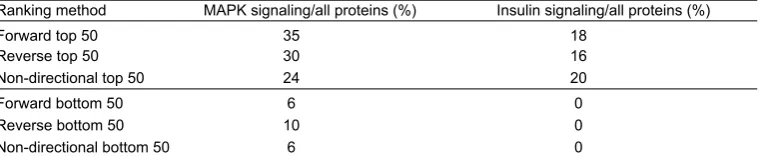
High-ranking proteins in the human protein network The proteins ranked in the top 50 by the forward, reverse, and non-directional rankings are mainly MAPK signaling pathway proteins (account for 35%, 30%, and 24%, repectively) and insulin signaling pathway proteins (account for 18%, 16%, and 20%, respectively) (Table 1) (Du et al., 2012). Those results suggest the overall importance of the MAPK and insulin signaling pathways for the cell. Interestingly, some of the lowest-ranking proteins are involved in the MAPK signaling pathway but not the insulin signaling pathway. All the insulin signaling pathway proteins are high-ranking or at least mid-ranking proteins.
The ubiquitin-protein ligase Casitas Blineage lymphoma (CBL) is ranked No. 1 in the reverse ranking, which means that CBL is the top-ranked regulator in the cell. This ligase is responsible for protein ubiquitination and is known to be involved in at least nine pathways, including the insulin signaling pathway (Figure 2). Mutation in the CBL gene has been implicated in a number of human cancers, including acute myeloid leukemia (Naramura et al., 2011). However, CBL–phosphoinositide 3-kinase (PI3K) interaction regulates differentiation and survival as well as bone resorption in osteoclasts, and the loss of CBL–PI3K interaction in mice prevents significant bone loss following ovariectomy (Adapala et al., 2014). Another top-ranked regulator is PTEN, which will be discussed later in the article.
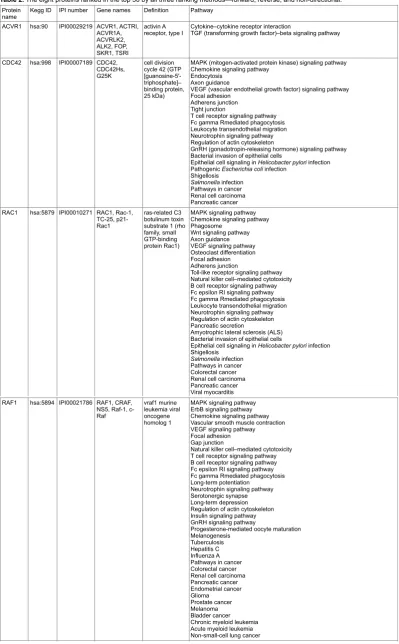
Eight proteins are among the top50-ranked proteins in all three ranking approaches (forward, reverse, and non-directional) (Table 2). Those proteins are ACVR1, CDC42, RAC1, RAF1, RHOA, TGFBR1, TRAF2, and TRAF6 (see Table 2 for names). Each of these eight top-ranked proteins is involved in many pathways. Mutations of these eight proteins are implicated in many types of cancers and severe diseases.
Human diseases caused by somatic mutations to the PI3K/PTEN/AKT pathway
Somatic mutation of insulin signaling pathway genes is often implicated in cancers or overgrowth syndromes, and there are numerous reports about this relationship in the literature, even in 2014 alone. For example, PTEN mutation is implicated in at least breast cancer (Kim et al., 2014; Pradella et al., 2014), colorectal cancer (Yu et al., 2014), lung cancer (Cumberbatch et al., 2014), and prostate cancer (Krohn et al., 2014). Mutation of the p110alpha catalytic subunit of PI3K (PIK3Ca) was detected in various cancers, including breast cancer (Arsenic et al., 2014; Jelovac et al., 2014; Zardavas et al., 2014), intestinal cancer (Deming et al., 2014), and gastric cancer (Yang et al., 2014a). In addition, AKT E17K mutation is detected in common solid cancers and acute leukemias (Kim et al., 2008). Mutation of mechanistic target of rapamycin (mTOR), a junction between the MAPK signaling pathway and the insulin signaling pathway, is also implicated in various cancers (Grabiner et al., 2014). As well, the MAPK pathway is implicated in different malignancies (Kim et al., 2008). Polymorphism of DNA in tuberous sclerosis complex
Top-ranked Proteins and Related Pathways in Humans and Plants Li et al.
Curr. Issues Mol. Biol. (2016) 20: 13-28. horizonpress.com/cimb #16
Figure 1. Two views of the ion conduction pathway of GluA2 with either a glutamine (grey) or a arginine (blue) at codon 586. Structures are from pdb 3KG2 (Sobolevsky et al., 2009). The view shows only the transmembrane spans and is from the inside looking out. As can be seen, the Q/R site sits directly in the ion permeation pathway. The Q/R substitution was generated with Pymol software. The position of the R side chain was not calculated via energy minimization, but merely reflects the most common rotamer for R.
Table 1. Mitogen-activated protein kinase (MAPK) signaling pathway and insulin signaling pathway proteins among the top-ranked and low-ranked proteins.
Ranking method MAPK signaling/all proteins (%) Insulin signaling/all proteins (%) Forward top 50 35 18
Reverse top 50 30 16 Non-directional top 50 24 20 Forward bottom 50 6 0 Reverse bottom 50 10 0 Non-directional bottom 50 6 0
This table was adapted from Du et al. (2012). The percentages of insulin signaling pathway proteins were calculated from the supplementary files of Du et al. (2012).
!
Curr. Issues Mol. Biol. (2016) 20: 13-28. horizonpress.com/cimb #17
Table 2. The eight proteins ranked in the top 50 by all three ranking methods—forward, reverse, and non-directional.
Protein
name Kegg ID IPI number Gene names Definition Pathway
ACVR1 hsa:90 IPI00029219 ACVR1, ACTRI,
ACVR1A, ACVRLK2, ALK2, FOP, SKR1, TSRI
activin A
receptor, type I Cytokine–cytokine receptor interactionTGF (transforming growth factor)–beta signaling pathway
CDC42 hsa:998 IPI00007189 CDC42,
CDC42Hs, G25K
cell division cycle 42 (GTP
[guanosine-5′
-triphosphate]– binding protein, 25 kDa)
MAPK (mitogen-activated protein kinase) signaling pathway Chemokine signaling pathway
Endocytosis Axon guidance
VEGF (vascular endothelial growth factor) signaling pathway Focal adhesion
Adherens junction Tight junction
T cell receptor signaling pathway Fc gamma Rmediated phagocytosis Leukocyte transendothelial migration Neurotrophin signaling pathway Regulation of actin cytoskeleton
GnRH (gonadotropin-releasing hormone) signaling pathway Bacterial invasion of epithelial cells
Epithelial cell signaling in Helicobacter pylori infection
Pathogenic Escherichia coli infection
Shigellosis
Salmonella infection Pathways in cancer Renal cell carcinoma Pancreatic cancer
RAC1 hsa:5879 IPI00010271 RAC1, Rac-1,
TC-25, p21-Rac1
ras-related C3 botulinum toxin substrate 1 (rho family, small GTP-binding protein Rac1)
MAPK signaling pathway Chemokine signaling pathway Phagosome
Wnt signaling pathway Axon guidance VEGF signaling pathway Osteoclast differentiation Focal adhesion Adherens junction
Toll-like receptor signaling pathway Natural killer cell–mediated cytotoxicity B cell receptor signaling pathway Fc epsilon RI signaling pathway Fc gamma Rmediated phagocytosis Leukocyte transendothelial migration Neurotrophin signaling pathway Regulation of actin cytoskeleton Pancreatic secretion
Amyotrophic lateral sclerosis (ALS) Bacterial invasion of epithelial cells
Epithelial cell signaling in Helicobacter pylori infection
Shigellosis
Salmonella infection Pathways in cancer Colorectal cancer Renal cell carcinoma Pancreatic cancer Viral myocarditis
RAF1 hsa:5894 IPI00021786 RAF1, CRAF, NS5, Raf-1, c-Raf
vraf1 murine leukemia viral oncogene homolog 1
MAPK signaling pathway ErbB signaling pathway Chemokine signaling pathway Vascular smooth muscle contraction VEGF signaling pathway Focal adhesion Gap junction
Natural killer cell–mediated cytotoxicity T cell receptor signaling pathway B cell receptor signaling pathway Fc epsilon RI signaling pathway Fc gamma Rmediated phagocytosis Long-term potentiation
Neurotrophin signaling pathway Serotonergic synapse Long-term depression Regulation of actin cytoskeleton Insulin signaling pathway GnRH signaling pathway
Progesterone-mediated oocyte maturation Melanogenesis
Tuberculosis Hepatitis C Influenza A Pathways in cancer Colorectal cancer Renal cell carcinoma Pancreatic cancer Endometrial cancer Glioma Prostate cancer Melanoma Bladder cancer Chronic myeloid leukemia Acute myeloid leukemia Non-small-cell lung cancer RHOA hsa:387 IPI00478231 RHOA, ARH12,
ARHA, RHO12, RHOH12
ras homolog gene family, member A
Chemokine signaling pathway Endocytosis
Vascular smooth muscle contraction Wnt signaling pathway
TGF-beta signaling pathway Axon guidance
Focal adhesion Adherens junction Tight junction
T cell receptor signaling pathway Leukocyte transendothelial migration Neurotrophin signaling pathway Regulation of actin cytoskeleton Pancreatic secretion
Bacterial invasion of epithelial cells Pathogenic Escherichia coli infection Pertussis
Tuberculosis Pathways in cancer Colorectal cancer TGFBR1 hsa:7046 IPI00005733 TGFBR1, AAT5,
ACVRLK4, ALK-5, ALK5, LDS1A, LDS2A, MSSE, SKR4, TGFR-1 transforming growth factor– beta receptor 1
MAPK signaling pathway
Cytokine–cytokine receptor interaction Endocytosis
TGF-beta signaling pathway Osteoclast differentiation Adherens junction
Chagas disease (American trypanosomiasis) HTLVI (human Tlymphotropic virus type I) infection Pathways in cancer
Colorectal cancer Pancreatic cancer Chronic myeloid leukemia TRAF2 hsa:7186 IPI00030278 TRAF2, MGC:
45012, TRAP, TRAP3 TNF (tumor necrosis factor) receptor-associated factor 2
MAPK signaling pathway
Protein processing in endoplasmic reticulum Apoptosis
Osteoclast differentiation
RIGI (retinoic acid-inducible gene I)–like receptor signaling pathway Adipocytokine signaling pathway
Hepatitis C
Top-ranked Proteins and Related Pathways in Humans and Plants Li et al.
(TSC), a junction between insulin signaling and MAPK signaling, is also reported to be implicated in cancers (Xiao et al., 1995).
However, insulin signaling pathway genes are also known to be implicated in various non-malignant overgrowth conditions, including LEOPARD syndrome (by PTPN11 [SHP2] mutations) (Edouard et al., 2010), Down syndrome (Follo et al., 2007; Troca-Marín et al., 2014), CLOVES ( c o n g e n i t a l l i p o m a t o u s o v e r g r o w t h , v a s c u l a r malformations, epidermal nevis, spinal/skeletal anomalies/ scoliosis) syndrome (Kurek et al., 2012; Keppler-Noreuil et al., 2014, 2015), and Proteus syndrome (Lindhurst et al., 2011, 2014; Marsh et al., 2011).
In addition to somatic mutations, animals and plants have also developmental and environmental variations (Li, 2009) and different types of variations, such as endopolyploidy and aneuploidy of the nuclear genome and stoichiometric
variations of the mitochondrial genome (Li, 2016). Little information is available, however, about the effects of these different types of somatic genome variation on pathway activities. At least, aneuploid variations, however, are expected to change the relative activities among genes and pathways.
PTEN, PIK3Ca, and AKT—causal genes for cancer or non-cancer?
Why does the mutation of the same genes (encoding PTEN, PIK3Ca, AKT, etc.) induce malignancy in many cases but non-cancer in others? One hypothesis is that differences in the activity of the protein and its pathways might be responsible for malignancy or non-malignancy (Kurek et al., 2012). Gene expression activity varies greatly depending on time, cellular physiological status, environmental factors, and even food. Differences in gene expression activity are likely not the only causal possibility for differences in malignancy and non-malignancy. It was
Curr. Issues Mol. Biol. (2016) 20: 13-28. horizonpress.com/cimb #18
RAF1 hsa:5894 IPI00021786 RAF1, CRAF, NS5, Raf-1, c-Raf
vraf1 murine leukemia viral oncogene homolog 1
MAPK signaling pathway ErbB signaling pathway Chemokine signaling pathway Vascular smooth muscle contraction VEGF signaling pathway Focal adhesion Gap junction
Natural killer cell–mediated cytotoxicity T cell receptor signaling pathway B cell receptor signaling pathway Fc epsilon RI signaling pathway Fc gamma Rmediated phagocytosis Long-term potentiation
Neurotrophin signaling pathway Serotonergic synapse Long-term depression Regulation of actin cytoskeleton Insulin signaling pathway GnRH signaling pathway
Progesterone-mediated oocyte maturation Melanogenesis
Tuberculosis Hepatitis C Influenza A Pathways in cancer Colorectal cancer Renal cell carcinoma Pancreatic cancer Endometrial cancer Glioma Prostate cancer Melanoma Bladder cancer Chronic myeloid leukemia Acute myeloid leukemia Non-small-cell lung cancer RHOA hsa:387 IPI00478231 RHOA, ARH12,
ARHA, RHO12, RHOH12
ras homolog gene family, member A
Chemokine signaling pathway Endocytosis
Vascular smooth muscle contraction Wnt signaling pathway
TGF-beta signaling pathway Axon guidance
Focal adhesion Adherens junction Tight junction
T cell receptor signaling pathway Leukocyte transendothelial migration Neurotrophin signaling pathway Regulation of actin cytoskeleton Pancreatic secretion
Bacterial invasion of epithelial cells Pathogenic Escherichia coli infection Pertussis
Tuberculosis Pathways in cancer Colorectal cancer TGFBR1 hsa:7046 IPI00005733 TGFBR1, AAT5,
ACVRLK4, ALK-5, ALK5, LDS1A, LDS2A, MSSE, SKR4, TGFR-1 transforming growth factor– beta receptor 1
MAPK signaling pathway
Cytokine–cytokine receptor interaction Endocytosis
TGF-beta signaling pathway Osteoclast differentiation Adherens junction
Chagas disease (American trypanosomiasis) HTLVI (human Tlymphotropic virus type I) infection Pathways in cancer
Colorectal cancer Pancreatic cancer Chronic myeloid leukemia TRAF2 hsa:7186 IPI00030278 TRAF2, MGC:
45012, TRAP, TRAP3 TNF (tumor necrosis factor) receptor-associated factor 2
MAPK signaling pathway
Protein processing in endoplasmic reticulum Apoptosis
Osteoclast differentiation
RIGI (retinoic acid-inducible gene I)–like receptor signaling pathway Adipocytokine signaling pathway
Hepatitis C
Herpes simplex infection Pathways in cancer Small-cell lung cancer
This table was adapted from Table S1 of Du et al. (2012). TRAF6 hsa:7189 IPI00743663 TRAF6, MGC:
3310, RNF85 TNF receptor-associated factor 6, E3 ubiquitin-protein ligase
MAPK signaling pathway Ubiquitin-mediated proteolysis Endocytosis
Osteoclast differentiation Toll-like receptor signaling pathway
NOD (nucleotide-binding oligomerization domain)–like receptor signaling pathway
RIGI-like receptor signaling pathway Neurotrophin signaling pathway Pertussis
Leishmaniasis
Chagas disease (American trypanosomiasis) Toxoplasmosis
Tuberculosis Hepatitis C Measles
reported that mutation in both the insulin pathway and the MAPK pathway can have more severe consequences for the cell. Both AKT (insulin signaling pathway) and extracellular-signal-regulated kinase (ERK) (MAPK signaling pathway) phosphorylate distinct sites on TSC2, and thus its Rheb GTPase-activating protein (GAP) activity is more repressed and, consequently, the stimulation of mTORC1 signaling is magnified, in comparison with the effect of either input alone (Winter et al., 2011). MicroRNA (miRNA) is known to be implicated in regulating the insulin signaling pathway genes, particularly PTEN and sometimes PIK3Ca, in various types of cancers (Fang et al., 2014; Geng et al., 2014; Ma et al., 2014a, 2014b; Wang et al., 2014; Yang et al., 2014b; Zhu et al., 2014). In most cases, miRNA is encoded unusually by other genes, not the targeted gene itself. In addition to "cancer genes", these same miRNA may also target other genes. Cell migration, critical in cancer progression, is known to be promoted by lysophospholipids (Panetti and Mosher, 2000; Monet et al., 2009) and, in certain cases, also requires very active mitochondrial fission (Han et al., 2015). The stimulation of cancer cell migration by lysophospholipids occurs through activation of the TRPV2 (transient receptor potential cation channel subfamily V, member 2) channel (Monet et al., 2009). Editing of RNA is known to act on many messenger RNAs (mRNAs) of channel and transporter genes and affects the translated products (Holmgren and Rosenthal, 2015). A miRNA known as miR429 was found to inhibit migration and invasion of breast cancer cells in vitro (Ye et al., 2015). Another miRNA, miR153, was found to inhibit cell migration and invasion of human non-small-cell lung cancer by targeting the three-prime untranslated region (3′UTR) of ADAM19 (A disintegrin and metalloproteinase 19) gene transcripts (Shan et al., 2015). The 3′UTR region of genes is known to have conserved motifs and characteristics that affect mRNA polyadenylation (Li, 2014; Li and Du, 2014). The targeting of ADAM19 transcripts by miR153 may suggest that ADAM19 gene activity can be changed through regulation of mRNA polyadenylation and mRNA stability. If cell migration plays a critical role in cancers, why did many studies actually find PTEN, PIK3Ca, AKT, CBL, or MAPK genes to be likely cancer genes? Are cancers the result of somatic overactivation in both a cell proliferation signal transduction gene and a cell migration gene? Further research is required to clarify why mutation of PTEN, PIK3Ca, AKT, and various other signaling genes causes cancers sometimes but non-malignant tumors or just overgrowths at other times. Are there other genes or molecular mechanisms that are more responsible or jointly responsible for determining whether a condition is malignant or non-malignant?
PTEN/AKT activity, food nutrition, growth factor, and fat accumulation
Glutamine supply is known to stimulate the activity of the AKT/mTOR pathway (Lambertucci et al., 2012; Modi et al., 2014) and increase protein synthesis (Lambertucci et al., 2012). Gene expression analysis suggests that PIK3Ca mutation can upregulate glycolysis as well as affect other pathways such as glutaminolysis (Foster et al., 2012). Nutrient dependency studies of PIK3Ca mutant cells
revealed that the growth of PIK3Ca mutant cells is highly dependent on glucose, whereas glutamine dependency is likely independent of PIK3Ca status (Foster et al., 2012). Although further research is required to clarify how glutamine and glucose regulate the AKT/mTOR pathway, it is convincing that nutritional supply affects the activity of metabolic pathways and the PI3K/AKT/mTOR signaling pathway, which is known to be deeply involved in cell growth.
Phosphatidylinositol (3,4,5)trisphosphate (PIP3) promotes AKT activity, and AKT then phosphorylates TSC2, recruits protein 1433 to TSC2, and dissociates the TSC1/TSC2 dimer. That dissociation causes the loss of GAP activity from TSC2 and renders TSC2 unable to hydrolyze
Rheb-GTP (guanosine-5′-triphosphate) to Rheb-GDP
(guanosine-5′-diphosphate). Therefore, Rheb-GTP can activate mTOR and consequently protein synthesis and cell proliferation (Mendoza et al., 2011) (Figure 2). For its part, PI3K converts phosphatidylinositol (3,4)bisphosphate (PIP2) to PIP3 and promotes AKT/mTOR activity and cell growth. Activation mutations of PI3K or AKT are involved in cancer and overgrowth conditions. Moreover, PTEN converts PIP3 to PIP2, reduces the PIP2 concentration, and therefore plays a role as a tumor suppressor or overgrowth suppressor. It was reported that obesity promoted by high fat uptake occurs through the PI3K signaling pathway (Klöckener et al., 2011; Ribeiro et al., 2012). Fasting can decrease PI3K/AKT pathway activity in nutrition-regulated lipolysis in rainbow trout (Oncorhynchus mykiss) (Bergan et al., 2012). Both the insulin-like growth factor I (IGFI)/PI3K/AKT and IGFI/MAPK/ERK pathways in vivo in skeletal muscle are regulated by nutrition and contribute to somatic growth in fine flounder (Paralichthys adspersus) (Fuentes et al., 2011).
A long-term oversupply of food (eventually converted mainly to glucose) may cause a long-term high content of inulin and high activity of the insulin/PI3K/PTEN/mTOR signaling pathway, resulting in weight gain or sometimes increasing the risk of diabetic issues if this insulin signaling pathway becomes insensitive. An oversupply of phospholipid-rich fatty food might increase the overall supply of PIP2 or PIP3, two relatively rare forms of phospholipids. Further research is required to determine whether this overall increase in PIP2 and PIP3 enhances the activity of the PIP2–PIP3 conversion cycle, results in a general increase in PIP3, and promotes cell growth (Figure 2). Mutated cells with PTEN/PI3K pathway activation with an increase in PIP3 may signal the cells to be more aggressive in consuming food nutritional supply (glucose, glutamine, and phospholipids) than are the non-mutated cells in the chimeric tissues. Cells that have PTEN deficiency or PIK3CA over-activation are likely more competitive than normal cells in terms of the use of nutrients. PTEN/PIK3CA somatic mutation patients probably should avoid over-fasting and overeating. Further research is required to clarify the effects of food on the growth of different tumors and to determine how to manage food intake for patients on a case-by-case basis. In addition, PIK3CA/AKT pathway patients since various growth factors (such as insulin-like growth factors IGF-I
Top-ranked Proteins and Related Pathways in Humans and Plants Li et al.
and vascular endothelial growth factors) can enhance the insulin signaling and PIK3CA/AKT pathway (Figure 2). In a study for people in the United Kingdom, compared with meat-based diet, a plant-based diet is associated with lower circulating levels of total IGF-I and likely also a lower risk of cancer (Allen et al. 2002). We suggest that food type and intake amount should be appropriately managed with close monitoring of the effects of that management for PI3K/AKT pathway patients.
Several overgrowth syndromes, such as Proteus (Cohen Jr., 1993, 2005, 2014), CLOVES (Alomari, 2009; Klein et al., 2012), and likely also Klippel-Trenaunay (Ashkan and Moore, 2002; Kihiczak et al., 2006) and PROS (PIK3CA-related overgrowth spectrum) (Keppler-Noreuil et al., 2015), share a number of common symptoms, and for many years it was challenging to clearly distinguish between those syndromes. Now, molecular research has found that the genes likely responsible for those overgrowth syndromes are in the same interrelated pathways. The protein encoded by the genes responsible for Proteus syndrome is AKT (Lindhurst et al., 2011; Marsh et al., 2011), for PROS syndrome is PIK3Ca (Kurek et al., 2012; Keppler-Noreuil et al., 2015), and for Klippel-Trenaunay syndrome is angiogenic factor with G patch and FHA domains 1 (AGGF1) (Kihiczak et al., 2006; Chen et al., 2013) (Figure 2).
Lipomas are common in various overgrowth syndromes, such as Proteus (Taghinia et al., 2007; Nakayama et al., 2009), CLOVES (Alomari, 2009), and likely also Klippel-Trenaunay (Ashkan and Moore, 2002; Klein et al., 2012). However, a truncal lipomatous mass is reported to be one of the uniform and highly characteristic features of CLOVES syndrome (Alomari, 2009), as are multiple lipomas for hemihyperplasia–multiple lipomatosis (HHML) syndrome (Biesecker et al., 1998). A lipomatous mass is not reported to be as highly characteristic in Klippel-Trenaunay syndrome. To date, the molecular genetic mechanism for this likely difference between these syndromes is not clear, and it is also not clear why these conditions often have a lipomatous mass.
In this article, we tentatively suggest that the protein kinase C (PKC)/sterol regulatory element-binding protein (SREBP)/fatty acid synthase (FAS) pathway is involved in the accumulation of lipomatous tissue in a mass. As illustrated in Figure 2, one of the partitioning pathways for PIP3 is the PKC/SREBP/FAS pathway, which leads to fatty acid synthesis. Protein kinase C can be activated by PIP3 (Singh et al., 1993). Alpha PKC at least partly regulates hepatic SREBP1c, which controls lipid synthesis (Sajan et al., 2009). The likely causal gene for HHML and CLOVES syndromes encodes PIK3Ca, the catalytic subunit of PI3K, at a relatively upstream step of the pathway. CLOVES syndrome likely increases PIP3, which likely stimulates the activity of the PKC/SREBP/FAS pathway and causes the growth of a lipomatous mass (Figure 2). Given that the implicated gene for Proteus syndrome is AKT, which happens at a relatively downstream step (Figure 2), this syndrome is expected to have a lesser degree of lipomatous mass than CLOVES syndrome does. The
causal gene for Klippel-Trenaunay syndrome in some patients encodes for AGGF1, which is even farther downstream (indirectly involved in the pathway) and is therefore expected to cause even less lipoma than Proteus syndrome does (Figure 2). It is also known that somatic PIK3CA mutations are the most common cause of Klippel-Trenaunay syndrome and other lymphatic malformations (Luks et al., 2015). It is likely that Klippel-Trenaunay syndrome is not sufficiently defined at the symptom level and its clinical distinction from other lymphatic malform-ation syndromes is sometimes difficult. Some patients of this syndrome may have somatic mutation in AGGF1, some in PIK3CA, and some may have mutations in both genes. A combination between gene analysis and clinical diagnostics may identify the symptom differences among these three groups. According to the position of AGGF1 in the signaling pathway presented in Figure 2, we speculate that Klippel-Trenaunay syndrome patients who have
somatic mutations in AGGF1 but not in PIK3CA may have
less degree of lipomatous mass. Further research is required to confirm our hypothesis (using the position difference for the causal genes in the PI3K/AKT pathway and PKC/SREBP partitioning of PIP3) for the degree of difference in lipomatous mass among CLOVES, Proteus, and Klippel-Trenaunay syndromes.
Curr. Issues Mol. Biol. (2016) 20: 13-28. horizonpress.com/cimb #20
Insulin signaling pathway in plants
Plants have insulin (or glucokinin), and the insulin signaling pathway likely regulates maize (Zea mays) growth (García Flores et al., 2001; Xavier-Filho et al., 2003; Dinkova et al., 2007). Plant insulin can also activate maize ribosomal S6 protein kinase (ZmS6K) in germinating maize axes, and that activity can be inhibited by rapamycin, indicating that it depends on mTOR activity (Dinkova et al., 2007). Overall, however, the insulin signaling pathway and its function have been studied much less in plants. Gene knockout approaches may be able to clarify whether plant insulin and its signaling system play a critical role in regulating plant growth. Further research is required to understand whether some herbal products such as Chinese herbal medicines that are used in treating diabetes actually have more endogenous insulin.
MAPK signaling pathway and plant stress tolerance Current annotations of protein families predict approximately 1053 kinases in Arabidopsis (Peck, 2006) and 1429 kinases in rice (Oryza sativa) (Dardick et al., 2007). The large pool of kinases indicates the importance of phosphorylation mechanisms in the growth and development of plants. Protein kinases can also form a cascade to process signals much more efficiently. One such case is the MAPK cascade (Xing and Laroche, 2011; Hamel et al., 2012). All eukaryotes have four classes of functionally related kinases that appear as gene families, and these proteins are organized in hierarchical fashion in a cascade. These include mitogen-activated protein kinase kinase kinase kinase (MAPKKKK), mitogen-activated protein kinase kinase kinase (MAPKKK), mitogen-activated protein kinase kinase (MAPKK), and MAPK.
A recent PageRank analysis of the human protein interactome has put MAPKs as some of the top-ranked proteins together with some other members of signaling pathways (Du et al., 2012). The top forward ranking indicates that MAPKs are very active receivers of signals, and the top reverse ranking indicates that some MAPKs are very active regulators or signal emitters to other proteins. Several MAPKs are top-ranked in both forward and reverse ranking, suggesting that these proteins themselves are both active signal receivers and active regulators, which fits well with the cascade model of the MAPK pathway (Xing et al., 2002; Cvetkovska et al., 2005).
Cascades of MAPKs could be regulated by diverse stimuli such as pathogen attacks, wounding, high or cold temperatures, high salinity, ultraviolet radiation, ozone, reactive oxygen species, drought, and high osmolarity (Cvetkovska et al., 2005; Tena et al., 2011). When an upstream MAPKKKK or MAPKKK is activated by external stimuli, it activates downstream MAPKKs through phosphorylation on serine and threonine residues in a conserved S/T–X3–5–S/T motif, and then the MAPKKs activate downstream MAPKs through phosphorylation on threonine and tyrosine residues in the TXY motif (Stulemeijer et al., 2007). The activated MAPKs will phosphorylate a variety of substrates, including transcription factors, other protein kinases, enzymes, and
cytoskeleton-associated proteins (Xing et al., 2002; Xing and Laroche, 2011).
In particular, tMEK2 (also named LeMKK2) is a known MAPKK in tomato and has been shown to regulate the expression of antifungal factors, including beta-1,3-glucanase and endochitinase, in response to pathogen attacks (Xing et al. 2003). A constitutively activated tomato MAPKK gene,tMEK2MUT, was created, in which the tMEK2 was constitutively activated by replacing amino acids S221 and T226 between subdomains VII and VIII with glutamic acid (Xing et al., 2003). When overexpressed, tMEK2MUT was found to increase resistance to the bacterial pathogen Pseudomonas syringae pv. tomato in tomato (Solanum lycopersicum) (Xing et al. 2003) and the fungal pathogen Puccinia triticina in wheat (Triticum aestivum) (Xing et al., 2003; Fan et al., 2009). As well, gloxinia (Sinningia speciosa) plants overexpressing tMEK2MUT had smaller leaves, increased contents of chlorophyll in leaves, and better recoveries of plant growth after cold or heat stresses in comparison with the controls, which were wild-type plants (Sun et al., 2012).
The identification and analysis of specific kinase substrates in any kinase pathway represent a major challenge in the study of signaling events. Although we identified hundreds to thousands of phosphopeptides in a single experiment, the functional significance of many phosphorylation sites remains unclear, and most of the identified phospho-proteins have not been analyzed in terms of their role in any specific plant developmental processes or plant response networks. Proteomic approaches have been applied to monitor immediate downstream components of specific defense pathways. Two-dimensional gel electrophoresis (2DE) and liquid chromatography–tandem mass spectrometry (LC-MS/MS) were used to compare wild-type tomatoes and transgenic tomato carrying
tMEK2MUT, and the analysis revealed a group of
phosphoproteins in tMEK2MUT-transgenic tomato plants (Thurston et al. 2005). The nucleotide diphosphate protein kinase TAB2, which has long been considered a non-regulatory housekeeping enzyme, is of particular interest (Kimura et al., 2003). It was found that TAB2 was upregulated by the overexpression of tMEK2MUT in tomato protoplasts and plants (Xing et al., 2008). However, a mutation at the TAB2 kinase interaction motif was found to significantly reduce the tMEK2MUT-induced upregulation of the PR1b1, beta-1,3-glucanase, and chitinase genes (Xing et al., 2008). Protein pull-down assays suggested an interaction between TAB2 and LeMPK3 but not between TAB2 and other members of tomato MAPKs (Xing et al., 2008). Overexpression of the wild-type TAB2 was also found to enhance resistance to virulent Pseudomonas syringae pv. tomato (Xing et al., 2008). Thanks to a phosphoproteomics approach in the enhanced tMEK2 defense pathway, TAB2 has been identified as a downstream protein of LeMPK3 as well as an effective pathway component in disease resistance mediated by tMEK2 (Xing and Laroche 2011).
Salt is a significant source of stress that affects plants from germination through to seed development (Bressan et al.,
Top-ranked Proteins and Related Pathways in Humans and Plants Li et al.
2009). The stress response kinase AtMKK1 was found in some studies to be capable of activating the MAPK proteins AtMPK3, AtMPK4, and AtMPK6 (Colcombet and Hirt, 2008). One study found that AtMKK1-knockout Arabidopsis plants were more tolerant of salt during both germination and adulthood (Conroy et al., 2013). According to proteomic analysis, the levels of the alpha subunit of
mitochondrial H+-ATPase, mitochondrial reduced
nicotinamide adenine dinucleotide (NADH) dehydrogenase, and mitochondrial formate dehydrogenase (FDH) were enhanced in the AtMKK1-knockout plants under high salinity stress (Conroy et al., 2013). The increase in FDH may suggest the possible involvement of this enzyme in salt tolerance, particularly in light of its impact on drought (Herman et al., 2002). Interestingly, a negative correlation between AtMKK1 and AtFDH (Arabidopsis thaliana FDH) also seemed to be suggested by gene coexpression analysis (Conroy et al., 2013). It is unclear whether other pathways were activated by the knockout plants during salt treatment, in which the AtMKK1 pathway was blocked; those pathways could have not only increased the FDH level but also resulted in other changes in these plants, potentially contributing to salt tolerance (Conroy et al. 2013).
The MAPK proteins AtMPK3 and AtMPK6 were also studied in a different system. When Medicago sativa stress-induced MAPKK (SIMKK) was overexpressed in Arabidopsis, AtMPK3 and AtMPK6 kinases were found to be salt insensitive during seed germination but highly sensitive to salt stress at the seedling stage (Ovečka et al., 2014). Proteomic analysis of plants that overexpressed SIMKK–yellow fluorescent protein (YFP) indicated that proteins directly or indirectly involved in salt stress responses (including catalase, peroxiredoxin, glutathione Stransferase, nucleoside diphosphate protein kinase 1, endoplasmic reticulum luminal-binding protein 2, and plasma membrane aquaporins) were differentially regulated (Ovečka et al., 2014). In Arabidopsis there are 20 MAPKs, 10 MAPKKs, and 60 MAPKKKs (MAPK Group, 2002). Because of those large numbers, the specificity of protein– protein interactions, the complex signal filtering and amplification processes, and most importantly their differential involvement in multiple activities of plant development and plant responses to internal and external signals (e.g., cell division vs. stress response), it is clear that caution should be exercised when assessing manipulation strategies, so that the manipulations will achieve the desired results without having detrimental effects on plant growth and development.
Protein domain evolution and potato type II proteinase inhibitors
Proteins interact chiefly at the domain or motif level, and there are likely over a million instances of peptide motifs in the human proteome (Tompa et al., 2014). Where do these domains come from? In plants, the generation of sequence diversity is likely a defense strategy to confine insect attack (Mishra et al., 2012). Phylogenetic frameworks and residue contact networks in protein families may be helpful for studying the evolution that leads to structural changes (Zhang et al., 2013). In one study, when a Cterminal serine
residue proximal to the inter-chain disulfide bond of a human immunoglobulin 1 lambda light chain was removed, enhanced antibody stability and antibody-dependent cell-mediated cytotoxicity were cell-mediated (Shen et al., 2013). It is likely that a PiII without two conserved disulfide bonds is so remarkably efficient because the reactive site loop has enhanced flexibility and hydrogen-bond density (Joshi et al., 2014).
It is obviously very challenging to figure out the evolutionary path and estimate the functional status of the intermediate versions of domains and genes during the emergence of novel domains. Gene families with domain variants can be very helpful for studying protein domain evolution. Li et al. (2011) were able to conclude that the intermediate versions during the emergence of a novel potato PiII must be functional without a pseudogene stage.
The most common type II domain is double-headed in shape and usually has two active sites with one on each subdomain (head). Each subdomain has eight conserved disulfide bonds, with two disulfide bonds on each active site. However, in a group of potato PiIIs, Li et al. (2011) found that one or both of the onsite disulfide bonds are absent (Figure 3). These cysteine residues directly pair to form the disulfide bond(s) at the protein structure level but are distantly separated at the primary sequence level (Figure 4). Since mutation must happen at the DNA sequence level in the genes, this loss of the cysteine codons in the two separated sequence places must happen in different events. The selective loss of the bond-pairing cysteines suggests that, after one cysteine is lost, the remaining cysteine in the bond must also be eliminated in order to ensure that the mutated domain has a beneficial function for the plant. This selective elimination of the second cysteine in the pair is evidence of a response to natural selection or breeding selection. To respond to selection, the intermediate versions of the novel proteinase inhibitor domain must be functional, without a pseudogene stage.
Concluding remarks and outlook
High-ranked proteins, also called control proteins, in the human signal flow protein network are likely to be functionally very important proteins, because they are involved in many signaling and other pathways and their mutation is usually implicated in many diseases. In the human protein network, signal emission and signal reception are systematically different in terms of correlation with the degree of nodes and cellular locations. Proteins of the MAPK and insulin signaling pathways are among the top-ranked proteins. Proteins such as PTEN, PI3K, and AKT in the insulin signaling pathway are frequently implicated in cancers and overgrowth conditions. We propose a hypothesis that PIP3 partitioning by a PKC/ SREBP/FAS pathway may explain the degree of difference in lipomatous mass between various overgrowth syndromes. We also suggest that food nutrition be appropriately managed for PTEN/PI3K/AKT pathway patients in order to reduce tumor growth. Manipulation of, or screening for mutants of, the MAPK pathway can genetically improve plant tolerance to various biotic and
Curr. Issues Mol. Biol. (2016) 20: 13-28. horizonpress.com/cimb #23
Figure 4. Primary sequence of potato proteinase inhibitor type II (PiII) subdomains, showing the selective loss of paired partners of one or two disulfide bonds, although the partners are distant at the primary sequence level. Note that cysteine 1 in Panel A pairs with cysteine 6 in Panel B to form a disulfide bond (See "C1-IIC6" in Figure 3). When one of the cysteines is lost, the other member of the pair is also simultaneously lost (e.g., the loss of the C1-IIC6 pair in Pi7C proteins and both the C1-IIC6 and C2-IIC4 pairs in Pi6C-Ke, See Figure 3 for the reference structure), suggesting that the intermediate versions during domain evolution were functional and reacted to selection. Source: Li et al. (2011).
Top-ranked Proteins and Related Pathways in Humans and Plants Li et al.
abiotic stresses. Novel protein domains, at least in some proteinase inhibitors, evolved from existing ones, and the intermediate versions of the domains were likely functional and responded to selection. Further research is required to understand why signal emission and signal reception systems are different, which sites to target for the high-ranked proteins in drug discovery, how to manage food nutrition for signaling pathway patients, whether the PKC/ SREBP pathway is indeed responsible for lipomatous masses in PTEN/PI3K/AKT pathway patients, and whether it is the upstream PTEN and PI3K or the mTOR (by rapamycin) that should be targeted in treatment. Further research is also required to characterize the function of the PI3K/AKT/mTOR pathway in plants, to screen for higher-yield somatic mutants of the pathway in vegetatively propagated plants, and to investigate how to manipulate the pathway for healthier food and more-productive crops.
Acknowledgements
We sincerely thank Mr. Dave Bartlett, Mr. Dan LeBlanc, and Mr. Martin Lague (Agriculture and Agri-Food Canada) for their IT support and the general management of the computer servers; Professor Danielle J. Donnelly McGill University, and Ms. Mary Varcoe (Translation Bureau, Public Works and Government Services Canada) for their editorial suggestions; and Mr. Muhammad Haroon (Agriculture and Agri-Food Canada) for his general technical support.
References
Adapala, N.S., Holland, D., Scanlon, V., Barbe, M.F., Langdon, W.Y., Tsygankov, A.Y., Lorenzo, J.A., and Sanjay, A. (2014). Loss of Cbl-PI3K interaction in mice prevents significant bone loss following ovariectomy. Bone 67, 1-9.
Allen, N.E., Appleby, P.N., Davey, G.K., Kaaks, R., Rinaldi, S., and Key, T.J. (2002). The associations of diet with serum insulin-like growth factor I and its main binding proteins in 292 women meat-eaters, vegetarians, and vegans. Cancer Epidemiol Biomarkers Prev 11, 1441-1448.
Alomari, A.I. (2009). Characterization of a distinct syndrome that associates complex truncal overgrowth, vascular, and acral anomalies: A descriptive study of 18 cases of CLOVES syndrome. Clin Dysmorphol 18, 1-7. Arsenic, R., Lehmann, A., Budczies, J., Koch, I., Prinzler,
J., Kleine-Tebbe, A., Schewe, C., Loibl, S., Dietel, M., and Denkert, C. (2014). Analysis of PIK3CA mutations in breast cancer subtypes. Appl Immunohistochem Mol Morphol 22, 50-56.
Ashkan, K., and Moore, A.J. (2002). Spinal cord compression caused by an extradural lipoma in Klippel-Trenaunay-Weber syndrome. Case illustration. J Neurosurg 97, 269.
Bergan, H.E., Kittilson, J.D., and Sheridan, M.A. (2012). Nutrition-regulated lipolysis in rainbow trout (Oncorhynchus mykiss) is associated with alterations in the ERK, PI3K-Akt, JAK-STAT, and PKC signaling pathways. Gen Comp Endocrinol 176, 367-376.
Bhattacharyya, R.P., Reményi, A., Yeh, B.J., and Lim, W.A. (2006). Domains, motifs, and scaffolds: The role of
modular interactions in the evolution and wiring of cell signaling circuits. Annu Rev Biochem 75, 655-680. Biesecker, L.G., Peters, K.F., Darling, T.N., Choyke, P., Hill,
S., Schimke, N., Cunningham, M., Meltzer, P., and Cohen Jr., M.M. (1998). Clinical differentiation between Proteus syndrome and hemihyperplasia: Description of a distinct form of hemihyperplasia. Am J Med Genet 79, 311-318. Bressan, R., Bohnert, H., and Zhu, J.-K. (2009).
Perspective: Abiotic stress tolerance: From gene discovery in model organisms to crop improvement. Mol Plant 2, 1-2.
Brin, S., and Page, L. (1998). The anatomy of a large-scale hypertextual Web search engine. Comput Netw and ISDN Syst 30, 107-117.
Cao, M., Pietras, C.M., Feng, X., Doroschak, K.J., Schaffner, T., Park, J., Zhang, H., Cowen, L.J., and Hescott, B.J. (2014). New directions for diffusion-based network prediction of protein function: Incorporating pathways with confidence. Bioinformatics 30, i219-i227. Chen, D., Li, L., Tu, X., Yin, Z., and Wang, Q. (2013).
Functional characterization of Klippel-Trenaunay syndrome gene AGGF1 identifies a novel angiogenic signaling pathway for specification of vein differentiation and angiogenesis during embryogenesis. Hum Mol Genet 22, 963-976.
Chen, Z., Yang, H., Ma, J., Lei, J., and Gao, H. (2011). Time-based query classification and its application for page rank. J Comput Inf Syst 7, 3149-3156.
Cohen Jr., M.M. (1993). Proteus syndrome: Clinical evidence for somatic mosaicism and selective review. Am J Med Genet 47, 645-652.
Cohen Jr., M.M. (2005). Proteus syndrome: An update. Am J Med Genet C Semin Med Genet 137C, 38-52.
Cohen Jr., M.M. (2014). Proteus syndrome review: Molecular, clinical, and pathologic features. Clin Genet 85, 111-119.
Colcombet, J., and Hirt, H. (2008). Arabidopsis MAPKs: A complex signalling network involved in multiple biological processes. Biochem J 413, 217-226.
Conroy, C., Ching, J., Gao, Y., Wang, X., Rampitsch, C., and Xing, T. (2013). Knockout of AtMKK1 enhances salt tolerance and modifies metabolic activities in Arabidopsis. Plant Signal Behav 8, e24206.
Csermely, P., Korcsmáros, T., Kiss, H.J.M., London, G., and Nussinov, R. (2013). Structure and dynamics of molecular networks: A novel paradigm of drug discovery: A comprehensive review. Pharmacol Ther 138, 333-408. Cumberbatch, M., Tang, X., Beran, G., Eckersley, S.,
Wang, X., Ellston, R.P.A., Dearden, S., Cosulich, S., Smith, P.D., Behrens, C., et al. (2014). Identification of a subset of human non-small cell lung cancer patients with high PI3Kβ and low PTEN expression, more prevalent in squamous cell carcinoma. Clin Cancer Res 20, 595-603. Cvetkovska, M., Rampitsch, C., Bykova, N., and Xing, T.
(2005). Genomic analysis of MAP kinase cascades in Arabidopsis defense responses. Plant Mol Biol Rep 23, 331-343.
Dardick, C., Chen, J., Richter, T., Ouyang, S., and Ronald, P. (2007). The rice kinase database. A phylogenomic database for the rice kinome. Plant Physiol 143, 579-586.
Deming, D.A., Leystra, A.A., Nettekoven, L., Sievers, C., Miller, D., Middlebrooks, M., Clipson, L., Albrecht, D., Bacher, J., Washington, M.K., et al. (2014). PIK3CA and APC mutations are synergistic in the development of intestinal cancers. Oncogene 33, 2245-2254.
Dinkova, T.D., De La Cruz, H.R., García-Flores, C., Aguilar, R., Jiménez-García, L.F., and De Jiménez, E.S. (2007). Dissecting the TOR–S6K signal transduction pathway in maize seedlings: Relevance on cell growth regulation. Physiol Plant 130, 1-10.
Du, D., Lee, C.F., and Li, X.-Q. (2012). Systematic differences in signal emitting and receiving revealed by PageRank analysis of a human protein interactome. PLoS ONE 7, e44872.
Edouard, T., Combier, J.-P., Nédélec, A., Bel-Vialar, S., Métrich, M., Conte-Auriol, F., Lyonnet, S., Parfait, B., Tauber, M., Salles, J.-P., et al. (2010). Functional effects
of PTPN11 (SHP2) mutations causing LEOPARD
syndrome on epidermal growth factor-induced phosphoinositide 3-kinase/AKT/glycogen synthase kinase 3β signaling. Mol Cell Biol 30, 2498-2507.
Fan, T., Gao, Y., Al-Shammari, A., Wang, X.J., and Xing, T. (2009). Yeast two-hybrid screening of MAP kinase cascade identifies cytosolic glutamine synthetase 1b as a tMEK2 interactive protein in wheat. Can J Plant Pathol 31, 407-414.
Fang, L., Li, H., Wang, L., Hu, J., Jin, T., Wang, J., and Yang, B.B. (2014). MicroRNA-17-5p promotes chemotherapeutic drug resistance and tumour metastasis of colorectal cancer by repressing PTEN expression. Oncotarget 5, 2974-2987.
Follo, M.Y., Mongiorgi, S., Bosi, C., Cappellini, A., Finelli, C., Chiarini, F., Papa, V., Libra, M., Martinelli, G., Cocco, L., et al. (2007). The Akt/mammalian target of rapamycin signal transduction pathway is activated in high-risk myelodysplastic syndromes and influences cell survival and proliferation. Cancer Res 67, 4287-4294.
Foster, R., Griffin, S., Grooby, S., Feltell, R., Christopherson, C., Chang, M., Sninsky, J., Kwok, S., and Torrance, C. (2012). Multiple metabolic alterations exist in mutant PI3K cancers, but only glucose is essential as a nutrient source. PLoS ONE 7, e45061. Fuentes, E.N., Björnsson, B.T., Valdés, J.A., Einarsdottir,
I.E., Lorca, B., Alvarez, M., and Molina, A. (2011). IGF-I/ PI3K/Akt and IGF-I/MAPK/ERK pathways in vivo in skeletal muscle are regulated by nutrition and contribute to somatic growth in the fine flounder. Am J Physiol Regul Integr Comp Physiol 300, R1532-R1542.
García Flores, C., Aguilar, R., Reyes de la Cruz, H., Albores, M., and Sánchez de Jiménez, E. (2001). A maize insulin-like growth factor signals to a transduction pathway that regulates protein synthesis in maize. Biochem J 358, 95-100.
Geng, L., Sun, B., Gao, B., Wang, Z., Quan, C., Wei, F., and Fang, X.D. (2014). MicroRNA-103 promotes colorectal cancer by targeting tumor suppressor DICER and PTEN. Int J Mol Sci 15, 8458-8472.
Grabiner, B.C., Nardi, V., Birsoy, K., Possemato, R., Shen, K., Sinha, S., Jordan, A., Beck, A.H., and Sabatini, D.M. (2014). A diverse array of cancer-associated MTOR mutations are hyperactivating and can predict rapamycin sensitivity. Cancer Discov 4, 554-563.
Hamel, L.P., Nicole, M.C., Duplessis, S., and Ellis, B.E. (2012). Mitogen-activated protein kinase signaling in plant-interacting fungi: Distinct messages from conserved messengers. Plant Cell 24, 1327-1351. Han, X.J., Yang, Z.J., Jiang, L.P., Wei, Y.F., Liao, M.F.,
Qian, Y., Li, Y., Huang, X., Wang, J.B., Xin, H.B., et al. (2015). Mitochondrial dynamics regulates hypoxia-induced migration and antineoplastic activity of cisplatin in breast cancer cells. Int J Oncol 46, 691-700.
Herman, P.L., Ramberg, H., Baack, R.D., Markwell, J., and Osterman, J.C. (2002). Formate dehydrogenase in Arabidopsis thaliana: Overexpression and subcellular localization in leaves. Plant Sci 163, 1137-1145.
Holmgren, M., and Rosenthal, J.J. (2015). Regulation of ion channel and transporter function through RNA editing. Curr Issues Mol Biol 17, 23-36.
Ito, T., Chiba, T., Ozawa, R., Yoshida, M., Hattori, M., and Sakaki, Y. (2001). A comprehensive two-hybrid analysis to explore the yeast protein interactome. Proc Natl Acad Sci USA 98, 4569-4574.
Iván, G., and Grolmusz, V. (2011). When the Web meets the cell: Using personalized PageRank for analyzing protein interaction networks. Bioinformatics 27, 405-407. Jelovac, D., Beaver, J.A., Balukrishna, S., Wong, H.Y.,
Toro, P.V., Cimino-Mathews, A., Argani, P., Stearns, V., Jacobs, L., VanDenBerg, D., et al. (2014). A PIK3CA mutation detected in plasma from a patient with synchronous primary breast and lung cancers. Hum Pathol 45, 880-883.
Joshi, R.S., Mishra, M., Tamhane, V.A., Ghosh, A., Sonavane, U., Suresh, C.G., Joshi, R., Gupta, V.S., and Giri, A.P. (2014). The remarkable efficiency of a Pin-II proteinase inhibitor sans two conserved disulfide bonds is due to enhanced flexibility and hydrogen bond density in the reactive site loop. J Biomol Struct Dyn 32, 13-26. Kaake, R.M., Wang, X., and Huang, L. (2010). Profiling of
protein interaction networks of protein complexes using affinity purification and quantitative mass spectrometry. Mol Cell Proteomics 9, 1650-1665.
Keppler-Noreuil, K.M., Rios, J.J., Parker, V.E.R., Semple, R.K., Lindhurst, M.J., Sapp, J.C., Alomari, A., Ezaki, M., Dobyns, W., and Biesecker, L.G. (2015). PIK3CA-related overgrowth spectrum (PROS): Diagnostic and testing eligibility criteria, differential diagnosis, and evaluation. Am J Med Genet A 167A, 287-295.
Keppler-Noreuil, K.M., Sapp, J.C., Lindhurst, M.J., Parker, V.E.R., Blumhorst, C., Darling, T., Tosi, L.L., Huson, S.M., Whitehouse, R.W., Jakkula, E., et al. (2014). Clinical delineation and natural history of the PIK3CA-related overgrowth spectrum. Am J Med Genet A 164, 1713-1733.
Kihiczak, G.G., Meine, J.G., Schwartz, R.A., and Janniger, C.K. (2006). Klippel-Trenaunay syndrome: A multisystem disorder possibly resulting from a pathogenic gene for vascular and tissue overgrowth. Int J Dermatol 45, 883-890.
Kim, G., Ouzounova, M., Quraishi, A.A., Davis, A., Tawakkol, N., Clouthier, S.G., Malik, F., Paulson, A.K., D'Angelo, R.C., Korkaya, S., et al. (2014). SOCS3-mediated regulation of inflammatory cytokines in PTEN and p53 inactivated triple negative breast cancer model. Oncogene 34, 671-680.