INTERNATIONAL JOURNAL OF SCIENTIFIC & TECHNOLOGY RESEARCH VOLUME 9, ISSUE 04, APRIL 2020 ISSN 2277-8616
895
Application Of Optimization Techniques To
Improve Stability In Hybrid System
Srinivasarao Kalluri, Bindana AishwaryaAbstract: The main aim of these paper is to propose a concept regarding the design and modelling of PV-Wind hybrid system and its control strategies. The purpose of these control techniques is to regulate the continuous changes in operational requirements of the hybrid system. In the present scenario, the distribution energy systems play an important role in the distribution systems to maintain the reliability of power systems. The proposed hybrid system is a structure of PV and wind energy system. To achieve the maximum operation from the renewable sources an MPPT methods is proposed. This paper also concentrate to improve the stability of the hybrid system. The stability of the proposed system is improved with the help of a new control strategy implemented for inverter called ―Automatic Generation Control‖. This control technique is developed with signals from the system parameters i.e voltage and current. A fuzzy logic controller also implemented to get better improvement in stability analysis. The proposed hybrid system is developed and tested in MATLAB/Simulink Environment under different constraints and verified the results.
Keywords: PV System, Grid Interconnected, Wind Energy System, Proportional Integral, AGC and Fuzzy Logic Controller.
————————————————————
1.
INTRODUCTION
In the present scenario, the increasing demand for electrical energy is increases rapidly. The utilization of general conventional power generation systems like gas, coal and nuclear power plants causes pollution and greenhouse effects. To overcome these environmental problems and meet the electrical demands, the non-conventional sources plays a key role in the present energy generation systems. The main advantage of these renewable sources are pollution free, low maintainece cost and economical. There are more number of renewable systems available in market, but as compared to all the wind and solar energy systems plays a key role due to their simple in structure, available sources in environment and high efficient conditions. PV and Wind energy systems are plays a key role as a one of the major energy sources in hybrid system. The photovoltaic system is one of the most convenient renewable energy system as compared to all other renewable energy sources. Photovoltaic systems are not naturally stable in time, location, season and weather and also the cost for installation of solar system is very high. The changes of weather conditions effect the generated output from the solar system. Therefore, to achieve maximum output and for increasing the efficiency from the solar panel, an MPPT techniques is implemented. And also based on the available nature conditions, the wind energy system also one of the major renewable source after PV system. The ratio of electrical energy generation is based on the availability of wind in the nature. The changes of weather conditions effect the generated output from the
wind system. Therefore, to achieve maximum output and for increasing the efficiency from the Wind System, an MPPT techniques is implemented. And also the system need to maintain synchronization with the grid. For this, to match the frequency levels and system rating the solar system is connected to voltage source inverter. The control diagram for the inverter is designed with general PWM technique and the reference signals are chosen from the grid parameters. Present day electric power system is huge and complex system. In an interconnected power framework, as a power burden request fluctuates arbitrarily, both territory recurrence and tie-line power exchange likewise change. It is difficult to keep up the harmonies among age and burden without control. Along these lines, a control framework is fundamental to drop the impacts of the irregular burden changes and to keep the recurrence at the standard worth. Donde et al. [5] have demonstrated the basic idea of restructured power system.
2.
GRID INTERCONNECTED NETWORK
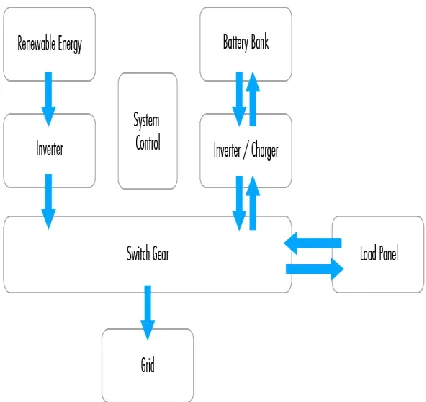
Figure 1: Structure of general Grid System
PV Solar System
:In the history of renewable energy, the solar energy system plays a key role out of all disturbed energy sources because of its available in nature, reliability and economical. The solar cells generate electrical energy from photon effect of sun irradiance. Initially, from solar cells electric current will flow later it converted into PV voltage with the help of equivalent electric circuit. The obtained DC
voltage is variable w.r.t sun temperature and may chances to damage electrical appliances. In order to get constant DC voltage from solar system an MPPT based DC-DC converter is proposed. The purpose of MPPT is to track maximum power from the solar. These cells are arranged in series and parallel combination in order to meet the required level of voltage and current ratings.
Figure 2: PV System with Power Converter
The MPPT based DC-DC converter for solar system is shown in figure 3. MPPT is based on tracking of instantaneous Powers of PV system. The PV power is calculated from the PV voltage and current. In this system a
INTERNATIONAL JOURNAL OF SCIENTIFIC & TECHNOLOGY RESEARCH VOLUME 9, ISSUE 04, APRIL 2020 ISSN 2277-8616
897 Wind Energy System:
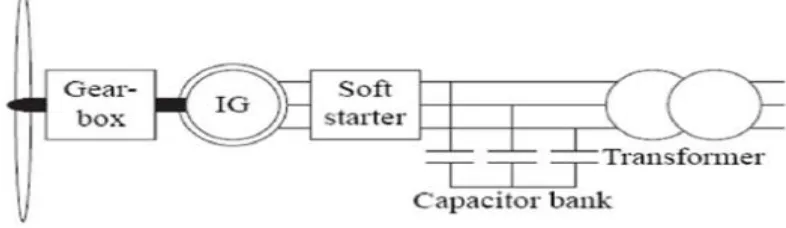
Wind turbines also plays a key role in present disturbed energy systems. Because wind availability in nature. In these, the energy conversion is done in two stages i.e one is turbine blades converts wind speed to mechanical energy and later it converts to electrical energy with the help of electrical generator. In addition with these components, the
wind turbine also consists of gear box mechanism to convert low speed shaft to high speed shaft. And also pitch angle controller is applied to rotate the wind blades as per the direction of wind to improve the reliability. The speed of wind reached to wind turbine is measured with help of wind vane. The structure of general wind turbine system with conventional generator is shown in figure 4.
Figure 4: Basic diagram of wind turbine
The mathematical modelling of Wind Energy System is expressed as
The power generated from the wind turbine system is expressed as
3
)
,
(
2
1
v
mA
C
P
mech
p
There are two types of generators available in market i.e induction generator and synchronous generator. In this case, and squirrel cage type induction generator is used for wind turbine to generate electrical energy. And also an AC-DC-AC converter is used to get synchronization with AC grid.
Perturb and Observe MPPT Algorithm:
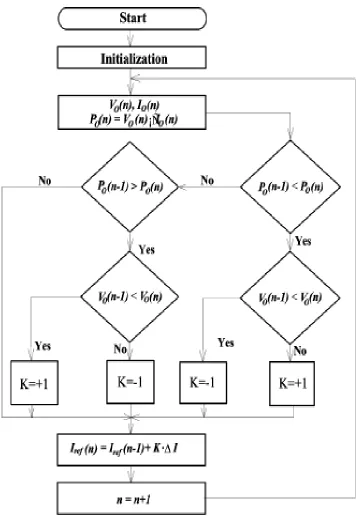
In perturb and observe method, the system tracks the changes in array voltage and subsequently measure the change in output power. The flowchart for P&O mppt
Figure 5: Flow Chart representation of P&O Technique
Inverter Control Diagram:
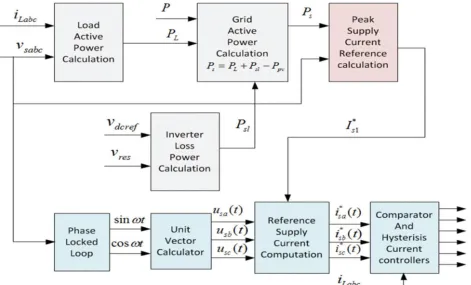
This inverter control diagram is designed based on current controllers in double loop. In this, the outer loop called as proportional resonant controllers help to regulate the steady state error of current comparator and the inner loop is helped to improve the transient stability of the system. The converter control diagram is shown in figure 6. In this controller, the load and system voltages and currents are measured. These load currents are converted to
dq-And the grid active power is obtained from load, loss and hybrid system powers. The calculation for grid power is expressed below
Pg=PL+Psl-Ppv
INTERNATIONAL JOURNAL OF SCIENTIFIC & TECHNOLOGY RESEARCH VOLUME 9, ISSUE 04, APRIL 2020 ISSN 2277-8616
899
Figure 6: Control Diagram
AGC controller:
To adjust the changes in electrical power at different multiple generators in response to changes in load automatic generation control plays an effective role in deregulation systems. To achieve an accurate balance between load and generation in moment by moment is effectively done by adjusting the output of generators with
AGC. The compensation process of the system is depend on the system frequency. Here, if the frequency is increase than more power is generated and used, that means it accelerates all the machines. If in case there is decreasing the system frequency, the load power is more than the system generated power, which means generators goes down lo slow.
Figure 7: Control Diagram for AGC Controller
Fuzzy Logic Controller
Fuzzy control system is a mathematical system which is completely based on digital logic. The controlling process can be done in 4 stages in fuzzy logic i.e a) Fuzzification, b) Membership Function, c) Rule-Base formation and d) Defuzzification. In fuzzification, the analog input is
Figure 8: Fuzzy Logic Controller block diagram
The number of rules formed is depend on number of memberships in inputs of fuzzy logic. And these inputs are related using digital operators (AND or OR). The obtained output in form fuzzy set is expressed to crisp value using defuzzification process. In this case, centroid is chosen as defuzzification method.
SIMULATION DIAGRAM AND RESULTS:
The model of the framework under examination appeared in Figure 1 is created in MATLAB/SIMULINK condition and AGC program is composed. The proposed grid interfaced hybrid PV and Wind systems are modelled and tested under three different cases.
Case 1: Power Management Strategy between PV, Wind and Battery in order to meet the load requirement
Case 2: Improvement of transient stability in hybrid system using Fuzzy Controller
Case 3: Improvement of transient stability in hybrid system using AGC Controller
Case 1: Power Management Strategy between PV, Wind and Battery in order to meet the load requirement
In this case, the proposed hybrid system is developed under linear load. And also power management strategy is considered. The test results for this system is shown in following cases.
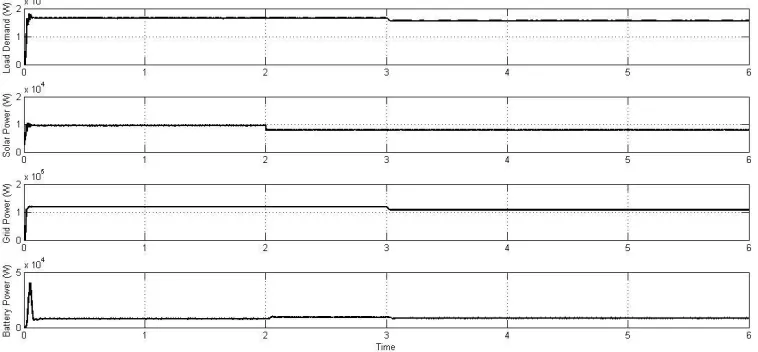
Figure 9: Waveforms for (a) Load Demand, (b) Solar Power, (c) Grid Power and (d) Battery Power
Figure 9, shows the simulation result for the proposed system to show the power management strategies. Here, the load sharing is chosen between PV, battery and grid system according to their generations. Here, the load variation is considered at 3s and 5s.
Case 2: Improvement of transient stability in hybrid system using Fuzzy and AGC Controller
INTERNATIONAL JOURNAL OF SCIENTIFIC & TECHNOLOGY RESEARCH VOLUME 9, ISSUE 04, APRIL 2020 ISSN 2277-8616
901
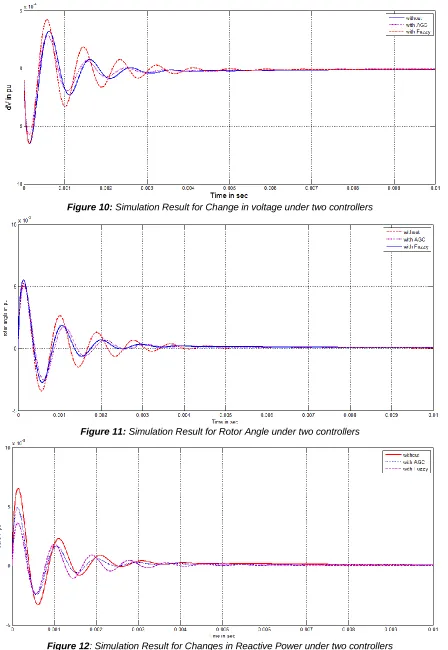
Figure 10: Simulation Result for Change in voltage under two controllers
Figure 11: Simulation Result for Rotor Angle under two controllers
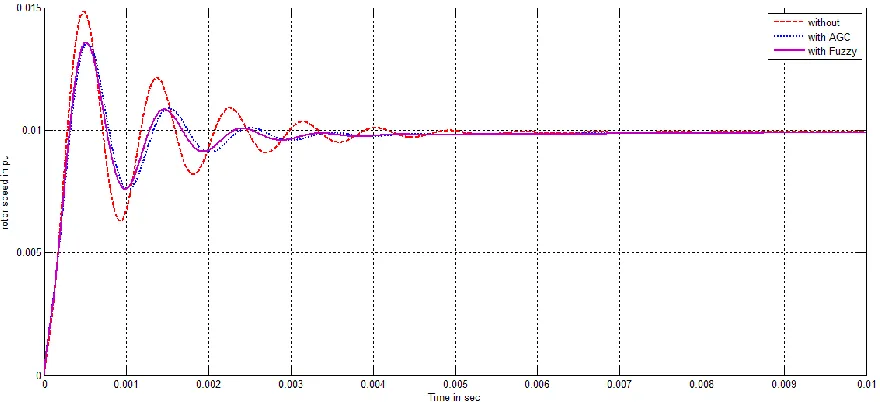
Figure 13: Simulation Result for Rotor Speed under two controllers
CONCLUSION:
This paper proposes a new control strategy for inverter at hybrid and grid interfaced system to improve transient stability of the system in terms of voltage, reactive power, rotor speed and angle. And also along with, this paper also concentrate on power management strategy to meet load requirement with PV, wind and battery systems. The reliability of renewable systems has improved by using MPPT techniques. This paper also proposes a concept of fuzzy and AGC controllers to improve the transient stability. These cases are successfully tested and verified using MATLAB/Simulink environment. From all these results, the better stability improvement is achieved with AGC based controller as compared to conventional Fuzzy Controllers.
REFERENCES:
[1] Man Xu ; Linlin Wu ; Hui Liu ; Xiao Wang, ―Multi-objective optimal scheduling strategy for wind power, PV and pumped storage plant in VSC-HVDC grid,‖ Year: 2019 | Volume: 2019, Issue: 16 | Journal Article | Publisher: IET.
[2 Farheen Chishti; Shadab Murshid; Bhim Singh, ―LMMN-Based Adaptive Control for Power Quality Improvement of Grid Intertie Wind–PV System,‖ Year: 2019 | Volume: 15, Issue: 9 | Journal Article | Publisher: IEEE.
[3] Yan Li; Yongning Chi; Haiyan Tang; Chao Liu, ―Study on characteristics of wind power transmission system with series compensation,‖ Year: 2019 | Volume: 2019, Issue: 16 | Journal Article | Publisher: IET.
[4 Abdelkrim Benali ; Mounir Khiat ; Tayeb Allaoui ; Mouloud Denaï, ―Power Quality Improvement and Low Voltage Ride Through Capability in Hybrid Wind-PV Farms Grid-Connected Using Dynamic Voltage Restorer,‖ Year: 2018 | Volume: 6 | Journal Article | Publisher: IEEE.
[5] J K Kaldellis, ―Stand-Alone and Hybrid Wind Energy Systems,‖ Technology, Energy Storage and Applications, Woodhead Publishing Published Date: 27th July 2010
[6] Thongchart Kerdphol; Masayuki Watanabe; Komsan
Frequency Stability of Microgrid With High Renewable Penetration‖, IEEE Access Year: 2019 | Volume: 7 | Journal Article | Publisher: IEEE.
[7] Van-Tri Bui ; Thi-Trang Hoang ; Thanh-Long Duong ; Dinh-Nhon Truong, ―Dynamic Voltage Stability Enhancement of a Grid-Connected Wind Power System by ANFIS Controlled Static Var Compensator‖, 2019 International Conference on System Science and Engineering (ICSSE) Year: 2019 | Conference Paper | Publisher: IEEE.
[8] Navid Vafamand ; Shirin Yousefizadeh ; Mohammad Hassan Khooban ; Jan Dimon Bendtsen ; Tomislav Dragičević, ―Adaptive TS Fuzzy-Based MPC for DC Microgrids With Dynamic CPLs: Nonlinear Power Observer Approach‖, IEEE Systems Journal Year: 2019 | Volume: 13, Issue: 3 | Journal Article | Publisher: IEEE.
[9] Sarada Prasanna Behera ; Ashutosh Biswal ; Sidhartha Sankar Samantray ; Binodinee Swain, ―Modeling and stability analysis of I-TD controller for load frequency control of two-area power system using differential evolution (DE) algorithm‖, 2018-ICSESP Year: 2018 | Conference Paper | Publisher: IEEE.
[10] Mohammed El-Shennawy ; Niko Joram ; Frank Ellinger, ―Modelling of AGC loop for improving loop gain and stability‖, 2016 12th Conference on PRIME Year: 2016 | Conference Paper | Publisher: IEEE.
AUTHORS:
SRINIVASARAO KALLURI has obtained his B. Tech degree in Electrical and Electronics Engineering from Koneru Lakshmaiah College of Engineering, Vaddeswaram, Guntur district, Andhra Pradesh, INDIA. He obtained his M.Tech degree in Advanced Power systems in
2012 from University college of
INTERNATIONAL JOURNAL OF SCIENTIFIC & TECHNOLOGY RESEARCH VOLUME 9, ISSUE 04, APRIL 2020 ISSN 2277-8616
903
Visakhapatnam district Andhra Pradesh INDIA. His area of interest are power systems.
BINDANA AISHWARYA Received
B.Tech Degree from NSRIT Engineering College in the year 2012 and obtained M.Tech in Power and Industrial Drives at Dadi Institute of Engineering and
Technology, Anakapalle, Andhra