Wayne State University Dissertations
1-1-2016
Evaluating Trauma-Informed Educational Practices
With Trauma-Exposed, Female Students
Shantel Deanna Crosby
Wayne State University,
Follow this and additional works at:http://digitalcommons.wayne.edu/oa_dissertations Part of theSocial Work Commons
This Open Access Dissertation is brought to you for free and open access by DigitalCommons@WayneState. It has been accepted for inclusion in Wayne State University Dissertations by an authorized administrator of DigitalCommons@WayneState.
Recommended Citation
Crosby, Shantel Deanna, "Evaluating Trauma-Informed Educational Practices With Trauma-Exposed, Female Students" (2016).
by
SHANTEL DEANNA CROSBY DISSERTATION
Submitted to the Graduate School of Wayne State University,
Detroit, Michigan
in partial fulfillment of the requirements for the degree of
DOCTOR OF PHILOSOPHY 2016
MAJOR: SOCIAL WORK Approved By: _________________________________________ Advisor Date _________________________________________ _________________________________________ _________________________________________
© COPYRIGHT BY SHANTEL DEANNA CROSBY
2016
ii
DEDICATION
“I sustain myself with the love of family.” – Maya Angelou
I dedicate this dissertation to my rock and amazing partner in love and life, my husband,
Justin Crosby
To my very first hero, my mom,
Bernistine Eubanks
AND
To my inspiration, my brother,
iii
ACKNOWLEDGMENTS
I want to first acknowledge my God and Savior for His bountiful blessings, for my purpose, and for guiding me through every step of my journey.
With sincere appreciation, I would like to acknowledge my advisor, Dr. Angelique Day, for inviting me to work with her over three years ago. This opportunity ultimately led to this dissertation project as well as a cherished partnership in research. Thank you for your direction and the countless hours that you have invested in me and my success. I want to also thank the remainder of my dissertation committee, Dr. Cheryl Somers, Dr. Jun Sung Hong, and Dr. Debra Patterson, for all of their time and guidance throughout my graduate career. I am so thankful for your participation in this process, your advice, your encouragement, and your support. To the faculty and staff at Wayne State University and the WSU School of Social Work, thank you for answering questions, giving direction, and simply being available. To Dr. Tam Perry, you were my first mentor at WSU and you continued to lend your advice and encouragement at every step. Thank you!
To Dr. Beverly Baroni, thank you for opening your doors and giving me so many opportunities to be involved in the amazing work that you do. To the students who participated in this study, thank you for letting me into your lives. I hope that my work reflects your true experience and opens up a world of opportunity for you and those who come after you.
To both my amazing group of friends (my sisters) and my wonderful church family, thank you for every moment of support, every motivational word, and every prayer lifted on my behalf.
I would also like to acknowledge and express my overwhelming gratitude to my wonderful family. To my husband, Justin Crosby, through every challenge, you listened intently, you affirmed me with your encouraging words, and you covered me with your prayers. I thank you for your faith in me—always reminding me of my potential and helping me to overcome each obstacle. To my mom, Bernistine Eubanks, you worked so hard and sacrificed so greatly to ensure that I could reach any goal that I set. You were my example of how to persevere in the face of any odds (even
a doctoral program ☺)! Thank you for your constant reassurance and loving support every step of
the way. To my father, Dennis West, Sr., thank you for always cheering me on and seeing me as my best self. To my brother, Dennis West, Jr., you are the reason that my work is so personal to me. You have pushed me, advised me, and offered so much wisdom in simple phone conversations. Thank you! To my aunt, Andrea Harris, thank you for your continued support and every encouraging word. To my dearly departed loved ones, I keep your love deep down on the inside of me and recognize that I am only building on a foundation that you have already laid. To all of those named, and the countless others who are not named, THANK YOU! I am overwhelmed by the support that my "village" has given me through these challenging, yet rewarding, years of graduate study. I am forever grateful!
iv TABLE OF CONTENTS Dedication ... ii Acknowledgements ... iii List of Tables ... vi Chapter 1 “Introduction”...1 Background ...1 Purpose ...7
Chapter 2 “Exploring the Benefits of a Trauma-Informed School Climate Through the Voices of Female Youth” ...10 Background ...10 Methods ...16 Findings ...21 Discussion ...25 Conclusion ...30
Chapter 3 “Examining Trauma-Informed Teaching and the Trauma Symptomology and Self-Esteem of Trauma-Exposed, Female Youth” ...31
Background ...31
Methods ...38
Findings ...43
Discussion ...45
Conclusion ...49
Chapter 4 “Assessing a Trauma-Informed Behavioral Intervention as a Substitute for Suspension/ Expulsion in an Alternative School Setting” ...50
Background ...50
v
Findings ...63
Discussion ...66
Conclusion ...70
Chapter 5 “Conclusion” ...72
Appendix A Student School Perceptions Focus Group Interview Protocol ...76
Appendix B Child Report of Post-traumatic Symptoms Measure ...77
Appendix C Rosenberg Self-Esteem Scale ...78
Appendix D Monarch Room Focus Group Interview Protocol ...79
Appendix E Wayne State University Institutional Review Board Approval ...80
References ...83
Abstract ...106
Autobiographical Statement ...108
vi
LIST OF TABLES
Table 1: Student Demographics ...17
Table 2: Participant Demographics ...39
Table 3: Means and Pairwise Comparisons for Pre/Post Responses ...44
Table 4: Predictors of Change in Trauma Symptoms ...45
Table 5: Participant Demographics ...60
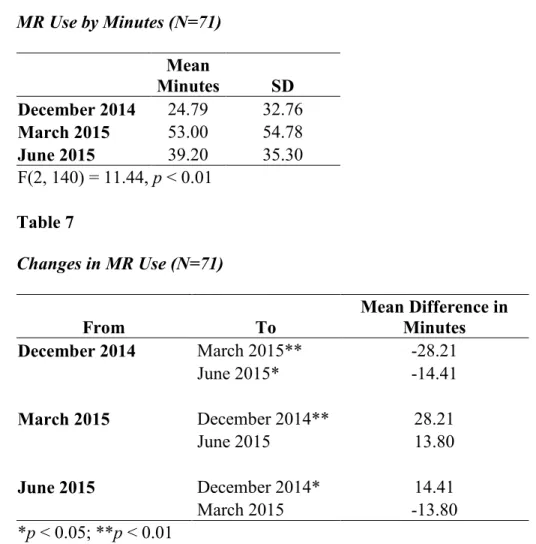
Table 6: MR Use by Minutes ...64
CHAPTER 1 INTRODUCTION Background
Each year, millions of youth are raised in poverty in the U.S., with higher percentages of these youth being from racial/ethnic minority groups (Annie E. Casey Foundation, 2014). Court-involved youth, those who have encountered the court system through the foster care and/or juvenile justice systems, are also high in number. The U.S. foster care system encountered 397,122 youth in 2012 (U.S. Department of Health and Human Services, 2013a), and the juvenile justice system experienced 1.3 million delinquency arrests in 2012 (Office of Juvenile Justice and Delinquency Prevention, 2014). Commonalities among the experiences of these two populations put youth in one system at high risk for crossover into the other system (Herz, Lee, Lutz, Stewart, Tuell, Wiig, 2012).
In 2012, almost half (48%) of youth in foster care were female (U.S. Department of Health and Human Services, 2013a) and roughly 29% of juvenile arrests were of female youth (Office of Juvenile Justice and Delinquency Prevention, 2014). Pathways to court-involvement for female youth is often distinctly different from the experiences that bring male youth into the foster care and juvenile justice systems. Female youth more commonly experience sexual victimization (Sedlak et al., 2010) as a precursor to foster care involvement (Baynes-Dunning & Worthington, 2013). In the juvenile justice system, female involvement is often in relation to probation violations or status offenses (e.g., incorrigibility, curfew violations) rather than violence or serious criminal behavior (Bloom & Covington, 2001; Pasko, 2010; Thibodeau, 2002; Watson & Edelman, 2012). The unique experiences and pathways to court-involvement among female youth warrant specific attention, as a gender-blind approach may prove ineffective at meeting their
particular needs and improving outcomes for court-involved girls (Chesney-Lind & Shelden, 2013; Hoyt & Scherer, 1998).
Among the court-involved population, racial/ethnic minority youth are often overrepresented (Brandt, 2006; Lawrence & Hesse, 2010; U.S. Department of Health and Human Services, 2013b). Native American, African American, and Hispanic/Latino youth are more likely to enter the foster care system than white youth (U.S. Department of Health and Human Services, 2013b). Various literature has also indicated that youth of color have a disproportionate presence at all levels of the juvenile justice system (Brandt, 2006; Lawrence & Hesse, 2010). In particular, African American and Hispanic/Latino youth are several times more likely to be incarcerated than their white counterparts (Sickmund, Sladky, Kang, & Puzzanchera, 2013) due to multiple ecological factors that place these youth at a higher likelihood of court-involvement (Bellair & McNulty, 2005; McNulty & Bellair, 2003).
Childhood Trauma
Childhood trauma plays a big role in the functioning and developmental trajectory of youth raised in poverty, in foster care, or the juvenile justice system. Trauma, an emotionally detrimental experience with enduring negative effects on individual well-being (SAMHSA, 2012), may be acute or chronic. Complex trauma, long-lasting experiences associated with chronic trauma (Wolpow, Johnson, Hertel, & Kincaid, 2009), may be even more developmentally damaging to youth, and may include exposure to various types of events, including abuse, neglect, community or domestic violence, natural disasters, and terrorism or other violence (Griffin, 2011). These experiences can impact the well-being of youth, creating problems with various aspects of their development and socio-emotional functioning (Cook et al., 2005).
Stressful and traumatic childhood events are somewhat prevalent among the general population (Costello, Erkanli, Fairbank, & Angold, 2002), with over 25% of children experiencing some form of abuse or violence in their home (Duke, Pettingell, McMorris, & Borowsky, 2010). This may be even more common among those living in poverty, as the daily life stressors associated with poverty can produce psychologically traumatizing conditions (American Psychological Association Presidential Task Force on Posttraumatic Stress Disorder and Trauma in Children and Adolescents, 2008). Foster care youth also often exhibit higher levels of psychological trauma, as evidenced by higher incidence of Post-Traumatic Stress Disorder (PTSD) (Salazar, Keller, Gowen, & Courtney, 2012), with rates among this population being 20% higher than their non-foster care peers (Greeson et al., 2011). Youth in the juvenile justice system have also experienced high levels of trauma (Ryan, Bashant, & Brooks, 2006; Wasserman & McReynolds, 2011), with as many as 90% of youth in correctional facilities reporting previous trauma experiences (Abram et al., 2004; Ford, Hartman, Hawke, & Chapman, 2008; Ford, Chapman, Conner, & Cruise, 2012).
Childhood trauma affects not only youth development and functioning, but also their subsequent life experiences and outcomes. Overall, youth who have experienced trauma are at greater risk of developing negative methods of coping, such as withdrawing from others, running away from home, or other risky behaviors (Ethier, Lemelin, & Lacharite, 2004). In fact, they have a higher likelihood of performing self-harming behaviors and becoming susceptible to dating violence (Duke et al., 2010), developing substance abuse issues, mental illness, physical health impairments, and contracting sexually transmitted diseases (Griffin, 2011). They are also more likely to experience early parenting and dysfunction in their interpersonal relationships (Lawrence & Hesse, 2010). Further, youth who experience abuse are more likely to become involved in
delinquent behavior and violence perpetration (Bruce & Waelde, 2008), exhibit delinquent behavior earlier in life, and are at greater risk of displaying criminal behavior into adulthood (Day, Hart, Wanklyn, McCay, Macpherson, & Burnier, 2013).
Furthermore, youth educational attainment is compromised by childhood trauma. Youth with traumatic histories may struggle with meeting the academic demands of the classroom, including organization, comprehension, memorization, being attentive, and demonstrating appropriate classroom behavior (Cole, O’Brien, Gadd, Ristuccia, Wallace, & Gregory, 2005). However, these impairments can sometimes be misunderstood by school staff, leading them to draw incorrect conclusions about the nature of student behavior (Cook et al., 2005; Griffin et al., 2011; Cole, O’Brien, Gadd, Ristuccia, Wallace, & Gregory, 2005; Oehlberg, 2008; Richardson et al., 2012). This makes traumatized students vulnerable to school failure and lower academic achievement (Burley & Halpern, 2001; Courtney, Piliavin, Grogan-Kaylor, & Nesmith, 2001; Courtney, Terao & Bost, 2004; Pecora et al., 2005).
Self-esteem, one’s attitude toward one’s self (Rosenberg, Schooler, Schoenbach, Rosenberg, 1995), can also be compromised for court-involved youth. Attachment issues, feelings of exclusion (Luke & Coyne, 2008), and the stigma that is often related to being court-involved (Kools, 1997) can negatively impact self-esteem, especially for youth who have experienced multiple home placements (Luke & Coyne, 2008; Unrau, Seita, & Putney, 2008). High youth self-esteem has been associated with better overall psychological well-being, as well as lower incidences of depression, anxiety, and negative affect. On the other hand, low self-esteem can have the opposite effect (Rosenberg, Schooler, Schoenbach, Rosenberg, 1995), including an increased likelihood of externalizing behaviors and other delinquent conduct (Donnellan, Trzesniewski, Robins, Moffitt, & Caspi, 2005). These externalizing behaviors contribute to
barriers in the school setting, impacting students’ school attendance, school mobility, and academic failure (Emerson & Lovitt, 2003).
School Discipline
In addition to problems with externalizing behaviors and socio-emotional issues that traumatized students face in school, their academic success is further impeded by school disciplinary policies and practices that hinder their learning. Millions of students are suspended across the country over the course of a school year (Planty et al., 2009), and court-involved youth experience a disproportionate amount of these school suspensions and expulsions (Burley, 2010; Courtney et al., 2004). This disciplinary practice has several negative implications for students. For example, school suspensions negatively impact student academic achievement by decreasing the amount of instructional time that students received, as well as their completion of assignments (Borman et al. 2003; Greenwood, Horton, & Utley, 2002; Hattie, 2002). Suspension practices also impede students from forming positive attachments to school (Christle et al., 2004; Gordon et al., 2001), and can exacerbate other psychosocial problems in functioning (American Psychological Association, 2008; Cameron & Sheppard, 2006; Hattie, 2002). Exclusionary forms of school discipline have not been found to be effective in deterring students from misbehaving (Fenning & Bohanan, 2006; Mayer, 1995; Sugai & Horner, 2002). Data from the U.S. Department of Education, Office for Civil Rights (2014) have shown that school suspension particularly impacts female youth of color, yet this student population often goes relatively unnoticed (Crenshaw, Ocen, & Nanda, 2015).
Trauma-Informed Schools
Given the impact of trauma on educational well-being, trauma-informed education could prove very useful to improving students’ academic success. The Substance Abuse and Mental
Health Services Administration (SAMHSA), along with the National Center for Trauma-Informed Care (NCTIC), define a trauma-informed approach as incorporating four key elements: realizing the prevalence and influence of trauma; recognizing how trauma affects all individuals involved in the system; responding with trauma-sensitive practices and policies; and actively working against re-traumatization (SAMHSA NCTIC, 2013). Creating this type of educational environment requires the empowerment of students (Coyne, Carnine, & Kame’enui, 2010; Hummer, Dollard, Robst, & Armstrong, 2010; Nation, et al., 2003), which includes their perspectives on the challenges they face as well as possible solutions (Checkoway & Richards-Schuster, 2003). Acknowledging youth voice in this way encourages positive development, and provides students with a sense of value (Head, 2011), and confidence (Checkoway & Richards-Schuster, 2003).
Teachers and other school personnel also play a major role, as they have a front row seat to the trauma-related behavioral, academic, and socio-emotional issues that court-involved students encounter. However, school staff do not commonly receive content on trauma in their education training programs, impeding them from fully understanding its impact on youth and ways to address it during instructional time (Ko et al., 2008). Multiple frameworks now exist that provide guiding principles for implementing trauma-informed practices in schools, including the C.A.P.P.D. (Calm, Attuned, Present, Predictable, and Don’t let children’s emotions escalate your
own) model (Perry, 2009), Making SPACE for Learning (Australian Childhood Foundation, 2010),
The Flexible Framework (Cole et al., 2005), and Compassionate Teaching (Wolpow et al., 2009). However, empirical evidence does not exist to explicitly address the effectiveness of trauma-informed teaching. Therefore, testing is still needed to ensure that such practices actually improve educational well-being and student outcomes.
Purpose
The aim of this three-part study is to explore the academic experiences of traumatized, and primarily court-involved youth, as well as to examine associations between a trauma-informed teaching intervention and the educational well-being of these students. Findings from this dissertation project are a part of an on-going evaluation study of trauma-informed educational practices with court-involved students, and are presented here using a three-paper format. This allows for multiple types of separate, but interrelated data to be presented in one manuscript as three separately publishable articles. Dissertation chapters two, three, and four serve as three individual and distinct, journal-ready research articles for three related studies on the educational well-being of traumatized students. Each chapter has its own background, methodologies, findings, and discussion, and thus some literature and methodological descriptions may be reiterated throughout the chapters, where necessary. Chapter five will provide implications for future study and overall conclusions from this research.
Chapter two will focus on qualitative findings, exploring the experience and perceptions of traumatized students, both court-involved and non-court-involved. Student perspectives are imperative to the effective implementation of new strategies to improve school climate (Coyne et al., 2010; Hummer, Dollard, Robst, & Armstrong, 2010; Nation, et al., 2003). However, student voice is not frequently included in the literature. This study qualitatively explores the following research questions: (1) How do court-involved youth emotionally experience their educational setting? (2) How do court-involved students feel that their school climate can be improved? (3) Do trauma-exposed students in a trauma-informed school setting describe their education environment differently than trauma-exposed, alternative education students from similar racial/ethnic, socio-demographic, and geographic backgrounds?
Chapter three will provide findings from a multi-year evaluation of a trauma-informed teaching intervention for school staff working with students who have experienced trauma. Previous psychological trauma can impair student academic performance, making it difficult for students to be successful (Cole, O’Brien, Gadd, Ristuccia, Wallace, & Gregory, 2005; West, Day, Somers, & Baroni, 2014; Wolpow, Johnson, Hertel, & Kincaid, 2009). This chapter will add to the literature, providing knowledge of how a trauma-informed teaching intervention may be associated with student trauma and self-esteem. This study will address the following research questions: (1) Do students exposed to a trauma-informed teaching intervention demonstrate significant changes in trauma symptomology? (2) Do students exposed to a trauma-informed teaching intervention demonstrate significant changes in self-esteem? (3) Can changes in trauma symptoms be predicted by students’ self-esteem, when controlling for race/ethnicity and grade level? I hypothesize that students will demonstrate statistically significant decreases in trauma symptomology and increases in self-esteem. I also anticipate that students’ self-esteem level will be a statistically significant predictor of change in students’ trauma symptoms.
Chapter four will explore school alternative discipline practices among a population of
exclusively court-involved youth, as traditional discipline (e.g., suspensions, expulsions) can have negative influences on student success (Borman et al. 2003; Greenwood, Horton, & Utley, 2002; Hattie, 2002). This chapter will present mixed method findings that assess the use of the Monarch Room (MR), a trauma-informed alternative to school suspension/expulsion practices. The MR disciplinary intervention is a designated classroom, staffed by trauma-trained professionals, which students can visit for a brief period of time when they become triggered or escalated in class. The goal of the intervention is to reduce student suspension, thereby increasing students’ time in class. The study will address the following quantitative question: (1) Have students demonstrated
statistically significant changes in time spent in the MR over the school year-long observation period? The qualitative research aim will further investigate the influence of the MR by asking students for their thoughts on the MR, how it impacts their mood and focus in school, and their suggestions for improvement. I hypothesize that time spent in the MR will significantly decrease over the one year observation period. These findings have the potential for adding practical, trauma-sensitive solutions for managing difficult student behavior in ways that will not compromise valuable instruction time and classroom participation.
Research has yet to evaluate the impact of trauma-informed educational practices, especially among court-involved student populations. Additionally, the voice and experiences of these students is rarely included in the literature. Studies should conduct further testing of specific school interventions to determine effective trauma-informed methods of educating traumatized and court-involved youth. Critical to this evaluation is understanding the impact of the intervention from the perspective of the students themselves. This study seeks to fill these gaps, exploring student perceptions and providing empirical support for the use of trauma-informed training and practices in school settings that serve traumatized students. It has important implications for the use of trauma-informed policy and practices to improve the educational well-being of this traditionally academically disadvantaged population. Schools and other educational settings can apply this knowledge to inform the development of their own trauma-informed staff training, implement new teaching personnel practices in the classroom, as well as develop new policies and practices related to suspension, expulsion, and alternative disciplinary actions for students.
CHAPTER 2 EXPLORING THE BENEFITS OF A TRAUMA-INFORMED SCHOOL CLIMATE THROUGH THE VOICES OF FEMALE YOUTH
Background
Each year thousands of youth become involved with the U.S. court system, either through foster care, juvenile justice, or as dually-involved youth. Over 397,000 youth had interaction with the U.S. foster care system in 2012 (U.S. Department of Health and Human Services, 2013a). Of these cases, approximately 48% were of female. In 2012, the U.S. juvenile justice system encountered 1.3 million delinquency arrests, with approximately 29% being arrests of female youth (Office of Juvenile Justice and Delinquency Prevention, 2014). Youth who are dually-involved have interacted with both the foster care and juvenile justice systems (Herz, Lee, Lutz, Stewart, Tuell, Wiig, 2012).
Among youth in these various categories, racial/ethnic minority youth experience consistent disproportionality (Brandt, 2006; Lawrence & Hesse, 2010; U.S. Department of Health and Human Services, 2013b). Based on data from the U.S. Department of Health and Human Services (2013b), Native American, African American, and Hispanic/Latino youth are commonly overrepresented in the foster care system. In the juvenile justice system, youth of color have a disproportionate presence at all levels (Brandt, 2006; Lawrence & Hesse, 2010). Specifically, African American, Native American, and Hispanic/Latino youth are more than twice as likely to be incarcerated as white youth (Sickmund, Sladky, Kang, & Puzzanchera, 2013). Various ecological factors, including systemic oppression, contribute to this overrepresentation (Bellair & McNulty, 2005; McNulty & Bellair, 2003), as well as the violence experienced within many communities of color (Anderson, 1994). For these youth, child maltreatment and psychological trauma are usually common factors (Greeson et al., 2011; Salazar, Keller, Gowen, & Courtney, 2012).
Psychological trauma is the result of physical or emotional experiences that are injurious to an individual’s socio-emotional, physical, or overall welfare (SAMHSA, 2012). These experiences, whether acute or chronic, can significantly impact development when experienced in childhood, and can be tremendously detrimental to youth well-being. Complex trauma occurs when traumatic encounters are consistent over a prolonged period of time, producing a serious negative impact on functioning (Wolpow, Johnson, Hertel, & Kincaid, 2009). This type of trauma has been associated with impairments in youth’s behavioral, academic, social, mental, and emotional health (Cook et al., 2005), as well as negative long-term influences on physical health (Anda et al., 2006).
Court-involved youth are highly susceptible to complex trauma and traumatic stress. Foster care youth exhibit higher levels of psychological trauma than youth in the general population (Greeson et al., 2011). Post-Traumatic Stress Disorder (PTSD) is also experienced with greater frequency among this population when compared to non-foster youth (Salazar, Keller, Gowen, & Courtney, 2012), to the degree that PTSD rates are over 20% higher for foster care alumni than for the general population. Even more alarming, this population experiences PTSD at higher rates than war veterans (Pecora et al., 2005).
Many juvenile delinquent youth have also experienced trauma (Wasserman & McReynolds, 2011) and complex trauma (Ryan, Bashant, & Brooks, 2006). Approximately 90% of youth in juvenile justice residential facilities report exposure to trauma (Abram et al., 2004; Ford, Hartman, Hawke, & Chapman, 2008; Ford, Chapman, Conner, & Cruise, 2012). For non-court-involved youth from racial/ethnic minority backgrounds and impoverished communities, experiences of trauma can also be prevalent (Lawrence & Hesse, 2010). In general, African American youth are more than twice as likely as white youth to be raised in poverty-stricken areas,
increasing their overall exposure to crime, community violence, stress, and trauma (Brandt, 2006; Lawrence & Hesse, 2010). Youth dealing with poverty not only have a strong likelihood of experiencing traumatic events, but also have more difficulty recovering from such events and regaining healthy functioning (American Psychological Association Presidential Task Force on Posttraumatic Stress Disorder and Trauma in Children and Adolescents, 2008).
Impact of Trauma on Educational Well-Being
When compared to peers, maltreated youth often demonstrate diminished social skills, increased internalizing and externalizing behaviors, and are less engaged in school (Shonk & Cicchetti, 2001). Traumatized youth, such as those with court-involvement, are also placed in special education programs with more frequency (Macomber, 2009; Shin & Poertner, 2002; Smithgall, Gladden, Howard, Goerge, & Courtney, 2004), have lower scores on academic achievement tests (Burley & Halpern, 2001; Courtney, Piliavin, Grogan-Kaylor, & Nesmith, 2001; Courtney, Terao & Bost, 2004; Pecora et al., 2005), as well as lower grade point averages (Hurt, Malmud, Brodsky, & Giannetta, 2001) and graduation rates (Grogger, 1997). Exposure to violence has also been associated with lower IQ (Delaney-Black et al., 2002). Furthermore, court-involved youth are disciplined and suspended or expelled with greater frequency (Burley, 2010; Courtney et al., 2004).
Other areas of youth academic functioning can be compromised by psychological trauma, such as self-esteem and attachment (Luke & Coyne, 2008), and cognition, behavior, and affect (Cook et al., 2005). School performance can also be impeded by traumatic stress, as students may struggle with a decreased capacity for organization, comprehension, self-regulation of behavior, and memorization (Cole, O’Brien, Gadd, Ristuccia, Wallace, & Gregory, 2005). Additionally, trauma can impair youths’ abilities to maintain appropriate boundaries and to be attentive when
needed (Cook et al., 2005). Further, trauma can also hinder brain development (Anda et al., 2006; Black, Woodworth, Tremblay, & Carpenter, 2012). In class, traumatized students may struggle with environmental triggers, sights, sounds, odors, or other traumatic reminders, which unknowingly cause them to behave disruptively (National Child Traumatic Stress Network Core Curriculum on Childhood Trauma Task Force, 2012; Pynoos, 1993). Subsequently, school staff may incorrectly attribute these behaviors and trauma responses to student apathy (Cox, 2011), defiance (Oehlberg, 2008), or other mental health issues (Cook et al., 2005; Griffin et al., 2011; Cole, O’Brien, Gadd, Ristuccia, Wallace, & Gregory, 2005; Richardson et al., 2012).
Gender Differences
There are gender-specific differences in how females become court-involved, as well as how they respond to traumatic experiences. Female youth usually enter the juvenile justice system due to non-violent status offenses, such as school truancy, violating their curfew, or incorrigibility (Bloom & Covington, 2001; Pasko, 2010; Thibodeau, 2002; Watson & Edelman, 2012), unlike their male counterparts who generally commit more serious criminal offenses. For females, pathways to foster care entry frequently include sexual victimization, which is less commonly experienced among male youth (Baynes-Dunning & Worthington, 2013; Sedlak et al., 2010). Male and female traumatized youth both generally exhibit reactions to trauma in externalized behaviors, such as anger and defiance (Foster, Kuperminc, & Price, 2004). However, female youth demonstrate trauma reactions that are unique from males (Postlethwait, Barth, & Guo, 2010), including more frequent occurrences of internalizing behaviors as well as higher prevalence of mental health issues, such as depression, anxiety, and PTSD (Foster et al., 2004; Grande, Hallman, Underwood, Warren, Rehfuss, 2012; McCabe, Lansing, Garland, & Hough, 2002; Postlethwait et al., 2010; Teplin et al., 2002), which can ultimately impact functioning in school. Such differences
illustrate the importance of understanding the needs of traumatized, female students, particularly from racial/ethnic minority backgrounds. The U.S. Department of Education, Office for Civil Rights (2014) reported that while males receive more school suspensions in general, female youth of color receive a disproportionate amount of school suspensions. Still, studies and interventions to target educational well-being among this student population are lacking (Crenshaw, Ocen, & Nanda, 2015).
School Response
Systematic trauma assessment of students, trauma training for school staff (Ko et al., 2008) and services specific to the needs of court-involved youth (Zetlin, MacLeod, Kimm, 2012) are generally rare in schools, and few trauma-informed interventions exist that are specific to academic settings. However, schools play a major role in the well-being of youth, as they are most commonly a point of access to mental health services (Farmer, Burns, Phillips, Angold, & Costello, 2003; Ko et al., 2008). Further, the academic experiences of both court-involved youth and the school staff charged with educating them suggest that greater attention be given to trauma-informed practices in schools (Crosby, Day, Baroni, Somers, 2015; West, Day, Somers, & Baroni, 2014). Literature supports the maintenance of strong student-staff relationships in schools (Coyne et al., 2010; Penner & Wallin, 2012; Price, 2008) and creating trauma-sensitive academic environments can improve student performance and behavior, school climate, student seat-time and retention, and teacher satisfaction (Oehlberg, 2008). It can also reduce student and staff stress, student suspensions/ expulsions, as well as the need for special education services.
Theoretical Framework
This study utilizes empowerment theory to explore the perceptions of traumatized, female students related to their school environment. This means including youth as participants in a
collaborative process (Zimmerman, 2000) whereby they are allowed to identify existing challenges and problems, as well as point to potential solutions (Checkoway & Richards-Schuster, 2003). Promoting student empowerment in this way can exhibit the worth and value of students through acknowledgement of their rights, and promotes individual and social development (Head, 2011). It also increases youth confidence, capacity for decision-making, while also providing a positive connection for youth (Checkoway & Richards-Schuster, 2003).
Hummer, Dollard, Robst, & Armstrong (2010) suggests that schools acknowledge students and school staff as equal stakeholders when building a trauma-informed school culture and creating interventions to assist traumatized students. Head (2011) expresses the importance of utilizing input from consumers when attempting to make improvements to service. In the case of education, this would include providing opportunities for students to voice their perspectives on school experiences, climate, practices, and policies. Efforts to improve school climate must include strategies that empower the students being served (Coyne et al., 2010; Nation, et al., 2003).
Unfortunately, female student voice is often lacking in academic institutions, as evidenced by the disproportionate paucity of female leadership in post-secondary student government organizations across the U.S. (Johnson, 2011). Also, student voice has not been commonly documented in the development of trauma-informed school interventions. Studies have explored the perspectives of school staff working with court-involved youth, reporting their experiences and challenges (Alisic, 2012; Cox, 2011; Crosby et al., 2015; Zetlin, MacLeod, & Kimm, 2012). Yet, literature has not extensively explored the perspectives of court-involved students regarding their educational well-being. West, Day, Somers & Baroni (2014) presented one of the first studies of youth perspectives and lived experiences of female, court-involved students in residential care. This qualitative study conducted focus groups with female, court-involved students to inform and
assess the pilot implementation of a trauma-informed teaching intervention. Still, their educational experiences warrant further exploration. When compared to the perceptions of students in a non-trauma sensitive, alternative education environment that serves similar non-trauma-exposed youth, this deeper exploration may prove useful for effectively implementing and assessing trauma-informed school strategies.
Present Study
The present study builds on West et al. (2014), exploring school climate and environment from the perspective of traumatized, female students in both a trauma-informed educational environment as well as a non-trauma-informed school. This study qualitatively explores the following research questions: (1) How do court-involved youth emotionally experience their educational setting? (2) How do court-involved students feel that their school climate can be improved? (3) Do trauma-exposed students in a trauma-informed school setting describe their education environment differently than trauma-exposed, alternative education students from similar racial/ethnic, socio-demographic, and geographic backgrounds?
Methods Sample
All participants in the study are female students enrolled between September 2014 and June 2015 at one of two public, alternative education high schools, located on the campus of a large Midwestern child welfare placement agency. Both schools serve students with lower socio-economic status from the surrounding, urban community. Students from both schools are also from similar backgrounds based on race/ethnicity and history of school mobility and suspension/expulsion. While the trauma-informed school exclusively serves court-involved students, with histories of abuse, neglect, and home removal, the comparison school is comprised
of students with significant experiences of poverty and poverty-related trauma exposure. The sample consisted of 76 female students (N=42 from the intervention school; N=34 from the comparison school). The school recruited participants through random sampling among the population of female students at each school, which ranged in age from 14 to 18 years old. Generally, phenomenology utilizes purposeful sampling, selecting individuals who can provide rich data in relation to the phenomenon being studied (Padgett, 2008). However, the student populations of each school are both trauma-exposed and can both provide this richness.
Students were primarily African American, which is generally consistent with the racial/ethnic makeup of the communities surrounding both schools (Data Driven Detroit, 2013). Chi square tests confirm that the sample of students from the intervention school is comparable to
both the total population at the intervention school as well as the sample of students from the
comparison school, based on race and grade level demographics. See Table 1 for demographic information. Table 1 Student Demographics Intervention School Sample Total Intervention School Population Comparison School Sample N % N % N % Total 42 100 404 100 34 100 Race African American 29 69 297 73 27 79 White 12 29 88 22 6 18 Other 1 2 19 5 1 3 Grade 9th Grade 10 24 88 22 10 32 10th Grade 10 24 150 37 9 23 11th Grade 11 26 108 27 10 29 12th Grade 11 26 58 14 5 16
Note. Intervention Sample vs. Population: Race: χ2(2)=1.48, p=.48; Grade: χ2(3)=6.19, p=.10
Description of Intervention
The school assigned to receive the trauma training intervention has utilized an adapted
version of The Heart of Learning and Teaching: Compassion, Resiliency, and Academic Success
(HLT) curriculum since the pilot year of this longitudinal study. The curriculum has been described by Day et al. (2015) as integrated and manualized, founded on research, theory and clinical practice, and grounded in attachment and ecological theories. It was designed for use in a variety of education settings both residential and non-residential, including public schools, charter schools, and private education authorities. It includes information on issues related to diversity, including gender and racial identity, and the inclusion of training on Theraplay (Booth & Jemberg, 1998) and sensory integration (Ayres, 2005; Dorman et al., 2009). Training modules also included specific trauma-informed strategies, collaborative problem-solving (Greene & Albon, 2006), and self-care. Sessions consisted of role plays, games, case vignettes, individual coaching, and additional tools and resources for classroom use. The modified HLT curriculum was provided sequentially in 8 professional development sessions, followed by 6 classroom observation sessions and individual coaching. Sessions were provided by a clinically-licensed, master’s level social worker, with experience with psychological trauma and employment histories in both mental health and child welfare. The curriculum was presented to staff in half-day trainings, with booster trainings occurring monthly over two-hour periods at staff development meetings between October 2014 and May 2015.
Two certified occupational therapists (OT) also participated in curriculum development and coaching, providing an additional 6 training sessions to deliver information on sensory integration theory (Ayres, 2005) and how sensory tools can be used to assist students in self-regulation, self-soothing, and de-escalation (Dorman et al., 2009). Group trainings were followed
by individual coaching sessions between the school staff and the OT training consultants. School administration made efforts to maintain consistency with intervention implementation, as well as school policies and procedures throughout the duration of the school year.
In addition to training, the school implemented the Monarch Room (MR), an alternative to traditional school discipline policies to increase student seat time and attendance. The MR is available throughout the school day, managed by trauma-trained staff to provide positive support to help students de-escalate when needed. When students’ emotional states or behavior interfered with learning in the classroom, they were referred by school staff or self-referred themselves to the MR, which is viewed as a support rather than a punitive action. Once in the MR, brief intervention strategies, including problem solving, talk therapy, and sensory-motor activities were utilized to assist students in regulating their emotions in order to return to the classroom within approximately 10 minutes or less. All student visits to the MR are documented by school staff in tracking logs, including the reason for the visit, time student arrived, time student returned to class, and the strategies used to assist the student. This data is regularly reviewed by school administration to improve policy and practice around MR implementation.
Data Collection
This study consists of a secondary analysis of data obtained from ten focus groups held between September 2014 and June 2015. The study was approved by the Institutional review board at Wayne State University. School administrators obtained informed consent/assent from students to participate in focus groups during the school registration process. The phenomenological approach was used to inform the development of a semi-structured interview protocol, which was then used to collect youth perceptions of school climate at the beginning of the school year in September 2014 and again at the end of the school year in June 2015. See
Appendix A for full interview protocol. Students who preferred not to verbalize their comments during the focus group were offered blank paper and encouraged to share their responses in writing. These written comments were typed and added to the end of focus group transcripts. All focus groups were held for approximately one hour and convened at each school building. Information collected from focus groups was used to inform curriculum development and implementation of the intervention.
Data Analysis
Focus groups were audio-recorded and transcribed verbatim. Transcripts were coded independently by the researcher, using reflexive bracketing for confirmability (Padgett, 2008). Then, transcripts were uploaded into NVIVO 10 (QSR International, 2012) and content was analyzed for themes using constant comparison methods to look for commonalities, differences, and main ideas (Dye et al., 2000). Although uncommon to phenomenology, focus group data can be useful with this approach when group interaction, subject matter, and group language are accounted for during analysis (Palmer, Larkin, de Visser, & Fadden, 2010). This qualitative approach allowed the researcher to explore the shared experiences of students, uncovering new perspectives as experiences were confirmed or denied through group interaction (Bradbury-Jones, Sambrook, & Irvine, 2009).
In Vivo coding uses the direct language of the participants as codes rather than researcher-generated words and phrases (Saldaña, 2009). Therefore, the analysis was grounded in the voices of the student participants. The results were reviewed by a subsample of students from each school who participate in the focus groups. This provided a member-check on the validity and interpretation of the data.
Findings
Students at each school described how they emotionally experience their school environment, explaining the dynamics that impact their mood and emotions throughout the school day. They discussed their typical reactions to negative emotions, the factors that change, improve, and exacerbate their mood, as well as their perception of how school staff respond to their emotional state. They also provided suggestions on how to improve their school environment. Findings from the court-involved youth in this study demonstrate occasional parallels with that of non-court-involved youth. However, analysis of the most commonly reported themes from both schools resulted in the emergence of similarities as well as several notable distinctions, as reported below.
Theme 1: “I Become Very Disrespectful and Very Aggressive”
Students at both the intervention and comparison school most often reported that they react to negative emotions by acting out. More specifically, students reported verbally or physically escalating their behavior, yelling, or using profanity to address the subject of their negative mood. The following quotes illustrate how students reported handling negative moments at school with peers or staff:
(INTERVENTION SCHOOL): Sometimes I do [fight]. When I’m in a bad mood, if someone that I don’t like comes in the puzzle [my surroundings] and just rubs me the wrong way, I feel like fighting them, that’s just how I am.
…I give them [other students] the same reaction I would give anybody else on the street because you’re my age, you’re close to my age, and you think that you can just come to me any kind of way. I have a low tolerance for BS, so I come to them how they come to me…I become very disrespectful and very aggressive.
(COMPARISON SCHOOL): I'll go [react] physically, verbally, mentally, emotionally… You want to go there. I will go there. Come on! It's this one person who always tries me [provokes me] every day, and I just sit back like fight me. Now! You keep talking to me. Just fight me.
…I’m a big wall of anger. I argue a lot. I try not to fight, but I end up fighting a lot. When someone’s yelling at me, I yell back…I really have a bad temper… I’m trying to calm down, and even she [teacher] tells me ‘You need to calm down’. I get really mad over stupid stuff. I cuss a lot because it’s a part of me to get my anger out.
Theme 2: “That’s a Trigger”
Court-involved students at the intervention school most commonly reported factors that negatively, rather than positively, impacted their mood, and identified their classmates as influencing these emotional changes. This includes issues with bullying and antagonistic peer behavior, interactions with difficult student personalities, as well as conflicts or “drama” between students. These findings are illustrated by the following quotes:
Like this morning, perfect example, I got called ‘crazy’… I got really upset because
society has already labeled me as crazy because of the mental illness I’ve already been
labeled with. So I’m already labeled as crazy, I don’t want to hear my peers call me
‘crazy’ because that’s something that triggers me. Because I’m not crazy. I’m very smart, very intelligent, very insightful, and that’s just who I am. But people see my outer self— they don’t get a chance to get to know me as a person.
Say for instance, you were taken away from your mom and her rights were terminated. They [peers] will say, ‘Oh, that’s why you can’t live your mom’, ‘Your mom’s a B-word’, ‘Your mom’s a crack-head’, or something like that…that’s a trigger…
Non-court-involved students at the comparison school also primarily reported factors that negatively influence their mood. However, they identified the school staff (i.e., teachers and administrators) as impacting these changes. Students reported persistent conflict with teachers, instances of classroom favoritism, and unfair allocation of discipline, as displayed in the following quotes:
She [the teacher] likes telling on people…She always tries to get me in trouble... I’m like, ‘You’re worse than us [the students]’. We’re the kids. Then, we have to treat you like an adult.
[Teachers] suspend people for the smallest thing... I got suspended for yelling at somebody, and when somebody threw a chair in the classroom they didn't get suspended.
Theme 3: “Some of Them Are Supportive”
Students from the intervention school most frequently identified teaching staff (i.e., teachers, teaching assistants, school paraprofessionals) as being helpful in improving their mood during difficult emotional moments at school. Students reported that teaching staff provide support, concern, and opportunities to process negative issues or triggers to help them move beyond their mood. This is reflected in the following quotes:
Some of them are more supportive and ask you if you need to go to the Monarch Room, ‘Do you want to step out in the hallway and talk to me?’, ‘Is there someone you would like to talk to’, stuff like that or ‘Just let me know if you need anything’ and stuff like that. Some of them are supportive.
A lot of our teachers have been here for at least two years and we have maybe one or two that have just started this year but they got the hang of it, that we’re placement kids, and they know that we have issues. So they try not to say something [negative] because they never know what’s going on with us…
On the other hand, students at the comparison school most commonly identified their classmates as improving their mood when experiencing stress during the school day. Students reported that their peer group provides comfort, support, and humor as a means to improve their mood, which is displayed in the following quotes:
With me, I usually tear up really easily. My friends will say to me, ‘You know, it’s not that bad.’ We just start laughing... We can make jokes. We laugh about things… Everybody [peers] really tries to help each other.
Theme 4: “That Makes Me Even Madder”
Students from the intervention school reported that while support from teaching staff can be helpful during a difficult emotional moment, it can also worsen their mood when a sufficient interpersonal bond does not exist between the student and the particular staff member. In fact, under these circumstances, support is perceived as an intrusion. Students identified that such behavior, although perhaps well-intentioned, is perceived as prying, insincerity, and in some cases,
a violation of their personal boundaries (e.g., staff touching a student to provide comfort). This has been illustrated by the following quotes:
When I’m mad, I only go to certain staff… So, I don’t like when people [staff] ask me
what’s wrong with me. I’m like, ‘What’s wrong with you?’. That makes me even madder.
Why do you care what’s wrong with me?
They [teachers] are trying to be too cool… and they cross over boundaries. You are not my friend, you work here… Please don’t touch me… I might feel threatened. Don’t walk up. Don’t stand behind me. They definitely do that, looking over your shoulder. I don’t like that. I feel real threatened by that.
At the comparison school, students also most commonly identified teaching staff as aggravating their mood during a difficult emotional moment. However, in contrast to students at the intervention school, they reported a different type of response from school staff. They explained that teaching staff often respond with dismissiveness, indifference, or punitive actions (e.g., being sent to the office, being suspended). These sentiments are shown by the following quotes:
I’m a really peaceful person, but [the teacher] really tries me on the worse days… [The teacher] ignores me… walks away from me while I’m talking to her. Then I end up screaming, which doesn’t make the matter better, and then she wants to go and call the principal.
Theme 5: “Understand That Everyone Has Their Backstory”
Students at the intervention school most commonly reported that teaching staff should be more considerate of their unique circumstances as court-involved youth. Although students felt supported by many of their teachers, they explained that some teachers have difficulty understanding their complex moods and behaviors in the classroom. They suggested that all teaching staff should operate with greater understanding, sensitivity, and patience. These findings are illustrated by the following quotes:
I don’t like being here [in residential placement]. Some of us are forced to be here, some of us put ourselves in here. So, of course when we have bad days, be considerate that this is not where we really want to be.
[To the teaching staff] Don’t take stuff so personal, because we have a lot more stuff going on than normal students…and be considerate of our feelings.
Students at the comparison school also suggested changes in the teaching staff’s response to students. However, they suggested that teachers actively work toward improving their rapport with students. This includes improving their classroom responses to difficult student behavior, avoiding negative comments toward students, paying better attention to student body language and triggers, and treating students individually. This theme is displayed in the following quotes:
I would tell teachers to understand that everyone has their backstory. They can’t treat me like they treat her, like they treat the other girl….Everybody’s different.
Stop being disrespectful…Listen to the students… and pay attention to their body language to see if they’re [the student] mad or not.
Discussion
The purpose of this study was to explore trauma-exposed, female students’ perspectives on their school environment and their emotional experiences in the classroom, building on the findings of West et al. (2014). Findings illustrate that trauma-exposed students hold very specific views of their teaching staff and school-related needs. For these students, their perspectives directly translate into their perceptions of whether compassion, fairness, and support is available to them in their school environment. In previous research, trauma-exposed students identified exhibiting or witnessing myriad negative mood-related behaviors while in school, including anger,
irritability, and frustration (West et al., 2014). Theme 1, I Become Very Disrespectful and Very
Aggressive, further describes ways in which students manage such emotions and the behaviors that they use in response. Students at both schools, regardless of the presence of a trauma-informed school intervention, identified verbal or physical acting out as their primary way of addressing negative emotions and interactions with peers and school staff. This is supported by previous
findings on the behaviors of trauma-exposed students, where youth commonly reported utilizing aggressive or emotionally-escalated externalizing behaviors to manage interpersonal stress (West et al., 2014).
Theme 2 (That’s a Trigger) and theme 3 (Some of Them Are Supportive) demonstrate
important differences between student experiences at the trauma-informed school versus the non-trauma-informed environment. Students at the intervention school identified conflicts with other students as the source of negative mood changes during the school day, but reported that teaching staff help them to recover from these difficult emotional states. Conversely, students at the comparison school attributed mood changes to negative interactions with the teaching staff, but reported gaining comfort and support from their peers to overcome these emotions. While these findings are exploratory in nature, they may be an indication that consistent staff exposure to trauma training and resources has equipped teachers at the intervention school to better address student emotional issues. These students described their teachers as supportive and concerned for their emotional well-being, unlike the comparison school where teaching staff are perceived as demonstrating favoritism and antagonistic behavior when students become escalated.
Theme 4, That Makes Me Even Madder, demonstrates the importance of strong
interpersonal relationships between students and school staff (Coyne et al., 2010; Penner & Wallin, 2012; Price, 2008). Comparison school students explained their perception of strained relationships with teaching staff, where their emotional issues are often ignored or dismissed in
class or addressed using traditional disciplinary practices (e.g., school suspension). Such staff
responses only intensify student emotions and further alienate them from school and the potential for positive relationships and interactions with their teachers. Intervention school students also speak about the importance of positive interactions with staff, but also clarify the necessity for
rapport-building prior to these interactions, as a lack of a strong relationship can change students’ perceptions of a teacher’s intervening behavior. Students who have been exposed to trauma may demonstrate difficulties with interpersonal boundaries (Cook et al., 2005), and may need even more time to bond and form trust with staff before feeling safe and supported in school. For example, students’ feelings about being touched by certain staff members demonstrates how an action, meant to be non-threatening and supportive, can actually be triggering and elicit very strong negative reactions in students when that bond is not present. Providing an infrastructure for school staff to consistently build strong relationships with students may be a necessary step in improving the educational setting for trauma-exposed students. Additionally, providing regular training on trauma-related topics (e.g., physical touch, triggers) may also help staff to better understand how to best support students.
Theme 5, Understand That Everyone Has Their Backstory, further illustrates the need for
positive and supportive school staff relationships among trauma-exposed students. Not surprisingly, students at the comparison school suggested that teachers and school staff improve their responses and interactions with students. In particular, they want teachers to initiate positive relationships with them, refraining from stereotyping students, making derogatory comments, or exhibiting apathetic attitudes, which directly jeopardize those relationships. Students at the intervention school focused their suggestions on school staff gaining a better awareness of their complex circumstances and related student behaviors. While they felt supported by staff, they continue to desire even greater sensitivity. On one hand, this may be a manifestation of their trauma, as court-involved youth often develop unhealthy attachment styles (Luke & Coyne, 2008), which can impact their ability to have their needs and expectations met by others. On the other hand, this also emphasizes the importance of continued training and evaluation to ensure that all
staff are gaining these new trauma-sensitive skills and are appropriately applying these new practices with students.
Strengths & Limitations
This is one of the first studies to explore trauma-exposed students’ lived experiences and perspectives of their school environment. Other major strengths include the methodological and sampling approaches used in this study. Phenomenological exploration elicited a rich understanding of how trauma-sensitivity is experienced and needed for trauma-exposed students, while the use of random sampling ensured that focus groups were comparable to the sociodemographic makeup of both school settings. However, common to qualitative research, the sample size is small and cannot be generalized to trauma-exposed students outside of these two school settings. Also, the sample consisted of only female and predominantly African American students. Additionally, data were not able to be collected with respect to each students’ specific type of trauma, mental health diagnoses, or special education status, which may have all impacted students’ experiences. Finally, while efforts were made to maintain consistent intervention implementation, extraneous school changes and other influential events in the participants’ residential and social environment could not be accounted for in this study.
Implications for Policy and Practice
Overall, a trauma-informed approach to teaching holds considerable potential for creating environments where trauma-exposed students can be successful. Recent federal mandates around human trafficking include trauma-informed practice as a mandatory response (President’s Interagency Task Force to Monitor and Combat Trafficking in Persons, 2014), demonstrating a national acknowledgement of the importance of trauma and trauma-sensitive policies and practices. The Substance Abuse and Mental Health Services Administration (SAMHSA) and the
National Center for Trauma-Informed Care (NCTIC) define a trauma-informed approach as one that realizes the prevalence of trauma, recognizes how trauma affects all individuals in the system (including its own workforce), responds with trauma-sensitive practices and policies, and actively works against re-traumatization (SAMHSA NCTIC, 2015). Schools should work to create this type of learning environment, where both staff and school policies function with sensitivity to student trauma, and students’ perspectives are utilized to address their needs.
More specifically, schools should implement on-going and dynamic staff professional development to educate teachers on the latest research and information on cultural-sensitivity, childhood trauma, and methods of interacting with and disciplining trauma-exposed students. Additionally, school administrators should devise disciplinary policies that are clear, consistent, and attachment-driven (Moore, 1997). Traditional school discipline has relied on punitive methods (e.g., suspension and expulsion), which are ineffective (Griffin, 2011), at best, and re-traumatizing (Wolpow et al., 2009), at worst. Trauma-sensitive and attachment-oriented approaches to student discipline may provide a viable solution to this problem.
As state and federal priorities continue to emerge around social and emotional learning in schools (Blad, 2015; CASEL, 2015), trauma-informed practice may also provide valuable solutions for improving students’ socio-emotional well-being, particularly among trauma-exposed student populations. Trauma-informed school practice means investing in the socio-emotional well-being of students—not simply their academic progress—as they move through school, and there should be an intentional effort to facilitate strong interpersonal skills and positive relationships between students, school staff, and fellow classmates. This type of approach calls for interdisciplinary collaboration and communication. As described in this study, social workers and OT professionals can provide school personnel with important knowledge on how to build
relationships with and manage the behavior of traumatized youth. Policies that support collaboration between teachers and social work, OT, child welfare, and juvenile justice workers may help to create environments where social and emotional learning can take place.
Conclusion
Trauma-exposed youth encounter various distinct hurdles to their academic success. These challenges can impact their future outcomes, but can also be ameliorated when schools and staff members are structured to respond with awareness and sensitivity. As these students strive to cope and perform in their academic environments, they can also provide a wealth of knowledge on how to improve their experiences. These perspectives can assist educators in developing more sensitive methods of meeting students’ needs, reducing the risk of re-traumatization, and ultimately improving students’ academic trajectory.
CHAPTER 3 EXAMINING TRAUMA-INFORMED TEACHING AND THE TRAUMA SYMPTOMOTOLGY AND SELF-ESTEEM OF COURT-INVOLVED, FEMALE
YOUTH Background
Psychological trauma, often resulting from experiences with maltreatment, has a major impact on youth functioning and development. Trauma is defined as the result of “an event, series of events, or set of circumstances that is experienced by an individual as physically or emotionally harmful or threatening and that has lasting adverse effects on the individual’s functioning and physical, social, emotional, or spiritual well-being.” (SAMHSA, 2012). This can be acute or chronic, whereas acute trauma is the result of a recent, emotionally distressing event, and chronic trauma is caused by multiple extreme experiences (Council on Social Work Education, 2012; Riebschleger, Day, & Damashek, 2015). Yet another form of psychological trauma is complex trauma, defined as “multiple or chronic and prolonged developmentally adverse traumatic events” (Wolpow, Johnson, Hertel, & Kincaid, 2009, p. 2). This trauma can impede healthy mental, emotional, behavioral, and cognitive functioning (Cook et al., 2005), and is often experienced by court-involved youth (Greeson et al., 2011).
In 2012, the U.S. foster care system encountered as many as 397,122 children and adolescents (U.S. Department of Health and Human Services, 2013a), and the juvenile justice system experienced 1.3 million delinquency arrests (Office of Juvenile Justice and Delinquency Prevention, 2014). Dually court-involved youth consist of those who have interacted with both the foster care and juvenile justice system (Herz, Lee, Lutz, Stewart, Tuell, & Wiig, 2012). There are varying pathways to becoming dually-involved, such as foster youth being referred to juvenile justice for delinquent behavior, delinquent youth receiving child welfare intervention after abuse or neglect is discovered in juvenile justice proceedings, and delinquent youth being referred to