Lehigh University
Lehigh Preserve
Theses and Dissertations2015
Implicit Goal Inference and Implicit Trait Inference:
Two Ways of Understanding the Social World
Irmak Olcaysoy Okten Lehigh University
Follow this and additional works at:http://preserve.lehigh.edu/etd
Part of thePsychology Commons
This Thesis is brought to you for free and open access by Lehigh Preserve. It has been accepted for inclusion in Theses and Dissertations by an authorized administrator of Lehigh Preserve. For more information, please [email protected].
Recommended Citation
Olcaysoy Okten, Irmak, "Implicit Goal Inference and Implicit Trait Inference: Two Ways of Understanding the Social World" (2015).
Theses and Dissertations. 2750.
Implicit Goal Inference and Implicit Trait Inference: Two Ways of Understanding the Social World
by
Irmak Olcaysoy Okten
A Thesis
Presented to the Graduate and Research Committee of Lehigh University
in Candidacy for the Degree of
Master of Science
in Psychology
Lehigh University April 2015
ii
© 2015 Copyright Irmak Olcaysoy Okten
iii
Thesis is accepted and approved in partial fulfillment of the requirements for the Master of Science in Psychology.
Implicit Goal Inference and Implicit Trait Inference: Two Ways of Understanding the Social World
Irmak Olcaysoy Okten
_______________________ Date Approved
______________________ Gordon B. Moskowitz. PhD Thesis Advisor and Department Chairperson
______________________ Michael J. Gill, PhD Committee Member ______________________ Christopher T. Burke, PhD Committee Member ______________________ Erica D. Schneid, PhD Committee Member
iv
Table of Contents
List of Figures ... vii
Abstract ... 1
Introduction ... 2
Attributions of Invariant vs. Variant Characteristics from Behaviors ... 3
Kelley’s (1967) Covariation Model and the Role of Information Received in the Type of Inference Made ... 8
Trait vs. Goals: Two Ways of Understanding Others’ Actions ... 11
Goal Inferences: Evidence from Attribution and Multiple Inference Research ... 16
Implicit Social Inferences: Are Goal Inferences Implicit / Automatic? ... 19
Covariation Principle Revisited: Differentiating Trait and Goal Inferences ... 23
The Role of Motivation in Implicit Inferences ... 27
The Present Research... 29
Pilot Study: Intentional Inference for Traits and Goals ... 31
Method ... 31
Participants... 31
Materials & Procedure ... 31
Results ... 32
Study 1. Implicit Inferences for Traits and Goals: Goal Manipulation... 33
Method ... 35
Participants... 35
Materials & Procedure ... 35
Goal Manipulation ... 35
Probe-Recognition Task ... 36
v Design ... 38 Results ... 38 False Recognition ... 38 RTs ... 40 Discussion ... 42
Study 2. Implicit Inferences for Traits and Goals: Categorization Task ... 44
Method ... 47
Participants... 47
Materials & Procedure ... 47
Training Session ... 47
Probe Recognition Task with Repeated Categorization ... 48
Measures of Individual Differences ... 50
Design ... 50
Results ... 50
False Recognition ... 50
RTs ... 52
Discussion ... 56
Study3. Implicit Trait and Goal Inference When Covariation Information is not Provided ... 57
Method ... 60
Participants... 60
Materials & Procedure ... 60
Goal Manipulation ... 60
False Recognition Task ... 60
vi Design ... 63 Results ... 63 False Recognition ... 63 RTs ... 67 Discussion ... 68 General Discussion ... 70 Concluding Remarks ... 76 References ... 79 Appendices ... 91 Appendix A ... 91 Appendix B ... 95 Appendix C ... 96 Appendix D ... 99 Appendix E ... 100 Appendix F... 101 Curriculum Vitae ... 110
vii
List of Figures
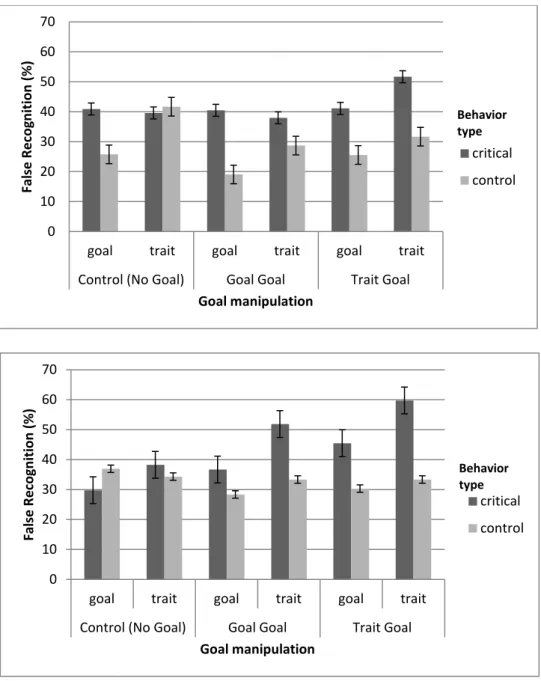
Figure 1 The percentage of falsely recognized words in LHH, LLH and LLL behaviors across goal inference goal, trait inference goal and control conditions
(Study 1) ... 102
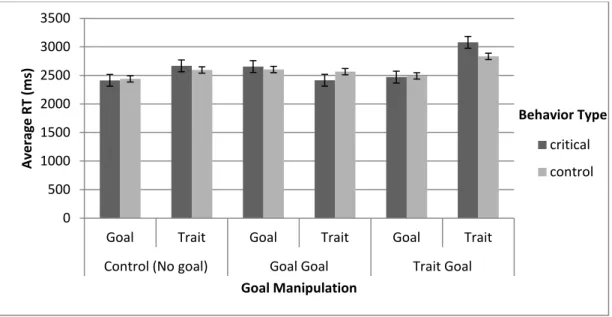
Figure 2 The average reaction time for correctly rejected words in LHH, LLH and LLL behaviors across goal inference goal, trait inference goal and control conditions (Study 1) ... 103
Figure 3 The percentage of falsely recognized words in LHH, LLH and LLL behaviors across goal-yes and trait-yes key match type conditions (Study 2) ... 104
Figure 4 The average reaction time for correctly rejected words in LHH, LLH and LLL behaviors across goal-yes and trait-yes key match type
conditions (Study 2) ... 105
Figure 5 The percentage of falsely recognized goal and trait words across goal inference goal, trait inference goal and control conditions (Study 3) . 106
Figure 6 The percentage of falsely recognized goal and trait words by liberals and conservatives across goal inference goal, trait inference goal and control conditions (Study 3) ... 107
Figure 7 The percentage of falsely recognized goal and trait words by people with low PNS (Personal Need for Structure) and high PNS across goal inference goal, trait inference goal and control conditions (Study 3). 108
Figure 8 The average reaction time for correctly rejected goal and trait words across goal inference goal, trait inference goal and control conditions (Study 3). ... 109
1
Abstract
Previous studies show that, when people learn about or observe behaviors of others, they tend to make implicit inferences from these behaviors (Uleman, Saribay, & Gonzalez, 2008). In the present research, we aimed to determine the conditions under which people are more likely to make implicit goal inferences vs. trait inferences. In Studies 1 and 2, we analyzed the role of behavioral information received in the type of inference made. Specifically, we manipulated consistency of the actors’ behaviors as well as the distinctiveness of the actions (i.e., if the action is initiated towards a specific entity or not) in light of Kelley’s (1967) covariation principle. Study 1 showed that people tend to implicitly infer goals more from
behaviors that include low consistency and low distinctiveness information compared to behaviors that include high consistency and high distinctiveness information. Study 2 sought to replicate this finding using a separate paradigm. People were shown to make implicit goal inferences from behaviors with low consistency and low
distinctiveness information. In Study 3, we analyzed inferences from simple behaviors (with no consistency or distinctiveness information) and the effect of perceivers’ motives on the type of inference made. We showed that people engage in both types of inferences from reading simple behaviors but only when they are motivated to make goal or trait inference. We also showed that chronic goals (related to personal need for structure and conservative ideology) may determine the type of inference made (i.e., higher tendency to make trait than goal inferences). Taken together, the present research revealed that the type of inference made depends on the type of information received as well as the specific (temporary or chronic) motivation of the perceiver.
2
Introduction
Being able to understand others’ motivations as explanations for why they act and what they are likely to do next is critical for human beings (Heider & Simmel, 1944; Jones & Davis, 1965). Importantly, such inferences provide not merely a sense of meaning and predictability in a complex social world, but understanding the motivational factors underlying an actor’s behavior may help the perceiver adjust his/her own attitudes and behavior towards this actor so that one may engage in appropriate behavior (Aarts, Gollwitzer, & Hassin, 2004; Gollwitzer & Moskowitz, 1996). Such tendency for an immediate causal explanation was discussed by Asch (1946):
We look at a person and immediately a certain impression of his character forms itself in us (…) such impressions form with remarkable rapidity and great ease. (…) we can no more prevent its rapid growth than we can avoid perceiving a given visual object or hearing a melody. (p. 258).
Recent research on social inferences shows that people have a tendency to make complex inferences such as inferences of intentionality from others’ behaviors automatically (e.g., Ham & Vonk, 2011, Malle & Holbrook, 2012). In other words, people tend to infer goals from other’s behaviors without necessarily having any intention or awareness. Even the earliest approaches in attribution research (which sow the seeds of folk psychology) indicated that people infer personal causalities (Heider, 1958, p. 100) as well as person-stimulus/situation interactions (McArthur, 1972). However, most of the research in the area was concentrated on how people infer invariant personality traits from behaviors (except for some attempts to show people’s capability of capturing intraindividual variability or the interaction of behaviors with the stimuli and situations (Kammrath, Mendoza-Denton, & Mischel,
3
2005). More specifically, how people attribute others’ (context-dependent) goals is a relatively understudied phenomenon compared to the extensive work on the
attributions of (context-independent) traits from behaviors (Hassin, Aarts, & Ferguson, 2005). Despite the potential importance of understanding/making predictions about the goals of others, and the degree to which this happens spontaneously (e.g., Hassin, Aarts, & Ferguson, 2005, Van Overwalle, Van
Duynslaeger, Coomans, Timmermans, 2012), it is still not clearly shown when people tend to make goal as opposed to trait inferences and vice versa. The present research is an attempt to illustrate the mechanisms that differentiate among different types of social inferences in this sense. Specifically, in the present study, we focused on how the type of information received as well as the perceiver’s motives may affect the type of inference (goal vs. trait) made spontaneously about an actor.
Attributions of Invariant vs. Variant Characteristics from Behaviors
How people evaluate the social behaviors of others is a critical question that has been investigated from various dimensions, and with different assumptions about the mechanism of social inference. What is common to most attribution research, however, is the focus on people’s tendencies to infer stable characteristics from others’ behaviors (Malle, 2008). Researchers suggested various explanations for why people tend to disregard information that would preclude making a dispositional inference. Heider (1958) stated that people usually don’t have access to the
information beyond the disposition-implying behaviors of others. However, Jones and Nisbett (1971) went further and claimed that, even if the stimulus that might have affected the actor’s behavior is accessible to the perceiver, the perceiver ignores it to some extent (p. 87). Specifically, they suggested that people are likely to make inferences that describe the behavior and the underlying factor in a “correspondent”
4
fashion (p. 223, Jones & Davis, 1965). According to this model, actor’s actions are perceived as being correspondent to his/her stable disposition(s). For instance, one’s “domineering action” is perceived as a reflection of the trait of being dominant (p. 224, Jones & Davis, 1965). However, that model does not account for alternative types of inferences one might make, such as engaging in a domineering action for some specific reasons about the situation or the stimulus the actor interacts with (i.e., actor’s goals). Instead, the models which concentrate on the correspondence bias suggest that people usually sample biased information about others, focus on the consistency between the actor’s traits and actions and thus have an illusory perception of predictability about the actor’s future actions (Jones & Nisbett, 1971).
The question of how the role of actors’ intentions and goals are inferred was incorporated in different ways into the early models of attribution. Heider’s (1958) definition of an actor’s intention as a disposition itself shows that he accepted intentions as an “inferential end” as Gilbert (1998) suggests. In other words, Heider (1958) seems to have a more dynamic understanding of “dispositions” which does not necessarily refer to invariant properties of the person per se. Nevertheless, as Malle (2008) also stated, attribution research that was influenced by Heider’s ideas seems to have overrelied on his argument of “extraction of dispositional properties of
behaviors”, by misinterpreting his understanding of dispositions as well. Malle (2008) identified this tendency in attribution research as an “attribution error” in itself, due to overlooking Heider’s insight regarding the inferences of intentionality of the actors.
Importantly, the tendency to extract dispositional properties from behaviors does not mean that Heider presupposes an “isomorphic relation” between these properties and behaviors, for two reasons (Gilbert, 1998, p. 94). First, Heider
5
two dispositions may lead to the same behavior and one disposition may be manifested in different behaviors) (Heider, 1958, p. 36). Second, he accepted that people have a tendency to make goal attributions by accounting for the interaction between the person and the situation. He suggested that, “If a person brings about a number of changes in the environment, and one of them is generally considered much more attractive than the others, we will assume that it was the person’s goal” (Heider, 1958, p. 115). That is to say, Heider (1958) does not seem to claim that these
“extracted properties” of others have to be invariant personality characteristics as opposed to goals or intentions specific to certain circumstances. Similarly, we suggest that people should tend to make attributions of both variant and invariant properties of others from their behaviors, depending on the characteristics of the given information.
Despite such dynamic perspective of attribution seen in the earliest work of naive psychology, the approaches to examining human inference that followed tended to focus on attributions of invariant aspects of personality from behaviors, after factoring out possible situational effects (for a review see Moskowitz, 2005, pp. 233-266). Therefore, the phenomenon of intention attribution which should interact with situational effects is overshadowed by the studies embracing a dichotomy between personal and situational effects on behavior (Kammrath et al., 2005; Malle, 2008; Plaks, Shafer, & Shoda, 2003). Such a tendency started with Jones and Davis’ (1965) correspondent inference model’s focus on people’s inferences of invariant traits (rather than specific intentions) from others’ behaviors as mentioned above
(Moskowitz, 2005). Attribution to intentions, on the other hand, was defined by Jones and Davis (1965) as “a necessary step in the assignment of more stable characteristics to the actor” (Jones & Davis, 1965, p.222). Thus, they suggested that actors’
6
actions. If we go back to the previous example, even if the perceiver infers some specific intention of an actor to engage in a domineering action, s/he still uses this intention information to explain a stable disposition1 of the actor, in this view (Jones & Davis, 1965, p.224). In this sense, this approach assumes that perceivers should be motivated to extract information which differentiates that actor from another across different situations. Thus, the question, “how people do represent the intention of the actor in a given situation?”, seems to be engulfed by the question, “how do people represent the actor him/herself?”.
A closer look at the theory of correspondent inferences, however, together with Kelley’s (1967) covariation model, provides some important insights for different types of causal explanations, depending on the information provided to the perceiver. In the correspondent inferences model, how unique the consequences of an actor’s action/choice is (noncommon effects principle) and how it differs from others’ possible actions/choices (social desirability principle) under given circumstances determine the type of inference a perceiver makes (Jones & Nisbett, 1971). More specifically, according to the noncommon effects principle, in order to understand the cause of an actor’s particular action, people compare the possible effects of the chosen and nonchosen actions of the actor (Jones & Davis, 1965). The effects of an actor’s action which differ from the effects of alternative (nonchosen) actions are called “noncommon effects” and these effects play a critical role in inference making. If these effects are few, they become more distinctive and more useful for making correspondent inferences about the actor (Jones & Davis, 1965). For example, if engaging in domineering action indicates a noncommon effect (e.g., making people recognize one’s authority) compared to other types of possible actions the actor can
1
Unlike Heider’s (1958) approach, in Jones and Davis’ (1965) model, dispositions are accepted as the stable properties that are specific to the actor and differentiated from the actor intentions (p. 222).
7
potentially engage in (e.g., yielding or leaving alone), people become likely to attribute the disposition of “authoritarian” to the actor. However, if it is possible to consider other noncommon effects of this action (e.g., to be able to get a quick result), it becomes harder to make a correspondent trait inference about the actor (as being impatient becomes an alternative trait to being authoritarian). Therefore, Jones and Davis (1965) suggested that “distinctiveness of the effect” is an important factor in making correspondent disposition inferences. The social desirability principle, on the other hand, indicates that, as the consequence of an actor’s action is socially desirable (i.e., something that any person would want), it becomes less informative about the person’s disposition (Jones & Davis, 1965). For instance, if the domineering action is not desirable in a particular context, one should be comfortable making a
correspondent trait inference about the actor compared to the situation in which it might be desirable. In other words, the more extraordinary one’s action is, the more possible the correspondent trait inference becomes.
As exemplified above, Jones and Davis (1965) used their model to explain trait inferences. Moreover, they accepted intention attribution as an instrument for attributing traits to the actor, rather than an end in itself:
The assignment of intention, (…), is a precondition for inferences concerning those underlying stable characteristics toward which the perceiver presses in attaching significance to action. As Heider (1958) argued, the perceiver ordinarily strives to discover the invariances which underlie manifest actions in order to stabilize the environment and render it more predictable. (p. 222). Importantly however, we suggest that their principles may also be utilized to describe how people infer potential goals or intentions of others from their behaviors without necessarily making trait inferences (Moskowitz, 2005). For instance, if
8
engaging in a domineering action (as opposed to yielding or leaving alone) allows one to gain the recognition of others, it is possible to attribute the goal of gaining the recognition of others to the actor without necessarily attributing him/her with the trait of being authoritarian. Again, engaging in an action which is not necessarily socially desirable rather than engaging in a desirable action may tell us about the specific goal (which allows the actor to deviate from others) as well as the trait of the actor. In this sense, we suggest that noncommon effect and social desirability principles of
correspondent inferences (Jones & Davis, 1965) may explain both trait and goal attributions. Therefore, the correspondent inference model’s exclusive focus on the trait attributions does not mean that this model is incompatible with or may not be used to explain goal attributions (Moskowitz, 2005).
Kelley’s (1967) Covariation Model and the Role of Information Received in the Type of Inference Made
The principles of noncommon effects and social desirability were embraced by Kelley’s (1967) model as well (for a review see, Gilbert, 1998). Importantly however, the focus on the analysis of the effects of actions in Jones and Davis’ approach
evolved into the focus on the analysis of the possible cause of actions in Kelley’s approach (Moskowitz, 2005). For instance, according to Kelley, people evaluate the possible causes of behaviors like a scientist and the possibility of a factor’s producing a behavior is discounted when other possible alternative causes are detected
(discounting effect) (Kelly, 1972). Kelley’s (1967) model relies on the metaphor of Analysis of Variance (ANOVA), in that a perceiver engages in an analysis of a set of variables that contribute to the occurrence of the observed behavior. The person can be seen as belonging to one of several possible levels of each variable, yielding a perceived cause for the behavior that corresponds to the specific cell in this ANOVA
9
in which the person’s behavior would fall. In this analysis, perceivers rely on the covariation of the possible cause and the behavior observed, by taking into
consideration 1) how consistently the actor engages in this same behavior in the same situations over time (consistency), 2) how specific the behavior is to one entity or situation for the actor (distinctiveness), and 3) how likely that other people would respond in a similar way under the same circumstances in the same situation (consensus) (Kelley, 1967). So in order to make a dispositional attribution such as “authoritarian”, a perceiver should evaluate whether the actor always engages in a domineering action or not, whether the actor engages in a domineering action while interacting with any group or not, and whether other people engage in a similar domineering action in this condition or not. Although, on the surface, Kelley’s
covariation approach seems to target internal (dispositional) and external (situational) attributions for the causes of actors’ behaviors, these three factors of information he identifies can explain causal attributions beyond such a dichotomy, as the present research aims to show. That is to say, research which was influenced by the theory of correspondent inferences and the model of covariance mostly relied on the
disposition-situation dichotomy in explaining inference making processes (Malle, 2008). However, a closer look at the model may provide us insight about how people make inferences without separating or “factoring out” situation effects necessarily, rather, by accounting for the situational effects on dispositions in a more complex schema (Kammrath et al., 2005).
Research on the attribution of invariant characteristics mostly adopted the assumption that people extract person and situation information separately and add them up in making inferences (Kammrath et al., 2005). In the classic stage theories of attribution, trait attribution is conceptualized as an earlier step than the situational
10
attribution, which is referred to as a correction process in that it modifies the already-formed dispositional inference to take into account or correct for the influence of the situation (e.g., Gilbert, Pelham, & Krull, 1988; Gilbert, Krull, & Pelham, 1988). For example, even if the perceiver knows that the actor was threatened to act in a
domineering way (such as a hypothetical policeman following orders from superiors to domineer the protesters of the government), such situational information of “the policeman being threatened” would be used to “correct” the fast inference of a
domineering disposition. Jones (1979) described this as akin to an anchoring effect, in which the trait serves as the anchor for subsequent judgment, which when adjusted use the anchor as the base. In these “correction” models, disposition attribution is defined as a cognitively efficient way of making judgments of others while one’s consideration of situational constraints is related to a perceiver’s motivation and capacity to engaging in such inferences (Gilbert, 1998). Further research showed that situational attribution sometimes may happen earlier than dispositional
attribution/correction, when one is specifically motivated to process situational more than the dispositional information implied in the behavior (Krull & Erickson, 1995; Lupfer, Clark, & Hutcherson, 1990). However, what was common in all these studies, together with the assumption of “factoring out” the situational information in the earlier works elaborated above, is the tendency to disregard the potential inferences people make about an actor interacting with a specific context or stimuli. Specifically, the prevalent approach in the area which embraces a person-situation dichotomy in attribution underestimated that perceivers may make attributions about the actor by evaluating his/her actions with regard to the situation s/he is in or to the stimuli s/he interacts with. For example, if the actor engages in a domineering action when s/he interacts with a certain group of people or in a job context only, the perceiver may
11
evaluate the action with regard to the entity or situation information provided and conclude that, this actor wants to control this certain group or follow his/her boss’ instructions. Namely, the perceiver may make inferences about the goals of the actor rather than traits, if s/he processes the actor’s action as being dependent on certain entity(s) or situation(s) (i.e., variant characteristics of the person).
More recent research showed that, in addition to (and sometimes even before) traits, people may infer both the situation and the intention of the actor from the given information (Ham & Vonk, 2003; Todd, Molden, Ham, & Vonk, 2011; Reeder et al., 2004). For instance, when the behavior information tentatively implies both the actor’s trait and the situation properties as is the case in “Will talks during the lecture” (trait: impolite, situation: boring), people are equally likely to make such inferences in an automatic way (Ham & Vonk, 2003). Besides such evidence on the co-occurrence of different types of inferences, the multiple inference model (MIM) suggested by Reeder and his colleagues (2001) pointed out that situation information can be used by the perceiver to make inferences about the actors’ motivation (e.g. actors were inferred as having lower motivation to kick a ball in a situation that potentially inhibits the performance). Inferred intentions, in turn, are used to make further trait attributions about the actor (e.g., attribution of higher motivation predicted attribution of less ability). Thus, overreliance on the situation-disposition dichotomy in
attribution research seems to be undermined by such alternative perspectives which define attributions as “multifaceted, composed of inferences about goals, motives, and traits” (Reeder et al., 2004, p. 541). It is critical, in this sense, to determine the
characteristics of the behaviors that facilitate certain types of inferences.
12
Traits are broadly defined as the categories which inform people about an actor’s personality and, more specifically behaviors, attributes and feelings across different contexts (Cantor & Mischel, 1977, 1979). Traits, therefore, are especially useful in order to be able to make predictions about an actor’s behavior in a totally new context (Hoffman, Mischel, & Mazze, 1981; Uleman, Newman, & Moskowitz, 1996). Winter and his colleagues (1998) summarize the common description of this concept in different approaches as “referring to people’s stylistic and habitual patterns of cognition, affect and behavior rather than to their wishes, desires, and goals” (p. 232). All trait measures, they point out, target at measuring internal tendencies that are consistent across situations and are temporally stable.
Goals, on the other hand, can be defined as the end-states people desire to reach or avoid (Gollwitzer & Moskowitz, 1996; Winter et al., 1998). In this sense, goals can be differentiated from traits conceptually. First, they can be differentiated in terms of the malleability of and controllability by the actor and second, in terms of the actor’s interaction with an entity or a situation.
Unlike traits, goals are dynamic. Kruglanski and his colleagues (2002) refer to this characteristic of goals:
(…) a static depiction does miss something important about motivation, namely its malleability and dynamism: Our wishes, interests, desires are rarely so steadfast or constant. Often, they fluctuate from one moment to the next as we succumb to an assortment of distractions, temptations, and digressions.” (pp. 332-333).
Due to their flexibility, goals can account for the intraindividual variability in
people’s behaviors mentioned in the previous section. They are hardly stable, as they represent an endeavor to reduce the discrepancy between one’s current state and the
13
end state (Moskowitz, 2012). The strength of this endeavor depends on various factors such as the environmental opportunities that allows for the goal attainment (Bargh et al., 2001; Förster, Liberman, & Friedman, 2007;) and the obstacles to goal pursuit (Moskowitz, Gollwitzer, Wasel, & Schaal, 1999). The strength of the goal increases when one has an opportunity to attain the goal and is blocked from attaining it (Kruglanski et al., 2002; Moskowitz, 2012), unlike a personality characteristic which is supposed to reflect a person’s temporally stable dispositions.
Another factor which provides goals such flexibility is their controllability by the actor. That is to say, goals should be regularly chosen by the actor to some extent and attained by her/his commitment to specific strategies either explicitly or implicitly (Bargh, 1990; Gollwitzer, 1993; Moskowitz, 2012). Traits, however, are perceived as including features that are beyond being controllable by the actor (Winter et al., 1998). Consistent with that suggestion, people may be more likely to explain others’ behaviors with reference to traits than their own behaviors, as Jones and Nisbett (1971) stated, “traits exist more in the eye of the beholder than in the psyche of the actor” (p. 89). Indeed, classic work on the actor-observer difference reveals people use situations as the context through which they understand their own behavior, but less so for understanding others (where a correspondence bias has been the more traditional effect; Jones & Nisbett, 1971).
Another characteristic of goals that may differentiate them from traits is their strong association with a “goal object” which can be “an entity, event, experience, characteristic and so on (…)” (Elliot & Fryer, 2008, p. 245). Bargh (1990) specified in his auto-motive model that goals are strongly linked to the representations of
environmental properties. That is to say, when an environmental feature is triggered, a goal associated with that feature in the memory is automatically activated and guides
14
the behavior (Bargh, 1990). For instance, Aarts and Dijksterhuis (2003) showed that priming people with the context of library increases the accessibility of the goal-directed behavior of being silent. Such association between the goal and the situation can either be established by previous co-occurrences as in the library example, or it can be formulated as an implementation intention in a single occurrence (Förster, Liberman, & Friedman, 2007). Specifically in implementation intention work, Gollwitzer (1993) suggested that a formulation of an action as “doing x when encountering situation y” facilitates the initiation of such goal-directed behavior. Goals can also be associated with any other entity, such as other individuals in the actor’s life. For instance, partners of different types of relationship (e.g., mother, spouse, friend) were shown to prime different types of relationship goals (Fitzsimons & Bargh, 2003; Shah, 2003). All in all, goal-directed actions are accepted as being necessarily associated with a goal-object (Elliot & Fryer, 2008; Moskowitz &
Gesundheit, 2009), unlike traits which are defined as rather abstract concepts that are not necessarily bound to an entity or situation (Winter et al., 1998).
Traits should be represented more abstractly and broadly than goals, although they can be associated with multiple goals of the actor (e.g., Read, Jones, & Miller, 1990). Supporting that suggestion, for example, it was shown that categorization of behaviors in terms of actors’ goals provides a better memory of these behaviors than categorization of these behaviors in terms of actor’s traits (Hoffman, Mischel, & Mazze, 1981). Hoffman et al. (1981) suggested that traits may not be the best tools to organize behavioral information due to their “intrusive, nondistinctive nature” as opposed to goals’ “cohesive, rule-guided” nature (p. 223). That is not to say, however, that traits do not include goal-directed actions (Read, Jones, & Miller, 1990). For example, a person who is identified as being gregarious can be expected to have the
15
goal of socializing with people -as Read et al. (1990) showed-, yet, the goal of
socializing should not be enough by itself to identify a person as “gregarious”. Again, taking into account Hoffman and his colleagues’ (1981) findings, the behavior of “talking a lot with the people in a party” may be better coded in memory in terms of a goal of “socializing” than the trait of “gregariousness”. This should be observed especially when the situation information such as “party” is available to the perceiver, as goals are contingent on the actor-situation interactions.
Despite such potential differences between traits and goals, these constructs are not easy to tease apart (Kammrath et al., 2005; Read et al., 1990; & Trope, 1989). One reason is the differential meanings attributed to these concepts by different models which aim to highlight certain features of the personality systems.
Particularly, the cognitive-affective system theory of personality referred to traits as dynamic units, after conceptualizing them as general structures of personality which consist of actor’s beliefs, values and goals (cognitive-affective units: CAU) (Mischel & Shoda, 1995; Mischel, Mendoza-Denton, & Shoda, 2002). Therefore, the situation-behavior interactions that we will call implications of an actor’s goal in the present study are referred as traits or personality characteristics by the scholars of CAU due to such difference in the conceptualization. Notwithstanding such differences in
conceptualization, this model is in parallel with the present study’s focus on
perceivers’ capacity and tendency to have regard for variability of actors’ behaviors across different situations and entities. More specifically, according to the CAU model, perceivers use a complex rather than an additive schema of the actor’s trait and the situation in which behavior is initiated (Kammrath et al., 2005). Kammrath and her colleagues (2005) made people rate the likelihood of an actor’s behaving in a “trait-consistent” way in their interactions with different entities and showed that
16
people expect variability in such behaviors. Namely, for example, a person who is a “kiss-up” was expected to behave more warmly to people of a higher status than to people with a lower status. Importantly however, the concepts they used as traits such as “kiss-up” can be imagined to differ across situations by nature, which render them closer to our definition of goals.2 All in all, it is important to keep in mind such differences in conceptualizations which do not necessarily lead to contradictions between these existing models and our suggestions about making inferences of variable characteristics of others.
Goal Inferences: Evidence from Attribution and Multiple Inferences Research
Research on social inferences has mostly relied on the attribution theories reviewed in the first section. Namely, people’s inferences of actor’s dispositions and the situation were interpreted either within stage models (which suggest that people identify and add up dispositional and situational information separately) or complex schema models (which suggest that people perceive dispositions in an interaction with the situation/entity) (Gilbert, 1998; Kammrath et al., 2005; Plaks et al., 2003). Despite the extensive work which provides evidence for both intentional and spontaneous forms of trait and situation inferences, inferences for intentions and goals of the actor are relatively understudied. In this section, I will briefly review the research on
people’s tendency to infer goals and intentions from others’ behaviors either explicitly or implicitly.
Some early work on social inference depicted a trade-off between inferences of ulterior motives and the traits of the actors (Fein, Hilton, & Miller, 1990; Jones, Davis, & Gergen, 1961). Jones, Davis, and Gergen (1961), for instance, showed that
2 They also showed in the same study that these trait constructs are strongly related to certain goals
(e.g., kiss-up: goal to impress). Therefore, it looks like the concepts which imply such variability in behavior come from the goal-subset of the traits in their model.
17
perceivers are more reluctant to make trait inferences about actors whose
self-descriptions are consistent with the requirements of a job description (i.e., indicating an ulterior motive of self-presentation) than those whose self-descriptions were inconsistent with the requirements. That is to say, it becomes harder for the perceiver to differentiate the actor’s trait from his/her ulterior motive when behaviors meet the expectations of a situation (i.e., job requirement). However, when behavior deviates from the expectations, people become more likely to make trait attributions, as motive attributions no longer make sense. Another support for this inverse relationship between trait and motive attribution came from the research by Fein, Hilton, and Miller (1990). They applied a twist on the classic correspondence bias paradigm in which people read the essays written by actors under free-choice or constraint (no choice) conditions. Previous research repeatedly showed that people tend to associate actors’ dispositions with the position they held in this essay, even if they had no choice in selecting that position (Jones & Harris, 1967; Snyder & Jones, 1974). However, Fein, Hilton, and Miller (1990) demonstrated that people’s attribution bias disappears when they receive information implying the actor’s ulterior motive (i.e., ingratiating himself to a professor) in taking a specific position in the essay. This means that, as long as the motive-implying information is provided, people tend to infer ulterior motives of actors from their behaviors, which in turn reduces their tendency to make trait attributions.
Research on multiple inferences, on the other hand, showed that people can infer both motives and traits of an actor simultaneously but the former (motive
attribution) should be the priority as it is also necessary for the latter (trait attribution) (Reeder, 2005). Reeder and his colleagues (2004) showed that people infer actors’ ulterior motives implicitly, and such inference predicts their related trait attributions
18
about the actor. Furthermore, Malle and Holbrook (2012) compared people’s likelihood and speed of making inferences about the actor’s intentionality, belief, desire, and personality. They showed that people are both more likely to make and faster at making judgments of intentionality and desire of the actor rather than belief and (especially) personality judgments (even for trait-implying behaviors). Results both from Reeder and Malle’s labs supported their common claim that personality inferences should come after goal inferences. In other words, as goals provide more concrete and less ambiguous schemas about the actor, they should be the priority in the eye of the perceiver (Malle & Holbrook, 2012; Read, Jones, & Miller, 1990; Reeder, 2009; Reeder & Trafimow, 2005).
Nevertheless, these studies do not provide us information about how people switch from making goal inferences to trait inferences. Reeder and his colleagues (2004), for example, manipulated the ulterior motive of the actor and made people rate the possibility that the actor had a related trait in a forced response format. They found a strong relation between motive and trait attribution as a result. Malle and Holbrook (2012) used different behaviors implying either actors’ goals or traits, which makes it hard to interpret how people infer goals and traits from behaviors which are not tailored to goals or imply traits specifically. Therefore, neither of these procedures provides an answer to the question of when people’s goal inferences do or do not lead to trait inferences.
Relevant to this question, Plaks and his colleagues (2003) showed that people tend to make goal inferences when they learn about an actor’s behavior which
systematically varies across different contexts. For example, an actor who is highly conscientious about getting good grades but not conscientious in other domains (i.e., being fit or independent) was rated as having a goal-directed behavior for getting
19
good grades. Nevertheless, the perceived trait of “conscientiousness” was pre-measured and kept constant across different domains in this research. Therefore, the question, how likely people are to judge this actor in terms of his goal (i.e., having the goal of getting good grades) rather than trait (i.e., being conscientious) is still left unanswered in this study.
Implicit Social Inferences: Are Goal Inferences Implicit / Automatic?
Following the general approach to social inferences, research on implicit inferences also mostly concentrated on inferences on actors’ traits (for a review see, Uleman, Newman, & Moskowitz, 1996). After Smith and Miller’s (1983)
demonstration of people’s speed at answering questions about the actor (e.g., intentionality, trait), research started to accumulate on social inferences that occur outside of the perceiver’s awareness. However this research focused on Spontaneous Trait Inferences (STIs) only (Uleman, Rim, Saribay, & Kressel, 2012). Generally in these studies, people are instructed to memorize actors’ behavior sentences, and their tendency of associating such behavior with a specific trait of the actor in memory was measured. For instance, in the false recognition paradigm, people are asked to learn behavior descriptions of actors matched with the actor photos for a later memory task (Todorov & Uleman, 2002). In the recognition phase, they are asked whether they remember seeing a given word in this actor's behavior description. Comparison of false recognition for the critical trials (in which a trait was not included but implied) with the control trials (in which the trait word did appear) informs the experimenters about participants’ likelihood of binding a trait automatically with a specific actor based on his/her given behavior information. Using this and similar memory
paradigms, such as cued recall, probed recall/recognition, savings in relearning, and lexical decision, researchers were able to conclude that STIs are unintentional, fast
20
(i.e., occur at an early stage of memory formation) and linked to the actors (i.e., they are not just behavior summaries) (Carlston & Skowronski, 1994; Moskowitz, 1993a; Moskowitz, 1993b; Todorov & Uleman, 2002; Uleman, Newman, & Moskowitz, 1996; Zarate, Uleman, & Voils, 2001).3
On the other hand, there is only a handful of research on automatic goal inferences within the literature of social inferences, despite various supporting evidence for the spontaneity of goal inferences in other subfields of psychology. Developmental research, for instance, highlighted the importance of identifying actors’ goals by showing that this ability is intact as early as 2 years of age (Gergely, Nádasdy, Csibra, & Bíró, 1995). Research with adult chimpanzees also verified goal attribution, indicating that such inferences may not require humans’ capacity of cognitive regulation (Uller & Nichols, 2000). Furthermore, research on text
comprehension also supported perceivers’ automatic tendency to infer protagonist’s goals, as they both focus on goal-implying behaviors more and also tend to reread actions which imply goals inconsistent with the protagonist’s (Poynor & Morris, 2003). All these findings suggest that goal inferences people make should be as automatic as trait inferences.
One of the studies which directly measured automaticity of goal inferences was conducted by Hassin, Aarts and Ferguson (2005). They applied a cued-recall procedure for behaviors which either implied the actor’s goal or not (Study 1). Results showed that, although people were not instructed to form any kind of impressions
3 In the present research, we use the term automatic and implicit to refer to the perceivers’ no specific
intention in and awareness of making such social inferences. Perceivers may not have an intention to engage in these social inferences as the task explicitly demands another cognitive activity
(memorization) than inference formation (Winter &Uleman, 1984). Also, they may or may not be aware of having conducted such inferences. As indicated by Bargh (1994) social cognitive processes vary in terms of the level of automaticity and only a few of these processes has all the features of fully automatic processes (no control, intention or awareness of the actor as well as efficiency in processing). Therefore, even though people are aware of making these inferences at some level, these processes may still be referred as automatic as they do not require intention of the perceiver and they occur as fast as encoding the behavioral information.
21
about the actor, they automatically make goal inferences, as goal-cues helped them better recall such scenarios. In order to test that such inferences are beyond just being inferences about “predicted actions”, in the second study, they used behaviors
implying “blocked goals” (as goals should become stronger once blocked), and thus the actions were not predicted by the behaviors. They replicated the results with this manipulation. In the third and fourth studies, they showed that people make goal inferences at the encoding stage of memory formation (i.e., just like they make trait inferences) and they replicated the findings through a different paradigm (i.e., the lexical decision task).
After Hassin and his colleagues’ (2005) work on Spontaneous Goal Inferences (SGIs), a few studies attempted to uncover the extent of such inferences. Dik and Aarts (2008), for example, showed that, perceived effort of the actor mediates SGIs, suggesting that an actor’s higher effort in goal-directed behavior makes that goal more interesting to discover and thus easier to infer. Other studies compared STIs and SGIs by analyzing perceiver’s speed of identifying the goals vs. traits in behavior
descriptions. Neuroscientific evidence suggested that people are faster at making SGIs as they identify a trait-inconsistent word in a behavior after about 600 ms and goal-inconsistent word within 200 ms of exposure (as supported by the activation in temporo-parietal junction) (Van der Cruyssen, Van Duynslaeger, Cortoos & Van Overwalle, 2009; Van Duynslaeger, Sterken, Van Overwalle, & Verstraeten, 2008; Van Duynslaeger, Van Overwalle, & Verstraeten, 2007). Further research also showed that people are even faster (at about 150 ms) at detecting the words that may imply both a goal and a trait (Van Overwalle, Van den Eede, Baetens, &
Vandekerckhove, 2009). These scholars made some speculations on the heightened diagnosticity of the behaviors which allow multiple inferences. However, it still looks
22
unclear what type of inference people actually make from such behaviors. Do they prefer one over the other, and what kind of behavioral information allows the transition between different inferences?
Most relevant to the purpose of the present study, Van Overwalle and his colleagues (2012) compared SGIs with STIs within a false recognition paradigm. Specifically, participants were asked to read behavior sentences that either imply goals or traits (single inference), or imply both goals and traits (multiple inference). After each behavior, they were asked to report (within a specific deadline) whether they saw a trait or goal word in the behavior sentence they just read. People falsely recognized goal words in the behavior sentences in both the single-inference and multiple-inference sentences (verifying SGI) while they falsely recognized the trait words only in the multiple-inference sentences with no deadline of response. Van Overwalle et al. (2012) concluded that, people infer goals faster than traits, based on the evidence showing that SGIs are made as early as 350 ms of exposure but STIs are made only if SGIs are also made, and only when there is no time limit of response. These findings suggest that SGIs are necessary but not sufficient for STIs.
Despite being informative about SGIs and STIs in this sense, we suggest that this study has some limitations in terms of the comparison of the two processes. First and foremost, the goal-implying sentences they used imply very low level goals which are simply the expected results of given behaviors (e.g., action: jumping into the water, goal: swimming) (these sentences are also very similar to McKoon and Ratcliff’s (1986) sentences for predictable actions). In other words, such results do not inform us whether people are likely to make implicit inferences of more abstract goals which should require referring to others’ mental states rather than predicting the natural result of their action (e.g. action: swimming, trait: athletic, goal: losing
23
weight). Moreover, as with much of the other existing research on goal inferences, this study falls short of explaining when people infer a characteristic as a goal or as a trait. Taking into account both the neuroscientific evidence on the activation of similar pathways (but at different speeds) and the behavioral evidence on the necessity of SGIs for making STIs, it becomes tricky but especially important to figure out when people become more likely to make goal or trait inferences and what kind of behavioral information facilitates a specific type of inference.
Covariation Principle Revisited: Differentiating Trait and Goal Inferences
Kelley (1967) proposed that people interpret behaviors in terms of the variations between three pieces of information; information about entities, persons and time/modalities. As mentioned above, in order to obtain these pieces of
information, people rely on the cues which are informative about the distinctiveness, consensus and consistency dimensions of the behavior. Some research has analyzed the causal attributions people make for the behaviors with various combinations of these dimensions. Importantly, most of the research on covariation-based models has focused on the below-defined “prototypical configurations” of these dimensions (LLH: low consensus, low distinctiveness, high consistency; HHH: high consensus, high distinctiveness, high consistency; HLL: high consensus, low distinctiveness, low consistency) which predict person, stimulus and situation attributions respectively (e.g., Cheng & Novick, 1990; Hilton, Smith, & Kim, 1995). Nevertheless, we suggest that people should be capable of making attributions about the interactions of these units (i.e., person, stimulus and situation) implicitly, and alternative configurations of Kelley’s dimensions (e.g., LHH: low consensus, high distinctiveness, high
consistency; LLL: low consensus, low distinctiveness, low consistency) account for such sophisticated attributions.
24
Empirical research revealed that dispositional attributions are predicted by the combination of low consensus, low distinctiveness and high consistency (LLH) pattern in the actor’s behavior. McArthur (1972) showed that an attribution to the person is mostly affected by the information of whether the actor gives the same response for different entities or not. The behaviors which occur similarly for various entities (i.e., low distinctiveness) were interpreted as being informative about the actor. In addition to distinctiveness, the information of whether the actor engages in a similar behavior all the time under similar circumstances (i.e., high consistency) predicted the likelihood of person attribution. Consensus information was also found to be a predictor of person attribution (despite being the one with least importance among the three), as the deviance of an actor’s action from others’ actions reduces the likelihood of “social desirability” in the eye of the perceiver, and in turn facilitates causal attributions to the actor (see Jones & Davis, 1965). In addition to these studies which show people think that the behaviors with LLH combination say “something about the person”, later studies specified that these behaviors are believed to say something about the “traits” of the person (Bassili, 1989; Hilton, Smith, & Kim, 1995; Van Overwalle 1997a, 1997b).4 Other than person attributions, scholars mostly
focused on stimulus and situation attributions by utilizing Kelley’s formulation. People were found to make attributions to the stimulus more frequently when such behavior occurs every time (high consistency) one interacts with this stimulus but not with the others (high distinctiveness) and everybody acts the same under similar circumstances (high consensus) (HHH) (McArthur, 1972; Trope, 1986). On the other hand, results varied when it comes to which combination of these dimensions
4 Important to mention here, these studies showing the relationship between LLH pattern and person
attribution used traits to measure person attributions and they also talked about the concepts of person/disposition attribution and trait attribution interchangeably. So this conceptualization of person/disposition attribution diverges from Heider’s approach to disposition as a dynamic and variable (which can define person’s goals).
25
facilitate people’s attributions to the situation or occasion5
. McArthur (1972) found that, people make attributions to the situation or occasion when behavior occurs with a specific entity only (high distinctiveness) and for the first time (low consistency) and such attribution is not affected much by consensus information. Van Overwalle (1997a, 1997b), on the other hand, showed that low consistency information was the only predictor of situation attribution and other dimensions were not that critical to this kind of attribution.
Previous research also showed that people sometimes report the cause of the behavior as “something about the interaction of person and stimulus”, although these researches did not make any further attempt to interpret what such an interaction might mean. McArthur (1972) mentioned that an interaction-attribution occurs when an actor (unlike others) behaves repeatedly in a certain way but only with a certain entity (LHH: low consensus, high distinctiveness and high consistency) or when an actor (as well as others) behaves repeatedly in a certain way for different entities (HLH: high consensus, low distinctiveness and high consistency). However, MacArthur suggested that while the former combination (LHH) indicates a true interaction between the person and the stimulus, the latter combination (HLH) indicates a “dual causality” meaning that both the person and the stimulus may be responsible for the occurrence of this action. Further studies replicated attribution to person-stimulus interaction for only behaviors with a LHH pattern (Hilton, Smith, & Kim, 1995; Jaspars, Hewstone, & Fincham, 1983; Van Overwalle, 1997a, 1997b). It is important to keep in mind that in all these studies participants selected the option of “something about the combination of person and stimulus” as the best explanation of such behavior among the other options provided by the experimenters. In the present
26
study we suggest that this “something” can be the goal of the actor by taking into account the characteristics of the goals reviewed in the section of Traits vs. Goals.
In addition to the interaction between person and stimulus, goals are suggested to be represented in terms of an interaction between person and situation as well (e.g., Bargh, 1990). Research based on Kelley’s covariation principle revealed a tendency to make attributions to person-situation interactions for the behaviors with an LLL pattern (low consensus, low distinctiveness, low consistency) (Hilton, Smith, & Kim, 1995; Van Overwalle, 1997a, 1997b). Therefore, such a pattern can also imply the goals of the actor. Nevertheless, as the low consistency in a behavior is the strong and only predictor of situational attributions (Van Overwalle, 1997a, 1997b), we
suggested that situational attributions may still engulf the attributions to goal of the actor in this scenario. For example, take the behavior, “Anna never dusts and vacuums her room but she always does before her boyfriend stops by.” This behavior is an example of high consistency and high distinctiveness, as Anna always cleans her room but only when she is going to interact with a certain entity (her boyfriend). With low consistency and low distinctiveness, it becomes “Anna never dusts and vacuums her room but she once did in case anyone stops by.” Here, we suggest that, although this pattern may imply a goal as well, it should be a more short-term one than the one implied by a LHH pattern. As the behavior occurs for the first time (low consistency), it should not imply a long-term goal of the actor but rather possibly imply a goal initiated by a specific situation for a limited period of time (e.g., her room is so dirty that she feels like she has to clean it up). Also, this behavior does not occur as a reaction to a specific entity but rather occurs in the same way for every entity the actor interacts with (low distinctiveness). For those reasons, behaviors with LHH and
27
LLL patterns should imply goals, yet, potentially different types of goals of the actors (long-term vs. short-term).
The Role of Motivation in Implicit Inferences
In addition to the role of received information on the type of inference one might engage in, people’s specific (chronic as well as manipulated) goals might have an effect on the type of inference made from behaviors of others. In the present study, we also explored the effect of chronic as well as situationally imposed goals on forming goal vs. trait inferences.
Despite the abundance of research on implicit inferences, to our knowledge, there is only one published study focusing on the effect of perceivers’ chronic goals on their tendency to make implicit trait inferences. In this study, Moskowitz (1993) analyzed personal need for structure (PNS) as a factor that may result in higher STIs overall due to high PNS people’s higher motivation to engage in categorical thinking and heuristic processing. His findings supported this hypothesis; people with high PNS were found to be more likely to form spontaneous trait inferences from others’ behaviors compared to people with low PNS. Taking this into account, in the present study, we explored the effect of PNS on implicit trait and goal inferences.
Another factor that may be related to the motivation of engaging in inference making is political ideology. Previous research found that conservatives tend to rely on dispositional factors whereas liberal rely on rather situation factors in explaining the cause of homelessness (Pellegrini et al., 1997), poverty (Zucker & Weiner, 1993), crime (Carroll, Perkowitz, Lurigo, & Weaver, 1987), unemployment (Feather, 1985). Nevertheless, the existing literature does not provide us much information to
understand to what extent this differentiation of liberals and conservatives in terms of dispositional attributions is a result of the differentiation in implicit attributions. In
28
other words, although the findings of various studies suggest that liberals and conservatives differ in dispositional attributions (Eidelman, Crandall, Goodman, & Blanchar, 2012; Skitka et al., 2002), to our knowledge, there is not yet evidence on whether such difference emerges in the early level of information processing or not. Also, to our knowledge, there is no previous study which has focused on potential ideological differences in making implicit or explicit goal inferences. Still, we suggest that even among sentences with no political implication, we should see a processing difference in which conservatives infer traits more than goals of the actors whereas liberals infer goals more than the traits of the actors.6 More specifically, liberals’ taking situational factors into consideration should be a critical step in the formation of goal inferences, as goals are characterized by actor-situation interactions as mentioned above. All in all, ideological factors may work in parallel with people’s chronic motivations to engage in one type of inference more than the other.
There is also limited amount of research providing support for the effect of temporarily activated goals of the perceiver on his/her formation of implicit trait inferences from others’ behaviors. Rim, Uleman and Trope (2009) showed that inducing a mind-set of high level construal on the perceiver increases his/her likelihood of forming STIs. Crawford and his colleagues (2013), on the other hand, found that priming approach/avoidance goals through related bodily responses results in formation of corresponding (positive/negative) STIs. Rim and her colleagues (2013) also showed that when people are primed with affiliation goals, they become more likely to form positive STIs. All these research suggests that, both the tendency to make implicit inferences as well as the type of inference made might be contingent
6 However, if the behaviors were politicized or actors were political figures, we would expect a process
of motivated inference. In this case, it is possible to expect both types of inferences by people of either political ideology as long as inferred characteristics can be used to justify the political concerns of the perceivers (see Kunda, 1987).
29
on the temporarily activated goals of the perceiver. In the present research, we used a social inference goal manipulation procedure as a tool to disentangle trait and goal inferences from others’ complex or simple behaviors.
The Present Research
The main aim of the present research is twofold. First, we would like to determine the type of information which differentiates people’s tendencies to make trait and goal inferences. Actor behaviors that have been used in past social inference research (e.g., STI research) have not specified which dimensions should affect the type of inferences one could make in significant ways. This lack of information is usually compensated for by the perceivers through making assumptions about the actor behaviors; experimenters do not know much about such assumptions made by their participants if the assumptions are not manipulated or measured in some way (Cheng & Novick, 1990). Therefore, it is critical to manipulate the behavioral information and analyze the change in the explicit inferences people make for the actors described in the sentences. Based on previous research on the implications of the specific configurations of consensus, distinctiveness, and consistency dimensions of behaviors (Hilton, Smith, & Kim, 1995; McArthur, 1972; Van Overwalle, 1997a, 1997b), we suggest that it is possible to differentiate behaviors which imply traits from behaviors which imply goals of the actors. Specifically, we hypothesized that people should be more likely to infer traits from the behaviors with an LLH pattern (low consensus, low distinctiveness and high consistency) and goals for the behaviors with an LHH (low consensus, high distinctiveness and high consistency) or LLL (low consensus, low distinctiveness and low consistency) pattern. Also, people’s
tendencies to make goal inferences from LHH and LLL behaviors may differ, mainly due to the difference in the consistency of the behavior. As LHH behaviors include
30
high consistency, these behaviors may be perceived as implying long-term goals whereas LLL behaviors, which include one-time only actions, may be perceived as short-term goals. In this sense, LLL behaviors may be less informative about the actor’s future actions and therefore may elicit less motivation in the perceiver to make an inference. In order to test these hypotheses, in the first two studies we examined the likelihood and speed of goal versus trait inferences made from behaviors manipulated in terms of the three dimensions of consistency, distinctiveness, and consensus.
The second aim of the present study is to analyze implicit goal inferences. There is an extensive amount of research on the implicit trait inferences. However, there is only a handful of research which shows directly that people infer goals of others automatically (e.g., Hassin, Aarts, & Ferguson, 2005, Van Overwalle et al., 2012). This existing research also falls short of differentiating goals from “predicted actions” of the actors. We suggest that, while goal inference requires inferring the mental state of the actor (who moves toward a desired end-state in a rule-guided fashion), the latter is simply about inferring the natural outcomes of the behaviors. In the present study, we suggest that people should be able to infer higher level goals of others as automatically as traits. Therefore, we tested the automaticity (i.e.,
spontaneity) of goal inferences with a paradigm used in previous STI research. In the first two studies, we analyzed the implicit inferences for the behaviors with
covariation information. In a third study, we focused on behaviors which do not provide such information. Specifically, in the third study, we aimed to examine people’s tendency to make trait or goal inferences from behaviors that do not provide explicit covariance information. Previous research showed that trait inferences are very fast and unintentional, however, they did not focus on the possibility that people
31
may be equally likely and fast to infer goals from the same behaviors. In fact, it is even possible that the body of evidence purportedly in support of trait inference is instead an illustration of goal inference. Such research finds that qualities such as “rude”, “kind”, “lazy”, and “generous” are implicitly inferred about an actor, but these qualities can be referring to goals just as easily as the assumed reference to traits. Therefore, study 3 attempts to clearly dissociate trait and goal inference, allowing for a comparison of people’s tendency to infer goals and traits from simple behaviors. It also examines the effect of perceivers’ temporarily activated goals on the experience of inference-making – whether trait or goal inferences occur.
Pilot Study: Intentional Inferences for Traits and Goals
Before starting our studies, we conducted a pilot study in order to select the traits and the goals of the actors which will be used as test words in our studies.
Method
Participants. 337 participants (68% female; Mage = 36.18, SDage = 12.75) were recruited and tested through Amazon’s Mechanical Turk. They received $1 for their participation in a study which took 25-30 minutes in total.
Materials and Procedure. Participants received behavior sentences of
different actors and were asked to write about 1) what the given behavior makes them think the person is like 2) what goal they believe the person has (what he/she is trying to do) (by filling out sentences starting with the phrases of “He is…” and “His goal is…” in a semi-structured format). These behavior sentences have been usedmany times in STI research (e.g., Uleman, Hon, Roman, & Moskowitz, 1996), yet, for the
32
purpose of this study, we integrated consensus, distinctiveness and consistency information into each behavior.7
These sentences were specifically manipulated in terms of these three dimensions with an aim of generating LHH, LLH and LLL configurations (see Appendix A for the complete list of items). Thus, 37 behaviors, each expressed in an LHH, LLH, and LLL configuration were finalized. Three stimulus sets of the
sentences were created with each set of sentences containing equal representation of each configuration type. Participants randomly received one of these three versions of each of the 37 behaviors. After the phase of behavior judgment, they answered some demographic questions about their gender, occupation, education, English
proficiency, age, ethnicity and ideology. Lastly, they received a debriefing about the general purpose of the study.
Results
First, we constructed categories of the expressed traits and goals for each behavior. For example, for the behavior “She dusted and vacuumed her home office every day. She does not do this to other rooms in her home. Nobody else dusts or vacuums their office every day”, the expressed traits (and constructed categories) were “clean, neat/tidy/organized, OCD, focused/work-oriented, concerned” and “allergic”; and the expressed goals were “to be clean” and “to appear clean”. For each category a frequency count was performed, and we selected the most frequently verbalized traits and goals (e.g., clean as the trait and to be clean as the goal) for further analyses (in which we used implicit measures of inference). In 18 of the 37
7
This covariance information appeared with the same order (consistency, distinctiveness and consensus) in all sentences. The logic was to keep the first sentence (which mostly included the consistency information anyway) close to the original sentences used in the previous STI studies as much as possible. We decided to leave the consensus information to the end as it was the least critical dimension for the purpose of the present study (as low consensus was preserved in all sentences, the possibility of decreased attention at the end of the behaviors would disturb the effect of this dimension the least among the three covariance dimensions).