Institutional and major persistence among first-generation engineering students in a first-year program: A grounded theory study
by
David Fredrick Hoffman
B.S., Kansas State University, 2009 M.S., University of Missouri – Kansas City, 2012
AN ABSTRACT OF A DISSERTATION
submitted in partial fulfillment of the requirements for the degree
DOCTOR OF PHILOSOPHY
Department of Special Education, Counseling, and Student Affairs College of Education
KANSAS STATE UNIVERSITY Manhattan, Kansas
Abstract
This research study examined the factors that positively influenced the first-to-second year institutional and major persistence efforts of first-generation engineering undergraduates that participated in a first-year program at Kansas State University, a large, land-grant, public, and four-year institution in the Midwestern United States. Historically, both first-generation college students and engineering majors have lower rates of persistence when compared to other populations. In order to provide sufficient context for the study, previous work on college student retention, engineering major persistence, first-year program participation, and the experience of first-generation undergraduate students was examined. Through these efforts, it was determined that the first-year persistence of first-generation engineering students that had participated in a first-year program had not been sufficiently examined. The purpose of this study was to explore the factors that positively influenced the institutional and major persistence efforts of first-generation engineering undergraduate students in a first-year program through a qualitative design and a grounded theory methodology. The following research question at the center of the study was addressed: What were the factors that positively influenced the first-to-second year institutional and major persistence efforts of first-generation engineering students that
participated in a first-year program? Through the incorporation of a grounded theory
methodology, first-generation engineering students that participated in first-year program and had persisted in engineering from their first to their second year were interviewed. Within the interview setting, the research participants provided considerable insight into their experiences and persistence efforts throughout their first year in the engineering program. The collection and analysis of data led to findings that suggest the existence of six primary elements that positively influenced the first-to-second year institutional and major persistence of first-generation
engineering students. By adhering to the grounded theory methodology, a theoretical model, which can be identified as the First-Generation Engineering Student First-Year Persistence Model, was developed. The First-Generation Engineering Student First-Year Persistence Model illustrates the six primary elements that positively influenced the first-to-second year institutional and major persistence for first-generation engineering students and the various subcategories of factors that contribute to each element. Furthermore, a summary of and further discussion of the primary findings were provided. Finally, recommendations for future studies concerning first-generation engineering students and first-to-second year institutional and major persistence efforts were offered.
Institutional and major persistence among first-generation engineering students in a first-year program: A grounded theory study
by
David Fredrick Hoffman
B.S., Kansas State University, 2009 M.S., University of Missouri – Kansas City, 2012
A DISSERTATION
submitted in partial fulfillment of the requirements for the degree
DOCTOR OF PHILOSOPHY
Department of Special Education, Counseling, and Student Affairs College of Education
KANSAS STATE UNIVERSITY Manhattan, Kansas
2020
Approved by: Major Professor Dr. Christy Craft
Copyright
Abstract
This research study examined the factors that positively influenced the first-to-second year institutional and major persistence efforts of first-generation engineering undergraduates that participated in a first-year program at Kansas State University, a large, land-grant, public, and four-year institution in the Midwestern United States. Historically, both first-generation college students and engineering majors have lower rates of persistence when compared to other populations. In order to provide sufficient context for the study, previous work on college student retention, engineering major persistence, first-year program participation, and the experience of first-generation undergraduate students was examined. Through these efforts, it was determined that the first-year persistence of first-generation engineering students that had participated in a first-year program had not been sufficiently examined. The purpose of this study was to explore the factors that positively influenced the institutional and major persistence efforts of first-generation engineering undergraduate students in a first-year program through a qualitative design and a grounded theory methodology. The following research question at the center of the study was addressed: What were the factors that positively influenced the first-to-second year institutional and major persistence efforts of first-generation engineering students that
participated in a first-year program? Through the incorporation of a grounded theory
methodology, first-generation engineering students that participated in first-year program and had persisted in engineering from their first to their second year were interviewed. Within the interview setting, the research participants provided considerable insight into their experiences and persistence efforts throughout their first year in the engineering program. The collection and analysis of data led to findings that suggest the existence of six primary elements that positively influenced the first-to-second year institutional and major persistence of first-generation
engineering students. By adhering to the grounded theory methodology, a theoretical model, which can be identified as the First-Generation Engineering Student First-Year Persistence Model, was developed. The First-Generation Engineering Student First-Year Persistence Model illustrates the six primary elements that positively influenced the first-to-second year institutional and major persistence for first-generation engineering students and the various subcategories of factors that contribute to each element. Furthermore, a summary of and further discussion of the primary findings were provided. Finally, recommendations for future studies concerning first-generation engineering students and first-to-second year institutional and major persistence efforts were offered.
Table of Contents
List of Figures ... xii
List of Tables ... xiii
Acknowledgements ... xiv
Dedication ... xvii
Chapter 1 - Introduction ... 1
Background to the Study ... 2
College Student Retention ... 2
Goals for K-State 2025 ... 5
Strategic Enrollment Management Plan and Huron Consulting Group Partnership ... 7
First-Year Program the College of Engineering ... 8
Statement of the Problem ... 10
Purpose and Rationale of the Study ... 13
Research Question ... 13
Significance of the Study ... 14
Limitations of the Study ... 14
Key Definitions ... 17
Implications for the College of Engineering ... 18
Summary ... 18
Chapter 2 - Review of Literature ... 20
Undergraduate Student Retention ... 20
Foundational Research on Student Retention ... 21
Primary Factors Influencing Persistence ... 28
Engineering-Specific Factors ... 35
Influences on Engineering Persistence and Departure ... 36
First-Generation Engineering and Other STEM-Related Students ... 41
First-Year Programming for Engineering and Other STEM-Related Students ... 44
Summary ... 49
Chapter 3 - Methodology ... 52
Qualitative Research Design ... 53
Grounded Theory Methodology ... 53
Setting ... 56
Research Participants ... 56
Data Collection Methods ... 57
Sampling of Participants ... 58
Study Participant Recruitment ... 59
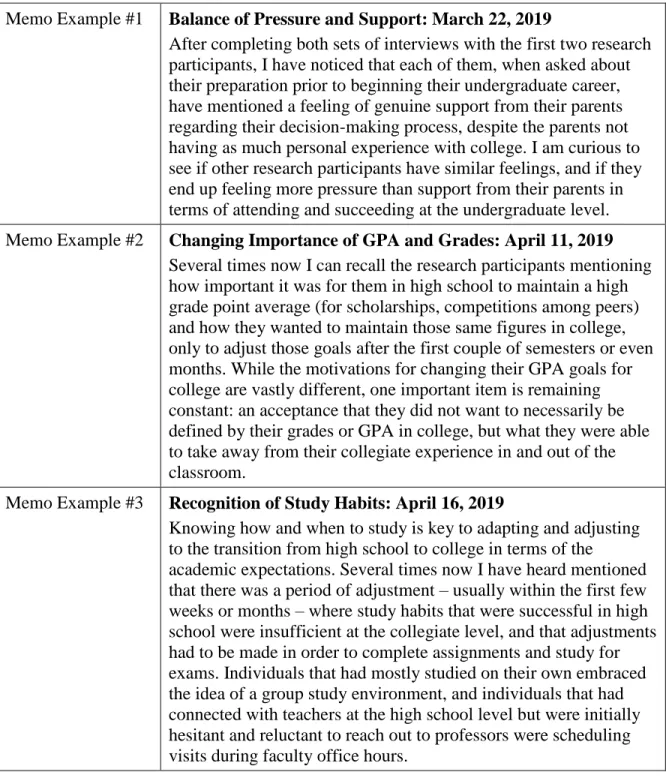
Interview Structure ... 60 Theoretical Sampling ... 62 Member Checking ... 64 Theoretical Saturation ... 65 Data Analysis ... 66 Organization of Transcripts ... 69 Open Coding ... 69 Axial Coding ... 70 Memo Writing ... 72 Selective Coding ... 73 Positionality ... 75 Trustworthiness ... 76 Transferability ... 77 Dependability ... 77 Credibility ... 78 Confirmability ... 78 Ethical Considerations ... 79 Summary ... 80 Chapter 4 - Results ... 81
Description of Research Participants ... 82
Six Primary Elements that Positively Influenced Persistence ... 83
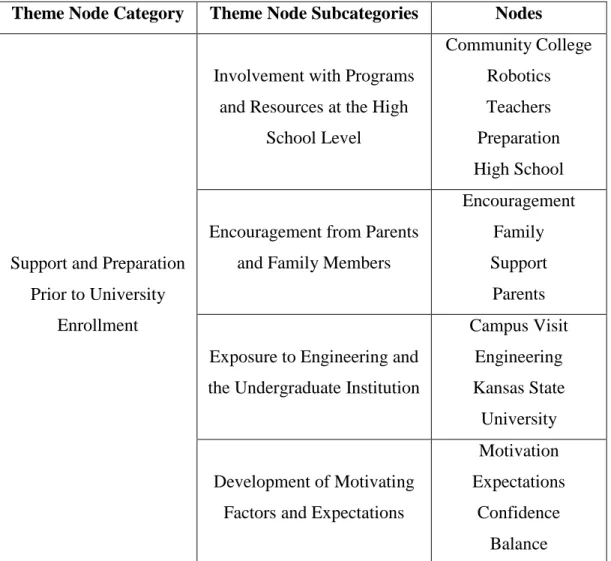
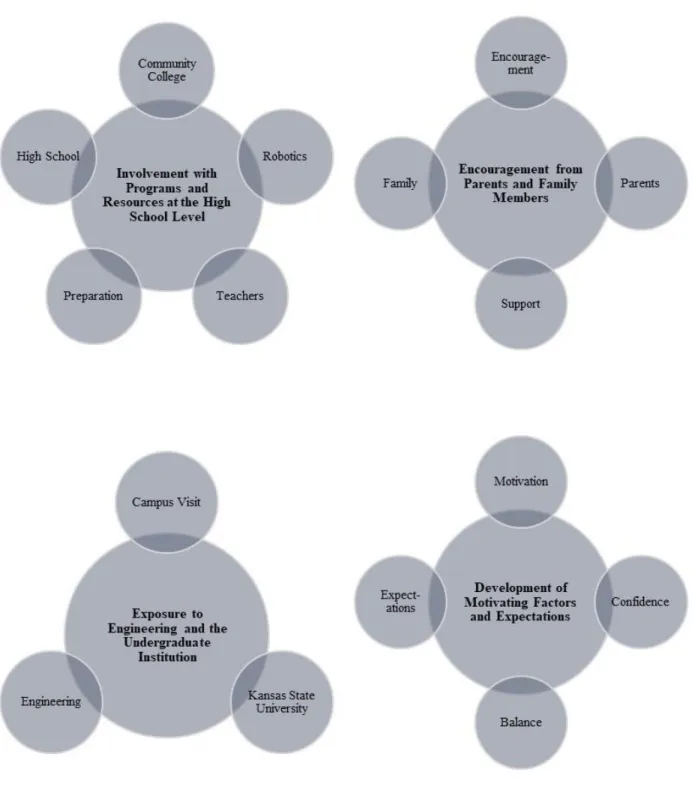
Support and Preparation Prior to University Enrollment ... 84
Exposure to Engineering and the Undergraduate Institution ... 101
Development of Motivating Factors and Expectations ... 109
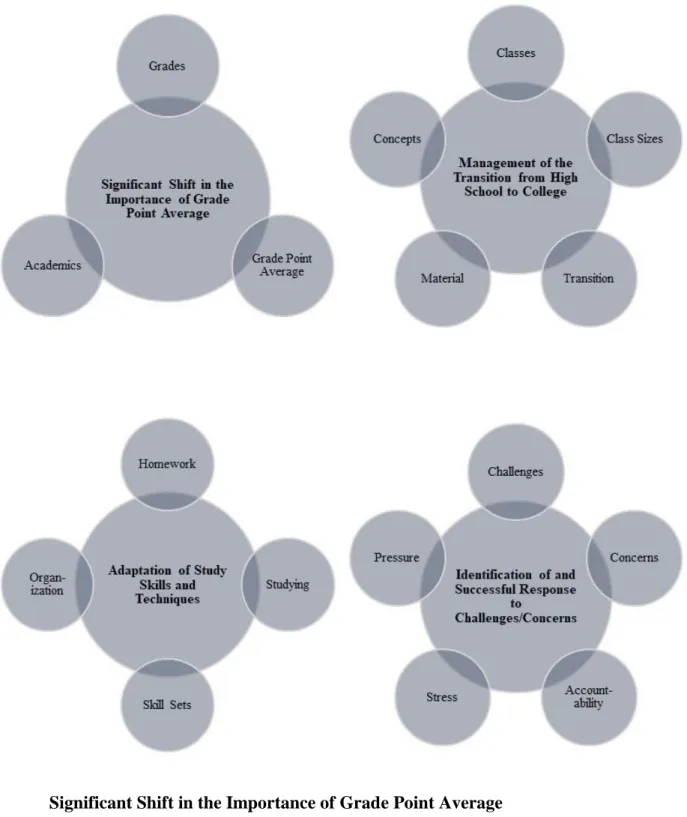
Adjustment of their Academic Approach and Expectations ... 118
Significant Shift in the Importance of Grade Point Average ... 120
Management of the Transition from High School to College ... 129
Adaptation of Study Skills and Techniques ... 133
Identification of and Successful Response to Challenges and Concerns ... 142
Strong Connections with Peers and Relationships with Friends ... 145
The Role of Friends and Peers at the University Level ... 146
Importance of Study Groups and Receiving Help from Others ... 152
The Atmosphere and Environment on Campus ... 156
Opportunities for the Formulation of a Meaningful Social Life ... 159
Incorporation of Habits related to their Academic and Social Responsibilities ... 162
Development of Time Management Skills and Techniques ... 163
Composition of Realistic and Achievable Goals ... 169
Understanding and Comprehension of their Educational Investment ... 174
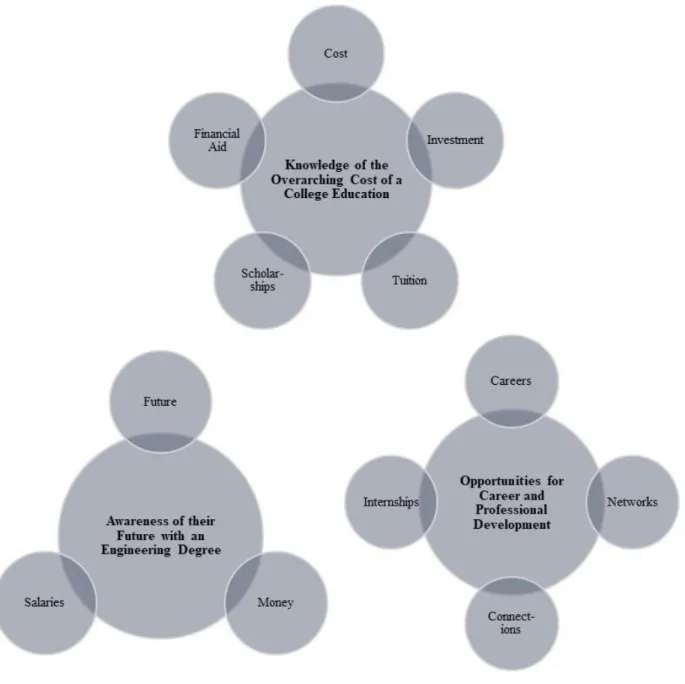
Knowledge of the Overarching Cost of a College Education ... 175
Awareness of their Future with an Engineering Degree ... 180
Opportunities for Career and Professional Development ... 183
Utilization of Institutional Support and Programming ... 190
Interaction with Advisors and Mentors... 191
Connections with Faculty and Professors ... 196
Tutoring and Academic Resources ... 202
Extracurricular Activities, Involvement, and Living Communities... 205
The First-Generation Engineering Student First-Year Persistence Model ... 215
Summary ... 217
Chapter 5 - Summary, Implications, and Recommendations ... 218
Summary of the Study ... 218
Summary of Primary Findings ... 219
Discussion of Primary Findings ... 233
Recommendations for Future Research ... 251
Summary ... 254
References ... 255
Appendix A - Informed Consent Form for Research Participants ... 266
Appendix B - Initial Interview Questions ... 269
Appendix C - Second Interview Questions ... 270
Appendix D - Initial E-Mail to Prospective Research Participants ... 271
Appendix E - Initial IRB Approval Letter ... 272
Appendix F - IRB Approval Letter Following First Amendment ... 273
Appendix G - IRB Approval Letter Following Second Amendment ... 274
List of Figures
Figure 3-1: Chronological Timeline of the Research ... 55 Figure 4-1: Node Clusters for Support and Preparation Prior to University Enrollment ... 85 Figure 4-2: Node Clusters for Adjustment of their Academic Approach and Expectations ... 120 Figure 4-3: Node Clusters for Strong Connections with Friends and Relationships with Peers 146 Figure 4-4: Node Clusters for Incorporation of Habits related to their Academic and Social
Responsibilities ... 163 Figure 4-5: Node Clusters for Understanding and Comprehension of their Educational
Investment ... 175 Figure 4-6: Node Clusters for Utilization of Institutional Support and Programming ... 191 Figure 4-7: The First-Generation Engineering Student First-Year Persistence Model ... 216
List of Tables
Table 1-1: Undergraduate Student Demographics from Kansas State University (2019) ... 6
Table 1-2: Projections of Kansas High School Graduates from Ruffalo Noel Levitz (2014) ... 12
Table 3-1: Examples of Node and Theme Node Subcategories and Category Hierarchies ... 71
Table 3-2: Examples of Memo Writing Throughout the Data Analysis ... 73
Acknowledgements
Without a doubt, this educational journey would not have been possible without the support, encouragement, knowledge, and dedication of family, friends, colleagues, students, and mentors. It is my sincerest hope that this dissertation is a reflection of their inspiration. I am so very fortunate to have so many incredible individuals that have taken the time to be a part of my educational, professional, and personal life.
To the love of my life, Elsie Shogren. You are this life’s greatest gift, and I would not be where I am today without your relentless support, encouragement, enthusiasm, intellect, and understanding. One day, those of us fortunate enough to have you in our lives will collectively figure out what we have done right in this world to have deserved your presence. Thank you for finding a way to amaze me each and every day we are together, and I cannot wait to help you defend your dissertation in the very near future.
To my parents, Tom and Cindy Hoffman, my brother, Dennis Hoffman, and sister-in-law, Mallory Lafargue Hoffman. Family has always been and will always be the foundation upon which everything else is built. The support, admiration, and love the four of you have provided since the very beginning has enabled me to succeed along this long and winding road. Thank you for believing in me every step of the way, and for always emphasizing the importance of our education. All I have ever wanted out of this life is to make you all proud.
To my professional mentor, Dr. Emily Lehning. Somehow finding a way into the Blue Key Honor Society my senior year of college and getting to spend time with one of the brightest and sharpest minds on campus set the course for both my educational and professional
aspirations. Thank you for continuing to inspire, support, and advise me as throughout this incredibly fulfilling journey.
To my current supervisor and colleague, Dr. Callie Rost. Working alongside you in the pursuit of recruiting the next generation of veterinary medicine graduates and professionals is an exciting challenge each day, and you inspire me with your positivity and knowledge. Thank you for your encouragement, enthusiasm, and support in creating and fostering such a rewarding professional environment in the College of Veterinary Medicine.
To the Engineering team of Dr. Bette Grauer, Dr. Gary Clark, Dean Craig Wanklyn, and Leanne Reineman. My time serving in the College of Engineering has forever shaped the trajectory of my educational and professional aspirations, and I will always be grateful for the opportunity to assist prospective and current undergraduate students. Thank you for providing me the opportunity to grow within one of the flagship programs at Kansas State University.
To the members of my doctoral committee, including Dr. Lydia Yang, Dr. Doris Wright Carroll, and Dr. Julia Keen. Having such a diverse array of backgrounds and experiences assisting me throughout every step of the dissertation process has made this such a rewarding five-year journey. Thank you all for being so willing to share your thoughts and ideas to help hold this dissertation to the highest possible standard.
To my major professor, Dr. Christy Craft. For five incredible years, you have provided the support, guidance, and advice I needed to complete this journey in such a positive and encouraging manner. The College of Education and Kansas State University are both incredibly fortunate to count you among its ranks. Thank you for always being so willing to answer my e-mails, calls, and office visits, and for challenging me to make the most out of this experience.
To my two personal mentors, Mrs. Shana Easley and Mr. Patrick Kies. When I arrived at the University of Missouri – Kansas City, the two of you demonstrated the work ethic, drive, and passion that was needed to be successful in higher education, and provided unrelenting support
for all of my goals and aspirations. Thank you both for showing me the way, for always being there despite where life takes us, and for challenging me to be my absolute best.
Finally, to all of the students – undergraduate, graduate, and professional – I have ever worked with throughout my educational and professional tenure in higher education. The
opportunity to be able to (even slightly) change the trajectory of a student’s life in a positive way has set the foundation for an incredible rewarding career in the collegiate atmosphere. Thank you all for your support and for providing the inspiration behind the design of this particular study.
Dedication
This entirety of this dissertation is dedicated to (the very soon to be Dr.) Elsie Shogren, the love of my life and the brightest star in my constellation. The greatest privilege in this life is never having to wonder what it would be like without you.
Chapter 1 - Introduction
During his 2016 State of the Union Address, United States President Barack Obama highlighted the importance of educational reform at the federal, state, and local levels to provide equal opportunity and access to courses in mathematics and computer science (Office of the Press Secretary, January 2016). Throughout his tenure in the Oval Office, President Obama invited elementary, middle, and high school students to participate in the White House Science Fair; at the 2016 edition, the President made note of several initiatives developed as a response to his State of the Union Address, including funding and programming from public and private firms to encourage computer science and STEM (science, technology, engineering, and mathematics) education across the entire K-12 spectrum (Office of the Press Secretary, April 2016). As a part of those initiatives, the President reported that recent increases in graduates in programs including engineering were the result of legislative efforts (Office of the Press Secretary, January 2016).
The former President’s call to action comes at an opportune time for the nation’s educational and financial health, as growth among architecture and engineering occupations is projected to climb to seven percent between 2016 and 2026, adding over 193,000 new
professional positions to the American workforce, the majority of which will fall within the engineering category (Bureau of Labor Statistics, October 2017). Among individuals considering enrollment in college as an investment in their financial future, engineering may prove an
enticing academic proposition, as projections show a median annual wage of $77,900 among those holding professional positions in the field, as compared to the $37,040 median annual wage among all of the economy’s occupations. Overall, the financial potential of careers in the field of engineering is encouraging for individuals weighing their postsecondary options.
Additionally, academic and professional authorities have recently identified 14 separate “grand challenges” for engineering, including those that focus on quality of life, sustainability, security, and health for the planet’s global citizenry (Scientia, 2018). Providing access to clean water, securing cyberspace, and developing methods for sequestration of carbon dioxide are among the challenges that are most pressing, prevailing, and pervasive. In order for the 14 outlined and established grand challenges to be met and overcome, engineering students must become graduates, and engineering graduates must become professionals with a critical and analytical approach to solving current and future problems.
Background to the Study
Although the urgency for an increase in opportunities to pursue engineering majors and degrees at the postsecondary educational level for a variety of populations is sincere and admirable, several challenges exist as legislative leadership looks to fulfill the anticipated and necessary growth. Persistence rates and the programs associated with student success have the potential to influence the number of engineering students successfully transitioning into the professional field after their academic tenure. Additionally, the current educational landscape provides the foundation for opportunities regarding applicable and impactful research that could assist educational and professional stakeholders in the quest to increase the diversity of
individuals pursuing and eventually completing a degree in an engineering field.
College Student Retention
One of the most significant challenges that institutional administration and staff must overcome at the postsecondary educational level centers on retention and the comprehensive combination of factors that determine whether or not a student persists until graduation. The earliest research regarding retention for undergraduate students focused on the psychological
characteristics of individuals, as well as the comprehensive environment of the postsecondary institution (Tinto, 2007). During this particular period, the interaction, community, and resources made available to students throughout the first year of their collegiate tenure were seen as
essential to combating attrition. As research in the field progressed, incorporating the length and breadth of institutional settings (two- and four-year colleges and universities, residential and commuter campuses) provided further opportunities to observe a more comprehensive picture of retention at the postsecondary educational level. As researchers and collegiate administrators look to further increase retention, Tinto (2017) suggested that current efforts should not be abandoned, but should be adjusted and updated to encourage both the opportunity and motivation for undergraduate students to succeed year after year. Furthermore, administrators, faculty, and staff should make an effort to visualize the experiences of undergraduate students, which could lead to a greater understanding of how programs, initiatives, and resources are designed to achieve higher levels of persistence.
Even with the advances that have been made in student persistence from its beginning to present day, graduation rates of undergraduate students at both two- and four-year institutions remain relatively low; one study found that approximately 60 percent of individuals that began at a four-year college or university had completed a bachelor’s degree within six years, and less than 30 percent of those at community colleges had completed a degree four years later (Burrus et al, 2013). Factors with the potential for influencing college student retention include the institutional environment on campus, demographic characteristics students bring with them to college, levels of student commitment to the goal of graduation and the institution in which they are enrolled, differing levels of academic preparation achieved before entering college, the push of their current major and the pull of other academic programs, confidence and self-efficacy, and
whether or not the individual student successfully integrates with the institution and finds their fit, both academically and socially.
As professional opportunities and vacancies for those with engineering degrees and backgrounds continue to grow in the United States, colleges and universities with engineering departments and majors find themselves in need of initiatives and programs focused on improving upon first-to-second year retention (Veenstra, 2009). Previous work in the field of persistence efforts for engineering majors and college student in general emphasize the
importance of first-year experiences in regards to their overarching academic success (Hutchison et al, 2006; Kuh et al, 2008). Furthermore, Veenstra (2016) found that, with specific institutions that offer programs in the field, the higher the first-year retention rate among engineering majors, the higher the graduation rate within that same subset of students, providing further evidence in favor of robust programming within the first two semester of students’ collegiate tenure.
While many students begin their respective undergraduate careers with the intention of pursuing and completing an engineering degree, a significant number of these individuals do not persist within their intended academic program (Litzler & Young, 2012). Among undergraduate students that enter college as first-year students, only 57 percent of those with engineering as their major of intent are still associated with that program four years later (Hall et al, 2015). While these figures are higher than the 52 percent persistence rate associated with all STEM majors across that same four-year timeframe, it is lower than the 60 percent national college completion rate (NSC Research Center, 2020; Rogers, 2013). Of those in engineering that persist across that four-year timeframe, 93 percent began in engineering as first-year students,
Increased adversity is faced by those engineering undergraduate students from underrepresented populations, as these individuals have historically had limited access to engineering-related programs and resources (Bosman et al, 2017; Burress et al, 2013; Litzler & Young, 2012; Long & Mejia, 2016; Navarro et al, 2014). Historically, significant gaps have existed between the educational attainment percentages of underrepresented minority groups in engineering and other STEM-related fields and their majority counterparts (Bosman et al, 2017). In addition to encouraging and engaging these underrepresented engineering students, Long and Mejia (2016) recommended that institutional policies and practices be updated in order to foster higher levels of persistence.
Goals for K-State 2025
When he was hired to succeed Dr. Jon Wefald in early 2009, one of the very first initiatives that then-Kansas State University President Dr. Kirk Schulz developed was the comprehensive K-State 2025 plan, which incorporated strategic goals and outcomes for nearly every office and department found within the Manhattan, Polytechnic, Olathe, and Global campuses. For the College of Engineering, the development and dissemination of the K-State 2025 plan meant the implementation of programming that would serve the state of Kansas and the entire nation with faculty, coursework, and research opportunities that would prepare future leaders and innovators in the professional field of engineering (Kansas State University, 2012). Through a combination of academic and research-related pursuits, an environment would be created on campus that would benefit society as a whole.
Table 1-1: Undergraduate Student Demographics from Kansas State University (2019) 2014 2015 2016 2017 2018 Total Undergraduates 20,327 19,859 19,472 18,488 17,869 Full-Time 18,258 17,935 17,699 16,770 16,230 Part-Time 2,069 1,924 1,773 1,718 1,639 In-State 15,577 15,314 15,003 14,316 13,856 Out-of-State 4,750 4,545 4,469 4,172 4,013 Men 10,607 10,348 10,179 9,743 9,451 Women 9,720 9,511 9,293 8,745 8,418
Aged 19 and Under 6,921 6,685 6,535 6,279 6,219 Aged 20-24 11,272 11,196 11,135 10,543 10,180
Aged 25-39 1,814 1,674 1,512 1,394 1,233
Aged 40 and Over 320 304 290 272 237
Non-Resident Alien 1,467 1,269 1,137 961 828 Black 793 728 695 619 568 American Indian 75 77 86 90 74 Asian 265 281 291 282 303 Hawaiian/Pacific Islander 26 23 25 17 19 Hispanic 1,220 1,311 1,304 1,299 1,343 Multiracial 612 623 661 674 656 Unknown 288 266 200 180 197 White 15,581 15,281 15,073 14,366 13,881
From an enrollment standpoint, the K-State 2025 plan for the College of Engineering meant that total enrollment among its undergraduates would need to exceed 3,750 individuals to meet the projected goals for financial and institutional stability. Additionally, the 2025 plan called for efforts to grow the underrepresented and female population to 360 and 560 students, or approximately 10 and 15 percent of the total engineering population, respectively. Furthermore, as a part of these comprehensive plans, the College of Engineering at Kansas State University expects to implement the following components to achieve the goals and aspirations set forth by the initiative: retention programs for underrepresented populations, comprehensive advising and
At Kansas State University specifically, engineering student enrollment grew from 3,503 students in the Fall of 2014 to 3,666 in the Fall of 2015, edging closer to the benchmark of 3,750 engineering students enrolled at Kansas State University by the year 2023 (Division of
Communications and Marketing, 2015). In order to meet the demands and expectations set forth by the K-State 2025 strategic plan, administrative leadership within the College of Engineering established a strategic enrollment management plan, combining a wide array of majors and programs of study, specific recruitment processes, and vibrant programming directed towards bolstering retention efforts (College of Engineering, 2017). Since the overarching K-State 2025 strategic plan was implemented, the engineering enrollment at Kansas State University has increased beyond the projected figures each year, successfully adjusting to the fiscal and
educational climate of the state of Kansas. However, additional efforts are still needed in order to provide effective programming directed towards first-generation students as they make the transition to a challenging college major.
Strategic Enrollment Management Plan and Huron Consulting Group Partnership
Prior to the start of the Fall 2018 semester, Kansas State University, in conjunction with the Huron Consulting Group, revisited the K-State 2025 goals in order to better serve its various constituents (Kansas State University, 2018c). In order to continue moving the institution in a forward direction, administrative and executive leadership established the Strategic Enrollment Management plan to increase measurements regarding the recruitment of prospective students and retention of current students. Within the overarching structure of the Strategic Enrollment Management Plan, seven distinct themes were developed to help guide the decision-making process: data, technology and systems, financial sustainability, marketing and communications, undergraduate recruitment, retention and student success, the Global Campus, and the Graduate
School. The fifth theme addressed, retention and student success, recognized the potential for growth in identifying and impacting certain student groups, advocated for the continued development of K-State’s First Year Experience, and suggested an increase in the
communication among various offices and departments across the institution in order to best serve the needs and interests of its enrollees. While the suggestions and goals of each of the seven themes are important to its comprehensive sustainability, retention and student success, for the purpose of this particular study, are both of great importance and influence.
First-Year Program the College of Engineering
In the Spring semester of 2016, the collective faculty of the College of Engineering, in an effort to encourage the success of specific incoming student populations, passed an initiative at their bi-annual meeting to implement a selective admissions process that would include criteria meant to go above and beyond those instituted by the university as a whole. As a part of this initiative, the new process for incoming, first-time college students would require at least a 3.0 (on a 4.0 scale) high school grade point average and at least a 24 composite score on the ACT (or the SAT equivalent to that figure) to begin in a specific engineering major. Prospective
applicants that met the high school grade point average threshold and had either a 21, 22, or 23 composite score on the ACT or its SAT equivalent (since a 21 ACT or its SAT equivalent was the minimum requirement for admittance) would be selectively admitted as General Engineering majors in order to provide additional resources, advisors, and programming designed to foster a successful transition from high school to college. Each student selectively admitted into General Engineering would be enrolled in the one-credit hour DEN 160 course called Engineering Orientation, which is designed as a first-year program intended to educate its enrollees on all of the various majors, academic programs, and professional opportunities available to engineering
graduates from Kansas State University. Upon successful completion of Analytical Geometry and Calculus I with at least the grade of a “C” during their first semester on campus (which is the first mathematics course recommended for 10 of the 11 engineering degrees), those selectively enrolled in the General Engineering program are then eligible to coordinate with advisors in the department of their choosing to declare one of the 11 majors found within the College to
continue their pursuit of a degree in engineering from Kansas State University. Additionally, the General Engineering first-year program (and enrollment in DEN 160) is also made available to any fully-admitted engineering undergraduate student who may be unsure of their major of choice, which makes for a very diverse enrollment in DEN 160 each Fall semester.
Prior to enrollment for the incoming, first-time college student population admitted to engineering at Kansas State University, which traditionally occurs in both June and August leading up to the start of each Fall semester, the Office of Student Services within the College of Engineering engages in an extensive review process, examining the academic credentials of every individual before the admitted student meets with an advisor to select their semester coursework. Each student that has either voluntarily chosen or has been selectively admitted into General Engineering is then enrolled in DEN 160, the College of Engineering’s comprehensive first-year program. The overarching purpose of the one-credit hour Engineering Orientation class is to provide an additional level of support and programming for selectively and fully admitted engineering students to navigate the often tumultuous transition to the university atmosphere. For the purpose of this particular study, reviewing the roster of DEN 160 will enable the examination of first-generation students who participated in the first-year program throughout their first semester on campus as an engineering major.
Statement of the Problem
Considering the inherent difficulty of coursework heavily embedded with a foundation of calculus, physics, and chemistry, concern regarding the persistence and success of engineering undergraduate students has become more prevalent in the wake of an increased awareness of professional engineering position vacancies (Drew, 2011). With significant challenges ranging from clean water to cyberspace security facing national and global citizenries, more focus is being placed on the resources provided by respective institutions to aid engineering student persistence in order to produce more graduates and professionals. With the opportunity for funding provided through tuition from current students and monetary gifts provided by graduates, institutions with engineering programs must consider the financial implications of increasing retention and graduation rates among their respective undergraduate populations.
However, across the United States, fewer than five percent of all undergraduate degrees conferred at colleges and universities are in engineering, which lags behind the 13 and 23 percent figures reported in specific European and Asian countries, respectively (Thursby, 2014). In order to simultaneously meet the occupational demands that currently and will exist in the engineering profession and entice more high school graduates to pursue an engineering degree, institutions of higher education must employ a creative methodology to encourage a broader and more
comprehensive educational experience without sacrificing the necessary difficulty of a curriculum based on math and science. Given the overarching dependency on engineering-related professions for innovation in areas as diverse as business and science, encouraging more individuals to pursue and complete an engineering degree can have significant ramifications for advances made in technology, natural resources, communication, and food production that are utilized on a national and global scale.
In Kansas, the primary challenge faced by executive and administrative leadership is an ever-changing population of high school graduates ready and willing to pursue a degree like engineering at a four-year institution inside of state lines. According to projections of high school graduates across the United States collected by Ruffalo Noel Levitz (2014), the state of Kansas will experience a 7.6 percent growth in graduates from 2014 to 2019, and a 12.9 percent growth from 2014 to 2024. Furthermore, Hispanic and Latino Kansas high school graduates will increase by 37.5 percent from 2014 to 2019, and 75.2 percent from 2014 to 2024, signaling a noticeable shift in the racial, ethnic, and cultural composition of those looking to pursue higher education following completion of high school. However, these projections are met with the challenge that fewer high school students within the state of Kansas are electing to enroll at a four-year institution of higher education following their high school graduation (Kansas Data Central, 2018). In the 2013-2014 academic year, 33,302 individuals graduated from high school in the state of Kansas, with 14,362 (just over 43 percent) electing to enroll at a four-year
university. In the 2015-2016 academic year, 33,852 students graduated high school, and 13,815 (just under 41 percent) of those went on to enroll at a four-year institution. Despite an increase in the number of individuals graduating from high school in Kansas, the number of students then enrolling at a four-year university has been decreasing during the same time period. Table 1-2 provides an overview of these demographic projections from Ruffalo Noel Levitz (2014).
Table 1-2: Projections of Kansas High School Graduates from Ruffalo Noel Levitz (2014) Academic Year 2013-2014 Academic Year 2018-2019 Change in % from AY 2013-2014 to 2018-2019 Academic Year 2023-2024 Change in % from AY 2013-2014 to 2023-2024 White, Non-Hispanic 22,400 23,201 3.6% 22,532 0.6% Hispanic/ Latino 3,409 4,687 37.5% 5,973 75.2% Black, Non-Hispanic 2,016 1,981 -1.7% 2,237 11% Asian/ Pacific Islander 897 1,136 26.6% 1,438 60.3%
Given that the number of high school graduates in the state of Kansas is increasing but the number of those electing to start at four-year institutions of higher education is decreasing, the retention efforts of collegiate leadership have become more critical to their respective
mission statements, enrollment figures, and outcome benchmarks. Furthermore, a report from the University of Washington suggested that a disproportionate percentage of minority and
historically-underrepresented students are also first-generation students (Office of Minority Affairs & Diversity, 2016). Considering the projected shift in the demographic makeup within the state, Kansas State University can expect a larger percentage of historically-underrepresented students to arrive on campus in the near future, many of whom will be first-generation students, as well. With such a wide array of factors influencing the retention of undergraduate students, opportunities to provide additional resources and support can bolster retention statistics through purposeful demonstrations of various programming and resources tailored specifically towards engineering persistence.
Purpose and Rationale of the Study
The purpose of this study was to explore the factors that positively influenced the first-to-second year institutional and major persistence efforts of first-generation undergraduate students in a first-year program in the College of Engineering through a qualitative design and a grounded theory methodology. A grounded theory methodology allowed for the development of an entirely new theory, drawn from the data collected through interviews with the research participants, which assisted in the exploration and examination of this unique population of individuals. Current and projected increases in the amount of first-generation enrollees at the collegiate level, increased focus on the successful transition of first-generation students through unique
programming, and the projected vacancies in professional engineering fields are just a few of the factors that helped influence the design of this particular study (Fernandez & Trenor, 2008; Verdin & Godwin, 2015). Furthermore, this study was initiated with the intention of adding to the body of literature focused on understanding the overarching experiences of first-generation engineering students and their participation in a first-year program designed to assist with the transition to the collegiate level. Considering that I examined those students that had persisted as an engineering major, the individuals associated with this study would have already completed the first year of their collegiate tenure.
Research Question
This particular research study looks to add to the existing body of literature regarding the persistence efforts of first-generation engineering undergraduate students who participated in a first-year program at the college or university level. Utilizing a qualitative, grounded theory design, the research question at the center of this study is the following: What were the factors
that positively influenced the first-to-second year institutional and major persistence efforts of first-generation engineering students that participated in a first-year program?
Significance of the Study
Given the importance of a robust enrollment and higher levels of student success for colleges and universities with engineering undergraduate programs, the collection of rich data associated with the factors that positively influenced the institutional and major persistence of first-generation engineering students who participated in a first-year program could have
significant benefits to institutional health and sustainment. Additionally, through comprehensive conversations and initiatives, colleges and universities across the nation could further develop their own respective understanding of the persistence of first-generation engineering students who participated in a first-year program by examining the data collected through the parameters of the design.
Limitations of the Study
Within the parameters of this particular qualitative, grounded theory research, certain limitations should properly be identified, including the following:
The study includes engineering undergraduate students who have already met certain criteria that were determined prior to the start of the research. The students who were fully or selectively admitted into the College of Engineering at Kansas State
University therefore met the high school grade point average and minimum ACT score requirements.
Additionally, each of the research participants would have been a first-generation, first-year student of a more traditional age group for college enrollment. Therefore, any conclusions made from the results of this study may not be as easily applied to
those individuals outside of the aforementioned parameters, nor is qualitative research intended to accomplish such a goal.
Given the inherent structure of the research design, the opportunity for response bias should be addressed. Response bias refers to either general or specific components that have the potential for affecting the way responses are given and eventually collected as a part of the overarching research design (Villar, 2011). Considering that the interview process will occur after the research participants have successfully persisted in engineering from first to second year, the possibility of misremembering or misinterpreting certain experiences could lead to the existence of response bias. In order to combat response bias, it is suggested that I engage in a purposeful vetting process to select appropriate research questions, and that the questions are placed in an order that will maximize the opportunity for accurate responses (Villar, 2011). The study involves a small section of individual students who exist within a larger
student community of engineering majors at the collegiate level. However, given the importance of enabling the success of first-generation student populations, especially those pursing degrees in engineering, the research, while narrow in focus, can provide a unique lens in which to examine the persistence of individual students.
Considering that the initial and follow-up interviews were the only source of data for the research design, the lack of a triangulation of data should also be addressed as a potential limitation of the study. The triangulation of data refers to the incorporation of several data sources and methods within the parameters of a qualitative research design (Carter et al, 2014). While a lack of data triangulation could pose a threat to the collection and analyzation of rich data that examines the phenomena at the core of
this study, it is my intention to utilize a comprehensive coding process and member checking as means to mitigate the challenges associated with a lack of data
triangulation.
As the sole individual conducting both interviews with the research participants and reviewing the transcribed conversations that will result as a part of the comprehensive data collection and analysis procedures, the absence of peer debriefing could be identified as a possible limitation to the scope of the research design. Within the field of qualitative research, peer debriefing refers to the purposeful engagement, on the part of the researcher, to converse and discuss the findings and development of a research design with an impartial colleague to support the overarching credibility and trustworthiness of the study (Spall, 1998). In order to address the concerns associated with the lack of peer debriefing within the confines of this research design, I intend on employing a constant comparative data analysis technique that will allow for careful consideration of the data that will be collected from the interviews with the research participants. Furthermore, it is my intention to reinforce the transferability, dependability, credibility, and confirmability within the methodology of the study, as addressing the aforementioned components can strengthen the trustworthiness of the results and findings that emerge from the collection and analyzation of data.
Finally, researcher bias should be identified as a potential limitation. The research focuses on the factors that positively influenced the first-to-second year institutional and major persistence of first-generation engineering undergraduate students who participated in a first-year program. Since the beginning of my professional career in higher education, this is a population of individuals with whom I have spent
significant time. While this experience and enthusiasm could be seen as a potential limitation to the overarching design of the study, I intend on instituting a number of measures in which to increase the trustworthiness of the results and strengthen the methodology to curtail any impact of that bias.
Key Definitions
College of Engineering refers to one of the nine different academic colleges within Kansas State University, which at the time of this report enrolls 3,732 undergraduate students across its majors and programs and makes it the second-largest academic college behind the College of Arts and Sciences (Kansas State University, 2018a).
First-generation refers to students at Kansas State University who will become the first members of their family to graduate from a four-year college or university upon successful completion of the academic requirements of their major (Kansas State University, 2018b).
Persistence refers to the effort of the individual student to remain within their academic studies until they have completed all of the necessary requirements to be awarded their degree; this is different from retention, which is recognized by The National Center for Education Statistics as an institutional measure, while persistence is individual (Hagedorn, 2005).
Retention refers to the fulfillment of specific goals and aspirations related to the
postsecondary educational aspirations of students, which requires the observation and monitoring of institutions to measure whether or not the student has indeed enrolled and whether or not the educational goals and aspirations of their students have changed throughout the course of the students’ respective tenure at the college or university level (Seidman, 2005).
Selectively admitted refers to students that applied to and were matriculated to the College of Engineering at Kansas State University and met the high school grade point average
threshold and had either a 21, 22, or 23 composite score on the ACT (or SAT equivalent) in order to provide additional resources, advisors, and programming.
Implications for the College of Engineering
Considering the aforementioned K-State 2025 and Strategic Enrollment Management Plan benchmarks that were set in place regarding enrollment, persistence, and the population of undergraduate students, the examination of the factors that positively influenced the first-to-second year institutional and major persistence of first-generation students who participated in a first-year program could have significant implications for the College of Engineering at Kansas State University. Sustainable growth in enrollment equates to increases in revenue collected from tuition, fees, and other costs associated with the pursuit of an undergraduate degree, as well as the projected increase in financial gifts from institutional graduates and professionals. A comprehensive understanding of the experiences of first-year, first-generation engineering students could provide a greater comprehension of the factors that positively influenced their persistence efforts.
Summary
Local, state, and federal leadership throughout the United States has, in recent years, increased the amount of focus and attention on the professional vacancies inherent to the field of engineering. Additionally, these constituents have amplified the educational opportunities that exist to enable greater numbers of individual student persistence in a traditionally challenging academic major at the postsecondary educational level. In the College of Engineering at Kansas State University, initiatives are made available with the intention of supporting individuals with additional resources and programming to assist with the transition from high school to the university atmosphere for first-time, first-year engineering students. With the combination of the
fiscal climate in the state of Kansas and the benchmarks set in place by the K-State 2025 and Strategic Enrollment Management Plan initiatives, certain programs and resources serve as a proactive approach to meeting goals related to the enrollment, persistence, and graduation of engineering undergraduate students at Kansas State University. Given the traditionally difficult task of pursuing an engineering undergraduate degree and the current vacancies in industry, greater pressure regarding engineering student success has been placed on postsecondary
educational leadership. Considering the existing body of research on the retention of college and university students at institutions of higher education, the examination of the factors that
positively influenced the to-second year institutional and major persistence of these first-generation engineering students has the potential to add a volume of rich data from among those who have found a way to be successful. Through this study, I intend on addressing the
potentially wide array of experiences, programs, resources, and conversations that led to successfully enduring the academic and social integration necessary for persisting at the collegiate level.
Chapter 2 - Review of Literature
Upon examining the literature on the retention of undergraduate students and the efforts of institutions through various programs and initiatives, several areas of research and
development arise as significant, including factors related to persistence, influences of departure, peer and institutional climate, and challenges related specifically to engineering undergraduates. To develop a greater understanding of the factors that positively influence the first-to-second year institutional and major persistence of first-generation engineering undergraduate students who participated in a first-year program, the aforementioned areas of focus and research will be further examined.
Undergraduate Student Retention
Administrative and executive leadership at postsecondary educational institutions across the United States, in addition to legislators and lawmakers at the state and federal level, have given precedence to various efforts directed towards the comprehensive subject of college student retention since colleges and universities first came into existence (Braxton et al, 2013). Considering that approximately 25 percent of first-year, first-time college students do not persist into their second year, institutional representatives across every level will continue to be
impacted by the threat of college student attrition well into the future. Early efforts to increase retention at the collegiate level focused on developing theory into practice, turning information collected at institutions of every variety into sustainable measures that increase the likelihood of both persistence and graduation among the enrolled population. In order to effectively and efficiently combat college student attrition at colleges and universities across the nation, arguments have been made for a greater understanding of the factors that affect student
persistence, a comprehensive body of literature comprised of empirical evidence, and the development of theoretical frameworks that can consistently increase college student retention.
Foundational Research on Student Retention
In the field of postsecondary education, William Spady (1971) can be credited for his work developing one of the very first theoretical models for examining college student retention, known as the Undergraduate Dropout Process Model. Within the parameters of the
Undergraduate Dropout Process Model, Spady, with his background in sociology, brought together the concepts of undergraduate attrition and social integration on the part of the student to the overarching body of literature on the subject. By further examining the process by which college students drop out and abandon their studies, Spady began a more in-depth exploration of attrition by focusing on the dynamic between the individual student and the environment on the college or university campus in which they were enrolled. Spady then argued that the length and breadth of the inherent interaction between student and environment affected the amount of academic and social integration the student incurred, thus leading to whether or not they would persist at their respective college or university. The Undergraduate Dropout Process Model demonstrated that an individual student’s likelihood of persistence was contingent on the success, support, and integration into both the academic and social arenas present at the collegiate level.
After Spady’s model, the work of Vincent Tinto (1975) established a different theoretical model explaining why college students drop out of the collegiate experience prior to graduation, based on specific characteristics and factors possessed by individuals that were related to
persistence at the postsecondary educational level. The early model developed by Tinto
immersion into the academic and social systems established at a particular college or university. Additionally, the presence of external factors affecting attrition were identified, including the prospects of the job market, the family obligations students may or may not have to manage in addition to their studies, and the financial considerations of continuing one’s education in the short- and long-term. Furthermore, among the individual characteristics of students that have been shown to relate to persistence, those associated with their family, academic ability, prior educational experiences, and commitment to certain educational attainments are those that were considered the most important. Institutions also acquire and are associated with certain
characteristics that relate to student persistence and retention, including but certainly not limited to its programming, resources, facilities, and faculty community. For example, Tinto identified that public institutions of higher education tend to have higher attrition rates than those of their private counterparts. Arguments have been made that administrative and executive leadership should distinguish differences between voluntary withdrawal and academic dismissal as it relates to student persistence, as the former and the latter involve different individuals, behaviors, factors, and patterns of relationships established and developed at the postsecondary educational level. Although his early work is not without critique, Tinto offered a set of comprehensive suggestions for future research in the field of college student attrition, including the examination of race and ethnicity as it relates to dropout rates, the differences between institutions of higher education in various settings, and the existence and influence of groups comprised of both students and faculty.
As this early model gained traction, additional contributors in the field of retention at the postsecondary educational level, through the examination of related studies, found Tinto’s framework to be pragmatic in relation to the factors associated with college student attrition
(Terenzini & Pascarella, 1980). Specifically, early studies provided support for the influence of both the psychological and sociological factors associated with adjusting to the environment and atmosphere of postsecondary educational pursuits. Terenzini and Pascarella concluded that the importance of the traits and characteristics that students bring with them to their collegiate experience should not be undervalued, but should also be taken in consideration with the extent of programming, policies, and resources made available at the students’ respective institutions. Additionally, the early studies demonstrated the importance of interactions with professors and faculty members at the college level, as first-to-second year retention rates were shown to have a positive relationship with the frequency at which students participated in these informal
conversations and meetings with those overseeing their respective classrooms and learning spaces. In terms of programming that colleges and universities strive to develop with the goal of increasing retention among their student population, these early studies highlight the importance of efforts that are fluid and flexible, as a methodology that may provide positive results for one student at that institution may not necessarily enable the persistence of another.
As a critic of both Spady and Tinto’s earlier work in the field, John Bean (1980) entered the historical record of theoretical frameworks related to college student persistence through the development of the Student Attrition Model, which incorporated processes similar to other frameworks that focused on employee turnover at the professional level. By focusing on components ranging from grade point average to educational value, Bean discovered the importance of institutional commitment and an overarching satisfaction with the institution as factors related to individual student persistence. Further work conducted by Bean (1982)
included a holistic review of Spady and Tinto’s earlier student attrition models with the intention of developing a theoretical model and framework with a flexibility that would allow it to be
applied to various institutions, populations, and settings. Overall, this second model was developed with the intention of identifying factors related to what Bean believed to be the primary gauge of student dropout: whether or not the students had significant intentions to leave the institution. Given the overarching focus on the students’ backgrounds, their interaction with the organization, their own unique outcomes and attitudes, as well as their individual intentions, one of the most important characteristics of the second phase of Bean’s Student Attrition Model is its ability to be applied to a wide array of institutions, populations, and environments.
Through a comprehensive blending of the theoretical models developed by both Bean and Tinto, Cabrera et al (1993) added the Integrated Model of Student Retention as their contribution to the existing body of literature on the subject. Factors including grade point average, academic integration, financial attitude, institutional commitment, and social integration from earlier models were among those that, through the results of the study conducted by Cabrera et al, were confirmed as influential to college student retention. Further examination of the results of the study conducted by Cabrera et al provided for a strong foundational argument that a combination of the two aforementioned college student retention models allowed for a more thorough and in-depth comprehension of the phenomena surrounding college student retention. Additionally, the blended model developed and incorporated by Cabrera et al provided strong evidence in support of the influence of the overarching campus environment. Administrators and executive
leadership developing future studies regarding college student retention, Cabrera et al argued, should look to provide support for the respective academic endeavors of their students and identify the pre-college factors related to institutional commitment in order to best serve those enrolled at the postsecondary educational level.
Further work undertaken by one of college student retention’s pioneering authors established the argument that, as leadership at the postsecondary educational level looks to supplement their respective retention efforts, institutions must recognize a certain obligation not only to the health and well-being of their entire student body, but also to the individual students that comprise the overall collegiate population (Tinto, 1993). In order to establish an atmosphere of commitment directed towards individual student success, Tinto asserted that institutions of higher education need to make the establishment of a caring atmosphere a priority on campus and one in which the institution clearly stands identifies the placement of student success and welfare as its primary aspiration. Furthermore, the contracts that are established, signed, and maintained by both institution and individual student, whether social or educational in nature, should be clear and transparent prior to the students’ arrival on campus. Again, Tinto reiterated the importance of the time and effort that both faculty and staff at the collegiate level dedicate towards their students in formal classroom settings and informal on-campus events and activities.
In his continued work on the subject, Tinto (1993) established and conceptualized what he referred to as the paradox of institutional commitment, in which he argued that colleges and universities that adopt policies and programs that acknowledge a willingness for students to depart will also have a higher volume of students that persist. In addition to identifying the aforementioned paradox, he also calls for administrative and executive leadership at the
collegiate level to recognize the limitations of institutional action, and that there is only so much that a college or university can do in the way of programming and policy; in the end, not every individual that arrives on the first day of the new semester will possess the skills and attributes necessary to persist until graduation in their respective major or academic program. With opportunities to get involved in a variety of organizations and activities that allow for the
personal and educational development of its students, institutions must also recognize that the immersion and integration of students is directly related to and impacted by its own efforts regarding the education of the enrolled population. In order for institutions to establish a sense of commitment to its educational goals and aspirations among its student population, Tinto stated that those same institutions must first display a commitment to the students and the values they wish to disseminate. Rather paradoxically, he also advises that collegiate staff and administration should strengthen bonds with students that have failed to earn their degree or meet their
educational goals rather than sever ties completely, providing opportunities for continuing and non-traditional pathways to educational aspirations. Every component associated with a particular college or university – faculty, staff, and community partners – should play a role in the health and welfare of their institution, which could then lead to a greater commitment from individual members of the student population.
Additional research and development in the field of college student attrition taken on by Tinto (1997) focused on studies related to classrooms and learning spaces as communities and argued that the networks students develop in their scholarly pursuits are essential to their attendance, participation, and success at the postsecondary educational level. The studies that served as the foundation for this community-based research suggest the importance of students being exposed to and influenced by a wide array of perspectives and viewpoints from multiple faculty members and professors. In more difficult educational environments, characterized by selective institutions, challenging majors, and rigorous coursework, the relationships students establish are more likely to be an integral part of their success at the collegiate level. Given the importance of and attention directed towards efforts related to the first-year persistence of college students, the studies examined under the lens of community development found that
students tended to place more emphasis on their social integration into the institution rather than on their academic involvement. Instead of seeing them as two different spheres, social and academic systems should be seen as aggregated components that affect the creation and development of communities in which students engage throughout their academic tenure.
Further testing and critiques of the early models of college student attrition led to the establishment of several propositions deemed to be interconnected with one another in a logical format, which upon further examination suggested that social integration, and not academic integration, was essential to better understand student attrition (Braxton et al, 2000). By
examining its influence on the process of college student retention and attrition, arguments were made that classroom activities incorporating active learning could provide additional support for students looking to establish a peer network that would then lead to a greater community at the collegiate level. Through a comprehensive longitudinal design involving over 700 incoming first-year college students to a highly-selective private institution, the authors of one study in particular focused on factors related to institutional commitment and persistence, finding
evidence that both classroom discussions and social integration led to an increase in institutional commitment. Additionally, the data collected suggest that the presence of classroom discussions in the style of active learning leads to an increase in institutional persistence, as well as faculty involvement and how their participation in active learning concepts could be influential on the commitment and decision-making process of college students.
Continued work in the field of influential theoretical frameworks related to college student persistence led to the creation of The Model of Influences on Student Learning and Persistence, developed by Reason (2009) through a comprehensive review of the work of Terenzini and Reason (2005). The Model of Influences on Student Learning and Persistence
provided an effective and appropriate method in which to further examine the persistence efforts of individual college students. By building upon previous research related to undergraduates, Reason (2009) developed this model as an effort to incorporate all of the various components that impact and affect the persistence of individual college students. The first section of the model addresses the various experiences and characteristics that individual students establish prior to the start of their academic career at the collegiate level, including their academic
preparation and performance, specific dispositions, and sociodemographic factors. Additionally, the model highlights the organizational structure of the college or university where the students attend, which could relate to on-campus resources, academic programming, and opportunities for connections with faculty. Furthermore, this particular model addresses the environment on campus awaiting the individual students, including their interactions with their peers and the encounters in and out of the classroom that compose the comprehensive college experience. Each of the four components – pre-college characteristics and factors, the institutional organizational context, peer environment, and individual student experiences – are then shown to individually and collectively influence the persistence of students.
Primary Factors Influencing Persistence
When examining the primary factors that influence college student persistence, several key themes emerge from the literature: institutional culture and commitment, student
engagement and integration, academic preparation prior to the start of college, psychosocial characteristics, and educational and career expectations students acquire before and during their respective collegiate tenure. The very culture of a college or university is comprised of a variety of factors that are established and reestablished through certain interactions that happen among institutional partners and constituents (Habley et al, 2012). Within a collegiate environment,