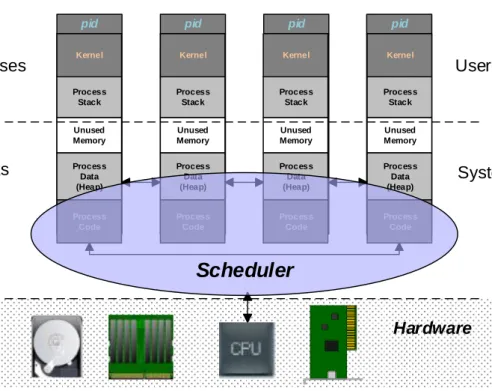
Setembro de 2013 Operating System
Kernel
DBench-FI
Fault Injector Injection policy
DBench-FI
Controller
Best Strategy
Fault Injection Phase
Best Strategy Evaluation Process Reference Results Faultload Subsets Software Metrics of OS Kernel Software Metrics Analysis Tools OS Kernel G-SWFIT Complete Faultload G-SWFIT Faultload Generator G-SWFIT Fault Operators Library OS Kernel Symbols Table
Strategy Analysis Phase
Pedro Miguel Lopes Nunes da Costa
DEPENDABILITY BENCHMARKING FOR LARGE AND COMPLEX SYSTEMS
Tese de doutoramento na área científica de Engenharia Informática, orientada pelo Senhor Professor Doutor João Gabriel Silvae pelo Senhor Professor Doutor Henrique Madeira, e apresentada ao Departamento de Engenharia Informática da Faculdade de Ciências e Tecnologia da Universidade de Coimbra.
for the degree of Doctor of Philosophy in Informatics Engineering
Dependability Benchmarking for
Large and Complex Systems
Pedro Miguel Lopes Nunes da Costa
Under supervision of Prof. João Gabriel Silva
Dep. de Engenharia Informática Universidade de Coimbra
Portugal
Prof. Henrique Madeira Dep. de Engenharia Informática
Universidade de Coimbra Portugal
Departamento de Engenharia Informática Faculdade de Ciências e Tecnologia
Universidade de Coimbra Portugal
Departamento de Engenharia Informática Faculdade de Ciências e Tecnologia
Universidade de Coimbra
ix
The spread of computer-based systems and the growing number of its applications in critical tasks has increased the dependence of modern societies on that kind of systems. As a consequence, dependability benchmarking of computer systems, as a way to assess and compare the dependability of components and systems, has caught the attention of researchers and practitioners in recent years.
One crucial component of dependability benchmarks is the fault injector. Dependability benchmarks must include fault injectors with very specific features: (i) they should be very easy to install and use, without the need for any complex setup or installation procedure;(ii) have high level of portability; (iii) have very low intrusiveness, in order to mitigate the performance loss; (iv) be capable of injecting faults in both user and system spaces; (v) and in code and data segments of any process, irrespective of their complexity; (vi) be independent of the availability of the source code of any system component or user process; (vii) be dynamically linked into a target system; and (viii) be compatible with the latest and most advanced software fault models. Since existing fault injectors do not fulfill these requirements, this thesis presents a pioneering SWIFI tool named DBench-FI (Dependability Benchmarking Fault Injector), specially developed for dependability benchmarking. Their unique characteristics make it one of the most versatile fault injectors available.
Among the main components of a dependability benchmark suite, the most critical one is undoubtedly the faultload. It should embody a repeatable, portable, representative and generally accepted fault set. Concerning software faults, the definition of that kind of faultloads is particularly difficult, as it requires a much more complex emulation
x
between the software components which are selected as fault injection target and the benchmark target (i.e., the system under evaluation), as the injection of software faults actually changes the code of the target component. This way, the faults should be injected in one component (the fault injection target) in order to evaluate their impact in the other components or in the overall system, guaranteeing the inviolability of the benchmark target and the credibility of the dependability benchmark.
Although faultloads based on software faults had already been proposed, the choice of adequate fault injection targets (i.e., actual software components where the faults are injected) is still an open and crucial issue. Knowing that the number of possible software faults that can be injected in a given system is potentially very large (especially for large and complex systems), the problem of defining a faultload made of a small number of representative faults is of utmost importance. This thesis presents a comprehensive fault injection study and proposes a strategy to guide the fault injection target selection to reduce the number of faults required for the faultload. Furthermore, it exemplifies the proposed approach with a real web-server dependability benchmark and a large-scale integer vector sort application.
xi
This thesis constitutes an important milestone in my life, for which I am indebted to all the people who made it possible.
First and foremost, I would like to thank my advisors for all the inspiration and support, despite the multiple tasks in which they are committed as a consequence of the important positions they hold in the University of Coimbra. I thank Professor João Gabriel Silva for the encouragement and for integrating me into the, now called, Software and Systems Engineering Group of the University of Coimbra. I am also truly thankful to Professor Henrique Madeira for his constant guidance, availability, valuable comments and stimulating discussions over the last years.
I would also like to express my gratitude to all who assisted me at different stages of this research. I am grateful to João Durães for the initial incentive and for providing me the G-SWFIT analysis tool. I thank José Luís Silva for his friendship and unsparing kindness aid on issues regarding operating systems administration. I would also like to thank MSquared Technologies and Testwell for providing me the versions of RSM and CMT++, respectively, and to ISCAC Coimbra Business School for all the facilities conceded in the context of the PROTEC/FCT doctoral grant.
I am grateful to my colleagues Manuel Castelo-Branco and António Gonçalves for the friendship and encouragement.
To all the friends that I did not mentioned, but who have been around these last years, encouraging and helping me, I would also like to express my gratitude.
xii
constant encouragement, understanding and love I have relied on to overcome the hard times of this program. I am also deeply thankful to my mother and brother Carlos for their support and care. I would also like to give a posthumous thank to my father for all the good times we spent together.
Pedro Nunes da Costa Coimbra, September 2013
xiii
Resumo em Língua Portuguesa ... 1
1 Introduction ... 3
1.1 Goal and Motivation ... 3
1.2 Contributions ... 9
1.3 Thesis organization ... 11
2 Background and Related Work ... 13
2.1 Introduction ... 13
2.2 Basic concepts and definitions ... 15
2.2.1 Dependability ... 15 2.2.2 Attributes of dependability ... 15 2.2.3 Impairments to dependability ... 16 2.2.4 Improving dependability ... 19 2.3 Dependability benchmarking ... 22 2.3.1 Reference model ... 24
2.3.2 Dependability benchmark properties... 27
2.3.3 Dependability benchmark proposals ... 29
2.4 Fault injection ... 37
2.4.1 Goals of fault injection ... 39
2.4.2 Fault injection in software development cycle ... 40
xiv
3 Dependability Benchmarking of Software Systems ... 57
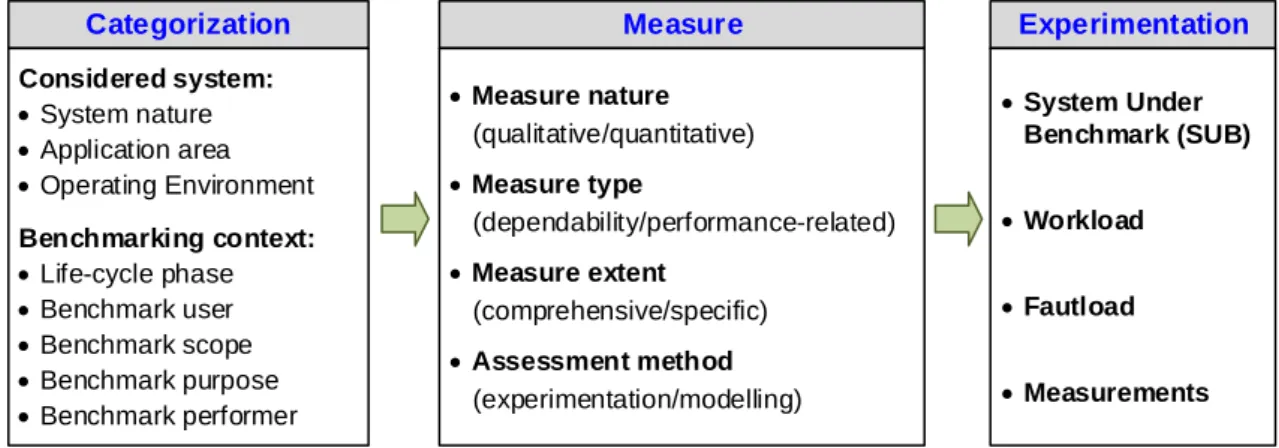
3.1 Introduction ... 57 3.2 General framework ... 59 3.2.1 Categorization dimension ... 60 3.2.2 Measure dimension ... 61 3.2.3 Experimentation dimension ... 62 3.2.4 Benchmark scenarios ... 63
3.3 Performing the experiments ... 65
3.4 Representativeness of Software Faults... 67
3.5 Summary ... 83
4 Software Fault Injector ... 85
4.1 Introduction ... 85
4.2 Fault Injector Architecture ... 88
4.3 Fault Injection Design and Implementation ... 89
4.4 Using the DBench-FI ... 102
4.5 Advantages ... 109
4.6 Limitations ... 110
4.7 Summary ... 111
5 Software Faultload for Large and Complex Systems ... 113
5.1 Introduction ... 113
5.2 Fault distribution models... 114
6 Experimental Evaluation of Faultload Reduction Strategies .. 143
6.1 Introduction ... 144
6.2 Experimental setup ... 145
6.3 Results and discussion ... 151
6.4 Proposal strategy for faultload reduction... 178
6.5 Summary ... 181
7 Conclusion ... 183
7.1 Overview and future work ... 183
7.2 Contributions ... 188
xvii
Figure 2-1 – Relationship between fault, error and failure. ... 17
Figure 2-2 – Fault tolerance mechanisms. ... 20
Figure 2-3 – The taxonomy of dependability. ... 22
Figure 2-4 – Reference model for implementing dependability benchmarks. ... 26
Figure 2-5 – Typical components of a fault injection environment. ... 39
Figure 2-6 – Automated low-level code mutations. ... 53
Figure 3-1 – Dependability benchmarking dimensions... 60
Figure 3-2 – Dependability benchmarking scenarios. ... 64
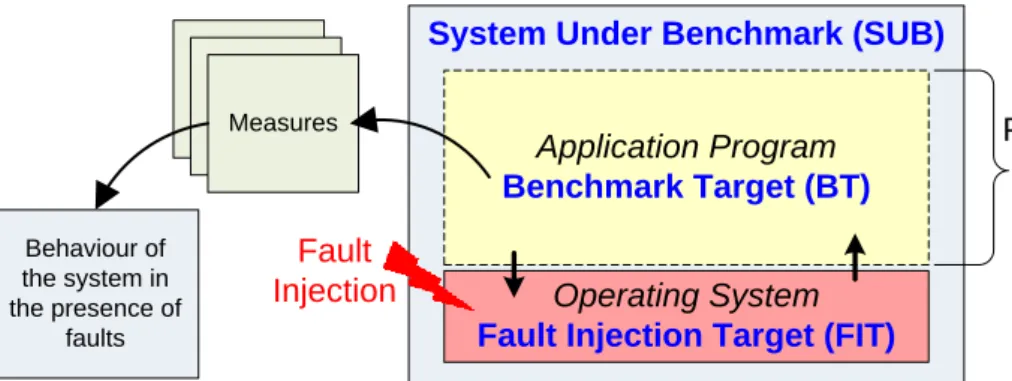
Figure 3-3 – Relation between System Under Benchmark (SUB), Benchmark target (BT) and Fault Injection Target (FIT). ... 66
Figure 3-4 – Process for generating faulty versions of the target system. ... 80
Figure 3-5 – Experimental setup used in [Natella et al. 2013]. ... 81
Figure 4-1 – The DBench-FI fault injector architecture. ... 88
Figure 4-2 – The Linux operating system architecture. ... 95
Figure 4-3 – The process virtual address space in IA-32 systems. ... 97
Figure 4-4 – The DBench-FI fault injector methodology. ... 102
Figure 5-1 – Experimental Architecture. ... 124
Figure 5-2 – Experimental methodology of the preliminary assessment study. ... 126
xviii
Figure 6-2 - Multithreaded quicksort benchmark execution profile. ... 150
Figure 6-3 - WS Experimental results: Conforming connections. ... 154
Figure 6-4 - WS Experimental results: Errors. ... 154
Figure 6-5 - WS Experimental results: Throughput. ... 155
Figure 6-6 - WS Experimental results: Experiments duration. ... 155
Figure 6-7 - MtQs Experimental results: Experiments duration. ... 156
Figure 6-8 - WS Experimental results: Errors. ... 157
Figure 6-9 – Failure modes of WS experiments. ... 158
Figure 6-10 – Failure modes of MtQs experiments. ... 159
Figure 6-11 - Deviations for each failure mode in the WS experiments, considering the LOC strategy. (a) LOC Asc. (b) LOC Desc.. ... 167
Figure 6-12 - Deviations for each failure mode in the WS experiments, considering the Vg strategy. (a) Vg Asc. (b) Vg Desc... 168
Figure 6-13 - Deviations for each failure mode in the WS experiments, considering the B strategy. (a) B Asc. (b) B Desc.. ... 169
Figure 6-14 - Deviations for each failure mode in the WS experiments, considering the Mi strategy. (a) Mi Asc. (b) Mi Desc. ... 170
Figure 6-15 – Deviations for each failure mode in the WS experiments, considering the Fc strategy. (a) Fc Asc. (b) Fc Desc. ... 171
Figure 6-16 - Deviations for each failure mode in the MtQs experiments, considering the LOC strategy. (a) LOC Asc. (b) LOC Desc. ... 173
Figure 6-18 - Deviations for each failure mode in the MtQs experiments, considering the B strategy. (a) B Asc. (b) B Desc ... 175 Figure 6-19 - Deviations for each failure mode in the MtQs
experiments, considering the Mi strategy. (a) Mi Asc. (b) Mi Desc ... 176 Figure 6-20 - Deviations for each failure mode in the MtQs
xxi
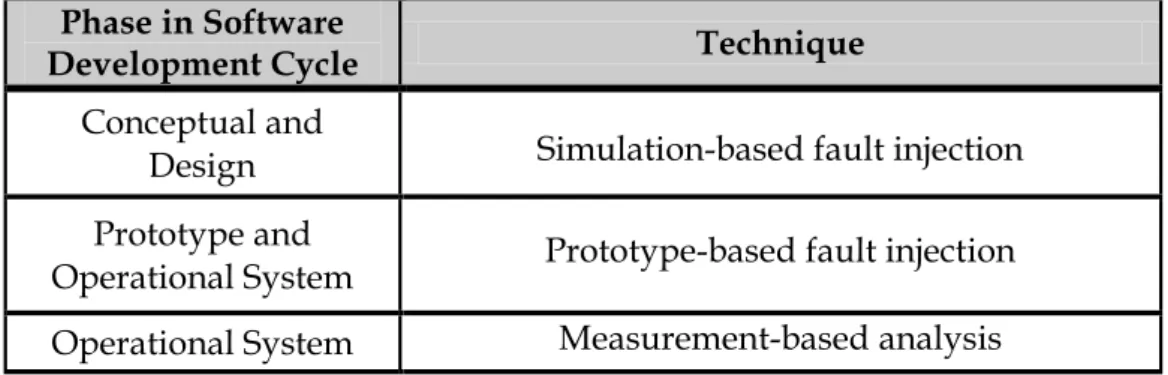
Table 2-1 - Experimental techniques for dependability evaluation and their suitability for the different phases of software development
cycles. ... 41
Table 3-1 –Defect attributes. ... 71
Table 3-2 – Failure attributes. ... 72
Table 3-3 – ODC defect types. ... 73
Table 3-4 – Fault nature totals across ODC types. ... 75
Table 3-5 – Comparison of Fault distribution across ODC defect types. ... 76
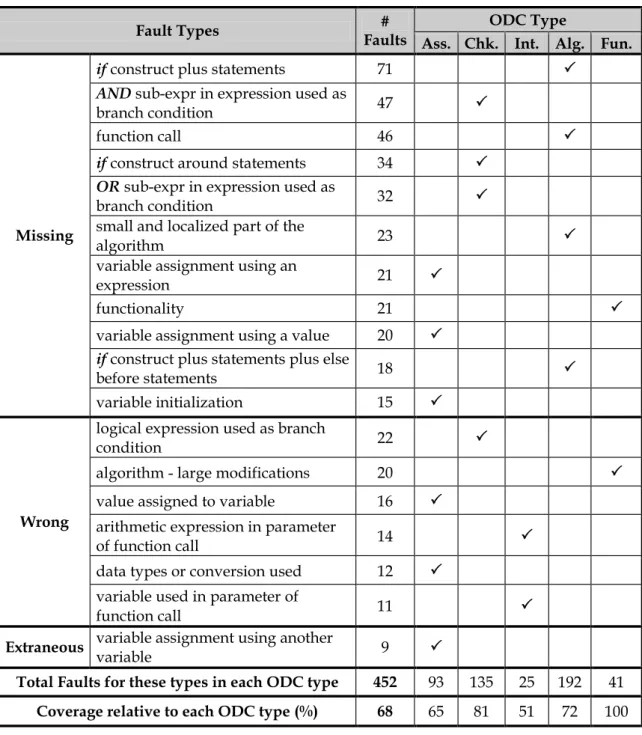
Table 3-6 – Most common faults found in field for several software systems. ... 78
Table 3-7 – Most frequent software fault types analyzed in [Natella et al. 2013]. ... 79
Table 5-1 – Software fault types considered in [Moraes et al. 2006a]. ... 121
Table 5-2 - System calls used by the web-server target system. ... 128
Table 5-3 - System calls used by the multithreaded quicksort target system. ... 129
Table 5-4 - Representativeness of the fault types considered in [Costa et al. 2009], according to the G-SWFIT methodology. ... 131
Table 5-5 - Representativeness of the most common software fault types used in the present methodology, according to [Durães et al. 2006]... 136
xxii
Table 6-3 - Percentage of fault injections needed to achieve a given global deviation error limit in the WS Experiments. ... 161 Table 6-4 - Percentage of fault injections needed to achieve a given
xxiii
API Application Programming Interface
BT Benchmark Target
COTS Commercial Off-The-Shelf
CPU Central Processing Unit
DBench-FI Dependability Benchmarking Fault Injector
DBMS Database Management System
FIT Fault Injection Target
GHz Gigahertz
GiB Gibibyte
G-SWFIT Generic Software Fault Injection Technique
HWFI Hardware Implemented Fault Injection
I/O Input/Output
Kbps Kilobits per second
LKM Loadable Kernel Module
ODC Orthogonal Defect Classification
OLTP On-Line Transaction Processing
OS Operating System
RAID Redundant Array of Independent Disks
xxiv
TPC-C Transaction Processing Performance Council Benchmark C
WMC Weighted Methods in a Class
1
O aumento da utilização dos sistemas informáticos e o número crescente das suas aplicações em tarefas críticas das sociedades modernas tem aumentado a dependência desse tipo de sistemas. Em consequência, nos últimos anos, as benchmarks de confiabilidade têm sido objeto de enorme interesse, quer por parte de investigadores, quer por parte da indústria.
Um dos elementos fundamentais que integram as benchmarks de confiabilidade é o injetor de falhas. As benchmarks de confiabilidade devem incluir injetores de falhas com características muito específicas: (i) devem ser fáceis de instalar e de utilizar, não exigindo qualquer procedimento especial de instalação ou execução; (ii) devem possuir um elevado nível de portabilidade; (iii) devem possuir um baixo nível de intrusividade no sistema alvo, de forma a minorar a perda de desempenho; (iv) devem oferecer a capacidade de injetar falhas em todo o sistema alvo (quer no espaço do utilizador, quer no espaço do sistema); (v) assim como nos segmentos de código e de dados de qualquer processo, independentemente da sua complexidade; (vi) devem ser independentes da disponibilidade ou conhecimento do código fonte de qualquer componente do sistema ou processo de utilizador; (vii) ser dinamicamente integrados no sistema alvo; e (viii) ser compatíveis com os mais avançados e recentes modelos de falhas de software. Uma vez que os atuais injetores de falhas não satisfazem todos os requisitos mencionados, esta tese apresenta uma ferramenta de injeção de falhas pioneira, implementada por software (Software Implemented Fault
Injection - SWIFI), denominada DBench-FI, especialmente desenvolvida
para benchmarks de confiabilidade. As suas características únicas fazem dele um dos mais versáteis injetores de falhas atualmente existentes.
2
procedimentos), a faultload é, sem dúvida, um dos mais críticos. Ela deve incorporar um conjunto de falhas repetível, portável, representativo e aceite pela comunidade e pela indústria. No que concerne a falhas de software, a definição desse tipo de fautloads é particularmente difícil, uma vez que exige métodos bastante mais complexos do que o tradicional stuck-at ou bit-flip utilizado nas falhas de hardware. Adicionalmente, as faultload baseadas em falhas de software exigem uma clara separação entre os componentes de software que são selecionados como alvo da injeção de falhas e o alvo da benchmark (i.e., o sistema sob avaliação), uma vez que a injeção de falhas de software altera efetivamente o código do componente alvo. Desta forma, as falhas devem ser injetadas num componente (o alvo da injeção de falhas) a fim de se avaliar o seu impacto nos outros componentes ou no sistema como um todo, garantindo a inviolabilidade do alvo da benchmark e a credibilidade das benchmarks de confiabilidade.
Apesar de terem já sido propostas faultloads baseadas em falhas de software, a escolha dos alvos da injeção de falhas (ou seja, os componentes de software onde as falhas são injetadas) continua a ser um tópico em aberto, apesar de fundamental. Sabendo-se que o número de falhas de software que podem ser injetadas num dado sistema é potencialmente muito grande, o problema da definição de uma faultload composta por um número pequeno de falhas representativas é de extrema importância. Esta tese apresenta igualmente um estudo exaustivo de injeção de falhas e propõe uma estratégia de orientação da seleção dos alvos da injeção de falhas para a redução o número de falhas necessárias numa faultload. Além disso, exemplifica a abordagem proposta com a utilização de uma benchmark de confiabilidade, real, para web-servers e de uma aplicação de ordenação de vetores de números inteiros de larga dimensão.
3
Chapter 1
1
Introduction
This thesis is the result of several years of research in the field of dependability benchmarking at the Software and Systems Engineering Group of the Center for Informatics and Systems of the University of Coimbra.
This opening chapter presents the motivation and the research goals for this work, providing a basis for the discussion that follows. The structure of the thesis is also presented in the final section of this chapter (Section 1.3).
1.1
Goal and Motivation
ith the spread of computing systems and the growing number of its applications in our everyday life, modern societies are becoming increasingly dependent on computer-based systems. System failures are a serious risk and cause more damages than ever before. Although more serious consequences arise from failures in safety critical applications, such as medical, aircraft, and nuclear power systems, there are other areas where such system failures cause important damage, like financial losses.
There are many examples of system failures with consequent high costs in a wide range of areas. For example, in 1991, software problems in the Patriot missile-defense system used during the Gulf War prevented intercepting an Iraqi Scud missile killing 28 American soldiers and injuring around 100 other people [Blair et al. 1992]. Between June 1985 and January 1987, a race condition bug led to what became tragically known as the Therac-25 accident - a computer controlled radiation therapy machine that massively overdosed six people, with resultant deaths and injuries [Leveson et al. 1995]. On 26th and 27th November 1992, design fatal flaws
caused the failure of the London Ambulance Computer Aided Dispatch system [THRA 1993]. The economic impact that a bug can have in a nation-wide money-critical system was fully shown in the credit card denial of authorization occurred in France, on 26th-27th June 1993 [Laprie 1995]. On
4th June 1996, a software problem caused the maiden flight explosion of
Ariane 5 [Lions 1996], resulting in a direct loss of at least 370 million dollars to the European Space Agency (ESA) [Dowson 1997]. On 7th August 1996,
inadequate redundancy [Garber 1996] led to the blackout of America Online (AOL) computer network, preventing the service provider’s network for 19 hours, affecting 6 million users. On 14th August 2003,
approximately 50 million people in the northeastern United States and southeastern Canada were impacted by the blackout of the General Electric energy management system [PSOTF 2004]. The outage was due to a software fault, triggered by a unique combination of events that led to a cascade of system failures and to an estimated total loss of 13 billion dollars [Wong et al. 2010]. On 7th March 2008, the reactor number 2 of the Edwin
Irby Hatch nuclear power plant, in United States, was forced into an emergency shutdown for 48 hours after the installation of a software update on a computer operating on the plant’s business network [Krebs 2008]. The resulting loss was estimated in 5 million dollars [Wong et al. 2010]. More recently, on June 2012, a software fault originated by a bad software upgrade caused the collapse of the Royal Bank of Scotland/Natwest computer banking system. As a consequence, several
million of costumers were unable to access their accounts for several days [Masters et al. 2012, Scott 2012]. The cost of this system failure was estimated in more than 100 million pounds [Treanor 2012].
The use of formal methods for software validation is many times rejected [DeMillo et al. 1979], since they encompass a too complex and time-consuming process that cannot be managed and used, in practice, in software development. Instead, many software engineers and designers argue the use of more elaborate testing methods in order to ensure the correctness of software. However, a counter-argument to this view is the fact that, as stated by [Dijkstra 1972], testing could only prove the presence of bugs, but not their absence.
In fact, it has been obvious over the last years that the high level of dependability, essential for modern computer systems, cannot generally be achieved using only a rigorous development process accepted by many of the actual certification schemes. The evaluation of dependability of computer systems is absolutely essential in an increasingly dependent society on that kind of systems. However, the intrinsic complexity of such an assessment is further aggravated by the growing complexity of both hardware and software [Silva et al. 2005]. Several research studies also show not only a clear predominance of software faults [Gray et al. 1991, Sullivan et al. 1992, Lee et al. 1995, Chou 1997, Kalyanakrishnam et al. 1999] when compared to other types of system faults, but also that its weight on the overall system dependability will tend to increase. As a consequence, it is nowadays generally accepted that most of the software components have residual faults, also known as software defects or bugs, which escape the traditional testing phases of software development process. Among the main causes for those circumstances, besides the well-known technical difficulties intrinsic to the software development and testing process [Lyu 1996, Musa 1996], one can mention the huge complexity of today’s software and the increasing pressure to reduce time to market. This scenario emphasizes the importance of system dependability assessment as
a measure of confidence that can be relied on a given system. This includes the evaluation of attributes like availability, reliability, safety, integrity, among others. More than ever, practical approaches for the evaluation of the dependability of computer systems are very much needed, especially standardized dependability benchmarks that allow comparing dependability attributes of analogous and alternative software products or components. However, the experimental evaluation of the dependability of computer systems is very difficult [Carreira et al. 1995] as it depends on fault activation probability, which in turn depends on either internal or external system factors like the different layers of the software, the actual hardware where the software is running, environment issues, and human interaction.
After the success of the performance benchmarking initiatives that caught the attention of the industry in the last decades and have driven the creation of organizations like TPC (Transaction Processing Performance Evaluation Corporation) [TPC] and SPEC (Standard Performance Evaluation Corporation) [SPEC], dependability benchmarking has been the focus of attention of researchers and practitioners in the recent years [Kanoun et al. 2008, Brown et al. 2000, Vieira et al. 2003, Zhu et al. 2003a, Lightstone et al. 2003, Kanoun et al. 2001, Christmansson et al. 1996a, Durães et al. 2002a]. To many business critical systems and applications, dependability attributes like availability, integrity and reliability, among others, are as important as performance. The goal of dependability benchmarking is thus to provide a standard procedure specification to characterize a computer system or component, providing the assessment of dependability related measures.
The main components of a dependability benchmark suite are [Kanoun et al. 2008, Koopman et al. 1999a]:
Workload – representing the work to be done by the system during the benchmark run and used to create a realistic operating
scenario. It should represent a typical operational profile for a particular application area.
Faultload – representing a repeatable, portable, representative and generally accepted set of faults and stressful conditions that could lead to undependability, if not properly handled by the system.
Measures - characterizing the performance and dependability of a system executing the workload in the presence of the faultload. Experimental setup and benchmark procedures - describing the
setup required to run the benchmark and the set of procedures and rules that must be followed during the benchmark execution in order to ensure uniform conditions for measurement.
Among these components, one of the most critical and difficult to define is, doubtlessly, the faultload [Durães et al. 2004a], since it should represent a repeatable, portable, representative and generally accepted fault set. That difficulty is even higher in what concerns software faults, since they required a much more complex emulation method than the usual bit-flip fault injection approach used to emulate real hardware faults [Voas et al. 1997a]. Furthermore, a faultload based on software faults requires a clear separation between the software components that are selected as fault injection target and the benchmark target (i.e., system under evaluation), as the injection of software faults actually changes the code of the target component. This way, the faults should be injected in one component (the target) in order to evaluate their impact in the other components or in the overall system. In fact, the software faults injected in the target component actually allow answering the question of what would happen to the system if a residual fault in such component became activated.
A representative faultload must be one that contains faults that represents the common programming bugs that escape the traditional software testing phases and still persist in existent software products
[Durães et al. 2004b]. Although the faultload definition of that kind of faults had already been proposed [Durães et al. 2006], a problem still persists when that model is applied in very large and complex systems. Commonly, there is a large number of possible targets components for fault injection and, consequently, that represents a huge number of possible software faults to be injected.
In fact, the use of dependability benchmarks driven by software faultloads (e.g., such as the ones proposed in [Kanoun et al. 2008]) has a major problem: it could take years to inject the faultload, which means that, in practice, it is not possible to run such dependability benchmarks. This is the case when the target system is a large piece of software, such as an operating system. Reducing the size of the faultload (but keeping it representative enough to obtain valid results) is essential to show industry and the research community that it is possible to use dependability benchmarks in large-scale systems. It should be noticed that among the mentioned faultload properties (repeatability, portability and representativeness), the representativeness is the one that needs special attention when reducing the faultload. In fact, properties such as repeatability and portability of the faultload are either not affected by the reduction of the number of faults or it is even easier to satisfy those properties with a reduced faultload.
This thesis presents the results of more than two years of continuous fault injection experiments in real systems and proposes a strategy to answer a still open and crucial question: how to choose adequate fault injection targets, and thus reducing the total software fault injection experiments, without restricting the benchmark scope and representativeness?
This study is an attempt to answer this question. The presented work is based on an experimental study and incorporates the results of a three-year research effort focused on showing that it is possible to obtain
accurate fault injection using a faultload that contains only a small fraction of all the possible faults that can be injected in a target system.
1.2
Contributions
As mentioned, the aim of this thesis is to propose an approach to guide the fault injection target selection of dependability benchmarks, decreasing the execution time of the benchmark, maintaining, simultaneously, their usefulness and representativeness. This is especially useful in large and complex systems where the experimentation time can be highly reduced without compromising the dependability benchmark results. This method will open the possibility to extend the dependability benchmarks to those kinds of systems, making them feasible and applicable (such benchmarks usually take several months or even years to execute due to its large faultload size).
Within this context, the main contributions of the thesis are the following:
1. To provide a software fault injector compatible with the demanding requirements of dependability benchmarks. Namely, it should be very easy to install and use, have high level of portability and very low intrusiveness, be capable of injecting faults in both user and system spaces, and in code and data segments of any process, irrespective of their complexity, be independent of the availability of any source code of any system component or user process, be dynamically linked into a target system and be compatible with the latest and most advanced software fault models. Concerning this last requirement, it was considered essential the compatibility of the fault injector with the Generic Software Fault Injection Technique (G-SWFIT) [Durães et al. 2006] – the state-of-the-art in software faults model.
G-SWFIT is based on a set of operators for software fault emulation through low-level code changes in the target executable code, mimicking the most common types of real software faults. These operators resulted from a field study based on the analysis and classification of more than 600 software faults found in real software applications. The developed tool is one of the most versatile software fault injectors currently available. 2. To define and evaluate different hypothesis for the reduction of
the number of software fault injection experiments. The evaluation is based on the analysis of the error obtained in consequence of the reduction of the fault injection experiments. This study uses the results obtained with a comprehensive faultload that includes all possible software target locations (the complete set of the kernel OS functions, referred in kernel symbols table), resulting in one of the most extensive fault injection studies ever reported.
3. To present a strategy to guide the fault injection target selection of dependability benchmarks and to reduce the required number of software faults, thus decreasing the execution time of the benchmark, maintaining, simultaneously, their usefulness and representativeness. The proposed methodology is especially useful in large and complex systems, where the experimentation time can be severely reduced without compromising the dependability benchmark results. Conducted experiments showed that the fault injection experiments can be reduced by more than 75%, maintaining the induced error below 1%. This method will open the possibility to extend the dependability benchmarks to large and complex systems, making them feasible and practicably applied (such benchmarks would take several months or even years to execute due to its large faultload size).
1.3
Thesis organization
The thesis is organized in seven chapters, as follows:
Chapter 1, this chapter, presents the motivation for the undergone investigation, the research objectives and the contributions of the thesis.
Chapter 2 contains some terminology and the state of the art in dependable computing area that are relevant to this study. More specifically, it surveys previous relevant work in the dependability benchmarking, fault injection and software faults to the assessment and improvement of dependable systems. This chapter is especially oriented to the reader who is not familiar with the dependable computing area, so it can be skipped by knowledgeable readers.
Chapter 3 provides an overview of dependability benchmarking of software systems, its goals, components, general framework and challenges currently raised in this area.
Chapter 4 presents a software fault injector specially developed for dependability benchmarking – the DBench-FI (Dependability Benchmarking Fault Injector). It describes in detail its architecture, the corresponding modules and the way they interact with each other and with the user, besides a detailed presentation of its implementation.
Chapter 5 describes the problem that arises in assessing the dependability of large and complex systems, particularly with regard to software faultloads. It also presents and provides an early assessment of the experimental strategy followed in this work for the definition of compact and representative faultloads based on software faults.
Chapter 6 describes the experimental setup used to demonstrate the effectiveness of the proposed approach with two real and different systems: a web-server dependability benchmark and a large-scale integer vector sort application extended with performance and quality measures.
Chapter 7 concludes the thesis and indicates suggestions for future improvements and future research directions.
13
Chapter 2
2
Background and Related Work
This chapter introduces some basic concepts used in dependable computing systems and surveys the previous research works that are relevant to this study. This presentation of the pertinent terminology and of the state of the art includes the areas of dependability benchmarking and fault injection, with special emphasis to software systems, software fault injection and software faults.
This chapter is especially oriented to the reader who is not familiar with the dependable computing area. As a consequence, it can be skipped by knowledgeable readers.
2.1
Introduction
he increasingly dependency of modern societies on computer systems has brought a greater awareness of the importance of the dependability concept. Several examples of computer failures, like the ones mentioned in the previous chapter, show the catastrophic consequences of that dependence. Computer systems may result in costs to the society, in addition to the expected benefits [CASDCST 1992], for which they were developed. In this context, a new role of questions is raised: Can
we rely on computer systems? Are the computer systems dependable? What are the limits of that dependability?
The accuracy of the computational results has preoccupied systems programmers and their users since the first generation of computers (from the late 1940’s to mid-1950). At that time, the use of unreliable components required the use of special techniques that allow the improvement of systems dependability. Among the used techniques, the error detection and correction, duplexing with comparison, triplication with voting and the diagnostics to locate failed components can be mentioned [Avizienis et al. 2000].
The growing use of computer systems in critical tasks of our society has increased the interest to develop systems that provide the expected service even in the presence of faults, known as fault tolerant systems. That need is even more obvious if we consider the adversity of the environment in which those systems sometimes operate and the fact that there are no perfect systems, that is, systems without any project or implementation defect. Moreover, the more complex a system is and the higher the number of its components, the higher is the probability of the occurrence of a failure in that system.
The level of confidence that can be relied on a service of a system is a determining factor in the characterization of that system, being fundamental in systems where human lives or substantial economic values are at risk. Dependability, together with functionality, performance, cost and security establishes the fundamental properties of computing and communication systems [Avizienis et al. 2004].
2.2
Basic concepts and definitions
2.2.1
Dependability
Dependability is defined in [Laprie 1985, Laprie 1995] as that property of a computer system such that reliance can justifiably be placed on the service it delivers. In this context, the delivered service is the behavior of the system, as it is perceived by its user - another system that interacts with the provider and receives the service [Avizienis et al. 2004].
However, to assess whether a system satisfies the requirements of dependability is not an easy task, especially when complex and large systems are involved. Moreover, that assessment is further hampered by the fact that dependability is a global concept which embraces a set of different attributes, whose emphasis and importance depends on the characteristics of the system or application being analyzed.
2.2.2
Attributes of dependability
As mentioned, dependability is an integrating concept which embraces a number of different, but complementary, attributes [Laprie 1995, Avizienis et al. 2004], that corresponds to different viewpoints of the system:
Availability – concerning the readiness for correct service; Reliability – regarding the continuity of correct service;
Safety – related to the absence of catastrophic consequences on the user(s) and the environment:
Confidentiality – regarding to the non-occurrence of unauthorized disclosure of information;
Maintainability – concerning the ability to undergo modifications and repairs;
Accordingly to the usual definitions, which consider it as a composite notion, security is not included as a single attribute of dependability [Avizienis et al. 2000]. Instead, security is considered as a combination of the mentioned attributes of confidentiality, integrity (concerning the absence of unauthorized system alterations) and availability (for authorized users only) [Avizienis et al. 2004]. Furthermore, dependability regarding to erroneous inputs is sometimes referred as robustness.
2.2.3
Impairments to dependability
According to [Jalote 1994, Clark et al. 1995], the first two attributes are, among all, the most relevant, given their importance on the fault tolerance capabilities of a system. However, the mentioned attributes of dependability may be emphasized in a greater or smaller extent, according to their importance on the application being analyzed. That importance should be considered in a relative or probabilistic rather than in an absolute or deterministic way, as the unavoidable presence or occurrence of faults prevents the existence of totally available, reliable, safe or secure systems [Avizienis et al. 2000].
In [Laprie 1995], faults, errors and failures are defined as the impairments to dependability. A fault is a defect that potentially causes an error. That is, the cause of an error is a fault. Although a fault has the potential to generate errors, those errors may not occur during the observation period. In other words, the presence of faults does not guarantee the occurrence of an error. However, the reverse is true: an error in a system state always involves the presence of a fault in that system. A fault that produces an error is said to be active. Otherwise, it is dormant. An Error is the part of the system state (altered by a fault) that is liable to
cause a subsequent failure. An error is a manifestation of a fault. Undetected errors in a system are said to be latent. A system failure occurs when the system does not comply with its specification, that is, when the system does not provide the expected service. Failures are caused by errors. If an error exists in a system state, then, unless some corrective measures are taken, there is a sequence of actions that can be performed and that could lead to a failure. A failure in a system does not always reveal the same way. Different forms of failures that can occur in a system are called types of failures or failure modes. The mentioned cause-effect relationship among these impairments, as described in [Jonhson 1989, Avizienis et al. 2004], can be represented as depicted in Figure 2-1.
Figure 2-1 – Relationship between fault, error and failure.
Faults can be classified according to several factors or viewpoints [Laprie 1992, Laprie 1995, Laprie 1998, Avizienis 2004]. In the context of this work, two viewpoints deserve a special emphasis, among all other: phenomenological cause and persistence. Concerning phenomenological cause, the faults can be classified in:
Physical faults – faults caused by physical phenomena, internal or external to the system.
Human-made faults – faults that result from human action, either design faults, when committed during the system design and development phases, or operational faults, when due to input or operating conditions violation.
Error Fault Failure Activation Propagation Latent Error Dormant Fault Termination Termination
Relating to persistence, a fault can be considered in one of the following categories [Carreira et al. 1999, Koren et al. 2007]:
Permanent Faults – occur in a continuous and stable mode in time. Concerning hardware, a permanent fault means an irreversible damage that can only be recovered through the repair or the replacement of the faulty component;
Intermittent Faults – faults whose presence is limited in time, caused by unstable hardware, or varying hardware or software states. This kind of faults can be repaired by replacement or redesign of the hardware or software;
Transient Faults – faults that are caused by temporal environmental conditions like, for example, electromagnetic interference, or radiations.
The main difference between intermittent and transient faults1 is that
the latter cannot be repaired, since neither the hardware nor the software is
1 In the literature, the transient and intermittent bugs are sometimes referred as Heisenbugs,
because they disappear when reexamined (in analogy to the Heisenberg Uncertainty Principle). By contrast, the permanent faults are referred to as Bohrbugs, as they represent good solid bugs, which are easy to diagnose upon detection (in analogy to the Bohr Atom Model). In recent taxonomies of software faults [Grottke et al. 2007], the Heisenbugs are
damaged [Siewiorek et al. 1992]. According to several studies, the transient faults occur much more frequently than the permanent faults and are also much more difficult to detect [Carreira et al. 1998a, Carreira et al. 1999, Clark et al. 1995].
2.2.4
Improving dependability
The dependability of a system is defined by the dependability of hardware and software that constitutes it. The development of dependable systems requires, according to [Avizienis et al. 2000, Avizienis et al. 2004], the combined use of four techniques: fault prevention, fault tolerance, fault removal and fault forecasting.
Fault prevention is the ability of avoiding the occurrence or introduction of faults in a system. Thus, it can be considered as the initial defensive mechanism towards dependability. It is attained by applying quality control techniques during the system design and development phases. General approaches include formal methods in requirement
classified as a type of Mandelbugs (alluding to Benoît Mandelbrot, a leading researcher in fractal geometry) - a more general class of bugs, characterized by having complex and obscure causes, making their behavior appear chaotic or even non-deterministic.
specifications and rigorous testing of all system components and their interactions. Regarding software, it consists in good programming principles and environments (structural programming, modularization and formal verification techniques), whereas for hardware, it involves rigorous design rules (design reviews, component screening and testing). External faults such as lightning or radiation can be prevented by shielding, radiation hardening, etc. User and operation faults can be reduced by training and regular maintenance procedures.
Fault tolerance aims to provide the systems the capability to deliver the correct service in the presence of faults (as represented in Figure 2-2). Obviously, fault tolerance assumes that fault prevention is not enough to eliminate all the possible faults in a system and, consequently, any system has some probability to have or is likely to develop a fault. That probability is even increased if we consider that it is impossible to eliminate all the environment aspects susceptible to change the system proper operation. Fault tolerance mechanisms are implemented using redundancy, error detection and subsequent system recovery mechanisms. A redundant system can mask a failed component with a redundant one and continue to operate without any service interruption, or at least, with the minimal interference on the external behavior, since the recovery mechanisms may cause some performance degradation. It should be noticed that fault tolerance is a recursive concept. That is, it is essential that the mechanisms which implement fault tolerance are themself protected against the faults that may affect them.
Figure 2-2 – Fault tolerance mechanisms.
Error Fault Failure Activation Fault Tolerance Propagation
The fault tolerant architectures are presently used in a wide range of applications, from safety critical to commercial ones. For example, concerning safety critical systems, fault tolerant architectures are used in the flight control computers of the fly-by-wire systems of the Boeing 777 and AIRBUS A320/A330/A340 airplanes [Torres 2000].
Fault removal aims to reduce the number or the severity of the faults and may be performed during both the development and operational phases of a system. During the development phase, fault removal consists in verification, diagnosis and correction [Avizienis et al. 2004], usually done by debugging, and/or simulation of hardware and software. Fault removal during the operational is conducted by maintenance techniques, corrective or preventive. At this phase, faults can be removed replacing the faulty system components or by software updates.
Fault forecasting predicts possible faults in order to prevent or avoid them or to limit their effects. This is accomplished by performing an evaluation, qualitative and quantitative, of the system behavior, with respect to fault occurrence or activation. This evaluation is commonly achieved using modeling and simulation of the system and faults. Qualitatively, it comprises the probabilistic evaluation of some attributes of dependability, interpreted as dependability measures. Quantitatively, it consists on the identification, classification and ranking of failure modes or event combinations that are liable to lead to system failures.
The inclusion of all these four techniques should be analyzed earlier in the project phase of the systems, since it is very difficult to apply them in systems where dependability issues were not taken into consideration. Moreover, depending on the emphasis assigned to each dependability attribute, according to the specificities of each application, there must be a balanced use of these techniques. This trade-off is even more difficult as conflicts may exist between some dependability attributes, such as availability and security [Avizienis et al. 2000].
The relation between dependability, its attributes, impairments and means can be represented in a single schema as exposed in Figure 2-3.
Figure 2-3 – The taxonomy of dependability.
2.3
Dependability benchmarking
The direct evaluation and comparison of performance of systems, concerning some of its characteristics like performance and functionality, have long driven the computer industry to improve their products.
Availability Reliability Safety Confidentiality Integrity Maintainability Fault Prevention Fault Tolerance Fault Removal Fault Forecasting Faults Errors Failures Dependability Means Attributes Impairments
However, very often, the systems and configurations are optimized in order to achieve the best performance and do not represent the real systems used in field [Vieira et al. 2009]. This way, these performance-oriented configurations tend to characterize unrealistic scenarios, as they disregard dependability-related aspects that are required by many modern computer systems. In fact, recently, factors like dependability and maintainability of systems are also seen as very important. However, unfortunately, while there are different ways to evaluate and compare different systems and components, regarding its performance and functionality, the evaluation of the dependability attributes of a system turns out to be much more difficult. One of the main difficulties is related to the existence of a wider spectrum of measures in dependability benchmarks, when compared to performance benchmarks.
The need of tools to evaluate and compare the dependability of systems is nowadays reinforced by the current trend of using commercial off-the-shelf (COTS) components and of COTS-based systems with high dependability requirements, as a way to reduce costs and shorten the development and deployment times. In fact, it is important to note that the increase of confidence in the general dependability of COTS, induced by its large-scale use, may not constitute a sufficient condition for its use in critical applications. In addition to the faults that those components may have, the COTS software components are developed without the knowledge of the specific context in which they will be used and are usually provided as a black box, mostly without a rigorous written specification [Guerra et al. 2004]. The integration of such components into computer systems creates additional dependability challenges that demands tools capable of evaluating and comparing the dependability attributes between systems.
According to [Madeira et al. 2001], dependability benchmarks should provide a generic, cost-effective and reproducible way for evaluating the behavior of components and computer systems in the presence of faults,
allowing the quantification of dependability attributes, seen as measures, or the characterization of systems into well-defined dependability classes. It is important to note that some fault tolerance mechanisms may inflict a performance overhead in the systems, which is also interesting to evaluate. Indeed, a timely and correct service delivery, concerning the system specification, is of utmost importance, mainly in hard real-time systems.
Furthermore, in addition to the characteristics of the dependability evaluation and validation techniques, a dependability benchmark should represent an agreement that is accepted by the computer industry and/or by the user community. Dependability benchmarks are, obviously, of utmost importance to complex, mission critical systems and for high-end business-critical applications. Moreover, they may also play a broader key role in the computer systems area, driving the industry to produce better systems, similarly to what happened before, in the performance and database areas.
2.3.1
Reference model
Dependability benchmarks are generally based in modeling or experimentation, or both. The modeling approaches include analytical [Trivedi et al. 1994] and simulation models [Rimén et al. 1993], and are generally used to support architectural decisions at design phase. They require the knowledge of the system functions and architecture, in terms of system components and their interactions, namely in what concerns to the fault tolerance and recovery mechanisms used to increase the system dependability. This knowledge is used to build a representation of the system, in order to model the system behavior and to analyze events and activities like failure occurrences, error detection and propagation, system recovery, etc. Those events and activities, characterized by event rates and conditional probabilities of success or failure, known as model parameters, are then used to analyze the system dependability. Block diagrams, faults
trees, Markov chains or stochastic Petri nets are examples of modeling techniques used for dependability modeling of computing systems. The required allocation of numerical values to the model parameters, such as coverage factor and restart times, are usually based on experimental measurement, field data or past experience related to similar systems. It is worth noting that the modeling approach may be unfeasible for large and complex systems, since systems made of many components with several dependencies usually lead to high complex models [Kanoun et al. 1996]. However, for some COTS-based systems, in particular to those systems whose architecture is not known in detail, the modeling approach can be used to produce, with a reduced effort, simple high-level models.
On the other hand, experimental approaches are used in computer prototypes or actual systems in order to evaluate the effectiveness of the fault tolerance mechanisms and to characterize the system in the presence of faults. They are usually obtained from observation of the system in real field operation [Gray 1990], also known as field measurement, or through the execution of benchmark controlled experiments, based on fault injection techniques [Hsueh et al. 1997, Carreira et al. 1995, Clark et al. 1995, Madeira et al. 2000, Moraes et al. 2007]. Field measurement is based on data collected on the system and its environment, concerning failures, fault tolerance and maintenance processes: time to failure occurrences, nature of failures, impact on system services, recovery time, etc. This data allow the evaluation of measures such as mean time between failures (known as MTBF), failure rate, system availability, etc. Field measurement can also be used to feed data into the design of new systems, avoiding the weaknesses found in the previous systems and enhancing the dependability of the new ones. However, since fault occurrence constitutes rare events, the execution of fault injection based experiments is usually used as a practical way to accelerate the characterization of the system faulty behavior. It consists on the deliberate introduction of artificial faults in a system or component, through the use of a workload and a faultload, in order to assess its
behavior in the presence of faults, and to obtain the relevant dependability measures [Arlat et al. 2002, Vieira et al. 2003, [Durães et al. 2004b, Kanoun et al. 2006] and characterize the system.
A reference model for implementing dependability benchmarks is represented in Figure 2-4.
Figure 2-4 – Reference model for implementing dependability benchmarks [Kanoun et al. 2008].
Despite each one of the mentioned approaches (modeling or experimentation) has its advantages and limitations, results based on the observation in real field data are naturally more significant that those based on modeling or prototypes. Nevertheless, as mentioned, such kind of analysis is usually impracticable, as it requires the collection of data related to very specific and rare data events, and hence requiring a long period of system observation in order to get statistically significant results. As a result, the great majority of dependability benchmark proposals presented so far is experimental and based on fault injection techniques, allowing the execution of benchmark controlled experiments.
Modeling Experimentation Model Processing Experimental Result Processing Dependability Model of the System Real System or Prototype Modeling Measures Experimental Measures Benchmark Measures Workload Faultload
2.3.2
Dependability benchmark properties
According to [DBENCH 2004], in order to be useful, cost-effective and accepted by the computer industry and user community, an experimentation based dependability benchmark should satisfy a set of properties:
Representativeness – important in all benchmarking dimensions, representativeness is of special relevance in measures, workload and faultload. Measures should be meaningful to the benchmark context in order to attain the expected usefulness of the benchmark. The workload should represent a typical and realistic set of activities found in real systems in the benchmark, being, therefore, dependent of it. The faultload should represent a set of real faults that may affect the target system in real use. The definition of the faultload should also consider the context of the application area and the operating environment.
Repeatability and Reproducibility – concerning the guarantee that statistically equivalent results are obtained when the benchmark is run more than once in the same environment, i.e., the same System Under Benchmark (SUB), with the same workload and faultload and with the same prototype. Reproducibility assures that statistically equivalent results are obtained by different teams when the benchmark is implemented from the same specifications and is used in the same SUB.
Portability - concerning the ease of transfer among various target systems, within a particular application area. This property allows the benchmark to compare computer systems and components. The portability is very dependent on the specification of some key benchmark components like faultload and workload. For example, the lack of portability of the faultload can limit the portability of the benchmark.
Non-intrusiveness – regarding the changes that the benchmark inflicts on the SUB, which should be as small as possible. In order to avoid intrusiveness on the Benchmark Target (BT), faults must be injected only in components of the SUB outside the target of the benchmark. Thus the non-intrusiveness is guaranteed with regard to the BT.
Scalability – concerning the capability of the benchmark to evaluate systems of different sizes. The scaling rules of the benchmark specification typically affect its workload and faultload. It is worth noting that very large faultloads may also require, as large workloads do, a huge time to execute the benchmark process. This circumstance constitutes a major limitation to execute dependability benchmarks in very large systems.
Benchmarking time and cost – regarding the time and cost needed to obtain the result from the benchmark. This property embodies the usability that a benchmark should have. The benchmark time comprises not only the execution time of the benchmark, but also the time needed for the setup and preparations and for data analysis. A dependability benchmark should take the minimum time possible, preferably only a few hours per system (in very large systems may be acceptable to have a benchmark time of a few days). With regard to the cost, the user perceived value of the benchmark should be higher than the cost associated to its execution, as a key objective of dependability benchmarks is to provide a cost-effective way to characterize the dependability of components and computer systems.
All these properties should be considered not only in the specification phase, namely, in the definition of the measures and
experimental dimensions, but also in the implementation and validation phases of the benchmark development process.
2.3.3
Dependability benchmark proposals
Dependability benchmarking has caught researchers’ attention in the last years and many dependability benchmarks have been proposed for different application domains.
With the aim of promoting the research, practice adoption of dependability benchmarks, the IFIP (International Federation for Information Processing,) and, particularly, the 10.4 Working Group on Dependable Computing and fault Tolerance, created, in 1999, the Special Interest Group on Dependability Benchmarking (SIGDeB). The resulting work, merging the contributions from both academia and industry, has identified a set of standardized classes to characterize the dependability of computer systems [Wilson et al. 2002]. The work carried out aimed to allow the comparison of computer systems concerning four dimensions: availability, data integrity, disaster recovery and security. Complementary work was developed in the context of the DBench project2 - a European
project on dependability benchmarking, partially supported by the European Commission.
The work done in SIGDeB and in project DBENCH marked the beginning of several proposals of dependability benchmarks for various kinds of systems. Due to the huge diversity of applications and systems in the computer industry, several dependability benchmarks have been developed for different application areas and systems (e.g., general purpose operating systems, real-time kernels, engine control applications, on-line transaction processing systems). However, they all share the properties presented, at least at an abstract level, and constitute an instantiation of it to a specific domain or a particular computer system.
A general methodology for benchmarking the availability of computer systems was introduced in [Brown et al. 2000]. This work uses fault injection to cause situations where software RAID (Redundant Array of Inexpensive Disks) systems availability may be compromised. It adopted the workload and performance measures from existing performance benchmarks.
An attempt to incorporate human behavior in dependability benchmarks and system designs as a way to incorporate effects of a human operator in dependability measures is presented in [Brown et al. 2001]. In [Brown et al. 2002] is presented a methodology for developing dependability benchmarks that capture the impact of human operators on systems. The proposal adopts the workload and the performance measures of existing performance benchmarks. The systems dependability is characterized by the performance degradation induced by the injected faults and by the perturbations generated by human operators. Research work towards the development of a dependability benchmark for human assisted recovery processes and tools in server systems is presented in [Brown et al. 2004a]. The proposed methodology, developed at the University of California-Berkeley, aims to evaluate human-assisted failure recovery tools and processes and
can be used both to quantify the dependability of recovery systems and to compare different recovery approaches.
A practical characterization and comparison of COTS operating systems behavior in the presence of faulty device drivers is presented in [Durães et al. 2002a, Durães et al. 2003a]. This work is based on the emulation of high level real software faults through the modification of the ready-to-run binary code of the target software module, and proposes the use of a multidimensional perspective to evaluate different views of the benchmark results. The used fault emulation technique, named G-SWFIT, requires the existence of a library containing the complete set of code mutations, previously defined for the target platform, formerly scanned. A similar study proposing a practical approach to characterize the robustness of operating systems with respect to faulty drivers is presented in [Albinet et al. 2004]. In this work a Software Implemented Fault Injection (SWIFI) technique is used to corrupt the parameters of the interface between the device drivers and the kernel of the OS. In order to characterize the faulty behaviors, both internal (kernel error codes) and external measurements (e.g., raised exceptions, kernel hangs, and workload behavior) were considered.
A comparison of fifteen commercial OS POSIX (Portable Operating System Interface) implementations concerning their robustness was first presented in the context of the Ballista Project, from Carnegie Mellon University [Koopman et al. 1999b]. A dependability benchmark comparison of three operating systems (Windows NT4, 2000 and XP) focused on robustness and with respect to erroneous inputs provided by the application software to the Operating System via the Application Programming Interface (API) is proposed in [Kalakech et al. 2004]. The workload used in this dependability benchmark was the TPC-C performance benchmark for transactional systems [TPCC], an already well-established and agreed benchmark. A similar dependability benchmark and its application to six versions of Windows operating
![Figure 2-5 – Typical components of a fault injection environment [Hsueh et al. 1997]](https://thumb-us.123doks.com/thumbv2/123dok_us/10927279.2981620/63.892.132.769.275.593/figure-typical-components-fault-injection-environment-hsueh-et.webp)
![Figure 2-6 – Automated low-level code mutations [Durães et al. 2002b].](https://thumb-us.123doks.com/thumbv2/123dok_us/10927279.2981620/77.892.177.728.339.564/figure-automated-low-level-code-mutations-durães-et.webp)
![Figure 3-2 – Dependability benchmarking scenarios [Kanoun et al. 2002].](https://thumb-us.123doks.com/thumbv2/123dok_us/10927279.2981620/88.892.182.709.403.659/figure-dependability-benchmarking-scenarios-kanoun-et-al.webp)
![Figure 3-5 – Experimental setup used in [Natella et al. 2013].](https://thumb-us.123doks.com/thumbv2/123dok_us/10927279.2981620/105.892.167.723.211.578/figure-experimental-setup-used-in-natella-al.webp)