Persistent link: http://hdl.handle.net/2345/bc-ir:107343
This work is posted on eScholarship@BC,
Boston College University Libraries.
Boston College Electronic Thesis or Dissertation, 2017
Copyright is held by the author. This work is licensed under a Creative Commons Attribution-NonCommercial-NoDerivatives 4.0 International License (http://
creativecommons.org/licenses/by-nc-nd/4.0).
Interactional patterns in argumentation
discussions: Teacher and student roles
in the construction and refinement of
scientific arguments
Boston College
Lynch School of Education
Department of
Teacher Education, Special Education, Curriculum and Instruction
Program of
Curriculum and Instruction
INTERACTIONAL PATTERNS IN ARGUMENTATION DISCUSSIONS: TEACHER AND STUDENT ROLES IN THE CONSTRUCTION AND REFINEMENT
OF SCIENTIFIC ARGUMENTS
Dissertation by
MARÍA GONZÁLEZ-HOWARD
Submitted in partial fulfillment of the requirements for the degree of
Doctor of Philosophy
© Copyright by María González-Howard 2017
Abstract
Interactional patterns in argumentation discussions:
Teacher and student roles in the construction and refinement of scientific arguments
María González-Howard, Author Katherine L. McNeill, Chair
Recent science education reform documents and standards, such as the Next
Generation Science Standards (NGSS), call for school science to better reflect authentic
scientific endeavors by highlighting the centrality of students engaging in science practices. This dissertation study focuses specifically on argumentation (through the modality of talk), one of the eight science practices emphasized in the NGSS. Although extensively studied, argumentation rarely occurs in classrooms. The absence of this science practice in classrooms is partly due to the student-driven exchanges required by argumentation differing greatly from the interactions that occur during traditional instruction, where students primarily speak to and through the teacher. To transform the type of talk that occurs in science classrooms it is necessary to examine discourse
patterns, as well as the roles classroom members take on, in order to identify and develop strategies that can facilitate the shift in discourse norms.
This dissertation employs a mixed-methods approach, using social network analysis (SNA), multiple case study methodology, and discourse analysis (DA), to deeply examine video recordings of three middle school classrooms engaged in argumentation through a science seminar (a type of whole class debate). Findings from the SNA
highlight the importance of argumentation research integrating a focus on argument structure with dialogic interactions, and point to the benefits of using multiple types of representations to capture engagement in this science practice. Furthermore, examining the manner by which teachers articulated student expectations and goals for the
argumentation activity suggest the need to continue supporting teachers in developing and using rich instructional strategies to help students with the dialogic component of argumentation. Additionally, this work sheds light on the importance of how teachers frame the goals for student engagement in this science practice, specifically as being either individual goals or communal goals. Lastly, findings from the DA stress the relationship between discourse patterns and interactional norms, and also suggest the need to expand our perspectives of who can prompt for critique during an argumentation activity.
Para mis padres y Colin,
que con su amor y apoyo incondicional hicieron que ésto fuese posible.
Acknowledgements
First and foremost, I would like to thank my family. Mami y Papi, thank you for instilling in me a love for learning, a strong sense of curiosity about the natural world, and compassion for others. The love and dedication that you both put into your work as educators is inspirational, and what I aspire to demonstrate in my career. Ferni, thank you for being an awesome, loving, and supportive hermanito. You were my first best friend and you always know what Michael Scott quote to say to fit every situation.
I am extremely appreciative for the guidance and support of my dissertation committee, Drs. Kate McNeill, Patrick Proctor and Kristen Bottema-Beutel. Kate, I cannot find the words to adequately thank you for these past years. I am so grateful for all of the opportunities and learning experiences that I have had with you across research, teaching and professional development. You have been a caring mentor and friend, who has shown me how to carry out rigorous and high quality research, always in the service of improving the educational experiences of students and teachers. I am excited for continuing to work with, and learn from you, in the future. Patrick, thank you for helping me critically examine, and think about, the relationship between science and language learning. Kristen, I have enjoyed and learned much from our conversations, and will undoubtedly never think about language use in the same way again.
To the C&I Department, thank you for all of your support and encouragement these past five years, and for making Boston College a community I am proud to have been a part of. To my cohort, I learned so much from each of you and am thankful for your perspectives, advice and conversations. But especially, I would like to acknowledge Becca. Thank you for the numerous hours of “work dates” spent at the various circle
tables in Campion, as well as in coffee shops, libraries and at each of our houses. Your friendship throughout this journey helped make what could have otherwise been an isolating experience, very enjoyable and rewarding.
I would also like to thank the various members of the MECM research team throughout these years. Suzy, it has been a pleasure to work with you, and I really hope that our paths cross again in the future. Mandy, Rebecca, and Lisa, thank you for your advice, support, collaboration and friendship these past years – it was wonderful being cubby buddies with you all. Erin Bleck, thank you for your assistance transcribing and coding what at times felt like an endless supply of data.
My greatest thanks goes to my wonderful husband, Colin. Thank you for
encouraging me to pursue my doctorate degree; for supporting me throughout the whole process; for always believing in me, particularly when I doubted myself; and for helping me find balance between work and life. Also, thank you for allowing me to turn our dining room table into my “dissertation station” for the past few months. I promise to clean it up soon. I love you today, y te amaré siempre.
Table of Contents
Dedication i
Acknowledgements ii
Table of Contents iv
List of Tables and Figures vii
Chapter 1: Introduction 1
Knowledge Construction in Science 1
Traditional Science Instruction 3
Recent Science Education Reform 5
Argumentation 6
Dissertation Overview 9
Chapter 2: Literature Review 11
Dialogue in Science Classrooms 11
Learning Science Through Discussion 11
Discursive Interactional Patterns 13
Argumentation in Science Education 14
The Epistemological Role of Argumentation 14
Argumentation in Science Education Reform 15
Defining Argumentation 18
The Role of Argumentation in Learning 21
Participation Frameworks in Argumentation 24
Defining Participation Frameworks 24
Shifts in Classroom Members’ Roles 26
Pedagogical Supports for Argumentation Discussions 27
Methodological Approaches to Analyzing Argumentation 30
Summary 35 Chapter 3: Methodology 37 Curricular Context 38 Participants 43 Data Source 47 Analytic Approach 48
A Mixed Methods Design 48
Social Network Analysis 50
About this analytic approach 50
Conducting the social network analysis 51
Breaking the transcripts into utterances 52
Coding utterances across argument structure and dialogic interactions 52
Coding the ties 56
Creating valued directed matrices 58
Carrying out the SNA and creating sociograms 59
Multiple Case Study Methodology 61
About this analytic approach 62
Conducting the multiple case study methodology 62
Discourse Analysis 64
Rationale for the analysis 64
About this analytic approach 65
Preparing the data for analysis 65
Conducting the discourse analysis 67
Summary 69
Chapter 4: Visualizing Interactional Patterns of Scientific Argumentation Through Social Network Analysis 70
Analysis of the Six Science Seminars Using Counts and Frequencies 71
Classroom Member Contributions 72
Argument Structure and Dialogic Interactions 73
Visualizing Interactional Patterns Through Sociograms 77
Analysis Within One Group 77
Sociograms of general interactions 77
Sociograms of dialogic interactions 80
Sociograms of questioning 82
Sociograms of argument structure 84
Sociograms of reasoning 86
Variation Within and Across Classrooms 88
Analyzing questioning within a classroom 88
Analyzing reasoning across classrooms 90
Summary 92
Chapter 5: Individual Versus Communal Understanding: Varying Goals in Argumentation Discussions 94
Case 1: Ms. Ransom’s Class 95
Contextualizing the Science Seminar Lesson 95
Participation Framework: Student Actions During the Science Seminar 97
Participation Framework: Goals for the Science Seminar 102
Case 2: Mr. McDonald’s Class 104
Contextualizing the Science Seminar Lesson 104
Participation Framework: Student Actions During the Science Seminar 107
Participation Framework: Goals for the Science Seminar 111
Summary 115
Chapter 6: Examinations of Teacher and Student Interactional Moves Around Critique 119
Sociograms of Critique 120
Interactional Moves Around Critique 123
Interactional Moves Made by the Teacher 124
Clarified or repeated a student’s argument 125
Normalized critique of other students’ ideas 128
Made a challenging statement 131
Listed points of disagreement 134
Summary 139
Chapter 7: Discussion 141
Visualizing Interactional Patterns Through Sociograms 142
Integrating Argument Structure with Dialogic Interactions 143
Benefits of Using Multiple Types of Representations 147
Participation Frameworks for Argumentation 148
Teachers’ Support for Dialogic Argumentation 149
Goals for Argumentation 152
Encouraging Student Critique During Argumentation 154
Discourse Patterns and Interactional Norms 154
Prompting for Critique 156
Limitations and Future Research 158
Conclusions 161
References 163
Appendices 181
Appendix A: Data tables for Metabolism unit science seminar 181
Appendix B: Map for Plate Tectonics unit science seminar 184
Appendix C: Coding schemes for the Metabolism unit science seminar 185
Appendix D: Coding schemes for the Plate Tectonics unit science seminar 191
List of Tables and Figures
Tables
Table 3.1: Sets of research questions
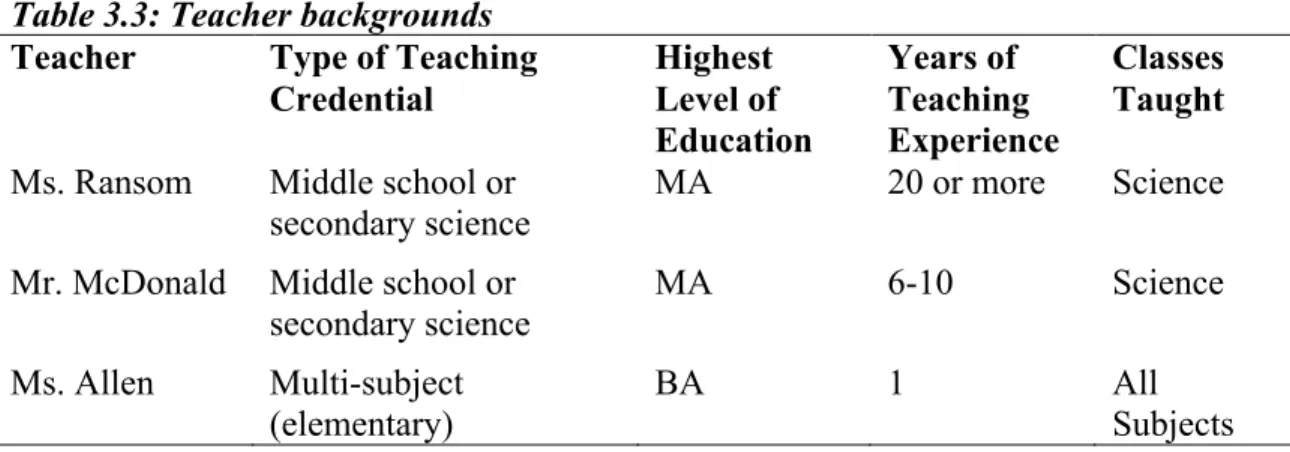
Table 3.2: Information about the science seminars Table 3.3: Teacher backgrounds
Table 3.4: School and classroom context
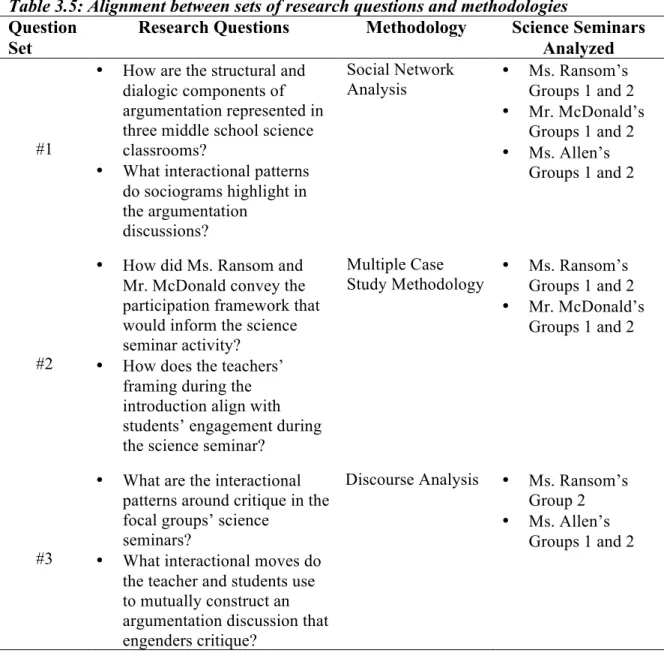
Table 3.5: Alignment between sets of research questions and methodologies
Table 3.6: Synthesized coding scheme for argument structure
Table 3.7: Synthesized coding scheme for dialogic interactions
Table 3.8: Sample coded transcript from Ms. Ransom’s Group 1
Table 3.9: Transcription conventions (adapted from Atkinson & Heritage 1984)
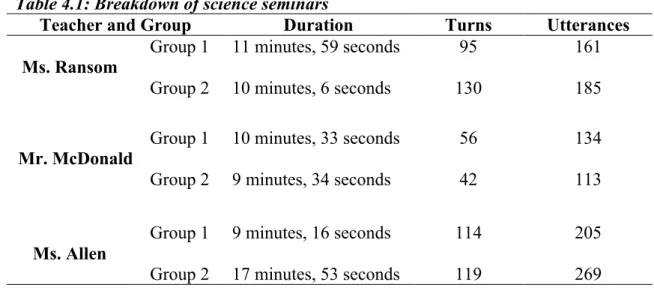
Table 4.1: Breakdown of science seminars
Table 5.1: Ms. Ransom’s initial description of student roles during the science seminar Table 5.2: Reminder by Ms. Ransom of seminar being student led
Table 5.3: Ms. Ransom reiterating individual understanding
Table 5.4: Mr. McDonald stressing a student-driven discussion
Table 5.5: Participation framework articulated by teachers during the introduction Table 6.1: Interactional moves that engendered critique
Figures
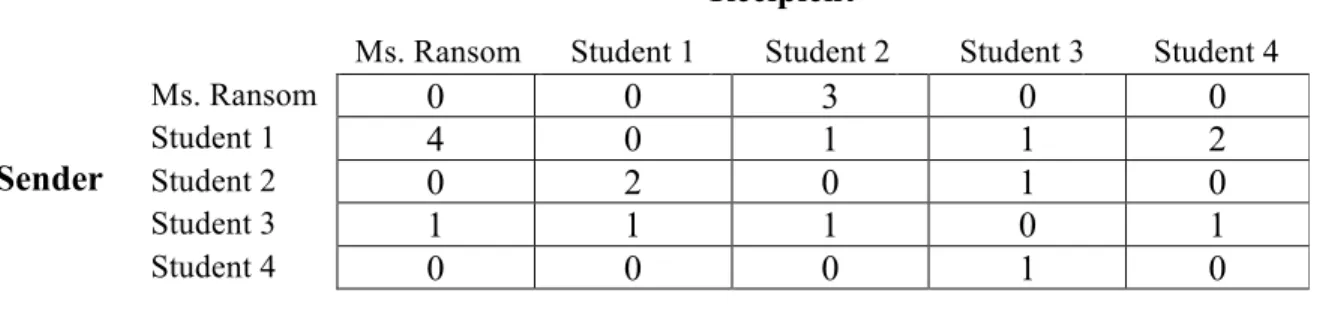
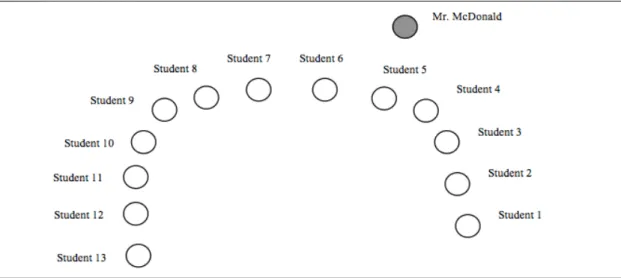
Figure 3.1: Example seating arrangement from Mr. McDonald’s Group 1 Figure 2.2: Sample valued and directed matrix for reasoning ties
Figure 3.3: Sample valued and directed matrix for critiquing ties
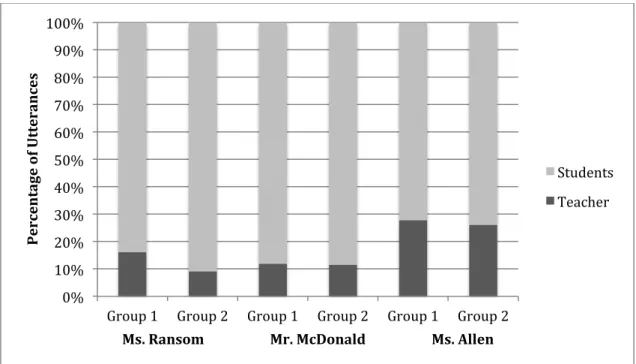
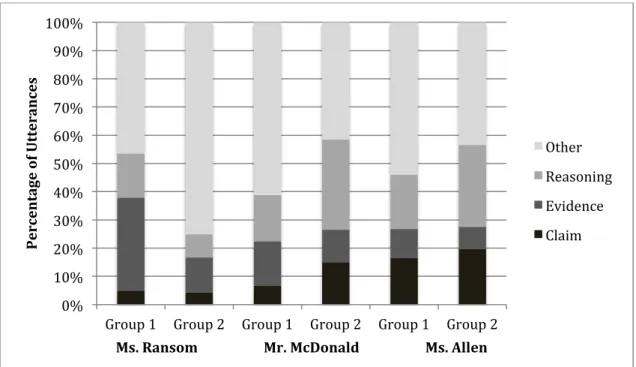
Figure 4.2: Breakdown of utterances across argument structure codes Figure 4.3: Breakdown of utterances across dialogic argumentation codes Figure 4.4: Sociogram of general participation in Ms. Allen’s Group 2 Figure 4.5: Sociogram of dialogic interactions in Ms. Allen’s Group 2 Figure 4.6: Sociogram of questioning in Ms. Allen’s Group 2
Figure 4.7: Sociogram of argument structure in Ms. Allen’s Group 2 Figure 4.8: Sociogram of reasoning in Ms. Allen’s Group 2
Figure 4.9: Comparing sociograms of questioning within a classroom Figure 4.10: Comparing sociograms of reasoning across classrooms Figure 5.1: Sociograms of general participation in Ms. Ransom’s class Figure 5.2: Individual understanding emphasized in Ms. Ransom’s classroom Figure 5.3: Sociograms of general participation in Mr. McDonald’s class
Figure 5.4: Communal understanding emphasized in Mr. McDonald’s classroom Figure 5.5: Sociograms of building across both classrooms
Chapter 1 – Introduction
For the past few decades, science educators and researchers have been concerned with the way that science is presented in school. Traditional characterizations of science education tend to include students passively memorizing discrete facts and ideas, as well as carrying out prefabricated experiments that demonstrate particular concepts (Osborne, 2010; Songer & Linn, 1991). These depictions omit students participating in critique and construction, social elements that are fundamental to science (Ford, 2008). Truly
preparing students for both science-related careers and for making informed decisions in this modern innovative world requires learning experiences that exceed regurgitating science facts. In order to remedy this issue, many arguments have been put forth contending that the goals of science education should have a more genuine relationship with the field, and with practical applications of scientific knowledge (Duschl,
Schweingruber, & Shouse, 2007).
Knowledge Construction in Science
Developments in science are motivated by humans’ desire to make sense of the natural world (NRC, 2012). Guided by this curiosity, evidence is gathered and claims are constructed that explain our current understanding of a particular phenomenon. This is a continuous process; we never reach “truth” because what we know could continue to change as new evidence arises. Specifically, as data are collected through measuring and observing phenomena of interest, alternative explanations are constructed against which initial ideas are compared and evaluated (Ford, 2008). For instance, in the early twentieth century the few scientists who believed that global warming was indeed occurring
By the influence of the increasing carbonic acid in the atmosphere we may hope to enjoy ages with more equable and better climates, especially as regards the colder regions of the earth, ages when the earth will bring forth much more abundant crops than at present, for the benefit of rapidly propagating mankind. (Arrhenius, 1908, p. 63)
However, increasing temperatures over the past century have actually resulted in
numerous detrimental impacts, including rising sea levels and floods, quicker spreads of diseases, environmental devastation caused by imbalances in ecosystems, and agriculture harmed by unprecedented heat waves and droughts (Weart, 2015). Because of all this contradicting evidence and the debates that ensued, we now know that prior assumptions about the impacts of greenhouse effects were incorrect, and instead, these occurrences indicate that this phenomenon is real and has dire consequences for life on this planet. Scientific history shows how disciplinary progress is fueled by the emergence of new evidence, which in turn causes revised and improved understandings of the natural world (Collins & Pinch, 1993). However, evidence on its own does not bring about changes in scientific knowledge. Scientific progress is driven by the social practices that scientists engage in around evidence.
Scientific work is undertaken in alignment with normative values and criteria that are established by the scientific community (Kuhn, 1962). Research on the practices of scientists (e.g., Latour, 1980; Longino, 1990) have characterized a number of highly interrelated activities as epitomizing how scientists engage in their disciplines. These activities include socially working out problems in real time – which can occur informally through discussions with colleagues, or formally via publications and
conferences – as well as engaging in an “iterative process of argumentation, model building, and refinement” (Duschl et al., 2007, p. 9-11). However, the manner by which this work is conducted is not usually revealed to the public, further mystifying the epistemological underpinnings of science (i.e., how scientists come to know what they know) (Latour & Woolgar, 1986). Because science permeates and influences many aspects of modern life, understanding science as a practice is important for all members of society so that they can make sense of information they receive about the natural world (NRC, 2012). For instance, many socioscientific issues are present today, such as
genetically modifying foods to obtain desired characteristics (e.g., corn that can withstand certain pathogens). Thus, knowing how to cipher through relevant scientific evidence and irrelevant information that is heard or read regarding these topics is a valuable skill for people to have. In order for citizens to develop the abilities needed to engage in debate and make informed decisions about natural phenomena that impact their daily lives (e.g., voting for or against hydraulic fracturing) it is essential that schooling attend to teaching students “the difference between a personal (or political) perspective on a scientific issue and a scientific perspective” (Ford & Forman, 2006, p. 3).
Traditional Science Instruction
Science is taught in school settings in ways that contrast how the discipline is carried out in real life (Osborne, 2010). Science classrooms are dominated by teacher talk (Lemke, 1990) that is motivated by the purpose of transmitting information about the natural and living world to students (Osborne, 2014). Although teachers often encourage students to contribute during class, common discussion styles (i.e., lectures and
differing ideas, respond to their peers’ contributions, and actively make sense of natural phenomena (i.e., engage in scientific sensemaking) (Wells & Mejia Arauz, 2006). Class discussions often encompass a discourse pattern in which the teacher initiates talk by asking a question, a student responds to this question, and then the teacher evaluates and/or provides the student with feedback (initiate-response-evaluate, or IRE; Cazden, 1988). The authoritative perspective on teaching that prevails in science classrooms places students as passive recipients of previously determined facts (Scott, Mortimer & Aguilar, 2006), with the teacher as primary knower and hence the sole person capable of legitimizing students’ ideas (Cornelius & Herrenkohl, 2004). Grounded in this stance, traditional science education has perpetuated the “mistake stigma” (Herrenkohl,
Palincsar, DeWater & Kawasaki, 1999) where only the correct answer is valued during the learning process. All of this is contrary to what actually happens in science. Such a view leaves out the reality of science as a messy, ongoing, social process in which scientists constantly conduct investigations and make observations to gather new data, grapple over contradicting evidence, and engage in critical debates to determine the best explanations for natural phenomena.
In addition, traditional science instruction contradicts what we know about how students learn. Students are not empty vessels into which teachers can pour facts. Instead, students bring to school preconceived ideas about how the world works that they have developed through observations and experiences during their childhood (Michaels,
Shouse & Schweingruber, 2008). Although these notions can sometimes be incomplete or incorrect, they are important stepping-stones for their learning. Developing deep
process (Sawyer, 2014), which enables them to confront and overcome misconceptions, or alternative ideas, about science. Specific to science learning, an instructional strategy that has been shown to facilitate conceptual change is “bridging” (Brown, 1992), which entails engaging students in a sequence of situations that helps them bridge from their misconceptions to newly formed scientific understandings as they gather and make sense of scientific evidence. Furthermore, research has demonstrated that students can become more active in their science learning when classrooms are designed to be communities of scientific practice (Rosebery, Warren, & Conant, 1992). Students socially construct scientific knowledge in these types of classrooms through iterative processes and activities that allow them to develop theories, collect and analyze data, engage in argumentation, and subsequently refine theories (Bransford, Brown & Cocking, 1999). Thus, formal learning environments ought to provide students with access and
opportunities for engaging in the discursive practices that result in the construction of scientific knowledge (Driver, Newton & Osborne, 2000). Opportunities like these could equip and prepare a citizenry that understands and engages in contemporary debates.
Recent Science Education Reform
Towards this end, United States science education has recently undergone major reform through the creation of the Next Generation Science Standards (NGSS) (NGSS Lead States, 2013). Embracing and applying research findings (NRC, 2012), these standards were written to better reflect authentic scientific endeavors and what we know about how students learn. Specifically, the NGSS encompass three-dimensions that require students to: (1) connect cross-cutting concepts across various fields in science; all the while (2) engaging in science practices; in order to (3) demonstrate deep
understanding of disciplinary core ideas. The view of science proficiency described in these standards highlights the centrality of students engaging in science practices in order to better understand the field’s epistemic basis (Duschl & Grandy, 2013). Science
practices encompass the “major practices that scientists employ as they investigate and build models and theories about the natural world” (NRC, 2012, p. 2-5), including asking questions and constructing explanations. Having students engage in these practices encourages them to actively participate in the social construction of their knowledge, all the while gaining a rich understanding of the nature of science (Osborne, 2014).
However, successfully implementing the changes outlined in these reform
standards will require a large shift in how science has been traditionally taught, impacting both teachers and students (Krajcik, Codere, Dahsah, Bayer & Mun, 2014). Moving away from instruction that relies on presenting information to be learned, NGSS-aligned
pedagogy instead requires that teachers support students in constructing their own explanations of science phenomena. As such, the participation frameworks (Goffman, 1981) that tend to govern science classrooms – which encompass the roles and
expectations of all classroom members (i.e., teacher and students), as well as the goals that drive tasks – will need to alter in order for students to authentically partake in science practices. Without doing so, tensions may arise, and the educational vision described by the NGSS may not come to fruition.
Argumentation
Among the eight science practices emphasized in the NGSS, this study focuses on argumentation, which plays an essential role in scientific discourse (Bricker & Bell, 2008) and is fundamental to how science knowledge is constructed and refined over time
(Driver, Newton, & Osborne, 2000). Argumentation can occur across language
modalities and student configurations, such as writing individual arguments or debating a question within a small group. Specifically, this study will focus on whole class, oral engagement in this science practice. Unlike traditional classroom discussion,
argumentation entails a participation framework in which students interact directly with peers as they drive instruction, with the goals of engaging in critique (Henderson, MacPherson, Osborne & Wild, 2015), persuasion and sensemaking (Berland & Reiser, 2011). Similar to Jiménez-Aleixandre and Erduran (2008), I conceptualize this science practice as encompassing both a structural dimension that details how an argument is made up of a claim supported by evidence and reasoning (McNeill, Lizotte, Krajcik & Marx, 2006), and a social dimension that includes the dialogic interactions individuals engage in when constructing, critiquing, and revising arguments (Ford, 2012).
Although argumentation has been extensively studied in science education, it rarely occurs in science classrooms (Osborne, 2010). Making argumentation a key component of classroom instruction is a long and difficult process for both teachers and students (Simon, Erduran & Osborne, 2006). Research findings illustrate some of the challenges classroom communities have encountered engaging in this practice, including appropriately supporting student interactions through questioning (McNeill & Pimentel, 2010), and providing students ample opportunities to learn and engage in argumentation with time constraints due to high-stakes testing (Alozie, Moje & Krajcik, 2010). Because the United States’ education system reflects a myriad of student populations and
educational settings, it is important to develop understandings of what argumentation engagement might look like in different classrooms. To move from IRE to argumentation
– transforming the type of interactional patterns that dominate discussions in science classrooms – it is necessary to examine conditions that are in place when this practice is being appropriately enacted. Knowing more about the varied circumstances that support argumentation will enable educators to identify and develop instructional strategies that can facilitate and support a shift in discourse norms (Kuhn & Reiser, 2006).
Much research has investigated science instruction that pushes away from teacher-led and mediated classroom talk where the focus of discussion is around content acquisition (e.g., Berland & Reiser, 2009; Pimentel & McNeill, 2013; Driver, Newton, & Osborne, 2000; Alozie, Moje, & Krajcik, 2010). However, as a field we do not yet have a deep understanding of what it looks like for students and teachers to successfully engage in argumentation discourse in science classrooms. This includes knowledge about what interactional patterns of argumentation discussion may look like, roles teachers and students might take on, and the instructional approaches that support this science practice (including how the goals of an argumentation task are framed). In this dissertation, I hope to offer new insight into this area through analyses of three different middle school classrooms that were engaged in an activity called a “science seminar,” a type of whole class argumentation discussion. In prior work (McNeill, González-Howard, Katsh-Singer, & Loper, in press; Marco-Bujosa, McNeill, González-Howard, & Loper, 2017), these classrooms were identified as having successfully engaged in this science practice. Thus, they provided a strong context in which to deeply explore students’ argumentation across the structural and dialogic components of this science practice. Moreover, it was
important to conduct this study in middle school classrooms since this time period has been documented as critical for dissuading or keeping students interested in science
(Britner & Pajares, 2006). In the following section, I provide an overview of this
dissertation study, describing the content of each chapter. I also articulate the various sets of research questions that guided this work.
Dissertation Overview
Six chapters follow this introductory chapter. In Chapter 2, I situate this
dissertation study in the field of argumentation, and present a review of related literature around dialogue in science classrooms and participation frameworks for this science practice. Chapter 3 includes a description of the curricular context in which this study was embedded, the participants, and the mixed methods approach that I took to analyze video recordings of the three focal classrooms’ science seminars. Specifically, this mixed methods approach entailed an examination of the science seminars using social network analysis (SNA), multiple case study methodology, and discourse analysis (DA). For each of these methods, I provide an explanation of the approach and then describe the steps taken to analyze the data. In Chapter 4, I describe the results from conducting the SNA of the science seminars, which included creating sociograms (a type of visual
representation) that shed light on the interactional patterns during these argumentation discussions. The results in this chapter were guided by the following research questions:
• How are the structural and dialogic components of argumentation represented in three middle school science classrooms?
• What interactional patterns do sociograms highlight in the argumentation discussions?
Chapter 5 addresses the participation frameworks articulated by two of the focal teachers (Ms. Ransom and Mr. McDonald; both pseudonyms) during the introduction to the
science seminar activity. This chapter highlights the similarities and differences between how these teachers framed student expectations for this argumentation task, as well as the goal for the activity. Specifically, this exploration was informed by the following
research questions:
• How did Ms. Ransom and Mr. McDonald convey the participation framework that would inform the science seminar activity?
• How does the teachers’ framing during the introduction align with students’ engagement during the science seminar?
Chapter 6 focuses on a subset of the seminars, particularly on the ones that showed higher frequencies of students critiquing their peers’ ideas. This portion of the dissertation was driven by the research questions:
• What are the interactional patterns around critique in the focal groups’ science seminars?
• What interactional moves do the teacher and students use to mutually construct an argumentation discussion that engenders critique?
Lastly, in Chapter 7 I draw upon relevant literature to discuss conclusions and
implications from this study’s findings. I then end with a discussion of the limitations of this work, and describe possibilities for future research.
Chapter 2 – Literature Review
To contextualize this study within the larger field of science education, I review three areas of research. The first area, dialogue in science classrooms, concentrates on the critical role that talk plays in science education, and describes how classroom discourse relates to students’ learning experiences and their understandings of the discipline. I then turn to argumentation in science education, where I articulate why argumentation is the focal practice in this study, how it relates to classroom dialogue and the manner by which I am operationalizing this science practice. Finally, I conclude by discussing participation frameworks inherent to engagement in argumentation. This section focuses on how argumentation requires a shift in discursive patterns, which necessitates new rules for classroom talk (especially in terms of teacher and student roles), revised learning goals, as well as the development of instructional strategies to support these changes. This section also reviews methodological approaches that have been used for analyzing argumentation discussions, mentioning advantages and limitations to these analytic techniques. This literature review makes the case for implementing new methods for characterizing when and how students engage in argumentation discussions. In particular, these approaches are necessary to capture the complex dimensions of this social practice. Also, more knowledge is needed around how particular framings and interactional moves by teachers and students can better support classroom engagement in argumentation.
Dialogue in Science Classrooms Learning Science Through Discussion
Learning experiences are created through a variety of discursive practices (Kelly, 2014), which include the way a teacher frames a task, how students are expected to
interact with one another in order to complete the task, and the manner by which ideas are accepted or dismissed during discussion. Because of its role in learning, classroom discourse has become increasingly recognized as a salient research focus in science education (Kelly, 2007). Examining discussions within a science classroom provides insight into how the teacher and students engage in scientific sensemaking, as well as who is – and, who is not – participating in this process. It is essential that students engage in classroom talk in order to develop and refine knowledge, as well as to communicate their thinking to their teacher and peers (Michaels, O’Conner, & Resnick, 2008). Recognizing that a student is not participating in the discussion, or that actions (knowingly or not) are being taken to alienate them from talking, is important for improving learning opportunities.
This perspective has roots in Vygotskian (1934/1986) theory that emphasizes the social nature of learning: the contention that students’ interactions with peers, as well as with their teacher, influence their educational experiences. Partaking in classroom discussions provides a venue for students to articulate their thinking, which is important for the learning process as it allows them to compare and contrast older understandings with newer ideas (Mercer & Littleton, 2007). Realizing differences between ways of thinking facilitates the internalization of new information, and dialogue supports students in comparing and contrasting older understandings with newer ideas. Within this view, learning is inseparable from the linguistic interactions that mediate the process.
Sociocultural theory further argues that, although they are separate functions, thinking and speaking are closely interrelated and thus an important area of focus in terms of supporting and evaluating learning (Lantolf, 2000). Sawyer (2014) explains how
“articulating and learning go hand in hand, in a mutually reinforcing feedback loop” (p. 10). Thus, as students verbalize an idea, even one that is not fully formed nor completely grasped, they begin to develop a deeper understanding of the concept being learned.
Discursive Interactional Patterns
The exchanges that occur between students and their teachers can be used to determine patterns of interactions during classroom talk. Interactional patterns vary as a result of many factors, including who is involved in the discussion (i.e., only students, or students and their teacher) as well as the purpose of the discussion. The most common interactional pattern during whole-class discussions involves a three-part exchange in which the teacher initiates conversation by asking the class a question, a student is called upon to respond to the question, and then the teacher evaluates the student’s answer (Cazden, 1988; Mehan, 1979). This pattern of initiation, response and evaluation (i.e., IRE), with short, often unconnected, exchanges being heavily directed by the teacher, can proceed for the entirety of a whole-class discussion (Crawford, 2005). Mortimer and Scott (1993) describe the communicative approaches taken during classroom discussions as falling on an authoritative-dialogic continuum, where authoritative talk is dominated and steered by the teacher while dialogic talk includes greater student participation and more student-to-student interactions. As such, the IRE interactional pattern that
dominates science classrooms is associated with an authoritative approach.
Many critiques have been made of this transmission-focused mode of instruction, one of which includes it not permitting student-to-student interaction. Instead of speaking with their peers, students’ contributions go to and through the teacher. Subsequently, the teacher becomes the sole person addressing and validating students’ ideas (Lemke, 1990).
This type of classroom talk has also been criticized for being exclusive of multiple perspectives since the teacher steers and bounds the conversation to achieve a desired objective (Scott, Mortimer, & Aguiar, 2006). Having opportunities to hear and critique multiple ideas is critical to students developing a deep understanding of a phenomenon, as “comprehending why ideas are wrong matters as much as understanding why other ideas might be right” (Osborne, 2010, p. 464). Further, the IRE pattern of discussion conflicts with disciplinary ways of collaboratively constructing knowledge (Lemke, 1990). Scientists do not work in isolation; they work together and communicate with colleagues, critiquing and building on one another’s work, in order to jointly develop a stronger understanding of natural phenomena. Moreover, IRE tends to reinforce the idea that only correct answers are valuable (Herrenkohl, Palincsar, DeWater & Kawasaki, 1999). This message is problematic in that it can further the inappropriate view of science learning as memorizing uncontested facts. The focus on dialogue is important for this study because successful argumentation occurs when students engage in dialogic interactions, which is not what they are accustomed to experiencing in science classrooms. Shifting discourse patterns to align with argumentation will thus require intentional moves away from more commonplace authoritative communicative approaches.
Argumentation in Science Education The Epistemological Role of Argumentation
The practice of scientific argumentation plays an important epistemic role in how knowledge about the natural world, be it through explanations or models, is generated and revised over time (Jiménez-Aleixandre & Erduran, 2008; Bricker & Bell, 2008). The
scientific community’s manner of carrying out work is subject to values and normative criteria that are collectively accepted (Kuhn, 1962), which includes partaking in practices such as argumentation. The scientific enterprise occurs and progresses as scientists engage in these agreed upon practices. Specifically, as new evidence is collected, it is compared and contrasted to existing data and observations. Although evidence can be used to further substantiate an existing explanation for a natural phenomenon, it can also shed light on the possibility of other explanations. Competing claims naturally give rise to debate, prompting the scientific community to challenge previously accepted ideas. The disciplinary community is expected to hone in on, and critique flaws of, potential knowledge claims until no more flaws can be identified (Ford, 2012). The strongest claim, the one that has best withstood critique, then becomes the current scientific knowledge (which is subject to change as new evidence emerges in the future). Thus, scientific knowledge is advanced through an iterative process of constructing,
questioning, evaluating and revising explanations and models of phenomenon; all social interactions encompassed within argumentation (Driver, Newton & Osborne, 2000).
Argumentation in Science Education Reform
In the same ways that scientists develop and revise understandings of natural phenomena, recent efforts contend that students should also have an active role in making sense of nature (Duschl et al., 2007). Recently, a committee of science education experts was charged with developing a research-grounded framework that describes the
important features that K-12 science education should include. This work was meant to provide not only a description of content that should be covered, but also suggestions for how these ideas could be developed across grade levels, and what all students should
know by the time of high school graduation. The vision for science teaching and learning that this group created was called A Framework for K-12 Science Education: Practices,
Crosscutting Concepts, and Core Ideas (NRC, 2012). A big idea underlying this effort
was that students should be learning and making sense of nature in ways that mirrors how scientists do so in the real world. As such, the committee recognized that, “students cannot fully understand scientific and engineering ideas without engaging in the practices of inquiry and the discourses by which such ideas are developed and refined” (NRC, 2012, p. 218). Thus, this reform document argued for greater disciplinary authenticity in pedagogical practices, pushing away from traditional science education that has often emphasized the memorization of facts. This NRC report subsequently informed the development of the Next Generation Science Standards (NGSS Lead States, 2013). Responding to the NRC’s framework, these standards encompass three dimensions: disciplinary core ideas (DCIs), crosscutting concepts, and science and engineering practices. Disciplinary core ideas include core scientific knowledge; crosscutting concepts provide a way to link across the DCIs (e.g., patterns, or cause and effect); and science practices encompass the ways that scientists investigate, construct and revise models and theories about the natural world.
While the explicit call for student engagement in science practices is
unprecedented in science standards, its inclusion is also intentional (NRC, 2012). In the past, teachers were encouraged to teach science as a process of inquiry, an approach that has received much criticism. One reason behind the dissatisfaction with the term inquiry
is that it has been interpreted to mean different types of teaching strategies (Pruitt, 2014), from doing “hands on” activities to reading and discussing expository texts to carrying
out investigation. A variety of meanings are problematic because educators might include in their lessons any activity they understand to fulfill this instructional criterion believing that they are engaging their students in authentic inquiry, when in reality they are not. Furthermore, traditional interpretations of inquiry have tended to serve the function of illustrating ideas put forth by the teacher, which contradicts views of inquiry as a means for developing a deeper understanding of how science is actually carried out (Abd-El-Khalick et al., 2004). Similarly, Osborne (2014) has argued that – unlike teaching science as practice – teaching science as inquiry promotes the learning goal of students seeking an understanding of older, previously established knowledge about the natural world. This deepens the tendency for teachers and students to misconstrue science as being “final form” (Duschl, 1990); where there are theories and problems about the natural world that have already been figured out, which the teacher needs to transmit to their students. On the contrary, science as practice encompasses a different meaning of what counts as knowledge, and thus what it means to learn and do science in school. When students engage in science as practice they learn not only science ideas and theories, but also more importantly, how to apply this knowledge to novel situations.
Many have argued that, because argumentation is an essential discourse practice in science, it ought to be promoted in science education (Jiménez-Aleixandre, Rodrígez & Duschl, 2000; Duschl & Osborne, 2002). As such, one of the eight science practices emphasized in the NGSS (2013) is engaging in argument from evidence. As articulated in Appendix F of the NGSS, “Whether investigating a phenomenon, testing a design, or constructing a model to provide a mechanism for an explanation, students are expected to use argumentation to listen to, compare, and evaluate competing ideas and methods based
on their merits” (p. 13). This document further describes how across grades K-12, students’ experiences around this science practice build on one another so that they learn how to construct and defend arguments (in written and oral form) using relevant
evidence, provide and receive critiques from peers, and evaluate the merit of currently accepted explanations about the natural world (NGSS, 2013). Additionally, shifting away from traditional means of science instruction, this definition reconceptualizes what counts as knowledge, and encompasses the learning goal of students engaging in knowledge construction.
Defining Argumentation
Researchers in the field of science education have different theoretical
perspectives about the role of argumentation in teaching and learning. As a result, various analytical frameworks have been used to conceptualize what argumentation is and how to evaluate a classroom community’s engagement in this practice (Sampson & Clark, 2008). In this work, I view argumentation as not only foundational to students’ knowledge construction about the natural world, but also a learning goal in itself (i.e., the ability to engage in this practice). Consequently, I operationalize this practice as encompassing both structural and dialogic components (Jiménez-Aleixandre & Erduran, 2008; McNeill, González-Howard, Katsh-Singer & Loper, 2016). Although described as two different aspects of this practice, the structural and dialogic components of argumentation are ideally synergistic: dialogic interactions lead to improvements in the structure of
arguments (e.g., more relevant pieces of evidence, clearer reasoning), and while engaged in the dialogic process of argumentation, structural features of an argument (i.e., claim, evidence, reasoning) are discussed and debated.
In terms of an argument’s structure, this practice includes justifying claims using both evidence and reasoning (McNeill et al., 2006). Specifically, a claim is a conclusion about a problem, or an answer to a question. Evidence is comprised of scientific data (i.e., accurate measurements and observations) that is both appropriate and sufficient to answer the claim. Data that are used as evidence can be either firsthand, meaning they were collected by the individual analyzing and reporting the data (e.g., results from an
experiment that students conduct), or secondhand, which signifies that it was gathered by someone else (e.g., data tables of information about stars that were collected by NASA). Lastly, reasoning is an explanation of how the evidence supports the claim, which often includes scientific principles (McNeill & Krajcik, 2012). For instance, imagine a teacher asks her students to write an argument that answers the question, “What caused the dinosaur extinction?” A student then writes the following: A chain of volcanic eruptions 65 million years ago caused the dinosaurs to go extinct. Scientists have discovered that sedimentary rock layers all over the world dating from 65 million years ago contain iridium. As volcanoes erupted they would have sent dust and ash containing iridium from those rock layers into the air, which then settled on surrounding rocks. Consequently, the iridium in the sedimentary rock layer suggests that numerous volcanoes erupted 65
million years ago. In this example, the claim is captured in the first sentence, the
evidence in the second, and reasoning in the third and fourth. However, it is not expected (nor developmentally appropriate) that students construct arguments that contain all of these structural aspects at all grade levels. Although young children are capable of constructing claims and supporting claims with evidence, properly integrating science concepts into reasoning is more complex, and tends to be introduced in later grades as
students begin to develop a richer understanding of more science content (Zembal-Saul, McNeill & Hershberger, 2013).
However, arguments are not constructed in isolation. As previously described, scientists interact with one another as they engage in the scientific enterprise, advancing what we know and understand about the natural world. Similarly, in order for students to make sense of a topic being learned about, they ought to work in coordination with peers as they construct and revise knowledge claims (Andriessen, 2007). In terms of the dialogic component, this highly interactive practice encompasses critiquing and debating the strength of a particular claim with others, as well as the revision of claims (Ford, 2008; Ford 2012). Furthermore, Berland and Reiser (2009; 2011) contend that
argumentation is informed by three interrelated goals – sensemaking, articulating, and persuading – which drive the need for students to develop an understanding of a specific natural phenomenon, explain this understandings to others, and critique peers’ ideas while trying to convince others that their own understanding is the strongest. Returning to the previous example about the cause of dinosaur extinction, to engage in the dialogic aspects of this practice a teacher might have students with different claims pair up to debate their arguments:
• Colin: “I think volcanoes erupting caused the dinosaurs to go extinct because of
all the iridium that has been found in sedimentary rock layers.”
• Julia: “What does iridium have to do with volcanoes erupting?”
• Colin: “Iridium is not normally found on Earth’s crust, but it is found deep inside
• Julia: “Oh I see. But what about asteroids? Asteroids also have a lot of iridium, so the iridium that scientists found could have been from an asteroid hitting the Earth.”
• Colin: “I hadn’t thought of that. But is there any proof that an asteroid hit an
Earth in the past?”
• Julia: “Yeah! Geologists found a huge crater near Mexico that dates to abut 65
million years ago, which they think was created by an asteroid hitting the Earth. That’s around the same time that dinosaurs went extinct.”
• Colin: “Hmmm, so maybe it was an asteroid that killed all the dinosaurs.”
In this instance, both students articulate their claim explaining why the dinosaurs went extinct. Julia questions the evidence in Colin’s argument, shedding light on the idea that other factors could have resulted in iridium being found in sedimentary rock layers. By taking this action she is also attempting to persuade him that her argument is strongest. Thus, the complex processes that occur during argumentation include students
constructing knowledge claims, questioning and critiquing one another, building on the ideas of their peers, and subsequently revising claims if necessary.
The Role of Argumentation in Learning
Numerous learning benefits have been associated with student engagement in argumentation. For example, as part of a project centered on middle school teachers and students, McNeill and Krajcik (2009) investigated the effects of scaffolds on students’ written arguments for natural phenomenon. A post assessment that did not include any supports showed that context-specific writing scaffolds during a unit (as opposed to giving students generic writing scaffolds) – in combination with teacher instructional
practices around claim, evidence and reasoning – better equipped students to write stronger arguments. Thus, as students learned to use writing in ways similar to scientists, they also experienced improvements in literacy (Pearson, Moje, & Greenleaf, 2010) and communication skills (Jiménez-Aleixandre & Erduran, 2008).
Another advantage of argumentation is that it can help students develop a more accurate epistemic understanding of science (Duschl & Grandy, 2013). Driver, Newton, and Osborne (2000) contend that engaging in argumentation enables students to develop an appreciation for the basis of scientific knowledge claims, that there are plural
interpretations for natural phenomena and that through argumentation competing claims can be evaluated and the best explanation can be decided upon. For example, Ryu and Sandoval (2012) explored how a sustained instructional focus on argumentation in a mixed 4th/5th grade classroom influenced children’s understanding of epistemic criteria underlying this science practice. They found that over the course of one academic year students began to appropriate criteria for evaluating arguments, focusing mainly on the evidence as well as the fit between the evidence and the claim being made. This enabled students to focus on the importance and thus persuasive power of evidence in arguments.
Furthermore, other studies have focused on the role of argumentation in supporting students’ undersanding of science concepts. For example, Venville and Dawson (2010) implemented a three-lesson intervention in which two 10th grade classes received explicit intruction regarding argumentation skills and then had opportunities to employ these skills with their peers in the context of learning about genetics-based socioscientific issues. Students were given surveys before and after the intervention, and their responses were compared to two other 10th grade classes in the same school who
had not received the intervention but were also learning about genetics. Both groups’ mean genetics scores increased from the pre to post survey; but the group that had received the argumentation intervention demonstrated significantly greater gains in conceptual understandings of genetics compared to the control group. This suggests that another benefit of engaging in this practice is that it promotes a deeper understanding of science content (Zohar & Nemet, 2002). As these studies illustrate, argumentation has the potential of improving students’ literacy, communication skills, epistemological
understandings of science, as well as their learning of science content.
However, the mere inclusion of argumentation in classroom instruction does not result in these benefits (Jiménez-Aleixandre & Erduran, 2008). Research suggests that many factors can impact how argumentation is enacted in the classroom. For instance, if teachers lack pedagogical content knowledge with respect to this practice they might focus on superficial aspects of argumentation, such as ensuring that students use the word evidence during discussions without a deep understanding of what counts as evidence in science (McNeill, González-Howard, Katsh-Singer & Loper, in press). Subsequently, this could cause students to miss out on understanding the epistemic role of this practice, resulting in “pseudoargumentation” (Berland & Hammer, 2012). Berland (2011) also found that tension between argumentation goals and underlying classroom goals impacts students’ uptake of argumentation. For example, if classroom goals emphasize individual outcomes, then collaboration amongst students (i.e., learning from peers’ ideas and questions) might be hindered because students would be focused on only acquiring content knowledge presented by their teacher. Furthermore, some teachers have voiced discomfort in allowing students to construct their own knowledge, fearing the possibility
of students being left with an incorrect understanding of the topic at hand (Windschitl, 2002; Zohar, 2008). These factors reveal that many different forces are at play when a classroom community is engaging in argumentation. This complexity is important to keep in mind when understanding how and why students and their teacher enact, and discard, particular elements of argumentation.
Participation Frameworks in Argumentation Defining Participation Frameworks
Research on classroom dialogue has used the concept of participation frameworks to illustrate how academic tasks are coordinated, given social expectations of classroom behavior for accomplishing these tasks (O’Conner & Michaels, 1993). Thus, a
participation framework includes both the interactional rights that are inherent to
particular activities– such as the roles individuals are expected to take on – as well as the intended goals of these activities (Goffman, 1981; Goodwin, 1990). In a classroom, participation frameworks are constructed and negotiated by the teacher and students through many things, including talk (O’Conner & Michaels, 1996). For instance,
Lemke’s (1990) work in science classrooms highlighted how the objective of transmitting information from teacher to students aligns with the IRE interactional pattern that
prevails in science classrooms. Lemke illustrated how interactional moves during a discussion can indicate that a participation framework aligned with the IRE structure is being used. Specifically, when a teacher asks a question and then pauses, the pause becomes a nonverbal sign that the teacher is bidding for students’ responses and that they should raise their hands to be called on. The student that is called upon then answers the question, directing their response to the teacher. Then, when a teacher replies to a
student’s response with an evaluative remark (e.g., “yes” or “very good”) it becomes clear that the purpose of the exchange is to ensure that students know particular information. In terms of roles, these actions place the teacher in an authoritative role where it is assumed that they already know all of the answers, and students are meant to learn solely from them. Exploring the symmetry or asymmetry between the teacher-student relationship, Tabak (2002) suggested three different participation structures based on the roles teachers take on: the monitor participation structure, the mentor participation structure, and the partner participation structure. The partner participation structure best aligns with the intentions of argumentation, promoting a more symmetrical relationship between students and their teacher, and enabling students to direct the learning and to learn from peers. Furthermore, participation frameworks are not static. Tabak and Baumgartner (2004) demonstrated how students take notice of changing participation structures. Specifically, in the case of a high school biology classroom, these researchers found that indicators such as a shift in the pronouns a teacher used during a discussion cued students into different roles and expectations for how they were to participate. For instance, when the teacher did not use exclusive pronouns and instead employed the same form of talk as his students, it became evident to students that he was placing himself on the same plane of participation as them (i.e., partner participation framework).
Engagement in the discursive practices outlined in the NGSS, including argumentation, will require fundamental changes in the participation frameworks of science classrooms. This focus on participation frameworks is unique compared to much of the previous argumentation research. The literature on argumentation has tended to focus on argument structure (e.g., whether students are articulating their reasoning) or the
impacts of a curricular intervention on increasing the occurrence of this science practice in the classroom (Clark, Sampson, Weinberger, & Erkens, 2007). However, fewer prior studies have attempted to examine the actual interactions that take place during
argumentation. Participation frameworks offer a means by which to analyze such interactions. As evidenced in the discussion of Lemke’s (1990) work, participation frameworks impact interactional patterns during classroom talk. Thus, focusing on this concept will enable a better understanding of both the roles that students and their teachers do and do not take on during the science seminar, as well as why the discussion pattern looks a particular way. For instance, the degree to which students question one another might be impacted by how the need to persuade peers or “win an argument” is conveyed prior to, and throughout the argumentation activity, as well as whether or not students feel they are expected (and allowed) to take on a critiquing role with their peers.
Shifts in Classroom Members’ Roles
The types of student-driven exchanges required by argumentation differ greatly from the interactions that occur in traditional classrooms, where students primarily speak to and through the teacher. Thus, it is vital that the teacher make a concerted effort to cultivate a classroom in which argumentation is practiced, promoting dialogic
interactions amongst students (Osborne, Erduran, & Simon, 2004). Developing a
classroom culture that supports this type of interaction requires purposeful attention from the teacher, in addition to intentional changes in the roles that both teachers and students take on in the science classroom (Simon, Erduran & Osborne, 2006). Teachers often adopt a myriad of roles, which change to align with particular tasks and learning goals; these can consist of motivator, diagnostician, modeler, innovator, and mentor, just to
name a few (Osborne & Freyberg, 1985). However, in traditional science classrooms, students’ roles tend to be more passive and focused on them being listeners and receivers of information. Yet, engagement in science practices, including argumentation, will require that students enact some of the roles typically reserved for the teacher, such as experimenter and collaborator (Crawford, 2000).
During whole class discussions, teachers’ actions impact how students interact with one another. Although students respond to the verbal and non-verbal cues given by their teacher during discussion, research suggests that teachers may not be cognizant of how they affect, and at times constrain, students’ participation (Scott, Mortimer, & Aguiar, 2006). Moreover, studies have shown that even when elicited to do so by curriculum, lessons, or a particular activity, some teachers lack the pedagogical skills necessary to transition traditional discourse into argumentation discourse (Alozie et al., 2010; Driver, Newton, & Osborne, 2000; McNeill et al, in press). Incorporating
argumentation into science classrooms will require shifts in classroom discourse patterns, especially since many teachers are currently less familiar with these instructional
approaches (Windschitl, Thompson, & Braaten, 2011). As such, it is important that we begin to develop a stronger understanding of what these discourse patterns might look like and the roles teachers and students play in those discourse patterns in order to better support teachers and students in making and sustaining these changes.
Pedagogical Supports For Argumentation Discussions
Studies of argumentation have explored facets of the learning environment that may support student engagement in this practice, including whether students are working towards the same goals, and the extent to which these goals align with the purpose of
argumentation. Much of this work has been grounded in the concept of “framing” (Goffman, 1974) that attends to individuals’ understandings and expectations around a particular task. In terms of schooling, how a student perceives a task to be framed (which is impacted by many factors, such as the teacher’s directions and body language)
influences how they engage in it. For example, Berland and Hammer (2012) examined various conversational segments from a 6th grade classroom to understand how classroom communities framed argumentation tasks. They found that argumentation occurred when the teacher and students framed the task as involving the need for students to reach consensus (by persuading one another), while also supporting their ideas with evidence. Specifically, at the start of the activity the teacher explained, “What we have to do is come to consensus,” (p. 78) and followed this direction by briefly talking about how in science ideas are substantiated with evidence. Then, during the discussion, the teacher stood at the back of the classroom, and provided the speaking student with a yardstick. These moves enabled the task to be framed such that students understood that they should speak with one another (and not the teacher) as they worked towards agreement regarding the lesson’s guiding question, and use the yardstick to reference the graph at the front of the classroom as evidence in support of their arguments.
In a similar vein, Berland and Lee (2012) explored the idea that the success of an argument task might be based more on how the task’s goal is interpreted by individuals rather than individuals’ abilities to engage in the task. Small groups of 5th and 6th graders were video recorded partaking in an activity in which they were meant to come to an agreement about an idea. During the argumentation task, peer legitimization of ideas (especially those that were incorrect) emerged as important in order for all students’ ideas
to be heard and valued by the group. This process moderated the confrontational aspects encompassed within this science practice because students viewed changing their ideas as acceptable and a safe move to make. This work suggests that a critical factor influencing how students engage in argumentation is not only how a task is framed, but also how students interpret the framing of a task.
Another approach has been to explore how teachers’ questioning strategies might support shifts in students’ roles and increasing participation during classroom
discussions. For instance, McNeill & Pimentel (2009) examined whole class
argumentation discussions in three high school classrooms. They found that students more meaningfully engaged with one another’s ideas and created more thorough arguments in the classroom in which the teacher asked open-ended questions; this suggests that these types of questions might support particular aspects of argumentation. In a different study, Chin and Osborne (2010) investigated how scaffolding student questioning could be both an epistemic probe (prompting them to consider how they know what they know) as well as a heuristic tool (eliciting reasoning). Students worked in small groups to develop Question Webs, which they then used in combination with other question prompts during a small group argumentation discussion. Researchers characterized successful argumentation as including exploratory talk where students asked a variety of question types, and referenced the structure of an argument in questions (i.e., claim, reasons, evidence). These studies highlight how purposefully integrating questions into argumentation tasks can improve students’ engagement in this practice, particularly in terms of desired learning goals (e.g., getting students to interact with peers, or justifying claims with evidence). Taken together, the approaches of
framing and questioning shed light on the importance of attending to instructional strategies that may support or hinder changes in participation frameworks. Thus, in my study I am interested in not only analyzing participation frameworks during whole class argumentation discussions, but also of exploring the interactional moves that may impact those frameworks.
Methodological Approaches to Analyzing Argumentation
The methods that researchers have undertaken to evaluate argumentation discussions in classroom instruction vary depending on their theoretical frameworks of this science practice, as well as the focus of their work (Erduran, 2008). In this
subsection, I mention some approaches that researchers have taken to understand students’ argumentation. Sampson and Clark (2008) categorized and described prior methodological approaches under three different issues commonly studied: 1) the
structural components of an argument, 2) the content of an argument, and 3) the nature of how students’ justify arguments. Moreover, they noted that while there are affordances to each of these foci and their corresponding analytic techniques, there are also constraints (Sampson & Clark, 2008). For instance, Maloney and Simon (2006) constructed
“Discussion Maps” of students’ arguments to study student participation during
argumentation discussions. Their mapping technique provided a visual way of evaluating how students reviewed evidence and iteratively discussed arguments, ignoring certain pieces of evidence that were presented by peers and pursuing others. Additionally, this approach enabled them to see which students were involved in the discussion, and allowed them to examine how students’ participation varied across activities. However, in a practical sense, this diagrammatic technique had limitations in that even a short

![Table 3.8: Sample coded transcript from Ms. Ransom’s Group 1 Turn, Timestamp & Speaker Contribution (/utterance/) Structure Code Dialogic Code Ties Turn #11 [5:59] Student 5](https://thumb-us.123doks.com/thumbv2/123dok_us/10847732.2973412/70.918.122.790.507.1068/transcript-timestamp-speaker-contribution-utterance-structure-dialogic-student.webp)