THE EXPERIENCES OF EDUCATORS IN MANAGEMENT OF INCLUSIVE
CLASSROOMS
by
M
ARGARET CHAUKE
Submitted in accordance with the requirements for the degree of DOCTOR OF EDUCATION in the subject INCLUSIVE EDUCATION at the
UNIVERSITY OF SOUTH AFRICA
Supervisor: Dr R Tabane AUGUST 2017
Kodumela moepathutse ga go lehumo le letšwago kgauswi
(success lies within hard work) -Sepedi idiom
Ageelele!
Ke rena ba ga Hamise!
Ke baga Semadi, Semela Makgwathana
Mela dinaka o e hlaganele
Ke rena ba go dula thoko, gare go dutše dikokotla
Wa se katle, o ka se dule
Ke rena bo mma lahlane ka mafuri, ditšhiwana di itotele
Ke rena bo mafora borota boreteng
Maroba kgale o papa maropene, ba robile malampa dikhitšhini
Ba lamolela ke Noni mosadi wa lekgowa
Hee!!! lena ba seshoka motalama, mahwibi ge a e tšwa le kwele eng?
Nna re kwele Ramokeu a kitimiša moloi
A molesa ka go motseba, Ka gore ke thari la ka sešibe
Le nase woo ga ba se ba khumela
Ageelele! Bo mafora a borota boreteng
A tšea letsoku a kgatla a tlola
Agee! Ditlou Agee! Ke setlogolo sa Mokhirisi, ke motho wa bo Marara le Sedima,
Ke morwedi wa Moloto le Mokgadi wa Tafita!
Mokgolokwane Ditlou! (ululating)
Monyai Bakgalaka!
Student Number: 740-934-6
I declare that “THE EXPERIENCES OF EDUCATORS IN MANAGEMENT OF INCLUSIVE CLASSROOMS ‘’is my own work and that all the sources that I have used or quoted have been indicated and acknowledged by means of complete references.
________________ ________________ Signature: DATE: 17.08.2017 (Mrs. M. Chauke)
This thesis is dedicated to my late husband Jacob William Ando Chauke, who made personal sacrifices to ensure that I receive an education, and my sons Desmond Nkateko Chauke, Kabelo Donald Chauke, and my daughter-in-law Betty Mokgaetši Chauke, for sacrificing hours helping me with household tasks while I was engrossed with my studies.
I express my sincere gratitude to God Almighty for giving me His love, the strength and wisdom to complete this research.
I am unable to mention the names of all those who contributed to the successful completion of this thesis, but I would like to thank all of them for sharing their experiences, assisting me in shaping this thesis and supporting me during tough times.
My thanks go to:
Dr. Ramodungoane Tabane, for his expert supervision and valued guidance throughout
the study.
Professor Chika Sehoole for his continuous encouragement and support.
The University of South Africa for the much needed financial support.
The Gauteng Department of Education and the Principals concerned for granting me
permission to conduct research in their schools.
The Chauke and Hamise families for their valued support, constant encouragement
throughout my studies and to finally see a Doctor of Philosophy in the family.
Lebidiki Moreku Josias Nkwana, for his reliable support throughout my studies.
Ke leboga kudu “Bra Jos”.
Thabang Malekapele Motsepe for assisting me with Computer technical skills and
Genevieve Wood for editing the text.
Sediba sa Thuto Primary School CS Educators and PS Staff members for their constant
encouragement and support throughout my studies.
This research work is meant to encourage my sons Desmond Nkateko Chauke, Kabelo Donald Chauke, my daughter in-law Betty Mokgaetši Chauke and grandchildren; Reitumetse Jacob Chauke, Kgomotso Reabetswe Chauke and many more generations to come; to you all I would like to say; success lies within hard work.
SERETO………iii
DECLARATION OF ORIGINALITY ………iv
DEDICATION……….v ACKNOWLEDGEMENTS………vi TABLE OF CONTENTS………vii ACRONYMS……….xii ABSTRACT………xiii CHAPTER ONE ... 1
1.1. BACKGROUND TO THE STUDY ...1
1.2. EDUCATORS ROLES ...4
1.2.1 Educator as mediator of learning ... 4
1.2.2 Educator as assessor of learning ... 8
1.2.3 Educator as support provider: the community, citizenship and pastoral role ... 8
1.2.3.1 Educator as support provider ... 8
1.2.3.2 Educator as community and citizenship ... 8
1.2.3.3 Educator as pastoral role ... 10
1.3. PROBLEM STATEMENT ... 11
1.4. THE AIMS OF THE STUDY ... 12
1.5. RESEARCH QUESTION ... 12
What are the experiences of educators in performing the Minimum Requirements for Teacher Education Qualifications roles in management of inclusive classrooms? ... 13
1.6. RESEARCH DESIGN AND METHODOLOGY ... 13
1.6.1 Qualitative research design ... 13
1.6.2. Case studies ... 13 1.7. DATA COLLECTION ... 14 1.7.1 Sampling ... 14 1.7.1.1 Participants ... 15 1.7.1.2 In-depth Interviews... 16 1.7.1.3 Non-participatory observations ... 16 1.8. SITE ... 17 1.9. DATA ANALYSIS ... 17
1.10. CREDIBILITY AND TRUSTWORTHINESS ... 17
1.11. ETHICAL CONSIDERATIONS ... 18
1.12. DEFINITIONS OF KEY CONCEPTS ... 19
1.12.1. BARRIERS TO LEARNING AND DEVELOPMENT ... 19
1.12.2 DISTRICT-BASED SUPPORT TEAMS ... 20
1.12.3 DIVERSITY AND THE LEARNING CONTEXT ... 21
1.12.4 INCLUSION... 22
1.12.5 INCLUSIVE CLASSROOMS ... 22
1.12.6 INCLUSIVE EDUCATION ... 23
1.12.7 INCLUSIVE SCHOOLS ... 24
1.12.8 LEARNING SUPPORT EDUCATORS ... 25
1.12.9 MAINSTREAMING... 25
1.12.10. SCHOOL-BASED SUPPORT TEAMS ... 25
1.13 CHAPTER DIVISIONS ... 26
1. 14. SUMMARY ... 27
CHAPTER TWO... 29
LITERATURE REVIEW AND THEORETICAL FRAMEWORK ... 29
2.1 INTRODUCTION ... 29
2.2 THEORETICAL FRAMEWORK ... 29
2.3 INCLUSION OF ALL LEARNERS IN MAINSTREAM SCHOOLS ... 31
2.3.1 National and international legislation, policies and inclusive practices in mainstream schools ... 32
2.3.1.1. Legislation and policy in the United States of America ... 33
2.3.1.2 Legislation and policy in Great Britain ... 33
2.3.1.3 Legislation and policy in Australia ... 34
2.3.1.4 Legislation and policy in Canada ... 35
2.3.1.5 Legislation and policy in South Africa ... 36
2.4 THE DEVELOPMENT OF FULL-SERVICE SCHOOLS IN SOUTH AFRICA ... 39
2.4.1 Full-Service Schools ... 39
2.4.2 The ethos and principles of full-service schools ... 40
2.4.3 The role of full-service schools ... 42
2.5. INCLUSIVE CLASSROOMS ... 42
2.6. THE SEVEN ROLES OF EDUCATORS ... 43
2.6.1. The educator in a mediation role ... 44
2.6.1.1. Vygotsky’s constructivist theory of learning ... 45
2.6.1.2. Vygotsky’s mediation and language ... 47
2.6.1.3. Differentiated Instruction ... 48
2.6.1.4 Learning through scaffolding ... 49
2.6.2 THE ROLE OF EDUCATOR AS ASSESSOR OF LEARNING ... 50
2.6.2.1 The purpose of alternative assessment ... 53
2.6.2.2 Types of alternative forms of assessment ... 53
2.6.3.1 Support provider: Community, citizenship and pastoral role ... 55
2.6.3.2 Five pastoral tasks ... 56
2.7. SUMMARY ... 57
CHAPTER THREE ... 58
3.1 INTRODUCTION ... 58
3.1.1 Qualitative approach... 59
3.2 SITE SELECTION ... 61
3.2.1 The three selected schools ... 61
3.3 DATA COLLECTION METHOD ... 62
3.3.1 In-depth interviews ... 63 3.3.2 Non-participatory observation ... 64 3.3.3 Official documents ... 64 3.4 SAMPLING METHOD ... 65 3.4.1 Sample Size ... 65 3.4.2 Participants ... 65 3.5 DATA ANALYSIS ... 66
3.6 CREDIBILITY AND TRUSTWORTHINESS ... 67
3.7 ETHICAL CONSIDERATIONS... 68
3.8 SUMMARY ... 69
CHAPTER FOUR... 71
DATA ANALYSIS AND PRESENTATION OF FINDINGS ... 71
4.1 INTRODUCTION ... 71
4.2 METHODS OF DATA ANALYSIS ... 71
4.3 THE IN-DEPTH INTERVIEWS ... 72
4.4 RESEARCH FINDINGS ... 73
4.4.1 Inclusive Education: Education White Paper 6 (Department of Education, 2001) ... 73
4.4.2 The educators’ strengths regarding the implementation of the policy on inclusion ... 75
4.4.3 The educator' strengths regarding the inclusive classrooms……….77
4.4.4 How educators and the learning support educators adapt their teaching practice to accommodate learners who experience barriers to learning in the classroom………..78
4.5 THE SEVEN ROLES OF EDUCATORS: THE NORMS AND STANDARDS OF EDUCATORS, EDUCATION LABOUR RELATIONS COUNCIL AND THE MINIMUM REQUIREMENTS FOR TEACHER EDUCATION QUALIFICATIONS (DoE, 2000, 2004, 2011) ... 81
4.5.1 Learning mediator role ... 81
4.5.2 Mediation role in English First Additional Language in the Grade Six inclusive classrooms ... 82
4.5.3 Better practices performed by the educators in mediation role for the learners who experience barriers to learning in the Grade Six inclusive classrooms ... 84
4.5.4 Intervention strategies used to assist learners who experience barriers to learning in English First Additional Language in the Grade Six inclusive classrooms ... 85
4.6. THE EDUCATOR AS SUPPORT PROVIDER: COMMUNITY, CITEZENSHIP AND PASTORAL ROLE .... 86
4.6.1 The functionality of the School-Based Support Teams ... 86
4.6.2 The roles and responsibilities of the School-Based Support Teams ... 87
4.6.3 The experiences of educators and the learning support educators with regard to pastoral role for the learners who experience barriers to learning in English First Additional Language in the Grade Six inclusive classrooms ... 89
4.6.4 The support with regard to pastoral role from the District-Based Support Teams to educators and the learning support educators in English First Additional Language in the Grade Six inclusive classrooms... 89
4.6.5 The support offered by other professionals (such as nurses, police, educational psychologists and counsellors) within the school context regarding their pastoral role... 90
4.7 THE EDUCATOR AS ASSESSOR OF LEARNING ... 93
4.7.1 An assessment concept in the school context ... 93
4.7.2 Identification and assessment of learners who experience barriers to learning in English First Additional Language in the Grade Six inclusive classrooms ... 94
4.7.3 Planning and implementation of Individual Education Programme to support learners who experience barriers to learning in English First Additional Language in the Grade Six inclusive classrooms... 95
4.7.4 Curriculum adaptive methods of assessment in English First Additional Language in the Grade Six inclusive classrooms ... 97
4.7.5 The support provided by the District-Assessment Teams to educators and the learning support educators in English First Additional Language in the Grade Six inclusive classrooms ... 99
4.8 THE EDUCATOR IN COMMUNITY INVOLVEMENT ... 100
4.8.1 The experiences of educators and the learning support educators in community involvement for the learners who experience barriers to learning in English First Additional Language in the Grade Six inclusive classrooms ... 100
4.8.2 Factors located within the community as wider context that may cause barriers to learning in English First Additional Language in the Grade Six inclusive classrooms ... 101
4.8.3 Community support ... 101
4.8.4 Community support provided to educators and the learning support educators ... 102
4.9 SUMMARY ... 104
CONCLUSIONS, LIMITATIONS OF THE STUDY AND RECOMMENDATIONS ... 105
5.1 INTRODUCTION ... 105
5.2 INTERPRETATIONS AND RECOMMENDATIONS... 106
5.2.1 Understanding of inclusive education ... 106
5.2.2 Full-Service Schools ... 107
5.3 THE THREE EDUCATORS ROLES IN MANGEMENT OF ENGLISH FIRST ADDITIONAL LANGUAGE IN THE GRADE SIX INCLUSIVE CLASSROOMS ... 108
5.3.1 The educator as learning mediator ... 108
5.3.2 The educator as assessor of learning ... 108
5.4 TEACHING STRATEGIES IN ENGLISH FIRST ADDITIONAL LANGUAGE IN THE GRADE SIX INCLUSIVE
CLASSROOMS ... 109
5.4.1 Curriculum adaptation/differentiation ... 110
5.4.2 Adaptive assessment methods ... 111
5.4.3 The availability and functionality of the school-based support teams ... 112
5.5 LIMITATIONS AND FURTHER STUDY ... 113
5.6 SIGNIFICANT OF THE STUDY ... 114
5.7 CONCLUSIONS ... 115
APPENDICES ……….133
APPENDIX A………134
APPENDIX: B ... Error! Bookmark not defined. APPENDIX: C ... Error! Bookmark not defined. APPENDIX: D ... 141
APPENDIX: E………143
APPENDIX: F……….144
APPENDIX: G………..145
APPENDIX: H……….147
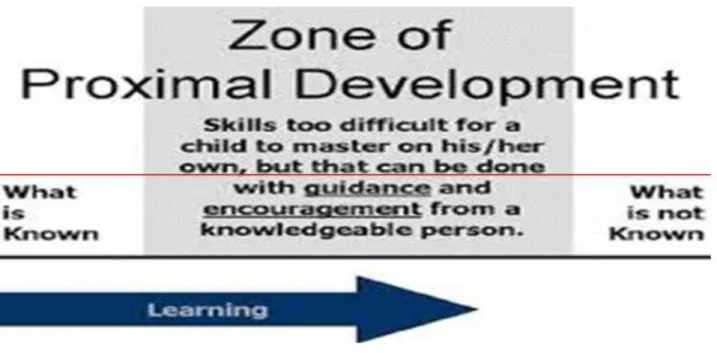
FIGURE 1: VYGOTSKY’S ZONE OF PROXIMAL DEVELOPMENT………7
ANA Annual National Assessment
CAPS Curriculum and Assessment Policy Statement DBST District-Based Support Team
EFAL English First Additional Language ELRC Education Labour Relations Council ESS Education Support System
FSS Full-Service Schools
GPLMS Gauteng Primary Language and Mathematics Strategy IEP Individual Education Programme
ISS Inclusion and Special Schools LSE Learning Support Educators
MRTEQ Minimum Requirements for Teacher Education Qualifications NCESS National Committee on Education Support Services
NCSNET National Commission on Special Educational Needs and Training NSE Norms and Standards for Educators
SACE South African Council for Educators SBST School-Based Support Team
SIAS Screening Identification Assessment and Support
UNESCO United Nations Educational Scientific and Cultural Organisation WPRPD White Paper on the Rights of Persons with Disabilities
ZPD Zone of Proximal Development
ACRONYMS
Full-Service Schools are new institutions in South Africa which have been established in terms of the Education White Paper 6, Special Needs Education and Training System (Department of Education, 2001: 22-23; 2014: 9) as pilot schools for the rolling out of the Inclusion Policy in South Africa. A full-service school is a school that encourages learners who experience barriers to learning and learners without barriers to learning to learn and live together (Department of Education, 2001, 2014). For this reason, all learners must have opportunities to learn and play together and participate in educational activities in full-service schools. These inclusion practices, which promote acceptance, equity and collaboration, are responsive to individual needs, and embrace diversity (The Constitution of the Republic of South Africa, Act No. 108 of 1996). The purpose of this study was to explore the experiences of educators in management of inclusive classrooms. This study focused on how the educators perform the three of the seven educators roles as expected in the Minimum Requirements for Teacher Education Qualifications (MRTEQ) (Department of Education, 2011).The educators, over and above these roles, are expected also to participate in extra-curricular programmes, such as sports, cultural and artistic activities, and thus taking more of their time, most probably to the detriment of not fulfilling their Minimum Requirements for Teacher Education Qualifications as expected.
The three selected educators roles are ‘the educator as a learning mediator’, ‘the educator as assessor’ and ‘the educator as support provider’, viz. the community, citizenship and pastoral
roles of educators for the learners who experience barriers to learning in English First Additional Language (FAL) in the Grade Six inclusive classrooms. A qualitative research method
was employed in this study, to explore the way in which individuals make sense of their world in the naturalistic setting of the classroom, without predetermining the research outcomes (Patton 2002, MacMillan & Schumacher 2010, Denzin & Lincoln 2011, Creswell, 2013). Data analysed was gathered through in-depth interviews, non-participatory observation, and
Barriers to learning and development
District-based support teams
Diversity and the learning context
Inclusion
Inclusive classrooms
Inclusive education
Inclusive schools
Learning support educators
Mainstreaming
CHAPTER ONE
“If they can’t learn the way we teach them, let’s teach them the way they learn.”
Kluth, Biklen and Straut (2003: 18)
1.1. BACKGROUND TO THE STUDY
The implementation of an inclusive education system internationally was informed by the Salamanca Statement and Framework for Action in Spain in 1994, where 92 governments and 25 international organisations, assembled to reaffirm their commitment to Education for All, (United Nations Educational, Scientific and Cultural Organization (UNESCO), 1994, 2006). In South Africa the inclusive education system was informed by the Education White Paper 6, Special Needs Education Policy and is based on the ideal that inclusion involves recognising and respecting the differences among all learners and building on similarities (Department of Education, 2001: 17). Subsequently, The National Commission on Special Educational Needs and Training (NCSNET) and the National Committee on Education Support Services (NCESS) (Department of Education, 1997: 44) report states that:
appropriate and effective education must be organized in such a way that all learners have access to a single education system that is responsive to diversity. No learners should be prevented from participating in this system, regardless of their physical, intellectual, social, emotional, language, or other differences” thus, all learners should have access to ordinary education, to the curriculum and to supportive services when they need them.
The term inclusive education refers to “a system of education that is responsive to the diverse needs of learners” (Engelbrecht, Naicker & Engel Brecht 1999: 19). In South Africa, the South African Council for Educators (SACE), a body that regulates teacher behaviour, promotes and protects the value of inclusive education. Section 3.1 of SACE (2000) addresses the educator and
the learners, and it states that educators ought to acknowledges the uniqueness, individuality, and specific needs of each learner, guiding and encouraging each of them to realise his or her potential (Republic of South Africa, 2000). Thus, the White Paper 6 (Department of Education, 2001, 2003b) is based on the ideal that inclusion involves recognising and respecting the differences among all learners and building on similarities. Mainstreaming refers to the former practice of placing learners with disabilities in classrooms with their peers, who do not have disabilities for part of the school day. These learners were ‘allowed’ to be mainstreamed, only if they could ‘keep up’ and ‘fit into’ the general education classroom and school, with limited support or accommodation (Donald, 1996: 83; Donald, Lazarus & Lolwana 2002: 23, Harriott, 2004: 137). In contrast to the dynamics of the mainstream, inclusion is not about giving some learners extra support so that they will “fit in”, but about supporting all learners so that all their different learning needs are met. Therefore, the focus in inclusive education is on good teaching strategies that will benefit all learners. Thus, inclusive educators require diverse knowledge and skills. The focus ought to be on good teaching practices for all learners, emphasising commonalities rather than differences, although a lot may be required as learners enter the classrooms (Hougaard, 2007).
Landsberg, Kruger and Swart (2011: 75) emphasised that “quality education should be provided through effective teaching and the necessary support.” This means that the role of the educator has to be changed from transferring knowledge to learner-centered teaching. Rallis, Rossman, Phlegar and Abeille (1995), Landsberg and Dednam (1999), Winkler (2001) have shown the critical role that the school could play in supporting learners who experience barriers to learning, and have recommended strategies that could be implemented to support these learners. However what is not adequately addressed in these studies is educators’ performance, and their roles in management of inclusive classrooms, as indicated in the Minimum Requirements for Teacher Education Qualifications (MRTEQ), Norms and Standards for Educators (NSE), and the Education Labour Relations Council (ELRC) (Department of Education, 2011, 2000, 2004). This study focused on the Minimum Requirements for Teacher Education Qualifications (MRTEQ) (Department of Education, 2011), which replaced the Norms and Standards for Educators (NSE),
published in February 2000 (Department of Education, 2000). The Minimum Requirements for Teacher Education Qualifications (MRTEQ) outlined the seven roles that all educators should perform and the eleven competences that the educators must possess to manage the classrooms.
The seven roles that all educators should perform in their classrooms are:
learning mediator;
interpreter and designer of learning programmes and material;
leader, administrator and manager;
scholar, researcher and lifelong learner;
community, citizenship and pastoral role;
assessor; and
learning area, subject, discipline or phase specialist.
The Minimum Requirements for Teacher Education Qualifications assumes that all educators are able to perform all seven educator roles. However, the research project entitled “How teachers are playing out the seven roles in practice”, undertaken by the School of Education and Training Development at the University of Natal, Pietermaritzburg in 1998 as part of the President’s Education Initiative, revealed that it was impossible for individual educator to perform all of these seven roles in a meaningful way. The study further revealed that, among the roles played by educators, the mediator of learning emerged as the strongest category (specialist educator) that was needed. All educators in their study demonstrated a sound knowledge of content and preparation.
However, the study entitled “The real and the ideal: Teacher roles and competences in South African policy and practice” by Harley, Barasa, Bertram, Mattson and Pillay (2000: 292) revealed that there was little evidence of formative assessment (assessor role) and educators’ sensitivity to the needs of individual learners. In the community, citizen and pastoral roles, educators described their involvement in extra school programmes such as sports, cultural and artistic activities as visual art, drama, dance and music. Communication with parents to discuss the
well-being, conduct and progress of their children was the least prominent role. Counselling was seen as a new role for most educators, and was seemingly not easily embraced. The report concluded that it seems more reasonable to expect the entire school to provide collectively for all the seven roles, rather than to expect individual educators to perform all seven educator roles (University of Natal, 1998, Harley, Barasa, Bertram, Mattson & Pillay, 2000: 292).
A gap is therefore emerging between what this policy expects of educators and what educators are actually doing in their classrooms. In this study, the focus was on the educators’ experiences regarding how they manage and address the needs of the learners who experience barriers to learning in English First Additional Language (FAL) in the Grade Six inclusive classrooms. The study focused on the three of the seven roles of the minimum requirements for teacher education qualifications (MRTEQ), namely, the educator as mediator of learning; the educator as assessor of learning; as well as the educator as support provider in a community, citizenship, and pastoral role, respectively.
1.2. EDUCATORS ROLES
1.2.1 Educator as mediator of learning
Learning contexts as provided by, amongst others, different socio-economic status, educational level, culture, different abilities and disabilities, brings with it diverse learners into one physical classroom, playground, and school. Educators are expected to teach and treat these learners equally, and to ensure that teaching and learning takes place. Thus, the educator is expected to mediate learning in a manner that is sensitive to the diverse needs of learners, including those with barriers to learning; as well as constructing learning environments that are appropriately contextualised and inspirational; and communicating effectively, in a show of recognition of, and respect for, the differences in others (Department of Education, 2000, 2004, 2011).
An educator in a diverse classroom is expected to demonstrate sound knowledge of subject content and various principles, strategies and resources appropriate to teaching in a South African context. As a mediator of learning, educators are expected to know how to teach their subjects, as well as how to select, determine the sequence and pace of content in accordance
with both subject and learner needs (Department of Education, 2000, 2004, 2011). Therefore educators must know who their learners are, and how they learn; they must understand their individual needs, and tailor their teaching accordingly. According to Vygotsky:
Teaching can take place successfully through the teaching process called mediation. This refers to the process of assisting a learner through step-by-step explanation, demonstration, guided questioning, and feedback. It is through the mediation process, the process of interaction between children and adults, those learners learn how to memorise new information (1982: 116).
Mediation is the process through which a learner appropriates, or takes possession of, the cognitive tools that makes the construction of knowledge possible (Donald, Lazarus & Lolwana, 2010: 54). However, the learner cannot do this on his/her own, but rather an educator, parent or other person who has already acquired those tools is required to actively to mediate the process. Development, in this case, occurs within a social context in which social relationships take place. In this process, new skills and higher mental functioning are produced. The researcher deduce from this that teaching should always lead to active learning, and that therefore, educators ought to search for effective teaching and learning methods to include all learners and promote the teaching of English First Additional Language (FAL) in the Grade Six inclusive classroom.
a) Mediation role
Mediation, according to Vygotsky, refers to the part played by other significant people in the learners’ lives, people who enhance their learning by selecting and shaping the learning experiences presented to them. According to Vygotsky (1978: 76), mediation is the means through which educators, parents, peers and other mentors help learners to gradually acquire knowledge.
Mediation takes place in what Vygotsky, refers to as the Zone of Proximal Development (ZPD). This he defined as: “the distance between the actual development level as determined by independent problem solving and the level of potential development as determine through
problem-solving under adult guidance or in collaboration with more capable peers” (Vygotsky, 1978: 76).
Thus, the ZPD is that critical space where a child cannot quite understand something on her own, but has the potential to do so through proximal interaction with another person. Proximal interaction is close, face-to-face, usually continuous social interaction of the child by the parent, peer, educator, or other mentors, who helps her to think forward into that space (i.e., to make connections between the familiar and the unfamiliar) acts as a mediator (Donald, Lazarus & Lolwana, 2006: 59). Therefore, the concept of ZPD simply shows the importance of engaging the child in that critical space of potential development.
The Zone of Proximal Development is not a difficult idea to grasp, although educators might not be aware that they are actually applying it in their day-to-day teaching, for instance, presenting a lesson or difficult concept, but using familiar example and language that is familiar to the learner as a support or scaffold, because educators are aware that if they use examples that are unfamiliar to their learners, they run the risk of the learner not understanding the lesson. However, if educators present something familiar they run the risk of losing the child’s attention, and therefore, the concept of the ZPD simply shows the importance of engaging the child in that critical space of potential development (Donald, Lazarus & Lolwana, 2006).
Adapted from (McLeod, 2007: 4)
Figure 1 indicates that: The ZPD is “the distance between the actual development level as determined by independent problem solving and the level of potential development as determine through problem-solving under adult guidance or in collaboration with more capable peers”
What is known are skills that the child can master on his or her own, without guidance
and encouragement from a knowledgeable person.
What is not known are skills that are too difficult for a child to master on his or her own,
but that can be done with guidance and encouragement from a more knowledgeable person.
Therefore, the role of a more knowledgeable person is to guide, encourage and adapt to the needs of the learner and to be responsive to the level of assistance required. The quality and quantity of assistance needs to change over time, as the learner assumes more responsibility over his or her own growth to master difficult skills. This educator-to-learner relationship within the ZPD may differ from the learner-to-learner relationship, where a more knowledgeable person
connect with each learner’s potential in the ZPD and then, through mediation, facilitate their growth to new levels of understanding.
1.2.2 Educator as assessor of learning
The Minimum Requirements for Teacher Education Qualifications (MRTEQ) stipulates that the educator should understand that assessment is an essential feature of the teaching and learning process, and ought to know how to integrate it into this process. Thus, the educator must have an understanding of the purposes, methods and effects of assessment and be able to provide helpful feedback to learners.
The educator designed and managed both formative and summative assessments in ways that are appropriate to the level and purpose of the learning and met the requirements of accrediting bodies, and kept detailed and diagnostic records of assessment and understood how to interpret and use assessment results to fit into processes for the improvement of learning programmes. The competencies of an assessor can thus be described as “to assess learners in varied yet reliable ways, as well as being able to use the results of assessment to improve teaching and learning” (Van der Horst McDonald, 2001: 92, Conley, 2010: 49, Donald, Lazarus & Lolwana 2006: 151).
1.2.3 Educator as support provider: the community, citizenship and pastoral role 1.2.3.1 Educator as support provider
According to the MRTEQ (Department of Education, 2011) the role of educators as a support provider involves addressing barriers to learning in the classroom, and responding to specific learning needs. Educators and learning support educators can support learners, who experience barriers to learning, if they have developed an inclusive, healthy classrooms environment. Donald, Lazarus and Lolwana (2006: 152) argue that, “the more the educators and the learning support educators understand barriers to learning and address them, the more they will benefit all the learners in the inclusive classrooms.” Thus many barriers to learning can be prevented.
Vygotsky’s theory of social learning stresses the fundamental role of social interaction and language in the development of cognition of the child. Language greatly enhances humans’ ability to engage in social interactions, to and share their experiences (Vygotsky, 1978). Vygotsky (1978) states that cognitive development stems from social interactions from guided learning within the zone of proximal development as children and their partners’ co-construct knowledge. He believed strongly that community plays a central role in the process of “making meaning” for the child’s development. Bandura (1986: 206) on the other hand, highlights the idea that much of human learning occurs in a social environment. Thus, by observing other people’s behaviour, individuals acquire knowledge of rules, skills, strategies, beliefs, and attitudes. Individuals also learn about the usefulness and appropriateness of behaviours by observing models and the consequences of modeled behaviours, and they act in accordance with their beliefs concerning the expected outcomes of actions.
Vygotsky (1982: 116), Bandura (1986: 206) stress that knowledge constantly evolves as the result of social interaction. What is taught, what is learned, and how it is learned cannot be separated from its social context. Therefore, knowledge cannot be taught as if it were static and unchanging. In addition, teaching and learning develops out of continuous social interaction between educators and learners. Educators (including parents, peers, and other mentors) mediate to learners the accumulated knowledge, skills, values, and understanding of their social context. Thus, learners bring their own knowledge, skills, values, and understanding from their particular social context to the teaching and learning situation (Donald, Lazarus & Lolwana, 2002; 2006).
Schaps and Solomon (1990) agree that schools should teach learners the behaviour that constitute being “socially responsible”, but note that social responsibility is more than a set of learned skills or acquired habits - it is anchored in the development of deeply personal commitments to such core values as justice, tolerance, and concern for others.
Educators cannot expect learners to develop commitments of this kind in a vacuum. They must be able to see and experience these values in action in their daily lives, including their lives in
school. This is why schools must strive to become “caring communities”, imbued with these values, in which all learners become contributing, valued members (Schaps & Solomon, 1990).
1.2.3.3 Educator as pastoral role
According to Farrell and Ainscow (2002: 67-68):
“pastoral care implies a structure of roles taken up by named individuals whose task it is to manage incidents and processes that broadly relate to the care of the learners”. Therefore, this is likely to include disciplinary procedures, consulting with parents/guardians, liaising with statutory and voluntary agencies, contact with community groups in which the learner has a stake. This is the managerial aspect of pastoral care; it is likely to be taken up by selected educators and learning support educators.
The educators have practiced and promoted a critical, committed and ethical attitude towards developing a sense of respect and responsibility towards others. Thus, the educator has uphold the Constitution of the Republic of South Africa, and promote democratic values and practices in schools and society based on human dignity, the achievement of equality, and the advancement of human rights and freedom (The Constitution of the Republic of South Africa, Act No. 108 of 1996).
Within the school, the educator has demonstrated an ability to develop a supportive and empowering environment for the learner, and respond to the educational and other needs of learners and fellow educators (Department of Education, 2000, 2011). Furthermore, the educator has developed supportive relations with parents and other key persons and organisations, based on a critical understanding of community and environmental issues. Therefore, the competences of community, citizenship and pastoral role are, educators must understand diversity in the South African context in order to teach in a manner that includes all learners. Therefore, educators must be able to identify learning or social problems and work in partnership with professional service providers to address these problems.
1.3. PROBLEM STATEMENT
The Minimum Requirements for Teacher Education Qualifications (MRTEQ) (Department of Education, 2011) policy expects educators to perform the seven educator roles in the classrooms, as stipulated in the qualifications policy. However, it has been found by the research project “how teachers are playing out the seven roles in practice”, undertaken by the School of Education and Training Development at the University of Natal, in 1998, (Natal University, 1998, Harley, Barasa, Bertram, Mattson & Pillay, 2000: 292) that it was impossible for an individual educator to perform all these seven roles in a meaningful way.
The study further revealed that, among the roles played by educators, the mediator of learning emerged as the strongest category (specialist educator) that is needed in the classroom to support the learners to gradually acquire knowledge (Natal University, 1998, Harley, Barasa, Bertram, Mattson & Pillay, 2000: 292).
According to the Minimum Requirements for Teacher Education Qualifications (MRTEQ) (Department of Education, 2011), there are seven educator roles in the classroom that the teachers are expected to fulfill. Over and above these roles, educators are also expected to participate in extra-school programmes such as sports, cultural and artistic activities, and thus, using up their time, most probably to the detriment of not fulfilling their MRTEQ. Despite performing the MRTEQ, educators have to communicate with parents to discuss the well-being, conduct and progress of learners. Educators should also establish links between the school and the community.
The roles for the educators in terms of the MRTEQ, however, demands more when taking along the Education White Paper 6, that requires human resource development for classroom educators in terms of improving their requisite knowledge and skills and develop new ones for achieving the goal of an inclusive education and training system. Staff development at the school and district level was critical to put in place successful, integrated educational practices to support learners who experience barriers to learning in the Grade Six inclusive classrooms.
Educators in the inclusive classroom working with learners who experience barriers to learning might feel overwhelmed, as their teaching requires additional time and supporting of such learners. It also becomes a challenge to some educators, because they might feel that they do not have time, and in some instances, the necessary skills, to support the learners who experience barriers to learning (Natal University 1998, Harley, Barasa, Bertram, Mattson & Pillay, 2000, Dixon & Verenikin, 2007). Therefore, this study investigated the experiences of educators in performing the MRTEQ roles of educators in management of inclusive classrooms.
1.4. THE AIMS OF THE STUDY
The aim of this study was to explore the experiences of educators in management of inclusive classrooms as expected in the Minimum Requirements for Teacher Education Qualifications (MRTEQ) (Department of Education, 2011).
The study sought to:
1. Explore the experiences of educators in management of inclusive classrooms in terms of three educator’s roles.
2. Understand how the three educator’s roles affect the educators’ responses to the educational needs of learners who experience barriers to learning in the inclusive classrooms.
3. Understand how the educators perform the three educator roles in management of English First Additional Language (FAL) in the Grade Six inclusive classrooms.
What are the experiences of educators in performing the Minimum Requirements for Teacher Education Qualifications roles in management of inclusive classrooms?
1.6. RESEARCH DESIGN AND METHODOLOGY
Yin (2009: 26) defines research design as logical plan for getting from here to there, where ‘here’ may be defined as the initial set of questions to be answered, and there is some set of conclusions, (answers) about the questions. Therefore, between ‘here’ and ‘there’ may be found a number of major steps, including the collection and analysis of relevant data. The research design indicates the general plan with regards to how the research is set up, what happens to the subjects and what methods of data collection are used (McMillan & Schumacher, 2010: 20). According to Punch (2005: 47), “research design means connecting the research questions to data. The design is the basic plan for a piece of empirical research, and includes five main ideas: strategy, conceptual framework, who or what will be studied, and the tools and procedures to be used for both collecting and analysing empirical materials.” The researcher may follow either qualitative, quantitative or mixed methods i.e., in order to gather information. For the purpose of this study, the researcher followed a qualitative research design.
1.6.1 Qualitative research design
McMillan and Schumacher (2010: 321) define qualitative research methods “as an inquiry process of understanding where a researcher develops a complex, holistic picture, analyses words, reports detailed views of informants, and conducts the study in natural settings”. This study, of the experiences of educators in management of inclusive classrooms, lent itself towards a qualitative, exploratory and contextual research design. In using qualitative research design, the researcher hopes to gain understanding of the social world through direct personal experiences in real world setting. The researcher personally visited the selected participants in their specific schools to conduct in-depth interviews and collect data in their natural setting (Creswell, 2013: 44). Six participants were interviewed from the three selected primary schools.
Yin, (2009: 18) describe case studies as “an empirical inquiry that investigate a contemporary phenomenon in depth and within its real-life context, especially when the boundaries between phenomenon and context are not clearly evident”. Thus, case study research is a qualitative approach, according to which the investigator explores real-life, contemporary bounded system (a case) or multiple bounded systems (cases) over time, through detailed, in-depth data collection involving multiple source of information for example, observations, interviews, audiovisual material, documents and reports (Creswell, 2013: 97).
In this study, the case studies of three selected primary schools were drawn to capture diversity of information and complexities of how the educators and learning support educators manage and perform the three of the seven educator roles, as expected in the Minimum Requirements for Teacher Education Qualifications (MRTEQ), Norms and Standards for Educators (NSE), and Education Labour Relations Council (ELRC) (Department of Education, 2011, 2000, 2004).
1.7. DATA COLLECTION 1.7.1 Sampling
There is no single method for the selection of research participants in qualitative research, but there is relative consensus amongst qualitative researchers that participants should be selected in terms of the contribution that they would be able to make in terms of the research purpose (Grinnell, 1993: 153; McMillan & Schumacher 2001: 169). In this study, participants would have acquired a diploma and/or degree qualification in teaching, have experience in teaching in an in inclusive schooling environment, and have been teaching learners who experience barriers to learning for more than 10 years.
Purposeful sampling method was employed for its suitability to eliciting the most information rich sources in the field of research (Leedy & Onmorod 2010: 147). Participants were sampled from the three selected primary schools i.e., one inner city school, one township school in Tshwane South District Office (D4), and one rural school in Tshwane North District Office (D3). Purposeful sampling method is often used to access ‘knowledgeable people’ i.e., those educators and learning support educators who have in-depth knowledge about particular issues by virtue
of their professional role, power, access to networks, expertise or experience (Ball 1990, cited in Cohen, Lawrence & Morrison, 2007: 11). This means that the researcher selects individuals and sites for study, because they can purposefully inform an understanding of the research problem and central phenomenon in the study (Creswell, 2013: 156).
Data was collected through in-depth interviews, non-participatory observation and document analysis. The documents analysed included the Minimum Requirements for Teacher Education Qualifications (MRTEQ), Norms and Standards for Educators (NSE), Education White Paper 6, Special Needs Education and Training System and Education Labour Relations Council (ELRC) (Department of Education, 2011, 2000, 2001, 2004). In-depth Interviews were conducted at the three selected primary schools. Data collected was audio-recorded after being granted permission by the participants and it was explained to them that this is so as to enhance data collected through the transcripts, from the recordings and note taking. The in-depth interviews were conducted for 45 minutes per participant to give the participants enough time to answer the questions. Follow-up in-depth interviews were conducted with the same participants to cross check the credibility and trustworthiness of data collection.
1.7.1.1 Participants
In this study, six participants were interviewed. Three female educators and three female learning support educators formed the core focus of the participants as ‘information rich-key informants’ who are likely to be knowledgeable, informative and who could contribute significantly towards the study (McMillan & Schumacher, 2010: 350; Creswell, 2013: 94). The educators and the learning support educators were purposefully selected according to their experience of performing roles of educators in management of inclusive classrooms. These educators have in-depth knowledge of developing an inclusive, healthy classroom environment to support learners who experience barriers to learning in English First Additional Language (FAL) in the Grade Six inclusive classrooms as advocated by the Education White Paper 6 (Department of Education, 2001).
1.7.1.2 In-depth Interviews
McMillan and Schumacher (2004: 443) states that in-depth interviews can help the researchers to collect the kind of rich data necessary for a critical understanding of the ways in which individuals conceive of their world and explain or make sense of important events in their lives. In-depth interviews were used to collect data. The researcher hopes to gain an in-depth understanding of educators’ experiences, thoughts and feelings regarding the management of Grade Six inclusive classrooms in terms of the three educator roles selected for this study. The participants were interviewed in their schools, according to the interview time schedules agreed between the participants and the researcher. The interview protocol or schedules were developed so as to ensure that the interviewer asked the same questions of all participants. The interviewed data were audio-recorded to complement note taking by the researcher, which ensured that data was captured in its natural form. This also allows the researcher to devote her time to the interviewee and to probe in-depth to obtain an accurate verbatim record of the interview, capture the language used by the interviewee, including hesitations and tone for details (Lewis & Ritchie, 2003)
1.7.1.3 Non-participatory observations
Non-participatory observations were conducted and the researcher visited the selected educators and observes them while teaching English First Additional Language (FAL) in the Grade Six inclusive classrooms. Other observations were conducted during break and the school context, in order to have an opportunity to record the selected roles in the cause of the educators’ day.
1.8. SITE
Site is a place where research was conducted, and in this study site means three primary schools in Tshwane Metro Municipality in Gauteng Province. Two primary schools are in Tshwane South District Office (D4) and one primary school is in Tshwane North District Office (D3) according to the District demarcation boundaries.
1.9. DATA ANALYSIS
According to Creswell (2008), the research questions are used to serve as a guide for conducting the analysis. Content analysis was used to identify themes and trends that run through the data for interpretation.
Content analysis is a systematic approach to qualitative data analysis that identifies and summarises message content (Neuendorf, 2002). Through content analysis, which is a process of looking at data from different angles with a view to identifying keys in the text, I might be able to understand and interpret raw data.
To ensure credibility of the data and analysis, member checking was conducted, where the interpretations were taken back to the participants to verify and correct where there might be misrepresentation of what they shared or where they would like to clarify and therefore enriching data and analysis further. Follow up interviews were conducted to enrich the data before final data analysis and interpretation.
1.10. CREDIBILITY AND TRUSTWORTHINESS
Credibility refers to the authenticity of the data, meaning that the data is a true reflection of the participants’ experiences of the phenomenon under study (Guba & Lincoln 1994: 114). To ensure credibility and trustworthiness of this study, data triangulation was employed.
Data triangulation involves using diverse sources of data, so that one seeks out instances of a phenomenon in several different settings, at different points in time or space (Seale, 1999, Cohen, Manion & Morrisons, 2007; Maree & Van Der Westhuizen, 2009). In order to ensure the credibility of data analysis, audiotapes were used to record the interviews to enable the
researcher to cross check the transcript repeatedly. The research report was further taken to the participants and records their actions to that report to clarify the findings (Creswell, 2007; Cohen, Lawrence & Morrisons, 2001).
1.11. ETHICAL CONSIDERATIONS
The following ethical principles were adhered to. Permission to conduct research was obtained from the University of South Africa College of Education, Ethics Clearance Certificate Reference Number: 2013 OCT/7409346/CSLR and from the Research Ethics Committee, Gauteng Department of Education Research Committee, the three selected primary schools and the six participants of this study. The principle of voluntary participation in research, the participants participated voluntarily in this study and they were free to withdraw consent and discontinue from the research at any time without prejudice to them. The participants were also informed that they may, for example, refuse to answer any question and be interviewed at reasonable times.
The principles of informed consent guided the study, where the participants were informed that the research purpose is to understand the experiences of educators in management of inclusive classrooms. In gaining access to schools, I obtained permission from Tshwane South District Office (D4), Tshwane North District Office (D3), and the principals of the three selected primary schools.
The principle of deception, deception occurs in not telling the whole truth, telling lies or compromising the truth (Bailey 1994: 463, Cohen, Manion & Morrisons, 2011: 95). The researcher was honest about the purpose of the study, regarding where potential risk of harm to the participants exists. In some cases, researchers do not tell the whole truth to participants and they may not discover important information if they are not completely honest. This was not the case in this study. Debriefing may include sharing the results of the research (Cooper & Schindler 2001: 116). Adequate feedback was provided to the participants at the end of the research and during research session. This assisted in minimising ethical dilemmas such as withholding information about the true nature of the research. The principle of safety in participation, the participants of this research were not placed at a risk or harm of any kind. They were not exposed
to any form of personal injury or humiliation, stress and embarrassment. The principle of trust, the in-depth interviews were conduct in a manner that the participants gradually developed mutual trust, and answered the questions without bias. This mutual trust was not exploited for any personal gain or benefit, by deceiving or betraying the participants in the research route or its published outcomes.
The principle of privacy, confidentiality and anonymity, the identity of the participants, as well as information gathered, was kept anonymous and confidential (Denzin & Lincoln, 2013: 134-136). Pseudonyms were assigned to schools and the participants to conceal their identity.
Data was collected through in-depths interviews and the use of audio-tapes was permitted by the participants. The audio-tapes are stored in a safe place and undertaken to be destroyed when the study is completed (Maree, Creswell, Eloff, Ferreira, Ivankova, Jansen, Niewenhuis, Pitersen,
Plano-Clarke & Van der Westhuizen 2007: 42, McMillan& Schumacher, 2010: 338-339).
1.12. DEFINITIONS OF KEY CONCEPTS
Definition of key concepts forms the cornerstone of all research. This gave the researcher the opportunity to clarify her conceptual understanding of key terms employed in the study.
1.12.1. BARRIERS TO LEARNING AND DEVELOPMENT
Barriers to learning and development are defined as those factors that hinder teaching and learning. These can occur at all levels of the system. They include the following:
Factors relating to specific individuals. In the education system, this refers specifically to the learner (i.e., relating to the specific learning needs and styles) and educators (i.e., personal factors, as well as teaching approaches and attitudes.
Various aspects of the curriculum, such as content, language or medium of instruction, organisation and management in the classroom, methods and processes used in teaching, the pace of teaching and time available, learning materials and equipment and assessment procedures.
The physical and psychosocial environment within which teaching and learning occurs. This includes buildings as well as management approaches adopted.
Dynamics and conditions relating to the learner’s home environment, including issues such as family dynamics cultural and socio-economic background, socio-economic status and so forth. Community and social dynamics, which either support or hinder the teaching and learning process (Department of Education, 2002: 94).
1.12.2 DISTRICT-BASED SUPPORT TEAMS
The District-Based Support Teams (DBSTs) are officials who manage inclusive education in the district and “provide a coordinated professional support services that draws on expertise in further and higher education and local communities, targeting special schools and specialised settings, designated full-service schools and other primary schools and educational institutions” (Department of Education, 2005, 2008: 18).
According to the Education White Paper 6 (2001: 19-20), the purpose and function of the District-Based-Support Team (DBSTs) is to give support to all learners, educators and the system as a whole.
The focus point is on teaching and learning factors, which include the following:
helping educators in a school create greater flexibility in the teaching methods and
assessment of learners;
providing illustrative learning programmes, support materials and assessment
instruments;
ensuring that the teaching learning framework and the environment are responsive to
the full range of learning needs; and
providing direct support to learners through supporting educators and school
1.12.3 DIVERSITY AND THE LEARNING CONTEXT
‘Diversity’ is ordinarily defined to reflect the purpose for which it is used. Sometimes, diversity is used negatively, to distinguish between groups perceived as ‘different’, as was the case in the old apartheid policies. It may however be used positively, to highlight ‘a richly diverse population’, creating awareness of opportunities and possibilities (Jacobs, Vakalisa & Gawe, 2011: 118).
Fenstermacher and Soltis (2009: 68) describe diversity as ‘finding a balance between the need for commonality in order to sustain the benefits of liberty and self-governance, and the need for difference in order to permit various cultures, languages and value orientations to survive, even flourish’. In order words, it is important that diversity be viewed not only in terms of race and colour, but in all aspects where differences occur.
Diversity refers to a range of differences, when many different types of things or people are included in something (Cambridge University, 2003: 356). It is also about respecting and acknowledging individual learning differences in the classroom (Donald, Lazarus & Lolwana 2002: 27).
Therefore, in education it is not enough to acknowledge diversity, where diversity should be mobilised to the advantaged of learners. It is in this sense that Spencer (2004: 15) sees diversity as an opportunity to give others “a unique range of attributes and a distinctive view of the world”. Diversity in effective teaching may therefore be viewed as an opportunity to expand learners’ knowledge and opportunities. Consequently, responsive diversity pedagogy facilitates and supports the achievement of all learners. In such a classroom, effective teaching and learning occurs in a culturally supported, learner-centred context, whereby the strengths learners bring to school are identified, nurtured, and used to promote learner achievement. Richards, Brown and Forde (2006: 35), Gay (2000) refer to diversity as “culturally responsive pedagogy”. In their view, diversity comprises three dimensions:
an institutional dimension: reflects the administration and its policies and values;
engage in to become culturally responsive; and
an instructional dimension: includes materials, strategies and activities that form the
basis of instruction.
1.12.4 INCLUSION
Inclusion can be defined as shared value that promotes a single system of education, dedicated to ensuring that all learners are empowered to become caring, competent and contributing citizens in an inclusive changing and diverse society (Engelbrecht, Green, Naicker & Engelbrecht, 1999: 6). According to Salend (2001: 5), inclusion seeks to establish collaborative, supportive, and nurturing communities of learners that are based on giving all learners the services and accommodations they need to learn, as well as respecting and learning from each other’s individual differences. All learners must have opportunities to learn and play together and participate in educational, social and recreational activities in an inclusive school. These inclusion practices, which promote acceptance, equity and collaboration are responsive to individual needs, and embrace diversity.
1.12.5 INCLUSIVE CLASSROOMS
Inclusive classrooms are teaching and learning spaces, where all learners are integral members of classrooms, feel connection to their peers, have access to rigorous and meaningful general education curricula and receive the collaborative support to succeed (Causton-Theoharis, 2009). In inclusive classrooms, educators are reflective practitioners, who are flexible, responsive and aware of learners’ needs. They think critically about their values and beliefs, and routinely examine their own practices for self-improvement, so as to ensure that all the learners’ needs are met. Educators individualise education for all learners in terms of assessment techniques, curriculum accessibility, teaching strategies, technology, physical design adaptations, and a wide array of related services based on their needs. Learners are given multimodality curriculum, as well as challenging educational and social experiences that are consistent with their abilities and needs (Salend, 2001: 7).
1.12.6 INCLUSIVE EDUCATION
Inclusive education is concerned with bringing together learners in a school context from all races in a shared learning environment, despite their abilities. It is interested in the support that learners with various needs should receive and espouses to treat all learners equal (Tabane, 2009: 27). Thus, according to Education White Paper 6, inclusive education means education that is non-discriminatory in terms of disability, culture, gender or other aspects of learners or staff that are assigned significance by society. It involves all learners in a community without expectations and irrespective of their intellectual physical, sensory or other differences, having equal rights to mainstream classrooms. Inclusion emphasis diversity over assimilation striving to avoid the colonisation of minority experiences by dominant modes of thought and action (Ballard, 1997: 224 – 245). Swart (2004: 233) share a similar conviction, and describes inclusive education as a practice of promoting the participation and competence of every learner, regardless of age, gender, ethnicity, language, class, disability and HIV status.
This can be realised only in a unified education system, where all role-players work together and are supported in creating learning communities that meets the diverse learning need of every learner.
Although inclusion means different things to different people in different contexts, there are commonalities:
a commitment to building a more just society;
a commitment to building a more equitable education system; and
a conviction that extending the responsiveness of mainstream schools to learner.
Diversity (particularly for a marginalised groups of learners) offers a means of turning these commitments into reality.
The Centre for Studies on Inclusive Education, a Centre situated in Bristol in the United Kingdom to promote inclusive education in England (CSIE) (2016: 2), defines inclusive education as “children – with and without disabilities or difficulties – learning together in ordinary pre- school provision, schools, colleges and universities with appropriate networks of support”. The Centre’s
stance is that successful schools regard all learners as rightful members of the school they would attend, and the classes in which they would participate, if they did not have disabilities. Each learner is provided with an instructional curriculum to meet his or her individual needs and learning styles, with the result that standards vary with each child and all educational staff share responsibility (Niewenhuis, Beckmann, & Prinsloo 2007: 149).
1.12.7 INCLUSIVE SCHOOLS
Inclusive schooling constitutes one aspect of school change and effective school leadership programmes. Inclusive schools try to provide a complete education to all students who are enrolled. Thus, an inclusive school has been described as one that caters to the needs of all learners, where all learners are valued and respected (Dixon & Verenikina, 2007: 193). All learners must have opportunities to learn and play together and participate in educational, social and recreational activities in an inclusive school. These inclusion practices, which promote acceptance, equity and collaboration are responsive to individual needs and embrace diversity (Department of Education, 2001, 2009).
Salend (2001: 7) also identifies individual needs as a principle for an effective inclusive school. Effective inclusion involves sensitivity to and acceptance of an individual’s needs and differences. Educators cannot teach the learners without taking into account the factors that shape their learners and make them unique, namely forces such as disability, race, linguistic background, gender and economic performances and socialisation. Therefore educators, learners, as well as family members, must be sensitive to individual needs and differences. In inclusive classrooms, all learners are valued as individuals capable of learning and contributing to society. They are taught to appreciate diversity and to value and learn from one another’s similarities and difference.
An inclusive school curriculum, encourages all learners to work at their own pace, affirms the rights of all learners to do their best, creates sound learning opportunities for all learners, encourage a nurturing and accepting atmosphere and encourages flexibility of lesson content and process (Winkler, Modise & Dawber, 2004: 47).
1.12.8 LEARNING SUPPORT EDUCATORS
Learning support educators are educators who have specialised competencies to support learners, other educators, and the system as a whole, to ensure effective learning by all learners. These include educators formerly referred to as “remedial”, “special class” teachers. Such educators should have the capacity to adapt the curriculum to facilitate learning among learners with diverse needs and support learners who experience specific impairments or disabilities and who may require learning support, and they would play a central role in the Centre of Learning or School-Based Support Teams (SBSTs) (Department of Education, 2008).
1.12.9 MAINSTREAMING
Mainstreaming refers to the placement of learners with diverse needs in general education classrooms, with appropriate instructional support (Harriett, 2004: 137). When learners are mainstreamed, they are usually prepared prior to placement into general education and are expected to keep up with general classroom expectations. They have the same or nearly the same curriculum as general education learners, and are expected to fit into the general curriculum and classroom. Within the inclusive classroom, the educator is expected to make adaptations to provide a suitable environment for learners with learning barriers.
According to Education White Paper 6 (Department of Education, 2001: 17), mainstreaming is concerned with getting learners to ‘fit into’ a particular kind of system or integrating them into this existing system. It is also about giving some learners extra support so that they can ‘fit in’ or be integrated into the ‘normal’ classroom routine. In mainstreaming, learners are assessed by specialists, who diagnose and prescribe technical interventions, such as the placement of learners in programmes. Thus, mainstreaming focuses on changes that need to take place in learners so that they can ‘fit in’. In mainstreaming, the focus is on the learner.
1.12.10. SCHOOL-BASED SUPPORT TEAMS
The School-Based Support Teams (SBSTs) could be the structure around which support for schools is developed (Cann, 2003: 3). A team of educators, other professionals, parents and learners might be represented in this structure. Its primary functions are to support the learning
process by identifying and addressing barriers to learning and participation, as well as accessing support from the community. The School-Based Support Teams (SBSTs) might be strengthened by the inclusion of expertise from local and district communities (Department of Education, 2008, 2014).
1.13 CHAPTER DIVISIONS
CHAPTER 1: INTRODUCTION AND OVERVIEW OF THE STUDY
In Chapter 1, an overview of this study was provided. This includes a brief background and rationale of the study, the problem statement, aims of the study, and research questions. Further to this, the assumption on which the study was based, the research design and methodology was presented.
The research site, sampling, and the methods used to collect data were also presented. Strategies for ensuring the credibility and trustworthiness of the study as well as ethical considerations were briefly explained.
CHAPTER 2: LITERATURE REVIEW
In Chapter 2, literature review and the theoretical framework for the study were discussed. This included consulting the relevant and authoritative literature that related to the experiences of educators in performing roles of educators in management of the Grade Six inclusive classrooms.
CHAPTER 3: RESEARCH PROCESS
In Chapter 3, the research design, research methodology and the research process applied in this study were outlined and discussed. The methods of data collection, data analysis and interpretation were discussed and justified.