C
ulturale
ffeCtson
v
isualP
erCePtionMainstream psychology has generally assumed that psychological processes are universal and that the main role of psychology is to investigate these universal aspects of human beings. Visual percep-tion, attenpercep-tion, and even visual illusion have, therefore, been understood mainly through the underlying optical mechanisms and characteristics of visual information hardwired in the human brain and shared by human beings in general.
During the last couple of decades, however, increasing numbers of cross-cultural studies have empirically reexamined this theoretical assumption and advocated an alternative view of human psy-chology in which culture and human psychological processes are considered to mutually influence one another. This entry reports some recent attempts to reexamine the so-called universal systems of visual perception and discusses the possibility of cultural influences on perception as evidenced by cultural variations in optical illusion, in color per-ception, in visual attention, and in brain function-ing that governs visual attention.
Cultural Effects on Visual Illusion
In the literature of psychology, optical illusion is often used as evidence of human universals in per-ception. One of the most famous optical illusions is the Müller-Lyer illusion (see Figure 1), in which people perceive that a line segment ending in inward-pointing arrows is longer than a horizontal line segment ending in outward-pointing arrows. This seemingly universal phenomenon, however, has been tested cross-culturally, and the results indicate cultural variations in the magnitude of illusion. For example, Murray Islanders in Melanesia and members of the Toda tribe in India showed significantly smaller errors than do their British counterparts in judging the relative lengths of the lines. Similarly, extensive cross-cultural studies of 17 societies—including a variety of African agricultural and hunter-gatherer cultures, an Australian Aboriginal foraging culture, a tribe of Filipino horticulturalists, and midwesterners in the United States—show that the degree of illusion
is much stronger among U.S. residents. Furthermore, children in some cultures (e.g., hunter-gatherers from the Kalahari Desert) were completely immune to the Müller-Lyer illusion. The findings suggest that individuals who grew up in certain visual environments are not vulnerable to the Müller-Lyer illusion.
Various studies have proposed hypotheses to examine the main causes of cultural variations in susceptibility to this illusion. The carpentered envi-ronment hypothesis, for example, suggests that people developmentally acquire perceptions of a three-dimensional world in accordance with their experiences with the surrounding environment. In Western industrialized societies, individuals’ depth of field is founded on the structure of rooms, houses, and furniture consisting of vertical and horizontal lines with corners in a variety of angles. People in these societies associate acute angles with nearby objects (such as the corner of a rug), and obtuse angles with somewhat more distant views (such as the intersection of two walls and a floor). Once they acquire this specific perceptual pattern in the three-dimensional world, they apply the same rules even when they observe the visual rep-resentation in the two-dimensional field. The Western perspective in art is a good example. In Western perspective, objects close to the viewer are drawn larger and are characterized by acute angles, and objects farther from the viewer are drawn Figure 1 Müller-Lyer Illusion
Source: General Social Survey, National Opinion Research Center (2000).
340 Cultural Effects on Visual Perception
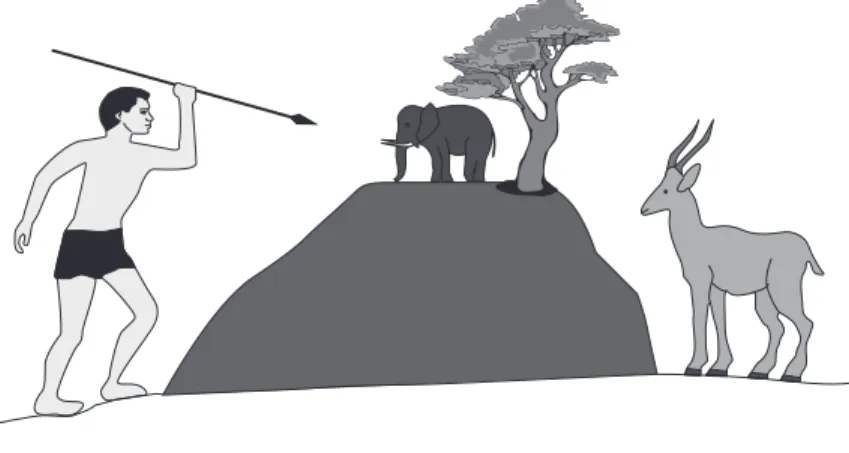
they reported that the hunter was aiming at the smaller prey, which they believed to be closer to the hunter.
The causes of cultural variations in the effects of optical illusions need to be studied further. Current findings, however, suggest that humans’ susceptibil-ity to optical illusion may depend heavily on their visual experiences in the environment and on cultur-ally shared interpretations of visual information.
Cultural Effects on Color Perception
Colors accentuate our daily life. But do all people perceive color in exactly the same way? Color is an excellent stimulus for use in scientific investigation because although the spectrum is physically defined, color perception entails psychological processes. One line of research provides evidence that sup-ports the universality of color perception. A cross-cultural study of 98 societies suggests that 11 colors (red, orange, yellow, green, blue, purple, pink, brown, gray, black, and white) are univer-sally recognized, even in the absence of color terms corresponding to these colors. For example, although the Dani people of Irian Jaya on the island of New Guinea had only two color terms (dark and light), they were able to quickly distin-guish among the basic colors.
Moreover, researchers who investigate the relationships between colors and color terms advocate an evolutionary account of the development of color terms. That is, the appearance of color terms is predict-able according to the number of color terms in a language. If the language has only two color terms, these always turn out to be black (dark) and white (light). However, if the language has three color terms, the third term will corre-spond to the red end of the spectrum. The fourth and fifth color terms will be green and yellow (or yellow and then green), the sixth color will be blue, and the seventh color will be brown. The last color terms to appear will be pur-ple, pink, orange, and gray, not neces-sarily in that order.
New findings challenge the idea that color perception is universal among smaller and feature obtuse angles. For this reason,
Westerners perceive a line ending in inward-facing arrows to be farther away (and therefore actually longer) than it appears. However, in cultures where structures are built using less angular shapes, people have fewer opportunities to inter-pret the relationships between lines and angles in their perceptual world. The carpentered environ-ment hypothesis thus helps explain why people from some cultures are less susceptible to the Müller-Lyer illusion than Westerners.
Drawings using Western perspective have been used to study cultural variations in depth-of-field perception. For example, one study examined how children and illiterate adult laborers from an African Bantu tribe interpreted the image of a large hunter aiming a spear in the direction of two animals, an elephant and an antelope (see Figure 2). The elephant was closer to the hunter from a non-Western two-dimensional point of view, but because it was drawn smaller than the antelope and the hunter, it would be farther away accord-ing to Western perspective. The antelope was far-ther away from the hunter in the two-dimensional view, but because of its size, it would be consid-ered closer to the hunter in Western perspective. Therefore, although Westerners would be expected to perceive that the hunter was aiming at the large prey, the Bantus perceived the same image without the depth of the field, and for this reason
Figure 2 The Image Used in William Hudson’s (1960) Experiment
Source: Hudson, W. (1960). Pictorial depth perception in sub-cultural groups in Africa. Journal of Social Psychology, 52, 183–208. Reprinted with permission of the Helen Dwight Reid Educational Foundation. Published by Heldref Publication, 1319 Eighteenth St., NW, Washington DC 20036–1802. Copyright © 1960.
humans, however. For example, the Dani per-formed relatively poorly in tasks requiring them to remember the basic colors; their retention rate was much lower compared with that of English speak-ers. Another study investigated color perceptions of Berinmo speakers in East Sepik, Papua New Guinea, whose language contains five basic color terms. The Berinmo’s language distinguishes between nol (a kind of bluish green) and wor (a kind of yellow-ish green) but not between blue and green. In this study, English and Berinmo speakers were asked to view and remember color chips representing colors spanning either the blue-green boundary or the nol-wor boundary. The Berinmo speakers’ performance of the color retention task was better with regard to colors on the nol-wor boundary. The English speakers did better at remembering colors on the blue-green boundary. These findings suggest that linguistic color terms do affect the ability to remem-ber specific colors.
Does language play a role in facilitating or inhibiting our perceptual processes? A study of Russian and English speakers examined whether the existence of a language category influences color perception. Russian has two independent color terms to represent blue: light blue (goluboy) and dark blue (siniy), whereas English speakers usually distinguish these colors by adding adjec-tives (light or dark) to the base term blue. English and Russian speakers were presented with a vari-ety of blue color chips that were slightly different from each other in hue and saturation, and the task was to discriminate which one corresponded to the target chip. For example, a blue chip was presented as a target stimulus; subsequently, two alternative blue chips were presented, and the par-ticipants were asked to select which of the alterna-tives was identical to the target chip. Russian speakers were quicker to discriminate between two colors when they fell into different categories (goluboy and siniy) than when they were from the same color category. However, these differences did not provide the same advantages for English speakers. This experiment demonstrated that categories in a language affect participants’ performance in simple perceptual color tasks. This line of research suggests that culturally shared ways of naming colors may influence speed of color perception.
The issue of universality versus cultural vari-ability in color perception is still controversial. One position holds that language and cultural con-ventions do not affect color perception; the other maintains that color perception is subject to arbi-trary, culturally defined color terms. It has recently been suggested that both positions are partially true. The color terms used in a given culture do influence retention, learning, and ongoing pro-cesses of color discrimination. But there is still about 75% overlap in how cultures draw aries around color terms. For example, the bound-aries of the color terms used by the Berinmo speakers mentioned earlier are similar to those of the five color terms used by Himba speakers in Namibia, although the ecologies and economies of the two groups diverge significantly. Thus, there seem to be universal constraints regarding catego-rization of colors.
Cultural Effects on Visual Attention
Another line of research has examined whether culture can affect attentional processes. Research on perception and cognition indicates that there are systematic cultural variations in attention between people in East Asian societies (e.g., China, Korea, and Japan) and Western societies (e.g., Canada and the United States). East Asians, who holistically attend to the entire field and relation-ships between objects, are more context sensitive than Westerners, who analytically focus on salient objects and can easily separate target objects from the context.
A research group used the rod and frame test to compare the levels of context sensitivity of U.S. and Chinese participants. This task used a device con-sisting of a square frame box of a certain depth, with a rod situated at one end of the box. The par-ticipant sat at the other end of the device with his or her chin on a chin-rest, observing the rod through the box. The participants were asked to manipulate the position of the rod until they subjectively thought the rod was perfectly vertical. The experi-menter then manipulated the angle of the frame box, and the participant tried again to position the rod vertically. When the angle of the frame was vertical, the frame could serve as a reference point for the position of the rod. When the frame was
342 Cultural Effects on Visual Perception
tilted, however, the judgment of participants who could not ignore the frame would be hindered. The Chinese participants made more errors than the U.S. participants did, suggesting that the Chinese were more sensitive to contextual information and there-fore more influenced by the angle of the frame. U.S. participants were able to detach the task from the influence of the angled frame, which suggests that they were relatively immune to the contextual cue.
Are there cultural differences in how attention affects memory for objects in scenes? In an object recognition task, U.S. citizens and Japanese were presented with pictures of wild animals in natural settings. The same participants were then shown pictures of the original animals, as well as new animals, and asked to identify which animals they had seen previously. In this part of the study, the combination of animals and backgrounds was manipulated: Half of the original animals were presented with their original backgrounds, and the rest with completely new backgrounds. Although the task was to identify the animals, the results indicated that, compared with those from the United States, Japanese participants were less able to recognize previously seen animals— especially when they saw them against the novel backgrounds. These results suggest that the Japanese encoded the background information in the images they saw in first part of the study and had more difficulty detaching the target animal from the context.
What are the underlying mechanisms of cul-tural variation in patterns of attention? And to what extent do sociocultural factors influence our patterns of attention? Recent findings in psy-chophysiology and neuroscience provide evidence that culture deeply influences attention. Results of an eye-tracking study indicated that East Asians were more likely than were Westerners to allocate their attention to the surrounding information. When given the aforementioned animal recogni-tion task, Chinese participants made more sacca-dic (rapid nonfocused) eye movements to the background scenes than did those from the United States, even though the task was to evaluate the target objects. These results suggest that context-oriented attention is deeply internalized among East Asians, and for this reason, they cannot help referring to contextual information even when they do not have to. These findings are further
supported by a study that measured brain activa-tions during a similar object versus background task. In this study, magnetic resonance imaging revealed that when identifying objects and their locations, more brain regions relating to object information processing were activated in U.S. par-ticipants than in Chinese parpar-ticipants. Another cross-cultural study measured activity in the brain area that processes object recognition. There were no identifiable differences between Singaporean college students and their U.S. counterparts; however, Singaporeans 60 years of age and older showed less activity in that brain area than did U.S. residents in the same age group. These results suggest that even the neural circuitry for attending visual scenes is affected by culturally influenced information processing over the long term.
What are the causes of this systematic cultural variation? Researchers in general maintain that people internalize a specific pattern of attention through their experiences of living in a given cul-tural environment. Some researchers maintain that exposure to culturally biased visual representations such as paintings, drawings, and even photographs facilitate the internalization of a specific pattern of attention. For example, East Asian painting master-pieces were found to be more context rich than are their Western counterparts. Furthermore, when asked to draw scenic images, contemporary mem-bers of East Asian cultures were more likely than Westerners were to draw context-rich images. Other studies suggest that East Asian cultures emphasize a sense of interdependence, whereas Western cultures emphasize a sense of independence regarding interpersonal relationships and reasoning styles. Such cultural values may encourage cultur-ally adaptive patterns of attention—for example, making Westerners more likely to see independent objects in the scenes and Easterners more apt to see relationships and contexts that surround the objects. In sum, these findings support the notion that cog-nitive experiences in the real world influence the processes of our visual systems.
Implications of Research on Culture and Perception
Current research provides evidence of cultural influences on perception. These effects have a variety of implications for social, cultural, and
personality psychology, as well as for cognitive psychology. The reasons are threefold. First, the cross-cultural examination of human perception allows us to examine in what ways, and to what extent, our perception is flexibly structured and influenced by systems associated with sociocul-tural experiences. Some researchers maintain that basic visual processing exists independently of socioculturally shared beliefs. Their findings suggest that the physical and structural systems of visual perception are sufficient for under-standing human perception. However, under the rubric of “new look psychology,” which empha-sizes influences of beliefs and values on visual perception, researchers maintain that our per-ceptions, even perceptions of so-called neutral stimuli, are fully influenced by our knowledge structures, which in turn are based on our expe-riences. The underlying processes have not been fully investigated, however, and further research is necessary.
Second, social and cultural psychologists who have identified cultural variation in social cognition— such as causal attribution, self-perception, judg-ment, inference, and categorization—have long awaited more objective measurements than previ-ously existing quasi-experimental and quasi-survey data collection, which was based mainly on par-ticipants’ self-reports. Current technological advances allow cross-cultural researchers to scruti-nize underlying processes of these variations in human behaviors.
Finally, the theoretical frameworks of percep-tion research do not sufficiently account for the functions of emotions, motivation, and psycho-logical states. Since the emergence of new look psychology, however, substantial numbers of stud-ies have suggested that such factors play an impor-tant role in perceptual processes. Again, the findings of cultural influence on perception mutu-ally accelerate further investigation into the com-plexity of human perception.
Takahiko Masuda
See also Aesthetic Appreciation of Pictures; Attention and Emotion; Color Perception; Eye Movements and Action in Everyday Life; Eye Movements During Cognition and Conversation; Individual Differences in Perception; Nonveridical Perception; Social Perception; Visual Illusions; Visual Scene Perception
Further Readings
Berlin, B., & Kay, P. (1969). Basic color terms: Their universality and evolution. Berkeley: University of California Press.
Chua, H. F., Boland, J., & Nisbett, R. E. (2005). Cultural variation in eye movements during scene perception. Proceedings of the National Academy of Sciences USA, 102, 12629–12633.
Kay, P., & Regier, T. (2007). Color naming universals: The case of Berinmo. Cognition, 102, 289–298. McCauler, R. N., & Henrich, J. (2006). Susceptibility to
the Muller-Lyer illusion, theory-neutral observation, and the diachronic penetrability of the visual input system. Philosophical Psychology, 19, 1–23.
Nisbett, R. E., & Masuda, T. (2003). Culture and point of view. Proceedings of the National Academy of Sciences USA, 100, 11163–11175.
Park, D., & Gutchess, A. (2006). The cognitive
neuroscience of aging and culture. Current Directions in Psychological Science, 15, 105–108.
Roberson, D., Davis, I., & Davidoff, J. (2000). Color categories are not universal: Replications and new evidence from a stone-age culture. Journal of Experimental Psychology: General, 129, 369–398. Winawer, J., Witthoft, N., Frank, M. C., Wu, L., Wade,
A. R., & Boroditsky, L. (2007). Russian blues reveal effects of language on color discrimination.
Proceedings of the National Academy of Sciences USA, 104, 7780–7785.
Witkin, H. A. (1967). A cognitive-style approach to cross-cultural research. International Journal of Psychology, 2, 233–250.
C
utaneousP
erCePtionThe skin, far from being just a passive wrapping for the body, provides a wealth of capabilities that combine to allow for extraordinarily com-plex patterns of perceptual experience. Although cutaneous perception might be taken for granted by most persons, for individuals with visual or auditory disabilities, their impression of the world can depend heavily on their senses of touch. Cutaneous perception results from combi-nations of responses from skin receptors, evoked by mechanical and thermal stimuli, and, occa-sionally, chemical and painful events. Historically, there has been some question about the structures