
Exploring the role of contextual knowledge in the pedagogical content knowledge of grade 9 natural sciences teachers : a case study of township teachers in South Africa
400
0
0
Full text
(2) EXPLORING THE ROLE OF CONTEXTUAL KNOWLEDGE IN THE PEDAGOGICAL CONTENT KNOWLEDGE OF GRADE 9 NATURAL SCIENCES TEACHERS: A CASE STUDY OF TOWNSHIP TEACHERS IN SOUTH AFRICA. by. LYDIA MAVURU neé MAUTA. THESIS. Submitted in fulfillment of the full requirements for the degree of. DOCTOR OF PHILOSOPHY IN SCIENCE EDUCATION. in the. FACULTY OF EDUCATION, DEPARTMENT OF SCIENCE AND TECHNOLOGY EDUCATION. at the. UNIVERSITY OF JOHANNESBURG. SUPERVISOR: PROFESSOR UMESH RAMNARAIN CO-SUPERVISOR: PROFESSOR JOSEF DE BEER. MAY 2016.
(3) DECLARATION I declare that the work contained in this thesis is my own and all the sources I have used or quoted have been indicated and acknowledged by means of references. I also declare that I have not previously submitted this thesis or any part of it to any university in order to obtain a degree.. ii.
(4) ACKNOWLEDGEMENTS The successful completion of this PhD thesis was a culmination of the unconditional support and assistance from several individuals who sacrificed their time and effort or inspired me in one way or the other to make this research work a resounding success. First and foremost, I would like to express my special and sincerest gratitude to my esteemed supervisor Prof Umesh Ramnarain. My supervisor exhibited steadfast integrity, immense scholarly knowledge, unwavering quest for quality work and an avid enthusiasm to my academic work, the feats of which constantly motivated me throughout my study. His wise counsel taught me the vital skills of disciplined critical thinking, perseverance and diligence. I feel very much privileged to have had an opportunity to work under his unreserved expert guidance. Without his scholarly and constructive criticism of the work at every stage of the study, this thesis would not have been possible. I am also greatly indebted to Prof Josef de Beer who was my co-supervisor. Special mention goes to him for organising the out-of-campus postgraduate seminars which exposed me to a community of academics. Besides my supervisors, I would like to gratefully acknowledge the Research Fellow in the Department of Science and Technology Education, Dr Xenia Kyriacou for her priceless forensic scrutiny of my academic writing. Xenia helped in meticulously editing the work despite her busy and hectic schedules. My sincere thanks also go to the rest of the Doctoral Committee for their insightful comments and analytic reviews of my work at various stages throughout my study. My special thanks are also rendered to my academic colleagues whose stimulating discussions and scholarly interactions had a telling effect on the successful completion of this work. I would like to profoundly acknowledge the dedicated three participant science teachers who volunteered and graciously participated in my study. I deeply appreciate each of them iii.
(5) for their important contributions. It is literally true that this thesis would not have been completed without their participation. A special thanks also goes to my entire family for their material, moral and spiritual support that sustained me this far. Special thanks go to my loving and caring husband Sam, who expertly edited my work and was always keen to critique the work in an exquisitely and scholarly stupor though I was irritable and depressed at times. I want to express my profound gratitude and deepest appreciation to my daughters, Zvikomborero Hillary for her computer prowess which was useful throughout my study and Nyasha Valerie for being my prayer warrior. Finally, I thank my Almighty God for granting me the intellect, wisdom, health, determination, diligence, resolve and strength to undertake this research task until completion. I trust in You, always.. DEDICATION I heartily dedicate this thesis to my late father Titus Damascus Mauta who took the lead to Heaven before the completion of this work.. iv.
(6) SYNOPSIS The purpose of this study was to explore teachers’ knowledge and understanding of their learners’ socio-cultural practices, experiences and beliefs (contextual knowledge, or CK) and how they use the knowledge to provide situationally appropriate learning experiences for their learners. Specifically, highlighting the role of CK in pedagogical content knowledge (PCK), the study unpacked the interplay of four knowledge domains, which are subject-matter knowledge (SMK), pedagogical knowledge (PK), teachers’ orientations to science teaching and CK as they are transformed into PCK. The overarching research question was: How does CK influence the PCK of selected Grade 9 Natural Sciences teachers at township schools in South Africa? The study employed social constructivism as a theoretical framework as CK is an important factor in the contemporary teaching perspective of social constructivism. The study adopted a qualitative case study approach and involved three Natural Sciences (NS) teachers from three different township schools as participants. Data sources included interviews done before lessons, lesson observations, interviews done after the lessons and analysis of documents. Data analysis involved a constant comparative method which allowed themes and patterns to emerge from the codes derived from the data. In answering the first research sub-question: what do Grade 9 NS teachers know about learners’ socio-cultural practices and beliefs in relation to teaching topics in Natural Sciences?, the findings revealed that teachers were aware of the learners’ poor socioeconomic backgrounds which they used as a resource in problem-based learning of NS. This teaching and learning strategy engaged learners in deep rather than surface learning as it enhanced learning experiences. Teachers were also knowledgeable about learners’ socio-cultural practices, experiences and beliefs which they used to harmonise the conflict between learners’ worldviews and scientific knowledge.. v.
(7) With reference to the second research sub-question: how do Grade 9 teachers incorporate learner’s socio-cultural practices, experiences and beliefs when teaching some NS topics?, several instructional approaches and activities were identified. For instance, teachers provided real-life scenarios and used prompt and open-ended questions to elicit learner’s pre-instructional knowledge arising from their socio-cultural practices, experiences and beliefs. They used argumentation and cooperative groups as teachers’ strategies to promote teacher-learner and learner-learner interactions. Teachers also used authentic problems and activities which promoted development of critical and analytical thinking in learners. Lastly, teachers drew on the learner experiences by using resources, examples and language familiar to learners as useful tools to facilitate conceptual understanding In response to the third research sub-question: what role does CK play in the PCK of Grade 9 NS teachers in township schools?, the research findings showed that CK positively impacted the transformation of other teacher knowledge domains into PCK. For instance, CK influenced teachers’ subject matter knowledge as it helped teachers to deepen their knowledge and understanding of the concepts to be taught. Teachers’ CK informed their pedagogical knowledge in that it influenced their choice of teaching methods and activities during science teaching and learning. They used pedagogical representations which engaged learners in active learning. Teachers’ CK influenced their orientations to science teaching in that their teaching became more process and activity driven. In addition, CK influenced teachers’ views about the goals and purposes of science teaching as instilling confidence in learners and developing learner appreciation for the usefulness of science in their lives and gain understanding. In response to the last research sub-question: how do teachers reflect on the role of CK in the teaching of NS?, the teachers acknowledged that incorporation of CK influenced them to prepare their lessons thoroughly and thus improved their lesson presentations and classroom discourses. In addition, teachers acknowledged that CK informed them of the potential conflict between learners’ worldviews and scientific knowledge. They also felt challenged in identifying suitable CK for incorporation in some NS topics and in managing time to allow completion of the syllabus. The research findings therefore showed teachers’ vi.
(8) distinct reflections on the role of CK in the teaching and learning of NS in township schools. The research findings show that teachers identified suitable CK for the concepts to be taught, which then influenced their selection of appropriate activities and examples which matched the learners' capabilities but at the same time challenged learners intellectually. Therefore the role of CK on PCK was apparent when the teachers invested more effort in identifying, selecting and implementing appropriate pedagogical strategies and at the same time modifying their lessons to overcome challenges that arose during class discussions due to the incorporation of CK. Most importantly, teachers demonstrated reflection-inaction when they modified their lessons on the spot or responded to learners’ unexpected questions or contributions which involved learners’ socio-cultural practices and beliefs. Role of CK on PCK was further evident in the way the teachers overcame challenges and problems that arose as a result of learners’ worldviews which were at variance with the scientific concepts. In summary, CK shaped, reinforced and modified the teachers’ SMK, pedagogical knowledge and orientations to science teaching. Consequently, these research findings provide research-based implications for teacher preparation programmes, research and policy. Key words: Contextual knowledge, pedagogical content knowledge, social constructivism, township schools, learners’ worldviews. vii.
(9) TABLE OF CONTENTS DECLARATION. ......................................................................................................... ii. ACKNOWLEDGEMENTS .............................................................................................. iii DEDICATION. ......................................................................................................... v. SYNOPSIS. ........................................................................................................ vi. LIST OF TABLES. ....................................................................................................... xv. LIST OF FIGURES ...................................................................................................... xvi CHAPTER ONE. THE PROBLEM AND ITS SETTING ........................................... 1. 1.1. Introduction ........................................................................................................... 1. 1.2. Background to the study ....................................................................................... 1. 1.3. Statement of the problem .................................................................................... 10. 1.4. Purpose of the study ............................................................................................ 11. 1.5. Research question ............................................................................................... 12. 1.6. Aims and objectives of the study ........................................................................ 12. 1.7. Research design .................................................................................................. 13. 1.8. Significance of the study .................................................................................... 15. 1.9. Delimitations ....................................................................................................... 17. 1.10 Limitations ......................................................................................................... ..17 1.11 Summary of Chapter One ..................................................................................... 19 1.12 Organisation of study ............................................................................................ 19 CHAPTER TWO. LITERATURE REVIEW .............................................................. 21. 2.1. Introduction ......................................................................................................... 21. 2.2. Social constructivism .......................................................................................... 21. 2.3. 2.2.1. Origins of social constructivism .............................................................. 21. 2.2.2. Social constructivism and implications to science education ................. 25. Science teachers’ pedagogical content knowledge ............................................. 34 2.3.1. Conceptualisation of pedagogical content knowledge ............................ 34. 2.3.2. Models of PCK for teaching science ....................................................... 36. 2.3.3. Importance of teachers’ PCK in science teaching ................................... 38 viii.
(10) 2.4. Science teachers’ contextual knowledge ............................................................ 43 2.4.1. Conception of contextual knowledge ...................................................... 44. 2.4.2. Implications of contextual knowledge in science teaching and learning ................................................................................................... 59. 2.4.3 2.5. Studies where contextual knowledge is incorporated in science teaching ................................................................................................... 67. Relationship between contextual knowledge and other teacher knowledge domains ............................................................................................................... 73 2.5.1 Relationship between contextual knowledge and subject-matter knowledge ............................................................................................... 73 2.5.2. Relationship between contextual knowledge and pedagogical knowledge ............................................................................................... 75. 2.5.3 2.6. 2.7. Relationship between contextual knowledge and science teaching orientations .............................................................................................. 79. Studies on teachers’ views on contextual knowledge ......................................... 83 2.6.1. Challenges teachers face when incorporating contextual knowledge ..... 83. 2.6.2. Teachers’ mixed views ............................................................................ 85. 2.6.3. Clash between science and cultural and religious beliefs ....................... 86. 2.6.4. Discrepancy between how teachers should teach and how they were taught....................................................................................................... 87. Summary of Chapter Two .................................................................................. 88. CHAPTER THREE METHODOLOGY .......................................................................... 90 3.1. Introduction ......................................................................................................... 90. 3.2. Research questions .............................................................................................. 90. 3.3. Aims and objectives of the study ........................................................................ 91. 3.4. Epistemological and ontological position of the study ....................................... 91. 3.5. Research design .................................................................................................. 92. 3.6. Conducting the study .......................................................................................... 94. 3.7. 3.6.1. Selection of the participants .................................................................... 94. 3.6.2. Research settings ..................................................................................... 96. 3.6.3. Position of the researcher ........................................................................ 98. Data collection procedure ................................................................................... 99 ix.
(11) 3.7.1. Professional development programme .................................................. 100. 3.7.2 Interviews done before lessons................................................................... 101. 3.8. 3.7.3. Non-participant lesson observations ..................................................... 103. 3.7.4. Interviews done after the lessons.......................................................... 108. 3.7.5. Analysis of documents .......................................................................... 109. 3.7.6. Summary of data collection procedure.................................................. 109. Data analysis ..................................................................................................... 114 3.8.1. Data analysis procedure ........................................................................ 115. 3.8.2. Analysis of interview data ..................................................................... 116. 3.8.3 Analysis of lesson observations ................................................................. 117 3.9. Reliability and validity ..................................................................................... 118. 3.10 Framework for data representation ..................................................................... 121 3.11 Summary of Chapter Three ..................................................................................122 CHAPTER FOUR. TEACHERS’ KNOWLEDGE ABOUT LEARNERS’ SOCIOCULTURAL PRACTICES, EXPERIENCES AND BELIEFS AND ITS INCORPORATION IN THE TEACHING AND LEARNING PROCESS ................................................... 123. 4.1. Introduction .......................................................................................................123. 4.2. Teachers’ knowledge about learners’ socio-cultural practices and beliefs in relation to teaching topics in Natural Sciences ................................................. 124. 4.3. 4.4. 4.2.1. Teachers’ awareness of learners’ poor socio-economic background .... 125. 4.2.2. Teachers’ knowledge about learners’ socio-cultural practices and beliefs .................................................................................................... 130. Incorporation of learners’ socio-cultural backgrounds in the teaching of some Natural Sciences topics ..................................................................................... 138 4.3.1. The classroom contexts ......................................................................... 140. 4.3.2. Provision of real-life scenarios and prompt and open-ended questions ............................................................................................... 142. 4.3.3. Use of argumentation and cooperative groups ...................................... 148. 4.3.4. Use of authentic problems and activities............................................... 156. 4.3.5. Teachers drawing on learner experiences ............................................. 166. Summary of Chapter Four................................................................................ 175. CHAPTER FIVE. ROLE OF CONTEXTUAL KNOWLEDGE IN THE x.
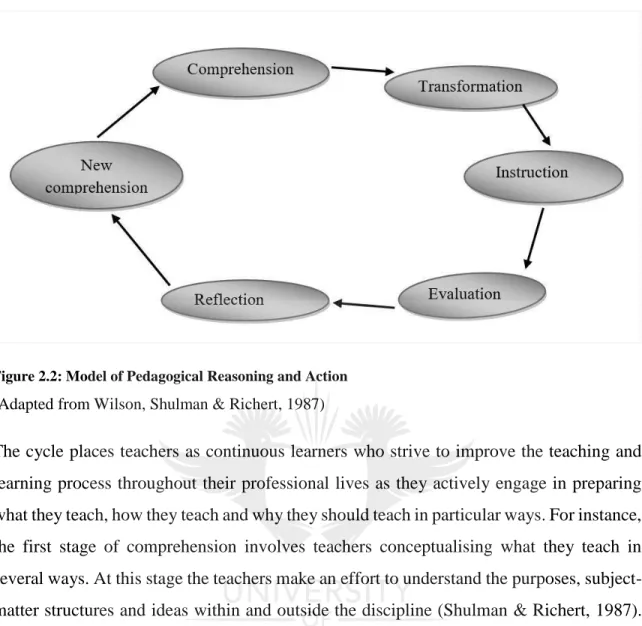
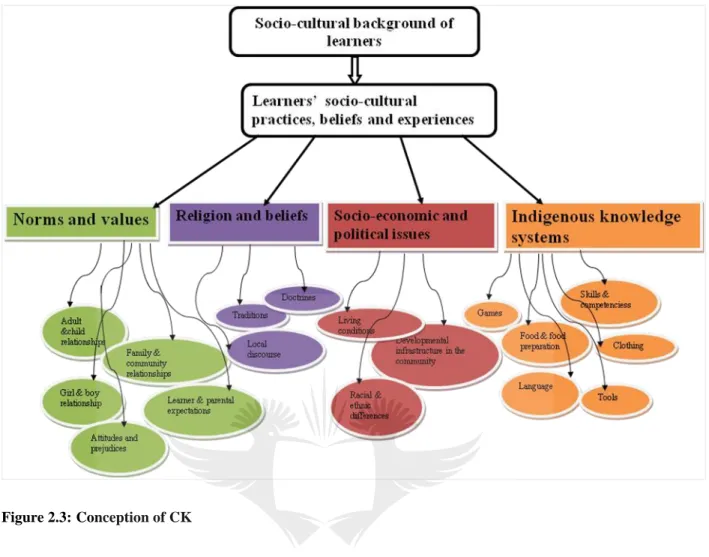
(12) TEACHERS’ PEDAGOGICAL CONTENT KNOWLEDGE ........................... 177 5.1 Introduction ........................................................................................................... 177 5.2. Relationship between contextual knowledge and teachers’ knowledge domains ............................................................................................................. 177 5.2.1 Relationship between contextual knowledge and teachers’ subject matter knowledge ...................................................................................... 180 5.2.2 Relationship between teachers’ contextual knowledge and their pedagogical knowledge ............................................................................ 184 5.2.3. Relationship between contextual knowledge and teachers’ orientations............................................................................................ 188. 5.2.4 Summary of the role of contextual knowledge on the teachers’ classroom practice ..................................................................................... 191 5.3. Teachers’ reflections on the role of contextual knowledge in the teaching of some Natural Sciences topics ........................................................................... 193 5.3.1 Teachers valuing contextual knowledge in planning and presenting scientific concepts ................................................................................. 196 5.3.2. Contextual knowledge informing teachers of potential conflict between knowledge domains ................................................................ 202. 5.3.3. Teachers’ failure to solicit information from the community ............... 206. 5.3.4. Problems associated with contextual knowledge incorporation ........... 207. 5.4. Summary of teachers’ reflections ..................................................................... 209. 5.5. Role of contextual knowledge on teachers’ pedagogical content knowledge .. 209. CHAPTER SIX INTERPRETATION OF RESEARCH FINDINGS AND DISCUSSION........................................................................................................ 214 6.1 Introduction ....................................................................................................... 214 6.2. Teachers’ knowledge about learners’ socio-cultural practices and beliefs in relation to teaching topics in NS ....................................................................... 214 6.2.1. Teachers’ awareness of the learners’ poor socio-economic back ......... 214. 6.2.2 Teachers’ knowledge about their learners’ socio-cultural practices and beliefs .................................................................................................... 216 6.3. Incorporation of learners’ socio-cultural background in the teaching of some Natural Sciences topics ..................................................................................... 218 6.3.1. Provision of real-life scenarios and prompt and open-ended xi.
(13) questions ............................................................................................... 219 6.3.2. Use of argumentation and cooperative groups ...................................... 221. 6.3.3. Use of authentic problems and activities............................................... 224. 6.3.4. Teachers drawing on learner experiences ............................................. 228. 6.4. 6.5. Role of contextual knowledge in the teachers’ pedagogical content knowledge ......................................................................................................... 232 6.4.1. Contextual knowledge influencing teachers to deepen their subject matter knowledge .................................................................................. 233. 6.4.2. Contextual knowledge informing teachers’ pedagogical knowledge ... 236. 6.4.3. Contextual knowledge influencing teachers’ orientations .................... 239. Teachers’ reflections on the role of contextual knowledge in the teaching of some Natural Sciences topics ........................................................................... 242 6.5.1 Teachers valuing contextual knowledge in planning and presenting scientific concepts ................................................................................. 244 6.5.2. Contextual knowledge informing teachers of the potential conflict between knowledge domains ................................................................ 247. 6.5.3. Teachers’ failure to solicit information from the community ............... 249. 6.5.4. Problems associated with contextual knowledge incorporation ........... 252. 6.6. Summary of the role of contextual knowledge on teachers’ pedagogical content knowledge ............................................................................................ 252. 6.7. Researcher reflections on the role of contextual knowledge in science teaching............................................................................................................. 257. 6.8. Summary of discussions ................................................................................... 258. CHAPTER SEVEN SUMMARY OF FINDINGS, IMPLICATIONS AND CONCLUSION ..................................................................................................... 261 7.1 Introduction ....................................................................................................... 261 7.2. Summary of findings ........................................................................................ 262. 7.3. Implications for teachers’ pedagogical content knowledge: The importance of contextual knowledge ....................................................................................... 269. 7.4. Implications for science teaching and learning in disadvantaged township schools .............................................................................................................. 272. 7.5. Reflection on the limitations and delimitations of the study: Implications for future research .................................................................................................. 274. 7.8. Conclusion ........................................................................................................ 275 xii.
(14) REFERENCES. ..................................................................................................... 277. APPENDICES. ..................................................................................................... 323. Appendix A:. University ethics clearance ............................................................ 323. Appendix B:. GDE approval and memorandum .................................................. 324. Appendix C:. Teachers’ Consent form ................................................................. 325. Appendix D:. Pre-lesson Interview Schedule ....................................................... 326. Appendix E:. Post-lesson Interview schedule ...................................................... 327. Appendix F:. List of categories derived from codes ............................................ 328. Appendix G: Coded interviews done before lessons................................................... 329 Appendix H: Analysis of lessons observed using RTOP when CK was incorporated in NS teaching ............................................................................................................ 343 Appendix I:. Coded interviews done after the lessons......................................... 413. Appendix J:. Analysis of documents ................................................................... 422. xiii.
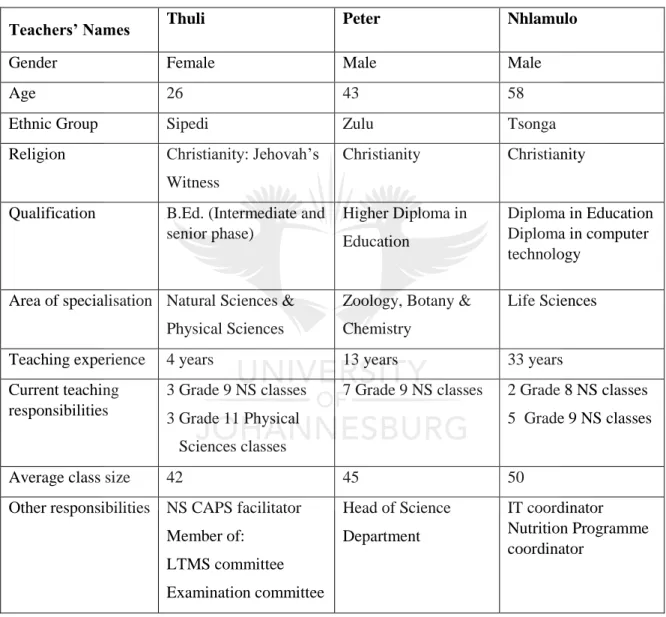
(15) LIST OF TABLES Table 3.1: Table 3.2:. Teacher profiles Summary of research settings. Table 3.3:. Structure of the professional development process. 101. Table 3.4:. Summary of lessons observed. 106. Table 3.5:. Summary of analysis of documents. 109. Table 3.6:. How each research question was addressed by each data source. 112. Table 4.1:. Examples of different types of diet compiled by learners. 165. Table 5.1:. Summary of how teachers’ SMK was influenced by CK. 182. Table 5.2:. Summary of how teachers’ PK was influenced by CK. 187. Table 5.3:. Summary of how CK influenced teachers’ orientations to NS teaching. 189. Table 5.4:. Cumulative RTOP scores for 10 observed lessons. 191. xiv. 95 98.
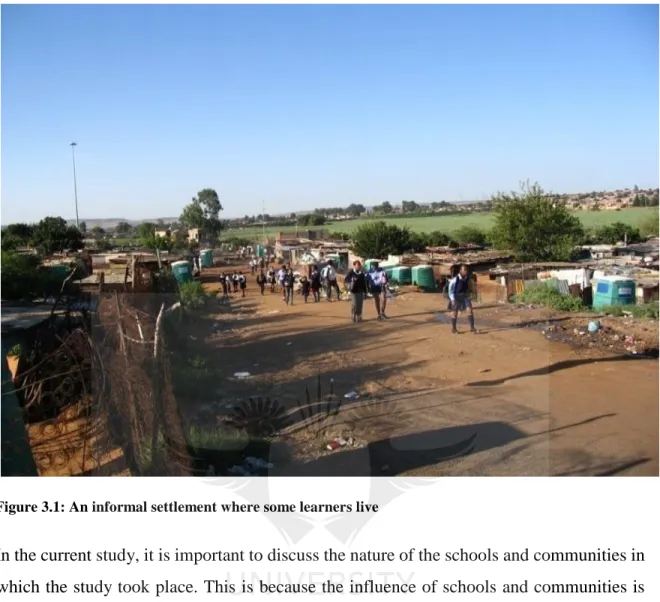
(16) LIST OF FIGURES Figure 1.1: Figure 1.2:. Interrelations in the knowledge domains Summary of the whole research study. 15 20. Figure 2.1:. A model of PCK for science teaching. 37. Figure 2.2:. Model of Pedagogical Reasoning and Action. 40. Figure 2.3:. Conception of CK. 46. Figure 3.1:. An informal settlement where some learners live. 97. Figure 3.2:. Phases of data collection and professional development. 111. Figure 3.3:. An example of coding process of data from a pre-lesson interview. 117. Figure 3.4:. Framework for data presentation. 121. Figure 4.1:. Summary of how research sub-question 1 was addressed. 124. Figure 4.2:. Summary of how research sub-question 2 was addressed. 140. Figure 4.3:. Learners working in cooperative groups. 153. Figure 4.4:. Posters made by learners on food and healthy diets. 164. Figure 4.5:. Examples of models of general structure of a cell constructed by learners. 168. Figure 4.6:. Micrograph of an animal cell in the test. 173. Figure 5.1:. Summary of how research sub-question 3 was addressed. 179. Figure 5.2:. Summary of how research sub-question 4 was addressed. 195. Figure 5.3:. Teachers’ knowledge bases for science teaching. 210. xv.
(17) CHAPTER ONE THE PROBLEM AND ITS SETTING 1.1. Introduction. This study explored the role of contextual knowledge (CK) in the pedagogical content knowledge (PCK) of three Grade 9 Natural Sciences (NS) teachers teaching in three different township schools. Specifically, the study investigated the teachers’ knowledge about Grade 9 learners’ socio-cultural practices, experiences and beliefs, teachers’ experiences and their reflections on the role played by learners’ socio-cultural practices, experiences and beliefs when it is incorporated in certain NS topics during the teaching and learning process. The study takes the view that NS teachers’ knowledge of learners’ sociocultural practices, experiences and beliefs is a key requirement for meaningful presentation of science in ways that are easily comprehensible to Grade 9 township learners. In the light of this imperative, the purpose of the study was to determine what teachers know about their teaching contexts and how they use the knowledge as part of their PCK to provide situationally appropriate learning experiences to their learners. Chapter One gives an outline of the problem and its setting. Firstly, it delineates the background of the study by outlining the state of science education in South Africa and in particular how learners are performing. It also explores the importance of incorporating learners’ prior knowledge, everyday experiences and their socio-cultural practices, experiences and beliefs in the teaching of science as revealed by previous research. Secondly, a gap in research is identified which leads to the statement of the problem, purpose and research questions being stated. Thirdly, the chapter gives a summary of the research design and how data were collected and analysed. Finally, the significance of the study, delimitations, limitations and organisation of the study are outlined. 1.2. Background to the study. NS occupy an important position in the national curriculum of the Republic of South Africa. This belief is reiterated in the South African White Paper on Science and Technology (1996) which states that science is considered to be among the requirements for creating wealth, and improving the quality of life. According to Asabere-Ameyaw, Dei and Raheem (2012) it is accepted that without a strong foundation in science education, any country’s 1.
(18) development is dwarfed. Therefore, a direct correlation between a nation’s wealth and its scientific and technological capacity exists (World Science Forum, 2007). Consequently, emphasis should be placed on ensuring quality teaching and learning of science from an early stage in order to realise the goal of scientific and technological advancement. South Africa does not have the capacity to expand economically without importing foreign scientific and technological expertise due to acute skills shortages (Gardner & Hill, 1999; Ramsuran, 2005; Silva, 2010; Mateus, Allen-Ile & Iwu, 2014). Unfortunately, few learners choose science subjects after Grade 9, particularly Physical Science in the Further Education and Training (FET) phase, Grades 10 to 12. Such worrisome facts are also echoed by Mdletshe (2008) who states that when Mathematics and Science become optional, learners are inclined to opt out of carrying them through to matric level (Grade 12, which is the last grade in high school in South Africa) and choose Mathematical Literacy which does not prepare them to undertake university science courses. As a result, the international problem of diminishing numbers of students entering university sciencerelated courses particularly in the physical sciences is perpetuated (Goodrum & Rennie, 2007). Research has also shown that South African learners perform at comparatively lower levels than learners from other countries in international science assessments like Trends in International Mathematics and Science Study (TIMSS) (Naidoo, 2004; Reddy, 2004). In its analysis of different countries’ quality of mathematics and science education, the World Economic Forum ranked South Africa last in the Global Information Technology Report 2015. Inasmuch as the international assessments may not be in line with the South African curriculum, the local exit matric results in the sciences have also not improved significantly over the years in both quantity and quality (Osman, 2012). For instance, Physical Science results for learners who achieved 40% level and above were 28.3% in 2008, 20.6% in 2009, 29.7% in 2010 and 33.8% in 2011, 39,1% in 2012, 42.7% in 2013 and 36,9% in 2014 (Department of Basic Education, 2015) which falls short of national expectations.. In particular, learners from disadvantaged communities such as townships have performed badly compared to learners from advantaged communities (van der Berg & Burger, 2003). 2.
(19) This concurs with the Department of Basic Education’s (DBE) report on the results of the Annual National Assessments (ANAs) (2011, 2012, 2013 and 2014) which noted that learner performance (though not necessarily science) for children of the poor and most disadvantaged South Africans continued to perform well below expectations. The ANAs are standardised national assessments for languages and mathematics in senior phase (Grades 7–9), intermediate phase (Grades 4-6) and literacy and numeracy for the foundation phase (Grades 1–3) in South Africa. Adell (2002) noted poor performance at high schools as an international problem that is linked to the learners’ low socio-economic background. This is in accordance with the analysis of data from the Program for International Student Assessment done by the Organization for Economic Co-operation and Development (OECD) (2007) which revealed that economic, social and cultural status is an influential variable explaining approximately 7% of variance in Science, Mathematics and Reading. Elsewhere, in Trinidad and Tobago, Krutnik and Jules (1988) found that factors such as learners’ background and their age, religion and gender, in addition to the type of school they attend and the location of the school, affect their achievement in science. In South Africa, van der Berg and Burger (2003) found the achievement of learners from poor schools in Western Cape to be worse than that of learners from other socioeconomic status groups. When analysing TIMSS results, Reddy (2004) also noted poverty as one of the contributory factors in poor learner performance in science in South Africa. Several researchers found other reasons that explain this trend of poor performance and variance in learners’ performance in science. Included are inexperienced and poorly qualified teachers who tend to be concentrated in schools serving learners of poor socioeconomic backgrounds (Mabogoane, 2004). In line with the above, the DBE and the Department of Higher Education and Training (DHET) (2011) blame poor teacher subject matter and pedagogical content knowledge (PCK). Poor performance has also been attributed to teacher-dominated teaching approaches and learner passivity (Hattingh, Rogan, Aldous, Howie & Venter, 2005), use of second language as a language of instruction (Howie, 2003; Pare, 2006) and cultural barriers (Muwanga-Zake, 1998; Muzah, 2011). Makgato (2007) and MacDonald and Rogan (1988) found lack of teaching and learning materials and facilities such as laboratories impacting negatively on learner performance. Other researchers still attribute poor performance to the historical inequalities 3.
(20) imposed on communities and schools over the 40 years prior to 1994 (Howie, Scherman & Venter, 2008), whereas Soudien (2007) contends that the classroom social context that includes race, class, gender and language is the main cause. On the other hand, Ngcobo and Tikly (2008) view a lack of effective leadership to manage the proposed curriculum initiatives as the major stumbling block to progress in education quality provision for learners from disadvantaged backgrounds such as township schools in South Africa. ‘Township school’ refers to an institution of learning which is located in the then underdeveloped urban areas allocated for Blacks during the era of apartheid. It should be noted that in spite of the integration process that took place in the education sector after achieving democracy in 1994, schools which were previously reserved for a particular race still remain highly populated by that group (Chisholm & Sujee, 2006) and as a result township schools are populated with Black learners. In view of the above litany of causes of poor learner achievement in science, the South African government has over the years employed the following intervention strategies: teacher support programmes, resource development, supplementary tuition, and assessment interventions across all Provincial Education Departments (DBE, 2013). However, the problem of learner poor achievement remains despite all these efforts, for instance in a later Trends in International Mathematics and Science Study-Repeat (TIMSSR) conducted in 2003; Reddy (2004) similarly noted no improvement by South African mathematics and science learners. At local level, the Minister of Basic Education also lamented that the quality of basic education remains below what it should be, while commenting on the 2011 matric results (science included) (DBE, 2012). This is in line with what Williams, Long, Carpenter and Hayden (1993) postulate, that there could be a danger of recommending economic cures for the socio-economically disadvantaged communities when the malady is social rather than economic. Thus, an improvement in resources does not necessarily translate into better learning (Verspoor, 2006a). In light of the above, it would be important to identify factors beyond the obvious that could significantly contribute to the improvement of science teaching and learning in these disadvantaged communities. One area which calls for attention is whether science teachers are knowledgeable about their teaching contexts and whether they use appropriate teaching 4.
(21) strategies to make science more relevant and meaningful to their learners in such contexts. This is pertinent because educational reform in South Africa envisions schooling where all learners, irrespective of their background, have the opportunity to succeed (Frempong, Reddy & Kanjee, 2011). Previously in South Africa, most teachers’ capabilities have been assessed in terms of PCK, subject matter and pedagogical content levels and no deliberate effort has been made to research teachers’ contextual knowledge. It therefore shows that the role of CK in PCK has been given insufficient attention. A gap therefore exists in research as far as this aspect is concerned. In line with the above, in her foreword on 2012 matric results, the Minister of Basic Education reiterated the need for all stakeholders to work tirelessly and persistently to ensure that all learners, irrespective of their socioeconomic background, attain high quality results. However, for such a goal to be achieved schools need to be inclusive and supportive of all learners, and ensure that learners’ success does not depend on their backgrounds (Frempong et al., 2011). Previous research has shown that the way in which learners respond to school and other educational settings and benefit from the experiences presented is influenced by the sociocultural environments in which they are socialised and schooled (Mclnerney, 2010). This could be explained by Barnett and Hodson (2001) who assert that ‘different ideas in science and their relationship to other ideas the children may know, present different opportunities for the design of teaching and learning activities’ (p. 433). Such a stance challenges science teachers both professionally and personally as they encounter learners from diverse ethnic and cultural backgrounds in their classrooms (Lemmer, Meier & Van, 2006). Worse still, cultural diversity is not adequately represented in textbooks, teaching and learning materials and in the teaching methods, with the result that the instructional approaches employed in the science classrooms, do not take cognisance of the interests of all cultural groups of learners (Trowbridge, Bybee & Powell, 2004). In cases where the science curriculum or textbooks attempt to address diversity in learners, Keane (2008) notes that usually this consists of only a minute section, which can easily be incorporated into the content to be taught. Given such a situation, one would find substance and relevance in the views of Tharp (1989) who laments that there is no education programme which really makes serious strides to reflect cultural differences among learners. Tharp was addressing. 5.
(22) issues in America on whether the education of learners becomes meaningful when familiar contexts or processes that are compatible with their home cultures are used in the teaching process. In view of the above, Bouillion and Gomez (2001) label schools as being in communities but often not of communities. The argument is that the teaching and learning of science is often disconnected from the day-to-day life of the community, with the result that learners do not realise the currency and relevance in the skills they acquire at school in fields beyond the school. De Beer and Mothwa (2013) argued that community, culture and school cannot be treated as separate entities. If that happens, a cultural clash occurs within the science classroom when the culture of science conflicts with that of the learner, thereby forcing the learners to abandon or marginalise their life-world concepts and reconstruct in their place new (scientific) ways of conceptualising (Jegede & Aikenhead, 1999). In situations where science teachers do not understand the cultural norms that guide their learners’ thinking and behaviour, they may misinterpret or miss entirely what learners understand (Gay, 2000), with the result that some learners are fast tracked from one topic to another without meaningful understanding. To rectify these problems, science teachers should be knowledgeable about what to teach (subject matter knowledge or SMK), how to teach (pedagogical knowledge, or PK), and under what circumstances their teaching occurs (contextual knowledge or CK). Trowbridge et al., (2004) maintain this is only possible if science teachers employ culturally relevant teaching approaches that engage diverse learners through the use of cultural artefacts, examples, analogies and community resources familiar to learners. Incorporating learners’ socio-cultural practices, experiences and beliefs validates learners’ various experiences (de Beer, 2010) and has a positive influence on engagement in the classroom community and attitude towards science in general (Jegede & Aikenhead, 1999). It appears, however, that the incorporation of CK during teaching is usually neglected as it requires science teachers to go an extra mile and construct new knowledge domains to deal with learners’ worldview instead of merely concentrating on pure scientific concepts and facts. During the teaching and learning process in the science classrooms, some of the learners may be affected psychologically when teachers use culturally insensitive teaching 6.
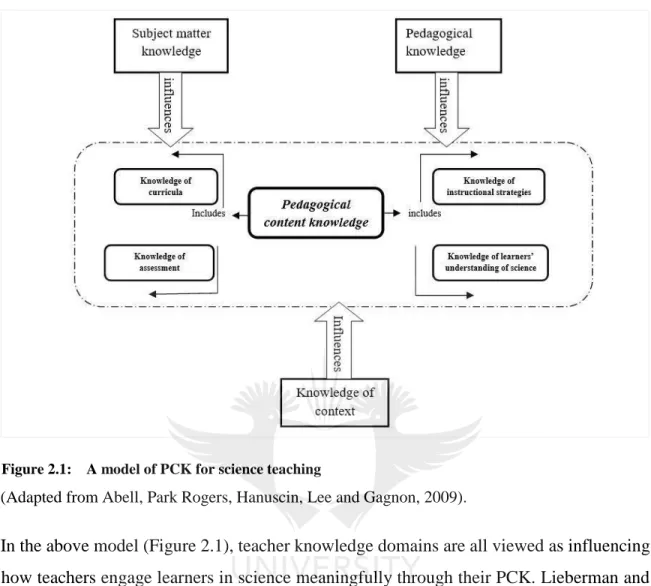
(23) approaches, teaching materials and examples, which Jegede and Aikenhead (1999) insist will influence their success at science. Learners may strive to understand and succeed in science when they believe that the science they are being taught is of personal worth (Reiss, 2000). Some researchers have made recommendations on how science teachers may teach their learners meaningfully. These include Sheets (2005) who contends that to be an effective teacher one must understand and acknowledge the critical role culture plays in the teaching and learning process. Shumba (2011) also recommends that science teachers should teach in a way that allows the learners to fall back on their pre-instructional, socio-cultural or indigenous experiences during their science knowledge construction process. Such experiences are important as they help to shape the knowledge and truth that the learners create and discover in the learning process (Wertsch, 1997). In a study of disadvantaged minority urban learners in New York, Suh (2005) found out that science teachers’ CK plays a critical role in shaping and developing their PCK. She found out that teachers’ knowledge about learners’ socio-cultural practices, experiences and beliefs and living conditions enabled identification of specific teaching strategies and resources suitable to learners’ needs and interests in science. Much research has been conducted on the importance of PCK in science teaching. Included is the vital role that PCK plays in teachers’ planning and actions when dealing with subject matter in classrooms (Smith & Neale, 1989; Clermont, Krajcik, & Borko, 1993; Van Driel, Verloop, & de Vos, 1998). Other researchers focused on PCK development of pre-service or experienced teachers when teaching specific science topics. These include Käpylä, Heikkinenb and Asuntaa (2009) who studied the influence of content knowledge on PCK of teachers teaching photosynthesis and plant growth, and Lankford (2010) examined PCK and practice of experienced secondary Biology teachers when teaching diffusion and osmosis. Geddis (1993), Clermont, Borko and Krajcik (1993, 1994) and van Driel, Verloop and de Vos (1998) researched on PCK of Chemistry teachers. Accordingly, several researchers have focused on SMK as a prerequisite to PCK development. Examples include Rollnick, Bennett, Rhemtula, Dharseey and Ndlovu (2008) who investigated the role of subject matter in PCK of South African teachers 7.
(24) teaching the mole concept and chemical equilibrium. Ndhlalane (2006) researched Mpumalanga clusters or networks as opportunities for science content and PCK development. Ndlovu (2009) undertook a case study of South African township teachers’ use of PCK. However, there is a dearth of research on the role of CK in PCK of science teachers. In South Africa there is a diversity of socio-cultural, economic, political and religious backgrounds of learners in science classrooms, which is coupled with the influx of immigrant learners. This results in teachers and learners finding themselves in classes with learners from linguistic, cultural and educational backgrounds very different from their own. It is important therefore to explore the role of CK in PCK of science teachers, and how they address the issues of teaching socio-economic and culturally diverse learners. According to Shulman (1986) PCK involves knowledge of teaching strategies that incorporate appropriate conceptual representations, to address learner difficulties and misconceptions and foster meaningful understanding. In summary, PCK is defined as the transformation of SMK into forms accessible to the learners being taught (Geddis, 1993). From the definition it means that PCK enables science teachers to be knowledgeable on how best to organise, represent and adapt the teaching of particular topics, problems and issues to learners of diverse interests and abilities. In this regard, Geddis (1993) noted that novice science teachers whose strength is mostly in their knowledge of subject matter tend to use more of didactic methods in presenting learners with science concepts for examination purposes whereas good teachers use experientially acquired PCK to present situationally appropriate learning experiences for their learners. In the current study where the role of CK on PCK is explored, the most plausible definition of PCK is that of Park and Oliver (2007) who define it as ‘teachers’ understanding and enactment of how to help a group of learners understand specific subject matter using multiple instructional strategies, representations and assessments while working within the contextual, cultural, and social limitations in the learning environment’ (p. 6). Thus, teachers’ classroom decisions are situated in, and embedded in a specific cultural and social context (Hodson, 2001). Teachers’ CK is defined as teachers’ conceptions of culture, their knowledge of culture different from their own, and images of schools and classrooms as social and cultural 8.
(25) contexts (Cochran-Smith, 1997). In this study, ‘culture’ refers to values, traditions, social, economic and political relationships and worldview created, shared and transformed by a group of people bound together by a common history, geographic location, language, social class, and/or religion (Nieto, 2000). The study therefore subscribes to social views of learning which hold that knowledge is socially constructed and context dependent, and that human mental processes are situated within their historical, cultural and institutional setting (Wertsch, 1991). Many questions arise from such a stance such as: How does science teachers’ knowledge of their teaching context affect or modify the way they teach? How does this impact on the learners’ understanding of science concepts? How can meaningful science learning occur in classrooms where the teacher is a member of a cultural group that is different from the learners’ cultures? In concurrence with the above, Day, French and Hall (1985) postulate that cognitive abilities are socially transmitted, socially constrained, socially nurtured and socially encouraged. In the same vein, Clandinin (1986) contends that knowledge is ‘experiential, value-laden and oriented to practice’ (p. 19). The argument is that incorporation of a new idea into one’s personal framework of understanding involves more than its rational appraisal for intelligibility, plausibility and fruitfulness (Strike & Posner, 1992). In other words, science knowledge does not just have to be logical, but should also feel right and ‘culturally safe’ to the learners. It would be therefore detrimental to downplay the influence of home and families on the education of learners (Solomon, 2003). De Beer (2010) contends that science teaching cannot only be informed by the discipline but also by the lives of learners in their communities or homes which he found to be very useful but underutilised contexts for connecting science to the real world. As a result, good teaching demands that teachers should understand not only the learners’ learning styles and other aspects of teaching but also the cultural, social and political contexts within which they work (Lambert, 1986). In this case, learning is presented as an active, continuous and changing series of negotiations between the individual and the social environment. 1.3. Statement of the problem. According to the South African national curriculum, it is at Grade 9 level that learners choose subjects to study in the FET phase and one can argue that at this stage, learners are 9.
(26) channelled towards certain career pathways. Science teachers are therefore called upon to motivate these learners to continue studying science by implementing the science curriculum in a way that interests the learners and makes science relevant and meaningful to learners’ lives. Such expectations underscore the pivotal role that teachers play in curriculum implementation (Bybee, 1993; National Research Council, 1996) and in concurrence Ogunniyi (1996) noted that no education system is higher than the level of the teacher. This study takes the view that knowledge of learners’ socio-cultural practices, experiences and beliefs (CK) when teaching NS will enable science teachers to engage in multiple pedagogical and instructional strategies and practices which make science more relevant to the learners. CK should shape the teachers’ practice in terms of the kind of questions they ask, the ideas they reinforce, the tasks they assign to their learners and most importantly the teaching methods they will employ. Such a practice will bring knowledge to the learners and make them understand some of the problems in their communities or even explain some of the issues or challenges they encounter in everyday experience. This is in accordance with the amended National Curriculum Statement (NCS) Grades R–12: Curriculum and Assessment Policy (CAPS) for Natural Sciences (DBE, 2011) which in one of its aims seeks to ensure that learners acquire and apply knowledge and skills in ways that are meaningful to their own lives. Specifically, the curriculum aims to equip learners irrespective of their socioeconomic background with knowledge, skills and values that enable them to participate fully in society. In addition, as one of its principles, NCS values indigenous knowledge systems (IKS), acknowledging the rich history and heritage of the country as important contributors to nurturing values. Such a stance brings to the fore aspects in science teaching which include the importance of NS teachers being knowledgeable about their learners’ socio-cultural backgrounds and employing instructional strategies that engage learners in meaningful understanding. In addition, science teachers would always strive to gain skills to manage classroom discourses where learners’ socio-cultural background is considered in teaching NS. This study therefore aims to explore the role of contextual knowledge in the PCK of 10.
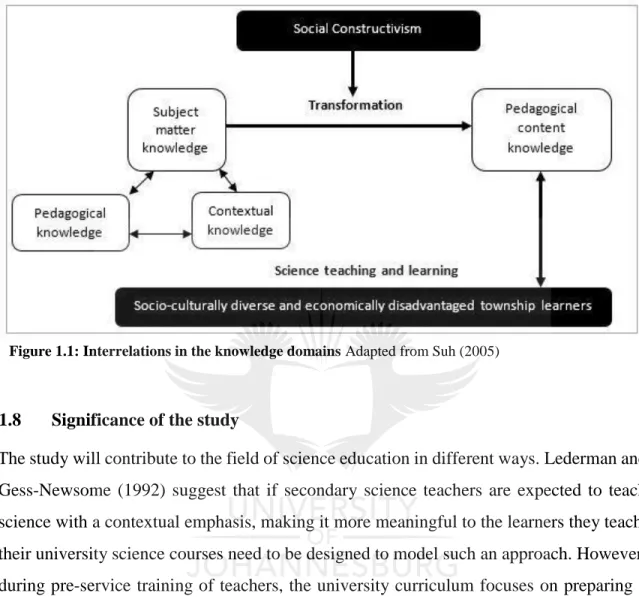
(27) Grade 9 NS teachers in township schools in South Africa. It investigates teachers’ knowledge about their teaching contexts such as Grade 9 learners’ socio-cultural and economic background and how the teachers tailor-make their teaching in order to make science more relevant and meaningful to their learners. By taking into account the economic and socio-cultural issues of teaching science in township communities, the study focuses on CK as a key component of PCK. In a township context diverse cultures and worldviews coexist because people from different cultural and social backgrounds find themselves living in the same community, unlike in more homogenous rural areas. 1.4. Purpose of the study. The purpose of this study is to explore teachers’ understanding of their teaching contexts and how they use the knowledge as part of PCK to provide situationally appropriate learning experiences for their learners. Specifically highlighting the role of CK in PCK, the study intends to unpack the interplay of three knowledge domains which are SMK, PK and CK as they are transformed into PCK. Firstly, the study will report on the contextual knowledge held by teachers in township schools and elucidate how the teachers’ PCK is framed through their different knowledge domains before the actual teaching process. Secondly, the study aims to document teachers’ PCK, which is expressed while incorporating CK during the teaching of some NS topics in a township environment. This is meant to determine how teachers’ contextual knowledge interacts with other knowledge domains in order to implement situationally appropriate teaching and learning strategies and activities. Insights into the different ways teachers transform SMK, how they relate their transformation to learners’ understanding, and what contributes to making this transformation effective will be provided. Thirdly, teachers’ reflections on the role of contextual knowledge in the teaching of NS will be sought. This will probe the teachers’ thinking and understanding as they reflect upon their actions in class. Finally, the study will report and document knowledge and strategies necessary for teaching culturally diverse learners. The information on the role of CK in the teaching of some NS topics will be obtained from teachers as they strive to overcome challenges of making science teaching more comprehensive and meaningful to their learners in a township environment. 11.
(28) 1.5. Research question. This study seeks to answer the main question: How does contextual knowledge influence the PCK of selected Grade 9 NS teachers at township schools in South Africa? To answer this question the following research sub-questions will be addressed: 1. What do Grade 9 NS teachers know about learners’ socio-cultural practices and beliefs in relation to teaching topics in NS? 2. How do Grade 9 teachers incorporate learners’ socio-cultural background when teaching some NS topics? 3. What role does CK play in the PCK of Grade 9 Natural Sciences teachers in township schools? 4. How do teachers reflect on the role of CK in the teaching of NS? 1.6. Aims and objectives of the study. The aim of the study is to determine the role of contextual knowledge in the PCK of Grade 9 NS teachers in township schools. In order to realise the aim of the study, the following objectives are set: 1. To identify what Grade 9 NS teachers know about learners’ socio-cultural practices, experiences and beliefs in relation to teaching topics in NS in township schools. 2. To identify the different ways Grade 9 teachers incorporate learners’ socio-cultural practices, experience and beliefs when teaching some NS topics. 3. To describe and document PCK of teachers at township schools that arises due to their knowledge of contextual factors in these environments. 4. To explore teachers’ reflections on the role of CK on their PCK in the teaching of NS.. 12.
(29) 1.7. Research design. The study employed a qualitative case-study research design. Qualitative research is a naturalistic approach that seeks to understand phenomena in context-specific settings, where the researcher does not manipulate the phenomenon of interest (Patton, 2002) but probes for deeper understanding rather than examining surface features (Johnson, 1995). On the other hand, a case study is an in-depth exploration of a specific process, such as classroom practices, using multiple forms of data collection (Creswell, 2005) and enables a researcher to comprehend and explore a phenomenon clearly and in an exact manner rather than based on speculations (Merriam, 1998). A qualitative case-study approach was appropriate for my study as it enabled me to portray the teachers’ CK and its role on their PCK during their classroom practices in a particular context. In a qualitative study, a sample must be selected from those who possess special experience and competence so as to provide insights for understanding and discovery (Merriam, 1998). Therefore purposive sampling was used to select three NS teachers each from different township schools as participants. Data collection involved interviews done before lessons that investigated the teachers’ CK to address mainly the first research sub-question. In addition, interviews done before lessons elucidated how the teachers’ PCK was framed through their knowledge bases before the actual teaching, thereby partly addressing the second and third research subquestions. Insight was sought into the teachers’ orientation to science teaching, and teachers’ knowledge of learners’ understanding of the science curriculum, of instructional strategies and representations, and assessment methods. The interview method was meant to encourage teachers to develop their own ideas, feelings, expectations or attitudes, thereby allowing them to articulate their thoughts with greater richness and spontaneity (Oppenheim, 1992 in Opie, 2004). To address the second and third research sub-questions a non-participant observation method was used to observe the teachers’ everyday teaching practices using the Reformed Teaching Observation Protocol (RTOP) (Sawada, Piburn, Falconer, Turley, Benford & 13.
(30) Bloom, 2000). A total of 10 lesson observations was made for each of the three teachers when teaching different topics. This was done in order to obtain a holistic view of the role of CK on PCK. The observations helped in determining how the teachers’ CK was incorporated in some NS topics and how their knowledge domains were transformed into PCK as they modified their lessons to overcome particular teaching challenges that arose due to interactions with learners. Interviews done after the lessons probed teachers’ thinking and understanding in terms of the relationships between their knowledge domains. At this stage teachers elaborated and clarified observed practices as they reflected on their teaching. Reflection is necessary for teachers’ empowerment and at the same time to allow them to make sense of their teaching practices in particular (Beijaard & Verloop, 1996). It was through these interviews contacted after the lessons that teachers’ reflections on the role of CK in the teaching of NS were elucidated. Additional information was obtained through analysis of documents related to teaching such as lesson plans, curriculum documents, teachers’ journals, assessment tasks given to the learners and other relevant materials deemed helpful to complement the data. Observations and interviews were videotaped and audiotaped respectively with permission from the teachers. Researcher field notes and the teachers’ reflective journals were also written throughout the study. Data were transcribed verbatim soon after collection in preparation for analysis. Data analysis using the constant comparative method (Merriam, 1998) allowed themes and patterns to emerge from the multiple sources of evidence, thereby forming categories (Saldana, 2009). Analysis involved finding patterns in and reasons for the way in which events happened (Henning, 2004) and each theme was used to discuss and interpret the data in answering the research questions. Saldana’s (2009) manual coding was used. Coding involved open coding, axial coding and selective coding to allow rigour in the analysis (Strauss & Corbin, 1990). Thus codes were not predetermined but emerged from the data. The study employed social constructivism as a theoretical framework as contextual knowledge is an important factor in the contemporary teaching perspective of social 14.
(31) constructivism. The figure below depicts the interrelationships in the knowledge domains envisioned by the study.. Figure 1.1: Interrelations in the knowledge domains Adapted from Suh (2005). 1.8. Significance of the study. The study will contribute to the field of science education in different ways. Lederman and Gess-Newsome (1992) suggest that if secondary science teachers are expected to teach science with a contextual emphasis, making it more meaningful to the learners they teach, their university science courses need to be designed to model such an approach. However, during pre-service training of teachers, the university curriculum focuses on preparing a science teacher without specifically skilling teachers on how to deal with specific situations they would encounter (Lederman & Gess-Newsome, 1992), for instance disadvantaged communities and diverse socio-cultural environments. In a way the curriculum is a ‘one size fits all’. Therefore nothing prepares the teacher for unseen circumstances which may challenge their capabilities. The study will therefore assist in the development, design and implementation of pre- and in-service science teacher training programs as the findings of this research will build a knowledge base upon which teacher educators and in-service providers can improve their curricula or programs. Consequently, this study will provide research-based implications for science teacher education programs and facilitate science teachers’ professional development. The results of the study will provide insight for 15.
(32) teaching socio-culturally diverse and economically disadvantaged learners in meaningful ways. The results will also provide insights on how best certain science topics can be taught to learners in township schools based on teachers’ PCK. Kagan (1990) cited in Loughran, Mulhall and Berry (2004) insist that teachers are often unaware of the knowledge they possess as it is often contextualised and associated with particular learners, events and classrooms. This shows that teachers possess contextual knowledge, hence the need to document it and show how it influences the teachers’ PCK. The study will inform teachers on appropriate pedagogical approaches in science education by presenting strong descriptions of dynamic features of teaching in socio-culturally diverse environments. In turn this will provide information that will empower teachers who strive to meet the challenges of making science more comprehensible to socio-economic and culturally diverse learners. PCK is an important knowledge base for science teachers, as Eggen and Kauchak (2001) noted that where pedagogical content knowledge is lacking, science teachers were found paraphrasing information in learners’ textbooks or just providing abstract explanations that were not meaningful to their learners. The research findings will contribute to the body of knowledge on the role of contextual knowledge on science teachers’ PCK, which is a neglected aspect in research. This is important because educational reforms envision a system where all learners, irrespective of their background characteristics, have an opportunity to succeed. The results of this study can form the basis for large-scale research (to check the applicability in different schools), which can inform policy makers on the importance of considering learners’ socio-economic and cultural backgrounds in science education. There is a conviction that analysing education systems in terms of their organisation, instructional practices and corresponding learners’ responses is an effective policy analysis tool (OECD, 2004); hence this study will show the role of contextual knowledge and how this can be used to improve the science curriculum. This is important as Yeany (1991) called for intensified research efforts in science education in order to better understand the teacher.. 16.
(33) In addition, contextual knowledge is important as it is a major factor in the contemporary teaching perspective of social constructivism which most curricula strive to achieve. Another contribution that this study makes is helping all educational stakeholders (for example policy makers, administrators and teachers) understand the impact of the NCS Grade R–12: Curriculum Assessment Policy for NS on classroom practice. Thus the findings of this study have the potential to initiate the very much needed debate and discussion on how science teachers’ professional development should be designed to meet the goals of the reform, the needs of the teachers, and most importantly support learners’ science learning and curriculum implementation. This is so since information about teachers’ knowledge and beliefs is acknowledged as an essential prerequisite for building effective science teacher education programmes (De Yong, Veal & Van Driel, 2002). 1.9. Delimitations. The study focused on three Grade 9 NS teachers, each from a different township school in one district of the Gauteng Province of South Africa. In as much as PCK is influenced by other components like SMK, PK and teachers’ orientations, the focus of this research is only on the role of contextual knowledge on science teachers’ PCK. Specifically, the focus is on how contextual knowledge interacts with other teacher knowledge domains in the transformation to PCK. 1.10. Limitations. This study is a qualitative case study. One frequently cited limitation of case studies is the concern for generalising the findings (Merriam, 1998). It should be noted however that the interest is in process rather than outcomes, in context rather than a specific variable, and in discovery rather than confirmation. Qualitative researchers seek illumination, understanding and extrapolation to similar situations (Hoepfl, 1997) rather than generalising the research findings. This current study is based on and limited to three Grade 9 NS teachers, each from a different township school. It should be noted that it may not be appropriate to solely apply findings of this study to other township teaching environments without taking into. 17.
(34) consideration the nature of the teachers and learners as well. This is because inasmuch as other township schools may resemble the three cases, they may have their own unique characteristics ranging from school leadership to teachers’ linguistic, cultural and economic backgrounds, which can impact on the teaching and learning process. In an attempt to minimise the problem of generalisability, the study provided rich and thick descriptions of each case and the methodology to allow for theoretical generalisation (Yin, 2003). Another way of addressing the problem of generalisability is that in the research findings, a thorough analysis of each teacher’s contextual knowledge, their experiences as they incorporate learners’ socio-cultural background when teaching and their reflections is made. This will enable readers to make their own interpretations of the findings rather than relying solely on the researcher’s interpretations. Interviews, class observations and analysis of documents constitute the three methods for data collection in order to avoid bias and increase reliability of the study results (LeCompte & Pressle, 1993). In addition, multiple sources of data provide convergence of evidence which gives credibility to assertions made (Yin, 2003). Another limitation of the study is that no direct effort was made to obtain the learners’ account of the role of contextual knowledge on science teachers’ PCK, which could have further enriched the findings of the study. However, an attempt to minimise that weakness has been made through lesson observations which allowed the observation of learners’ responses due to their interactions with the content materials and the teaching strategies employed by teachers. Analysis of documents also involved analysis of learners’ work from tests or activities done in class and at home. Results from these two data collection processes will offset the limitation. Nonetheless, the observation of lessons provided an opportunity to observe at first hand practice by teachers when incorporating learners’ sociocultural background in their teaching. 1.11. Summary of Chapter One. In this chapter, a discussion has been given of the background to the study, statement of the problem, the purpose of the study, the research questions and research design, significance 18.
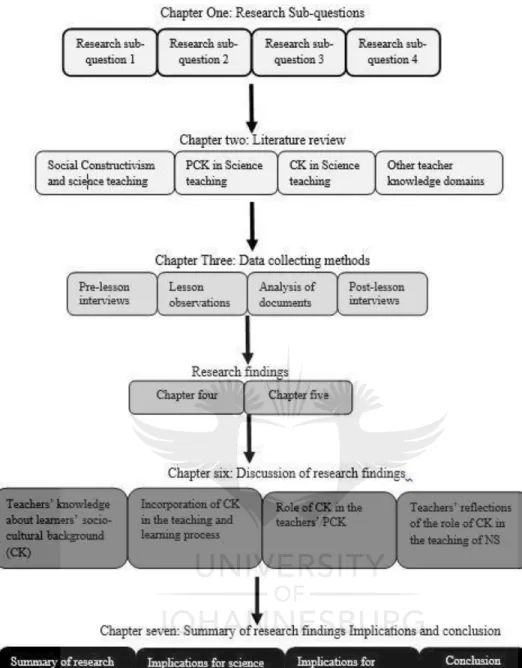
(35) of the study and as well as the limitations and delimitations of the study. In the next chapter which is literature review, the researcher will start by defining and discussing the theoretical and conceptual frameworks that will guide this study which are social constructivism and PCK respectively. The researcher will also delineate the concept of CK as envisioned in the study. In particular, research which focuses on disadvantaged communities will be reviewed in terms of science teaching strategies, taking cognisance of the impact of contextual factors on teacher practice and learners’ understanding of science concepts. In addition, a review of the relationship between CK and other teacher knowledge domains will be done and finally research on teachers’ views on the role of CK on their practice will be reviewed. 1.12. Organisation of study. The goal of Chapter One was to show the need for a study that explores the role of contextual knowledge in influencing PCK of science teachers teaching in township schools. Chapter Two places the study in the context of current literature by providing a review of PCK in science teaching and how contextual knowledge relates to other teacher knowledge domains as they are transformed into PCK. Chapter Three provides an overview of the methodology of the study. It gives a description of the research design, setting, participants, instrumentation, procedures and data analysis. The results of the study are provided in Chapters Four and Five. Chapter Six presents interpretation and discussions of research findings and researcher reflections. Chapter Seven consists of a summary of the research findings, implications of the study, recommendations for future research and conclusion. Figure 1.2 below is an outline of the chapters.. 19.
(36) Figure 1.2: Summary of the whole research study. CHAPTER TWO LITERATURE REVIEW 2.1. Introduction. This chapter provides the theoretical and the conceptual frameworks through which this study is guided. The study employs social constructivism as its theoretical framework in conceptualising the epistemological, ontological and methodological process (Cole, 2008) as well as in facilitating the interpretation of research findings (Crotty, 1998). PCK and CK 20.
(37) form the conceptual framework through which the study is supported and informed. In addition, related and relevant literature is reviewed in the chapter. The chapter is made up of five main sections. The first section reviews the concept of social constructivism and its implications in science education. In particular, the section analyses social constructivist principles that enhance effective science teaching and learning. The second section gives a detailed discussion on science teachers’ PCK. This includes the conceptualisation of PCK and its role as the teachers’ knowledge base for science teaching. The third section reviews the concept of CK. This includes an analysis of the definition of CK, its tenets and the role it plays in science teaching. The fourth section examines the interaction of CK with other teacher knowledge domains as they are transformed into PCK. The knowledge domains include teacher SMK, teacher PK and teachers’ orientations to science teaching. The last section explores studies on teachers’ views on the role of CK on their PCK during the teaching and learning of science. 2.2. Social constructivism. 2.2.1. Origins of social constructivism. Social constructivism originates from Vygotsky’s (1962, 1978) theories of social development and zone of proximal development (ZPD). Hall (2007) describes social constructivist approaches as a blend of the theories of constructivism (individual placed in the centre of learning) as well as those of socio-cultural theories (social environment placed on the centre of learning). The following sections discuss the relationship between social constructivism, constructivism and the socio-cultural theoretical perspective. 2.2.1.1 Constructivism and social constructivism There are two major forms of constructivism, namely radical constructivism, proposed by von Glasersfeld (1989), and social constructivism, which emerges largely from the works of Piaget, Vygotsky, Bruner and Bandura. Both categories share the epistemological view that all knowledge is constructed as a result of cognitive processes within the human mind. 21.
Figure
+7
Outline
Origins of social constructivism
Importance of teachers’ PCK in science teaching
Conception of contextual knowledge
Implications of contextual knowledge in science teaching and
Epistemological and ontological position of the study
Conducting the study
Professional development programme
Non-participant lesson observations
Data analysis
Use of authentic problems and activities
Related documents
A quadratic cost function is developed that con- siders the contradictions between minimal tracking error, low fuel consumption and accordance with driver dynamic
Einar Martens Fund, the Research Council of Norway, to SLH, VMS and TE; Hakon Hakonarson: Institutional Development Fund to Center for Applied Genomics from CHOP, Electronic
This study investigates whether and how the interplay of inbound and outbound flows of knowledge affects firms’ performance, measured in terms of sales growth.. We argue
1) All particulars in this application form must be filled in by the applicant in neat hand or may be typed. Incomplete applications are liable to be rejected. 100 for
glass flap door with shiny aluminium trim glass hinged door with shiny aluminium trim display shelves Matt lacquer BC chalk white AV ivory PE pearl DN dune PL platinum PB lead
The authors concluded that computer algebra system technologies can help students improve thinking process and increase their understanding of mathematics and its role in
Therefore the study accepts the following null hypothesis: There will be no significant relationship between pre-treatment and post-treatment Georgia Criterion-Referenced Competency
If you wish to navigate using electronic charts as your primary means of navigation you need a type approved ECDIS with back-up, ENCs where available and RNCs such as ARCS charts
