Interactive Qualifying Projects (All Years)
Interactive Qualifying Projects
May 2017
Energize Worcester: Smart Heating Controls in
Student HMOs
Andrew Hunter Libby
Worcester Polytechnic Institute
Brian E. Healy
Worcester Polytechnic Institute
Chelsea Cailin White
Worcester Polytechnic Institute
Rachel Sudol
Worcester Polytechnic Institute
Follow this and additional works at:
https://digitalcommons.wpi.edu/iqp-all
This Unrestricted is brought to you for free and open access by the Interactive Qualifying Projects at Digital WPI. It has been accepted for inclusion in Interactive Qualifying Projects (All Years) by an authorized administrator of Digital WPI. For more information, please [email protected].
Repository Citation
Libby, A. H., Healy, B. E., White, C. C., & Sudol, R. (2017).Energize Worcester: Smart Heating Controls in Student HMOs. Retrieved fromhttps://digitalcommons.wpi.edu/iqp-all/2705
Controls in Student HMOs
An Interactive Qualifying Project Submitted to the Faculty of WORCESTERPOLYTECHNIC
INSTITUTEIn partial fulfillment of the requirements for the Degree of Bachelor of Science
Written By:
BRIANHEALY ANDREWLIBBY RACHELSUDOL CHELSEAWHITE MAY4, 2017Report submitted to:
Faculty Advisor:
PROFESSORRUTHSMITH
Sponsors:
KATYBOOM- UNIVERSITY OFWORCESTERDIRECTOR OFSUSTAINABILITY
PROFESSORCAROLYNROBERTS
This report represents work of WPI undergraduate students submitted to the
faculty as evidence of a Degree requirement. WPI routinely publishes these
reports on its web site without editorial or peer Review. For more
information about the projects program at WPI, see
This project partnered with the University of Worcester to examine the possible social implications and effects of implementing smart heating controls in student-rented houses in multiple occupation (HMOs). Through the use of surveys, our team evaluated student attitudes towards sustainability as well as the potential acceptance and effectiveness that smart heating controls could have in student off-campus housing. Our survey results identified three areas that may complicate the
implementation of smart heating controls: insufficient levels of student motivation to improve energy efficiency, the apparent absence of fuel poverty in the population studied, and concerns regarding privacy. We recommend that students be educated on energy expenditure and sustainable practices.
We would like to express our gratitude towards the University of Worcester for its hospitality and our project sponsors Director Katy Boom and Professor Carolyn Roberts for their guidance. We would also like to thank our site advisor, Professor Rob Krueger, and our ID2050 advisor, James Chiarelli. In addition, we would like to thank Martyn Bridges and Richard Forrester at Worcester Bosch. Finally, a special thanks to Professor Ruth Smith who advised us every step of the way, and without whom the project would not be where it is now.
Homes in the United Kingdom are among the least thermally efficient in Western Europe. A survey conducted by the National Union of Students (NUS) found that 78% of students in houses in multiple occupation (or HMOs) felt uncomfortably cold at home in the winter season and 79% of students were hesitant to use the heat in their homes due to expense. Half of the students surveyed felt that their home experienced condensation, mold, and/or dampness (Bouzarovsky et al., 2012). One factor that differs student-rented HMOs from other housing is the presence of a dynamic known as the ‘split incentive’, which creates different complications depending on who is paying for the utilities. If the tenants are paying, they tend to conserve energy, but properties may have fewer energy efficient improvements because the landlord isn’t motivated to improve the efficiency of the property. If the landlord is paying, the properties tend to be more energy efficient, but the tenants may not be mindful of their spending and are may be likely to overuse energy. The existence of this social dynamic makes improving the thermal efficiency of the properties involved challenging.
Through an initiative called Energize Worcester, the University of Worcester has been working with local students, landlords, and local boiler manufacturer Worcester Bosch in an effort to improve living conditions and reduce energy use in student-rented HMOs. Energize Worcester has done this by educating and incentivizing landlords and occupants to adopt energy saving technologies and behaviors. It was the primary goal of our project, as a part of the Energize Worcester initiative, to explore the possibility of implementing new smart heating controls in these student houses in multiple occupation while being mindful of social factors that may complicate the usefulness and acceptance of the smart controls. In order to explore this, we asked four primary questions:
• What are the existing attitudes of student tenants toward the subject of heat system management?
• Would student tenants be interested in new smart heating control systems?
• Would smart heating controls be effective in student-rented HMOs?
• Do students have concerns about privacy involving smart heating controls?
Methodology
To answer these questions we formulated the following objectives:
• Evaluate student energy attitudes and behaviors in student-rented HMOs
• Evaluate potential acceptance and effectiveness of smart heating technologies in student-rented HMOs
To evaluate the student’s energy attitudes and behaviors in student-rented HMOs we used an in-home student survey. this survey was conducted by going door to door to student-rented HMOs in our sponsor’s database (collected from previous sustainability research). The surveys generally
• Ascertain how temperature set points are managed in student-rented HMOs
• Evaluate how responsibility for energy consumption and conservation is shared between occupants and landlords (according to student assessment)
In order to evaluate the acceptance, effectiveness, and social implications of smart heating technologies in student-rented HMOs created a short, smart technology survey. This was a 5-minutes survey conducted on the University of Worcester campus in the dining hall, as well as around other housing when convenient. Its goals were to:
• Identified attitudes towards adopting smart heating technologies
• Evaluated the potential/effectiveness of adopting a smart heating control in a student-rented HMO
Findings
Through the close analysis of our survey responses and an interview at Worcester Bosch, we made the following observations pertaining to the attitudes and behaviors of students, as well as the functionality of smart heating controls.
1. Fuel poverty was not apparent among the students surveyedOur team found that fuel
poverty was not apparent among the students we surveyed. The majority of students surveyed did not find the cost of their energy bills expensive. However this may have been a result of students not seeing their energy bills. 36 of the 39 students had gas and electricity included and many expressed not seeing their bills as a result. Generally students felt comfortable with the temperature in their homes and had no issues turning up the heating if they were cold. From this data, we concluded that students surveyed are not concerned with cost when heating their homes and do not appear to be living in fuel poverty.
2. Communication between students and landlords on energy issues appears incomplete.
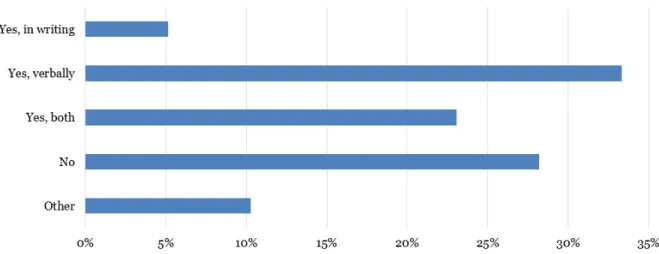
Based on responses from the students that we surveyed and the landlords that Carolyn Roberts surveyed, it appeared that communication between student-tenants and landlords was incomplete. We found it common for the students surveyed to either not know or not be confident in how to use their heating system, and more than a quarter of students surveyed said their landlord had not explained the heating system arrangements to them either verbally or in writing. From this, we concluded that insufficient communication between
student-tenants and their landlord may affect the potential adoption of a smart heating control in a student rented property.
3. Students are not sufficiently motivated to reduce heat consumption.The idea of managing
the heating system as a means to save energy was not common amongst the surveyed tenants. Of the 39 surveyed, only 87% reported not knowing their monthly expenditure on heat. When asked what the most challenging aspect of energy management was, only 30% of surveyed tenants responded with anything heating related. We observed that the other tenants in the
they needed more information or training on managing energy in their homes only half said yes, yet when asked if they felt their fellow tenants needed more information 68% of students responded yes. Most of the tenants reported having the ability and permission to adjust their thermostat. Despite this 18 students responded that they made no conscious attempts to be more sustainable and students who did not turn their heating down or off when they left for extended periods of time were very common.
4. Some features offered by smart heating controls may not be useful in student rented
HMOs.Smart heating controls offer a variety of features that companies promise will reduce
energy waste and save money. However from our data collection we found that many of these features would be less effective in student rented HMOs. This is due to the large number of tenants in each home with schedules that change frequently as well as the lack of motivation found among students. The devices do not understand the motivation behind why a person is altering the heat, and as a result they take every temperature change into consideration when generating a schedule. With so many tenants altering the temperature frequently the device may create a schedule that is not useful to tenants and may not save energy. If students are not willing to be more sustainable they may not use features offered by the devices other than being able to control it from their phone which can increase energy usage. From this our team concluded that these devices may not aid in reducing energy waste in student HMOs. Our team suggests that the University of Worcester start initiatives to better educate students on sustainability and monitoring energy costs in their homes.
5. Students appear to like the concept of smart heating technologies; however, they may not
know enough to have strong opinions about them. Additionally, privacy appears to not be
a large concern of students regarding smart heating controls.Our smart technology survey
produced two main findings. The first was that students believe the features could be useful but may not know enough to have a strong opinion. The second finding from our survey is that students are not concerned with privacy but rather not having control over their heat. It is also important to note here that communications between landlords and students are incomplete. From this we concluded that students are not opposed to the idea of smart heating controls, however they may not know or care enough for them to necessarily be effective. Our research also brought into question who would have control of the thermostats. Due to the current lack of communication between landlords and students this question will need to be carefully answered, bearing in mind students’ reluctance to relinquish control of the heat. We recommend that future Energize Worcester projects look into improving the relationships among tenants and landlords to overcome this hurdle.
Recommendations
Our survey results identified three areas that may complicate the implementation of smart heating controls: insufficient levels of student motivation to improve energy efficiency, the apparent absence of fuel poverty in the population studied, and concerns regarding privacy. Although the issues involved are far more complex than the following can resolve, we hope that the following recommendations aid students in improving their own sustainability.
consumption. We therefore recommend additional research be conducted to determine what would motivate students to make changes to reduce energy use. Ideas to consider include adding financial incentives and social comparisons. Additionally, we recommend that students be informed of their energy usage in context, perhaps by being shown the bill every month. It will likely be difficult for students to find the motivation to make changes without seeing the actual impact of their efforts.
2. Recommendations for student education:We found that among the surveyed students
knowledge of heating system management was incomplete. Based on the information and comments gathered from our survey, we recommend that future efforts focus on student education. Students should be taught how to properly and effectively manage the heating systems present in their accommodation. We also recommend that landlords meet with students in person in order to inform and discuss with students their energy usage. It may also be beneficial for students to be given access to their monthly utility bill so that they can see how much energy they are using. Installing a smart meter with an in-home display may also be beneficial in educating students, as it would allow students to have an easy-to-read breakdown of how much energy they were using throughout the month.
3. Recommendation for future research:We recommend that future Energize Worcester teams
study and research what could motivate students to change their attitudes and behaviors. Further research into energy saving motivators may help better establish what actions could be taken to encourage students to reduce energy consumption in their rented homes. Additionally, we recommend future Energize Worcester projects look into conducting focus groups where both landlords and students can share their attitudes and behaviors towards heat consumption. Since we did not gather students’ opinions on security, we recommend that future teams evaluate students’ knowledge on security in smart heating controls and their opinions on security concerns. Finally, we recommend that future teams follow-up with the Worcester Bosch case study and continue to evaluate the acceptance and effectiveness of smart heating controls in student-rented HMOs.
Section Primary Author(s)
Primary Editor(s)
Abstract Andrew Libby All
Executive Andrew Libby All
Introduction All All
Literature Review All All
Energy Consumption in the United Kingdom Chelsea White
United Kingdom Actions to Reduce Greenhouse Gas Emissions Chelsea White
Sustainability at the University of Worcester Rachel Sudol
History of the ‘Energy Worcester’ Initiative Rachel Sudol,
Chelsea White
HMOs and Student Accommodations Rachel Sudol
Fuel Poverty in Student Housing Rachel Sudol
Student Behaviors and Attitudes Towards Sustainability Chelsea White
Landlord Behaviors and Attitudes Towards Sustainability Chelsea White
The Rise of Smart Technologies, and the Internet of Things Brian Healy
An Introduction to Smart Temperature Controls and Their Features Rachel Sudol
Do Smart Heating Technologies Actually Save Money/Energy? Rachel Sudol
Security Concerns with Smart Thermostats Brian Healy,
Andrew Libby
Privacy and Technology Rachel Sudol
Attitudes Surrounding Sustainability Innovation in the United Kingdom Andrew Libby
Methodology All All
Evaluate Student Energy Attitudes and Behaviors in Student Rented HMOs All
Evaluate Acceptance and Effectiveness of Smart Heating Technologies in Student Rented HMOs
Brian Healy, Rachel Sudol, Chelsea White
Findings All All
Fuel poverty is apparent among students surveyed at the University of Worcester Rachel Sudol
Communication between students and landlords on energy issues appears incomplete Brian Healy
Students appear to not be sufficiently motivated to reduce energy consumption Andrew Libby,
Chelsea White Some features offered by smart heating controls may not be
useful in student rented HMOs Rachel Sudol
Students appear to like the concept of smart heating technologies;
however, they may not know enough to have a strong opinion about them Rachel Sudol
Privacy appears to not be a large concern of students regarding smart heating controls Andrew Libby
Conclusion and Recommendations All All
Summary of Key Findings Rachel Sudol
Recommendations for Student Behavioral Change Brian Healy
Recommendations for Student Education Andrew Libby
Recommendations for Future Research Chelsea White
Abstract i
Executive Summary iii
Table of Authorship vii
Table of Contents ix
List of Figures xii
List of Tables xii
1 Introduction 1
2 Literature Review 3
2.1 Energy Consumption in the United Kingdom . . . 3
2.2 United Kingdom Government Actions to Reduce Greenhouse Gas Emissions . . . 6
2.2.1 2008 Climate Change Act . . . 6
2.2.2 The Green Deal . . . 7
2.2.3 Smart Metering Implementation Programme . . . 8
2.3 Sustainability at the University of Worcester . . . 8
2.4 History of the ‘Energize Worcester’ Initiative . . . 9
2.5 HMOs and Student Accommodations . . . 10
2.6 Fuel Poverty in Student Housing . . . 12
2.7 Student Behaviors and Attitudes Towards Sustainability . . . 12
2.8 Landlord Behaviors and Attitudes Towards Sustainability . . . 13
2.9 The Rise of Smart Technologies, and the Internet of Things . . . 16
2.10 An Introduction to Smart Temperature Controls and Their Features . . . 17
2.10.1 Multi-Zonal Heating . . . 17
2.10.2 Learning . . . 18
2.10.3 Motion Detection . . . 18
2.10.4 Geo-Tracking . . . 18
2.10.5 Weather Responsive . . . 18
2.10.6 Hot Water Control . . . 19
2.10.8 Cost of Systems . . . 19
2.11 Do Smart Heating Technologies Actually Save Money/Energy? . . . 20
2.12 Security Concerns with Smart Thermostats . . . 21
2.12.1 Examples of Security Concerns . . . 21
2.12.2 Dangers of Compromised Smart Technologies . . . 22
2.12.3 Social Aspects of Security . . . 22
2.13 Privacy and Technology . . . 23
2.14 Attitudes Surrounding Sustainability Innovation in the United Kingdom . . . 24
2.15 Attitudes Toward Smart Technologies . . . 25
2.15.1 Concerns Involving Smart Technologies . . . 25
2.15.2 Benefits Involving Smart Technologies . . . 26
3 Methodology 28 3.1 Evaluate Student Energy Attitudes and Behaviors in Student-Rented HMOs . . . 28
3.2 Evaluate Acceptance and Effectiveness of Smart Heating Technologies in Student Rented HMOs . . . 31
4 Findings 33 4.1 Fuel Poverty is not apparent among students surveyed at the University of Worcester 33 4.2 Communication between students and landlords on energy issues appears incomplete 34 4.3 Students appear to not be sufficiently motivated to reduce energy consumption . . . 35
4.4 Some features offered by smart heating controls may not be useful in student rented HMOs . . . 37
4.5 Students appear to like the concept of smart heating technologies; however, they may not know enough to have strong opinions about them. . . 39
4.6 Privacy appears not to be a large concern of students regarding smart heating controls 39 5 Conclusion and Recommendations 41 5.1 Summary of Key Findings . . . 41
5.2 Recommendations for Student Behavioral Change . . . 43
5.3 Recommendations for Student Education . . . 43
5.4 Recommendations for Future Research . . . 43
5.5 Conclusion . . . 44
References 46
Appendices 52
Appendix B Questions of the In-home Student Survey - Developed by Project Sponsors
Katy Boom and Carolyn Roberts for Energize Worcester 55
Appendix C Smart Technology Survey - Developed by the Project Team 63
Appendix D Survey Guidelines - Developed by the Project Team 67
Appendix E University of Worcester Survey Safety Guidelines 74
Appendix F In-home Student Survey Consent Form 77
Appendix G Contracts for University Managed Houses 80
Appendix H Landlord Interview Questionnaire - Developed and Used by Carolyn Roberts
for Energize Worcester 102
Appendix I Open Government Licence 108
2.1 Global Greenhouse Gas Emissions by Sector . . . 4 2.2 Fuel Price Index Numbers Relative to the GDP Deflator . . . 5 2.3 Factors Impacting on Domestic Consumption . . . 6 2.4 Landlords Reasons for Obtaining or not Obtaining an Energy Performance Certificate . . 14 2.5 Influence Landlords Believe Household Energy Consumption Has on UK Carbon Emissions 15 2.6 Landlords’ Deterrents for Making Energy Efficient Improvements in the Homes They Let 16 2.7 Landlords’ Drivers for Making Energy Efficient Improvements in the Homes They Let . . 16
3.1 Map of Area Surveyed . . . 29 3.2 Responses Received from In-Home Student Survey . . . 30
4.1 Responses to the question: “Has your landlord ever explained your heating system ar-rangements to you?” . . . 34
List of Tables
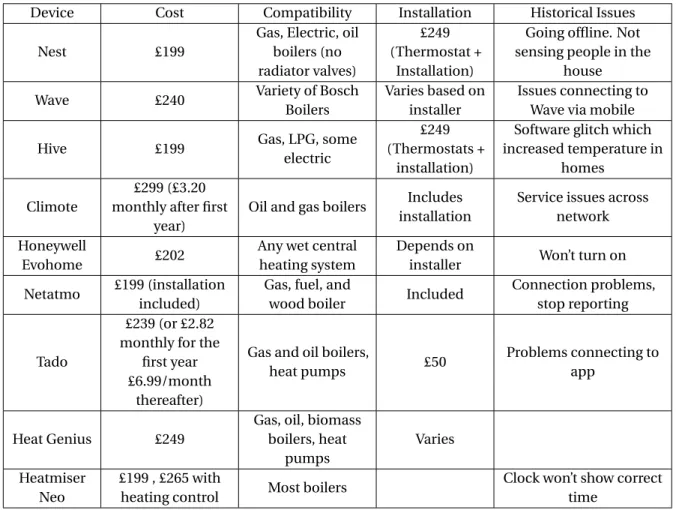
A.1 Smart Temperature Control Logistical Information . . . 53 A.2 Smart Temperature Control Features Comparison . . . 54
In the United Kingdom, many buildings have not yet been modernized to improved thermal efficiency. Inefficient properties are responsible for 30% of the UK’s annual CO2emissions
(Department of Energy & Climate Change, 2015). Fuel poverty, a term specific to the region, is when a home cannot be heated to a sufficient temperature for a reasonable cost, a problem the UK has been trying to improve since the year 2000. A survey conducted by the National Union of Students (NUS) found that 78% of students in houses with multiple tenants felt uncomfortably cold at home in the winter season and 79% of students are hesitant to use the heat in their homes due to expense. Half of the students felt that their home experienced condensation, mold, and/or dampness (Bouzarovsky et al., 2012). Energy management and efficiency can have a large impact on the quality of life of people living in fuel poverty homes.
Students often live with numerous other tenants in a building managed by a landlord. This type of residence is known as a ‘house in multiple occupation’, or HMO. One factor that makes
student-rented HMOs different from other housing is the presence of a dynamic known as the ‘split incentive’, which creates different complications depending on who is paying for the utilities. If the tenants are paying, they tend to conserve energy, but properties may have fewer energy efficient improvements because the landlord isn’t motivated to improve the efficiency of the property. If the landlord is paying, the properties tend to be more energy efficient, but the tenants aren’t mindful of their spending and are more likely to overuse energy. The existence of this social dynamic makes improving the thermal efficiency of the properties involved challenging.
Energize Worcester is a sustainability initiative, funded in part by the NUS. It was created to educate the University of Worcester community on sustainability while simultaneously improving the overall condition of student living. Phase II of Energize Worcester was created to evaluate student and landlord attitudes and behaviors towards heat use in HMOs. In 2016,the Energize Worcester team focused on collecting data from students and landlords in the local area. This was done to better understand how the temperature and conditions of student-rented HMOs were affecting the quality of life of the students at the University of Worcester, as well as how these factors contributed to energy waste (Ruiz-Cadalso, Puckett, Goddard, Braconnier, & Golding, 2016).
The 2016 Energize Worcester team made the recommendations for the University of Worcester to educate students on how to manage energy and for landlords to provide their student tenants with more information on the heating system in the home. The team’s final recommendation was to explore new technologies, such as smart meters and thermostats, in order to better control and monitor energy use in HMOs (Ruiz-Cadalso et al., 2016). We believed smart heating controls had the potential to increase sustainability and comfort in off-campus student housing. This raised some
interesting questions, such as:
• What are the existing attitudes of student tenants toward the subject of heat system management?
• Would the student tenants be interested in new smart heating control systems?
• Would smart heating controls be effective in student HMOs?
• Are there student concerns over privacy involving smart heating controls?
Because of issues such as privacy and security, smart domestic technologies have the potential to be dangerous if not carefully considered and researched before being implemented on any sort of scale.
The main goal of this project was to investigate how complicated social and technical factors may affect the implementation of smart technology to reduce heat consumption in student-rented houses in multiple occupation at the University of Worcester. We surveyed students to understand their attitudes and behaviors toward both sustainability and smart temperature controls. We aimed to identify what student tenant attitudes towards smart heating controls were, and to evaluate the potential effectiveness of adopting a smart heating control in a student-rented HMO. We hope that this research will fill a gap in the available literature, and aid in determining if smart thermostats are the next step in improving energy efficiency in student-rented HMOs.
Inefficient United Kingdom (UK) properties contribute to 30% of CO2emission in the UK
(Department of Energy & Climate Change, 2015). These homes are among the least thermally efficient creating a demand for more sustainable heating systems. More efficient heating systems may also result in a reduction in fuel poverty which the UK has made efforts to reduce since the year 2000. This project specifically deals with heating and sustainability among students in off campus housing. In this chapter, we introduce the broad topic of energy conservation in the UK, leading into sustainability at the University of Worcester as well as how the Energize Worcester initiative began. We describe student and landlord attitudes towards sustainability before moving into attitudes surrounding smart technologies, specifically to do with heat control, as well as any issues associated with these smart heating devices. This chapter illustrates many social aspects surrounding the implementation of smart heating controls, taking into account this project’s four key stakeholders: The University of Worcester, Worcester Bosch, students, and landlords.
2.1 Energy Consumption in the United Kingdom
The Fifth Assessment Report of the United Nations Intergovernmental Panel on Climate Change reported that in 2014 the burning of coal, natural gas, and oil for electricity and heat was the largest single source of global greenhouse gas emissions. In 2010, electricity and heat production were responsible for 25% of global greenhouse gas emissions and was the sector that made the largest impact. A graph of the percentage each sector contributed can be seen in Figure 2.1 (Edenhofer et al., 2014). In the UK specifically, properties are among the least thermally efficient in Western Europe, and in 2011 were responsible for 30% of CO2emissions (Department of Energy & Climate Change,
2015). According to the Department for Business, Energy, & Industrial Strategy, energy consumption has increased in the domestic sector by 3.6% from 2014 to 2015. This increase is due to the following factors:
• Weather
• Number of households
• Household characteristics
• Disposable income and energy prices
Figure 2.1:Global Greenhouse Gas Emissions by Sector
The first factor affecting emissions is a simple change in weather. In 2015, the average air temperature was 0.6 degrees Celsius lower than the previous year. Additionally, the domestic sector was responsible for 29% of total final energy consumption, and gas consumption increased by 4.5%. Between 2014 and 2015, consumption per household increased by 2.6% and consumption per person increased by 2.8% (Department for Business, Energy & Industrial Strategy, 2016).
Changing household characteristics also contribute to changing energy demand. The number of households in the UK has grown from 18.8 million in 1970 to 27.5 million in 2015–an increase of 46%. In this same time, the population has increased by 17%, which suggests there are now fewer
residents per household. An increase in the number of households increased consumption as a whole, but having fewer occupants per household has decreased the average household’s energy use. Additionally, level of comfort, or what is considered to be a reasonable level of warmth, is a factor that affects heat consumption. It varies over time, but has increased in recent years. This increase has resulted in a greater demand for energy (Department for Business, Energy & Industrial Strategy, 2016).
Natural gas prices have more than doubled since 2002, which has made consumers more aware of their consumption in an effort to save money. A graph of how fuel prices have increased over time can be seen in Figure 2.2 (Department for Business, Energy & Industrial Strategy, 2017). According to Wave 17 of the Public Attitudes Tracker, 28% of 2,105 UK households surveyed were worried or very worried about paying for their energy bills. The level of worry was highest among households with incomes under £16,000, social renters, 35-44 year olds, and private renters. The increase in
households worried about energy bills has been a factor in the decrease of consumption per household (Department of Energy & Climate Change, 2016).
Figure 2.2:Fuel Price Index Numbers Relative to the GDP Deflator
This graph was produced using data from Domestic Energy Price Indices, published by the UK’s Department for Business, Energy & Industrial Strategy (Department for Business, Energy & Industrial
Strategy, 2017) We were able to use the UK government’s data to produce this graph under the Open Government Licence (Appendix I)
New efficiency measures taken also have an impact on emissions. Many houses in the UK have poor insulation because much of the housing dates back to the Victorian era. Poor insulation results in increased consumption to maintain a comfortable temperature. As older homes are gradually replaced with more energy efficient homes, consumption will tend to decrease. In 1970, 25% of UK housing stock was built prior to 1918, but that percentage decreased to 16% in 2014. This is a long-term trend that makes a significant impact. Measures that homeowners and landlords can make to improve home efficiency include installing a condensing boiler, double glazing windows, cavity wall insulation, solid wall insulation, and loft insulation (Department for Business, Energy & Industrial Strategy, 2016).
Normalizing for temperature fluctuations, final energy consumption fell 19% from 2002 to 2015. This can be attributed to a combination of the factors explained above. A graph of how each factor has impacted domestic consumption can be seen in Figure 2.3.
Energy consumption in the UK decreased with temperature corrections, but without
temperature corrections energy consumption increased. Since the UK’s average air temperature is getting colder, more fuel is being used to maintain a comfortable temperature in homes. The increased use of fuel results in increased greenhouse gas emissions. Catherine Mitchell, author of
The Political Economy of Sustainable Energy, believes there are three efforts humans need to focus on in order to reduce greenhouse gas emissions produced by domestic energy consumption. First, there needs to be a reduction in demand for energy through lifestyle choice changes. Second, there needs to be increased efficiency in the production and consumption of energy. Third, energy supply should be supplied by non-fossil sources, such as renewable energy and nuclear power (Mitchell, 2010). The
Figure 2.3:Factors Impacting on Domestic Consumption
This graph was made using data tables from Energy Consumption in the UK, a government report that provides data on overall energy consumption as well as data from each energy sector. (Department for Business, Energy & Industrial Strategy, 2016). We were able to use the UK government’s data to produce
this graph under the Open Government Licence (Appendix I)
focus of our research will be on the first two efforts.
2.2 United Kingdom Government Actions to Reduce Greenhouse Gas
Emissions
The United Kingdom government recognizes the effect that their country’s energy consumption and greenhouse gas emissions has on the environment. It has taken efforts to reduce greenhouse gas emissions from the transportation, domestic, industry, and service sectors. For the sake of this project, we focused our research on the domestic sector. Through various policies, the UK
government has taken action to help make homes more energy efficient. Such policies include the 2008 Climate Change Act, The Green Deal, and the Smart Metering Implementation Programme.
2.2.1 2008 Climate Change Act
The 2008 Climate Change Act set legally binding targets to reduce greenhouse gas emissions. The UK aims to reduce greenhouse gas emissions by at least 80% by 2050 from baselines that were established in 1990. The government plans to do this through moving towards an energy efficient, low-carbon economy (Committee on Climate Change, 2015). Actions the government has taken since the act was passed are:
• Reducing the demand for energy
• Aiding people and businesses to use energy more efficiently
• Investing in low-carbon technologies
• Publicly reporting carbon emissions from the business and public sector of the UK (Committee on Climate Change, 2015)
In 2015, greenhouse gas emissions had been reduced by 38% from the 1990 levels. Most of this energy saving was in the power sector due to a reduced use of coal and an increased generation of electricity from renewables. The UK government recognized that emissions reduction in the power sector alone is not enough to meet the 2050 target. There has not been a significant emissions reduction in the domestic, transportation, buildings, industry, and agriculture sectors (Gummer et al., 2016).
2.2.2 The Green Deal
The Green Deal was created in 2012 to reduce energy consumption in the UK. It provides guidance to householders, tenants, and landlords on what energy-saving home improvements can make properties more comfortable and energy-efficient. At the request of the householder, a Green Deal Assessor comes to the home to learn about the residents energy use and establishes if they could benefit from energy efficiency improvements. The Assessor recommends energy
improvements that are appropriate for the home. Green Deal Providers assess whether a Green Deal Plan will benefit the home, and if they deem it useful they provide a quote for the improvements. A Green Deal Provider creates a Green Deal Plan, which is a contract between the
householder/tenant/landlord and the Green Deal provider. If the contract is agreed upon, improvements are made to the home (Department of Energy and Climate Change, 2014).
Examples of improvements the Green Deal covers are:
• Installation of loft insulation
• Technologies like wind turbines and solar panels
• Installation of secondary, double, or triple glazing windows
• Drought proofing by sealing gaps around doors, windows, loft hatches, fittings, and pipework
• Installation of cavity walls insulation
• Installation of internal and external solid wall insulation
Green Deal improvements are expected to reduce the residents’ heating bill since their homes should be using less electricity, gas, or oil. Repayments for some or all of the improvements are made over time through the electricity bill. Repayments are not meant to be more than what a typical household should save in energy costs. A landlord can initiate the Green Deal program on behalf of the tenants if the landlord includes gas, electricity, or oil in the rent. If the tenant pays for the gas, electricity, or oil themselves, then the tenant can set up a Green Deal assessment with the permission of the landlord (Department of Energy and Climate Change, 2014).
2.2.3 Smart Metering Implementation Programme
In 2013, the UK government started requiring energy companies to replace gas and electricity meters with smart meters at 30 million properties. Smart meters send digital meter readings to energy suppliers. They will be standard in the country by 2019; however, there is no legal obligation for individuals to have one for domestic use. These new meters may give consumers and energy companies more accurate information on energy use and should bring an end to estimated billing. Meters are usually read by energy suppliers. However, if the meter reader is unable to take a reading, the consumer can take their own reading and provide it to the supplier. This may prevent customers from receiving an estimated bill, which is when suppliers use an algorithm that takes into
consideration usage history to estimate how much energy was used in a given time period. Bills are adjusted over time once meter readings for the estimated time period are reported (Regulatory Delivery, 2014). With smart meters, consumers will no longer need to send meter readings manually to a provider or have the meter read by a provider’s meter reader. Through an optional In-Home Display that is linked to the meter, customers will be able to see real time information on their energy use. Customers will be better able to manage their home’s energy use to monitor spending and reduce emissions (Department of Energy & Climate Change, 2013).
2.3 Sustainability at the University of Worcester
In addition to, and alongside governmental efforts, the University of Worcester has made its own efforts to be sustainable. The University of Worcester was ranked fifth out of 150 other universities by the 2016 People and Planet University League for green schools. They were also the first English University to achieve EcoCampus Platinum Status, which recognizes the work the school has done in aiding the planet by reducing energy waste. The university has been recognized by many other organizations such as the National Union of Students, FairTrade, and Green Gown because of their efforts (What We Do, 2016).
According to the University of Worcester’s Annual Sustainability Report, emissions intensity with corrections for an increased number of students and staff decreased by 7% between 2014 and 2015. The University was ranked 34 out of 120 universities in percent change in emissions intensity per square meter since 2008. This emission metric is based on floor space (Brite Green, 2016). Despite
their efforts, there was an 11% increase in gas emission, even though Worcester had a mild winter. However, they did achieve a slight reduction of 0.16 MWh at the St John’s Campus due to energy saving initiatives (University of Worcester, 2016).
In February of 2008, the university created a sustainability policy to promote sustainability in the community through teaching, research and knowledge. They encourage active engagement of students in helping to reduce the impact they have on the environment (Green, 2008). The school has an environmental management system as well as performance indicators, which assess current and future levels of sustainability. Each year the policy is reviewed and objectives are generated to reduce overall negative impact the University of Worcester has on the environment (University of Worcester, 2016). The current objectives include:
• Recognize the potential impact of climate change and the strategic and operational need to control, manage and reduce carbon dioxide and other GHG emissions
• Fulfill all the institution’s legal and other compliance obligations
• Encourage sustainable procurement and employ whole-life costing and environmental performance criteria for selection
• Provide appropriate sustainability and environmental training for all our staff and students and encourage them to support this program (The Strategy and Private Housing Sector Team, 2015)
2.4 History of the ‘Energize Worcester’ Initiative
The National Union of Students (NUS) was founded in 1922 as an outcome of the desire for peace after the destruction of the first World War. It was started with the intent to promote, defend, and extend the quality of student living. The union has a large focus on promoting and aiding strong student unions throughout the United Kingdom and consists of over six hundred of these unions (NUS, ‘Our History’). Energize Worcester was funded in part by the NUS to promote overall
awareness of energy and the damaging effects on the environment as a result of heating emissions. Energize Worcester Phase II focused singularly on landlord and tenant relations within student housing due to heat management and the impact it can have on quality of living.
The WPI Global Project Program first partnered with the University of Worcester in 2014. Since then, WPI IQP teams have been completing projects with the Energize Worcester student group. The 2016 WPI IQP project assisted Energize Worcester in determining student tenants’ and landlords’ attitudes and behaviors regarding thermostatic and boiler systems in student-rented homes. This project recommended that the University of Worcester and landlords use various education techniques to teach student tenants how to be more aware of their energy consumption (Ruiz-Cadalso et al., 2016). These recommendations included:
• The University of Worcester and the NUS develop educational materials about how to better manage energy use
• The University of Worcester and NUS develop materials and advice for negotiating energy consumption and bills with roommates
• Landlord associations work with landlords to develop materials that explain the thermostatic controls and boilers
• Landlords include details about heating caps in rental agreements
• Landlords meet with student tenants periodically to review the heating system and utility payments (Ruiz-Cadalso et al., 2016)
Their final recommendation was to explore the use of smart technologies, which was the purpose of our 2017 Energize Worcester project. Through these recommendations they hoped to increase knowledge and awareness of energy efficiency in order to affect student opinions and attitudes. The overall goal was to decrease heat consumption, lower energy costs for students and landlords, improve student comfort, and reduce environmental impacts (Ruiz-Cadalso et al., 2016). One of our project sponsors and principle investigator for the full student-landlord research grant, Professor Carolyn Roberts, did research concurrently with our project. She evaluated landlord attitudes and behaviors towards energy consumption through a long-form interview that we include with her permission in Appendix H. Roberts is an Environmental Consultant specializing in
environmental and water management and allied sectors. Roberts’ findings are not featured in our paper as her work was ongoing and unpublished at the time of our research.
2.5 HMOs and Student Accommodations
The Worcester City Council defines a house in multiple occupation (HMO) as, “a house (or flat) with 3 or more tenants, forming 2 or more households,” (The Strategy and Private Sector Housing Team, 2015). Two different types of HMO licensing exist: mandatory licensing and additional licensing. Mandatory licensing is required for any HMO which has three or more stories, and five or more occupants. Additional licensing covers any other HMOs. Before September 1, 2015, mandatory licenses were only required for these HMOs (The Strategy and Private Sector Housing Team, 2015). The additional licensing encompasses homes that house two households in one residency. The purpose of the additional licensing is to ensure that tenants receive the fundamental basic standards of accommodations. This includes:
• Safe gas and electric
• Suitable room sizes
• Adequate kitchens and bathrooms for the number of occupants
The policy also aims to improve the overall atmosphere of neighborhoods. Prior to the additional licensing going into effect, a landlord accreditation scheme was in use that recognized landlords who were committed to offering good quality, properly managed rentals (The Strategy and Private Sector Housing Team, 2015). Due to the new law in 2015, accreditation no longer applies.
Due to a demand for first year housing, around 2009, the university started leasing off campus properties from local landlords. Prior to the 2015 act, the University of Worcester only leased properties that had been accredited. As a result not enough of these homes were available resulting in inflated rent. After The Housing Act 2004 Section 56 was added in 2015, there was an excess of properties available, decreasing rent prices (Participation, 2004). A landlord who wants to lease to the university must agree and sign the Agreement for Letting Furnished Houses (attached in Appendix G). This document defines the expectation the university requires of the properties before the school then rents them to students.
Prior to 2009, a first year student was expected to deal directly with the landlord when renting a property off campus. (Second year and above students are expected to rent properties on their own, whether from university-approved houses or other means.) However due to the university now leasing some properties, the relationship between students and the university is often viewed as the tenant-landlord relationship. The Licensed Agreement for University Managed Accommodation (also in Appendix G) is signed by the student agreeing to the terms the university has for renting these properties. Due to the fact that the first years do not deal directly with a landlord, they may not have had any discussion about energy on the property and may be unaware of their usage.
Two of the major stakeholders in the Energize Worcester project are the students in these HMOs and the landlords who own the actual property. As a result, a central focus of this project is the relationship between the two, specifically the concept known as the ‘split incentive’. The split incentive was defined by the state of California as “a circumstance in which the flow of investments and benefits are not properly rationed among the parties to a transaction, impairing investment decisions.” (California Sustainability Alliance, 2011). This idea is one of the main reasons why sustainability is not implemented more often. Specifically in student rented HMOs, the split incentive relates to how utilities are managed in the household. If a tenant has the utilities included in their rent fee, they are less likely to be conscious about how much energy they are saving. Since the landlord will then be paying the utilities, he/she may see more of the advantage in saving energy. The same principle occurs in the reverse. If the student pays for utilities separately, energy saving methods may be more appealing to them than it would be to the landlord.
2.6 Fuel Poverty in Student Housing
The Energize Worcester project has had a strong focus on the overall quality of student life making the NUS a key resource. A study conducted by the NUS in the winter of 2015 examined fuel poverty and energy efficiency for student housing. Fuel poverty, as defined by The Warm Homes and Energy Conservation Act, is when a household with a relatively low income cannot be kept warm for a reasonable amount of money. The act was created in 2001 and demands the government do what it can to reduce the fuel poverty of its citizens. A home is considered to be in fuel poverty if more than ten percent of a person’s income after housing expenses is put towards heating the home to an adequate standard of warmth. The temperature of the living room must be at least twenty-one degrees Celsius and all other rooms must be eighteen degrees Celsius or above in order to meet the these standards (Boardman, 2004).
The NUS survey showed that 78% of students were uncomfortably cold and 64% did not think their homes were adequately insulated to retain heat. Almost 80% of students chose not to heat their home or hesitated to heat their homes because of the cost. 82% wore multiple layers while they slept in order to remain warm and 62% have worn winter accessories such as gloves or scarves to keep warm when in their homes. Energy management and efficiency can have a large impact on the quality of life of people living in fuel poor homes (Bouzarovsky et al., 2012). These statistics are one of the reasons the NUS gave the original grant to Energize Worcester at the university.
2.7 Student Behaviors and Attitudes Towards Sustainability
A study done at Sheffield Hallam University surveyed students living in residence halls managed by The UNITE Group Plc. in order to gauge what students understand about the concept of
sustainability. Of the 396 students surveyed, 73% believed they had a strong understanding of the term sustainability. Of that group, only 6% provided a satisfactory definition. This suggests that the students surveyed misunderstood what sustainability is. Additionally, students tended to displace responsibility for sustainability issues onto others, such as government, businesses, or their social group. The survey showed that 75% of students felt that sustainability issues did need to be addressed, but felt it was not their responsibility to deal with it. This is known as the displacement theory and it is due to the perception students have that they do not have the time or resources to act sustainably (Chaplin & Wyton, 2014).
There is also evidence that students cite their flat mates’ behavior as something that prevents them from being sustainable. Some respondents didn’t understand the point of acting sustainably, such as through recycling and energy conservation, if their flatmates were not making an effort. The following statements from the surveyed students give evidence to displacement theory (Chaplin & Wyton, 2014):
practices would be carried out”
• “living in a shared living environment means you can’t always operate as you would do if you were living as a non-student”
• “I would like to do it but my flat mates do not really care about it” (Chaplin & Wyton, 2014)
Fumiyo Kagawa, Research Director of Sustainability Frontiers, suggests that there is limited benefit in people believing a concept is important if they don’t fully understand what it is and how they can get involved (Kagawa, 2007). This suggestion could be applied to student sustainability because a majority of the students surveyed thought sustainability was an important enough issue to be addressed, but didn’t think they were responsible for getting involved.
The 2016 Energize Worcester IQP team found that if students were conscious of their energy consumption, it often wasn’t because they were concerned about sustainability or the environment. The surveys they conducted showed that students’ primary motivation for reducing heat
consumption was to save money. Of the 40 students surveyed, 29 believed they consciously controlled the heat. When those 29 were asked what their motivation was to keep the heat down, 66% wanted to save money, 24% wanted to protect the environment, and 10% wanted to save money and protect the environment (Ruiz-Cadalso et al., 2016).
The IQP team also found that 87.5% (35/40) students surveyed did not have a methodical way of controlling the temperature in the house, with one student saying that they “just don’t talk about it ever.” It’s notable that of those 35 students surveyed, 6 had noninclusive rent, 14 had inclusive rent with a heat cap, and 15 had inclusive rent without a heat cap (Ruiz-Cadalso et al., 2016). Thus, 20 of them appear to have a monetary incentive for having a methodical way of controlling the heat, yet they don’t discuss it.
2.8 Landlord Behaviors and Attitudes Towards Sustainability
According to the UK Department for Communities and Local Government, social renters and private renters accounted for 17% and 20% of housing stock respectively in 2016. The remaining 63% was made of up homeowners. Privately rented homes, which are defined as all rented homes not owned by local authorities or housing associations, are the only part of the housing stock that is continuously expanding due to an increased number of people aged 25-34 preferring renting over home owning (Department for Communities and Local Government, 2016). When homes are sold or rented an Energy Performance Certificate is required. The basis for this certificate is a Standard Assessment Procedure (SAP) system that provides a rating for a home’s energy efficiency. The rating is placed on an A–G scale with A being the most energy efficient. Social renting has the best energy performance with 48% of homes rated from A–C. Only 24% of owned homes and 26% of privately rented homes are rated in these high bands (Department for Communities and Local Government, 2016).
A Private Landlord Survey conducted by the UK government in 2010 showed that 38% of private landlords do not have an Energy Performance Certificate for their property and do not plan to get one. Of the landlords that did have a certificate, 70% did not have plans to make any changes to their property to improve energy efficiency (Department for Communities and Local Government, 2011). A study done at Northumbria University asked landlords to explain their reason for obtaining or not obtaining an Energy Performance Certificate. Notably, none of the landlords obtained it to learn about the energy efficiency of their home or about how they could improve their home. The landlords surveyed either chose not to acquire a certificate, or acquired one simply because they were required to. A graph of how the landlords responded can be seen in Figure 2.4 (Hope & Booth, 2014).
Figure 2.4:Landlords Reasons for Obtaining or not Obtaining an Energy Performance Certificate
This graph was reproduced with permission from publisher Elsevier (Appendix J).
The study done at Northumbria University by Alexander John Hope (Faculty of Business and Law) and Alexander Booth (Faculty of Engineering and Environment) surveyed 53 private sector landlords. Of those landlords, 28 let their properties to students. When landlords were asked how much influence they believed household energy consumption had on UK carbon emissions, 48% believed they had either a minor influence or no influence. A chart of how the landlords responded can be see in Figure 2.5 (Hope & Booth, 2014).
As of 2015, 78% of the 573,162 homes that utilized a Green Deal assessment were
owner-occupied properties. The remaining 12% and 10% of homes that utilized it were privately rented and socially rented respectively (Department of Energy & Climate Change, 2016). Of the 53 landlords surveyed in the Northumbria University study, 67% had never used government schemes to improve the energy efficiency of the homes they let. None stated that they used the Green Deal. Of the respondents, 47% had never heard of the Green Deal, 70% had no understanding of how it worked, and almost a third of respondents had not intention of using the scheme. When landlords were asked why they haven’t used the Green Deal, some were quoted as saying (Hope & Booth, 2014):
Figure 2.5:Influence Landlords Believe Household Energy Consumption Has on UK Carbon Emissions This chart was reproduced with permission from publisher Elsevier (Appendix J).
• “The Green Deal is too complicated. . . ”
• “Landlords require simple language. Simple schemes”
• “Many landlords are working and do not have time to wade through paperwork to see if they qualify”
Of the 53 landlords surveyed in the Northumbria study, 28% have never made energy
improvements to their home and have no intention to improve them in the near future. Additionally, 32% have made only minor improvements that cost under £100. When landlords were asked what deters them from making improvements, most landlords claimed it was high upfront costs. Figure 2.6 shows the response rate for deterrents to energy improvements (Hope & Booth, 2014).
There were 14 landlords of the 53 who did make substantial energy efficient improvements in their homes that cost over £100, and 15 of the landlords had made no improvements yet, but were planning to in the near future. When asked what their primary reasons for making improvements were, many of the landlords wanted to increase thermal comfort for tenants. The bar graph in Figure 2.7 shows landlords’ drivers for making energy efficient improvements in the homes they let (Hope & Booth, 2014).
It appears that the landlords surveyed in the Private Landlord Survey conducted by the UK government and the 53 respondents in the study done at Northumbria University are not making significant efforts to improve the energy efficiency of the homes they let.
Figure 2.6:Landlords’ Deterrents for Making Energy Efficient Improvements in the Homes They Let This figure was produced using data tables from Hope and Booth’s journal article Attitudes and behaviors of private sector landlords towards the energy efficiency of tenanted homes (Hope & Booth,
2014).
Figure 2.7:Landlords’ Drivers for Making Energy Efficient Improvements in the Homes They Let
This figure was produced using data tables from Hope and Booth’s journal article (Hope & Booth, 2014).
2.9 The Rise of Smart Technologies, and the Internet of Things
Smart heating technology is often associated with the Internet of Things. The International Telecommunication Union, an agency of the United Nations, defines the Internet of Things as:
“A global infrastructure for the information society, enabling advanced services by interconnecting (physical and virtual) things based on existing and evolving
interoperable information and communication technologies.” (Recommendation ITU-T Y.2060: Overview of the internet of thing, 2012)
To simplify, the Internet of Things is the group of connected smart devices working as a whole. For our purposes, we may consider a smart thermostat, smartphone, smart CO2and smoke detector,
and a smart security system acting in tandem to be part of the IoT.
Smart technologies are even less clearly defined than the Internet of Things. However, they often tend to share a few characteristics with exceptions. These are:
• Connected: Smart devices can generally be accessed remotely via the internet.
• Interactive: Smart devices can adjust their behavior based on direct human input.
• Autonomous: Smart devices can collect information and make decisions to adjust their performance without human input.
• Predictive: Smart devices can use models and previously gathered information to predict future conditions and act accordingly.
The definitions given here are somewhat vague. This an unfortunate byproduct of the explosive growth of these type of devices. No governing body has set a clear definition for “smart” in this context, so any company developing a product with even slightly more features than the average competitor may find it beneficial to attach “smart” to the name. The end result is a lack of complete clarity for these definitions.
2.10 An Introduction to Smart Temperature Controls and Their
Features
A variety of smart heating controls are available for purchase, offering a wide array of features for a range of prices. The purpose of this section is not to give a recommendation for a particular unit, but rather to explore features offered by different smart controls. It is important to note that some of the features were designed with single-family homes in mind, so their use may differ if implemented in an HMO (Davidoff, Kyung Lee, Zimmerman, & Dey, 2006). Charts comparing the features of popular smart temperature controls can be found in Appendix A.
2.10.1 Multi-Zonal Heating
Multi-zonal heating is not offered by every smart temperature control. However, it could be especially useful in homes that have multiple occupants. Multi-zonal heating is the ability to heat specific rooms or zones of a house to a desired temperature at different times during the day. For example, if a occupant returns home from work to cook dinner everyday, the kitchen will be warmed by the time they arrive without having to waste energy heating up other rooms in the house. Zonal heating is a relatively new feature and sometimes requires multiple devices to equip a home. It originally was a separate heating control method but was recognized as a main source of competition so companies worked to include the option with their thermostats. (Wood, 2015).
2.10.2 Learning
One of the most advertised features of smart heating controls, especially thermostats, is its adaptive technology and ability to learn the habits and schedules of the occupants of a home. This feature is what defines a thermostat as ‘smart’ and separates it from more basic controls, for example timing thermostats. By the term ‘learning’ companies mean that the device is able to understand the when occupants are home and generate a heating schedule in order to improve comfort and reduce energy waste. However, this feature has proven to be one of the most difficult for consumers to use and adjust to. A study conducted by the university of Michigan involving the Nest found that the device would take into account every temperature change made. This created a problem because some situations called for a specific temperature that didn’t follow the household’s normal schedule but the device would include it in the daily schedule it generated. Subjects of the study found that they would end up overriding the feature and not using it in their homes to avoid this. However sometimes the device would ignore the manual temperature change and set the temperature based off the schedule anyways (Yang & Newman, 2013).
2.10.3 Motion Detection
Motion detection is a trait that belongs typically to the most expensive heating controls on the market. It is also one of the least common features among the available devices. Temperature controls with this feature have sensors embedded in the unit that can detect the presence of an occupant within a certain range. If no person is detected within a time range, the device will turn down the heat. A problem encountered with this feature is that often, single thermostats are used to heat entires homes. If an occupant is in a separate part of the house, the motion sensor will not detect them and as a result it will reduce the heat even though a person is present (Yang & Newman, 2013).
2.10.4 Geo-Tracking
Geo-tracking is when a device logs a person’s current, physical location using GPS data from their smart phone or other smart device, such as a tablet. A feature offered on a few smart heating controls, it allows the thermostat to track when an occupant is home or will be home and heat the house accordingly. The goal of this feature is to save energy by not heating a home when no one is present. It also allows for the temperature in a home to warm up when the occupant is on their way home. A problem encountered with this feature is that often devices struggle to track a phone when it is not on Wi-Fi and do not recognize a person until they are already in the home (Lu, 2010).
2.10.5 Weather Responsive
Temperature controls that are weather responsive take into account the temperature outside and heat the house accordingly. If a day is warmer than expected the devices take that into account
before heating the home. Weather responsive controls can be installed as a separate system that sends information using sensors directly to the boiler. However, many devices now connect to the Wi-Fi directly and use the internet to look up the local weather. Although this may not be as accurate as actual sensors on the location, it is more efficient and much cheaper than installing the entire weather sensor system. A downside of this option is that if the device has trouble connecting to Wi-Fi it can no longer take the temperature into account (Weather-responsive controls (outdoor reset controls), 2017).
2.10.6 Hot Water Control
Hot water control is a newer feature offered by some smart heating controls. Devices that include this feature connect directly to the boiler and can turn the boiler on or off to adjust the water in the hot water tank. These controls allow the hot water to be on a schedule so that energy is not wasted keeping water warm when it is not in use. For example if an occupant comes home after work to shower every day at a specific time, the water can begin heating before they arrive. A problem with this feature is that devices do not work with every type of boiler so hot water control may not be useful in some homes (The 3rd-generation nest thermostat’s domestic hot water control, 2016).
2.10.7 Mobile Control of Device
Mobile control of a device is a feature offered by every smart heating control on the market. It allows a user to control their thermostat or boiler through an app on a smartphone or tablet even when the occupant is not home. The University of Michigan found that it was actually the most useful feature to the subject studied and was the main selling point of the devices. They found that often users would ignore other features offered by the smart thermostat and use it simply as a mobile way to adjust their heat. However, consumers have had occasional issues with the application connecting to the smart control, not allowing them to adjust the heat. Most smart heating controls allow for a manual override but as a result some people end up using the smart control as a normal thermostat (Yang & Newman, 2013). Additionally, some smart heating control users have
experienced issues connecting to their thermostat via mobile data. Customers were still able to control their heating control by connecting the phone to a Wi-Fi network (Bosch Group, 2017). An alternative problem is if the smart thermostat is operating perfectly, but the Wi-Fi in the home is turned off or stops working. The same issues arise where users could not control their thermostats through the applications on their phone.
2.10.8 Cost of Systems
Smart devices span a large price range. The diverse range in price is owed in part to the varying levels of ‘smart’ of the systems available. Less expensive devices typically meet only the minimum requirement to be considered ‘smart’. This usually means that they can be connected to a
smartphone or tablet wirelessly and then controlled through an application. The most expensive smart devices, such as the Nest, offer sensors that make the smart technology adaptive to the occupants of the home. It is also important to consider that many companies, such as the Z-Wave, require a hub to be purchased along with the thermostat or valve in order for it to be connected to a smartphone or tablet which will increase the overall amount spent in updating a home. The tables in Appendix A illustrate the prices of various smart thermostats as well as the features each device offers.
2.11 Do Smart Heating Technologies Actually Save Money/Energy?
A main selling point of a smart heating control is its supposed ability to save energy and by consequence money. However sometimes human and device error inhibit this from happening.
A study conducted by The School of Information at the University of Michigan found that the Nest did not clearly lead to energy savings. A number of participants found that they may have been paying excess energy costs due to the easy accessibility of the thermostat as well as the time it actually took to learn to control the smart thermostat. The Nest thermostat is primarily controlled from an application on a smartphone. Subjects reported that they were much more likely to adjust their heat because of this. For example, one respondent reported that he would turn the heat up before he left his bed in the morning. As a result of this, some people’s energy expenditure went up. Another human error was brought into focus when five of the ten participants explicitly said that they would choose comfort over energy savings and that they did not change their behavior to be more energy conscious after getting the Nest. They were reported to change the temperature for comfort often which lead to no decrease in energy consumption(Lu et al., 2010).
Within this study, error within the actual device also resulted in a problem. Five subjects found that the Nest was not learning an energy efficient schedule but was rather just memorizing numbers they inputted themselves. Participants found that due to this their homes were often heated higher than necessary. The Nest device offers a feature called auto-away which is supposed to reduce energy waste when a person is not home. Participants found that the feature was relatively useless and often the heat would be turned on when they were away (Lu et al., 2010).
The study concluded that even though the Nest offered a variety of energy ‘saving’ methods, the most successful way to improve sustainability in these homes had to do with how involved the participants were. Subjects who actively monitored their heat and energy expenditure while making conscious choices to be more sustainable saved the most money. Even though the Nest advertised energy savings, it was unclear exactly how much savings the device was responsible for (Lu et al., 2010).
Another study conducted by the University of Warwick drew a similar conclusion: energy savings depends on the participants more than the device. Every smart heating control device promises to save the consumer energy. Often companies claim up to approximately 30% energy savings when in