Biodiversity in Rose
B. K. Banerji
Floriculture Section, National Botanical Research Institute Rana Pratap Marg, Lucknow-226001. (U.P.)
E-mail : [email protected]
Introduction
The term biodiversity was coined by Walter G. Rosen in 1985 for the first planning m eeting of the ‘National Forum on Biodiversity’ held in Washington, DC in Septem ber 1986. Biological diversity or Biodiversity refer to the variability among living organism from all the sources including marine, terrestrial and other eco system of which they are part; this includes diversity with in species, between species and of ecosystems. Biodiversity also supports a number of natural ecosystem processes and services. Some ecosystem services that benefit society are air quality, climate (both global CO2 sequestration and local), water purification, pollination, and prevention of erosion. It is quite difficult to say how many species of life exist on our earth? As per available literature this estim ates ranges from 3 million to 100 m illion. There are 1,435,662 identified species present all over the world (Singh, 2010). The details of identified species are given below:
Species of Insect ... 751,000 Flowering plants ... 250,000 Animals ...281,000 Fungi... 68,000 Protists (unicellular and... 30,000 Colonial eukaryotes)
Algae... 26,900 Bacteria and other similar forms... 4,800 Viruses ... 1,000 The United Nations proclaimed May 22 as the
International Day for Biological Diversity (IDB) to increase understanding and awareness of Bio-diversity issue. Biological Bio-diversity of India is richest in the world. India has over two per cent of the world’s land mass (329 m illion hectares). It has seven per cent of living resource, one third of which is land bounded (Ram asubbu, 2010). Approxi-mately, 45,000 species of plants have been reported from here. The main reason of this diversity of the plant is due to presence of vast geographical area, varied topography, clim ate zones and so m any biogeographically regions and sub-regions. Wild ornamental always played an important role in the beautification of the forest areas and during the course of evolution attracting various insects for pollination. More than 200 wild ornamental species are domesticated and used intensively for commercial floriculture and rose is one of them.
The present paper deals with the biodiversity of rose. Rose plant appeared on earth about 30 million years ago. This has been deduced by the study of the fossil found in Asia, Europe and Am erica (Chakraborty, 2005). There is wide biodiversity in roses which is described in literature in the name of wild roses, natural roses, scented roses, miniature roses, species roses, cabbage roses, moss roses, old roses, modern roses and climbing roses. It clearly indicates that wide biodiversity is already available in genus rose. To know how the biodiversity appeared in rose, it is important to know about its origin and distribution in globe.
Origin of rose
earth was inhabited by mankind as per evidence of fossil record. The flower also found a special place with the Egyptian pharaohs, whose pyramids has rose buried along with themummies. During the excavation, essence of the rose flower was felt (Bhattacharjee and Banerji, 2010, Anonymous, 2011). In floriculture industry and cut flower trade, roses occupies top slot and are in huge demand.
Roses are not indigenous to South Africa, mainly originating in Asia, Europe and som e in North Africa. The latter include Rosa canina, Rosa corymbifera and Rosa sempervirens which are from Morroco, Algeria, and Tunisia. R. richardii and R. moschata var. abyssincia originated at the Red Sea region. (Gerd Krüssmann, Roses).Interesting is that South Africa has over the years officially naturalized only two roses:Rosa rubiginosa (Sweet briar, Eglantine rose) and Rosa x odorata (Tea rose).These are some of the species of roses cultivated in South Africa:Rosa abyssinica, native to tropical East Africa; Rosa acicularis (Arctic rose, Prickly rose); Rosa agrestis; Rosa banksiae (Lady Banks’ rose); Rosa bracteata (Macartney rose); Rosa caesia; Rosa canina (Dog rose); Rosa chinensis (China rose, Fairy rose); Rosa foetida (Austrian brier, Austrian yellow rose); Rosa rugosa (Japanese rose, Rugosa rose); Rosa serafinii (Mediterranean rose); Rosa setigera (Prairie rose); Rosa sinowilsonii; Rosa spinosissima (Burnet rose, Scots rose); Rosa sweginzowii; Rosa wichuraiana; Rosa x borboniana (Bourbon rose); Rosa x centifolia (Cabbage rose, Holland rose, Provence rose); Hybrid bred from Rosa gallica, Rosa moschata, Rosa canina and Rosa damascena. Rosa x damascena (Dam ask rose); Hybrid of Rosa gallica and Rosa moschata. Rosa x harisonii.
Uses of rose
Roses for the use in daily life were produced for the decorations at festivals, of both rooms and guests, for important ceremonial presentations, for needs of personal cleanliness, for the decoration of tombs and finally, for the religious sacrifices and funerals. When speaking of the use of roses it is the flower that
stands in the forefront. One should never forget that the rose plant also fulfils its duty to our earth. The mere capacity of photosynthesis and respiration surely beats that of a succulent, as they are designed differently. Therefore, the rose plays an equally important part in cleansing urban air, cooling the atmosphere around us and assisting with use and recycling of vital essential elem ents in the soils; providing nutrition to bacteria, fungi and micro-organisms living in the soils. Yet the rose takes up much less water than our beautiful, invasive, inter alia Jacaranda trees.
As rose gardeners we can adapt to scare water conditions by gardening wisely; ensuring that water will reach the roots of the plants and a good layer of mulch is used to combat the hot, sunny months. Or as said earlier, we can under plant roses with other sm aller indigenous annuals and sm all perennials. It would make no sense to decide in a wild act of preserving the natural diversity in South Africa to go into the garden and rip out all plants that are exotic, as some have already formed micro-habitats for other living creatures. Roses as such will never pose the problem of becoming invasive as their seed need to lie cold, wet and dormant for a good 2 -3 months before even attempting germination.
Benefits of rose
The preservation of the rose lies in its strong power to alleviate human sorrow and uplift our physiological well being which is closely linked to our health. The wide biodiversity in roses viz. shape, size, type, colours and divine fragrances help us combat stress, sooth the pain of love madness, help us forget for moments all the bad and scary things this world presents us with on a daily basis. Thus, we hum ans will (hopefully) consciously and subconsciously protect the roses and conserve its huge biodiversity. The scent of roses in particular awaken our senses: we associate relaxing, calmness, delicacy, harmony, heart opening, love and sensuality with it.
Classification of rose
Classification of roses is still very complicated issue because of its wide and com plicated biodiversity. From where rose did come? And how they evolved? is a matter of interest. Answer is not easy. There are several views about roses, and specially species roses. Rose can be reproducing by seeds and vegetative propagation but seed formation is uncommon in all types of roses. In one feature all roses can be classified in a group that is shrub. All roses are categorized under this comm on head. Seedling of roses look alike the mother plant but genetically they are different. Roses that were found growing wild in nature especially in forests are mostly species is one school of thought but it may not be always true. In nature and in wood, due to insect pollination and dissemination of seeds by bird it is a common phenomenon by which along with species hybrid seedling may also grow side by side and the fact that rose which are growing wild are rose species is not true at all. Crossing and recrossing of the species either by natural way or through human efforts, led to the evolution of the major group of the garden roses which created wide biodiversity in rose. Species roses are the ancestors of the garden roses. One hundred and fifty years of hybridization has given us perfect budding roses with breath taking new colour and vigorous growth.
Rose cultivars of the garden and their status
The roses cultivated in the gardens for ornamental purpose are complex hybrids of several wild species and their num ber runs into several thousands. Rose breeders are creating new and novel types continuously and in this way creating huge biodiversity.Classification of rose
Many botanist and rose growers have tried their best to classify the roses in a systematic way. They have their own versions and style of classification. Due to different clim atic zones and genetic
complexity it is difficult to classify roses. Many workers have tried to classify roses on the basis of different characters viz. shape and size of all parts of rose which includes prickles, hairs on the calyx, foliage edges, etc. The two plants of the same species have variation in foliage number, pattern and size. If we see the old history of Europe we will find that there was one old known rose species in Europe i.e. Rosa gallica. Damask rose comes afterwards and then fallowed by all of the roses. Credit goes to Linnaeus (1764) who had one of the oldest classification systems which includes Rosa piminellifolia, R.gallica, R.canina, R.rubiginosa and R.alba. At that time he stated that it was difficult to classify roses. Boitard (1838) classified roses into three classes i.e. R. lutea (yellow or foetida roses), R.simplicifolia or R.berberifolia, and R.mutabilis. DeCandolle classify roses into eight classes viz. Systylae, Rubigineae, Gallicanae, Cinnamonae (it included R.alpina and R.rubifolia), Pimpinellifoliae, Villosae, Caninae and Eglanteriae.Thory (1820) listed 25 groups of roses, which included Collinae, Montanae, Cynorrhodenses (R.canina), Gladulosae (R.rubiginosa), and Spinulifolias. In Botanical classification roses belongs to the order Rosales, family Rosaceae and genus Rosa. A genus includes one or more species. Species is a wild population of plants that reproduce true to the type from the seed. Wild roses are often called species rose. Classi-fication of rose suggested by various workers and their respective divisions, class, sections and groups are given in Table-1.
Am erican Taxonomist Rehder reported that there are about 120 or more species of roses. A large majority of which are native to the artic region. They are found growing wild in the northern hemisphere from the Artic to as far as South as North Africa, the Yemen, Thailand and New Mexico. Thomas (1962) classified the group of cultivated roses into two categories i.e. Wild rose and their hybrids and old shrub roses.
Wild roses and their hybrids
Table‐1 :Classification of rose by different workers along with their respective classes, section and group with wide biodiversity
Name No. of Division/ Names of Division/Class/Section
Class/Section and Groups
Lindley Seven Cinnamonae, Pimpinellifoliae, Centifoliae, Villosae,
Divisions Rubiginosae, Caninae and Systylae.
Trattinnick Six Divisions Joquiniana, Smithiana, Raurana, Candolleana, Woodsiana and
Lindleyana.
Dumor tier Four Sections Systlylae, Chinesis, Cinnamoneae and Caninae.
Reichenbach Seven Classes Setigerae, Aculeosae, Villosae, Rubiginosae, Caninae,
Centifoliae, Nitidae.
Kock Four Sections Caninae, Cinnamonae,
Pimpinellifoliae, Centifoliae, Rosae and Rosa nobiles
Hegetschewellers Six Sections Alpinae, Arvensis, Caninae, Cinnamonae, Spinosissimae and
Rosa nobiles
Godet Two Classes Diastylae (5groups): Lepatacanthae (alpina, rubella,
pimpinellifolia), Dimorphacanthuae (cinnamonea, gallica). and Systylae
Desglise Nine Groups Systylae, Gallicanae, Pimpinellifoliae, Alpinae, Caninae,
Eglanteriae, Rubiginosae, Cinnamonae, and Tomentesae.
Crepin Twelve Classes with Synstylae (9 species, sempervirens, arvensis), Stylosae
numerous subsets (7species, stylosa), Gallicanae (10species,gallicas), Alpinae
(7species,alpines), Sabiniae (7species,sabini, coronata), Pimpinellifoliae (11species,spinosissimas), Montanae (14species, Montana, rublifolia), Caninae (117 species, Lutetianae, Transitoriae, Biserratae, Hispidae, Pubesecantes, Collinae, Tomentillae, and Sabratae), Glandulosa
(16species,jundzilli), Rubiginose (35 species, Sepiaceae, Micranthae, Suavifoliae), tomentosae (26species), and Villosae(14species,Pomifera),273 species in all.
Gandoger Twelve Groups Renamed all the groups. He did name one of the groups,
Hulthemia which is used even today
Keller Two Groups Exer ti (Synstylae, Stylosae), and Inserti (Cinnamonae,
Alpinae, Pimpinellifoliae, Luteae, Sabiniae, Villosae, Orinetales, Montanae, Gallicanae, Caninae, Rubginosae, and Tomentosae.
Christs Nine Groups Tomentellae and Grandulosae being placed under
Garden rose (cultivars), Banksians, Hybrid wichuraianas, Climbing polyanthas, Boursaults, Ayrshires, Noisettes and Teas, Climbing HTC.
Old shrub roses
Old shrub Roses include Albas, Sweet briers, Scotch roses, Gallicas, Mosses, centifolias, Damasks, Poly-pones and fairy roses, Portlands, Bourbons and Hybrid perpetuals, Hybrid teas, Hybrid Polyanthas, Floribundas, Hybrid Musks, Hybrid rugosas.
Sub genera of roses
Roses are divided into four subgenera of which three are small and aberrant and the forth, Eurosa, contains the roses proper. The important ancestral species from which modern roses have been bred are all to be found in four of the ten section of Eurosa (Anonymous, 1972). Gardeners and nurserymen have grown up with the traditional classification of rose and termed such as Hybrid Tea, Floribunda, Miniature, Climbers and Ramblers, Shrub roses and it has become common practice. The Rose world has felt for many years that a better and more precise system is needed, and in 1971 the World Federation of Rose Society accepted in principle the British proposals (Hessayon, 1981). The new classification arrived and in 1979 the RNRS began to use it in their show schedules. The unfamiliar terms beginning to appear in catalogues and magazines.
New classification of rose
The new classification explained by Hessayon (1981) is quite simple and easy to follow. The new classification of rose includes three groups i.e. Modern Garden Roses (Roses which are neither old Garden Roses nor wild roses. They are categorized into two heads i.e. 1.Non-climbing Modern Garden Roses; 2. Clim bing Modern Garden Rose Old Garden roses (Includes two category viz. 1.Non clim bing old Garden Roses; 2.Clim bing Modern Garden Rose and Wild Roses (This group is categorized in two heads ie. 1.Non climbing wild rose
2. Climbing wild rose).
Mutations and hybridization in rose and its
biodiversity
Biodiversity in roses has been created by natural hybridizations and spontaneous mutation. Bud sport and induced mutations have played a very important role in origin and evolution of m any ornam ental crops and rose is not an exception. Many of the present day garden cultivar of ornamental plants owes their origin to mutations and hobby oriented growers and nursery man maintained these new cultivars in their collection in nursery and gardens. Mutations (or genetic deviation) can produce changes in morphology, different growth habits, leaf shape/sizes, flower colour, petal shape, size number and arrangements, inflorescence, etc., or changes in physiology- change in general vigor, hardiness to cold or drought, frequency of bloom cycles, etc. Most m utation and changes understandably go undetected, but two changes are quite obvious and are interesting to watch for. These two are changes in flower colour and change from bush to climbing form. A reasonably large number of mutant Minis presently appear in the commercial market (William Osburn, 1994.).
Non-climbing modern garden rose
A non-climbing Modern Garden rose includes non-recurrent shrub, recurrent shrub, recurrent bush (Large flowered bush-Hybrid Tea, clustered flower bush-Floribunda, and Polyantha), and recurrent miniature). Modern Garden Rose includes Non recurrent Rambler, Non recurrent climbers, Non recurrent m iniature, Recurrent Ram bler, Recurrent climbers and Recurrent ClI Miniature.
Non climbing old garden rose
The non climbing old garden rose includes Alba, Bourbon, Damask, Gallica, Hybrid Perpetual, Moss, Portyland, Provence (Centifolia) Sweet Briar Tea.
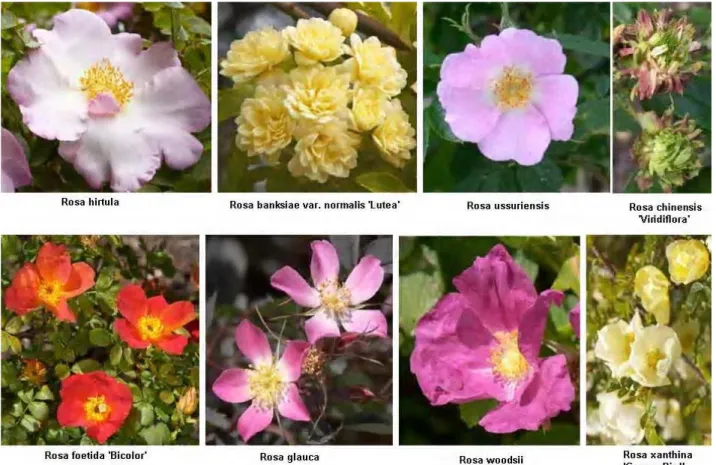
Fig. 1 : Wild Rose species with very primitive characters
Explanation of rose species given in fig.1
Rosa hirtula : Rosa hirtula, a spreading bush with simple flowers and thorny stems. It is a native to Japan. It is very similar to Rosa roxburghii.
Rosa banksiae var. normalis 'Lutea' : Yellow double‐flowered Banksia Rose (Rosa banksiae var. normalis 'Lutea') is
a once‐flowering, spring‐blooming cultivar of a
vigorous climbing rose and it is found in western
and central China.
Rosa ussuriensis : Rosa ussuriensis is a rarely cultivated Siberian
shrub with small, rather sparse flowers
Rosa chinensis 'Viridiflora' : Rosa chinensis 'Viridiflora' (syn 'Monstrosa') is a mutant form of the China rose 'Old Blush' dating from 1843, in which the petals are scale‐like.
Rosa foetida 'Bicolor' : Rosa foetida 'Bicolor' is an orange
cultivar of a normally yellow flowered Middle
Eastern and western Asian species. Known since
around the 12th century, it has importance in the
history of rose hybridization.
Rosa glauca : Rosa glauca (syn. Rosa rubrifolia) is a very hardy shrub. It is a native to the mountains of central and southern Europe. It is known for its blue‐green folia ge.
Rosa woodsii : Western Wild Rose (Rosa woodsii) , a rather stiffly branched shrub rose native to western and
central North America.
Rosa xanthina : Rosa xanthina 'Canary Bird' (R. xanthina forma
spontanea × R. xanthina forma hugonis), an inter‐form hybrid of Rosa xanthina, a spreading 3m tall species from China and Korea, with larger flowers than the spec ies.
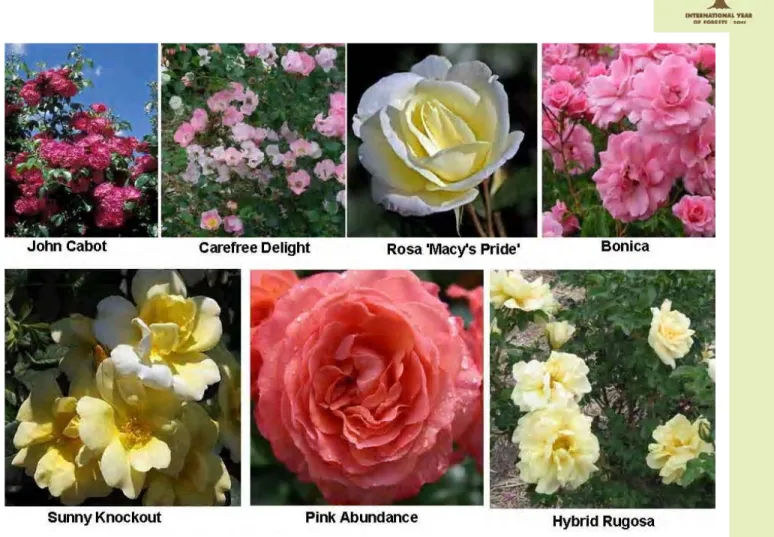
Fig. 2 : Biodiversity in difference cutivars of shrub roses
Shrub Roses : Shrub roses are a specialized branch of rose growing which when fully established provides a delightful display in the gardens. Shrub roses are excellent for hedging purposes or can be used as specimen plants. In most of the varieties flowers are freely produced. Plants are vigorous and well branched which makes them bushy, and do not require great deal of pruning. Some of the important cultivars of the shrub rose grown in the gardens are 'John Cabot', 'Carefree Delight', 'Rosa 'Macy's Pride','Bonica', Sunny Knock out', 'Pink Abundance and 'Hybrid rugosa'. Flowers are large or small, borne in twos or threes or in big clusters, more or less continuous flowering. There are old shrub roses and the varieties derived from the species. Like R.alba, Rosa bourboniana, R. centifolia, R. centifolia muscosa, R.damascena, R.gallica etc. Modern
shrub roses are the results of crosses between R.moschata and various modern roses commonly know as Hybrid Musk. Wide
range of biodiversity in flower colour, shape and size of shrub roses have been reported (Fig.2).
Climbing old garden rose
Climbing old garden rose includes Ayrshire, Boursault, climbing Tea, Noisette and Sempervirens.
Non-climbing wild rose
Non-climbing wild rose includes all species of group shrub roses R.rubriflolia and Canary Bird. Climbing wild rose includes a few ramblers roses for
example Rosa filipes Kiftsgate. Steve Jones (2001) is of the opinion that the modern roses of today are near im possible to classify with the influx of characteristics from all the past it is hard to lump them together.
Biodiversity of
Rosa chinensis
mutabilis (China
rose)
spectrum of biodiversity and has m any ethno botanical benefits. It is widely used in preparation of traditional Chinese medicines for centuries. It provides flower for most of the year and provide wonderful protective habitat for birds.
Antique rose varieties with C-3 photosynthesis
with hardiness
Most of the roses are considered C-3 photosynthesis type plant and need some protection from the wind to prevent desiccations. These antique varieties are extremely hardy and the green roof top plant here has rambled across ten meters of roof. The antique rose varieties though not as showy as recent hybrid are much more suited for a green roof with their resistance to disease, drought and their importance to wild life.
Biodiversity with huge seed producing
multiflora rose
Multiflora rose is a thorny perennial shrub. It reproduces by seed and by forming new plants from the tips arching canes that contact the ground. Birds are the primary dispensers of its seed and an average plant may produce a million seeds per year with seed remaining viable for 20 years. The plant is extremely aggressive and can form in penetrable thickets that exclude native vegetation.
Conclusion
Roses have wide biodiversity in growth habit (Hybrid -Tea, Polyalthia, floribunda, grandiflora, climber, rambler and miniature), spiny habit of the stem to spine less roses (City of Lucknow) flower size (1-20cm approximately), petal number (4-100), colour range (Broad range of colour spectrum even blue and green i.e. R.chinensis Viridiflora), single, bi-colour and more than two colors, combinations of colour in specks and stripe forms, different shapes (flat to almost spherical), different sizes and class with their own flowering habit (mini, floribunda, hybrid tea, polyanthus and grand flora and fragrant to non fragrant roses, disease resistant cultivars are few of the exam ple which highlighted the biodiversity of rose. Hybridization (Natural crosses and plant breeders efforts), Mutation breeding(Bud sports and induced m utations),Polyploidy, somaclonal variation and bio-technology has played an important role in creation of huge biodiversity in roses which are preserved in Botanic gardens, nurserym en’s collection and various Research Institute all over the world. Owing to their diversified growth habit, exquite shape, variation in size and form, attractive colours, delightful fragrance and innumerable varieties; roses have gained wide acceptability all over the world. Pass port data of rose germplasm existing in various Institutions of India under different agro climatic conditions has also been documented by Bhattacharjee et.al., (2002).
References
Anonymous 2011. Roses evolved much before man. Times City, Times News Net work, Sunday Times of India, Lucknow, January23, 2011 PageNo.2.
Anonymous, (1972). The wealth of India. Raw Material Vol.IX: Rh-So.
Bhattacharjee, S. K., Suchitra, P. and Naveen Kumar, P (2002). In: Pass Port
Chakraborty, K. (2005). Knowing Roses. The Rose Bulletin pp 4- 5.
Data of flower crops Germplasm, All India Coordinated Research Project on Floriculture,I.C.A.R.., Technical Bulletin No23,p.210.
Hessayon, D.G. (1981). The Rose Expert. Britannica House-Waltham Cross Herts-England pp128.
Singh, A.2010.Biodiversity conservation: Protecting species before they are gone. Science Reporter May 2010. Vol. 47(5):8-13 &42- 43.
Ramasubbu, R. 2010. Protecting the Wild Beauties (Feature Article). Science Reporter, May 2010. Vol. 47(5):19-22.
Thomas, G.S. (1962). Shrub rose of today. Phoenix House Ltd. London pp.240.
William, O.1994. Watch for mini mutations, American Rose, September, 1994 Vol. XXXII (9):16-18.