F
LOODS AND
P
ROPERTY
V
ALUES
:
A
H
EDONIC
P
ROPERTY AND
E
FFICIENCY
A
NALYSIS
Darshana Peiris Rajapaksa
M.Sc. (Agricultural Economics), B.Sc. (Agriculture), University of
Peradeniya, Sri Lanka
Supervisors: Prof. Clevo Wilson
Dr. Vincent Hoang Dr. Boon Lee
Submitted in fulfilment of the requirements for the degree of Doctor of Philosophy
School of Economics and Finance Faculty of Business
Queensland University of Technology
i
Keywords
Difference in differences estimation, environmental valuation, flood, geographical information system, hedonic property price analysis, market efficiency, non-market valuation, property market, quantile regression, quasi-experimental analysis, semi-parametric estimation, spatial econometrics, spline regression, two stage quantile regression, two-tier stochastic frontier analysis.
Abstract
This research investigates the impact of floods on property values and related issues (e.g., demographic, spatial and temporal variation of impacts of floods and property market sale inefficiencies) using the hedonic property (HP) price approach and other relevant techniques, such as quasi-experimental analysis, spatial analysis, quantile regression, spline regression and stochastic frontier analysis. For this purpose, the 2011 floods in the region covered by the Brisbane City Council (BCC) were selected as a case study. This was recorded as one of the major natural disasters in Australia, with approximately one-quarter of suburbs within the BCC affected. Apart from damage to infrastructure and loss of life, a large number of properties (houses) were damaged, and a total damage cost estimated at AUD 30 billion. Consequently these negative impacts have had a major effect on the BCC property market and given rise to important policy research questions including the application of state of the art econometric techniques to this issue.
Although much theoretical and empirical work has been conducted on various aspects of flood impacts on the property market, many important research areas remain to be addressed. For example, the behaviour of different property submarkets under flood risk has so far not been investigated. In particular, this thesis addresses the following questions: (1) Does the availability of flood-risk information and actual occurrence of floods negatively impact on property values? (2) Does the negative effect of flood-risk disappear over time? (3) Are different demographic submarkets affected in a different way? (4) Does environmental (flood) risk create any market (sale) inefficiency? (5) Do natural disasters have any impact on those properties that are not affected directly from the floods?
Brisbane is the capital city of the Australian state of Queensland. The city has been built along the lower catchment of the Brisbane River where several major floods were recorded prior to 2011. For this study the 2011 flood was chosen. Property transaction data for selected suburbs within the BCC were collected for the period 2006-2013 and supplementary secondary data published by different sources were collected using GIS techniques. The spatial HP analysis indicates that the flood prone properties were discounted. The impact of the availability of flood risk
iii
information and the 2011 Brisbane floods are compared within a Difference-in-differences (DID) framework. The results indicate that property buyers are more responsive to the actual incidence of flood than public information about them. Spatial quantile regression analysis is then used to examine the submarket behaviour. The results show that the negative impact of floods on lower-valued properties are larger than on higher-valued properties. Moreover, the negative effects vary between suburbs for which the differing characteristics were identified. The results of spline regression analysis compares the behaviour of property values in flood affected and non-affected suburbs. The efficiency of property markets is also examined using a two-tier, stochastic frontier approach the results confirming that both buyer and seller behave inefficiently in the presence of flood risk.
The implications of the results for the development of policies and institutional arrangements for minimising the negative impact of natural hazards on the property market are discussed. It is argued that the results offer an enhanced framework for decision-making in the property insurance market. In particular the opportunity to use the study’s methodological improvements to investigate other similar natural hazards is highlighted.
Table of Contents
Keywords ... i
Abstract ... ii
Table of Contents ... iv
List of Figures ... vii
List of Tables ... viii
List of Abbreviations ... ix Acknowledgments ... xi CHAPTER 1: INTRODUCTION ... 1 1.1 Background ... 1 1.2 Research problem ... 4 1.3 Objectives ... 6 1.4 Motivation... 8
1.5 Contribution of the study ... 11
1.5.1 Contribution to the understanding ... 12
1.5.2 Contribution to the methodology ... 13
1.6 Thesis outline ... 13
1.6.1 Structure of the thesis ... 15
CHAPTER 2: PROPERTY PRICES, THEIR DETERMINANTS AND HP PRICE ANALYSIS17 2.1 Property price determinants ... 18
2.1.1 Environmental factors and the property market... 19
2.1.2 Environmental pollution and the property market ... 20
2.1.3 Socio-economic factors and the effect of environmental law on property markets ... 22
2.1.4 Natural disasters and the property market ... 23
2.2 The impact of floods on property market values ... 25
2.3 The theory of hedonic property price analysis ... 28
2.4 Theoretical background ... 31
2.4.1 The buyers’ behaviour (demand) ... 32
2.4.2 The sellers’ behaviour (supply) ... 36
2.5 Econometric issues in HP analysis ... 39
2.5.1 Spatial dependence in HP analysis ... 39
2.5.2 Omitted variables in HP analysis ... 42
2.5.3 Multicollinearity ... 43
2.5.4 Heteroscedasticity ... 43
2.6 Choice of functional forms ... 44
2.7 Marginal Willingness to Pay (MWTP) ... 44
2.8 Summary ... 45
CHAPTER 3: STUDY AREAS AND DATA COLLECTION ... 47
3.1 Floods and natural disasters in Brisbane/ Queensland ... 47
3.2 Study area ... 50
3.3 Data and variables ... 52
v
3.3.2 Description of variables ... 55
3.4 Overview of the property market in Brisbane ... 58
3.4.1 Overview of selected suburbs ... 59
3.5 Data collection limitations ... 59
CHAPTER 4: THE EFFECT OF FLOOD RISK INFORMATION DISCLOSURE AND FLOODS ON THE PROPERTY MARKET: HP PRICE AND QUASI EXPERIMENTAL ANALYSIS 61 4.1 Literature review ... 61
4.2 Methodology ... 64
4.2.1 Hedonic property price approach ... 64
4.2.2 Quasi experimental approach... 66
4.3 Empirical estimation ... 67
4.3.1 Incorporation of spatial dependence ... 68
4.3.2 Temporal variation of flood risk ... 69
4.4 Results and discussion ... 71
4.4.1 OLS Estimation ... 72
4.4.2 ML Estimation ... 73
4.4.3 Spatial quasi-experimental analysis ... 78
4.4.4 Temporal variation of flood risk ... 83
4.5 Conclusion ... 85
CHAPTER 5: WHO RESPONDS MORE TO ENVIRONMENTAL AMENITIES AND DIS-AMENITIES: THE RICH OR THE POOR? ... 89
5.1 Background ... 89
5.2 Literature review ... 90
5.2.1 Quantile regression analysis ... 92
5.3 Methodology ... 93
5.3.1 Quantile regressions... 94
5.3.2 Spatial quantile regressions ... 95
5.3.3 Quasi experimental analysis and quantile regression... 96
5.4 Results and discussion ... 96
5.4.1 Quantile regression analysis without considering spatial effects ... 97
5.4.2 Two stage quantile regression (2SQR) analysis ... 109
5.5 Conclusion ... 114
CHAPTER 6: FLOODS AND PROPERTY MARKET INEFFICIENCY: TWO-TIERED STOCHASTIC FRONTIER APPROACH ... 117
6.1 Background ... 117
6.2 Literature review ... 119
6.3 Methodology ... 123
6.3.1 Theoretical background ... 123
6.3.2 Two-tiered frontier analysis ... 128
6.3.3 Buyers’ and sellers’ price efficiency ... 129
6.3.4 Empirical approach ... 130
6.4 Results and discussion ... 131
6.5 Conclusion ... 133
CHAPTER 7: SEMI-PARAMETRIC ESTIMATION OF HEDONIC PROPERTY PRICES: COMPARISON OF FLOOD-AFFECTED AND NON-AFFECTED SUBURBS ... 135
7.1 Background ... 135
7.3 Methodology ... 139
7.3.1 Regression splines ... 139
7.3.2 Semi-parametric HP function ... 140
7.4 Results and discussion ... 141
7.4.1 Regression splines ... 141
7.4.2 Semi-parametric estimation ... 144
7.4.3 Impact of distance from the river on property values ... 147
7.5 Conclusion ... 148
CHAPTER 8: CONCLUSIONS AND POLICY IMPLICATIONS ... 151
8.1 Summary of the thesis... 151
8.2 Importance of the research question ... 152
8.3 Research gaps ... 152
8.4 Major findings ... 153
8.5 Policy recommendations ... 155
8.6 Limitations and suggestions for further research ... 156
BIBLIOGRAPHY ... 159
APPENDICES ... 175
Appendix A: Flood maps OF Brisbane ... 177
Appendix B: Definition of variables and expected signs ... 179
Appendix C: Discriptive statistics of flood affected suburbs ... 183
Appendix D: Corelation matrix ... 189
Appendix E: Spatial corelation test ... 195
vii
List of Figures
Figure 1.1: Research outline ... 14
Figure 2.1: The bid curve ... 35
Figure 2.2: Household optimal choice. ... 36
Figure 2.3: The offer curve ... 37
Figure 2.4: Property owners’ optimal choice ... 38
Figure 2.5: Hedonic equilibrium ... 38
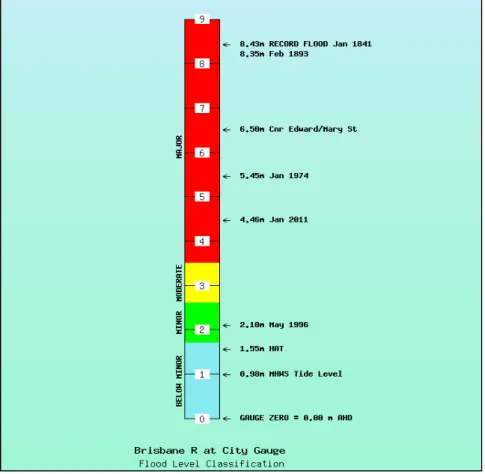
Figure 3.1: Flood level classification and flood effects for Brisbane ... 48
Figure 3.2: History of flooding in Brisbane ... 50
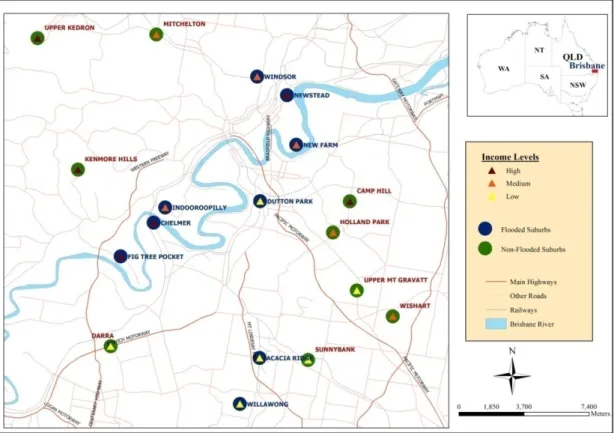
Figure 3.3: Selection of suburbs ... 51
Figure 3.4: Selected suburbs ... 53
Figure 3.5: Data collection and preparation with GIS ... 53
Figure 3.6: Median property prices in Australia’s major cities (2002-2013) ... 58
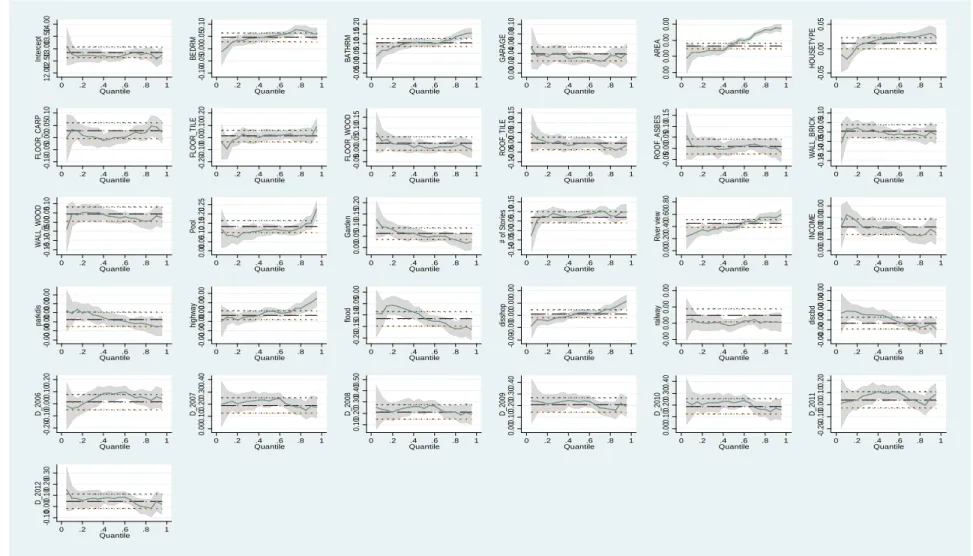
Figure 5.1: HP quantile regression (Model 1) ... 104
Figure 5.2: HP quantile regression (Model 2) ... 105
Figure 5.3: DID quantile regression (Model 3) ... 106
Figure 5.4: DID quantile regression (Model 4) ... 107
Figure 6.1: Four product categories in the market ... 124
Figure 6.2: HP price equilibrium and buyers’ and sellers’ reservation price ... 126
Figure 6.3: Hedonic equilibrium and market inefficiency ... 127
Figure 7.1: Spline regression ... 139
Figure 7.2: Property market behaviour of different suburbs (flood affected suburbs) ... 143
Figure 7.3: Property market behaviour of different suburbs (flood non-affected suburbs) ... 144
Figure 7.4: Smooth spline regression analysis of different suburbs (flood affected suburbs) ... 146
Figure 7.5: Smooth spline regression analysis of different suburbs (flood non-affected suburbs)... 147
List of Tables
Table 3.1: Summary of description of variables ... 57
Table 4.1: HP analysis-Group 1 ... 74
Table 4.2: HP analysis- Group 2 ... 75
Table 4.3: HP analysis-Group 3 ... 76
Table 4.4: DID analysis-Group 1 ... 80
Table 4.5: DID analysis-Group 2 ... 81
Table 4.6: DID analysis- Group 3 ... 82
Table 4.7: Temporal variation-OLS estimation ... 84
Table 4.8: Temporal variation models-ML estimation ... 85
Table 5.1: Descriptive statistics (mean values) of quantiles ... 97
Table 5.2: HP Quantile regression (Model 1) ... 99
Table 5.3: HP Quantile regression (Model 2) ... 100
Table 5.4: DID Quantile regression (Model 3) ... 101
Table 5.5: DID Quantile regression (Model 4) ... 102
Table 5.6: Spatial quantile regression analysis (2SQR)-Group 1 ... 111
Table 5.7: Spatial quantile regression analysis (2SQR)-Group 2 ... 112
Table 5.8: Spatial quantile regression analysis (2SQR)-Group 3 ... 113
Table 6.1: OLS and 2-tier estimation results ... 132
Table 6.2: Inefficiency between buyers and sellers ... 133
ix
List of Abbreviations
ABS – Australian Bureau of StatisticsAUS – Australia
BCC – Brisbane City Council CBD – Central business district DID – Difference-in-differences GDP – Gross domestic product
GIS – Geographical Information System HP – Hedonic property
IVQR – Instrumental variable quantile regression ML – Maximum likelihood
MWTP – Marginal willingness to pay OLS – Ordinary least square QR – Quantile regression SF – Stochastic frontier
2SQR – Two-stage quantile regression 2SLS – Two-stage least square
WTA – Willingness to accept WTP – Willingness to pay
Statement of Original Authorship
The work contained in this thesis has not been previously submitted to meet requirements for an award at this or any other higher education institution. To the best of my knowledge and belief, the thesis contains no material previously published or written by another person except where due reference is made.
Signature: QUT Verified Signature
xi
Acknowledgments
I take this opportunity to acknowledge the assistance I received from numerous individuals and institution, in completion of this study. First and foremost, I would like to express my gratitude to my principle supervisor, Professor Clevo Wilson, for his expert guidance and patience. I would also like to thank my associate supervisors, Dr. Vincent Hoang and Dr. Boon Lee for their constant support and guidance throughout the study period. My supervisory team encourage me to carry out this interesting research and their endless encouragement and untiring efforts make it success. I am extremely thankful and indebted to them for providing healthy environment with productive discussion and kind hearted assistance extended throughout the study period. I would also like to acknowledge Dr. Min Zhu for her invaluable guidance and support. My thanks go to the panel members of my PhD confirmation seminar, especially panel chair, Prof. Chris Eves, Faculty of Science and Engineering, Queensland University of Technology (QUT), for his constructive comments and encouragements.
I would like to acknowledge the roles of Dr. Muditha Karunarathna and Dr. Wasantha Athukorala who showed me the path to QUT. I am indebted to them for their kind hearted support and encouragement, especially at the initial stage of my studies at QUT.
I also would like to thank my wife, Lasinidu Jayarathna and Ms. Bernadette Savage, senior research support specialist, for teaching me the use of the GIS which made it easier to carry out data collection for this study. I acknowledge the QUT library for
providing me access to the RP DATA services and the HPC group for providing digital data. I also thank Prof. Christopher Parmeter and Prof. Phillip Kostov for their valuable support through email in analysing econometric models. I am grateful to Prof. Shunsuke Managi, for his suggestions and encouragements. I also thank Dr. Markus Schaffner for his kind support in analysing econometric models.
I recognize that this thesis would not have been possible without the financial support of School of Economics and Finance, Queensland University of Technology. I also would like to gratefully acknowledge the Head of the School (Acting) A/Prof Tommy Tang, and former heads of the School Prof. Tim Robinson and Prof. Michel Kid. I thank Prof. Clevo Wilson, Dr. Louisa Coglan, Dr. Vincent Hoang and Dr. Boon Lee for providing me working opportunities as a sessional academic and research assistant. My thanks go to the administrative staff of the Faculty of Business, Research Office, the financial team and QUT IT services for their invaluable assistance during my study period at QUT.
I would specially like to thank Dr. Kamal Karunagoda, Dr. Tony Sahama, and Dr. Anoma Ariyawardane for their invaluable help and continuous encouragement. My time at Brisbane was made more enjoyable in large part due to the many friends and groups including colleagues at QUT. I gratefully acknowledge their time spent with our family.
I thank the Department of Agriculture, Peradeniya, Sri Lanka for granting me study leave. I also acknowledge the help given by the Director General of Agriculture,
xiii
Director, my colleagues and administrative staff at the Department of Agriculture throughout the course of study.
I would not have been able to reach this point in my career without my parents and teachers’ support and guidance. I am indebted to my teachers, from primary school to university for their guidance, encouragement and wishes.
Last but not least my great appreciation goes to my wife, Lasindu for her understanding, patience and encouragement throughout my academic life. I am indebted to my loving son, Risinu for being a lovely boy. My deepest gratitude goes to my beloved mother, my late father and three sisters for their unconditional love and encouragement throughout my life. Finally, I would like to thank, my relatives and friends who always cheer me in my life. Your wishes for me were what sustained me thus far.
Darshana Rajapaksa Queensland University of Technology 2015
Dedication
This thesis is dedicated to Parents,
Teachers And my Wife and son
Chapter 1:
Introduction
Globally the frequency and severity of natural disasters (e.g., earthquakes, tsunamis, droughts and floods) have recently increased. For example, in 2010 and 2011 a series of extreme weather events were reported from countries such as Brazil, South Africa, Pakistan, Sri Lanka and the Philippines. In Australia, floods were reported in Western Australia, Victoria, New South Wales and Queensland affecting over 200,000 people. The Queensland floods of 2011, affecting Brisbane river catchment, was recorded as one of the worst natural disasters in Australia’s recent past, and apart from the deaths, the economic damage was considerable. For example, the economic loss in Queensland was placed at AUD 30 billion (Queensland Government, 2011). Around 18,000 properties in Queensland were inundated (Honert & McAneney, 2011). The damage to infrastructure and properties (houses) within the Brisbane City Council (BCC) area was significant. Floods result in many varied ramifications, including having a considerable impact on the property market. This doctoral thesis therefore focuses on the impact of floods on property markets, using property transaction data within the BCC area as a case study.
The first chapter of this thesis outlines the background (section 1.1), research questions (section 1.2) and objectives of the research (section 1.3). Section 1.4 describes the motivation for this topic, followed by an explanation of the contribution of this study to the current literature (section 1.5). The final section, (section 1.6) includes an outline of the remaining chapters of the thesis.
1.1 BACKGROUND
Australia has varying extreme weather conditions and has experienced natural disasters on a frequent basis. This frequency now imposes an annual cost burden on Australian government of around $560 million in the form of post-natural disaster recovery measures (Wilkins, 2014). Common natural disasters such as floods, bushfires, cyclones and earthquakes have severely affected both properties and lives in Australia (see, for example, Gentle et al., 2001). Among them, floods are the most common (Bureau of Transport Economics (BTE), 2001). According to BTE (2001)
estimates for the period 1967 to 1999 two of Australia’s states - New South Wales and Queensland - accounted for more than half of the costs associated of Australia’s natural disasters, with Queensland ranked second in terms of the frequency of natural disasters in Australia. For example, major floods were reported for Queensland in
1893, 1974, 2011 and 20131, with major cyclones in 2006 (Larry) and 2011 (Yasi)
affecting the state during the last decade.
The impacts of such events on lives and property are substantial and are detailed in several reports on the cost of flood damage (see, for example, Queensland Government, 2011 and Merz et al., 2004). Following such major incidents, relevant authorities and independent researchers have reported on the causes and damage, and in some instances, have estimated the cost of flood-related rehabilitation (Joseph et al., 2011). However, there are limitations in the cost estimation procedures as most reports consider only direct tangible costs such as damage to properties and infrastructure (Queensland Government, 2011). While some reports offer a brief discussion of indirect costs, such as changes in property demand, they fail to monetize indirect costs. For example, although loss to private property is estimated, there is little consideration given to the change in property values due to flooding. This omission is important given, in addition to physical damage affecting properties, any change to the property market structure could potentially impact on the economy as a whole and have a substantial effect on individual’s wealth.
The property market is an important economic indicator in any economy involving a large number of stakeholders including, householders, real estate agents, banks, insurance companies, policy makers and the general public having a vested interest on it. For example, of Australia-wide mortgage brokers’ total loans, nearly
65% were for residential real estate2 indicating the importance of the property market
for other economic subsectors. Valuation professionals need to know the discount that should be applied to previously flooded and ‘at-risk’ properties when they are listed for sale. Similarly, mortgage lenders and insurance companies need to be able to determine a more realistic estimate of property values in flood risk areas. From an economist’s point of view the availability of risk information avoids adverse
1 The historical overview of floods in Brisbane is discussed in details in Chapter 3.
http://www.macrobusiness.com.au/2013/07/australias-huge-3
selection and leads to a more efficient market (Akerlof, 1970). Moreover, the maintenance of property values is a key element in the sustainability of local communities (see, for example, Lamond, 2008). Property price changes affect the expected lifetime wealth of home owners and the collateral values of homes (Miller et al., 2011). Moreover property market behaviour is important not only to property owners and their agents but also to local and national governments being one of the major components of the national economy with its subsector providing substantial employment opportunities. Therefore, there is a clear incentive for governments to plan and invest in appropriate infrastructure to minimise adverse impacts of natural hazards such as floods on the property market.
A number of researchers have attempted to investigate the behaviour of the property market in relation to natural disasters. For example, the impact of flooding and the presence of flood plains on property markets have been investigated by Eves and Wilkinson (2014), Bin & Landry (2013), Petrolia et al. (2013), Rambaldi et al. (2013), Breisinger et al. (2012), Samarasinghe & Sharp (2010), Lamond et al. (2010), Lamond (2009), Zhai & Fukuzono (2003), Harrison et al. (2001) and Fridgen & Shultz (1999). However, only a few Australian empirical studies have investigated the impact of floods on property values (see, for example, Eves et al., 2010; Eves, 2004 & 2002; Rambaldi et al., 2013).
Rambaldi et al. (2013) and Eves et al. (2010) investigated the impact of floodplains (after the release of flood risk maps) on property values in the BCC region. However they did not consider the impact on property values after an actual flood event (such as the 2011 flood in Brisbane) and other possible impacts on the property submarkets. A meta-analysis of flood risks in the US has shown that there is a difference between ex-ante and ex-post analysis (Daniel et al., 2009). Therefore, it is important to consider its real impacts following a major flood incidence. From the reviewed literature, only one study has considered the impact on real estate market values of flooding or location of properties on floodplains of both affected and non-affected properties in Sydney (Eves, 2002). However, the study was limited, by its almost exclusive use of qualitative analysis, while quantitative estimation was rarely used. This deficiency is important given any negative market impact of such a natural disaster on affected suburbs may increase the pressure on demand for properties in surrounding non-affected suburbs. Different suburbs within the BCC
have different neighbourhood and environmental characteristics, so that the impact of flooding may vary across each characteristic and therefore become a cause of inefficiencies in the property market. Moreover, disparately valued properties and different income groups may be affected in dissimilar ways. Importantly the relationships between impacts of flood and such property submarket behaviour remain uninvestigated. Therefore this study seeks to help remedy these research deficiencies by investigating the consequences of floods on the property market based on the 2011 floods in Brisbane. The research problems arising in this study are discussed in detail in the following section.
1.2 RESEARCH PROBLEM
The 2011 floods in Brisbane have effectively segmented the property market into two broad categories - good and bad properties. As many as thirty five suburbs within the BCC area were affected; some suffered major damage, others minor. The extent of the damage to properties varied widely between suburbs ranging from partly to completely damaged - a diversity characteristic of even significantly affected suburbs.
The impact of floods on property market can be discussed under various disciplines, however, economists are particularly interested in valuing costs associated with natural disasters and studying market behaviour. The damage caused to the property market behaviour was also a considerable factor amongst the multiple impacts of the floods. For example before the 2011 flood, the BCC mapped flood-risk areas had been made available to the public via internet in 2009 and which therefore may have influenced property market behaviour.
The behaviour of the property market is equally influenced by a number of factors apart from flood and availability of flood-risk information. These factors may include macro-economic policies, economic growth, geographical features, crime rate, social and religious factors. A property’s natural environment, including being closer to green areas, water front view, flood and bushfire are also important factors that can affect property market behaviour. In their annual report of 2013, the Department of Natural Resources and Mines State Valuation Service (2013) which monitors the behaviour of the property market (or property prices) in Australia,
5
described the extent to which some suburbs increased their property values while others decreased. The focus of this study is therefore concerned with explaining the extent to which these differences are a product of the effects of flooding on the property market. In this context the following research questions arise:
1. Does the release of flood maps in 2009 by the BCC have an impact on property
values?
Before the 2011 flood incidence, the BCC made information available regarding the flood risk. It is questionable whether the release of risk information had an economic impact on the property market. If the release of flood maps created a public awareness of flood risk, it would be reasonable to assume that properties within the flood plain areas would experience a decline in price. Previous studies that have investigated this issue (see, for example, Eves & Wilkinson, 2014; Rambaldi et al., 2013 and Eves et al., 2010) are extended to include consideration of spatial and temporal variations.
2. What suburb/suburbs have suffered the most in terms of property values due to
the 2011 flood? What areas within a suburb showed the largest decline in property value? Environmental amenities and neighbourhood characteristics vary from suburb to suburb posing the question of whether these positive externalities will outweigh the negative externalities of floods on the property market. Identification of the suburban characteristics which reduce environmental risk is important in urban planning and in determining insurance premiums.
3. To what extent does the level of flood water have an impact on property values in
a given suburb? What other variables affect property values?
4. Will the recent floods leave a permanent scar on property values and/or how long
does it take for the property market to recover?
5. Are smaller properties affected more than larger properties? Which demographic
submarkets are more affected due to natural hazards?
6. Do the environmental risks/floods create any inefficiency in marketing/selling
within the property market? If so, what are the factors influencing the inefficiencies? Which submarkets are most inefficient in terms of property values?
This issue can be examined in terms of affected and non-affected suburbs. If the market for flood-affected properties is inefficient, which submarkets (for example, high-value houses or low-value houses) are most inefficient?
7. Do the property values in some suburbs recover faster than others? If so, what are
the special characteristics of these suburbs? The affected properties will be compared with suburbs unaffected by the floods to examine whether unaffected suburbs have experienced a positive effect on property values due to the recent floods. Residents in flood prone suburbs migrate to adjacent flood-free suburbs and increased demand for properties in these areas increasing property prices.
Most reports that have estimated flood damage considered only direct costs and rarely included the indirect cost of damage (for, example, change of property and environmental values). The major problem of estimating an accurate disaster cost is the inability to estimate intangible costs (BTE, 2001). The Queensland Government (2011) has issued a report on the consequences of the 2011 floods in Queensland, but this was limited to discussing the direct damage with no in depth attempt made to estimate indirect costs of flood damage on property values.
1.3 OBJECTIVES
Although much empirical work has been undertaken to investigate the impact of flood hazards on the property market, there is a continuing lack of understanding regarding all possible impacts of flood hazards on property market behaviour. In particular a number of research questions have not been investigated to date. Among them is the extent to which properties of different income groups are affected differently due to flood risk. Equally to be investigated is whether different demographic submarkets can be affected differently. Properties also could be affected differently depending on a particular suburb’s neighbourhood socio-economic characteristics. Some suburbs may recover faster while others continue to decline. Moreover, floods may create market inefficiency because of lack of awareness of risk. With this background, the overall objective of this study is to investigate the impact of the 2011 Brisbane floods on the property market and
7
propose an improved methodology to investigate such events elsewhere. The specific objectives of this research are:
1. To evaluate the impact of the release of flood maps in 2009 by the BCC on the
property market.
Asymmetric information can contribute to a market failure (Akerlof, 1970). Hence the availability of public information regarding flood risk could increase market efficiency. The BCC released flood maps in 2009, making information on flood risk available to the public. This objective will provide an indication of whether the release of these maps created any public awareness and the degree of impact their availability may have had on the property market.
2. To identify the most affected and non-affected suburbs in the BCC, including
localised areas within those suburbs, in terms of the impact of the 2011 flood on the property market.
One of the interesting research questions is why the impacts vary among different flood affected suburbs. Suburbs usually differ in their environmental characteristics, infrastructure, socioeconomic and neighbourhood characteristics. Therefore, these factors, together with the degree of flood risk, are likely to affect property values depending on the unique features of a suburb. As a result, the impact of floods on suburbs may vary according to their characteristics. This objective will attempt to understand the different suburban characteristics that may minimise the negative impact of floods on property values in that suburb. This information can be used for mapping risks to property value other than flood risk.
3. To estimate the duration of flood impact in terms of property values.
Any negative impact on the property market from floods is likely to diminish with time. The differences in recovery time of property values between suburbs is likely depend on individual suburb characteristics. Hence this objective investigates the temporal variability of flood impacts on property values.
4. To estimate the impact of the recent Brisbane flood on properties of different
Different demographic groups value the surrounding environment differently. Similarly, flood risk may be perceived differently by different income groups. This will be reflected in the value of houses since low income categories tend to access low value houses while higher income groups often access higher value houses. There may be different submarkets within a regional area depending on buyers’ income level, quality of properties and price. This objective will examine whether the discounting of flood risk varies by different income groups and demographic submarkets.
5. To estimate the inefficiency of the property market (sellers’ inefficiency) as a
result of environmental risk.
This objective is to understand whether flood and flood risks create any inefficiency in the property market. It examines the market inefficiency temporally as well as spatially. It will further examine market inefficiency across different demographic submarkets in regards to the effect of the floods. This objective will particularly investigate the impact of floods on bid and offer (buyers’ and sellers’) prices.
6. To estimate the impact of floods on property values of affected areas and
non-affected areas before and after the 2011 floods.
Flood or flood risk information effectively segments the property market into two broad categories; affected properties as bad properties and non-affected properties as good. Previous studies have attempted to investigate flood or flood risk on affected or vulnerable areas. Any negative impacts on the property market in the affected areas are likely to add pressure on the prices of properties in the non-affected areas. The aim of this objective is to extend the analysis of property market values for both affected areas and non-affected areas, and to examine whether there is any influence of the flood on the non-affected property market.
1.4 MOTIVATION
Research on natural hazards has been multidisciplinary, ranging from the natural sciences to the social sciences. Also its implications on different sectors are
9
discussed - on lives, animals, properties, the environment and social life. Moreover, the impacts are categorized broadly as direct and indirect, where the direct impacts can be easily measured. Among higher incidences of natural disasters, floods have been particularly prominent since they result in sizeable human, capital and material losses. The assessment of flood damage is an essential part of flood mitigation procedures as it gives an insight to the economic importance of floods mitigation. However few studies have considered the indirect impact of floods an important omission given a clear understanding of the direct and indirect impacts of flooding on the property market is necessary in order to implement flood management measures.
Although extreme weather events are more frequent, their damage can be minimised by Governments having more adequate adaptation packages. Even small events may cause significant damage as a result of a lack of ex-ante measures (Keskitalo, 2013). In assessing the need for such measures both the direct and indirect impacts of natural hazards on properties are of particular importance given the property market is considered one of the most important sectors of any economy. In addition the importance of studying the likely impact of natural hazards on property values relates to their increasing frequency. Globally floods are common natural hazards with around half of all natural hazards due to water-related issues (Keskitalo, 2013). Consequently a number of studies have been undertaken to examine the impact of floods and flood risks on housing markets. Nevertheless there is still a lack of understanding about their impact on the property market. Except for the study by Eves (2002), most research has only considered affected properties and has not examined the impact on non-affected surrounding properties and suburbs. By analysing property transaction data in selected areas in Sydney Eves (2002) confirmed the existence of a price differences between flood risk areas and non-flood risk areas. Furthermore, he observes a greater gap in average property prices between affected and non-affected areas close to a major flood event. It can therefore be assumed that any negative impact on affected properties may increase the demand for risk-free properties. This study tests this hypothesis using the semi-parametric econometric approach.
A further issue to be examined is the extent to which the effects from floods varies between suburbs where suburbs and neighbourhood characteristics are
important for individuals who value or purchase properties. Given that it can be assumed that these characteristics may outweigh the adverse impact of natural disasters on the property market. Therefore, it is likely to be important to consider geographical submarkets when investigating flood impacts. Such consideration can lead to more informed and appropriate urban and land use planning.
It is also clear that the impact of floods on property values can also vary across different income groups. Equally the differences among other demographic submarkets (such as the quality of houses) are important for an in-depth understanding of the impacts of floods on the property market. For example previous studies lack comparisons of environmental risks across different demographic submarkets. It may be assumed that these suburb characteristics can affect the recovery of the property market, characterised by the fact that some suburbs recover faster than others in terms of property values, and that some suburbs recover fully while others do not.
It is also important to examine whether the environmental risks create any inefficiency in selling affected properties or affected suburbs. The existing literature shows that the property market and the flood risk nexus are not fully explained. They are interesting research questions for social scientists and policy decision makers.
It is clear from the nature of this investigation that it touches upon multiple fields of study, including the natural environment, built environment, risk management, marketing, economics and finance. The reviewed literature reveals that practitioners from all these fields have studied the impact of floods and flood risk on the property market in a number of countries. In doing so the well-known Hedonic Property (HP) price analysis has been widely used for investigating such research questions. There is therefore a growing body of literature on HP price estimation which has validated it as an economic technique. While in the past the HP theory has been evolving to address various estimation issues in this study the standard HP model is modified to address a number of new research questions.
The standard HP model is modified as follows. First, both amenity and dis-amenity values of a river are considered simultaneously. In this way the risk of flood is measured more appropriately, instead of implementing the commonly used
11
distance variable3. The use of Geographic Information System (GIS) techniques is
used to increase the accuracy of the measurement of variables give that the geographical location of properties is one of the most important determinants of property prices. Different dimensions, such as distance to the river, inundation depth and a dummy variable for flood plain properties are included to capture a more comprehensive measure of the impact of floods than previously undertaken. Both the availability of public risk information and flood are estimated simultaneously using a quasi-experimental technique. Secondly, the impact on different income groups and differently valued properties is captured using HP price and quantile regression analyses. Thirdly the semi-parametric and non-parametric econometric approach is used to capture the temporal variation. Fourthly, different demographic submarkets are identified and extended in the HP price analysis to form a precise estimation of the flood’s impacts. Finally the market (sellers and buyers) inefficiency across the different property submarkets is analysed defining a two-tiered stochastic frontier form of the HP price model. More details are provided in chapter 4 to 7.
It is considered that these techniques for analysing flood damage are important for the proper assessment of flood vulnerability, analysis of flood risk, flood mitigation mechanism policy formulation and for financial appraisal. In this way this study aims to make a contribution to bridge the current knowledge gap in the study of the effects of floods, and make an important contribution in the use of new methodological applications.
1.5 CONTRIBUTION OF THE STUDY
Due to the lack of understanding of the indirect impact floods have on the property market, measures to mitigate these indirect effects are rarely incorporated in flood mitigation packages and policy decision making. Moreover, a full estimation of flood damage has added importance given its key role in contributing to flood mitigation policy implementation aimed at minimising the negative impact of floods. The indirect costs of floods on the property market are considerable an important consideration given that the maintenance of property values is a key element in the
3
sustainability of local communities (Lamond, 2008). Hence, this study aims to deepen understanding of the impact of floods on the Brisbane property market by developing a novel analytical framework given that existing studies are not directly applicable to addressing the proposed objectives.
1.5.1 CONTRIBUTION TO THE UNDERSTANDING
The results of this study are likely to be of interest to several stakeholders within the property market, including policy makers, insurance companies, real estate agents, banks, investors and valuers. It should assist in determining the magnitude of the discount that should be applied to flood-affected properties which can be important for bankers, insurance companies and valuers.
In this study previous flood-related studies have been extended to analyse the impact of flooding across the different demographic submarkets (see, for example, Bin & Landry, 2013; Rambaldi et al., 2013). The results are important when implementing post-recovery programmes, allowing the worst affected (in terms of the property market) submarkets to be targeted. Moreover, the results provide key insights for insurance companies, banks and property valuers regarding price differences across the different property submarkets.
Different flood-affected suburbs are compared and the important suburb characteristics that minimise the negative impacts of floods on property values are identified. In doing so it is clear that some suburbs (geographical areas) recover faster than others. Public and private investment in relation to the development of suburbs, such as infrastructure facilities, can therefore be targeted to minimise negative impacts on the property market resulting from natural disasters. The study’s identification of natural environmental-based factors that minimise the adverse impact of floods on property values provides added weight to the need for conservation of natural resources. In addition this study’s focus on the desired type of housing, its suburban location and associated socio-economic characteristics provide particularly important information for investors in the property market. Moreover, the temporal distribution of the negative impacts of floods provides useful information for future investment.
13
1.5.2 CONTRIBUTION TO THE METHODOLOGY
The estimation of a two-tiered stochastic hedonic price frontier provides an analytical framework with which to understand the factors that affect sellers’ (buyers) market inefficiency in the property market. In order to do this the market (sellers or buyers) inefficiency of different demographic submarkets are compared. The results of stochastic analysis are likely to be useful for stakeholders in the property market to design appropriate marketing strategies. The quasi experimental estimation of HP theory allows a comparison of two incidents and distinguishes between the impact of flood early warning (mapping flood-risk areas in 2009) and actual flood incidents in 2011. In this way a comparison is made of the impact on the property market of the availability of flood information and actual flood incidence.
Therefore, this research bridges the current knowledge gap in terms of indirect impact and the methodological issues. The results are likely to contribute to the extant literature and will provide Australian policy makers with appropriate information for decision-making in the policy formulation process of flood mitigation strategies. In doing so this study provides lessons for other countries where similar environmental issues require addressing. Thus there is potential for the development of new research along similar lines in a wide variety of flood situations in different countries.
1.6 THESIS OUTLINE
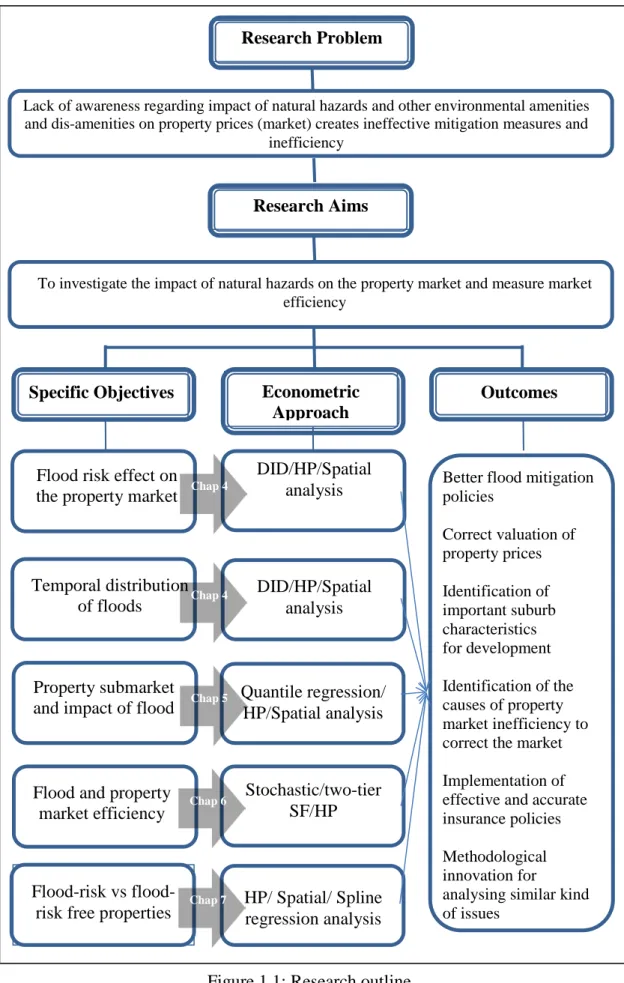
An overview of the research problem, aims, objectives, approach and outcomes is summarised in Figure 1.1. The research is motivated by the need to address the gap in understanding of the indirect impact of flood on property values, and the need for improving the methodology used for estimating a wide range of impacts. Different analytical techniques are employed and modified to investigate the specific objectives.
Figure 1.1: Research outline
Lack of awareness regarding impact of natural hazards and other environmental amenities and dis-amenities on property prices (market) creates ineffective mitigation measures and
inefficiency
To investigate the impact of natural hazards on the property market and measure market efficiency Research Problem Specific Objectives Research Aims Econometric Approach Outcomes Flood-risk vs flood-risk free properties
Better flood mitigation policies Correct valuation of property prices Identification of important suburb characteristics for development Identification of the causes of property market inefficiency to correct the market Implementation of effective and accurate insurance policies Methodological innovation for
analysing similar kind of issues DID/HP/Spatial analysis Quantile regression/ HP/Spatial analysis DID/HP/Spatial analysis Stochastic/two-tier SF/HP HP/ Spatial/ Spline regression analysis Flood risk effect on
the property market
Temporal distribution of floods
Property submarket and impact of flood
Flood and property market efficiency Chap 4 Chap 4 Chap 6 Chap 5 Chap 7
15
The impact of information disclosure (mapping flood risk areas in 2009) and the major flood incidence (Brisbane’s 2011 flood) are distinguished employing the quasi-experimental technique of the HP model. The spatial interaction is considered using spatial econometric techniques. Also, the temporal distribution of the negative impact of flood is investigated. Both these research techniques are set out in chapter 4. The impact of flooding on different income groups is investigated following quantile regression analysis and other related techniques. Chapter 5 discusses the application of quantile regression analysis and submarket behaviour.
The market inefficiency created across the different submarkets due to flood risk is investigated (chapter 6). In chapter 6, the blending of two-tiered stochastic frontier analysis and HP analysis to achieve the objectives are presented. Finally, comparisons between the behaviour of the affected and non-affected suburbs are explored using the spline regression method. The application of semi-parametric regression technique is presented in chapter 7. The investigation methodologies are discussed in detail under each chapter. The next section discusses the structure of each chapter.
1.6.1 STRUCTURE OF THE THESIS
This thesis is organised into eight chapters, outlined as follows. Chapter one discusses the overview of the study and defines the research issues and investigation approaches. Chapter two discusses the literature relevant to the property market and the factors that affect property market behaviour with specific reference to the nexus between the property market and environmental factors. The HP theory and its evolution are discussed in chapter two, including the evolution of HP theory from Rosen’s (1974) seminal work to the present. The latter part of the chapter discusses econometric issues in HP analysis. Chapter three is devoted to discussing the study area, sampling procedure and data collection methods including GIS applications. Chapter three concludes with the descriptive statistics of the study area (suburbs).
The research findings are presented in chapters four to seven. Chapter four investigates the first objective of this research - the impact that the announcement of flood-risk information and actual flood incidence has on the property market. The quasi-experimental estimation of the HP model is also discussed in this chapter.
Chapter four extends the analysis by incorporating the temporal distribution of flood risk. Chapter five discusses the quantile regression analysis of the HP model and the impact of flood-risk and other environmental attributes on different property submarket. The methodological approach for analysing property market efficiency is discussed in chapter six. Chapter seven compares affected suburbs with non-affected suburbs in terms of property market behaviour. Chapter seven demonstrates the application of semi-parametric estimation of the HP model. Chapter eight provides the study’s conclusions and discusses their policy implications.
Chapter 2:
Property Prices, their
Determinants and HP Price
Analysis
The literature reviewed as part of this study is primarily presented in the first part of the chapter with special attention given to environmental amenities and dis-amenities. The latter part of this chapter focuses on discussing the theoretical basis for analysing property market behaviour. In economic terms properties can be considered as heterogeneous in products and prices, which are determined by individual characteristics as well many other factors, such as environmental amenities, dis-amenities, natural disasters, suburban location or other geographical factors and socio-economic factors. A number of researchers have investigated the nexus of property prices and their determinants. In this chapter this research is outlined including property price determinants, the behaviour of the property market with the development of environmental amenities, the impact of natural phenomenon on property prices and finally, HP theory and estimation issues.
This chapter is organised as follows: the determinants of property price are discussed in section 2.1 under four sub-sections. Section 2.2 discuses previous literature related to the impact of floods on property prices. The theoretical background of the HP function is discussed in section 2.3 and is further discussed in terms of buyers’ and sellers’ behaviour in section 2.4. Section 2.5 discusses econometric issues in HP analysis. Section 2.6 and 2.7 examines the choice of functional form and estimation of marginal willingness to pay (MWTP), and section 2.8 summarises the contents of the chapter.
The property market is a key subsector for any economy, with the residential property market being the biggest asset class of any country. The value of the Australian residential real estate in 2012 has been estimated at AUS$4.48 trillion or 3.3 times larger than the Australian GDP of AUS$1.4 trillion (www.rpdata.com). Similarly, in 2012 New Zealand’s residential property market was estimate to be three times its GDP and in the United Kingdom 2.8 times. The residential real estate subsector also provides significant employment opportunities. Hence, a
well-functioning property market triggers the development of many economic sub-sectors. Obviously the development of the residential property market varies spatially and temporarily. Since the 1950s, the Australian property market has experienced steady price increases across the board, and with the exception of short-term fluctuations (www.rpdata.com) recent statistics show that the residential property market continues to grow.
2.1 PROPERTY PRICE DETERMINANTS
The property market is heterogeneous and can be defined as a differentiated good. The demand for property depends on certain characteristics, primarily structural, environmental and neighbourhood, with property prices being a function of these characteristics.
Important structural characteristics determining the demand for a property include the number of bedrooms and bathrooms, garage spaces, lot size, floor area, age of the property, quality and material of roofing, walls and floors, and the presence of other structures such as a swimming pool or fireplace. These structural variables provide most of the explanatory power of HP price estimation. Studies have clearly shown the importance of structural characteristics in determining property price (see, for example, Sirmans et al., 2005). Almost all HP analyses have included basic structural characteristics, such as the number of bedrooms, bathrooms and garage spaces, and have resulted in the expected positive correlations with the sales price. Land area is another of the major determinants of property price (see, for example, Abdul, 2007). This may be due to the increasing space requirements of growing families. Higher income groups demand more augmented characteristics such as a swimming pool, than basic structures, and therefore socioeconomic characteristics are also important determinants of property demand. The age of a property is another important determinant of the sale price acting as a proxy for the housing quality (see, for example, Choy et al., 2007). However the build year is unavailable in most databases. The relevance of age also differs if the house has been renovated.
The location of the property is obviously another factor that can determine price, as individuals are often willing to pay a premium for well-located good
properties. Most people prefer to live in a convenient location and many researchers have included the distance to the central business district (CBD) as factor when examining property price. This is because buyers often consider accessibility to the CBD when making a purchase decision since most economic activities take place in or around the city. This factor is closely related to the ease of public transport access. For example, Palmquist (1991) studied the impact of a transport network on property price finding a positive effect on property prices. Similarly, Debrezion et al. (2007) found that a newly constructed railway road exerts a positive effect on property value. In contrast, it has been shown that close proximity to a highway can lead to a negative impact on property values (see, for example, Kilpatrick et al., 2007). Since location has been found to be an important determinant, the environmental characteristics involving natural or manmade structures are also an integral part of house characteristics.
2.1.1 ENVIRONMENTAL FACTORS AND THE PROPERTY MARKET
Neighbourhood amenities, such as parks, green spaces, water bodies and reservoirs, and open spaces have been found to be important determinants of property prices. Previous studies have shown that residential properties closer to open spaces and recreational facilities have higher values compared to similar properties farther away (see, for example, Irwin, 2002; Acharya & Bennett, 2001; Shultz & King, 2001). These studies have also demonstrated the use of the HP pricing model for estimating recreational values and its impact on the property market.
A further environmental factor that has been shown to have a positive and significant impact on determining housing prices is the extent of physical access to and views of green space (see, for example, Kong et al., 2007; and Nicholls & Crompton, 2005). Joly et al. (2009) examined the different landscape types within the real estate market and found that proximity of farmland and forests had a positive impact on property prices, whereas adjacent roads had a negative impact. However, incorporation of environmental characteristics is limited due to difficulties in measurement.
In order to minimise measurement errors, this study employed GIS techniques to visualize environmental characteristics. Kong et al. (2007) also combined GIS techniques and HP pricing models to value green space. Nikolaos et al. (2011) found that generally, the presence of greenways increased property values by as much as 20 percent. However, some studies (see, for example, Smith et al., 2002) found that surrounding open spaces had a negative effect on property values. This is possibly due to the dis-amenities associated with open spaces, such as noise associated with parties and other gatherings periodically held in these areas.
The impact on property values of being waterfront (i.e. reservoir, river, sea) has been extensively researched. Lansford & Jones (1995) showed that reservoirs significantly improved the value of residential properties, and a study by Mahan et al. (2000) estimated the value of urban wetlands. Both these studies used the basic HP pricing model the former including different measures for the targeted variable. The literature confirms that these forms of amenities have a positive effect on property prices.
Coastal properties have unique environmental amenities, however, the quality of the beach is one of the most important factors that determines their ultimate value. Many studies have used beach width as a proxy variable for beach quality. In a recent study, Landry & Hindsley (2011) concluded that beach quality had a significant, positive impact on property values but had no influence on those properties further away from the beach, and that beach erosion had a negative impact on the property market. These results were consistent with those of Gopalakrishnan et al. (2011).
2.1.2 ENVIRONMENTAL POLLUTION AND THE PROPERTY MARKET
It is not only physical factors such as water bodies and parks that people value when deciding on a place to live; pollution or environmental quality are also important considerations. Air pollution is a frequent phenomenon found particularly in major cities resulting in problems for both the environment and humans. It also has been found to have an indirect impact on property prices, a reason so many countries are keen to reduce air pollution. The demand for air quality in US cities has been estimated using a HP price function (Zabel & Kiel, 2000). The marginal value
of air quality improvement (sulphur dioxide and nitrogen dioxide) in the Seoul metropolitan area has also been studied using a spatial-econometric HP price function (Kim et al., 2003). These studies provide empirical evidence of the impact of air quality on property prices. Kim et al. (2003) considered spatial autocorrelation in their analysis. Neill et al. (2007) estimated a spatial model to measure the impact of air quality on housing values and concluded that the maximum likelihood estimation (MLE) method outperforms the traditional ordinary least square (OLS) estimation. The effects of noise pollution have also been investigated (Duarte & Tamez, 2009).
Neighbourhood land use patterns can create both positive and negative impacts on the property market. Researchers have found that proximity to hazardous waste sites and other undesirable land uses can have a negative impact on the property market. Studies by Chattopadhyay et al. (2005) and Kiel (1995) are some examples that have shown that undesirable land use patterns can have a negative impact on the property market. Indeed, Chattopadhyay et al. (2005) found that the gain in property price through cleaning hazardous waste in Waukegan Harbor was around 18%. When the study was compared with the results of the HP method using the discrete choice random utility model it was concluded that both methods are appropriate for estimating environmental dis-amenities. Gayer (2000) examined the marginal benefit of hazardous waste risk reduction and neighbourhood nexuses using the HP valuation model. The externalities due to animal waste odour caused a 5% to 12% reduction in property values compared to those without (Eyckmans et al., 2013).
Some development activities associated with negative externalities may create an environment that is less than desirable. A good example is the development of nuclear technology. The risks due to nuclear waste transportation in Mexico were studied using spatial specification of the HP pricing method (Gawande & Jenkins-Smith, 2001). Hibiki & Managi (2011) investigated the impact of carcinogenic risk information disclosure on property values and found that this factor resulted in discounted property values. Similarly, public awareness of groundwater contamination in Scottsdale, Arizona, USA caused a significant drop in house prices, although the influence was found to be only temporary (Case et al., 2006). As well, a recent study in Australia found that pollution due to mining activities discounted the adjacent property values (Neelawala et al., 2012).
Further factors modelled using the HP price approach are the visual and health impacts (exposure to electromagnetic fields) of cell phone towers and high voltage overhead transmission lines (HVOHTL). The results have suggested possible health impacts, although the impact remains controversial (see, for example, Chalmers & Voorvaart, 2009; Pitts & Jackson, 2007; Wolverto & Bottemiller, 2003; Elliott & Wadley, 2002; Furby et al., 1988; Hamilton & Schwann, 1995). According to Hamilton & Schwann (1995), the value of properties adjacent to high voltage power lines decreased by 6.3%, while results from Rosier’s (2002) study suggested that they did not exert a negative impact on adjacent properties. Similarly, negative externalities of telecommunication towers have been studied using the HP price approach (see, for example, Filippova & Rehm, 2011; Bond & Wang, 2005; Bond et al., 2003; McDonough, 2003). The results have shown that nearby property prices were discounted due to residents’ concerns about the negative health impact from the towers.
2.1.3 SOCIO-ECONOMIC FACTORS AND THE EFFECT OF ENVIRONMENTAL LAW ON PROPERTY MARKETS
Socio-economic factors, such as proximity to religious places of worship, cemeteries, crime and demographic factors have been issues for people buying a property. For example, demand can decrease in suburbs where incidence of crime is high. Thompson et al. (2012) examined the impact of religious places on property premiums and found that proximity to a religious place was a positive determinant of the property price. The study used pre and post treatment models for analysis and stressed the importance of considering both pre and post information analysing the amenity effect. Furthermore, the HP model was extended to study the effect of environmental laws on property values. Kahn et al. (2010) found that the California Coastal Act led to an increase in adjacent property values. Similarly, the announcement of the London Olympics increased the prices of surrounding properties by 5% (Kavetsos, 2012).
2.1.4 NATURAL DISASTERS AND THE PROPERTY MARKET
Most countries are subject to some natural disasters. Extreme weather events that cause these disasters, such as floods, droughts, bushfires and cyclones are likely to be more frequent in the future if global climate change forecasts are accurate (Salinger, 2005). Disasters can be categorized as hydro-meteorological (floods, storms, drought), geophysical (earthquakes, tsunami, volcanic eruptions) and biological (epidemics and insect infestations) of which hydro-meteorological disasters are considered the most damaging (Cavallo & Noy, 2010). According to Keskitalo (2013) water-related hazards comprise 90% of natural hazards.
Floods harms lives, animals and properties. Stress, loss of one's memorable items, health problems, temporary or permanent displacement, and disruption of education and work can be some of the more serious negative repercussions. The damage caused by such disasters can be categorized into direct and indirect, and each can be further categorized as tangible and intangible (Merz et al., 2010). Direct damage costs include the cost to properties, agriculture and infrastructure, while disruption of services, loss of production and loss of property values are considered indirect costs. The increase in natural disasters worldwide makes it necessary to examine their likely impact. Policy makers are particularly interested in assessing the direct and indirect costs associated with natural disasters. The direct damage costs of natural disasters have been extensively investigated, but indirect costs have not. Recently, Cavallo & Noy (2010) reviewed empirical work on the cost of natural disasters focusing on the post evaluation of direct costs and the data sources for those studies. They found that the estimated costs of natural disasters were heterogeneous regardless of country. Many researchers have also investigated the indirect costs associated with natural disasters for residents by means of estimating the impact on property values, as many environmental problems are related to land and house markets.
Different models have been adopted to study the impact of natural disasters on property markets. For example, Breisinger et al. (2012) investigated the economy-wide impact of floods using computable general equilibrium models. However most researchers have used the HP pricing model, repeat sales price analysis and price indexes to examine the HP pricing model that was widely applied.
A number researchers have attempted to study the effect of natural disasters and climate change on property markets (see, for example, Bustic et al., 2011 Nikolaos et al., 2011; Schlenker et al., 2005). Butsic et al. (2011) applied the HP model to simulate the impact of global warming on real estate prices in Canada finding a likely negative impact of climate change on housing prices. Moreover, the paper compared four locations in Canada and found substantial heterogeneity in the impact of climate change on housing prices. Similarly, the influence of natural hazards may vary between geographical locations due to its inherent geographical characteristics. In general most of these researchers have adopted basic HP pricing models.
The economic impact of earthquakes and cyclones has been extensively examined, such as the Kobe earthquake (Horwich, 2000), Hurricane Katrina (Hallegatte, 2008) and the Haiti earthquake (Cavallo & Noy, 2010). Most of these studies only examined the direct economic costs, although Cavallo & Noy (2010) investigated both the direct and indirect costs. All these studies focused on post estimation of damage costs rather than studying their effect on the property market or changes in property value.
Another significant natural disaster is wildfires but only a handful of studies have investigated the risk of wildfires on the property market. Athukorala et al. (2012) show that buyers in the study areas paid higher prices to live close to green spaces despite these areas being known as wildfire-prone areas. Their results indicated that residents either discounted or were unaware of the risks of wildfires. Muller & Loomis (2008) investigated wildfire risks on nearby properties using the spatial econometric techniques. Similarly, Donovan et al., (2007) examined the impact that information available to residents on wildfire risks had on housing prices
in Colorado Spring’s wild land-urban interface and showed that ‘pre-website overall
wildfire risk ratings’ were positively related to house prices. Their results suggested that the positive amenity values of the house and neighbourhood characteristics that affect a house’s wildfire risks outweighed the perceived loss in house utility resulting from those risks.
Natural disasters can have negative as well as positive externalities, especially on natural ecosystems. Cunado & Ferreira (2014) analysed data on flood events in 135 countries and concluded that these events had a significant impact on economic