Graduate Theses and Dissertations
2017
AVID Elementary: A Case Study of Program Effectiveness
AVID Elementary: A Case Study of Program Effectiveness
Janelle DanskeyFollow this and additional works at: https://pilotscholars.up.edu/etd Part of the Education Commons
Recommended Citation Recommended Citation
Danskey, Janelle, "AVID Elementary: A Case Study of Program Effectiveness" (2017). Graduate Theses and Dissertations. 29.
https://pilotscholars.up.edu/etd/29
This Doctoral Dissertation is brought to you for free and open access by Pilot Scholars. It has been accepted for inclusion in Graduate Theses and Dissertations by an authorized administrator of Pilot Scholars. For more information, please contact [email protected].
AVID Elementary: A Case Study of Program Effectiveness
by Janelle Danskey
A dissertation submitted in partial fulfillment of the requirements for the degree of
Doctor of Education in
Learning and Leading
University of Portland School of Education
Abstract
AVID is a college-readiness program that supports students in the academic middle to be successful in rigorous academic coursework needed to be prepared for college. At the elementary level, school-wide instructional strategies, organizational tools, and college-going school culture support students’ socio-emotional and
academic development. Focused on building students’ growth mindset, mastery goal orientation, and academic self-efficacy, AVID aims to prepare students for the next level.
The purpose of this study is two-fold: to evaluate the impacts of the AVID program at the elementary school level on students’ growth mindset, self-efficacy, and goal orientation and to determine principals’ and teachers’ perceptions on the initial implementation of AVID Elementary. The study included elementary students (N=316) who were enrolled in three treatment schools that implemented AVID Elementary with students for the first time and two comparison schools in the same school district. Students were given a pre-survey at the beginning of the 2016-2017 school year and post-survey at the end of the fall academic term to measure growth mindset, goal orientation, and academic self-efficacy. Principal, teacher, and student interviews were conducted to determine individual perceptions on the AVID program.
The outcomes of this study demonstrated that the organizational tools and instructional strategies used by teachers as part of the AVID Elementary program positively impacted students’ self-perceptions of academic self-efficacy. Students interviewed displayed mastery goal oriented thinking and growth mindsets when discussing difficult coursework. Teachers saw students develop greater independence in their learning and improved academic outcomes as a result of students increased academic self-efficacy. No statistically significant effects were found on growth mindset, academic-efficacy, and goal orientation between treatment and comparison schools. However, differential interaction effects were found between White and non-White students and between fifth and sixth grade students on growth mindset and between special education and non-special education students on performance-avoidance goal orientation.
Table of Contents
Abstract……….. iii
List of Tables………. vii
List of Figures……… viii
CHAPTER ONE……… 1
Statement of the Purpose………... 4
Significance………... 4
Theoretical Framework………. 5
Growth Mindset………. 6
Social Cognitive Theory and Self-Efficacy………... 8
Goal-Setting………... 13
Summary………... 17
CHAPTER TWO………... 18
Overview of the AVID Program………... 18
AVID Secondary………... 21
Program Outcomes for AVID Secondary………. 22
AVID Elementary………. 29
Growth Mindset, Self-Efficacy, and Goal Orientation………. 30
Summary………... 42
CHAPTER THREE……… 44
Purpose Statement..………... 44
Rationale for Methodology………... 44
Participants and Setting………. 45
Design and Procedure……… 49
Instruments……… 50
Implicit Theories of Intelligence Scale………. 50
Patterns of Adaptive Learning Scales………... 51
Principal, Teacher, and Student Interviews……... 52
Ethical Considerations………... 52
Role of the Researcher………... 53
Data Analysis……… 53
CHAPTER FOUR……….. 56
Mindset……….. 58
Academic Self-Efficacy……… 63
Goal Orientation……… 68
Adult Views on Implementation………... 73
Training………. 73 Tools……….. 76 Buy-in……… 76 Challenges………. 78 School Culture………... 80 Impact of AVID……… 81 Instruction……….. 81 Student Behavior………... 83 Next Steps………. 86 Summary………... 88 CHAPTER FIVE……… 89 Mindset……….. 91 Academic Efficacy……… 95 Goal Orientation……… 96
Perceptions of School Personnel………... 98
Limitations……… 100
Implications………... 101
Recommendations for Future Research……… 103
Conclusion………. 103
APPENDICES………... 105
Appendix A: Student Survey Items………... 105
Appendix B: Interview Questions..………... 107
LIST OF TABLES Table
1. Study Schools’ Demographics Comparison by Subgroup……… 47
2. Pre-survey Descriptive Statistics for Study Schools………. 48
3. Statistical and Demographic Data for Students Interviewed……. 49
4. Growth Mindset Means, Standard Deviations, and Analysis of
Covariance………... 59
5. Academic Self-Efficacy Means, Standard Deviations, and
Analysis of Covariance………... 65
6. Mastery Goal Orientation Means, Standard Deviations, and
Analysis of Covariance………... 70
7. Performance-Approach Goal Orientation Means, Standard
Deviations, and Analysis of Covariance………. 71
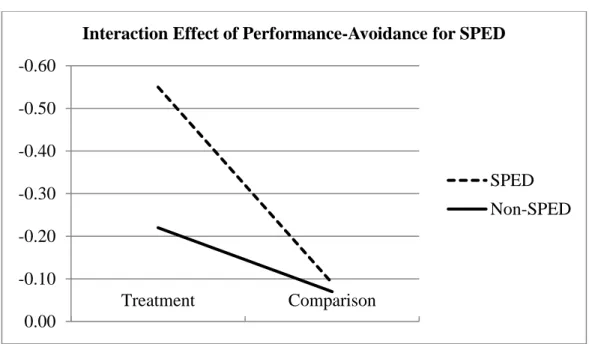
8. Performance-Avoidance Goal Orientations, Means, Standard
LIST OF FIGURES Figure
1. Theoretical Framework………. 6
2. Explanatory Sequential Design………. 45
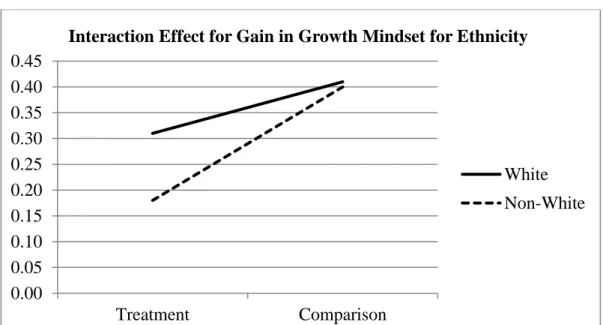
3. Interaction Effect for Gain in Growth Mindset for Ethnicity… 92
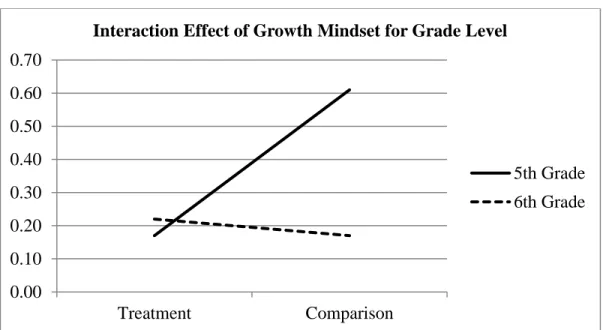
4. Interaction Effect of Growth Mindset for Grade Level……….. 93
CHAPTER I: INTRODUCTION
Today, a bachelor’s degree is considered a necessity for economic mobility and prosperity (Wells & Lynch, 2012). Students are more likely to graduate from college if their own parents are college graduates (Lewis 2003). Many students face challenges going to college for a multitude of reasons. Parents of first-generation college students are not as equipped to advise their children through the college decision-making and application process (Roderick, Coca, & Nagaoka, 2011).
Additionally, first generation college students tend to have lower levels of educational aspirations, lower levels of parental support to attend college, less knowledge about how to apply for college, and fewer resources to pay for college (Engle, Bermeo, & O’Brien, 2006). They are also more likely to be ethnic minorities (Brown & Burkhart, 1999). First generation college students also face the challenge of being adequately academically prepared for college. According to Warburton, Bugarin, and Nunez (2001), first-generation college students were less likely to have taken rigorous coursework in high school. Adelman (1999) argued that the intensity and quality of the secondary school curriculum was the highest predictor of success in college. Additionally, Adelman (1999, 2006) found that students who took math beyond Algebra 2 while in high school were twice as likely to complete a bachelor’s degree. The National Commission on the High School Senior Year (2001) agreed that rigorous coursework while in high school is an important predictor of completion of a
bachelor’s degree. Likelihood of degree attainment increased for students who took Advanced Placement (AP) courses (Bleske-Recheck, Lubinski, & Benbow, 2004). Conley (2005) agreed that rigorous courses, such as AP, are important factors in a
student’s preparedness for college and defined that the key indicator of college readiness is a student that is academically prepared to take coursework at the college level without the need for remedial coursework in college.
Similar to first generation students, students “in the middle”, typically low-average or low-average students, also have challenges in being prepared for college. They have the academic potential to take college preparatory classes but do not engage in higher-level coursework. They are neither low-performing nor high-performing in comparison to their peers. Ability tracking may begin as early as elementary school, resulting in students’ placement in low-level or vocational tracks in high school (Mehan, Villanueva, Hubbard, & Lintz, 1996). African-American, Hispanic, and lower socio-economic status students are more likely to be tracked into lower-level classes (Hayward, 1997, as cited in Black, Little, McCoach, Purcell, & Siegle, 2008) and have less access to AP courses in high school than their White peers (Leonard, Blasik, Dilgen, & Till, 2003).
To prepare students in the middle for the rigorous coursework they need to take in high school in order to qualify for college entrance, these students need additional guidance that includes skills-based instruction, information on college, and scaffolding that allows them to access academically challenging material (Swanson, Mehan, & Hubbard, 1993). Students also need supportive relationships with teachers, which provide a non-threatening environment for learning (Witmer, 2005).
The Advancement Via Individual Determination (AVID) program is one college preparatory program that targets students in the middle, with a focus on first generation college students. Called an “untracking” program by Mendiola, Watt, and
Huerta (2010), AVID encourages students to take charge of their own learning and helps them develop the skills necessary to take challenging coursework by providing socio-emotional and academic supports (Swanson, Marcus, & Elliott, 2000). Without the AVID program, students in the middle would likely not attend college (Nguyen, 2011). The AVID Secondary and AVID Elementary programs form a K-12 college readiness system grounded in best teaching practices aimed at improving education for all students in the school system.
Initially designed for implementation at the high school level in 1980 (Swanson et al., 2000), AVID program components and key strategies have been adapted for use at the middle school and elementary school levels. The AVID
Elementary program utilizes teaching strategies primarily focused on the development of a growth mindset in students, goal setting with a focus on mastery goals, supportive collaboration among students, note-taking, and organizational tools. This approach is designed to develop the attributes and foundational skills that students need to be successful in the transitions to middle and high school, and ultimately take the rigorous coursework they need in high school to be prepared for college. These strategies are used school-wide with all students. While there is a growing body of evidence that may indicate AVID at both the middle and high school levels increases student achievement and the likelihood of student success in college (e.g., Black et al., 2008; Watt, Huerta, & Alkan, 2001), there is no research, qualitative or quantitative, that examines the impact of the AVID program on elementary age students. Any school that wishes can choose to implement an AVID program. Given the widening
implementation of AVID elementary programs it is imperative that researchers examine the effectiveness of this adaptation.
Statement of the Purpose
The purpose of the proposed study is two-fold: to evaluate the impacts of the AVID program at the elementary school level on students’ growth mindset, self-efficacy, and goal orientation and to determine principals’ and teachers’ perceptions on the initial implementation of AVID Elementary. Dweck’s theory on growth mindset (2000) and Bandura’s work on social cognitive theory and self-efficacy (1977) form the philosophical framework for the AVID Elementary program (AVID Center, 2016, Research Basis). Goal setting is also a key focus of the program and in the literature, goal orientation is frequently studied as a related construct (e.g., Grant & Dweck, 2003; Midgley, Kaplan, & Middleton, 2001; Patrick, Kaplan, & Ryan, 2011) and will be included in this study as a critical element tied to growth mindset and self-efficacy.
Significance
The AVID Elementary program was designed in 2006 and implemented in schools beginning in 2007 (McAndrews, 2015); however, no research has been
completed by the AVID Center or any outside researchers to investigate whether using this program at the elementary level is effective or what impact it has on students. With widening implementation of this program in approximately 1,200 elementary schools across the United States (L. Burrise, personal communication, July 8, 2016), it is important that educational leaders have access to research-based information on the program. Information provided by the AVID Center, the overarching organization for
all AVID programs, is useful in understanding how the program works and the
underlying theories it was built upon. There is a need for outside researchers, without ties to the AVID Center, to provide unbiased research on AVID programs and their impacts.
This study will examine the impacts of the program in three specific areas (mindset, self-efficacy, and goal setting) on elementary age students to provide school leaders with objective information regarding the AVID Elementary program, as well as collecting perceptions of the school personnel involved with the initial
implementation of the program. It will be useful to school leaders seeking more information about the program to inform whether they should want to implement an AVID program at their elementary school based on the data presented.
Theoretical Framework
The AVID Elementary program was built on Bandura’s (1977) Social
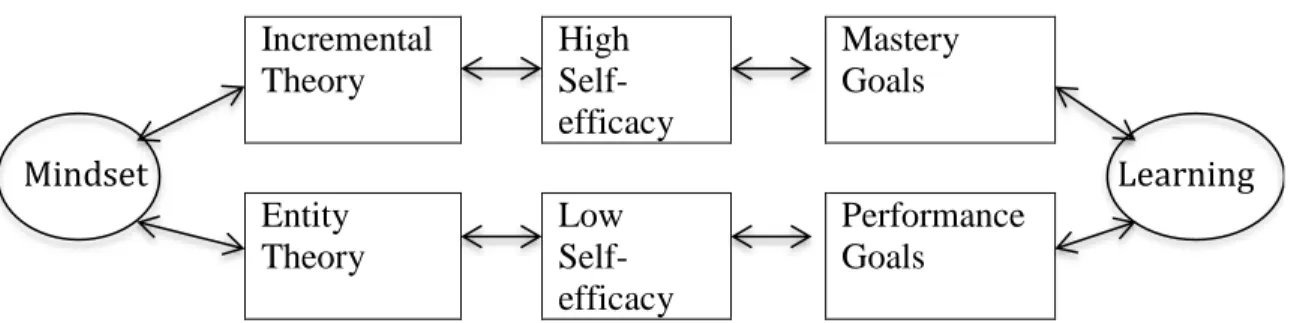
Cognitive Theory and Carol Dweck’s (2000) Growth Mindset theory. These theories are supported by Goal-Setting theory (Locke & Latham, 1990) and Achievement Goal theory (Harackiewicz, Pintrich, Barron, Elliot, & Thrash, 2002). The study of growth mindset, self-efficacy, and goal orientation works to explain what we do when faced by challenge and failure in the pursuit of goals and what types of goals drive us. Using these theories, we can better support students in the classroom. Figure 1 below describes the theoretical framework used for this study.
Figure 1. Theoretical Framework Incremental Theory High Self-efficacy Mastery Goals Entity Theory Low Self-efficacy Performance Goals
This framework connects growth mindset, based on the incremental and entity implicit theories of intelligence, to levels of self-efficacy. These theories of intelligence coupled with levels of self-efficacy impact the type of goals that individuals set for themselves. Theory of intelligence, level of self-efficacy, and goal orientation affects student learning. These constructs are critical aspects of the AVID Elementary program. The development of an incremental theory of intelligence, a high academic self-efficacy, and mastery goal orientation can support students to be more
academically successful. Each of these theories will be further discussed in the following sections.
Growth Mindset
Growth Mindset is a term used by Dweck (2000) for implicit theories of intelligence and her work forms part of the foundational framework for the AVID Elementary program. Implicit theories are core beliefs that individuals hold about the malleability of their intelligence and other qualities (Dweck, Chiu, & Hong, 1995; Dweck & Leggett, 1988; Molden & Dweck, 2006) and refer to an individual’s causal explanations for outcomes of events (Molden & Dweck, 2006). Over time, an
individual’s patterns of response to challenging situations lead to consistent outcomes of vulnerability or resilience (Dweck et al., 1995). There are two implicit theories individuals can adopt as modes of thinking. The entity theory of intelligence sees intelligence as a fixed trait; it is something you are born with and no matter how hard you may try, intelligence is not something that can be changed. Incremental theory is a malleable view of intelligence. With effort, intelligence is something that can be altered (Dweck, 2000). This is more commonly referred to a having a growth mindset.
Individuals who take on an entity theory of intelligence worry about looking unintelligent in front of others. They set goals they know they can achieve in order to appear smart with a low-effort success. Failure represents a significant setback as it challenges their intelligence and therefore self-esteem. Once failure sets-in,
individuals with an entity view see the situation as out of their control and feel
helpless. Successes are outweighed by failures and individuals can become depressed or anxious (Dweck, 2000).
Individuals who have an incremental theory of intelligence have a mastery orientation and choose opportunities to learn something new rather than opportunities that make them look smart; therefore, they welcome activities that present a challenge. They grow in challenging situations because they persist through difficult tasks and engage in positive strategies such as self-instruction or self-monitoring to aid
performance. Failure is a chance to confront and overcome obstacles (Dweck, 2000). Yeager and Dweck (2012) describe those with an incremental theory as being more resilient than those with an entity theory of intelligence.
The theory of intelligence held by a student influences goal orientation and can cause the student to adopt performance goals or learning goals. According to Grant and Dweck (2003), learning goals as a term can be used interchangeably with mastery goals and they are one and the same. Performance goals are focused on measuring ability and individuals who gravitate toward these types of goals are concerned with judgments of their intelligence. The emphasis on performance removes the
opportunity to focus on learning goals and increase a helpless response when tasks are difficult or failure is encountered (Dweck, 2000). Learning goals are focused on mastery experiences and levels of effort rather than measures of intelligence. The focus of the goal is to increase competence and learn new skills. Students do not have to feel they have a level of mastery to engage in a learning goal; learning goals are about mastering new things (Dweck, 2000) and developing intellectual ability (Blackwell, Trezsniewski, & Dweck, 2007). Therefore, students with a growth mindset adopt learning goals and work towards mastery versus performance. Social Cognitive Theory and Self-Efficacy
In the following section, Bandura’s (1977) work on social cognitive theory and self-efficacy will be described as it relates to growth mindset and goal orientation. Social cognitive theory is also part of the foundational framework for the AVID Elementary program. This theory focuses on how individuals use agency to take action, set goals, and develop self-efficacy. As a foundation, this theory helps to explain why socio-emotional development is an important part of the program. It also helps to inform the selection of instructional strategies that develop agency and self-efficacy in students.
Through agency, individuals act within their social environment (Bandura, 2001). Rather than passively going through experiences, individuals are agents of those experiences. Agency allows individuals to shape themselves and their future and adapt to changing situations. The belief that one has power to judge their capabilities, anticipate the effects of courses of action, assess opportunities and constraints, and then act accordingly gives one the ability to shape their trajectories in life. In doing so, individuals can move towards desirable outcomes and avoid ones that may be undesirable (Bandura, 2001).
The physicalistic theory of human agency deals with the physical aspects of agency. The neuronal and functional aspects of the brain have been shown to be impacted by agentic action; what counts is not merely exposure to stimuli, but the experiences that come with manipulation of the environment (Diamond, 1988; Kolb & Whishaw, 1998). The mind is not just reactive; it is generative, creative, proactive, and reflective (Bandura, 2001). There is a four-part structure that comprises human agency: intentionality, forethought, self-reactiveness, and self-reflection describe the processes involved in the execution of action. Intentionality is the first part of this structure. Agency refers to acts that are done intentionally. The individual determines a future course of action and brings those actions to fruition through a plan of action. A student’s plan to go to college is an example of a future course of action, but such a futuristic goal is one that requires more immediate courses of action to keep the student moving forward toward that future (Bandura, 2001). By using forethought, individuals motivate themselves and determine actions in anticipation of future events. Goals are set and courses of action are weighed to determine which ones are likely to
produce desired outcomes and identify negative outcomes to be avoided. Individuals then chart a course of actions that either further or prevent certain outcomes (Bandura, 2001). Self-reactiveness, the third aspect of this structure, is the self-regulatory aspect involved in agency. Deliberate action involves the self-regulation of motivation, affect, self-monitoring, and performance self-guidance via personal standards, and corrective self-reactions (Bandura, 1986, 1991). This assumes that individuals set personal standards for meeting a goal and evaluate their performance based on those standards. Self-incentives can provide motivation for reaching the goal. Individuals engage in actions that result in self-satisfaction, pride, and self-worth, and avoid actions that result in self-dissatisfaction, self-devaluation, and self-censure (Bandura, 2001). Self-incentives work with short-term goals, but a hierarchical goal structure is needed for long-term futuristic goals where guides for present action are unclear due to the nature of the goal. This allows the individual to set sub-goals in anticipation of reaching the futuristic goal and can serve as strong motivators (Bandura, 1991; Locke & Latham, 1990). Finally, self-reflectiveness is the process by which individuals examine their actions. Individuals analyze the solidity of their thinking (Bandura, 1986) and evaluate their predictions against the outcomes of their actions (Bandura, 2001).
At the core of human agency is self-efficacy, the belief that one has power and control over themselves and their environment. Without self-efficacy, individuals have no reason to act (Bandura, 2001; Bandura, Barbaranellis, Camprara, & Pastorelli, 1996). Individuals with low self-efficacy may not persist in the face of difficulty and may act pessimistically (Bandura, 2001). They may also be vulnerable to stress and
depression (Bandura et al., 1996). Those with a strong sense of self-efficacy continue to expend effort in the face of difficulty with optimism. Self-efficacy beliefs
determine whether an individual considers difficulty and failure motivating or demoralizing. For this reason, self-efficacy beliefs shape the course of individuals’ lives as they determine which activities to undertake or avoid and whether they are successful in their pursuits (Bandura, 2001). Students’ beliefs in their abilities to master difficult learning activities affect their academic achievement (Bandura et al., 1996). The stronger the self-efficacy beliefs an individual has, the higher their goal aspirations and the stronger their commitments to those goals are (Bandura, 1991; Locke & Latham, 1990). The strength of an individual’s self-efficacy beliefs
determine whether one will attempt to persist with difficult situations and how much effort they will give (Bandura, 1977). Once self-efficacy beliefs are established, an individual’s perception of their self-efficacy remains resilient when failure is encountered (Bandura, 1977).
Self-efficacy beliefs are shaped in four ways: enactive mastery experience, vicarious experience, verbal persuasion, and physiological reactions (Bandura, 1977, 1986, 1997, 2012). Prior successful experience with a task builds mastery and strengthens efficacy beliefs whereas repeated failures at tasks decrease self-efficacy (Bandura, 1986, 1997). However, people who experience repeated positive results with easy effort are discouraged when they encounter difficult tasks (Bandura, 2012). Self-efficacy can also be shaped through the observation of others performing the same or a similar task. Verbal input from others in the form of persuasion or feedback can be impactful and is most effective when an individual views the source
of the verbal input as being credible. Finally, physiological responses such as increased heartbeat, fatigue, or sweating and how one judges those responses in relationship to a task can impact how one appraises one’s self-efficacy (Bandura, 2012).
As one form of vicarious experience, peers can serve an important role in efficacy beliefs. More experienced peers provide a model that can be emulated. This is important when an individual does not have prior experience with a task or when performance standards may be unclear (Schunk, 1981; Schunk et al., 1987; Schunk & Hanson, 1985). According to Bandura’s theory, most human behavior is learned through modeling (Tudge & Winterhoff, 1993). In this way, learning also has to be analyzed from a social perspective (Bandura, 1993; Vygotsky, 1962 as cited in Bandura et al., 1996). This relates to Vygotsky’s Zone of Proximal Development (Vygotsky, 1962) in that challenging tasks can seem less daunting when a model is provided that is within grasp and emphasizes the need for social interaction in
learning. Students with a high sense of social efficacy are more likely to seek out help from their peers or teacher and have higher achievement than students who have low social efficacy (Bandura et al., 1996).
Self-efficacy affects goal-setting (Bong & Skaalvik, 2003). It determines the level at which individuals motivate themselves and persevere toward goals they set. Additionally, self-efficacy impacts expected outcomes and attributions for successes or failures in relationship to goals (Bandura, 2012). When individuals attain a goal they have set for themselves, those with higher self-efficacy set more challenging goals for themselves (Bandura & Cervone, 1986; Bandura, 2013).
Goal-Setting
Goal-setting is a skill emphasized throughout the AVID K-12 program. Individuals with a growth mindset are more likely to set learning goals as opposed to those with a fixed mindset, who gravitate toward performance goals (Dweck, 2000). This is important because individuals who engage in learning goals focused on mastery learn more over time than individuals who focus on performance goals
(Smiley & Dweck, 1994). Therefore, mastery is emphasized as a learning approach in the AVID Elementary program.
Locke and Latham (2006) have found that setting high goals is related to a higher level of task performance. Greater effort and persistence is expended on high goals compared to moderate or easy goals. A positive, linear relationship exists between goal difficulty and task performance when a person is committed to the goal, has the ability to reach it, and does not have conflicting goals. Since goals represent a desired future outcome, they imply dissatisfaction with the status quo; therefore, goal-setting is also a discrepancy-creating process. In making goal choices, self-efficacy, past performance, and social dynamics influence the levels at which goals are set (Locke & Latham, 2006).
There are four key moderators of goal setting. First, feedback is needed in order for individuals to rate their progress toward their goals. Commitment to the goals is enhanced by self-efficacy and how important the goal is viewed to be. Task complexity refers to the task knowledge needed; difficult tasks require the acquisition of new knowledge and skills rather than pulling from existing knowledge. Finally, situational constraints affect goals (Locke & Latham, 2006).
Goals do not have to be self-set to be effective. They can be co-created or set by others. Assigned goals may not be effective if the members view the goal as threatening. How individuals view a high goal, either as challenge or threat, will impact performance. Group goals are more complex due to the group dynamic. However, task-related knowledge can be shared amongst group members and sharing is enhanced if the group has high goals (Locke & Latham, 2006).
Learning goals are focused on attaining knowledge and skills needed to reach the goal rather than a performance target. Such goals enhance metacognition. To reach a learning goal, planning, monitoring, and evaluating progress are needed. Individuals who set learning goals have a tendency to select goals which emphasize learning new skills or knowledge. Those who set performance-oriented goals have a tendency to avoid tasks where their lack of knowledge or skills would be exposed to others due to errors (Locke & Latham, 2006).
Formed in the mid 1980’s, Achievement Goal Theory was developed through the work of Ames (1984), Dweck (1986), Maehr (1984), and Nicholls (1984) to understand students’ responses to achievement challenges, explain motivations for engaging in achievement behavior and students’ beliefs regarding competence
(Patrick, et al., 2011; Senko, Hulleman, & Harackiewicz, 2011). Student motivation is assumed to be influenced by individual personal drives and the environment (Senko et al., 2011). Theorists distinguished between two types of goals (Ames & Archer, 1988; Dweck, 1986; Nicholls, 1984). Mastery goals are focused on developing competence through effort while performance goals are focused on demonstrating competence by outperforming others. Those who adopt mastery goals view themselves as being able
to change their capabilities. Everyone is able to achieve a mastery goal since the goal criteria are task-based (Nicholls, 1979, 1984). On the other hand, those who adopt performance goals see their abilities and intelligence as fixed.
The adoption of mastery goals has favorable outcomes and has never been shown to produce weaker effects (Senko, et al., 2011). Individuals who adopt mastery goals are more resilient and respond positively to adversity. Students are more
interested in their coursework, persist when faced with challenge, value
cooperativeness, ask for help when needed, self-regulate effectively, use deep learning strategies, feel more positive, and see tasks as being valuable (Darnon, Butera, & Harackiewicz, 2007; Harackiewicz, Barron, Tauer, Carter, & Elliot, 2000; Karabenick, 2003; Levy, Kaplan, & Patrick, 2004; Pekrun, Elliot, & Maier, 2006; Wolters, 2004). The adoption of these goals seem to foster collaborative learning strategies such as openness to sharing opinions (Poorvliet et al., 2007), working collaboratively with classmates (Levy et al., 2004), and accepting differing opinions (Darnon, Muller, Schrager, Pannuzzo, & Butera, 2006).
Performance goals do not promote collaborative processes as individuals who adopt these goals have to outperform others in order to feel successful. Therefore, only some students can achieve performance goals (Nicholls, 1979, 1984). These students are not likely to share ideas with partners or use pronouns such as “we” that are indicative of the collaborative process (Harris et al., 2008). Outcomes include demonstrations of one’s competence and the social consequences of success or failure. There is disagreement as to whether the desire to demonstrate competence (Grant & Dweck, 2003; Kaplan & Maehr, 2007) or to outperform peers (Elliot, 2005; Senko &
Harackiewicz, 2002) is the more important aspect of performance goals. While it is possible to pursue both mastery goals and performance goals at the same time,
criticism for the personal costs of pursuing this path suggest doing so is not beneficial (Brophy, 2005; Midgley et al., 2001).
Under a mastery goal structure, student learning and understanding is emphasized over memorization in the classroom. Success and effort are linked together. Ability differences are not highlighted; flexible heterogeneous grouping is used, assessments are criteria-based, and results are not posted to the class. Mastery goal structured classrooms are associated with self-efficacy, effort, use of effective learning strategies, adaptive coping response after failure, positive school affect, satisfaction with learning, and achievement (Ames & Archer, 1988; Anderman, 1999; Kaplan & Midgley, 1999; Murdock, Hale, & Weber, 2001; Nolen, 2003; Urdan & Midgley, 2003; Wolters, 2004). In performance goal structured classrooms, uniform assignments, fixed grouping, rigid timelines, posted grades, and extrinsic rewards emphasize ability differences and reinforce a classroom climate that is performance goal driven (Patrick, et al., 2011). This can result in behaviors such as procrastination, cheating, disruptiveness, not asking for help, and a negative affect toward school (Anderman, Griesinger & Westerfield, 1998; Anderman, 1999; Kaplan, Gheen, & Midgley, 2002; Murdock, Miller, & Kohlhardt, 2004; Ryan, Gheen, & Midgley, 1998; Urdan, Midgley, & Anderman, 1998; Wolters, 2004). In general, encouraging self-improvement works for all students. However, encouraging the comparison of students against each other works for higher achieving students and not for lower-achieving students (Urdan & Midgley, 2003). Patrick, et al. (2004) recommend that
teachers who want to create a positive and motivating classroom environment adopt a mastery goal structure.
Summary
Students in the academic middle need additional assistance to develop the skills and personal qualities required to engage in the higher-level coursework in high school that will prepare them for college and ultimately lead to attainment of a college degree. The AVID program aims to provide the structures, skills, and socio-emotional development students need to be academically successful. Adapted for students in grades K-6, the AVID Elementary program forms part of the AVID college readiness system. Based upon the foundational theories of the AVID program, growth mindset (Dweck, 2000) and social cognitive learning theory and self-efficacy (Bandura, 1977; 1997; 2012) were presented. In addition, goal-setting theories as they relate to growth mindset and self-efficacy were discussed (Locke & Latham, 1990). These interrelated theories form the theoretical framework for this study and will be used as a lens from which to examine the research data. This research will evaluate the impacts of the AVID Elementary program on students’ growth mindset, self-efficacy, and goal orientation, and determine principals’ and teachers’ perceptions on the initial implementation of AVID Elementary.
Chapter 2: Literature Review
This section will describe issues facing students in the middle related to college preparedness. These students are the targeted intervention population for the AVID Secondary program. It will provide an overview of the AVID program,
describe AVID’s essential elements and program components, and review research on program implementation. Research will also focus on the impact of AVID on
participant post-secondary entrance, and retention and completion rates. The purpose of providing research on AVID Secondary is to create a foundational understanding for the final aims of the AVID program as there is no research currently on the
Elementary part of the program. Finally, this section will discuss growth mindset as a foundational concept of the AVID Elementary Program and academic self-efficacy and goal orientation as they relate to growth mindset.
Overview of the AVID Program
The foundation for the AVID program was conceived in the classroom of Mary Catherine Swanson, a high school English teacher who sought to support her low-income students from diverse backgrounds with the skills needed to be successful in advanced coursework and be prepared to go on to university. Her Master’s thesis in education (Swanson, 1977 as cited in McAndrews, 2015) formed the foundational philosophy, practices, and curriculum for what is now called the AVID Elective (McAndrews, 2015), which includes the following components:
• a non-traditional classroom setting meeting the academic and emotional needs of individual students,
• an emphasis on objective data,
• the student at the center of decision-making regarding educational goals, • a student contract outlining willingness to work and setting learning goals, • student support from teachers and skilled, trained tutors,
• a curriculum emphasizing academic reading and writing,
• reliance on the Socratic process (McAndrews, 2015).
Thirty-five years later, AVID is implemented in 4,837 K-12 schools and 41 higher education campuses in the United States and internationally. AVID’s mission is to “close the achievement gap by preparing all students for college readiness and success in a global society” (AVID Center, 2016). In 1996, the AVID Center was formed by Swanson “…to strengthen and support the worldwide AVID community”
(McAndrews, 2013, p.3). The AVID Center ensures fidelity to implementation by requiring adherence to guidelines called “essentials” for schools to be certified as AVID program sites (McAndrews, 2013).
Now considered as a school-wide reform model, the AVID College Readiness System is composed of AVID Elementary for grades K-8, the AVID Elective for students grades 6-12, and AVID School-wide aimed at the implementation of AVID strategies used in classrooms school-wide to benefit the learning of all students (McAndrews, 2013). AVID Secondary is used to describe the program for grades 6-12. There is also an AVID for Higher Education program used by colleges
• “students to graduate from college by helping them develop their academic strengths and social adaptability and helping them discover and grow their individual determination;
• educators with instructional strategies and best teaching practices to provide rigorous, relevant, and differentiated academic opportunities for all students, • families to support and guide their learners through their educational journey
by providing learning resources, process roadmaps, and strategies for academic and social success;
• a feeder pattern (i.e., grouping of elementary and middle schools that feed to a singular high school in larger districts) to strengthen their accountability, articulations, assessment and calibration within vertical and horizontal teams.” (McAndrews, 2013, p. 4)
AVID challenges the idea that low-income minority students cannot succeed (Peak, 2010). The program goal is to increase the number of historically
underrepresented populations in 4-year colleges by providing the supports students need to be prepared for and apply to colleges (Watt, Yanez, & Cossio, 2002). This goal is supported by both the AVID Elementary and AVID Secondary programs. In the following sections, AVID Secondary and AVID Elementary are described
separately as they are guided by different essentials of implementation, and the AVID Secondary program contains the AVID elective, an intensive intervention support aimed at students in the middle. In contrast, AVID Elementary is solely focused on school-wide strategies and supports.
AVID Secondary
AVID Secondary is for students at the middle and high school levels. Students are specifically selected to be part of an AVID elective cohort where they receive intensive social and academic support via an application and interview process. Designed for underserved students in the middle, student selection is important to the success of student cohorts in the AVID elective. Students selected must be
intrinsically motivated to take on extra homework and advanced coursework. Student profile characteristics in the selection process include grade point average, race, ethnicity, and family history (Lifvendahl, 2007; Swanson et al., 2000). Students selected are from underserved populations and are frequently the first in their family to go to college.
In the AVID elective, students are encouraged to develop specific
organizational skills, engage in collaborative problem solving, and complete college guidance and enrollment activities with the goal of being prepared for college
coursework. In a given week, students receive skill-based instruction from the teacher and participate in Socratic seminars (Nguyen, 2011). College tutors work with
students to support them in difficult academic courses (Watt et al., 2011). Students also participate in motivational days, called “fun Friday,” aimed at promoting collaboration and relationships amongst students in the class. Field trips to colleges and guest speakers are also part of the AVID elective curriculum (Black et al., 2008). Students enrolled in the AVID elective cohorts are more likely to attempt and
complete college-level courses while in high school such as Advanced Placement (AP) courses. Research found greater numbers of students who were continuously enrolled
in the AVID elective went on to college as opposed to students who dropped out of AVID or those who were not part of the AVID program (Slavin & Calderon, 2001; Watt, Powell, Mendiola, & Cossio, 2006).
Program Outcomes for AVID Secondary
In this section, AVID Secondary is examined as a comprehensive school reform model, and outcome related findings are shared. The purpose is to examine the research that does exist on AVID since there is no research present on the AVID Elementary program. Studies highlighted in this section discuss the impact of AVID on state achievement test scores and school accountability ratings. Research describes the related effects of school-wide implementation and common outcomes for high-performing AVID high schools such as growth in AP programs and enrollment, graduation rates, and college enrollment (Guthrie & Guthrie, 2002; Watt et al., 2006; Tierney, 2009). Qualitative research describes students’ experience in the AVID elective and how those experiences impact college performance (Parker, Elliot, & Tart, 2003; Llames, Lopez, & Quirk, 2014). Finally, self-efficacy as an outcome of the AVID program is examined in relationship to student achievement scores (Peak, 2010; Watt, Huerta, & Cossio, 2004; Watt et al., 2006; Watt et al., 2002).
Multiple research studies describe an “AVID effect” (Mehan et al., 1996; Peak, 2010). Secondary schools which implement AVID elective cohorts see school-wide changes such as increased enrollment in AP courses (Guthrie & Guthrie, 2002) and increases in school state achievement test scores (Watt et al., 2004; Watt et al., 2006) as a result of increasing the academic performance of traditionally disadvantaged students and students of color enrolled in AVID. Students who are not in the AVID
elective also experience the benefit of instruction from teachers school-wide who have adopted the use of AVID strategies in their classrooms. This could be a factor in increasing achievement for the school population (Nguyen, 2011). Guthrie and Guthrie (2002) found that schools’ college-going rates grew because non-AVID students also began to see college as a possibility for their future and they received information about college-related requirements and deadlines from their AVID peers. Principals of AVID schools recognize that the program can be used as a school-wide change model when AVID methodology and philosophy is adopted school-wide (Guthrie & Guthrie, 2002).
Guthrie and Guthrie (2002) completed a study of eight top performing
California high schools that implemented AVID. The schools were selected by AVID regional directors based on the high performance of AVID students at those schools in terms of academic achievement, college acceptance, and attendance rates. The study was a “best practices” study designed to determine the key features that made the schools successful with the AVID program in order to inform potential changes in AVID program essentials or training provided by the AVID Center. One key finding was that the schools implemented AVID with the utmost fidelity to the 11 essentials required by the AVID Center as part of AVID program implementation at the
secondary level (Guthrie & Guthrie, 2002). AVID strategies, such as student binders, Cornell notes, and AVID-style tutorials, were used throughout the schools. Raised expectations for all students improved outcomes and a positive school culture focused on student learning and college-going. Advanced Placement programs at all of the schools experienced growth. At one high school, there were no AP courses in the
1980’s; in 2002, the program included 12 AP programs serving 300 students of whom half were AVID students. At another school, students taking AP tests increased from less than 250 to 720 in a four-year period. AVID students at one high school
represented 5% of the student body but represented 30% of the number of students taking AP courses (Guthrie & Guthrie, 2002). It is important to note that this study was funded by the AVID Center.
By raising the academic performance of mid-level performing students,
schools have experienced increases in multiple school-wide indicators of success. In a four-year study conducted of 12 Texas high schools in seven different districts with AVID programs (Watt et al., 2006), schools showed gains in attendance, grade point average, and advanced course enrollment. The schools implemented AVID in 1999 with Comprehensive School Reform grants. While two study schools dropped their AVID programs due to financial reasons, eight of the remaining ten AVID high schools improved their state accountability ratings by one level in two or three years after implementing the AVID program. Non-AVID comparison schools selected for the study had similar student enrollment patterns, student demographics, and
accountability ratings. Baseline data used for comparisons were collected in 1998 (Watt et al., 2006). In the AVID schools, enrollment in AP courses increased from 15.8% to 18.7% while non-AVID schools experienced a decrease from 20.9% to 18.8%. AP testing rates increased from 11.0% to 19.6% at AVID schools while non-AVID schools experienced a slightly lower increase from 10.7% to 15.4% (Watt et al., 2006). High school graduation rates increased from 82.3% to 85.1% in AVID schools while the rates at 10 non-AVID comparison schools decreased from 86.4% to 83.0%
(Watt et al., 2006). Several major limitations exist for this study: (a) the authors did not report whether these changes were statistically significant; and (b) data presented were not reported with standardized criteria and were not statistically comparable amongst the schools studied.
Socio-emotional supports embedded in the curriculum as part of the AVID elective experience were reported by students as contributors to their success (Parker et al., 2003). Several themes emerged from focus groups conducted by Parker et al. (2003) regarding the AVID experience in high school: (a) supportive, family-like environment in the AVID elective, (b) students striving to improve their academic performance, and (c) organizational tools and study skills improving student academic achievement in preparedness for college. As a result of the supports, student attitudes toward education were positively affected. These indicators represent desired though not required outcomes of the AVID elective. Positive school supports that are socio-emotional in nature are embedded in the AVID elective design and might explain positive outcomes associated with AVID such as high school graduation and college completion rates, particularly for minority students (Watt et al., 2011; Watt et al., 2006).
Similar themes of socio-emotional support in the AVID elective were found by Llamas et al. (2014) who studied 161 high school AVID students from two California high schools during the 2011-2012 school year. Focus groups described the AVID classroom as supportive and positive. Students identified a sense of peer support in relationship to study groupsthat are part of the AVID elective. One student cited self-discovery as part of the AVID elective experience: “…in AVID you find more of
yourself, you learn yourself because you become open and then you start being yourself and that’s how you show people who you are” (Llamas et al., 2014, p. 202). Students also described how the AVID program held them to a higher performance standard, and the AVID elective teacher pushed them to succeed and think about their future goals. These same researchers also examined statistical comparisons between the 161 students in the study group and data from the California Healthy Kids survey, given to 141,004 students during the 2006-2007 and 2007-2008 school years. The data from the Healthy Kids survey was used as normative criteria for examining internal and external resilience factors. The comparison indicated several positive effects for internal assets, calculated using effect size coefficients (Cohen’s d). The
161 AVID students reported a moderate effect for self-efficacy (d = 0.47), a small
positive effect for problem-solving (d = 0.29), a small to moderate effect for
self-awareness (d = 0.37), and a large effect for empathy (d = 2.01). For external assets,
large positive effects were seen for school support (d = 1.81) and meaningful
participation (d = 1.16). These statistically significant findings (p < .01) support the
qualitative data from the focus groups (Llamas et al., 2014).
AVID also meets recommendations put forth by the National Center for Education Evaluation for supporting students to succeed in college (Tierney, 2009). In addition to academic preparation, schools can support students’ college aspirations by providing students with information on the steps needed to apply for college and financial aid. Students in the AVID elective receive support in the college enrollment and financial aid process (Watt et al., 2011).
The longer a student is engaged in AVID, the more prepared they are for rigorous high school coursework and college readiness (Huerta et al., 2013). Huerta et al. (2013) compared students who had only participated in AVID while in high school to students who were in AVID in both middle and high school. Student characteristics such as academic performance, high school courses taken, and the number of AP courses taken were measures as indicators for high school rigor and college readiness. For academic performance, students enrolled in AVID in both middle and high school had higher grade point averages (M = 3.16, SD 0.47) than students only enrolled in
AVID in high school (M = 3.07, SD = 0.53, p < .01). A statistically significant higher
percentage (93%) of AVID students in the middle and high school group completed 4-year college entrance requirements compared to AVID students in the high school only group (89%, p < .01). Additionally, a higher percentage of AVID students in the
middle and high school group took AP courses (78%) than AVID students in the high school only group (71%, p < .01). Students in the AVID group for both middle and
high school also took more AP classes (M = 2.19, SD = 2.11) than students enrolled in AP only in high school (M = 1.89, SD, 1.98, p < .01).
Once in college, AVID students fared better than their non-AVID peers. In a study completed of 50 AVID students belonging to underrepresented groups in college (Watt et al., 2011), 92% of the students returned for a second year of college. Of those, 80% had a grade point average of 2.0 or higher and 28% did not enroll in remedial classes in their first year of college. Overall, 22% of the students met all three criteria for college success set forth by Conley (2005): (a) the student was enrolled in the fall and spring semesters of college immediately after high school
graduation; (b) the student had an overall GPA of 2.0 or higher, and; (c) the student did not enroll in remedial coursework in the first year of college. Of the 50 students, 35 needed remediation in the area of math with 18 of the 35 needing a single remedial math course. In the group, 53% of students were on track to complete a bachelor’s degree within a six-year time frame. According to Carey (2004), graduation rates for minority students in a six-year time period are low. Of 772 colleges and universities in the United States, 531 had a graduation rate under 30% for African American students and 25% of colleges and universities with at least 5% Latino student
enrollment had Latino graduation rates lower than 30% (Carey, 2004). Additionally, AVID students persisted into their second year of college at similar rates to those of their non-AVID peers (Watt et al., 2011). This is important as AVID students are primarily underrepresented students of color, low socio-economic status, and the first in their family to attend college. This may indicate that AVID is achieving its aim to close achievement gaps.
AVID graduates continued to utilize the skills they learned while in high school during college (Mendiola et al., 2010; Watt et al., 2011). Specifically,
Mendiola et al. (2010) found that of 42 students studied, 54% of the students studied reported using Cornell Notes, 69% attended tutoring sessions regularly, 58% used collaborative group work in their studies, 69% used time management strategies learned, and 85% used components of an AVID binder to keep organized. These components are specifically taught as part of the AVID elective curriculum (AVID Center, 2016).
AVID Elementary
The AVID Elementary program was developed in 2006 and schools began to implement it in 2007 (McAndrews, 2015). Designed for grades K-8, some schools choose to focus on implementation for grades 4-6 (Waggoner, 2009). In the elementary school model, implementation is universal and embedded in the
curriculum with all students receiving AVID focused instruction in note-taking and organizational skills (McAndrews, 2008 as cited in McAndrews, 2013). Students in the upper grades specifically receive instruction on how to take notes, how to organize a binder, how to use a planner to keep track of assignments, how to study for tests, how to read textbooks, and how to break larger assignments into parts and set deadlines to accomplish those assignments (Pelco & Reed-Victor, 2007).
The AVID Elementary model is philosophically based in the work of Carol Dweck (2000) on growth mindset and Albert Bandura’s (1977) social cognitive learning theory. It is focused on four essentials. First, writing, inquiry, collaboration, organization, and reading (WICOR) guides instruction as best teaching practices. Second, a culture of rigorous, relevant, and differentiated learning opportunities for students promotes college readiness. Third, school leadership supports and guides program implementation. Finally, systems are aligned across grade levels where accountability, articulation, assessment, and calibration ensure fidelity to these four essentials. Schools must undergo annual site certification and have a philosophy that aligns with AVID Center ideals in the same manner as schools that implement AVID Secondary (AVID Center, 2016).
Growth Mindset, Self-Efficacy, and Goal Orientation
To explore the underpinnings of the AVID program, the following section discusses empirical studies related to growth mindset, self-efficacy, and goal orientation. Each of these constructs is explicitly present in the AVID Elementary program. Multiple studies discuss combinations of these constructs at the same time (e.g., Smiley & Dweck, 1994; Midgley, Arunkumar, & Urdan, 1996; Locke,
Frederick, Lee, & Bobko, 1984) which points to their interrelatedness.
Learners with a growth mindset view academic performance as a result of their efforts rather than attribute their performance as fixed based on prior academic
experiences and they are able to persevere through difficult tasks. Increasing growth mindset is explicit in the AVID Elementary model as the program is based on Carol Dweck’s studies (Blackwell et al., 2007; Dweck, 2000, Rattan, Good, & Dweck; 2012; Yeager & Dweck, 2012) and embedded indirectly in the AVID Secondary elective curriculum. Growth mindset is referred to as an incremental theory of intelligence in the literature (e.g., Blackwell et al., 2007; Dweck et al., 1995; Rattan et al., 2011) and is often discussed as being linked to a mastery goal orientation (Cain & Dweck, 1995; Elliott & Dweck, 1988). Individuals with a mastery goal orientation focus on attaining task mastery or improvement (Elliot & Thrash, 2001). In contrast, a fixed mindset, or entity theory, is related to a performance-avoid goal orientation (Cain & Dweck, 1995; Elliott & Dweck, 1988). Those with a performance-avoid goal orientation work to not perform worse than others (Elliott & Thrash, 2001) and seek to validate their ability (Grant & Dweck, 2003). Finally, findings state that students who have a greater sense of self-efficacy are more likely to perform better academically (Monachino, 2012).
The following section discusses empirical research in the field containing various combinations of studies on growth mindset, goal orientation, and self-efficacy.
Intervention studies on implicit theories have been conducted on students in elementary through college-age (e.g., Paunesku, Walton, Romero, Smith, Yeager, & Dweck, 2015; Esparza, Shumow, & Schmidt, 2014; Hong, Chiu, Dweck, Lin, & Wan, 1999) and found that interventions that directly instruct students in incremental theory and how the brain works can positively impact a student’s mindset (Blackwell et al., 2007, Dweck, 2000; Hong et al., 1999). While conducted at the high school level, researchers found that large-scale interventions for increasing growth mindset are effective (Paunesku, et al., 2015; Claro, Paunesku, & Dweck, 2016), and that growth mindset can buffer the impacts of poverty on achievement (Claro et al., 2016). One limitation in the literature is that growth mindset intervention studies tend to focus on college-age and high school students while studies on elementary age children tend to measure existing theories of intelligence (mindset) and related constructs such as goal orientation or self-efficacy. Empirical studies that discuss implicit theories of
intelligence are described in the following section.
Students with an incremental theory of intelligence earned significantly higher grades (Henderson & Dweck, 1990), exhibited positive effort beliefs, learning goal orientations, low helpless attributions, and used positive strategies when encountering challenging academic tasks (Blackwell et al., 2007) in their first year of junior high school in comparison to students with an entity theory of intelligence. Additionally, Blackwell et al. (2007) found that students with an incremental theory of intelligence in their first semester of junior high school had higher math scores at the end of the
second semester. The researchers hypothesized four motivational constructs related to the higher math grades: learning goals, positive effort beliefs, low helpless
attributions, and positive strategies and tied these directly to incremental theories in their model. This motivational framework predicted higher math achievement for the two years of junior high school; students with an incremental theory of intelligence continued to outperform those with an entity theory of intelligence (Blackwell et al., 2007). In general, having an incremental theory of intelligence would lead to higher grades because the students would use fewer ability-based, helpless attributions in favor of effort-focused positive strategies.
A process model created by Blackwell et al. (2007) suggested the following relationships:
(a) “learning goals mediate the relation between incremental theory and positive strategies
(b) positive strategies mediate the relation between learning goals and increasing grades
(c) effort beliefs mediate the relation between incremental theory and helpless attributions
(d) effort beliefs mediate the relation between incremental theory and positive strategies
(e) helpless attributions mediate the relation between effort beliefs and positive strategies
(f) positive strategies mediate the relation between effort beliefs and increasing grades
(g) positive strategies mediate the relation between helpless attributions and increasing grades” (pp. 252-253).
Students with an incremental theory of intelligence were also more likely to be enrolled in higher-level math courses over time (Romero, Master, Paunesku, Dweck, & Gross, 2014). A survey was given to students at the end of 6th grade, the middle of 7th grade, the beginning of 8th grade, and the end of 8th grade. Dweck’s (2000) intelligence-theories scale was used to assess student implicit theories of intelligence; grades in core classes were tracked from the fall of the 6th grade to the fall of the 8th grade. Math specifically was studied because unlike other core courses, math courses in middle school are tracked into low and high levels. Students with an incremental theory of intelligence in 6th grade showed higher grades than other students at all points during the study. In addition, students’ theory of intelligence was predictive of the math course they took (Romero et al., 2014). The importance of this finding is that middle school math performance places students on a trajectory for math courses in high school, which in turn can impact opportunities for career and college (Updegraff, Eccles, Barber, & O’Brien, 1996).
One challenge presented in studying motivational beliefs among young students is the opportunity to engage in truly challenging learning tasks may be less present in elementary schools where students with a fixed mindset are buffered from failure. When those students enter junior high, they are less equipped to deal with failure situations (Blackwell et al., 2007). Junior high students are faced with challenges not experienced in elementary school such as changing classes for each
subject, higher expectations, more difficult coursework, and pressure to do well (Romero et al., 2014).
Developmental relations between motivational patterns and cognitions about ability and achievement were studied in young children (Cain & Dweck, 1995). Children in first, third, and fifth grade were interviewed to determine if they had an incremental or entity theory of intelligence. A developmentally appropriate yet challenging puzzle task was given to each student by a researcher in order to classify students as non-persisters with helpless behaviors or as mastery-oriented. Children were first provided a mastery experience where they solved a puzzle and then a failure experience where the time period given to each child was shortened so each child experienced failure to complete the puzzle. Afterward, the children were given a choice of which puzzle task they would like to repeat. Of the first graders who opted to repeat a puzzle they had completed, 38% exhibited negative ability attributions and stated that they were not good at solving puzzles. Comparatively, only 7% of first graders who chose to repeat an unsolved puzzle made negative ability attributions. Fifth graders displayed more negative affect than first graders, and third graders were not significantly different from either group. Data analysis grouped the children into categories of mastery-oriented and helpless children. Helpless children did not believe in the efficacy of effort and mastery-oriented children did. Findings showed 98% of mastery-oriented children said that future efforts on the task would be positive while 25% of the helpless children stated they would not be able to solve the puzzles even if they gave it their best effort. This pattern was strongest for third and fifth graders where 40% of helpless third graders and 33.3% of helpless fifth graders said they
could not solve the puzzle task. Helpless children in first and third grade had lower expectations for the future than mastery-oriented children and fifth graders had lower expectations than first or third graders. Additional findings showed that helpless and mastery-oriented patterns were associated with implicit theories of intelligence in fifth grade, but not among first or third graders. Helpless fifth graders had higher entity scores than mastery-oriented fifth graders. Scores for third graders showed less
difference while there was no difference amongst first graders (Cain & Dweck, 1995). In summary, findings in this study expand understanding of age differences and beliefs about ability and achievement. Most notably, older children had higher entity theory scores and negative ability attributions as compared to younger children. One implication of these findings is that there may be a need to provide growth mindset intervention to upper elementary age students who hold entity theory beliefs with the consideration that other studies show holding incremental theories is academically impactful as previously described (e.g., Romero et al., 2014; Blackwell et al., 2007).
It had been believed that children under age 10 or 11 would be not be vulnerable to maladaptive helpless response patterns developmentally (Dweck & Elliott 1983). These beliefs were based on two assumptions. First, helpless patterns of behavior are based on cognitions of ability and achievement (Ames, 1984; Dweck & Leggett, 1988). Second, young children may not have the cognitive development to make the associations that would lead to helpless behavior (Nicholls, 1978; Stipek & Mac Iver, 1989).
For students 10 years and older, two observations of reactions to failure have been made (Cain & Dweck, 1995). When children do not persist after failure on a
challenging task they display helpless behavior (Diener & Dweck, 1978, 1980); failure is attributed to a lack of ability: the children experience a negative affect and have low expectations for future success. Similar patterns are seen in elementary age students. Several studies with fourth, fifth, and sixth graders on learned helplessness were conducted to study these beliefs in younger children (Diener & Dweck, 1978, 1980). Diener and Dweck (1978, 1980) used the same methodology across three studies; children were given eight easy discrimination task problems and four failure problems and were asked to verbalize their thinking while performing the task. Their findings indicated strong differences between helpless children and mastery-oriented children. Helpless children performed lower under failure conditions and expected lower future success while mastery-oriented children showed greater performance and expected to do well on future tasks.
In the earliest study (Diener & Dweck, 1978), students were asked, “Why do you think you had trouble with these problems?” following the four failure problems (p. 454). Helpless children made ineffectual hypotheses regarding their failure while mastery-oriented children attributed the failure to lack of effort. In the 1980 study, children were asked how many problems out of the 12 they had solved successfully. Helpless children gave themselves less credit for problems solved while mastery-oriented children were accurate (Diener & Dweck, 1980). In all three studies conducted (Cain & Dweck, 1995; Diener & Dweck, 1978, 1980), helpless children showed a decline in the use of effective strategies as they encountered failure. Mastery-oriented children used more sophisticated strategies when they began to receive failure feedback on the failure problems (Diener & Dweck, 1978, 1980) and
were optimistic when failure was encountered (Diener & Dweck, 1980). When asked if they could successfully solve the eight success problems if readministered, 100% of mastery-oriented children felt they could while 65% of helpless children thought they would be able to (Diener & Dweck, 1980). For helpless children, success was not predictive of future performance but failure did indicate expectations of future poor performance. Mastery-oriented children viewed failure as informative (Diener & Dweck, 1978, 1980).
Agency beliefs, cognitive performance, and conceptions of effort and ability were studied in fourth and sixth graders by Chapman and Skinner (1989). The 120 students studied were grouped into four categories based on their agency beliefs and conceptions of effort and ability. Level 1 students believed ability comes from effort. Level 2 students shared a similar belief, but indicated there may be exceptions to this belief such as the occasion when a student scores high on a task but did not put in as much effort. Level 3 students viewed ability and effort as similarly important. Finally, level 4 students attributed performance more to ability than to effort. Several patterns emerged from comparisons amongst these groups. First, agency beliefs were stronger for younger children than for older children; 66.7% of 9-year olds fell into the level 1 & 2 category in comparison to 61.9% of 10-year olds, 50% of 11-year olds, and 46.2% of 12 year olds. This finding indicated a developmental factor. One causal factor posited by the researchers was that effort is more visible than ability and
cognitive development may explain the difference between agency beliefs and age. This implies that younger children report what they are seeing while older children may have made inferences based on their observations tempered by their experiences.