DEVELOPING GROUPWORK THROUGH OUTDOOR ADVENTURE EDUCATION:
A SYSTEMATIC EVALUATION OF LEARNING AND TRANSFER IN HIGHER EDUCATION
by
SAM JOSEPH COOLEY
A thesis submitted to the University of Birmingham
for the degree of DOCTOR OF PHILOSOPHY
School of Sport, Exercise and Rehabilitation Sciences College of Life and Environmental Sciences University of Birmingham May 2015
University of Birmingham Research Archive
e-theses repositoryThis unpublished thesis/dissertation is copyright of the author and/or third parties. The intellectual property rights of the author or third parties in respect of this work are as defined by The Copyright Designs and Patents Act 1988 or as modified by any successor legislation.
Any use made of information contained in this thesis/dissertation must be in accordance with that legislation and must be properly acknowledged. Further distribution or reproduction in any format is prohibited without the permission of the copyright holder.
ABSTRACT
For the majority of students, the ability to work effectively with others is an important part of higher education and future employment. Outdoor adventure education (OAE) courses are therefore used in higher education to provide students with a unique and challenging environment for developing transferrable groupwork skills. Working in an action research setting and informed by the Kirkpatrick model of training evaluation, the aim of this thesis was to investigate students’ experiences of OAE and the processes that underpin learning and transfer. Following a review of existing literature (Study 1), four empirical studies were employed using mixed methods. Qualitative methods were used to explore students’ experiences whilst immersed in OAE (Study 2) and when returning to education and entering employment, from a student, alumni, academic staff, and instructor perspective (Study 3). Questionnaires were also implemented to measure changes before and after OAE (Study 4) and again at follow-up (Study 5). OAE was found to improve groupwork skills, attitudes, and self-efficacy, resulting in improved academic groupwork, greater confidence, satisfaction,
integration, and employability. Transfer was not achieved in all students however, and the thesis introduces a model for optimising learning and transfer (MOLT), which outlines the personal and environmental processes through which learning and transfer was achieved. Support is provided for existing theories within the literature and practical recommendations are made to further develop OAE. Novel research methods are also introduced such as a semi-structured video diary room.
ACKNOWLEDGEMENTS
I would like to use this space to thank a few of the many people who have supported my journey through this PhD.
Firstly, a huge thanks to my co-supervisors, Dr. Victoria Burns and Dr. Jennifer Cumming, who have worked tirelessly to present me with new and exciting opportunities;; I could not have enjoyed my postgraduate years more. You have consistently supported me throughout this process and have challenged me to
achieve my potential (the potential that at times I would struggle to see!). As a result, my development has been greater than I could ever have imagined. It has been a pleasure working with you and I look forward to our on-going collaborations.
I once heard that if you surround yourself with intelligent people a little bit has to rub off eventually. I would therefore like to thank the student and staff community within SportexR and to the great friends I have made along the way. The school provides the most diverse and supportive learning environment that one could wish to be a part of. It is for these reasons that I aspired to remain within the school through my
undergraduate, postgraduate, and now in my postdoctoral studies. And to the SportexR football team - who would have thought we’d win the double?!
A massive thank you must also go to Norman Beech and the team at the Raymond Priestley Centre in the Lake District. I will never forget the enthusiasm and support you have invested into this research and for the very warm hospitality you have shown during my many visits. Coniston is filled with great memories and now feels like a home away from home. I hope to remain connected to the great work you do.
I would also like to acknowledge the unconditional love and support of my family. You have been there whenever I’ve needed to escape the world of academia. Specifically, to my parents David and Linda, who have always given me the freedom to discover my own path in life, whilst being there for me whenever needed. To Mark and Nicola Hurley, your enthusiasm and encouragement has been incredible. I’d like to thank my brothers Dan and Alex, and also Joan and Roy Tuckley. In addition, it would be unjust not to mention my cats Marmite and Marmaduke, who have watched on inquisitively during the many days and nights it has taken me to write this thesis.
Finally, I reserve my most special thanks for Robyn. You have encouraged me, believed in me, supported me, put up with me, and even married me (somewhere in between Chapters 4 and 5). My appreciation extends beyond these PhD years, right back to when you inspired my return to education after I had dropped out of school. For me, that initial ‘Access to Higher Education’ course was when this journey really began, and you have been there all the way. Thank you.
CONTENTS LISTING
• List of publications and conference presentations • Table of contents
• List of figures • List of tables
PUBLICATIONS AND CONFERENCE PRESENTATIONS
During the period of postgraduate study within the School of Sport, Exercise and Rehabilitation Sciences at the University of Birmingham, the following articles and conference abstracts were accepted for publication and/or presentation at
scientific meetings.
Publications that are part of this PhD thesis
1. Cooley, S. J., Burns, V. E., & Cumming, J. (2015). The Role of Outdoor
Education in Facilitating Groupwork in Higher Education. Higher Education, 69, 567-582. doi:10.1007/s10734-014-9791-4
2. Cooley, S. J., Holland, M. J. G., Cumming, J., Novakovic, E. G., & Burns,
V. E. (2014). Introducing the use of a semi-structured video diary room to investigate students’ learning experiences during an outdoor adventure education groupwork skills course. Higher Education, 67, 105-121. doi:10.1007/s10734-013-9645-5
3. Cooley, S. J., Cumming, J., Holland, M. J. G., & Burns, V. E. (2015).
Developing the Model for Optimal Learning and Transfer (MOLT) following an evaluation of outdoor groupwork skills programmes. The European Journal of Training and Development, 39, 105-121. doi:10.1108/EJTD-06- 2014-0046
4. Cooley, S. J., Burns, V. E., & Cumming, J. (under review). Using Outdoor
Adventure Education to Develop Transferable Skills in Higher Education: A Quantitative Evaluation of Reaction and Learning. Journal of Experiential Education.
Additional publications
5. Cooley, S. J., Williams, S. E., Burns, V. E., & Cumming, J. (2013).
Methodological variations in sport based, guided imagery interventions using movement imagery scripts: A systematic review. Journal of Imagery Research in Sport and Physical Activity, 8, 1-22. doi:10.1515/jirspa-2012- 0005
6. Cumming, J., Woodcock, C., Cooley, S. J., Holland, M. J. G., & Burns, V. E. (2015). Development and validation of the groupwork skills
questionnaire (GSQ) for higher education. Assessment & Evaluation in Higher Education, 40, 988-1001. doi:10.1080/02602938.2014.957642 7. Hurley, R. V. C., Patterson, T. G., & Cooley, S. J. (2013). Meditation-
based interventions for family caregivers of people with dementia: a review of the empirical literature. Aging & Mental Health, 18, 281-288.
doi:10.1080/13607863.2013.837145
8. Weibull, F., Cumming, J., Cooley, S. J., Williams, S. E., & Burns, V. E. (2014). Walk this way: A brief exercise imagery intervention increases barrier self-efficacy in women. Current Psychology. Advance online publication. doi:10.1007/s12144-014-9271-0
9. Williams, S. E., Cooley, S. J., Newell, E., Weibull, F., & Cumming, J. (2013). Seeing the difference: Developing effective imagery scripts for athletes. Journal of Sport Psychology in Action, 4, 109-121.
doi:10.1080/21520704.2013.781560
10. Williams, S. E., Cooley, S. J., & Cumming, J. (2013). Layered Stimulus Response Training Improves Motor Imagery Ability and Movement Execution. Journal of Sport & Exercise Psychology, 35, 60-71.
Conference presentations 2015
1. Cumming, J., Cooley, S. J., Holland, M. J. G., Quinton, M. L., & Burns, V. E. (2015, July). “It brought my confidence back”: Exploring the feasibility of a mental skills training programme for homeless young people. Paper presented at the 14th European Congress of Sport Psychology, Bern, Switzerland.
2014
2. Cooley, S. J., Cumming, J., & Burns, V. E. (2014, September). Using
evaluations to evolve training programs. In J. Cumming (Chair), From planning to evaluation: The application of qualitative methods for improving the impact of training programs. Symposium conducted at the meeting of the 4th International Conference for Qualitative Research in Sport and Exercise, Loughborough University, UK.
3. Cooley, S. J., Cumming, J., Holland, M. J. G., & Burns, V. E. (2014,
September). “I’m a student get me out of here” – Reflecting ‘in action’ with a video diary room. In J. Cumming (Chair), From planning to evaluation: The application of qualitative methods for improving the impact of training programs. Symposium conducted at the meeting of the 4th International Conference for Qualitative Research in Sport and Exercise, Loughborough University, UK.
4. Cumming, J., Holland, M. J. G., Cooley, S. J., Quinton, M., & Burns, V. E. (2014, September). From planning to follow-up: The application of
qualitative methods for evaluating different phases of training programs. In J. Cumming (Chair), From planning to evaluation: The application of
qualitative methods for improving the impact of training programs.
Symposium conducted at the meeting of the 4th International Conference for Qualitative Research in Sport and Exercise, Loughborough University, UK.
5. Gunnell, D. O. A., Hirst, C. J., & Cooley, S. J. (2014, November). I'm an international exchange trainee, ‘Don’t Get Me Out of Here’! Developing multicultural groupwork skills and attitudes aboard a tall ship. Paper presented at the meeting of the International Sail Training and Tall Ships Conference 2014, A Coruña, Spain.
2013
6. Burns, V. E., & Cooley, S. J. (2013, March). Developing skills for
successful international groupwork. Paper presented at the meeting of the Higher Education Academy, Internationalisation in HE: Making
Connections, London.
7. Cooley, S. J., Cumming, J., Holland, M. J. G., & Burns, V. E. (2013,
November). A novel methodological approach to course evaluation: Introducing the use of a semi-structured video diary room to capture students’ experiences whilst immersed in outdoor education. Paper presented at the meeting of the 6th International Outdoor Education
Research Conference, University of Otago, New Zealand.
8. Cooley, S. J., Burns, V. E., & Cumming, J. (2013, November). A systematic evaluation of outdoor education courses used in higher
education to develop groupwork skills. Paper presented at the meeting of the 6th International Outdoor Education Research Conference, University of Otago, New Zealand.
9. Cooley, S. J., Cumming, J., Holland, M. J. G., & Burns, V. E. (2013,
November). The internationalisation benefits of outdoor education: A mixed methods study. Poster session presented at the meeting of the 6th International Outdoor Education Research Conference, University of Otago, New Zealand.
10. Cooley, S. J., Cumming, J., Holland, M. J. G., & Burns, V. E. (2013, November). Using outdoor education to develop teamwork skills in
students: Evidence for a return on expectation. Poster session presented at the meeting of the World Outdoor Summit, Rotorua, New Zealand. 2012
11. Cooley, S. J. (2012, August). The semi-structured video diary room methodology (invited presentation). Paper presented at the meeting of TeachMeet, Higher Education Academy Annual Conference, University of Manchester.
12. Cooley, S. J., Cumming, J., & Burns, V. E. (2012, July). The use of a video diary room for collecting students’ self-reflections during outdoor education team skills courses. Poster session presented at the meeting of the
Teaching and Learning Conference, University of Birmingham.
13. Cooley, S. J., Cumming, J., Deery, L., Horgan, T., Novakovic, E., & Burns, V. E. (2012, August). The use of a video diary room for collecting
students’ self-reflections during outdoor education team skills courses. Poster session presented at the meeting of the Higher Education Academy Annual Conference, University of Manchester.
14. Cooley, S. J., Williams, S. E. Burns, V. E., & Cumming, J. (2012, April). Variations in imagery training interventions: A systematic review. In S. E. Williams (Chair), Imagine that! Developing imagery ability in sport,
exercise, and dance. Symposium conducted at the meeting of the British Psychological Society Annual Conference, London.
15. Cumming, J., Williams, S. E., Weibull, F., & Cooley, S. J. (2012, April). Moving forwards: Imagery ability research in sport, exercise and dance. In S. E. Williams (Chair), Imagine that! Developing imagery ability in sport, exercise, and dance. Symposium conducted at the meeting of the British Psychological Society Annual Conference, London.
16. Weibull, F., Cumming, J., Williams, S. E., Cooley, S. J., & Burns, V. E. (2012, April). Improving exercise imagery ability in insufficiently active women: A brief imagery intervention. In S. E. Williams (Chair), Imagine that! Developing imagery ability in sport, exercise, and dance. Symposium conducted at the meeting of the British Psychological Society Annual Conference, London.
17. Williams, S. E., Cooley, S. J., & Cumming, J. (2012, April). Developing sport imagery ability. In S. E. Williams (Chair), Imagine that! Developing imagery ability in sport, exercise, and dance. Symposium conducted at the meeting of the British Psychological Society Annual Conference, London. 18. Williams, S. E., Cooley, S. J., & Cumming, J. (2012, October). Layering
images improves imagery ability and subsequent golf putting performance. Paper presented at the meeting of the Association of Applied Sport
Psychology 27th Annual Conference, Atlanta, GA. 2011
19. Cooley, S. J, & Cumming, J. (2011, July). Variations in imagery training interventions: A systematic review. Paper presented at the meeting of the Research in Imagery and Observation Group, Manchester Metropolitan University.
CONTENTS
Chapter 1:
GENERAL INTRODUCTION 1
Groupwork in Higher Education 2
Groupwork and the Workplace 4
Developing Groupwork in Higher Education 5 Developing Groupwork through Outdoor Adventure
Education (OAE) 8
Foundations of Outdoor Adventure Education 10 Theoretical Foundations of OAE 14
The Transfer Concept 25
Methodology 30
Evaluating OAE 30
Research Stance 32
The Kirkpatrick Model 36
Thesis Overview 39
My Background and Reflections 42
The OAE Course 44
Chapter 2: Study 1
THE ROLE OF OUTDOOR EDUCATION IN FACILITATING
GROUPWORK IN HIGHER EDUCATION 49
Introduction 50
Method 57
Results and Discussion 58
General Discussion 74
Conclusion 78
Chapter 3: Study 2
INTRODUCING THE USE OF A SEMI-STRUCTURED VIDEO DIARY ROOM TO INVESTIGATE STUDENTS’ LEARNING EXPERIENCES DURING AN OUTDOOR ADVENTURE
EDUCATION GROUPWORK SKILLS COURSE 80
Introduction 81
Results 90
Discussion 101
Conclusion 106
Chapter 4: Study 3
DEVELOPING THE MODEL FOR OPTIMAL LEARNING AND TRANSFER (MOLT) FOLLOWING AN EVALUATION OF
OUTDOOR GROUPWORK SKILLS PROGRAMMES 108
Introduction 109 Method 113 Results 119 Discussion 134 Conclusion 137 Chapter 5: Study 4
USING THE KIRKPATRICK MODEL TO EXPLORE TRANSFERABLE SKILL DEVELOPMENT THROUGH OUTDOOR ADVENTURE EDUCATION: REACTION AND
LEARNING (PART 1) 138 Introduction 139 Method 144 Results 150 Discussion 159 Conclusion 164 Chapter 6: Study 5
USING THE KIRKPATRICK MODEL TO EXPLORE TRANSFERABLE SKILL DEVELOPMENT THROUGH OUTDOOR ADVENTURE EDUCATION: BEHAVIOUR
AND RESULTS (PART 2) 166
Introduction 167 Method 171 Results 176 Discussion 190 Conclusion 194 Chapter 7: GENERAL DISCUSSION 195
Evidence of Outcomes at Level 1 and Level 2: Reaction
and Learning 197
Evidence of Outcomes at Level 3 and Level 4: Behaviour
and Results 200
The Processes behind Reaction and Learning 204 The Processes behind Behaviour and Results 211
Advances in Methods 214
Limitations 219 Future Research 222 Conclusion 227 References 228 Appendices 258
LIST OF FIGURES
Figure 1.1 Theories commonly used in support of outdoor adventure
education (OAE) 14
Figure 1.2 The experiential learning cycle (Kolb, 1984) 18
Figure 1.3 Thesis overview 41
Figure 2.1 Kolb’s (1984) experiential learning cycle with examples from groupwork development during OAE in higher
education 52
Figure 2.2 Studies that provide support for each expected outcome
area of OAE 74
Figure 3.1 The layout of the semi-structured video diary room 87 Figure 4.1 A model for optimal learning and transfer (MOLT) during
training and education 128
Figure 5.1 The mediating role of enjoyment and instructor evaluation in the relationship between pre-course interpersonal-
groupwork skills and course evaluation 155
Figure 5.2 The mediating role of course evaluation in the relationship between pre-course interpersonal-groupwork skills and
transfer intention 159
Figure 5.3 The mediating role of course evaluation in the relationship between pre-course attitudes towards working in a group
and transfer intention 159
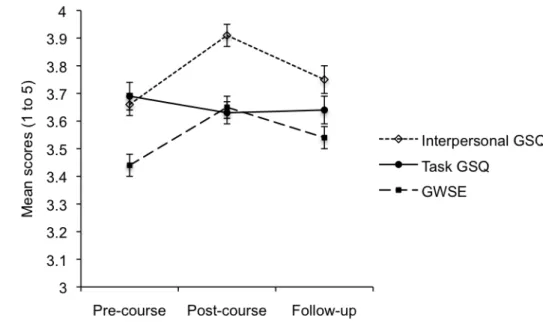
Figure 6.1 Changes in interpersonal and task groupwork skills (GSQ)
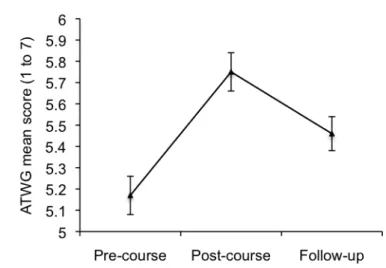
and groupwork self-efficacy (GWSE) following OAE 179 Figure 6.2 Changes in attitudes towards working in a group (ATWG)
following OAE 180
Figure 6.3 The mediating role of (a) transfer intention in the relationship between course evaluation and academic benefit, (b) transfer effort in the relationship between transfer intention and academic benefit, (c) transfer intention in the relationship between course evaluation and non-academic benefit, and (d) transfer effort in the relationship between transfer intention and non-academic
LIST OF TABLES
Table 1.1 Important attributes considered when recruiting graduates 4 Table 1.2 Eighteen key areas of groupwork development in higher
education (Prichard et al., 2004) 8
Table 1.3 The Outward Bound process model (OBPM;; Walsh &
Golins, 1976) and associated theories 24
Table 1.4 The four-level Kirkpatrick model (Kirkpatrick, 1994) 37 Table 1.5 A timeline of data collection and analysis during the
course of the PhD 42
Table 2.1 A summary of studies included for review 59 Table 3.1 Semi-structured video diary room questions 88 Table 3.2 A thematic analysis of the groupwork skills course
experience 93
Table 3.3 A thematic analysis of the groupwork skills course
outcomes 97
Table 4.1 Example outcome and process questions targeting each
level of the Kirkpatrick model 116
Table 4.2 Outcome themes following OAE based on the Kirkpatrick
model 121
Table 5.1 A typical itinerary for a 3-day OAE course developing
groupwork in students 145
Table 5.2 Scales, alpha coefficients, means, and standard
deviations for study variables 151
Table 5.3 A summary of the hierarchical regression analysis when
predicting reaction (Level 1) 154
Table 5.4 A summary of the hierarchical regression analysis when
predicting learning (Level 2) 155
Table 6.1 Questionnaire content at each time point 176 Table 6.2 Scales, alpha coefficients, means, and standard
Table 6.3 A summary of the hierarchical regression analysis when
predicting behaviour (Level 3) 182
Table 6.4 A summary of the hierarchical regression analysis when
CHAPTER 1
GENERAL INTRODUCTIONGroupwork in Higher Education
As modern day society is made up of countless interdependent groups, the ability to function effectively when working with others is a key ingredient for a successful and fulfilling life (Goleman, 2007). Education, therefore, is not only a time for developing intellect, but also for building transferrable groupwork skills as part of what has historically been termed ‘whole student development’ (Brown, 1972). Higher education leaders today still emphasise the importance of whole student development, as discussed by the former Chief Executive of the Higher Education Academy,
As leaders in institutions and as educators, we must ensure that knowledge acquisition, together with personal growth and
development, remain a central part of students’ education - to create lifelong learners not only possessing higher level academic skills and discerning information literacy skills, but also excellent transferable skills and appropriate graduate attributes (Professor Craig Mahoney, in Quinlan, 2011, P.1).
To aid the development of groupwork skills, holistic learning environments are encouraged in which students work together and learn experientially through ‘doing’ as opposed to relying solely on didactic teaching methods with minimal interpersonal interaction (Dewey, 1997;; Middleman & Goldberg, 1972;; Quinlan, 2011). Experiential learning is a pedagogical approach that has been used for many years to improve learning within higher education, based on the work of influential scholars such as John Dewey, Kurt Lewin, Jean Piaget and others (for a review see Kolb & Kolb, 1995). The philosophy of experiential education
considers learning as a process not an outcome, and that all new learning involves relearning through self-discovery and adaptation (Dewey, 1997). Incorporated within a range of different learning approaches (e.g., active learning, collaborative
learning, cooperative learning, and problem-based learning;; see Prince, 2004), a large body of literature has assessed and debated the use of experiential learning within the context of higher education (e.g., Chavan, 2011;; Clark, Threeton, & Ewing, 2010;; Devasagayam, Johns-Masten, & McCollum, 2012;; Kolb & Kolb, 1995;; Peters, Jones, & Peters, 2008;; Shreeve, 2008).
A student of today can expect to encounter a wealth of social learning situations alongside lectures, such as group assignments, seminar debates, practical classes, field trips, service learning, and placements abroad (Kahn, 2009). When added to the broader experiences outside of class, such as shared living, study groups, involvement in societies, clubs, sport, and socialising, it is clear that the university experience as a whole provides an environment rich with diverse and frequent group interactions.
It is perhaps unsurprising that students who are more able to navigate these social situations often fair better at university in terms of experiencing more enjoyment, self-esteem, high quality peer iterations, social support, and academic success (Cumming, Woodcock, Cooley, Holland, & Burns, 2014;; Johnson,
Johnson, & Smith, 1998;; Prichard & Ashleigh, 2007;; Prichard, Bizo, & Stratford, 2006;; Prichard, Bizo, & Stratford, 2011;; Prichard, Stratford, & Bizo, 2006;; Scott- Ladd & Chan, 2008). In addition to benefiting the university experience, students who demonstrate competence in groupwork are also likely to find themselves more attractive to employers when entering the job market (Bennett, 2002;;
Branine, 2008;; Confederation of British Industry, 2009;; Stewart & Knowles, 2001).
Groupwork and the Workplace
Students graduating from university are now entering a job market that is more competitive than ever before (Association of Graduate Recruitment, 2011). With nearly 70 applicants for every graduate position advertised and the number of graduates increasing each year, employers are able to be increasingly selective in the preferred attributes of successful candidates (Association of Graduate
Recruitment, 2011;; UCAS, 2011). Studies show that graduate selection
processes have become more people-orientated, with employers placing greater emphasis on attitudes, personality, and transferable skills than academic
qualifications alone (Branine, 2008).
For example, Bennett (2002) analysed 1000 graduate job adverts to find out which attributes were most requested by employers. The four most requested were having skills in communication, IT, organisation, and groupwork. In another larger scale study, 581 senior executives were asked to list the most important attributes required in graduates (Confederation of British Industry, 2009). Employability skills, described as skills in groupwork and problem solving, were the most frequently desired attribute (Table 1.1).
Table 1.1
Important attributes considered when recruiting graduates
Attribute identified the attribute as important Percentage of employers who Employability skills (i.e., groupwork and problem solving) 78%
Positive attitude 72%
Relevant work experience 54%
Degree subject 41%
Degree result 28%
University attended 8%
This demand for groupwork skills is driven by a need for graduates to make a smooth transition into the workplace, be able to ‘fit in’ quickly, and function well in established team working environments (Stewart & Knowles, 2001). The importance of groupwork skills in the workplace is also supported by empirical evidence;; better groupwork skills, communication between staff members, and group cohesion have been found to positively predict productivity (Daily & Bishop, 2003;; Earley & Mosakowski, 2000), reduced staff turnover, and absenteeism (Denton, 1988;; Mullen & Copper, 1995;; Xie & Johns, 2000).
Perhaps as a result of these job market demands, and compounded by recent increases in tuition fees, students are now entering higher education with the end much more in mind, carrying high expectations of developing the
extracurricular skills required for successful employment (Confederation of British Industry, 2009). Fortunately, there are many similarities between the groupwork experienced in higher education and that of work groups in employment settings, making higher education an ideal environment for practicing and developing groupwork skills (Kahn, 2009).
Developing Groupwork in Higher Education
Developing groupwork skills in higher education can be problematic for students and educators alike (Pauli, Mohiyeddini, Bray, Michie, & Street, 2008). In many disciplines, educators are responsible for covering vast amounts of specialist course content, and often are not trained, or do not have time, to help students to manage their groups (Kahn, 2009). As a result, students are regularly set group assignments and then left to their own devices with an expectation that they are
capable of handling the complexities of group working, as described by Kahn (2009):
Students are asked to create reasonably well-functioning teams. They are expected to think together and create together. They are expected to discuss ideas and perspectives that might differ quite radically from one another, and in working out those difficulties, arrive at sophisticated understandings of different types of problems and discover creative solutions to those problems. They are expected to produce, even while they hardly know one another’s skills and abilities, interests and
motives, or temperaments and styles (p. xi).
Some students will thrive in this environment, either due to their natural ability, previous experience, or simply having the fortune of finding themselves in a group of well-suited individuals (Johnson, Johnson, & Smith, 1998;; Prichard, Bizo, & Stratford, 2006;; Cumming et al., 2014;; Kahn, 2009). However, other students may lack the necessary groupwork skills or struggle with group commitment, conflict, understanding group members’ competencies, social loafing, and disorganisation (Pauli et al., 2008, McCorkle et al., 1999). It has also been suggested that groupwork skills form part of a person’s overall ‘emotional intelligence’ (Gardner, 1999), with studies in higher education finding emotional intelligence to be positively related to academic performance (Austin, 2005;; Jaeger, 2002;; Parker, Summerfeldt, Hogan, & Majeski, 2004) and a reduction in perceived stress (Pau et al., 2007).
Studies have also shown that negative group experiences often occur during higher education and can lead to underachievement, dissatisfaction, dropout, and unfair grade distributions (Burdett, 2003;; Pfaff & Huddleston, 2003). Such
experiences may lead to negative attitudes towards groupwork, avoidance of future groupwork, and substandard groupwork skills to those required by
employers (Hillyard, Gillespi, & Littig, 2010;; Krug, 1997;; Mutch, 1998;; Pfaff & Huddleston, 2003;; Porter, 1993).
As a result, developing the ‘whole student’ is likely to require more support than just assigning students to groupwork tasks and expecting them to develop the necessary skills through experience alone (Johnson et al., 1998). It also comes with a responsibility to support and guide students in how to develop the skills to manage their groups, overcome barriers, and ensure that groupwork is a fulfilling and positive learning experience (Cumming, 2010;; Hillyard et al., 2010). As a result, researchers and educators have called for more studies and initiatives in how to develop groupwork skills in students (Cumming, 2010;; Wilson, 2012;; Maiden & Perry, 2011). However, for these initiatives to be successful, more understanding is needed into which groupwork skills are important and how these can be developed and assessed in the context of higher education (Cumming et al., 2014).
Following a programme of research into groupwork development, Prichard, Stratford, and Hardy (2004) suggested 18 key areas required for successful groupwork at university (Table 1.2). After providing students with training in these areas, Prichard and colleagues found improvements in group performance and personal development (Prichard, Bizo, & Stratford, 2006). These findings
demonstrate that groupwork training can lead to tangible benefits for students in higher education.
Table 1.2
Eighteen key areas of groupwork development in higher education (Prichard et al., 2004)
Agreeing roles Reflection Decision making
Creating a group
environment Awareness Time management
Leadership Management of change Negotiation
Listening Setting objectives Conflict resolution
Co-operation Problem solving Feedback
Taking responsibility Planning Adaptability
There are also conceptual models within the literature that suggest this range of groupwork skills fall into two broad categories of ‘task management’ and ‘interpersonal’ skills (Cumming et al., 2014;; Hobson, Strupeck, Griffin, Szostek, & Rominger, 2014;; Stevens & Campion, 1994). Task groupwork skills are those that directly impact the completion of the task and include planning, goal setting,
monitoring progress, providing feedback, and managing group roles. In contrast, interpersonal groupwork skills are those that focus on creating a positive and supportive group environment, such as conflict resolution, understanding others, clear communication, and providing encouragement and social support. It is argued that students require knowledge, skills, and abilities in both these areas of groupwork for successful group functioning (Steven & Campion, 1994).
Further, Cumming and colleagues (2014) found that students who report using more task and interpersonal groupwork skills at university are likely to have more belief in their ability to work in groups and a more positive attitude towards groupwork. This finding highlights the importance of developing attitudes and self- efficacy towards groupwork, alongside the groupwork skills themselves. That is,
positive attitudes and self-efficacy towards groupwork may be an important prerequisite to improving groupwork behaviour in students (Ajzen, 1991).
Developing Groupwork through Outdoor Adventure Education (OAE)
Due to the demands of managing groups and developing the different aspects of groupwork alongside academic work (Pauli et al., 2008;; Wosnitza & Volet, 2014), a popular intervention used to facilitate groupwork development is outdoor
adventure education (OAE).
Broadly speaking, OAE is defined as,
A variety of teaching and learning activities and experiences usually involving a close interaction with an outdoor natural setting and containing elements of real or perceived danger or risk in which the outcome, although uncertain, can be influenced by the actions of the participants and circumstances (Ewert & Sibthorp, 2014, p.5).
When used in higher education, OAE typically involves students leaving campus and spending a period of days in a remote outdoor environment where they take part in challenging outdoor pursuit activities. Here, students are able to
experiment with different group behaviours away from the pressures of academia, in an environment that is safe, yet unpredictable (Cooley, Burns, & Cumming, 2015;; Vlamis, Bell, & Gass, 2011). Instead of placing the responsibility of groupwork development with academic staff, students are in the hands of
specialist outdoor instructors, who are trained in group development. An intense period of time is spent practicing and reflecting on how groups function, overcome barriers, and succeed (Allison & Von Wald, 2010;; Sibthorp, Furman, Paisley, & Gookin, 2008). On their return to university, it is expected that the OAE
leaving them better equipped to meet the demands of university and prepared for continued development (Cooley, Burns, & Cumming, 2015;; Prince & Dunne, 1998).
The focus of the present thesis is on the use of OAE and its ability to develop transferrable groupwork skills in higher education. This general introduction chapter has therefore been organised into three main sections: groupwork in higher education, the foundations of outdoor adventure education, and methodology. The following section on the foundations of outdoor adventure education includes an introduction to the historical foundations of OAE, the
theoretical perspectives commonly used to support OAE, and the transfer of outcomes from OAE. The methodology section provides an overview of the
research stance taken in this thesis, methodology used, the aims and objectives of the empirical chapters, and the OAE programme investigated.
Foundations of Outdoor Adventure Education
The roots of OAE are often considered to date back to ancient philosophy (Bisson, 2009). In the 4th and 5th Centuries BC, Socrates, Plato, and Aristotle were all
supporters of ‘whole person development’ and argued for education to incorporate intellect with emotional, physical, and spiritual development that is ‘hands-on’ and experiential (Wurdinger, 1997). These early teachings remained influential right through to 17th, 18th, and 19th century philosophers Comenius, Rousseau, and Pestalozzi, who believed in developing the whole person through an interaction with the natural world (Bisson, 2009;; Wurdinger, 1997). It was the basis of their vision that went on to inform the ‘camping movement’ in the 19th century, where
outdoor adventure became a popular recreational pursuit for the masses (Raiola & O’Keefe, 2009). Following the camping movement, youth movements were
founded in the late 19th and early 20th century, such as the YMCA, Boy Scouts, Girl Guides, and public school programmes, which is when outdoor adventure activities became a popular educational tool for developing core moral values in young people (Everard, 1993;; Richards, 1991).
However, this early use of OAE was relatively unstructured compared to that of today because there was less understanding of how the outdoors could be best utilised (Mortlock, 1984). Learning had been believed to occur solely from spending time in the outdoors, and that outcomes occurred incidentally, rather than through the facilitation of trained instructors (Gass & Stevens, 2007;; Mortlock, 1984). This traditional model of learning was termed the ‘mountains speak for themselves’. However, OAE later became more structured, with pre-determined objectives and activities designed to accelerate and frame certain outcomes during periods of reflective discussion (Gass & Stevens, 2007).
Modern day OAE is in part credited to Kurt Hahn, an educator from Germany whose philosophy of developing the whole person through outdoor education was influenced by that of Plato, the youth movements, Sir Robert Baden-Powell (Scout movement), Dr Cecil Reddie (education reformist), and Thomas Arnold (public school headmaster and historian) (James, 2000). In 1933, Hahn moved to the UK and opened a public school based on self-discovery and social development. One of Hahn’s early pupils was Prince Philip who later became the Duke of Edinburgh and endorsed Hahn’s ‘County Badge’ outdoor
education programme, which is now known today as the Duke of Edinburgh Award Scheme (Richards, 1991;; Bisson, 2009).
One of the most historical turning points for OAE came in 1941, when Hahn founded the first Outward Bound School in Aberdovey, Wales. This school was established with the backing of Lawrence Holt, a shipping magnate in the Second World War (Richards, 1991;; James, 2000). Holt wanted to use challenging
outdoor education courses to prepare young sailors for the stress and adversity of war;; however, once established, courses at Outward Bound catered for all manner of professionals, youth on leave from school, and those joining the army
(Richards, 1991;; Miner, 1999). A few years later, Francis Scott founded Brathay Hall Trust in 1946, which used a similar philosophy to Outward Bound to facilitate young peoples’ transition from school to the workplace (Everard, 1993).
Another key figure in the expansion of OAE was Paul Petzoldt. Following the spread of Outward Bound to America, Petzolt was inspired to found the first National Outdoor Leadership School (NOLS) in 1965, which had an added focus on environmental awareness, risk management, and safety in the outdoors (Bachart, 1999). Using the models set out by Outward Bound and NOLS, OAE spread globally and, from the 1970s, it began to not only focus on developing youth, but also used in industry to develop employees, and in higher education to develop students (Hopkins & Putnam, 1993;; Ibbetson,1997). In the United States of America, the Association for Experiential Education was founded, and in 1974, held its first North American conference on outdoor pursuits in higher education (Bisson, 2009). In the late 1977, Petzolt and a group of academic professors founded the Wilderness Education Association (WEA), which encouraged higher
education institutions to embed outdoor education courses within their degree programmes (Bisson, 2009;; Teeters & Lupton, 1999). Due to these historical developments, OAE courses are now found incorporated into university degree courses across the world (Cooley, Burns, & Cumming, 2015).
It is important to note that the spread of OAE has resulted in numerous variations of outdoor learning experiences along with different terms used to emphasise nuances within the phenomena (e.g., outdoor learning, challenge education, wilderness education, environmental education, outdoor orientation programmes, outdoor management education, and many more). Although the term OAE was chosen in the present thesis, alternative terms such as outdoor learning could be equally appropriate. Therefore, a detailed description of the outdoor programme under investigation is provided towards the end of this chapter to enable the reader to make their own judgment as to the nature of the
programme and the subsequent transferability of findings to other types of programmes.
To keep within the scope of this thesis, the focus has been specifically on short, group-based, residential OAE courses used in higher education. However, considerable work has been done in researching the educational outcomes of other types of outdoor programmes. For example, in the UK alone, other research studies have included experiences of outdoor management development
(Donnison, 2000;; Greenaway, 1995;; Ibbetson, 1997), Outward Bound used within Scottish secondary schools (Christie, 2004), and the supporting of marginalised youth in becoming agents of social change (Loynes, 2008), among others. For broader reviews on the outcomes and historical use of outdoor education and
outdoor learning in the UK, see Ogilvie (2013), Dillon and colleagues (2006), Nicol (2002), and Allison and Telford (2005).
Theoretical Foundations of OAE
The popularity and spread of OAE is in part credited to the various conceptual theories and models that have been used to explain why OAE is an effective and unique vehicle for learning (Prouty, Panicucci, & Collinson, 2007). This theoretical support can be classified into four broad areas: experiential theories based on learning ‘by doing’;; theories based on learning through optimal arousal;; theories surrounding the outdoor environment;; and theories related to learning in groups (Figure 1.1). Each will be discussed in turn.
Figure 1.1.
Theories commonly used in support of Outdoor Adventure Education (OAE)
Theories supporting OAE
Experiential - Experiential Learning (Dewey, 1938) - Constructivist learning (Piaget, 1970) - Experiential learning cycle (Kolb, 1984) - Intrinsic motivation/self- determination theory (Deci & Ryan, 1985) Arousal - Yerkes-Dodson law (1908) - Optimal arousal - Stretch Zone Experience (Prouty et al., 2007) - Transformative learning (Mezirow, 1991) Nature - Biophilia hypothesis (Wilson, 1984) - Nature deficit disorder (Louv, 2005)
- Natural consequences
Group learning
- Social learning theory (Bandura, 1971) - Social constructivism (Vygotsky, 1978) - Forming, norming, storming, performing (Tuckman, 1965)
Experiential
Due to the hands-on, experience-based activities that form the bases of OAE, one of the theories most commonly used in support of OAE is experiential learning theory. This theory is accredited to John Dewey following his publication of Education and Experience in 1938. At a time when formal education
predominantly comprised traditional, didactic approaches, Dewey supported the idea that all genuine education comes through experience. Instead of traditional ‘teach and tell’ methods, Dewey argued that educators should create an
environment where learning has the potential to occur through interacting with the environment and self-discovery. Experiential learning is said to result in learning that is more relevant and personally meaningful, increasing the chances of learning being retained and built upon in future experiences (Dewey, 1938). Experiential learning theory is also closely related to Piaget’s constructivist view of learning, which describes how learning occurs through direct interactions with the world, where people formulate personal concepts that are continually contradicted and adapted as new experiences are accommodated (Piaget, 1970).
Dewey also warned that a reliance on didactic methods of learning could result in experiences that are mis-educative, whereby students lose interest, focus, and the desire to learn (Dewey, 1938). In contrast, experiential learning is
believed to create an optimal mindset that facilitates learning and avoids states of boredom. A deep engagement in learning is achieved through an intrinsically interesting learning experience that has relevant goals (Dewey, 1938). When intrinsic interest is high, the experience does not require extensive cognitive
1938;; Sibthorp et al., 2015). This experience could, for example, be likened to working in a team to complete an obstacle course, where the task itself is fun and engaging and the learning of effective groupwork behaviours comes almost as a by-product. In comparison, a state known as ‘drudgery’ occurs when a goal- relevant activity is uninteresting. In this case, effortful attention is required to maintain focus and the activity becomes cognitively fatiguing (Sibthorp et al., 2015).
The importance of being intrinsically motivated to engage in an activity is also reflected in self-determination theory (Deci & Ryan, 1985). Self-determination theory proposes that a learning environment that satisfies three fundamental human needs will foster intrinsic motivation and the tendency for personal growth. These three basic needs are competence (e.g., a feeling that the activities during OAE are within your capability), relatedness (e.g., a feeling of closeness and belonging to your group), and autonomy (e.g., having some control over your behaviour and the challenges faced during OAE). Research has shown that if these needs are thwarted, intrinsic motivation will decrease to the point where engagement may only remain if extrinsic motivators are present (e.g., rewards and punishments) and the quality of functioning and personal growth will decay (Deci & Ryan, 1985).
In support of self-determination theory, a positive association has been found between intrinsic motivation and increased effort, curiosity, enjoyment, positive coping styles, optimal functioning, social development, higher quality learning, and personal well-being (for a review see Ryan & Deci, 2000). In fact, many of these areas have been identified as outcomes of OAE (Ewert & Sibthorp,
2014;; Hattie, Marsh, Neill, & Richards, 1997), perhaps due to the fun, engaging, experiential, cohesive, and supportive environment often found within OAE, which in most cases is likely to satisfy the three basic needs and foster intrinsic
motivation.
However, to ensure OAE goes beyond simply being an enjoyable time away, and instead becomes a learning experience that is enjoyable, learning needs to be recognised and internalised by participants. To help ensure learning is realised during an experiential activity, Kolb (1984) introduced the experiential learning cycle. The cycle (Figure 1.2) depicts how periods of ‘reflective
observation’ should be encouraged following an activity, or ‘concrete experience’, such as building a raft whilst following rules and a time limit. This reflection then leads to ‘abstract conceptualisation’, a process where the lessons learnt from the activity are generalised to form new rules and concepts that apply to similar situations. For example, the reflection following a poorly designed raft build may identify poor communication as a possible cause resulting from dominant group members taking charge and forgetting to include the ideas of a quieter member of the group, who may have a wealth of relevant sailing experience to contribute. During abstract conceptualisation, group members may decide that in all future group-based activities it is important to hear everyone’s ideas before diving into a task. This new way of thinking then leads on to ‘active experimentation’ where these ideas are put into practice and the cycle continues.
Figure 1.2
The experiential learning cycle (Kolb, 1984)
Arousal
The OAE environment provides challenge, adventure, and usually some degree of perceived or actual risk. This risk could be physical (e.g., a fear of injury), social (e.g., a fear of showing yourself up in front of peers), and/or emotional (e.g., a fear of discovering something you are not good at) (Ewert & Sibthorp, 2014). However, when managed correctly, this cocktail of adventure, challenge, and danger can lead to powerful and memorable learning experiences. As a result, another selection of theories surrounds the tendency for learning to occur through experiencing high levels of arousal.
According to the Yerkes-Dodson law (1908), performance improves in response to physical or mental arousal. Following an inverted U-shaped curve, performance peaks when an optimal level of arousal is reached, at which point performance becomes inhibited as arousal increases further (Yerkes & Dodson, 1908). Based on this premise, OAE is often associated with the theory of stretch
zone experiences (Prouty et al., 2007). It is believed that individuals commonly have three zones or states of mind. At the centre is the comfort zone, which is where an individual is in a situation or environment where they feel at ease and at equilibrium. Around the edge of the comfort zone is the stretch zone, which
represents an environment that contains a manageable amount of uneasiness and disequilibrium. Surrounding the stretch zone is the panic zone, which represents the situations or environments that cause an unmanageable amount of anxiety and disequilibrium. In general, experiences in the stretch zone are believed to result in optimal arousal, increased focus and effort, and memorable learning (Prouty et al., 2007). Although the stretch zone is widely accepted, and grounded in popular theories such as the Yerkes-Dodson law (1908) and Festinger’s (1957) theory of cognitive dissonance, it has received little empirical testing within the educational literature and has been recommended as a metaphor rather than an empirical model (Brown, 2008).
Similar to the stretch zone, the idea of learning through high arousal
experiences is also supported by the theory of transformational learning (Mezirow, 1991). Transformative learning is believed to occur when faced with a novel situation, which puts previously held assumptions (i.e., perceptions and habits) into question, and encourages new ways of thinking (Mezirow, 1991;; O’Sullivan, 2002). Mezirow (2000) suggests that this novel situation could result in a
‘disorienting dilemma’, prompting an individual to engage in critical self-reflection and social interaction, in order to build competence and self-confidence as new learning occurs. In this view, an arousal provoking experience such as OAE, may result in a catalyst for growth, or a ‘turning point’ in one’s general life trajectory
(Gotlib & Wheaton, 1997;; Furman & Sibthorp, 2012). Previous studies have supported OAE in its ability to lead to transformative learning (e.g., D’Amato & Krasny, 2011). However, it has been argued that OAE does not always need to involve an element of perceived risk for the experience to be transformative
(Brown, 2008). Instead, it is suggested that the greatest amount of change occurs when environments promote safety, acceptance, and security (Davis-Berman & Berman, 2002;; Brown, 2008). Therefore, high arousal learning might not
necessarily require actual or perceived risk.
Nature
Along with the experiential and high arousal elements of OAE, another fundamental element is the outdoor environment. The biophillia hypothesis (Wilson, 1984) suggests that human beings have an instinctive need to bond with the natural world. This innate bond is considered to be a result of humans’
evolutionary history being embedded within natural environments, whereby
survival once depended on an attraction to landscapes that had more potential for survival, such as lakes, high ground, and trees that can be climbed (Wilson, 1984;; Kahn, 1997). As a result, time spent in the outdoors is considered to be ‘good for the soul’ and responsible for numerous psychological and physical benefits
surrounding mood, anxiety, relaxation, attention, physical recovery, mental health, and self-concept (Neill, 2008, Kahn, 1997).
In relation to the biophillia hypothesis, Louv (2005) more recently introduced the term ‘nature deficit disorder’, which is believed to occur as a result of humans spending increasingly less time in the outdoors. Based on the psychoevolutionary