77
II
Digestive System
and Nutrition
Chapter Concepts
5.1 The Digestive Tract
• Describe the structure and function of each part of the digestive tract. What are the names of the two digestive tract openings? 78
• What happens to indigestible materials? 84
5.2 Three Accessory Organs
• What are the three main accessory organs that assist with the digestive process? 86
• How does each accessory organ contribute to the digestion of food? 86–87
5.3 Digestive Enzymes
• What nutrient molecules are absorbed following the digestion of carbohydrates? Of proteins? Of lipids? 88
• What are the main digestive enzymes, and what factors affect how they function? 88–89
5.4 Homeostasis
• How does the digestive system work with other systems of the body to maintain homeostasis? 90–91
5.5 Nutrition
• Why is proper nutrition important to good health? 91–99
77
Chapter
5
Maintenance of the
Human Body
5 Digestive System and Nutrition
77
6 Composition and Function of the
Blood 105
7 Cardiovascular System 121
8 Respiratory System 143
9 Urinary System and Excretion 163
A
ll of the systems of the body help maintain homeo-stasis, resulting in a dynamic equilibrium of the in-ternal environment. Our inin-ternal environment is the blood within blood vessels and the fluid that surrounds the cells of the tissues. The heart pumps the blood and sends it in vessels to the tissues, where materials are ex-changed with tissue fluid. The composition of blood tends to remain relatively constant as a result of the ac-tions of the digestive, respiratory, and urinary systems. Nutrients enter the blood at the small intestine, external gas exchange occurs in the lungs, and metabolic waste products are excreted at the kidneys. The immune system prevents pathogens from taking over the body and inter-fering with its proper functioning.E
njoying the summer night at an outdoor cafe, Sam washes down his last piece of pizza with a sip of wine. Even before Sam swallows his food, the enzymes in his mouth’s saliva begin to break starch molecules apart. The wine’s alcohol is absorbed in the stomach, where the process of transforming Sam’s meal into a nutrient-laden liq-uid begins. In the small intestine, wormlike projections from the intestinal wall absorb sugars, amino acids, and other needed molecules into Sam’s bloodstream. Even the large intestine contributes by taking in needed water and salts. His body now refueled, Sam heads off for a night of dancing.In this chapter, you will learn how the body digests food, and the importance of proper nutrition. Science is beginning to find the cellular basis for believing that fruits and vegeta-bles, and yes, especially broccoli, can ensure a brighter and healthier life. Sam—and all of us—can play a part by being aware of these findings. Avoiding sugars and fats and con-suming protein in moderate amounts can help us maintain a normal weight and avoid certain illnesses.
5.1 The Digestive Tract
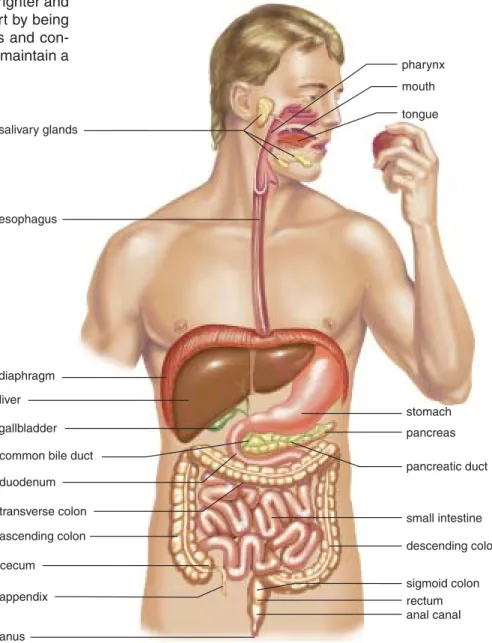
Digestion takes place within a tube called the digestive tract, which begins with the mouth and ends with the anus (Fig. 5.1). The func-tions of the digestive system are to ingest food, digest it to nutrients that can cross plasma membranes, absorb nutrients, and eliminate indigestible remains.
The Mouth
The mouth, which receives food, is bounded ex-ternally by the lips and cheeks. The lips extend from the base of the nose to the start of the chin. The red portion of the lips is poorly keratinized, and this allows blood to show through.
Most people enjoy eating food, largely because they like its texture and taste. Sensory receptors called taste buds occur pri-marily on the tongue. They communicate with the brain where the sensation of taste occurs. The tongue is composed of skeletal muscle whose contraction changes the shape of the tongue. Muscles exterior to the tongue cause it to move about. A fold of mucous membrane attaches the underside of the tongue to the floor of the mouth.
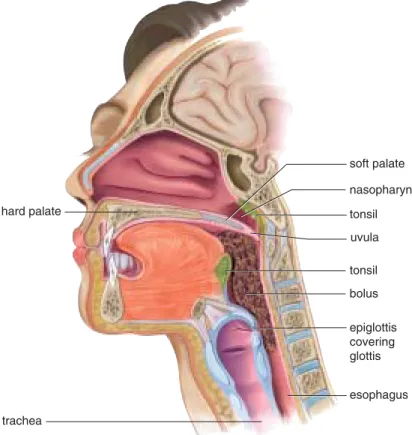
The mouth has a roof that separates it from the nasal cavities. The roof has two parts: an anterior (toward the front) hard palateand a posterior (toward the back) soft palate (Fig. 5.2a). The hard palate contains several bones, while the soft palate does not. The soft palate ends in a finger-shaped projection called the uvula.
Figure 5.1 Digestive system.
Trace the path of food from the mouth to the anus. The large intestine consists of the cecum, the colon (composed of the ascending, transverse, descending, and sigmoid colon), and the rectum and anal canal. Note also the location of the accessory organs of digestion: the pancreas, the liver, and the gallbladder.
The tonsils are in the back of the mouth, on either side of the tongue and in the nasopharynx (where they are called adenoids). If the tonsils become inflamed, the person has tonsillitis.If tonsillitis keeps on recurring, the tonsils may be surgically removed (called a tonsillectomy).
Three pairs of salivary glands send juices (saliva) by way of ducts to the mouth. One pair of salivary glands lies at the sides of the face immediately below and in front of the ears. These glands swell when a person has the mumps, a disease caused by a viral infection. Salivary glands have ducts that open on the inner surface of the cheek at the location of
esophagus diaphragm liver gallbladder duodenum transverse colon ascending colon appendix anus cecum stomach pancreas pancreatic duct common bile duct
small intestine descending colon sigmoid colon rectum anal canal tongue mouth pharynx salivary glands
the second upper molar. Another pair of salivary glands lies beneath the tongue, and still another pair lies beneath the floor of the mouth. The ducts from these salivary glands open under the tongue. You can locate the openings if you use your tongue to feel for small flaps on the inside of your cheek and under your tongue. Saliva contains bicarbonate and an enzyme called salivary amylase that begins the process of digesting starch.
The Teeth
With our teeth, we chew food into pieces convenient for swallowing. During the first two years of life, the smaller 20 deciduous, or baby, teeth appear. These are eventually re-placed by 32 adult teeth (Fig. 5.2a). The third pair of molars, called the wisdom teeth, sometimes fail to erupt. If they push on the other teeth and/or cause pain, they can be re-moved by a dentist or oral surgeon.
Each tooth has two main divisions, a crown and a root (Fig. 5.2b). The crown has a layer of enamel, an extremely hard outer covering of calcium compounds; dentin, a thick layer of bonelike material; and an inner pulp, which con-tains the nerves and the blood vessels. Dentin and pulp are also found in the root.
Tooth decay, called dental caries, or cavities, occurs when bacteria within the mouth metabolize sugar and give off acids, which erode teeth. Two measures can prevent tooth decay: eating a limited amount of sweets and daily brushing and flossing of teeth. Fluoride treat-ments, particularly in children, can make the enamel stronger and more resistant to decay. Gum disease is more apt to occur with aging. Inflammation of the gums (gin-givitis) can spread to the periodontal membrane, which lines the tooth socket. A person then has periodontitis, characterized by a loss of bone and loosening of the teeth so that extensive dental work may be required. Stimula-tion of the gums in a manner advised by your dentist is helpful in controlling this condition. Medications are also available.
The tongue mixes the chewed food with saliva. It then forms this mixture into a mass called a bolus in preparation for swallowing.
The salivary glands send saliva into the mouth, where the teeth chew the food and the tongue forms it into a bolus for swallowing.
Figure 5.2 Adult mouth and teeth.
a.The chisel-shaped incisors bite; the pointed canines tear; the fairly flat premolars grind; and the flattened molars crush food. The last molar, called a wisdom tooth, may fail to erupt, or if it does, it is sometimes crooked and useless. Often dentists recommend the extraction of the wisdom teeth. b.Longitudinal section of a tooth. The crown is the portion that projects above the gum line and can be replaced by a dentist if damaged. When a “root canal” is done, the nerves are removed. When the periodontal membrane is inflamed, the teeth can loosen.
hard palate soft palate uvula tonsil molars (3) premolars (2) canine (1) incisors (2) enamel dentin pulp gum root canal periodontal membrane jawbone cementum b. a. root crown
The Pharynx
The pharynxis a region that receives air from the nasal cav-ities and food from the mouth. The soft palate has a projec-tion called the uvula, which projects into the pharynx and
which people often confuse with the tonsils. The tonsils, however, are embedded in the mucous membrane of the pharynx.
Table 5.1 traces the path of food. From the mouth, food passes through the pharynx and esophagus to the stom-ach, small intestine, and large intestine. The food passage and air passage cross in the pharynx because the trachea (windpipe) is anterior to (in front of) the esophagus, a long muscular tube that takes food to the stomach. Swallowing, a process that occurs in the pharynx (Fig. 5.3), is a reflex action performed automatically, without conscious thought. Usually during swallowing, the soft palate moves back to close off the nasopharynx,and the trachea moves up under the epiglottis to cover the glottis. The glottisis the opening to the larynx (voice box) and there-fore the air passage. During swallowing, food normally enters the esophagus because the air passages are blocked. We do not breathe when we swallow.
Unfortunately, we have all had the unpleasant experi-ence of having food “go the wrong way.” The wrong way may be either into the nasal cavities or into the trachea. If it is the latter, coughing will most likely force the food up out of the trachea and into the pharynx again. The up-and-down movement of the Adam’s apple, the front part of the larynx, is easy to observe when a person swallows.
The Esophagus
The esophagusis a muscular tube that passes from the phar-ynx through the thoracic cavity and diaphragm into the ab-dominal cavity, where it joins the stomach. The esophagus is ordinarily collapsed, but it opens and receives the bolus when swallowing occurs.
A rhythmic contraction called peristalsis pushes the food along the digestive tract. Peristalsis begins in the esoph-agus and continues in all the organs of the digestive tract.
Figure 5.3 Swallowing.
When food is swallowed, the soft palate closes off the nasopharynx, and the epiglottis covers the glottis, forcing the bolus to pass down the esophagus. Therefore, a person does not breathe while swallowing.
nasopharynx tonsil esophagus soft palate tonsil bolus trachea epiglottis covering glottis hard palate uvula Path of Food
Table 5.1
Organ Function of Organ Special Feature(s) Function of Special Feature(s)
Mouth Receives food; starts Teeth Chew food
digestion of starch Tongue Forms bolus
Pharynx Passageway ——— ———
Esophagus Passageway ——— ———
Stomach Storage of food; acidity Gastric glands Release gastric juices kills bacteria; starts
digestion of protein
Small intestine Digestion of all foods; Intestinal glands Release intestinal juices absorption of nutrients Villi Absorb nutrients
Large intestine Absorption of water; ——— ———
Occasionally, peristalsis begins even though there is no food in the esophagus. This produces the sensation of a lump in the throat.
The esophagus plays no role in the chemical digestion of food. Its sole purpose is to conduct the food bolus from the mouth to the stomach. Sphinctersare muscles that encircle tubes and act as valves; tubes close when sphincters con-tract, and they open when sphincters relax. The entrance of the esophagus to the stomach is marked by a constriction, often called a sphincter, although the muscle is not as devel-oped as in a true sphincter. Relaxation of the sphincter al-lows the bolus to pass into the stomach, while contraction prevents the acidic contents of the stomach from backing up into the esophagus.
Heartburn, which feels like a burning pain rising up into the throat, occurs during reflux when some of the stom-ach contents escape into the esophagus. When vomiting oc-curs, a contraction of the abdominal muscles and diaphragm propels the contents of the stomach upward through the esophagus.
The air passage and food passage cross in the pharynx, which takes food to the esophagus. The esophagus conducts the bolus of food from the pharynx to the stomach. Peristalsis begins in the esophagus and occurs along the entire length of the digestive tract.
The Wall of the Digestive Tract
The wall of the esophagus in the abdominal cavity is com-parable to that of the digestive tract, which has these layers (Fig. 5.4):
Mucosa(mucous membrane layer) A layer of epithelium supported by connective tissue and smooth muscle lines the lumen(central cavity) and contains glandular epithelial cells that secrete digestive enzymes and goblet cells that secrete mucus.
Submucosa(submucosal layer) A broad band of loose connective tissue that contains blood vessels lies beneath the mucosa. Lymph nodules, called Peyer’s patches, are in the submucosa. Like the tonsils, they help protect us from disease.
Muscularis(smooth muscle layer) Two layers of smooth muscle make up this section. The inner, circular layer encircles the gut; the outer, longitudinal layer lies in the same direction as the gut. (The stomach also has oblique muscles.)
Serosa(serous membrane layer) Most of the digestive tract has a serosa, a very thin, outermost layer of squamous epithelium supported by connective tissue. The serosa secretes a serous fluid that keeps the outer surface of the intestines moist so that the organs of the abdominal cavity slide against one another. The esophagus has an outer layer
composed only of loose connective tissue called the adventitia.
Figure 5.4 Wall of the digestive tract.
a.Several different types of tissues are found in the wall of the digestive tract. Note the placement of circular muscle inside longitudinal muscle.
b.Micrograph of the wall of the esophagus.
lumen adventitia circular muscle longitudinal muscle mucosa submucosa serosa muscularis a. b. 2.5 mm
The Stomach
The stomach (Fig. 5.5) is a thick-walled, J-shaped organ that lies on the left side of the body beneath the diaphragm. The stomach is continuous with the esophagus above and the duodenum of the small intestine below. The stomach stores food and aids in digestion. The wall of the stomach has deep folds, which disappear as the stomach fills to an approximate capacity of one liter. Its muscular wall churns, mixing the food with gastric juice. The term gastricalways refers to the stomach.
The columnar epithelial lining of the stomach has millions of gastric pits, which lead into gastric glands.The gastric glands produce gastric juice. Gastric juice contains an enzyme called pepsin,which digests protein, plus hydrochloric acid (HCl) and mucus. HCl causes the stomach to have a high acid-ity with a pH of about 2, and this is beneficial because it kills most bacteria present in food. Although HCl does not digest food, it does break down the connective tissue of meat and
activate pepsin. The wall of the stomach is protected by a thick layer of mucus secreted by goblet cells in its lining. If, by chance, HCl penetrates this mucus, the wall can begin to break down, and an ulcer results. An ulceris an open sore in the wall caused by the gradual disintegration of tissue. It now appears that most ulcers are due to a bacterial infection (Helicobacter py-lori)that impairs the ability of epithelial cells to produce pro-tective mucus.
Alcohol is absorbed in the stomach, but food substances are not. Normally, the stomach empties in about 2–6 hours. When food leaves the stomach, it is a thick, soupy liquid called chyme.Chyme enters the small intestine in squirts by way of a sphincter that repeatedly opens and closes.
The stomach can expand to accommodate large amounts of food. When food is present, the stomach churns, mixing food with acidic gastric juice.
Figure 5.5 Anatomy and histology of the stomach.
a.The stomach has a thick wall with folds that allow it to expand and fill with food. b.The lining contains gastric glands, which secrete mucus and a gastric juice active in protein digestion. c.A bleeding ulcer viewed through an endoscope (a tubular instrument bearing a tiny lens and a light source) inserted into the abdominal cavity.
gastric pit gastric gland cells that secrete mucus cells that secrete HCl and enzyme stomach lining ulcer a. b. c. 20 µm
Figure 5.6 Anatomy of the small intestine.
The wall of the small intestine has folds that bear fingerlike projections called villi. The products of digestion are absorbed into the blood capillaries and the lacteals of the villi by microvilli which project from the villi.
lumen Small intestine lacteal venule lymphatic vessel goblet cell lymph nodule blood capillaries arteriole
Section of intestinal wall
Villi
villus
100 µm
villus microvilli
The Small Intestine
The small intestineis named for its small diameter (com-pared to that of the large intestine), but perhaps it should be called the long intestine. The small intestine averages about 6 m (18 ft) in length, compared to the large intestine, which is about 1.5 m (41⁄2ft) in length.
The first 25 cm of the small intestine is called the duode-num.A duct brings bile from the liver and gallbladder, and pancreatic juice from the pancreas, into the small intestine (see Fig. 5.1). Bileemulsifies fat—emulsification causes fat droplets to disperse in water. The intestine has a slightly ba-sic pH because pancreatic juice contains sodium bicarbonate (NaHCO3), which neutralizes chyme. The enzymes in
pan-creatic juice and the enzymes produced by the intestinal wall complete the process of food digestion.
It has been suggested that the surface area of the small intestine is approximately that of a tennis court. What fac-tors contribute to increasing its surface area? The wall of the small intestine contains fingerlike projections called villi (sing., villus), which give the intestinal wall a soft, velvety appearance (Fig. 5.6). A villus has an outer layer of colum-nar epithelial cells, and each of these cells has thousands of microscopic extensions called microvilli. Collectively, in
electron micrographs, microvilli give the villi a fuzzy border known as a “brush border.” Since the microvilli bear the in-testinal enzymes, these enzymes are called brush-border en-zymes. The microvilli greatly increase the surface area of the villus for the absorption of nutrients.
Nutrients are absorbed into the vessels of a villus. A vil-lus contains blood capillaries and a small lymphatic capil-lary, called a lacteal.The lymphatic system is an adjunct to the cardiovascular system; its vessels carry a fluid called lymph to the cardiovascular veins. Sugars (digested from carbohydrates) and amino acids (digested from proteins) enter the blood capillaries of a villus. Glycerol and fatty acids (digested from fats) enter the epithelial cells of the villi, and within these cells are joined and packaged as lipopro-tein droplets, which enter a lacteal. After nutrients are absorbed, they are eventually carried to all the cells of the body by the bloodstream.
The large surface area of the small intestine facilitates absorption of nutrients into the cardiovascular system (sugars and amino acids) and the lymphatic system (fats).
Regulation of Digestive Secretions
The secretion of digestive juices is promoted by the nervous system and by hormones. Ahormone is a substance pro-duced by one set of cells that affects a different set of cells, the so-called target cells. Hormones are usually transported by the bloodstream. For example, when a person has eaten a meal particularly rich in protein, the stomach produces the hormone gastrin. Gastrin enters the bloodstream, and soon the stomach is churning, and the secretory activity of gastric glands is increasing. A hormone produced by the duodenal wall, GIP (gastric inhibitory peptide), works oppo-site to gastrin: It inhibits gastric gland secretion.
Cells of the duodenal wall produce two other hormones that are of particular interest—secretin and CCK (chole-cystokinin). Acid, especially hydrochloric acid (HCl) pres-ent in chyme, stimulates the release of secretin, while partially digested protein and fat stimulate the release of CCK. Soon after these hormones enter the bloodstream, the pancreas increases its output of pancreatic juice, which helps digest food, and the gallbladder increases its output of bile. The gallbladder contracts to release stored bile. Figure 5.7 summarizes the actions of gastrin, secretin, and CCK.
The Large Intestine
The large intestine, which includes the cecum, the colon, the rectum, and the anal canal, is larger in diameter than the small intestine (6.5 cm compared to 2.5 cm), but it is shorter in length (see Fig. 5.1). The large intestine absorbs water, salts, and some vitamins. It also stores indigestible material until it is eliminated at the anus.
The cecum, which lies below the junction with the small intestine, is the blind end of the large intestine. The cecum has a small projection called the vermiform appen-dix(vermiformmeans wormlike) (Fig. 5.8). In humans, the appendix also may play a role in fighting infections. This organ is subject to inflammation, a condition called appen-dicitis. If inflamed, the appendix should be removed before the fluid content rises to the point that the appendix bursts, a situation that may cause peritonitis,a generalized infec-tion of the lining of the abdominal cavity. Peritonitis can lead to death.
The colon includes the ascending colon, which goes up the right side of the body to the level of the liver; the transverse colon, which crosses the abdominal cavity just below the liver and the stomach; the descending colon, which passes down the left side of the body; and the sig-moid colon, which enters the rectum,the last 20 cm of the large intestine. The rectum opens at the anus,where defe-cation, the expulsion of feces, occurs. When feces are forced into the rectum by peristalsis, a defecation reflex occurs. The stretching of the rectal wall initiates nerve im-pulses to the spinal cord, and shortly thereafter the rectal muscles contract and the anal sphincters relax (Fig. 5.9). Ridding the body of indigestible remains is another way the digestive system helps maintain homeostasis.
Feces are three-quarters water and one-quarter solids. Bacteria, fiber (indigestible remains), and other indi-gestible materials are in the solid portion. Bacterial action on indigestible materials causes the odor of feces and also accounts for the presence of gas. A breakdown product of bilirubin (see page 86) and the presence of oxidized iron cause the brown color of feces.
For many years, it was believed that facultative bacte-ria (bactebacte-ria that can live with or without oxygen), such as Escherichia coli,were the major inhabitants of the colon, but new culture methods show that over 99% of the colon bac-teria are obligate anaerobes (bacbac-teria that die in the pres-ence of oxygen). Not only do the bacteria break down indigestible material, but they also produce B complex vi-tamins and most of the vitamin K needed by our bodies. In this way, they perform a service for us.
Water is considered unsafe for swimming when the coliform (nonpathogenic intestinal) bacterial count reaches a certain number. A high count indicates that a significant amount of feces has entered the water. The more feces pres-ent, the greater the possibility that disease-causing bacteria are also present.
Figure 5.7 Hormonal control of digestive gland secretions.
Gastrin (blue), produced by the lower part of the stomach, enters the bloodstream and thereafter stimulates the upper part of the stomach to produce more gastric juice. Secretin (green) and CCK (purple), produced by the duodenal wall, stimulate the pancreas to secrete its juice and the gallbladder to release bile.
etin K rin blood vessel liver stomach gallbladder duodenum pancreas secretin CCK gastrin Key:
Polyps
The colon is subject to the development of polyps, small growths arising from the epithelial lining. Polyps, whether benign or cancerous, can be removed surgically. If colon cancer is detected while still confined to a polyp, the expected outcome is a complete cure. Some investigators believe that dietary fat increases the likelihood of colon can-cer because dietary fat causes an increase in bile secretion. It could be that intestinal bacteria convert bile salts to sub-stances that promote the development of cancer. On the other hand, fiber in the diet seems to inhibit the develop-ment of colon cancer. Dietary fiber absorbs water and adds bulk, thereby diluting the concentration of bile salts and facilitating the movement of substances through the intes-tine. Regular elimination reduces the time that the colon wall is exposed to any cancer-promoting agents in feces.
Diarrhea and Constipation
Two common everyday complaints associated with the large intestine are diarrheaand constipation.The major causes of diarrhea are infection of the lower intestinal tract and ner-vous stimulation. In the case of infection, such as food poi-soning caused by eating contaminated food, the intestinal wall becomes irritated, and peristalsis increases. Water is not absorbed, and the diarrhea that results rids the body of the infectious organisms. In nervous diarrhea, the nervous system stimulates the intestinal wall, and diarrhea results.
Prolonged diarrhea can lead to dehydration because of water loss and to disturbances in the heart’s contraction due to an imbalance of salts in the blood.
When a person is constipated, the feces are dry and hard. One reason for this condition is that socialized per-sons have learned to inhibit defecation to the point that the urge to defecate is ignored. Two components of the diet that can help prevent constipation are water and fiber. Water intake prevents drying out of the feces, and fiber provides the bulk needed for elimination. The frequent use of laxa-tives is discouraged. If, however, it is necessary to take a laxative, a bulk laxative is the most natural because, like fiber, it produces a soft mass of cellulose in the colon. Lubricants, such as mineral oil, make the colon slippery; saline laxatives, such as milk of magnesia, act osmotically— they prevent water from being absorbed and, depending on the dosage, may even cause water to enter the colon. Some laxatives are irritants, meaning that they increase peristalsis to the degree that the contents of the colon are expelled.
Chronic constipation is associated with the develop-ment of hemorrhoids, enlarged and inflamed blood vessels at the anus.
The large intestine does not produce digestive enzymes; it does absorb water, salts, and some vitamins.
Figure 5.8 Junction of the small intestine and the large
intestine.
The cecum is the blind end of the ascending colon. The vermiform appendix is attached to the cecum.
Figure 5.9 Defecation reflex.
The accumulation of feces in the rectum causes it to stretch, which initiates a reflex action resulting in rectal contraction and expulsion of the fecal material.
large intestine small intestine vermiform appendix cecum motor nerve fibers spinal cord sensory nerve fibers pelvic nerve rectum internal anal sphincters external anal sphincters Stretch receptors initiate impulses to spinal cord. Motor impulses cause contraction of rectal muscles and relaxation of anal sphincters.
5.2 Three Accessory Organs
The pancreas, liver, and gallbladder are accessory digestive organs. Figure 5.1 shows how the pancreatic duct from the pancreas and the common bile duct from the liver and gall-bladder join before entering the duodenum.
The Pancreas
The pancreaslies deep in the abdominal cavity, resting on the posterior abdominal wall. It is an elongated and some-what flattened organ that has both an endocrine and an exocrine function. As an endocrine gland, it secretes insulin and glucagon, hormones that help keep the blood glucose level within normal limits. In this chapter, however, we are interested in its exocrine function. Most pancreatic cells produce pancreatic juice, which contains sodium bicarbon-ate (NaHCO3) and digestive enzymes for all types of food.
Sodium bicarbonate neutralizes chyme from the stomach. Whereas the enzyme pepsin acts best in the acid pH of the stomach, pancreatic enzymes require a slightly basic pH. Pancreatic amylase digests starch, trypsindigests protein, and lipasedigests fat. In cystic fibrosis, a thick mucus blocks the pancreatic duct, and the patient must take supplemental pancreatic enzymes by mouth for proper digestion to occur.
The Liver
The liver, which is the largest gland in the body, lies mainly in the upper right section of the abdominal cavity, under the diaphragm (see Fig. 5.1). The liver has two main lobes, the right lobe and the smaller left lobe, which crosses the midline and lies above the stomach. The liver contains approximately 100,000 lobules that serve as its structural and functional units (Fig. 5.10). Triads consisting of these three structures are located between the lobules: a bile duct that takes bile away from the liver; a branch of the hepatic artery that brings O2-rich blood to the liver;
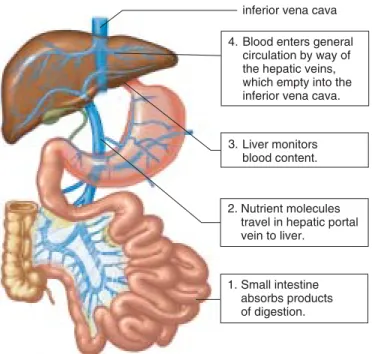
and a branch of the hepatic portal vein that transports nutrients from the intestines to the liver. In contrast, the central veins of lobules enter a hepatic vein. In Figure 5.11, trace the path of blood from the intestines to the liver via the hepatic portal vein and from the liver to the inferior vena cava via the hepatic veins.
In some ways, the liver acts as the gatekeeper to the blood. As the blood from the hepatic portal vein passes through the liver, it removes poisonous substances and detoxifies them. The liver also removes and stores iron and the fat-soluble vitamins A, D, E, and K. The liver makes cer-tain types of the plasma proteins, and helps regulate the quantity of cholesterol in the blood.
The liver maintains the blood glucose level at about 100 mg/100 ml (0.1%), even though a person eats intermit-tently. When insulin is present, any excess glucose in blood is removed and stored by the liver as glycogen. Between
meals, glycogen is broken down to glucose, which enters the hepatic veins, and in this way, the blood glucose level remains constant.
If the supply of glycogen is depleted, the liver converts glycerol (from fats) and amino acids to glucose molecules. The conversion of amino acids to glucose necessitates deam-ination, the removal of amino groups and the production of ammonia. By a complex metabolic pathway, the liver then combines ammonia with carbon dioxide to form urea:
Urea is the usual nitrogenous waste product from amino acid breakdown in humans. After its formation in the liver, urea is excreted by the kidneys.
The liver produces bile, which is stored in the gall-bladder. Bile has a yellowish-green color because it con-tains the bile pigment bilirubin, derived from the breakdown of hemoglobin, the red pigment of red blood cells. Bile also contains bile salts. Bile salts are derived from
2 NH3 + CO2 H2N C NH2
ammonia carbon dioxide urea
O
Figure 5.10 Hepatic lobules.
The liver contains over 100,000 lobules. Each lobule contains many cells that perform the various functions of the liver. They remove materials from and/or add materials to the blood, and deposit bile in bile ducts.
from intestinal capillaries
to hepatic vein hepatic portal vein central vein sinusoid bile canals bile duct hepatic artery
cholesterol, and they emulsify fat in the small intestine. When fat is emulsified, it breaks up into droplets, provid-ing a much larger surface area, which can be acted upon by a digestive enzyme from the pancreas.
Altogether, the following are significant ways in which the liver helps maintain homeostasis:
1. Detoxifies blood by removing and metabolizing poisonous substances.
2. Stores iron (Fe2) and the fat-soluble vitamins A, D, E, and K.
3. Makes plasma proteins, such as albumins and fibrinogen, from amino acids.
4. Stores glucose as glycogen after a meal, and breaks down glycogen to glucose to maintain the glucose concentration of blood between eating periods. 5. Produces urea after breaking down amino acids. 6. Destroys old red blood cells, excretes bilirubin, a breakdown product of hemoglobin, in bile, a liver product.
7. Helps regulate blood cholesterol level, converting some to bile salts.
Liver Disorders
Hepatitis and cirrhosis are two serious diseases that affect the entire liver and hinder its ability to repair itself. Therefore, they are life-threatening diseases. When a person has a liver ailment, jaundice may occur. Jaundice is a yellowish tint
to the whites of the eyes and also to the skin of light-pigmented persons. Bilirubin is deposited in the skin due to an abnormally large amount in the blood. In hemolytic jaun-dice, red blood cells have been broken down in abnormally large amounts; in obstructive jaundice, bile ducts are blocked or liver cells are damaged.
Jaundice can also result from hepatitis,inflammation of the liver. Viral hepatitis occurs in several forms. Hepatitis A is usually acquired from sewage-contaminated drinking wa-ter. Hepatitis B, which is usually spread by sexual contact, can also be spread by blood transfusions or contaminated needles. The hepatitis B virus is more contagious than the AIDS virus, which is spread in the same way. Thankfully, however, a vaccine is now available for hepatitis B. Hepati-tis C, which is usually acquired by contact with infected blood and for which there is no vaccine, can lead to chronic hepatitis, liver cancer, and death.
Cirrhosisis another chronic disease of the liver. First the organ becomes fatty, and then liver tissue is replaced by inactive fibrous scar tissue. Cirrhosis of the liver is often seen in alcoholics due to malnutrition and the excessive amounts of alcohol (a toxin) the liver is forced to break down.
The liver has amazing regenerative powers and can re-cover if the rate of regeneration exceeds the rate of damage. During liver failure, however, there may not be enough time to let the liver heal itself. Liver transplantation is usu-ally the preferred treatment for liver failure, but artificial livers have been developed and tried in a few cases. One type is a cartridge that contains liver cells. The patient’s blood passes through the cellulose acetate tubing of the car-tridge and is serviced in the same manner as with a normal liver. In the meantime, the patient’s liver has a chance to recover.
The Gallbladder
The gallbladderis a pear-shaped, muscular sac attached to the surface of the liver (see Fig. 5.1). About 1,000 ml of bile are produced by the liver each day, and any excess is stored in the gallbladder. Water is reabsorbed by the gallbladder so that bile becomes a thick, mucuslike material. When needed, bile leaves the gallbladder and proceeds to the duodenum via the common bile duct.
The cholesterol content of bile can come out of solution and form crystals. If the crystals grow in size, they form gall-stones. The passage of the stones from the gallbladder may block the common bile duct and cause obstructive jaundice. Then the gallbladder may have to be removed.
The pancreas produces pancreatic juice, which contains enzymes for the digestion of food. Among the liver’s many functions is the production of bile, which is stored in the gallbladder.
Figure 5.11 Hepatic portal system.
The hepatic portal vein takes the products of digestion from the digestive system to the liver, where they are processed before entering a hepatic vein.
inferior vena cava
2.
1.
4. Blood enters general circulation by way of the hepatic veins, which empty into the inferior vena cava.
3. Liver monitors blood content.
Nutrient molecules travel in hepatic portal vein to liver.
Small intestine absorbs products of digestion.
5.3 Digestive Enzymes
The digestive enzymes are hydrolytic enzymes, which break down substances by the introduction of water at spe-cific bonds. Digestive enzymes, like other enzymes, are proteins with a particular shape that fits their substrate. They also have an optimum pH, which maintains their shape, thereby enabling them to speed up their specific reaction.
The various digestive enzymes present in the gastric, pancreatic, and intestinal juices, mentioned previously, help break down carbohydrates, proteins, nucleic acids, and fats, the major components of food. Starch is a carbohydrate, and its digestion begins in the mouth. Saliva from the salivary glands has a neutral pH and contains salivary amylase,the first enzyme to act on starch:
salivary amylase
starch H2O → maltose
In this equation, salivary amylase is written above the arrow to indicate that it is neither a reactant nor a product in the re-action. It merely speeds the reaction in which its substrate, starch, is digested to many molecules of maltose, a disaccha-ride. Maltose molecules cannot be absorbed by the intestine; additional digestive action in the small intestine converts maltose to glucose, which can be absorbed.
Protein digestion begins in the stomach. Gastric juice secreted by gastric glands has a very low pH—about 2— because it contains hydrochloric acid (HCl). Pepsinogen, a precursor that is converted to the enzyme pepsin when exposed to HCl, is also present in gastric juice. Pepsin acts on protein to produce peptides:
pepsin
protein H2O → peptides
Peptides vary in length, but they always consist of a number of linked amino acids. Peptides are usually too large to be absorbed by the intestinal lining, but later they are broken down to amino acids in the small intestine.
Starch, proteins, nucleic acids, and fats are all enzymati-cally broken down in the small intestine. Pancreatic juice, which enters the duodenum, has a basic pH because it con-tains sodium bicarbonate (NaHCO3). Sodium bicarbonate
neutralizes chyme, producing the slightly basic pH that is optimum for pancreatic enzymes. One pancreatic enzyme, pancreatic amylase,digests starch:
pancreatic amylase
starch H2O → maltose
Another pancreatic enzyme, trypsin,digests protein:
trypsin
protein H2O → peptides
Trypsin is secreted as trypsinogen, which is converted to trypsin in the duodenum.
Lipase,a third pancreatic enzyme, digests fat molecules in the fat droplets after they have been emulsified by bile salts:
bile salts
fat → fat droplets
lipase
fat droplets H2O → glycerol fatty acids
The end products of lipase digestion, glycerol and fatty acid molecules, are small enough to cross the cells of the intes-tinal villi, where absorption takes place. As mentioned previously, glycerol and fatty acids enter the cells of the villi, and within these cells, they are rejoined and packaged as lipoprotein droplets before entering the lacteals (see Fig. 5.6).
Peptidasesand maltase,enzymes produced by the small intestine, complete the digestion of protein to amino acids and starch to glucose, respectively. Amino acids and glucose are small molecules that cross the cells of the villi and enter the blood. Peptides, which result from the first step in protein digestion, are digested to amino acids by peptidases:
peptidases
peptides H2O → amino acids
Maltose, a disaccharide that results from the first step in starch digestion, is digested to glucose by maltase:
maltase
maltose H2O → glucose glucose
Other disaccharides, each of which has its own en-zyme, are digested in the small intestine. The absence of any one of these enzymes can cause illness. For example, many people, including as many as 75% of African Amer-icans, cannot digest lactose, the sugar found in milk, be-cause they do not produce lactase, the enzyme that converts lactose to its components, glucose and galactose. Drinking untreated milk often gives these individuals the symptoms of lactose intolerance(diarrhea, gas, cramps), caused by a large quantity of nondigested lactose in the intestine. In most areas, it is possible to purchase milk made lactose-free by the addition of synthetic lactase or Lactobacillus acidophilus bacteria, which break down lactose.
Each type of food is broken down by specific enzymes. Table 5.2 lists some of the major digestive enzymes produced by the digestive tract, salivary glands, or the pancreas.
Digestive enzymes present in digestive juices help break down food to the nutrient molecules: glucose, amino acids, fatty acids, and glycerol. The first two are absorbed into the blood capillaries of the villi, and the last two re-form within epithelial cells before entering the lacteals as lipoprotein droplets.
Conditions for Digestion
Laboratory experiments can define the necessary conditions for digestion. For example, the four test tubes shown in Fig-ure 5.12 can be prepared and observed for the digestion of egg white, a protein digested in the stomach by the enzyme pepsin.
After all tubes are placed in an incubator at body temper-ature for at least one hour, the results depicted are observed. Tube 1 is a control tube; no digestion has occurred in this tube because the enzyme and HCl are missing. (If a control gives a
positive result, then the experiment is invalidated.) Tube 2 shows limited or no digestion because HCl is missing, and therefore the pH is too high for pepsin to be effective. Tube 3 shows no digestion because although HCl is present, the en-zyme is missing. Tube 4 shows the best digestive action be-cause the enzyme is present and the presence of HCl has resulted in an optimum pH. This experiment supports the hy-pothesis that for digestion to occur, the substrate and enzyme must be present and the environmental conditions must be optimum. The optimal environmental conditions include a warm temperature and the correct pH.
Figure 5.12 Digestion experiment.
This experiment is based on the optimum conditions for digestion by pepsin in the stomach. Knowing that the correct enzyme, optimum pH, optimum temperature, and correct substrate must be present for digestion to occur, explain the results of this experiment. Colors indicate pH of test tubes (blue, basic; red, acidic).
water Incubator 1 2 3 4 HCl water pepsin HCl water no digestion little or no digestion no digestion digestion pepsin water egg white egg white egg white egg white
Major Digestive Enzymes
Table 5.2
Enzyme Produced By Site of Action Optimum pH Digestion
Salivary amylase Salivary glands Mouth Neutral Starch H2O →maltose
Pancreatic amylase Pancreas Small intestine Basic
Maltase Small intestine Small intestine Basic Maltose H2O →glucose glucose
Pepsin Gastric glands Stomach Acidic Protein H2O →peptides
Trypsin Pancreas Small intestine Basic
Peptidases Small intestine Small intestine Basic Peptide H2O →amino acids
Nuclease Pancreas Small intestine Basic RNA and DNA H2O →nucleotides
Nucleosidases Small intestine Small intestine Basic Nucleotide H2O →base sugar phosphate
2
2
2
Cardiovascular System
5.4 Homeostasis
Human Systems Work Together on page 90 tells how the di-gestive system works with other systems in the body to maintain homeostasis.
Within the digestive tract, the food we eat is broken down to nutrients small enough to be absorbed by the villi of the small intestine. Digestive enzymes are produced by the salivary glands, gastric glands, and intestinal glands. Three accessory organs of digestion (the pancreas, the liver, and the gallbladder) also contribute secretions that help break down food. The liver produces bile (stored by the gallbladder), which emulsifies fat. The pancreas produces enzymes for the digestion of carbohydrates, proteins, and fat. Secretions from these glands, which are sent by ducts into the small intestine, are regulated by hormones such as secretin produced by the digestive tract. Therefore, the di-gestive tract is also a part of the endocrine system.
Blood laden with nutrients passes from the region of the small intestine to the liver by way of the hepatic portal vein. The liver is the most important of the metabolic or-gans. Aside from making bile, the liver regulates the cho-lesterol content of the blood, makes plasma proteins, stores glucose as glycogen, produces urea, metabolizes poisons, and breaks down old red blood cells. Because the liver is such an important organ, diseases affecting the liver, such as hepatitis and cirrhosis, are extremely dangerous.
5.5 Nutrition
The body requires three major classes of macronutrients in the diet: carbohydrate, protein, and fat. These supply the en-ergy and the building blocks that are needed to synthesize cellular contents. Micronutrients—especially vitamins and minerals—are also required because they are necessary for optimum cellular metabolism.
Several modern nutritional studies suggest that certain nutrients can protect against heart disease, cancer, and other serious illnesses. These studies have analyzed the eating habits of healthy people in the United States and around the world, especially those living in areas that have lower rates of heart disease and cancer. The resulting dietary recommendations can be illustrated by a food pyramid (Fig. 5.13).
The bulk of the diet should consist of bread, cereal, rice, and pasta as energy sources. Whole grains are preferred over those that have been milled because they contain fiber, vitamins, and minerals. Vegetables and fruits are another rich source of fiber, vitamins, and minerals. Notice, then, that a largely vegetarian diet is recommended.
Animal products, especially meat, may be included only minimally in the diet; fats and sweets should be used spar-ingly. Dairy products and meats tend to be high in saturated fats, and an intake of saturated fats increases the risk of car-diovascular disease (see Lipids, page 94). Low-fat dairy products are available, but there is no way to take much of the fat out of meat. Beef, in particular, contains a relatively high fat content. Ironically, the affluence of people in the United States contributes to a poor diet and, therefore, pos-sible illness. Only comparatively rich people can afford fatty meats from grain-fed cattle and car-bohydrates that have been highly processed to remove fiber and to add sugar and salt.
Figure 5.13 Food guide pyramid:
A guide to daily food choices.
The U.S. Department of Agriculture uses a pyramid to show the ideal diet because it emphasizes the importance of eating grains, fruits, and vegetables. Meats and dairy products are needed in limited amounts; fats, oils, and sweets should be used sparingly.
Source: Data from the U.S. Department of Agriculture.
fats, oils, sweets
milk, yogurt, cheese vegetables
meat, poultry, fish, dry beans, eggs, nuts
fruit
bread, cereal, rice, pasta Key:
Fat (naturally occurring and added)
Carbohydrates
The quickest, most readily available source of energy for the body is glucose. Carbohydrates are digested to simple sug-ars, which are or can be converted to glucose. As mentioned earlier in this chapter, glucose is stored by the liver in the form of glycogen. Between eating periods, the blood glucose level is maintained at about 0.1% by the breakdown of glyco-gen or by the conversion of glycerol (from fats) or amino acids to glucose. If necessary, amino acids are taken from the muscles—even from the heart muscle. While body cells can utilize fatty acids as an energy source, brain cells require glu-cose. For this reason alone, it is necessary to include carbohy-drates in the diet. According to Figure 5.13, carbohycarbohy-drates should make up the bulk of the diet. Further, these should be complex, not simple, carbohydrates. Complex sources of car-bohydrates include preferably whole-grain pasta, rice, bread, and cereal (Fig. 5.14). Potatoes and corn, although considered vegetables, are also sources of carbohydrates.
Simple carbohydrates (e.g., sugars) are labeled “empty calories” by some dietitians because they contribute to en-ergy needs and weight gain without supplying any other nutritional requirements. Table 5.3 gives suggestions on how to reduce dietary sugar (simple carbohydrates). In con-trast to simple sugars, complex carbohydrates are likely to be accompanied by a wide range of other nutrients and by fiber,which is indigestible plant material.
As previously stated, the intake of fiber is recommended because it may decrease the risk of colon cancer, a major type of cancer, and cardiovascular disease, the number one killer in the United States. Insoluble fiber, such as that found in wheat bran, has a laxative effect. Soluble fiber, such as that
found in oat bran, combines with bile acids and cholesterol in the intestine and prevents them from being absorbed. The liver then removes cholesterol from the blood and changes it to bile acids, replacing the bile acids that were lost. While the diet should have an adequate amount of fiber, some evi-dence suggests that a diet too high in fiber can be detrimen-tal, possibly impairing the body’s ability to absorb iron, zinc, and calcium.
Complex carbohydrates, which contain fiber and a wide range of nutrients, should form the bulk of the diet.
Reducing Dietary Sugar
Table 5.3
To reduce dietary sugar:
1. Eat fewer sweets, such as candy, soft drinks, ice cream, and pastry.
2. Eat fresh fruits or fruits canned without heavy syrup. 3. Use less sugar—white, brown, or raw—and less honey and
syrups.
4. Avoid sweetened breakfast cereals. 5. Eat less jelly, jam, and preserves. 6. Drink pure fruit juices, not imitations.
7. When cooking, use spices, such as cinnamon, instead of sugar to flavor foods.
8. Do not put sugar in tea or coffee.
Figure 5.14 Complex carbohydrates.
To meet our energy needs, dietitians recommend consuming foods rich in complex carbohydrates, such as those shown here, rather than foods consisting of simple carbohydrates, such as candy and ice cream. Simple carbohydrates provide monosaccharides but few other types of nutrients.
Proteins
Foods rich in protein include red meat, fish, poultry, dairy products, legumes (i.e., peas and beans), nuts, and cereals. Following digestion of protein, amino acids enter the blood-stream and are transported to the tissues. Ordinarily, amino acids are not used as an energy source. Most are incorpo-rated into structural proteins found in muscles, skin, hair, and nails. Others are used to synthesize such proteins as hemoglobin, plasma proteins, enzymes, and hormones.
Adequate protein formation requires 20 different types of amino acids. Of these, eight are required from the diet in adults (nine in children) because the body is unable to produce them. These are termed the essential amino acids. The body produces the other amino acids from metabolites derived from glucose breakdown or by transforming one type into another type. Some protein sources, such as meat, milk, and eggs, are complete; they provide all 20 types of amino acids. Legumes (beans and peas), other types of veg-etables, seeds and nuts, and also grains supply us with amino acids, but each of these alone is an incomplete pro-tein source because of a deficiency in at least one of the essential amino acids. Absence of one essential amino acid prevents utilization of the other 19 amino acids. Therefore, vegetarians are counseled to combine two or more incom-plete types of plant products to acquire all the essential amino acids. Table 5.4 lists complementary proteins— sources of protein whose amino acid contents complement each other so that all the essential amino acids are present in the diet. Soybeans and tofu, which is made from soybeans, are rich in amino acids, but even so, you have to combine tofu with a complementary protein to acquire all the essen-tial amino acids. Table 5.4 shows how to select various com-binations of plant products in order to make sure the diet contains the essential amino acids when it does not contain meat.
Amino acids are not stored in the body, and a daily sup-ply is needed. However, it does not take very much protein to meet the daily requirement. Two servings of meat a day (one serving is equal in size to a deck of cards) are usually enough. Some meats (e.g., hamburger) are high in protein, but also high in fat. Everything considered, it is probably a good idea to depend on protein from plant origins (e.g., whole-grain cereals, dark breads, and legumes) to a greater extent than is often the custom in the United States. A study involving native Hawaiians lends support to the belief that health improves when the diet is rich in protein from plants rather than protein from animals. Only 3% of the ancient Hawaiian diet was animal protein, whereas the modern diet is 12% animal protein (Fig. 5.15). This, in large part, accounts for why the ancient diet was only 10% fat, whereas the mod-ern diet of Hawaiians is 42% fat. A statistical study showed that the rate of cardiovascular disease and cancer is higher than average among Hawaiians who follow the modern diet. Diabetes is also common in persons who follow the modern diet. On the other hand, health has improved immensely among those who have switched back to the ancient diet.
Nutritionists do not recommend using protein and/or amino acid supplements. Protein supplements that athletes take to build muscle cost more than food and can be harm-ful. When excess protein is broken down, more urea is excreted in the urine. The water needed for excretion of
Figure 5.15 Ancient versus modern diet of native
Hawaiians.
Among those Hawaiians who have switched back to the native diet, the incidence of cardiovascular disease, cancer, and diabetes has dropped. 3% complex carbohydrate plant protein fat animal protein sugar Ancient Modern 3% KEY: 3% 10% 11% 73% 15% 28% 42% 12% Complementary Proteins*
Table 5.4
Legumes Seeds and Nuts Grains Vegetables
Green peas Sunflower seeds Wheat Leafy green (e.g., spinach) Navy beans Sesame seeds Rice Broccoli Soybeans Macadamia nuts Corn Cauliflower Black-eyed peas Brazil nuts Barley Cabbage Pinto beans Peanuts Oats Artichoke hearts Lima beans Cashews Rye
Kidney beans Hazelnuts Chickpeas Almonds Black beans Nut butter
*Combine foods from any two or more columns to acquire all of the essential amino acids.
urea can cause dehydration when a person is exercising and also losing water by sweating. Also, some studies suggest that protein supplements lead to calcium loss and weakened bones. Amino acid supplements can also be dangerous to your health. Mistaken ideas abound. For example, contrary to popular reports, taking lysine does not relieve or cure herpes sores.
Lipids
Fat and cholesterol are both lipids. Fat is present not only in butter, margarine, and oils, but also in various foods high in animal protein.
The current guidelines suggest that fat should account for no more than 30% of our daily calories. The chief reason is that an intake of fat not only causes weight gain, but also increases the risk of cancer and cardiovascular disease. Dietary fat may increase the risk of colon, hepatic, and pancreatic cancers. Although recent studies suggest no link between dietary fat and breast cancer, other researchers still believe the matter deserves further investigation.
Cardiovascular disease is often due to arteries blocked by fatty deposits, called plaque,that contain saturated fats and cholesterol. Cholesterol is carried in the blood by two types of lipoproteins: low-density lipoprotein (LDL) and high-density lipoprotein (HDL). LDL is thought of as “bad” because it carries cholesterol from the liver to the cells, while HDL is thought of as “good” because it carries cho-lesterol to the liver, which takes it up and converts it to bile salts.
Saturated fatty acids have no double bonds; monoun-saturated fatty acids have one double bond; and polyun-saturated fatty acids have many double bonds. Saturated fats, whether in butter or margarine, can raise LDL choles-terol levels, while monounsaturated fats and polyunsatu-rated fats lower LDL cholesterol levels. Olive oil and canola oil contain mostly monounsaturated fats; corn oil and saf-flower oil contain mostly polyunsaturated fats. These oils have a liquid consistency and come from plants. Saturated fats, which are solids at room temperature, usually have an animal origin; two well-known exceptions are palm oil and coconut oil, which contain mostly saturated fats and come from the plants mentioned.
Nutritionists suggest that, for optimal health, less than 30% of your calories should come from fat and less than 10% should come from saturated fat. Polyunsaturated fats are nutritionally essential because they are the only type of fat that contains linoleic acid and linolenic acid, two fatty acids the body cannot make. The body needs these two polyunsaturated fatty acids to produce various hormones and the plasma membrane of cells. Since these fatty acids must be supplied by diet, they are called essential fatty acids. These essential fatty acids are found in small amounts in the oils of plants and cold-water fish and are readily stored in the adult body.
Table 5.5 gives suggestions for reducing dietary fat and cholesterol. Everyone should use diet to keep their choles-terol level within normal limits so that medications will not be needed for this purpose.
Fake Fat
Olestra is a substance made to look, taste, and act like real fat, but the digestive system is unable to digest it. It trav-els down the length of the digestive system without be-ing absorbed or contributbe-ing any calories to the day’s total. Therefore, it is commonly known as “fake fat.” Unfortunately, the fat-soluble vitamins A, D, E, and K tend to be taken up by olestra, and thereafter they are not absorbed by the body. Similarly, people using olestra have reduced amounts of carotenoids in their blood, even as much as 20% less. Manufacturers fortify olestra-containing foods with the vitamins mentioned, but not with carotenoids.
Fake fat has other side effects. Some people who con-sume olestra have developed anal leakage. Others experi-ence diarrhea, intestinal cramping, and gas. Presently, the FDA has limited the use of olestra to potato chips and other salty snacks, but the manufacturer wants approval to add it to ice cream, salad dressings, and cheese.
Dietary protein supplies the essential amino acids; proteins from plant origins generally have less accompanying fat. A diet composed of no more than 30% fat calories is recommended because fat intake, particularly saturated fats, is associated with various health problems.
Reducing Lipids
Table 5.5
TO REDUCE DIETARY FAT:
1. Choose poultry, fish, or dry beans and peas as a protein source. 2. Remove skin from poultry before cooking, and place on a rack so
that fat drains off.
3. Broil, boil, or bake rather than frying.
4. Limit your intake of butter, cream, hydrogenated oils, shortenings, and tropical oils (coconut and palm oils).* 5. Use herbs and spices to season vegetables instead of butter,
margarine, or sauces. Use lemon juice instead of salad dressing. 6. Drink skim milk instead of whole milk, and use skim milk in
cooking and baking. 7. Eat nonfat or low-fat foods.
TO REDUCE DIETARY CHOLESTEROL:
1. Avoid cheese, egg yolks, liver, and certain shellfish (shrimp and lobster). Preferably, eat white fish and poultry.
2. Substitute egg whites for egg yolks in both cooking and eating. 3. Include soluble fiber in the diet. Oat bran, oatmeal, beans, corn,
and fruits such as apples, citrus fruits, and cranberries are high in soluble fiber.
*Although coconut and palm oils are from plant sources, they are mostly saturated fats.
People who wish to lose weight need to reduce their caloric in-take and/or increase their level of exercise. For a woman 19 to 22 years of age and 5 feet 4 inches tall, who exercises lightly, the nor-mal recommendation is 2,100 Cal* per day. For a man the same age, 5 feet 10 inches tall, who exercises lightly, the recommenda-tion is 2,900 Cal. Exercising is a good idea, because to maintain good nutrition, the caloric intake per day should probably not go below 1,200 Cal. Also, for the reasons discussed in this chapter, carbohydrates should still make up at least 58% of these calories, proteins should be no more than 25%, and the rest can be fats. A deficit of 500 Cal a day (through intake reduction or increased ex-ercise) is sufficient to lose a pound of body fat in a week.
A diet needs to be judged according to the principles of ade-quate nutrients; balanced carbohydrates, proteins, and fats; a moderate number of calories; and a variety of food sources. Thus, it is easy to see that many of the diets and gimmicks people use to lose weight are bad for their health. Some unhealthy ap-proaches are described here.
Pills
The most familiar pills, and the only ones approved by the United States Food and Drug Administration (FDA), are those that claim to suppress the appetite. They may work at first, but the appetite soon returns to normal, and the lost weight is regained. Then the user has the problem of trying to stop taking the drug without gaining additional weight. Other types of pills are under investi-gation and sometimes can be obtained illegally. But, as yet, there is no known drug that is both safe and effective for weight loss.
Liquid Diets
Despite the fact that liquid diets provide proteins and vitamins, the number of Calories is so restricted that the body cannot burn fat quickly enough to compensate, and muscle is still broken down to provide energy. A few people on this regime have died, proba-bly because even the heart muscle was not spared by the body.
Low-Carbohydrate Diets
The dramatic weight loss that occurs with a low-carbohydrate diet is not due to a loss of fat; it is due to a loss of muscle mass and water. Glycogen and important minerals are also lost. When a normal diet is resumed, so is the normal weight.
Single-Category Diets
These diets rely on the intake of only one kind of food, either a fruit or vegetable or rice alone. However, no single type of food provides the balance of nutrients needed to maintain health. Some dieters on strange diets suffer the consequences—in one instance, an individual lost hair and fingernails.
Questions to Ask About a Weight-Loss Diet
1. Does the diet have a reasonable number of Calories? (10 Cal per pound of current weight is suggested. In any case, no fewer than 1,000–1,200 Cal are recommended for a normal-sized person.)
2. Does the diet provide enough protein?
(For a 120-lb woman, 44 grams of protein each day are recommended. For a 154-lb man, 56 grams are
recommended. More than twice this amount is too much. For reference, 1 c milk and 1 oz meat each have 8 grams of protein.)
3. Does the diet provide too much fat?
(No more than 20–30% of total Cal is recommended. For reference, a pat of butter has 45 Cal; 1 gram fat 9 Cal.) 4. Does the diet provide enough carbohydrates?
(100 grams 400 Cal is the very least recommended per day; 50% of total Cal should be carbohydrates.
For reference, a slice of bread contains 14 grams of carbohydrates.)
5. Does the diet provide a balanced assortment of foods? (The diet should include breads, cereals, legumes,
vegetables (especially dark-green and yellow ones), low-fat milk products, and meats or a meat substitute.)
6. Does the diet make use of ordinary foods that are available locally?
(Diets should not require the purchase of unusual or expensive foods.)
*Cal 1,000 calories Figure 5A Fruit is a healthy and low-calorie snack. 95
Vitamins
Vitamins are organic compounds (other than carbohy-drate, fat, and protein) that the body uses for metabolic purposes but is unable to produce in adequate quantity. Many vitamins are portions of coenzymes, which are en-zyme helpers. For example, niacin is part of the coenen-zyme NAD, and riboflavin is part of another dehydrogenase, FAD. Coenzymes are needed in only small amounts be-cause each can be used over and over again. Not all vita-mins are coenzymes; vitamin A, for example, is a precursor for the visual pigment that prevents night blindness. If vita-mins are lacking in the diet, various symptoms develop (Fig. 5.16). Altogether, there are 13 vitamins, which are divided into those that are fat-soluble (Table 5.6) and those that are water-soluble (Table 5.7).
Antioxidants
Over the past 20 years, numerous statistical studies have been done to determine whether a diet rich in fruits and vegetables can protect against cancer. Cellular metabolism generates free radicals, unstable molecules that carry an extra electron. The most common free radicals in cells are superoxide (O2) and hydroxide (OH). In order to stabilize
themselves, free radicals donate an electron to DNA, to pro-teins, including enzymes, or to lipids, which are found in plasma membranes. Such donations most likely damage these cellular molecules and thereby may lead to disorders, perhaps even cancer.
Figure 5.16 Illnesses due to vitamin deficiency.
a.Bowing of bones (rickets) due to vitamin D deficiency. b.Dermatitis (pellagra) of areas exposed to light due to niacin (vitamin B3) deficiency.
c.Bleeding of gums (scurvy) due to vitamin C deficiency.
a. b. c.
Vitamins C, E, and A are believed to defend the body against free radicals, and therefore they are termed antiox-idants. These vitamins are especially abundant in fruits and vegetables. The dietary guidelines shown in Figure 5.13 suggest that we eat a minimum of five servings of fruits and vegetables a day. To achieve this goal, we should include salad greens, raw or cooked vegetables, dried fruit, and fruit juice, in addition to traditional apples and oranges and such.
Dietary supplements may provide a potential safeguard against cancer and cardiovascular disease, but nutritionists do not think people should take supplements instead of improving their intake of fruits and vegetables. There are many beneficial compounds in fruits that cannot be obtained from a vitamin pill. These compounds enhance each other’s absorption or action and also perform inde-pendent biological functions.
Vitamin D
Skin cells contain a precursor cholesterol molecule that is con-verted to vitamin D after UV exposure. Vitamin D leaves the skin and is modified first in the kidneys and then in the liver until finally it becomes calcitriol. Calcitriol promotes the absorption of calcium by the intestines. The lack of vitamin D leads to rickets in children (Fig. 5.16a). Rickets, characterized by bowing of the legs, is caused by defective mineralization of the skeleton. Most milk today is fortified with vitamin D, which helps prevent the occurrence of rickets.
Vitamins are essential to cellular metabolism; many protect against identifiable illnesses and conditions.
Fat-Soluble Vitamins
Table 5.6
Vitamin Functions Food Sources Conditions With
Too Little Too Much
Vitamin A Antioxidant synthesized from beta- Deep yellow/orange and leafy, Night blindness, Headache, dizziness, carotene; needed for healthy eyes, dark green vegetables, fruits, impaired growth nausea, hair loss, skin, hair, and mucous membranes, cheese, whole milk, butter, of bones and teeth abnormal development
and for proper bone growth eggs of fetus
Vitamin D A group of steroids needed for Milk fortified with vitamin D, Rickets, Calcification of soft development and maintenance of fish liver oil; also made in the decalcification and tissues, diarrhea, bones and teeth skin when exposed to sunlight weakening of possible renal
bones damage
Vitamin E Antioxidant that prevents oxidation Leafy green vegetables, fruits, Unknown Diarrhea, nausea, of vitamin A and polyunsaturated vegetable oils, nuts, whole- headaches, fatigue, fatty acids grain breads and cereals muscle weakness Vitamin K Needed for synthesis of substances Leafy green vegetables, Easy bruising Can interfere with
active in clotting of blood cabbage, cauliflower and bleeding anticoagulant medication
Water-Soluble Vitamins
Table 5.7
Vitamin Functions Food Sources Conditions With
Too Little Too Much
Vitamin C Antioxidant; needed for forming Citrus fruits, leafy green Scurvy, delayed wound Gout, kidney stones, collagen; helps maintain capillaries, vegetables, tomatoes, healing, infections diarrhea, decreased
bones, and teeth potatoes, cabbage copper
Thiamine Part of coenzyme needed for cellular Whole-grain cereals, Beriberi, muscular Can interfere (vitamin B1) respiration; also promotes activity of dried beans and peas, weakness, enlarged with absorption
the nervous system sunflower seeds, nuts heart of other vitamins Riboflavin Part of coenzymes, such as FAD; Nuts, dairy products, whole- Dermatitis, blurred Unknown (vitamin B2) aids cellular respiration, including grain cereals, poultry, vision, growth failure
oxidation of protein and fat leafy green vegetables
Niacin Part of coenzymes NAD and NADP; Peanuts, poultry, whole- Pellagra, diarrhea, High blood sugar (nicotinic needed for cellular respiration, grain cereals, leafy green mental disorders and uric acid, acid) including oxidation of protein and fat vegetables, beans vasodilation, etc. Folacin Coenzyme needed for production of Dark leafy green Megaloblastic May mask B12
(folic acid) hemoglobin and formation of DNA vegetables, nuts, beans, anemia, spina bifida deficiency whole-grain cereals
Vitamin B6 Coenzyme needed for synthesis Whole-grain cereals, bananas, Rarely, convulsions, Insomnia,
of hormones and hemoglobin; CNS beans, poultry, nuts, leafy vomiting, seborrhea, neuropathy control green vegetables muscular weakness
Pantothenic Part of coenzyme A needed for Nuts, beans, dark green Rarely, loss of appetite, Unknown acid oxidation of carbohydrates and fats; vegetables, poultry, mental depression,
aids in the formation of hormones fruits, milk numbness and certain neurotransmitters
Vitamin B12 Complex, cobalt-containing Dairy products, fish, Pernicious anemia Unknown
compound; part of the coenzyme poultry, eggs, needed for synthesis of nucleic acids fortified cereals and myelin
Biotin Coenzyme needed for metabolism of Generally in foods, especially Skin rash, nausea, Unknown amino acids and fatty acids eggs fatigue