Business
Pollution
Prevention
Program
Dental Industry
Thurston County
Hazardous Waste Program
Table of Contents
Introduction---
1Goals ---
2Methodology ---
2Results ---
5 Compliance Summary --- 6Table 1: Compliance Results--- 6
Table 2: Sanitary Code Compliance Issues --- 6
Current Trends in the Dental Profession --- 6
Table 3: General Dental Facility Trends --- 7
Table 4: Amalgam Management/Disposal Trends --- 7
Table 5: X-ray Waste Management Trends--- 7
Disposal Options for Spent X-ray Fixer --- 7
Free Local Silver Recycling --- 8
Best Management Practices --- 9
Table 6: Best Management Practices --- 9
Customer Survey---10
Table 7: Customer Survey Responses---10
Meeting the Goals ---
13Conclusions---
16Appendices
Appendix A: Memorandum of Understanding ---19Appendix B: Compliance with the Nonpoint Source Pollution Ordinance ---26
Appendix C: Letter of Invitation---31
Appendix D: Commercial Parcel Inventory Form ---33
Appendix E: Dental Waste Resource Guide CD-ROM---39
Appendix F: Notice of Compliance ---41
Appendix G: Notice of Noncompliance---43
Appendix H: Customer Survey ---45
Appendix I: Best Management Practices ---47
Acknowledgments
Thurston County Board of Health
Cathy Wolfe, District OneDiane Oberquell, District Two Robert N. Macleod, District Three Lydia Hodgkinson, Clerk of the Board
Public Health and Social Services Department
Sherri McDonald, RN, MPA, Director, Thurston County Public Health and Social Services Department
Diana T. Yu, MD, MSPH, Health Officer
Fieldwork and report writing was conducted by Brad Zulewski, Environmental Health Specialist.
This project was supported by tipping fees and a hazardous waste grant from the
Washington State Department of Ecology (Ecology), which was funded by the Hazardous Substance Tax created by Initiative 97. The Thurston County Hazardous Waste Program serves small businesses in Thurston County and the communities of Bucoda, Lacey, Olympia, Rainier, Rochester, Tenino, Tumwater, and Yelm.
Special Thanks
Thurston County would like to thank Ecology for providing valuable information about the dental industry, as well as financial assistance for the purchase and installation of a silver recovery system, which is located at the Thurston County Moderate Risk Waste Facility (HazoHouse). This new system provides a free waste management service for local businesses, protects our marine waters by reducing the potential for improper silver discharges, and offers a means to effectively recycle a valuable commodity.
Thurston County Public Health and Social Services Department Environmental Health Division
2000 Lakeridge Drive SW Olympia, WA 98502-6045 Phone 360-754-4111 TDD Line 360-754-2933 Fax 360-754-2954 Website http://www.co.thurston.wa.us/health/ehadm/
June 2006
Introduction
Thurston County Environmental Health (TCEH), a division of the Public Health and Social Services Department, conducted a technical assistance campaign for the dental industry. The campaign was funded by solid waste tipping fees and a grant from the Washington State Department of Ecology.
Dentists were identified as good candidates for technical assistance due to recently updated waste disposal regulations as well as the variety of potentially hazardous wastes that are generated by dental facilities. Wastes such as silver-containing x-ray chemicals, scrap mercury amalgam, chair-side sink traps, and vacuum pump filters all contain heavy metals that must be managed properly. Heavy metals are toxic to humans and do not readily break down in the environment. Additionally, past technical assistance efforts for other medical industry sectors identified significant rates of noncompliance regarding the management of spent x-ray chemicals. Specifically, those facilities utilizing onsite silver recovery systems for the treatment of spent fixer solutions were found to have higher rates of noncompliance due to inadequate system maintenance.
In August 2005, the Washington State Department of Ecology (Ecology) enacted new regulations requiring dental facilities to properly manage heavy metal wastes by installing specific types of equipment. These new regulations were part of a
Memorandum of Understanding (MOU) with the Washington State Dental Association (WSDA) and Ecology (Appendix A). The MOU detailed a variety of Best Management Practices (BMPs) related to proper waste management procedures, all of which were mandated on August 1st, 2005. With generous assistance from Ecology, TCEH designed the technical assistance effort largely based on these new state-wide requirements. In the summer of 2005, TCEH identified all dental-related facilities in the county. Once the list of potential businesses was completed, TCEH contacted each business with an offer of free technical assistance. The technical assistance effort took place during the fall of 2005 through the spring of 2006. The focus of the campaign was to educate business owners about the new Ecology regulations, ensure compliance with Article VI of the Thurston County Sanitary Code (also known as the Nonpoint Source Pollution Ordinance, Appendix B), reduce hazardous waste generation, and to improve overall waste management practices.
The Nonpoint Source Pollution Ordinance is based on the framework of the Washington State Dangerous Waste Regulations. This regulation is found in Chapter 173-303, Section –090 of the Washington Administrative Code. This section of the state regulation characterizes dangerous wastes (hazardous materials) as those solid wastes that exhibit any of the following characteristics.
a. Ignitability: a fire hazard. Generally, a material with a flash point less than 60°C (140°F).
b. Corrosivity: a solid or liquid with a pH of less than or equal to 2.0 or greater than or equal to 12.5.
c. Reactivity: a material that reacts violently with water, generates toxic gases when mixed with water, is capable of detonation or explosive reaction if heated under confinement, or is capable of detonation or explosive reaction at standard temperature and pressure.
d. Toxicity: a material that causes local or systemic detrimental effects in an organism, including asphyxiation, irritation, allergic sensitization, systemic poisoning,
mutagenesis, teratogenesis, and/or carcinogenesis.
The businesses included in this campaign are classified as Small Quantity Generators (SQG) of hazardous wastes. Small Quantity Generators (as defined in WAC 173-303-070) may not generate more than 220 pounds of hazardous waste per month or batch, and may not accumulate or store more than 2,200 pounds at any time. Thurston County regulates only those businesses with SQG status, while the Washington State Department of Ecology regulates businesses with Medium Quantity Generator (MQG) and Large Quantity Generator (LQG) status.
Goals
The Business Technical Assistance and Education Campaign is an element of the Thurston County Business Pollution Prevention Program. Success of the technical assistance and compliance elements of the Business Pollution Prevention Program are measured by goals established in the 1998 Hazardous Waste Plan for Thurston County. The goals are:
1. Protect ground water, surface water, soils, sediments, and private property from hazardous materials and hazardous waste contamination.
2. Increase the rate of waste reduction, which conserves resources and reduces demand for disposal and recycling services.
3. Increase the percentage of hazardous waste collected (that cannot be prevented through waste reduction in the first place).
4. Reduce the amount of hazardous materials that is improperly stored, improperly disposed, and accidentally spilled into the environment.
5. Reduce damage to collection and transfer vehicles, and disposal equipment, and reduce disruption of treatment facilities by ensuring hazardous waste is kept out of these facilities or systems.
6. Reduce potential for causing publicly owned facilities such as landfills or sewage treatment plants to exceed pollutant discharge limits.
Methodology
On August 1st, 2003, Ecology and WSDA entered into a MOU regarding the proper management of dental waste. The purpose of the MOU was to reduce the amount of
heavy metal waste being discharged into local municipal sewer systems and onsite septic systems. The MOU addressed the effective management and disposal of mercury in order to ensure compliance with existing waste regulations and to protect the environment. Through mutual discussions, WSDA and Ecology determined common objectives that would be most likely to be achieved by implementing the following BMPs:
1) Install, use, and maintain International Standards Organization (ISO) certified amalgam separators.
2) Collect all amalgam waste and dispose separately. No mercury or other dangerous wastes are to be disposed with solid waste or infectious “red bag” wastes.
3) Properly manage and dispose of all other dangerous waste streams (e.g. x-ray waste, lead foil/aprons).
4) Properly dispose of all scrap amalgam waste from traps, filters, and separators using a licensed treatment, storage, disposal, or recycling facility.
5) Keep amalgam out of sinks and never rinse amalgam waste down the drain. 6) Clean or replace chair-side traps on a regular schedule and properly dispose of
amalgam waste.
7) Clean vacuum pump filters regularly, according to the manufacturers recommendations.
8) Maintain all disposal records on site for three (3) years.
Under the terms of the MOU, dentists were given a two year voluntary compliance period regarding the above BMPs. During that time, Ecology developed a reporting system and sent surveys to dental facilities in order to establish a baseline level of BMP
implementation. At the end of the voluntary compliance period (August 1, 2005) all dental facilities would be held accountable by Ecology to implement the BMPs. In order to give the dental community ample time to implement the required BMPs, TCEH began planning the technical assistance effort after the voluntary compliance period expired. While working closely with Ecology staff, TCEH obtained valuable information regarding the compliance status of local dental facilities.
In addition to the recent regulatory changes enacted by Ecology, dentists were identified as good candidates for technical assistance due to the variety of potentially hazardous wastes that are generated as a result of daily operations, primarily mercury and silver. As mentioned above, mercury and silver are toxic, persistent heavy metals that do not readily degrade in the environment. This lack of degradation can also potentially cause heavy metals to accumulate to high levels in the environment as well as the human body. As a result, the Lacey, Olympia, Tumwater, Thurston (LOTT) Wastewater Alliance,
Olympia’s wastewater treatment facility, limits mercury discharges to 0.05 parts per million (ppm) and silver discharges to 0.2 ppm in wastewaters. Similarly, heavy metal waste must never be disposed into onsite septic systems.
Data collected from past technical assistance efforts by Ecology and TCEH further confirmed the need for additional technical assistance for the medical industry. TCEH found that medical industry sectors had significant rates of noncompliance regarding the
management of spent x-ray chemicals. Specifically, those facilities utilizing on-site silver recovery systems for the treatment of spent fixer solutions were found to have higher rates of noncompliance due to inadequate system maintenance. Additionally, Ecology learned that some dental facilities frequently dispose of scrap amalgam by mixing with regular trash or biohazardous waste. These wastes are commonly disposed in a landfill or incinerator, which has the potential to release mercury into the air or groundwater. Thus, scrap mercury must be managed separately and disposed using the appropriate
technology.
The campaign began by assembling a list of all dental facilities based on information gathered from Washington State Department of Health – Radiation Protection Division, Thurston County Public Health and Social Services, as well as local telephone
directories. Utilizing these resources, TCEH identified 99 initial sites for technical assistance.
Beginning in September 2004, an invitation letter (Appendix C) was sent to the
businesses selected for the campaign. The letter announced the upcoming campaign and explained the details of the technical assistance visits and compliance audits. A brief history of the Ecology MOU and the Business Pollution Prevention Program was also included. Businesses were then contacted approximately one week later to schedule a site visit. Site visits were conducted during the fall of 2005 through the spring of 2006.
For participating businesses, a commercial parcel inventory form (Appendix D) was used to collect information about a business’ source of drinking water, volume of chemical products on site, solid waste and wastewater disposal, floor drains, historical land use, hazardous waste generation, and spill/emergency response preparedness. The form contained questions regarding mercury waste management, silver recovery equipment, as well as other industry-specific topics.
An on-site assessment of hazardous waste management was performed as a component of the technical assistance visit. The assessment looked at hazardous materials used by each business and verified compliance with Ecology and Thurston County regulations. County staff also utilized the opportunity to suggest other voluntary BMPs. BMPs are non-regulated practices designed to reduce generation of hazardous waste, use less-toxic products, recycle, and make improvements in housekeeping and hazardous waste management. Each business received an educational computer CD-ROM (Appendix E) that contained updated state and county regulatory information as well as other
recommended BMPs.
The CD-ROM format was chosen over paper copies due to the large volume of material presented. In order to view the CD-ROM quickly and conveniently, the information was organized by subject matter and utilized a descriptive table of contents, which had direct links to the material by simply clicking on the title. This format allowed the material to be stored on multiple computers, but could also be printed for training manuals, safety meetings, etc.
After the technical assistance visit took place, the business representative was notified as to whether their business was in compliance with the Ecology regulations and the
Thurston County Sanitary Code. Businesses meeting these requirements were issued a Notice of Compliance (Appendix F). Businesses that were not in compliance were issued a Notice of Non-Compliance (Appendix G) and given a mutually agreed upon time frame in which to correct the problem(s). If the problem(s) was corrected, a Notice of Compliance was issued during a follow-up visit.
A customer survey (Appendix H) along with a self-addressed stamped envelope was also given to each business participating in the campaign. The survey asked businesses to describe any changes they had made in their hazardous waste management practices as a result of the campaign. It also asked businesses how they find out about hazardous waste management, how useful they found the campaign, and their impressions on the quality of service provided by Thurston County’s Business Pollution Prevention Program. Follow-up calls or site visits were conducted several weeks after the initial visit to evaluate the implementation of voluntary BMPs. Since BMPs are not considered
compliance issues, businesses were given educational information and recommendations. The list of recommended BMPs is located in Appendix I.
Results
A total of 99 sites were initially identified for technical assistance. Of the original 99 sites, 72 received technical assistance visits. Twenty-seven (27) of the 99 initial sites were not visited for the following reasons:
1) Fifteen (15) did not generate hazardous waste (i.e. used digital x-ray, no amalgam used, orthodontics only, etc).
2) Eight (8) could not be located or did not respond to attempted contacts. 3) Two (2) were in the process of closing or relocating.
4) Two (2) sites were already visited by Ecology.
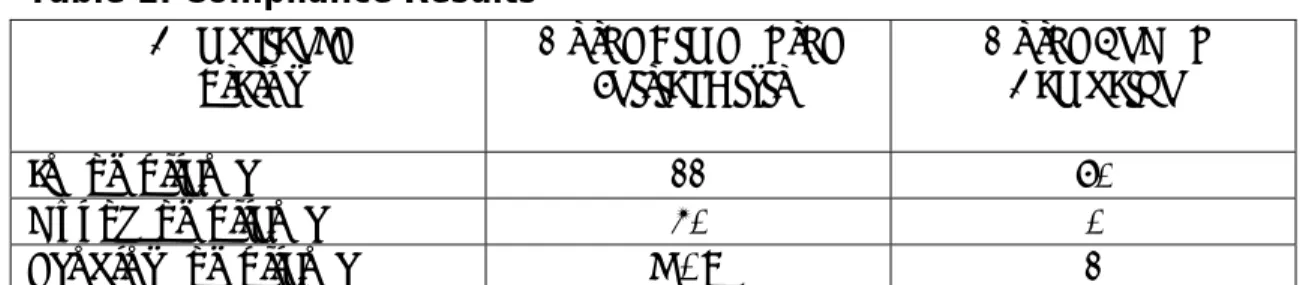
Of the 72 businesses receiving site visits, 22 (31%) were already in compliance with state and county regulations at the time of the initial visit, while 50 (69%) were not. At the end of the campaign, 70 businesses were in compliance, while two (2) were pending
compliance. An additional 50 follow-up visits were completed for those not in
compliance, resulting in 122 total site visits. Compliance summaries are listed below in Table 1. The specific issues resulting in noncompliance are listed in Table 2.
Table 1: Compliance Results
Compliance
Status At the Time of the Initial Visit At the End of Campaign
In compliance 22 70
Out of compliance 50 0
Pending compliance N/A 2
Table 2: Compliance Issues
Compliance Issue
At the Time of the
Initial Visit At the End of Campaign
No secondary containment 14 0
No amalgam separator 4 1
Inadequate silver treatment
system 33 2
Improper disposal into sewer system
2 0 Improper disposal into septic
system 6 0
Improper lead disposal 4 0
Improper amalgam disposal
(biohazard) 19 1
Improper amalgam disposal
(trash) 11 0
Inadequate waste disposal
documentation 42 0
Total Issues
135
4
Current Trends in the Dental Profession
As mentioned above, various information was collected about individual businesses utilizing the commercial parcel inventory form. After the initial inspections were
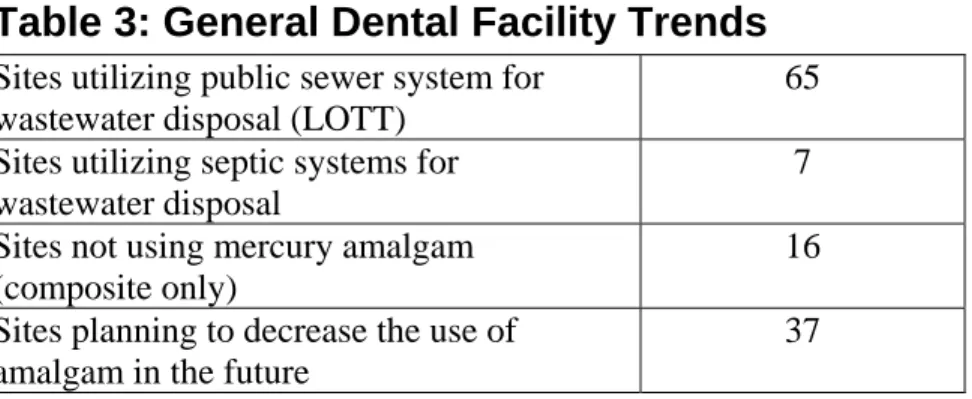
completed, several trends were identified regarding wastewater treatment and hazardous waste disposal. These trends are listed below in Table 3, Table 4, and Table 5.
Table 3: General Dental Facility Trends
Sites utilizing public sewer system forwastewater disposal (LOTT)
65 Sites utilizing septic systems for
wastewater disposal
7 Sites not using mercury amalgam
(composite only)
16 Sites planning to decrease the use of
amalgam in the future
37
Table 4: Amalgam Management/Disposal Trends
Sites using vendor pick-up services foramalgam disposal
31 Sites using drop-off/mail away waste
disposal services
14 Sites using vendor for amalgam separator
maintenance
55 Sites accumulating amalgam onsite (no
current disposal vendor)
13
Table 5: X-ray Waste Management Trends
Sites using vendor pick-up services forwaste disposal
15 Sites using local drop-off waste disposal
services
18 Sites using silver recovery systems 34 Sites using vendor for silver recovery
system maintenance
22 Sites upgrading inadequate silver recovery
systems to meet current regulations
18 Sites removing inadequate silver recovery
systems for proper off-site vendor disposal
14
Disposal Options for Spent X-ray Fixer
Spent x-ray fixer contains approximately 3000-5000 ppm silver. Since silver is a toxic, persistent heavy metal, it must be managed properly in order to protect human health and the environment. Managing silver-bearing waste is unique because, unlike most
hazardous waste, silver is also a valuable commodity. As a result, there are several waste disposal options and technologies that allow a business to recycle the silver, rendering the remaining liquid non-hazardous:
1) Onsite Silver Treatment: For businesses generating larger quantities of silver waste, installing a silver recovery system may be a good option. These systems remove silver from solutions utilizing chemical recovery cartridges (CRCs) and produce a non-hazardous liquid that can be discharged to a municipal sewer system. A refining company may then process the spent CRCs and recover the raw silver. However, due to startup costs, refining fees, and required maintenance, these systems may not be economical for businesses producing small quantities of silver-bearing waste.
2) Waste Pick-up Services: Businesses also have the option of utilizing a waste disposal pick-up service. There are several local companies that transport waste offsite for silver refining. This method does not require expensive equipment or maintenance and eliminates the potential for equipment failure, which can result in wastewater discharge violations. However, ample storage space is required for waste containers, as well as adequate secondary containment for spill prevention. Additionally, since some hazardous waste vendors specialize in larger shipments, it may not be economically feasible to transport small quantities.
3) Using Another Local Business for Disposal: Since silver recovery systems are also utilized by commercial photo developers and many other medical facilities, a business may accept silver waste from other
businesses for proper treatment. This is a good option for those who generate a small quantity of waste.
Free Local Silver Recycling
Don’s Camera, a commercial photo processor in downtown Olympia, utilized a silver recovery system for treatment of their processing wastes. For many years, Don’s Camera extended their treatment capabilities and offered free waste disposal services to
approximately 15 dental facilities and numerous other medical offices. Unfortunately, Don’s Camera stopped this service in January of 2006. At that time, the only other free disposal site was at The Evergreen State College (Evergreen). In 2004, the Evergreen Photography Department began offering free silver treatment services, which was facilitated by TCEH during another technical assistance campaign for medical offices. Evergreen still gladly offers this service, however, their distant location makes this option inconvenient for some dental facilities.
After conducting numerous site visits, it was apparent that most dental facilities produced approximately 1-2 gallons of silver-containing x-ray waste per month. Due to the small quantity of waste, silver recovery systems and waste pick-up services were found to be potentially costly and/or inconvenient for many dental facilities. As noted above, it was also observed that 34 (47%) dental facilities were utilizing improper silver recovery systems. Due to the unusually high rate of non-compliance, TCEH began researching alternative disposal methods. Based on past technical assistance efforts, TCEH
discovered that approximately 30-40 local businesses have utilized Don’s Camera, with the potential for many additional customers.
In March of 2006, TCEH decided to research new disposal options for x-ray fixer. While conducting past technical assistance efforts, county staff discovered that the majority of commercial silver recovery systems used by local businesses are sold by Hallmark Refining, Inc (Hallmark). Hallmark installs and maintains silver recovery systems for virtually all types of applications, large or small. Since the company is located in Western Washington, they frequently visit the Olympia area and are readily available for service requests. In March 2006, Hallmark installed a new silver recovery system at the Thurston County Moderate Risk Waste Facility (HazoHouse) located in Lacey, Washington. HazoHouse began accepting used x-ray fixer free of charge from all Small Quantity Generators (SQGs) per Ecology regulations. Within two months after installing the system, HazoHouse received approximately 100 gallons of used fixer from local dentists. Conservatively, it is estimated that HazoHouse will receive approximately 600 gallons of used fixer per year, which will result in the recycling of approximately 20 pounds of silver.
Due to the estimated demand for free silver recycling services, the LOTT Alliance
installed a similar Hallmark recovery system at the Budd Inlet wastewater treatment plant in downtown Olympia. This new service offers a convenient drop-off location for
businesses located in the Olympia-Tumwater areas, while the HazoHouse drop-off location benefits the Lacey-Yelm areas (See Appendix J).
Best Management Practices
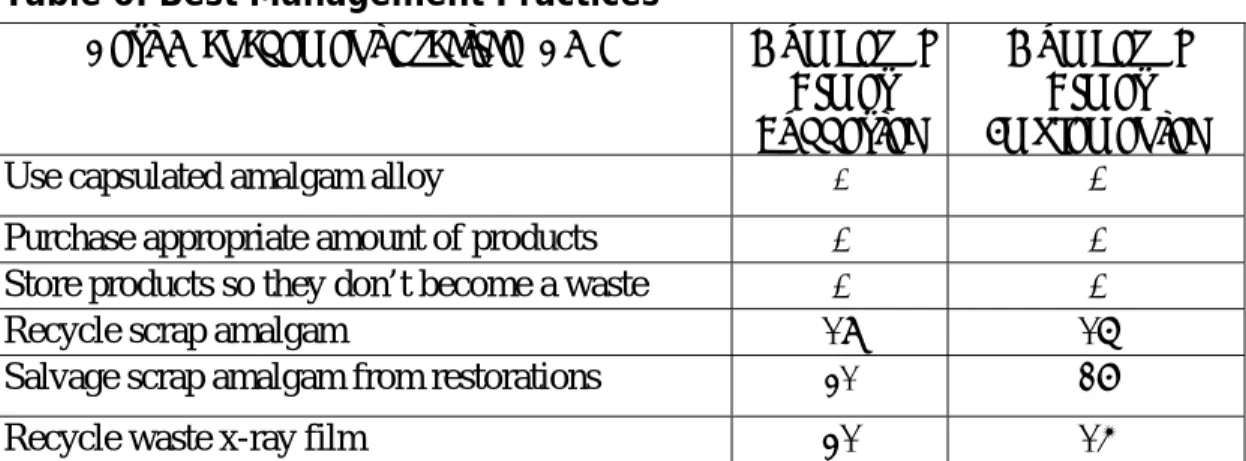
In addition to regulatory requirements, other recommended BMPs are also presented during technical assistance visits. The goal is to encourage businesses to improve all aspects of hazardous material management, from chemical purchasing to final waste disposal.
Table 6: Best Management Practices
Best Management Practice (BMP) Number of
Times Suggested
Number of Times Implemented
Use capsulated amalgam alloy 0 0
Purchase appropriate amount of products 0 0
Store products so they don’t become a waste 0 0
Recycle scrap amalgam 18 16
Salvage scrap amalgam from restorations 31 27
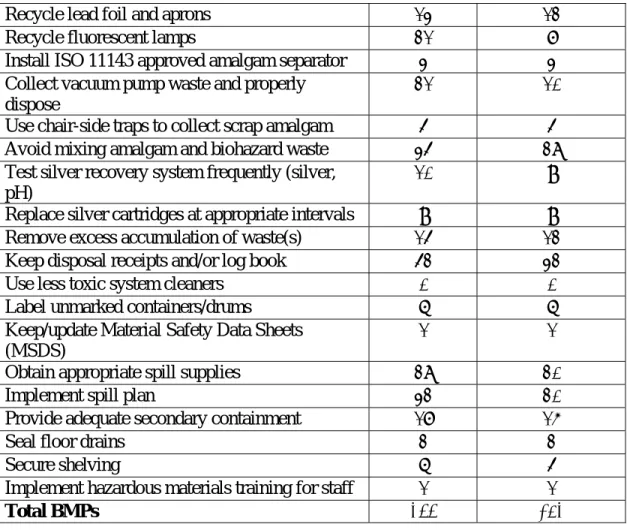
Recycle lead foil and aprons 13 12
Recycle fluorescent lamps 21 7
Install ISO 11143 approved amalgam separator 3 3 Collect vacuum pump waste and properly
dispose
21 10 Use chair-side traps to collect scrap amalgam 4 4 Avoid mixing amalgam and biohazard waste 34 28 Test silver recovery system frequently (silver,
pH)
10 9 Replace silver cartridges at appropriate intervals 9 9
Remove excess accumulation of waste(s) 14 12
Keep disposal receipts and/or log book 42 32
Use less toxic system cleaners 0 0
Label unmarked containers/drums 6 6
Keep/update Material Safety Data Sheets (MSDS)
1 1
Obtain appropriate spill supplies 28 20
Implement spill plan 32 20
Provide adequate secondary containment 17 15
Seal floor drains 2 2
Secure shelving 6 4
Implement hazardous materials training for staff 1 1
Total BMPs 344 253
Customer Survey
Forty-eight (48) of the 72 (66%) businesses that received a customer survey during the initial site visit completed and returned the form. A summary of the customer survey form is listed below in Table 7.
Table 7: Customer Survey Responses
Survey Question Yes No Unsure
No change
needed
1a. Was your business in compliancefollowing the initial visit? 19 26 3
Yes No Unsure No change
needed
1b. If not, were you in compliance by
Yes No Unsure No change needed
2. Did the visit assist you in making changes in the way you manage your hazardous materials/wastes?
45 1 0 3
Disposal co
sts
Equipment costs Where to obtain
disposal information? Understand ing re gulations Extra time r equired for proper management an d disposal Safety and l iability issues
3. What concerns you most about proper hazardous waste
management? 12 5 14 27 8 14
4. Where do you obtain information regarding hazardous materials management? Comments: Govt. Agencies (28), Dental Assn. (12), Vendor (7), Online (2), Training Classes (2), Material Safety Data Sheets (1), Corporate Office (1), Word of Mouth (1)
Yes No Unsure No change
needed
5a. Did you have any specific
questions during the visit? 20 26 0 Please describe: Waste Disposal (14),
Disposal Vendors (2), Safety Supplies (2), Other (2).
Yes No
Unsure
No change needed
provide specific answers that addressed your question?
Yes No Unsure No change
needed
6. Was the specialist knowledgeable?
49 0 0
Yes No Unsure No change
needed
7a. Do you plan to use the “Dental Waste Resource Guide” CD for current or future reference?
42 3 4
7b. Which format do you prefer?
Computer CD: 26
Paper copy: 23 N/A N/A 4
Yes No Unsure No change
needed
8. Overall, did your business benefit from the technical assistance
program? Comments:
55 2 0
Yes No Unsure No change
needed
9. In addition to the technical
assistance program, TCEH provides businesses with an information line, newsletter, disposal site, and a
website. Do you currently use or will you use these services?
N/A N/A N/A
Which services?
Hazardous Waste Hotline: 11 Business Newsletter: 10 HazoHouse: 36
Website: 22
Yes No Unsure No change
10. Are there additional services
TCEH can provide? 3 24 21
Yes No Unsure No change
needed
11. Thurston Co. has considered purchasing a silver recovery system in order to provide free drop-off service for fixer disposal. If offered, would you use this service?
38 11
If yes, which drop-off location would you prefer?
1. LOTT Wastewater Alliance: 17
2. Thurston Co. HazoHouse: 21
12. Additional Comments? Thank You (5), Very Helpful (2), Very Informative (2), Very Pleasant Meeting (2), Good Information (1), Very Professional (1), Knowledgeable Specialist (1), Love the CD (1), Dons Camera does a good job (1), Transporting fixer is difficult (1).
Meeting the Goals of the Hazardous
Waste Plan for Thurston County
Success of the technical assistance and compliance elements of the Business Pollution Prevention Program are measured by goals established in the 1998 Hazardous Waste Plan for Thurston County. The outcomes for each goal are listed below:
Protect ground water, surface water, soils, sediments, and private
property from hazardous materials and hazardous waste
contamination:
√ Fifty (50) businesses achieved compliance with the Thurston County Nonpoint Source Pollution Ordinance, which mandates proper storage and disposal of hazardous materials.
√ Thurston County verified that 22 businesses were already conducting proper management and disposal of hazardous materials.
√ Fourteen (14) businesses improved their chemical storage practices by installing adequate secondary containment. This included the installation of spill
containment pads and/or sealing floor drains to prevent hazardous material discharges into the environment.
√ Eight (8) businesses stopped discharging spent x-ray chemicals into on-site septic systems or the LOTT sewer system.
√ Thirty-two (32) businesses updated and improved their waste disposal
recordkeeping practices, which ensures proper handling of all types of hazardous materials and waste.
Increase the rate of waste reduction, which conserves resources and
reduces demand for disposal and recycling services:
√ Thurston County HazoHouse and the LOTT Alliance created new local drop-off services for silver waste recycling, which eliminates the need for long-distance transportation to out-of-state disposal facilities.
√ Eighteen (18) businesses upgraded to proper on-site chemical treatment systems, which recycle silver and eliminates the need for off-site transportation and disposal of spent photographic fixer.
√ The campaign verified that 38 businesses utilize vendors that monitor and manage chemical inventories, which help prevent shelf life expiration resulting from overstock situations.
√ The campaign verified that every business utilized at least one type of less toxic chemical alternative, which commonly included low-toxicity disinfection products.
√ Sixteen (16) businesses no longer utilize mercury amalgam and 37 others plan to decrease amalgam use.
√ Fifteen (15) businesses utilize digital x-ray, which produces no chemical waste.
Increase the percentage of hazardous waste collected (that cannot be
prevented through waste reduction in the first place):
√ As a result of the campaign, two new silver waste recycling services were created by Thurston County HazoHouse and the LOTT Alliance. It is estimated that these services will collect and treat approximately 600 gallons of spent x-ray fixer per year, resulting in over 20 pounds of recycled silver.
√ Thirty (30) businesses stopped improperly disposing of scrap amalgam and now utilize recycling services.
√ Fourteen (14) businesses permanently removed inadequate silver treatment systems and now use proper off-site recycling services.
√ As a result of the campaign, twelve (12) businesses disposed of accumulated waste chemicals.
√ Four (4) businesses stopped improperly disposing of scrap lead and now utilize recycling services.
√ Four (4) businesses installed mercury amalgam separators that collect scrap amalgam for future recycling.
√ Four (4) businesses agreed to recycle spent fluorescent lamps.
Reduce the amount of hazardous materials that is improperly stored,
improperly disposed, and accidentally spilled into the environment:
√ As a result of the campaign, 50 businesses stopped improperly storing and/or disposing of hazardous wastes.
√ Fourteen (14) businesses added secondary containment to their chemical storage areas.
√ Thirty-three (33) businesses contained inadequate silver treatment systems, which were all upgraded or removed as a result of the campaign.
√ Thirty (30) businesses stopped improperly disposing of mercury amalgam waste.
√ Eight (8) businesses were improperly disposing spent x-ray chemicals into septic or sewer systems. These issues were resolved by utilizing waste disposal vendors or proper treatment systems.
√ Twenty (20) businesses agreed to implement written emergency spill plans for their facilities.
√ Twenty (20) businesses updated their emergency spill kits or purchased additional spill supplies.
Reduce damage to collection and transfer vehicles, and disposal
equipment, and reduce disruption of treatment facilities by ensuring
hazardous waste is kept out of these facilities or systems:
√ As a result of the campaign, six (6) businesses stopped improperly disposing of spent x-ray chemicals into onsite septic systems.
√ Two (2) businesses stopped improperly disposing of spent x-ray chemicals into the LOTT municipal sewer system.
√ Eighteen (18) businesses upgraded to proper on-site chemical treatment systems, which prevents untreated silver waste from entering the LOTT municipal sewer system.
√ Fourteen (14) businesses permanently removed inadequate silver treatment systems, eliminating the potential for improper sewer discharges.
√ Four (4) businesses installed mercury amalgam separators that collect scrap amalgam and reduce mercury discharges to wastewater.
√ Twenty-one (21) businesses agreed to obtain updated Material Safety Data Sheets, which provide proper disposal, handling, and safety information for x-ray chemicals.
√ Six (6) businesses agreed to properly label waste storage containers, which prevents improper waste handling and disposal.
Reduce potential for causing publicly owned facilities such as the
landfill or sewage treatment plants to exceed pollutant discharge limits:
√ Fifty-five (55) businesses utilize vendors to service amalgam separators, which helps to ensure that the systems are functioning properly, reducing potential mercury discharges to wastewater.
√ The campaign verified that twenty-two (22) businesses utilize vendors to service their silver recovery systems, which helps ensure that no silver waste enters wastewater treatment systems.
√ Thirty-three (33) businesses contained inadequate silver treatment systems, which were all upgraded or removed as a result of the campaign.
√ Eight (8) businesses stopped improperly disposing of spent x-ray chemicals into the municipal sewer or onsite septic systems.
√ Twenty-one (21) businesses received information regarding proper disposal options for spent fluorescent lamps.
√ In order to prevent spills from entering the sanitary sewer or onsite septic system, fourteen (14) businesses provided additional secondary containment for chemical storage areas.
Conclusions
This single-industry campaign focused on the dental industry. Most single-industry campaigns focus on business types that represent a potential risk to public health and the environment. This risk is illustrated by improper storage, use, and disposal of hazardous materials. Dentists were identified as good candidates for technical assistance due to the various heavy metal wastes produced. Mercury, silver, and lead are toxic to humans and persistent in the environment. Since heavy metals are not adequately treated by onsite septic or sanitary sewer treatment systems, any waste entering these systems has the potential to impact the environment.
Twenty-two (22) of the 72 businesses (31%) inspected were in compliance with the Thurston County Sanitary Code, while 50 (69%) were not. The most common compliance issues involved improper silver recovery systems and improper scrap amalgam disposal. Thirty-three (33) businesses contained improperly maintained and/or inadequate silver recovery systems. Eight (8) others improperly discharged spent x-ray chemicals into the municipal sewer or septic system. A total of 30 businesses (42%) were improperly disposing of chair-side scrap amalgam.
Compliance rates for amalgam separator installation were very high. Sixty-eight (68) dental facilities (94%) installed the proper amalgam separator prior to the initial site visit. This high rate of compliance appeared to be inconsistent when compared with the much lower rates of compliance for silver and chair-side scrap amalgam disposal. Since 2003, Ecology and the WSDA made numerous contacts to dental facilities statewide, offering
detailed information regarding the new requirements for dental waste management. The information included proper handling procedures for all types of waste as well as local disposal resources and vendors. It is unclear why dental facilities in Thurston County implemented amalgam separator improvements more readily than other best management practices offered by Ecology and the WSDA.
After reviewing the customer surveys, several trends were identified that may offer clues regarding these inconsistent compliance rates. When asked what concerns businesses most about hazardous waste management, 27 of 48 respondents (56%) cited the
understanding of regulations, while another 14 respondents (29%) cited knowing where to obtain disposal information. However, when asked where dental facilities obtain disposal information, 28 respondents (58%) cited government resources. Only seven respondents (15%) utilize vendors for waste disposal information, which was surprising since most vendors offer disposal services and provide disposal-related equipment. Since vendors have the most frequent contact with businesses, it is suggested that future
technical assistance efforts include or start with waste disposal vendors.
After concluding the campaign, it was evident that the participating businesses improved their waste management practices and clearly benefited as a result of this effort. Forty-eight (48) businesses achieved compliance and a total of 135 separate compliance issues were resolved. In addition, eight (8) businesses stopped discharging untreated wastes into sewer or septic systems and fourteen (14) others added secondary containment to
chemical storage areas. Together, the businesses implemented 255 BMPs and were provided with two new silver waste recycling options.
Appendix A:
STATE OF WASHINGTON
DEPARTMENT OF ECOLOGY
P.O. Box 47600 z Olympia, Washington 98504-7600(360) 407-6000 z TDD Only (Hearing Impaired) (360) 407-6006
Memorandum of Understanding
Washington State Department of Ecology And
Washington State Dental Association
Parties
The Washington State Department of Ecology (“Ecology”) is the state’s environmental agency that has enforcement responsibility under federal and state water and waste
environmental laws for the purpose of this Memorandum of Understanding (MOU). Ecology has delegated permitting and compliance authority and responsibility for implementing the federal Clean Water Act pretreatment program to the following municipal jurisdictions: Everett, King County (Metro/King County service area), Lynnwood, Olympia (LOTT), Pierce County (Chambers Creek service area), Port Angeles, Richland, Spokane, City of Tacoma, Vancouver, and Yakima. These jurisdictions are the wastewater management authorities for the local sewerage systems pertinent to dental offices in these areas.
The Washington State Dental Association (“WSDA”) is a voluntary membership association of Washington dentists.
The parties recognize there are an estimated 2,600 dental offices in Washington State. Purpose of MOU
Both Parties acknowledge the importance of implementing mercury reduction actions published in the Washington State Mercury Chemical Action Plan, “Dental Facilities-Recommended Actions.”
Ecology’s objective is to reduce the amount of dental amalgam waste that may now be discharged from dental offices to sewer treatment plants or into privately-owned onsite septic systems. The purpose of the MOU is to recognize WSDA’s and Ecology’s mutual desire to achieve compliance and protect Washington’s environment within the term of this MOU by timely incorporation of best management practices regarding regulated waste management in Washington State dental offices.
Through their mutual discussion of dental amalgam waste issues, Ecology’s representatives and the WSDA Task Force on Dental Amalgam Waste determined the common objectives of
Ecology and the WSDA are most likely to be achieved by implementing the steps outlined below in this MOU.
Nature of MOU
The MOU addresses the effective management and disposal of mercury generated from dental practice such that the water and waste regulations are complied with to protect Washington’s environment. The advocacy of BMPs in this MOU does not address dental standards of practice related to therapeutic use and placement of amalgam fillings.
Ecology is exercising its prosecutorial discretion to pursue a voluntary compliance strategy with WSDA to achieve a significant reduction of mercury waste from dental offices. This achievement will be consistent with the goals of the Washington State Mercury Chemical
Action Plan, (Department of Ecology Publication No. 03-03-001, January 2003).
WSDA supports the science that supports the safety of dental amalgam. The WSDA cannot bind its membership, but joins in this MOU to advocate with dentists to voluntarily adopt amalgam best management practices (BMPs) described herein. The WSDA has as one of its purposes the advancement of the science of dentistry. This includes progress in the effective management of dental amalgam waste.
Best Management Practices
Ecology and WSDA each will support and advocate that dental offices implement best management practices (BMP) concerning dental amalgam waste as follows:
1. Install, use and maintain International Standards Organization (ISO) certified
amalgam separators. Installation applies to all offices regardless of sewer disposal type (public system or septic), but would not apply to practices that are restricted
exclusively to these dental specialties: Orthodontics and Dentofacial Orthopedics; Oral and Maxillofacial Surgery; Oral Medicine and Pathology; Oral and Maxillofacial Radiology; Periodontics; and Endodontics and Prosthodontics, provided amalgam fillings are neither placed nor removed in these practices or are only placed or removed on less than 10 practice days during the year.
2. Collect all amalgam waste (both scrap and contact amalgam) in separate container. No dangerous waste or amalgam is to be placed in the infectious waste “red bag.”
3. Properly manage and dispose of all other dangerous waste streams generated by the dental office (e.g., x-ray wastes, or lead foils/aprons).
4. Properly dispose of all scrap amalgam waste from traps, filters and separators with a licensed treatment, storage, disposal or recycling facility.
5. Keep amalgam out of sinks and never rinse amalgam waste down the drain. 6. Clean or replace chair-side traps on a regular schedule and properly dispose of
amalgam waste.
7. Clean vacuum pump filters regularly, according to the manufacturer’s recommendations.
Statewide Dental Amalgam Waste Reduction Education and Outreach
Ecology and WSDA will jointly develop a statewide dental amalgam waste reduction strategy of specific actions to inform dental offices about relevant law and regulation regarding management of dental amalgam waste and to encourage voluntary implementation of BMPs for dental offices. The focus of the outreach will be to distribute the BMPs and spell out dentist’s responsibilities to correctly manage waste dental amalgam and all other dangerous wastes. Ecology will identify to WSDA appropriate recycling facilities, hazardous waste management facilities, and moderate risk waste facilities that can be used to manage wastes from dental activities. Ecology will offer technical assistance, and if requested, will provide presentations at state or regional conferences or workshops. The strategy may use the resources available to Ecology and WSDA within the limits of each organization’s budget intended for this purpose. Ecology and WSDA will jointly develop a timetable for implementing actions in this strategy following mutual discussion of both parties of the strategy.
Outcomes
The parties agree that the goal of this MOU is that Washington dental offices will implement BMPs, to be measured as follows:
1. Ecology and WSDA will jointly develop a reporting system for notification by the dental office of the installation of an amalgam separator system in the dental office. Reports will specify the date of installation, dental office location and owner, model of separator, and the name, address and phone number of the installer.
2. Installation notification will be made to Ecology, the sewer treatment plan permit holder within which jurisdiction the dental office is located, and to the WSDA at the end of each quarter of the year.
3. Prior to August 2004, Ecology and WSDA will conduct a survey of dentists to establish a baseline level verification of dental offices following the prescribed BMPs. A second survey will be conducted prior to August 2005 to determine if the number of dental offices following the BMPs has increased. Results of the survey will be shared with local governments.
During the transition outlined in this MOU, it is understood to be a voluntary program by dental offices. Ecology will not seek to require dental offices to have new discharge permits or compliance reporting while this MOU is in effect but will have enforcement discretion to apply applicable laws and regulations to dental offices upon completion of the effective date of this MOU.
Each year within a few months after the report count is available, WSDA and Ecology representatives will meet to review and discuss progress made and whether any practical, additional steps could be effective to achieve a higher rate of voluntary participation.
Both Parties are committed to achieving compliance through this MOU. At the termination date of this MOU, our agreed goal is that dental offices in the State of Washington will be operating under the prescribed BMPs and managing mercury waste in a proper manner, consistent with the Washington State Mercury Chemical Action Plan recommendations. Notification
Communications and notices between the parties will be as follows: If to Ecology: Michael J. Gallagher
Mercury Chemical Action Plan Coordinator
Department of Ecology Environmental Assessment Program P.O. Box 47600
Olympia, WA 98504-7600 If to WSDA: David Hemion
Assistant Executive Director
Washington State Dental Association 2033 6th Avenue Suite 333
Seattle, WA 98121 Recognition
Ecology and WSDA will encourage dental offices to self-report compliance on separator installation and implementation of BMPs. Dental offices will be instructed to submit their reports to Ecology, which will provide copies to WSDA at the end of each quarter of the year.
Ecology and WSDA agree to provide a “certificate of recognition” program to identify those dental offices that have met the requirements of this MOU. Dental offices submitting a notice in general conformity with the above reporting provisions for separator installation and BMP will be provided within thirty (30) days with a certificate of recognition. A proposed example is attached as Exhibit A.
Effectiveness
This MOU will take effect on the date signed by Ecology once approved by the WSDA Board of Directors, and remain in effect for a period of two (2) years from the date of signature by Ecology.
Exhibit A
Certification of Recognition
The dental office of Dr. __________________________ follows waste-disposal best management
practices in accordance with recommendation of the State Department of Ecology and the Washington State Dental Association.
The State of Washington and WSDA express appreciation.
By
Title, Washington State Department of Ecology
By
Appendix B:
Compliance with the Nonpoint
Source Pollution Ordinance
“The Health
Department's
approach to
compliance
assumes that the
majority of
hazardous waste
generators want
to ‘do the right
thing’ and simply
need to recognize
how to make it
happen.”
This fact sheet describes the Thurston County Health Department’s approach to implementing the hazardous waste sections of the Nonpoint Source
Pollution Ordinance (Article VI of the Sanitary Code) and explains the procedures that govern its enforcement. The ordinance, which took effect in May 1993, is part of the Business Pollution Prevention Program’s efforts called for in the county’s Hazardous Waste Plan and supported by Thurston County and its incorporated cities.
P
ROACTIVE ANDR
EACTIVEF
IELDI
NSPECTIONSThe Health Department implements the ordinance with either a proactive or reactive approach.
Proactive inspections – those in which the Health Department takes the initiative to approach businesses rather than waiting for inquiries or
complaints – will be directed, within a limited time frame, at all businesses of a given type, and will be preceded by an opportunity for education about the ordinance. The process is designed to resolve all violations while avoiding inequitable or arbitrary enforcement of the ordinance among different competitors in the same field.
When the Health Department receives a complaint from the public about a violation of the ordinance, the Department reacts to the report and
investigates. In these cases, enforcement action may be taken. Nonetheless, the goal is still to correct the violation rather than issue tickets, so field staff will work as constructively as possible with the violator to make necessary changes.
WHAT THE ORDINANCE SAYS
The following is an excerpt from Article VI, Section 4 of the Sanitary Code:
• 4.1 (a) Moderate risk waste and petroleum products including, but not limited to, oil and grease, shall be disposed of by recycling or use of a hazardous waste management facility operating under interim status or with a permit issued by EPA or an authorized state . . . No person shall, intentionally or negligently, dump or deposit, or permit the dumping or depositing of any such waste in any other manner, including onto or under the surface of the ground or into surface or ground water.
• 4.1 (b) Moderate risk waste, petroleum products, and hazardous materials shall be kept in containers and shall be stored in such a manner and location that if the container is ruptured, the contents will not discharge, flow, be washed or fall into surface water or ground water.
• 4.1 (c) Any person violating this section or owning or in possession of the premises, facility, vehicle or vessel from or on which waste is discharged or placed in violation of this section, shall notify the Department of the location and nature of the violation and shall immediately take or cause to be taken all necessary steps to prevent injury and protect waters from pollution.
IF HEALTH DEPARTMENT STAFF OBSERVE A VIOLATION OF ARTICLE VI . . .
Field staff have three options for response to violations. The ordinance specifies that compliance officers must respond to any violation they believe has occurred or is occurring. The three options are:
• an informal notification to the violator explaining the violation and recommended options for correcting the problem;
• a Notice of Violation, which begins formal administrative enforcement; and
• a Notice of Civil Infraction, which is similar to a traffic citation in that it carries a fine and is resolved in court.
Which option is used will depend on the type and severity of the violation and prior opportunities the violator has had to learn about and comply with the law. It is important to understand that, regardless of the initial response chosen and time frame allowed, the ordinance requires the Health Department to follow-up with increasingly stronger measures until the violation is eventually corrected.
IF YOU RECEIVE AN INFORMAL NOTICE CONCERNING COMPLIANCE WITH ARTICLE VI . . .
An informal notification offers an opportunity to comply voluntarily. The Health Department’s approach to compliance assumes that the majority of hazardous waste generators want to “do the right thing” and simply need to recognize how to make it happen. The informal notification would typically consist of a letter or notice of noncompliance following a voluntary technical assistance visit during which a violation was observed. It is intended to help the business understand the reason for the violation and the options available for correcting the problem. This notification will not specify an exact time frame for compliance.
IF YOU RECEIVE A FORMAL COMPLIANCE INSPECTION . . .
A formal compliance inspection involves a visit to your business by a county hazardous waste specialist. The specialist will examine your facilities and practices with respect to two issues:
• management of hazardous wastes and petroleum products (all must be recycled or sent to a permitted disposal facility); and
• storage of hazardous wastes, petroleum products and hazardous products (all must be kept from reaching ground or surface water).
At the end of a compliance inspection, you will receive a Notice of Compliance, a Technical Assistance Notice of Noncompliance, or a Notice of Violation, described briefly here.
A Notice of Compliance documents your good-standing at the time of the inspection. If you are managing your hazardous wastes properly – either recycling them at your facility or sending them to another facility for disposal or recycling – you will receive a Notice of Compliance for you to file as a record of your status. If you are recycling the waste on site, the inspector will need to see the recycling methods and/or equipment used and may want to verify the proper operation of the equipment. If you are sending the waste off site, the inspector will need to see documentation of at least one recent pick-up that includes the name and phone number of the collection service.
Note that a Notice of Compliance documents your status only with respect to the Nonpoint Source Pollution Ordinance and only on the day of the inspection. It does not preclude a later change in status if your
practices change, or if new information indicates the inspection results were inaccurate. It also does not comment on compliance with any other laws you may be subject to, such as fire, building, zoning, licensing, and worker safety regulations.
A Technical Assistance Notice of Noncompliance identifies why the site is out of compliance. A Technical Assistance Notice of Noncompliance typically is used for lack of secondary containment or lack of waste disposal documentation. It is signed by both the violator and the inspector and includes a mutually agreeable grace period for the site to come into compliance.
A Notice of Violation is the first step in the “formal” administrative enforcement process. Field staff would typically issue a Notice of Violation (NOV) in cases where the alleged violator has already had at least one opportunity to learn about, and comply with, the ordinance. It may also be issued immediately in cases of flagrant or particularly negligent violations. The NOV can be presented to the violator in person or sent by registered or certified mail. It will state the section of the ordinance that was or is being violated, a brief description of facts supporting this finding, a list of actions that must be taken to resolve the matter, and a date by which these actions must be taken. The process for responding to an NOV and your rights under this process are described on the back of the NOV. Some important elements of this process are listed below.
• You have the right to appeal. You may do so by submitting a written request for an administrative hearing to the Health Officer at the Thurston County Health Department, 2000 Lakeridge Dr. SW, Olympia WA 98502-6045, within ten days of the date of issuance of the Notice of Violation.
• Corrective actions are postponed until after the hearing. If you file a request for a hearing, you may temporarily postpone taking corrective actions pending the hearing outcome.
• Administrative hearings allow an opportunity to present evidence that you did not violate the ordinance. Evidence may include testimony of witnesses, affidavits and documents, and other exhibits such as photographs.
• You may appeal the results of an administrative hearing. If you are unsatisfied with the results of an administrative hearing, you may appeal these findings and actions to the Thurston County Board of Health.
IF YOU RECEIVE A NOTICE OF CIVIL INFRACTION . . .
Violations of Article VI of the Sanitary Code are civil infractions enforceable by the court and subject to fines of up to $498 (including court costs). Once a Notice of Violation has been issued, the process of issuing and enforcing a civil infraction will not begin until and unless the administrative process described above runs its course without resolution. If you do not, in the specified time frame, take the actions required by a Notice of Violation, or those required by a subsequent administrative or Board of Health hearing, you will be issued a Notice of Civil Infraction (a “ticket”), which is handled similarly to a traffic citation. You may:
• pay the penalty;
• request a hearing to contest or explain the circumstances of the alleged violation; or
• ignore the ticket, which would automatically result in your being found guilty and responsible for the full amount of the fine.
The Notice of Civil Infraction, when issued, explains in more detail your options and rights under the civil process.
If you would like a copy of the Thurston Count Nonpoint Source Pollution Ordinance or any part of the Sanitary Code, or if you have questions on this enforcement process, please call the Business Pollution Prevention Program at (360) 786-5457 or TDD (360) 754-2933, Monday through Friday from 8:00 a.m. to 5:00 p.m. or see our website http://www.co.thurston.wa.us/health/ehrp/hwaste.html
Other Hazardous Waste Management and Disposal Fact Sheets
• Antifreeze, Used Oil, & Oil Filters
• Disposal of Petroleum-Contaminated Absorbent Materials
• Floor Drains
• Hazardous Waste Disposal
• Oil/Water Separators
• Residential Heating Oil Tanks
• Secondary Containment
• Solvents and Parts Cleaners
• Storing and Labeling Hazardous Waste
• Used Shop Towels
Appendix C:
Sherri McDonald, RN, MPA, Director Diana T. Yu, MD, MSPH Health Officer Letter of Invitation September 1, 2005 XXXX XXXX XXXX
RE: 2005 Technical Assistance Campaign – Dental Waste Management Dear Dental Professional:
This summer and fall, the Thurston County Business Pollution Prevention Program will be conducting a Technical Assistance Campaign for local dentists. The purpose of our campaign is to assess the proper storage, treatment and disposal of mercury-containing waste, x-ray chemicals, and lead waste. Two years ago, a Memorandum of Understanding (MOU) between the Washington State Department of Ecology and the Washington State Dental Association recommended various Best Management Practices (BMPs) designed to greatly reduce the amount of heavy metal wastes being discharged to the environment. Since the MOU expired on July 31, 2005, dentists are now held fully responsible by Ecology for proper management and disposal of hazardous wastes. Dental offices that follow the prescribed BMP’s, including installation of amalgam separators, should be in compliance with existing dangerous waste regulations. In addition to verifying the implementation of these recommended BMPs, county staff will also provide information to help your business gain or maintain compliance with the Thurston County Nonpoint Source Pollution Ordinance as well as local wastewater regulations.
During our technical assistance visit (approximately 30 minutes), county staff will review your waste management procedures and verify that your practice is in compliance with state and local waste disposal regulations. If issues resulting in noncompliance are found that cannot be corrected during the initial visit, we will conduct a follow-up visit to help your site attain compliance. Businesses that are not interested in participating in a technical
assistance visit may receive drop-in compliance audits.
The Thurston County Environmental Health Division has been conducting Technical Assistance Campaigns since 1994. These past campaigns have included wrecking yards, automobile repair shops, marinas, commercial
painters, furniture manufacturers, and school chemistry laboratories. The Dental Waste Management campaign is a continuation of our efforts to protect public health and the environment by providing free assistance to
businesses that store and dispose of hazardous wastes.
Please contact me by September XX to schedule your site visit. I can be reached at (360) 754-4111, ext. 6451 Monday through Thursday during normal business hours. We are pleased to serve the dental industry and look forward to working with you.
Sincerely,
Bradley A. Zulewski, R.S.
Environmental Health Specialist
PUBLIC HEALTH AND
SOCIAL SERVICES DEPARTMENT
COUNTY COMMISSIONERS Cathy Wolfe District One Diane Oberquell District Two Robert N. Macleod District Three
Appendix D:
Commercial Parcel Inventory Form – Dental Campaign
Visit Date: County Staff: Time On Site: Time Off Site:
Business Name: Business Owner:
Site Contact and Title: Site Address: City: Zip: Phone: Mailing Address: City: State: Zip: Phone:( ) Parcel # EPA ID #: Land Owner: Address:
City: State: Zip: Phone:( ) 1. Nature of Property:
Home Business Commercial Industrial Government Site (Circle one: County, City, State, Federal) 2. Is the facility: Owned Rented Leased
3. What year did you begin conducting business at this site? 4. Generator Status: SQG MQG LQG
5. Have there been past environmental inspections at the facility (Get a copy)?
Yes, Year No Unknown
6. Does the facility have Material Safety Data Sheets for chemicals on-site? No Yes
7. What is your facility’s drinking water source? City water Community well Private well Unknown Name of water system (well #) 8. Is there an on-site well? Active Inactive Decommissioned
9. What is facility’s means of wastewater disposal? City sewer Community septic Unknown
On-site septic (Type: Gravity, Mound, Sand filter, Pressure dist., other ) 10. Which type of spill kit does the facility have? None Floor dry Absorbent pads
Is the spill kit adequate? Mercury Other _____________________ 11. Does facility have floor drains? No Yes Not Applicable
If yes, how many, where? 12. Where do work area floor drains discharge? City sewer On-site septic Community septic City storm drain, ditch, stream, wetland or lake Open bottom sump or vault Unknown
13. What is the monthly amount of waste generated (lbs)? (If liquid, assume 8.5 lbs. per gallon.)
14. What type of disposal service is used (list vendor)? Pick-up services none
Mail-away services other (explain) Drop-off services
15. Silver recovery systems: None
If yes, what type: Single CRC Dual CRC Electrolytic
What is the monthly volume of treated waste?
How often is it used? Daily Weekly Monthly Quarterly or less
How is it serviced? Vendor Owner Service frequency? 0-3 months 3-6 months 6 months-1 year or longer
Service records or log book? Yes No Last entry date? Does the unit have a sampling port? Yes No
Are silver or pH tests conducted? Yes No Date of last test? County silver test results: County pH test results:
16. X-ray Materials:
Spent Fixer Disposal (if no silver recovery system)? Pickup Drop-off
Sewer Septic
Spent Developer Disposal? Pickup Drop-off Sewer Septic
Mixed with fixer
Unused Fixer/Developer? Pickup Drop-off Sewer Septic
X-ray films? Accumulated Trash Pickup Drop-off/Mail Last shipment date:
17. Lead Waste:
Disposal method? HW Pickup HW Drop-off/Mail-away Trash Biohaz Accumulated Other ______________
Vendor name: Last shipment date:
18. Scrap Amalgam:
Qty. (% vs. comp): None 25% 50% 75% 100% Future amalgam use: None Same Less More Type: Precapsulated Bulk Mercury
Disposal method? HW Pickup HW Drop-off/Mail-away Trash/sink
Biohaz Accumulated
Disinfection method? None Heat Chemical
Separate containers (contact/non-con)? Yes No NA
Vendor name: Last shipment date: 19. Amalgam Separator: None
Model Name:
ISO 11143 Certified? Yes No Date Installed: Waste Disposal? Equip. Vendor Trash/sink HW Pickup
Biohaz HW Drop-off/Mail-away
Disinfection method? None Heat Chemical Vendor name: Last shipment date:
20. Chair-side Traps:
Type: None Disposable Reusable Service method: Vendor Owner
Disposal method? HW Pickup HW Drop-off/Mail-away Trash/sink Biohaz Equip. Vendor
Disinfection method? None Heat Chemical Vendor name: Last shipment date: 21. Vacuum Pump Filter Waste:
Service method: Vendor Owner
Disposal method? HW Pickup HW Drop-off/Mail-away Trash/sink Biohaz Equip. Vendor
Disinfection method? None Heat Chemical
Vendor name: Last shipment date:
HAZARDOUS MATERIAL [L = LIQUID] [S = SOLID] QUANTITY P = PRODUCT W = WASTE CONTAINER LABELED? SECONDARY CONTAINMENT WASTE DISPOSITION (VENDORS – LAST PICKUP) Developer P Fixer P Developer W Fixer W