EXPLORING THE PREDICTABILITY POWER OF ARIZONA’S COLLEGE AND CAREER READINESS INDICATORS ON COLLEGE ENROLLMENT RATES: A
MULTIPLE REGRESSION STUDY by
Eve Burns McOmber
_______________________________ Copyright © Eve Burns McOmber 2020
A Dissertation Submitted to the Faculty of the
DEPARTMENT OF EDUCATIONAL POLICY STUDIES AND PRATICE In Partial Fulfillment of the Requirements
For the Degree of DOCTOR OF PHILOSOPHY
In the Graduate College THE UNIVERSITY OF ARIZONA
ACKNOWLEDGEMENTS
Colin Powell stated “A dream doesn’t become reality through magic; it takes, sweat, determination and hard work.” I would agree; however, I know that without the support of my family, my friends, my teachers and my mentors I would not have made it through this process. There were many points in which I struggled and someone would reach out to encourage me, at just the right time, to keep me going just a bit longer. You provided the light I needed when I could no longer see the path.
To my family that has grown exponentially while I have traveled this process, you are my everything. You are my rocks, my support, my encouragement and my
motivation. I thank you for allowing me the time needed to take one last crazy
educational trip, I will never quit learning but I promise to not put you through another degree. I love you all.
I also would like to thank Sunnyside Unified School District, most notably NJ Utter who has served as my mentor since I made the transition to education. The district took a chance when they hired this transitioning veteran as a counseling intern and I am so grateful. This opportunity allowed me to kindle my passion for and to ally with underserved and first-generation student populations.
To my committee, Dr. Francesca López, Dr. Jill Koyama and Dr. Kevin Henry, thank you just does not seem like enough for your continued support through the dissertation process. Finally, to the Educational Leadership and Policy program
professors and students, you have expanded my world, my knowledge and my critical consciousness. For that, I will be forever grateful.
DEDICATION
As a first-generation college student, I understand the struggle when the system fails to support your transition and dreams. My hope is that my research will have a positive impact on the school system. For all school counselors, especially here in Arizona, know that you can make a difference in the lives of our students.
TABLE OF CONTENTS ABSTRACT . . . .. . . .10 Chapter 1: Introduction . . . 12 Purpose Statement . . . 15 Research Questions . . . 16 Summary . . . 16
Chapter 2: Literature Review . . . 18
National Educational Policy . . . 21
Arizona’s A-F Accountability Plan . . . 25
Policy as Practice . . . 31 College Access . . . 34 Chapter 3: Methodology. . . 46 Introduction . . . 46 Research Questions . . . 46 Hypotheses . . . 47 Design Overview . . . 47
Population and Sample Selection . . . 49
Apparatus/Instrumentation . . . 50
Procedure . . . 51
Data Analysis . . . 52
Researcher Positionality . . . 52
Chapter 4: Results and Findings . . . 54
Sample Demographics . . . 55
Descriptive Statistics . . . 56
Data Screening . . . 58
Research Questions and Hypothesis Testing . . . 78
Research Question One/Hypothesis One . . . 78
Linearity of Relationship and Homescedasticity Assumptions . . . 78
Multivariate Normality Assumption. . . 79
No Multicollinearity Assumption . . . .81
Research Question Two . . . 84
Research Question Three . . . 86
Summary of Findings . . . 88
Chapter 5: Implications, Recommendations, and Conclusions. . . 90
Introduction . . . 90
Research Questions . . . 91
Hypotheses . . . 91
Findings . . . 92
Implications for Policy and Practice . . . 93
Recommendation for Future Research . . . 97
Conclusion . . . 98
LIST OF TABLES
Table 1. School and Numbers of Students . . . 54
Table 2. Additional Demographics . . . 55
Table 3. Descriptive Statistics . . . 56
Table 4. Skewness and Kurtosis Coefficients . . . 57
Table 5. Kolmogorov-Smirnov Test of Normality Results . . . 58
Table 6. Summary of Data Screening Results . . . 76
Table 7. Variance Inflation Factors . . . 80
Table 8. Regression Coefficients for Research Question One . . . 82
Table 9. Regression Coefficients for Research Question Two . . . 84
LIST OF FIGURES
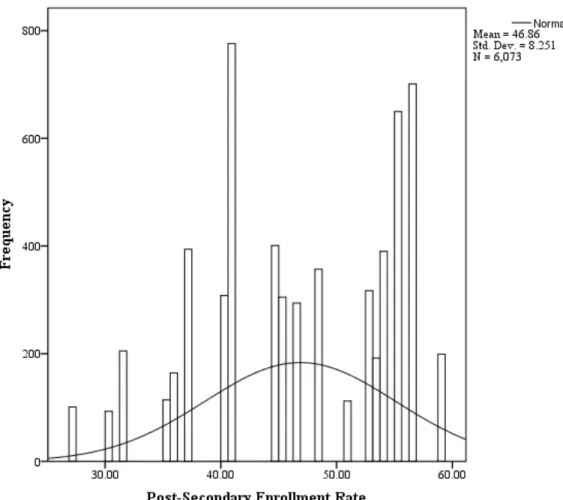
Figure 1. Histogram of Post-Secondary Enrollment Rate . . . 59
Figure 2. Box and Whisker Plot for Post-Secondary Enrollment Rate . . . 60
Figure 3. Histogram of Blue Indicator Points . . . 61
Figure 4. Box and Whisker Plot for Blue Indicator Points . . . 62
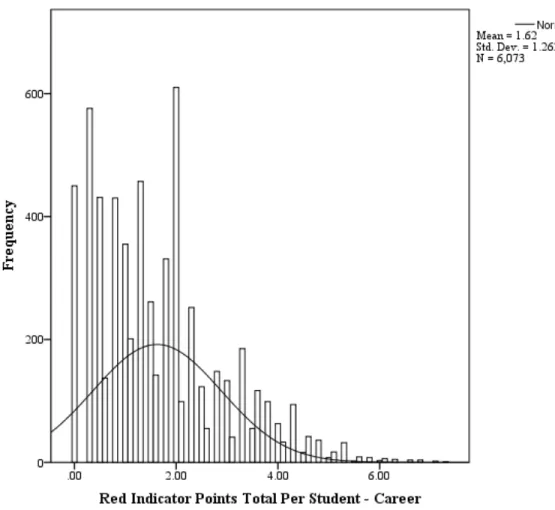
Figure 5. Histogram of Red Indicator Points . . . 63
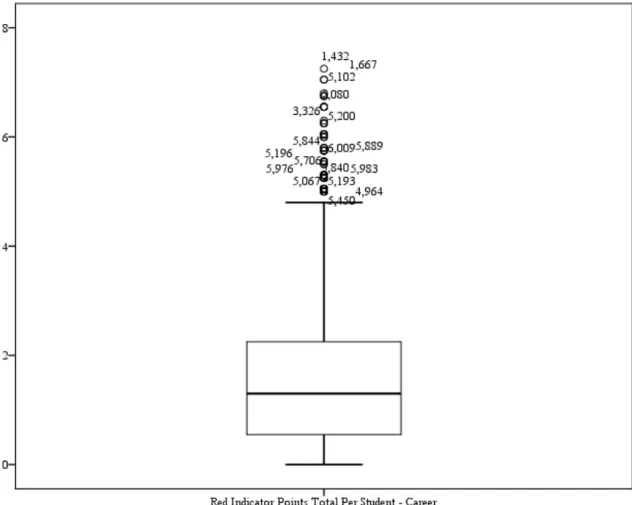
Figure 6. Box and Whisker Plot for Red Indicator Points . . . 64
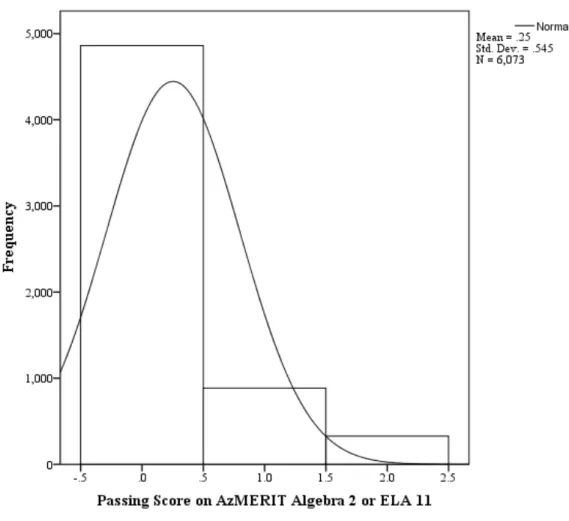
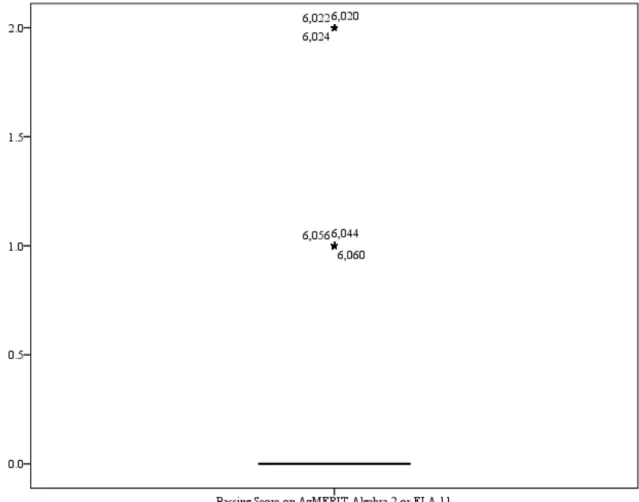
Figure 7. Histogram of Passing Score on AzMERIT Algebra 2 or ELA 11 . . . 65
Figure 8. Box and Whisker Plot for Passing Score on the AzMERIT . . . 66
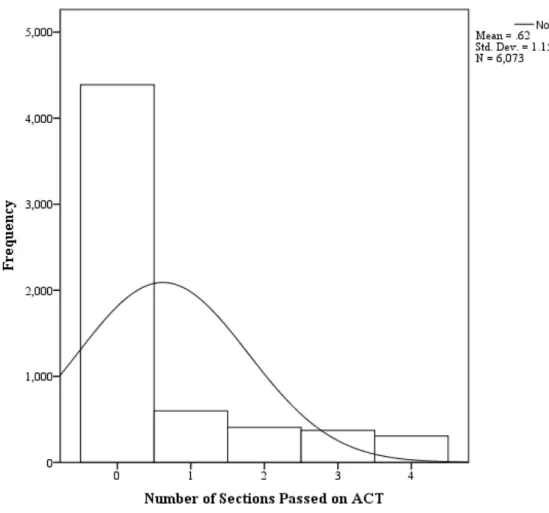
Figure 9. Histogram of Sections Passed on ACT . . . 67
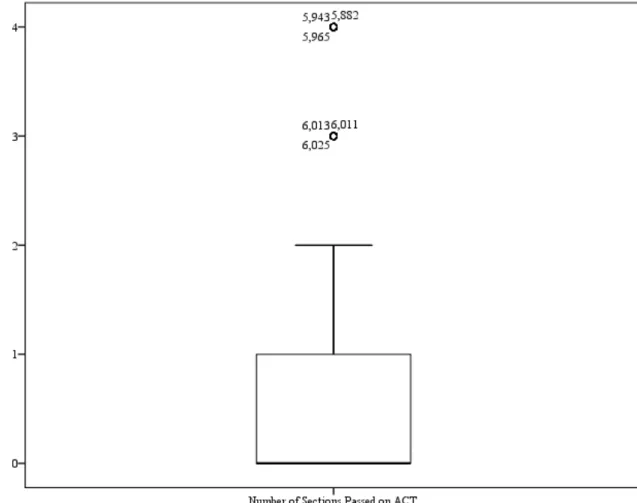
Figure 10. Box and Whisker Plot for the Number of Sections Passed on the ACT . . . . 68
Figure 11. Histogram of the Number of AP Exams Passed . . . 69
Figure 12. Box and Whisker Plot of Number of AP Exams Passed . . . 70
Figure 13. Histogram of the Number of College Classes Credit was Earned . . . 71
Figure 14. Histogram of the Number of CTE Courses College Credit was Earned . . . . 72
Figure 15. Box and Whisker Plot of CTE Courses College Credit was Earned . . . 73
Figure 16. Histogram of the Number of CTE Courses Completed Outside of Complete Sequence . . . .74
Figure 17. Box and Whisker Plot of the Number of CTE Courses Completed Outside of Complete Sequence . . . .75
Figure 18. Regression Standardized Residuals by Standardized Predicted Values for Post-Secondary Enrollment Rate . . . 78
Figure 19. Normal P-P Plot of Regression Standardized Residuals for Post-Secondary Enrollment Rate . . . 79
ABSTRACT
Arizona’s most recent implementation of the A-F policy provides a unique opportunity to explore the relationship of various college and career readiness indicators (CCRI) on the impact of college enrollment rates. These CCRI incorporate various components of a school’s college-going culture that often fall to school counselors to design and implement within the school. Unfortunately, scholars find that school
counselors do not have the time (McClafferty, McDonough, & Nunez 2002; McDonough, 1997; McKillip, Rawls, & Barry, 2012), in part because they are overburdened with excessive student caseloads (McClafferty, McDonough, & Nunez 2002; McDonough, 1997; McKillip, Rawls, Barry, 2012), and excessive administrative responsibilities to adequately support the college navigation process (Corwin & Tierney, 2007; McKillip, Rawls, Barry, 2012). Moreover, scholars have found that counselors often lack the prerequisite training (Corwin & Tierney, 2007) and policy support (Dahir, 2004).
Furthermore, the extant literature is almost devoid of school counseling outcome research (Dahir, 2004; Whiston & Sexton, 1998). Research that reveals the support structures, advising needs or how to best use limited counselor time in order to support students is essential for successful evidence-based practices.
The objective of this study is to examine the predictive power of various
components of Arizona’s A-F CCRI on Title 1 high school’s college enrollment rates in southern Arizona. The secondary goal of this study is to analyze the available data to determine if specific CCRI components or combination of components have stronger impacts on college enrollment. These results may then be utilized to inform school
counselors and administrators on the best methods to support their underserved student populations.
Data was analyzed using multiple regression to determine the predictive nature of the selected indicators on the enrollment rates of students. Results indicate that of the indicators analyzed, meeting all 16 Arizona Board of Regents Program of Study
Requirements and sections passed on the ACT had significant positive relationships with post-secondary enrollment rates. However, contrary to expectations the Number of College Classes Credit was Earned had a significant negative relationship with post-secondary enrollment rates. An (2013) and (Taylor, 2015) stated in their literature reviews that research on the effects of dual enrollment credit is still minimal however the consensus is that there is college access and completion benefits. These research findings indicate this relationship warrants deeper investigation.
The findings have relevance for informing counselors and administrators on ways to support first-generation and underserved student populations. Counselors as advocates for students are ideally situated to act as critical advocates to support these students and protect student agency as schools work to maximize the points in all categories of the CCRI measures. Furthermore, a number of potential follow-up studies may further expand the existing literature and support counselors in making evidenced based policy implementation recommendations.
Chapter 1: Introduction
Most students aspire to attend college. Depending on the study, the portion of students planning to attend college after graduation ranges from the high 80s (Inside Higher Ed, 2014; YouthTruth, 2015) to estimates as high as 91-100% (Horatio Alger Association, 2016; Hurwitz, et al., 2012). Despite student’s aspirations, the reality in the state of Arizona is that too many students are not reaching their goals. The Arizona Board of Regents (ABOR) stated in their September 2016 report that only 53.1% of students are enrolling in college following graduation (ABOR, 2016). College
completions are even more dismal (ABOR, 2016). I used data from the National Center for Higher Education Management Systems (NCHEMS) Information Center and
calculated the standard deviation for direct enrollment rate to college for 2010. In Arizona, the student direct enrollment rate is 57.9% (NCHEMS, 2010), nearly a standard deviation below the national average of 62.5% (NCHEMS, 2010). Why, despite the high national and state level predisposition to attend college, are students not reaching their expressed goals?
Policies designed to support college access and to equalize educational opportunities for underrepresented student populations have been circulating at least since the Johnson Administration’s War on Poverty campaign in 1965. No Child Left Behind (NCLB, 2001) was a political continuation of this policy and expanded the original focus to include accountability, student testing, adequate student progress and school improvement. More recently, the bipartisan Every Student Succeeds Act (ESSA, 2015) replaced NCLB.
At the time, former President Obama signed ESSA (2015) into law; he ended a lengthy process that included his Race to the Top Initiative and development of the Common Core Standards. The Race to the Top Initiative, like ESSA (2015) had the expressed goal of producing more college graduates than any other country and
emphasized the neoliberalism importance of education in the preservation of our nation’s democracy and the strength of our economy. ESSA (2015) established a common
purpose for the K-12 educational system “to provide all children significant opportunity to receive a fair, equitable and high-quality education, and to close educational
achievement gaps” (ESSA, 2015, p. 8).1 ESSA (2015) also included provisions to uphold “critical protections for America’s disadvantaged and high-need students” and “requires – for the first time- that all students in America be taught to high academic standards that will prepare them to succeed in college and careers” (US DOE, n.d., para 8).
Despite these intentions, these initiatives have failed to attain various indicators of educational equity. For example, consider Astin and Oseguera’s (2004) longitudinal research, which found a 500% increase for students with highly educated parents in gaining access to highly selective colleges or universities over first-generation students. Similarly, Darling-Hammond (2007) reported that 50 years after Brown v. Board of Education (1954), that inequity in achievement remains but that “access to educational
1Unfortunately the phrasing “achievement gap” and other similar descriptors are still common in literature. As I address in Chapter 2, this discourse places blame and responsibility on first-generation, poor and students of color that are not adequately supported in the current educational system.
opportunities are growing” (p. 318). The author continued to outline the system failures citing the U.S. Census Bureau’s 2005 statistics that indicate that only “17% of African American young people between ages of 25 and 29 – and only 11% of Hispanic youth – had earned a college degree in 2005, as compared to 34% of white youth” (p. 318).
Researchers assert that students not only need the academic knowledge but also the skill to navigate the complicated college access process (Roderick, Nagaoka, Coca and Moeller, 2008). Policy and research tends to focus on the academic preparation component for college access (Perna, 2005; Solorzano, Villalpondo, and Oseguera, 2005) and when it does consider the access process it is often cited as a school counselor
responsibility (McDonough, 1997; McDonough, 2005; Roderick, Nagaoka, Coca and Moeller, 2008). Unfortunately, scholars find that school counselors do not have the time (McClafferty, McDonough, & Nunez 2002; McDonough, 1997; McKillip, Rawls, & Barry, 2012), in part because they are overburdened with excessive student caseloads (McClafferty, McDonough, & Nunez 2002; McDonough, 1997; McKillip, Rawls, Barry, 2012), and excessive administrative responsibilities to adequately support the college navigation process (Corwin & Tierney, 2007; McKillip, Rawls, Barry, 2012). Moreover, scholars have found they lack the prerequisite training (Corwin & Tierney, 2007) and policy support (Dahir, 2004). Furthermore, the extant literature is almost devoid of school counseling outcome research (Dahir, 2004; Whiston & Sexton, 1998). Research that reveals the support structures, advising needs or how to best use limited counselor time in order to support students is essential for successful evidence-based practices. This research may then support students most in need, especially our underserved student
populations most affected by limited access to the counseling support structures (Belasco, 2013).
Purpose Statement
Arizona’s implementation of the new A-F policy provides a unique opportunity to assess if and how it influences the college going rates of a school. At this point in time, there is extremely limited research investigating the impact of ESSA’s (2015) required school report cards on the outcomes of various students’ success criteria particularly as it relates to college access indictors. In fact, there appears to be a lack of any existing literature that examines grading systems that include post high school planning components or college and career readiness indicators (CCRI) and its influence on college going rates.
Arizona’s enactment of the new A-F Accountability system did not allow for schools to compensate for the new grading rubric during the 2016-2017 academic year – the first year of its implementation. This delayed preparation allows for a comparison of school grades and college enrollment rates before adaption to the system and after. It further allows for an opportunity to explore any changes in the systematic support networks for and created by counselors to enact a college and career curriculum for students that may ultimately fosters a college going culture. Finally, it fills a gap in the literature that will analyze the impact various college and career readiness indicators have on the success of students’ enrollment in post-secondary education. This research may illuminate if a more encompassing system of school evaluation provides a better and more accurate assessment of school level contributions for students often underserved in the current system.
The objective of this study is to examine the predictive power of various
components of Arizona’s A-F College and Career Readiness Indictors (CCRI) on Title 1 high schools’ college enrollment rates in southern Arizona. The secondary goal of this study is to analyze the available data to determine if specific CCRI components or combination of components have stronger impacts on college enrollment. The aspiration is to use these results to inform school counselors in Arizona on the best methods to support their underserved student populations. The final purpose of this study is to compare the predictive power for schools with higher percentage of students earning higher college readiness points on college enrollment rates.
Research Questions
This study intends to answer the following research questions:
Research Question 1: What is the relationship between the CCRI indicators and the schools’ post-secondary enrollment rates?
Research Question 2: Which indicator or combination of indicators have the most impact on a high schools’ post-secondary enrollment rates?
Research Question 3: Do schools with higher percentage of students earning the higher College Readiness points have significantly different
post-secondary enrollment rates? What is the magnitude of this difference?
Summary
Through the proposed research, my goal is to determine if the various college and career readiness indicators have an impact on a school’s college going rate. A number of these indicators are influenced by school counselors during their college knowledge
curriculum provided through individual or group advising, course registration, and classroom lessons. In the next chapter, I will provide a detailed overview of Arizona’s A-F Accountability system, summarize the theoretical framework utilized to guide my research, and review the literature related to college access. College access encompasses two components and both are required to ensure student access – academic knowledge and college knowledge. My study will focus on the college knowledge component of this process which is less frequently studied than academic knowledge.
Chapter 2: Literature Review
In literature, scholars proposed that there are three stages in a student’s college choice process. The first being predisposition – the desire to attend. The second is the college search process and the final stage is the choice - where they will finally apply and then attend (Cabrera & LaNasa, 2000; Hossler, Braxton, & Coopersmith, 1989). A growing body of research is developing that has focused on the final two steps of the college choice process and is often referred to as college knowledge. In the existing research, scholars have focused on college-going cultures, descriptions of supports structures needed to aid students in navigating the college access process, and case studies (Achinstein, Curry, & Ogawa, 2015; Bosworth, Convertino, & Hurwitz, 2014; Conchas, 2006; Holland & Farmer-Hinton, 2009; McClafferty, McDonough & Nunez, 2002; McDonough 2005; Roderick, Nagaoka, Coca & Moeller, 2008; Rueda, 2005; Welton & Williams, 2015).
In most instances, the work to provide students with the college-going curriculum and support the school development of a college-going culture has been placed
predominately on school counselors both in Arizona and nationally (McDonough, 1997 & 2005). In some schools, support structures may be supplemented through school-based niche programs like Advancement Via Individual Determination (AVID) and the
federally funded TRIO programs like Talent Search, and Upward Bound. These programs are designed to support first-generation and underserved student populations through an in-depth scaffolded college-going curriculum that provides the supports needed to navigate the college-going process. However, the inability to provide all students with these same extensive support structures leaves many students dependent on
the school counseling program. Counselors are historically unable to systematically support students in the postsecondary navigation process. Researchers have indicated that counselors face many roadblocks: limited access due to competing responsibilities for counselors (McDonough, 1997; McDonough, 2005), student to counselor ratios that often exceed 470:1 (ASCA, 2013; McDonough, 1997; McDonough, 2005), the lack of proper training on college-going curriculum, and counselor training focused on the social/emotional component (McDonough, 1997; McDonough, 2005).
Scholars have emphasized college knowledge needs to be supported through development of a school wide college-going culture (Achinstein, Curry & Ogawa, 2015; McClafferty, McDonough & Nunez, 2002; McDonough, 2005). Nationally and within the state of Arizona, external and internal pressures resulting from various policy
initiatives focused on educational quality have cultivated a culture of increased attention to rigorous standards and testing regardless of its impacts on the college-going culture and curriculum (Welton & Williams, 2015; Ylimaki, 2012). Reminiscent of Taylor’s (1911) principles of scientific management, these external accountability pressures are often tied to additional funding, and contribute to administrators and teachers’ common reluctance to support or teach a curriculum for all students about college applications, FAFSA, college options, and the myriad of other post-secondary information topics not previously evaluated in the accountability mechanisms. Unfortunately, developing students’ abilities in these areas are an essential part of a college-going culture (Achinstein, Curry & Ogawa, 2015; McClafferty, McDonough & Nunez, 2002). The need for this college readiness curriculum is well documented for first-generation, lower socioeconomic or underserved populations in order for them to make an informed
decision about their future following high school (Achinstein, Curry, & Ogawa, 2015; Conchas, 2006; Holland & Farmer-Hinton, 2009; McClafferty, McDonough & Nunez, 2002; Roderick, Nagaoka, Coca & Moeller, 2008; Welton & Williams, 2015).
Complicating the college-knowledge need, Autio (2006) explained that the original public education curriculum was not intended to replicate the “elite preparatory schools” (p. 111) but designed to meet the needs “of a mass terminal secondary
education” program (p. 111). Unfortunately, the needs of the economy have shifted, and the terminal secondary education system no longer effectively addresses the needs of the current economy, higher levels of education required to maintain our national
competitiveness in a global economy or support students and their families in their attempts to access the American Dream of upward social mobility. The college-going mandate, created to bridge the gap between a terminally designed secondary education system and the current need for a postsecondary educated citizenry, is without proper funding or policy support.
In the following sections of the literature review, I will provide a brief summary of the national educational compliance policy and then transition to an in-depth
explanation of Arizona’s A-F accountability system. The most recent iteration of school evaluation in Arizona may considerably influence counselors’ abilities to support
students. This knowledge is necessary to inform future policy decisions and empower counselors in their role of supporting college access for students. I will then summarize the theoretical lenses through which this study was approached combining Policy as Practice with Perna’s model of college enrollment. Finally, I will review the college access literature.
National Educational Policy
The United States educational policy efforts have continually focused on varying aspects of education with an aim to equalize educational opportunities for students and to increase college educated citizens for the global economy and our national security since the 1960s. In fact, according to Kantor and Lowe (1995), “From the outset of the Great Society, the idea that education would eliminate poverty and expand opportunity for racial minorities and the poor dominated thinking about social and economic policy” (p. 4). More recently, the mandate for college access has become “a rallying cry, a totem, as we have been reminded since the beginning of 2007” (Adelman, 2007, p. 48) for policy makers. Most researchers agree that disparity in educational outcomes still exists (Astin & Oseguera, 2004; Darling-Hammond, 2007; Harris & Herrington, 2006; Hursch, 2007; Koyama & Cofield, 2013).
These espoused policies and their focus on education accountability,
systematically fails first-generation and underserved student populations. As evidenced by previous studies, systematic supports are especially important for traditionally
underserved student populations (Achinstein, Curry & Ogawa, 2015; Holland & Farmer-Hinton, 2009; Roderick, Nagaoka, Coca and Moeller, 2009). This is even though politicians often use these students as the focus of their policy attention, political spectacles and rhetoric. Studies show little reduction in the overall achievement gap (Darling-Hammond, 2007; Harris & Herrington, 2006; Hursch, 2007; Koyama & Cofield, 2013).
Discourse and word usage are important aspects of policy aimed at the student population (Ball, 1993). For instance, consider the term achievement gap, common in
research and political discourse, which places blame and responsibility on the first-generation, poor, and students of color – more appropriately represented as our
underserved student populations (Leithwood, 2010). Further alienating these students is the political system with its emphasis on the American Dream that implies social
mobility is attainable with hard work and education again shifting the blame from a system that systemically fails the students to the students themselves (McInerney, 2006). The meritocratic argument further alienates underserved student populations through success stories of others that have achieved despite disparate circumstances (Liu, 2011).
Using commonsensical arguments, policy makers emphasized the need to improve the educational system in the United States so that all students can succeed. While few would argue against better education and outcomes for all students, the system then focused almost exclusively on high stakes testing, accountability and its ability to prepare students academically for college. Roderick, Nagaoka, Coca, and Moeller (2008) highlighted, the need “that preparation will not necessarily translate into college
enrollment if high schools do not provide better structure and support students in the college search, planning and application process” (p. 7).
A review of the national ESSA and Race to the Top policies points to another buzz phrase in education - college and career ready - now prevalent throughout schools, the current literature and political rhetoric. Despite its frequent use, a clear definition is not readily available. Through a deeper review of various documents, this author found a reference in a speech given by former Secretary of Education Arne Duncan to the 2009 Governor’s Education Symposium. In the speech, the Secretary referred to the
Officers and the National Governors Association. The goal of common core was the establishment of an internationally benchmarked set of standards that would ensure all students graduate from high school prepared to enter credit-bearing courses at the collegiate level or to enter the workforce (Duncan, 2009). This provided the foundation for the college and career ready mandate.
Despite the many debates surrounding Common Core, the goal of developing students that are ready to enter college and take credit bearing courses is still only one step in the process students must navigate in order to gain entrance to college.
Researchers showed that secondary students must have both the academic qualifications and an understanding of the processes they must navigate in order to gain entry to a four-year college or university often referred to as college knowledge (Roderick, Nagaoka, Coca & Moeller, 2008). Unfortunately, ESSA and other compliance policies did not address the need to support students as they work through the college application and enrollment process. For many students, this limits their options to less selective schools or forces them directly into the workforce. Researchers have reported that especially for students from underserved populations and first-generation college going students, a common target of policy initiative, many do not have adequate knowledge of the college application or financial aid process to successfully navigate this task (Achinstein, Curry, & Ogawa, 2015; Conchas, 2006; Holland & Farmer-Hinton, 2009; McClafferty,
McDonough & Nunez, 2002; Roderick, Nagaoka, Coca & Moeller, 2008; Welton & Williams, 2015). Underserved students may lack the social and cultural capital that other students have due to their advantaged status. Without added support, first-generation and underserved student populations do not have the same opportunity to successfully gain
admittance or the needed financial resources for direct entrance to a four-year college. While Roderick, Nagaoka, Coca and Moeller (2008) highlighted the need “that educators must realize that preparation will not necessarily translate into college enrollment if high schools do not provide better structure and support for students in the college search, planning and application process” (p. 7); I argue that policy makers must also understand the need for a college-going curriculum.
ESSA (2015) requires states to produce report cards that summarizes school performance in a manner that is accessible by parents and other stakeholders. The guidance does not however mandate any specific framework and leaves that to the determination of each state. In addition, at this time there is extremely limited research investigating the impact of ESSA’s (2015) required school report cards on the outcomes of various students’ success criteria particularly as it relates to college access indicators. The one study I found which looked at Oklahoma’s A-F grading policy; researchers considered the predictive power of the grading system on the outcomes of student’s test scores and found little support that the grading system was able to predict increased student success (Adams, Forsyth, Ware, Mwavita, Barnes, & Kojasteh, 2016). However, the basis of this study was on standardized state testing.
Arizona’s newly approved school evaluation system incorporated various college and career readiness indicators as a component of the A-F grading system for evaluating schools. This new policy development gives an opportunity to determine if the new accountability mechanisms can impact the college going culture in schools and
systematically improve the overall support structures available to students attempting to navigate the tough terrain of post-secondary planning. The addition of college and career
readiness indicators as part of the school compliance measurement may influence counselors’ ability to support college going culture and college knowledge for students. Arizona’s implementation of its current A-F Accountability system provides the
contextual background for this research project and is reviewed in the next section.
Arizona’s A-F School Accountability Plan
In compliance with NCLB (2001) Arizona assessed schools’ performance through a school-based A-F grade. The former A-F accountability system graded schools on how well each school academically supported the development of their students predominately through high stakes testing.
Then in February 2008, Arizona added the requirement for the schools to develop an Educational Career Action Plan (ECAP) for all students. “The ECAP is both a
documented plan and a process student use with support from school counselors, teachers and parents to clarify their career goals and to refine their postsecondary plans” (AZDOE, 2013). The ECAP was cited as a whole school responsibility, which required principal involvement and certification to the state of ECAP completion annually. In practice, the responsibility of ensuring success of the school-wide ECAP belonged to the school’s counselors (AZDOE, 2018). In fact, Arizona Department of Education cautioned schools of the risks associated in relying on only counselors because of the high student to school counselor ratios (AZDOE, 2018). ASCA’s last reported student to counselor ratio report indicated that Arizona is the worst in the nation with a rate of 903 to 1 in public schools for the 2015-2016 school year (AZCentral, 2018). Counselors faced similar roadblocks to ECAP compliance as they faced in supporting students navigating college and the development of support structures for the school’s college culture.
The former A-F school evaluation policy and the ECAP policy were not mutually supportive since the primary focus for school grades was based on test scores and
improvement in test scores. Further complicating these competing policies is the state’s process for award of performance pay to teachers which uses test results as a primary determinate for amounts awarded. The zero-sum game between counselors and teachers competing for access to students limited comprehensive school-wide support mechanisms the ECAP was designed to support. First generation and underserved student populations are the students most strongly impacted by the loss of comprehensive school-wide
support (Belasco, 2013).
In 2014, Arizona’s A-F Letter Grade was temporarily suspended as the state transitioned away from the previous standardized test, the Arizona’s Instrument to Measure Standards (AIMS). The new standardized test, Arizona’s Measurement of Educational Readiness to Inform Teaching, or AzMERIT, is based on the controversial Common Core Standards. Another distinction between AIMS and the AzMerit is the fact that the AIMS test was a high school graduation requirement. Arizona students were tested using AIMS in their sophomore year on reading, writing and math. If, however they did not pass the test the first time, they were provided multiple opportunities between the first test and their expected graduation. This dual accountability placed pressure on both student and the school system. The AzMerit however does not currently tie to graduation requirements or any other accountability measure for students.
However, AzMerit is a component of the school’s grading system and when combined with an individual teacher’s rating, it determines the amount they will be rewarded for their annual performance pay. The test is currently required at the end of various subjects
including English 9-11, Algebra 1, Algebra 2, and Geometry. Scores used on the AzMerit are Minimally Proficient, Partially Proficient, Proficient and Highly Proficient based on student’s “mastery of course specific skills and readiness for college or career” (AZDOE, n.d., p. 2).
Testing utilizing AzMerit began in March 2015. Then in September 2016, the state established an Ad Hoc Committee to explore what components should be utilized in the new A-F School Letter Grade. According to the Helios Education Foundation, who had a representative on the 13-member committee, the committee met 15 times and held 17 public forums. The Helios Education Foundation is a nonprofit organization focused on increasing educational opportunities in Arizona and Florida. Making up the 13- member board were two Arizona Board of Education members, two superintendents, a high school principal, a charter school principal, a representative from the Arizona Chamber of Commerce and former Charter school principal, two members of Expect More Arizona, a member of HELIOS, a college president, a high school math teacher and Dawn Wallace the Governors Educational Policy Advisor. Through this process, the committee produced the new policy that was subsequently adopted by Arizona’s Department of Education and ended a two-year hiatus in the state’s A-F school grade program.
The development and enactment of Arizona’s new A-F School Accountability Plan was designed to ensure compliance with ESSA (2015) and also with Arizona Revised Statute 15-241. This statute, requires the Department of Education to complete an annual profile for each public school and local education agency (ARS 15-241). Two of the stated goals of the revised system was to make the system more reflective of the
value added by teachers and schools (Palmer, 2017; Republican, 2017) and “not reflective of zip code” (Palmer, 2017, para 4).
The state developed the new system to incorporate college and career readiness indicators for evaluating the school’s efforts in supporting student transition to either college or career. This new policy aims to measure a school’s full impact on students and appears to assess the schools support for the two disparate needs of students to access post-secondary education – curriculum preparation and the ability to navigate the confusing terrain of post-secondary education.
The state recently implemented the resulting policy that is now based on a complicated formula in which 30 % is based on AzMERIT proficiency scores, 20 % on growth in AzMERIT, 10 % on English Language Learner AZELA test scores which encompasses both proficiency and growth, 20 % on the high school’s graduation rate and the final 20 % is earned through various college and career readiness indicators (CCRIs). The CCRIs include various components like FAFSA completion, career technical
education sequence completion, industry certifications, completion of 120-hour
internships, and meeting certain cut scores on various tests like the ACT, SAT, ASVAB (a military skill assessment) and ACUPLACER (a college assessment of reading, writing and math skills). These components of CCRIs were divided into two principal areas, indicators for college readiness were designated as blue indicators and career readiness indicators were designated as red. FAFSA completion was the only component that could be counted as either a blue or a red indicator. A student score of 0 indicates the student did not earn a full point in either the Red or Blue categories, 10 points is earned
per student for earning 1 point in either the Blue or Red categories, 20 points is earned per student for earning 2 points in either the Blue or Red categories and maximum points of 22 is awarded to students who have earned 2 full points in one category and 1 full point in the opposite category. Finally, “a school that increases the percent or has 85% of post-secondary enrollment and/or military service of prior years’ gradates will generate one bonus point” (AZDOE, 2017, p. 3).
Arizona’s new system addresses Torrance’s (1997) concerns with standard accountability systems and their failure to account for other contributions to education. The author stated that test scores “give no indication of the specific value-added by a particular school” (p. 324) and discussed that schools support other important social outcomes that should be considered equally important. Levinson et al. (2009) pointed out that Torrance’s policy suggestion “posits ideal behavior in a model world” (p. 770). The recent changes in Arizona’s A-F Accountability system reflect the expanded measures advocated by Torrance (1997).
Billed as friendly and more informative for parents, proponents of the new system claimed to ensure students are receiving the education they deserve. In fact, the state reported in July 2017, that the Thomas B Fordham Institute named Arizona as only one of three states to receive a strong rating in all three categories. The Institute grades states accountability plans on three markers: “a) assigning annual ratings to schools that are clear and intuitive for parents, educators, and the public; b) encouraging schools to focus on all students, not just their low performers; and c) fairly measuring and judging
all schools, including those with high rates of poverty” (Wright & Petrilli, 2017, pp.4). In the final report, the total number of schools rated as strong in all categories rose to eight.
Arizona’s A-F Accountability Plan was adopted by the state Board of Education on April 24, 2017 and all schools received their scores in October 2017. At the
December 2017 meeting, the board established a Technical Advisory Committee to review the first-year results and explore clarification of various issues to include English Langue Learners n-count, K-8 Acceleration/Readiness Measures, and Free and Reduced Lunch and its correlation to letter grades. The new policy is likely to be under constant surveillance as the state, school and various interested groups assess its impacts against their own interests.
The addition of CCRIs for high schools provides an uncommon opportunity to evaluate this policy’s impact on college access for Arizona schools and especially for schools predominately serving our underrepresented college populations. Components of the CCRIs relate to the role of school counselors and through research may highlight those components or combination of components that have the most impact on college going rates. Considering the limited resources of school counselors (Corwin & Tierney, 2007; Dahir, 2004; McClafferty, McDonough, & Nunez 2002; McDonough, 1997; McKillip, Rawls, Barry, 2012), elucidating the aspects of a college going culture that has the greatest impact on student college enrollment rates is critical to the research-based application of their time. In the next section, I will review the theoretical lenses utilized in the development of this study.
Policy as Practice
The transition of policy from the macro to the micro and the ensuing
appropriations provide a theoretical framework through which recent policy actions in the state of Arizona and their subsequent impact on student access to postsecondary
education can be evaluated. Perna (2006) developed a model of student college enrollment that considered the impact actors at various contextual levels have on the college access process. The model consists of four nested contextual layers that interact on each of the other layers. The outermost layer is social, economic and policy contexts; the next layer represents higher education; followed by the second layer representing the school and community context; and the inner most layer is the student and family (Perna & Kurban, 2013). Perna and Kurban (2013) explain that the model is not linear and is not transversed in a stepwise fashion. They indicate that each contextual layer can impact the other three layers in various ways and vice versa. The model assumes
(1) fully understanding the college enrollment process requires attention to
multiple theoretical perspectives, especially the economic theory of human capital as well as cultural and social capital theories; (2) college enrollment processes occur within, and are influenced by, multiple layers of “context;” and (3) college interventions will not effectively close gaps in enrollment and choice without recognizing the culture and circumstances of particular groups (Perna, 2006) This model lends itself well to Levinson, Sutton and Winstead (2009) critical approach to interrogating educational policy. Through their theoretical model, policy is a social practice of power. The questions from this theoretical framework shifts from the traditional implementation studies, adds to other critical policy studies approaches aimed at social justice and asks “who can do policy” and “what can policy do” (Levinson et al., 2009, p. 769). The authors further explained that “the formation of normative discourse (policy) must be warranted institutionally…it must also be facilitated by such conditions,
and by the personal qualities of those involved” (p. 771). These conditions form the basis for the will to policy, the intentional actions of actors to make policies. When these openings or windows (Hamann, 2003; Kingdon, 1995) happen they remain open for short periods of time. These windows can be used by both traditional policy makers and by nonauthorized policy actors often defined as teachers, students or building administrators (Levinson, Sutton, &Winstead, 2009). This list could and should also include counselors who have institutional impact in the school especially as it relates to college access, a college-going culture and their role as student advocates.
Once formed, policies are interpreted and transmitted vertically and often horizontally. The process actors traverse is referred to as sense making (Levinson, Sutton, & Winstead, 2009; Spillane, Reiser, & Reimer, 2002) and involves the actors’ interpretations of policy within their social context. Levinson et al (2009) specifically titles this process appropriations and highlights how actors interpret and incorporate policies into their environment and includes resistance to, adaption and institution of all or some of the policy. This allows for the appropriation of the policy to fit the local context. In the case of college access and Perna’s model, this is the opportunity for policy actors at the school level to evaluate the intent of the policy and adapt it to their school’s social construct.
This adaption, appropriation, or sense making process can have intended and unintended consequences (Hamann & Lane, 2004; Spillane et al., 2002). Although the likelihood of positive versus negative consequences should be similar, researchers emphasized in extant literature the unintended consequences that have negative effects.
For example, Nomi (2012) reviewed a 1997 Chicago policy that had deleterious effects on high achieving high school students when a mandated Algebra for all was instituted. Similarly, Perna & Thomas (2009) discovered that schools with the lowest average socioeconomic status and academic achievement showed unintended negative
consequences because of state mandated high school tests. These negative consequences were a result of schools shifting focus from other factors that have proven to increase the likelihood of college enrollment to teaching to the test. The appropriations process in this study began when the states policy met “the existential and institutional conditions that mark a different community of practice” (Levinson et al., 2009, p. 782). In this instance, the community of practice is the local school level and considers their adaption of the new Arizona A-F accountability system.
The permanence of educational accountability mandates in policy will more than likely have continued impact on students and the school institutions for the near future. Torrance (1997) argued that “policy-makers must recognize that tools designed to measure the output of the system will have an impact on it” (pp. 329). These accountability systems like Arizona’s A-F is enacted through practice. In policy as practice, the idea of practice explains “the way individuals, and groups, engage in
situated behaviors that are both constrained and enabled by existing structures, but which allow the person to exercise agency in the emerging situation” (Levinson & Sutton, 2001, p. 3). For school counselors, the policy as practice opens a window that may enable them to enact agency on the emerging situation. As advocates for students and families,
counselors may work within the school level community of practice to ensure that through policy as practice the school level enacts policy in a manner consistent with the
needs of their student populations and individual’s needs. Counselors as advocates and advisors to the administrators, teachers and staff should help to guide the enactment process and deliberately guide enactment policy to best serve their students and prevent alienation of our underserved student populations through the desire to maximize points.
Similarly, in this research, policy as practice can be used as a lens to examine the relationship highlighted by Perna et al. (2008) between state level policy and its impact on schools and subsequent enrollment behavior of students. We want to know “what can policy do?” (Levinson, Sutton, & Winstead, 2009, p. 769). Specifically, can the new A-F School Grade impact the normative practices of schools, specifically the college going curriculum, culture, and structures that impact the enrollment rates of students in postsecondary education.
In the last section of the literature review I will synthesize the literature on college access.
College Access
As previously stated, research indicates that high school students must have both the academic qualifications and an understanding of the processes they must navigate in order to gain entry to a four-year college often referred to as college knowledge
(Roderick, Nagaoka, Coca & Moeller, 2008) an integral part of a college culture. In some respects, these parallel requirements are similar to the career readiness discussion of hard and soft skills. Hard skills being those that are teachable, easy to define and measure. Academic knowledge relates to the hard skills of college access and the college
In the next section, I will review what is known about college access. I will begin by reviewing the literature relevant to various components of the college CCRIs. I will then review the literature dealing with financial need and FAFSA as it relates to college access since this is the one indicator that can count in either the college or career
category. The last section will review the literature encompassing college knowledge and college going culture. College culture is defined by Holland and Farmer-Hinton (2009) as “accessible to all students and saturated with ever-present information and resources and ongoing formal and informal conversations that help students to understand the various facets of preparing for, enrolling in, and graduating from postsecondary academic institutions” (p. 26). This review will highlight the limited research on various
components of a college going culture and their effects on college enrollment rates for high school students.
Academic Qualifications. Arizona’s college readiness indicators include 15 different indicators which are predominately comprised of two main categories – academic course work and standardized exams. Both of these categories are closely aligned with components of the college application process and clearly containing the preferred academic course work for Arizona state schools. The standardized exams include both college entrance exams like the ACT and SAT but also include exams on advanced course work and college level placement exams.
Perna (2005b) stated that “the consistently strong relationship between academic preparation and college enrolment found in prior research demonstrates that academic preparation must be a central component of any college preparation program” (p. 114).
Academic preparation includes taking rigorous course work, advanced math classes, Advanced Placement (AP), other designated college preparation type courses which have consistently been linked to higher college attendance and degree completion (Adelman, 2006; Kim, Kim, DesJardins & McCall, 2015; Perna, 2005; St. John & Chung, 2006). While other research has shown consistently positive relationship between college entrance exams and college access (Belfield & Crosta, 2012; Conley, 2013). Although when high school course work is compared to standardized exams, researchers have found that the standardized tests are not as accurate as high school course work in predicting student success in college (Atkinson & Geiser, 2009).
The other standardized tests listed as components of the college readiness indicators are tests for placement in college level course work. It seems that unlike the ACT and SAT the college placement exams have not received as much focused research attention. Long and Boatman (2013) report estimates that suggest 40% of all students in college are taking some sort of remedial classwork. These students would have been placed in these classes following the administration of the various placement exams like ACCUPLACER, COMPASS and ALEKS Math. The remedial classwork appears to indicate that students were not ready for college level classes and while they are taking remedial classes they are not earning credit towards college graduation. Scott-Clayton (2012) found that these tests were better at predicting student outcomes in math than in English and that they were better at predicting who would do well in the class not who would fail. I also was unable to find research that addressed college access for students who meet the cut scores on these exams. The inclusion of these exams seems to target the academic preparation of the students for completing college course work.
Dual enrollment courses were the final category in which students can earn college readiness indicator points under the Arizona A-F accountability system. An (2013) used data from NELS (1988) and found that students completing dual enrollment credit were more likely to earn a postsecondary degree. Taylor’s (2015) confirmed previous findings citing that “dual credit students were 34% more likely to enroll in college and 22% more likely to complete college compared with non-dual credit
students” (p. 373). Both of these authors stated in their literature reviews that research on the effects of dual enrollment credit is still minimal however the consensus is that there is college access and completion benefits.
FAFSA. The literature supports the inclusion of FAFSA as an indicator of college readiness. The increasingly high cost of college had discouraged many students from college attendance. This may unfairly impact our underserved student populations that have shown in research to be more sensitive to the costs of college attendance and are averse to loans for postsecondary education (Baker & Velez, 1996; Boatman & Evans, 2017; Orfield, 1992). Perna and Kurban (2013) succinctly summarize existing financial aid and college enrollment literature that links FAFSA completion assistance with higher enrollment rates in college than those who receive incomplete or no
information. Echoing this summary, Capt (2013) stated “Familiarity with the process and availability of financial aid is a crucial factor in students’ decisions about attending or choice of college” (p. 6). Heller (2013) supported FAFSA as a key component of college access stating that “FAFSA is still a complex process containing well over 100 questions that form the gateway to all federal financial aid…for students that are first in their family to go to college, completing the FAFSA is a daunting task” (p. 108).
College-Going Culture. A college-going culture is a new branch of climate research that attempts to explain college access based on non-cognitive factors. McDonough (1997), one of the leading advocates for development of a college-going culture in schools indicated that the school’s organizational habitus, culture, and
environment exerted significant power on student’s college aspirations and preparation. In the current college-going culture literature agreement on variables and method used is varied making comparisons between studies in this area difficult. The following
paragraphs, highlight various studies and will summarize the wide variety of variables used in an attempt to operationalize a college-going culture and provide a general overview of college going culture literature.
Based on McClafferty et al. (2002) research and intervention work in California schools, the authors developed a rationale, which advocates for developing nine
principles needed for a college-going culture within the schools. McClafferty et al. (2002) explained the need for a college-going culture by highlighting the case-loads of counselors, the continued lack of representation of Black and Latino students on college campuses, and “the ever-present competing pressures and demands in everyday school life” (McClafferty et al., 2002, p. 7). The authors highlighted nine principles developed out of this research project found to be critical in the development of a college-going culture which are “college talk, clear expectations, information and resources,
comprehensive counseling model, testing and curriculum, faculty involvement, family involvement, college partnerships and articulation (McClafferty et al., 2002, p. 11). However, despite their consideration of competing pressures that effect the function of the educational system, this research was completed prior to NCLB (2002) and ESSA
(2015), and may not effectively address the impact of the increased accountability resulting from these acts. Additionally, many of these variables are difficult to
operationalize and there are no current recommendations for how to measure these within a school environment.
Completed after NCLB, Roderick et al. (2008) research had an additional strength in line with Anderson’s (1982) climate research recommendations. The authors
conducted their research as a longitudinal study of three Chicago schools, which involved 12 junior English classrooms. The study followed the selected students over the course of three years. The study looked “beyond (student) qualifications to examine whether CPS (Chicago Public School) students who aspire to four-year colleges are effectively participating in the college search and applications process and where they encountered potholes on the road to college” (Roderick et al., 2008, p. 2). In this research, the
students self-identified their goal as a desire to attend a four-year college and these goals were not imposed from the outside. However, lack of ever-present support and a college curriculum for all imposed barriers to the students which was highlighted in the
qualitative data. These barriers as evidenced by the findings indicated students are missing vital steps in applying and enrolling to four-year colleges and they are not properly matching themselves to the right school. These students lack the content knowledge necessary to navigate the college-going process. One key fact that emerged during this study was that “the single most consistent predictor of whether students took steps toward college enrollment was whether their teachers reported that their high school had a strong college climate” (Roderick et al., 2008, p. 4). Assessment of the data using quantitative methods, asked teachers to assess the college climate in their schools. The
report focused on several of the variables named by McClafferty et al. (2002), which included information and resources, comprehensive counseling model and faculty involvement. Further support for development of a college-going culture emerged when they called for “ensuring that students effectively participate in the college search and financial aid process is not just important for students’ college outcomes. It may also be a critical component of any larger high school reform” (Roderick et al., 2008, p. 98).
While adding significant elements to the college-going culture literature, this article did not address the needed skills of secondary leaders to effectively mediate the changes necessary in their school environment and institute a consistent curriculum on college-going knowledge. This research also lacked a curriculum focus on how to incorporate a strong college-going climate within the school’s curriculum.
Holland and Farmer-Hinton’s (2009) research focused on the required structures and “organizational arrangements that facilitate students’ access to critical human and material resources” to prepare for postsecondary academic and career endeavors” (p. 24). The design of their research was to determine if there is a relationship between the size of the urban public school and a student’s self-reported involvement in a college culture. Their data, derived from the Consortium on Chicago School Research’s Chicago
Postsecondary Transition Project based on the work reported by Roderick et al. (2008). They specifically looked at six measures of a college-going culture: college preparation activities, college talk, teacher advocacy, counselor advocacy, student counselor
interactions and hands-on support. Holland and Farmer-Hinton (2009) found that “the correlations between each of the college support measures and school size are negative,
suggesting that as school enrollments increase schools are less likely to be places where students are engaged in” (p. 37) a college-going culture. Student populations most affected by lack of structured supports and hurt by school size, will often be schools that serve the students most in need of a college-going culture. Their research further
supported the need for a college-going culture and the leadership skills required to develop this culture. They also advocated for smaller learning communities, which considering increasing financial constraints in public education may be difficult to attain for many school districts. These smaller learning communities enable teachers to
develop relationships with their students and better support the
teaching-studying-learning process. Creation of smaller teaching-studying-learning communities allows students and teachers to develop stronger relationships and understandings of each other. This increased awareness of student needs will enable teachers to effectively utilize the art of teaching to close the gap between student’s existing knowledge of the college-going process and the needed knowledge.
Achinstein, Curry and Ogawa (2015) developed a critical case study that looks specifically at a “program of research on innovating high schools that have demonstrated success with Latina/o students” (p. 317). This research followed Anderson’s (1982) climate research recommendation to look at the outliers – “schools that consistently perform better than other schools” (p. 409). The school that the study was based on consistently outperformed other schools on college enrollment rates. The researchers focused on the re-labeling process the school used to combat the existing negative
stereotypes that exist with the identification that their students are not college material, by specifically addressing the students as achievers that will be college graduates. These
relabeling tasks included “(a) challenging negative messages about Latina/o youth and instilling positive images, (b) cultivating student enactment of behaviors associated with academic (and professional) success, and (c) marshalling multicultural capital”
(Achinstein, et al., 2015, p. 323). Although the school had obvious success, one of the negative outcomes that the authors addressed is that this process did not serve all students and that it often conflicted with the need to maintain high academic standards. The high school’s failure to serve all students is evidenced by their high transfer-out rate, which showed that “on average 44% of entering freshmen never graduate” from the high school under study (Achinstein, Curry & Ogawa, 2015, p. 331). While this research on school size, the critical inquiry of the study and by considering the power dynamics that students from underserved communities must face in their pursuit of post-secondary education; it does not address how schools achieve that culture.
Finally, in Welton and Williams (2015) their single school case study directly considers how various accountability and sociopolitical structures impact development of a college-going culture. They said in their research that “we are beyond a decade of implementing NCLB and related state accountability systems and have witnessed a host of the reform’s unintended consequences that disproportionately impact high ‘minority’ high poverty schools” (Welton & Williams, 2015, p. 182). They address all aspects of the nine principles of a college-going culture while using a critical ethnography approach to determine the impact of accountability measures. Their findings indicated that “the Texas accountability pressures were not the only barriers to college readiness, but rather were components in a complex set of sociopolitical structures that constrained the
192). Other factors that impacted the school’s implementation were demographic shifts, high staff turnover, a culture of deficit perceptions, lower academic expectations and a culture of test intervention. Welton and Williams (2015) discussed the “conflicts between managing the pressures of accountability and engendering a college-going culture do not happen in isolation but are connected to sociopolitical influences internal and external to the school” (p. 200). These external and internal sociopolitical pressures incorporated what Pinar (2003) labeled the “press for efficiency and standardization, the factory model (which) tends to reduce teachers to automata” (p. 28). This same critique is present in the critical curriculum theorist works especially Apple’s (1978) discussion of the hegemonic alliance and its drive for efficiency. This drive for efficiency does not focus on what is being learned but the measurement of the predetermined and accepted curriculum. As Apple (1978) states, “this allows for comparisons …among social groups, schools, children, etc. Thus, academic performance, differentiation, and
stratification based on relatively unexamined presuppositions of what is to be construed as valuable knowledge” (p. 372). This accepted predetermined curriculum, designed for white middle-class students, does not serve the high minority high poverty schools in which Welton and Williams conducted their research. Consequently, the current curriculum does not allow the student to see themselves in the college-going culture.
The reviewed empirical literature on college-going culture has firmly established the benefits of developing a college-going culture within K-12 schools and also indicated its extreme importance for low-income, first-generation college bound and underserved minorities (Achinstein et al., 2015; Holland & Farmer-Hinton, 2009; McClafferty et al., 2002; Roderick et al., 2008; Welton & Williams, 2015). However, there are many
limitations consistent in the literature reviewed. First, findings often neglected to
emphasize leadership within the schools and their required support to direct shaping of a college-going culture – absent from all literature is the role counselors can play as educational leaders in development of a college going culture. Second, current research on college-going culture included few implications for policy requirements outside of the policy needs associated with counselor availability and roles. Additionally, most of extant literature was based on case studies or comparative case studies of schools. While case studies provide rich, thick descriptions of phenomenon within specific schools, other methods of research on college-going culture can strengthen our existing knowledge and expand what is known.
Finally, in all instances a set of tasks were used to evaluate the school’s college-going culture – what information was provided to students, support for applications, FAFSA nights and college choice. Roderick et al. (2011) stated in their literature review “much of this research on the influence of high school practices in shaping college access focuses on activities of counselors and resources dedicated to counseling (p. 182). A troubling limitation of all the existing literature is the lack of research that considers identified variables and their impact on student outcomes. The first exception to this task focus was the survey conducted by Roderick et al. (2008) as part of their mixed methods research project. Their survey asked the teachers their perceptions on students’ abilities and then correlated this finding with students’ success in applying to and enrolling in college. The second exception was research conducted by Bryan, Farmer-Hinton, Rawls & Woods (2017) that correlated college expectations and college talk with likelihood of
intensity of college expectations and intensity of college talk for 12th grade students, there was an increased likelihood for attending postsecondary education by 18% and 34 % respectively (Bryan et al., 2017).
As highlighted in the reviewed literature, counselors and their work to support the college-going culture of high schools is a critical component of college access for
students (Achinstein et l., 2015; Bryan et al., 2017; Bosworth et al., 2014; Holland & Farmer-Hinton, 2009; McClafferty et al., 2002; Roderick et al., 2008; Welton &
Williams, 2015). However, research into their roles as educational leaders developing a college going culture in the school is limited. Furthermore, researchers have not clearly defined which components of a college-going culture or counselor tasks has the greatest impact on the desired outcome – college enrollment.
Chapter 3: Methodology Introduction
The objective of this study is to examine the predictive power of various
components of Arizona’s A-F College and Career Readiness Indictors (CCRI) on Title 1 high schools’ college enrollment in southern Arizona. The secondary goal of this study is to analyze the available data to determine if specific CCRI components or combination of components have stronger correlations to college enrollment. The aspiration is to use these results to inform school counselors, administrators and policy makers in Arizona on the best methods to support underserved student populations. The final purpose of this study is to compare the predictive power for schools with higher percentage of students earning the higher college readiness points on college enrollment rates. To answer the research questions, this chapter outlines the research questions, the design, participants, the instrumentation and procedures.
Research Questions
This study intends to answer the following research questions:
Research Question 1: What is the relationship between the CCRI indicators and the schools’ post-secondary enrollment rates?
Research Question 2: Which indicator or combination of indicators have the most impact on a high schools’ post-secondary enrollment rates?
Research Question 3: Do schools with higher percentage of students earning the maximum College Readiness points have significantly different post-secondary enrollment rates? What is the magnitude of this difference?