Calhoun: The NPS Institutional Archive
Theses and Dissertations Thesis and Dissertation Collection
2016-03
Ethics on the fly: toward a drone-specific code of
conduct for law enforcement
Smith, Brian T.
Monterey, California: Naval Postgraduate School http://hdl.handle.net/10945/48476
NAVAL
POSTGRADUATE
SCHOOL
MONTEREY, CALIFORNIA
THESIS
Approved for public release; distribution is unlimited ETHICS ON THE FLY: TOWARD A DRONE-SPECIFIC
CODE OF CONDUCT FOR LAW ENFORCEMENT
by Brian T. Smith
March 2016
Thesis Co-Advisors: Kathleen Kiernan
REPORT DOCUMENTATION PAGE Form Approved OMB No. 0704-0188
Public reporting burden for this collection of information is estimated to average 1 hour per response, including the time for reviewing instruction, searching existing data sources, gathering and maintaining the data needed, and completing and reviewing the collection of information. Send comments regarding this burden estimate or any other aspect of this collection of information, including suggestions for reducing this burden, to Washington headquarters Services, Directorate for Information Operations and Reports, 1215 Jefferson Davis Highway, Suite 1204, Arlington, VA 22202-4302, and to the Office of Management and Budget, Paperwork Reduction Project (0704-0188) Washington, DC 20503. 1. AGENCY USE ONLY
(Leave blank)
2. REPORT DATE March 2016
3. REPORT TYPE AND DATES COVERED
Master’s thesis
4. TITLE AND SUBTITLE
ETHICS ON THE FLY: TOWARD A DRONE-SPECIFIC CODE OF CONDUCT FOR LAW ENFORCEMENT
5. FUNDING NUMBERS
6. AUTHOR(S) Brian T. Smith
7. PERFORMING ORGANIZATION NAME(S) AND ADDRESS(ES)
Naval Postgraduate School Monterey, CA 93943-5000
8. PERFORMING
ORGANIZATION REPORT NUMBER
9. SPONSORING /MONITORING AGENCY NAME(S) AND ADDRESS(ES)
N/A
10. SPONSORING / MONITORING AGENCY REPORT NUMBER
11. SUPPLEMENTARY NOTES The views expressed in this thesis are those of the author and do not reflect the official policy or position of the Department of Defense or the U.S. Government. IRB Protocol number ____N/A____.
12a. DISTRIBUTION / AVAILABILITY STATEMENT Approved for public release; distribution is unlimited
12b. DISTRIBUTION CODE
A
13. ABSTRACT (maximum 200 words)
This thesis examines the issue of law enforcement’s use of unmanned aerial systems (UAS) from an ethical perspective. As UAS have only recently been introduced into the National Airspace System (NAS), legislation regarding their use in America’s skies is lacking. This dearth of statutory guidelines creates a circumstance wherein self-imposed limits on UAS use by law enforcement take on greater importance.
The primary research question posed by this thesis is whether a prevailing ethical framework exists to govern the use of UAS by domestic law enforcement functions. It concluded no consensus exists. Using the case study method, this thesis considered documentary evidence of ethical frameworks for UAS currently in use by law enforcement. A comparative policy analysis is then performed to identify overlapping areas of concern, in order to arrive at a template that recommends seven dimensions that law enforcement executives should consider in creating a drone-specific code of conduct for policing. A case is made for publicly declaring an agency’s code of conduct in the interest of strengthening the relationship between police and the public vis-à-vis the social contract.
14. SUBJECT TERMS
unmanned aerial system, drone, ethics, code of conduct, law enforcement, policing, surveillance 15. NUMBER OF PAGES 99 16. PRICE CODE 17. SECURITY CLASSIFICATION OF REPORT Unclassified 18. SECURITY CLASSIFICATION OF THIS PAGE Unclassified 19. SECURITY CLASSIFICATION OF ABSTRACT Unclassified 20. LIMITATION OF ABSTRACT UU
NSN 7540-01-280-5500 Standard Form 298 (Rev. 2-89)
Approved for public release; distribution is unlimited
ETHICS ON THE FLY: TOWARD A DRONE-SPECIFIC CODE OF CONDUCT FOR LAW ENFORCEMENT
Brian T. Smith
Office of Law Enforcement,
Transportation Security Administration, Chantilly, Virginia B.S., United States Naval Academy, 1990
Submitted in partial fulfillment of the requirements for the degree of
MASTER OF ARTS IN SECURITY STUDIES (HOMELAND SECURITY AND DEFENSE)
from the
NAVAL POSTGRADUATE SCHOOL March 2016
Approved by: Kathleen Kiernan Thesis Co-Advisor
Rob Nelson Thesis Co-Advisor
Erik Dahl
Associate Chair of Instruction
ABSTRACT
This thesis examines the issue of law enforcement’s use of unmanned aerial systems (UAS) from an ethical perspective. As UAS have only recently been introduced into the National Airspace System (NAS), legislation regarding their use in America’s skies is lacking. This dearth of statutory guidelines creates a circumstance wherein self-imposed limits on UAS use by law enforcement take on greater importance.
The primary research question posed by this thesis is whether a prevailing ethical framework exists to govern the use of UAS by domestic law enforcement functions. It concluded no consensus exists. Using the case study method, this thesis considered documentary evidence of ethical frameworks for UAS currently in use by law enforcement. A comparative policy analysis is then performed to identify overlapping areas of concern, in order to arrive at a template that recommends seven dimensions that law enforcement executives should consider in creating a drone-specific code of conduct for policing. A case is made for publicly declaring an agency’s code of conduct in the interest of strengthening the relationship between police and the public vis-à-vis the social contract.
TABLE OF CONTENTS
I. INTRODUCTION ... 1
A. PROBLEM SPACE ... 2
B. ETHICS PRIMER ... 5
C. RESEARCH QUESTIONS ... 8
D. DATA SOURCES AND METHOD ... 9
1. Types of Analysis ... 10
2. Limits ... 10
3. Output ... 11
E. LITERATURE REVIEW ... 11
1. Ethics and Policing ... 13
2. Law, Regulation and Policy ... 16
3. Unmanned Aerial Systems Operations and Capabilities ... 18
4. Privacy Concerns ... 19
II. THE ETHICS OF POLICING ... 23
A. POLICING AND THE SOCIAL CONTRACT ... 25
B. ETHICAL STANDARDS IN POLICING ... 27
C. LAW ENFORCEMENT CODES OF ETHICS ... 30
1. The Aspirational Code ... 32
2. The Descriptive Code ... 33
D. THE COMPARATIVE VIEW ... 35
III. TECHNICAL TOOLS AT POLICE DISPOSAL ... 39
A. WIRETAPS ... 40
B. VIDEO SURVEILLANCE ... 43
C. MANNED AIRCRAFT ... 44
D. FINDING THE STANDARD BY WHICH TO JUDGE POLICE CONDUCT ... 47
IV. TOWARD A DRONE-SPECIFIC CODE OF CONDUCT ... 53
A. THE EMERGING LITERATURE ... 55
B. COMMON THEMES ... 60
C. CODE OF CONDUCT TEMPLATE ... 62
V. CONCLUSION ... 65
B. RECOMMENDATIONS ... 68
C. AREAS FOR FUTURE SCHOLARSHIP ... 69
D. SUMMARY ... 70
LIST OF REFERENCES ... 73
LIST OF TABLES
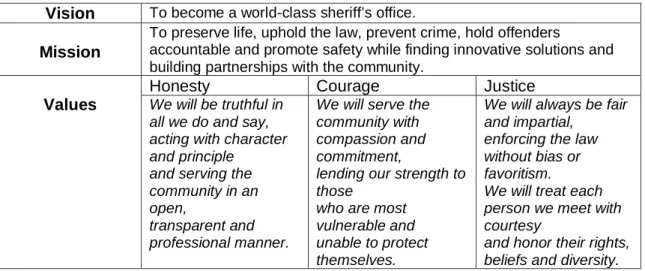
Table 1. Vision, Mission and Values Statement, Clackamas
County (OR) Sheriff’s Office ... 32 Table 2. Seattle Police Department Code of Ethics ... 34
LIST OF ACRONYMS AND ABBREVIATIONS
ACLU American Civil Liberties Union
AUVSI Association of Unmanned Vehicle Systems International COA certificate of waiver authorization
CRS Congressional Research Service
DOD Department of Defense
DOJ Department of Justice
EPA Environmental Protection Agency FAA Federal Aviation Administration GPS Global Positioning System
IACP International Association of Chiefs of Police MCSO Mesa County Sheriff’s Office
NAS National Airspace System NSA National Security Agency
EXECUTIVE SUMMARY
This thesis examines the issue of law enforcement’s use of unmanned aerial systems (UAS) from an ethical perspective. It describes ethics as rules governing individual conduct that are functionally specific, relating to the role one plays in society. The role police play in U.S. communities and the ethical frameworks they use to guide their conduct have a great impact in defining the relationship between the people and their government in the American context, colored as it is by the social contract and the idea, enshrined in the Declaration of Independence, that the legitimacy of any government is derived from the consent of the governed.1
Empowered to enforce the laws by which society has corporately agreed to be governed, police have a unique ethical relationship to the law. For an action to be ethical for police to take, it must first be legal. The law is a necessary deontological reference point for officers and agencies in defining right and wrong conduct. Unfortunately, in the current environment, legislation governing UAS use by police agencies is lacking. This circumstance creates a referential void for law enforcement executives seeking to put drone technology to use in service of the public.
From a homeland security perspective, public safety stands to be greatly enhanced by the fielding of these versatile platforms. UAS will allow law enforcement agencies without manned aviation units to realize gains in situational awareness, crime scene investigation, accident investigation, search and rescue operations, warrant service, and tactical operations. At issue is how to put the technology to use in these legitimate public safety missions in a way that adequately addresses the privacy and other concerns that accompany any discussion about domestic drone use by government. It is imperative that these issues be considered if public support for law enforcement UAS deployment is to
1 Thomas Jefferson, “Declaration of Independence,” U.S. Government National Archives. July 4, 1776, http://www.archives.gov/exhibits/charters/declaration_transcript.html.
be secured.2 Yet, at present, the discussion about the ethics of UAS employment for law enforcement purposes is nearly absent from the literature. This research seeks to help fill that void.
The primary research question posed by this thesis is whether a prevailing ethical framework exists to govern the use of UAS for domestic law enforcement functions. This thesis concluded that no such consensus exists. Indeed, this research found no single set of ethical guidelines is available to which all American police agencies subscribe. Rather, state and local law enforcement in the United States is fragmented, which results in a lack of standardization regarding ethical norms. With over 18,000 law enforcement agencies nationwide,3 law enforcement in the United States is far from a unitary project. Whether by accident or by design, this circumstance allows agencies to be responsive to local and regional concerns with regard to the ethics of policing. As a secondary research question, this thesis considers what ethical frameworks might be applied to this problem through an examination of the emerging literature.
A hybrid research methodology using elements of the case study method, as well as a policy analysis section, are used in developing this thesis. Using the case study method, it examines evidence of ethical frameworks currently in use by domestic law enforcement agencies. The evidence considered is largely documentary and considered against the ethical standards society expects of law enforcement. Once described, a comparative policy analysis is performed to identify any overlapping areas of concern that appear to be held in common. This study identified seven common dimensions of ethical concern regarding UAS employment:
2 International Association of Chiefs of Police, Recommended Guidelines for the Use of
Unmanned Aircraft (Alexandria, VA: International Association of Chiefs of Police, 2012), 1, http://www.theiacp.org/portals/0/pdfs/iacp_uaguidelines.pdf.
3 Gary Cordner and Kathryn Scarborough, “Information Sharing: Exploring the Intersection of
Policing with National and Military Intelligence,” Homeland Security Affairs 6, no. 1 (January
• engagement • accountability • transparency • privacy • legality • use of force • safety
This thesis recommends that agencies currently using or preparing to use UAS for law enforcement missions address these dimensions in a drone-specific code of conduct, both to guide decision making for officers in the field and to inform the public regarding the uses and limitations of these increasingly capable public safety tools. Further, this thesis recommends the code of conduct be made available for public review and that it be considered a living document that is expected to change over time. Public opinion is not static; society’s expectations are subject to refinement over time. It is in this light, possessing a capacity for change, that the code of conduct should be understood when considering drones and their place alongside other tools employed in law enforcement missions.
Of the more than 18,000 law enforcement agencies in the United States,4 only 20 agencies have a certificate of waiver authorization with the Federal Aviation Administration to operate drones.5 Accordingly, very little experience exists from which to draw regarding what acceptable and unacceptable conduct looks like in law enforcement’s use of drones. UAS use by police is just one facet of an ever-broadening debate in this country about the costs of security in the modern world. The debate about police use of drones is a debate about the future of policing. Law enforcement agencies are uniquely positioned at this moment to lead that conversation, demonstrating that drone technology can
4 Cordner and Scarborough, “Information Sharing,” 113.
5 “Freedom of Information Act Responses,” last modified November 3, 2015, http://www.faa. gov/uas/public_operations/foia_responses/.
contribute to this nation’s collective security in a way consistent with American principles and that maintains the consent of the governed.
ACKNOWLEDGMENTS
I would like to express my sincere gratitude to my co-advisors, Kathleen Kiernan and Rob Nelson, for their guidance and direction throughout the preparation of this thesis. Their patience and timely feedback were invaluable during the research and writing process, and contributed greatly to its completion.
Most importantly, I would like to thank my wife, Lynne, for her unfailing support throughout this program. She gave selflessly of her time and energy to allow me to commit mine to academic pursuits. If my confidence ever faltered, hers never did. Her support made this work possible.
I.
INTRODUCTION
This thesis examines the ethical use of unmanned aerial systems (UAS) by law enforcement agencies in the United States. In particular, it focuses on the ethical frameworks used by those agencies that currently deploy UAS for law enforcement purposes, describes those frameworks in evidence, and considers whether these frameworks are adequate.
Commonly called “drones,” UAS are not new technology, having been in use in one form or another since 1915.1 Department of Defense (DOD) employment of drones and the missions for which UAS are used overseas have been well-documented in the media. Their battlefield successes in America’s recent wars have led to a proliferation of these systems as mission capabilities have grown. With a worldwide market projected to be worth almost $91 billion in the next decade,2 conditions are ripe for the technology’s adoption in a host of emerging domestic market areas, including law enforcement. From a homeland security perspective, public safety stands to be greatly enhanced by the fielding of these versatile platforms, allowing law enforcement agencies to realize gains in situational awareness, crime scene investigation, accident investigation, search and rescue operations, warrant service, and tactical operations. At issue is how to put the technology to use in these legitimate public safety missions in a way that adequately addresses the privacy and other concerns that accompany any discussion about domestic drone use by government. It is imperative that these concerns be considered if public support for law enforcement UAS deployment is to be secured.3
1 Rachel L. Finn and David Wright, “Unmanned Aircraft Systems: Surveillance, Ethics and
Privacy in Civil Applications,” Computer Law and Security Review, no. 28 (2012): 185.
2 “Teal Group Predicts Worldwide UAV Market Will Total $91 Billion in Its 2014 UAV Market Profile and Forecast,” July 17, 2014, http://www.tealgroup.com/index.php/about-teal-group-corporation/press-releases/118-2014-uav-press-release.
3 International Association of Chiefs of Police, Recommended Guidelines for the Use of
Unmanned Aircraft (Alexandria, VA: International Association of Chiefs of Police, 2012), 1, http://www.theiacp.org/portals/0/pdfs/iacp_uaguidelines.pdf.
In this instance, as in most contested issues, context matters. The discussion in the United States regarding the place of drones in U.S. society is happening against the backdrop of debates about the “rightness” or “wrongness” of government conduct in a number of spheres. The drone-executed extrajudicial killing of American citizens abroad in this country’s ongoing war against terrorist organizations, the extent of the National Security Agency’s (NSA) surveillance programs as revealed by the Edward Snowden revelations, and heated debates about the use of lethal force by police set off by incidents in Ferguson, Missouri, and Baltimore, Maryland,4 are three issues that have added to the debate about ethical governmental action impacting citizens’ lives. How far is too far in the pursuit of security? What are the limits of governmental authority within the social contract?
Another issue that is central to the debate about reasonable drone use in the domestic arena is the changing concept of privacy in America that has accompanied the growing importance of technology, especially the Internet and social media, in everyone’s lives. The right to privacy, although not specifically mentioned in the Constitution, is largely believed to be inferred by the First, Fourth and Fifth Amendments.5 The concept of privacy is central to the discussion about drone use by authorities in the American context, owing to its pivotal role in the relationship between the government and the governed. These issues create the landscape upon which this country approaches the question of how a disruptive technology, such as UAS, should be employed by government in the domestic arena.
A. PROBLEM SPACE
Thus, the concept of using UAS for domestic law enforcement purposes is at one time both promising and incredibly problematic. The technology is promising for the capabilities that it puts within reach of even small, local law
4 The Economist, “The Cross Blue Line,” September 12, 2015, 33.
5 “Right of Privacy: An Overview,” accessed September 21, 2015, https://www.law.cornell. edu/wex/Privacy.
enforcement agencies. It is problematic for the potential for abuse that accompanies the prospect of cheap, nearly undetectable surveillance methods that could soon be within reach of every police department or sheriff’s office in the country. Yet, the discussion about the ethics of UAS employment for law enforcement purposes is nearly absent from the literature. This research seeks to help fill that void.
The absence of clearly defined ethical frames for drone use represents both a policy dilemma and a knowledge gap. The policy dilemma stems from the fact that the technology is out in front of the regulation. In February 2015, the Federal Aviation Administration (FAA) met a congressionally-mandated deadline to provide guidelines for integrating UAS in the National Airspace System (NAS) with its Small UAS Notice of Proposed Rulemaking.6 Prior to the notice, a handful of agencies were already operating drones in U.S. airspace through the FAA’s waiver program.7 While the proposed rules are a start, they only apply to drones weighing less than 55 pounds and are primarily meant to deal with safety considerations, such as separation of drones from manned aviation. Absent broader federal legislation governing UAS use, a patchwork of state legislation is emerging with 20 states having passed laws specifically addressing UAS employment within their respective jurisdictions.8 These laws often vary greatly, which has led to inconsistencies from one jurisdiction to the next in how and when drones may be flown in the nation’s airspace. As the list of agencies seeking to use drones expands, the need for policy guidance and decision-making frameworks will grow; yet, it is clear that legislation will only go so far.
6 “Small UAS Notice of Proposed Rulemaking,” February 15, 2015, http://www.faa.gov/uas/ nprm/.
7 John A. Wallace, “Integrating Unmanned Aircraft Systems into Modern Policing in an Urban Environment” (master’s thesis, Naval Postgraduate School, 2012), 9, http://www.hsdl.org/?view& did=725881.
8 Rich Williams, “Current Unmanned Aircraft State Law Landscape,” National Conference of
State Legislatures, December 29, 2014, http://www.ncsl.org/research/civil-and-criminal-justice/current-uas-state-law-landscape.aspx.
The author proposes that adopting ethical use policies regarding UAS employment at the agency level can help address legislative shortfalls.
The knowledge gap concerning drones exists as a result of the lack of domestic experience with this technology, owing to the fact that it is in the very early stages of adoption for anything beyond recreational purposes. The publishing of the FAA notice will likely result in changes, although the rules only address certain safety aspects of drone flight and leave the social context to be discovered. Finn and Wright point out drones are well-suited to “dull, dirty and dangerous work,”9 a fact that makes them extremely useful in a number of missions common to both military and law enforcement. However, military experience with the technology far outpaces that of law enforcement agencies. Care must be taken such that decision-making frameworks historically used for DOD missions do not come to supplant those that should be used in domestic law enforcement missions, as the context is completely different. What is ethical on the battlefield may not be so in the domestic arena. Clear guidelines defining “right” and “wrong” conduct are needed at the outset to squelch the potential for abuse and keep the law enforcement missions for which UAS will be employed within boundaries that will prove acceptable within the judicial system and to the American public.
The need for boundaries is clear, yet a review of the current literature concerning drones reveals that little has been written regarding the intersection of ethics and UAS employment for law enforcement purposes. Investigating and describing the ethical frameworks being applied to the use of this disruptive technology could be instructive for agencies considering adopting these systems, as well as for policy makers considering how to govern those agencies that will ultimately put them to use. This thesis hopes to discover what ethical frameworks are being applied in the decision-making process for UAS deployment by law enforcement and what form they take. It describes those frameworks, and
9 Rachel L. Finn and David Wright, “Unmanned Aircraft Systems: Surveillance, Ethics and
drawing from the best of each, proposes a list of issues to be considered by police executives before fielding UAS in law enforcement missions in the United States.
B. ETHICS PRIMER
Any discourse concerning ethics requires at the outset an explanation of the terms involved, as they are often understood differently by everyone. The description that follows is not intended to be authoritative, but to give the reader a common frame of reference for understanding the concepts that are foundational to this thesis.
Ethics, also known as moral philosophy, is concerned with “systematizing, defending, and recommending concepts of right and wrong behavior.”10 The subject is commonly subdivided into three spheres of study: meta-ethics, normative ethics, and applied ethics.11 Meta-ethics investigates the nature of moral reasoning.12 It seeks to answer questions, such as Where do we get our standards of right and wrong? Are these standards universal or relative? What kind of person should I be? Normative ethics seeks to provide procedures to guide people in defining right and wrong conduct and relies heavily on theories that seek to define by what criteria the “rightness” of an action is decided. These criteria are often described in terms of the agent taking the action (virtue ethics), the action itself (deontology), or the outcomes of the action taken (consequentialism).13 Applied ethics is concerned with applying ethical principles to a particular situation, dilemma, or field of endeavor.14Bioethics and business ethics are two commonly recognized areas of applied ethical study. Although
10 James Fieser, “Ethics,” Internet Encyclopedia of Philosophy, accessed September 20, 2015, http://www.iep.utm.edu/ethics/.
11 Ibid.
12 Robert Cavalier, “Online Guide to Ethics and Moral Philosophy: Meta-Ethics, Normative Ethics, and Applied Ethics,” Carnegie Mellon University, 2002,
http://www.phil.cmu.edu/Cavalier/80130/part2/II_preface.html. 13 Ibid.
neatly compartmentalized in this description, Fieser notes that the lines between these three areas of ethical study are often blurry. Questions of right conduct in the applied realm draw on normative principles, which in turn, depend on big picture meta-ethical concepts.
Normative ethics is generally understood as divided into three general approaches: consequentialism, deontology, and virtue ethics. These approaches differ according to whether the agent, the action or the outcome is considered to be the main criterion for judging conduct as either “right” or “wrong.” Consequentialist normative theories stress the importance of the outcome of any action. An act that produces a positive outcome is, from a consequentialist point of view, necessarily good. Utilitarian ethical frames are considered a subset of consequentialism, and generally hold that “the morally right action is the action that produces the most good.”15 Jeremy Bentham and John Stuart Mill are two philosophers frequently associated with utilitarianism.
Deontological ethical theories stress the importance of the act itself in judging conduct as either right or wrong. It requires adherence to and an understanding of certain moral laws or duties,16 and the intention to comply with those standards. Judging whether an action is “right” is completely independent of how much “good” it produces. Therefore, deontology is widely viewed as the opposite of consequentialism. Immanuel Kant, Thomas Hobbes, and John Locke are commonly associated with deontological thought.
Virtue ethics is the normative approach that “emphasizes the virtues or moral character” of the agent.17 This approach stresses the motives, character, wisdom, education, relationships and emotions of the actor and seeks to answer questions about how people should live and what sort of person individuals
15 Julia Driver, “Stanford Encyclopedia of Philosophy, The History of Utilitarianism,” September 22, 2014, http://plato.stanford.edu/entries/utilitarianism-history/.
16 Robert Cavalier, “Online Guide to Ethics and Moral Philosophy: Deontological Theories,” Carnegie Mellon University, 2002, http://www.phil.cmu.edu/Cavalier/80130/part2/sect8.html.
should seek to be.18 Hursthouse points out that virtues should not be thought of as absolutes, but as something possessed in degrees.19 Out of favor among normative theories for quite some time, virtue ethics has seen resurgence in recent decades, signaling a return to an ethical approach rooted heavily in the teachings of Plato and Aristotle.20
Given the recent focus on discerning right and wrong conduct undertaken by the government both at home and abroad, it makes perfect sense to study the intersection of ethics and police work, regardless of which normative approach someone favors. Cohen and Feldberg observed that the moral dimensions of police work are inescapable, as police make daily decisions that may “have great impact on those of us on the receiving end of police services.”21 Gleason also posits that police officers are rightly held to a higher standard than the public-at-large “because they are stewards of the public trust and are empowered to apply force and remove constitutional privileges when lawfully justified.”22 Police officers may make decisions concerning whether to seize property, deprive individuals of their liberty, or use deadly force all in a single shift. Perhaps no other profession in America is entrusted with more power in the domestic arena than that of the police.23 The impact of this trust and the types of ethical codes put into practice by law enforcement in the United States is dealt with in detail in Chapter II.
18 “Virtue Ethics,” 2012, http://plato.stanford.edu/entries/ethics-virtue/. 19 Ibid.
20 Hursthouse, On Virtue Ethics, 3.
21 Howard S. Cohen and Michael Feldberg, Power and Restraint: The Moral Dimension of
Police Work (Westport, CT: Praeger Publishers, 1991), 3.
22 Tag Gleason, “Ethics Training for Police,” The Police Chief, November 2006,
http://www.policechiefmagazine.org/magazine/index.cfm?fuseaction=display_arch&article_id=105 4&issue_id=112006.
23 Arguments about whether policing is to be considered a “profession” will be set aside as beyond the scope of this thesis. For further reading on the distinction and its relationship to the
police function, see Johan Prinsloo and Brian Kingshot, “Ethics in Policing,” Phronimon 5, no. 1
C. RESEARCH QUESTIONS
Does a prevailing ethical framework exist that governs the use of UAS for domestic law enforcement functions? If so, is it adequate? If not, which ethical decision-making frameworks might be applied to this problem?
This author’s hypothesis is that agencies currently using or have used drones for law enforcement purposes do so within the ethical constraints they use for other technical tools they employ. Some, such as wiretaps, must be actively pursued. Others, such as video surveillance, may be passive in nature. Some tools require a warrant prior to use, others do not. Video surveillance cameras, telephone wiretaps, global positioning system (GPS) tracking devices, radar/laser speed detectors, and even manned aircraft were all new to policing at some point in the past but are now considered standard “tools of the trade.” As the legality of these tools has become well-defined over time, the limits of their ethical employment in policing are now mostly clear, as police actions must themselves always be legal to be ethical.24 Drone use standards do not yet benefit from the wealth of case law applied to these other technical means available to law enforcement and it may be years before precisely how agencies may employ drones is decided by the courts. Nevertheless, drones are now part of everyday life, and guidelines for their use within the bounds of the social contract cannot wait, as the technology is poised like no other that has come before to alter the relationship between the people and their government. As Kleinig makes clear, police often “represent for many citizens the most immediate and visible expression of governmental authority and power.”25 How police employ this new tool in their toolbox will undoubtedly have an effect on how citizens view their government.
24 This concept is spelled out in Articles 2 and 4 of “Canons of Police Ethics,” first published by the National Institute of Justice in 1957. For further reading, see Yurong Zhang and John
Kleinig, ed. Professional Law Enforcement Codes: A Documentary Collection (Westport, CT:
Greenwod Press, 1993), 91–96.
25 John Kleinig, The Ethics of Policing (Cambridge, UK: Cambridge University Press, 1996),
D. DATA SOURCES AND METHOD
Data for this research comes from publicly available documents regarding law enforcement agencies that have employed or have sought to employ UAS within U.S. airspace. Sources include law enforcement agency websites and those of their parent organizations, online resources including news media reports regarding drone use by particular agencies, and federal government disclosures regarding public entities that have a certificate of waiver authorization (COA) on file with the FAA.
As of February 7, 2016, the FAA had 74 COAs on file for public (government) UAS operations.26 Of those, at least 20 are law enforcement entities of some type: federal, state, local or tribal. The COA packages, which are available for review on the FAA’s website, include a wealth of information regarding the operating areas and parameters, as well as the type of drone employed by those agencies. The information disclosed is useful to the research, as it not only describes in some cases the missions for which a particular UAS will be employed, but identifies the type of drone in use. This disclosure often provides insight into the capabilities of each platform.
The COA packages only tell part of the story, however. To discern the ethical frame from which each agency operates, the home pages of the law enforcement agencies themselves can prove useful. Transparency efforts that pre-date drone use have led many agencies to provide values statements, codes of conduct, or codes of ethics on agency or local government websites. These references are instructive as they provide insight into how an agency views itself and its relationship to the community that it serves. For insight into how the community views this relationship, media reports on the topic of UAS operations are also instructive. In some jurisdictions, such as Seattle, Washington, the issue of drone use in law enforcement has been closely followed by local papers and television news programs as a contentious one.
26 “Unmanned Aircraft Systems, Freedom of Information Act Responses,” February 25, 2015, https://www.faa.gov/uas/public_operations/foia_responses/.
1. Types of Analysis
A hybrid research methodology using elements of the case study method, as well as a policy analysis section, is used in developing this thesis. The case study method examines evidence of ethical frameworks currently in use by domestic law enforcement agencies. The evidence considered is largely documentary and considered against the ethical standards society expects of law enforcement, and just as importantly, the standards law enforcement expects of itself. Once described, a comparative policy analysis is performed to identify any overlapping areas of concern that appear to be held in common. Based on these common areas of concern, a template is developed outlining ethical dimensions that should be addressed in creating a drone-specific code of conduct for law enforcement.
2. Limits
Choosing a study group from among the relatively small number of agencies that have progressed to the COA stage helped to define the scope of this study. The information required to submit an FAA waiver package necessarily requires that a substantial amount of thought has already been given to the intended uses and limitations the applicant agency intends for its particular system. Thus, the contents of the package are largely representative of policy, indicative of the framework for decision making prior to the deployment of a drone, and not mere conjecture on the part of some law enforcement executive regarding the hypothetical use of aerial systems that agencies may adopt in the future.
This thesis does not study legislation in any great detail. A section on law, regulation, and policy is included as part of the literature review. Where relevant, case law is mentioned as it helps to define the legal baseline from which police methods of surveillance are understood to operate. As previously stated, several articles included in the Canons of Police Ethics (1957) lend credence to the position that the legality of a behavior is a good starting point for beginning to
judge whether police actions are ethical; however, the intent of this thesis is not to investigate or dissect legal constraints, as these constraints are largely absent at present.
3. Output
The ultimate goal of this thesis is, at its heart, to test whether the policies governing UAS deployment adopted by the domestic law enforcement agencies themselves are adequate or need improvement. To accomplish this goal, the output of this research consists of two parts. The first output is a description of the ethical frameworks identified currently in use by agencies employing UAS. The second output is a list of ethical dimensions, drawn from the different ethical frameworks in use, which any agency intending to employ UAS should address in a drone-specific code of conduct to govern the use of the technology in law enforcement missions.
E. LITERATURE REVIEW
As this topic has appeared relatively recently in the public consciousness, the majority of the literature dealing specifically with UAS is relatively new, with most sources being published within the past seven years. The pace of scholarship is accelerating, however, and includes sources from several documentary categories including government reports and testimony, proposed and passed legislation, scholarly journal articles, academic theses, educational websites, professional organization and special interest advocacy papers, as well as media coverage in print and online. The source material can be generally divided into the following sub-literatures:
• ethics in policing
• law, regulation and policy • UAS operations
The literature concerning UAS employment in the domestic arena is growing quickly but is still outstripped by the amount of thought that has been given to wartime use of UAS overseas. Consequently, a good deal of the literature related to UAS use is derived from the experiences of the DOD and the Central Intelligence Agency (CIA). That literature serves as the starting point for much of the discourse regarding platform capabilities impacting the domestic use of UAS. Much of the discussion about capabilities centers on previously mentioned privacy concerns. Sources include academic research, as well as advocacy papers on both sides of the debate, including from industry organizations and civil liberties groups.
The sources for this literature review may be organized into the following documentary categories:
• government reports and testimony • scholarly journal articles
• educational websites and papers
• professional/special interest organization position papers and websites • media reports and news articles
These sources represent a diverse array of academic, government and special interest research. The broad variation in authorship reflects the growing interest in the general issue of domestic UAS deployment across a broad spectrum of stakeholders. These stakeholders include potential business and law enforcement users seeking capability expansion at reduced cost, as well as privacy advocates concerned with the virtually limitless potential of UAS to erode the public’s expectation of privacy. All recognize UAS as a transformative technology with the potential to change the landscape of domestic law enforcement that adds to capabilities while simultaneously holding a vast potential for abuse.
1. Ethics and Policing
Ethical codes have long been a fixture in everyday life. The Hippocratic Oath is perhaps most familiar and dates to at least the 3rd century B.C. Historically, codes of ethics have been associated with the fields of law, medicine, and theology. Palin states that these fields of endeavor were “distinguished from other occupations by three common characteristics: an extended period of education; a self-sacrificing commitment to serving society; and freedom to self-organize and self-regulate.”27 Carr would add that the primary distinguishing characteristic of a profession is that standards of service are “morally grounded,” and expressed as duties or obligations.28 This obligation stems from the fact that the services provided are not ones that the “customers” could provide for themselves.
According to Kleinig and Zhang, it is only in the last century that ethical codes have assumed a more prominent role in society as they have proliferated beyond the traditionally held “professions” and are now generally understood to set down “a wide range of commitments intended to mediate the formal relations between providers of…..services and their recipients.”29 Endeavors as diverse as business, banking, architecture, and policing, to name just a few have begun adopting a code of ethics to enforce institutional standards. These codes differ substantially in specifics, as they address the particular services provided, but in all cases, such codes serve to protect the “consumers” served.30 Adopting such standards improves the public perception of the service provider individually and corporately. According to Prinsloo and Kingshot, the adoption of a formal code of
27 Philip J. Palin, “Homeland Security: An Aristotelian Approach to Professional
Development,” Homeland Security Affairs 6, no. 2 (May 2010), https://www.hsaj.org/articles/677.
28 David Carr, “Education, Profession and Culture: Some Conceptual Questions,” British
Journal of Educational Studies 48, no. 3 (September 2000): 248, http://onlinelibrary.wiley. com/doi/10.1111/1467-8527.00146/epdf.
29 Kleinig and Zhang, Professional Law Enforcement Codes: A Documentary Collection, 1.
ethics among police agencies brings with it benefits that lead to gains in police efficiency, value, and effectiveness.31
Gilman observes that, far from being simple aspirational statements, codes of ethics are “some of the most important statements of civic expectation.”32 He posits that effective codes function simultaneously on both an
institutional and a symbolic level. Institutionally, they define boundaries and expectations for behavior. They show individuals where the pitfalls are so they can be avoided. Symbolically, codes create a model to which individuals subscribe that defines not only how they see themselves but how they desire others to see them.
Foundational literature on modern police ethics begins in 1829 with the adoption of the Metropolitan Police Act by the British Parliament.33 Widely considered to mark the beginning of modern professional policing, this Act established the Metropolitan Police in London. The Act included a code of general instructions that encompassed nine principles of behavior demanded of new police officers. These instructions codified standards of behavior for the new officers, both on and off duty. Literature specific to policing in the United States begins at least as early as 1957 with the publishing of the Canons of Police Ethics by the International Association of Chiefs of Police (IACP).34 Concepts, such as integrity, discretion, confidentiality, and impartiality are all mentioned. Just as in the general instructions found in the Metropolitan Police Act, off duty behavior is included in the IACP code. Thus, a consensus seems to have been reached that private behavior impacts on credibility in professional conduct, at least as it relates to the police.
31 Johan and Kingshot, “Ethics in Policing,” 52. 32 Ibid.
33 “Metropolitan Police,” 2015,
http://www.parliament.uk/about/living-heritage/transformingsociety/laworder/policeprisons/overview/metropolitanpolice/.
34 Andrew J. Kavanaugh, Franklin M. Kreml, and Tamm Quinn, Canons of Police Ethics
(Washington, DC: National Institute of Justice, 1957), art. 2, https://www.ncjrs.gov/pdffiles1/ Digitization/16578NCJRS.pdf.
Although the Canons of Police Ethics figures prominently in this nation’s understanding of police ethics, no single code of ethics applies to all police officers in this country. Instead, the decentralized structure of American law enforcement, represented by some 18,000 agencies nationwide,35 creates a circumstance in which no one ethical framework exists to which all adhere. While some states have an agreed upon code of conduct that applies to police officers in every jurisdiction (California being one example), most do not. This lack of standardization nationally makes way for the appearance of regional and even local variations in the ethical frameworks applied to police work by those agencies.
While what is legal is often seen as a minimum baseline for determining what is ethical in many professions, it is an absolute imperative where law enforcement is concerned. As mentioned, no single code of ethics applies to all police officers in America. However, adherence to law figures prominently in police ethical codes. The language of the law enforcement code of ethics to which all California peace officers swear includes a pledge to “be exemplary in obeying the laws of the land.” The same phrase is included in the code of ethics outlined on the website of the Texas Police Association.36 According to early ethical policing guidelines adopted by the IACP, as a profession charged with upholding and enforcing the law, law enforcement entities have an absolute obligation to follow the law while enforcing it.37 Article 1 of this same document spells out that upholding the Constitution is “chief among these” laws. This article is instructive since Fourth Amendment concerns figure most prominently in the debate about drone use, particularly by the government. As Moore points out,
35 Gary Cordner and Kathryn Scarborough, “Information Sharing: Exploring the Intersection
of Policing with National and Military Intelligence,” Homeland Security Affairs 6, no. 1 (January
2010): 113, https://www.hsaj.org/articles/92.
36 “Code of Ethics,” accessed September 27, 2015, http://www.texaspoliceassociation. com/codeofethics.php.
however, “the concept of privacy is exceptionally subjective.”38 In this sense then, legislation regarding UAS employment in America’s skies is an absolutely essential precursor for the law enforcement community in defining what is and is not an ethical use of the tool.
2. Law, Regulation and Policy
Despite this obvious need, one issue on which broad consensus exists is that current U.S. law does not adequately address the prospect of widespread UAS employment in the domestic airspace. The primary limiting factor related to domestic drone proliferation in the United States among government agencies and businesses is the lack of an approved plan to integrate unmanned aircraft into the NAS.39 This shortcoming was to be remedied by the FAA’s Small UAS Notice of Proposed Rulemaking.40 The FAA’s mandate, however, is essentially one of protection of life and property (safety), not protection of privacy, airspace rights, or limits on government authority.
While the FAA’s integration plan will begin to solve the regulatory piece of the UAS puzzle, it only adds to the urgency for legislative action on the part of the Congress. Bloss correctly describes the USA Patriot Act as “the cornerstone of U.S. federal statutes” governing expanded police surveillance authority post-9/ 11,41 but the act does not directly address unmanned aerial surveillance. To-date, Congress has not passed a bill dealing with the intersection of UAS and privacy concerns.42 This shortcoming presents a particular concern for agencies
38 Jeanie Moore, “Da Vinci’s Children Take Flight: Unmanned Aircraft Systems in the Homeland” (master’s thesis, Naval Postgraduate School, 2014), executive summary, xvii, http://www.hsdl.org/?view&did=753798.
39 Wallace, “Integrating Unmanned Aircraft Systems into Modern Policing in an Urban Environment,” 9.
40 “Small UAS Notice of Proposed Rulemaking.”
41 William Bloss, “Escalating U.S. Police Surveillance after 9/11: An Examination of Causes
and Effects,” Surveillance and Society 4, no. 3 (2007): 217,
http://library.queensu.ca/ojs/index.php/surveillance-and-society/article/view/3448. 42 Wells C. Bennett, “Civilian Drones, Privacy, and the Federal-State Balance,” The Brookings Institution, September 2014, 2, http://www.brookings.edu/~/media/Research/Files/ Reports/2014/09/civilian%20drones%20privacy/civilian_drones_privacy_bennett_NEW.pdf.
that would seek to employ drones, as Martinelli describes the issue of privacy as central to the ethics of policing in the United States.43
Research related to this aspect of UAS domestic use reflects a high level of interest by legal professionals, as might be expected. A number of congressional reports related to domestic drone use illustrate the interest of both houses of the legislative branch of the federal government on this issue. As with the operations sub-literature, most of the scholarship in the area of law and regulation is recent, most having been published within the last three years. While general agreement seems to exist that the legal framework governing domestic UAS operations is currently behind the operational capabilities of the technology, differences of opinion have occurred about how best to address this shortcoming. As described by Bennett, stakeholders can be divided roughly into two schools of thought. One school looks to the federal government for a single set of legislative guidelines that would lay out a framework that the states could use as a starting point.44 Stanley and Crump would agree and make the case that the FAA’s mandate to protect individuals on the ground should not be limited to just safety matters but should also include an obligation to protect their privacy.45 The other school of thought would prefer to see the states take the lead, with the federal government serving in a supporting role.46 McNeal’s argument for a “property rights” approach to governing UAS flight limits is one example of this school of thought.47
43 Thomas J. Martinelli, “Updating Ethics Training—Policing Privacy Series: Noble Cause
Corruption and Police Discretion,” The Police Chief, March 2011, 62, http://www.policechief
magazine.org/magazine/index.cfm?fuseaction=display_arch&article_id=2339&issue_id=32011. 44 Bennett, “Civilian Drones, Privacy, and the Federal-State Balance,” 2.
45 Jay Stanley and Catherine Crump, “Protecting Privacy from Aerial Surveillance: Recommendations for Government Use of Drone Aircraft,” American Civil Liberties Union, December 2011, 2, https://www.aclu.org/technology-and-liberty/report-protecting-privacy-aerial-surveillance-recommendations-government-use.
46 Bennett, “Civilian Drones, Privacy, and the Federal-State Balance,” 2.
47 Gregory S. McNeal, Drones and Aerial Surveillance: Considerations for Legislators
(Washington, DC: Brookings Institution, 2014), 28,
http://www.brookings.edu/~/media/Research/Files/Reports/2014/10/drones%20aerial%20surveilla nce%20legislators/Drones_Aerial_Surveillance_McNeal_FINAL.pdf.
Wallace points out that where a legal framework does exist, it is based on cases that involved manned aircraft. These cases will need further review in light of the differences in “public view” and “naked eye” interpretation between manned and unmanned aircraft.48 The lack of guiding legislation is a key concept, as it may put greater pressure on police ethical frameworks to fill in the decision-making gaps left by the statutory void.
3. Unmanned Aerial Systems Operations and Capabilities
This topic is perhaps the most widely studied that is related to the general issue of UAS deployment. In America’s recent wars in Iraq and Afghanistan, UAS have proven their utility over and over again. Finn and Wright describe UAS as perfectly suited to “dull, dirty and dangerous work,”49 which makes them ideal for many battlefield missions. This battlefield suitability led to UAS being widely adopted by both the American military establishment and the intelligence community in the past decade. Since many traditional law enforcement functions can be described in similar terms, drones would seem to be well-suited to those missions as well.
Despite much rancor in the media regarding the targeted killing of people using drones, many see the primary utility of these systems, even for military applications, is for surveillance.50 In this sense, the military and intelligence communities’ collective experience with UAS employment is both instructive and useful to the discussion of domestic uses for these same systems, as surveillance of U.S. persons is a recurring theme in the scholarship regarding domestic UAS use. Stanley and Crump express the view of the American Civil Liberties Union (ACLU) regarding drones that current U.S. privacy laws are insufficiently strong to guard against an intrusive technology that is
48 Wallace, “Integrating Unmanned Aircraft Systems into Modern Policing in an Urban Environment,” 34.
49 Finn and Wright, “Unmanned Aircraft Systems,” 186.
simultaneously becoming “cheaper and more powerful.”51 McNeal offers a rebuttal, asserting that the drone systems currently available to law enforcement are far less-capable surveillance tools than the manned aircraft many agencies currently employ and contemporary attempts to legislate the government’s use of drones is based not on present encroachment on civil liberties but on an expectation of the future capabilities of the technology.52
UAS operations and capabilities research benefits from a broad swath of researchers and source types. Academia, industry organizations, privacy groups, government, and media are all well-represented in the sub-literature. The vast majority of material available on this topic is very recent, with most source material authored within the last five years. The current popularity of the topic of UAS use, in general, and the likelihood of its inclusion in a near-term legislative agenda, make it challenging for any researcher to stay current on this issue.
4. Privacy Concerns
Privacy concerns figure prominently throughout the discourse regarding drone use by domestic law enforcement. In fact, it is the concept of privacy that is seen as most under attack by many researchers considering the expanded use of drones by government. Jay Stanley of the American Civil Liberties Union (ACLU) sees drones as a “concrete and instantly graspable threat to privacy.”53 Ghoshray describes an “Orwellian dystopia” on the near horizon as drone use ushers in a new era of “unwarranted intrusion into private lives.54 Yet the U.S. Constitution contains no explicit right to privacy in the text. Instead, according to the Legal Information Institute at Cornell University, a broad right to privacy is
51 Ibid., 1.
52 McNeal, Drones and Aerial Surveillance: Considerations for Legislators, 2.
53 Somini Sengupta, “Rise of Drones in U.S. Drives Efforts to Limit Police Use,” The New
York Times. February 15, 2013, sec. Technology, http://www.nytimes.com/2013/02/16/tech nology/rise-of-drones-in-us-spurs-efforts-to-limit-uses.html?pagewanted=all&_r=1.
54 Saby Ghoshray, “Domestic Surveillance via Drones: Looking Through the Lens of the
Fourth Amendment,” Northern Illinois University Law Review 33, no. 3 (2013): 591, http://law.
inferred by the Constitution. This inference is made in the aggregate within the texts and meaning of the 1st, 4th and 5th Amendments.55 Contained as it is within the Bill of Rights, this right is foundational to the social contract between government and the governed in the United States.
While Bloss would agree that privacy rights are central to the relationship between citizens and their government in the American context, he asserts that no constitutional mandate exists for personal privacy rights.56 Instead, he argues that this concept derives from case law tied to various means of surveillance used by police. The “expectation of privacy” as it is known today derives from the decision of the U.S. Supreme Court in Katz v. United States. In the decision, the court held that electronically eavesdropping while a person used a phone booth to make a call constituted a “search and seizure” within the meaning of the Fourth Amendment, and was therefore, illegal absent a warrant. The court held that the citizen was justified in expecting a certain level of privacy while using a telephone booth. Thus, privacy from government intrusion as it is currently understood derives from the case law and not directly from the Constitution. In Bloss’ view, the exercise of this right to privacy must be balanced against the compelling interests of the state in its quest to provide security to its citizens. Considered in this context, security and privacy can be seen as concepts in competition with one another where a balance between the two, although desirable, is elusive.
Whether explicit or not, privacy has come to be foundational to the relationship of the citizen to the state in the United States. Yet, at the federal level, little has been done to address potential UAS infringement on individual privacy. According to a 2015 Congressional Research Service (CRS) report, since the passage of the FAA Modernization and Reform Act of 2012, Congress
55 “Right of Privacy: An Overview.”
56 Bloss, “Escalating U.S. Police Surveillance after 9/11: An Examination of Causes and Effects,” 212.
has failed to address “the potential privacy implications of drone use.”57 The courts have not yet been presented with an opportunity to rule on surveillance conducted by drones; in other words, no legal precedent has yet been set.58 Even the regulation is lacking, as the recently published FAA rules governing small UAS flight contain no privacy provisions at all.59 The gap left by the federal government is increasingly being filled by a growing body of state legislation. Thompson points out that “almost half the states have enacted some form of drone legislation.”60 Yakabe observes that since April 2013, 15 states have passed legislation the primary purpose of which is to constrain the use of UAS by law enforcement agencies to protect citizens’ privacy.61
Absent federal legislation, Stanley and Crump see state and local restrictions on drone use as “the best thing Americans can do to protect our privacy.”62 As states grapple with the issue, no consensus has yet been reached on what boundaries the legislation should set. Instead, the result is a patchwork of laws with varying levels of restriction.63 Oregon law prohibits the weaponization of UAS and requires public entities to register their drones with the Oregon Department of Aviation. Iowa and Utah both passed legislation requiring law enforcement to obtain a search warrant prior to collecting evidence using UAS. Alaska requires a warrant for any use of UAS by law enforcement
57 Richard M. Thompson II, Domestic Drones and Privacy: A Primer (CRS Report No.
R43965) (Washington, DC: Congressional Research Service, 2015), summary. 58 Ibid.
59 Ibid. 60 Ibid.
61 Alison Yakabe, “UAS on Main Street: Policy and Enforcement at the Local Level,”
Homeland Security Affairs 11, art. 4 (June 2015), https://www.hsaj.org/articles/4522.
62 Jay Stanley and Catherine Crump, “Why Americans Are Saying No to Domestic Drones,”
Slate, February 11, 2013, http://www.slate.com/articles/technology
/future_tense/2013/02/domestic_surveillance_drone_bans_are_sweeping_the_nation.html. 63 Kaveh Waddell, “Without Federal Drone Rules, States Are Blazing Their Own (Potentially
Conflicting) Paths,” National Journal, September 1, 2015,
http://www.nationaljournal.com/s/54164/without-federal-drone-rules-states-are-blazing-their-own-potentially-conflicting-paths.
within the state. According to the National Conference of State Legislatures, 45 states have taken up more than 150 bills related to drone use in 2015 alone.64
If dissent exists with regard to the needed legislation, it is because the concept of privacy is constantly evolving, perhaps now more than at any other time in this nation’s history. Increasingly capable technical means of data collection and the routine nature of that collection by many types of entities, not just law enforcement, have conspired to make privacy a concept in flux. Marx refers to it as the “new surveillance” wherein data collection “is often integrated into routine activity.”65 He speaks of the increased use of technology over the past half century to collect personal information and the introduction of computer techniques for data mining, profiling and network analysis. This country has become a surveillance society and it is against this fast-moving conceptual landscape that Solove describes privacy as “a concept in disarray,”66 and Finn and Wright see it as a concept in danger of having no meaning at all.67
64 Waddell, “Without Federal Drone Rules, States Are Blazing Their Own (Potentially Conflicting) Paths.”
65 Gary T. Marx, “What’s New About the ‘New Surveillance’? Classifying for Change and
Continuity,” Surveillance and Society 1, no. 1 (2002): 15, http://www.surveillance-and-society.
org/articles1/whatsnew.pdf.
66 Daniel J.Solove, Understanding Privacy (Cambridge, MA: Harvard University Press,
2010), 12.
II.
THE ETHICS OF POLICING
The American concept of government is firmly rooted in social contract theory as put forth in the works of John Locke, especially his Two Treatises on Government published in 1689. In it, Locke argues that governmental authority does not derive from divine right, as was the argument for most monarchies of the period, but from the consent of the governed. Building on the work of Thomas Hobbes, Locke believed man existed in a State of Nature, created by God, in which every man has the freedom to conduct his life as he sees fit. In the State of Nature, people’s behaviors are not constrained, as long as it is judged to be in that person’s own interest. In this state, no governmental authority punishes individuals who encroach upon the “rights” of others. Instead, the wronged parties are free to defend their own lives and property and to take whatever action they think right to punish the transgressor. Men living in this state are governed by the Law of Nature, known to them through reason, which holds that all men are created equal with equal rights to “life, health, liberty, [and] possessions,” and that they ought not to harm one another in any of these aspects or pursuits.68 Under the Law of Nature, individuals are permitted to defend their property and their lives, which includes the right to use force, including deadly force, against someone who means to do harm.
It is easy to see how such circumstances could lead to an unending state of war between neighbors. The State of Nature is a rough neighborhood. Absent a civil authority to determine which party is the most aggrieved, individuals are left to seek redress on their own for wrongs committed against them. Hobbes described a state where men have no security other than what their own strength can provide.69 As a consequence, man’s life is often “nasty, brutish and short.”70
68 John Locke, “TheSecond Treatise of Civil Government,” ch. II, sec. 6, 1690, http://www.
constitution.org/jl/2ndtreat.htm.
69 Thomas Hobbes, Leviathan (Seattle, Washington: Amazon Digital Services, 2012), Kindle
edition, 50. 70 Ibid.
It is for this reason, Locke asserts, that men enter into a social contract with one another, surrendering some of their liberty to a civil authority that is empowered to make and enforce laws to govern society. Men’s liberty is given in trade so that their own lives might be more secure. They give up some autonomy to govern their own affairs unimpeded in exchange for the safety and security that make civil society possible. Thus, the government itself comes into being as the product of a bargain between citizens. The authority that government wields is also a product of that bargain.71
The social contract comes with rights and obligations on both sides of the equation. Citizens give up the right to take virtually limitless action in pursuit of their own needs in exchange for an obligation to follow the rules of civil society. The government then accepts three obligations: to provide laws, to provide a means of determining differences according to the law, and to provide a means of enforcing those laws.72 Citizens only surrender the right to decide and enforce their own disputes, so long as the government is able to provide an adequate level of security with a reasonable level of liberty. When a government strays too far either way, too authoritarian or too lenient, it surrenders the right to govern and consent of the governed may be withdrawn. Cohen and Feldberg describe the social contract as a limited bargain in which citizens consent to a common authority, as long as the three functions of government are executed. The bargain is conceived as “limited” in that it is not a blank check to any government to serve its own interests.73
These obligations on the part of the civil authority are recognized as the three branches of government in the American system: legislative, judicial and executive. Many of the founding fathers were students of Locke’s philosophy and his ideas are foundational for the documents that would give shape to the United States. Both the Declaration of Independence and the U.S. Constitution bear the
71 Cohen and Feldberg, Power and Restraint, 25.
72 Locke, “TheSecond Treatise of Civil Government,” ch. IX, sec. 124–126.
unmistakable marks of the social contract. The idea that “all men are created equal” and that they possess certain “inalienable rights” were first proposed by John Locke in his Second Treatise on Government. These ideas were the ideological underpinnings that allowed the colonies to withdraw their consent and throw off the governance of King George III in the Declaration of Independence, the argument essentially being that the king had failed to keep up his end of the bargain under the social contract.74
A. POLICING AND THE SOCIAL CONTRACT
The police function resides within the executive branch of government. In Locke’s words, under the social contract, the police role is to provide “power to back and support the sentence when right, and to give it due execution.”75 This function is served in the fulfillment of the government’s obligation to provide safety and security to its citizens rather than have them provide it for themselves. To that end, police are entrusted with a great deal of power, which is necessary because, as Kleinig observes, without power “the authority to make and apply law will come to nothing.”76 This power is not limitless, however, but is bound by the social contract and held as a public trust.77 This trust is granted for the means of achieving a collective security that individuals would not be able to provide for themselves.78
Police are entrusted with the power to investigate, interrogate, detain or arrest, and seize property in pursuit of the ends of a more ordered society. In certain circumstances, the police are even empowered to commit the ultimate deprivation of liberty, to use deadly force. Bittner described the police as set
74 Ibid., 27.
75 Locke, “TheSecond Treatise of Civil Government,” ch. IX, sec. 126.
76 Kleinig, The Ethics of Policing, 13.
77 Monica M. Moll, “Improving American Police Ethics Training: Focusing on Social Contract Theory and Constitutional Principles,” The Forum on Public Policy, 2006, 5, http://www.forumon publicpolicy.com/archivesum07/moll.pdf.