THE IMPACT OF VACCINATION
PROGRAMS ON FORCIBLY
DISPLACED ROHINGYA CHILDREN TO
REDUCE RATES OF COMMUNICABLE
INFECTIONS WITHIN BANGLADESH
By Nusiebeh Redpath, MB BCh BAO
MSPH Candidate 2018
A paper presented to the faculty of The University of North Carolina at Chapel Hill in partial fulfillment of the requirements for the
degree of Master of Science in Public Health in the Department of Maternal and Child Health.
Chapel Hill, N.C.
1
TABLE OF CONTENTS
I.
ABSTRACT
2
II.
INTRODUCTION
3
III.
METHODOLOGY
5
IV.
HISTORICAL PERSECUTION OF THE ROHINGYAS
5
V.
REFUGEE CAMPS
9
VI.
COMMUNICABLE INFECTIOUS DISEASES
10
VII.
VACCINATION PROGRAM
20
VIII.
DISCUSSION
27
IX.
CONCLUSION
29
X.
ACKNOWLEDGEMENT
31
2
I.
ABSTRACT:
The Rohingya children are currently displaced in Bangladesh due to political and ethnic violence, social discrimination, and poverty in Myanmar. This predicament has left several Rohingya children at risk for mortality and morbidity during the acute phase of
displacement and resettlement in the refugee camps. This vulnerable population has low vaccination coverage, high prevalence of malnutrition and exposure to poor living
3
II.
INTRODUCTION:
The violence targeting the Rohingya people, a stateless Muslim minority, in the Rakhine State of Myanmar triggered a rapid humanitarian crisis in August 2017. This crisis is an outcome of decades of brutality and discrimination against the Rohingya people, resulting in gross denial of their human rights by the government of Myanmar (1). During complex humanitarian
emergencies, children are a vulnerable population to morbidity and mortality (2). An estimated 730 children below the age of five years were murdered in a single month during the clearance operation conducted by Myanmar’s security forces (3). During that period, more than 59% of the Rohingya children were killed by gunshots, 15% burnt to death in their homes, 7% beaten to death and 2% died due to landmine blasts (3). The actual mortality rate is suspected to be far higher, since these numbers do not account for the families who never made it out of
Myanmar. Further, not all refugee settlements in Bangladesh were surveyed, suggesting that the current estimates could be grossly inaccurate (3).
4
overlaps for both refugee and stateless persons; a stateless person is not considered as a national of any state (5). As a result, basic rights to healthcare, employment, education and freedom of movement is limited.
Worldwide, communicable infections pose a serious public health threat. The fatal impact of direct violence pales in comparison to the death toll caused by diseases in the inadequately prepared refugee camps. The WHO’s Early Warning, Alert and Response System
(EWARS) surveillance system reported the mortality rates of the Rohingya have risen in all age groups since the beginning of the conflict. For the under-5 age group, a total of 115,756 deaths were reported to EWARS, constituting to 39% of all deaths in refugee camps within Bangladesh. The major causes of death have been attributed to acute respiratory tract infections (32%), fevers of unexplained origin (26%), and acute watery diarrhea (23%) (6). The mortality rates for children under age 5 years in refugee emergencies are consistently higher in comparison to other age groups (7,8).
5
include measles-mumps-rubella, poliomyelitis, meningococcal serogroups, Haemophilus influenzae type b, tetanus-pertussis-diphtheria and influenza (7,9). Several vaccinations have dramatically reduced the burden of the disease globally after the inclusion in vaccination
schedules (10). The aim of this literature review is to give a summary on impact of displacement to the Rohingya children, the health disparities within this community and the pivotal role vaccinations can have on reducing the incidence rate of infectious disease.
III.
METHODOLOGY:
A PubMed search was conducted for references between 1970 and June 1, 2018 using combinations of the following keywords: Rohingya, refugees, infectious disease, health, vaccination, and Bangladesh. Only English articles presenting original data on health problems of refugees, historical and current references of the Rohingya displacement as well as infectious diseases were selected for review. In addition, data from review articles referring to the
Rohingya displacement, health care system in Bangladesh, and refugees’ health problems were
derived from international websites such as the World Health Organization (WHO), UNICEF and Medecins Sans Frontieres (MSF).
IV.
HISTORICAL PERSECUTION OF THE ROHINGYAS
A historical overview of the political influence in Myanmar will give a better
6
to date. In precolonial times, within the independent kingdom of Arakan the Rohingyas and Arakanese (the remaining population in Arakan) lived in harmony, but this was to change in 1825 after the British colonization following the first Anglo-Burmese war. The rift worsened during the Second World War and after Burma received independence in 1948, the
discrimination of the Rohingyas continued with denial of their citizenship rights (5,11). Later in 1982, the military government enacted the Citizenship Law, by which non-major races such as the Rohingya were required to demonstrate ancestral residency in Burma 160 years earlier (4). Consequently, as most Rohingya were unable to provide evidence of their forefathers, they were classified by the state as illegal foreigners.
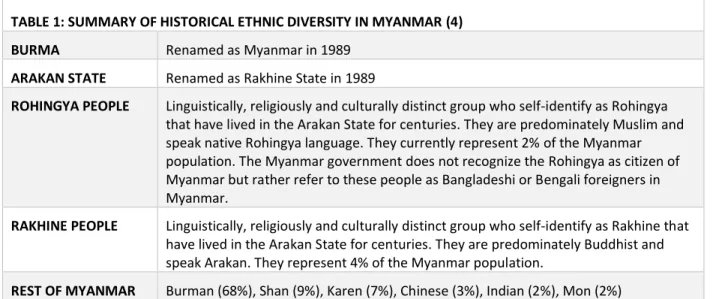
TABLE 1: SUMMARY OF HISTORICAL ETHNIC DIVERSITY IN MYANMAR (4) BURMA Renamed as Myanmar in 1989
ARAKAN STATE Renamed as Rakhine State in 1989
ROHINGYA PEOPLE Linguistically, religiously and culturally distinct group who self-identify as Rohingya that have lived in the Arakan State for centuries. They are predominately Muslim and speak native Rohingya language. They currently represent 2% of the Myanmar population. The Myanmar government does not recognize the Rohingya as citizen of Myanmar but rather refer to these people as Bangladeshi or Bengali foreigners in Myanmar.
RAKHINE PEOPLE Linguistically, religiously and culturally distinct group who self-identify as Rakhine that have lived in the Arakan State for centuries. They are predominately Buddhist and speak Arakan. They represent 4% of the Myanmar population.
REST OF MYANMAR Burman (68%), Shan (9%), Karen (7%), Chinese (3%), Indian (2%), Mon (2%)
Myanmar’s government does not recognize the term Rohingya, but referring to this
7
million as a non-enumerated population of the Rakhine State. This methodology does not account for the 140,000 internally displaced Rohingya living in camps within Myanmar (4). During a UN international conference, the Myanmar government refused to discuss the
Rohingya predicament if the term “Rohingya” was continued to be used. This highlights
Myanmar’s continuing violation of UN policy to allow minorities the right to self-identify on the basis of their ethnic, religious or linguistic characteristics (4). Nevertheless, the term Rohingya is recognized and used by the UN, United States Congress, European Parliament, and
humanitarian agencies such as Physicians for Human Rights, Human Rights Watch, and MSF (4).
As of today, the Rohingya living within Myanmar are subjected to violence, social
discrimination, and poverty. The Rohingya people are confronted by legal restrictions that require them to obtain governmental authorization to travel or work outside their village (4).
This impingement on their freedom of movement also affects the Rohingya people’s basic
8
Rohingya population has higher rates of mortality in children younger than 5 years (135-244 per 1000 livebirths vs 77 per 1000 livebirths) (4). The limited healthcare access has implications to the health and well-being of the Rohingya children in Myanmar.
The Rohingya refugee displacement in 21st century was greatly due to ethnic cleansing, a
practice which forced the people to flee from the violent military campaign which resulted in scorched homes, killing, rapes and landmines being placed in villages (5,12). The violence inflicted towards the Rohingya in Myanmar in August 2017 caused a mass displacement of 655,000 people from Rakhine State of Myanmar to southeastern region of Bangladesh (12). Some asylum seekers crossed the border by land, while others crossed the Naf River to Shah
Porir Dwip, the southern tip of Bangladesh at Cox’s Bazar and Chittagong refugee settlements.
All too frequently, while escaping these precarious circumstances, the vulnerable migrants would find themselves at increased risk of morbidity and mortality during the journey (9). In general, refugees are particularly vulnerable to contagious infectious diseases during their travel because of the destroyed health care infrastructure (7). The consequence of
overcrowding, malnutrition, unhygienic conditions and lack of basic medical services during and after the migration results in outbreaks of disease (9,13). The minimal healthcare services and
lack of preventative health interventions have left no means of supporting these individuals’
health. As a result, this vulnerable population are more likely to exhibit a decline in their overall
health status and future development of complications. The deterioration of an individual’s
9
diagnosis and treatment is crucial for both the individual and community (14). Nevertheless, a regular influx of Rohingya continue to seek refuge in Bangladesh, despite the unfavorable conditions as many consider it to be preferable to the harsh reality faced in Myanmar (5).
V.
REFUGEE CAMPS
After confronting violence and persecution in Myanmar, the Rohingya undertake a long, exhausting journey to Bangladesh only to be received in overcrowded camps under poor hygienic conditions; these factors increase their risks for communicable diseases. More than a quarter of a million Rohingya now reside in Bangladesh and only two official refugee camps, Kutupalong and Nayapara, have been allowed to exist, housing approximately 33,131 Rohingya (4). Children comprise one-fourth of the camp population and most were born within the camp (5). As of 2014, the government of Bangladesh announced a national policy to manage the
10
influx of refugees from Myanmar, which includes a preparation list of unregistered refugees, provision of temporary basic humanitarian relief, strengthening border management,
establishing diplomatic initiatives with the government of Myanmar, and increasing national level coordination (5). Only registered refugees are able to receive legal protection, shelter, food assistance, education, water, sanitation, and health and nutrition from the government of Bangladesh, The World Food Program and UN High Commissioner for Refugees (UNHCR), and non-governmental organizations; whereas the remaining unregistered Rohingya living in makeshift camps are not entitled to humanitarian assistance (4,5).
Today, the prevalence of infectious diseases remains an important health problem in refugees resettling to Bangladesh. The overcrowded accommodations and limited access to clean water provides an environment for rapid spread of infections within a refugee camp (5). Many infectious diseases spread through close contact with an active case. This further
emphasizes the importance of a vaccination program against infectious disease among refugee patients as preventative management.
VI.
COMMUNICABLE INFECTIOUS DISEASES
11
immunization program that prioritizes vaccines for diseases with the greatest contagion potential at reception sites in host countries (14). The suboptimal hygienic conditions of refugee camps contribute to the propensity of outbreaks of vaccine-preventable diseases (7). As a result, refugee children are at increased risk of serious illness or death due to these gastrointestinal and respiratory infections.
V.1 WATERBORNE ILLNESS
Diarrheal disease among Rohingya children younger than 5 years living within refugee camps are five-times greater than other children in Rakhine State (4). The poor hygiene practices within the camps have led to the contamination of water resources, and thus an increase in cases of Acute Watery Diarrhea (AWD). Between August 25 and November 11 2017, a total of 36,096 AWD cases were reported; a total of 42% (15,206) were children under the age of 5 (1,16). Over half of Rohingya children suffer from diarrhea ‘within the past 30 days’; at ten times higher rate than other children across Bangladesh (4). Diarrhea is associated with
electrolyte imbalance as a result of the dehydration. The consequence of diarrhea is also associated with malnutrition and growth failure, which has been associated with mortality and morbidity of children (17).
Today, Rohingya living within internally displaced person camps have one latrine per 100 individuals. This figure is one-fifth of the current suggestion of one latrine per 20
12
thousands. The construction of latrines helps meet one of the most essential needs of a vast refugee population. In collaboration with UNICEF and Bangladesh, the Bangladeshi army was able to construct 14,275 latrines within the refugee camps. By early February 2018, the WASH sector had constructed over 47,000 latrines(1). However, the upcoming cyclone season is a predominant concern for increasing waterborne infections due to the flooding of latrines as part of general camp destruction. For example, in May 2017, Cyclone Mora destroyed one quarter of the makeshift shelters in Rohingya refugee camps and causing widespread damage (18). As a result, there was increased risk water of contamination to nearby locations and families were without safe water or usable toilets (1). This unanticipated circumstance will expose the Rohingya children within the camp to cholera and other waterborne diseases.
Another challenge to maintaining hygiene within the camps is the disposal of human waste and open defecation that is widely practiced. In Bangladesh, adequate latrine facilities are available in two state-sanctioned Rohingya refugee camps; however, pit latrines are full every 10 to 15 days and if left unemptied, the facilities are unused(1). It is estimated that 30-40% of the population practice open defecation within the camps; predominately unsafe disposal of child feces (7,14). Furthermore, 90% of Rohingya refugees that occupy unofficial camps with limited latrines, open defecation is the mainstay sewage system (4).
13
interventions alone reduced the prevalence of diarrhea in the target population (20). Compared with a prevalence of 5.7% in the control group that received no WASH intervention, the 7-day diarrhea prevalence was lower (3.5%) among children under 3 years who received combined WASH intervention (20). The low diarrhea prevalence in Bangladesh suggests household water, sanitation and handwashing interventions reduce fecal exposure and therefore, transmission of enteric pathogens. Nevertheless, if these interventions are not accomplished during the
humanitarian crisis, a vaccination program can be a key preventative intervention to disrupt further transmission within the Rohingya community.
TABLE 2: WASH INTERVENTIONS (21)
1 Any intervention to provide new or improved watery supply or distribution to improve water quantity or supply. This includes the installation of a new hand pump, a
household connection to a piped water supply, or a rainwater harvesting technology.
2 Water quality is any intervention to prevent, remove or inactivate microbiological
pathogens, both at ‘source’ and at ‘point of use’. This includes household, or water
source-level treatment systems involving filtration, sedimentation, chemical treatment, heat treatment, ultraviolent radiation or education on improving water quality. This includes protection of water before consumption.
3 Sanitation is any intervention to provide or promote new or improved sanitation or expand and improve excreta disposal. This includes flush/pour flush toilets, pit latrines, composting toilets, or connection to onsite or off-site systems.
4 Hygiene is any intervention to initiate or promote further practice of handwashing with soap or other agents after defecation, after disposal of child feces, and prior to
preparing, eating and handling food.
V.1.1
CHOLERA
14
recommends that inactivated oral cholera vaccines, in conjunction with provision of rehydrating therapy, clean water and sanitation be used in high risk of cholera environments (22). Cholera is transmitted by the fecal-oral route and therefore, poor access to clean water and latrines is an ideal environment for the spread of cholera within refugee camps. An epidemiological
surveillance of the Cox’s Bazar showed that every year cholera peaked during the summer and monsoon months. As a result, a joint effort by the Government of Bangladesh and international agencies established 155 vaccination sites to target children aged 1 year and older and
administer the oral cholera vaccine (OCV). As of April 26, 2018, the surveillance team had detected no case of cholera in the Rohingya population from time of completion of vaccinations (22). The OCV campaign shows the importance of the collaboration of governments to prevent major cholera epidemics in complex humanitarian emergencies. Despite this laudable success, the influx of unvaccinated Rohingya, who either missed or could not complete the vaccination regimen continue to poses a risk to the general population.
V.1.2
ROTAVIRUS
15
that during the study period over half of the population were positive for rotavirus. Among the positive cases, the majority were under 1 year and <2 years, 66% and 86% respectively (24). The WHO surveillance site revealed a high burden of rotavirus in Bangladesh (20% to 33%) and even a greater rate in Myanmar (53%) (23). Therefore, it is paramount to introduce this
vaccination into the national immunization program in both countries in order to target the vulnerable Rohingya. The vaccination provides protection against circulating genotypes, as well as being safe and efficacious (23). In Bangladesh, the use of the rotavirus vaccine reduced severe acute diarrhea by 41% when there is a 100% coverage. In the same study, it was found that admission cases of Rotavirus accounted for the occupation of 1,535 hospital beds (23). Therefore, with the 41% efficacy of the vaccine this will release 629 beds per year. Thus, the impact of the vaccination reduces diarrheal illness in children, but indirectly impacts the overall health system in Bangladesh.
V.2 DIPHTHERIA
Diphtheria is an infectious disease caused by the gram-positive bacillus Corynebacterium
diphtheriae (24). The clinical manifestations of the disease include sore throat, malaise, cervical
16
insufficiency and death.The recent re-emergence of diphtheria has resulted in 5,710 suspected cases and 35 deaths as of February 14, 2018 affecting Rohingya children below the age of fifteen, who make up 75% of cases in Bangladesh refugee camps (1,12,25). Close contacts, including household members and other persons with direct contact, must be identified, cultured and considered for antimicrobial prophylaxis. If immunization is not current, diphtheria toxoid immunization should be administered (24). It is essential to interrupt the chain of transmission and as a result, the WHO proposed conducting emergency vaccination among children in order to achieve greater than 90% overall coverage. Currently, an estimated 40% to 50% of Rohingya population in Myanmar had coverage from diphtheria, tetanus, and pertussis (DTP) (25). Yet, that may be far too low of a penetration rate to prevent disaster. Studies have shown to sufficiently halt an epidemic of diphtheria in a refugee population a mass vaccination should at least achieve 86% coverage (25). In order for the vaccination against diphtheria to be efficacious, it is essential to have all four in a series of appropriately spaced doses—only then will approximately 95% of infants and children will achieve levels of diphtheria antitoxin correlated with protection (>0.1 International unit of antitoxin/mL) (26). Critically, the Rohingya children have a higher propensity of an incomplete vaccination series due to their abrupt migration to other countries for security. Aggressive re-immunization would benefit the Rohingya children, as the effectiveness of diphtheria, tetanus and pertussis is
17
V.3 STREPTOCOCCUS PNEUMONIAE
The Bangladesh Demographic and Health Survey has identified pneumonia as a leading cause of death among children <5 years of age in Bangladesh (17). Streptococcus pneumoniae is a major cause for both acute bacterial meningitis and pneumonia during childhood. Although the pathogen more frequently causes pneumonia than meningitis, the case-fatality ratio associated with meningitis is higher (27). The potential burden of the disease is preventable by means of effective immunization. The epidemiology of Streptococcus pneumoniae infection among hospitalized children in Bangladesh are predominately serotypes covered by the 10- and 13- valent pneumococcal conjugate vaccine (PVC) (27). The hospital findings provide supporting evidence that available vaccinations can effectively cover serotypes of Streptococcus
pneumoniae that are prevalent in the region. This finding also has great implications to protect
displaced children against regional disease and decreasing the mortality of all children in Bangladesh.
V.4 MEASLES, MUMPS AND RUBELLA
Despite the existence of an effective vaccine, measles is a major cause of childhood morbidity and mortality in many parts of the world. Most measles-related deaths occur in children under the age of five. In 2016, more than 89,780 measles-related deaths occurred globally, mostly in children under the age of 5 years (28). Causes of death are attributed to complications such as encephalitis, severe diarrhea, or respiratory infections such as
18
within the camps accommodating the Rohingya (30). During the outbreak, suspected measles cases were defined as any person with fever above 38 °C and maculopapular rash accompanied by cough, coryza, or conjunctivitis. The suspected measles cases were confirmed by either a laboratory-confirmed positive test for measles-specific immunoglobulin M (IgM) antibodies or by an epidemiologically confirmed case showing evidence of exposure to a confirmed case within the incubation period (21 days) and a clinically confirmed case that meets the clinical case definition despite the absence of a blood test and history to exposure (31). Of all the reported cases, 72% of the affected were not vaccinated against measles, 17% reported a history of at least of one dose of measles vaccination (no evidence to validate) and 11% with unknown status (6). Along with increasing number of measles, another potential killer of children is mumps. It has been reported that nearly 50 cases of mumps have been detected within the Rohingya community (1). Following the introduction of measles, mumps and rubella (MMR) immunization in global vaccine programs in the 1960’s, a dramatic decline in the
number of cases was reported (32). The waning of immunity after vaccination, is relatively rare (32).
The WHO recognizes refugees as one of the high-risk groups for measles, mumps and
rubella outbreaks and as a result implemented mass “catch-up” immunization campaigns to
19
then proposed to more aggressively implement the vaccination program and offer routine vaccinations to all children regardless of their residence status.
V.5 PULMONARY TUBERCULOSIS
Pulmonary tuberculosis (TB) is the most common and infectious form of TB and among the greatest health concerns during immigration. The Rohingya are at risk of tuberculosis due to overcrowded conditions and suboptimal health status (i.e. malnutrition); thus vulnerable to acquiring or re-activation of the infections (14). The incidence of TB in 2013 was 373 cases per 100,000 population (4). It is transmitted from person-to-person through the inhalation of respiratory droplets (33). TB is caused by infection with the bacterium Mycobacterium
tuberculosis (M. tuberculosis).In 2016, the WHO reported at least 1 million new cases of global
TB in children under age 15, causing 253,000 deaths (34). As Asia is heavily affected, Myanmar and Bangladesh are included in the list of 20 countries with the highest estimated number of TB cases, sharing the global incidence of 84% in 2016 (34). The estimated epidemiological burden of TB in 2016 in Myanmar resulted to 30,000 deaths and 191,000 incidence of new cases (34). The severity of symptoms is strongly associated with an impaired immune system due to illness such as malnutrition (35). Often people diagnosed with TB will clinically show an unremitting cough, fever of more than 38°C for at least two weeks, weight loss or failure to thrive (36).
20
confronted by several of these factors during their refugee experience. The delay in diagnosis and treatment is associated with tuberculosis spread within the community (14). Vaccination refugee children for tuberculosis is important, as they have higher risk of developing more severe disease resulting in increased morbidity and mortality compared to adults (38).
Currently, the Bacillus Calmette-Guerin (BCG) is an available vaccination against TB. One meta-analysis suggests that BCG vaccination is protective against M. Tuberculosis and progression from infection to disease (39). It is estimated that the vaccine significantly reduces the risk of TB by 50% (40). Furthermore, the greatest benefit of BCG is to reduce the risk of meningitis and disseminated disease in children; with an efficacy of 64% to 86% (40). Vaccination of newborns and infants appears to have the most optimal protective effects, in about 80% of cases (41). Therefore, early implementation of the BCG in high-TB burden regions, such as Myanmar and Bangladesh, can effectively reduce the incidence of TB and associated complications in children.
VII.
VACCINATION PROGRAM
21
disease, and therefore there is a reduced risk of transmission and outbreak of the disease (42,43) .
Among the Rohingya population, many are unimmunized and it is estimated that less than 3% of children have obtained their vaccinations in Myanmar (44). The vaccination status of a newly arrived Rohingya is difficult to assess as documentation is generally unavailable (14). For instance, although the Rohingya in Malaysia have greater access to health care, it was found that 12% of Rohingya children have never been immunized—a rate twice as high as other children in Malaysia (4). In order to determine the vaccination status of people seeking entry into Bangladesh, ideally each refugee should receive a mandatory medical review prior to settlement in the refugee camps. The screening process at entry points would assure
healthcare needs are met as well as securing the wellbeing of healthy Rohingya refugees from acquiring new infectious diseases within the camps. For example, the United States (US) has proposed an overseas program titled, “Screen, then vaccinate or initiate management” and “Vaccinate only”. The program’s objective is to provide Hepatitis B virus vaccinations to unvaccinated refugees seeking resettlement in the US to prevent or ameliorate the effects of the virus (45). In conclusion, implementing a screening policy for a vaccination program would be a key driver to averting communicable infections and averting premature death among Rohingya refugees.
22
vaccination interventions found these strategies to be cost-effective in comparison to no
intervention (45). The cost of vaccinating refugees has been found to offset the costs associated with serious sequelae of infection by absent medical management (45). As mentioned
previously, rotavirus is a common cause of diarrhea in children under the age of five. The
implementation of the rotavirus vaccination can reduce the overall burden of disease measured as the disability-adjusted life year (DALY). It is estimated that after the introduction of the rotavirus vaccine approximately $728.67 (USD) resulted in savings per DALY to the health system; therefore, a cost-effective intervention (44). The impact of vaccine herd-protection can vastly reduce cost by implementing the pneumococcal, meningococcal, rotavirus and influenza vaccinations in routine immunization schedules. A comparative cost effectiveness analysis of 35 studies found herd-protection was more favorable. When comparing herd-protection to minus herd-protection, the incremental cost-effectiveness ratio per DALY was $49 (USD) (46). The WHO considers an intervention to be highly cost-effective if per DALY avoided costs less than three times the national annual GDP per capita (47). As the national annual GDP per capita of Bangladesh in 2017 is $1,516 (USD), the vaccine herd-protection can be cost-effective in
Bangladesh (48). Not only would the host country would potentially save millions of dollars but also move forward to achieve fulfilling the sustainable developmental goals to end
communicable diseases by 2030 .
23
poliomyelitis, pertussis, Hepatitis B and diphtheria(2,6,44). Furthermore, recent field reports have indicated that nearly 55% of the Rohingya children under 15 years of age (n = 186,929) have been vaccinated. Nevertheless, in order to achieve more than 95% coverage for herd immunity, vaccination campaigns must be continued and expanded (4,33).
VIII.
CHALLENGES TO IMPLEMENTATION OF PROGRAM
This review underlines that there are many areas for improvement of screening programs targeting newly arrived Rohingya refugees in the camps and further guidance and support to the Bangladeshi government. The access to healthcare by the Rohingya is shaped by legal frameworks and bureaucratic barriers. According to the 1951 United Nations High
Commissioner for Refugees (UNHCR) Convention regarding the Status of Refugees, “a refugee
has the same right to access the national services in the country of refuge as the citizens of that
country” (47). Nongovernmental and humanitarian agencies often support and provide access to healthcare; for instance, WHO supports policies for provision of seasonal influenza vaccine to risk groups, irrespective of their legal status (7). Therefore, there is a need for improvement in communication and coordination between different agencies, policy makers, and healthcare providers to address the health needs of all refugees. It is crucial that the international community works with Myanmar and surrounding countries to find a solution to address the Rohingya humanitarian crisis.
24
knowledge to provide safe refuge for the displaced population. Therefore, the capacity for Bangladesh to provide adequate and effective relief can be improved with further support from UNHCR and other organizations. The Ministry of Health and Family Welfare of Bangladesh, with the support of the WHO, UNICEF and other local partners, has been able to establish 43 fixed health facilities to administer vaccinations to children aged six months to 15 years in effort to reduce the risk of outbreaks from communicable diseases (49). However, the influx of new arrivals in Bangladesh poses another challenge to the vaccination program. The vaccination campaigns implemented in the region are unable to reach out to all children due to constant movement of people within camps and settlements. Therefore, it is essential to step up
vaccination efforts and create outreach vaccination teams to protect and prevent the spread of infectious disease among vulnerable population. The movement of populations across borders plays an integral role in the global dissemination of new antimicrobial resistance. For example, high-level resistance to penicillin G Streptococcus pneumoniae, multi-drug resistant tuberculosis and drug-resistant influenza strains; therefore, prompt preparation of health care systems at the national and international level should be required for the safety of all patients within health care facilities (7). Reviewing the vaccination delivery patterns in other countries that experience an influx of migrants can enlighten more appropriate modalities to ensure high immunization coverage among this subset population.
25
mortality among Rohingya children. The dysregulation of the immune system is due to the protein and micronutrient deficiencies and as a result, children are more susceptible to acquiring infections and at risk of more severe symptoms (35). The rate of malnutrition has doubled among Rohingya child refugees, showing 7.5% prevalence of life-threatening severe acute malnutrition (20). The food basket provided to registered refugees in camps contains limited fresh food and insufficient key vitamins and minerals. Over 14,000 children have been admitted to UNICEF-supported treatment centers suffering from Severe Acute Malnutrition (1). As previously discussed, in Myanmar, the Rohingya-predominant regions have higher rates of mortality in children younger than 5 years. The prevalence of malnutrition in Rohingya children living in Myanmar is 14% higher than the global population and five times greater for diarrheal disease. The situation is worse in the refugee camps. The children further deteriorated due to the long journey across the border and conditions in the camps (20,36). In Bangladesh, wasting and stunting in Rohingya children was found to 50% higher in comparison to the native
population. (4). Wasting or low weight for height caused by acute malnutrition is a strong predictor of mortality among children younger than 5 years (4). Therefore, the provision of food rations containing adequate nutritional value would block the confounding effect of
malnutrition to infection illness.
26
understanding about the protection vaccinations provide(1). This lack of understanding could hinder the implementation of a widespread vaccination program to address and prevent infectious disease. The key to prevention efforts is also related to the understanding of the
refugee’s infection and illness. An explanatory model is comprised of conceptualizing the
patient’s understanding of the cause, severity, and prognosis of illness as well as the expected
treatment and how this illness may affect their life (50). Education about sanitation and hygiene practices can reduce the risk of acquiring infectious diseases prevalent in the refugee camp setting. The San Diego Consortium approach to refugee health promotion and disease prevention involved five stages. Stage I is based on gaining the confidence of the refugee population in regards to their health care needs, belief system and patterns of utilizing the health services (50). Stage II involves efforts to make refugees receptive to health promotion and disease prevention interventions by addressing mental health issues that may inhibit their motivation or cognition to understand and adopt these interventions. Stage III is based on the development of interventions that address immediate and short-term health care needs. Stage IV is supported by the implementation of interventions in target communities and address the most cultural-sensitive method of disseminating materials. Therefore, it is optimal for the program to be culturally sensitive and address the lack of knowledge and awareness among the Rohingya in regards to vaccinations. A future intervention can include health promotion
27
IX.
DISCUSSION
Over several decades the Rohingya have endured trauma from continued displacement and life in the refugee camps (51). Today, the refugee crisis in Bangladesh has reached a critical point. This stateless population are challenged with medical and mental problems, social isolation and economic devastation. The aid efforts led and overseen by the government of Bangladesh have been unstintingly generous(1). Yet, the focus of the government of
Bangladesh is to provide transitory humanitarian relief rather than long-term integration into Bangladeshi society (8). The capacity for the Bangladeshi healthcare system to manage the influx of refugees and associated infectious disease is a burden on this population. While repatriation from Bangladesh to Myanmar would be the preferred option for dealing with the
refugee crisis, Myanmar’s political stance perpetuates an environment of violence and
persecution against the Rohingya (8). Without a permanent end to the violence in Myanmar, more desperate refugees will continue to make their way towards Bangladesh (UNICEF, Feb 2018). The chaotic influx of refugees has led to congested camps, with only limited provision of clean water and toilets causing a breeding ground for waterborne and other infections.
28
request to Myanmar to stop violence, including the killing of children, provide protection for Rohingya children and those of all other ethnic groups, allow unrestricted access for
humanitarian organizations to all areas of Rakhine state, and create conditions that allow for voluntary, safe and dignified return of Rohingya refugees to their former communities(1). Lastly, UNICEF has extended its plight to the international community to fully fund all life-saving humanitarian assistance for Rohingya children and families in Bangladesh and Myanmar,
support humanitarian agencies for unrestricted access across Rakhine State in Myanmar to reach all Rohingya children and work with the governments of Bangladesh and Myanmar to find a long-term solution to this crisis, by which the human rights of all Rohingya people are
respected and protected.
Public health interventions, such as vaccination programs, in a refugee camp setting will not only benefit the Rohingya refugees but also protect the public health of the host country and the Bangladeshi people. In addition, vaccination programs are considered to be
29
Likewise, in order to ensure healthy wellbeing of the Rohingya and Bangladeshi populations, policy makers need to be aware of the importance of developing a vaccination program targeting communicable diseases prevalent in the region. A surveillance system is an important element to identifying the disease burden in a region and to customize the
vaccination program to target prevalent infections. It is also a source to evaluate the healthcare system, determine appropriate educational programs and methods of communication to
increase vaccination uptake within the target population.
By establishing a national governance to develop a budget, update policies and guidelines, strengthen the national health workforce and collaborate with partners (agencies, funds, and foundations); communicable diseases can be managed or even eliminated. It should be the moral responsibility of the global community to address the plight of Rohingya refugees and take necessary action to improve this predicament. The basic rights of the Rohingya
population should be recognized. Ending the legislation, policies and practices that discriminate against them will lead to a lasting solution that will benefit not only the Rohingya people but also the surrounding region.
XI.
CONCLUSION
The dual status of being both stateless people and refugees plays a pivotal role in the health outcomes of the Rohingya children. The suboptimal vaccination coverage rates of the Rohingya children is greatly associated with the stateless status and limited access to
30
infrastructure (i.e. clean water and sanitation), overcrowded conditions, lack of access to health care services in refugee camps within Bangladesh all have compounding effects on the health and well-being of these children (7). As a result, this vulnerable population is at risk of
31
ACKNOWLEDGEMENTS:
Firstly, I would like to thank my thesis advisors, Dr. Claudia Fernandez and Dr. Dilshad Jaff for their valuable comments on this thesis and tremendous support during this project. Many thanks to the staff who were involved with administrative and financial support during my enrollment at The University of North Carolina—Gillings School of Public Health, Maternal and Child Health Department. Lastly, I am profoundly grateful to my family and friends for providing me with unfailing support and continuous encouragement throughout my academic studies. This accomplishment would have not been possible without them.
CITATIONS:
1. UNICEF. Lives in Limbo; No end in sight to the threats facing Rohingya children. UNICEF Child Alert [Internet]. 2018 Feb [cited 2018 Jul 8]. Available from:
https://www.unicef.org/publications/files/UNICEF_Rohingya_Lives_in_Limbo_Feb_2018.pdf
2. UNICEF. Two-thirds of unimmunized children live in conflict-affected countries [Internet]. UNICEF; 2016 Apr [cited 2018 Jul 8]. Available from: https://www.unicef.org/media/media_90987.html
3. Medecins Sans Frontieres (MSF). MSF surveys estimate that at least 6,7000 Rohingya were killed during the attacks in Myanmar [Internet]. Medecins Sans Frontieres (MSF); 2017 Dec [cited 2018 Jul 8]. Available from: https://www.msf.org/myanmarbangladesh-msf-surveys-estimate-least-6700-rohingya-were-killed-during-attacks-myanmar
4. Mahmood SS, Wroe E, Fuller A, Leaning J. The Rohingya people of Myanmar: health, human rights, and identity. The Lancet. 2017 May;389(10081):1841–50.
5. Milton A, Rahman M, Hussain S, Jindal C, Choudhury S, Akter S, et al. Trapped in Statelessness: Rohingya Refugees in Bangladesh. Int J Environ Res Public Health. 2017 Aug 21;14(8):942.
6. WHO. Mortality and Morbidity Weekly Bulletin (MMWB) Cox’s Bazar, Bangladesh. Volume No 8: November -2 December [Internet]. World Health Organization; -2017 [cited -2018 Jul 8]. Available from:
http://www.searo.who.int/bangladesh/finalmmwbvol8.pdf?ua=1
32
http://academic.oup.com/jtm/article/doi/10.1093/jtm/tax016/3095987/Health-problems-of-newly-arrived-migrants-and
8. CDC. Famine-Affected, refugee, and displaced populations: recommendations for public health issues [Internet]. Centers for Disease Control; 1992 [cited 2018 Jul 8]. Available from:
https://www.cdc.gov/mmwr/preview/mmwrhtml/00019261.htm
9. Giambi C, Del Manso M, Dalla Zuanna T, Riccardo F, Bella A, Caporali MG, et al. National immunization strategies targeting migrants in six European countries. Vaccine [Internet]. 2018 Feb [cited 2018 Jul 19]; Available from: https://linkinghub.elsevier.com/retrieve/pii/S0264410X18301208
10. Saha SK, Santosham M, Saha S, Black RE, Hussain M. Rotavirus Vaccine will Improve Child Survival by More than Just Preventing Diarrhea: Evidence from Bangladesh. Am J Trop Med Hyg. 2018 Feb 7;98(2):360–3. 11. Napoli C, Dente M, Kärki T, Riccardo F, Rossi P, Declich S, et al. Screening for Infectious Diseases among
Newly Arrived Migrants: Experiences and Practices in Non-EU Countries of the Mediterranean Basin and Black Sea. Int J Environ Res Public Health. 2015 Dec 8;12(12):15550–8.
12. Ahmed B, Orcutt M, Sammonds P, Burns R, Issa R, Abubakar I, et al. Humanitarian disaster for Rohingya refugees: impending natural hazards and worsening public health crises. Lancet Glob Health. 2018 May;6(5):e487–8.
13. Soto SM. Human migration and infectious diseases. Clin Microbiol Infect. 2009 Jan;15:26–8. 14. Castelli F, Sulis G. Migration and infectious diseases. Clin Microbiol Infect. 2017 May;23(5):283–9.
15. UNICEF. Twelve things you didn’t know about immunization [Internet]. UNICEF; 2018 Apr [cited 2018 Jul 8].
Available from: https://www.unicef.org/media/media_102809.html
16. UNICEF. Malnutrition rates among Rohingya refugee children in Bangladesh appear to be at least double earlier estimate [Internet]. UNICEF; 2017 Nov [cited 2018 Jul 8]. Available from:
https://www.unicef.org/media/media_101448.html
17. Ahmed T, Ali M, Ullah MM, Choudhury IA, Haque M, Salam MA, et al. Mortality in severely malnourished children with diarrhoea and use of a standardised management protocol. Lancet. 1999;353(9168):1919–22. 18. UNICEF. Half a million Rohingya refugee children at risk in overcrowded camps in Bangladesh with cyclone
and monsoon season on horizon [Internet]. UNICEF; 2018 Jan [cited 2018 Jul 8]. Available from: https://www.unicef.org/media/media_102462.html
19. Islam M, Ercumen A, Ashraf S, Rahman M, Shoab AK, Luby SP, et al. Unsafe disposal of feces of children <3 years among households with latrine access in rural Bangladesh: Association with household characteristics, fly presence and child diarrhea. Dearden KA, editor. PLOS ONE. 2018 Apr 5;13(4):e0195218.
33
21. Piper JD, Chandna J, Allen E, Linkman K, Cumming O, Prendergast AJ, et al. Water, sanitation and hygiene (WASH) interventions: effects on child development in low- and middle-income countries. Cochrane Public Health Group, editor. Cochrane Database Syst Rev [Internet]. 2017 Mar 30 [cited 2018 Jul 22]; Available from: http://doi.wiley.com/10.1002/14651858.CD012613
22. Qadri F, Azad AK, Flora MS, Khan AI, Islam MT, Nair GB, et al. Emergency deployment of oral cholera vaccine for the Rohingya in Bangladesh. The Lancet. 2018 May;391(10133):1877–9.
23. Tanmoy AM, Ahmed ANU, Arumugam R, Hossain B, Marzan M, Saha S, et al. Rotavirus Surveillance at a WHO-Coordinated Invasive Bacterial Disease Surveillance Site in Bangladesh: A Feasibility Study to Integrate Two Surveillance Systems. Galdiero M, editor. PLOS ONE. 2016 Apr 20;11(4):e0153582.
24. Barroso LF, Pegram S. Clinical manifestations, diagnosis, and treatment of diphtheria [Internet]. Uptodate; 2018 Jun [cited 2018 Jul 6]. Available from:
https://www-uptodate-
com.libproxy.lib.unc.edu/contents/clinical-manifestations-diagnosis-and-treatment-of-diphtheria?search=diphtheria&source=search_result&selectedTitle=1~150&usage_type=default&display_ra nk
25. Matsuyama R, Akhmetzhanov AR, Endo A, Lee H, Yamaguchi T, Tsuzuki S, et al. Uncertainty and sensitivity analysis of the basic reproduction number of diphtheria: a case study of a Rohingya refugee camp in Bangladesh, November–December 2017. PeerJ. 2018 Apr 2;6:e4583.
26. Centers for Disease Control and Prevention. Diphtheria [Internet]. 13th ed. Washington, DC: Public Health Foundation; 2015 [cited 2018 Jul 4]. Available from: www.cdc.gov/vaccines/pubs/pinkbook/index.html 27. Luby SP, Brooks WA, Saha SK, el‐Arifeen S, Naheed A, Sack D, et al. Use of Multiple Surveillance Modalities to
Assess the Epidemiology of Streptococcus pneumoniae Infection in Bangladesh. Clin Infect Dis. 2009 Mar;48(s2):S97–102.
28. WHO. Measles [Internet]. World Health Organization; 2018 Feb [cited 2018 Jul 8]. Available from: http://www.who.int/news-room/fact-sheets/detail/measles
29. Mahmud AS, Alam N, Metcalf CJE. Drivers of measles mortality: the historic fatality burden of famine in Bangladesh. Epidemiol Infect. 2017 Dec;145(16):3361–9.
30. Chan EYY, Chiu CP, Chan GKW. Medical and health risks associated with communicable diseases of Rohingya refugees in Bangladesh 2017. Int J Infect Dis. 2018 Mar;68:39–43.
31. WHO. WHO-recommended standards for surveillance of selected vaccine-preventable diseases. Vaccines and Biologicals [Internet]. World Health Organization; 2008 Jul [cited 2018 Jul 8]. Available from:
http://apps.who.int/iris/bitstream/handle/10665/68334/who_v-b_03.01_eng.pdf;jsessionid=0AF264EDF65C8E7C02573ACBAC52DFB1?sequence=1
32. McLean HQ, Fiebelkorn AP, Temte JL, Wallace GS. Prevention of Measles, Rubella, Congenital Rubella Syndrome, and Mumps, 2013: Summary Recommendations of the Advisory Committee on Immunization Practices. CDC. 2013 Jun 14;62(RR04):1–34.
33. Turner RD, Bothamley GH. Cough and the Transmission of Tuberculosis. J Infect Dis. 2015 May;211(9):1367–
34
34. WHO. Global tuberculosis report [Internet]. World Health Organization; 2017 [cited 2018 Jul 16]. Available from:
http://apps.who.int/iris/bitstream/handle/10665/259366/9789241565516-eng.pdf;jsessionid=C8759A5477E1C39ADCAA0B8C2795D086?sequence=1
35. Ibrahim MK, Zambruni M, Melby CL, Melby PC. Impact of Childhood Malnutrition on Host Defense and Infection. Clin Microbiol Rev. 2017 Oct;30(4):919–71.
36. WHO. Guidance for National Tuberculosis Programmes on the management of tuberculosis in children. Chapter 1: introduction and diagnosis of tuberculosis in children. Stop TB Partnersh Child TB Subgr World Health Organ. 2006;10(10):1091.
37. Mhimbira FA, Cuevas LE, Dacombe R, Mkopi A, Sinclair D. Interventions to increase tuberculosis case detection at primary healthcare or community-level services. Cochrane Infectious Diseases Group, editor. Cochrane Database Syst Rev [Internet]. 2017 Nov 28 [cited 2018 Jul 19]; Available from:
http://doi.wiley.com/10.1002/14651858.CD011432.pub2
38. Alvarez GG, Clark M, Altpeter E, Douglas P, Jones J, Paty M-C, et al. Pediatric tuberculosis immigration screening in high-immigration, low-incidence countries. :8.
39. Roy A, Eisenhut M, Harris RJ, Rodrigues LC, Sridhar S, Habermann S, et al. Effect of BCG vaccination against Mycobacterium tuberculosis infection in children: systematic review and meta-analysis. BMJ. 2014 Aug 5;349(aug04 5):g4643–g4643.
40. Colditz GH, Berkey CS, Wilson M, Fineberg HV, Mosteller F. Efficacy of BCG vaccine in the prevention of tuberculosis. Meta-analysis of the published literature. JAMA. 1994;271(9):698.
41. Colditz GH, Berkey CS, Mosteller F, Brewer TF, Burdick M, Fineberg HV. The Efficacy of Bacillus Calmette-Guérin Vaccination of Newborns and Infants in the Prevention of Tuberculosis: Meta-Analyses of the Published Literature. Pediatrics. 1995 Jul;96(1).
42. Sarker AR, Sultana M, Mahumud RA, Van Der Meer R, Morton A. Cost-effectiveness analysis of introducing universal childhood rotavirus vaccination in Bangladesh. Hum Vaccines Immunother. 2018 Jan 2;14(1):189–
98.
43. Rashid H, Khandaker G, Booy R. Vaccination and herd immunity: what more do we know? Curr Opin Infect Dis. 2012 Jun;25(3):243–9.
44. UNICEF. Outcast and desperate; Rohingya refugee children face a perilous future [Internet]. UNICEF Child Alert; 2017 Oct [cited 2018 Jul 8]. Available from:
https://www.unicef.org/publications/files/UNICEF_Rohingya_refugee_children_2017.pdf
45. Jazwa A, Coleman MS, Gazmararian J, Wingate LT, Maskery B, Mitchell T, et al. Cost–benefit comparison of two proposed overseas programs for reducing chronic Hepatitis B infection among refugees: Is screening essential? Vaccine. 2015 Mar;33(11):1393–9.
35
47. Marseille E, Larson B, Kazi DS, Kahn JG, Rosen S. Thresholds for the cost–effectiveness of interventions: alternative approaches. Bull World Health Organ. 2015 Feb 1;93(2):118–24.
48. The World Bank. Bangladesh Data [Internet]. The World Bank; [cited 2018 Jul 17]. Available from: https://data.worldbank.org/country/bangladesh
49. UNICEF. Bangladesh steps up vaccination for new Rohingya arrivals as measles cases rise [Internet]. UNICEF; 2017 Nov [cited 2018 Jul 8]. Available from: https://www.unicef.org/media/media_101470.html
50. Palinkas LA, Pickwell SM, Brandstein K, Clark TJ, Hill LL, Moser RJ, et al. The Journey to Wellness: Stages of Refugee Health Promotion and Disease Prevention. J Immigr Health. 2002;10.
51. Riley A, Varner A, Ventevogel P, Taimur Hasan MM, Welton-Mitchell C. Daily stressors, trauma exposure, and mental health among stateless Rohingya refugees in Bangladesh. Transcult Psychiatry. 2017 Jun;54(3):304–