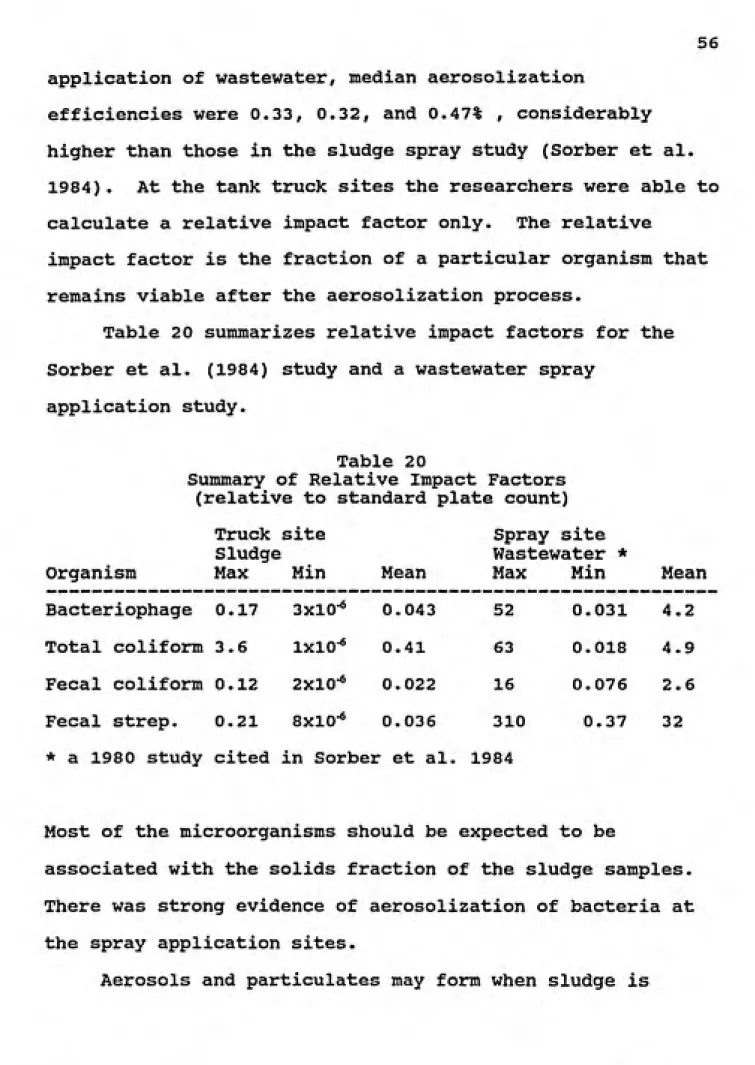
Abstract
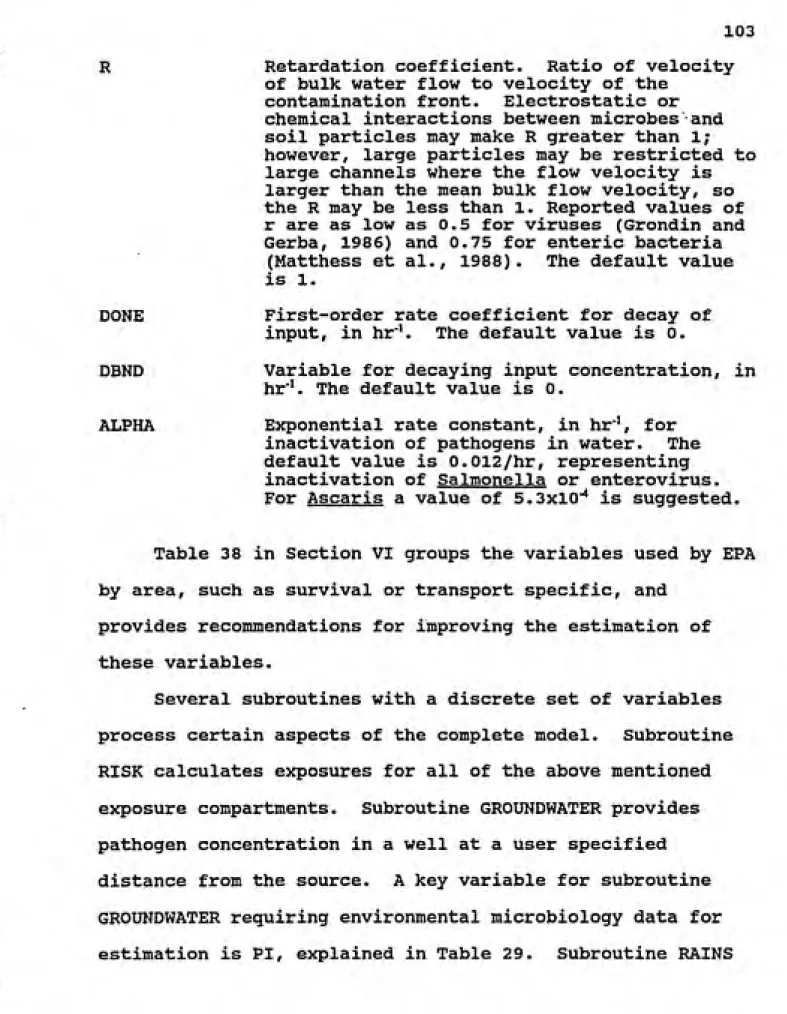
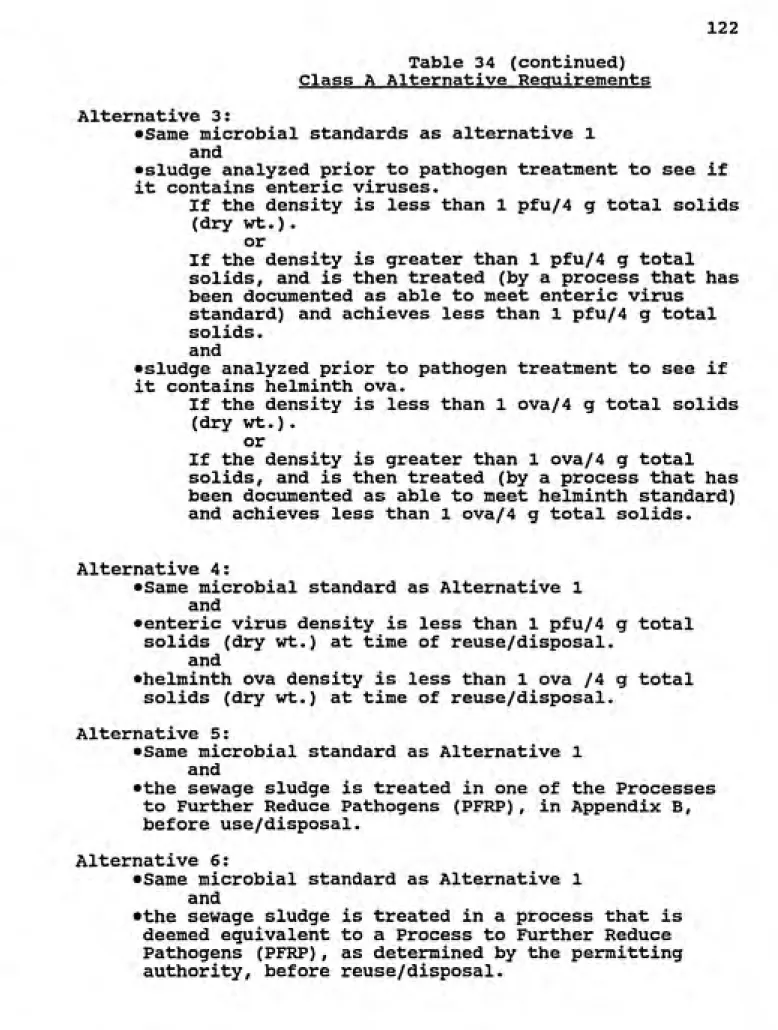
Acknowledgements
I. Introduction 1
II. Objectives and Scope 5
III. History of EPA Risk Assessment Applied to
Sludge 8 IV. Literature Review 11
A. Health Effects of Sludge 11
1. General 11 2. Viruses 13 3. Bacteria 16
4. Protozoans 18
5. Helminths 19 6. Fungi 21 7. Reported Effects of Land Application 22
B. Fate of Pathogens in Sludge Treatment 23
1. General 23 2. Wastewater Treatment 24 3. Sludge Treatment 29 C. Fate of Pathogens in Disposal Processes 32 1. Distribution and Marketing 32
2. Land Application 35
3. Incineration 37
4. Landfilling 37 5. Ocean Dumping 39
D. Pathogen Survival 41 1. Soils 42 2. Plants 50 3. Aerosols 55 4• Water 58
E. Pathogen Transport 61 1. Retention and Transport in Soils 61 2. Transport in Water 70 3. Transport in Air 73
F. Risk Analysis 77
1. General 77 2. Hazard Identification 78 3. Risk Assessment 78 4. Determining the Significance of
A. EPA Pathogen Risk Assessment Computer
Model 92
B. Results of EPA's Risk Assessment 107
1. General 107
2. Bacteria 108 3. Parasites 110 4. Virus 111 5. Suinmary 112 C. Risk Assessment and Regulation 114 1. Basis of Rule 114 2. Basis of Exposure Assessment 116 3. Establishment of Sludge Classes 124 4. Choice of Organisms to Monitor 126 5. Monitoring Frequency 134 6. Application Rate Limits 135
7. Determining Significance of Risk 136
8. Uncertainty 137 D. Discussion 139 VI. Alternative Risk Assessment for Pathogens
in Sewage Sludge 141 A. Approach 141
B. Source Assessment 144
1. Representative Pathogens 144 2. Concentration of Representative
Pathogens at Land Application Sites 146
C. Dose-Response Assessment 150 1. Dose-Response Models 150 2. Dose-Response Data for
Representative Organisms 152 D. Exposure Assessment 155 1. Pathways of Exposure 155 2. Pathogen Die-off Models 162 3. Pathogen Transport Models 175 4. Exposure Models 178 E. Risk Characterization 178
F. Complete Risk Management 179 1. Determining the Significance of
Risk 179 2. Risk Communication 180 G. Discussion 184 H. Conclusions
VII. Recommendations for Further Study 189 Appendices 193
ANN E. BURRUSS. Pathogen Risk Assessment: Its
Development and Use in the U.S. Environmental Protection Agency's Technical Standard for the Use and Disposal of Sewage Sludge, (40 CFR Part 257 and 503) ; (under the direction of Dr. Mark D. Sobsey). EPA developed a risk assessment computer model for pathogens in sewage sludge. This study examines the EPA methodology, its application in
EPA's preliminary risk assessments for parasites, bacteria and viruses; provides a critique and recommendations for improving pathogen risk assessment for pathogens in land
application of sludge.
Data gaps in dose-response assessment, exposure
assessment and risk characterization are evident in the EPA
methodology. Inadequate estimates were made from available data for variables in the EPA model, and data to support estimates for dose-response and exposure were lacking. The EPA sewage sludge use and disposal regulation, promulgated in December, 1992, is technology-based, (although arguably not state-of-the-science). The EPA does not use the
pathogen risk assessment information in order to set
I would like to begin by thanking my Technical Report Committee members. Dr. Deborah Amaral, Dr. Doug Crawford-Brown, and especially Dr. Mark Sobsey, for the guidance and advice that made this study a tremendous learning experience for me. Thanks and many thousand returns to Ram for his steadfast support, news of the world, and Trekkie bulletin boards; to Heather for...Everything, and never a dull moment
(thank You Paul); and to Linda for pure unadulterated joy and pep talks whenever necessary. Thanks to friends and lab-mates, too numerous to name here - but you know who you are - who helped make this endeavor a pleasure. Thanks to Lori Todd, for giving me shelter (and thus peace of mind) these last few weeks. Lastly and most importantly, thanks to Mom, Dad, and Charlie. It hasn't been easy, but your encouragement throughout and support in myriad ways, has
Sewage sludge is the unavoidable byproduct of
wastewater treatment. Over the last twenty years the rate
of sewage sludge production in the U.S. has doubled due to
the increased number of wastewater treatment plants, with
over 7 million dry tons of sludge produced each year. Much of sludge is organic, and contains nutrients such as
phosphorus and nitrogen. Sludge has been used as an
effective fertilizer for centuries, and soil amendment reuse
options continue to be a fitting disposal route. Sludge
also contains pathogens, heavy metals, and dangerous organic and inorganic chemicals. The protection of human health and
environmental integrity in light of these components makes regulation of sludge reuse and disposal options necessary.
Bruce and Davis (1989), in a study of sludge disposal options in the U.K., state a commonly held view, "The
general trend in recent years in most developed countries has been for the disposal of sewage sludge to become more,
rather than less difficult; and in some areas it is becoming
very difficult indeed." Local and national government,agricultural, geographic, economic and political
considerations will influence policy and regulation. As
existing landfill space becomes scarce, and difficulties
attractive. The U.S. Environmental Protection Agency (EPA)
Final Rule (EPA, 1992) appears to offer more flexibility to
operators of sewage treatment works regarding disposal
options than did the proposed rule and the previous rule
(EPA 1989, and 1979). The proposed rule defines only the
microbiological quality required of the resulting sludge,
rather than the technological details of the treatment
processes. The previous rule defined only the technical
processes, as if all wastewaters were of equal original
quality. The final rule adopts aspects from both approaches
in its presentation of alternative requirements to establish
sludge quality.
This paper examines the existing pathogen risk
assessment literature, and work conducted by EPA, and
attempts to promote the application of state of the science
environmental health microbiology data to pathogen risk
assessment. A comprehensive risk-based approach can help
regulators make decisions that will serve the current
intentions of sewage sludge regulation: beneficial reuse and
protection of human health.
A strength of using risk assessment for setting policy
is the reduction of arbitrary judgements and substitution of
objective decisions. The extended history of the
applied to non-chemical health threats, and its application
to risk based regulations. Despite providing flexibility, the Peer Review Committee (PRC) for the proposed rule
criticizes the rule because "there is no compelling risk assessment analysis to justify the scheme of classifying and
regulating pathogen content of sludge in the proposed rule" (Peer Review Committee, 1989). Furthermore, the PRC states
that "conclusions (were) driven by policy but the Technical
Support Document makes it appear science based". In the
proposed rule itself, EPA explains that "until the agency (EPA) develops microbiological human health criteria that
links specific numbers of pathogenic organisms to an
infectious dose, the agency is basing today's proposal on the premise that pathogenic organisms must be below levels
of detection or specific levels of indicators". The final rule (1992), after a pathogen risk assessment development period of several years, goes no further toward
incorporating risk assessment than did the proposed rule
(1989).
A risk assessment approach has been applied to chemical contaminants in wastewater sewage sludge in EPA's final
rule. Data on chemical concentration in sludge, uptake in plants, and chemical intake that would be likely to cause health effects were used to predict probability of negative
lacking. Some efforts have been made to apply risk
assessment methodology to health effects from microbial contaminants of drinking water (Rose and Gerba 1991, Regli
et al. 1991) and recreational water (Cabelli et al., 1983).
II. OBJECTIVES and SCOPE
A. OBJECTIVES
1) to examine and critique the risk assessment methodology
developed by EPA for health effects from pathogens in land
application of sewage sludge
2) to examine the application of EPA's methodology in preliminary risk assessments for parasites, bacteria, and
viruses in the land application of sewage sludge
3) discuss how state of the science environmental health microbiology data and techniques can be applied to promote a high quality result from pathogen risk assessment for sewage
sludge.
B. SCOPE
There are many possible routes by which humans may be exposed to pathogens in sewage sludge. Table 1 lists the sludge disposal practices that may cause exposure that were considered by EPA in various pathogen risk assessment
Sludge Applied to Land (from EPA, July 1991)
PRACTICE DESCRIPTION
I Application of liquid treated sludge for production of commercial crops for human
consumption
II Application of liquid sludge to grazed pastures
III Application of liquid treated sludge for
production of crops processed before consumption
by animals
IV Application of dried or composted sludge to
residential vegetable gardens
V Application of dried or composted sludge to
residential lawns
There may be other conceivable use or disposal
practices that could lead to human exposure. EPA chose to consider the above five practices as major exposure
scenarios. EPA documents developing their risk assessment approach for pathogens in sewage sludge have concentrated on Practice I; land application of sludge for the production of
commercial crops. Practice I will be the focus of this
paper. Practice I, the land application of conventionally
treated sewage sludge for agricultural use, appears to
afford the most likely exposure routes to the greatest
number of people, and provides for a large range of
exposures through several different media. Either onsite workers or consumers could ingest sludge-soil mixtures or
runoff could contaminate groundwater or surface water exposing other offsite receptors, and plant products for human consumption could become sludge contaminated. The in depth analysis of this single reuse practice should
III. HISTORY OF EPA RISK ASSESSMENT APPLIED TO SLUDGE
The United States Environmental Protection Agency (EPA), published a Pathogen Risk Assessment Feasibility
Study in November of 1985. In May of 1986 EPA published the Development of a Qualitative Pathogen Risk Assessment
Methodology for Municipal Sludge Landfillinq. These documents preceded the revision of the regulations
controlling use and disposal of sewage sludge, 40 CFR Parts
257 and 503, Standards for the Disposal of Sewage Sludge; Proposed Rule. (Federal Register February 1989). The
proposed rule relied on risk assessment in the establishment
of chemical contaminant standards. It did not however,
incorporate such analysis into the microbial contaminant regulations, stating that "Until the Agency (EPA) develops microbiological human health criteria that link specific
numbers of pathogenic organisms to an infectious dose, the
Agency is basing today's proposal on the premise that
pathogenic organisms must be below levels of detection or
below specified levels of fecal coliforms and fecal
streptococci/enterococci (indicator bacteria) to protect
human health and the environment." The EPA acknowledges
that the lack of data on infectious dose (concentration of
infection) is a major stumbling block to relying on risk
assessment for sewage-borne pathogens (personalcommunication, Farrell).
Later, in November of 1989, EPA published a two volume
document Pathogen Risk Assessment for Land Application of
Municipal Sludge. Volume I explains the methodology and the
computer model, and Volume II is a user's manual. The
methodology thus developed has been put into practice in two
'preliminary risk assessments'; the first. Preliminary Risk
Assessment for Parasites in Municipal Sludge Applied to
Land, in March 1991, and the second. Preliminary Risk
Assessment for Bacteria in Municipal Sewage Sludge Applied
to Land, in July 1991. The documents point out the data
gaps that make a definitive pathogen risk assessment for
sewage sludge difficult at this time.
Prior to the 1970's, sludge regulations were minimal,
relating only to source of infection, or public nuisance due
to odors (Chaney et al., 1991). Initial regulations for the
treatment of sewage sludge prior to reuse or disposal, were
established by EPA in 1979 (Federal Register, July, 1979).
The original regulations were "process based", establishing
parameters for certain sludge treatment processes and
designating them as "processes that significantly reduce
pathogens (PSRP)", or "processes that further reduce
pathogens (PFRP)". Established parameters such as
and the resulting sludge is considered to have met PSRP or
PFRP standards. Newly developed or modified sludge
treatment processes could be given PSRP or PFRP equivalency
status after following EPA's accreditation process.
Sorber and Moore (1987), state that:
These current regulations (1979 regulations) are based
on operational performance of specific unit processes and on
the absence of health effects directly related to land
application practices. Ultimately, however, regulations
should be founded on both a complete understanding of the
fate and transport of pathogens in sludge amended soils and
on the epidemiological numbers of organisms to which humans
are subjected as a result of these practices.The final rule for the treatment of sewage sludge,(EPA,
1992) , became available to the public on December 1st on
computer disk. As of February, 1993, it had not yet been
published in the Federal Register. The final rule
establishes two classes of sludge which may be defined by
sludge quality requirements or by sludge processing. The
rule specifies the sludge class or classes that may be used,
and sets required access and management provisions that must
be followed, for each sludge use or disposal option
considered in the rule. The final sludge rule of 1992 is
part of the Clean Water Act. The final version of the
revised Clean Water Act, though promulgated, has not yet
been published in the Federal Register. The final rule (40
CFR Parts 257, 403, and 503) which incorporates critical
review of the proposed sewage sludge rule, is available on
IV. LITERATURE REVIEW
A. Health Effects of Sludge
1. General
The benefits of disposing of sewage sludge through
various reuse options must be weighed against the risk of
disease from pathogenic organisms in sludge. The risk of
developing disease depends on such factors as the type and
concentration of pathogens in sewage, the fate of the
pathogens upon their release into the environment, effective
means of human exposure to the pathogens, and the ability of
the pathogens to overcome the body's defense mechanisms.The lAWPRC study group (1983), quoting the World
Health Organization, stated that 25 percent of the world's
hospital beds are occupied because of unwholesome water. Waters, especially in less developed countries, arefrequently contaminated with human waste. Waterborne
disease outbreaks in developed countries continue to be of
concern. In August 1975 a waterborne outbreak in Sewickley
PA, caused by an unidentified organism spread by the
municipal water system, caused very high direct and indirect
economic costs (Baker et al., 1979). Sixty-one percent ofthe town's 8,800 residents were sick for an average of two
physicians visits, emergency room visits and hospitalization
totaled $114,746 and indirect costs from lost wages/output
and lost business totaled $223,330; a grand total of$338,076 or almost $40 per capita. It is frequently
difficult to determine the cause of contamination leading to
waterborne illness. The contamination source may have been
wastewaterborne organisms persisting through drinking water
treatment, or from cross contamination in the distributionsystem.
The concentrations of pathogens in wastewater and hence
in sludge are extremely variable, depending on the
characteristics of the population producing the wastewater.
Some factors influencing pathogen concentration are: the incidence of infection within a community, the type of treatment the sludge receives, season, climate, population
density, sanitation, and ratio of children to adults
(Fradkin et al.,1989). Quality of sludge based on density
of pathogens is difficult to measure as many pathogens are
difficult to quantify. Many types of viruses are unable to
be cultured. The viability of protozoan cysts and helminth
eggs must be determined.
A great number of pathogenic organisms may be found in
sludge, with new organisms of concern appearing regularly.
Numerous bacteria, viruses, protozoa, helminths, and fungi
that cause frank or opportunistic infection are listed in
2. Viruses
Most of the information on pathogenic viruses found in sewage relates to those causing gastroenteritis.
Epidemiological evidence of water-borne transmission of
human viruses is limited to Hepatitis A virus, Norwalk
virus, other Norwalk-like viral agents of gastroenteritis,
and adenoviruses associated with swimming pools (lAWPRC,
1983). The EPA Pathogen Risk Assessment Feasibility Study (November, 1985) states that the viruses most likely to
cause infection in humans are the enteroviruses (poliovirus,
coxsackieviruses A & B, echoviruses), Norwalk andNorwalk-like viruses. Hepatitis A virus and rotavirus. The EPA study also indicates that the incidence of infection with
enteric viruses generally increases in warmer months, though according to some studies greater incidence of Hepatitis A,
gastroenteritis due to Norwalk and rotaviruses, and
adenovirus infections occur in winter.
The minimal infectious dose of viruses is not well
known or studied. Some individuals may be infected by 1 laboratory host infectious unit (lU) of some virus types.
In Fradkin et al. (1985), it is hypothesized that a viral
minimum infectious dose of 5 to 30 viral units would infect
50 percent of the population. Many factors influence minimal infectious dose, including: virus type, physical health, physiological condition, diet, immunity, and
A number of viruses have been directly implicated in
waterborne spread of disease. In a majority of cases of
outbreaks, the water did not conform to the coliform limits
set (lAWPRC, 1983), however, some organisms such as Giardia
may be transmitted through water that meets coliform limits.
Little or no evidence exists about viral disease
transmission from the land spreading of sewage sludge or
effluents. A survey of 401 U.S. treatment plants using a
sprinkler disposal system for sewage effluents indicated no
Table 2
Human enteric viruses which may be present in sewage and
sludge (adapted from Fradkin et al., 1985)
Types Clinical Illness Enteroviruses:
Poliovirus 3 Echovirus 31 Coxsackievirus A 23 Coxsackievirus B 6
New enteroviruses 4 (type 68-71)
Hepatitis Type A 1 (Enterovirus 72) Norwalk virus 1
Caliciviruses several Astroviruses 5 Reoviruses 3 Rotaviruses 4 Adenovirus 41 Pararotavirus unknown
Snow-Mountain Agent unknown
Hepatitis-E(non-A non-B) 1
Parvovirus 1 Coronavirus 1
Meningitis, paralysis Meningitis, diarrhea, rash, respiratory disease Meningitis, herpangina, respiratory disease Myocarditis, congenital heart defects,
pleurodynia, respiratory disease, rash, meningitis Meningitis, hemorrhagic conjunctivitis
respiratory disease Infectious hepatitis
Diarrhea, vomiting, fever Gastroenteritis (GI)
GI
Not clearly established Diarrhea, vomiting
Respiratory disease, eye
infections, GI
GI GI
Hepatitis
Aplastic crisis,
erythema, fetal death
Respiratory infection;
GI, necrotizing enterocolitis
There are over one hundred types of enteric viruses
that may be present in raw sewage. The number of human pathogenic viruses known to be transmissible in water
increased by 14 from 1972 to 1983 (Fradkin et al., 1989) as
Table 3
Newly recognized viruses transferable by water
(Fradkin et al., 1989)
Date recognized Virus
1972 Norwalk Agent 1973 Rotavirus 1975 Astrovirus 1976 Calicivirus
1977 Hawaii Agent
W-Ditching Agent
Cockle Agent (enterovirus)
1978 Paramatta Agent 1979 Otufuke AgentAdenovirus 40
1980 Adenovirus 41
1981 Marin County Agent
1982 Snow Mountain Agent
1983 Pararotavirus
HAV was responsible for 7.8 percent of the
groundwaterborne disease outbreaks from 1971 to 1988. In
1989 and 1990, HAV caused one outbreak with 3 cases in
community water systems. HAV was not identified as a
causative agent for noncommunity outbreaks from 1989 to
1990, but HAV was responsible for 1 of 3 outbreaks and 17%
of the cases among individual systems. HAV was implicated
in 7% of the total outbreaks (with 0.5% of the cases), from
waterborne sources in the years 1989 to 1990.
3 Bacteria
There are also many types of pathogenic bacteria that
may be found in sewage. Most exposures to pathogenic
bacteria occur from the fecal-oral route or inhalation.
Fradkin et al. (1985), estimate the minimum infectious dose
probably the most common pathogen, causing 1-2 million cases
of salmonellosis in the U.S. per year. Several outbreaks of
salmonellosis have occurred among children who were exposed
to lawns that had been spread with sewage sludge (Burge and
Marsh, 1978). Shigella may be responsible for 3 percent of
the reported cases of diarrhea in the U.S. (Burge and Marsh,
1978). Campylobacter has recently been noted as a major
contributor to enteric disease, being present in 4 to 8
percent of patients with diarrhea (EPA, November, 1985). A
Centers for Disease Control study estimated that C. jejuni may outrank Salmonella as the leading cause of bacterial
diarrhea, especially among infants (EPA, November, 1985).
The association of outbreaks with sewage disposal methods is
not well documented, but is certainly known to occur when
poorly treated wastes are applied to agricultural land
(Kowal, 1985; Feacham, 1978). The incidence of shigellosis,
salmonellosis, typhoid fever, and infectious hepatitis was
reported to be 2 to 4 times higher in Israeli communities
that used overhead irrigation to apply wastewater to
agricultural land than in those not using wastewater (Burge
and Marsh, 1978). The validity of this association has been
questioned and other researchers did not find such a high
Table 4
Bacteria pathogenic to man which may be present in sewage
and sludge (Fradkin et al., 1985)
Bacteria Clinical Illness
Salmonella spp. Gastroenteritis, enteric
fever, typhoid, paratyphoid
Shigella spp. Gastroenteritis
Enteropathogenic E. coli Gastroenteritis
Yersinia enterocolitica Gastroenteritis
Campylobacter jejuni Gastroenteritis
Vibrio cholerae Cholera
Leptospira spp. Weil's disease
4. Protozoans
Protozoan parasites have been overlooked as causes of
significant water or wastewater-borne disease in the U.S. Recently, the importance of Giardia lamblia in outbreaks has
increased. Giardia is now the organism most commonly
associated with waterborne disease when an organism can be identified (Fradkin et al., 1989). Cryptosporidium is also gaining in importance since its recognition as a cause of traveler's diarrhea and gastroenteritis worldwide. Several water-related Cryptosporidium outbreaks in the U.S. in 1992
and 1993 have been noted. Toxoplasma gondii is an animal
parasite. Human infection occurs rarely, through accidental
ingestion; therefore sewage sludge is not considered a
likely vehicle. The minimum infectious dose for protozoa is
often reported to be 1 to 10 cysts. Protozoan cysts can be
Table 5
Protozoa pathogenic to man which may be present in sewage
and sludge (Fradkin et al., 1985) Protozoa
Entamoeba histolytica
Giardia lamblia Balantidium coli
Cryptosporidium spp. Toxoplasma gondii
Disease Symptoms Caused
Amebic dysentery, liver abscess, colonic ulceration
Diarrhea, malabsorption
Mild diarrhea, colonic
ulceration Diarrhea
Toxoplasmosis
5. Helminths
The prevalence of Ascaris lumbricoides. a roundworm
causing ascariasis, in the U. S. was estimated to be 4
million in 1972 (Fradkin et al., 1989). Eighty five percent
of Ascaris infections are thought to be asymptomatic,
although the presence of even a few worms can be potentially
dangerous (Fradkin et al.,1989). While Ascaris may be the
most common helminth, Trichuris and Toxocara are also
commonly found in sewage sludge. A minimum infectious
dose of 1 to 10 helminth eggs is considered sufficient to
cause infection. The EPA Pathogen Risk Assessment
Feasibility Study (November, 1985) presents data indicating
that numbers of Ascaris, T. trichiura. and T. vulpis were
significantly higher in sludge samples from southern states
than northern states. Only Toxocara concentrations were
higher in the northern states. Burge and Marsh (1978)
report that in India there appears to be a real correlation
between the occurrence of hookworm, dysentery, and other
Table 6
Helminths pathogenic to man which may be present in sewage
and sludge (Fradkin et al., 1985)
Helminth Disease Symptom
Caused
Ascaris lumbricoides (roundworm) Ascariasis
Ancylostoma duodenale (hookworm) Anemia Necator americanus (hookworm) Anemia
Taenia saginata (tapeworm) Taeniasis
Trichuris spp. (whipworm) Abdominal pain,diarrhea
Toxocara spp. (roundworm) Fever, abdominal
pain
Strongyloides stercoralis (threadworm) Abdominal pain,
nausea, diarrhea
Hymenolepis nana (tapeworm) Taeniasis
Yates and Yates (1988) report that Giardia lamblia was the most frequently identified cause of all waterborne
(drinking water based) disease outbreaks from 1971 to 1988.
Giardia caused over 20 percent of the illnesses, although
etiologic agents were determined for less than one half of
the total outbreaks. Herwaldt et al. (1992) reported on
waterborne disease outbreaks recorded for 1989 through 1990.
Giardia was responsible for 36% of the outbreaks in
community water systems representing 30% of the cases. Giardia was responsible for 25% of the outbreaks in
noncommunity water systems, causing nearly 8% of the cases.
Giardia was not identified as a cause of disease in
individual water systems in these years. In total, Giardia
was implicated in 27% of the outbreaks (with 16% of the
6. Fungi
Fungi are ubiquitous, and may be found in sludge, all
stages of sewage treatment, and in many environmental
samples. It is noted in Fradkin et al. (1989), that the
World Health Organization's working group on "Sewage Sludge
Applied to Land: Health Implications of the Microbial
Content", emphasized that even if sludge is treated by
pasteurization, recontamination by fungus would occur. The
filamentous molds of the Aspergillus genus are especially
common, with A. fumigatus being the most prevalent fungi in
municipal compost. A. fumigatus grows well at compost
temperatures, may be inhaled by compost workers, and
proliferate in airways, causing asthmatic or allergic
responses or other severe responses in immunocompromised
individuals (Burge and Marsh, 1978). Dermatophytes such as
Epidermophyton may be found in sludge in detectable amounts,
yet whether dermatophytes are strictly parasitic, or to what
extent they can survive in compost as saprophytes as Yanko
(1988) suggests, is unknown.
Minimum infectious doses of fungi are not known. The
respiratory health and immune status of exposed individuals
may be the most significant factor to possible infection.
The EPA (November, 1985) states that studies of compost
workers have shown relatively low disease incidence, however
composting of sludge has not been practiced over a long
Table 7
Fungi pathogenic to man which may be present in sewage and
sludge
(Fradkin et al., 1985)
Fungi Disease Symptoms Caused
Aspergillus fumigatus
Candida albicans
Cryptococcus neoformans Epidermophyton spp. and
Trichophyton spp. Trichosporon spp. Phialophora spp. Respiratory infections, otomycosis Candidiasis
Subacute chronic meningitis Ringworm and athlete's foot
Infection of hair follicles
Deep tissue infections
7. Reported Effects of Land Application
Bryan (1977) provides an extensive as possible listing
of known food sources of disease, from which Table 8 is
condensed. The list is biased toward incompleteness because
of historical and more recent lack of reporting.
Table 8
Summary of Disease Caused by Waste Contaminated Food
Disease Contamination Vehicle
Reference S.typhi Sewage sludge and celery Morse,1899
irrigation water
Sewage Contaminated watercress Warry,1903
plant bed
Sewage Irrigation vegetables/ Anon.,1923
blackberries
Sewage irrigation Secondary sewage treatment effluent
irrigation
raw veg. Anon.,1919
vegetables Division,
1942
Salmonellosis Sewage irrigation
and sludge
" (animal and human)
vegetables Kroger,1954
Human sewage flowing grass
over grazing land
Hepatitis
Bicknell,1972
Table 8 indicates that Salmonella typhi was responsible
for 4 historical disease outbreaks (pre-1925) caused bysewage or sewage irrigation contaminating foods. In 1942
vegetables that were irrigated with secondary effluent
caused a S.typhi outbreak. Two salmonellosis outbreaks due
to sludge and human wastes contaminating vegetables or grass
are recorded for 1954 and 1972. An outbreak of viral
hepatitis due to septic tank effluent contaminating
watercress is recorded for 1972 (Bryan, 1977). Outbreaks
associated with fruits and vegetables contaminated by sewage
and other wastes continue to be reported (see annual sximmaries in Journal of Food Protection) , strawberries,
cantaloupes, lettuce, etc.
B. Fate of Pathogens in Sludge Treatment
1. General
Human excreta, besides containing valuable reusable
components such as organics and nutrients, may contain toxic
compounds such as heavy metals and pathogens. Processes of
sewage treatment have evolved to allow wastewater and sludge
to be reused with minimum health effects. Fifty percent of
sewage treatment plant costs are estimated to be directed
toward sludge management (Ward, 1981), highlighting the
importance of recovering treatment costs through beneficial
reuse of sludge. Disposal of sludge in a landfill, ocean
dumping, or incineration, precludes economic gain through
2. Wastewater Treatment
Primary Treatment
Primary treatment consists of operations whereby a
portion of the suspended solids and organic matter is
removed from the wastewater. This is usually accomplished
by physical actions such as screening and sedimentation.
The resulting effluent still retains considerable Biological
Oxygen Demand (BOD) and organic material. Primary
sedimentation usually removes less than 50 percent of
bacteria from sewage, and is relatively ineffective in
reducing viruses and protozoa. Most viruses remain solids
associated in sewage. In primary sedimentation, an
estimated 60 percent of solids settle from wastewater and
become primary sludge. Concurrently, at least 60 percent of
the viruses are thought to be removed into the primary
sludge. Helminth ova also settle out and concentrate in
primary sewage sludge, but can still be found in primary
effluent.
Pathogens and indicator organisms found in sewage have
been studied extensively, and some are relatively well
defined. Some typical organism concentrations are listed in
Table 9
Densities of Microbes in Primary Sludges (EPA, 1985)
Pathogen(P)
or Density
Type Indicator(I) Organism (number/g dry weight)
Virus P Various enteric viruses 10^-10*
I Bacter iophages 105
Bacteria I Total coliforms 10*-10' I Fecal coliforms 658 -10'' I Fecal streptococci 10^-10'' P Salmonella spp. 10^-10^
I/P Clostridia spp. 10*
P Mycobacterium tubercul. 10*
Parasite P Ascaris spp. 10^-10'
P Trichuris vulpis 652
P Toxocara spp. lO-lO^
Secondary Treatment
The further treatment of effluent from primary
treatment is termed secondary treatment. Usually aerobic
biological processes such as activated sludge or trickling
filtration are used in secondary treatment. The effluent
from secondary treatment typically has relatively little BOD
or suspended solids; overall, levels are about 10% of levels
in raw sewage. Activated sludge or trickling filter
processing, followed by secondary sedimentation usually
removes over 90 percent of the bacteria remaining. The
activated sludge process can remove viruses by about 90% on
average, but trickling filtration is somewhat less
Ascaris eggs and cysts. Sludge from activated sludge
processing and trickling filters still contains many viruses
and microorganisms.
Farrah et al. (1986), studied inactivation rates of
microorganisms in digested sewage sludge, and found that
inactivation rates for bacteria grown in laboratory culture
were higher than for indigenous bacteria, and surmised that
indigenous bacteria were more solids associated and better
protected from predation by protozoans.
Anaerobic digestion is the most common sludge
stabilization treatment in U.S. treatment plants. Large
organic molecules are biodegraded into small organic
molecules, generating methane gas which can be used to heat
the digester, speeding the process. Heated and mixed
anaerobic digesters typically operate with hydraulic
residence times of 10 to 15 days (Tchobanglous, 1987).
Anaerobic digesters may be operated at 35°C, the mesophilic
range; or 50°C, where thermophilic bacteria grow optimally.
Temperature appears to be the most important factor in
decreases of infectious viruses (Ward, 1981). Other factors
such as pH and concentration of ionic and non-ionic
detergents play a role in inactivation of microorganisms in
anaerobic digestion.
and aerobically digested sludges were similar. Differences were found only in densities of viable Ascaris and Toxocara.
where lower densities were found in anaerobically digested
sludge. Yanko (1988) reports that a Seattle study showed
that protozoan cysts were destroyed by sludge digestion. The study concluded that risk of Giardia infection from
digested sludges was minute.
Aerobic digestion is less common wastewater sludge treatment method. Waste water sludge is mixed and aerated
in a large reactor. Variations in sludge temperature,
dissolved oxygen, and detention time cause a range of
inactivation rates to be achieved. Farrah et al. (1986), determined that protozoans and other predators were the
principal agents responsible for bacterial inactivation in
aerobic treatment. Aerobic wastewater treatment was also
found to reduce enteric viruses, and in laboratory studies,
was found to reduce the ability of parasite ova to
embryonate and cause infection.
Reimers et al. (1986), found that aerobic digestion of
sludge at 25°C and varying detention times had little effect
on Ascaris inactivation. During aerobic digestion at 35°C however, 30 to 50 percent inactivation occurred within 10
days. Tchobanglous (1987) reports a typical 2 to 5 hour
hydraulic residence time for aerobic digestion.
Tertiary Treatment
suspended and dissolved solids remaining after secondary
treatment. When wastewater is being prepared for reuse or
discharge into receiving waters subject to eutrophication,
tertiary processes including disinfection are used. Some
pathogenic organisms, such as Hepatitis A virus,
enteroviruses. Entamoeba histolytica, or tapeworm eggs, can
survive chlorination applied as tertiary treatment, unless
the effluent is of very high quality and high level
disinfection is used. Thus, pathogenic organisms can remain
in treated sewage effluent and sludge (Bryan, 1977).
Tertiary treatments are less commonly and are often directed
at improving disinfection of wastewater.
Conventional wastewater treatment processes remove
biodegradable dissolved or organic matters, solids and
particulates. Most of the microorganisms and pathogens are
merely moved into the solid sludge fractions. Therefore,
the majority of inactivation of pathogens must occur during
disinfection or sludge processing. Some pathogens in
wastewater effluent may be more resistant to disinfection
methods than are the usual indicator bacteria, such as fecal
coliforms. Sobsey (1987), lists enteric viruses, protozoan
cysts, and mycobacteria as more resistant to disinfection
than indicator bacteria. Hookworm, (Necator and
Ancylostoma) and whipworm, (Trichuris) appear to be less
resistant to sludge treatment processes than the roundworm
very resistant to acids, alkalies, and other corrosive
chemicals. The vitelline membrane, composed of lipid
containing ascaryl alcohol, a waxy alcohol, is primarily
responsible for chemical resistance. Farrah et al. suggest
that once this membrane is interrupted, the parasite embryo
is vulnerable to chemical disinfectants.
3. Sludge Treatment
Typically, the following sludge treatment processes are
preceded by aerobic or anaerobic digestion.Lime stabilization
Lime and other chemical coagulants are frequently used
in water and wastewater treatment to allow particulates to
sediment readily and to inactivate viruses and microbes.
Particle associated viruses and other microbes will bephysically removed, but the degree of inactivation depends
on the pH reached. It appears that rapid inactivation of
enteric viruses requires a pH of H or greater. Reimers et
al. (1986), found that the addition of caustic (NaOH)
reduced Ascaris ova 97 percent in 5 days and 100 percent in
10 days, when the sludge was digested at 35°C. Sludge
digested at 25°C showed little inactivation. Lime addition
was found to be effective against Ascaris when a dose of at
least 1,000 mg lime per gram sludge was used, whereupon 97
Drying
Dewatering of sludge by drying beds, centrifuging, or
filter pressing is a common process to reduce sludge bulk
and lessen disposal costs. These processes provide variable
amounts of pathogen reduction. Ward (1981), has shown that
the rate of heat inactivation of poliovirus in seeded sludge
is reduced at low moisture levels, and hypothesizes that
increased concentrations of ionic detergents serve as a
protective factor. When moisture is reduced by natural
evaporation, infectivity of enteric virus seeded into
sludge decreased by more than 4 orders of magnitude (Ward,
1981). Poliovirus particles released their RNA genomes and
were permanently inactivated (Ward, 1981). Reimers et al.
(1986) found that the densities of viable parasite eggs
decreased as the moisture content of the sludge decreased,
although detail on what percentage decrease was achieved at
certain moisture levels was not provided.
Composting
Composting is a very efficient and effective method of
sludge stabilization and disinfection. It is an aerobic
biodegradation process and produces large amounts of heat
from the metabolic activity of the microbial community. The
generation and maintenance of high temperature appears to be
the key factor in pathogen inactivation, though pH, chemical
composition, and moisture content modify temperature effects
Vestal and McKinley in a EPA report (1986), found that
microbial activity within a forced aeration static pile
compost system was optimized at temperatures from 35 or 45°C, to 55°C. Minimal microbial activity or growth was
found above 60°C. Microbial communities adapted to higher
temperatures over time, but acclimation over 55°C was not
experienced. Extremely thermophilic organisms (temperature
optimum over 60°C) did not contribute to composting (Vestal
and McKinley, 1986). Sludge composted by the pile or stack
method may reach and maintain temperatures in excess of
80°C. The windrow method generally reaches lower
temperatures because the rows are turned periodically,
exposing different portions of the compost mass to the
internal heat, but as great of a heat buildup.
Recontamination of the compost pile through addition of sludge, or from feces of Salmonella infected birds,
reptiles, or small mammals, is a potential problem. Burge et al. (1987) studied 3 0 composts from the U.S. and found 4
of them positive for Salmonella. Salmonella inoculated into
these piles did not persist however. All of the sludges supported Salmonella growth when sterilized by radiation.
Burge et al. (1987), found that when the compost microflora
are present (bacteria, fungi, and protozoa), they completely
Heat treatment
Thermal effects are a factor in the previously
mentioned sludge treatment processes of drying, digestion,
and composting. Pasteurization is a specialized heat
treatment process requiring the achievement of 70°C
temperature for 30 minutes. Enteric viruses are known to be
inactivated rapidly at this temperature, however. Hepatitis
A virus has been found to remain infectious at high
temperatures under some conditions.
Ionizing radiation
Irradiation of sludge with one megarad has been used as
a method of disinfection. The particles employed may be
beta rays, which are accelerator generated high-energy
electrons, or gamma rays, which are photons of energy from
the decay of unstable isotopes (Ward, 1981). Gamma rays have greater ability to penetrate sludge samples before
their energy is dispersed. A one megarad dose may reduce
virus in sludge by 3 orders of magnitude. Two hundred kilorads of gamma radiation from a Cobalt 60 source was
found to completely inactivate Ascaris in sludge of 3
percent solids (Reimers et al., 1986).
C. Fate of Pathogens in Disposal Process
1. Distribution and Marketing
though other treatment methods are used. The city of
Milwaukee produces a heat dried marketed product called
Milorganite. Milorganite is profit making, with an average
selling price of $150 per ton. It is used as a fertilizer,
having a nitrogen content from 5 to 7 percent, and is
applied at a rate of 2 to 3 metric tons per hectare. D & M
products are often used by the home gardener on lawns,
ornamental gardens, and vegetable gardens. A 1986 survey of
1008 publicly owned treatment plants found that 21 percent
of the 2 million tons of sludge they produced yearly was
disposed of through D & M (Kowal, 1986).
A fundamental concern is the potential for regrowth of
Salmonella in the D & M product. Studies reviewed by Yanko
(1988), indicated 1) that Salmonellae regrow to high levels
in sterilized sludge, 2) that indigenous Salmonella
populations regrow in compost with a mixed microflora, and
3) that the active microflora in moist compost successfully
eliminate Salmonella after six weeks.
Burge et al. (1981) studied the rate of coliphage f2
inactivation in compost to correlate high temperature
attainment with pathogen reduction. Such factors as the
innate variability of virus populations, heat resistance,
possible persistence of heat resistant infectious viral
not included in the study (Burge, 1981). Viral nucleic acid studies by Norman and Veomett (1960), indicate that f2
nucleic acid is more heat resistant than the viruses studied. Complementation is an inadequately studied
process.
Achieving sufficiently high compost temperature is
considered essential to pathogen elimination, although other mechanisms are suggested. Krogstad and Gudding (1975)
report isolating a water soluble antibiotic compound that
was effective against Micrococcus luteus, although Gaby (1975), was unable to isolate such a substance. It is also known that ammonia produced in the compost process can be a
disinfectant, and the predatory action of indigenous microorganisms may be quite significant.
In a D & M sludge product survey, Yanko (1988)
determined that static pile composting methods retained the greatest amounts of microorganisms, while the lowest amounts
were found in heat dried pelletized products.
Interestingly, composts supplemented with other materials to
make commercial soil amendments exhibited nutrient related
regrowth (Yanko, 1988). Documented adverse health effects from D & M sludge products are unknown, however; given the variation in pathogen populations and composting process
an ideal monitoring scheme depending on 1) temperature
variation within compost piles, 2) confidence level chosen
by the health authority, 3) the cost of temperature
monitoring.
2. Land Application
Land application is a reuse method that benefits from
the nutrients, organic matter, and soil amendment properties
of sewage sludge.
Table 10
Comparison of nutrient levels in commercial fertilizer and
wastewater sludge (Metcalf and Eddy, 1991)
Nutrients. %
_________________________Nitrogen Phosphorus Potassium
Fertilizers for agriculture 5 10 10
Stabilized wastewater sludge 3.3 2.3 0.3
Sewage sludge is applied to agricultural, forested, or
reclaimed land (such as strip mined areas), at relatively
low application rates as distinguished from sludge
landfilling. In the U.S., sludge is treated prior to
application, usually by digestion or composting. A 1986
survey of 1008 publicly owned treatment works found 17
percent of the 2 million tons of sludge they produced used
in food-chain land application and 12 percent in
nonfood-chain land application (Kowal, 1986). The United Kingdom
reuses approximately 37 percent of their sludge in
agriculture (Bruce and Davis, 1989).
gained from beneficial reuse of sludge must be balanced with
the public health cost that could be experienced if disease was produced by pathogens in sludge. Table 11 lists some
organisms of concern.
Table 11
Organisms of Major Concern in Land Application Disposal
(after Sorber and Moore, 1987)
Group Name of Organism Remarks
Bacteria Viruses Protozoans Legionella pneumophila Salmonella spp. Shigella spp. Vibrio cholerae
Hepatitis A virus
Hepatitis E (non-A, non-B) Norwalk Rotaviruses Giardiasis Cryptosporidium Aerosol transmission
documented, but no cases linked to
wastewater
Doc\amented food and waterborne
transmission Shigella and V. cholerae are overt pathogens, but have
a low probability of
occurrence in wastewater Documented waterborne,foodborne transmission Preliminary evidence of waterborne
The fate of pathogenic organisms after disposal through land
application will be covered extensively in Section VI.3. Incineration
Incineration of wastewater sludge is a disposal method that does not offer the benefits of the disposal-reuse
options like D&M and land application. Incineration can be
conducted to produce energy however, and though the nutrient
and soil amendment properties of sludge are not taken advantage of, some economic value can be achieved. The extremely high temperatures achieved in the combustion of organic matter, and the resulting degradation into carbon,
water, and carbon dioxide, would destroy all microorganisms present in sludge. Sewage sludge incineration is permitted
under operating parameters defined in the final regulation
(EPA, 1992), if the sludge does not exceed the pollutant limits for beryllium, mercury, lead, arsenic, cadmium,
chromium, nickel, and total hydrocarbons listed in the
regulation. The inability to constantly monitor an incoming
stream of a highly variable product such as sludge,highlights the importance of control of effluents at the
source.
4. Landfillinq
Landfilling is a disposal option that does not take
advantage of the beneficial soil amending qualities of wastewater sludge. Sludge is applied to the soil at very
zone is placed on top of the sludge layer. Landfilling of
sludge is accomplished at a rate of approximately 22,000
metric tons per hectare, while land application rates amy be
22 metric tons per hectare. Dewatered sludges with a solids content > 15 percent are considered suitable for disposal in
sludge landfills. Proper siting and management techniques
should ensure that the risks of adverse effects from human
exposure are minimized. Two types of landfill sites are
common, subsurface excavation (trenches) and area fill sites (EPA, May, 1986). Liners are easier to install at area fill
sites since they are aboveground, but the weight of the
sludge and covering earth causes leachate to be squeezed out
into surrounding containment areas. Leachate may also exude
from trench sites.
Due to the likelihood of leachate flowing from landfill
sites, human exposure to pathogens could occur from
groundwater contamination. Coliforms have been found to
survive for years in sludge and co-disposal landfills (EPA,
May, 1986) as could viruses and parasite ova, especially in
cold temperatures.
The authors of the EPA document on pathogen risk
assessment (May, 1986), contrast the characteristics of an
ideal and worst case landfill site as follows: an ideal site
would use digested secondary sludge with a solids content of
< 20 percent, clayey soil, a clay lining, deep groundwater
or primary sludge with a solids content of 15 percent, sand or gravel substrate, unlined, within 1 meter of the
groundwater table. It is predicted that O.l percent of viruses will migrate out of landfilled sludge under ideal conditions, approximately 1 percent under average
conditions, and 10 percent in the worst case.
5. Ocean Dumping
Ocean dumping was eliminated in the United States in January of 1992. Public displeasure with ocean dumping had grown, due to instances of waste materials washing up on shores. In light of such issues, expense, and the unknown effects of sludge dumping on the undersea environment, this
CO
z
<
o
cr O \j-O if) en bj CD
3
TIME
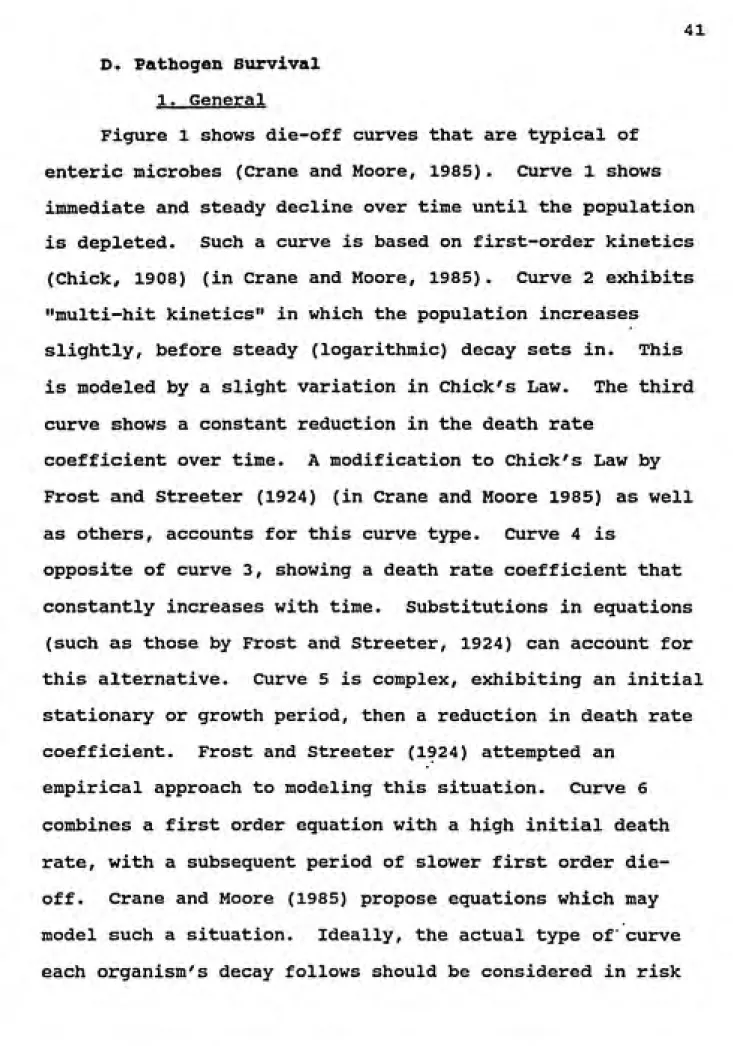
Figure 1
D. Pathogen Survival 1. General
Figure 1 shows die-off curves that are typical of enteric microbes (Crane and Moore, 1985). Curve 1 shows
immediate and steady decline over time until the population is depleted. Such a curve is based on first-order kinetics
(Chick, 1908) (in Crane and Moore, 1985). Curve 2 exhibits
"multi-hit kinetics" in which the population increases
slightly, before steady (logarithmic) decay sets in. This
is modeled by a slight variation in Chick's Law. The third
curve shows a constant reduction in the death rate
coefficient over time. A modification to Chick's Law by Frost and Streeter (1924) (in Crane and Moore 1985) as well
as others, accounts for this curve type. Curve 4 is
opposite of curve 3, showing a death rate coefficient that constantly increases with time. Substitutions in equations
(such as those by Frost and Streeter, 1924) can account for
this alternative. Curve 5 is complex, exhibiting an initial
stationary or growth period, then a reduction in death rate
coefficient. Frost and Streeter (1924) attempted an empirical approach to modeling this situation. Curve 6
assessment. Additionally, the medium in which the organism
is contained, sludge, soil, or water, can affect the die-off
curve through the impact of adsorption or particle
association for example.
Other modeling techniques for microbial die-off in the environment have been developed as well, but Crane and Moore
(1985) in their review of modeling efforts, support first
order die-off for several reasons. First, the lack of data on correlation of other models to soil and water systems
limits applicability of other models. First order die-off
can easily be adapted to tabular or graphic data from other
researchers by rearranging Chick's Law equations.
2. Soils
Microbial survival in the subsurface soil is controlled by a
number of factors. The major factors and their influence on
Table 12
Factors Influencing Survival in the Subsurface
Factor Effect
Temperature
Microbial Action Moisture Content PH
Salts
Soil Properties
Organism Type
Organic Matter
Longer survival at lower temperatures Longer survival in sterile soils (soil solids may be protective for viruses) Greater survival in moist soil
Bacteria- increased survival in soil
over pH5
Virus- most enteric virus optimal range of pH 3-9, prolonged survival near
neutral
Some viruses may be protected by certain
cations - the reverse is also true
For most viruses, survival is enhanced by adsorption to soil particles
Different types of microbes have entirely different responses to
environmental factors
Protects most microbes from
inactivation, may promote regrowth of
some bacteria
Hydraulic Condition Unknown
Aggregation with May enhance or reduce microbial survival
soil or
particulates
Table 13 provides average k values for several organisms. These values were obtained from several experiments and represent average values over several soil and experimental
44
Table 13
Die-off rate constants k(log 10 day') for selected
microorganisms in various sludge or soil systems
k value System Source
^ , , ,
Salmonella 0.368 dewatered raw sludge Kawata et
al.l977 0.322 dig.sludge, pasture, Watson, 0.380 pH 5.9, 10-20°C 1980 0.214
1.33(ave ) soil-water-plant Reddy et
al.
S. typhosa 2.3 dry season, sand Beard,
0.77 1940
0.46 wet season, sand 0.90 dry season, loam
0.77 sewage-enriched muck Mailman 0.741 sewage-enriched clay and 1.10 sewage-enriched loam Litsky
1951
S. typhimurium 0.44 poultry waste, pH 6.8
Sotiracop-12°C olous,and
Donero 1974
0.62 clay soil, lagoon effl. Smallbeck
0.26 same (2nd application) and 0.384 clay soil, pure culture Bromel 0.209 same (2nd application) 1975 0.390 fine silt, pH 5.5 Dazzo et
0.640 same, pH 5.6 al., 1973
0.345 same. pH 5.7
0.224 same, pH 6.1
Poliovirus 0.1 soil flooded with Larkin et
2° effluent al. 1986
0.09 soil with sewage sludge
0.15 soil Cuthbert
et al.l950
0.04 forest soil, 4°C Duboise et
0.16 forest soil, 20°C al.l974
enteroviruses 1.45(ave. ) soil/water/plant Reddy et al., 1981
Indigenous aerobic dig. sludge Hurst et
al., 1978
viruses 0.203
0.328
no ram
Table 14
Time in weeks for 99% inactivation of virus at 25°C (Sobsey
et al. 1986)
Medium Poliovirus
Sterile Non-sterile
HAV
Sterile Non-ster. Groundwater
2° Effluent 1° Effluent
Phosphate
buffered saline
not tested not tested 5 5
7 2
9 not tested
8 12 >12*
2
9
12
>12 not tested
* denotes 1.0 to 2.0 loglO reduction of initial titer
by 12 weeks
HAV was inactivated after much greater time than
poliovirus, HAV requiring roughly twice as much time to
achieve 99% inactivation. Echovirus, which was also tested
by Sobsey et al. (1986) was inactivated at rates greater
than HAV, but less rapidly as poliovirus. A conservative
assumption may be that die-off rate constant k (loglO/day) for HAV would be considerably smaller than for poliovirus.
Reddy et al., (1981) found the average k value for
Salmonella sp. to be 1.33 day' (maximum to be 6.93, minimum
0.21) in soil-water-plant systems. For viruses they foundan average k of 1.45 day' (maximum of 3.69, minimum 0.04) in
a variety of soil-water-plant systems. Watson (1980) (in Crane and Moore 1985) studied Salmonella in digested sludgeapplied to pasture plots at pH 5.9, summer season (ambient
weeks and found the die-off rate k to average 0.305
loglOday"^.
It is recognized that while inactivation of
microorganisms in soil and water is usually described as a
first order process, viral aggregates, different
sensitivities among sub-populations of viruses, or other
factors may cause non-linear inactivation curves. A first
order process will be assumed for modeling purposes.
Powelson et al. (1990), studied virus fate under varied
conditions and found that under saturated subsurface
conditions, all virus were accounted for. Under unsaturated
conditions, only 39% were accounted for after testing effluent, water column, and soil solids. It is believed that virus is inactivated during unsaturated flow.
Data on the fate and transport of microbes from
wastewater sludges applied to land, and potential health
impacts, are not extensive. Most of the data available
concern Salmonella and indicator bacteria. A variety of
factors affect microbial fate, including: soil moisture
content, temperature, pH, sunlight, organic matter, and
antagonistic soil microflora. Sorber and Moore (1987)
report that sludge application may prominently increase
nutrient content, organic content, and moisture retaining
capacity of sandy soil.
Sorber and Moore (1987), in an EPA literature review on
soil, summarized the results of studies deemed to meet
reliability and consistency criteria. Salmonella exhibited
a 90 percent reduction within 3 weeks in general (from 3 to 61 days at 0 to 30 cm. depth. Low levels of indigenous populations of Salmonella have been recoverable for about 2
months after application at designated sites, and a few recoveries 3 to 5 months after application are recorded
(Sorber and Moore, 1987). Kowal (1985) reports Salmonella
survival in days of detection as 259 to 280 days in soil. Their literature review also reports that in general, 90 percent of fecal coliforms originally present in land applied sludge were non-recoverable after 6 weeks. Fecal
streptococci were reduced by 90 percent in 4 weeks. Through
a limited number of studies, it appears that total coliform counts are reduced at rates approximately twice that of
fecal streptococci and fecal coliforms (Sorber and Moore,
1987). Data for bacteria exhibit wide variation in part because they can regrow outside of the host organism under
some conditions.
Viruses in warm seasons exhibited a median time for 90
percent reduction (T90) of 3 days. In cold seasons, the T90
was approximately 30 days (Sorber and Moore, 1987). Virus survival is enhanced in cold weather, inactivation is
enhanced in warm, dry weather. Virus data may be more consistent in part because viruses cannot regrow outside
Protozoan spores were sensitive to drying so survival
times were short. Reduction times for environmental
stresses resistant helminth ova are longer. Most studies
noted by Sorber and Moore (1987) were conducted with Ascaris
or Toxocara added to soil. Results indicated that helminth
ova reductions were influenced by seasonal variation.
Ascaris ova applied to an untilled plot in summer were
reduced by 90 percent in 30 days, while T90 after winter
application required 80 to 90 days. Ascaris ova survived
200 days after winter application to a tilled field planted in cover crop. This increased survival may be attributed in
part to cold temperatures preserved by shading, and high soil moisture from irrigation (Sorber and Moore, 1987).
Table 15
Microorganism Die off in sludge applied to soil (T90), in days (Sorber and Moore, 1987)
Oraanism Depth #Obs Min Max Med.
Salmonella 0-5cm 10 6 61 12
5-15cm 17 3 22 8
Fecal Strep. 0-15cm 9 7 28 14
5-15cm 11 12 30 20
Fecal coliforms 0-5cm 19 7 84 25
5-15cm 12 4 49 13
Total coliforms 0-5cm 6 16 172 85
5-15cm 12 9 70 17
Viruses 0-5cm 9 <1 30 3
5-15cm 4 12 56 30
Parasites 0-5cm 11 17 270 77
Information for Salmonella under various conditions is
listed in Table 16.
Table 16
Pathogen Die-off (EPA Nov 85, Jul 91)
Die-off Time
Organism Conditions until undetectable
Salmonella Dry weather Clay soil Sandy soil Clay soil
Sand, g^C, An.dig., spray
Sand, 9°C, raw, injected Sand, IS^C, raw, injected Var.soil, raw, mixed in
42 days
4-7 days
3 0 days
14-29 days 17-30 days
4-7 days 8-22 days
Table 17, shows the time in weeks for 99% reduction of HAV
from a study using static soil suspensions with virus laden
groundwater, and effluents (Sobsey et al., 1986).
Table 17
Time for 99% Reduction in soils, 25°C
HAV Poliovirus soil Kaolinite clay Water G.W. 2 Effl. 1 Effl. Ster. »8 10 >12 Non-ster. »8 10 >12 ster. 10 7 Non.ster. 2 3 Bentonite clay 2 Effl. 1 Effl. >12 »12 12 >12 11 6 7 7 Cecil clay loam G.W. 1 Effl. >12 >12 >12 >12 8 9 9 7 Ponzer org. muck G.W. 1 Effl. >12 >12 9 8 4 3 3 3 FM loamy sand G.W. 1 Effl. 8 >12 3
>12 9 3
The table shows that HAV invariably was much more persistent in soil suspensions of all types than was poliovirus.
Sterility or non-sterility of the soil had little effect on
HAV, with 5 week earlier reduction in non-sterile FM soil in
groundwater, and 3 to 4 week earlier reductions in
non-sterile Ponzer muck and non-non-sterile Corolla sand insecondary effluent. All other HAV samples (10 of 14) showed
no soil sterilization effects. Poliovirus achieved 99%
inactivation more rapidly than HAV in all samples. There
were marked trends in reduction among effluent type and soil
sterility conditions for poliovirus, and these were not
experienced for HAV. 2. Plants
Bacteria survival on plants is typically only about one week, while viruses may persist for several weeks or months. Larkin et al. (1976) in Badaway 1990, report that poliovirus and coxsackievirus were able to survive for over four months on vegetables during commercial and household storage.
Protozoan cysts, such as Entamoeba histolytica, as reported
by Pahren et al. (1979), survive on vegetable surfaces for 3
days, and for only 6 to 8 days in soil under optimum
conditions. Giardia cysts are known to be quite persistent
in water, but their stability in other media is not well
characterized. In-vitro data on Entamoeba histolytica are available in Feacham et al., (1983) and for Giardia in
A study by Badaway et al. (1990), indicates that the
inactivation rate k (loglO/day) for poliovirus in activated
sludge treated sewage effluent applied to grass in Arizona
was 0.06 at winter temperatures of 4-10''C, and 0.37 at
summer temperatures of 36-4l°C. In this study in Arizona, 8
to 10 hours of exposure in summer would achieve 99%
inactivation of poliovirus, and 16 to 24 hours would be
required in winter. A sharp increase in the virus decay
rate was detected at temperatures above 38°C (above human
physiological temperature).
Table 18
Survival Times of Pathogens on Soil and Plants (Kowal, 1986
after Feacham, 1978)
Soil Plants
Absolute Common Absolute Common
Pathogen Max Max Max Max
Bacteria 1 year 2 months 6 months 1 month
Viruses 6 months 3 months 2 months 1 monthProtozoa 10 days 2 days 5 days 2 days
Helminths 7 years 2 years 5 months 1 month
While pathogen survival time on plants may be shorter
than on soil, animals that graze soon after sludge
in all cases. It is noted however, that results may be
misleading as the plaque count technique used is less effective at counting low virus levels (Lefler and Kott,
1974). Rainfall simulation studies conducted by Brown et
al. (1980), indicated that sludge solids were washed more
readily from the grass than was the fecal coliform
population. Two to 3 weeks were required for significant
reduction in fecal coliforms on sludge treated grass, andrainfall had an ambiguous effect on reductions (Brown et al,
1980).
Poliovirus on lettuce and radishes was detected by Larkin et al. (1976), 36 days after sludge irrigation,
though reduced by 99 percent after 5 to 6 days.
Recontamination by soil splashing onto the plants could
account for the persistence.
Bryan (1977) outlines the steps that must occur in order for wastewater contaminated foods to cause illness. 1) The infectious agent must be present in community residents or in livestock, and wastes from these sources
must reach sewage systems. 2) The agents must survive and pass through the wastewater treatment plant. 3) The
wastewater effluent or sludge, containing the infectious
agent must be used to irrigate or fertilize crops. 4) The
agents must survive in the soil and contaminate the food